Author

admin

Browsing

When the U.S. men’s national soccer team plays at home, its most loyal fans traditionally sit right behind a goal to cheer on the team or intimidate the opposition.

But when the Americans kick off a once-in-a-generation World Cup in Southern California next week, many of those die-hard supporters may be harder to hear because FIFA seated them in the “nose bleeds,” according to a major U.S. fan group.

“These are the worst tickets that I’ve ever seen out of the five World Cups I’ve been to,” American Outlaws President Brian Hexsel said in a phone interview.

FIFA’s World Cup ticketing rollout has faced withering criticism for months, particularly for its sky-high prices. There have also been allegations that some ticket buyers got worse seats than expected, sparking investigations in New York and New Jersey.

In the blowback, soccer’s global governing body announced a small allotment of $60 tickets for each of the tournament’s 104 matches.

FIFA didn’t immediately comment for this article.

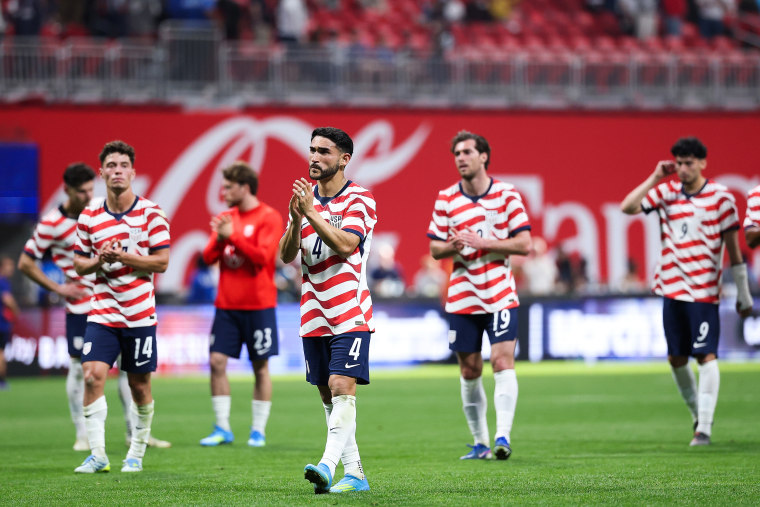
Cristian Roldan, center, and the U.S. team applaud fans after their loss to Belgium at Mercedes-Benz Stadium on March 28.Kevin C. Cox / Getty Images

Participating member associations, including U.S. Soccer, would manage “the selection and distribution process,” said FIFA, which emphasized it was asking the associations to “ensure that these tickets are specifically allocated to loyal fans who are closely connected to their national teams.”

The American Outlaws are such fans. The organization says it has more than 200 chapters worldwide sharing one goal: cheering on U.S. Soccer’s teams. The group travels to matches with hand-painted banners, a giant American flag, drums and organized chants — all of it typically on display right behind the net.

But this summer, American Outlaws members with $60 tickets will be in upper decks at each of the team’s three group stage matches, Hexsel said. That seating arrangement means some of the most fervent fans will be physically farther from the pitch, potentially making it harder for players to hear their shouts.

Hexsel said U.S. Soccer told him Monday that the $60 seats will be in sections 302 through 310 for the team’s first match against Paraguay at Los Angeles County’s SoFi Stadium, sections 310 through 315 in Seattle’s Lumen Field for the second match against Australia and section 426 for the third match back at SoFi against Turkey — putting fans even higher than they’d be seated for the first match.

U.S. Soccer told NBC News the $60 tickets are in sections 306 through 310 for the Paraguay match, sections 302 through 304 for the Australia match and sections 426 through 431 against Turkey. It didn’t provide further comment.

When the tickets started landing in people’s accounts Monday night, “my phone just blew up,” Hexsel said. “Everybody was pissed.”

It’s not clear whether fan groups for the World Cup’s other competing countries have been affected in the same way.

Juan Felipe Garay, coordinator of Colombia’s biggest supporters’ group, Fiebre Amarilla, told NBC News the group doesn’t yet know where its $60 seats will be for Colombia’s matches.

But Hexsel said that without question, for the American die-hards, a World Cup in their own backyard now “does not feel like we are playing in the U.S.”

South Florida superfan Burak, who asked that his last name not be published for privacy, told NBC News on Monday night that a ticket in the “400s” showed up in his account for the third U.S. match.

Burak said he laughed with his wife about the situation and hadn’t expected better seats. He prefers being high up at a match when he’s trying to “read the play.” But, he said, watching is secondary to making an impact when you’re in the supporters’ section.

“If you’re up at nosebleed 400s, your reaction doesn’t even matter. No one’s going to hear, see or notice,” he wrote in a text message.

Another U.S. fan, Gabriel Miguel, said, “I thought it could be worse.”

Miguel scored $60 tickets to the opening U.S. match against Paraguay. He’ll be in section 308 and said he’s “mostly grateful” just to be in the building.

“I would love to have been down in the lower action, but I mean, 300s is perfectly fine, especially for that price.”

American supporter Logan Pedersen said, “We could have been higher up … not by far.”

Pedersen said in a phone interview that he got “the golden ticket,” getting to see the opening U.S. match at such a relatively low cost. He’s “just glad to be in the stadium,” but he also said FIFA’s ticketing “process has been a nightmare.”

“It’s still super disappointing from FIFA that they’re not at least designating a section for, you know, 500 fans from each team directly behind the goal. I think it’s a huge loss for the atmosphere that’s gonna go on in the stadium,” he said.

Hexsel said of the seating arrangements, “It just means we gotta bring more drums and more noise to show the team that … we still showed up.”

“FIFA could have just said: ‘Hey … it’s 300, it’s 200. Yeah, it’s a little bit more than what you paid in Qatar, but you guys have a block of seats where you’ve always had a block of seats,’ and people would have paid it.”

Burak said by text message: “I’m just glad I can at least go to some games with the supporter price. I accept my small guy status. If we had a strong community, I’d be all about boycotting the WC all together. But that’s not how people are, that will never happen. And Fifa is feeding off of that. They know someone will show up.”

Said Miguel: “I’m happy to be going, at least, and it’s more like memories than anything. Could it be better? Of course. But … they dropped the ball from the beginning with this. It’s … nothing surprising at this point.”

The Trump administration has proposed new tariffs of up to 12.5% on imports from 60 economies after determining they had failed to curb trade in goods ‌made with forced labor, an assertion that was rejected by its trading partners.

The proposal from the U.S. Trade Representative’s office, issued late on Tuesday, comes from a Section 301 unfair trade practices investigation designed to help rebuild U.S. President Donald Trump’s emergency tariffs, struck down by a U.S. Supreme Court decision in February.

Despite laws banning them, the products of forced labor are deeply embedded in supply chains around the world. But European lawmakers in particular bristle at the ​accusation that the region is less effective than the U.S. at curbing the trade in such goods, with one describing the U.S. findings as “utterly absurd.”

The USTR proposed 10% additional ​duties on imports from Canada, Ecuador, the European Union, Indonesia, Mexico, Pakistan, Argentina, Bangladesh, Cambodia, El Salvador, Guatemala, Malaysia, Taiwan and Britain. The USTR said ⁠all had plans or partial schemes in place.

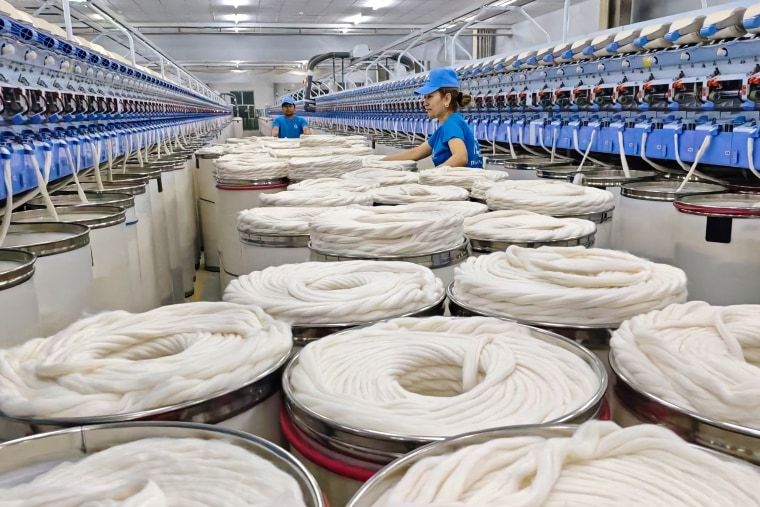
Employees work on the spinning production line at a workshop of a textile factory in Xinjiang Uygur Autonomous Region of China on March 5.Bao Liangting / VCG via Getty Images file

The trade agency said it would impose additional duties of 12.5% on the remaining 45 countries that it investigated. These include China, India, Nigeria, Japan, ​South Korea, Vietnam, Australia and New Zealand.

“The failure of our most important trading partners to address the importation of goods made with forced labor is unacceptable,” U.S. Trade Representative Jamieson Greer said in a ​statement. “This creates a dynamic where American workers are forced to compete globally on an unlevel playing field.”

The USTR said it would accept public comments on the proposed tariffs and other remedies through July 6, with a public hearing scheduled for July 7.

The announcement comes ahead of the July 24 expiration of a 10% temporary tariff imposed by the Trump administration on Feb. 20, the day the Supreme Court struck down Trump’s ​tariffs under the International Emergency Economic Powers Act.

The European Commission said the tariffs were unjustified and reiterated its commitment to the trade deal sealed with Washington last year.

Bernd Lange, the chair of the European ​Parliament’s trade committee, which voted on Tuesday to accept that trade deal, said the new tariffs were expected, but said the results of the U.S. investigation were still “utterly absurd” given a 2024 E.U. law to ban imports ‌of forced labor ⁠products.

“The impression is increasingly emerging that a tariff measure is sought first, and only then is a suitable legal justification found,” he said. However, he added that the key question would be whether the additional tariffs would exceed those agreed between both sides last July.

The U.S.’s largest trading partner, the European Union, agreed last July to accept tariffs of 15% on a broad range of its exports. In its report, the USTR said the E.U. measures came into force only in December 2027 and lacked key elements.

“We know there are ups and downs in what people say,” French Finance Minister Roland Lescure ​told reporters after a Cabinet meeting. “But the goal ​is to ratify the (trade) accord and stick ⁠to that.”

Britain said it was in regular talks with the United States and was taking action to tackle forced labor. It added that the preferential access to U.S. markets that it had negotiated for U.K. businesses remained in place.

Taiwan said it was “hopeful and confident” that the final results would reflect agreements ​already reached, securing relatively preferential treatment.

Beijing, facing 12.5% tariffs, said that it opposed all forms of unilateral tariffs and that there was no forced labor ​in China. India, confronted with ⁠the same rate, said it was engaged with Washington on the Section 301 proceedings, noting the proposed tariffs were not final.

On Monday, the USTR proposed a 25% duty on many Brazilian goods as a result of a Section 301 investigation into the country’s digital trade practices and preferential tariffs.

The trade agency is also expected to soon unveil the findings of another major Section 301 probe into the buildup of excess industrial capacity ⁠in 16 trading ​partners, including China and the European Union.

In the forced labor findings, the USTR said it would exempt from tariffs ​products including energy, rare earths and some other metals, beef, coffee, certain fruits and vegetables, pharmaceuticals, organic chemicals and aircraft parts.

It also said it was proposing a textile mechanism that would allow for a certain volume of apparel and textile imports ​to enter the U.S. at a reduced tariff rate, without giving details.

NFL Commissioner Roger Goodell has been invited to testify before Congress as the league faces increasing federal scrutiny about its broadcast deals and its recent practice of airing games on paywalled streaming services.

Rep. Jim Jordan, R-Ohio, the chairman of the House Judiciary Committee, sent a letter to the commissioner Monday requesting his appearance at a hearing June 10 examining the league’s TV deals and their compliance with the Sports Broadcasting Act of 1961.

The 65-year-old law grants professional sports leagues limited antitrust immunity, allowing them to pool their media rights and negotiate as a single entity while protecting them from antitrust lawsuits.

The law applies only to broadcast networks. Courts have ruled in the past that it does not apply to other media, including cable, satellite and streaming. There has been bipartisan sentiment in favor of updating the law, and President Donald Trump has been among the critics of the NFL’s embrace of streaming.

According to Jordan’s letter, the hearing next week will “examine the extent to which the antitrust exemption created by the SBA has been used by the professional sports leagues to harm consumers and whether potential legislative remedies may be needed to address that harm.”

An NFL spokesman did not immediately respond to a request for comment on the letter.

AJ Barner of the Seattle Seahawks catches a touchdown during the fourth quarter of Super Bowl 50.Kevin Sabitus / Getty Images

The move by Congress comes as the Justice Department is investigating the NFL for potential anticompetitive practices. Speaking in April when the probe was disclosed, a government official, who was not authorized to discuss an ongoing investigation by name, said it was “about affordability for consumers and creating an even playing field for providers.”

In March, Sen. Mike Lee, R-Utah, wrote a letter to the Justice Department and the Federal Trade Commission urging them to review whether the NFL’s distribution methods comply with the 1961 law. The FTC has sought comments from the public on the shift of live sports from broadcast channels to streaming services.

The NFL has said 87% of its games are available on free television, and games aired exclusively on cable or streaming services remain available over the air in the home markets of the competing teams.

The league has broadcast or streaming deals with CBS/Paramount+, NBC/Peacock, ABC/ESPN/ESPN+, Fox, NFL Network, Amazon Prime Video, Netflix and YouTube TV. Thursday night games moved to Prime Video in 2022, and the league has since moved a wild-card playoff game, Christmas Day games and a Black Friday game to streamers.

This season, Netflix will stream an opening-week game between the San Francisco 49ers and Los Angeles Rams in Melbourne, Australia, and a Green Bay Packers-Rams game the day before Thanksgiving.

Growing up in South Florida, Jozy Altidore heard a lot of Spanish playing soccer with local kids and at home from his Dominican grandmother. As a teenager, he went to play for Villarreal, in the Castellón part of Spain, an area that isn’t that touristy. His coach and teammates mostly spoke Spanish. Along the way, Altidore picked up the language.

“A lot of people look at me like, ‘What? You speak Spanish?’” Altidore told NBC News.

It will come in handy this summer, when Altidore serves as a World Cup commentator for Telemundo, the games’ official Spanish-language network. Altidore has no experience in broadcasting, and he admits that his Spanish is just OK. But he saw the World Cup was coming to North America, and he didn’t want to be left on the sidelines.

“It’s the biggest, most historical World Cup we’ve had,” Altidore said. “For me, it was a good opportunity to stay involved, be a part of the World Cup.”

But what about his Spanish? “I can get by,” he said. “I thought, ‘What a cool challenge.’ I think you want to challenge yourself, in the things that you’re doing, always.”

Plus, he’ll get to see the Telemundo broadcast up close, the excitement of it, which is a stark contrast to the English-language telecasts, particularly the “goal” calls from the announcer Andrés Cantor. “I always wondered, how does he do that in one breath?” Altidore said. “This guy goes just the whole time. I can’t wait to see the legend in action.” (Telemundo and NBC News share a parent company, NBCUniversal.)

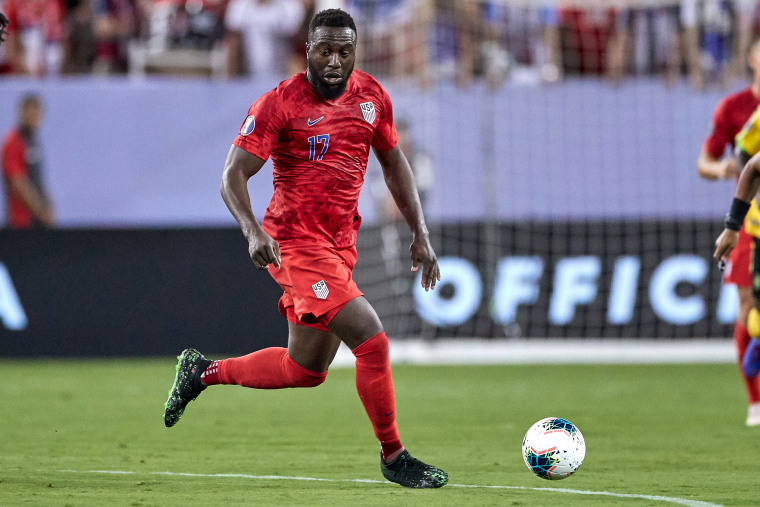
Altidore during the Gold Cup semifinal match between the U.S. and Jamaica in Nashville, Tenn., on July 3, 2019.Robin Alam / Icon Sportswire via Getty Images file

Altidore will be offering analysis and insight on Team USA’s games not far removed from his own time playing for the team. He is considered one of the best American players of the last two decades, a striker who scored 42 goals in 115 appearances. He helped the U.S. make it to the 2010 and 2014 World Cups, though he got injured during the latter tournament. He played with a few members of the 2026 roster, including Christian Pulisic.

Altidore told NBC News he has a rose-colored view of the current team. “I’m optimistic,” he said. “I’m bullish. I think this team can win the World Cup. I really do. I think they have the talent. And I’m so excited for them to get their flowers.”

Altidore understands how that sounds: Team USA? Winning the World Cup? But he pointed to past examples of host countries making deep runs in the tournament: South Korea reaching the semifinals in 2002, and Germany doing the same in 2006. Colombia also reached the quarterfinals in 2014, when the World Cup was held in neighboring Brazil.

With this World Cup being held on home soil, maybe “we’re able to push our team to a bit of a better performance than we have historically,” Altidore said.

He didn’t just mean the players — he meant the fans, too. “Can we show up in numbers in a way that, from the players’ arrival, they feel the emotion, they feel the enthusiasm, they feel the camaraderie?” Altidore said. “And we can push them on to play a little bit above themselves, to play a little bit above what we’ve seen already.”

You can sense his excitement. As a media member, Altidore will have to now learn to balance his rooting interests with offering clear-eyed analysis. “For me, it’s really getting behind these guys, applauding them for how far they’ve now taken the flag and where they’ve brought it,” he said. “But at the same time, it’s not all rainbows. You’ve got to be critical of guys, and you have to obviously critique their performances.”

Altidore was first introduced to soccer in 1994, the last time the U.S. hosted the World Cup, when he was just a young boy. His father recorded games on VHS tapes. He imagines lots of families will do the same this summer, three decades later, albeit with updated technology.

“They’re going to get exposed to soccer in a wonderful way for the first time, and it’s going to birth soccer players, it’s going to birth soccer fans, soccer enthusiasts,” Altidore said.

He’ll be doing his part, by showing his enthusiasm on the Telemundo broadcasts. “It’s more than just X’s and O’s in my opinion,” Altidore said. “This is a very good opportunity to continue growing the game for another 30, 40 years to come.”

Federal Reserve Governor Jerome Powell warned Sunday about the impact of a politicized Fed and made a broader call for the defense ‌of democratic institutions in his first public remarks since the end of his eight-year stint as head of the central bank.

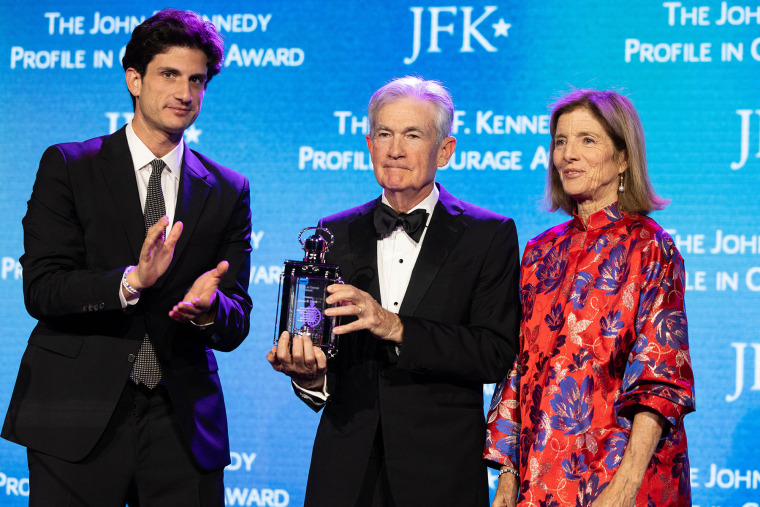
“Democratic institutions take much time, effort, and patience to build but can be torn down all too quickly,” Powell said in remarks ​prepared for delivery as he accepted the John F. Kennedy Profile in Courage Award, given by ​the John F. Kennedy Library Foundation.

“It is essential that we preserve what is good about ⁠these institutions, even as we strive to improve them,” said Powell, who included the Fed along with the ​courts and universities as among the core institutions key to the country’s success and standing in the world.

“Like ​many other institutions, the Fed has been undergoing a stress test,” Powell said, which in the central bank’s case has included efforts by President Donald Trump to fire Fed Governor Lisa Cook, calls for Powell’s resignation and a criminal probe of Powell.

Powell’s ​term as chair formally ended on May 15. His successor, Kevin Warsh, was sworn in as Fed chair on ​May 22. Powell has decided to continue as a Fed governor in part because of what he regards as ongoing threats ‌to ⁠the Fed’s independence, a decision that effectively prevents Trump from appointing another member to the Fed board for now.

Jerome Powell with Caroline Kennedy and Jack Schlossberg after receiving the Profile in Courage Award.Scott Eisen / Getty Images

The Fed’s structure is meant to allow it to make monetary policy decisions free of political considerations, and “these protections have served the public well, and administrations from both parties have respected them,” Powell said. “If any administration finds a ​way to remove Fed officials ​over policy differences, then ⁠future administrations will do so as well. The public would lose faith that the central bank will make decisions based only on what’s best for all Americans.”

In ​announcing the award to Powell earlier this year, the foundation said he had “safeguarded one ​of the country’s ⁠most essential apolitical institutions and demonstrated extraordinary courage in the face of sustained personal and professional risk.”

The award this year was also given to the citizens of Minneapolis and St. Paul for the public response to the surge ⁠in immigration ​enforcement in the Twin Cities area, including protests and efforts to monitor ​government enforcement efforts.

Major League Baseball owners made their long-expected salary cap proposal to the players’ association on Thursday, a system the union has vowed never to accept, setting the sides on course for a confrontation that threatens the 2027 season and perhaps beyond.

Baseball owners hadn’t proposed a firm cap since 1994. Their effort prompted a 7 1/2-month strike that forced the cancellation of the World Series for the first time in 90 years.

MLB’s proposal would cap spending in 2027 at $245.3 million, using figures for luxury tax payrolls that include benefits and the pre-arbitration bonus pool, and establish a payroll floor of $171.2 million. The Los Angeles Dodgers, baseball’s biggest spenders, had a $415.2 million payroll on opening day this year — around $170 million over the proposed cap.

Owners said they would discuss a phase-in schedule that would give teams like the Dodgers time to comply with the cap and an escrow system with the union as part of a proposed seven-year deal, that all current contracts would remain guaranteed and there would be no prohibition of guaranteed contracts under the cap system.

MLB said it would centralize local media revenue from the 30 teams equally and give players a 50-50 split as part of a proposal that would eliminate the current revenue-sharing plan among the clubs.

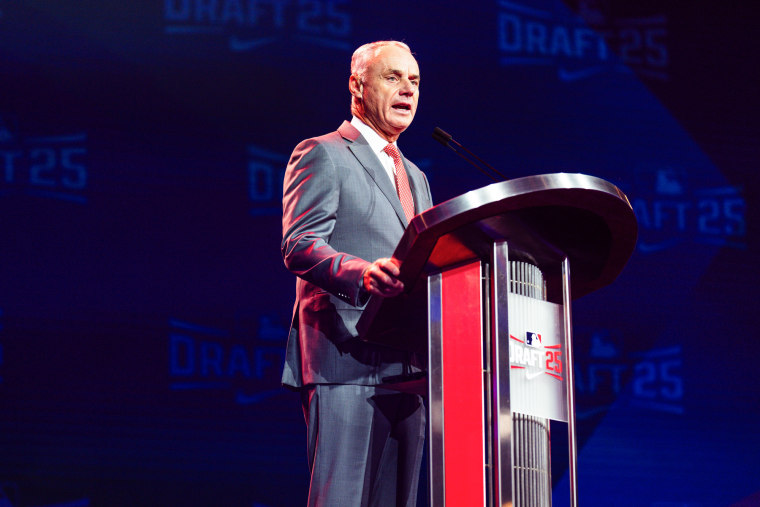
Major League Baseball Commissioner Rob Manfred.Matthew Grimes Jr. / Atlanta Braves via Getty Images file

“Our salary cap and floor proposal levels the playing field while sharing baseball revenue with the players 50/50 as we grow the game together,” MLB spokesman Glen Caplin said in a statement. “Further, by sharing media revenue equally as part of our proposal, we can address another top fan concern of local TV blackouts.”

Baseball’s current five-year deal, agreed to in March 2022 after a 99-day lockout, expires Dec. 2. While a lockout next winter is expected, talks are not likely to intensify until late February or early March 2027, when the possibilities of losing regular-season games and revenue near. If regular-season games are lost, negotiations may become a standoff of which side can tolerate the most economic loss.

Based on 2026 opening day figures, eight teams would have to cut payroll to get under the cap. The teams over are the two-time reigning World Series champion Dodgers, New York Mets ($379.2 million), New York Yankees ($339.6 million), Toronto ($319.5 million), Philadelphia ($315.2 million), Boston ($263.7 million), San Diego ($260.1 million) and Atlanta ($247.9 million).

Twelve teams would be required to increase payroll by a total of $617 million based on 2026 numbers: Miami ($81.8 million), Cleveland ($95.7 million), Tampa Bay ($108.2 million), the Chicago White Sox ($108.6 million), St. Louis ($114.4 million), Washington ($119.1 million), Pittsburgh ($122.6 million), Minnesota ($125.6 million), Milwaukee ($130.9 million), the Athletics ($139.2 million), Colorado ($142.2 million) and Cincinnati ($148.8 million).

Owners and the union agreed to a luxury tax in 2003 designed to slow spending, but teams feel it has had little or no impact on the Dodgers and Mets in recent years. The last small-market MLB club to win a World Series was Kansas City in 2015, although Cleveland, Tampa Bay and Milwaukee all lead their divisions as of Thursday, while the Mets and Red Sox are in last place.

MLB said its revenue has grown by 247% since 2003 and player payroll has increased by 149% in that span.

Management gave the union its latest plan during a bargaining session at the commissioner’s office, one day after the union made its economic proposal. Owners say a cap is needed to improve competitive balance and restrain wealthy teams from assembling starrier rosters than their smaller-market brethren.

Players want expanded free agency and salary arbitration rights along with almost doubling the major league minimum, increasing the money high-revenue teams share with the less-wealthy clubs and establishing penalties for teams that drop below payroll floors.

Aaron Judge of the U.S. leads teammates onto the field before game against Venezuela in the World Series of Baseball in Miami on March 17.Megan Briggs / Getty Images file

Other U.S. major sports leagues operate under a cap. The NBA had a cap in its initial season in 1946-47, then dropped that and began its modern version in 1984-85. NFL players and owners adopted a cap for the 1994 season, and the NHL did so in 2005-06 after a lockout wiped out the entire 2004-05 season.

The Dodgers shattered MLB’s spending record with a combined $515 million in payroll and luxury tax last year en route to their second straight World Series title. Los Angeles’ total was seven times the $68.7 million payroll of the Marlins, the lowest-spending team, and more than the payrolls of the bottom six clubs combined.

Players say a cap would hurt them and enrich owners, and they say they will never agree to one. Without a cap, MLB stars have landed lucrative, guaranteed contracts that outpace what the biggest stars in other U.S. sports leagues make. Juan Soto’s $765 million, 15-year contract with the Mets is believed to be the biggest ever in team sports and is far greater than the largest deals in the NFL (Patrick Mahomes at $450 million over 10 years) and NBA (Jayson Tatum at $314 million over five years).

MLB’s last salary cap proposal in 1994 offered players a 50-50 split of revenue in a system that would have forced teams to maintain payrolls of 84%-110% of the average. Salary arbitration would have been eliminated and the threshold for free agency would have been lowered from six years’ major league service to four — with the provision that a player’s former club could match any offer until he had six years.

MLB’s offer came on June 14 that year, and players struck on Aug. 12. MLB withdrew the cap proposal the following Feb. 6 after pressure by the National Labor Relations Board. The strike ended on March 31 after U.S. District Judge Sonia Sotomayor — now a Supreme Court justice — issued an injunction restoring the work rules of the expired labor contract. Two days later, owners accepted the union’s offer to return to work without an agreement. A deal wasn’t reached until 1997.

CBS News editor-in-chief Bari Weiss on Thursday replaced Tanya Simon, the executive producer of the network’s flagship newsmagazine “60 Minutes,” with a technology journalist who has never worked in television news.

Nick Bilton, a documentarian and former New York Times technology columnist, will take over for Simon when the show returns for a 59th season in the fall, CBS News leaders announced.

The moves are part of Weiss’ sweeping shake-up of the storied program, created by the legendary producer Don Hewitt.

CBS News has also cut ties with “60 Minutes” correspondent Cecilia Vega, who joined the show in 2023, according to a source familiar with the matter.

Sharyn Alfonsi, another “60 Minutes” correspondent, told the Times this week that CBS News had not renewed her contract. CBS News and Alfonsi did not respond to multiple requests for comment on the status of her deal.

Alfonsi clashed with Weiss late last year over the last-minute postponement of her segment about the Trump administration deporting Venezuelan men to a notorious prison in El Salvador.

Alfonsi said the delay was “not an editorial decision” but a “political one.” Weiss said she held the story “because it was not ready.” It ultimately aired in January.

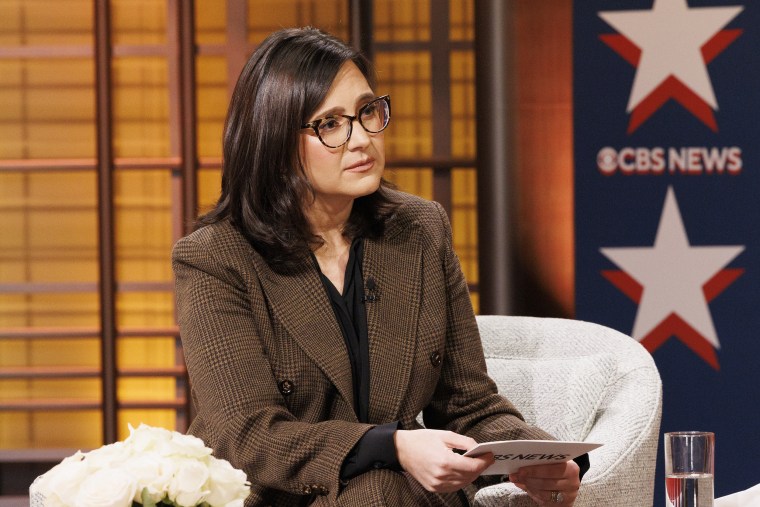
Weiss — who also had no TV news experience when she was hired last fall — said in a statement that Bilton was “one of the most entrepreneurial journalists of our time and the perfect leader for one of the most entrepreneurial news brands of all time.”

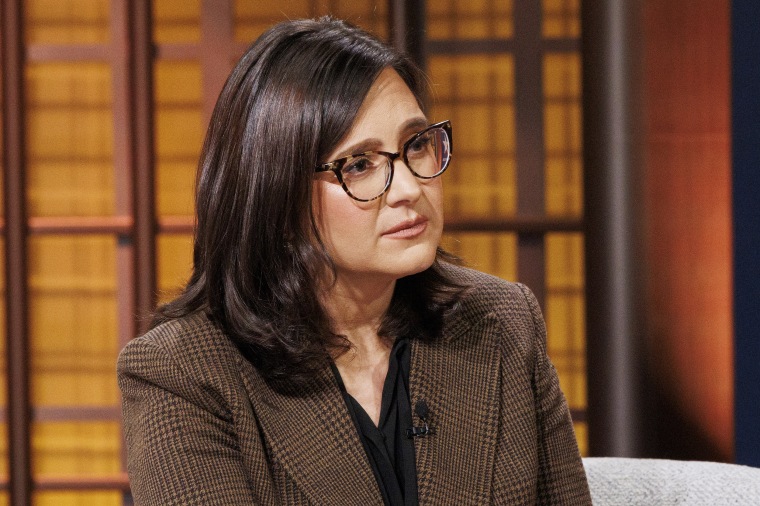
Bari Weiss, CBS News’ editor-in-chief.Michele Crowe / CBS via Getty Images file

“We have huge ambition for ‘60 Minutes’ to reach new heights through deep, revelatory journalism that breaks news, exposes wrongdoing, widens public understanding and forces accountability from every institution and every center of power,” Weiss added.

In a letter to “60 Minutes” staff Thursday, Bilton introduced himself and said in part: “I’m here to lead this show, not preserve it under glass. That means honoring what works and being honest about what doesn’t. I have a notebook full of ideas.”

“Some are about the show itself. Some are about the next generation of correspondents. Some are about the strange fact that we produce one extraordinary hour for one night a week in a world that consumes content around the clock,” he added.

In a statement shared with NBC News, Simon acknowledged that “leadership has decided it is time for a new chapter.”

“I want to be unequivocally clear about one thing: it has been an immense privilege to lead this broadcast, and I could not be prouder of what we have built, fought for, and delivered together over the last year,” Simon added.

“60 Minutes” has faced intense criticism from President Donald Trump, who sued CBS before the 2024 election over an interview with former Vice President Kamala Harris that he claimed had been deceptively edited. CBS vehemently denied that claim. Paramount eventually settled the suit for $16 million.

Bilton’s reporting has appeared in the Times and Vanity Fair. In recent years, Bilton produced documentaries about business and technology for Netflix and HBO, including a film about disgraced Theranos founder Elizabeth Holmes.

Weiss is a former opinion writer and editor at the Times who launched the website The Free Press in 2021. Paramount Skydance, which owns CBS, acquired The Free Press when it hired her.

She has overseen a wave of big-picture changes at CBS News since she was hired in October, including tapping Tony Dokoupil as anchor of “CBS Evening News.”

The departures of Vega and Alfonsi came after CNN primetime anchor Anderson Cooper announced he was leaving the series following a 20-year run as a correspondent.

In a farewell message this month, Cooper said in part: “The independence of ‘60 Minutes’ has been critical, and I think the trust it has with viewers is critical to the success of ‘60 Minutes.’”

For years, California Gov. Gavin Newsom has reaped the benefits of Silicon Valley’s AI boom — in the form of tax revenue for his state and political contributions from industry leaders.

Newsom’s interests often aligned with those of tech titans, and he largely protected those interests. In 2024, for example, he vetoed a bill that would have created legal liabilities for artificial intelligence companies in the event of catastrophes involving terrorism, mass casualties or other damage to society. It would also have required the companies to maintain kill switches so that AI processes could be turned off.

Newsom has long talked about the need to find a practical balance between utopian corporate visions of AI’s upsides and dystopian populist nightmares of human subservience to machines.

“Given the stakes — protecting against actual threats without unnecessarily thwarting the promise of this technology to advance the public good — we must get this right,” he said in his veto message.

But as he lays the groundwork for a widely anticipated 2028 presidential bid, Newsom is shifting his weight away from the corporate end of the balance and toward the populist end. The move could have implications not only for the Democratic nomination fight, but also in a general election, as the political left and right have coalesced around concerns about AI driving up costs to consumers and posing threats to liberty, cybersecurity and physical safety.

The issue has bedeviled elected officials in both parties at the federal and state levels.

They are clearly feeling heat from the public over a wide variety of AI-related issues, from potential job losses, the expensive energy demands of data centers and sexual exploitation, to more abstract fears of Americans’ lives being run by a handful of the rich and powerful through the use of advanced machines.

On the other side, tech giants bring in money — and spend lavishly on campaigns — and national security experts warn that unilateral disarmament in the AI arms race is a recipe for disaster.

Last week, President Donald Trump scuttled his own planned executive order on AI regulation at the last minute, citing concerns that it might “get in the way” of the country’s ability to compete with China.

At the same time, Newsom is using his power as California’s chief executive to begin rolling out initiatives to beef up AI controls.

Jason Elliott, a policy-minded political consultant who served as Newsom’s deputy chief of staff, said the governor has had his hands deep in AI policy, whether it’s the frontier-safety law he backed last year — which requires major AI developers to identify and mitigate risks before deploying their products — or the legislation he vetoed the year before.

“Just because you can name a problem and take a problem very seriously doesn’t mean that every single solution someone proposes is proper,” Elliott said. “I have never seen an issue move as quickly as AI, and it’s not even close. So every elected official’s position naturally should be evolving on AI from week to week and month to month, because the underlying technology itself seems to change every day.”

Newsom is evolving in real time, to the delight of some progressives who believed he was dragging his feet on behalf of corporations and donors.

Last week, Newsom signed an executive order requiring state agencies to work with industry groups, academics and organized labor to develop plans for assessing and offsetting AI’s effects on California workers.

“The whole system has to be reimagined, and we’re not — I don’t think we’re having an accelerated or advanced conversation right now; we’re still discussing who’s going to pay for my increased electricity because of the data center, which is a legit issue,” Newsom said at a May 19 conference convened by the liberal think tank Center for American Progress in Washington. “But it’s not the issue, and … the tech genie is not going to go back in the bottle.”

Newsom also submitted a revised state budget proposal this month that would vastly increase antitrust enforcement dollars, which have been used to go after companies that use algorithms to set prices.

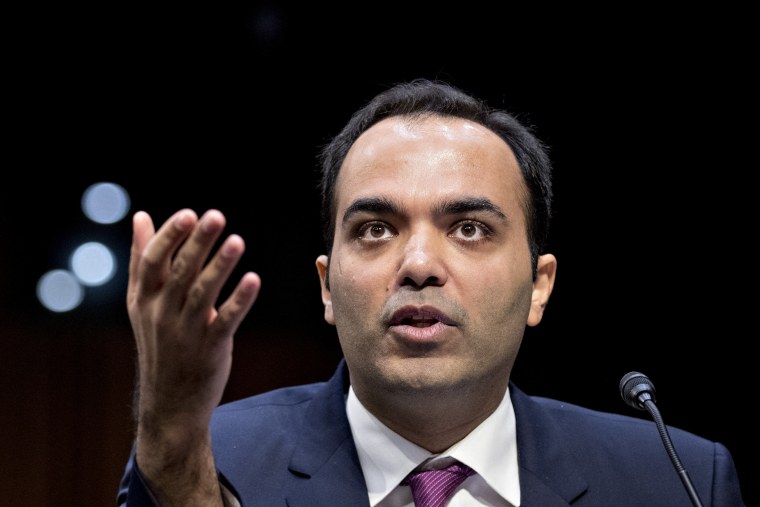
Former Consumer Financial Protection Bureau chief Rohit Chopra.Andrew Harrer / Bloomberg via Getty Images file

Earlier this month, he hired former Consumer Financial Protection Bureau chief Rohit Chopra, who has warned about potential excesses of AI, to head up a state business and consumer services agency. And, along with other prospective 2028 candidates, according to Axios, Newsom has been cozying up to Sen. Elizabeth Warren, D-Mass., who is among the loudest critics of AI’s economic implications.

Among the large crop of prospective 2028 hopefuls, there is a broad spectrum of views on AI and its various uses — and some uncertainty about when and how to regulate them. Data centers, which represent just a slice of AI policy, have become a flashpoint for voters and an area of attention for policymakers with White House ambitions.

Pennsylvania Gov. Josh Shapiro, for example, is tying accelerated permits for data centers to companies’ willingness to pay for power, provide workforce protections and conserve the environment. Rep. Alexandria Ocasio-Cortez, D-N.Y., has called for a moratorium on data centers and pressed federal officials on their impact on drinking water.

Like Newsom, Illinois Gov. JB Pritzker, who is also widely considered to be looking at a 2028 bid, is moving to demonstrate a more cautious approach to AI. In February, he proposed a two-year pause on tax incentives for building data centers.

A YouGov/Economist poll this month found that 71% of Americans — 77% of Democrats and 68% of Republicans — say AI development is “moving too fast.”

“It should be clear to anyone paying attention to polling or even just vibes that there is a lot of voter-level concern about AI and costs and who the economy is serving and who the economy isn’t serving,” Dan Geldon, a former top aide to Warren, said. “It makes sense that Newsom and other candidates would open channels with populists and consider their ideas in this environment.”

But revenue from “hyperscalers” — tech companies that build data centers to handle massive amounts of information — is attractive to many state executives in both parties.

“We’re looking at literally hundreds of millions of dollars annually to local government, cities, counties and school districts that the hyperscaler is going to pay in their fee and loop payments,” Mississippi Gov. Tate Reeves, a Republican who has welcomed data center investments from Amazon, xAI and other major players into his state, said in a recent interview.

And yet there are Republican governors who have taken a much more skeptical view of AI and of data centers.

Florida Gov. Ron DeSantis, a Republican, has pushed unsuccessfully to enact an AI “bill of rights” that would protect data privacy and prevent insurance companies from judging claims based on machine-dictated decisions. Like Reeves, he signed a law requiring hyperscalers to pay utility costs associated with their work.

For 2028 hopefuls in both parties, the opportunities and risks of developing AI policies at machine-learning speed are becoming more clear. For Newsom, there’s been a perceptible shift toward the populist leanings of the progressive wing of his party.

Elliott, his former aide, said it makes sense on a public policy level for the governor to keep up with changes in technology and adjust his response accordingly.

“It’s true that Gov. Newsom has continued to observe the state of the industry, the state of technology, and then update his perspectives as the industry moved forward,” Elliott said. “Republicans are doing the same thing and should be doing the same thing and there are a number of Republicans around the country who are taking the very hands-on approach to regulating artificial intelligence.”

CBS News has reportedly declined to renew its contract with Sharyn Alfonsi, the “60 Minutes” correspondent whose segment about the Trump administration deporting Venezuelan men to a prison in El Salvador was abruptly pulled off the air late last year.

Alfonsi confirmed the expiration of her CBS News deal in an interview with The New York Times published Wednesday. CBS News and Alfonsi did not immediately respond to NBC News’ requests for comment on the matter.

“It sends a chilling message to the entire newsroom,” Alfonsi told the Times. “I think it was a deliberate choice to penalize a journalist for refusing to sanitize accurate reporting.”

“60 Minutes” ultimately aired Alfonsi’s segment in January after a last-minute postponement in late December that the correspondent had claimed was “not an editorial decision” but “a political one.”

The segment featured interviews with men who were deported from the U.S. to the Center for the Confinement of Terrorism, or CECOT, in Tecoluca, El Salvador. The interviewees described torture and physical and sexual abuse at the complex.

In an editorial call Dec. 22, the morning after “Inside CECOT” was pulled from the “60 Minutes” lineup, CBS News Editor-in-Chief Bari Weiss said she had held the story “because it was not ready,” according to a source.

CBS News Editor-in-Chief Bari Weiss moderates a town hall with Erika Kirk on Dec. 10.CBS via Getty Images file

“While the story presented powerful testimony of torture at CECOT, it did not advance the ball — the Times and other outlets have previously done similar work,” Weiss told CBS News staffers, according to that source.

Weiss is a former opinion writer and editor at the Times who launched the website The Free Press in 2021. Paramount Skydance, which owns CBS, acquired The Free Press and hired Weiss as editor-in-chief of CBS News in October.

Alfonsi, who made her “60 Minutes” debut in 2015, continued to appear on the newsmagazine through the end of its 58th season, which concluded May 17.

She is the second “60 Minutes” correspondent to exit the show since Weiss became top editor at CBS News, following Anderson Cooper, who signed off this month after 20 years on the broadcast.

In a farewell message that aired this month, Cooper said in part: “The independence of ‘60 Minutes’ has been critical, and I think the trust it has with viewers is critical to the success of ‘60 Minutes.’”

MIAMI — A federal judge on Wednesday declined to jail a Florida teenager accused of killing and sexually assaulting his stepsister, allowing him to remain in the custody of a family member while he awaits trial.

Timothy Hudson, 16, has been free since the slaying of Anna Kepner, who died on Nov. 7, 2025, aboard a Carnival cruise ship. At the time he was arrested and charged as a juvenile and allowed to live with an uncle because of his age. But in April a federal grand jury indicted him as an adult, introducing the possibility that he could be jailed as he awaits trial.

“If it were a 20-year-old under the exact circumstances I probably would have detained,” U.S. District Judge Edwin Torres said. “The presumption would be we were just not going to take that chance.”

“This is a different animal,” Torres said.

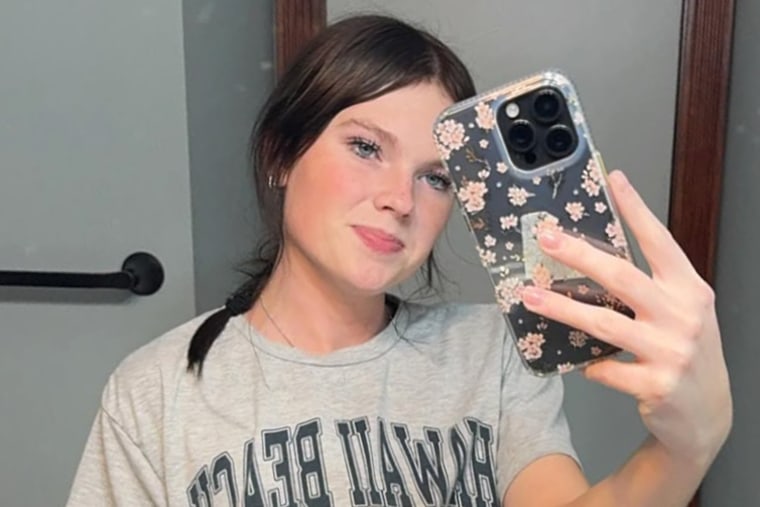
Anna Kepner.anna.kepner16 via Instagram

Torres took into consideration that detaining Hudson in Miami-Dade County — where he was charged — would make it difficult for his family, which lives hundreds of miles away in Hernando County, to visit him.

The judge said he wanted to “know what my options are” about potentially detaining Hudson closer to home before deciding to hold him behind bars.

Alejandra Lopez, a lawyer for the government, argued that Hudson is “a danger to the community” and questioned how authorities can trust “this defendant won’t act again.”

She noted that two minors live in Hudson’s uncle’s home, where he is residing.

“What is needed to prove a danger? A second dead body?” she asked.

Evan Kuhl, a public defender representing Hudson, argued that his client is not a danger to the public or a flight risk because he has abided by the conditions of his release for several months without any incidents.

Lopez shot back that it took months after Kepner’s death for officials to charge Hudson because authorities were gathering evidence.

“How is he going to be a risk of flight if he doesn’t even know if he’s going to be charged?” she asked. “That doesn’t make sense.”

Hudson is only allowed to leave his house with his uncle or aunt and will be electronically monitored by authorities.

Anna Kepner’s car, decorated by her classmates at Temple Christian School, remained in the school parking lot in Titusville, Fla., for weeks after her death. Malcolm Denemark / USA Today Network via Imagn

The November cruise vacation included the victim’s father, stepmother and two of her children, including Hudson. Kepner’s father and Hudson’s mother married in December 2024.

Kepner’s body was found wrapped in a blanket, bruised and under a bed in her room, concealed by life vests. Her death was ruled a homicide caused by “mechanical asphyxiation,” according to the Miami-Dade medical examiner.

The girl and her stepbrother were sharing a room on the cruise, according to Hudson’s father’s lawyer.

The teenager was arrested while the ship was in international waters en route to Miami. He was hospitalized upon the ship’s docking and has since been in counseling, according to a lawyer for his mother.

On the day Hudson’s indictment was made public, Chris Kepner — Anna Kepner’s father and Hudson’s stepfather — declared that “justice needs to be served.”

Kepner was a high school senior and cheerleader, with hopes of cheerleading for the University of Georgia. She was remembered in her obituary for lacking a filter and being “bubbly, funny, outgoing, and completely herself.” At the time, her family said that “in true Anna fashion, the family would like everyone to know there is no GoFundMe” for her funeral. She was set to graduate from high school this spring.

Hudson’s trial could begin in September, Lopez said Wednesday.