Author

admin

Browsing

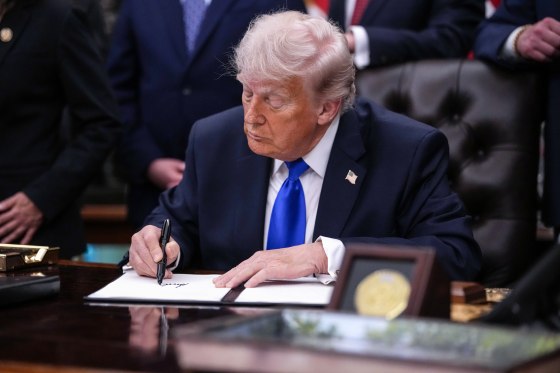
WASHINGTON — President Donald Trump signed an executive order on Thursday calling for a new government website where people in the United States can find and compare private-sector retirement savings accounts, aiming to help millions of workers whose employers do not offer such plans.

The order is intended to help more people gain access to retirement plans before next year, when the federal government will start matching retirement contributions made by lower-income workers.

That new matching contribution, known as the Saver’s Match, comes from 2022 legislation passed under Democratic President Joe Biden. Starting in January, it will offer a match of up to $1,000 for workers who make less than $35,000 a year.

Trump’s order is meant to help make the match available to roughly 50 million people who do not have retirement plans offered by their employers. The Republican president directed the Treasury Department to launch TrumpIRA.gov, where workers will be able to compare private-sector retirement plans.

“For millions of Americans who lack employer-sponsored plans, this will be really revolutionary, because they’ll be covered,” Trump said at an Oval Office signing ceremony.

He is not offering a new government retirement plan but helping match workers with existing plans from private companies.

Details of the order were first reported by the news outlet Semafor.

Trump discussed the idea during his State of the Union address in February, when he noted that about half the people in the country do not have access to employer-provided retirement plans with matching contributions.

“To remedy this gross disparity, I’m announcing that next year my administration will give these often-forgotten American workers — great people, the people that built our country — access to the same type of retirement plan offered to every federal worker,” Trump said.

The Saver’s Match program will offer a maximum match of $1,000 for single filers and $2,000 for married couples who file jointly. The maximum will be limited to single filers earning less than $20,500, with smaller matches offered for those earning up to $35,500. It applies to contributions made toward 401(k) plans, IRAs and Roth IRAs.

Trump said he wants to take the match “to the next level” by asking Congress to expand it to those with incomes higher than $35,000 a year. Kevin Hassett, director of the White House’s National Economic Council, said many middle-income earners also lack access to employer retirement plans.

“We’re working with Congress to significantly expand this program and are looking forward to legislation this year,” Hassett said at the ceremony.

Market watchers looking for clarity about the direction of Big Tech and the AI investment boom didn’t get much Wednesday afternoon amid a barrage of key earning reports.

Instead, four leading tech companies reported quarterly results that beat Wall Street’s official forecasts but nevertheless fell short of the sky-high expectations investors have set for companies leading the AI revolution.

Investors were most enthusiastic about the results of Google parent Alphabet, whose shares climbed as much as 6% in after-hours trading. The company reported earnings and revenue that beat analysts’ expectations and raised its estimate of how much it would spend on AI infrastructure.

Earnings for Facebook parent Meta were greeted with less fervor. Its shares fell more than 5% after it said it expected revenue growth to stay flat in the second quarter.

Amazon’s and Microsoft’s results and forecasts were more mixed. Investors ultimately sent both lower by about 3%.

The major U.S. stock indexes are sitting near all-time highs despite war with Iran, rising oil prices and dismal consumer sentiment readings.

But overall business investment and consumer spending levels remain resilient — and companies on the S&P 500, the index considered the best proxy for overall stock market performance, are reporting the highest average net profit margins in more than 15 years, according to the analytics group FactSet.

That performance is being led by tech companies known as “The Magnificent 7” — Apple, Microsoft, Alphabet, Amazon, Meta, Nvidia and Tesla, which dictate about one-third of the S&P 500’s average performance.

Tech’s leadership has created a double-edged sword for the market writ large: When times are good in tech, the market tends to rise. When tech’s performance is rockier, the market can sink.

“Stocks are again trading at record highs, reflecting strong investor confidence, but the S&P 500’s heavy concentration in the Mag 7 technology leaders elevates downside risk should earnings fall short, as valuations leave little margin for error,” Chris Brigati, chief investment officer at SWBC, a Texas-based financial group with more than $1 billion in assets under management, said in a note to clients this week.

Investors remain focused on the companies’ projections for future spending levels on the technology and infrastructure underlying their AI programs — and how they square with revenue, Brigati said.

“Each company faces its own dynamics, but delivering tangible results from elevated [capital expenditures] remains the critical test,” he said.

Until the end of March, Mag 7 companies’ performance had been caught in the downdraft that hit the broader market as the war with Iran took hold. Many had already spent much of the second half of 2025 treading water as concerns about the timeline for earnings from AI investments, plus seemingly circular financing arrangements, took hold.

But sometime in early April, investors began to realize that the most important names had been trading at discounts relative to projected earnings, according to Ed Yardeni, an economist and president of Yardeni Research, a widely respected market consultancy.

“I think the perception that there might be an exit ramp for Trump with the war with Iran and ceasefire got investors looking at markets again, and what they suddenly realized is the overall market, and specifically the Mag 7, were a lot cheaper,” Yardeni told NBC News.

In recent days, the market has lost some momentum amid signals that President Donald Trump is planning for a more prolonged conflict. A Wall Street Journal report that ChatGPT maker OpenAI may be on track to miss key revenue and user targets has also slowed tech’s recent momentum. OpenAI investments in — and from — other major tech companies have left it deeply intertwined in the AI boom, and some investors fear any weakness could ripple through parts of the AI ecosystem.

OpenAI called the Journal report “clickbait.”

The actual severity of any shortcomings at OpenAI and how far any weaknesses could spread remain open questions, Yardeni said. For now, cautious investor optimism remains the prevailing sentiment and will most likely continue to power markets higher.

“Concerns about some of the uncertainties, like if these companies are spending too much or if they’ll ever get a proper rate of return, that seems to have gone by the wayside,” he said.

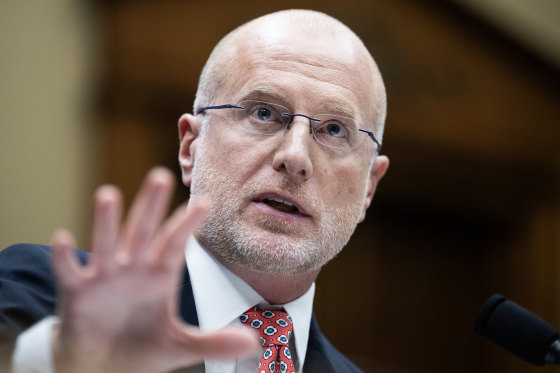
Federal Communications Commission Chairman Brendan Carr told reporters Thursday that the White House did not push him to order an early review of ABC’s eight broadcast licenses.

“There was no pressure from the outside. There was no suggestion from the outside,” Carr said at a news conference. “There was no call for agency action from the outside. This was based on our assessment of where we were.”

The FCC, which regulates the broadcast industry, announced its early review on Tuesday, a day after President Donald Trump publicly called on ABC to fire late-night host Jimmy Kimmel for a joke he made about first lady Melania Trump last week.

Carr, a Trump appointee who regularly assails the media, reiterated Thursday that the review of ABC’s licenses stemmed from a yearlong investigation into diversity, equity and inclusion practices at Disney, the parent company of ABC.

He insisted the review was not related to “speech” on ABC’s airwaves.

“In this particular case,” Carr told reporters, “this action is driven by investigation into DEI conduct, not any speech at all.” He said he agreed with Sen. Ted Cruz, R-Texas, who earlier this week said he believed the FCC should not act as the “speech police.”

First Amendment advocates sharply criticized the FCC and Carr this week, arguing in part that the agency’s directive to Disney was a clear case of retaliation.

“The FCC may claim these actions are based on DEI policies and have nothing to do with Jimmy Kimmel, but its timing makes it clear these justifications are a fig leaf,” said Bob Corn-Revere, counsel at the Foundation for Individual Rights and Expression.

The White House has blasted Kimmel for describing Melania Trump as an “expectant widow” in a sketch parodying the White House Correspondents’ Association dinner that aired last Thursday.

Two days after the sketch aired, a gunman opened fire outside the correspondents’ association event at a hotel in Washington, forcing the president and the first lady to rush out of the ballroom.

The suspect faces three charges, including attempting to assassinate the president of the United States.

Kimmel defended his remarks Monday, saying in part: “It was a very light roast joke about the fact that he’s almost 80 and she’s younger than I am. It was not by any stretch of the definition a call to assassination.”

Disney has not publicly addressed the furor over Kimmel’s joke, but the media giant confirmed it has received the FCC’s order for a review of the licenses it owns in key media markets such as Los Angeles, New York and San Francisco.

“ABC and its stations have a long record of operating in full compliance with FCC rules and serving their local communities with trusted news, emergency information, and public‑interest programming,” Disney said in a statement on Tuesday.

“We are confident that record demonstrates our continued qualifications as licensees under the Communications Act and the First Amendment and are prepared to show that through the appropriate legal channels,” the corporation added.

The FCC is also investigating DEI practices at Comcast, the parent company of NBC News.

President Donald Trump will be briefed Thursday on options for the way ahead in the Strait of Hormuz and on the ground in Iran, according to a U.S. official familiar with the planning.

Adm. Brad Cooper, the commander of U.S. Central Command, will brief Trump and his senior national security team at the White House, the official said, and update them on the continued U.S. blockade of Iran’s ports.

The update came after energy prices soared to their highest point in years with little sign of a deal to end the war.

Iran’s new supreme leader vowed in a message earlier Thursday that the Islamic Republic would protect its “nuclear and missile capabilities” as national assets.

The defiant written statement, read on state television, was the latest signal that Tehran was not about to capitulate in the standoff wreaking havoc on the global economy.

The price of the international benchmark for oil, Brent crude, rose to more than $126 a barrel at one point overnight — the highest since 2022, when Russia launched its invasion of Ukraine — before falling back to around $114 a barrel early Thursday.

Gas prices in the United States rose to an average of $4.30 a gallon Thursday, also the highest level in nearly four years.

The spike came following an Axios report that the U.S. military was set to brief President Donald Trump on plans for potential military action to help break the deadlock in talks to end the war and reopen the key trade route.

One plan prepared by U.S. Central Command includes a wave of “short and powerful” strikes intended to force Iran back to the negotiating table, Axios reported.

A senior Revolutionary Guard commander vowed swift retaliation if the U.S. does renew its assault.

“With prolonged and wide-ranging painful strikes, we will, by the grace of God, respond to the enemy’s operations even if they are rapid and short,” Seyed Majid Mousavi said on social media Thursday.

“We have seen the fate of your fragile bases in the region; we will also see your warships,” he said.

It comes after Trump warned that Iran had “better get smart soon” as he weighed possible military options to reopen the strait, through which some 20% of the world’s oil passes.

Traffic in the waterway has been at an effective standstill since Iran attacked shipping after the U.S. and Israel launched their joint military assault in late February, rattling the global economy.

Washington launched its own blockade of Iranian ports in response, and Trump told Axios on Wednesday that it would stay in place until Iran agreed to a nuclear deal.

That seemingly rules out a new Iranian proposal to end the war and reopen the strait without resolving the impasse over the Islamic Republic’s nuclear program. Trump said he saw the blockade as “somewhat more effective than the bombing.”

Trump told reporters at the White House on Thursday that the blockade is working well.

“The power of the blockade is incredible. They’re not getting any money from oil, and hopefully it can be worked out very soon,” he said.

Trump added, “Iran is dying to make a deal.”

Trump and other top administration officials met with a group of energy industry executives earlier this week to discuss key issues, including Washington’s possible next steps in continuing the blockade “for months if needed,” a White House official told NBC News.

Members of Trump’s national security team presented him with multiple options this week for how to handle the bottleneck, a U.S. official and a person familiar with the meeting told NBC News. The options discussed included whether the U.S. military presence in the strait should change — either increase or decrease — and whether the military should become more aggressive in conducting operations there, the U.S. official said.

The prospect of prolonged disruption in the strait has sent energy prices soaring despite the ceasefire. “Our world is facing a major economic and energy challenge,” International Energy Agency head Fatih Birol told a conference in Paris.

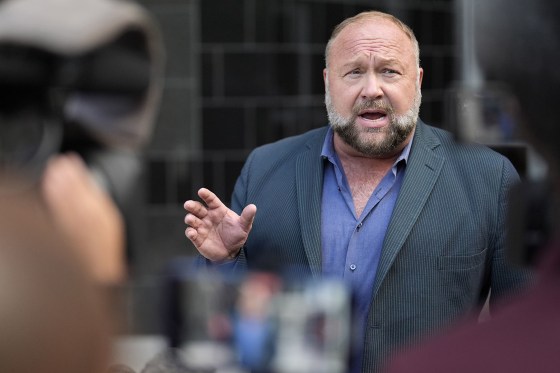
AUSTIN, Texas — The Onion’s plan to take over the Infowars platforms that Alex Jones built into a bullhorn of conspiracy theories and turn them into parody sites was in limbo again Thursday, after a Texas court paused a proposed deal involving the satirical news outlet.

Austin-based Infowars is facing liquidation because of the more than $1 billion in defamation lawsuit judgments Jones owes relatives of victims of the 2012 Sandy Hook Elementary School shooting for calling the Connecticut massacre a hoax. The proposed licensing deal would give The Onion temporary authority to use Infowars’ trademarks, copyrights and intellectual property while a state receiver in Texas works toward liquidation.

A state judge in Austin had scheduled a hearing Thursday on whether to approve The Onion deal with the receiver. But the proceeding fizzled into a status conference because the Texas Third Court of Appeals late Wednesday approved an emergency motion by Jones’ lawyers that temporarily blocked the transfer of any Infowars assets. The judge set another hearing for May 28.

Lawyers for the Sandy Hook families had asked the Texas Supreme Court to overturn the appeals court ruling, but the high court did not issue a decision before Thursday’s hearing.

“This newly insane, unprecedented legal stalling does nothing but delay our deal with the receiver to take control of InfoWars,” Ben Collins, The Onion’s CEO, said in a social media post ahead of the hearing. “We now expect new traps in Alex Jones’ amoral war to deny paying the Sandy Hook families, but we’re freshly surprised by the U.S. legal system’s appetite to put up with it.”

The Onion already has been selling Infowars merchandise on its own website, including T-shirts and tote bags with an Infowars logo that replaces the “o” with its trademark onion image. It wants to turn the Infowars platforms into comedy sites that would include spoofing Jones, conspiracy theories and right-wing talking points, while giving revenue to the Sandy Hook victims’ relatives.

Jones declared victory in videos posted on his social media sites after the appellate court ruling. He called The Onion’s plan illegal, citing pending appeals and his continuing personal bankruptcy case.

“I said days ago there’s no way the Third Circuit Court of Appeals in Texas doesn’t overturn this — you know they’re all Democrats — because it’s so outrageous what you’ve done,” Jones said.

After Thursday’s hearing, Mark Bankston, a lawyer for some of the Sandy Hook victims’ relatives, accused Jones of delaying the liquidation of Infowars numerous times with court filings.

“As far as the world is concerned, Infowars is dead. Everybody knows that,” he said. “He’s trying to keep the bloated corpse of a media organization alive. It’s all a joke. Everybody knows where this is going.”

It’s not the first time The Onion has hit a legal setback in plans to take over Infowars.

In November 2024, the Chicago-based satirical outlet was named the winner of a bankruptcy court auction of the assets of Infowars’ parent company, Free Speech Systems, aimed at helping pay some of the defamation judgments. But a federal judge overturned the auction results, citing problems with process and The Onion’s bid.

Jones said on his show this week that he has a new studio nearing completion. He already has set up a new phone app and websites, including one that sells the dietary supplements, clothing and other merchandise he hawks on his shows. And his personal X account, where he posts videos of his shows and has 4.5 million followers, is not affected by any of the court cases.

On Thursday night, Jones toasted to his crew and viewers during a livestream on X as a clock ticked down to when he said his final moments in the building would hit.

“We’re not here anymore because they’re turning the power off at midnight,” he said.

The nets have been cut down in Indianapolis with Michigan defeating Connecticut to win the national title and close the book on the men’s college basketball season. After a short breath, it’s already time to start looking ahead to the 2026-27 campaign and determine which teams are the contenders to play in the Final Four in Detroit next April.

There’s a lot in flux before we get to the start of the season in November, making the predictions for next season challenging. The biggest factor to weigh is the impact of the transfer portal, which officially opens Tuesday, April 7. However, we already know many of the major players moving places. There’s also the matter of the uncertain futures for several candidates for the NBA draft. In those instances, we’ve assumed upper echelon will depart but left open the door for others to stay.

We’ve done our best to put all information together and release our too-early Top 25 ranking with a heavy dose of power schools dominating.

1. Michigan State

Despite losing twin big men Jaxon Kohler and Carson Cooper, this could be a special season for the Spartans if – as expected – it brings back point guard Jeremy Fears Jr. and forward Coen Carr. Those give them two standouts to build around. Michigan State will also have great depth with most of this year’s rotation back in the fold. Tom Izzo will add in a very impressive recruiting class that ranks second nationally.

2. Duke

While player of the year Cameron Boozer departs, The Blue Devils will again have a significant infusion of freshman talent with guard Deron Rippey Jr. and forward Cameron Williams projected to be immediate impact players. Should veterans Caleb Foster, Cayden Boozer and Dame Sarr decide to forego the draft, this has the makings of one of the best teams in the nation.

3. Michigan

The Wolverines will lose Yaxel Lendeborg and should also see forward Morez Johnson Jr. and center Aday Mara enter the NBA draft. The focus of the team’s production will shift to a backcourt built around Elliot Cadeau and Trey McKenney. Michigan coach Dusty May has signed an elite recruiting class headlined by forwards Quinn Costello and Lincoln Cosby and will again hit the transfer portal aggressively.

Buy Michigan championship books, newspapers, gear

4. Florida

The key question for the Gators is whether Alex Condon will return for another season. He stands to be one of the top players in the SEC and would have Rueben Chinyelu alongside him up front. Boogie Fland and Urban Klavzar are confirmed returner and bring scoring punch and experience in the backcourt. A couple of transfer adds puts Florida back in title contention.

5. Arizona

The departures of most of the key players from a team that dominated the Big 12 will be hard to replace. That’s the negative. The positive is there’s enough role players due back and some key arrivals already slated to join the program. The frontcourt could be formidable with Ivan Kharchenkov and Motiejus Krivas having eligibility. Dwayne Aristode will be expected to lead the backcourt in his sophomore season, and he’ll be joined by five-star freshman Caleb Holt.

6. Illinois

This could be another Final Four team next season if things fall right. The frontcourt looks to be in great shape with David Mirkovic poised to be back with the Ivisic brothers. Andrej Stojakovic will lead the backcourt with Quentin Coleman, a late addition to the recruiting class, a potential immediate contributor after Keaton Wagler’s departure. Expect Brad Underwood bring in more pieces from the transfer portal or overseas to make Illinois a contender again.

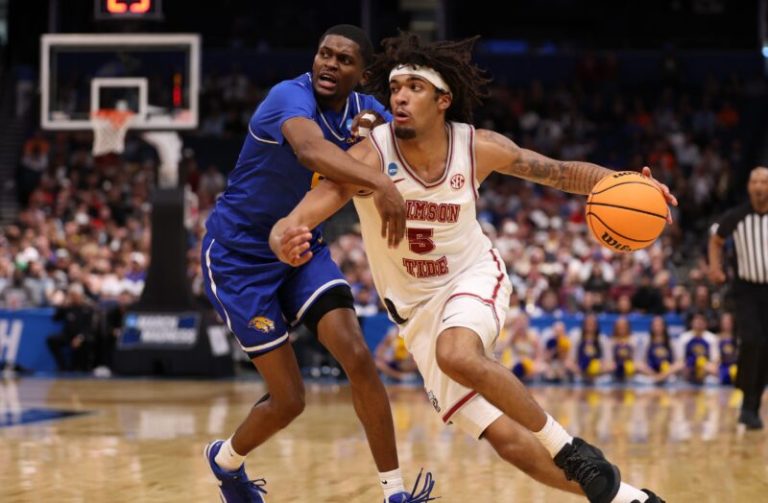
7. Alabama

The legal situation of Aden Holloway looms over his status for next season. Should Holloway return, the Crimson Tide have plenty of potential firepower to play their up-tempo style. Amari Allen averaged double figures, while London Jamison stands to have a bigger role in his second seasons in the program. Keitenn Bristow and Jalil Bethea both failed to make an impact after their arrivals from the portal, but development from both would be a major boost.

8. Houston

The Cougars have been a No. 1 or No. 2 seed in the last four tournaments, illustrating the high standards of the program under Kelvin Sampson. There will be retooling through the portal with most of the key components from this past season departing. Veteran forward Joseph Tugler should be the leader of the group and could be joined by Chris Cenac, who is weighing a draft decision. Bigger roles are expected for Mercy Miller and Chase McCarty. Incoming prep center Arafan Diane will be asked to contribute right away.

9. Arkansas

The Razorbacks will be aiming higher after a pair of Sweet 16 appearances. While the departure of Darius Acuff Jr. will leave a major void, John Calipari is bringing in freshman guards Jordan Smith Jr. and JJ Andrews. More will be asked of veterans Billy Richmond III and Malique Ewin, but they are both capable of providing scoring punch.

10. Virginia

The Cavaliers were one of the country’s biggest surprises in Ryan Odom’s first season and stand to bring back several of their key pieces. Thijs De Ridder was first-team all-ACC in his first season with the program, and Sam Lewis and Chance Mallory will have bigger roles. It should be another season at the top of the conference.

11. Gonzaga

It’ll be a new look for the Bulldogs with the team moving into the Pac-12 that will provide greater conference competition with several of the best teams from the Mountain West also arriving. Gonzaga benefits from several mainstays returning with big man Braden Huff expected to be at full strength after missing the final stretch of the season due to a knee injury and rising sophomores Mario Saint-Supery and Davis Fogle looking to make big jumps in production. A strong recruiting class led by Jack Kayil from Germany and Luca Foster will also keep Mark Few’s team in the mix for a top seed in the tournament.

12. Connecticut

Guards Braylon Mullins and Solo Ball could enter the NBA draft. If not, though, UConn will have one of the best backcourts in the country. Silas Demery and Jayden Ross were return after contributing to the team that fell one game short of a national title. There will be a need for a new interior presence with Tarris Reed Jr. graduating, and Alex Karaban’s departure leaves a huge void. But the Huskies will add more wing scoring with freshmen Colben Landrew and Junior County.

13. Iowa State

It will be a year of transition for the Cyclones with mainstays Tamin Lipsey and Jordan Jefferson among the players moving on. Milan Momcilovic, the team’s leading scorer, is expected to explore his NBA draft options, and his return would be a massive boost. T.J. Otzelberger will be aggressive in the portal, but he has holdovers Killyan Toure, Blake Buchanan and Jamarion Batemon to build around.

14. St. John’s

Few teams will be as active in the portal with standouts Zuby Ejiofor and Bryce Hopkins out of eligibility. The backcourt should bring back experience and depth with Dylan Darling, Oziyah Sellers, Ian Jackson and Joson Sanon, though this group will need to be better from 3-point range. The biggest source of optimism comes from coach Rick Pitino and his track record of tournament success.

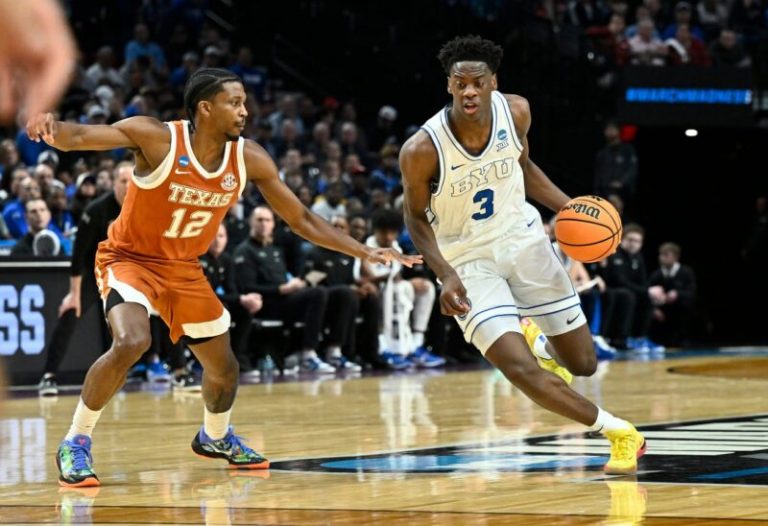
15. BYU

Incoming freshman Bruce Branch III isn’t as heralded as AJ Dybantsa was, but he’s a massive piece for the Cougars, who will be hoping to avoid the injury bug that slowed their expected NCAA Tournament run. Robert Wright will be an elite scorer with Branch. The big question for coach Kevin Young is bringing in some size to address departures in the frontcourt.

16. Purdue

The Boilermakers move on without the trio of Braden Smith, Fletcher Loyer and Trey Kaufman-Renn. No returning player scored more than guard C.J. Cox’s 8.5 points per game. Look for Purdue to lean on a recruiting class that ranks seventh nationally while blending in transfers such as former Princeton forward Caden Pierce. Coach Matt Painter has won at least 24 games in each of the past five years and will contend to do so again despite the reworked roster.

17. Miami (Fla.)

Like his ACC counterpart Ryan Odom, Jai Lucas did one of the best jobs of first-year coaches with the program making a 19-win improvement. The Hurricanes are looking to go further than just making the NCAA Tournament with Shelton Henderson and Dante Allen expected to the top scoring options. Lucas will again hit the portal but he secured an elite recruit by convincing incoming freshman Caleb Gaskins to stay home in South Florida.

18. Nebraska

To capitalize on this year’s success, Nebraska has to retain Pryce Sandfort and Braden Frager while dipping into the portal to find a new starting point guard. The Cornhuskers will bring back some size up front but will need a healthy season from former All-MAC pick Ugnius Jaruševičius. Incoming freshmen Colin Rice and Jacob Lanier could make an immediate impact.

19. Iowa

After a magical Elite Eight run, Iowa looks to maintain that momentum under second-year coach Ben McCollum while losing top scorer Bennett Stirtz. The Hawkeyes will be aggressive in the portal to find a guard to join holdovers Kael Combs, Isaia Howard and Tate Sage, and also to find a center to play alongside projected returnees Alvaro Folgueiras, Cam Manyawu and Cooper Koch.

20. Kansas

One key returner is confirmed with Bill Self deciding to stay on the bench amid health issues. There will be less drama without Darryn Peterson around, and the role of standout freshman should be handled by incoming recruit Taylen Kinney. Bryson Tiller was slated for a bigger role in the frontcourt after the surprising departure of Flory Bidunga. But it appears Tiller and guard Elmarko Jackson also may be leaving.

21. Tennessee

The elusive first Final Four remains the goal but getting back to the Elite Eight for the fourth year in a row will require Rick Barnes to bring in major additions through the portal. One already in the books is Tyler Lundblade from Belmont, who brings needed shooting range. Ralph Scott and Manny Green are two freshmen that need to have a big impact.

22. North Carolina

One big question was answered with the hiring of Michael Malone. It’s unclear how bringing in an NBA title-winning coach without experience as college head coach will shake out. But let’s assume for now that most of their returning pieces stay in place. Luka Bogavac and Jarin Stevenson are good building blocks that return for their senior season, and key recruits Dylan Ming and Maximo Adams could contribute right away. Expect there to be major moves in the portal with Chapel Hill still remaining a desired destination.

23. Louisville

Louisville has gone 51-19 in Pat Kelsey’s two years and should remain an ACC contender despite losing some key pieces, including Mikel Brown Jr. and Ryan Conwell. While there’s work to be done in the portal, the Cardinals bring back guard Adrian Wooley and former G-League guard London Johnson.

24. Wisconsin

With guard John Blackwell entering the portal, look for the Badgers to be active in adding depth and shooting to the wing rotation. What Wisconsin has is an experienced frontline led by Nolan Winter and Austin Rapp, which should lead to a different look on offense. But the pieces are in place for another top-six finish in the Big Ten.

25. VCU

The Rams were poised to have five of their top six scorers return before the announcement that Terrence Hill Jr. was departing. Even with the bad news, Phil Martelli Jr. has a solid foundation to build upon after a 28-win season. Look for guard Nyk Lewis to emerge in his sophomore season with forward Lazar Djokovic providing scoring inside . Sammy Jackson, a top-50 recruit, should be a huge addition to the lineup.

WrestleMania weekend is set.

WWE’s two-day spectacle is less than two weeks away, and the schedules for night one and night two were announced on ESPN on Tuesday, April 7. While matches have been forming ever since the Royal Rumble, it was unknown whether it would take place on Saturday, April 18 or Sunday, April 19. Now, we know who will be in the ring on which night.

There are 13 matches scheduled to take place at the time of announcement, and while there could be more revealed as we get closer to the biggest night in wrestling, here is the WrestleMania 42 schedule:

WrestleMania 42 match card on night one

There will be seven matches on Saturday, April 18. While the match order isn’t finalized, it was confirmed the first two matches will be Jacob Fatu vs. Drew McIntyre, as well as the six-man tag team match involving iShowSpeed and Logan Paul as the first hour of the show will air on ESPN2.

The main event is the Undisputed WWE Championship match between Cody Rhodes and Randy Orton.

Here is the full lineup for night one:

  • Unsanctioned match: Jacob Fatu vs. Drew McIntyre (on ESPN2 first hour)
  • iShowSpeed, Logan Paul and Austin Theory vs. LA Knight, Jimmy Uso and Jey Uso (on ESPN2 first hour)
  • Gunther vs. Seth Rollins
  • WWE Women’s Tag Team Championship fatal four-way match: Nia Jax and Lash Legend (c) vs. The Bella Twins vs. Alexa Bliss and Charlotte Flair vs. Lyra Valkyria and Bayley
  • Women’s Intercontinental Championship match: AJ Lee (c) vs. Becky Lynch
  • Women’s World Championship match: Stephanie Vaquer (c) vs. Liv Morgan
  • Undisputed WWE Championship match: Cody Rhodes (c) vs. Randy Orton

WrestleMania 42 match card on night two

Six matches are schedule for Sunday, April 19. The first two matches will air on ESPN, and it will feature Brock Lesnar vs. Oba Femi and the Intercontinental Championship ladder match.

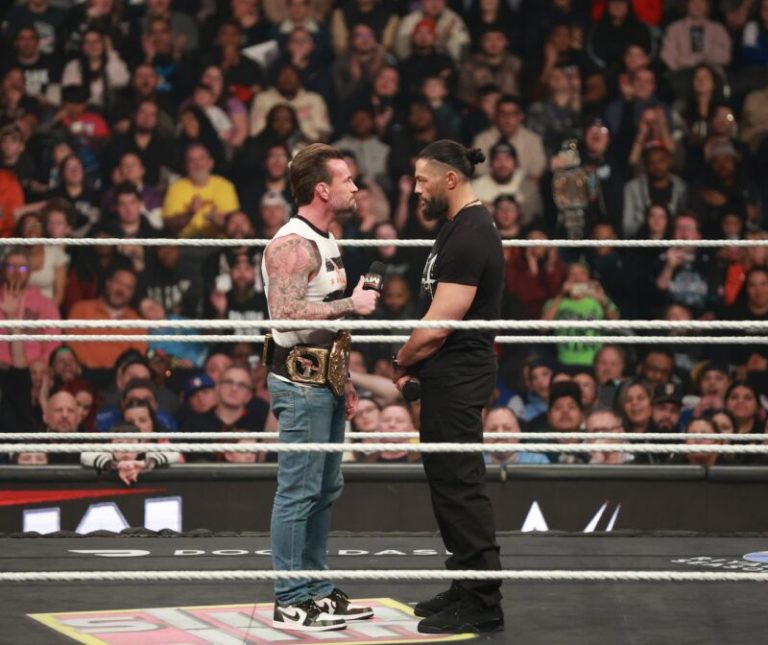
The main event of the night is the World Heavyweight Championship match featuring CM Punk vs. Roman Reigns.

Here is the full lineup for night two:

  • Oba Femi vs. Brock Lesnar (on ESPN first hour)
  • Intercontinental Championship ladder match: Penta (c) vs. Je’Von Evans vs. JD McDonagh vs. Dragon Lee vs. Rusev vs. Rey Mysterio (on ESPN first hour)
  • Demon Finn Bálor vs. Dominik Mysterio
  • United States Championship match: Sami Zayn (c) vs. Trick Williams
  • WWE Women’s Championship match: Jade Cargill (c) vs. Rhea Ripley
  • World Heavyweight Championship match: CM Punk (c) vs. Roman Reigns

When is WrestleMania 42?

WrestleMania 42 is on April 18-19 from Las Vegas. Both nights begin at 6 p.m. ET and will stream on ESPN.

The NCAA men’s basketball championship game between the Michigan Wolverines and UConn Huskies will feature several players projected as first-round picks in the 2026 NBA Draft.

While top picks including AJ Dybantsa as well as Cameron Boozer and Darryn Peterson were eliminated earlier during March Madness, the Final Four saw several star-studded prospects participate. Arizona freshmen Brayden Burries and Koa Peat as well as Illinois freshman Keaton Wagler were one win short of an appearance in the title game, but several other future NBA players will play for a chance to cut down the nets.

In addition for a chance at a championship trophy, the title game between Michigan and UConn is also a wonderful opportunity to put on one more show in front of scouts during the Big Dance.

Note: Some highly-ranked players not included here who could potentially return to college include Tounde Yessoufou (Baylor), Alijah Arenas (USC), Meleek Thomas (Arkansas), Ebuka Okorie (Stanford) and Flory Bidunga (Kansas). But if these players decide to declare and stay in the draft, they could potentially warrant first-round consideration as well.

Our draft order is based on ESPN’s projected records and factors in trades, including swaps and protections.

1. Washington Wizards: AJ Dybantsa

  • TEAM: BYU
  • POSITION: Wing
  • BORN: Massachusetts
  • HEIGHT: 6-9
  • DRAFT AGE: 19

The Wizards have the second-worst offense in the NBA and could instantly inject life into their offense by selecting AJ Dybantsa, the NCAA scoring champion and Julius Erving Award winner. He emphasized that point during his one game for BYU in March Madness, putting up 35 points and 10 rebounds. The Big 12 Rookie of the Year led the nation in unassisted points scored (680) by a wide margin this season, per CBB Analytics. The emerging star also had 40 points against Kansas State in the Big 12 Tournament on March 10 and averaged 28.8 points per game over his final 17 appearances. 

2. Indiana Pacers: Cameron Boozer 

  • TEAM: Duke
  • POSITION: Forward
  • BORN: Florida
  • HEIGHT: 6-9
  • DRAFT AGE: 18

Duke freshman Cameron Boozer was dominant during his first NCAA season, earning national collegiate player of the year. According to NBA insider Jake Fischer, rival teams believe Boozer would be the “preferred selection” for the Pacers because of his “potential fit” alongside Pascal Siakam and Ivica Zubac. The ACC Player of the Year isn’t a human highlight reel, but he offers consistency and a diverse, impactful skill set. More importantly, he can bring a culture of winning after multiple championships in high school and an elite Duke team that made it to the Sweet 16 before a heartbreaking last-second loss.

3. Brooklyn Nets: Darryn Peterson

  • TEAM: Kansas
  • POSITION: Guard
  • BORN: Ohio
  • HEIGHT: 6-5
  • DRAFT AGE: 19

While he is no longer perceived as the near-certain No. 1 overall pick that he once was due to relative inconsistency and injury issues, many scouts and evaluators feel that Darryn Peterson is the most talented player in this class. The Nets have the worst offense in the NBA and could change the course of the franchise by selecting Peterson. It is incredibly rare to find a prospect who is able to score as efficiently as Peterson did while holding a usage rate as high as his was this season. 

4. Utah Jazz: Kingston Flemings 

  • TEAM: Houston
  • POSITION: Guard
  • BORN: Texas
  • HEIGHT: 6-4
  • DRAFT AGE: 19

While most project North Carolina freshman Caleb Wilson at No. 4 overall, he may not fit in Utah’s crowded frontcourt. Meanwhile, the Jazz currently have the worst defensive rating in the Western Conference and could potentially improve that by selecting Houston freshman Kingston Flemings. The All-Big 12 guard has several games when he has recorded at least three steals, notching eight against Arizona State earlier this season. He scored 42 points against No. 11 Texas Tech on Jan. 24. He helped lead Houston to the Sweet 16, and with highs as high as his were this season, it will not take long for him to hear his name called on draft night.   

5. Sacramento Kings: Caleb Wilson

  • TEAM: North Carolina
  • POSITION: Big
  • BORN: Georgia
  • HEIGHT: 6-10
  • DRAFT AGE: 19

The Kings need the best player available, and that is North Carolina freshman Caleb Wilson, who unfortunately missed the NCAA Tournament with a broken thumb. Wilson, who also suffered a hand fracture earlier in the season, did more than enough to earn this placement, though. According to Bart Torvik, before the injury the All-ACC big man led the nation with 67 dunks recorded. He was also the only player under 20 years old to reach thresholds of 2.5 percent for both block and steal percentage while also notching a defensive rebound percentage above 20.0 percent.

6. Atlanta Hawks (via Pelicans): Darius Acuff Jr. 

  • TEAM: Arkansas
  • POSITION: Guard
  • BORN: Michigan
  • HEIGHT: 6-3
  • DRAFT AGE: 19

The Hawks could use a guard like Arkansas freshman Darius Acuff Jr. after trading away Trae Young, using a first-round pick they received from the Pelicans. En route to the Sweet 16, the SEC Player of the Year proved he is one of the most enticing offensive prospects in recent memory. Acuff Jr. led the nation for points created (1,394) either by himself or through an assist, per CBB Analytics. He led freshmen for field goals made in transition (72) and field goals made from both the left and right side of the court. He was among the freshmen leaders in alley-oop assists (17) as well. He has significant defensive deficiencies but playing alongside Dyson Daniels would help cover that problem. 

7. Dallas Mavericks: Keaton Wagler 

  • TEAM: Illinois
  • POSITION: Wing
  • BORN: Kansas
  • HEIGHT: 6-6
  • DRAFT AGE: 19

The Mavericks have the worst offensive rating in the Western Conference and could benefit from a player like Illinois standout Keaton Wagler. The 19-year-old guard played a crucial role to help the Fighting Illini earn a spot in the Final Four, where he recorded 20 points and 8 rebounds against UConn in the national semifinals. The freshman also dropped 25 points in the Elite Eight. He projects as one of the best 3-point shooters in this class, shooting 39.7 percent from beyond the arc as a freshman. while connecting on as many as nine 3-pointers in a game. The Big Ten Rookie of the Year has athletic limitations but is a cerebral basketball player who is also averaging 5.1 rebounds and 4.2 assists per game this season. 

8. Memphis Grizzlies: Yaxel Lendeborg

  • TEAM: Michigan
  • POSITION: Forward
  • BORN: New Jersey
  • HEIGHT: 6-9
  • DRAFT AGE: 23

The Grizzlies could add to their rebuilding core after trading away Jaren Jackson Jr. by selecting Yaxel Lendeborg, who has shown on his way to the men’s collegiate national championship game that he is perhaps the most NBA-ready player in this draft class. The Big Ten Player of the Year offers a bit of everything on both sides of the ball and has silenced skeptics who were unsure how his game would scale after transferring from mid-major UAB to high-major Michigan. The Grizzlies have drafted players with similar trajectories like Jaylen Wells and Cedric Coward.

9. Chicago Bulls: Brayden Burries 

  • TEAM: Arizona
  • POSITION: Guard
  • BORN: California
  • HEIGHT: 6-4
  • DRAFT AGE: 20

Arizona freshman Brayden Burries was an exciting prospect to watch during the Big Dance, making it all the way to the Final Four and dropping 23 points against Arkansas. He had two breakout games in January, which helped solidify his draft stock. But the All-Big 12 guard continued to display his tantalizing talent, scoring 31 points with seven rebounds and five steals against Colorado on March 7 and 20 points with 12 rebounds and five assists during a victory against No. 14 Kansas on Feb. 28. He has proven productivity, and he is able to defend, relocate, move the ball and make 3-pointers off the dribble. Burries would make a great pick for whatever new executives take over the front office for the Bulls.

10. Milwaukee Bucks: Mikel Brown Jr. 

  • TEAM: Louisville
  • POSITION: Guard
  • BORN: Florida
  • HEIGHT: 6-5
  • DRAFT AGE: 20

The Milwaukee Bucks need to simply draft the best player available with whatever pick they have and will likely keep Louisville floor general Mikel Brown Jr. highlighted on their big board. The All-ACC guard has deep shooting range and was among the freshmen leaders in 3-pointers made from beyond 25 feet (27) this year, per CBB Analytics. Brown was averaging 29.2 points per game over his last five appearances, including 45 points against NC State on Feb. 9, while hitting 10 shots from beyond the arc, before an injury on Feb. 28 forced him to miss March Madness.

11. Golden State Warriors: Labaron Philon 

  • TEAM: Alabama
  • POSITION: Guard
  • BORN: Alabama
  • HEIGHT: 6-4
  • DRAFT AGE: 20

The Warriors could still use more reliable players in the backcourt and could find a fairly compelling player in Alabama sophomore Labaron Philon. Even though the All-SEC guard was not playing at 100 percent during March Madness due to injury issues, he played well in the tournament, recording 35 points during a loss against Michigan. He also notched 29 points in his first game and 12 assists in his second. The guard averaged 22.0 points per game, and he improved his 3-point shooting from 31.5 percent as a freshman to 39.9 percent as a sophomore, while also managing 5.0 assists per game in the process.

12. Oklahoma City Thunder (via Clippers): Hannes Steinbach

  • TEAM: Washington
  • POSITION: Big
  • BORN: Germany
  • HEIGHT: 6-11
  • DRAFT AGE: 20

After winning the 2025 NBA Finals, the Oklahoma City Thunder are projected to add even more lottery-caliber talent in the 2026 NBA Draft. They could use it to potentially replace Isaiah Hartenstein by drafting a younger German big man: Hannes Steinbach. While his team missed the tournament, the All-Big Ten post is an instinctive rebounder with great hands, including an absurd 24 rebounds against USC on March 4. Additionally, the center is one of the more prolific pick-and-roll finishers in college basketball. He shined during the FIBA U19 World Cup, and scouts love that he is a smart basketball player who can make great reads.

13. Portland Trail Blazers: Nate Ament 

  • TEAM: Tennessee
  • POSITION: Wing
  • BORN: Virginia
  • HEIGHT: 6-10
  • DRAFT AGE: 19

After a relatively slow and inefficient start to the season, Tennessee freshman Nate Ament started to realize some of his lofty expectations. The freshman averaged 21.6 points per game, while shooting 38.9 percent on 3-pointers, during a 13-game stretch before an injury against Alabama on Feb. 28. The All-SEC forward then had 27 points (4-of-6 on 3-pointers) with eight rebounds, four assists, three blocks and a steal against Auburn on March 12. He was not as efficient during March Madness, but it will only take one team to fall in love with Ament, and that team is almost certainly picking in the lottery.

14. Miami Heat: Koa Peat 

  • TEAM: Arizona
  • POSITION: Forward
  • BORN: Arizona
  • HEIGHT: 6-8
  • DRAFT AGE: 19

The Miami Heat have drafted several prospects known for their athleticism, which means a player like Arizona forward Koa Peat will probably have some appeal to the organization. Peat is an ideal match for this franchise given his versatility as a playmaking forward. Arizona played at a significantly faster pace (3.9 extra possessions) when Peat was on the floor relative to when he was not, per CBB Analytics, which would fit very well with Miami’s fastest-paced offense in the NBA. The All-Big 12 forward just needs a jumper to carve out regular minutes as a high-impact pro. 

15. Charlotte Hornets: Braylon Mullins 

  • TEAM: Connecticut
  • POSITION: Wing
  • BORN: Indiana
  • HEIGHT: 6-6
  • DRAFT AGE: 19

Braylon Mullins, a five-star recruit and former McDonald’s All-American, was a breakout star in the NCAA men’s basketball tournament after hitting one of the most improbable 3-pointers in March Madness history. Mullins continued to show a winning mentality, helping the Huskies earn a spot in the national championship game. The Big East All-Freshman wing shot 40.7 percent on 3-pointers during his first 18 games in the starting lineup. He is a useful off-ball threat, which gives him an immediately practical role at the next level. 

16. Memphis Grizzlies (via Magic): Joshua Jefferson 

  • TEAM: Iowa State
  • POSITION: Forward
  • BORN: Nevada
  • HEIGHT: 6-9
  • DRAFT AGE: 22

A few years ago, research indicated that the Grizzlies tend to value a few statistical similarities in their draftees: Efficient shot selection, added value beyond scoring and defensive playmaking. For the second year in a row, the Iowa State forward was an impactful dribble-pass-shoot forward who met many of the qualifications that led Memphis to find players who spent many years on their roster. The All-Big 12 forward got injured during the first round of the tournament, but Iowa State still earned a spot in the Sweet 16.

17. Toronto Raptors: Bennett Stirtz 

  • TEAM: Iowa
  • POSITION: Guard
  • BORN: Missouri
  • HEIGHT: 6-4
  • DRAFT AGE: 22

The Raptors could use another guard and should have Bennett Stirtz on their priority list. After transferring from Division II to a mid-major and then to a high-major program, he is at the top of the class in creating his own shot off the dribble in isolation or the pick-and-roll. The All-Big Ten guard can also finish plays from dribble handoffs. His play during March Madness, which included 24 points against Illinois and 20 points against Nebraska, earned a spot in the Elite Eight. The Raptors play at a slow pace, which would translate well for Stirtz, who did the same at Iowa. 

18. Charlotte Hornets (via Suns): Jayden Quaintance

  • TEAM: Kentucky
  • POSITION: Big
  • BORN: Ohio
  • HEIGHT: 6-9
  • DRAFT AGE: 18

Jayden Quaintance recorded just one start during his sophomore campaign as he recovered from a torn ACL, meniscus and fractured knee. The big man is still one of the youngest players in this class, but he has shown flashes during his time at Arizona State and Kentucky. When healthy, he is arguably the most talented defender in this draft class and could help a team that desperately needs frontcourt help, like the Hornets. But health may cause some concern for evaluators.

19. Oklahoma City Thunder (via 76ers): Karim López

  • TEAM: International (Australia)
  • POSITION: Forward
  • BORN: Mexico
  • HEIGHT: 6-8
  • DRAFT AGE: 19

The Thunder have drafted multiple players from Australia’s NBL, including Josh Giddey. They could dip into this well again by selecting Karim López with their pick from the Philadelphia 76ers. While the Mexican-born forward still needs some development, he is physically gifted and widely seen as the top prospect from this class currently playing overseas. He exploded for 32 points (11-of-13 FG) with eight rebounds, two blocks and one steal against Melbourne on Jan. 30. Even if he is a draft-and-stash player, that is ideal for a team with a rotation as crowded as the Thunder.

20. San Antonio Spurs (via Hawks): Aday Mara 

  • TEAM: Michigan
  • POSITION: Big
  • BORN: Spain
  • HEIGHT: 7-3
  • DRAFT AGE: 21

After leading his team to the NCAA championship game, Michigan center Aday Mara became one of the prospects who helped himself the most during March Madness. The 7-foot-3 big man, who transferred from UCLA, is a fantastic rim protector. Opponents only attempted 20.9 percent of their field goals at the rim when the Big Ten Defensive Player of the Year was on the court, per CBB Analytics, which ranks near lowest among all NCAA players. He can also pass well, finding some awesome outlet looks in transition and at the rim. Especially in short spurts, Mara would make an excellent backup to Victor Wembanyama. 

21. Detroit Pistons (via Timberwolves): Christian Anderson 

  • TEAM: Texas Tech
  • POSITION: Guard
  • BORN: Georgia
  • HEIGHT: 6-3
  • DRAFT AGE: 20

While they are one of the best teams in the league this season, the Pistons are still struggling from the perimeter and could use more talented 3-point shooters on their roster. A simple fix would be drafting Texas Tech sophomore Christian Anderson, who had the most unassisted 3-pointers (61) among high-major players, per CBB Analytics. After moving from the two-guard to point guard, the All-Big 12 Most Improved Player recorded more than twice as many assists per 100 possessions as a sophomore compared to when he was a freshman. 

22. New York Knicks: Chris Cenac Jr. 

  • TEAM: Houston
  • POSITION: Big
  • BORN: Louisiana
  • HEIGHT: 6-11
  • DRAFT AGE: 19

It was an up-and-down season for former five-star recruit and McDonald’s All-American Chris Cenac Jr. at Houston. While he still remains a candidate to return to college and improve his draft stock for the 2027 NBA Draft, Cenac Jr. got hot at the perfect time. During his first game in the Big Dance, the big man recorded a season-high 18 rebounds, while also knocking down a 3-pointer and grabbing a steal. Then in the Round of 32, he showed off more scoring with some impressive cuts to the basket, dropping 17 points against Texas A&M. He was quieter in the Sweet 16 but still managed 10 rebounds. 

23. Denver Nuggets: Thomas Haugh 

  • TEAM: Florida
  • POSITION: Wing
  • BORN: Pennsylvania
  • HEIGHT: 6-9
  • DRAFT AGE: 22

After winning a national championship with Florida last season, Thomas Haugh was instantly regarded as one of the most interesting players who elected to return to college. The All-SEC forward had one of the top motors in the NCAA this season before an early elimination from March Madness. While he did not score efficiently in a set offense this year, he does not need the ball in his hands very often to make a difference on the floor for his team. He can serve as a glue guy for a contending team looking to win an NBA title like the Nuggets. 

24. Atlanta Hawks (via Cavaliers): Patrick Ngongba II

  • TEAM: Duke
  • POSITION: Big
  • BORN: Virginia
  • HEIGHT: 6-11
  • DRAFT AGE: 20

Many teams could use a big man like Patrick Ngongba II, who is an above-average passer for his position. His assist rate is the highest among underclassmen listed at 6-foot-11 or taller, per Bart Torvik, and he is at the top of his game when passing to a driving perimeter player. The big man, who helped Duke earn a spot in the Elite Eight, is a big-bodied prospect who can carve out space as one of the more prolific cutters in college basketball. He is on an encouraging development track, displaying legitimate year-over-year improvement from his freshman to sophomore campaign.

25. Philadelphia 76ers (via Rockets): Allen Graves 

  • TEAM: Santa Clara
  • POSITION: Forward
  • BORN: Louisiana
  • HEIGHT: 6-9
  • DRAFT AGE: 20

One of the most under-the-radar prospects in all of college basketball this season was Santa Clara freshman Allen Graves, who was nearly a March Madness hero. It was hard not to notice the WCC Rookie of the Year and Sixth Man of the Year after he scored 30 points with 13 rebounds, four assists and two steals Feb. 7 against Washington State. The only players under 21 years old who currently held a higher box plus-minus, via Bart Torvik, were Cameron Boozer and Caleb Wilson.

26. Los Angeles Lakers: Morez Johnson Jr.

  • TEAM: Michigan
  • POSITION: Big
  • BORN: Illinois
  • HEIGHT: 6-9
  • DRAFT AGE: 20

Morez Johnson Jr. is one of the best two-way players in the NCAA. He is a crucial part of the Michigan identity this season, leading his team to an appearance in the NCAA championship game, and has thrived since transferring to the Wolverines from Illinois. Johnson’s shooting form at the free throw line looks good, and he scores well near the rim, especially when cutting to the basket. The former FIBA U-19 Team USA standout and All-Big Ten big man is a trustworthy defensive playmaker, too, and should find minutes at the next level.

27. Boston Celtics: Cameron Carr 

  • TEAM: Baylor
  • POSITION: Wing
  • BORN: Minnesota
  • HEIGHT: 6-5
  • DRAFT AGE: 21

One of the players who improved his draft stock the most this season was Baylor junior Cameron Carr. The All-Big 12 wing brings athleticism and shooting and, per Bart Torvik, he was the only player to make at least 40 field goals that were dunks and more than 60 field goals that were 3-pointers this season. Baylor outscored opponents by an additional 28.5 points per 100 possessions when he was on the floor relative to when he was not, via CBB Analytics, which ranked as the fourth-most of any high-major player in the NCAA. 

28. Minnesota Timberwolves (via Pistons): Tyler Tanner 

  • TEAM: Vanderbilt
  • POSITION: Guard
  • BORN: Tennessee
  • HEIGHT: 6-0
  • DRAFT AGE: 20

It is unusual to find a 6-foot sophomore projected in the first round of a mock draft, but if there were ever a player who has earned that kind of praise should he decide to turn pro after this season, it’s Tyler Tanner. Despite his size, the All-SEC guard found meaningful ways to contribute on both sides of the floor. He can score efficiently, dunk, block shots, steal the ball, and he is more than serviceable as a floor general capable of earning rotation minutes for a team like the Timberwolves. Tanner could also return to school but should earn serious first-round buzz if he turns pro.  

29. Cleveland Cavaliers (via Spurs): Dailyn Swain  

  • TEAM: Texas
  • POSITION: Wing
  • BORN: Ohio
  • HEIGHT: 6-8
  • DRAFT AGE: 21

After transferring from Xavier to Texas during the offseason and then leading his team to the Sweet 16, Dailyn Swain became one of the more intriguing breakout players in college basketball. The All-SEC forward is versatile and contributed a little bit of everything for the Longhorns on both sides of the ball, scoring well both in the paint and on fastbreaks. Another element that is notably compelling is that Swain is efficient one-on-one in isolation against his defenders. 

30. Dallas Mavericks (via Thunder): Amari Allen 

  • TEAM: Alabama
  • POSITION: Wing
  • BORN: Wisconsin
  • HEIGHT: 6-7
  • DRAFT AGE: 20

Alabama’s Amari Allen is a 6-foot-7 freshman who averaged 12.9 points, 6.9 rebounds and 2.9 assists with 1.7 “stocks” (combined steals and blocks), while shooting 39.5 percent on 3-pointers on 4.8 shots per game for the Crimson Tide during SEC conference play. The SEC All-Freshman wing is a good connective piece who plays hard, cares about winning and knows how to make the right play. Despite a weak showing against Michigan in the Sweet 16, he is still someone who could earn fringe first-round consideration. 

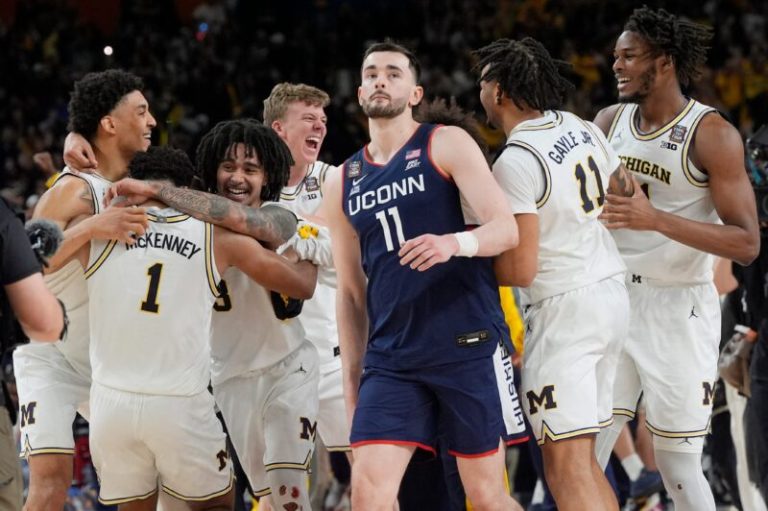
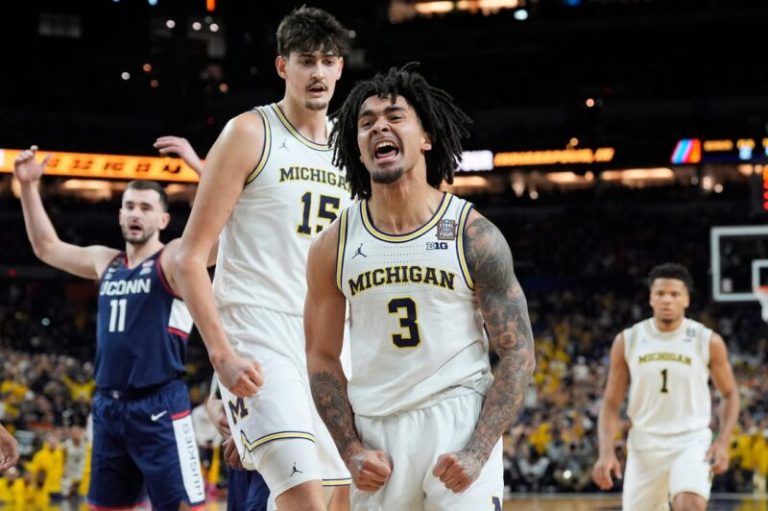
INDIANAPOLIS — Starting guards Solo Ball and Silas Demary Jr. were each whistled for two quick fouls in Connecticut’s 69-63 loss to Michigan in the national championship game of the men’s NCAA Tournament, changing the complexion of a matchup the Huskies hoped could be won on the perimeter.

Nursing a foot injury suffered in the national semifinal against Illinois, Ball finished with 11 points in 16 minutes. Demary lasted just 21 minutes, scoring one bucket before being called for his fifth foul with just over a minute to play.

“I just thought that the first-half foul trouble, really, I thought we were positioned if we didn’t have that foul trouble to potentially go into halftime with a lead,” coach Dan Hurley said.

Forward Tarris Reed Jr. had 13 points and 14 rebounds but was bothered by the defense of Michigan’s Aday Mara and made just 4 of 12 attempts from the field, his worst shooting performance since missing all three shots in a regular-season matchup against Illinois late November. Guard Braylon Mullins had 11 points on 4 of 17 shooting and made 3 of 10 attempts from 3-point range.

The main reason UConn stayed close with Michigan was the same reason UConn was here in the first place: Playing in the final game of his college career, senior forward Alex Karaban had a team-high 17 points and 11 rebounds while adding two assists and two steals.

“So it hurts right now. It hurts a lot right now,” he said.

Crucially, Karaban played all 40 minutes, continuing to serve as the Huskies’ steadying force in his final March Madness experience.

“For coach to play me 40 minutes, I can’t thank him enough,” Karaban said. “That’s all I wanted. That’s all I wanted, is to give everything I got, leave everything I’ve got out there and try to do everything to help us win.”

LOOKING AHEAD: Our too-early men’s basketball Top 25 for next season

Said Hurley, “Let me play him into the ground one more time, just one more 40-minute game for Alex. Let me just play that guy into the ground one more night like I have throughout his career. He deserved to play 40 minutes.”

The most fitting way for Karaban to end his career would have been as a three-time national champion, joining his part on back-to-back winners in 2023 and 2024 and placing him in elite, UCLA-only territory among college players with three rings.

“Obviously. for us it’s tough,” said Hurley. “Again, we did not come here for watches, we came here for rings.”

But there’s something apt about the way this ended, too. Since his redshirt freshman season, when he played a complementary role on a loaded roster, Karaban has been the glue that held the Huskies together — the key cog that helped the program breathe rarefied air in reaching three championship games in four years.

“I might cry up here just talking about just the impact he’s had, in the locker room, throughout every single practice, every single game,” Ball said. “He’s just always there, and he’s the same person every single day. He doesn’t change. Incredibly smart, great guy off the court. I’m going to miss this guy so much.”

Karaban’s performance in the second half helped UConn shake off multiple double-digit deficits and hang tight with an opponent expected to leave the Huskies in the dust after dismantling Arizona in the national semifinals.

After the Wolverines took their largest lead of the game at 43-35 six minutes into the second half, Karaban corralled an offensive rebound and put back the layup to stem Michigan’s momentum. With Michigan ahead 58-48 at the five-minute mark, Karaban found Mullins for a 3-pointer that set up a frantic final stretch.

Later, with 2:30 remaining, Karaban hit a 3-pointer of his own to cut Michigan’s advantage to 62-56. While his effort would come up short — and wasn’t perfect, with a pair of missed free throws with just over six minutes to go and a missed 3-pointer with 17 seconds left — Karaban nearly willed UConn across the finish line.

“Yeah, you know, blessed that I’ve been able to wear this jersey for the longest amount of time possible, the max amount, the max amount of minutes, the max amount of games this season. I came back ultimately to win, fell short,” he said.

Win or lose on Monday night, Karaban’s place in program history is secure. He is already the first active player to be inducted into the program’s hall of fame. He holds career marks for wins (126), games played (150), games started (149) and minutes played (4,909). He finished his career with a blistering 18-2 mark in the NCAA tournament, including a 5-1 mark in the Final Four.

This is a place that has put out a lengthy list of college basketball’s best individual players in the past three decades. While not the program’s best overall player and not the Huskies’ best NBA prospect, Karaban leaves with an even more important title: the most important player in UConn history.

“He’s put UConn in that rarefied place in college basketball,” Hurley said. This guy changed my life, the staff’s lives, the joy he’s brought to the university, the fan base.

“His decision to come to UConn has made us … Florida won the national championship last year. I’ll probably get in trouble for this. Michigan won the national championship this year. But he’s helped to make UConn, I think, right now, we’re probably the premier program in college basketball right now, having been to three out of four national championship games, having won two of them.”

That’s a small comfort after coming so close to a third ring. But Karaban took solace in the legacy he leaves behind: Already a blueblood, UConn has become something much more — a potential dynasty, if Hurley can keep this up — thanks to the senior’s four years as the program’s irreplaceable piece.

“I’m just reminding myself right now that when I came into UConn how much I’ve grown, and I’m ultimately leaving UConn in a better place right now from where I started,” he said. “I gave it everything I got. I gave it my heart. I gave everything. All I thought about was UConn basketball every single day.

“Now that I’m leaving, and for UConn to be one of the best brands in college basketball and to be at the top, I left it better than when it started. I’m most proud of that.”

INDIANAPOLIS — You wouldn’t think Michigan would be all smiles at halftime.

Yes, it had a four-point lead over Connecticut in the national championship game, but it was an unattractive four-point lead. It was arguably the worst first-half performance of the season. Not only did the Wolverines fail to make a single 3-pointer in the first half – the only time that’s happened this season – but there were no makes outside of the paint. 

An awful first 20 minutes, but the Wolverines weren’t just staying positive, they were beaming in happiness.

Why?

“It can’t get any worse,” Michigan guard Nimari Burnett told USA TODAY Sports.

Buy Michigan championship books, newspapers, gear

True, but it’s not like the second half was any better. Michigan struggled offensively for all 40 minutes. The 69 points were Michigan’s third lowest of the season. It was the worst 3-point shooting night of the season. 

Actually, it was the worst shooting performance of the season, period.

UConn needed to make Michigan look ugly to win. It did that – and it still lost. 

So, how did the Wolverines do it?

Because of one thing hiding in plain sight; while Michigan was lighting up the scoreboard with its prolific offense all tournament long, it made everyone forget one thing: they are just as good on defense.

“When one side lets us down, the other side picks it up,” Michigan forward Yaxel Lendeborg said.

The Wolverines made sure to remind everybody on Monday, resulting in a national championship as those halftime smiles carried over to after the buzzer sounded and Lucas Oil Stadium rained maize and blue confetti.

It’s not like Michigan’s defensive prowess wasn’t there for all to see. Three players – Lendeborg, Morez Johnson Jr. and Aday Mara – were Big Ten all-defensive players, with Mara the conference defensive player of the year.

That’s why teams’ defensive shooting percentage of 38.4% and average of 6.1 blocks per game were each the second best mark in the country, and it was on full display in the NCAA Tournament. 

The reason why Michigan won its first five tournament games by an average of 21.6 points per game wasn’t just because it was scoring at least 90 points, but because it harassed opposing offenses every night.

No team shot above 45% against the Wolverines, and the collective opponent shooting percentage from those games? A whopping 37.9%. The defense got better in the tournament.

“The statistics, it speaks for itself,” Burnett said. “I feel like we’re the best defensive team in the country.”

Bennett and company did prove it. UConn shot a season-worst 31% from the field. A team that was top 10 in assists with more than 18 per game had just nine, the only time it was held to single digits.

Despite making nine three pointers, UConn missed 24 attempts. Shots were constantly getting contested by the the Wolverines’ quickness to the ball. Even with the looks UConn wanted, not many of them were wide open.

It didn’t get any easier near the basket. Six shots inside the paint got swatted away, making it tough for the Huskies to prevail even with their own defensive toughness.

“It’s hard to have a level of disappointment where literally it just came down to we just didn’t make enough shots in the basket,” UConn coach Dan Hurley said. “To be able to keep that team under 40% from the field – 38% – this team has destroyed everyone they’ve faced in this tournament.”

For all of its defensive success, Michigan still had to find a way to score, and it did so in an uncharacteristic way.

If there was one thing Michigan wasn’t good at, it was free throws. The Wolverines entered the night 109th in the country with a 74.3% mark from the charity stripe. They drew fouls, resulting in 28 free throw attempts.

How many makes? How about 25 for an 89.3% clip.

All of it proving to be just enough to get the biggest win of the season.

“We started off really, really bad offensively, our defense was the reason why we won most of those games, today is the same thing,” Lendeborg said. “We had to dig deep.”

While it wasn’t pretty by any means, how Michigan won showed there is nothing to doubt about this title. Since the statement it made at the Player’s Era tournament, Michigan had been a relentless machine on both sides of the ball, churning blowout after blowout, no matter who was on the other side.

Even when it isn’t able to do that, instead of falling apart like most teams could, the Wolverines opted to hone in on one of its many strengths and ride it toward a win.

“They’re legit. They definitely deserved to win the national championship. They’re clearly the best team in the country this year,” Hurley said.

UConn wanted a slugfest, and it’s exactly what it got. Michigan coach Dusty May actually admitted the Huskies “had a masterful game plan to beat us.” All of it pointed to a third national title in four years to cement Hurley’s dynasty.

Little did UConn and the rest of the country realize Michigan had been throwing it down all season, and it didn’t need another offensive surge to do that. The defense carried Michigan just as much to this point, and in the end, it proved defense wins championships.

“Obviously, it’s a big stage, but we deserve to be here,” Burnett said. “We deserve this moment.”