
Author

admin

Browsing

Statistics Canada released October’s job numbers on Friday (November 7). The data showed a surprise expansion of the Canadian labor market with the addition of 67,000 new jobs during the month, as well as a 0.2 percent drop in the unemployment rate to 6.9 percent.

This marks the second consecutive monthly increase, following 60,000 new workers entering the market in September. The gains over the two-month period also offset the cumulative 106,000 losses that were recorded in July and August.

The biggest gains came in the wholesale and retail trade sector, which added 40,700 new jobs; followed by transportation and warehousing, which added 29,500; and information, culture and recreation, which added 25,200.

The report comes just days after the federal Liberal Party tabled its first budget since winning the election in April. The budget estimates an initial deficit of C$78 billion in 2025-26, which would slowly decline to C$57 billion in 2030.

The budget places greater focus on nation-building, strengthening climate competitiveness, streamlining government activities and reducing annual operational costs by C$13 billion by 2029, while maintaining critical social supports.

Highlighting the budget is a promise for a C$51 billion investment over 10 years for local infrastructure projects and a C$81.8 billion over five years for defence spending C$72 billion of which will be new money.

On the mining side of the equation, the Mining Association of Canada said on Tuesday (November 4) that it applauds the budget for several measures aimed at the Canadian mining sector.

Among them, C$2 billion over five years will be directed to Natural Resources Canada to create the Critical Minerals Sovereign fund, which will be used to invest in critical mineral projects and companies.

The budget will also move the existing Critical Minerals Infrastructure Fund into the new First and Last Mile Fund, which will focus investment into near-term projects to get them to production sooner, and provide tax measures so companies can write off capital investments more quickly.

The Mining Association also highlighted the proposed expansion of the Critical Mineral Exploration Tax Credit to include an additional 12 minerals, including bismuth, cesium, manganese, tin and tungsten.

Additionally, the budget indicated that its focus on investing in clean technologies and carbon capture to reduce emissions would eventually render oil and gas emission caps unnecessary.

For more on what’s moving markets this week, check out our top market news round-up.

Markets and commodities react

Canadian equity markets were down this week.

The S&P/TSX Composite Index (INDEXTSI:OSPTX) lost just 0.15 percent over the week to close Friday at 29,912.19.

Meanwhile, the S&P/TSX Venture Composite Index (INDEXTSI:JX) had a much more challenging week, falliing 7.63 percent to 885.31. The CSE Composite Index (CSE:CSECOMP) also had a bad week, plunging 7.35 percent to close out the week at 163.51.

The gold price ended the week flat, closing at US$4,000.20 per ounce by 4:00 p.m. EST Friday. The silver price fell slightly, dropping 0.66 percent to US$48.35.

Meanwhile, in base metals, the copper price shed 2.72 percent to US$5.01 per pound.

The S&P Goldman Sachs Commodities Index (INDEXSP:SPGSCI) fell 0.2 percent to end Friday at 553.62.

Top Canadian mining stocks this week

How did mining stocks perform against this backdrop?

Take a look at this week’s five best-performing Canadian mining stocks below.

Stocks data for this article was retrieved at 4:00 p.m. EST on Friday using TradingView’s stock screener. Only companies trading on the TSX, TSXV and CSE with market caps greater than C$10 million are included. Mineral companies within the non-energy minerals, energy minerals, process industry and producer manufacturing sectors were considered.

1. Quarterback Resources (CSE:QB)

Weekly gain: 160 percent
Market cap: C$11.36 million
Share price: C$1.3

Quarterback Resources is an exploration company focused on exploring the Twin gold property in Northwest British Columbia, Canada.

The project is located in the Omineca Mining District near Fort St. James, and consists of 16 mineral claims covering 11,110 hectares. The site has a history of mineral exploration dating back to the 1970s, including 109 drill holes.

Quarterback holds an option to acquire a 100 percent stake in the property through an earn-in agreement in exchange for C$800,000 in cash payments and C$4.74 million in exploration expenditures over a six-year period.

According to a technical report released in November 2024, the company relogged three of the historic holes from the Takla-Rainbow zone, with one hole returning a grade of 2.26 parts per million (ppm) gold, 2.15 ppm silver and 0.19 percent copper over 22.52 meters.

Shares in Quarterback were up significantly this week. Its most recent news came on Wednesday (November 5) when it filed its monthly progress report on the Canadian Securities Exchange website. The company noted that it was proceeding with a Phase 1 exploration program, which is planned to include LIDAR and induced polarization surveys.

2. Mont Royal Resources (TSXV:MRZL)

Weekly gain: 62.5 percent
Market cap: C$47.55 million
Share price: C$0.26

Mont Royal Resources is an Australia-based exploration company focused on a trio of projects in Québec, Canada. The company began trading on the TSXV on November 5 following a merger with Canada-based Commerce Resources.

The merger combined Commerce’s Ashram rare earth and flourspar project and Eldor niobium projects, with Mont Royal’s existing Northern Lights gold-copper-lithium project, all of which are located in Quebec.

In the October 22 news release announcing the completion of the merger, it stated its core focus would be on the Ashram rare earth and flourspar project and that the deal provided a compelling opportunity to establish a new source of rare earths in North America.

Ashram, located near Nunavik, Quebec, has received more than AU$50 million in investment for exploration activities, development studies and resource definition.

According to the project page, a mineral resource estimate from April 2024 produced an indicated resource grading 1.89 percent total rare earth oxides (TREO) and 6.6 percent fluorspar from 73.2 million metric tons of ore.

Although the company did not release project news this week, two of its projects contain minerals that were added to the CMETC as part of the fall budget.

3. Royalties Inc. (CSE:RI)

Weekly gain: 38.46 percent
Market cap: C$11.36 million
Share price: C$0.09

Royalties is focused on building cash flow through the acquisition of mineral and music royalty assets.

The company has a 100 percent interest in the Bilbao silver property in Zacatecas, Mexico, which hosts silver, zinc and lead deposits. As silver prices improve, the company is seeking to monetize the property.

In June, the company reported that its subsidiary, Minera Portree, won its lawsuit against Capstone Copper (TSX:CS,OTC Pink:CSCCF), asserting its ownership of a 2 percent net smelter return royalty on five mineral concessions at the Cozamin copper-silver mine in Zacatecas.

The protracted legal dispute began after Capstone re-assigned the royalty to itself through a 2019 contract without informing or paying Minera Portree.

Under the terms of the judgment, the 2 percent NSR will revert back to Minera Portree along with royalties for the exploitation of concessions between 2002 and 2019. The amounts for those royalties will be set at the execution phase. Capstone Gold is also ordered to pay royalties from the Portree 1 concession from August 2019 to present.

While Capstone appealed the decision, Royalties announced on Thursday (November 6) that an appellate court had upheld the original June decision, deeming the appellant’s arguments inoperative and inadmissible.

4. Africa Energy (TSXV:AFE)

Weekly gain: 31.82 percent
Market cap: C$64.69 million
Share price: C$0.145

Africa Energy is a South Africa-focused oil and gas exploration and development company.

Its flagship asset is Block 11B/12B located approximately 175 kilometers off the south coast of South Africa. The block covers an area of 18,734 square kilometers and depths between 200 meters and 1,800 meters.

It holds a 4.9 percent interest in the asset through its investment in Main Street 1549, a 49/51 joint venture with Arostyle Investments. The three other partners in the asset announced plans to withdraw from the Block 11B/12B joint venture in July 2024, and announced a definitive agreement for the new ownership structure of the Block 11B/12B asset in May of this year.

The restructuring would result in Africa Energy holding a 75 percent stake in the block, with Arostyle Investments holding the remaining 25 percent. This is contingent on the asset being granted the production rights, which requires approval of its environmental and social impact assessment.

Shares in Africa Energy were up this week. Its most recent news came on October 9, when it provided an operational update from Block 11B/12B. The company announced that it had been granted an extension to submit its environmental and social impact assessment until May 4, 2026.

5. Highland Critical Minerals (CSE:HLND)

Weekly gain: 26.87 percent
Market cap: C$79.73 million
Share price: C$4.25

Highland Critical Minerals is an exploration company focused on advancing its flagship Church lithium property in Ontario, Canada.

The project, located near Thunder Bay, Ontario, is situated within the Quetico region. A preliminary exploration program at the property conducted in August 2023 discovered five pegmatites hosting quartz, feldspar and muscovite and returned high lithium grades up to 3 percent lithium dioxide.

In addition to Church, Highland has been working to acquire other critical mineral properties, with the most recent announced on Friday. In the news release, the company said it had entered into a binding letter of intent to acquire mining claims covering 3,138.874 hectares in the Yathkyed Lake Greenstone Belt in Nunavut, Canada, expanding Highland’s critical mineral portfolio.

FAQs for Canadian mining stocks

What is the difference between the TSX and TSXV?

The TSX, or Toronto Stock Exchange, is used by senior companies with larger market caps, and the TSXV, or TSX Venture Exchange, is used by smaller-cap companies. Companies listed on the TSXV can graduate to the senior exchange.

How many mining companies are listed on the TSX and TSXV?

As of May 2025, there were 1,565 companies listed on the TSXV, 910 of which were mining companies. Comparatively, the TSX was home to 1,899 companies, with 181 of those being mining companies.

Together, the TSX and TSXV host around 40 percent of the world’s public mining companies.

How much does it cost to list on the TSXV?

There are a variety of different fees that companies must pay to list on the TSXV, and according to the exchange, they can vary based on the transaction’s nature and complexity. The listing fee alone will most likely cost between C$10,000 to C$70,000. Accounting and auditing fees could rack up between C$25,000 and C$100,000, while legal fees are expected to be over C$75,000 and an underwriters’ commission may hit up to 12 percent.

The exchange lists a handful of other fees and expenses companies can expect, including but not limited to security commission and transfer agency fees, investor relations costs and director and officer liability insurance.

These are all just for the initial listing, of course. There are ongoing expenses once companies are trading, such as sustaining fees and additional listing fees, plus the costs associated with filing regular reports.

How do you trade on the TSXV?

Investors can trade on the TSXV the way they would trade stocks on any exchange. This means they can use a stock broker or an individual investment account to buy and sell shares of TSXV-listed companies during the exchange’s trading hours.

Article by Dean Belder; FAQs by Lauren Kelly.

Securities Disclosure: I, Dean Belder, hold no direct investment interest in any company mentioned in this article.

Securities Disclosure: I, Lauren Kelly, hold no direct investment interest in any company mentioned in this article.


This post appeared first on investingnews.com

Lobo Tiggre, CEO of IndependentSpeculator.com, shares why copper is his highest-confidence trade for 2026, as well as when he will consider buying.

‘I now have probably more cash to put into play than I’ve ever had sitting on the sidelines waiting for this copper buying opportunity,’ he said.

Securities Disclosure: I, Charlotte McLeod, hold no direct investment interest in any company mentioned in this article.

This post appeared first on investingnews.com

Plus, we break down next week’s market catalysts to watch to help you prepare for the week ahead.

In this article:

    This week’s tech market round-up

    The tech space was marked by heightened volatility this week, with sharp swings driven by concerns over inflated artificial intelligence (AI) valuations and mixed economic data.

    Global markets gained early in the week, driven by optimism over a US-China trade truce, along with a US$38 billion AI cloud deal between OpenAI and Amazon (NASDAQ:AMZN).

    However, gains were tempered following comments from the Global Financial Leaders’ Investment Summit in Hong Kong, where Goldman Sachs (NYSE:GS) CEO David Solomon warned of a likely 10 to 20 percent pullback in equities within the next 12 to 24 months. Other panelists at the event offered similar projections.

    Futures tracking the S&P/TSX Composite Index (INDEXTSI:OSPTX) weakened ahead of the release of Canada’s federal budget, which promises C$925.6 million for sovereign compute capacity, quantum tech funding and support for open banking and stablecoins. The government aims to attract C$500 billion in private sector investment over five years.

    US tech stocks sold off again on Wednesday (November 5) amid uncertainty over the Supreme Court’s tariff ruling and short positions by Michael Burry on NVIDIA (NASDAQ:NVDA) and Palantir Technologies (NASDAQ:PLTR).

    A stronger-than-expected ADP report helped stabilize the tech sector midday, but October jobs data weighed on markets again Thursday (November 6), cooling risk appetite, especially for AI momentum stocks.

    Wall Street’s main indexes extended losses to a second session on Friday (November 7) and posted weekly declines as the Volatility Index (INDEXCBOE:VIX) hit its highest level in a fortnight, just one week after the S&P 500 (INDEXSP:.INX) and Nasdaq Composite (INDEXNASDAQ:.IXIC) notched their longest winning streak in four and seven years, respectively.

    Traders were pricing in a 70.2 percent chance of a 25 basis point interest rate cut from the US Federal Reserve in December at the time of this writing, down from 90 percent last week.

    3 tech stocks moving markets this week

    1. Palantir Technologies (NASDAQ:PLTR)

    Palantir reported a strong Q3 earnings beat with a year-on-year revenue increase of 63 percent to US$1.18 billion, exceeding analyst expectations of US$1.09 billion.

    Earnings per share were also above forecasts, coming in at US$0.21 compared to expectations of US$0.17.

    The company’s total contract value rose to US$2.76 billion, a record high, driven by a 121 percent rise in US commercial revenue and a 52 percent increase in US government revenue.

    The company also raised its full-year 2025 revenue guidance to around US$4.4 billion, driven by continued strong AI demand and government contracts. On the earnings call, management expressed confidence in continued growth fueled by AI, emphasizing strategic partnerships with companies like NVIDIA, while acknowledging challenges in the European market and operational scaling.

    However, Palantir’s share price dropped about 3 percent in after-hours trading. Analysts attributed the market reaction to concerns over the prolonged US government shutdown potentially impacting contracts, alongside a large bearish bet revealed by Michael Burry’s fund.

    The company’s stock is down 14 percent for the week.

    2. Amazon (NASDAQ:AMZN)

    Shares of Amazon rallied on Monday morning after announcing a US$38 billion multi-year partnership with OpenAI to run its advanced AI workloads on Amazon Web Services (AWS) infrastructure, providing access to hundreds of thousands of NVIDIA GPUs and specialized AWS chips.

    The deal significantly strengthens AWS’s position in the AI cloud market. Investors had a marked reaction to the news, driving Amazon’s shares price to a record high of US$US$254.

    However, gains were partially erased during the broader tech sector pullback. Its stock ultimately closed the week down 4.28 percent.

    3. NVIDIA (NASDAQ:NVDA)

    Shares of NVIDIA have been dragged down this week due to valuation concerns and fears related to US export restrictions on advanced AI chips to China.

    During a 60 Minutes interview with Norah O’Donnell on Sunday (November 2) evening that covered a range of topics, President Trump stated NVIDIA’s most advanced AI chips would be reserved exclusively for US companies. The market reacted by sending shares of NVIDIA (up or down?) on Monday morning.

    Also on Monday, Microsoft provided an update on its US$15.2 billion planned investment in the UAE, which will include increasing its AI computing power in the UAE by four times to reach the equivalent of 60,400 NVIDIA A100 GPUs in compute power in the country.

    NVIDIA shares, also boosted by Loop Capital raising its price target by US$100, rose by over four percent from Friday’s closing price in early trading.

    However, a large bearish position against NVIDIA was disclosed from Burry’s fund on Wednesday, adding to downward pressure already on its shares amidst a tech stock sell-off.

    During a Thursday press conference, White House Press Secretary Karoline Leavitt told reporters that Trump “was not interested in selling (the Blackwell chip) to China at this time”.

    Meanwhile, during the Financial Times’ Future of AI Summit, NVIDIA CEO Jensen Huang said the West is being held back by “cynicism” and reportedly told the outlet, “China is going to win the AI race.”

    Huang has previously warned that US restrictions could backfire by accelerating China’s domestic chip development, arguing the US should stay engaged with Chinese developers to maintain leadership. The company’s shares are down 9.53 percent for the week.

    NVIDIA, Palantir and Amazon performance, November 3 to 7, 2025.

    Chart via Google Finance.

    Top tech news of the week

          Tech ETF performance

          Tech exchange-traded funds (ETFs) track baskets of major tech stocks, meaning their performance helps investors gauge the overall performance of different sectors.

          This week, the iShares Semiconductor ETF (NASDAQ:SOXX) declined by 4.81 percent, while the Invesco PHLX Semiconductor ETF (NASDAQ:SOXQ) saw a weekly loss of 5.2 percent.

          The VanEck Semiconductor ETF (NASDAQ:SMH) decreased by 5.41 percent.

          Tech news to watch next week

          Next week, investors will hear earnings results from Cisco Systems (NASDAQ:CSCO), due to report its Q1FY26 earnings on November 12. The company is expected to deliver a year-on-year increase in earnings on higher revenues. Semiconductor equipment supplier, Applied Materials, is also set to report its Q4 earnings on November 13.

          AMD will have its Financial Analyst Day on Tuesday (November 11), providing further strategic updates and outlook.

          Analysts and investors will also be watching for any sign of an end to the 38-day government shutdown after Senate Minority Leader Chuck Schumer (D-NY) unveiled a plan to attach a one year extension to the expiring Obamacare subsidies and to create a bipartisan committee that could negotiate further on how to deal with the subsidies after the government reopened. Majority leader John Thune reportedly told CBS News that the Democratic proposal is a ‘nonstarter’.

          Securities Disclosure: I, Meagen Seatter, hold no direct investment interest in any company mentioned in this article.
          This post appeared first on investingnews.com

          Major League Baseball teams submitted qualifying offers to 13 free agents on Thursday, highlighted by Chicago Cubs outfielder Kyle Tucker, giving players until Nov. 18 to accept or reject their one-year, $22.025 million one-year proposals.

          The other players extended qualifying offers were:

          • Shortstop Bo Bichette, Toronto Blue Jays
          • Starter Dylan Cease, San Diego Padres
          • Closer Edwin Diaz, New York Mets
          • Starter Zac Gallen, Arizona Diamondbacks
          • Outfielder Trent Grisham, New York Yankees
          • Starter Shota Imanaga, Chicago Cubs
          • Starter Michael King, Padres
          • Starter Ranger Suarez, Philadelphia Phillies
          • DH Kyle Schwarber, Phillies
          • Infielder Gleyber Torres, Detroit Tigers
          • Starter Framber Valdez, Houston Astros
          • Starter Brandon Woodruff, Milwaukee Brewers

          Just 14 of the 144 players who have been extended qualifying offers have accepted, including pitcher Nick Martinez of the Cincinnati Reds a year ago.

          While most of the players will automatically reject the qualifying offer, those with intriguing decisions will be Grisham, Woodruff and King. Grisham earned just $5 million last year with the Yankees.

          Woodruff rejected a $20 million club option in 2026 but received a $10 million buyout, so he could earn a total of $32 million by accepting the qualifying offer and staying in Milwaukee. And after the Cubs rejected the three-year, $57 million club option for Imanaga, he turned down a $15.5 million player option, but could accept the qualifying offer and delay his free agency by one year.

          Teams who lose free agent players with qualifying offers could receive draft compensation after the first round if their players receives a free agent contract of at least $50,000 by a team who isn’t receiving revenue-sharing money.

          Tucker is expected to easily be the highest-paid free agent in the class, receiving a deal of at least $350 million if not $400 million.

          Follow Nightengale on X: @Bnightengale

          This post appeared first on USA TODAY

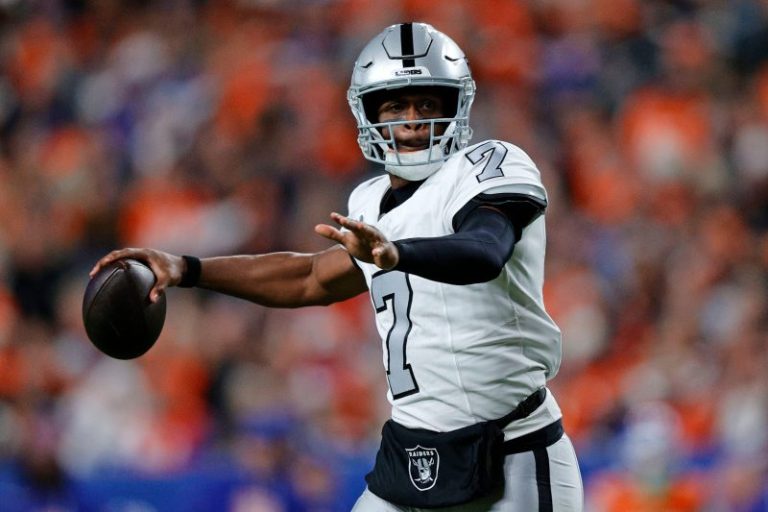
          The Las Vegas Raiders gambled on Geno Smith this offseason.

          To this point, it hasn’t paid off in a big way. The quarterback has struggled in his first season with the silver-and-black, leading the team to a 2-6 record. After being beaten up all night long in Denver, Smith exited with a leg injury in the fourth quarter.

          Kenny Pickett was called on to replace Smith, who was hurt on a seemingly harmless play.

          Here’s the latest on Smith.

          Geno Smith injury update

          Smith visited the blue medical tent and returned to the game after being evaluated.

          The quarterback was injured on a scramble at the beginning of the fourth quarter on ‘Thursday Night Football’ against the Broncos.

          He was quick to get up, but slowly went back down the turf. He was hit on the knee following a tackle from Nik Bonitto.

          Smith did some light jogging on the sidelines after coming out of the tent. He appeared to be working through whatever the ailment is, in an apparent attempt to get back in the game.

          Vegas was only trailing by three in what was a struggle on offense for both sides. Smith was sacked five times in the first half and has taken plenty of hits.

          Pickett came in to replace Smith.

          Raiders QB depth chart

          • Geno Smith
          • Kenny Pickett
          • Cam Miller (practice squad)

          Pickett remains the only healthy quarterback on the roster outside of Smith. Vegas is still waiting for the return of Aidan O’Connell, who remains on injured reserve.

          This post appeared first on USA TODAY

          This article discusses suicide and suicidal ideation. If you or someone you know is struggling or in crisis, help is available. Call or text 988 or chat at 988lifeline.org.

          Dallas Cowboys defensive end Marshawn Kneeland died at age 24 early in the morning of Nov. 6, according to statements from both the Cowboys and Jonathan Perzley, his agent and friend.

          Frisco, Texas Police are investigating Kneeland’s death as a possible suicide. In a statement, the department officials said they responded to a request from the Texas Department of Public Safety to assist in finding a car that evaded state troopers during a pursuit. They later found the car crashed on Dallas Parkway with signs that Kneeland, the driver, fled on foot.

          The Collin County Medical Examiner’s Office will determine the cause of Kneeland’s death, the statement continued.

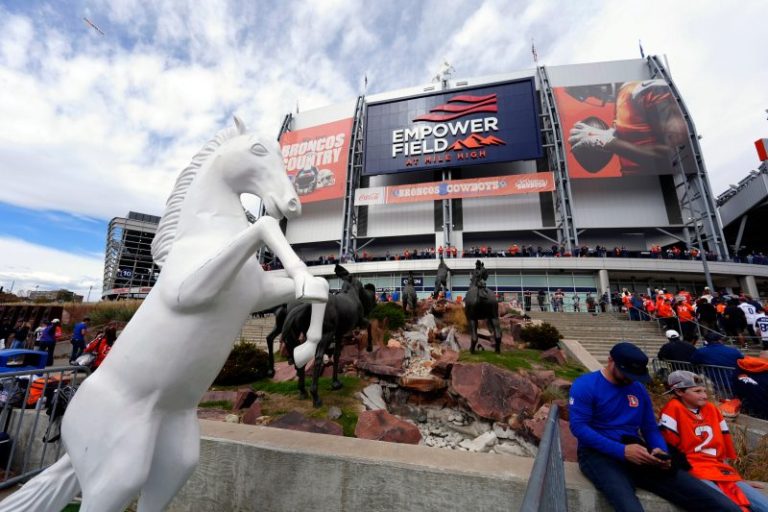
          Tonight, the Las Vegas Raiders and Denver Broncos face off in ‘Thursday Night Football’ to kick off Week 10. The game will hold a moment of silence for Kneeland after this morning’s news.

          Prime Video’s ‘Thursday Night Football’ crew of analysts took turns sharing their feelings about what happened.

          Longtime NFL offensive tackle Whitworth brought up his work with veterans and their mental health.

          ‘This is the kind of conversations all the time about when this uniform comes off, when the helmet comes off of us, and sometimes we think of ourselves as superheroes out there on that field,’ he said. ‘But when we come off of it we’re hurt, we’re stressed just like everybody else. Just hope that for everybody out there that’s experiencing that pain of the today, they remember to reach out to one another.’

          ‘It’s so heavy,’ former All-Pro cornerback Richard Sherman said. ‘When you’re a former player, you recognize it so much more how much you can reach out to guys, how much more you have to reach out and check on guys mentally because we all have those demons. We have those things you’re dealing with but you don’t ever want to be dealing with them alone… You can be vulnerable. You can still be a great player.’

          Current and former NFL players as well as teams paid tribute to Kneeland after news of his death. The NFL also released a statement offering condolences to Kneeland’s loved ones and help for the Cowboys.

          ‘We are deeply saddened by the tragic news of the passing of Cowboys’ Marshawn Kneeland,’ the NFL said. ‘Our thoughts and prayers are with his girlfriend Catalina, family, friends and his teammates. We have been in contact with the Cowboys and have offered support and counseling resources.’

          This post appeared first on USA TODAY

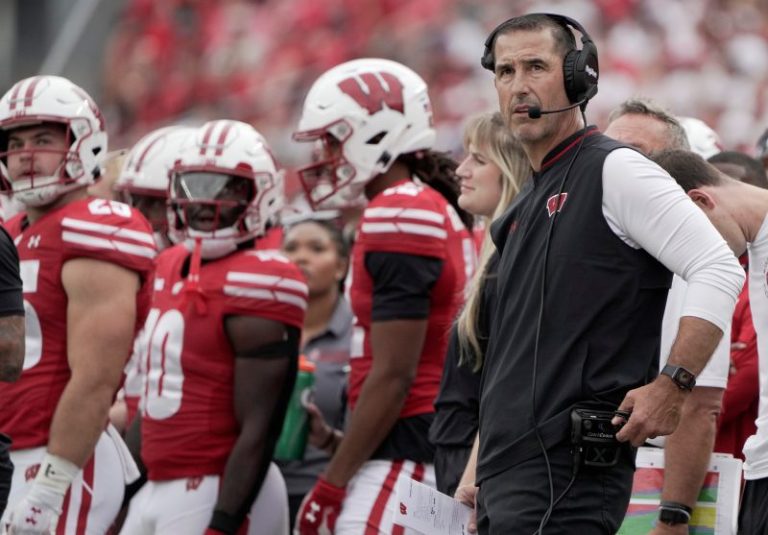
          Wisconsin won’t be searching for a new football coach this year, as the athletic director confirmed Luke Fickell will return to lead the Badgers in 2026.

          Athletic director Chris McIntosh confirmed Fickell’s status to ESPN on Thursday, Nov. 6 and informed the team of the decision.

          The decision comes weeks after McIntosh voiced his support for Fickell to finish what has been a disastrous year for the Badgers. Wisconsin is currently 2-6 with six consecutive losses, and one of four Big Ten teams without a conference victory. It has come while playing one of the hardest schedules in the country that includes five teams currently ranked in US LBM coaches poll, with three in the top 10.

          With Washington and Indiana still left on the schedule, It’s on pace to be the worst season for Wisconsin since 1990, Barry Alvarez’s first season in Madison. Fans have voiced displeasure with Fickell and attendance has been down at Camp Randall Stadium, which is on pace to be its lowest since 1992.

          ‘This season has caused us all to have to look from within,’ McIntosh said. ‘Luke has had to do that. I’ve had to do that. He has a willingness to be better. So do I, and so does Wisconsin from an institutional perspective.’

          The athletic director added the university is increasing its investment into the program and roster that will hopefully put the team back on track to achieve the success it sustained in the 2010s.

          ‘Chancellor (Jennifer) Mnookin and I are aligned on significantly elevating investment in our program to compete at highest level,’ McIntosh said. ‘We are willing to make an investment in infrastructure and staff. As important, is our ability to retain and recruit players in a revenue share and NIL era.’

          Fickell is in his third season with Wisconsin after a successful tenure at Cincinnati, where he led the Bearcats to be the first Group of Five team the reach the four-team College Football Playoff in 2021.

          Since he was hired in 2022, Fickell is 15-19 with an 8-15 mark in the Big Ten play. After going 7-6 in his first season with an appearance at ReliaQuest Bowl, Wisconsin finished 5-7 in 2024, ending its streak of 22 consecutive seasons with a bowl appearance. 

          Fickell’s contract runs through the 2031 season. By retaining him for the 2026 season, Wisconsin avoids having to pay buyout of $27.1 million if he was fired before Dec. 1. In 2026, Wisconsin will open the season with a game against Notre Dame at Lambeau Field then home contests against Western Illinois and Pittsburgh.

          This post appeared first on USA TODAY

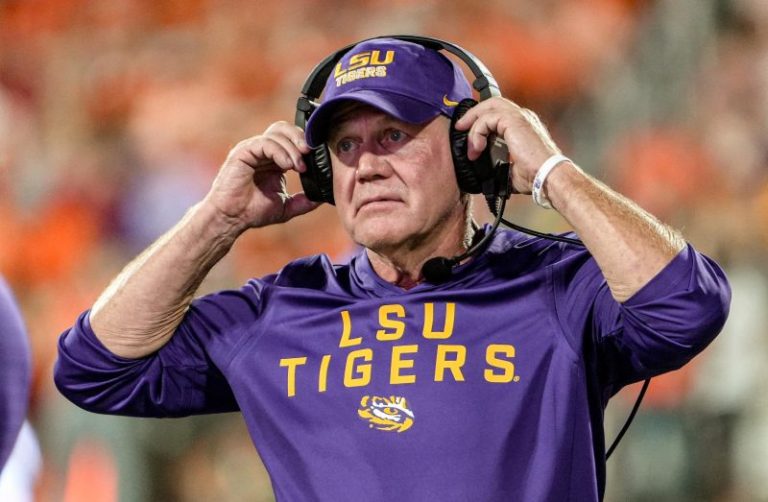
          Former LSU football coach Brian Kelly shared his first statement on Thursday, Nov. 6, since being fired nearly two weeks ago.

          Kelly was fired midway through his fourth season with the Tigers on Oct. 26 following LSU’s 49-25 loss to Texas A&M at home.

          The move has sent a shockwave through LSU athletics in the aftermath, which also parted ways with athletic director Scott Woodward. LSU president Wade Rousse, who was named as the university’s next leader on Nov. 4, then named Verge Ausberry the Tigers’ permanent athletic director after serving in an interim role for a few days.

          ‘As everyone heads on their way to see the Tigers play, I wish Coach (Frank) Wilson, the coaches and our players the best this weekend,’ Kelly wrote on social media. ‘I know they will do their best for themselves and for LSU. We will be watching and cheering for you.

          ‘This journey may have ended, but it’s a journey that will stay with me and my family forever.’

          Kelly had never been fired as a college head coach before. The 64-year-old coach led Division II Grand Valley State to back-to-back national championships before moving to Central Michigan, where he finished 9-4 in his last season.

          Kelly then took over at Cincinnati and led the Bearcats to back-to-back New Year’s Six bowls in 2008-09. He then went 92-39 at Notre Dame and won double-digit games in his final five seasons there.

          Kelly couldn’t quite bring the same success to Baton Rouge, though, with the Tigers failing to finish ranked in the top 10 in his first three seasons with the program. LSU’s leaders said they expect to reach the College Football Playoff every season with the expanded 12-team bracket, and that wasn’t going to happen in 2025 after the Tigers’ third loss, which ultimately led to Kelly’s exit.

          Each of the three coaches at LSU before Kelly – Nick Saban, Les Miles and Ed Orgeron – won national titles with the program. Kelly went 34-14 during his time with the program.

          ‘The losses will always hurt, but I will remember all of the wins,’ Kelly wrote.

          This post appeared first on USA TODAY

          Here’s a quick recap of the crypto landscape for Wednesday (November 5) as of 9:00 p.m. UTC.

          Get the latest insights on Bitcoin, Ether and altcoins, along with a round-up of key cryptocurrency market news.

          Bitcoin and Ether price update

          Bitcoin (BTC) was priced at US$103,902, a 3.3 percent increase in 24 hours and its highest valuation of the day. Bitcoin’s lowest valuation on Wednesday was US$102,377.

          Bitcoin price performance, November 5, 2025.

          Chart via TradingView.

          Both Bitcoin and Ether (ETH) are showing signs of recovery after a volatile start to the week. Current price action is driven by derivatives liquidations, options settlement dynamics and sustained retail and institutional fear.

          Ether ended the trading day at US$3,448.04, an increase of 7.5 percent over the last 24 hours. Its lowest valuation of the day was US$3,326.02. Like Bitcoin, Ether is attempting a rebound near a significant technical and psychological level, but uncertainty remains elevated. The Fear and Greed Index remains in “extreme fear” at 20, reflecting persistent nervousness after long-term holders and whales triggered mass liquidations.

          “Market data and technical signals suggest Bitcoin may trade within a US$94,000–US$118,000 range in the near term. The lower bound represents a healthy retracement zone consistent with subdued ETF inflows, while the upper range reflects a measured recovery below the October high near US$125K. Ethereum is likely to move between US$3,000 and US$4,400, supported by Layer-2 expansion and renewed DeFi participation,’ she said via email.

          “Overall, the market appears to be stabilizing in a more disciplined, data-driven manner, signaling that confidence is returning through structural resilience and steady capital reallocation.”

          Meanwhile, Galaxy’s head of research, Alex Thorn, said that the investment company has lowered its 2025 Bitcoin price forecast from US$185,000 to US$120,000.

          Altcoin price update

          • Solana (SOL) was priced at US$162.69, up by 6.6 percent over the last 24 hours and at its highest valuation of the day. Its lowest was US$157.65.
          • XRP was trading for US$2.37, up by 9.7 percent over the last 24 hours to its highest valuation of the day. Its lowest was US$2.25.

          Crypto derivatives and market indicators

          Over the past four hours, Bitcoin has seen liquidations totaling US$16.11 million, mostly in short positions, suggesting a short-covering rally and improving near-term sentiment. Futures open interest is fractionally down 0.15 percent to US$70.17 billion, indicating a minor position reduction after aggressive selling earlier in the week.

          The funding rate is neutral at 0.001, signaling balanced sentiment between longs and shorts, while implied volatility remains elevated at 45.9 percent, pointing to continued market uncertainty.

          Max pain for options expiry sits at US$104,000, a level that the Bitcoin price is approaching.

          Meanwhile, US$27.84 million in Ether options positions, also primarily shorts, have been liquidated in the past four hours, contributing to the uptrend as risk reversals shift. Ether has seen a 1.51 percent increase in open interest to US$40.3 billion, and its funding rate is slightly negative at -0.001, strengthening the bullish undertone.

          Bitcoin dominance stands at 57.21 percent.

          Today’s crypto news to know

          Ripple secures US$500 million boost at US$40 billion valuation

          Ripple has raised US$500 million in a new funding round led by Fortress Investment Group and Citadel Securities, valuing the company at US$40 billion. The investment follows Ripple’s US$1 billion tender offer earlier this year at the same valuation, marking a continuation of investor confidence in the firm’s long-term outlook.

          Ripple said the funds will strengthen its partnerships with financial institutions and expand its services across custody, stablecoin issuance and crypto treasury management. The company’s RLUSD stablecoin has gained traction for corporate payments amid clearer US regulations under the GENIUS Act. The funding also positions Ripple to deepen its role in global payments as more firms integrate stablecoins into settlement networks.

          Canada announces plans to introduce stablecoin legislation

          The Canadian government announced as part of its 2025 budget that it plans to introduce legislation regulating fiat-backed stablecoins. The legislation aims to provide a secure, stable framework encouraging the development of Canadian-dollar pegged stablecoins, modernizing payment systems and fostering digital innovation.

          The new rules will require stablecoin issuers to maintain sufficient asset reserves to back their digital currencies, safeguard consumer interests and comply with national security standards to protect personal data.

          The Bank of Canada will receive C$10 million over two years starting in the 2026 to 2027 period to oversee the new framework, with ongoing costs expected to be covered by stablecoin issuers.

          Northern Data exits Bitcoin mining in US$200 million AI transition

          Northern Data Group, Europe’s largest Bitcoin-mining company, is divesting its mining arm, Peak Mining, in a deal worth up to US$200 million as it pivots entirely toward artificial intelligence (AI) infrastructure. The transaction includes US$50 million in upfront cash and up to US$150 million in performance-based payments tied to future profits.

          The move follows the Bitcoin halving this past April, which cut mining revenues in half and accelerated the firm’s strategic shift. The company plans to repurpose its mining facilities in Texas for high-performance AI workloads, which can yield up to 10 times more revenue per megawatt than Bitcoin mining.

          The company already owns over 220,000 GPUs through prior acquisitions.

          Balancer protocol suffers major exploit

          The Balancer DeFi protocol suffered a major exploit on Tuesday (November 3), losing about US$128 million in assets from its V2 Composable Stable Pools due to a precision rounding error and access control flaws in its smart contracts.

          According to a report released after the attack, the infiltrator manipulated swap calculations and batch swaps to drain liquidity across multiple blockchains, including Ether, Polygon, Arbitrum and others.

          Balancer promptly paused affected pools, confirmed no impact on V3 or other versions, and is collaborating with forensic and security experts to trace and recover funds. So far, US$19.3 million worth of StakeWise osETH has been recovered. Balancer has offered a white hat bounty for full asset return within 48 hours and continues investigating.

          Securities Disclosure: I, Giann Liguid, hold no direct investment interest in any company mentioned in this article.
          Securities Disclosure: I, Meagen Seatter, hold no direct investment interest in any company mentioned in this article.
          This post appeared first on investingnews.com