Author

admin

Browsing

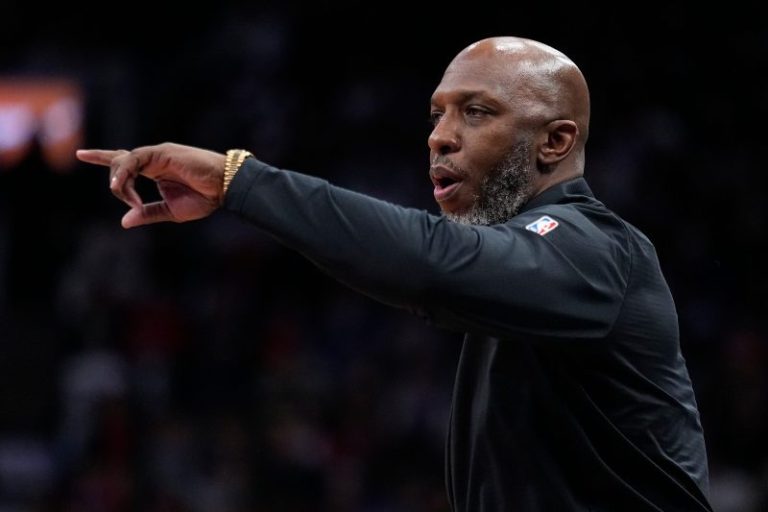
  • Former NBA star and current Trail Blazers coach Chauncey Billups was arrested in connection with an illegal poker scheme.
  • Prosecutors allege Billups was recruited to lure wealthy victims into rigged games, though it is unclear if he knew of any mafia ties.
  • Court documents suggest Billups was an active participant, using signals to cheat and receiving a $50,000 wire transfer.
  • Billups was arraigned on charges of wire fraud and money laundering and has been placed on unpaid leave by the NBA.

A five-time All-Star and three-time All-NBA selection, Billups laced so many clutch baskets in his day that people took to calling him ‘Mr. Big Shot.’ In 2021, he became the head coach of the Portland Trail Blazers, overseeing a team that had started to show modest improvement in recent seasons.

So how would a person like Billups — an NBA champion and Hall of Famer whose career earnings exceeded $105 million — become implicated in an illegal poker scandal? And at that, a scheme with ties to the mafia, one that swindled at least $7.15 million from unsuspecting victims?

According to prosecutors and experts in organized crime, it all starts with influence and recruitment.

Yet, despite the explosive revelation that the Bonanno, Gambino and Genovese crime families allegedly offered protection at rigged poker games in New York, a close reading of the indictment and detention letter shows it’s unclear whether Billups was aware of any alleged connection whatsoever to the mafia.

According to those documents, Billups participated in at least two poker games: one around April 2019 in Las Vegas, and another in late October 2020, at an undisclosed location.

Court documents are careful to specify only that the mafia “backed games in the New York area,” taking a cut for security and collecting “owed debts from the games.”

Furthermore, none of the indicted persons named alongside Billups at the April 2019 game in Las Vegas are listed as members or associates of any of the three New York families.

There is no reference in either document of any other organized crime family offering similar protection for the Las Vegas game to which Billups is allegedly linked. This does not necessarily mean such an arrangement did not exist, only that it is not outlined in the documents.

To that end, professor Federico Varese, a senior research fellow at Nuffield College at the University of Oxford and author of ‘Mafia Life,’ believes an operation like the one outlined in the indictment required protection at any location where games were taking place.

“To me, it’s fascinating because there is a very clear division of labor,” Varese told USA TODAY Sports. “Everybody had a job. That comes out so clearly — it’s almost like a textbook case of the mafia back to doing what they do best, which is protection, enforcement, settling disputes.

“This is classic stuff out of the 1930s and ’50s. They still have this ability to control, to use violence and instill fear — sometimes only on the power of their reputation.”

All of this, however, does not answer how Billups allegedly became ensnared in the scheme, and the other — perhaps the most pressing — key question.

‘He was star struck!’

Billups was arraigned Oct. 23 in Portland on charges of wire fraud and money laundering, and the NBA placed him on immediate, unpaid leave.

Prosecutors allege that he was part of a team of poker players who cheated through the use of a rigged shuffling machine and a system in which signals were relayed to “Face Cards,” or players in on the alleged operation.

“Why, of all people, Chauncey Billups?” Dr. Jay Albanese, a criminology professor at Virginia Commonwealth University, told USA TODAY Sports. “You might expect this of a young player who is out of control or someone who had a bunch of hangers-on.

“There are some people I would’ve guessed to put on the list, but Billups was not on mine. So that, I think, is the hanging question right now.”

Details concerning the origin of Billups’ alleged involvement remain unclear. What court documents are unequivocal about, however, is that it was Robert L. Stroud, a 67-year-old man from Louisville, who allegedly brought him and fellow former NBA player Damon Jones into the operation.

“The bottom line,” Martens said, “is poker players and gamblers love to be around stars.”

Prosecutors share this opinion. The detention letter outlines the April 2019 Las Vegas game and includes text messages between Stroud and Sophia Wei, another defendant. Prosecutors said the texts occurred during the rigged games and discussed things such as the draw that Billups had as a Hall of Famer.

“The one guy on the end acted like he wanted Chauncey to have his money!” Stroud wrote in one of the texts, per the detention letter. “He was star struck!”

This, prosecutors allege, is what funneled Billups and Jones toward the scheme.

“Stroud recruited former professional athletes, including defendants Billups and Jones, into the conspiracy to lure wealthy victims into playing in the games,” the letter said. “For their role as ‘Face Cards’ and members of the cheating teams, Stroud paid them a portion of the criminal proceeds.”

The letter goes on to allege that, following the October 2020 game at the undisclosed location, Stroud wired $50,000 to Wei through his company, Lil Robbie Productions LLC; later, Wei wired $50,000 directly to Billups.

In another series of texts, Stroud and Wei discuss the need to intentionally lose certain hands to avoid suspicion of cheating after Billups and another alleged defendant “hit 2 gutshot on the river against the same guy.” Per the messages, both hands were for a pot of at least $30,000.

To remain undetected, Wei suggested putting another player in on the scam at the table so that Billups and other “Face Cards” could purposefully lose to the new player, thus deflecting suspicion.

“Sounds like a plan,” Stroud responded, per the letter.

“Ok perfect,” Wei concluded. “They already know all the signals … just gotta let us know which one.”

This exchange strongly suggests that prosecutors believe Billups was not a passive participant in the alleged scheme, but rather willing to use the signals, actively defrauding unsuspecting victims.

What remains unclear is how much Billups may have known about the top levels of the alleged scheme. The key in answering that appears to be the nature of Billups’ relationship to Stroud, who is also accused of organizing rigged poker games in New York, under the supervision of the mafia.

“There has to be some motive there,” Albanese said. “How was Stroud or whoever it was able to recruit him? What was the hook? Maybe you can get him to tell you.”

USA TODAY Sports sent a list of questions to Chris Heywood, an attorney representing Billups, asking about the nature and origin of Billups’ alleged relationship to Stroud and whether Billups had any awareness about potential links to organized crime in the alleged scheme. Heywood did not respond.

In a statement issued to ESPN on Oct. 23, Heywood called Billups a “man of integrity” and spoke of Billups’ legacy, reputation and freedom.

“He would not jeopardize those things for anything, let alone a card game,” Heywood said.

According to WAVE News in Louisville, police said Stroud was gambling and playing cards at a home in Louisville in March 1994, when he shot a man through a door, killing him. WAVE also reported that Stroud was pulled over in 2001 for expired tags when police found “sports betting cards, dice, playing cards and what appeared to be gambling records” in his car.

Aside from allegedly organizing the rigged games, Stroud is also accused of supplying much of the technology used to cheat and committing a gunpoint robbery to steal a rigged card shuffling machine.

USA TODAY Sports also sent a list of questions to Patrick J. Renn, an attorney representing Stroud, asking about the nature and origin of Stroud’s relationship to Billups. Renn also did not respond.

The final mystery, assuming Billups did knowingly become involved in the scheme, is what — other than money — may have lured him in.

None of the experts interviewed for this story wanted to speculate conclusively, but possible explanations included an undisclosed financial hardship, extortion, a thrill for risk, a desire to return to a competitive arena in retirement, or that he may have been misled about the severity of the alleged operation.

So what options does Chauncey Billups have?

Billups is scheduled to appear in court Nov. 24 in Brooklyn. He was required to turn in his passport and is prohibited from gambling or contacting other defendants.

Each of the experts interviewed for this story presumed that defendants will start to flip in pursuit of plea bargains, seeking immunity or more lenient sentencing.

Due to the allegations against Billups being nonviolent, and due to his clean criminal record, each expert suggested that Billups should strongly consider a plea bargain.

In January 2000, Billups did settle a civil suit for an undisclosed amount, stemming from a 1997 incident in which a woman said that Billups and his former teammate, Ron Mercer, raped her. Criminal charges were never filed, but police reports stated that a rape kit examination of the victim showed injuries consistent with sexual assault.

The alternative, if Billups felt he could prove his innocence in this case, would be to fight the accusations in court, though that carries significant risk. This is only magnified further because attorneys representing Billups and the other defendants do not know, at this point, what evidence investigators may have.

The prevailing sentiment from experts was that if federal investigators made a big show of bringing the case in, they presumably feel confident about winning convictions.

“It would be very embarrassing for prosecution if they would get off,” Varese said. “If you go after a very important person with a high standing in the community, and you put them through the system, you don’t want to look like you made a mistake.”


This post appeared first on USA TODAY

Statistics Canada released August’s gross domestic product (GDP) data on Friday (October 31). The numbers showed a 0.3 percent decline in real GDP overall, with declines seen in many sectors of the Canadian economy.

The mining, quarrying, and oil and gas sector was down 0.7 percent during the month after increasing in June and July. This was led by a 5 percent decrease in support activities and a 1.3 percent drop in mining and quarrying, including a 1.2 percent decline in metal ore mining, while oil and gas extraction increased by 0.2 percent.

Likewise, the manufacturing sector was down 0.5 percent, with durable goods manufacturing weighing heavily with a decrease of 0.8 percent. One spot of good news is that primary metal manufacturing rose 3.7 percent, which was headlined by a 9.6 percent increase in aluminum production and processing.

The report also included an advance estimate for September, predicting a 0.1 percent increase, as well as increases in the resource sector. Overall, this would mean Q3’s real GDP also increased by 0.1 percent, avoiding a recession following a 0.4 percent decline in the second quarter.

These figures, along with the consumer price index edging up to 2.4 percent in September, may also have played into the Bank of Canada’s decision on Wednesday (October 29) to cut its benchmark interest rate by another 25 basis points to 2.25 percent.

In its announcement, the central bank noted that the Governing Council sees the policy rate at the right level to maintain inflation close to its 2 percent target, but it would be prepared to respond if the outlook changes.

Bank Governor Tiff Macklem once again stressed that “monetary policy cannot undo the damage caused by tariffs.” However, while the central bank expects the economy to remain weak through the end of 2025, it was also expecting modest growth.

Meanwhile, the United States Federal Reserve also announced on Wednesday that it would cut its Federal Funds Rate by 25 points to the 3.75 to 4 percent range. In its statement, the Federal Open Market Committee discussed slowing job growth and rising inflation, which has moved away from its 2 percent target.

The next meeting of the Fed is scheduled for December 9 and 10; however, concerns remain about data availability, as a shutdown of the US federal government has affected agencies’ ability to deliver critical economic and job data, leaving the Fed to rely on private-sector research.

Markets and commodities react

Canadian equity markets were mixed this week.

The S&P/TSX Composite Index (INDEXTSI:OSPTX) gained 0.04 percent over the week to close Friday at 30,260.74.

On the other hand, the S&P/TSX Venture Composite Index (INDEXTSI:JX) ended the week down 0.49 percent at 957.88. The CSE Composite Index (CSE:CSECOMP) also fell this week, shedding 1.21 percent to close out the week at 175.27.

The gold price was down 3.08 percent this week, closing at US$4,001.76 per ounce. The silver price also fell but fared better, dropping just 0.52 percent to US$48.57 by 4:00 p.m. EDT Friday.

Meanwhile, in base metals, the copper price shed 1.5 percent to US$5.16 per pound.

The S&P Goldman Sachs Commodities Index (INDEXSP:SPGSCI) fell 0.79 percent to end Friday at 557.01.

Top Canadian mining stocks this week

How did mining stocks perform against this backdrop?

Take a look at this week’s five best-performing Canadian mining stocks below.

Stocks data for this article was retrieved at 4:00 p.m. EDT on Friday using TradingView’s stock screener. Only companies trading on the TSX, TSXV and CSE with market caps greater than C$10 million are included. Mineral companies within the non-energy minerals, energy minerals, process industry and producer manufacturing sectors were considered.

1. MAX Power Mining (CSE:MAXX)

Weekly gain: 82.5 percent
Market cap: C$56.01 million
Share price: C$0.73

MAX Power is a hydrogen exploration and development company advancing its natural hydrogen properties in Saskatchewan, Canada.

In total, the company holds permits for 1.3 million acres of land across the province, with an additional 5.7 million under application. Its primary site is focused on the Genesis Trend, a 200 kilometer by 75 kilometer area near the Regina-Moose Jaw Industrial Corridor, a proposed hydrogen hub.

On October 24, the company announced it received a drilling license for its first hydrogen well within the Genesis Trend, which will also be Canada’s first deep well dedicated to natural hydrogen.

The company said operations at its Lawson well will commence on or about November 7. The program will include the use of gas chromatographs to sample for helium, nitrogen and methane and another mass spectrometer specifically to detect hydrogen.

Then, on Monday (October 27), MAX Power reported that it had identified the Bracken target in Southwest Saskatchewan along the border with Montana. It marks the company’s first high-priority target outside of the Genesis Trend, lying within the 120,000 acre Grasslands project. The next step will be to acquire proprietary 2D seismic data, which it anticipates will be completed in Q4 of 2025.

On Tuesday (October 28), MAX announced the development of the MAX Power Large Earth Model Integration, which combines datasets from government and commercial sources to create maps that enable the evaluation of hydrogen prospectivity and more.

The company said that in version 2 of the technology, it will integrate machine learning into the process to better understand the data at a granular level and will eventually be able to apply it to any jurisdiction in the world.

The most recent news came on Thursday (October 30), when MAX appointed Ranjith Narayanasamy, who is President and CEO of the Petroleum Technology Research Centre, as its new CEO effective December 8. Current CEO Mansoor Jan will be transitioning to the CEO of the company’s US critical minerals subsidiary, which it is eyeing for a potential spin-out.

2. Manganese X Energy (TSXV:MN)

Weekly gain: 57.89 percent
Market cap: C$25.75 million
Share price: C$0.15

Manganese X Energy is an exploration and development company focused on its flagship Battery Hill project in New Brunswick, Canada, from which it plans to produce high-purity battery grade manganese for lithium-ion batteries.

The property consists of 55 claims covering an area of 1,228 hectares in Carlton County, and hosts five primary manganese-iron zones: Iron Ore Hill, Moody Hill, Sharpe Farm, Maple Hill and Wakefield.

A June 2021 technical report demonstrated a measured and indicated resource of 34.86 million metric tons of ore grading 6.42 percent manganese and 10.67 percent iron, and an inferred resource of 25.9 million metric tons grading 6.66 percent manganese and 10.92 percent iron.

On September 9, Manganese X announced it was advancing to the third and final phase of battery testing with US battery company Charge CCCV. Phase 2 testing results showed 70 percent capacity retention after 4,600 cycles, which the company said is more than double the cycle life of conventional nickel-manganese-cobalt batteries.

As for this week, on Thursday the company announced the appointment of Desmond Tranquilla to its board of directors. Tranquilla has more than 32 years of experience in the mining industry and is currently vice president of projects with Canada Nickel Company (TSXV:CNC).

3. Copper Quest Exploration (CSE:CQX)

Weekly gain: 48.15 percent
Market cap: C$10.23 million
Share price: C$0.2

Copper Quest Exploration is an exploration company building a portfolio of prospective copper properties in North America, including the Stars and Stellar copper projects in British Columbia, Canada.

It recently acquired two new projects. The first, announced on September 22, is the Nekash copper-gold porphyry project in Idaho, US. The asset lies in the Idaho-Montana porphyry belt and consists of 70 unpatented lode claims covering 585 hectares.

Historic exploration and recent work has confirmed the presence of copper and gold quartz veins, according to the release, with rock chip samples at porphyry style veins revealing grades up to 6.6 percent copper and 0.6 grams per metric ton (g/t) gold.

The second came this Thursday, when the company acquired the 2,954 hectare Kitimat copper-gold project in the Skeena Mining Division of Northwest British Columbia. Situated in the prolific Stikine Terrane, the project has a history of exploration dating back to the 1960s.

In 2010, diamond drilling across 16 holes returned a highlighted assay of 1.03 g/t gold and 0.54 percent copper over 117.07 meters from surface.

4. Liberty Stream Infrastructure Partners (TSXV:LIB)

Weekly gain: 42.22 percent
Market cap: C$105.49 million
Share price: C$0.64

Liberty Stream is a lithium development company advancing its direct lithium extraction technology in the US.

The company is working on a pair of projects — one in Texas’ Permian Basin and the other in North Dakota’s Bakken Oil Field — aimed at extracting lithium from brines used in oil and gas production.

On October 7, the company entered site preparations for the final installation and commissioning of its bulk lithium refining unit in Texas, which will allow it to convert lithium chloride eluate into commercial-grade lithium carbonate. It expects to begin producing lithium carbonate from the unit in the second half of Q4, and launch full-scale operations in 2026.

The most recent news came on October 23, when it announced that it was awarded a US$500,000 grant from the State of North Dakota for the development of lithium carbonate production to supply a battery cell manufacturing facility in the state.

5. Signature Resources (TSXV:SGU)

Weekly gain: 40 percent
Market cap: C$10.69 million
Share price: C$0.07

Signature Resources is a gold exploration company focused on its Lingman Lake gold project in Ontario, Canada.

The property consists of 1,274 unpatented single-cell mining claims and 13 multi-cell claims covering more than 24,000 hectares in Northwest Ontario. Airborne geophysical surveys completed in 2021 identified 14 high-value targets with the potential for multiple gold occurrences.

On September 25, the company announced plans for a six hole, 3,000 meter diamond drill program, which it expects to complete this fall. Signature used combined data from its 2024 drill campaign, historical workings and the results from a 2021 3D induced polarization survey to refine targets for the diamond drilling.

This Thursday, the company closed an upsized non-brokered private placement and issued 23 million charity flow-through units, 10.46 million flow-through units, and 18.53 million non-flow-through units, generating proceeds of C$3.42 million.

Funds will be used for exploration activities at Lingman Lake, including the diamond drill program, and for general working capital.

FAQs for Canadian mining stocks

What is the difference between the TSX and TSXV?

The TSX, or Toronto Stock Exchange, is used by senior companies with larger market caps, and the TSXV, or TSX Venture Exchange, is used by smaller-cap companies. Companies listed on the TSXV can graduate to the senior exchange.

How many mining companies are listed on the TSX and TSXV?

As of May 2025, there were 1,565 companies listed on the TSXV, 910 of which were mining companies. Comparatively, the TSX was home to 1,899 companies, with 181 of those being mining companies.

Together, the TSX and TSXV host around 40 percent of the world’s public mining companies.

How much does it cost to list on the TSXV?

There are a variety of different fees that companies must pay to list on the TSXV, and according to the exchange, they can vary based on the transaction’s nature and complexity. The listing fee alone will most likely cost between C$10,000 to C$70,000. Accounting and auditing fees could rack up between C$25,000 and C$100,000, while legal fees are expected to be over C$75,000 and an underwriters’ commission may hit up to 12 percent.

The exchange lists a handful of other fees and expenses companies can expect, including but not limited to security commission and transfer agency fees, investor relations costs and director and officer liability insurance.

These are all just for the initial listing, of course. There are ongoing expenses once companies are trading, such as sustaining fees and additional listing fees, plus the costs associated with filing regular reports.

How do you trade on the TSXV?

Investors can trade on the TSXV the way they would trade stocks on any exchange. This means they can use a stock broker or an individual investment account to buy and sell shares of TSXV-listed companies during the exchange’s trading hours.

Article by Dean Belder; FAQs by Lauren Kelly.

Securities Disclosure: I, Dean Belder, hold no direct investment interest in any company mentioned in this article.

Securities Disclosure: I, Lauren Kelly, hold no direct investment interest in any company mentioned in this article.

This post appeared first on investingnews.com

Skyharbour Resources Ltd. (TSX-V: SYH ) (OTCQX: SYHBF ) (Frankfurt: SC1P ) (the ‘Company’) is pleased to announce that the Company will be presenting at Red Cloud’s Fall Mining Showcase 2025. The annual conference will be hosted in-person, at the Sheraton Centre Toronto Hotel from November 4-5, 2025. We invite our shareholders, and all interested parties to join us there.

Skyharbour’s President and CEO, Jordan Trimble, will be presenting Wednesday, November 5 th at 1:40 pm Eastern Standard Time, providing an overview and update for the Company.

For more information and/or to register for the conference please visit:
https://redcloudfs.com/fallminingshowcase2025/

Skyharbour Engages Marketing Firm:

The Company has entered into an agreement with Plutus Invest and Consulting (‘Plutus’), a German based communications and media services provider, pursuant to which Plutus will provide the Company with marketing services. The consulting agreement has a term of six months commencing November 1 st , 2025 and shall continue through April 30 th , 2026. The marketing services provided by Plutus will be in consulting with the Company’s management in building investor awareness of the Company through Plutus’s network in Europe. The Company has agreed to pay Plutus a total initial cost of CAD $120,000 upon the commencement of services. Plutus is an arm’s length from the Company and Plutus does not have any interest, direct or indirect, in the Company or its securities. The Company’s engagement of Plutus is subject to the acceptance of the TSX Venture.

About Skyharbour Resources Ltd.:

Skyharbour holds an extensive portfolio of uranium exploration projects in Canada’s Athabasca Basin and is well positioned to benefit from improving uranium market fundamentals with interest in thirty-seven projects covering over 616,000 hectares (over 1.5 million acres) of land. Skyharbour has acquired from Denison Mines, a large strategic shareholder of the Company, a 100% interest in the Moore Uranium Project, which is located 15 kilometres east of Denison’s Wheeler River project and 39 kilometres south of Cameco’s McArthur River uranium mine. Moore is an advanced-stage uranium exploration property with high-grade uranium mineralization in several zones at the Maverick Corridor. Adjacent to the Moore Project is the Russell Lake Uranium Project, in which Skyharbour is operator with joint-venture partner RTEC. The project hosts widespread uranium mineralization in drill intercepts over a large property area with exploration upside potential. The Company is actively advancing these projects through exploration and drilling programs.

Skyharbour also has joint ventures with industry leader Orano Canada Inc., Azincourt Energy, and Thunderbird Resources at the Preston, East Preston, and Hook Lake Projects, respectively. The Company also has several active earn-in option partners, including CSE-listed Basin Uranium Corp. at the Mann Lake Uranium Project; TSX-V listed North Shore Uranium at the Falcon Project; UraEx Resources at the South Dufferin and Bolt Projects; Hatchet Uranium at the Highway Project; CSE-listed Mustang Energy at the 914W Project; and TSX-V listed Terra Clean Energy at the South Falcon East Project.

In aggregate, Skyharbour has now signed earn-in option agreements with partners that total to over $36 million in partner-funded exploration expenditures, over $20 million worth of shares being issued, and $14 million in cash payments coming into Skyharbour, assuming that these partner companies complete their entire earn-ins at the respective projects.

Skyharbour’s goal is to maximize shareholder value through new mineral discoveries, committed long-term partnerships, and the advancement of exploration projects in geopolitically favourable jurisdictions.

Skyharbour’s Uranium Project Map in the Athabasca Basin:
https://skyharbourltd.com/_resources/news/SKY_SaskProject_Locator_2025_07_16_v1.jpg

To find out more about Skyharbour Resources Ltd. (TSX-V: SYH) visit the Company’s website at www.skyharbourltd.com

Skyharbour Resources Ltd.

‘Jordan Trimble’

Jordan Trimble
President and CEO

For further information contact myself or:
Nicholas Coltura
Investor Relations Manager
Skyharbour Resources Ltd.
Telephone: 604-558-5847
Toll Free: 800-567-8181
Facsimile: 604-687-3119
Email: info@skyharbourltd.com

NEITHER THE TSX VENTURE EXCHANGE NOR ITS REGULATION SERVICES PROVIDER ACCEPTS RESPONSIBILITY FOR THE ADEQUACY OR ACCURACY OF THE CONTENT OF THIS NEWS RELEASE.

This release includes certain statements that may be deemed to be ‘forward-looking statements’. All statements in this release, other than statements of historical facts, that address events or developments that management of the Company expects, are forward-looking statements, including the Private Placement. Although management believes the expectations expressed in such forward-looking statements are based on reasonable assumptions, such statements are not guarantees of future performance, and actual results or developments may differ materially from those in the forward-looking statements. The Company undertakes no obligation to update these forward-looking statements if management’s beliefs, estimates or opinions, or other factors, should change. Factors that could cause actual results to differ materially from those in forward-looking statements, include market prices, exploration and development successes, regulatory approvals, continued availability of capital and financing, and general economic, market or business conditions. Please see the public filings of the Company at www.sedarplus.ca for further information.


News Provided by GlobeNewswire via QuoteMedia

This post appeared first on investingnews.com

West High Yield (W.H.Y.) Resources Ltd. (TSXV: WHY,OTC:WHYRF) (FSE: W0H)  (the ‘Company’ or ‘West High Yield’) announces announces the exercise share purchase warrants (the ‘Warrants’) of the Company.

Two holders of Warrants exercised 600,000 Warrants resulting in the issuance of 600,000 common shares of the Company. The specific Warrants held and exercised by the one warrantholder were exercisable at a price of CAD$0.30 per Warrant, resulting in total proceeds to the Company in the amount of CAD$180,000.00 upon such exercise.

Four holders of Warrants exercised 1,223,487 Warrants resulting in the issuance of 1,223,487 common shares of the Company. The specific Warrants held and exercised by the three warrantholders were exercisable at a price of CAD$0.35 per Warrant, resulting in proceeds to the Company in the amount of CAD$428,220.45 upon such exercise.

The total gross proceeds to the Company from the combined exercise of CAD$0.30 Warrants and CAD$0.35 Warrants was CAD$608,220.45.

About West High Yield

West High Yield is a publicly traded junior mining exploration and development company focused on acquiring, exploring, and developing mineral resource properties in Canada. Its primary objective is to develop its Record Ridge critical mineral (magnesium, silica, and nickel) deposit using green processing techniques to minimize waste and CO2 emissions.

The Company’s Record Ridge critical mineral deposit located 10 kilometers southwest of Rossland, British Columbia has approximately 10.6 million tonnes of contained magnesium based on an independently produced National Instrument 43-101 – Standards of Disclosure for Mineral Projects (‘NI 43-101‘) Preliminary Economic Assessment technical report (titled ‘Revised NI 43-101 Technical Report Preliminary Economic Assessment Record Ridge Project, British Columbia, Canada’) prepared by SRK Consulting (Canada) Inc. on April 18, 2013 in accordance with NI 43-101 and which can be found on the Company’s profile at https://www.sedarplus.ca.

Contact Information:

West High Yield (W.H.Y.) RESOURCES LTD.

Frank Marasco Jr., President and Chief Executive Officer
Telephone: (403) 660-3488
Email: frank@whyresources.com

Barry Baim, Corporate Secretary
Telephone: (403) 829-2246
Email: barry@whyresources.com

Cautionary Note Regarding Forward-looking Information

This press release contains forward-looking statements and forward-looking information within the meaning of Canadian securities legislation. The forward-looking statements and information are based on certain key expectations and assumptions made by the Company. Although the Company believes that the expectations and assumptions on which such forward-looking statements and information are based are reasonable, undue reliance should not be placed on the forward-looking statements and information because the Company can give no assurance that they will prove to be correct.

Forward-looking information is based on the opinions and estimates of management at the date the statements are made and are subject to a variety of risks and uncertainties and other factors that could cause actual events or results to differ materially from those anticipated in the forward-looking information. Some of the risks and other factors that could cause the results to differ materially from those expressed in the forward-looking information include, but are not limited to: general economic conditions in Canada and globally; industry conditions, including governmental regulation; failure to obtain industry partner and other third party consents and approvals, if and when required; the availability of capital on acceptable terms; the need to obtain required approvals from regulatory authorities; and other factors. Readers are cautioned that this list of risk factors should not be construed as exhaustive.

Readers are cautioned not to place undue reliance on this forward-looking information, which is given as of the date hereof, and to not use such forward-looking information for anything other than its intended purpose. The Company undertakes no obligation to update publicly or revise any forward-looking information, whether as a result of new information, future events or otherwise, except as required by applicable law.

This press release does not constitute an offer to sell or a solicitation of an offer to buy any securities in the United States. The securities of the Company will not be registered under the United States Securities Act of 1933, as amended (the ‘U.S. Securities Act‘) and may not be offered or sold within the United States or to, or for the account or benefit of U.S. persons except in certain transactions exempt from the registration requirements of the U.S. Securities Act.

NEITHER THE TSXV NOR ITS REGULATION SERVICES PROVIDER (AS THAT TERM IS DEFINED IN THE POLICIES OF THE TSXV) ACCEPTS RESPONSIBILITY FOR THE ADEQUACY OR ACCURACY OF THIS RELEASE.

To view the source version of this press release, please visit https://www.newsfilecorp.com/release/272803

News Provided by Newsfile via QuoteMedia

This post appeared first on investingnews.com

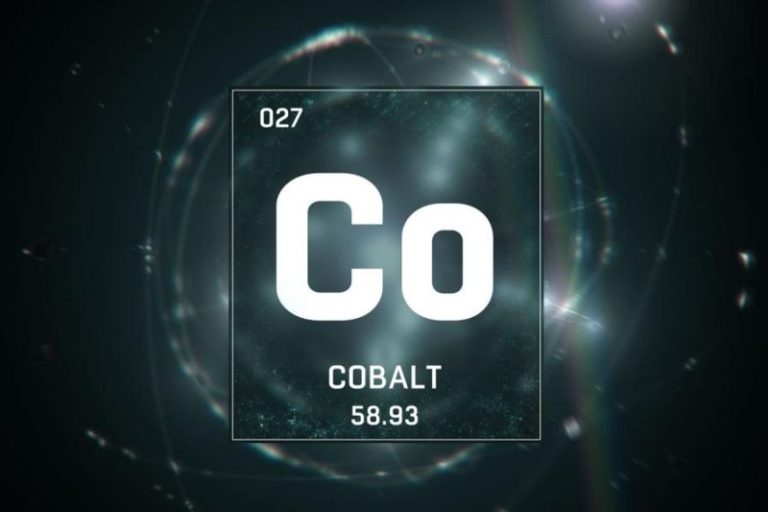
Cobalt prices regained momentum in the third quarter of 2025 as tighter export controls from the Democratic Republic of Congo (DRC) fueled expectations of a market rebound.

After languishing near multi-year lows early in the year, the metal surged to US$47,110 per metric ton in late October, its highest level since January 2023.

The DRC’s prolonged export suspension, followed by new quota limits, has begun to ease a years-long supply glut, with analysts now forecasting a shift from oversupply toward market balance.

All year-to-date and share price information was obtained on October 28, 2025, using TradingView’s stock screener. Companies with market caps above C$10 million at that time were considered.

1. Talon Metals (TSX:TLO)

Year-to-date gain: 358.82 percent
Market cap: C$440.55 million
Share price: C$0.39

Talon Metals is a base metals company advancing the Tamarack nickel-copper-cobalt project in Central Minnesota, US, through a joint venture with Rio Tinto (ASX:RIO,NYSE:RIO,LSE:RIO). Talon currently holds a 51 percent stake in the project and can earn up to 60 percent.

In late March, Talon Metals announced a massive sulfide discovery at its Tamarack project, with an intercept measuring 8.25 meters containing 95 percent sulfide content located deeper than the current Tamarack resource.

In May, a further massive sulfide discovery in the same zone, the thickest discovery yet at the site, drove the company’s share price up significantly, and another in early August did the same. In the August announcement, Talon shared that it named the discovery zone the Vault zone.

At the start of Q4, Talon announced an expanded winter drilling and exploration program at the Vault zone.

Shares of Talon rallied to a year-to-date high of C$0.54 on October 14, following the winter drill news and alongside rising cobalt prices.

On October 20, Talon received a 12 month extension from Rio Tinto subsidiary Kennecott Exploration to submit a feasibility study and US$10 million payment required to increase its ownership stake in the Tamarack project to 60 percent.

The extension will allow Talon to align the study’s release with the publication of the project’s scoping environmental assessment worksheet, expected in the first half of 2026, marking its entry into Minnesota’s formal environmental review process.

2. Leading Edge Materials (TSXV:LEM)

Year-to-date gain: 222.22 percent
Market cap: C$72.49 million
Share price: C$0.29

Leading Edge Materials is developing critical materials projects in the EU. The company’s projects include its wholly owned Woxna graphite mine and Norra Kärr heavy rare earth elements project, both in Sweden, as well as its 51 percent owned Bihor Sud nickel-cobalt exploration alliance in Romania.

According to its June 2025 presentation, exploration work planned for 2025 at Bihor Sud’s G2 gallery includes mapping and sampling of cobalt-nickel and zinc-lead-silver mineralized zones detected visually and by hand-held XRF. Drilling targeting polymetallic mineralization at the gallery is underway.

On the financial side, Leading Edge announced a C$400,000 non-brokered private placement in June.

According to a June 22 activities update, Leading Edge’s Romanian subsidiary was granted ownership and operational permits for the Avram Iancu mine at Bihor Sud, and the team had begun preliminary investigations of the site.

In its recent quarterly report, released September 19, Leading Edge Materials said it is reassessing its prospects after being granted those permits. at its project located within the Bihor Sud exploration area following the acquisition of additional ownership and operating permits.

The Avram Iancu site hosts extensive historic underground workings and data indicating copper-rich massive sulfide zones, the statement noted.

A competent person report is in progress to consolidate past exploration and outline next steps, while the company evaluates financing options to advance development.

Shares of Leading Edge also benefited from the mid-October cobalt price rally, registering a year-to-date high of C$0.44 on October 14.

3. Battery Mineral Resources (TSXV:BMR)

Year-to-date gain: 180 percent
Market cap: C$16.79 million
Share price: C$0.14

Battery Mineral Resources is focused on developing into a mid-tier copper producer and recently restarted mine and mill operations at the Punitaqui Mining Complex in Chile. In Canada, the company holds the largest land position in Ontario’s historic Cobalt district, where it is exploring high-grade primary cobalt deposits at McAra, Gowganda and Elk Lake.

The company’s portfolio also includes energy services and mineral exploration assets in North America, along with graphite projects in South Korea.

In late October, BMR said it was evaluating strategic options for its Gowganda silver tailings project, located northeast of Sudbury, Ontario.

The project lies in one of the country’s most productive past silver-cobalt districts, and the Gowganda mining camp produced 60 million ounces of silver and 1.3 million pounds of cobalt between 1910 and 1969. Gowganda hosts four former mines and associated tailings historically estimated to contain 2.96 million ounces of silver. BMR is assessing how best to advance or monetize the asset to enhance shareholder value.

On October 16, Battery Mineral Resources reported strong operational performance at its Punitaqui copper project in Chile, driven by improved underground production and plant optimization. Since September 1, 2025, underground operations have averaged 1,800 tonnes per day, up 80 percent from the first half of the year, and 2,000 tonnes per day over the recent two weeks period.

BMR is also advancing development of additional underground operations at Cinabrio Norte and Dalmacia to support further growth from Punitaqui.

The news pushed shares of BMR to a year-to-date high of C$0.17 on October 21.

4. FPX Nickel (TSXV:FPX)

Year-to-date gain: 95.74 percent
Market cap: C$144.81 million
Share price: C$0.46

FPX Nickel is currently advancing its Decar nickel district in BC, Canada.

The property comprises four key targets, with the Baptiste deposit being the primary focus, alongside the Van target. The company also has three other nickel projects in BC and one in the Yukon, Canada.

In February, FPX released a scoping study for the development of a refinery that would refine awaruite concentrate from Baptiste into battery-grade nickel sulfate and by-products of cobalt carbonate, copper and ammonium sulfate. Annual output is anticipated at 32,000 metric tons of contained nickel and 570 metric tons of contained cobalt.

The results show that the process would result in operating and all-in production costs near the bottom of nickel sulfate cost curve, in part due to by-product credits. Additionally, the carbon intensity of the awaruite refinery would be significantly lower than that of currently used production methods.

On September 4, FPX completed a large-scale mineral processing pilot campaign for its Baptiste nickel project, following three prior successful campaigns. The latest production run generated bulk samples of awaruite concentrate, which will be provided to prospective partners, including pre-cursor cathode active materials, battery producers and automakers, to assess its suitability as feedstock.

Later in the month, FPX signed an option agreement to acquire up to 100 percent of the Advocate nickel property in Newfoundland, Canada, following its review of over 50 targets. The property has also been accepted by the Japan Organization for Metals and Energy Security (JOGMEC) as the first designated property under the generative alliance between FPX and JOGMEC, with a significant work program planned to build on encouraging surface nickel recoveries.

FPX shares registered a year-to-date high of C$0.55 on October 17.

5. Wheaton Precious Metals (TSX:WPM)

Year-to-date gain: 61.23 percent
Market cap: C$60.38 billion
Share price: C$133.00

Wheaton Precious Metals is one of the largest gold and silver royalty and streaming companies.

It has investments in 18 operating mines and 28 development projects across four continents, including a cobalt streaming agreement for Vale’s (NYSE:VALE) Voisey’s Bay nickel mine in Newfoundland and Labrador, Canada.

According to Wheaton, Voisey’s Bay is currently in a transitional phase, shifting from the depleted Ovoid open pit to full underground production.

The company reported its Q1 financial results on May 8. The report highlighted a record US$470 million in revenue, US$254 million in net earnings and US$361 million in operating cash flow.

The cobalt segment registered year-on-year attributable production gains, rising to 540,000 pounds in the year’s first quarter, compared to 240,000 pounds during Q1 2024. Despite the output increase, sales fell to 265,000 pounds in Q1 versus 309,000 pounds in Q1 2024.

According to Wheaton’s Q2 2025 results, the Voisey’s Bay mine produced 647,000 pounds of attributable cobalt, a roughly 150 percent increase from the same period in 2024. Vale reported that the underground operations are steadily ramping up, with full production expected by the second half of 2026 as the transition from the depleted Ovoid open-pit continues.

Shares of Wheaton rose to a year-to-date high of C$159.41 on October 16 alongside rising prices for gold, silver and cobalt.

FAQs for cobalt

What is cobalt?

Cobalt is a silver-gray metal that is often produced as a by-product of nickel and copper mining. It does not occur as a separate metal anywhere in the world, and must be produced by reductive smelting, or from the metallic ore cobaltite, which is made of cobalt, sulfur and arsenic.

What is cobalt used for?

Historically, cobalt oxides were used to impart a blue pigment to glass, porcelain and paints, hence the still-used cobalt blue paint. The metal is also used to produce superalloys, as cobalt imparts qualities such as corrosion and wear resistance, which are useful in applications such as airplanes, orthopedics and prosthetics.

Today cobalt is most famously used in the rechargeable lithium-ion batteries that run everything from smartphones to EVs.

Where is cobalt mined?

The majority of cobalt production comes out of the DRC, which was responsible for producing 220,000 metric tons of the material in 2024. For perspective, the second largest cobalt-producing country, Indonesia, reported output of 28,000 MT the same year; third place Russia produced 8,700 MT of the material.

As the lithium-ion battery and EV supply chains garner global attention, companies are trying to limit their exposure to cobalt produced from the DRC, which is known for human rights abuses and sometimes child labor in its mining industry.

In response to this trend, many countries with cobalt are attempting to create domestic cobalt and EV supply chains in the hope of attracting companies looking to avoid DRC-sourced cobalt. This can be seen in the up-and-coming battery corridor in Ontario, Canada, as well as in the US-based Idaho cobalt belt.

Securities Disclosure: I, Georgia Williams, hold no direct investment interest in any company mentioned in this article.

This post appeared first on investingnews.com

LaFleur Minerals Inc. (CSE: LFLR,OTC:LFLRF) (OTCQB: LFLRF) (FSE: 3WK0) (‘LaFleur Minerals’ or the ‘Company’ or ‘Issuer’) is pleased to announce that, further to its news releases dated July 30, 2025, and September 10, 2025, the Company has closed its non-brokered flow-through private placement for aggregate gross proceeds of $1,663,370 (the ‘Private Placement’). The Private Placement consisted of the issuance of 2,410,682 flow-through units (the ‘FT Units’) at a price of $0.69 per FT Unit, with each FT Unit consisting of one common share in the capital of the Company (a ‘Share’), to be issued as a ‘flow-through share’ within the meaning of the Income Tax Act (Canada) (the ‘Tax Act’), and one Share purchase warrant (a ‘Warrant’).

The securities issued under the Offering will be subject to a hold period ending on the date that is four months plus one day following the date of issue in accordance with applicable securities laws. Each Warrant entitles the holder thereof to purchase one additional Share (a ‘Warrant Share‘) for a period of 24 months from the date of issuance at an exercise price of $0.75 per Warrant Share. The Warrants are subject to an accelerated expiry upon thirty (30) business days notice from the Company in the event the Shares trade for fourteen (14) consecutive trading days anytime after four (4) months from closing of the Private Placement at a volume-weighted average price of at least $0.90 on the Canadian Securities Exchange.

In connection with closing of the Private Placement, the Company incurred cash finder’s fees in the amount of $104,652.14 to certain eligible finders and issued the finders an aggregate of 151,668 non-transferable Share purchase warrants (the ‘Finder’s Warrants‘). Each Finder’s Warrant is exercisable into a Share (a ‘Finder’s Warrant Share‘) at a price of $0.75 per Finder’s Warrant Share for a period of 24 months from the date of issuance, subject to the same accelerated expiry.

Proceeds from the sale of FT Units will be used for exploration and drilling programs on the Company’s flagship, advanced stage, district-scale Swanson Gold Project (‘Swanson‘), located in the Abitibi Gold Belt in Val-d’Or, Québec, and flow-through eligible work such as ore-sorting and metallurgical testwork of a large bulk sample using independent geometallurgy experts such as SGS and SRC, and the Company’s 100%-owned Beacon Gold Mill, its near-term gold producing asset. The ore-sorting and metallurgical testwork will be completed using drill core and a large bulk sample from the Swanson Gold Deposit in order to inform and support mineral resource estimates and economic viability, including the potential effectiveness of ore-sorting technology at Swanson.

The Company is working diligently with ERM to complete the Preliminary Economic Assessment (PEA) to evaluate the restart of gold production at its Beacon Gold Mill, which will primarily process mineralized material from the Company’s nearby Swanson Gold Deposit. The gross proceeds from the issuance of the FT Shares will be used to incur resource exploration expenses which will constitute ‘Canadian exploration expenses’ as defined in subsection 66.1(6) of the Income Tax Act and ‘flow through mining expenditures’ as defined in subsection 127(9) of the Income Tax Act and under section 359.1 of the Québec Tax Act (the ‘Qualifying Expenditures‘), which will be renounced with an effective date no later than December 31, 2025 to the purchasers of the FT Units in an aggregate amount not less than the gross proceeds raised from the issue of the FT Shares. In addition, with respect to Québec resident subscribers who are eligible individuals under the Québec Tax Act, the Canadian exploration expenses will also qualify for inclusion in the ‘exploration base relating to certain Québec exploration expenses’ within the meaning of section 726.4.10 of the Québec Tax Act and for inclusion in the ‘exploration base relating to certain Québec surface mining expenses or oil and gas exploration expenses’ within the meaning of section 726.4.17.2 of the Québec Tax Act. If the Qualifying Expenditures are reduced by the Canada Revenue Agency, the Company will indemnify each FT Share subscriber for any additional taxes payable by such subscriber as a result of the Company’s failure to renounce the Qualifying Expenditures as agreed.

This news release is not an offer to sell or the solicitation of an offer to buy the securities in the United States or in any jurisdiction in which such offer, solicitation or sale would be unlawful prior to qualification or registration under the securities laws of such jurisdiction. The securities referred to in this news release have not been, nor will they be, registered under the United States Securities Act of 1933, as amended (the ‘U.S. Securities Act’), and such securities may not be offered or sold within the United States or to, or for the account or benefit of, U.S. persons absent an exemption from registration under the U.S. Securities Act and applicable U.S. state securities laws. ‘United States’ and ‘U.S. person’ are as defined in Regulation S under the U.S Securities Act.

QUALIFIED PERSON STATEMENT

All scientific and technical information contained in this news release has been prepared and approved by Louis Martin, P.Geo. (OGQ), Exploration Manager and Technical Advisor of the Company and considered a Qualified Person (QP) for the purposes of NI 43-101.

About LaFleur Minerals Inc.
LaFleur Minerals Inc. (CSE: LFLR,OTC:LFLRF) (FSE: 3WK0) is focused on the development of district-scale gold projects in the Abitibi Gold Belt near Val-d’Or, Québec. Our mission is to advance mining projects with a laser focus on our resource-stage Swanson Gold Deposit and the Beacon Gold Mill, which have significant potential to deliver long-term value. The Swanson Gold Project is approximately 18,304 hectares (183 km2) in size and includes several prospects rich in gold and critical metals previously held by Monarch Mining, Abcourt Mines, and Globex Mining. LaFleur has recently consolidated a large land package along a major structural break that hosts the Swanson, Bartec, and Jolin gold deposits and several other showings which make up the Swanson Gold Project. The Swanson Gold Project is easily accessible by road allowing direct access to several nearby gold mills, further enhancing its development potential. Lafleur Mineral’s fully refurbished and permitted Beacon Gold Mill is capable of processing over 750 tonnes per day and is being considered for processing mineralized material at Swanson and for custom milling operations for other nearby gold projects.

ON BEHALF OF LaFleur Minerals INC.

Paul Ténière, M.Sc., P.Geo.
Chief Executive Officer
E: info@lafleurminerals.com
LaFleur Minerals Inc.
1500-1055 West Georgia Street
Vancouver, BC V6E 4N7

Neither the Canadian Securities Exchange nor its Regulation Services Provider accepts responsibility for the adequacy or accuracy of this news release.

Cautionary Statement Regarding ‘Forward-Looking’ Information

This news release includes certain statements that may be deemed ‘forward-looking statements’. All statements in this new release, other than statements of historical facts, that address events or developments that the Company expects to occur, are forward-looking statements. Forward-looking statements are statements that are not historical facts and are generally, but not always, identified by the words ‘expects’, ‘plans’, ‘anticipates’, ‘believes’, ‘intends’, ‘estimates’, ‘projects’, ‘potential’ and similar expressions, or that events or conditions ‘will’, ‘would’, ‘may’, ‘could’ or ‘should’ occur. Forward-looking statements in this news release include, without limitation, statements related to the anticipated use of proceeds from the LIFE Offering. Although the Company believes the expectations expressed in such forward-looking statements are based on reasonable assumptions, such statements are not guarantees of future performance and actual results may differ materially from those in the forward-looking statements. Factors that could cause the actual results to differ materially from those in forward-looking statements include market prices, continued availability of capital and financing, and general economic, market or business conditions. Investors are cautioned that any such statements are not guarantees of future performance and actual results or developments may differ materially from those projected in the forward-looking statements. Forward-looking statements are based on the beliefs, estimates and opinions of the Company’s management on the date the statements are made. Except as required by applicable securities laws, the Company undertakes no obligation to update these forward-looking statements in the event that management’s beliefs, estimates or opinions, or other factors, should change.

THIS NEWS RELEASE IS NOT FOR DISTRIBUTION TO U.S. NEWSWIRE SERVICES FOR DISSEMINATION IN THE UNITED STATES

To view the source version of this press release, please visit https://www.newsfilecorp.com/release/272857

News Provided by Newsfile via QuoteMedia

This post appeared first on investingnews.com

As boxer Gervonta ‘Tank’ Davis prepares for his exhibition fight against Jake Paul Nov. 14 in Miami, he faces accusations of attacking a woman in a strip club this week, according to a civil lawsuit.

The woman filed a civil lawsuit against Davis in Miami-Dade County on Thursday, Oct. 30, accusing the boxer of battery, aggravated battery, false imprisonment, kidnapping, and intentional infliction of emotional distress.

The woman said the attack took place Monday, Oct. 27 at Tootsie’s Cabaret, a strip club in Miami Gardens where she is a VIP cocktail waitress, according to the complaint filed with the 11th Judicial Circuit Court in Miami-Dade County. According to the complaint, Davis choked, grabbed, pulled, pushed and hit her in the back of the head.

The incident began at approximately 4:15 a.m., when Davis located the woman inside Tootsie’s in an upstairs VIP lounge, where Davis forcibly grabbed and dragged her through a stairway, through the kitchen, and through the back entrance all the way into the parking garage, according to the complaint. At that point, according to the complaint, Davis continuously grabbed, choked, pushed, pulled, and struck her in the back of the head, leaving her terrified and alone and embarrassed for her co-workers and employer, according to the complaint.

The woman and Davis met in 2022 and had been intimately involved for five months before she said she was attacked in the club, according to the complaint.

During those five months, Davis physically assaulted and choked her four times before the latest incident and on two occasions threatened in writing to kill her, according to the complaint.

Calvin Ford, Davis’ trainer, on Thursday evening told USA TODAY Sports he had learned of the lawsuit about 10 minutes earlier. He called the lawsuit ‘nonsense” and said they were ‘trying to see where it’s coming from.”

Of Davis, Ford said, ‘He’s doing great. Everything’s good. That’s why we’re trying to find out what’s going on.”

Davis has a home in Southwest Ranches, Florida, where he has been training for his upcoming fight.

As noted in the woman’s lawsuit, Davis has been arrested multiple times for allegations of violence committed against women.

On July 11, Davis was arrested on a battery charge after an incident involving a woman who is the mother of his two children. But the charges were dropped when the woman and another witness refused to cooperate, according to the State Attorney’s office in Miami.

The woman who filed the lawsuit Oct. 30 is represented by attorneys Richard C. Wolfe and Jeff Chukwuma.

This post appeared first on USA TODAY

  • The San Francisco Giants hired former Tennessee baseball coach Tony Vitello as their new manager.
  • Vitello is the first sitting college baseball coach with no professional experience to be hired to manage an MLB team.
  • Giants’ president of baseball operations Buster Posey chose Vitello for his culture-building and leadership skills.
  • The Giants are betting that Vitello’s success in rebuilding Tennessee’s program will translate to the major leagues.

SAN FRANCISCO − Buster Posey’s big move started with small moments.

An amateur scout praising Tony Vitello and the Tennessee baseball program. Chatter in the San Francisco Giants’ draft room about the talent stockpile in Knoxville. A chance encounter in a side stairwell at Denver’s Coors Field in September.

Those little benchmarks were enough for the Giants’ president of baseball operations to text Vitello asking to set up a visit in the earliest days of his hunt for a new manager. 

“I kind of said, ‘Oh hell here we go, this could be something,’ ” Vitello said on Thursday, Oct. 30.

That is precisely what Posey is betting on.

Giants take a chance, move past normal with new manager

Posey slipped a cream Giants jersey over Vitello’s shoulders at Oracle Park, the pair as linked as the intertwined S and F on the black hat Vitello donned at the cost of his hair. Posey is the first man to choose a sitting college baseball coach with zero professional experience to lead an MLB franchise. Vitello is the coach who proved himself worthy of the opportunity.

“It goes back to Buster being pretty fearless and someone who is willing to take chances,” Giants general manager Zack Minasian said. 

It’s a chance, but only inasmuch as Posey is hiring Vitello to fit into the traditional box that an MLB manager has long been held by. Nothing about Vitello suggests he is content to hand in a lineup card, make a handful of pitching decisions per game and maintain order. He’s more likely to dive into McCovey Cove than be contained by conventional expectations. 

The normal is not why the Giants chose him. 

They’re banking on him being successful as an MLB manager for the attributes that led him to rebuild a decrepit Tennessee program into a powerhouse and national champion. He’s a culture-builder, a leader, a teacher, a vision-holder, a fiery competitor and — perhaps most importantly — a winner who thrives at creating trust-centered relationships.

Those traits put him on the MLB radar two years ago when a team explored hiring him, which is when Vitello embraced the dream of leading a pro franchise. It was different this time.

Vitello was firmly on the Giants’ list at the start of their search to replace Bob Melvin, who was fired on Sept. 29 after going 161-163 in two seasons. His name kept standing out. 

“As we started to go through it, I felt like we kept coming back to, ‘This one would be really interesting’ and it just got even more and more interesting as we continued to speak,” Minasian said. 

Posey was affirmed at every turn in his pursuit of Vitello. 

Giants see the right traits in Vitello

The former Vols coach was annoyingly hard to get in touch with because he was working so hard at Tennessee. He made enough phone calls to get glimpses of Vitello. He had Vitello call former Giants managers Dusty Baker and Bruce Bochy — the latter of whom won a World Series title with the Giants. Both were impressed. 

Posey sees Vitello as someone who can change a clubhouse in time. There’s hope his dedication to teaching the game will infiltrate the organization. 

‘When you start lining them up, there are some (traits) that draw strong comparisons to people who have been really successful in the role right out here,” said Minasian as he pointed to the dugout. 

Vitello answered a long list of expected questions in his introduction, ranging from how he will handle the length of an MLB season compared to a college season to how MLB players will respond to a feather-ruffling college coach who hasn’t paid the typical dues to earn such a role.

He’s not worried about whether he fits into the picture of an MLB manager. He does wonder how it will feel. He did so at the two World Series games he attended since accepting the job.

He’ll find out soon enough.

“We are in this together, whether you like me or not,” Vitello said.

Vitello was speaking to fans when he said that. He might as well have turned to his right and uttered it to Posey, who didn’t go into a search looking to make history. He did it anyway — and if Vitello succeeds, the Giants might have blown up the MLB manager role as it has been for decades with Buster’s big move.

Mike Wilson covers University of Tennessee athletics. Email him at michael.wilson@knoxnews.com and follow him on X @ByMikeWilson. If you enjoy Mike’s coverage, consider a digital subscription that will allow you access to all of it.

This story has been updated to reflect Bruce Bochy and not Dusty Baker won a World Series with the Giants.

This post appeared first on USA TODAY

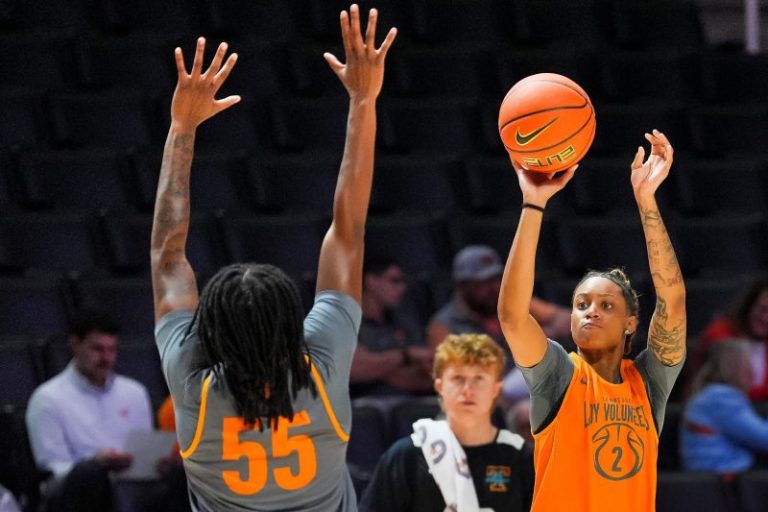
The Tennessee women’s basketball team is days away from tipping off its highly-anticipated 2025-26 season, but senior guard Ruby Whitehorn has found herself in some more legal trouble.

Whitehorn was arrested and charged with simple possession at 4:31 a.m. Thursday morning, according to the University of Tennessee Police Department’s online crime logs. The arrest happened hours after Whitehorn scored 18 points in the Lady Volunteers’ 148-48 exhibition win over Columbus State at Food City Center on Wednesday.

Whitehorn transferred to Tennessee last season after spending the first two years of her collegiate career at Clemson. Whitehorn averaged 11.6 points, 4.0 rebounds and 1.7 assists in 34 games (28 starts) for Tennessee in the 2024-25, shooting 46.3% from the field and a career-high 29.8% from the 3-point line.

It was Whitehorn’s second issue with law the offseason. Whitehorn was suspended in August after facing felony charges of domestic assault and aggravated burglary. Whitehorn pled guilty to two lesser charges of aggravated trespassing and vandalism and was sentenced to probation and anger management classes, WVLT reported. 

Whitehorn, 21, is a little less than two months removed from the suspension following the arrest on Aug. 8. She was reinstated the week of Sept. 8. It’s not clear if Whitehorn will face further discipline from the program following her latest arrest.

‘We are aware of the situation and awaiting additional information,’ Tennessee associate director of strategic communications Eric Trainer said.

Tennessee tips off their season on Tuesday against NC State. The USA TODAY app gets you to the heart of the news — fastDownload for award-winning coverage, crosswords, audio storytelling, the eNewspaper and more.

This post appeared first on USA TODAY

  • Colorado coach Deion Sanders questioned the honesty of Big 12 pregame injury reporting.
  • The Big 12 implemented injury reports this season to increase transparency and deter insider gambling.
  • Sanders stated he provides a full, truthful injury list to avoid having his name slandered for lying.

Colorado football coach Deion Sanders questioned whether other Big 12 Conference teams are accurately reporting pregame injuries after a new injury report this week showed Colorado with 20 players on the list compared to only one for Arizona.

Colorado hosts Arizona in a homecoming game Saturday at Folsom Field. Big 12 teams are required by the league to report “any uncertainties” regarding a player’s participation in a coming game.

“Let’s tell the truth, and we do,” Sanders said on the Colorado Football Coaches Show Thursday, Oct. 30. “I guess everybody else is lying because there’s no way nobody’s that healthy.”

The Big 12 discloses injury reports before each game this season in the interest of transparency, hoping it prevents injury information from being traded in the shadows with gamblers. In Colorado’s case, Sanders’ pregame injury list sometimes has been quite long compared to opponents. It includes backup players or players who haven’t played much this season, if at all.

Deion Sanders notes the disparity in Big 12 injury reports

Last week, before the Buffaloes suffered a 53-7 loss at Utah, Colorado listed more than 25 players on its initial injury report compared to only three for Utah.  One of those Utah players was starting quarterback Devon Dampier, who was initially listed as questionable to play against Colorado. Dampier then was upgraded to “probable” to play in a subsequent injury report before the game. On game day, he wasn’t listed on the injury report at all, meaning he apparently was available to play against Colorado. But he didn’t play against Colorado, raising questions about transparency and gamesmanship with the injury report.

Utah coach Kyle Whittingham later said Dampier “wasn’t feeling it” before the game and was available as an emergency backup.

Sanders didn’t accuse any coach in particular of being dishonest.

“Why do we always like, we always have 100 guys (on the injury report) and the other team, I look over and they have two guys?” Sanders asked. “Are we the only ones being honest?”

Sanders said he promotes publishing a full injury report because “the last thing I want is my name slandered for lying,’

“I don’t lie,” Sanders told the show’s host, Mark Johnson. “I don’t. I’m not gonna placate nothing. Let’s tell the truth. And we do.”

Sanders said that “we’re tripling our opponents” in number of injured players reported before games. That is not always the case. The initial injury report for the week before Colorado beat Iowa State on Oct. 11 showed 21 players on the list for Colorado and 17 for Iowa State. Sanders said his team goes over the list every day with his training staff to issue a comprehensive report.

Deion Sanders said he finally went home this week

On Tuesday, Sanders said he hadn’t returned to his home in Colorado after suffering the worst loss of his college coaching career at Utah on Saturday. He stayed at the Colorado team facilities instead hoping to get his team back on track. He said Thursday he finally went home Wednesday.

“I’m a perfectionist,” he said. “I want to win. And then, if you don’t, I want to figure out why.”

World Series could affect Colorado’s television channel

Colorado’s game against Arizona on Saturday is set for 7 p.m. ET on FS1. But if the Toronto Blue Jays win the World Series Friday against the Los Angeles Dodgers, the Arizona-Colorado game will be moved to Fox, the network confirmed to USA TODAY Sports. If the Dodgers force a Game 7, that decisive game will be on Fox and Colorado will play Arizona on FS1.

Follow reporter Brent Schrotenboer @Schrotenboer. Email: bschrotenb@usatoday.com

This post appeared first on USA TODAY