Alice Queen (AQX:AU) has announced Alice Queen raises $1M via issue of Convertible Notes
Download the PDF here.
This post appeared first on investingnews.com


Alice Queen (AQX:AU) has announced Alice Queen raises $1M via issue of Convertible Notes
Download the PDF here.

Founded in 2009 and listed in 2011, Angkor Resources (TSXV:ANK,OTCQB:ANKOF) has developed a dual focus on energy and minerals across Asia and North America.
Angkor Resources is advancing a dual-track strategy across energy and minerals. In Canada, its subsidiary EnerCam Exploration generates revenue from oil production, water disposal, and gas processing, while also pioneering carbon capture and conversion solutions.
In Cambodia, subsidiary EnerCam Resources is driving the nation’s first-ever onshore oil and gas exploration on Block VIII, positioning the company for transformational growth. On the mineral side, Angkor is a first-mover in Cambodia’s underexplored belts, with licenses at Andong Meas and Andong Bor targeting both precious and base metals, where exploration has already confirmed copper porphyry systems and high-grade gold mineralization.
Angkor mitigates risk by diversifying revenue, combining recurring Canadian cash flow with high-impact exploration in Cambodia, where management prioritizes hydrocarbons and copper, highlighting 25 million recoverable barrels and significant copper-gold potential.
This Angkor Resources profile is part of a paid investor education campaign.*
Click here to connect with Angkor Resources (TSXV:ANK) to receive an Investor Presentation

lobe sciences ltd. (CSE: LOBE,OTC:LOBEF) (OTCQB: LOBEF) (FSE: LOBE.F) (‘Lobe Sciences’ or the ‘Company’) a clinical stage biopharmaceutical company focused on developing products to treat diseases with significant unmet medical needs is pleased to announce its participation in the upcoming ArcStone-Kingswood Growth Summit in Toronto, taking place at the St. Regis Toronto on September 18, 2025. Dr. Frederick D Sancilio, CEO of lobe sciences ltd. will be presenting the company’s recent milestones and future growth strategy.
The ArcStone-Kingswood Growth Summit will be hosting over 20 companies and a curated group of investors for a full day of pre-arranged, targeted 1-on-1 meetings, panel discussions and networking opportunities.
Alongside the schedule of pre-booked meetings matching investors with appropriate projects, the conference program will provide amble opportunities to mix and mingle with the industry professionals and catch up on key industry developments.
Interested investors who would like to attend the ArcStone-Kingswood Growth Summit can register to request for a free invitation here.
About ArcStone Securities and Investments Corp.
ArcStone Securities and Investments Corp. is a diversified financial services firm with offices in Toronto and New York. Our firm specializes in providing bespoke solutions to mid-market companies worldwide, with a particular focus on cross-border transactions between Canada and the United States. Our partnership with Kingswood US enhances our ability to offer a full spectrum of financial services to our clients.
About Kingswood US
Kingswood US is a mid-market investment bank with a strong retail equity capital markets franchise and deep-rooted investment bank. The firm is dedicated to providing comprehensive financial services, including investment banking, wealth management, and capital raising, to clients across the United States.
About lobe sciences ltd.
Lobe Sciences Ltd. is a clinical stage biopharmaceutical company focused on developing novel therapies for rare neurological and hematological conditions. The company operates through two subsidiaries:
Altemia, Inc. is addressing sickle cell disease with two complementary assets: a medical food currently in early-stage distribution, and S-100, a patent-pending therapeutic candidate designed to treat the underlying pathology of the disease.
Lobe’s pipeline is differentiated by intellectual property, clinical momentum, and a strategic focus on high-value, underserved markets.
For additional Information, please contact:
lobe sciences ltd.
info@lobesciences.com
www.lobesciences.com
To view the source version of this press release, please visit https://www.newsfilecorp.com/release/265683
News Provided by Newsfile via QuoteMedia

As the robotics industry prepares for significant technological advances in artificial intelligence (AI), it’s no surprise that the top robotics stocks are gaining attention.
Chief executive officer of Hangzhou Unitree Technology, Wang Xingxing, told the World Robots Conference in Beijing in August 2025 that the industry could be about one to three years away from a breakthrough comparable to the ChatGPT moment. He also expressed optimism about the future, predicting that at least one company might develop a general-purpose robotic AI model by the end of 2025.
While these transformative AI advancements promise to reshape robotics broadly, current market data shows that the automotive industry continues to drive a large share of robotics orders. However, according to data from the Association for Advancing Automation, rapid growth in demand from the food and consumer products and life science sectors was also notable in 2024.
Surgical robots are increasingly being used in a variety of surgery types, such as cardiac and spinal, allowing for better patient outcomes.
With technological breakthroughs just on the horizon and diverse sectors driving demand, now is an opportune moment to explore the top robotics stocks poised to capitalize on this rapidly evolving industry.
This list of top robotics stocks by market cap was compiled using TradingView’s stock screener. All market cap and share price information was current as of September 3, 2025.
Share price: US$170.62
Market cap: US$4.15 trillion
NVIDIA’s robotics business has surged ahead in 2025 with major technology releases and expanding industry partnerships, establishing it as a core infrastructure provider for robotic intelligence. Its Jetson Thor platform offers 7.5 times more compute and 3.5 times greater energy efficiency than its predecessor.
The company is driving physical AI, the fourth wave of the AI revolution, through its Cosmos model, which allows developers to train robots for diverse scenarios, a critical component to advancing autonomous vehicles and humanoid robots.
Share price: US$334.09
Market cap: US$1.08 trillion
Tesla’s robotics business is becoming increasingly central to its CEO, Elon Musk, who claims its Optimus humanoid robot will eventually become the company’s core value driver. The company is focused on developing and scaling Optimus, although its goal of producing 5,000 in 2025 is reportedly behind schedule as of July. Tesla is aiming to produce 1 million units annually by 2030.
The long-term goal is to achieve fully autonomous robots that can be deployed across manufacturing, logistics, elder care and residences, which it detailed in its Master Plan IV released in early September.
Share price: US$484.55
Market cap: US$182.97 billion
Thermo Fisher Scientific is a medical device company that is one of the world’s most respected brands in healthcare, scientific research, safety and education. Its products and services cover a broad range of high-end analytical instruments, chemistry and consumable supplies, automated laboratory robotics and software designed primarily for medical researchers, clinicians and scientists.
In June 2025, Thermo Fisher Scientific partnered with Cellular Origins, which owns the Constellation robotic manufacturing platform, to scale up late-stage trials and commercial production of cell and gene therapies.
Outside the life science sector, the company launched the Vulcan Automated Lab in early 2025, integrating robotic sample handling, AI and advanced electron microscopy to improve semiconductor development.
Share price: US$157.28
Market cap: US$169.71 billion
Qualcomm’s specialty is designing and manufacturing semiconductors, software and wireless telecommunications products. In recent years, the company has devoted attention to AI-related technologies such as on-device AI, edge cloud AI and technologies that combine 5G and AI. These technologies also underlie Qualcomm’s advancements in the robotics space.
Qualcomm’s Snapdragon platform is a high-performance, low-power system-on-a-chip designed for AI, 5G connectivity and real-time processing used in a variety of sectors, including in robotics.
The Qualcomm Robotics RB6 Platform supports next-generation robotics and intelligent machines. According to the company, some applications include autonomous mobile robots, delivery robots, highly automated manufacturing robots, urban air mobility aircrafts and autonomous defense solutions.
It also has the Flight RB5 5G platform that specifically targets autonomous drones and flying robots, integrating multiple sensors, multiple cameras, 5G and Wi-Fi 6 connectivity to enable advanced navigation and AI-driven control.
Share price: US$107.53
Market cap: US$159.33 billion
Boston Scientific is a medical device company leading in cardiac and electrophysiology robotics and advanced ablation systems.
Its OPAL HDx mapping systems allow physicians to precisely navigate within the heart through 3D mapping, position tracking and more. It employs the company’s FARAPULSE Pulsed Field Ablation system, which generated over US$1 billion in revenue in its first year and now holds expanded US Food and Drug Administration (FDA) approval for both pulmonary vein and posterior wall ablation.
Strategic acquisitions since 2024 include Silk Road Medical, Axonics, Bolt Medical and SoniVie, giving the company access to a wealth of product offerings to address patient needs and create new revenue streams.
Share price: US$441.18
Market cap: US$158.15 billion
A leader in surgical robotics, Intuitive Surgical is the company behind the da Vinci minimally invasive surgical system. The original da Vinci system gained FDA approval in 2000, making it the first completely robotic surgical system to receive clearance from the FDA.
Intuitive Surgical now provides a suite of its da Vinci robotics-assisted surgical systems to doctors and hospitals, and they are used by surgeons across all 50 US states and 72 countries around the world.
New products, including the Ion robot for lung biopsies and the SureForm SP stapler, are experiencing unprecedented growth. Their AI-driven features contribute to reducing error rates and enhancing outcomes.
Share price: US$388.56
Market cap: US$148.55 billion
Stryker is another leading medical technology company. It develops medical equipment, instruments and surgical robotics for healthcare systems worldwide. Its surgical robotics systems incorporate health data and AI to improve health outcomes for patients.
Stryker’s Mako 4 robotic arm system for assisted joint replacement surgery can be used in partial knee, total knee, hip and spine surgeries, and a version for shoulder surgeries was recently introduced. The company showcased an upgrade to its Mako Total Hip system during the American Academy of Orthopaedic Surgeons’ 2025 Annual Meeting in San Diego in March.
Stryker launched Ortho Q Guidance, its surgical guidance system for knee and hip procedures, in July 2023. The platform can be integrated into robotics technology.
Share price: US$214.00
Market cap: US$135.87 billion
Engineering and technology company Honeywell International develops and manufactures technological solutions for a variety of sectors, including energy, security, safety, productivity and global urbanization. Its four business divisions are: aerospace, building technologies, performance materials and technologies, and safety and productivity solutions.
For more than a quarter century, Honeywell’s smart robotics technologies, including autonomous mobile robots and order-picking AI-powered robots, have provided warehouse automation solutions targeting transport, order picking, palletizing and depalletizing.
In 2025, Honeywell announced a strategic partnership with Teradyne Robotics, a division of Teradyne (NASDAQ:TER), to deliver end-to-end automation solutions using Teradyne’s autonomous mobile robots and collaborative robots and Honeywell’s software.
Share price: US$92.25
Market cap: US$118.33 billion
Medtronic is one of the largest medical device manufacturing companies in the world. The firm’s technologies include cardiac devices, surgical robotics, insulin pumps, surgical tools and patient monitoring systems.
Medtronic’s Hugo robotic-assisted surgery system is a modular platform with four independent robotic arms, designed to improve precision, flexibility and surgeon ergonomics in minimally invasive soft tissue surgeries like urology and gynecology.
It features 3D high-definition visualization, advanced AI-powered analytics and an open console for better surgeon communication. Hugo offers a cost-effective and adaptable alternative to traditional systems and has been commercially used in North America since 2023.
Share price: US$195.74
Market cap: US$4.78 billion
Texas Instruments is a leading semiconductor manufacturer whose robotics business focuses on supplying high-precision analog chips, sensors, embedded processors and motor control solutions for industrial automation, factory robots, automotive robotics and smart devices.
Texas Instruments partnered with KUKA in April 2025 to jointly advance next-generation industrial robotics. The collaboration focuses on integrating TI’s precision analog sensors and real-time motor control chips into KUKA’s robot arms and automation platforms, resulting in safer, more energy-efficient and adaptive robots for smart factories and logistics.
In simple terms, robotics is defined as the branch of technology that deals with the design, construction, operation and application of robots. The field has subsets such as automation and AI.
Both automation and robotics have been used interchangeably, but these terms have certain differences. Automation is the process of using technology to carry out specific tasks, and not all robots are designed for automation. That said, most robots are, especially those with industrial uses.
The five major fields of robotics are: operator interface, mobility, manipulator and effectors, programming and sensing and perception.
Operator interface is better described as human-robot interface — it’s the means by which humans can communicate commands to a robot. This might be in the form of a touchscreen on a control panel.
Mobility refers to the ability of a robot to move in its environment, while manipulators and effectors allow the robot to interact with its environment. Think of an autonomous mobile robot moving around a warehouse to stack inventory on a pallet. For its part, programming involves the language used to communicate commands to the robot.
Meanwhile, sensing and perception allows the robot to acquire information about its environment and perform tasks based on that information. This is important for autonomous vehicle technology.
For investors looking to enter the robotics sector, large companies like the ones listed above may be a good place to start. Those with a broader approach who would rather put their money into the sector as a whole rather than in a single company may want to consider exchange-traded funds focused on robotics.
Boston Dynamics is a private mobile robotics engineering firm that specializes in building robots and software for human simulation. Originally part of the Massachusetts Institute of Technology, Boston Dynamics is held by Hyundai (80 percent) and Softbank Group (TSE:9984) (20 percent).
Miso Robotics is a privately held company, which means it is not listed on any stock exchange. The company develops and manufactures AI-driven robots, including automatic fry cook Flippy, that help restaurants with food preparation.
Water, hygiene and infection prevention company Ecolab (NYSE:ECL) has partnered with Miso Robotics “to explore new opportunities to enhance food safety, hygiene, and efficiency in the food industry through automation and digital solutions.”
Securities Disclosure: I, Melissa Pistilli, hold no direct investment interest in any company mentioned in this article.
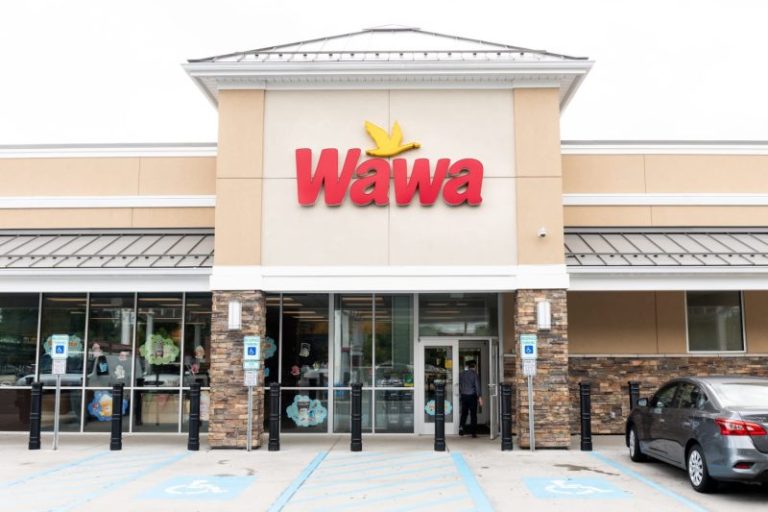
Fast-food restaurants are losing breakfast customers to convenience stores.
Morning meal traffic to fast-food chains rose 1% in the three months ended in July, while visits to food-forward convenience stores climbed 9% in the same period, according to market research firm Circana.
“Over the long run, convenience stores have taken share, really at foodservice overall, but the morning meal has been their strong suit,” David Portalatin, Circana senior vice president and foodservice industry advisor, told CNBC, noting the trend has largely been driven by what the group calls “food-forward convenience stores.”
For decades, McDonald’s and its rivals have tried to lure consumers away from home to eat their early morning offerings, betting that convenience and unique items will win over diners.
While fast-food chains have made some inroads, 87% of what consumers eat and drink in the morning comes from their own refrigerators or pantries, according to Portalatin. That leaves plenty of opportunity for fast-food chains — and anyone else who wants a slice of the breakfast pie.
Before the pandemic, fast-food chains started seeing a new rival for their breakfast customers: convenience stores. Regional chains like Wawa in the Northeast and Casey’s General Store in the Midwest were expanding their reach and investing in their foodservice options, taking pages from the fast-food companies’ own playbooks.
For a time, lockdowns and the shift to hybrid work reversed those market share gains. But in the three months ended in July, food-forward convenience stores once again gained the upper hand in the battle to serve consumers breakfast, according to Portalatin.
Circana separates food-forward convenience stores like Buc-ee’s and Sheetz from the broader industry, although more chains may soon fit under that umbrella. 7-Eleven, the biggest convenience, or c-store, in the U.S., is planning to invest more in its prepared foods business, inspired by the success of its Japanese business. C-store chain RaceTrac on Wednesday announced that it’s buying Potbelly for about $566 million, although it’s unclear what its plans for the sandwich chain include beyond expanding its footprint.
In recent years, more diners have been watching their budgets, conscious of rising menu prices and a tight job market.
Year-over-year morning traffic to fast-food chains has fallen every quarter for the last three years, according to data from Revenue Management Solutions, which advises restaurants on how to increase sales and profits. In the second quarter, fast-food breakfast visits fell 8.7%.
To see the struggles, look no further than McDonald’s, which dominates the quick-service breakfast category.
″The breakfast daypart is the most economically sensitive daypart, because it’s the easiest daypart of a stressed consumer to either skip breakfast or choose to eat breakfast at home,” McDonald’s CEO Chris Kempczinski said on the company’s earnings call in late July. “And we, as well as the rest of the industry, are seeing that the breakfast daypart is absolutely the weakest daypart in the day.”
McDonald’s morning visits accounted for 33.5% of its traffic in the first half of 2019 but fell to 29.9% in the first half of 2025, according to Placer.ai data. To try to drum up traffic, the chain has included breakfast items in its new Extra Value Meals, including a deal for a Sausage McMuffin with Egg with a hash brown and a small coffee for $5.
To reverse breakfast’s slide, fast-food chains are taking hints from their competition. After years of convenience stores looking to fast-food chains for ideas on how to grow prepared food sales, from installing ordering kiosks to new menu items, the dynamic has flipped.
″[Quick-service restaurants] are looking at late-night sales and early morning sales, and they are directly looking at convenience stores and saying, ‘What is working? How can we bring that to our stores?’” National Association of Convenience Stores spokesperson Jeff Lenard told CNBC.
Prepared foods have offered a lifeline for convenience stores as demand for gasoline, tobacco and lottery tickets has fallen over time. The industry’s overall foodservice sales reached $121 billion in 2024, according to data from the NACS.
Most customers visit the gas pump during the morning and evening rush hours, on their way to and from work, presenting the perfect opportunity for c-stores to sell them breakfast or dinner. This year, 72% of consumers surveyed by InTouch Insight said they saw c-stores as a real alternative to fast-food chains, up from 56% a year ago and 45% two years ago.
Broadly, the c-stores that have focused on fresh food have been winning over more customers.
For example, Wawa has seen its customer base grow by 11.5% since 2022, while fast-food chains McDonald’s, Burger King and Wendy’s have seen their combined customer base shrink 3.5% in the same time, according to data from Indagari, a transaction data analytics firm.
The majority of 1,170 respondents to an InTouch Insight survey for CNBC said that they have purchased made-to-order breakfast from a c-store in the morning in the past three months. Forty-eight percent of respondents said that when they choose breakfast from a convenience store, they are replacing a visit that they might otherwise make to a fast-food restaurant like McDonald’s or Dunkin’.
Buying coffee and breakfast from a c-store likely won’t be cheaper than making it at home. But consumers perceive it as “good bang for their buck,” according to Sarah Beckett, vice president of sales and marketing for InTouch Insight.
Plus, c-store customers get a wider breadth of options. In addition to coffee, gas stations sell energy drinks, protein shakes and yogurt smoothies. And customers can pick up a granola bar or banana to accompany their breakfast sandwich. Fast-food chains lack that kind of variety.
But above all, what matters to consumers is the food itself.
“While [a] convenience store broadly does have some tailwind from being a lower price point, the ultimate differentiator, and what’s really going to set apart the winners from losers, is that quality aspect of it,” Circana’s Portalatin said.
Brady Caviness, a 33-year-old account executive at Bailiwick who lives in Minneapolis, told CNBC that he indulges in a breakfast pizza from Casey’s General Store when he’s traveling. If he’s back home, where there isn’t a Casey’s nearby, he’ll stop by McDonald’s, Dunkin’ or Starbucks if he’s in the mood to buy his breakfast.
The Iowa-based chain is the country’s third-largest c-store chain and claims to be the fifth-largest pizza concept based on its number of locations. Casey’s reported same-store sales growth of 5.6% for its prepared food and dispensed beverages for the three months ended July 31.
Like Taco Bell’s Mexican Pizza, Casey’s breakfast pizza, topped with cheese, scrambled eggs and a choice of bacon, sausage or vegetables, has grown a cult following since its launch in 2001.
“I think Casey’s is kind of a unique thing,” Caviness said. “My whole life, I’ve had the Egg McMuffins.”

The Dallas Cowboys and New York Giants squared off in NFL Week 2. The game turned into an instant classic.
The Cowboys and Giants combined for a whopping 41 points during a back-and-forth fourth quarter that saw five lead changes. The game went to overtime and nearly ended in a tie before Dallas won 40-37 thanks to a last-second Brandon Aubrey field goal.
Just how crazy was the end of the Cowboys vs. Giants game? Below is a look at the highlights that swung the action over the last 11 minutes of action in regulation and overtime.
Many counted the Giants out after the Cowboys scored a go-ahead touchdown with 54 seconds remaining in regulation. However, just 27 seconds later, New York managed to find its way into the end-zone to retake the lead.
How did the Giants do it? Wilson unleashed a deep pass to Nabers, dropping it perfectly into the 22-year-old’s arms in stride for the 48-yard touchdown.
Nabers managed to make the catch despite being grabbed by the facemask just before the ball arrived. The play, and the ensuing extra point, gave the Giants a 3-point lead with 25 seconds left in regulation.
Dallas was able to erase New York’s lead just as quickly as the Giants had erased theirs. Dak Prescott and Co. managed to gain 25 yards, most of which came on an 18-yard completion to Jake Ferguson, to put Aubrey on the outer edge of his field goal range.
Aubrey managed to put the ball through the uprights from 64 yards as time expired in regulation to force overtime.
Aubrey is regarded as one of the league’s best kickers from long-distance and entered Sunday’s game having made 25 of his 28 career attempts from 50-plus yards out.
Wilson’s deep ball giveth, but it also taketh away. Giants fans got a taste of that in overtime, when the veteran quarterback decided to launch another deep pass in the direction of Nabers.
This time, Wilson threw the ball too far to the inside. That allowed safety Donovan Wilson to easily go up and catch the pass, while Nabers came flying in to make the tackle.
Wilson’s pass was a long one, so it had the same impact as a punt. However, with so little time remaining in overtime, the interception all but guaranteed the Giants wouldn’t have a chance to get the ball back unless they could quickly force a three-and-out.
Prescott missed more than half of the 2024 NFL season after tearing his hamstring off the bone. The 32-year-old showed against the Giants that he still has mobility despite the injury.
With just 37 seconds left in overtime, Prescott saw a running lane open in the middle of New York’s defense. He took advantage of it, scrambling for 14 yards and putting Dallas well within Aubrey’s field goal range.
The Cowboys decided not to run another offensive play after Prescott’s all-important run. Instead, they took a timeout with four seconds left and decided to let Aubrey try to win the game.
Aubrey made a game-tying field goal as time expired in regulation. He did the same at the end of overtime, guaranteeing the Cowboys and Giants would avoid the tie.
Aubrey’s game-winning attempt was from 46 yards, making it easier than his 64-yarder at the end of regulation.
Aubrey’s make gave Brian Schottenheimer his first win as Dallas’ coach and allowed the Cowboys to extend their winning streak over the Giants to nine games.
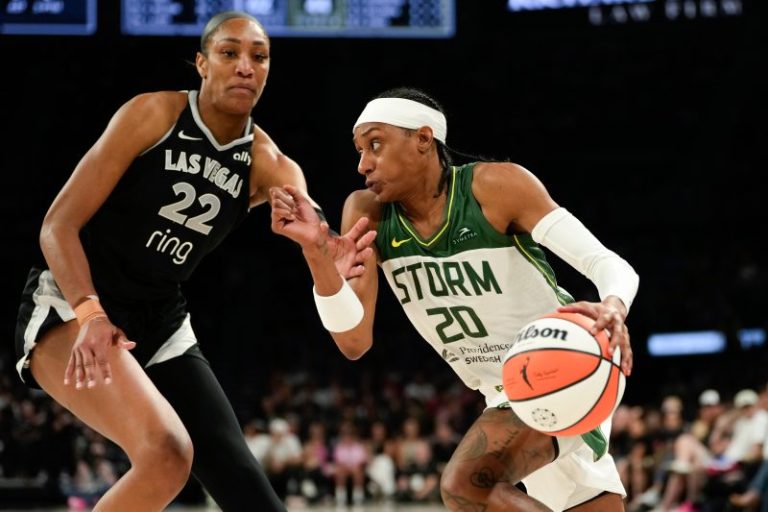
The Aces closed out the regular season with a 103-75 win over the Los Angeles Sparks on Thursday to extend their win streak to 16, tying the Phoenix Mercury (2014) for the second longest streak in WNBA history. If that wasn’t enough, the Aces also set a WNBA record for the most 3-pointers made in a game with 22. The win helped the Aces capture the No. 2 seed, setting up a first-round matchup with the No. 7 Seattle Storm.
The win punctuates a remarkable turnaround for the Aces, who looked like a shell of themselves to start the season with a 5-7 record. But A’ja Wilson led them back to the championship contention with another MVP caliber season, leading the league in points per game (23.4) and blocks (2.3). Can the Aces win the franchise’s third WNBA title in four years? They’ll have to go through a feisty Storm that won’t be an easy out.
10 BEST PLAYERS: Ranking stars entering WNBA playoffs from ‘unicorn’ to top-tier
Veteran Nneka Ogwumike is the Storm’s leading scorer, averaging 18.3 points, 7.0 rebounds and 2.3 assists. Gabby Williams, who leads the league in steals with 99, and Ezi Magbegorin, who leads the league in blocks with 96, anchor the fourth-best defense in the WNBA.
Las Vegas and Seattle tied in the regular-season series, 2-2. Who will take Game 1? Here’s everything you need to know about the Valkyries-Lynx game on Sunday:
A’ja Wilson led all players with 16 points and five rebounds for the Aces in the first half. She shot five of 10 from the field in 18 minutes of play.
NaLyssa Smith scored eight points and six rebounds against the Storm. Nneka Ogwumike led Seattle with nine points and six rebounds. She shot four of nine from the field in 17 minutes of play.
A’ja Wilson had eight points and three rebounds in the first quarter to lead the Aces.
Nneka Ogwumike told the ESPN broadcast what it will take for the Storm to stop Wilson throughout the night.
‘You just have to make things difficult,’ Wilson said. ‘Guarding her with team defense is what’s effective for us.’
Ogwumike had five points and two rebounds to lead the Storm.
The Aces scored the first four points of the game at home against the Storm. Las Vegas leads Seattle 15-5 with 4:43 left in the first quarter.
Skylar Diggins was spotted running back to the locker room after a substitution.
Guard Skylar Diggins, guard Brittney Sykes, forward Gabby Williams, forward Nneka Ogwumike and center Ezi Magbegor will make up the starting lineup for Game 1 against the Las Vegas Aces.
Forward NaLyssa Smith, guard Jackie Young, guard Chelsea Gray, forward Kierstan Bell and center A’ja Wilson will start for the Aces in Game 1 against the Storm tonight.
The Minnesota Lynx host the Golden State Valkyries at 10 p.m. ET (7 p.m. PT) on Sunday, Sept. 14 at Michelob Ultra Arena in Las Vegas. The game will be broadcast nationally on ESPN.
The USA TODAY app gets you to the heart of the news — fast. Download for award-winning coverage, crosswords, audio storytelling, the eNewspaper and more.
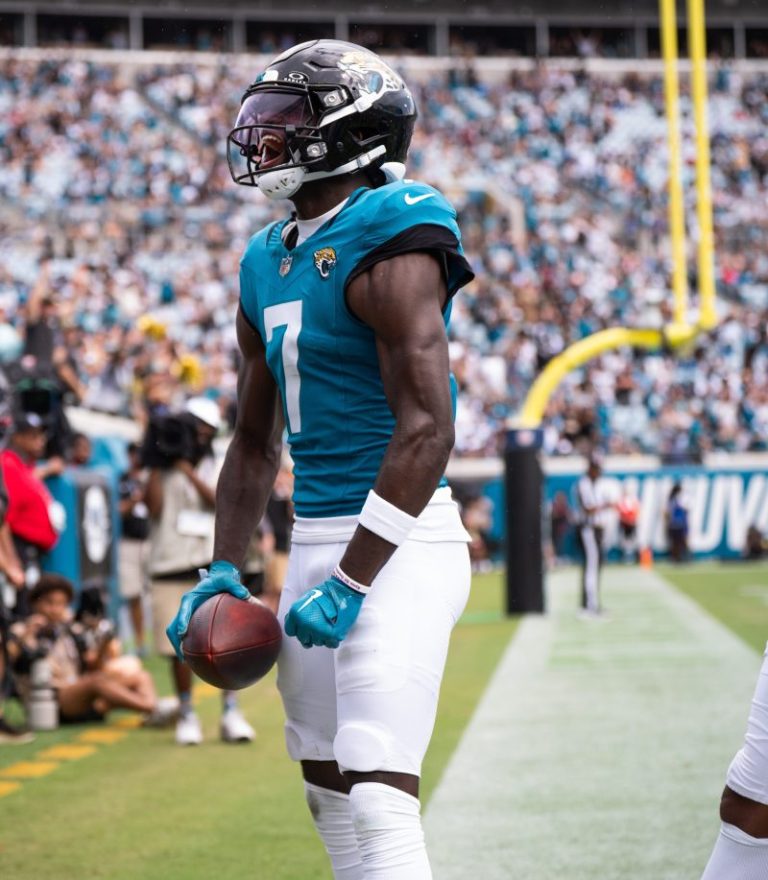
Brian Thomas Jr. endured a tough day at the office in the Jacksonville Jaguars’ 31-27 loss to the Cincinnati Bengals.
Thomas was targeted a team-high 12 times but managed four catches for 49 yards in the defeat. Part of the reason for his lackluster stat line? He had a few crucial drops throughout the contest, including one on a key fourth down late in the game.
Jaguars coach Liam Coen was asked about Thomas’ effort after the game, and specifically whether he believed the second-year receiver was ‘shying away from some contact.’
‘I gotta go watch it and just go figure out what that was all about and what it looked like,’ Coen responded. ‘Yeah, I got to go take a look at that.’
Coen’s comment is far from a condemnation of Thomas. But certainly, it seems like the first-year coach was frustrated with his talented, young playmaker – and Jacksonville’s offense, in general – after the team’s loss to the Bengals.
Thomas was a star for the Jaguars as rookie, generating 87 receptions for 1,282 yards and 10 touchdowns in his first season. Thus far in 2025, he has just five catches for 60 yards, putting him on pace for 42.5 catches and 510 yards over a 17-game season.
Thomas will look to post a better line, and avoid drops, in Week 3, when the Jaguars host the Houston Texans in a battle of AFC South rivals.

Los Angeles Dodgers superstar Shohei Ohtani and his agent filed paperwork on Sunday, Sept. 14 moving to dismiss a lawsuit in which they were accused of wrecking a $240 million housing development on Hawaii’s Hapuna Coast.
The original lawsuit was filed last month, in which Ohtani and his agent, Nez Balelo, were accused ‘tortious interference and unjust enrichment,’ who used their ‘celebrity leverage to destabilize and ultimately dismantle Plaintiffs’ role in the project’ and attempted to sabotage a second business venture, by developer Kevin J. Hayes Sr., real estate broker Tomoko Matsumoto, West Point Investment Corp. and Hapuna Estates Property Owners.
In an order to dismiss that was filed in the Hawaii Circuit Court and obtained by USA TODAY Sports, Ohtani and Balelo’s attorneys said that in 2023, Hayes and Matsumoto acquired rights for a joint venture, and said they owned a minority percentage in order to use Ohtani’s name, image, and likeness, calling Ohtani a “victim of NIL violations.”
“Unbeknownst to Ohtani and his agent Nez Balelo, plaintiffs exploited Ohtani’s name and photograph to drum up traffic to a website that marketed plaintiffs’ own side project development,” the lawyers said in the lawsuit. “They engaged in this self-dealing without authorization, and without paying Ohtani for that use, in a selfish and wrongful effort to take advantage of their proximity to the most famous baseball player in the world.”
Unlike the previous lawsuit, Ohtani is referred to by that name instead of ‘Otani,’ who the plaintiffs said used ‘threats and baseless legal claims to force a business partner to betray its contractual obligations.’
Ohtani is nearing the end of his second season with the Dodgers, having signed a 10-year, $ 700 million contract, which helped Los Angeles win the World Series last year. He is a five-time All-Star and three-time Most Valuable Player, who is hitting .281 with 49 home runs, 93 RBI, and has scored 135 runs for the NL West leaders.
‘Nez Balelo has always prioritized Shohei Ohtani’s best interests, including protecting his name, image, and likeness from unauthorized use. This frivolous lawsuit is a desperate attempt by plaintiffs to distract from their myriad of failures and blatant misappropriation of Mr. Ohtani’s rights,’ Laura Smolowe, an attorney representing Balelo and Ohtani, said in a statement.
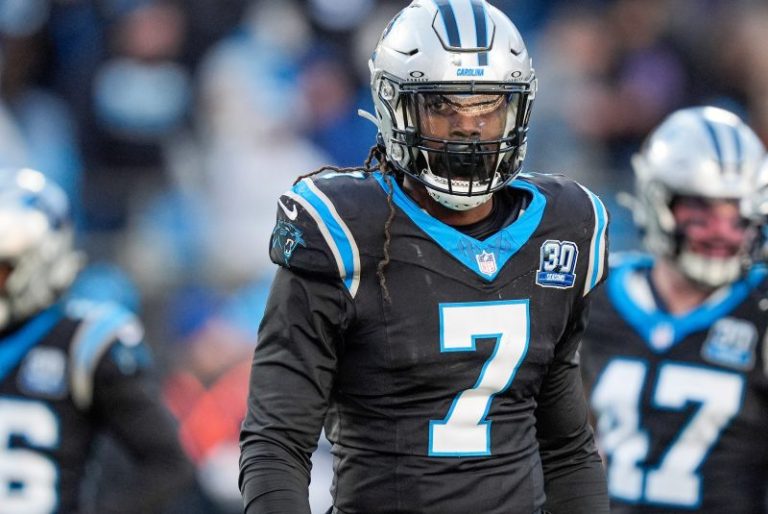
The Cowboys are signing veteran edge rusher Jadeveon Clowney, owner and general manager Jerry Jones told reporters following his team’s 40-37 thrilling overtime victory over the New York Giants on Sunday.
Clowney, 32, was released by the Carolina Panthers in May, one season before his two-year deal with the team expired. He visited the Cowboys last week, ESPN reported. As a team, Dallas has four sacks through two games (three against New York).
Dallas traded Micah Parsons, perhaps the league’s best player at getting after the quarterback, one week before the season started amid a lingering contract dispute.
Clowney has 58 career sacks and was drafted first overall in 2014 by the Houston Texans. He’s spent the past six seasons with five teams, the most productive being his 9.5-sack campaign with the Baltimore Ravens in 2023.