Author

admin

Browsing

Australian Prime Minister Anthony Albanese and US President Donald Trump signed a rare earths deal during their meeting at the White House on Monday (October 20).

The meeting was set to focus on critical minerals and rare earths, with Albanese telling Bloomberg on Sunday (October 19) that it would also be an opportunity to “consolidate and strengthen” the Australia-US relationship.

According to insiders, the deal had been in the works for five months.

During the meeting, Trump said he “never had any doubts” about the countries’ bond, adding that “there’s never been anybody better.” For his part, Albanese described the deal as an US$8.5 billion pipeline ‘that we have ready to go.’

The signing happened after opening remarks from Trump, during which the US president called the deal a “key objective” in reducing reliance on China. “Within a year, we’ll have critical minerals and rare earths that you won’t know what to do with them,” Trump said, adding, ‘They’ll be worth about two dollars.’

China currently holds the world’s largest rare earths reserves and is the top producer by far, but Australia has been highlighted as a key player as trade tensions between the US and China ramp up.

The country is home to some of the most significant rare earths operations globally, such as Lynas Rare Earths’ (ASX:LYC,OTC Pink:LYSDY) Mount Weld mine, and Arafura Rare Earths’ (ASX:ARU,OTC Pink:ARAFF) Nolans project.

Last week, several companies, such as Nova Minerals (ASX:NVA,NASDAQ:NVA), were invited to brief the Australian government on key projects prior to the country’s meeting with the US.

Nova was instructed to include an overview of its flagship Estelle gold project, including the key minerals identified, planned expansion activities and the company’s engagement with US government agencies.

The same goes for Resolution Minerals (ASX:RML,OTCQB:RLMLF), which was invited for a briefer on its Idaho-based Horse Heaven gold-antimony-tungsten project.

Both Nova and Resolution were among the top-gaining mining stocks on the ASX last week.

Trump supports Biden-era AUKUS deal

Albanese and Trump also discussed the AUKUS submarine deal, a multibillion-dollar agreement between Australia, the UK and the US, which is geared at boosting security in the Indo-Pacific region.

When asked whether AUKUS is meant to be a “deterrent” for China, Trump answered yes. However, he also said he doesn’t think that will be needed as the US military is the best in the world.

‘We’re going to get along great with China,’ he said.

AUKUS is worth around US$239 billion, or AU$368 billion, over 30 years.

Starting in 2032, Australia plans to buy three Virginia-class submarines from the US, with the option to get two more. These will fill the gap while the UK and Australia develop a new submarine model. Trump also said the US is working on building more submarines for Australia and is going to expedite submarine exports to the country.

Australia is expected to receive the first of the new submarines in the early 2040s.

Securities Disclosure: I, Gabrielle de la Cruz, hold no direct investment interest in any company mentioned in this article.

This post appeared first on investingnews.com

Torchlight Innovations Inc. (TSXV: TLX.P) (‘Torchlight’ or ‘the Company’), doing business as RZOLV Technologies, is pleased to announce positive preliminary results from its metallurgical testing program focused on rare earth and critical mineral leaching using its proprietary RZOLV reagent system.

Modern economies are increasingly dependent on a broad suite of critical minerals and rare earth elements—including lithium, cobalt, nickel, praseodymium, tellurium, gallium, scandium, and others—that are essential to clean energy, advanced electronics, battery storage, and defense technologies.

According to the International Energy Agency (IEA), these minerals are ‘crucial to the performance of batteries, permanent magnets, and other clean energy technologies.’ The U.S. Department of Energy (DOE) similarly notes that critical minerals ‘are vital for a wide range of industries, including clean energy and defense,’ powering systems such as solar panels, wind turbines, and electric vehicle batteries. As traditional high-grade deposits become harder to access, attention is shifting toward secondary and unconventional sources such as tailings, mine waste, low-grade ores, brines, and industrial by-products. (Sources: https://www.iea.org/topics/critical-minerals| https://www.energy.gov/fecm/articles/developing-domestic-supply-critical-minerals-and-materials)

In this emerging landscape, a reagent like RZOLV, capable of dissolving over twenty such elements, represents a potentially transformative advancement in sustainable mineral recovery.

Key Highlights

  • Multi-Element Recovery: RZOLV dissolved over 25 critical and rare earth elements under mild, non-toxic conditions, with standout recoveries of cerium (73%), manganese (64%), and cobalt (60%).
  • REE and Base Metal Versatility: Consistent recoveries (40-45%) for mid-series rare earths such as samarium, europium, and gadolinium demonstrate RZOLV’s broad leaching capability across both transition and lanthanide elements, validating its cross-commodity potential.
  • Proven Chemistry: The reagent’s redox-complex system mobilizes metals without cyanide or harsh acids, enabling clean, efficient extraction.
  • Cross-Commodity Flexibility: Consistent recoveries across both base and rare earth elements confirm broad market potential.
  • Proven Compatibility: Leach solutions integrate easily with standard ion-exchange and solvent-extraction systems for scalable downstream recovery.
  • Compatibility with Standard Hydrometallurgy: RZOLV leach solutions are compatible with ion-exchange (IX) and solvent-extraction (SX) systems, providing efficient and selective pathways for downstream metal recovery and purification.
  • Sustainable Advantage: Operates at ambient temperature and low pH-lowering environmental risk, reducing cost, and unlocking value from tailings and low-grade sources.

Multi-Element Leachability Assessment of Critical and Rare Earth Samples Using the RZOLV Reagent System

Overview

Laboratory metallurgical investigations were undertaken to evaluate the leachability of multiple metallic and rare earth elements (REEs) from mineralized feedstocks obtained from two U.S.-based mining projects. The objective of this program was to assess the broader metal-solubilization potential of the RZOLV lixiviant system and to characterize its selectivity and efficiency across a diverse elemental suite.

Testing was performed using the standard RZOLV formulation without process optimization or reagent adjustment. As such, future results may vary depending on feed composition, mineralogy, and site-specific conditions.

Methodology

Representative composite samples were subjected to a series of bottle-roll leaching tests under controlled laboratory conditions. Each test employed the proprietary RZOLV non-cyanide leach reagent under standardized parameters designed to simulate low-intensity, ambient-temperature leaching environments.

Tests were conducted in sealed 1-liter HDPE vessels agitated continuously for 72 hours to ensure uniform contact between solids and solution. Post-leach solids (tails) were separated by vacuum filtration and washed thoroughly with deionized water to remove entrained solution. Pregnant leach solutions (PLS) were analyzed by Atomic Absorption Spectrometry, while head and residue samples were submitted to ALS Laboratories, an ISO-accredited analytical facility, for 61-element inductively coupled plasma-mass spectrometry (ICP-MS) analysis. Elemental recoveries to solution were calculated by mass balance, comparing head and residue assays for each element to quantify percentage dissolution.

Results and Discussion

The following table summarizes the unoptimized relative solubility of key metals and rare earth elements under the test conditions. Head and residue MS-ICP assays were compared to determine recovery to solution.

ELEMENT NAME ELEMENT SYMBOL NET RECOVERY
BERYLLIUM Be (%)
CERIUM Ce 73.50%
MANGANESE Mn 64.26%
COBALT Co 60.00%
CHROMIUM Cr 47.35%
GADOLINIUM Gd 45.00%
SAMARIUM Sm 44.12%
YTTRIUM Y 43.55%
EUROPIUM Eu 43.48%
NEODYMIUM Nd 43.48%
TERBIUM Tb1 42.86%
DYSPROSIUM Dy 42.81%
PRASEODYMIUM Pr 42.25%
LANTHANUM La 40.74%
HOLMIUM Ho 40.30%
ERBIUM Er 38.10%
NICKEL Ni 36.36%
VANADIUM V 33.33%
LUTETIUM Lu 33.33%
THULIUM Tm 31.43%
URANIUM U 27.59%
TELLURIUM Te 27.34%
BERYLLIUM Be 26.24%
INDIUM In 23.53%
YTTERBIUM Yb 22.58%
SCANDIUM Sc 16.96%

Interpretation

The results confirm that the RZOLV system promotes substantial solubilization of rare-earth elements, particularly cerium (73%), manganese (64%), and cobalt (50%), validating its oxidative and complexation capacity under mild acidic conditions.

Mid-series lanthanides (Sm, Eu, Gd) achieved recoveries of 40-45 %, consistent with partial liberation from refractory oxide or phosphate phases.

Lower recoveries of niobium (18%), scandium (17%), and lithium (23%) reflect incorporation within stable mineral matrices (e.g., columbite-tantalite, zircon, or silicate lattices) that require stronger oxidative or thermal activation for efficient leaching.

Recovery of Metallic and Rare Earth Elements from RZOLV Leach Solutions

Following the successful leaching of multiple metallic and rare earth elements (REEs) using the RZOLV lixiviant system, downstream recovery methods were considered to determine viable pathways for selective metal capture, concentration, and purification. The focus of this stage of investigation was to assess the suitability of ion exchange (IX) and solvent extraction (SX) systems for recovering valuable metals and REEs from pregnant leach solutions (PLS) generated under standard RZOLV leach conditions.

The RZOLV reagent produces a low-pH, moderately oxidizing solution characterized by high solubility for transition metals and trivalent rare-earth species. This chemistry aligns well with conventional hydrometallurgical separation methods, provided resin or extractant compatibility is maintained under the mildly acidic matrix.

Preliminary evaluations indicate that ion exchange and solvent extraction could be highly effective downstream recovery methods for RZOLV-derived leach solutions. Ion exchange offers rapid, high-capacity capture of base and rare-earth metals, while solvent extraction provides refined selectivity for high-purity product separation. Both methods are compatible with RZOLV’s low-toxicity matrix, enabling environmentally responsible and economically viable metal recovery.

Environmental and Process Implications

The multi-element solubilization profile underscores the potential of RZOLV as a selective and environmentally benign lixiviant for both precious-metal and critical-mineral recovery.

The reagent’s design eliminates the need for cyanide, chloride, or nitrate oxidants—minimizing hazardous effluents—while its regenerative electrochemical cycle enables near-closed-loop operation. Because RZOLV functions under mild aqueous conditions, without extreme temperatures, concentrated acids, or high-pressure systems, it offers a flexible and energy-efficient pathway for extracting critical minerals from complex matrices.

This adaptability allows deployment in diverse applications including ores, tailings, slag, low-grade stockpiles, flotation residues, concentrates, and industrial waste streams, with minimal process re-engineering. Closed-loop regeneration further reduces reagent consumption and operating costs, improving economic viability even for dilute or low-grade sources.

Key Benefits

  • Unlocking latent value: Enables recovery of valuable elements from waste or tailings, converting liabilities into revenue streams.
  • Reduced environmental footprint: Operates at ambient conditions with non-toxic reagents, reducing chemical hazards and remediation needs.
  • Cross-commodity flexibility: Capable of dissolving over twenty critical minerals, adaptable to multiple feed types and market shifts.
  • Support for circular economy and resource security: Facilitates domestic recovery of critical minerals and aligns with global sustainability objectives.

Conclusions

Bottle-roll test results and ICP-MS analyses confirm that RZOLV promotes significant dissolution across multiple elemental groups through synergistic redox-complexation chemistry. High recoveries of Ce, Mn, and Co highlight its oxidative power, while consistent REE mobilization demonstrates its capacity for complex formation under mild conditions. The results validate RZOLV as a versatile, low toxicity lixiviant for both precious and critical mineral extraction. Ongoing research is focused on refining reagent concentration, pH, and electrochemical regeneration to further enhance recovery efficiencies for refractory elements.

This research is preliminary in nature. Assay results are based on head/tails ICP-MS performed by ALS Labs. Test materials have been subjected to the standard RZOLV formula with no reagent optimization. Results will vary based on minerology and this data provides no guarantee of future success or economic viability.

About Torchlight Innovations Inc. (doing business as RZOLV Technologies)

Torchlight Innovations is a clean-technology company with a mission to transform the global mining industry through safer, sustainable, and high-performance extraction technologies. The Company has developed RZOLV, a proprietary non-toxic, water-based hydrometallurgical formula that replaces cyanide in gold leaching.

While cyanide has been the industry standard for over a century, its toxicity has led to widespread environmental concerns, costly permitting, and outright bans in several jurisdictions. RZOLV offers equivalent recovery efficiency and cost performance with a non-toxic, reusable, and environmentally responsible profile.

The Company is currently focused on validating its technology through industrial-scale pilot programs, after which full commercialization and licensing activities will begin. The Company has safeguarded RZOLV through 2 international patent filings and a comprehensive intellectual-property framework that includes protection for its chemical formulation, regeneration processes, and specific applications in heap leaching, vat leaching, tank leaching and concentrate treatment.

Contact

Duane Nelson
President and CEO
Torchlight Innovations Inc.
Email: duane@innovationmining.com
Phone: 604-512-8118

Neither TSX Venture Exchange nor its Regulation Services Provider (as that term is defined in the policies of the TSX Venture Exchange) accepts responsibility for the adequacy or accuracy of this release.

Forward-Looking Statements

This News Release contains ‘forward-looking information’ and ‘forward-looking statements’ within the meaning of applicable Canadian and United States securities legislation. Statements contained herein that are not based on historical or current fact, including without limitation statements containing the words ‘anticipates,’ ‘believes,’ ‘may,’ ‘continues,’ ‘estimates,’ ‘expects,’ and ‘will’ and words of similar import, constitute ‘forward-looking statements’ within the meaning of the U.S. Private Securities Litigation Reform Act of 1995. Forward-looking information may include, but is not limited to, information with respect to our Research and Development activities Wherever possible, words such as ‘plans’, ‘expects’, ‘projects’, ‘assumes’, ‘budget’, ‘strategy’, ‘scheduled’, ‘estimates’, ‘forecasts’, ‘anticipates’, ‘believes’, ‘intends’, ‘targets’ and similar expressions or statements that certain actions, events or results ‘may’, ‘could’, ‘would’, ‘might’ or ‘will’ be taken, occur or be achieved, or the negative forms of any of these terms and similar expressions, have been used to identify forward-looking statements and information. Statements concerning future revenue or earnings estimates may also be deemed to constitute forward-looking information. Any statements that express or involve discussions with respect to predictions, expectations, beliefs, plans, projections, objectives, assumptions or future events or performance are not statements of historical fact and may be forward-looking information. Forward-looking information is subject to a variety of known and unknown risks, uncertainties and other factors that could cause actual events or results to differ from those expressed or implied by the forward-looking information. Forward-looking information is based on the expectations and opinions of the Company’s management on the date the statements are made. The assumptions used in the preparation of such statements, although considered reasonable at the time of preparation, may prove to be imprecise. We do not assume any obligation to update forward-looking information, whether as a result of new information, future events or otherwise, other than as required by applicable law. For the reasons set forth above, prospective investors should not place undue reliance on forward-looking information.

Source

This post appeared first on investingnews.com

Customers of the athletic shoe company On have filed a class action lawsuit alleging that some of the brand’s sneakers squeak embarrassingly loudly when they walk.

The class action suit, filed in the U.S. district court in Portland — where On’s U.S. headquarters is located — on October 9, targets On’s shoes made with ‘CloudTec’ technology. A hallmark of many of the brand’s styles, ‘CloudTec’ is composed of differently shaped holes that cover the external and bottom surfaces of the shoes, according to the lawsuit.

At least 11 of On’s sneaker styles are referenced in the lawsuit, including the Cloud 5 and Cloud 6, CloudMonster, and Cloudrunner, among others.

Lawyers for the plaintiffs did not immediately respond to a request for comment. A representative for On said the company does not comment on ongoing legal matters.

According to the lawsuit, ‘CloudTec’ was created to ‘provide cushioned support when wearers land.’ But according to plaintiffs, the technology ‘rubs together’ when wearers walk or run, ‘causing a noisy and embarrassing squeak with each and every step.’

The lawsuit, however, admits that while the squeaky shoes are ‘seemingly inconsequential,’ the company has allegedly refused to provide refunds to those who are unhappy with their sneakers, leaving customers with ‘no relief after buying almost $200 shoes they can no longer wear without their doing significant DIY modifications to the shoe.’

‘No reasonable consumer would purchase Defendant’s shoes — or pay as much for them as they did — knowing each step creates an audible and noticeable squeak,’ the lawsuit states.

Nurses and those who are on their feet all day ‘bear the brunt of this defect,’ the suit argues, which allegedly causes ‘issues for consumers in their daily lives.’

According to the lawsuit, complaints about the squeaking have been widespread and documented on TikTok and Reddit, where customers share ‘DIY’ remedies for the noisy shoes, including rubbing coconut oil on the soles or sprinkling baby powder inside the sneaker.

The lawsuit alleges the company is aware of its squeaky sneakers, but its warranty does not cover reports of noisy soles as On characterizes them as ‘normal wear and tear,’ and has stated in online comments that ‘squeaking isn’t currently classified as a production defect.’

The lawsuit also alleges that the company can better make its products to avoid squeakiness, but that On has ‘done nothing’ to remedy the issue.

Plaintiffs allege they have suffered an ‘ascertainable loss’ due to fraudulent business practices and a ‘deceptive marketing scheme,’ and are seeking ‘compensatory, statutory, and punitive damages’ as well as refunds on their squeaky sneakers.

This post appeared first on NBC NEWS

Silver’s performance in 2025 is drawing attention to silver-mining companies as investors look to gain exposure to the metal’s success.

During Q3 2025, the silver price closed in on all-time highs, reaching a quarterly high of US$46.92 per ounce on September 29. Since that time, silver has soared even higher, breaking the US$50 mark and setting a new all-time high silver price of US$52.64 on October 13.

The price has seen firm support from fundamentals, as silver continues to experience structural supply deficits, while industrial silver demand remains near record levels. Investment demand is also rising as investors return to the market, seeking a more affordable safe-haven alternative to gold.

How has silver’s price movement benefited Canadian silver stocks on the TSX, TSXV and CSE? The five companies listed below have seen the best performances since the start of the year.

Data was gathered using TradingView’s stock screener on October 13, 2025, and all companies listed had market caps over C$10 million at that time.

1. Santacruz Silver (TSXV:SCZ)

Year-to-date gain: 765.45 percent
Market cap: C$866.79 million
Share price: C$2.38

Santacruz Silver is an Americas-focused silver producer with operations in Bolivia and Mexico. Its producing assets include a 45 percent stake in the Bolivar and Porco mines, which it shares with the Bolivian government, and a 100 percent ownership of the Caballo Blanco Group mines in Bolivia, along with the Zimapan mine in Mexico.

In its Q2 2025 results, Santacruz reported silver production of 1.42 million ounces from the mines, as well as silver equivalent production of 3.55 million ounces, which includes its zinc, lead and copper production.

In addition to its producing assets, Santacruz also owns the greenfield Soracaya project, an 8,325 hectare land package located in Potosi, Bolivia. According to an August 2024 technical report, the site hosts an inferred resource of 34.5 million ounces of silver derived from 4.14 million metric tons of ore with an average grade of 260 g/t.

In October 2021, Santacruz acquired Glencore’s (LSE:GLEN,OTC Pink:GLCNF) 45 percent stake in the Bolivar and Porco mines and a 100 percent interest in the Soracaya project. Under the terms of the deal, Santacruz made an initial payment of US$20 million and was obligated to make an additional US$90 million over a four-year period from the closing of the transaction. Glencore also retained a 1.5 percent net smelter return.

The pair amended the deal in October 2024, giving Santacruz the option to either pay off the US$80 million base purchase price through annual US$10 million installments or to accelerate the repayment by paying US$40 million by November 2025. The deal also includes additional terms such as monthly payments to Glencore contingent on zinc pricing benchmarks.

Santacruz chose the accelerated option through a structured payment plan, allowing it to satisfy the base purchase price of the properties while saving US$40 million compared to the annual installment option. On September 4, the company announced that it had made its fourth and fifth payments, completing all payments to Glencore.

The most recent news for the Soracaya project was announced on October 7, when Santacruz stated that it was initiating development activities and would be applying for a full production permit.

Shares in Santacruz reached a year-to-date high of C$2.79 on September 29.

2. Andean Precious Metals (TSX:APM)

Year-to-date gain: 563.48 percent
Market cap: C$1.14 billion
Share price: C$7.63

Andean Precious Metals is a precious metals company with a pair of operating assets in the Americas.

Its primary silver-producing operation is the San Bartolomé facility in the Potosi Department of Bolivia. The onsite processing facility has an annual ore capacity of 1.8 million metric tons. The company has transitioned from conventional mining and is processing feed from both its low-cost fines deposit facility and third-party ore purchases.

Its other producing asset is the Golden Queen mine in Kern County, California, US. It hosts a 12,000 metric tons per day cyanide heap leach and a Merrill-Crowe processing facility. A mineral reserve statement showed a measured and indicated silver resource of 11.24 million ounces from 41.81 million metric tons at an average grade of 8.37 g/t silver. The company acquired Golden Queen from Auvergne Umbrella in November 2023 for total consideration of US$15 million.

On June 2, Andean announced it entered into an exclusive, long-term agreement with the Bolivian state-owned mining company Corporacion Minera de Bolivia to acquire up to 7 million metric tons of oxide ore from mining concessions in Bolivia.

The ore is located within a 250 kilometer radius of the processing facility at its San Bartolomé operation, where it will process the ore. Under the terms of the 10 year agreement, Andean will immediately receive an initial 250,000 metric tons of ore, with the remaining to be delivered in tranches of 50,000 metric tons.

On July 17, Andean released its Q2 operating results. During the first half of the year, it produced 2.04 million ounces of silver across its operations, toward the upper end of its guidance of 1.84 million to 2.16 million ounces. It also noted that it anticipates further ramp-up at both its mines in the second half of the year.

In its Q2 financial results released on August 12, the company reported an increase in net income for the first half of the year to US$32.02 million, compared to US$9.31 million during the first half of 2024.

Shares in Andean Precious Metals reached a year-to-date high of C$8.83 on October 1.

3. Avino Silver & Gold Mines (TSX:ASM)

Year-to-date gain: 455.12 percent
Market cap: C$1.06 billion
Share price: C$7.05

Avino Silver & Gold Mines is a precious metals miner with two primary silver assets: the producing Avino silver mine and the neighboring La Preciosa project in Durango, Mexico.

The Avino mine is capable of processing 2,500 metric tons of ore per day, and according to its FY24 report released on January 21 the mine produced 1.1 million ounces of silver, 7,477 ounces of gold and 6.2 million pounds of copper last year. Overall, the company saw broad production increases with silver rising 19 percent, gold rising 2 percent and copper increasing 17 percent year over year.

In addition to its Avino mining operation, Avino is working to advance its La Preciosa project toward the production stage. The site covers 1,134 hectares, and according to a February 2023 resource estimate, hosts a measured and indicated resource of 98.59 million ounces of silver and 189,190 ounces of gold.

In a January 15 update, Avino announced it had received all necessary permits for mining at La Preciosa and begun underground development at La Preciosa. It is now developing a 350 meter mine access and haulage decline. The company said the first phase at the site is expected to cost less than C$5 million, which will be funded from cash reserves.

In Avino’s Q2 financial report released on August 13, the company noted that work was progressing at the site according to plan, with blasting and construction of the San Fernando main access decline underway. It added that a new jumbo drill was working on the ramp towards intercepting the Gloria and Abundancia veins.

On the production and finance side, the company reported improved cost-per-ounce metrics, with cash costs per silver equivalent payable ounce decreasing 7 percent to US$15.11 and all-in-sustaining costs decreasing 8 percent to US$20.93. It also reported a 50 percent year-over-year increase in revenue during the quarter to US$40.64 million, from US$27.18 million during the same period in 2024.

Avino indicated silver production of 549,300 ounces in the first half of 2025, an increase of 1 percent over H1 2024, and 283,619 silver ounces in Q2 alone, a decrease of 3 percent over Q2 2024.

Avino shares reached a year-to-date high of C$7.60 on October 3.

4. Capitan Silver (TSXV:CAPT)

Year-to-date gain: 404.76 percent
Market cap: C$181.29 million
Share price: C$1.59

Capitan Silver is an explorer focused on advancing silver and gold projects in Durango, Mexico. The company’s flagship asset is the 100 percent owned Cruz de Plata project in the heart of Mexico’s historic Peñoles Mining District. The region is known for hosting significant silver mineralization and historic mining.

The Cruz de Plata project encompasses two historic silver mines — Jesús Maria and San Rafael — and the El Capitan oxide gold deposit.

According to a 2020 technical report, the Jesús Maria deposit hosts an inferred resource of 15.16 million ounces of contained silver and 26,000 ounces of gold from 7.57 million metric tons of ore with average grades of 62.3 g/t silver and 0.12 g/t gold.

El Capitan hosts an inferred resource of 1.83 million ounces of silver and 305,000 ounces of gold from 20.72 million metric tons of ore grading 2.8 g/t and 0.46 g/t respectively.

Capitan Silver has made a series of strategic acquisitions during the second and third quarters.

On June 11, the company completed the purchase of a 2 percent net smelter royalty in place at Cruz de Plata from Exploraciones del Altiplano and eliminated the royalty. Total costs incurred by Capitan were US$1 million.

Then, on August 22, the company executed a definitive agreement to acquire a strategic land package surrounding its Cruz de Plata property from Fresnillo (LSE:FRES,OTC Pink:FNLPF) for total cash consideration of US$4 million. The transaction was initially announced in June.

The new parcel consists of seven mineral concessions covering 2,171.4 hectares. It increases Capitan’s total holdings in the area by 85 percent and the surface expression of the silver-gold trend by 1.2 kilometers to the east.

Capitan’s most recent news from Cruz de Plata came on October 1, when the company reported it identified six priority targets and is advancing them a drill-ready stage. It also increased the total length of known veins containing silver mineralization from 7 kilometers to 20 kilometers.

As for the exploration program at the site, the company expanded its Phase 1 drill program by 50 percent to 15,000 meters, and is expecting a property-wide geophysical survey to be completed during the first quarter of 2026.

Shares in Capitan reached a year-to-date high of C$1.85 on September 22.

5. Americas Gold and Silver (TSX:USA)

Year-to-date gain: 312.14 percent
Market cap: C$1.59 billion
Share price: C$5.77

Americas Gold and Silver is a US and Mexico-focused precious metals producer. The company is one of the US’ largest primary silver miners.

Its primary operations consist of the Galena Complex in Idaho, US, and the Cosala Operations in Sinaloa, Mexico.

The Galena complex operates in the Silver Valley, a historic mining district that is home to Bunker Hill, Sunshine and Lucky Friday mines.

Americas Gold and Silver is currently working on a two phase plan to increase efficiency at the mine’s No. 3 shaft. On September 16, the company announced it completed the first phase, upgrading the hoisting capacity from 40 tons to 80 tons per hour of material movement.

It also said that Phase 2 upgrades are scheduled to begin before the end of 2025, including upgrades to the hoist pads, the installation of a hoist control console and the deployment of an antenna system in the shaft that will support upgrades to automation.

The Cosala operations in Sinaloa comprise 67 mining concessions spanning 19,385 hectares and include the Los Braceros processing facility, the San Rafael mine, and the EC120 development project.

The company is currently transitioning its operations away from San Rafael to the EC120 orebody, aiming to bring EC120 into production by the end of 2025. While San Rafael contains higher levels of zinc and lead, EC120 hosts higher grades of silver and copper.

In its second quarter results released on August 11, Americas Gold and Silver reported a 36 percent year-over-year increase in consolidated silver production during the quarter to 689,000 ounces, with zinc and lead by-products bringing its production to 839,000 silver equivalent ounces.

Despite the increase in production, the company noted a 19 percent decrease in revenue at US$27 million versus US$33.2 million during Q2 2024. It attributed the revenue decline to lower production and byproduct revenue from zinc and lead sales as it transitioned away from San Rafael.

Shares in Americas reached a year-to-date high of C$6.02 on October 8.

Securities Disclosure: I, Dean Belder, hold no direct investment interest in any company mentioned in this article.

This post appeared first on investingnews.com
The cleantech sector experienced a dynamic third quarter, with predictions of volatility coming to fruition.

While global investment in renewable energy is strong, notable pullbacks in US spending and regulatory challenges under the Trump administration have clouded the near-term cleantech outlook. Electric vehicle (EV) sales showed mixed trends, with a rush observed ahead of the phase-out of American federal tax incentives at the end of September.

The quarter was also marked by several major mergers, funding rounds and technological developments.

Regulatory currents and investment flows shape cleantech market

The third quarter began with important cleantech policy signals and shifts in industry strategy.

Although global capital flows into renewables reached a record US$386 billion in H1 2025, according to data analyzed by BloombergNEF, a steep 36 percent year-on-year drop in US renewable project spending reflects investor uncertainty in response to changing policy conditions and the expiration of tax incentives.

Regulatory headwinds took center stage as the US Environmental Protection Agency under Lee Zeldin sought to overturn the agency’s scientific findings on greenhouse gases, stirring debate on climate regulatory directions.

Meanwhile, the Trump administration’s Department of the Interior moved to halt the planned US$6 billion Maryland offshore wind project, and paused work on Orsted’s (CPH: ORSTED,OTC Pink:DNNGY) Rhode Island offshore wind farm, triggering market pushback and state-level efforts to resume construction.

A judge later allowed the continuation of construction on the Rhode Island wind farm amid legal challenges.

While offshore wind faced setbacks from regulatory halts and legal challenges, the US solar sector demonstrated resilience, experiencing a notable 25 percent increase in corporate M&A activity in H1.

That increase was highlighted by Brookfield Renewable Partners’ (NYSE:BEP) US$2.8 billion acquisition of Duke Energy’s (NYSE:DUK) solar assets, as well as FlexGen’s purchase of Powin.

During Climate Week NYC, power giant Constellation Energy (NASDAQ:CEG) CEO Joseph Dominguez noted the potential for consolidation in the renewables sector. Despite federal tax credit phase-outs, wind and solar are supported by over 30 state-level programs, creating evolving investment opportunities for well-capitalized companies.

Adding to this insight, former US Vice President Al Gore emphasized the need to reconsider nuclear power as artificial intelligence (AI) electricity demand grows. While skeptical about the high costs of small modular reactors, Gore sees fusion power as promising, but probably farther off than some optimists predict.

He acknowledged that green hydrogen sentiment is overly optimistic, noting that its “bubble has burst” due to slow cost declines, although it retains promise for heavy industry uses like low-emissions steel production.

Aside from that, Gore referred to direct air capture as “overhyped” and not a “safe bet,” while calling deep geothermal “properly hyped,” but with uncertain commercial timelines.

At the same time, US Secretary of Energy Chris Wright indicated that an overhaul of permitting processes would expedite energy infrastructure projects facing intense opposition; however, the government shutdown, now heading into its third week, has created significant uncertainty and will likely lead to further delays.

Despite perceived setbacks, Q3 brought private sector investment in scalable clean infrastructure. Investors increasingly backed cleantech initiatives focused on transformative growth and digital infrastructure aligned with the evolving energy transition. Notable financing rounds went toward low-carbon data centers and battery storage. Investments like climate fintech firm Eventual’s US$7.5 million in seed funding also hint at growing investor interest.

These cleantech sector developments highlight a complex landscape where regulatory challenges in the US coexist with ongoing innovation and investment momentum, setting the stage for a critical period of adjustment and opportunity in the renewable energy sector, both above and below the American border.

In an interview with the Globe and Mail, Jigar Shah, former director of the Loans Program Office in the US Department of Energy, said Canadian cleantech firms have an opportunity to fill the void left in the industry by the US, but that decisive action is required to prevent companies from seeking out other jurisdictions.

Twists and turns in the EV race

The third quarter marked a pivotal period for the EV market.

Cox Automotive forecast in September that EV sales would hit a record of 409,000 units in Q3, in line with previous estimates that predicted a surge as buyers rushed in before the end of the US federal EV tax credit.

Automakers Ford Motor (NASDAQ:F), General Motors (NYSE:GM) and Hyundai Motor (KRX:005380,OTC Pink:HYMTF), all of which have extended EV discounts to after the expiration of the tax credit, reported record EV sales in Q3, with Ford’s EV sales rising over 30 percent, and GM’s EV sales more than doubling thanks to a diverse product lineup under the Chevrolet and Cadillac brands. Hyundai showed a 13 percent year-on-year increase, driven by EV sales.

In September, Ford announced a multibillion-dollar investment in American EV manufacturing facilities to pioneer a novel, efficient assembly process, aiming for a 2027 launch of a competitively priced midsize electric pickup.

Tesla’s (NASDAQ:TSLA) third quarter deliveries also hit a record, with estimates showing about 149,500 units, slightly higher compared to the 143,535 units reported in the second quarter. However, Cox Automotive’s numbers show that the company’s US market share has been steadily decreasing, slipping to 38 percent in August.

CEO Elon Musk said that the company will devote more of its resources to developing AI-driven autonomy going forward. Its robotaxi program officially launched this quarter, with initial testing beginning on July 1. The company reportedly experienced three crashes on its first day, underscoring ongoing technical hurdles. The National Highway Traffic Safety Administration has since launched another investigation into Tesla vehicles’ full self-driving technology, its second this year, after regulators received more than 50 reports of traffic violations and crashes.

Tesla also revealed its long-awaited more affordable EV models at the start of the fourth quarter. They were met with with cautious optimism by market participants. Investors will be carefully watching how these new models fare against intense price competition from domestic and foreign EV manufacturers.

Meanwhile, Tesla’s position in China continues to face pressure, with domestic manufacturer BYD Company (OTC Pink:BYDDF) surging ahead with a substantial lead. BYD delivered 582,500 pure EVs in the third quarter, nearly doubling Tesla’s China sales, which rebounded thanks to sales of the new Model Y L.

Advances in autonomous vehicle partnerships also progressed during the the third quarter, with Lyft (NASDAQ:LYFT) and Waymo collaborating on robotaxi services announced for launch next year in Nashville.

Waymo has moved to expand its user base by launching a new enterprise product, Waymo for Business, offering subsidized employee or event rides in its robotaxis in San Francisco, Los Angeles and Phoenix.

Facing rising competition, Uber Technologies (NYSE:UBER) said it plans to integrate autonomous vehicles alongside human drivers, partnering with Nuro and Lucid Group (NASDAQ:LCID) in a three part deal, with Uber purchasing 20,000 Lucid electric robotaxis over six years alongside licensing fees for Nuro’s self-driving technology.

Under the terms of the agreement, Uber will acquire minority stakes in both companies. The first robotaxis are expected to launch in a major US city next year.

Cleantech forecast for 2025

Q4 will be pivotal as the cleantech sector adjusts to the withdrawal of key federal incentives in the US, such as the rooftop solar tax credit, set to expire on December 31, and grapples with regulatory uncertainties.

Offshore wind projects face legal and administrative hurdles that may reshape regional renewable energy development.

Meanwhile, emerging areas of the cleantech market — such as advanced nuclear and climate fintech — offer promising growth paths, but require coordinated policy and investment frameworks. Reflecting this challenge, 11 states are collaborating to accelerate the development of advanced nuclear energy within their borders, seeking to create a strong and credible demand signal by coordinating commitments and dividing financial risks.

In autonomous vehicle innovation, Amazon’s (NASDAQ:AMZN) self-driving car subsidiary Zoox is seeking broader regulatory approval to operate up to 2,500 cars without traditional human controls.

If approved, Zoox would be able to conduct a first-of-its-kind paid commercial robotaxi service.

The US Department of Transportation plans to propose rules in spring 2026 to modernize vehicle safety standards for automated driving systems, including relaxing requirements tied to manual controls.

Forward-looking industry voices suggest cautious optimism, emphasizing the critical role of innovation, policy clarity and market adaptation in sustaining cleantech momentum into 2026.

Securities Disclosure: I, Meagen Seatter, hold no direct investment interest in any company mentioned in this article.

This post appeared first on investingnews.com
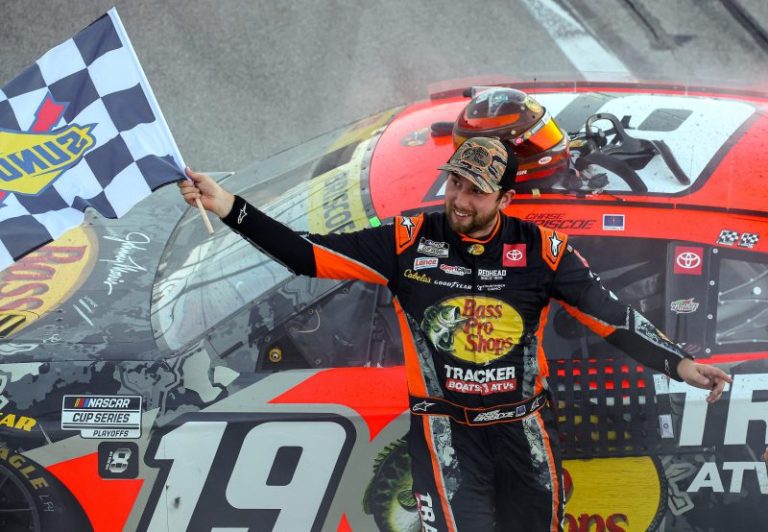
Chase Briscoe will race for his first NASCAR Cup Series championship after winning the NASCAR Cup Series playoff race at Talladega Superspeedway on Sunday, Oct. 19.

Briscoe shot to the lead in his No. 19 Toyota in the final lap of overtime in the YellaWood 500 and held off Front Row Motorsports’ Todd Gilliland and Ty Gibbs – who were both seeking their first career Cup Series victories – at the checkered flag.

Briscoe’s win in the second race of the Round of 8 assured him of a spot in the Championship Race in just his first season at Joe Gibbs Racing. He joins JGR teammate Denny Hamlin in the final four, leaving the remaining two title hopefuls to be decided at Martinsville Speedway next weekend.

‘I don’t know what’s more unbelievable – the fact that we’re going to the Championship 4 or that I won a superspeedway race,’ Briscoe said. ‘What an amazing day.

‘I can’t thank Ty Gibbs enough. He was an incredible teammate there at the end. Honestly, it was just so selfless. He could’ve easily tried to make a move to try and win the race and he pushed me to the win.’

When the green flag flew for the two-lap overtime shootout, it appeared a Hendrick Motorsports car would capture the win at NASCAR’s largest track. Playoff drivers William Byron and Kyle Larson led the field and battled side-by-side before Larson pulled in front of his teammate. But then Larson’s No. 5 Chevrolet ran out of gas, forcing Byron to check up. As Bryon tried to regather his No. 24 Chevy to battle for the win, he was hit from behind in the tri-oval by Carson Hocevar, sending Byron spinning all the way out of the top 20.

“Certainly, a finish would have helped us be a little bit closer on the points side of things,” said Byron, who ultimately finished 25th. “We just lost control of the race. We just couldn’t get the pushes going the way we needed to on the bottom lane.”

Larson finished 26th, one spot behind Byron.

Briscoe took advantage of the Hendrick drivers’ misfortune for his third win of the season and the fifth of his Cup career. His teammate Christopher Bell also finished in the top 10, putting JGR in position to possibly send three drivers to the Championship 4 in two weeks at Phoenix Raceway.

Meanwhile, another championship hopeful from Hendrick Motorsports was knocked out of the race before Stage 1 ended. Chase Elliott was caught up in a multicar crash with a handful of laps remaining in the opening stage, with his No. 9 Chevy suffering major damage that could not be repaired. He now faces a must-win situation at Martinsville to make the Championship 4.

Team Penske’s Joey Logano and Ryan Blaney looked strong for much of the race, but the playoff drivers were forced to pit for fuel before overtime began, taking them out of contention. Logano finished 16th and Blaney 23rd.

Updated NASCAR playoff standings

With just one race remaining before the NASCAR Championship Race at Phoenix Raceway on Nov. 2, here are the updated playoff standings following the YellaWood 500:

  1. Chase Briscoe, Joe Gibbs Racing … Clinched berth in Championship 4
  2. Denny Hamlin, Joe Gibbs Racing … Clinched berth in Championship 4
  3. Christopher Bell, Joe Gibbs Racing … +37 points
  4. Kyle Larson, Hendrick Motorsports … +36
  5. William Byron, Hendrick Motorsports … -36 points
  6. Joey Logano, Team Penske … -38
  7. Ryan Blaney, Team Penske … -47
  8. Chase, Elliott, Hendrick Motorsports … -62

NASCAR Talladadega extended highlights

Chase Briscoe wins at Talladega to make NASCAR Championship 4

Chase Briscoe drove his No. 19 Joe Gibbs Racing Toyota to the front of the pack in overtime and outdueled Todd Gilliland and Ty Gibbs to win the YellaWood 500 at Talladega Superspeedway. With the win, Briscoe clinched a spot in the 2025 NASCAR Cup Series championship race, joining his JGR teammate Denny Hamlin, who won last weekend at Las Vegas.

Chris Buescher brings out caution, sends race to overtime

Chris Buescher got hit from behind while leading and swerved in front of the field and into the inside wall to bring out the caution in the YellaWood 500 at Talladega Superspeedway. Buescher was leading William Byron, who got shoved from behind by Carson Hocevar and into Buescher to send the No. 17 RFK Racing Ford across the track.

Team Penske playoff drivers Joey Logano and Ryan Blaney were forced to come down pit road because neither had enough fuel to complete overtime.

Talladega playoff race: Lap 150 update

Reigning series champion Joey Logano leads the field with 38 laps to go in the YellaWood 500 at Talladega Superspeedway. Logano is getting a strong push from Team Penske teammate Ryan Blaney, a fellow playoff driver. Ross Chastain, Michael McDowell and Brad Keselowski also race in the top five.

Chase Briscoe wins Stage 2 of Talladega playoff race

Playoff drivers took four of the top five spots in Stage 2, with Joe Gibbs Racing’s Chase Briscoe winning the second segment over Hendrick Motorsports driver Kyle Larson. Carson Hocevar finished third, the only non-playoff driver in the top three. Hendrick Motorsports’ William Byron finished fourth, followed by JGR’s Christopher Bell. Ty Gibbs, Ryan Blaney, Todd Gilliland, John Hunter Nemechek and Alex Bowman rounded out the top 10.

Talladega playoff race: Lap 90 update

Hendrick Motorsports drivers have not made much of an impact through 90 laps of the Yellawood 500, whether by strategy to ride in the back for the first half of the race or because their Chevrolets are not as fast as other cars in the field.

Meanwhile, the Team Penske Fords of Joey Logano and Ryan Penske have been able to drive through the field and are back near the front of the pack – the only playoff drivers currently in the Top 10.

Ty Gibbs wins Stage 1 of Talladega playoff race

Ty Gibbs edged fellow Toyota driver Tyler Reddick by a nose to win the opening stage of the YellaWood 500 at Talladega Superspeedway. John Hunter Nemechek finished third, followed by playoff driver Ryan Blaney in fourth and Bubba Wallace in fifth. Joey Logano, seeking his second consecutive series championshp, finished sixth, with Zane Smith, Michael McDowell, Carson Hocevar and playoff driver Christopher Bell rounding out the Top 10.

Chase Elliott knocked out of Talladega race

Chase Elliott’s day at Talladega ended before Stage 1 after his No. 9 Hendrick Motorsports Chevrolet suffered catastrophic damage during a multicar crash on Lap 53. Elliott now heads to next week’s playoff race at Martinsville Speeday at a huge points disadvantage and could be facing a must-win situation to make the championship race in two weeks.

Big crash takes out a number of cars, including Elliott

Erik Jones pushed leader Noah Gragson, trying to propel him forward on the outside in Turn 3, but the contact turned Gragson into inside lane leader AJ Allmendinger, triggering a multicar wreck on Lap 53. A number of cars suffered massive damage, with Allmendinger having to be helped out of the car and into the safety crew vehicle transporting him to the infield care center.

Playoff driver Chase Elliott was among the drivers involved, with his No. 9 car suffering big damage. Austin Cindric, Austin Dillon, Justin Haley and Ricky Stenhouse Jr. also got collected in the incident.

Cars make green flag pit stops in Stage 1

Drivers began green-flag pit stops during Stage 1 of the YellaWood 500, coming in for fuel starting with about 20 laps to go. Three drivers were penalized for speeding: Kyle Busch, Ross Chastain and playoff driver Chase Briscoe. All three had to come back down pit road to serve pass-thru penalties.

NASCAR Talladega race: Lap 20 update

Drivers had immediately made the race three-wide when the green flag flew, but after 20 laps, the race has settled down to two packs driving two-wide. Kyle Busch leads with Shane van Gisbergen, Justin Haley, Bubba Wallace, Christopher Bell, Josh Berry and Chase Briscoe rounding out the top 7.

Green flag waves for NASCAR playoff race at Talladega

Michael McDowell and Chase Briscoe lead the field as the green flag waves for the YellaWood 500 at Talladega Superspeedway. The opening stage is 60 laps.

When is the green flag for NASCAR playoff race at Talladega?

The green flag for the YellaWood 500 is expected to drop at 2:28 p.m. ET (1:28 p.m. local), per Fox Sports’ Bob Pockrass after some track drying earlier today.

What time does the NASCAR playoff race at Talladega start?

The YellaWood 500 is scheduled to start at 2 p.m. ET on Sunday, Oct. 19 at Talladega Superspeedway in Talladega, Alabama.

What TV channel is the NASCAR playoff race at Talladega?

The YellaWood 500 will be broadcast on NBC, the home of the Cup Series’ final three races of the season. Pre-race coverage will start at 1:30 p.m. ET.

Will there be a live stream of the NASCAR playoff race at Talladega?

Yes, the YellaWood 500 will be streamed on Peacock, Sling TV and Fubo, which is offering a free trial to new subscribers.

Stream the NASCAR race at Talladega on Fubo

Who is on the pole for NASCAR playoff race at Talladega?

Michael McDowell won the pole for today’s YellaWood 500 at Talladega. Playoff driver Chase Briscoe will start alongside on the front row.

How many laps is the NASCAR playoff race at Talladega?

The YellaWood 500 is 188 laps around the 2.66-mile track for a total of 500.08 miles. The race will have three segments (laps per stage) — Stage 1: 60 laps; Stage 2: 60 laps; Stage 3: 68 laps.

NASCAR Cup Series playoff standings

Here’s how things look as the playoff field hits the second race in the Round of 8. The bottom four drivers will be eliminated after Martinsville.

  1. Denny Hamlin
  2. Kyle Larson (+4)
  3. Christopher Bell (+19)
  4. Chase Briscoe (+24)
  5. William Byron (+39)
  6. Chase Elliott (+47)
  7. Joey Logano (+48)
  8. Ryan Blaney (+55)

Who won the NASCAR playoff race at Talladega last year?

Last year’s YellaWood 500 featured one of the closest finishes of the year. Ricky Stenhouse Jr. earned his lone win of the season by 0.006 seconds over Brad Keselowski. The No. 47 Chevrolet driver ended his win drought on a superspeedway after previously winning the 2023 Daytona 500. William Byron’s push on the final lap got Stenhouse Jr. ahead of Keselowski to cause a bit of chaos in the Round of 12. Stenhouse Jr. led a total of 19 laps in a race affected by a massive wreck with five laps remaining. With 28 cars involved, it was the biggest Cup Series wreck since 2002. Keselowski, Byron, Kyle Larson and Erik Jones rounded out the top five runners.

What is the lineup for the YellaWood 500 at Talladega?

  1. Michael McDowell, No. 71 Spire Motorsports Chevrolet
  2. Chase Briscoe, No. 19 Joe Gibbs Racing Toyota
  3. Kyle Busch, No. 8 Richard Childress Racing Chevrolet
  4. Austin Cindric, No. 2 Team Penske Ford
  5. Ryan Preece, No. 60 Roush Fenway Keselowski Racing Ford
  6. Josh Berry, No. 21 Wood Brothers Racing Ford
  7. Christopher Bell, No. 20 Joe Gibbs Racing Toyota
  8. Ryan Blaney, No. 12 Team Penske Ford
  9. Riley Herbst, No. 35 23XI Racing Toyota
  10. Bubba Wallace, No. 23 23XI Racing Toyota
  11. Alex Bowman, No. 48 Hendrick Motorsports Chevrolet
  12. Cole Custer, No. 41 Haas Factory Team Ford
  13. William Byron, No. 24 Hendrick Motorsports Chevrolet
  14. Chris Buescher, No. 17 Roush Fenway Keselowski Racing Ford
  15. Tyler Reddick, No. 45 23XI Racing Toyota
  16. Joey Logano, No. 22 Team Penske Ford
  17. Denny Hamlin, No. 11 Joe Gibbs Racing Toyota
  18. Ty Gibbs, No. 54 Joe Gibbs Racing Toyota
  19. Kyle Larson, No. 5 Hendrick Motorsports Chevrolet
  20. Brad Keselowski, No. 6 Roush Fenway Keselowski Racing Ford
  21. Austin Dillon, No. 3 Richard Childress Racing Chevrolet
  22. Justin Haley, No. 7 Spire Motorsports Chevrolet
  23. Zane Smith, No. 38 Front Row Motorsports Ford 
  24. Ross Chastain, No. 1 Trackhouse Racing Chevrolet
  25. Chase Elliott, No. 9 Hendrick Motorsports Chevrolet
  26. Daniel Suarez, No. 99 Trackhouse Racing Chevrolet
  27. Todd Gilliland, No. 34 Front Row Motorsports Ford 
  28. John Hunter Nemechek, No. 42 Legacy Motor Club Toyota
  29. Ty Dillon, No. 10 Kaulig Racing Chevrolet
  30. Erik Jones, No. 43 Legacy Motor Club Toyota
  31. Shane van Gisbergen, No. 88 Trackhouse Racing Chevrolet
  32. Carson Hocevar, No. 77 Spire Motorsports Chevrolet
  33. Austin Hill, No. 33 Richard Childress Racing Chevrolet
  34. AJ Allmendinger, No. 16 Kaulig Racing Chevrolet
  35. Cody Ware, No. 51 Rick Ware Racing Ford
  36. Noah Gragson, No. 4 Front Row Motorsports Ford
  37. Ricky Stenhouse Jr., No. 47 HYAK Motorsports Chevrolet
  38. Anthony Alfredo, No. 62 Beard Motorsports Chevrolet
  39. BJ McLeod, No. 78 Live Fast Motorsports Chevrolet
  40. Casey Mears, No. 66 Garage 66 Ford

The USA TODAY app gets you to the heart of the news — fastDownload for award-winning coverage, crosswords, audio storytelling, the eNewspaper and more.

This post appeared first on USA TODAY

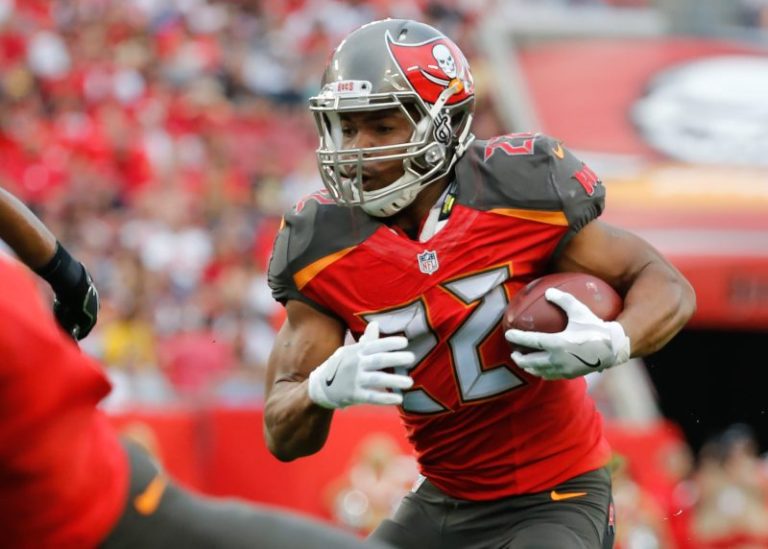
Doug Martin, a two-time Pro Bowl running back for the Tampa Bay Buccaneers who played seven seasons in the NFL, died Saturday, according to his family. He was 36.

“It is with great sadness to inform you all that Doug Martin passed away Saturday morning,’ Martin’s family said in a statement, per Fox Sports and The Tampa Bay Times. ‘Cause of death is currently unconfirmed. Please respect our privacy at this time.’

A first-round pick out of Boise State in 2012, Martin stormed onto the NFL scene as a rookie by recording 1,926 yards from scrimmage, a total that at the time trailed only Hall of Famers Eric Dickerson and Edgerrin James for the most in league history by a first-year player.

After two down seasons, he enjoyed a resurgence with the Buccaneers in 2015, when he finished second in the NFL in rushing with 1,402 yards. That performance would earn him an All-Pro nod and his second Pro Bowl nod.

Martin signed a five-year, $35.75 million contract the following offseason to remain with Tampa Bay. But the team released him in 2018 after he failed to reach 450 yards in either of his two seasons with the franchise following the deal.

He joined the Oakland Raiders in 2019 and took over as the lead option when Marshawn Lynch was injured, starting nine games and recording 723 rushing yards. After re-signing with the team in 2019, however, he was later released from injured reserve with a settlement and would not play in the NFL again.

‘We are deeply saddened to learn of the sudden and unexpected passing of Doug Martin,’ the Buccaneers said in a statement Sunday. ‘From his record-setting rookie season in 2012 to his multiple Pro Bowl selections during his six seasons as a Buccaneer, Doug made a lasting impact on our franchise. He was a fan favorite during his time in Tampa Bay and was honored as one of the Top 50 Buccaneers of all time for his numerous achievements. We extend our heartfelt condolences to his family, friends, and everyone whom Doug touched throughout his life.’

Listed at 5-9 and 223 pounds, he earned the nickname ‘Muscle Hamster’ for his compact frame and powerful running style. But Martin actively pushed back against the nickname, making it clear he preferred ‘Dougernaut’ instead.

‘The name ‘Muscle Hamster’ is the worst nickname possibly ever given to somebody,’ Martin told USA TODAY Sports in 2015. ‘I hope it changes, and I hope that I play to a level where my nickname changes. That’s what my goals are.’

This post appeared first on USA TODAY

A quartet of top-10 ranked teams are set to fall when the US LBM Coaches Poll releases on Sunday, Oct. 19.

No. 2 Miami was upset by Louisville 24-21 on Friday, Oct. 17, and No. 10 LSU went to Nashville and fell to No. 18 Vanderbilt 31-24. No. 5 Ole Miss, which fell to No. 7 Georgia 43-35 on the road, is also set to fall just a few spots in the rankings, along with No. 8 Texas Tech, which lost to Arizona State 26-22.

Georgia Tech will likely find itself in the top-10 of the Coaches Poll after its 7-0 start, as the Yellow Jackets defeated Duke 27-18 on the road in Week 8. No. 13 Oklahoma could also jump back into the top 10 after a slew of losses by other teams.

No. 6 Alabama also picked up its fourth consecutive ranked win after dismantling Tennessee 37-20 at home.

Here’s a look at the updated polls after Week 8 of the college football season.

College football rankings

US LBM Coaches Poll

First-place votes in parentheses.

  1. Ohio State (65)
  2. Indiana
  3. Texas A&M
  4. Alabama
  5. Georgia
  6. Oregon
  7. Georgia Tech
  8. Ole Miss
  9. Miami
  10. BYU
  11. Oklahoma
  12. Vanderbilt
  13. Notre Dame
  14. Missouri
  15. Texas Tech
  16. Virginia
  17. Tennessee
  18. Texas
  19. LSU
  20. USF
  21. Cincinnati
  22. Louisville
  23. Illinois
  24. Michigan
  25. Arizona State

Schools dropped out: No. 20 Memphis, No. 21 USC, No. 22 Utah;

Others receiving votes: Navy 59; USC 52; Utah 51; Tulane 45; Houston 34; Iowa 17; James Madison 9; Iowa State 9; San Diego State 4; North Texas 4; Washington 3; UNLV 3; SMU 3; Memphis 3; TCU 2; Pittsburgh 2; Boise State 2; Northwestern 1;

AP Top 25 poll

First-place votes in parentheses.

  1. Ohio State (60)
  2. Indiana (6)
  3. Texas A&M
  4. Alabama
  5. Georgia
  6. Oregon
  7. Georgia Tech
  8. Ole Miss
  9. Miami
  10. Vanderbilt
  11. BYU
  12. Notre Dame
  13. Oklahoma
  14. Texas Tech
  15. Missouri
  16. Virginia
  17. Tennessee
  18. South Florida
  19. Louisville
  20. LSU
  21. Cincinnati
  22. Texas
  23. Illinois
  24. Arizona State
  25. Michigan

Others receiving votes: USC 97, Utah 40, Tulane 37, Houston 34, Navy 28, San Diego St. 7, James Madison 6, Boise St. 4, TCU 2, Minnesota 1.

This post appeared first on USA TODAY

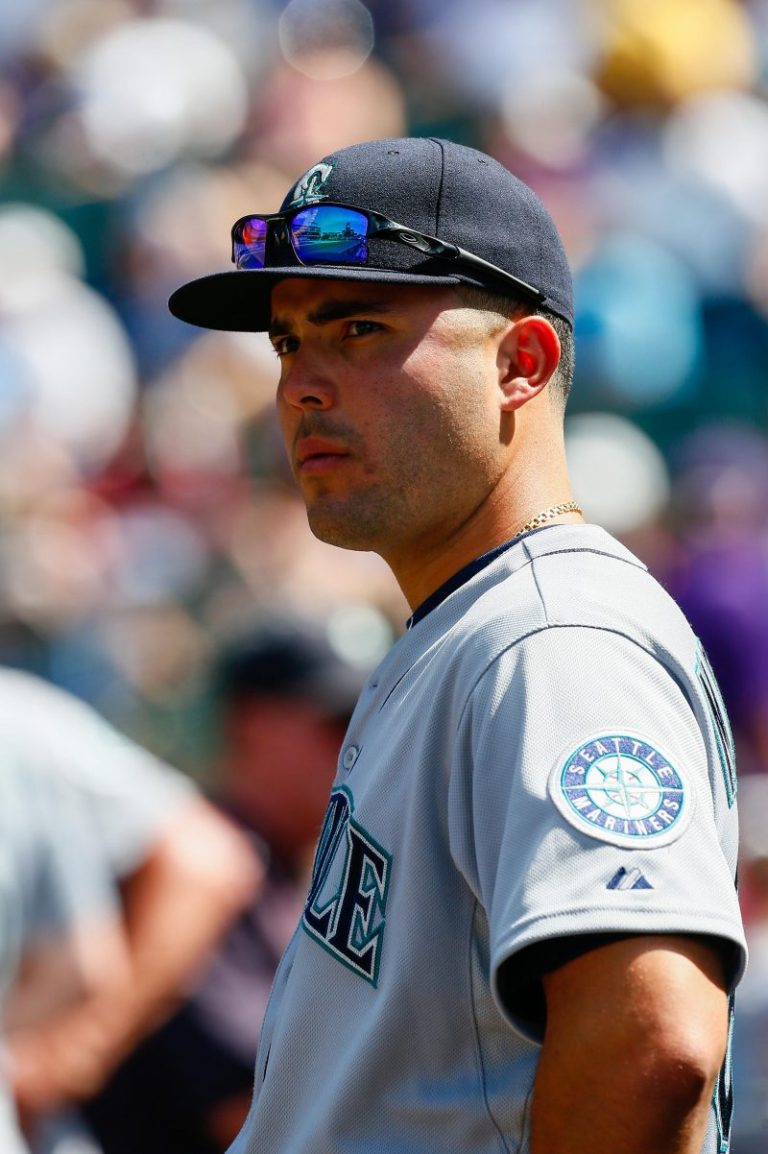
Former catcher Jesus Montero, who played parts of five MLB seasons with the New York Yankees and Seattle Mariners, died at the age of 35, the Yankees confirmed on Sunday.

Montero, who made his debut with the Yankees in 2011 as a rising young prospect, was involved in an automobile accident in his native Venezuela, according to local reports.

He played in just 18 games with the Yankees in 2011 before being sent to the Mariners in a deal that brought right-hander Michael Pineda to New York.

‘The Mariners were saddened to learn today of the passing of former Mariners player Jesus Montero,’ the Mariners said in a statement. ‘Our hearts go out to his family, friends and loved ones.’

Montero, who played his last MLB game in 2015, finished his career as a .253 hitter with 28 home runs and 104 RBIs over 226 games. He notched career highs in homers (15) and RBIs (63) for the Mariners over 135 games in 2012, his only full season in the majors.

This post appeared first on USA TODAY