Greenvale Energy (GRV:AU) has announced High-Grade Uranium from drilling at Oasis
Download the PDF here.
This post appeared first on investingnews.com

Greenvale Energy (GRV:AU) has announced High-Grade Uranium from drilling at Oasis
Download the PDF here.

Prince Silver (CSE:PRNC,OTC:HWTNF) is a Vancouver-based exploration company advancing the Prince Silver project in southeastern Nevada. In July 2025, the company completed the transformational acquisition of Stampede Metals Corporation and rebranded from Hawthorn Resources to Prince Silver Corp. The flagship Prince project is a district-scale, past-producing silver-gold-zinc-manganese carbonate replacement system, historically mined for silver and base metals in the early to mid-1900s.
Fully funded and technically refreshed, the company’s near-term priority is to validate and build upon the 129 historic drill holes (over 16,600 m) completed on the property, with the goal of converting the large JORC-compliant exploration target into a maiden NI 43-101 mineral resource.
A drill program is scheduled to begin in early September 2025, targeting the validation of legacy data, step-outs along mineralized trends, and continuity across the deposit’s multiple mantos, veins, and breccia zones. In parallel, the company will undertake metallurgical test work, geophysical refinement, and updated geological modeling to support a modern pit-constrained resource and underpin a longer-term development strategy.
This Prince Silver profile is part of a paid investor education campaign.*
Click here to connect with Prince Silver (CSE:PRNC) to receive an Investor Presentation

Lithium Universe (LU7:AU) has announced Macquarie Electro Jet Silver Extraction Recovery
Download the PDF here.
Families who lost loved ones in two crashes of Boeing 737 Max jetliners may get their last chance to demand the company face criminal prosecution Wednesday. That’s when a federal judge in Texas is set to hear arguments on a U.S. government motion to dismiss a felony charge against Boeing.
U.S. prosecutors charged Boeing with conspiracy to commit fraud in connection with the crashes that killed 346 people off the coast of Indonesia and in Ethiopia. Federal prosecutors alleged Boeing deceived government regulators about a flight-control system that was later implicated in the fatal flights, which took place less than five months apart in 2018 and 2019.
Boeing decided to plead guilty instead of going to trial, but U.S. District Chief Judge Reed O’Connor rejected the aircraft maker’s plea agreement in December. O’Connor, who also will consider whether to let prosecutors dismiss the conspiracy charge, objected to diversity, equity and inclusion policies potentially influencing the selection of an independent monitor to oversee the company’s promised reforms.
Lawyers representing relatives of some of the passengers who died cheered O’Connor’s decision, hoping it would further their goal of seeing former Boeing executives prosecuted during a public trial and more severe financial punishment for the company. Instead, the delay worked to Boeing’s favor.
The judge’s refusal to accept the agreement meant the company was free to challenge the Justice Department’s rationale for charging Boeing as a corporation. It also meant prosecutors would have to secure a new deal for a guilty plea.
The government and Boeing spent six months renegotiating their plea deal. During that time, President Donald Trump returned to office and ordered an end to the diversity initiatives that gave O’Connor pause.
By the time the Justice Department’s criminal fraud section briefed the judge in late May, the charge and the plea were off the table. A non-prosecution agreement the two sides struck said the government would dismiss the charge in exchange for Boeing paying or investing another $1.1 billion in fines, compensation for the crash victims’ families, and internal safety and quality measures.
The Justice Department said it offered Boeing those terms in light of “significant changes” Boeing made to its quality control and anti-fraud programs since entering into the July 2024 plea deal.
The department also said it thought that persuading a jury to punish the company with a criminal conviction would be risky, while the revised agreement ensures “meaningful accountability, delivers substantial and immediate public benefits, and brings finality to a difficult and complex case whose outcome would otherwise be uncertain.”
Judge O’Connor has invited some of the families to address the court on Wednesday. One of the people who plans to speak is Catherine Berthet, whose daughter, Camille Geoffrey, died at age 28 when a 737 Max crashed shortly after takeoff from Ethiopia’s Addis Ababa Bole International Airport.
Berthet, who lives in France, is part of a group of about 30 families who want the judge to deny the government’s request and to appoint a special prosecutor to take over the case.
“While it is no surprise that Boeing is trying to buy everyone off, the fact that the DOJ, which had a guilty plea in its hands last year, has now decided not to prosecute Boeing regardless of the judge’s decision is a denial of justice, a total disregard for the victims and, above all, a disregard for the judge,” she said in a statement.
Justice Department lawyers maintain the families of 110 crash victims either support a pre-trial resolution or do not oppose the non-prosecution agreement. The department’s lawyers also dispute whether O’Connor has authority to deny the motion without finding prosecutors acted in bad faith instead of the public interest.
While federal judges typically defer to the discretion of prosecutors in such situations, court approval is not automatic.
In the Boeing case, the Justice Department has asked to preserve the option of refiling the conspiracy charge if the company does not hold up its end of the deal over the next two years.
Boeing reached a settlement in 2021 that protected it from criminal prosecution, but the Justice Department determined last year that the company had violated the agreement and revived the charge.
The case revolves around a new software system Boeing developed for the Max. In the 2018 and 2019 crashes, the software pitched the nose of the plane down repeatedly based on faulty readings from a single sensor, and pilots flying then-new planes for Lion Air and Ethiopian Airlines were unable to regain control.
The Transportation Department’s inspector general found that Boeing did not inform key Federal Aviation Administration personnel about changes it made to the MCAS software before regulators set pilot training requirements for the Max and certified the airliner for flight.
Acting on the incomplete information, the FAA approved minimal, computer-based training for Boeing 737 pilots, avoiding the need for flight simulators that would have made it more expensive for airlines to adopt the latest version of the jetliner.
Airlines began flying the Max in 2017. After the Ethiopia crash, the planes were grounded worldwide for 20 months while the company redesigned the software.
In the final weeks of Trump’s first term, the Justice Department charged Boeing with conspiring to defraud the U.S. government but agreed to defer prosecution and drop the charge after three years if the company paid a $2.5 billion settlement and strengthened its ethics and legal compliance programs.
The 2021 settlement agreement was on the verge of expiring when a panel covering an unused emergency exit blew off a 737 Max during an Alaska Airlines flight over Oregon at the beginning of last year. No one was seriously injured, but the potential disaster put Boeing’s safety record under renewed scrutiny.
A former Boeing test pilot remains the only individual charged with a crime in connection with the crashes. In March 2022, a federal jury acquitted him of misleading the FAA about the amount of training pilots would need to fly the Max.

Amazon is eliminating a program that allows members of its Prime subscription program to share free shipping benefits with people outside their household.
The company began notifying users in recent days that it plans to end the Prime Invitee Program on Oct. 1, according to a notice viewed by CNBC.
“We are writing to inform you that the Prime Invitee Program, which allowed sharing Prime’s fast, free delivery with others, will end on October 1, 2025,” the notice states. “Your invited guests will be notified directly about this change by September 5, 2025.”
Amazon previously let Prime members share free, two-day shipping with one other adult in their household, even if they used a different address.
Starting next month, the company will require invitees who don’t live with the account holder to sign up for their own Prime membership.
It’s phasing out the program in favor of Amazon Family, which lets Prime members share free shipping and other benefits with one other adult, four children and up to four teens added before April 7, 2025.
All users must share the same primary residential address, or the “address you consider to be your home and where you spend the majority of your time,” Amazon said.
The change comes as Reuters reported Monday that Amazon’s Prime signups in the U.S. fell short of last year’s total and its own targets, citing internal company documents. Amazon told the outlet that Prime membership continues to grow in the U.S. and internationally.
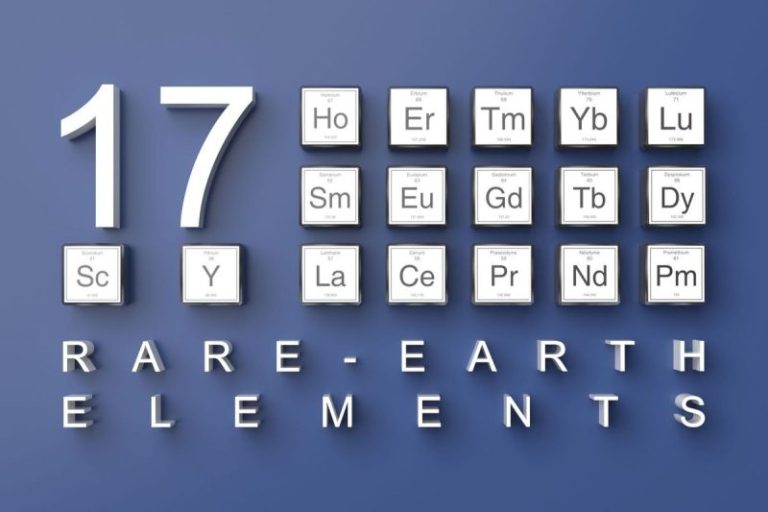
Rare earth elements (REEs) are crucial for technologies like smartphone cameras and defense systems.
A select few from the group of 17 are also vital to clean energy transition industries such as electric vehicles (EVs) — neodymium and praseodymium are found in the permanent magnet synchronous motors used in EV drive trains.
The rare earths sector has been thrust back into the geopolitical spotlight as supply chains face mounting pressure from escalating US-China trade tensions and tightening global regulations.
In May 2024, the former US administration imposed a 25 percent tariff on Chinese rare earth magnets starting in 2026, marking the first time these components have been targeted under Section 301. The move hits sintered neodymium-iron-boron (NdFeB) magnets, vital for EVs and wind turbines, highlighting their strategic role in clean energy and defense.
Soon after, China’s State Council announced new rules effective October 1, 2024, tightening control over rare earth production and banning the export of extraction and magnet-making technology.
Since taking office in January 2025, US President Donald Trump has escalated the trade conflict, imposing cumulative tariffs of 54 percent on Chinese goods. Beijing responded by heightening export controls on seven strategic rare earth metals associated with global defense, renewable energy and the technology sectors.
China’s dominance remains a defining feature of the market: the country accounts for nearly 70 percent of mine output and more than 80 percent of refining capacity. That concentration has created persistent vulnerabilities, especially for medium and heavy rare earths like dysprosium and terbium, which are already in tight supply.
Analysts note that tariffs and export restrictions are setting the stage for a two-tiered market, where ex-China buyers face premiums while domestic Chinese buyers remain insulated.
Despite the volatility, demand fundamentals continue to trend upward. Permanent magnets are driving growth across EVs, clean energy and defense, and efforts to diversify supply are accelerating.
In the US, Washington has increased Department of Defense (DoD) funding and streamlined permitting to support domestic production, while in Europe, a law enacted in May 2024 aims to reduce Chinese reliance by boosting output of critical minerals by 2030.
These recent escalations could be a boon to rare earth minerals and rare earth magnet stocks operating in the space outside of China. Investors are watching closely to see which rare earth companies are best positioned to capture the opportunity.
The US is striving to secure stable domestic supply of REEs outside China, a matter that has become even more pressing in 2025 due to the escalation of the US-China trade war and China’s new rare earth mineral export restrictions.
The nation has vast rare earths reserves and is the second largest global REE producer thanks to its sole operating rare earth mine, Mountain Pass. However, it currently lacks sufficient processing facilities.
American rare earths companies are working to address this imbalance, presenting investment opportunities for those looking to capitalize on the market’s growth potential. Learn more about MP Materials, Energy Fuels and NioCorp Developments, the three largest US rare earths stocks by market cap, below.
Market cap: US$11.79 billion
Share price: US$66.60
MP Materials, the largest producer of rare earths in North America, focuses on high-purity separated neodymium and praseodymium (NdPr) oxide, heavy rare earths concentrate, lanthanum and cerium oxides and carbonates.
The company went public in mid-2020 after acquiring the Mountain Pass mine in California, the only operational US-based rare earths mine and processing facility. In Q3 2023, MP Materials began producing separated NdPr, marking a significant milestone.
In April 2024, MP Materials was awarded US$58.5 million under the Section 48C tax credit to build the US’s first fully integrated rare earth magnet plant.
Located in Fort Worth, Texas, the facility began making NdFeB magnets in January, with first deliveries due by year-end. MP Materials sources feedstock from its Mountain Pass mine, creating a fully integrated, closed-loop supply chain with integrated recycling.
In its Q2 2025 results, MP Materials reported an 84 percent year-over-year increase in revenue, which totaled US$57.4 million in Q2. Additionally, the company achieved record NdPr output of 597 metric tons (MT), while its rare earth oxide (REO) production reached 13,145 MT, marking its second-highest quarterly production ever and a 45 percent increase from last year.
In early July, MP penned a deal with the US DoD in which the government would purchase US$400 million worth of preferred stock in the company, making the DoD the company’s largest shareholder.
The funds are earmarked for the expansion of its processing capabilities at Mountain Pass and the construction of a second magnet manufacturing facility in the US.
MP also signed a US$500 million deal with Apple (NASDAQ:AAPL) to produce rare earth magnets in the US using only recycled materials. Starting in 2027, MP will supply magnets for hundreds of millions of Apple devices, including iPhones, iPads and MacBooks.
Market cap: US$1.97 billion
Share price: US$8.53
Energy Fuels is a leading US uranium and rare earths company that operates key uranium production centers, including the White Mesa mill in Utah and the Nichols Ranch and Alta Mesa projects in Wyoming and Texas.
The company finished construction of Phase 1 REE separation infrastructure at White Mesa in early 2024, and in June reported successful commercial production of separated NdPr that meets the specifications required for REE-based alloy manufacturing. The Phase 1 REE separation circuit is now operating at full capacity.
Following its 2023 acquisition of the Bahia heavy mineral sands project in Brazil, Energy Fuels made multiple deals in 2024 with the aim of acquiring feedstock for White Mesa.
In early June of last year, Energy Fuels executed a joint venture that gives it the option to earn a 49 percent stake in Astron’s (ASX:ATR) Donald rare earths and mineral sands project in Victoria, Australia. Donald is expected to begin production as early as 2026, and will supply the White Mesa mill with 7,000 to 8,000 MT of monazite sand in rare earths concentrate annually in Phase 1.
In October 2024, Energy Fuels acquired Australian mineral sands company Base Resources, which owns the Toliara project in Madagascar.
As for 2025, in mid-March Energy Fuels inked a memorandum of understanding with South Korea-based POSCO Holdings (NYSE:PKX,KRX:005490) for the potential creation of a non-China REE supply chain for EVs and hybrid EV drivetrains for US, EU, Japanese and South Korean auto markets.
In June 2025, the Government of Victoria approved the work plan for the construction and operation of the Donald rare earth and mineral sand project. The site can now move into construction.
A month later, Energy Fuels achieved pilot-scale production of heavy rare earth oxides at its White Mesa mill and aims for commercial output by late 2026. Additionally, the company noted that it could source feedstock from the Donald project by the end of 2027.
In late August, Energy Fuels successfully produced its first kilogram of 99.9 percent pure dysprosium oxide at pilot scale from White Mesa. Using monazite sourced from Florida and Georgia, Energy Fuels now plans to produce 2 kilograms weekly.
“Multiple magnet manufacturers and OEMs have already expressed their strong interest in obtaining these samples to accelerate their validation processes,” the company said.
Market cap: US$291.32 million
Share price: US$4.01
NioCorp Developments is advancing its Elk Creek project in Nebraska, which features North America’s highest-grade niobium deposit under development, with significant scandium production capacity. The Elk Creek project is fully permitted for construction.
NioCorp is working to secure financing to move the project forward, and the US Export-Import Bank advanced its application for financing to its next stage of due diligence in February.
An updated 2022 feasibility study highlights an extended mine life, improved ore grades and enhanced economics for niobium, scandium and titanium.
In April 2024, NioCorp began exploring integrating permanent rare earth magnet recycling at its Elk Creek project to produce separated rare earth oxides which could then be used to produce new NdFeB magnets. It completed initial bench-scale tests in October.
2025 has been busy for NioCorp. It completed a US$45 million public offering in July, which, combined with an additional US$15 million, will be used to accelerate pre-construction activities at Elk Creek.
NioCorp also secured up to US$10 million from the US DoD under the Defense Production Act’s Title III program. The funding, tied to milestone achievements, is aimed at establishing the country’s first domestic scandium mine-to-manufacture supply chain.
The award is expected to bolster NioCorp’s efforts to secure up to US$800 million in debt financing from the US Export-Import Bank.
In an effort to bolster its Nebraska land position, NioCorp acquired three key land parcels associated with the Elk Creek project in early August. The adjacent parcels will house production operations and infrastructure.
NioCorp is currently awaiting the results from the Phase I drilling campaign completed in mid-August. The program aims to convert portions of the resource from the indicated and probable categories to measured and proven.
As part of Canada’s Critical Minerals Strategy, the government has allocated C$3.8 billion in federal funding for opportunities across the critical minerals value chain, from exploration to recycling.
REEs are among the minerals listed as critical.
Additionally, the government has designated C$7.5 million to support the establishment of a rare earths processing facility in Saskatoon, Saskatchewan. In mid-September 2024, the Saskatchewan Research Council (SRC) announced that the facility reached commercial-scale production, making it the first in North America to achieve this milestone.
The SRC plans to produce 400 MT annually once it is fully operational.
Learn about Aclara Resources, Mkango Resources and Ucore Rare Metals, the three largest Canada-listed rare earth stocks by market cap, below.
Market cap: C$321.18 million
Share price: C$1.46
Aclara Resources is advancing its Penco Module project in Chile, characterized by ionic clays abundant in heavy rare earths, and its Carina Module project in Brazil.
Its objective at the Penco Module is to generate rare earths concentrate via an environmentally friendly extraction process. This approach aims to eliminate the need for a tailings facility, minimize water use and ensure the absence of radioactivity in the final product.
Aclara successfully concluded a semi-industrial pilot plant program for Penco Module in 2023, yielding 107 kilograms of wet high-purity heavy rare earths concentrate from 120 MT of ionic clays. Aclara and Vacuumschmelze penned a memorandum of understanding in early July 2024 to jointly pursue a ‘mine-to-magnets’ solution for ESG-compliant permanent magnets.
The company submitted a new environmental impact assessment (EIA) for the project in June 2024, and it moved to the next stage in August.
In May 2025, Aclara received the second round of technical observations (Second ICSARA) from the Environmental Service Assessment Authority, including 205 questions regarding technical aspects of the EIA. The company plans to submit its response during Q3 2025.
Aclara is also advancing its Carina Module project in Brazil, which it discovered in 2023. In December of that year, Aclara disclosed an initial inferred resource for the project, saying it encompasses approximately 168 million MT grading 1,510 parts per million TREO and 477 parts per million desorbable rare earth oxides.
In August 2024, Aclara released an updated preliminary economic assessment for Carina Module featuring initial capital costs of US$593 million and sustaining capital costs of US$86 million. Later in the month, the company signed a memorandum of understanding (MoU) with the State of Goiás and Nova Roma to expedite the Carina Module project.
In late May 2025, Aclara submitted its EIA for the Carina Module, and anticipates its approval during Q4 2025. The company also reiterated its expectations to produce an average of 191 MT of dysprosium and terbium annually. As well as yearly output targets of 1,350 MT of neodymium and praseodymium.
On the innovation side, Aclara is deepening its tech-driven approach to rare earths through a long-term letter of intent (LOI) with Stanford’s Mineral-X initiative to leverage AI, data science and decision modeling to build a more resilient heavy rare earth supply chain.
Meanwhile, an MoU with Virginia Tech covers operation of Aclara’s pilot plant showcasing its solvent-extraction technology for producing high-purity rare earth elements.
Market cap: C$262.87 million
Share price: C$0.79
Mkango Resources is advancing as a producer of recycled rare earth magnets, alloys, and oxides, through its 79.4 percent stake in Maginito with partner CoTec Holdings (TSXV:CTH,OTCQB:CTHCF).
Mkango’s assets include Malawi’s Songwe Hill project, targeting neodymium, praseodymium, dysprosium, and terbium, and the Pulawy rare earths separation project in Poland, alongside a broader exploration portfolio in Malawi.
In July 2024, Mkango and the Malawian government signed a mining development agreement for the Songwe rare earths project, granting Malawi a 10 percent stake and customs and excise exemptions. Through Maginito, Mkango also owns HyProMag, which licenses the Hydrogen Processing of Magnet Scrap (HPMS) process to recycle rare earth magnets from scrap.
A pilot plant using a long-loop recycling process underpinned by the HPMS process was commissioned in July 2024. Additionally, Maginito is expanding HyProMag’s recycling technology to the US through the joint venture HyProMag USA, with a positive feasibility study completed in November 2024.
While the feasibility study was based on two HPMS vessels, HyProMag announced in March 2025 that conceptual studies are underway to expand the capacity to three vessels and the addition of ‘long-loop chemical processing’ to complement the HPMS short-loop recycling process.
In an August 2024 update for investors, Mkango reported that HyProMag will receive 350,125 euros to develop its eco-friendly NeoLeach technology, which will further upgrade metals recovered with HPMS. The funding, part of the 8 million euro GREENE project, aims to improve the resource efficiency and performance of rare earth permanent magnets.
Mkango completed a C$4.11 million private placement in early February 2025 to help fund the advancement of its rare earth magnet recycling projects in the UK and Germany. The next month, the company provided an update on the construction of its UK magnet recycling and manufacturing facility, which is on track to begin initial commercial production by the end of Q2 2025.
In late March, the European Commission designated Mkango’s Pulawy project in Poland as a strategic project under the Critical Raw Materials Act.
In June, HyProMag USA received a “Make More in America” LOI from the US Export-Import Bank. The letter signals potential financing of up to US$92 million for the company’s first integrated rare earth recycling and magnet manufacturing facility in Dallas-Fort Worth, with a 10 year repayment term.
Later in the month, Mkango updated on its advanced pilot program and the scale-up of HPMS technology, aiming to produce domestically sourced, short-loop recycled rare earth magnets with a minimal carbon footprint in the UK and Germany in 2025, and the US in 2027. The company commenced initial production runs on its commercial-scale HPMS vessel at Tyseley Energy Park in Birmingham in early July.
On July 3, Mkango signed a definitive merger deal with Crown PropTech Acquisitions that would see several of Mkango’s subsidiaries, including Lancaster Exploration, combine with Crown to form Mkango Rare Earths. The combined company will be a vertically integrated rare earth firm that owns the Songwe Hill and Pulawy projects, and its shares are expected to trade on Nasdaq.
In the US, Intelligent Lifecycle Solutions started stockpiling feedstock under its supply and pre-processing agreement with HyProMag USA in late August. Pre-processing is slated to start before year-end 2025 at ILS facilities in South Carolina and Nevada.
Market cap: C$231.44 million
Share price: C$2.60
Ucore Rare Metals is focused on the exploration and separation of rare earth elements in Canada and the US.
The company owns the Bokan-Dotson Ridge rare earth project in Alaska and is developing a strategic metals complex for processing heavy and light rare earth elements in Louisiana, US. Ucore acquired an 80,800 square foot brownfields facility in Alexandria, Louisiana, for developing its first commercial REE processing facility in January 2024.
In Canada, Ucore’s Ontario-based RapidSX demonstration plant, operated by Kingston Process Metallurgy, was commissioned to evaluate the techno-economic advantages, scalability and commercial viability of the RapidSX technology platform for separating and producing REEs like praseodymium, neodymium, terbium and dysprosium. This initiative was supported by a US$4 million award from the US DoD granted to Ucore’s subsidiary, Innovation Metals.
Last year, Ucore entered and advanced partnerships with several companies. In April, Ucore tested mixed rare earths carbonate from Defense Metals’ (TSXV:DEFN,OTCQB:DFMTF) Wicheeda project and confirmed it was suitable for commercial-scale processing at Ucore’s planned facilities. A few months later, Ucore executed a non-binding MoU with Cyclic Materials to qualify Cyclic’s recycled rare earth oxide product in Ucore’s process.
In August 2024, Ucore and Meteoric Resources (ASX:MEI) signed an MoU for Meteoric to supply 3,000 MT of TREO from its Caldeira project in Brazil to Ucore’s Louisiana strategic metals complex, and Ucore established a similar deal with Australia’s ABx Group (ASX:ABX) in early September under which ABx would supply Ucore with mixed rare earth carbonates from its Deep Leads ionic adsorption clay rare earths resource in Northern Tasmania.
At the start of 2025, Ucore was awarded C$500,000 via its partnership with Ontario’s Critical Minerals Innovation Fund to help finance the advancement of the company’s Canadian RapidSX commercial demonstration facility.
As for its Louisiana facility, the company received an US$18.4 million investment from the US DoD in May, its largest funding commitment to date. The funding will support construction of Ucore’s first commercial-scale RapidSX refining machine in Louisiana.
In late August, Ucore entered a non-binding LOI with Critical Metals (NASDAQ:CRML) for a 10 year offtake of heavy rare earth feedstock from Critical’s Tanbreez project in Greenland that will supply its Louisiana facility, with smaller volumes first processed at its demo facility in Ontario.
Australia ranks among the globe’s top rare earths producers and possesses the fourth largest rare earths reserves. The nation is notable for hosting the largest supplier of rare earths outside of China.
Learn more about Lynas Rare Earths, Iluka Resources and Arafura Resources, the three largest ASX-listed rare earths stocks focused stocks by market cap.
Market cap: AU$13.08 billion
Share price: AU$14.61
Well-known ASX-listed rare earths stock Lynas Rare Earths is the leading separated rare earths producer outside of China, with operations in Australia and Malaysia.
In Western Australia, Lynas operates the Mount Weld mine and concentrator and is ramping up processing at its Kalgoorlie rare earths processing facility.
Lynas secured AU$20 million from Australia’s Modern Manufacturing Initiative in mid-2023 to advance its apatite leach circuit at the Kalgoorlie plant. By December, the facility hit its first production milestone, marking the shift from commissioning to full-scale operations. Lynas’ new large-scale downstream Kalgoorlie rare earths processing facility came online in November 2024.
In August 2024, the firm reported a 92 percent increase in mineral resources and a 63 percent rise in ore reserves at Mount Weld. Resources grew to 106.6 million MT at 4.12 percent TREO, while reserves increased to 32 million MT at 6.44 percent TREO, including added tailings. The updated estimates boost contained heavy rare earths and support a mine life exceeding 20 years at higher production rates.
Lynas also processes mined material at its separation facility in Malaysia. After commissioning the new heavy rare earth separation circuit earlier in the year, the site achieved first production of dysprosium oxide in May 2025.
Later in the month, Lynas penned a non-binding memorandum of understanding with Menteri Besar, the Kelantan state investment arm in Malaysia, to supply mixed rare earth carbonate (MREC). Subsequently, the Malaysian facility reported the first production of terbium oxide.
According to Lynas, the Malaysian milestones mark the first commercial production of separated dysprosium and terbium oxides outside China in decades.
During its June fiscal quarter, the company also signed an MoU with Korea’s JS Link to develop a magnet plant in Malaysia and advanced key expansion projects at Mt Weld and Kalgoorlie.
On August 27, Lynas released its 2025 annual results and its new long-term strategy named Towards 2030. The company produced 10,462 metric tons of rare earth oxides, including 6,558 metric tons of NdPr, in its fiscal 2025.
While it had previously been working with the US DoD to establish a rare earth processing facility in Texas, Lynas shared that it is now uncertain if the facility will be built, in part due to permitting issues with the site. It is negotiating an offtake with the DoD for production from its current operations instead.
Market cap: AU$2.71 billion
Share price: AU$6.34
Iluka Resources is advancing its Eneabba rare earths refinery in Western Australia with backing from the Australian government, which aims to bolster the country’s footprint in the global rare earths market. The company also owns zircon operations in Australia, including Jacinth-Ambrosia, the world’s largest zircon mine.
Additionally, Iluka is progressing its Wimmera project in Victoria, focusing on mining and beneficiation of fine-grained heavy mineral sands in the Murray Basin. This project aims to supply zircon and rare earths over the long term. A definitive feasibility study for Wimmera is scheduled for completion by the end of 2025.
Iluka secured an AU$1.25 billion non-recourse loan for Eneabba under the AU$2 billion Critical Minerals Facility administered by Export Finance Australia, and the Australian government agreed to an additional AU$400 million in funding in December 2024.
This funding will support the development of Eneabba as Australia’s first fully integrated refinery capable of producing both light and heavy separated rare earth oxides. The facility will process material from Iluka’s own feedstocks and third-party suppliers, with commissioning expected in 2027.
In early August 2025, Iluka signed a 15 year deal with Lindian Resources (ASX:LIN) for the annual supply of 6,000 MT of rare earth concentrate from Lindian’s Kangankunde project in Malawi. The feedstock will be processed at Eneabba, accounting for about 10 percent of the refinery’s capacity.
Also in August, Iluka released its half year results, which were impacted by global economic uncertainty and a subdued mineral sands market, according to the company. The data noted a 8 percent year-over-year revenue decline to AU$558 million in the mineral sands segment.
Market cap: AU$468.22 million
Share price: AU$0.19
Arafura Resources, an Australian rare earths firm, has secured government funding to advance its Nolans rare earths project in the Northern Territory. Arafura is currently working toward a final investment decision for Nolans, which is shovel ready. Nolans is envisioned as a vertically integrated operation with on-site processing facilities.
A 2022 mine report updates Nolans’ expected lifespan to 38 years, targeting an annual production capacity of 4,440 MT of NdPr concentrate. The project’s definitive feasibility study highlights significant concentrations of neodymium and praseodymium, alongside all other rare earths in varying quantities.
Arafura has inked binding offtake agreements with Hyundai Motor (KRX:005380,OTC Pink:HYMTF), Kia (KRX:000270) and Siemens Gamesa Renewable Energy. Additionally, the company has a non-binding memorandum of understanding with GE Vernova’s (NYSE:GEV) GE Renewable Energy to collaborate on establishing sustainable rare earths supply chains.
In late August 2024, Arafura signed a memorandum of understanding with Canada’s Saskatchewan Research Council to process rare earths from Arafura’s Nolans project into dysprosium and terbium oxides at SRC’s rare earths processing facility in Saskatchewan. The collaboration aims to support global supply chain diversification for energy transition technologies.
The company received a AU$200 million investment commitment from Australia’s National Reconstruction Fund in January 2025.
In March 2025, Arafura announced a binding offtake agreement with Traxys Europe through which Arafura will supply a minimum of 100 MT per year of NdPr oxide over a five-year term from the Nolans project. Arafura has the option to increase the offtake to a maximum of 300 MT per year at its discretion.
The company provided an update in its annual report released in July, noting the Nolans project has advanced to the appraisal stage for 100 million euros in funding from the 1 billion euro German Raw Materials Fund, becoming only the second project to reach this phase. The proposed financing is linked to NdPr oxide supply, supported by Arafura’s existing offtake deal with Siemens Gamesa for 520 MT annually.
As of August 2025, Arafura has secured conditional approval for over US$1 billion in debt funding for the Nolans project.
In August, Arafura received a conditional letter of interest from Export Finance Australia to bolster equity alongside existing debt funding, and completed a AU$80M a “two-tranche institutional placement” at AU$0.19 per share. It also launched a AU$5M share purchase plan at the same price.
Securities Disclosure: I, Georgia Williams, hold no direct investment interest in any company mentioned in this article.
The Walt Disney Company will pay $10 million to settle Federal Trade Commission allegations that it enabled the unlawful collection of children’s personal data on YouTube.
The FTC claimed the company allowed data to be collected from kids who viewed videos directed at children on YouTube without notifying parents or obtaining their consent.
The complaint alleged that Disney violated the Children’s Online Privacy Protection Rule by not labeling some YouTube videos as being made for children. The agency claimed the company was able to collect data from viewers of child-directed content who were under the age of 13 and use it for targeted advertising.
In 2019, after a settlement with the FTC, YouTube began requiring content creators to list whether uploaded videos were “made for kids” or “not made for kids.” The designation ensures that personal information is not collected from the “made for kids” videos and personalized ads will not be served to viewers. Comments are also disabled on those videos.
The proposed settlement would require Disney to pay a $10 million civil penalty, comply with the children’s data protection rule and implement a program to review whether videos posted to YouTube should be designated as “made for kids.”
“Supporting the well-being and safety of kids and families is at the heart of what we do,” the company said in a statement obtained by CNBC. “This settlement does not involve Disney owned and operated digital platforms but rather is limited to the distribution of some of our content on YouTube’s platform. Disney has a long tradition of embracing the highest standards of compliance with children’s privacy laws, and we remain committed to investing in the tools needed to continue being a leader in this space.”
Axios was the first to report the settlement.

PHOENIX — The Phoenix Mercury are heating up at the right moment as the WNBA regular season winds down.
The Mercury (26-14) defeated the Indiana Fever (21-20) 85-79 at PHX Arena on Tuesday, Sept. 2 to record their fifth consecutive victory, marking Phoenix’s second longest winning streak of the season. It was a team effort for the Mercury, who move to 13-0 on the season when five or more players score 10 or more points.
Mercury forward Alyssa Thomas finished with a team-high 23 points, nine rebounds and nine assists in the win, finishing only one rebound and one assist short of her eighth triple-double of the season. Dewanna Bonner had 19 points off the bench, while Satou Sabally added 13 points.
Fever guard Kelsey Mitchell had 25 points, four assists and four steals in the losing effort. Lexie Hull added 15 points and five rebounds, while Aliyah Boston recorded 11 points and eight rebounds.
The Minnesota Lynx (No. 1 overall seed), Las Vegas Aces, Atlanta Dream and Mercury have all claimed playoff spots. The Fever are among five teams vying for the final four playoff berths with three games remaining in the season.
USA TODAY Sports had full coverage of the game between the Mercury and the Fever. Scroll below for highlights:
WNBA PLAYOFF PICTURE: Who clinched a postseason berth? Who’s in, Who’s out?
The Fever came out the gate on a 6-0 run to cut the Mercury’s lead to single digits, but Phoenix was able to extend its lead again as the Mercury take a 10-point lead into the fourth quarter.
Alyssa Thomas has a team-high 17 points for the Mercury and is two rebounds and two assists away from her eight triple-double of the season. Dewanna Bonner added 13 points off the bench. The Mercury are collectively shooting 50% from the field and 35.3% from three.
Mercury guard Kahleah Copper appeared to go down with a right foot injury with 4:38 remaining in the third quarter. She attempted to play on but couldn’t put pressure on her foot. Copper limped over to the Mercury’s bench after a timeout was called and didn’t return in the quarter. Copper exited with nine points and three rebounds. (She returned in the fourth quarter.)
Kelsey Mitchell leads the Fever with 22 points, three assists and three steals. Lexie Hull added 12 points and four rebounds, while Aliyah Boston recorded 10 points, seven rebounds and five assists. The Fever’s bench, however, has only contributed four points.
Mercury guard Monique Akoa Makani pounded her chest as the crowd at PHX Arena went wild after she knocked down a 3-point shot to extend Phoenix’s lead to 15 points. The Mercury closed the second quarter on a 10-0 run and outscored the Fever 29-16.
Mercury forward Alyssa Thomas is already on triple-double watch. Thomas has recorded 14 points, six rebounds and seven assists through the first half. She has a record-setting seven triple-doubles on the season. The Mercury also got a huge lift off the bench from Dewanna Bonner. Bonner, who started the season with the Fever before joining the Mercury in July, is up to 11 points. The Mercury have the third-highest scoring bench in the league, averaging 24.8 points per game.
The Fever have conceded 12 points on six turnovers so far. Mitchell was held scoreless in the second quarter after dropping 15 first-quarter points. Aliyah Boston struggled to find her shot and started the game off 0-for-4 before finding net for the first time with 6:30 remaining in the second quarter. She’s up to eight points and four assists. Lexie Hull added 10 points.
The star-studded crowd at PHX Arena includes several Phoenix Suns players. Devin Booker, Jalen Green and Dillon Brooks were seated courtside for Tuesday’s matchup.
Fever guard Kelsey Mitchell knocked down a 25-foot 3-pointer with 26.6 seconds remaining in the first quarter to give the Fever a one-point lead. Mercury guard Sami Whitcomb answered right back with a three of her own to put Phoenix back up, 25-23.
Mitchell came out red-hot in the first quarter and scored 15 of the Fever’s 23 points, shooting 5-of-6 from the field and 3-of-4 from the 3-point line. Despite Mitchell’s first-quarter performance, the Fever find themselves down by two points heading into the second quarter.
Kahleah Copper has a team-high nine points for the Mercury, while Alyssa Thomas, the Western Conference Player of the Week, has eight points, four assists and three rebounds.
The Phoenix Mercury host the Indiana Fever at 10 p.m. ET (7 p.m. PT) on Tuesday, Sept. 2, at the PHX Arena in Phoenix. The game will be broadcast nationally on NBA TV.
Clark was ruled out of the Fever’s road matchup against the Mercury on Tuesday, marking her 19th consecutive absence with a right groin injury suffered on July 15. There’s no timetable for her return to the lineup.
Fever forward Chloe Bibby (left knee) will also be sidelined on Tuesday, in addition to guards Aari McDonald (broken right foot), Sydney Colson (left ACL tear) and Sophie Cunningham (right MCL tear), who all suffered season-ending injuries in August.
The USA TODAY app gets you to the heart of the news — fast. Download for award-winning coverage, crosswords, audio storytelling, the eNewspaper and more.
Our team of savvy editors independently handpicks all recommendations. If you purchase through our links, the USA Today Network may earn a commission. Prices were accurate at the time of publication but may change.

NEW YORK — Venus Williams’ US Open is over after she and her doubles partner, Leylah Fernandez, were routed 6-1, 6-2 in their quarterfinal match by the No. 1 seeds, Taylor Townsend and Katerina Siniakova.
Williams and Fernandez had never played doubles together and entered the tournament as a wild-card entry. They surprised many by winning three matches, including a third-round tilt against the No. 12 seeds, Ekaterina Alexandrova and Shuai Zhang. After that match, Williams implored her younger sister, and former doubles partner, Serena, to show up at Flushing Meadows for additional support.
But this destruction took all of 56 minutes, as Townsend and Siniakova exerted their experience together, powering to the semifinals with 19 winners and an 88% win rate on their first serves.
US OPEN: No. 4 Jessica Pegula powers through Barbora Krejcikova to reach semifinals
INJURY UPDATE: Marketa Vondrousova withdraws from quarterfinal vs. Aryna Sabalenka
Townsend and Siniakova, who won Wimbledon in 2024 and the Australian Open in January, move on to the semifinals to take on No. 4 seed Veronika Kudermetova and Elise Mertens, who won their quarterfinal matchup over Mirra Andreeva and Diana Shnaider, the No. 5 seed, in straight sets.
The 45-year-old Williams, a seven-time Grand Slam singles champion, returned to the court earlier this summer after taking a 16-month break. She had not mentioned retirement and has continued to play competitive tennis, in both singles and doubles, since returning from her hiatus.
‘I don’t know. I was so focused on this tournament here. I really felt like we had a chance to really continue to play into the tournament,’ Williams said when asked about her post US Open plans. ‘So I haven’t given that any thought. I do have commitments, you know, places I said I’d be, people expecting me to be there, like, the next few weeks. So I have to go and show up.
‘But I’m very serious about my commitments. I would never want to cancel now, so I’ll try to keep those. If there is opportunity for me to play, then hopefully I can get back somewhere this year. I just don’t know. I really don’t.’

The luminaries assembled the way luminaries do. Jordan. Roy. The Muse. They gathered in luxury boxes.
They hovered above a sell-out crowd of 50,500 to create a scene worthy to be dubbed college football in the South. Maybe, one day, even worthy to be called college football in the SEC.
Because, that’s what this is about. You didn’t really think North Carolina hired Bill Belichick to deliver national championships, did you? Even university administrators aren’t that stupid.
The Beli Ball experiment and investment will be hailed a success so long as he ensures North Carolina gets to call its shot in the next round of conference realignment.
Which, is probably only a handful of years away. Best prepare now.
And, let’s be real, Belichick probably won’t be coaching North Carolina by then. By 2030, perhaps he’ll be enjoying retirement, unemployment and marital bliss, celebrating his wife’s 29th birthday, and waxing nostalgic about how he rode the coattails of a quarterback named Brady and convinced everyone he’s a coaching savant.
So long as Belichick sufficiently elevated UNC to a place to where the school can name its destination into a “Super Two” conference, where the cash flows, he’ll have achieved a feat.
UNC’s brand and media market — everyone and your mother is moving to Charlotte — make the Tar Heels appealing to either the Big Ten or the SEC. The football program needs work. Never has that been more apparent than in Belichick’s college football coaching debut.
Belichick, wearing a snug hoodie, watched stoically as TCU humiliated his Tar Heels, 48-14. Belichick’s first impression spoiled before halftime. Behind him, fans filed out in the third quarter, probably with basketball on the brain.
As for UNC football, it looked as reputable as the school’s Afro-American Studies department.
Never mind UNC’s cheating past, though. A history of academic fraud wouldn’t make it a pariah for the SEC. If anything, its decades-long harborage of phony classes shows the SEC and Big Ten that UNC cares enough about winning to execute an academic sham and then mount a successful defense to justify it to the NCAA.
Tennessee and Michigan could take inspiration from such chicanery.
The SEC and Big Ten won’t be inspired by the football product we saw on Labor Day, though. This team showed it’s not ready for prime time.
In the short term, Belichick’s hiring galvanized a sleepy program. North Carolina already sold out its home games for the season. How much will those tickets be selling for on resale sites in November?
Because, if the opener is an accurate indication, Belichick’s team stinks.
If only it didn’t, because everything else about North Carolina makes it a slam dunk for either the SEC or the Big Ten the next time the realignment carousel swings into gear.
North Carolina is one of those AAU schools the Big Ten likes. It would give the Big Ten an entry point into the South, which remains untapped terrain for a conference that spans from Los Angeles to Seattle to New Jersey and many outposts in between — except for lands that say y’all.
The SEC’s past expansions operated much differently from the Big Ten’s quest to acquire brands from coast to coast. The SEC prefers to move into contiguous states to methodically expand the league’s footprint without betraying its carefully crafted Southern identity or its football fabric.
The SEC Network is headquartered in Charlotte, and yet North Carolina remains the Southern-most state without an SEC school. For now, anyway.
ACC schools, like North Carolina, will become more accessible once their conference exit fees reduce in 2030.
It’s unrealistic to expect Belichick to turn basketball-forward UNC into Georgia or Ohio State. But, could he do for North Carolina what Deion Sanders did for Colorado?
Sanders supercharged the Buffaloes’ program and brand and helped ensure Colorado did not get left behind in the last round of realignment. The Buffaloes found a home within the Big 12. He made Colorado a television ratings dynamo. Games in Boulder became a party pad for celebrities.
Belichick is no Prime. The latter is a magnetic personality and a cultural icon who brought to Colorado a proven college football coaching record, albeit in the FCS ranks. Sanders benefited from installing his talented son as his quarterback. He also brought along a dual-position superstar, Travis Hunter, who revered Sanders. Hunter would go on to win the Heisman Trophy.
Oh, and Sanders beat TCU in his Colorado debut, too.
Unlike Prime, Belichick is a past-his-prime coach whose winning percentage in games not quarterbacked by Brady leaves a lot to be desired. He installed a son who’s an assistant coach. Steve Belichick is no Shedeur Sanders. None of the scores of transfers North Carolina nabbed this offseason compares to Travis Hunter. Belichick possesses not one-tenth of Coach Prime’s magnetism, nor his experience as a college coach and recruiter.
No matter what Sanders achieves the rest of his Colorado tenure, he’ll have been worth it. Just check out the school’s swelling enrollment, its Power Four status, and its TV ratings that defy gravity.
For one night, Belichick electrified the place — up to the point TCU began the rout, anyway. How long can that last? Improving the team to the point of competence would help.
By 2030, Belichick might be retired to Maine, living as Mr. Hudson. Greatness may have eluded him at North Carolina. It’ll have been worth it for the Tar Heels, though, if they can say that a coach formerly known as an NFL legend helped them take their place at the vanguard of the next realignment rat race.
Blake Toppmeyer is the USA TODAY Network’s senior national college football columnist. Email him at BToppmeyer@gannett.com and follow him on X @btoppmeyer.