Author

admin

Browsing

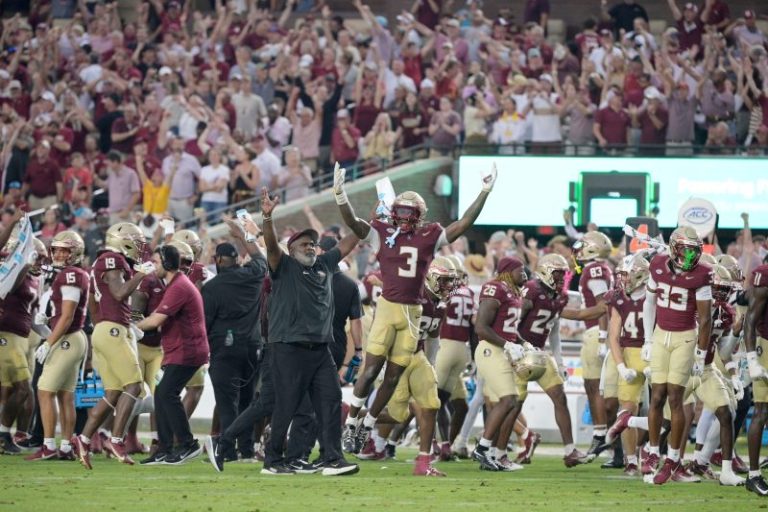
Even if you’re a national championship-winning program, big victories call for a storming of the field.

Florida State started the 2025 season with a major statement, defeating Alabama, 31-17, in the newly renovated Doak Campbell Stadium. It was a major upset given the Seminoles were coming off a dreadful two-win season and the Crimson Tide had national championship expectations as a team ranked in the top 10.

Despite being the underdog, the Seminoles controlled the majority of the game. But the fans still wanted to celebrate the major victory, and they stormed the field the moment the game ended.

It’s not something you’d expect from a well-known college football program, but sometimes wins just mean more.

Will Florida State be fined for storming the field?

Conferences have tried to punish teams for allowing fans to storm the field, mostly citing safety concerns. The ACC is not different, introducing new requirements over the summer for field storming after football games.

Under the new rules announced in July, schools must develop a security plan to ensure all players, coaches, officials and personnel can safely exit the field of play before fans run onto the playing surface. It applies to football as well as men’s and women’s basketball.

Spectators are allowed to enter the field of play once the visiting team and officials have ‘safely’ exited.

Based on video inside Doak Campbell Stadium, it appears fans began storming the field before Alabama left to the locker room, therefore violating the policy.

While it’s unknown if it applies to non-conference games, under the new policy, Florida State will be fined $50,000 as a first-time offender. The fine increases to $100,000 for a second offense and $200,000 for the third time.

USA TODAY’s Path to Playoff newsletter offers bi-weekly coverage of the college football season. Sign up to receive the newsletter.

This post appeared first on USA TODAY

Tight end has been one of the tougher positions to parse in fantasy football drafts in recent years. There are stars at the top but a drop off following the first handful of players.

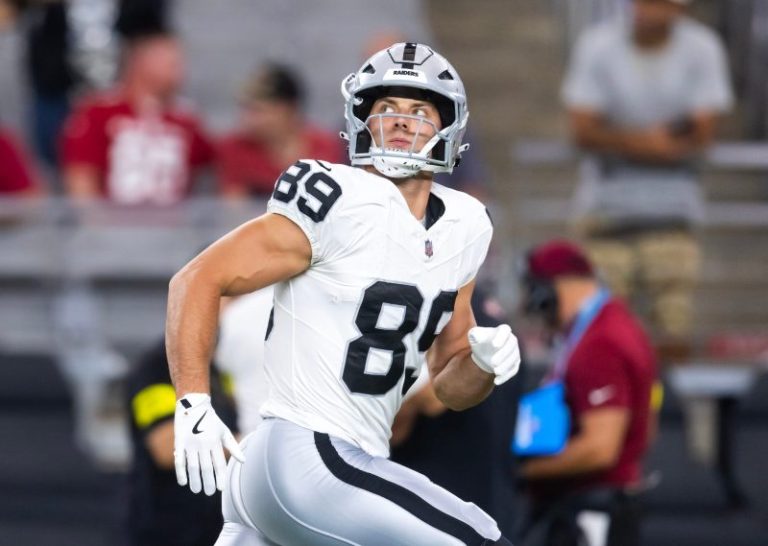
That top tier is changing in 2025. Brock Bowers’ record-breaking rookie season has him in the driver’s seat as the top tight end in fantasy football. Trey McBride’s contract extension shows how much faith the Arizona Cardinals have in the 25-year-old. After a disappointing second season, Sam LaPorta could be in for a bounce-back year.

While those younger players are rising up to be the face of the position, the usual mainstays have some concerns entering 2025. Travis Kelce’s production dropped off during the regular season. Mark Andrews relied on a career high in touchdowns to balance out a career low in yards per game as a starter to keep pace among the position’s best.

It’s late in draft season and there’s a lot to keep track of at one of the tougher positions to evaluate. But don’t worry, we’ve got you covered.

Here’s everything you need to know at the tight end position for 2025.

Fantasy football TE rankings 2025

Here’s how the top 10 tight ends panned out in USA TODAY Sports’ rankings:

  1. Brock Bowers, Las Vegas Raiders
  2. Trey McBride, Arizona Cardinals
  3. George Kittle, San Francisco 49ers
  4. Sam LaPorta, Detroit Lions
  5. Travis Kelce, Kansas City Chiefs
  6. David Njoku, Cleveland Browns
  7. T.J. Hockenson, Minnesota Vikings
  8. Kyle Pitts, Atlanta Falcons
  9. Evan Engram, Denver Broncos
  10. Mark Andrews, Baltimore Ravens

Fantasy football TE sleepers 2025

These four tight ends look to be top sleeper options at the position in 2025.

Dalton Kincaid, Buffalo Bills

Analysis: ‘Kincaid missed four games and time in others due to injuries, but was on pace to exceed 100 targets. Only Brock Bowers, Trey McBride, Travis Kelce and Jonnu Smith reached that mark. While many fantasy managers may feel burned by Kincaid, he’s the type of post-hype sleeper you’ll want on your roster in 2025.’

Chigoziem Okonkwo, Tennessee Titans

Analysis: ‘Okonkwo has been a victim of subpar quarterback play throughout his first three NFL seasons, and reports from training camp suggest he’s building chemistry with [rookie QB Cam] Ward. Okonkwo had an impressive 27% target share down the stretch last season when he was given a full-time role.’

Hunter Henry, New England Patriots

Analysis: ‘[In 2021] under [Josh] McDaniels, Henry posted career highs in red-zone targets (17) and touchdowns (9). His 12 end-zone targets that season ranked sixth-highest in the NFL. There’s little target competition outside of 31-year-old Stefon Diggs, who is coming off an ACL tear. Henry is currently being drafted as TE20 and he can easily finish inside the top 10 at the position if [QB Drake] Maye leans on him.’

Tucker Kraft, Green Bay Packers

Analysis: ‘Kraft led all TEs in yards after the catch (YAC) at 9.6, ahead of George Kittle. He has carved out a reliable role in one of the better offenses in the NFL and is currently being drafted as TE12. At the end of last season, head coach Matt LaFleur expressed his desire to feature Kraft more in the offense.’

Fantasy football TE busts 2025

Managers may consider avoiding these three tight ends in fantasy football drafts.

Travis Kelce, Kansas City Chiefs

Analysis: ‘With Rashee Rice healthy, Kelce averaged just four targets per game. However, following Rice’s season-ending knee injury, Kelce averaged over nine targets per game … Kelce’s usage hinges largely on Rice’s presence and the risk at taking him as the TE5 outweighs the production at this stage.’

Evan Engram, Denver Broncos

Analysis: ‘The soon-to-be 31-year-old has relied heavily on volume more than explosiveness and touchdowns. He has failed to find the end zone more than four times in a season since 2017. He’ll play second fiddle to Courtland Sutton. Engram could even potentially finish third on the team in targets behind third-year breakout candidate Marvin Mims Jr. Expectations should be tempered for Engram at his current TE8 ADP.’

Colston Loveland, Chicago Bears

Analysis: ‘The presence of wide receivers DJ Moore, Rome Odunze and Luther Burden, along with veteran tight end Cole Kmet will likely keep the rookie from Michigan in deep TE2 range all season… It’s unlikely Loveland can make a significant mark in such a crowded room but he’s still a worthwhile pick in dynasty leagues. He has top-10 draft capital and will likely grow in the Bears offense in the coming years, but don’t expect him to be elite in 2025.’

This post appeared first on USA TODAY

Spirit Airlines on Friday filed for bankruptcy protection, just months after the budget carrier failed to secure better financial footing when it came out of Chapter 11 protection in March.

The Dania Beach, Florida-based airline said under this bankruptcy, it will reduce its network and shrink its fleet, cuts that it said will reduce costs by “hundreds of millions of dollars” a year.

In a release, Spirit said guests can continue to book, travel and use tickets, credits and loyalty points. Wages and benefits will continue to be paid and honored, including contractors, it said. Spirit intends to pay vendors and suppliers for goods and services provided on or after the filing date in the ordinary course.

“Since emerging from our previous restructuring, which was targeted exclusively on reducing Spirit’s funded debt and raising equity capital, it has become clear that there is much more work to be done and many more tools are available to best position Spirit for the future,” Spirit CEO Dave Davis said in a news release on Friday.

Spirit had just gotten out of bankruptcy in March after four months, only to be dragged down by continued high costs and weaker U.S. domestic demand. The carrier had struggled for years as it dealt with a glut of U.S. flights, a Pratt & Whitney engine recall and a failed takeover by JetBlue Airways, a deal that was blocked in court.

Firms that used Spirit’s aircrafts had reached out to rival airlines in recent weeks to gauge executives’ interest in some of the carrier’s planes, according to people familiar with the matter.

Spirit is the United States’ largest budget airline, followed closely by rival Frontier Airlines which has tried and failed to merge with Spirit repeatedly since 2022. Frontier on Tuesday announced 20 new routes that compete with Spirit to win over its struggling competitor’s customers.

This post appeared first on NBC NEWS

Artificial intelligence (AI) stocks saw continued pressure this week as concerns about overvaluation weighed on the sector ahead of NVIDIA’s (NASDAQ:NVDA) results release for its second fiscal quarter.

The company beat Wall Street projections on revenue, earnings and profits, but shares still fell in extended trading on Tuesday (August 26) after it reported no H20 sales to China, where competition from domestic firms is heating up.

John Murillo, chief business officer at B2BROKER, suggested the pullback could present a short-term buying opportunity for high-quality names with strong fundamentals, but cautioned that it could be the start of a broader correction.

Reports that DeepSeek will train its newest AI models on Huawei chips and Cambricon Technologies’ (SHA:688256) 4,300 percent revenue surge underscore the shifting AI landscape. Still, optimism wasn’t absent: NVIDIA CEO Jensen Huang pointed to accelerating global demand and unveiled a US$60 billion buyback program to reassure investors.

“All in all, the sector’s long-term trajectory remains bullish, with AI adoption accelerating across industries,” said Murillo.

Nasdaq Composite, NVIDIA and Dell Technologies performance, August 26 to 29, 2025.

Chart via Google Finance.

However, it wasn’t enough to reassure the public, and NVIDIA’s share price fell over 4 percent between Wednesday (August 27) and Friday (August 29). As investors analyzed new inflation data that indicates tariffs are impacting prices, other AI-related stocks saw losses too, pulling the S&P 500 (INDEXSP:.INX) from its recent record highs.

With that, here’s a look at some of the other drivers that shaped the tech sector this week.

1. Intel warns of adverse reactions to government equity stake

In a US Securities and Exchange Commission Form 8-K filing dated August 22, Intel (NASDAQ:INTC) warns that the federal government’s 10 percent stake in its business could cause “adverse reactions,” including litigation from investors, employees, customers, suppliers, partners and foreign governments.

The company also discloses a clause in the agreement that would raise the government’s stake to 15 percent if the company fails to meet set manufacturing thresholds.

Moreover, the filing states that, if this agreement prompts other government bodies to seek similar stakes, the varied agendas could diminish the voting power of other shareholders.

The comments come after the White House announced last week that it would take a 10 percent stake in the company in a deal worth around US$8.9 billion. On Monday, (August 25), President Donald Trump suggested he might pursue similar agreements with other American companies, posting on Truth Social:

“I will also help those companies that make such lucrative deals with the United States. I love seeing their stock price go up, making the USA RICHER, AND RICHER.”

Meanwhile, White House economic advisor Kevin Hassett told CNBC that the deal is part of a broader strategy to create a sovereign wealth fund that may include additional companies.

Later, during an interview on CNBC’s Squawk Box on Tuesday, Secretary of Commerce Howard Lutnick said Pentagon officials are considering acquiring equity stakes in leading defense contractors such as Lockheed Martin (NYSE:LMT).

2. Apple sets date to reveal fall product lineup

On Tuesday, Apple (NASDAQ:AAPL) invited media members and analysts to its next launch event, which is scheduled for September 9 at 10:00 a.m. PST.

The event, which will be live streamed from the iPhone maker’s campus, is expected to be the venue for the introduction of the new iPhone 17 lineup and updated Apple Watch models.

The new iPhone series is rumored to include four models:

  • iPhone 17
  • iPhone 17 Pro
  • iPhone 17 Pro Max
  • A new iPhone 17 Air that will reportedly replace the iPhone 16 Plus. This new model is rumored to be exceptionally thin, potentially as slim as 5.5 millimeters, a major new design direction for Apple.

The new iPhones are also expected to feature a new ‘Liquid Glass’-based interface as part of iOS 26.

According to Bloomberg journalist Mark Gurman, who has a reputation for being one of the most accurate and prolific sources of leaks about Apple’s future products, the company is planning three years of major iPhone redesigns, starting with the September release. Apple’s first foldable iPhone, code-named V68, is slated to arrive in 2026, according to Gurman. Apple’s 2027 ‘iPhone 20’ will feature curved glass edges to complement the upcoming Liquid Glass-based interface for iOS and other operating systems.

3. IBM, AMD to partner on quantum supercomputer

IBM (NYSE:IBM) and Advanced Micro Devices (AMD) (NASDAQ:AMD) said on Tuesday that they plan to collaborate to develop quantum-centric supercomputing.

The two companies, which have each fundamentally advanced the frontiers of quantum hardware and software, AI accelerators, CPUs and GPUs, said they will work together to “develop scalable, open-source platforms that could redefine the future of computing” by combining their strengths in quantum and high-performance computing.

“Quantum computing will simulate the natural world and represent information in an entirely new way,” said Arvind Krishna, chairman and CEO of IBM, adding that the firms’ collaborative efforts will “build a powerful hybrid model that pushes past the limits of traditional computing.”

“We see tremendous opportunities to accelerate discovery and innovation,” said Dr. Lisa Su, chair and CEO of AMD.

In an interview with Axios, Jay Gambetta, IBM’s quantum vice president, said he aims to get fault-tolerant quantum computers, a set of techniques and architectural designs that ensure a computation can proceed accurately even in the presence of errors, “by the end of this decade.”

4. Cost of Meta data center to exceed original estimate

During a cabinet meeting on Tuesday, Trump told reporters that Meta Platforms’ (NASDAQ:META) Louisiana data center will cost the company around US$50 billion to build.

That’s over 70 percent of the company’s projected CAPEX spending in its latest quarterly report.

“When they said US$50 billion for a plant, I said, ‘What the hell kind of plant is that?’” said Trump, revealing a photo of the proposed data center, Hyperion, superimposed over the island of Manhattan.

“When you look at this, you understand why it’s US$50 billion,” he added.

When the data center was announced, officials in Louisiana estimated the project would cost around US$10 billion. Meta has not confirmed this new estimate and declined to comment on Trump’s remarks.

5. Fusion developer raises US$863 million for energy development

On Thursday (August 28), Commonwealth Fusion Systems, a leading nuclear fusion developer in the US, announced it has secured US$863 million in an oversubscribed Series B2 funding round.

Investors including Morgan Stanley (NYSE:MS) and NVIDIA contributed to this capital raise, which will facilitate the completion of Commonwealth’s Spac fusion demonstration machine, as well as the commencement of construction on a new ARC power plant in Virginia.

“Investors recognize that CFS is making fusion power a reality. They see that we are executing and delivering on our objectives,” said the company’s CEO and co-founder, Bob Mumgaard. “This funding recognizes CFS’ leadership role in developing a new technology that promises to be a reliable source of clean, almost limitless energy — and will enable investors to have the opportunity to capitalize on the birth of a new global industry.”

Securities Disclosure: I, Meagen Seatter, hold no direct investment interest in any company mentioned in this article.

This post appeared first on investingnews.com

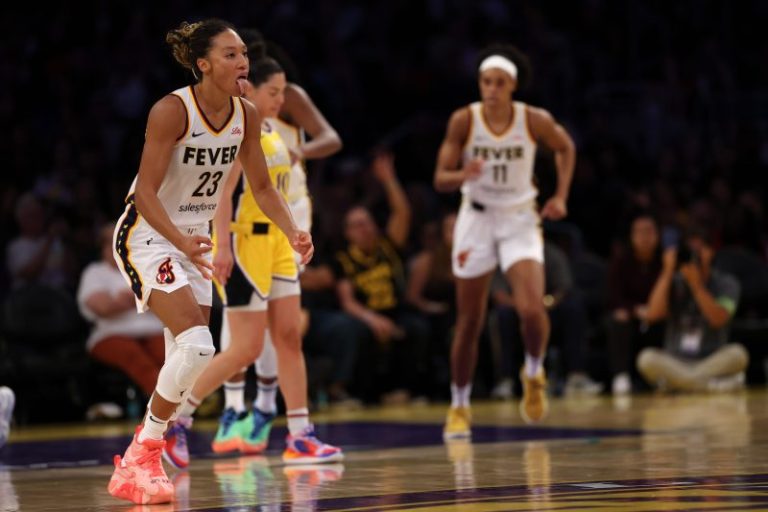
Aliyah Boston produced a game-high 22 points and 11 rebounds for the Indiana Fever on the road against the Los Angeles Sparks at Crypto.com Arena on Friday night.

Boston shot 11-of-18 from the field and created opportunities for Indiana with six steals. Odyssey Sims added 21 points and six rebounds in the victory.

Kelsey Plum and the Sparks held a lead throughout most of the game but weren’t able to hold on to it in the second half, including the final seconds of the fourth quarter.

Sims put the game away in the final seconds, scoring the final five points for the Fever, including a 10-foot jumper off an assist from Lexie Hull.

The Fever took their first lead of the game when Hull made a two-point shot to move the team ahead 50-49 with 6:41 left in the third quarter.

The two squads went back and forth in the final period. Plum had the ball in her hands near the basket and a chance to help facilitate a go-ahead shot, but Boston intercepted a bad pass by Plum to secure the victory.

Highlights: Fever vs. Sparks

Final: Fever 76, Sparks 75

Aliyah Boston produced a double-double with 22 points and 11 rebounds for the Fever. Odyssey Sims contributed to the victory with 21 points and six rebounds.

3Q: Sparks 58, Fever 57

The Sparks did enough to hold on to the lead at the end of the third quarter. Rae Burrell made a two-point shot off an assist from Sarah Ashlee Barker with 4.5 seconds left in the quarter to retake the lead.

The Fever took their first lead of the game when Lexie Hull made a two-point shot to move the team ahead 50-49 with 6:41 left in the third quarter.

Kelsey Plum continued to be the Sparks’ only double-digit scorer after three quarters of play. Plum has shot 5-of-10 from the field for 12 points in 26 minutes of play.

Aliyah Boston has a game-high 16 points and eight rebounds for the Fever. Odyssey Sims and Kelsey Mitchell each have 12 points.

Halftime: Sparks 47, Fever 44

Kelsey Plum had 12 points in the first half to lead the Sparks against the Fever. Azura Stevens and Rickea Jackson added eight points in the first half.

The Sparks compiled nine assists in the first quarter but just one in the second quarter.

Kelsey Mitchell and Aliyah Boston each scored 12 points for the Fever.

1Q: Sparks 31, Fever 24

The Sparks finished out the opening period with the lead against Indiana at home. Azura Stevens had eight points and two assists for the Sparks in the first quarter. Dearica Hamby added six points and two assists. Kelsey Mitchell led the Fever with seven points. Aliyah Boston had six points, three rebounds and two assists against L.A.

Sparks starting lineup vs. Fever

Rickea Jackson, Dearica Hamby, Azura Stevens, Kelsey Plum and Julie Allemand started for the Sparks at home against the Fever on Friday.

Fever starting lineup vs. Sparks

Odyssey Sims, Kelsey Mitchell, Lexie Hull, Natasha Howard and Aliyah Boston make up the Fever’s starting lineup for Friday’s game against the Sparks.

What time is Indiana Fever vs. Los Angeles Sparks?

The Los Angeles Sparks will host the Indiana Fever at 10 p.m. ET (7 p.m. PT) on Friday, Aug. 29, at crypto.com Arena in Los Angeles. The game will be broadcast nationally on ION.

How to watch Indiana Fever vs. Los Angeles Sparks: TV, stream

  • Time: 10 p.m. ET (7 p.m. PT)
  • Location: Crypto.com Arena (Los Angeles)
  • TV channel: ION
  • Streaming: Fubo (free trial to new subscribers)

The USA TODAY app gets you to the heart of the news — fastDownload for award-winning coverage, crosswords, audio storytelling, the eNewspaper and more.

This post appeared first on USA TODAY

BOULDER, CO – Coach Deion Sanders has been telling everybody for months that his new football team at Colorado this year is better than before, possibly even the “best team we’ve ever assembled,” as he said this week.

Then came their first game on Friday, Aug. 29 at sold-out Folsom Field.

And it turns out he might be a little off, at least for one game.

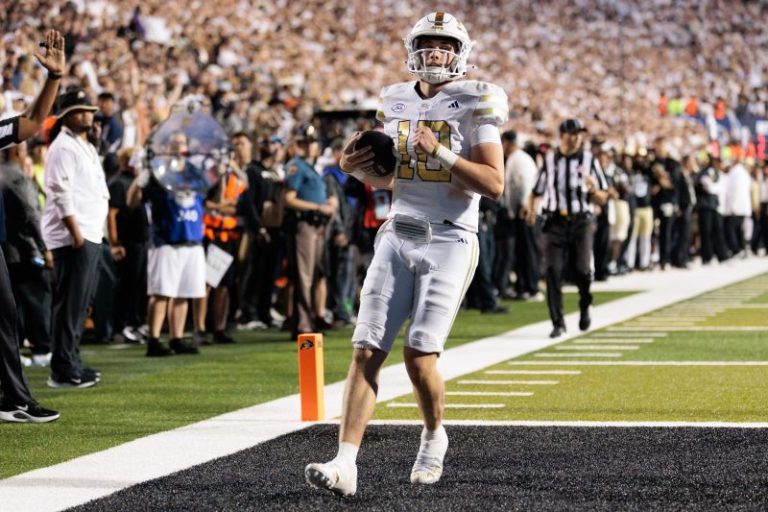
Georgia Tech beat Colorado 27-20 after Georgia Tech quarterback Hayne King scored the game-winning 45-yard touchdown run with 1:07 to go.

It was Sanders’ first game at Colorado without his two youngest sons playing for him: quarterback Shedeur and safety Shilo. Two-way star Travis Hunter also has moved on to the NFL after winning the Heisman Trophy last season with the Buffaloes.

In their place, Sanders fielded a new-look band of Buffaloes, who didn’t fully capitalize on Georgia Tech’s three turnovers in three possessions to start the game. They netted only an 8-yard touchdown pass from new quarterback Kaidon Salter, a transfer from Liberty.

Salter finished 17-for-28 for 159 yards and had that passing touchdown. He added 43 more yards on the ground on 13 carries and scored another touchdown.

But King for Georgia Tech was more prolific. He was 13-for-20 passing for 143 yards and had an interception, but he rushed 19 times for a career-high 156 yards and scored all three Georgia Tech touchdowns, including the 45-yard game-winner with just over a minute to go.

Georgia Tech gained 463 total yards, including 320 rushing yards, before Colorado’s Hail Mary pass fell flat to end the game in front of the announced crowd of 52,868.

Georgia Tech vs. Colorado highlights

Final: Georgia Tech 27, Colorado 20

Colorado’s Hail Mary falls incomplete. There was some questionable time management there in the final minute.

Haynes King gives Georgia Tech late lead

King bursts through the line and cruises the rest of the way for a 45-yard rushing TD. Georgia Tech leads 27-20 with 1:07 to go.

The QB has rushed 19 times for 156 yards and three touchdowns. He’s added 143 yards passing.

Colorado answers, ties game again

Colorado quarterback Kaidon Salter engineered his best drive of the game, capped by his 7-yard scramble for a touchdown with under nine minutes left in the game. The score helped tie the game at 20-20 after Salter drove the Buffs downfield 75 yards in 15 plays as coach Deion Sanders implored him to “be you” during an in-game interview with ESPN.

Game officials initially called Salter down at the 1-yard line on his third-down run. But replay review showed he had pushed the ball across the goal line before his knee was down.

End of third quarter: Georgia Tech 20, Colorado 13

Georgia Tech quarterback Haynes King busted loose for a 17-yard touchdown run after faking a handoff. He moved his team downfield 75 yards on 11 plays. The touchdown put the Yellow Jackets up 20-13 with 14 seconds left in the third quarter.

The drive chewed up 5:46 of game clock and included five first downs for the Yellow Jackets.

Colorado then ran one play – a completion for 16 yards – as time expired in the third quarter. 

King has 99 yards rushing and two touchdowns on 15 attempts. He also has completed 11 of 17 passes for 115 yards with one interception.

Colorado ties it up again

Colorado has tied the game at 13-13 with six minutes left in the third quarter. Kicker Alejandro Mata drilled a 29-yard field goal after the Buffs drove to the Georgia Tech 5-yard line but got stuffed on three plays before the kick. The scoring drive went 39 yards on eight plays, including a 21-yard pass from Kaidon Salter to receiver DeKalon Taylor on the drive’s first play.

Quiet start to third quarter

Both teams opened the second half with punts, with Georgia Tech still leading 13-10 with 10:15 left in the third quarter. Colorado opened the half with three straight runs by running back Micah Welch, including a 22-yarder to the left on the first play after halftime. But the Buffs stalled at the Georgia Tech 45-yard line.

Welch has eight carries for 65 yards. 

Halftime: Georgia Tech 13, Colorado 10

Georgia Tech responded to Colorado’s field goal with a 43-yard field goal of its own as time expired in the first half. The Yellow Jackets lead at halftime 13-10.

Colorado coach Deion Sanders told ESPN at halftime that quarterback Kaidon Salter has been having communication issues but otherwise has had a “solid game.”

Salter has completed 6 of 10 passes for 48 yards and a touchdown.

Georgia Tech quarterback Haynes King has completed 9 of 13 passes for 97 yards. He added a rushing touchdown in the second quarter.

Both teams have reason to be disappointed. Georgia Tech gave up three turnovers to start the game, but Colorado only came up with one touchdown to show for it.

Georgia Tech has outgained Colorado 279-119 in total yards and 18-5 in first downs.

Colorado gets the ball to open the second half.

Colorado ties it up

Colorado rediscovered a little bit of offense to tie the game at 10-10 with 1:39 to go until halftime. The Buffs went 51 yards in eight plays, including a 39-yard pass from quarterback Kaidon Salter to receiver Omarion Miller on third-and-10. That catch on the left side brought the Buffs to the Georgia Tech 25-yard line, but then they had to settle for a 42-yard field goal from kicker Alejandro Mata. 

Georgia Tech takes the lead

The momentum has swung back to Georgia Tech after Colorado failed to fully capitalize on the Yellow Jackets’ three turnovers to start the game. They now lead 10-7 with 4:33 left in the second quarter after going 80 yards in 10 plays, capped by a 4-yard touchdown run by quarterback Haynes King.

Georgia Tech has outgained Colorado 230-63 in total yards. The Yellow Jackets have 16 first downs, compared to three for the Buffs. 

Colorado offense stuck in neutral

Colorado’s offense has fizzled after scoring a touchdown on its first possession. Since then, it’s been three straight punts, including two three-and-outs. Quarterback Kaidon Salter is 4-for-8 passing for 12 yards, including his 8-yard touchdown pass. Georgia Tech has outgained Colorado 150-63 in total yards with 10:30 left before halftime. 

Georgia Tech settles for field goal

The Yellow Jackets settled for a 32-yard field goal after driving from their 2-yard line all the way to the Colorado 8. But a holding penalty pushed them back from there, and now it’s 7-3 with 13:31 left before halftime. They ran 13 plays for 84 yards before the field goal by Aidan Birr. 

End of first quarter: Colorado 7, Georgia Tech 0

Colorado leads 7-0 after one quarter of play but Georgia Tech is threatening to score at the start of the second quarter. The Yellow Jackets finally settled down on their fourth possession of the game, chipping away at Colorado’s defense with a drive that started at its own 2-yard line.

Georgia Tech has outgained Colorado after one quarter, 144-45 yards. The Yellow Jackets have the ball inside the Colorado 20-yard line.

Georgia Tech turns the ball over again

Now it’s three turnovers in three possessions to start the game for Georgia Tech. This time Yellow Jackets quarterback Haynes King threw to the left on first down in Colorado territory, only to be intercepted by Colorado cornerback DJ McKinney. The interception gave the Buffs possession at their own 34-yard line. 

But the Buffs squandered the opportunity for the second straight time and punted the ball back. 

Georgia Tech fumbles again

Two possessions, two fumbles for Georgia Tech. This time a high snap from center ended up on the ground and was recovered by Colorado defender Keaten Wade, putting the Buffaloes in good field position again at its own 48-yard line early in the first quarter. 

The Buffaloes went three-and-out and had to punt, however.

Colorado turns turnover into touchdown

Colorado has struck first and is up 7-0 after recovering a fumble and scoring after going 36 yards in five plays. Quarterback Kaidon Salter threw an 8-yard touchdown pass to newcomer DeKalon “TrackHawk” Taylor with 12:08 left in the first quarter.

Linebacker Martavius French took the ball away from Georgia Tech on the Yellow Jackets’ second play from scrimmage to set it all up.

When is Colorado vs Georgia Tech?

Kickoff is at 8 p.m. ET Friday, Aug. 29 from sold-out Folsom Field in Boulder.

How to watch Colorado vs Georgia Tech

The game will be televised on ESPN and also is available on Fubo.

Colorado vs Georgia Tech odds

The latest odds can be found below. For a full list of sports betting odds, access USA TODAY Sports Betting Scores Odds Hub.

Rain falling at Colorado before game

With less than an hour before kickoff, rain is falling on the field, but not too heavily. It’ll make for wet conditions on Colorado’s new artificial turf field, even if the rain stops after kickoff, as has been forecasted. The rain also has kept the seats from filling at the stadium so far. It’s mostly empty except for students wearing white shirts as part of a coordinated color scheme for Colorado.

Portable toilet on sideline for Deion Sanders

Deion Sanders wasn’t joking when he talked about having a portable toilet on the sideline. A Colorado official confirmed that the black tented box near the 20-yard line is Sanders’ bathroom if he needs it. It is sponsored by Depend, the adult underwear brand. Sanders has a partnership with Depend after having his cancerous bladder removed in May. He has discussed his incontinence and bladder issues openly since then in his effort to remove the stigma around the issue.

What happened to Colorado’s bison mascot?

Raphie VI, Colorado’s live mascot, has retired after four seasons, as was announced earlier this week. Colorado is training a new bison for the job, but she won’t be ready to run on the field before the game.

“We all saw that coming,” Deion Sanders said on the ‘Colorado Football Coaches Show’ Aug. 27.

He was referring to Ralphie VI’s slow trots and seeming lack of interest in the job. Prior Ralphie mascots charged out of the gate down and around the field before kickoff.

“I’m hating the point that we are missing a Ralphie for this game,” Sanders said on the show.

What is the history between Colorado and Georgia Tech?

They’ve never played. But they shared the national championship for the 1990 season after the Associated Press picked Colorado No. 1 to finish the season and the UPI Coaches’ Poll coronated Georgia Tech. It came down to a single point in the Coaches’ Poll. Then-Nebraska coach Tom Osborne previously declined to talk about it but revealed in a recent interview with USA TODAY Sports that he picked Georgia Tech No. 1 instead of Big Eight Conference rival Colorado. Georgia Tech finished 11-0-1 that year. Colorado finished 11-1-1.

Who is replacing Travis Hunter for Colorado?

It takes a village to fill the shoes of the two-way star. On defense, cornerback DJ McKinney was the “other” cornerback last year and is NFL draft material. He’ll be the guy to take on the other team’s top receiver. On offense, the Buffs have a stacked set of fleet feet to catch passes, including a transfer from Incarnate Word who goes by the moniker of “TrackHawk.” That’s DeKalon Taylor, a running back/receiver who is the fastest player on the team.

Why is Colorado wearing a new jersey patch?

The Buffs will wear their traditional home uniforms from the 1990s: gold helmet, black jersey, gold pants, white socks and black shoes. This is to honor former Colorado coach Bill McCartney, who died in January. McCartney led the Buffs to the national championship in 1990 before retiring abruptly after the 1994 season, when his team finished No. 3 nationally.

“We’re going to give some love to Coach McCartney,” Deion Sanders said earlier this week.

The team also will wear a patch on their jerseys to honor “Coach Mac.”

Who will walk with Deion Sanders before the game?

In his first two seasons at Colorado, Sanders would take part in a ritual with his son Shedeur and sometimes his safety son Shilo. They would walk and talk together down the field as father, coach, sons and players. Now that his sons have left the program, another player on the current team offered to walk the same walk with him before the game, which Sanders found touching. But Sanders didn’t say who it was.

Follow reporter Brent Schrotenboer @Schrotenboer. Email: bschrotenb@usatoday.com

This post appeared first on USA TODAY

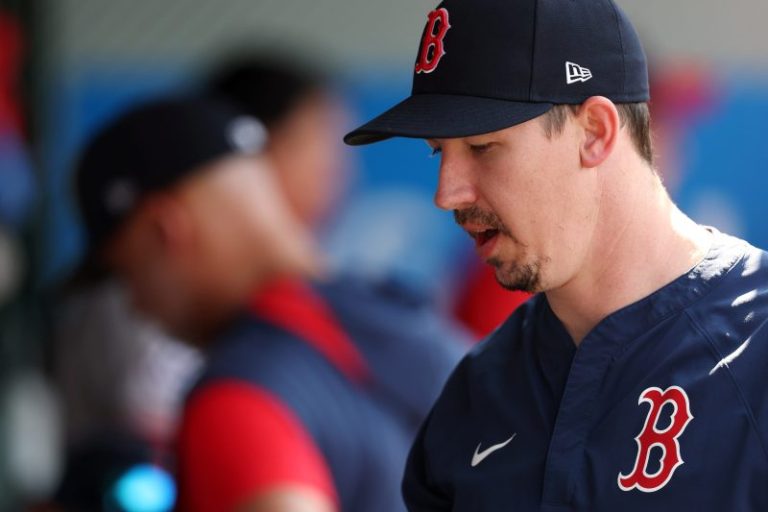
Walker Buehler, signed by the Boston Red Sox to lengthen their rotation and hopefully provide the big-game playoff heroics that marked his career, was released by the club Aug. 29 as they aim to rework their rotation down the stretch in the American League playoff chase.

Buehler, 31, was signed to a one-year, $21.05 million contract but never found his footing pitching for the Red Sox, failing to complete five innings in nine of his 22 starts and giving up four or more runs in eight of them. Boston recently demoted Buehler to the bullpen, where he made one appearance, and the club has ridden the dominant trio of Cy Young candidate Garrett Crochet, Brayan Bello and Lucas Giolito to the top of the AL wild card standings.

But with swingman Richard Fitts on the injured list and no off day relief until Sept. 4, the club opted to release Buehler now and promote their top pitching prospect, Payton Tolle, who makes his debut at Fenway Park against Pittsburgh ace Paul Skenes. Tolle, 22, struck out 13 batters per nine innings over three minor league stops in this, his first professional season. He was picked in the second round of the 2024 draft.

Buehler won his second World Series title with the Los Angeles Dodgers last season, starting and winning Game 3 of the World Series at Yankee Stadium and then coming back two nights later to earn the save in the clinching Game 5. He has a 0.47 ERA in four World Series games from 2018, 2020 and 2024.

Walker Buehler contract

Buehler’s contract signed with the Red Sox guaranteed him $21.05 million in 2025. That includes a $3 million buyout on the $25 million option for 2026.

Walker Buehler stats

Walker Buehler had a 5.45 ERA in 112.1 innings with the Red Sox, making 22 starts before being demoted to the bullpen. His 6.7 strikeouts per nine is the lowest mark of his career, entering the season at 9.5 in eight years with the Dodgers.

This post appeared first on USA TODAY
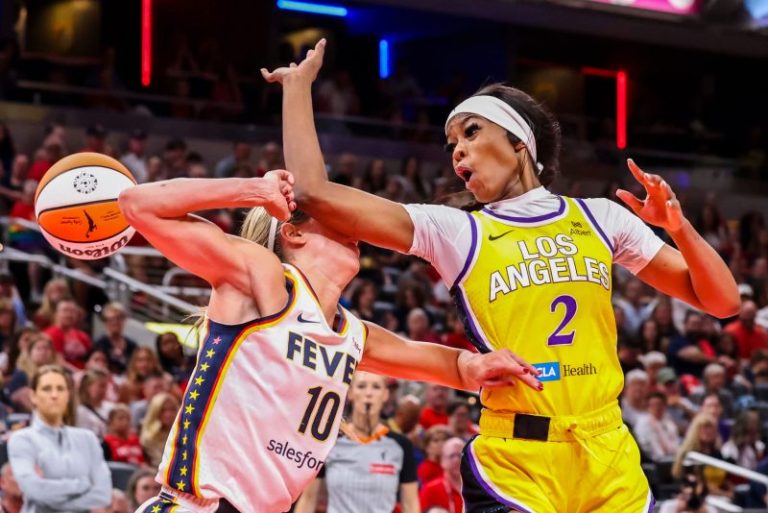
Friday’s matchup between the Indiana Fever and Los Angeles Sparks has huge playoff implications. As Fever head coach Stephanie White put it, ‘Every game is like a playoff game at this point.’

The injury-riddled Fever (20-18) are currently in sixth place in the WNBA standings with six games remaining in the regular season, while the Sparks (17-19) are in ninth place with eight games remaining. If the regular season ended today, Indiana would advance to the postseason in back-to-back seasons for the first time since 2015-16, while the Sparks would miss the playoffs yet again. (The Sparks haven’t made the playoffs since 2020.)

There’s still time for the Fever and Sparks to move up (or down) the leaderboard as teams jockey for playoff positioning during the final stretch of the season. The top eight teams advance to the playoffs and only four games separate sixth place from 10th place.

The Fever are 10.5 games behind the league-leading Minnesota Lynx, followed by the Golden State Valkyries (11 games behind Lynx), Seattle Storm (11), Sparks (12.5) and Washington Mystics (14.5). The Connecticut Sun, Dallas Wings and Chicago Sky have all been eliminated from playoff contention.

The Fever have dropped six of their last nine games while navigating a series of season-ending injuries amid Caitlin Clark’s extended absence, while the Sparks have lost three of their last five, meaning Friday’s game is all the more important.

‘We can’t get caught watching the standings. We can’t get caught looking too far ahead,’ White said on Tuesday. ‘It is one game at a time.’

Here’s everything you need to know about Tuesday’s game between the Fever and Sparks:

What time is Indiana Fever vs. Los Angeles Sparks?

The Los Angeles Sparks will host the Indiana Fever at 10 p.m. ET (7 p.m. PT) on Friday, Aug. 29, at crypto.com Arena in Los Angeles. The game will be broadcast nationally on ION.

Halftime: Sparks 47, Fever 44

Kelsey Plum had 12 points in the first half to lead the Sparks against the Fever. Azura Stevens and Rickea Jackson added eight points in the first half.

The Sparks compiled nine assists in the first quarter but just one in the second quarter.

Kelsey Mitchell and Aliyah Boston each scored 12 points for the Fever.

1Q: Sparks 31, Fever 24

The Sparks finished out the opening period with the lead against Indiana at home. Azura Stevens had eight points and two assists for the Sparks in the first quarter. Dearica Hamby added six points and two assists. Kelsey Mitchell led the Fever with seven points. Aliyah Boston had six points, three rebounds and two assists against L.A.

Sparks starting lineup vs. Fever

Rickea Jackson, Dearica Hamby, Azura Stevens, Kelsey Plum and Julie Allemand started for the Sparks at home against the Fever on Friday.

Fever starting lineup vs. Sparks

Odyssey Sims, Kelsey Mitchell, Lexie Hull, Natasha Howard and Aliyah Boston make up the Fever’s starting lineup for Friday’s game against the Sparks.

How to watch Indiana Fever vs. Los Angeles Sparks: TV, stream

  • Time: 10 p.m. ET (7 p.m. PT)
  • Location: Crypto.com Arena (Los Angeles)
  • TV channel: ION
  • Streaming: Fubo (free trial to new subscribers)

The USA TODAY app gets you to the heart of the news — fastDownload for award-winning coverage, crosswords, audio storytelling, the eNewspaper and more.

This post appeared first on USA TODAY
Here’s a quick recap of the crypto landscape for Friday (August 29) as of 12 noon (UTC).

Get the latest insights on Bitcoin, Ethereum and altcoins, along with a round-up of key cryptocurrency market news.

Bitcoin and Ethereum price update

Bitcoin (BTC) was priced at US$108,747, a 3.3 percent decrease in 24 hours. Its lowest valuation of the day was US$108,198 and its highest price on Friday was US$112,652.

Bitcoin price performance, August 29, 2025.

Chart via TradingView

Bitcoin’s slip below the US$110,000 threshold stoked fears of a broader crypto market correction on Friday as liquidations doubled, the Federal Reserve’s preferred inflation gauge showed persistent price pressures, and Bitcoin flashed a potential risk pattern. Analysts warned the token could be edging toward bear market territory.

Adding to volatility, a long-dormant Bitcoin whale that resurfaced this month—after buying US$2.5 billion in Ethereum—shifted another US$1.1 billion on Friday.

Ether (ETH) was priced at US$4,335.28, down by 3.2 percent over the past 24 hours. Its highest was US$4,511.09 and its lowest was US$4,279.96.

Altcoin price update

  • Solana (SOL) was priced at US$204.82, down by 2.4 percent. Its lowest valuation on Friday was US$203.74, and its highest valuation was US$217.66.
  • XRP was trading for US$2.94, down by 4.4 percent in the past 24 hours, and at its lowest valuation of the day. Its highest valuation on Wednesday was US$2.98.
  • SUI (Sui) was trading for US$3.30, down by 4.3 percent in the past 24 hours. Its lowest valuation of the day was US$3.29, and its highest level of the day was US$3.50.
  • Cardano (ADA) was priced at US$0.8201, down by 3.8 percent. Its lowest valuation for Friday was US$0.817, and its highest valuation was US$0.8618.

Today’s crypto news to know

Stablecoins cross US$283 billion threshold record

The stablecoin market reached a new milestone on Friday as total supply climbing to $282.8 billion, according to data from DefiLlama.

That marks a 128 percent increase since January, driven by stronger demand for dollar-pegged tokens and fresh regulatory clarity in the US.

The surge also follows passage of the Genius Act, which sets out federal guidelines for stablecoin issuers and has been billed as a growth catalyst within the sector.

Analysts say stablecoins now serve as a “distribution channel” for US dollars, powering cross-border payments and on-chain settlement systems.

Eric Trump hails US–China leadership in Bitcoin

Speaking at the BTC Asia conference in Hong Kong, Eric Trump praised China’s influence on the digital asset industry and said the US and Beijing were “leading the way” in shaping Bitcoin’s future.

He credited the Middle East as another fast-moving hub for crypto adoption, while stressing Bitcoin’s ability to unite people across borders and cultures.

The younger Trump also added that his father’s administration had accelerated digital asset policy faster in seven months than the prior decade managed. He described America as “winning the digital revolution” with support from Wall Street institutions, sovereign wealth funds, and retirement investors.

Asked whether Bitcoin would be on the agenda in an upcoming US–China trade meeting, he suggested broader topics would dominate but said he “would certainly love to talk about bitcoin.”

Trump-Linked miner American Bitcoin targets September Nasdaq listing

American Bitcoin, a mining company backed by Eric Trump and Donald Trump Jr., is preparing to list on Nasdaq in September following its merger with Gryphon Digital Mining, Reuters reported.

The firm is majority-owned by Hut 8, which controls 80 percent of the business, while the Trump brothers are expected to collectively hold about 19 percent. The company has already raised $220 million to expand its operations and accumulate Bitcoin, adding 215 BTC to its balance sheet as of June.

With Bitcoin trading near US$112,000 this week, that stash is valued at roughly US$24 million.

CEO Asher Genoot said American Bitcoin aims to become one of the largest US mining firms, with backing from high-profile investors including Gemini founders Tyler and Cameron Winklevoss.

Hut 8’s own stock has rallied 29 percent this year. If listed today, American Bitcoin would rank among the top 30 public companies holding Bitcoin in the US.

Securities Disclosure: I, Giann Liguid, hold no direct investment interest in any company mentioned in this article.

Securities Disclosure: I, Meagen Seatter, hold no direct investment interest in any company mentioned in this article.

This post appeared first on investingnews.com

Shares of Cameco (TSX:CCO,NYSE:CCJ) were on the rise after the uranium major announced it is reducing its annual production guidance due to expansion delays at the McArthur mine in Saskatchewan, Canada.

Instead of the projected 18 million pounds of U3O8 the company was aiming for from its McArthur River joint venture with Orano, the revised output tally reduces 2025’s production total to between 14 million and 15 million pounds.

In January, Cameco warned that delays at McArthur River — including slower-than-expected ground freezing, development setbacks and labor constraints — could affect its 2025 production outlook.

“We have determined that we are unable to fully mitigate the expected impact of the delayed development and slower than anticipated ground freezing in the first half of 2025,” Cameco’s statement notes.

Strong output from the Cigar Lake mine may help offset the McArthur River delays, the company said, adding that its diversified assets and risk management strategy position it to meet commitments and maintain long-term value.

In total, a strong performance at Cigar Lake could provide an additional 1 million pounds.

The uranium miner offered assurances that it will fulfill all delivery obligations with its customers.

“With favourable market prices for uranium today, we continue to have the option to buy in the spot market if it is advantageous for us to do so,” the company said, noting that it can source material through other means as well.

News of the shortfall sent shares of Cameco higher, with the company rising from C$105.91 on Thursday (August 28) to C$114 during after-trading hours. Values had pulled back to the C$105 range by midday on Friday (August 29).

Broader uranium market challenges

Cameco’s production cut is the second output reduction the sector has seen in as many weeks.

On August 22, Kazatomprom, Kazakhstan’s state-owned uranium producer, reported plans to lower output in 2026, saying that despite firm long-term prices, market conditions don’t support a return to full capacity.

In a corporate update, the company said its production will be about 10 percent lower compared to earlier targets, dropping from 32,777 metric tons of U3O8 to 29,697 metric tons. The reduction, equal to roughly 8 million pounds, or 5 percent of global supply, will largely stem from changes at its Budenovskoye joint venture.

After spiking to triple-digit levels unseen in more than a decade in early 2024, the spot price has been under pressure, falling as low as US$63.36 in March of this year. However, prices have steadily grown since then, reaching a second quarter high of US$79.01 on June 30 and currently holding at the US$75 mark. Kazatomprom notes that while the spot price remains volatile, the long-term uranium price has held steady at around US$80.

The company plans to exercise its option to operate within a 20 percent deviation of its 2026 subsoil use production levels, with formal guidance to come later. The sector major also also reported stable sulfuric acid supply for 2026, easing concerns after last year’s shortages forced a sharp output downgrade. However, its new acid plant won’t be ready until at least 2026, and higher mineral extraction taxes are expected to weigh on costs.

The updates came alongside half-year results showing that net profit was down 54 percent to 263.2 billion tenge (US$489.5 million), while revenue was off 6 percent at 660.2 billion tenge, largely on weaker sales volumes.

Despite lower near-term output, Kazatomprom said it remains committed to exploration in order to replenish its reserves and maintain its dominance as the world’s top uranium supplier.

Beyond market headwinds, the company highlighted Kazakhstan’s nuclear ambitions, with proposals for three domestic reactors that would require about 1.04 million pounds of uranium each year.

Uranium supply shortage unavoidable?

With tightening margins between uranium demand and global mine supply, these latest announcements are likely to impact market sentiment and could push prices higher.

Taking to X, formerly known as Twitter, Uranium Insider’s Justin Huhn posted an ominous message:

According to the World Nuclear Association, mine supply currently accounts for 90 percent of uranium demand, with the other 10 percent being fulfilled through secondary supply sources.

However, secondary supply is declining and mine supply has not grown to account for the discrepancy. This is likely to be further compounded by the addition of 70 new nuclear reactors that are currently in the construction phase.

Coupled with heightening energy demands from the artificial intelligence sector, analysts at FocusEconomics are projecting a higher spot price environment moving forward.

“The Consensus among our panelists is for uranium prices to remain well above the levels that prevailed in the 2010s for the rest of this decade, with prices forecast to hover between US$65 and US$80 per pound,” the firm wrote in an email. “That said, panelists don’t see a return to the highs of 2024, a period when the spot price likely got ahead of underlying market fundamentals due to investor exuberance.”

Securities Disclosure: I, Georgia Williams, hold no direct investment interest in any company mentioned in this article.

This post appeared first on investingnews.com