Author

admin

Browsing

PHOENIX — Phoenix Mercury forward Satou Sabally left Game 3 of the WNBA Finals with an apparent head injury on Wednesday night at Mortgage Matchup Center.

Sabally, who scored 24 points, left the game with 4:25 remaining in the fourth quarter. The Mercury forward went up for a shot and made contact with Las Vegas Aces guard Jackie Young. When Sabally came down from her elevation while simultaneously trying to grab an offensive rebound, she got tangled up with Young and fell to the ground. As she was falling, she made contact with Aces forward Kierstan Bell’s knee. Young was called for a loose-ball foul.

The foul was reviewed for a possible upgrade, but the call on the floor was upheld. Sabally stayed down for several minutes before rising to her feet and going down again. Sabally was on the ground for several more seconds before standing up again and walking to the tunnel with assistance. She did not return to the game, which the Mercury lost 90-88 to the Aces to go down 3-0 in the best-of-seven series.

Mercury coach Nate Tibbets said in his postgame press conference that he went to the locker room postgame, but Sabally was not there. He didn’t have an update on the injury or her status for Game 4 on Friday.

“I would guess she got hit in the face or the head,’ Tibbets said later.

It’s unclear if Sabally will be able to play Friday. If she did suffer a head injury, she would likely enter the league’s concussion protocol, which requires multiple steps before participating in basketball activities. The gradual return to those activities can not begin until at least 24 hours after the concussion, there are no symptoms when the athlete is at rest and the player has been evaluated and cleared by a doctor, according to the policy.

This post appeared first on USA TODAY

  • Coach Bill Belichick has led North Carolina football to a disappointing 2-3 start in his first season.
  • Both Belichick and the university’s athletic director have publicly expressed their commitment to the program’s direction.
  • A planned ‘Hard Knocks’-style docuseries about the team on Hulu was reportedly scrapped.

North Carolina football has been quite disappointing in 2025, as coach Bill Belichick has led the program to a 2-3 start so far with blowout losses in each of its matchups with Power Four opponents.

With speculation stirring about Belichick’s future given his inexperience at the college level paired with a very disappointing start to his first season with the program, Belichick and North Carolina athletic director Bubba Cunningham both expressed their confidence in the direction of the program on Wednesday, Oct. 8.

‘I’m fully committed to UNC Football and the program we’re building here,’ Belichick said in a post from North Carolina on X, formerly known as Twitter.

Bubba Cunningham added: ‘Coach Belichick has the full support of the Department of Athletics and University.’

North Carolina’s program was set for a ‘Hard Knocks’-style docuseries on Hulu, but it was scrapped recently, according to multiple reports. North Carolina was previously set to be the program covered on HBO’s ‘Hard Knocks,’ which also fell through due to reportedly a myriad of different reasons, including the apparent role of Belichick’s girlfriend, 24-year-old Jordon Hudson.

North Carolina is coming off a 38-10 loss to Clemson, which led 28-3 after the first quarter. Power Four opponents have outscored the Tar Heels 120-33 this season.

North Carolina is set to travel to Cal for its first ACC road game on Oct. 17 after its bye week, with more controversy certain to follow the contentious coach throughout the year.

This post appeared first on USA TODAY

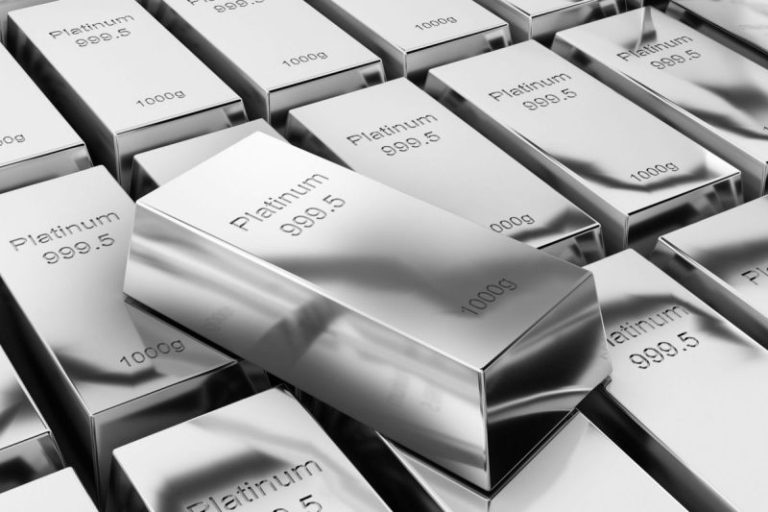
Platinum is the third most traded precious metal in the world after gold and silver, and investment demand is growing.

It is also an industrial metal that is widely used in a variety of sectors. The four main uses of platinum are in catalytic converters for the automotive industry; as a material in jewelry; in industrial applications in various sectors including fertilizers, hard drives, electronics, and glass manufacturing; and in medical devices and pharmaceuticals.

The long-term outlook for platinum is strong, making the sector potentially compelling for investors. In September 2025, platinum prices surged above US$1,500 for the first time since July 2014, and crossed US$1,600 before the month closed.

Here’s a brief overview of platinum supply and demand dynamics, as well as a look at a few different ways to start investing in platinum, namely bullion, platinum stocks, exchange-traded funds (ETFs) and futures.

In this article

    What is platinum?

    Platinum is a silvery-white precious metal that is soft and ductile. It is highly prized for its durability and excellent catalytic properties, such as a high melting point, resistance to corrosion and simple acids, and ability to serve as a carbon monoxide oxidation catalyst. Platinum’s symbol on the periodic table of elements is Pt.

    Platinum is the most abundant and widely used of the platinum-group metals (PGMs), which also includes palladium, rhodium, iridium and other metals.

    Platinum is not typically mined on its own, but rather alongside palladium and other PGMs within nickel and copper ores or chromitite.

    Platinum demand trends

    Platinum’s diversity of applications helps to create a resilient market for this metal even in an economic downturn. The four biggest demand sectors for platinum are automotive at 39 percent, jewelry at 28 percent, industrial at 24 percent and investment at 9 percent.

    Total platinum demand for 2025 is expected to come in at 7.88 million ounces, down about 4 percent from the previous year’s demand, according to the World Platinum Investment Council (WPIC), which provides quarterly market overviews.

    ‘An upgrade to jewellery demand expectations and continued robust investment demand, driven by strength in bar and coin in China, are offset by slightly weaker automotive demand and a cyclical trough in glass demand within the industrial segment,’ the WPIC noted in its Q2 2025 report.

    Automotive

    In the automotive industry, both platinum and fellow PGM palladium are used in catalytic converters for vehicle exhaust systems. Due to their differing properties, platinum is preferred for diesel engines and palladium is the metal of choice for gasoline engines.

    In recent years, platinum has been increasingly substituted for palladium in gas-powered vehicles due to high prices for palladium seen in the early 2020s. Although the price disparity has decreased, analysts expect that the substitution trend will continue for some time.

    Demand from this sector is expected to decline by 3 percent year-on-year in 2025 to 3.03 million ounces as global auto sales and production are in decline, especially in Europe, according to the WPIC.

    Another important factor impacting this segment of the market is the growing market for electric vehicle (EVs), which do not require catalytic converters to control emissions. Although EV demand growth has been slower than anticipated, which has proven positive for platinum, EVs made up over 20 percent of global new car sales in 2024.

    The transition to electric and US tariffs affecting the industry are weighing on platinum demand from the auto sector, but the WPIC says this segment of the market is ‘proving resillient’ despite these downward forces.

    Industrial

    Demand from the industrial sector is expected to be the largest drag on overall platinum demand in 2025, with the WPIC predicting it will drop by 22 percent in 2025 to 1.49 million ounces. WPIC predicts that a cyclical slowdown in new capacity in glass manufacturing will cause a 74 percent year-over-year reduction in demand from this segment of the industrial sector, translating to a drop of 515,000 ounces.

    Jewelry

    Global jewelry consumption is projected to grow by 11 percent in 2025 to reach 2.23 million ounces. Regionally, demand growth is centered in China as platinum becomes a much more affordable option compared to gold. Chinese platinum jewelry fabrication is expected to grow by 42 percent in 2025.

    Investment

    Regarding investment demand for platinum, in 2025 WPIC expects a 2 percent jump over the previous year to 718,000 ounces of the metal. Specifically looking at platinum bars and coins, the WPIC is forecasting demand in this segment to grow by 45 percent year-on-year to a two-year high of 282,000 ounces.

    Hydrogen

    In recent years, the transition to a green economy and the growth of hydrogen technologies has created another growing market for platinum. The WPIC has noted that the hydrogen market, specifically proton exchange membrane electrolyzers and hydrogen fuel-cell electric vehicles, is expected to become ‘a meaningful component of global demand by 2030 and potentially the largest segment by 2040.’

    For now, the hydrogen sector represents less than 1 percent of total platinum demand, although it is expected to increase by 19 percent this year to 49,000 ounces.

    Platinum supply trends

    The 22 percent decline year-over-year in platinum demand has not alleviated the ongoing supply-demand imbalance. The platinum market is destined to remain in a supply deficit for a third-straight year in 2025, according to WPIC estimates, with a shortfall of 850,000 ounces of the metal.

    Analysts are forecasting total platinum supply of 7.03 million ounces in 2025, a net decrease of 3 percent year-over-year.

    Recycled platinum supply is anticipated to reach 1.6 million ounces in 2025, a 6 percent jump year-over-year, as higher platinum prices incentivizing recycling of the metal.

    On the other hand, mined platinum supply is expected to fall 6 percent to 5.43 million ounces in 2025, which the WPIC attributed to lower production out of South Africa, Zimbabwe and North America.

    South Africa is by far the largest platinum country in terms of mined platinum and reserves, according to the US Geological Survey data, accounting for about 67 percent of global output. The country’s Bushveld Complex is the largest PGM resource in the world. However, ongoing electricity shortages and transport line disruptions have restrained platinum mine output from the country in recent years.

    How to invest in platinum

    Investors who believe the above market dynamics will eventually result in a higher platinum price may be interested in investing in the metal. There are several ways to invest in platinum, from platinum mining stocks and platinum ETFs to physical bars and coins and platinum futures.

    Platinum stocks

    One way to invest in platinum is to own shares of a platinum-mining company. Depending on your risk tolerance, both major platinum miners, junior exploration companies offer an easy entry point.

    Major platinum mining stocks

    Eastern Platinum (TSX:ELR,OTC Pink:ELRFF)
    Eastern Platinum, or Eastplats, has a number of directly and indirectly owned PGM assets in the Bushveld Complex of South Africa. In addition to its ongoing work recovering chrome from historical tailings at the Crocodile River mine, Eastplats is ramping up production of PGM and chrome concentrates at Crocodile River’s new Zandfontein underground mine last year.

    Impala Platinum Holdings (OTCQX:IMPUF,JSE:IMP)
    Impala Platinum, or Implats, is one of the most prominent platinum producers in the world. The company has majority ownership or joint ventures in four PGM mining operations and a refining facility in South Africa’s Bushveld Complex, two PGM mining operations in Zimbabwe and the Lac des Iles PGM mine in Ontario, Canada.

    Sibanye Stillwater (NYSE:SBSW)
    Sibanye Stillwater has a diverse metals mining portfolio and is one of the world’s largest primary platinum and palladium producers. It also adopted a circular economy business model that includes platinum recycling. The company has numerous PGM operations in South Africa and the United States. Its US Stillwater and East Boulder operations are in Montana’s Stillwater Complex, the country’s largest source of PGMs.

    Tharisa (LSE:THS,JSE:THA,OTC Pink:TIHRF)
    Tharisa is a vertically integrated PGM company, and through its subsidiaries its operations span from exploration through to production, beneficiation and distribution. Tharisa’s PGM assets include the Tharisa platinum-chrome mine in South Africa’s Bushveld Complex and the Karo platinum mine in Zimbabwe, which is now under construction.

    Valterra Platinum (LSE:VALT,JSE:VAL,OTC Pink:ANGPY)
    Valterra Platinum, formerly Amplats, is a leading primary producer of PGMs, supplying mined and recycled platinum products. The company was demerged from Anglo American (LSE:AAL,OTC Pink:AAUKF) in 2025. The company operates the Mogalakwena mine, Amandelbult complex and Mototolo mine in South Africa’s Bushveld Complex.

    Junior mining stocks

    Bravo Mining (TSXV:BRVO,OTCQX:BRVMF)
    Bravo Mining is advancing its wholly owned Luanga PGM-gold-nickel project in the Carajás Mineral Province of Brazil. The project’s 2025 mineral resource estimate shows measured and indicated resources of 10.4 million ounces of palladium equivalent at 2.04 grams per metric ton (g/t).

    Canada Nickel Company (TSXV:CNC,OTCQX:CNIKF)
    Canada Nickel Company is advancing its wholly owned flagship Crawford nickel-cobalt sulfide project located in the Timmins-Cochrane mining camp of Ontario, Canada. The project also hosts significant platinum and palladium mineralized zones.

    Canada North Resources (TSXV:CNRI,OTCQX:CNRSF)
    Canada North Resources wholly owns the late-stage Ferguson Lake exploration project in the Kivalliq Region of Nunavut, Canada. The polymetallic project hosts base metals nickel, copper and cobalt as well as PGMs, including 630,000 ounces of platinum and 3.53 million ounces of palladium in the indicated category.

    Chalice Mining (ASX:CHN)
    Chalice Mining owns the Gonneville project in Western Australia. The project hosts a mix of metals, including palladium, platinum, nickel, cobalt and copper. The Western Australia government has designated Gonneville a Strategic Project in recognition of the project’s importance for the country’s critical metals industry, and Chalice expects to complete its pre-feasibility study in Q4 2025.

    Clean Air Metals (TSXV:AIR,OTCQB:CLRMF)
    Clean Air Metals is focused on its wholly owned exploration-stage Thunder Bay North critical minerals project in the Thunder Bay region of Ontario, Canada. The project hosts platinum, palladium, copper and niobium mineralization, with an indicated resource of 1.2 million ounces of combined platinum and palladium.

    Lifezone Metals (NYSE:LZM)
    Lifezone Metals has developed a hydrometallurgical processing technology, which it calls Hydromet Technology, as a cleaner alternative to smelting for base and precious metals refining. The company has a joint venture partnership agreement with Glencore (LSE:GLEN); Lifezone will use its Hydromet Technology to recycle platinum, palladium and rhodium in the Un, and Glencore will act as the offtaker and marketer. Lifezone also owns the Kabanga nickel-copper-cobalt project in Tanzania.

    Platinum Group Metals (TSX:PTM,NYSE:PLG)
    Platinum Group Metals is working to bring into production its advanced-stage Waterberg PGM deposit in South Africa’s Bushveld Complex. First discovered by the company, the project is now a joint venture with key partners that include Implats at 14.86 percent. Platinum Group retains a 50.16 percent position in Waterberg and will be the majority operator.

    Ramp Metals (TSXV:RAMP)
    Ramp Metals owns the Rottenstone SW and PLD projects in Saskatchewan, Canada. Rottenstone is situated adjacent to a northeast-southwest geological formation connected to the historic Rottenstone mine, which produced nickel, PGMs and gold, although Ramp is currently focused on gold and copper at the site.

    Platinum bars and coins

    Another investment option is the direct purchase of physical platinum bars or platinum coins through a bullion dealer.

    One example is BullionVault’s online physical platinum market, which is supported by the WPIC, and gives private individuals access to vaulted platinum for the same prices currently paid by institutional investors. The market is open 24 hours a day, seven days a week.

    Investors in the United States can also now buy 1 ounce platinum bars and coins at Costco, an option you can learn more about here.

    For more information on how to invest in precious metals coins and bullion, check out our guide on buying physical gold, as much of the advice also applies to physical platinum investing.

    Platinum ETFs

    Those interested in platinum can also gain exposure via platinum ETFs and platinum exchange-traded notes (ETNs). Here are a few to get you started.

    iShares MSCI Global Metals & Mining Producers ETF (NYSE:PICK)
    The iShares MSCI Global Metals & Mining Producers ETF provides investors with access to the global mining industry through an international basket of companies engaged in the extraction and production of metals, including platinum. Its holdings include platinum mining companies Valterra Platinum, Implats and Sibanye Stillwater. It has the lowest expense ratio on this list at 0.39 percent.

    Aberdeen Physical Platinum Shares ETF Trust (ARCA:PPLT)
    The Aberdeen Physical Platinum Shares ETF is designed to reflect the performance of the price of physical platinum less the trust’s expenses and holds platinum bars in a secure vault. It has an expense ratio of 0.6 percent.

    Sprott Physical Platinum and Palladium Trust Unit (ARCA:SPPP)
    The Sprott Physical Platinum and Palladium Trust is another option that provides access to the physical platinum bullion market while allowing the flexibility of an exchange-traded security. It has the highest expense ratio on this list at 0.98 percent.

    GraniteShares Platinum Shares (ARCA:PLTM)
    The GraniteShares Platinum Trust tracks the spot price of platinum less trust expenses, and holds a physical portfolio of platinum ingots kept in a vault in London, UK. It has an expense ratio of 0.5 percent.

    Global X Physical Platinum Structured (ASX:ETPMPT)
    Global X Physical Platinum is an ASX-listed platinum ETF that provides Australian investors access to platinum held in JP Morgan storage facilities. It has a management fee of 0.49 percent.

    Platinum futures

    Another option for those looking to invest in platinum is platinum futures, a derivative instrument tied directly to the price of the actual metal. Futures are a financial contract between an investor and a seller. The investor agrees to purchase an asset from the seller at an agreed-upon price based on a date set in the future.

    Rather than intending to take possession of the material asset, investors speculating in the futures market are instead making bets on whether the price of a particular commodity will rise or fall in the near future.

    For example, if you buy a platinum futures contract believing the price of metal is set to rise, and your prediction proves correct, you could gain a return on your investment by selling the now more valuable futures contract before it expires. However, be advised that trading futures contracts is not for the novice investor.

    Platinum futures are available for trade on the New York Mercantile Exchange (NYMEX), which is part of the CME Group. For more information on precious metals futures investing, see our guides to gold futures and silver futures.

    Securities Disclosure: I, Melissa Pistilli, hold no direct investment interest in any company mentioned in this article.

    This post appeared first on investingnews.com

    Vladimir Guerrero Jr. and the Toronto Blue Jays celebrated in the visiting locker room after a 5-2 victory over the New York Yankees on Wednesday, Oct. 8.

    The Blue Jays are moving on to the American League Championship Series after winning the ALDS 3-1.

    The Canadian-Dominican player joined Fox Sports’ MLB postgame show while the team was still in the locker room. His teammates were pouring beer on his head as he mocked longtime Yankees radio broadcaster John Sterling’s signature sign-off.

    ‘DAAAAAA YANKEES LOSE!’ Guerrero said.

    Former Red Sox standout David Ortiz — who’s busted out the phrase several times before — joined in on the mocking of New York and asked Guerrero to do it again.

    Yankees legends Alex Rodriguez and Derek Jeter were seated next to Ortiz and shown on camera, a slight smile on their faces — while clearly still disappointed in their former team’s elimination.

    Vladimir Guerrero Jr. stats vs. Yankees

    • At-bats: 13
    • AVG: .615
    • HR: 3
    • RBI: 8
    • BB: 1
    • OPS: 1.908
    This post appeared first on USA TODAY

    The Cleveland Browns remain the most active NFL team on the trade market.

    The Browns have agreed to trade CB Greg Newsome II to the Jacksonville Jaguars for CB Tyson Campbell, according to multiple reports. The two sides have also agreed to exchange draft picks as part of the deal. Jacksonville gets a 2026 sixth-round pick and Cleveland gets a 2026 seventh, according to multiple reports.

    It’s the second trade in as many days for the Browns, who shipped Joe Flacco to the Cincinnati Bengals on Tuesday, Oct. 7.

    However, this time, Cleveland gets a player and picks in return.

    Newsome had been a name rumored to watch as the 2025 NFL trade deadline approaches and the former No. 26 overall pick in the 2021 NFL Draft is officially on the move. He joins a Jaguars team that just defeated the Chiefs on ‘Monday Night Football’ to improve to 4-1 on the season.

    In 59 career games, Newsome has accounted for 178 total tackles, one sack, three interceptions, a defensive touchdown and 37 defended passes.

    On his way to Cleveland is Campbell, a former second-round pick in the 2021 NFL Draft. He has played in 60 career games and recorded 297 tackles, three forced fumbles, two fumble recoveries, six interceptions and 42 defended passes.

    The trade between the two franchises comes about six months after the Browns sent the No. 2 pick in the 2025 NFL Draft to the Jaguars, who then selected cornerback and wide receiver Travis Hunter.

    Jaguars, Browns trade details

    Jaguars receive:

    • Greg Newsome II
    • 2026 sixth-round pick

    Browns receive:

    • Tyson Campbell
    • 2026 seventh-round pick

    Browns CB depth chart

    • Denzel Ward
    • Tyson Campbell
    • Myles Harden
    • Jarrick Bernard-Converse

    Jaguars CB depth chart

    • Jourdan Lewis
    • Greg Newsome II
    • Jarrian Jones
    • Travis Hunter
    • Montaric Brown
    • Christian Braswell
    This post appeared first on USA TODAY

    PHOENIX — The Phoenix Mercury were on the verge of another double-digit comeback victory in the fourth quarter of Game 3 of the WNBA Finals.

    Then Las Vegas Aces center A’ja Wilson did what Wilson does best.

    The Aces led by 17 points entering the fourth quarter before the Mercury tied it at 88 all with 5.0 seconds remaining. Then Wilson showed exactly why she’s the four-time MVP by knocking down a go-ahead jumper over the Mercury’s Alyssa Thomas and DeWanna Bonner to reclaim the lead.

    ‘I just needed a bucket to go in,’ Wilson said postgame. ‘I didn’t really see who was in front of me. I didn’t care. This is the Finals, you’ve got to make shots.’

    The No. 2 seed Aces are up 3-0 in the best-of-seven WNBA Finals following the 90-88 victory on Wednesday at Mortgage Matchup Center in Phoenix. The Aces are one win from securing their third WNBA championship in four years and have a chance to close out the series on Friday in Game 4 in Phoenix. 

    Wilson finished with a game-high 34 points, 14 rebounds and four assists. Jackie Young added 21 points and nine assists and Jewell Loyd had 16 points and seven rebounds off the bench.

    The Mercury were led by DeWanna Bonner’s 25 points off the bench. She had a chance at a catch and shoot as time expired which would have sent the game to overtime but it rimmed out. Satou Sabally had 24 points before exiting the game in the fourth quarter with an apparent head injury. Alyssa Thomas has 12 points, 14 rebounds and nine assists.

    GAME 2: Las Vegas Aces take 2-0 lead in WNBA Finals with Game 2 rout of Phoenix Mercury

    Here’s what you need to know for Game 3 of the WNBA Finals:

    Satou Sabally exits with apparent head injury

    Satou Sabally exited the game in the fourth quarter after her head collided with Kierstan Bell’s knee. Sabally missed a layup attempt with 4:25 remaining in the contest. As she went up for an offensive rebound, Sabally’s arm got wrapped up by Aces guard Jackie Young, causing her to fall and collide with Bell’s knee on the way down. Young was called for a loose ball foul. Sabally exited with a team-high 24 points and five rebounds.

    End of Q3: Aces 76, Mercury 59

    A’ja Wilson continues to do A’ja Wilson things. The Aces center has a game-high 28 points and 12 rebounds through three quarters, becoming the first player in WNBA Finals history to record three consecutive games with 25 or more points and 10 rebounds. 

    Aces guard Jackie Young is closing in on a double-double with 15 points and nine assists. 

    The turnovers are piling up for the Mercury. Phoenix is up 11 turnovers (four in the third quarter), leading to 16 points for the Aces. The Mercury have also left a lot of points at the free throw line, shooting 66.7% (12-of-18), the Mercury’s worst free throw performance this postseason. 

    Mercury forward Satou Sabally has 19 points and five rebounds. DeWanna Bonner has 16 points and six rebounds. Alyssa Thomas is closing in on a triple-double with 13 points, 10 rebounds and seven assists, but Thomas picked up her fourth personal foul with 2:13 remaining in the third quarter. 

    Mercury guard Kahleah Copper has struggled to get going offensively in Game 3, shooting 3-of-10 from the field and 0-of-3 from the 3-point line. 

    Halftime: Aces 55, Mercury 43

    The Aces outscored the Mercury 29-20 in the second quarter to take a 12-point lead into halftime, marking the largest halftime lead by either team in the WNBA Finals. 

    The Aces are getting it done by committee with 17 assists on 19 field goals in the first half. A’ja Wilson has a game-high 17 points, seven rebounds and three assists, while Jackie Young is up to 11 points and eight assists. 

    Satou Sabally has a team-high 15 points for the Mercury, while Alyssa Thomas added 11 points, six rebounds and and five assists. However, the Mercury were forced into seven first-half turnovers which led to 11 points. 

    “We’re getting deflections. We’re making their looks very, very hard. We’ve just got to contain ourselves without fouling,” Wilson said of her team’s defensive effort in the first half. “This is the Finals and I’m trying to win a championship. If they say defense wins championship, then I’m all aboard.”

    Both team’s benches have been a big storyline in the WNBA Finals and the Aces’ bench once again has the edge over Phoenix, outscoring the Mercury’s bench 18-10 so far. Jewell Loyd has 12 points off the bench, all scored in the first quarter from the 3-point line. Loyd is the first player in WNBA Finals history to score four 3s in the first quarter. 

    DeWanna Bonner has given the Mercury productive minutes off the bench with 10 points and six rebounds in 13 minutes. Sami Whitcomb is still looking to get on the board and shot 0-of-3 from the 3-point line. 

    The Aces are shooting a staggering 56.3% (9-of-16) from the 3-point line. The Mercury is 3-of-10 from beyond the arc.  

    End of Q1: Aces 26, Mercury 23

    The Aces led by as many as 13 points in the first quarter before the Mercury went on a 13-0 run to tie it up. Las Vegas has a three-point advantage heading into the second quarter. 

    Aces guard Jewell Loyd was shooting lights out in the first quarter, dropping 12 points in seven minutes off the bench, shooting 4-of-5 from the 3-point line. A’ja Wilson added 10 points and five rebounds. 

    Mercury forward Satou Sabally leads all scorers with 13 points, shooting 5-of-7 including a 3-pointer. DeWanna Bonner added five points and three rebounds off the bench while taking on the tall task of guarding A’ja Wilson. 

    Mercury head coach called for technical foul

    Mercury head coach Nate Tibbetts was called for a technical foul with 53.3 seconds remaining in the first quarter after DeWanna Bonner was called for a foul on Aces center A’ja Wilson. Both Bonner and Tibbetts argued with the official after the call, resulting in Tibbetts getting T’d up. Wilson hit both free throws to put the Aces ahead 24-21.

    Las Vegas builds early lead

    We’re underway at Mortgage Matchup Center and the Aces have a 15-8 lead with 5:10 remaining in the first quarter. 

    Aces center A’ja Wilson has a team-high seven points and four rebounds. Jewell Loyd added an instant punch of the bench, knocking down back-to-back 3-pointers. She’s up to six points in two minutes off the bench. 

    Satou Sabally leads the Mercury with five points, shooting 2-of-3 from the field including a 3-pointer. Alyssa Thomas added three points and one rebound.

    What time is Mercury vs. Aces Game 3?

    Game 3 of the WNBA Finals between the No. 2 seed Las Vegas Aces and No. 4 seed Phoenix Mercury is scheduled to tipoff at 8 p.m. ET on Wednesday, Oct. 8, at Mortgage Matchup Center in Phoenix.

    Where to watch WNBA Finals: TV, streaming for Game 3

    • Date: Wednesday, Oct. 8
    • Time: 8 p.m. ET (5 p.m. PT)
    • Location: Mortgage Matchup Center (Phoenix)
    • TV: ESPN
    • Stream: Fubo, ESPN Unlimited

    WNBA starting lineups today

    Here are the starting lineups for Game 3 of the WNBA Finals:

    Las Vegas Aces starting lineup

    Head coach: Becky Hammon

    • 0 Jackie Young | G 6′ 0′ – Notre Dame
    • 1 Kierstan Bell | F 6′ 1′ – Florida Gulf Coast
    • 3 NaLyssa Smith | F 6′ 4′ – Baylor
    • 12 Chelsea Gray | G 5′ 11′ – Duke
    • 22 A’ja Wilson | C 6′ 5′ – South Carolina

    Phoenix Mercury starting lineup

    Head coach: Nate Tibbetts

    • 0 Satou Sabally | F 6′ 4′ – Oregon
    • 2 Kahleah Copper | G 6′ 1′ – Rutgers
    • 4 Natasha Mack | C 6′ 4′ – Oklahoma State
    • 8 Monique Akoa Makani | G 5′ 11′ – Cameroon
    • 25 Alyssa Thomas | F 6′ 2′ – Maryland

    Phoenix Mercury injury report

    The Mercury will have all players available for Game 3 of the WNBA Finals.

    Las Vegas Aces roster

    Las Vegas Aces center A’ja Wilson stats

    Wilson averaged a league-leading 23.4 points, 10.2 rebounds, 3.1 assists (ties her career-high), a league-leading 2.3 blocks and 1.6 steals in 40 games this season. Wilson averaged 29.3 points, 8.7 rebounds and 3.3 assists in the Aces’ first-round playoff series against the Seattle Storm, including a 38-point performance in Game 3, tying her playoff career high. Wilson averaged 18.2 points, 9.4 rebounds and 2.8 steals in the Aces’ five-game semifinal series against the Indiana Fever, including a 35-point performance in the Aces’ decisive Game 5 overtime win. Wilson had 28 points and 14 rebounds in the Aces’ Game 2 win on Sunday.

    Phoenix Mercury roster

    Phoenix Mercury forward Alyssa Thomas stats

    Thomas averaged 15.4 points, a league-leading 9.2 assists and 7.2 rebounds in 39 games (all starts) this season. The 33-year-old recorded eight triple-doubles in the regular season, a WNBA single-season record, in addition to one triple-double in the postseason. Thomas, who was traded to the Mercury in February following 11 seasons in Connecticut, scored 10 points, six rebounds and five assists in Game 2 of the WNBA Finals.

    Phoenix Mercury guard Kahleah Copper stats

    Copper averaged 15.6 points, 2.9 rebounds, 1.5 assists and 1.1 assists in 28 regular season games. Copper had 21 points and four rebounds in Game 1 of the WNBA Finals and followed up that performance with 23 points and three rebounds in Game 2.

    Phoenix Mercury forward Satou Sabally stats

    Sabally recorded 22 points in the Mercury’s loss to the Aces on Sunday in Game 2, shooting 7-of-19 from the field and 2-of-9 from the 3-point line. Sabally averaged 16.3 points, 5.9 rebounds and 2.5 assists in 39 games (all starts), shooting 40.5% from the field and 32.1% from the 3-point line.

    2025 WNBA Finals schedule

    How many games are in the WNBA Finals?

    The league expanded the 2025 WNBA Finals from a best-of-five series to best-of-seven as the popularity and appetite for women’s basketball continues to skyrocket. ‘The incredible demand for WNBA basketball makes this the ideal time,’ WNBA commissioner Cathy Engelbert said at the announcement in 2024.

    ‘It’s exciting to be part of the first one,’ Mercury forward Alyssa Thomas said on Oct. 2. ‘We talk about how a best-of-five is a tough series. … We don’t know what a best-of-seven brings, but nothing changes. We still approach it the same way.’

    WNBA champions by year

    The USA TODAY app gets you to the heart of the news — fastDownload for award-winning coverage, crosswords, audio storytelling, the eNewspaper and more.

    This post appeared first on USA TODAY

    Here’s a quick recap of the crypto landscape for Wednesday (October 8) as of 9:00 p.m. UTC.

    Get the latest insights on Bitcoin, Ether and altcoins, along with a round-up of key cryptocurrency market news.

    Bitcoin and Ether price update

    Bitcoin (BTC) was priced at US$123,495, up by 1.5 percent in 24 hours. The cryptocurrency’s lowest valuation of the day was US$121,829, and its highest was US$124,072.

    Bitcoin price performance, October 8, 2025.

    Chart via TradingView.

    Despite retreating to around US$121,000 on Tuesday (October 7), Bitcoin on-chain data and a rising relative strength index still indicate strong momentum and accumulation, with resistance near US$135,000 and support around US$113,300. Analysts believe the crypto market is transitioning from a speculative phase to a “maturity phase,” where institutional strategies and asset allocation will drive price discovery rather than retail hype.

    A new report from CF Benchmarks forecasts that Bitcoin could climb another 20 percent to reach US$148,500 by the end of 2025, while the number of crypto exchange-traded funds (ETFs) is expected to double to 80.

    The report also projects that stablecoins could hit US$500 billion in circulation.

    Various macro factors are shaping this bullish narrative for the sector. Market uncertainty tied to US President Donald Trump’s economic and fiscal policies, his ongoing tension with the Federal Reserve and uncertainty surrounding the ongoing government shutdown have spurred what analysts describe as a “debasement trade.” Investors seeking protection from currency risk are turning to traditional hedges like gold, and increasingly to Bitcoin.

    The Fed’s recent interest rate cut has provided additional support for risk assets. CF Benchmarks expects two more reductions by the end of the year, bringing rates closer to the 3.25 percent level.

    Despite inflation concerns, analysts argue that Bitcoin remains undervalued, sitting at the lower end of its estimated fair-value range between US$85,000 and US$212,000. According to trader Ted Pillows, if Bitcoin manages to hold the US$120,000 area, it could mark the beginning of a reversal phase and signal renewed bullish momentum.

    By Wednesday afternoon, Bitcoin had steadied near US$123,400, recovering some losses, with ETF inflows continuing to boost institutional confidence. The total market cap of cryptocurrencies currently stands at around US$4.3 trillion, per CoinGecko, while the circulating value of stablecoins has already surpassed $300 billion.

    Ether (ETH) also slid after last week’s rally, but has since recovered some of its losses. It was up by 0.7 percent over 24 hours to US$4,518.05. Ether’s lowest valuation on Wednesday was US$4,441.20, and its highest was US$4,544.36.

    Altcoin price update

    • Solana (SOL) was priced at US$229.20, an increase of 1.6 percent over the last 24 hours and its highest valuation of the day. Its lowest valuation on Wednesday was US$220.04.
    • XRP was trading for US$2.91, up by 3.2 percent over the last 24 hours. Its lowest valuation of the day was US$2.86, and its highest was US$2.92.

    Crypto derivatives and market indicators

    Total Bitcoin futures open interest was at US$98.85 billion, an increase of roughly 0.84 percent in the last four hours.

    Ether open interest stood at US$60.24 billion, down by 0.07 percent in four hours.

    Bitcoin liquidations were at US$34.01 million over four hours, primarily forcing long positions to close, which could lead to selling pressure. Ether liquidations totaled US$25.18 million, with the majority being short positions.

    Fear and Greed Index snapshot

    CMC’s Crypto Fear & Greed Index climbed into high neutral territory after dipping to fear during the last week of September. The index currently stands around 55, inching closer to greed.

    CMC Crypto Fear and Greed Index, Bitcoin price and Bitcoin volume.

    Chart via CoinMarketCap.

    Today’s crypto news to know

    JPMorgan says stablecoins could add US$1.4 trillion in dollar demand by 2027

    A new JPMorgan Chase (NYSE:JPM) research note estimates that global stablecoin adoption could generate up to US$1.4 trillion in additional demand for US dollars within the next two years, according to Reuters.

    The bank’s analysts argue that as foreign investors and corporations increasingly hold dollar-pegged stablecoins, they will effectively strengthen the greenback’s global position. The report projects that the stablecoin market could reach US$2 trillion in a high-end scenario, up from roughly US$260 billion today.

    With 99 percent of stablecoins pegged 1:1 to the US dollar, JPMorgan says expansion will translate directly into higher dollar-denominated reserves. The findings counter fears that digital currencies could accelerate “de-dollarization” by offering alternatives to the US financial system.

    ICE to invest US$2 billion in Polymarket

    Intercontinental Exchange (ICE), the owner of the New York Stock Exchange, is making a major bet on crypto-powered prediction markets. The company announced plans to invest up to US$2 billion in Polymarket, valuing the blockchain-based betting platform at about US$8 billion, a sharp rise from its US$1 billion valuation just two months ago.

    Polymarket has gained prominence for its political, sports and entertainment wagers, including high-profile bets on the US presidential race. The deal will allow ICE to distribute Polymarket’s market data globally, signaling a push to integrate event-based contracts into mainstream finance. Founder Shayne Coplan said in a press release that the investment “marks a major step in bringing prediction markets into the financial mainstream.”

    The firm is also working to re-enter the US market after acquiring a small derivatives exchange earlier this year.

    BNY Mellon to explore tokenized deposits

    BNY Mellon, the world’s largest custodian bank, is reportedly exploring tokenized deposits to enable instant, 24/7 fund transfers for clients, aiming to overcome limitations in legacy systems. Carl Slabicki, executive platform owner for Treasury Services, stated that this initiative is part of an effort to upgrade real-time and cross-border payments. The goal is to move a portion of BNY’s US$2.5 trillion daily payment flow onto the blockchain.

    Slabicki highlighted that tokenized deposits help banks overcome technology constraints, facilitating the movement of deposits and payments within their own ecosystems and eventually across the broader market.

    S&P Global to launch new crypto ecosystem index

    The S&P Global, in partnership with Dinari, is creating a new investment index that will bring together both cryptocurrencies and publicly traded blockchain-related companies into a single benchmark called the S&P Digital Markets 50 Index. The index will include 15 cryptocurrencies and 35 public companies in the sector.

    No single component will exceed 5 percent. Major companies like Strategy (NASDAQ:MSTR), Coinbase Global (NASDAQ:COIN) and Riot Platforms (NASDAQ:RIOT) are expected to be included.

    Dinari plans to issue a tokenized version of the index, known as a “dShare,” which would allow investors to gain direct exposure. The investable version is expected to launch by the end of 2025.

    Securities Disclosure: I, Meagen Seatter, hold no direct investment interest in any company mentioned in this article.

    Securities Disclosure: I, Giann Liguid, hold no direct investment interest in any company mentioned in this article.

    This post appeared first on investingnews.com

    Saskatchewan has introduced a new royalty framework for lithium production, marking a major step toward supporting the province’s growing role in Canada’s critical minerals sector.

    The amendments to 2017 subsurface mineral royalty regulations formally establish a 3 percent Crown royalty on the value of brine mineral sales, coupled with a two year holiday for new productive capacity.

    Provincial officials said the change aligns Saskatchewan’s royalties for lithium with those already applied to potash, salt and sodium sulfate, and keeps the province competitive with leading jurisdictions worldwide.

    “Lithium is a critical mineral that is expected to see strong demand and growth in the decades ahead, and Saskatchewan is well-positioned to take advantage of this opportunity,” Energy and Resources Minister Colleen Young said.

    “By putting this royalty framework in place now, we are providing certainty for industry, while ensuring the people of Saskatchewan benefit as this sector develops,” Young added.

    Industry participants have welcomed the move, calling it a clear signal that the province intends to be a serious player in the global lithium supply chain. Canada-based explorer EMP Metals (CSE:EMPS,OTCQB:EMPPF) described the royalty rate as internationally competitive and a meaningful boost for project economics.

    “This is very welcome news. The government of the province of Saskatchewan has once again proven itself to be supportive of lithium production in the province,” EMP Metals CEO Karl Kottmeier said. “This is a highly competitive royalty rate internationally, and a two-year royalty holiday on new production immediately makes a positive impact on financial modelling of what is already a compelling business case for our Project Aurora lithium production project.”

    Grounded Lithium (TSXV:GRD) President and CEO Gregg Smith noted that the policy encourages further investment, while recognizing the high upfront costs of developing processing capacity.

    “This new regulatory framework provides a reasonable royalty rate while also recognizing the significant risk and initial investment companies make in processing facilities to ultimately achieve commercial production,” he said.

    Saskatchewan has emerged as one of Canada’s top destinations for mining investment. The Fraser Institute’s annual mining company survey ranked it the country’s leading jurisdiction, with the province projected to attract over US$7 billion in mining investment this year — more than a quarter of Canada’s total.

    The lithium framework also aligns with the province’s broader Critical Minerals Strategy, launched in 2023 to position Saskatchewan as a key contributor to Canada’s resource independence and energy transition.

    The plan targets a 15 percent share of national mineral exploration by 2030, the doubling of critical mineral production, and the expansion of existing potash, uranium, and helium output.

    Securities Disclosure: I, Giann Liguid, hold no direct investment interest in any company mentioned in this article.

    This post appeared first on investingnews.com

    Major miner BHP (ASX:BHP,NYSE:BHP,LSE:BHP) welcomed October with the news that it will invest over AU$840 million in its Olympic Dam copper operation in South Australia.

    In an October 1 release, the commodities giant said that the funding is for a series of “growth-enabling projects” at the site, focused on strengthening underground mining productivity.

    The company outlines several priority projects it intends to pursue at Olympic Dam, namely the construction of an underground access tunnel, a new backfill system, expansion of ore pass capacity and the installation of a new oxygen plant to improve smelter performance and support increased copper-processing capability.

    “We expect to grow our copper base from 1.7 million tonnes to around 2.5 million tonnes per annum,” shared BHP COO Edgar Baston. “Achieving that scale requires significant copper growth, and we are fortunate to have a world-class copper province right here in South Australia to do just that.” According to Baston, BHP’s South Australian copper province has been delivering over 300,000 tonnes a year for the past three years.

    Copper demand set to rise

    In a global trade update shared in May, UN Trade & Development notes that global demand for copper is expected to grow by over 40 percent by 2040. This projected demand increase will drive supply requirements, with the organisation citing the need for around 80 new mines and US$250 billion in investment by 2030 to keep up.

    For its part, BHP notes that global copper demand is projected to grow 70 percent by 2050 due to population growth, rising living standards and the energy transition. It adds that this poses a general opportunity for South Australia, underlining that it holds about two-thirds of Australia’s copper resources.

    History of Olympic Dam

    Olympic Dam was acquired by BHP in 2005 through its acquisition of Western Mining. It has become a cornerstone of BHP’s copper portfolio, with copper accounting for around 70 percent of the asset’s total revenue.

    In its 2025 fiscal year, BHP reported a production of over 2 million tonnes of copper for the first time.

    Don Farrell, Australian minister for trade and tourism, commented on the company’s investment in Olympic Dam, noting, ‘Australia is at the forefront of the energy transition in which copper is a vital resource and by securing the continued flow of copper from Olympic Dam, BHP is ensuring South Australia’s position as a key global supplier.”

    BHP October updates

    Also in early October, BHP iron ore cargoes were banned by Chinese iron ore buyer China Mineral Resources Group. The move reportedly stems from pricing disputes and has raised concerns for Australia.

    Australia remains China’s top provider of iron ore, and BHP continues to be among the country’s major iron ore exporters, alongside Rio Tinto (ASX:RIO,NYSE:RIO,LSE:RIO) and Fortescue (ASX:FMG,OTCQX:FSUMF).

    BHP has not commented on the matter as of writing.

    On a positive note, BHP launched the fourth edition of its Xplor Critical Minerals Accelerator Program.

    As in previous cohorts, Xplor 2026 participants can receive up to US$500,000 in equity-free funding, mentorship and access to BHP’s global network of suppliers and service providers.

    Submissions close on October 15 at 11:59 p.m. AEST.

    Securities Disclosure: I, Gabrielle de la Cruz, hold no direct investment interest in any company mentioned in this article.

    This post appeared first on investingnews.com

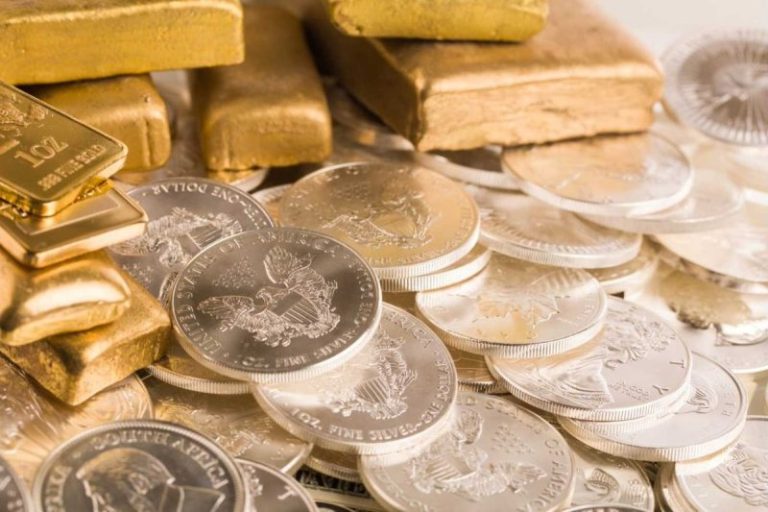
    Gold marked a new price milestone on Wednesday (October 8), breaking US$4,000 per ounce.

    The spot price hit a fresh record, rising as high as US$4,056.14 in midday trading. Future prices for gold breached US$4,000 for the first time on Tuesday (October 7) and have continued to climb higher.

    The yellow metal’s rise follows a summer of consolidation. After several months of relatively flat trading, the price began pushing higher toward the end of August, quickly reaching US$3,500 and continuing on up.

    Gold futures are up about 12 percent in the last month, and just over 54 percent year-to-date.

    Gold price, October 1 to October 8, 2025.

    Gold’s latest rise began last week, after US Congress failed to reach an agreement on a spending bill ahead of the new fiscal year, triggering a government shutdown. The closure has now lasted a week, with a key sticking point between Democrats and Republicans being an extension to billions of dollars in subsidies for Obamacare.

    US President Donald Trump said Monday (October 6) that negotiations were taking place with Democrats and ‘could lead to very good things’ in terms of healthcare. However, Senator Chuck Schumer and Representative Hakeem Jeffries, Congress’ two Democrat leaders, said no talks were happening and that the White House ‘has gone radio silent.’

    Various issues are emerging as the shutdown progresses, with one of the most recent being the Trump administration’s suggestion that furloughed federal workers may not receive backpay.

    Beyond current events, gold’s rise is underpinned by factors like strong central bank buying, global geopolitical uncertainty, concerns about the US dollar and other fiat currencies and expectations of lower interest rates.

    Those elements have many experts predicting a rise well beyond US$4,000 for the precious metal, likely before the end of the year, although a correction is widely expected beforehand.

    Gold’s sister metal silver is also surging higher this week, despite a pullback in the the price on Tuesday.

    Silver price, October 1 to October 8, 2025.

    The white metal rose as high as US$48.74 per ounce on Monday, but retreated on Tuesday to the US$47.80 level. On Wednesday, silver followed gold higher to US$49.42 by midday.

    Silver was last at these price points in 2011, and is close to its 1980 all-time high.

    As with gold, experts see a silver correction as natural given its rapid ascent, but think the rally is far from over.

    ‘The idea that this bull market is over is a fallacy. I would exercise caution, because I believe we’re due a correction. But I’m very happy with silver’s performance so far year-to-date,’ said analyst Ted Butler.

    Securities Disclosure: I, Melissa Pistilli, hold no direct investment interest in any company mentioned in this article.

    This post appeared first on investingnews.com