
Author

admin

Browsing

When Canadian-Russian programmer Vitalik Buterin penned a white paper in 2013 outlining a new kind of blockchain platform, few could have predicted the seismic impact it would have on the world of finance, technology, and beyond.

Today (July 30), Ethereum turns 10 years old, marking a milestone that represents a decade of one of the most influential blockchain platforms and a testament to the growing pains, triumphs, and resilience of the decentralized movement.

How did Ethereum go from a white paper drafted by a 19-year-old to a billion-dollar ecosystem that reshaped global finance?

Read on to find out more.

What is Ethereum and who invented it?

Co-founder Buterin said in a 2016 interview that Ethereum was born out of admiration for Bitcoin’s decentralized structure and frustration at its limited capabilities.

“I thought [those in the Bitcoin community] weren’t approaching the problem in the right way. I thought they were going after individual applications; they were trying to kind of explicitly support each [use case] in a sort of Swiss Army knife protocol,” Buterin said, summarizing his motivation to build something more adaptable.

From this foundational idea, Ethereum emerged as a decentralized, programmable blockchain — a “world computer” that would host smart contracts and decentralized applications (dApps), cutting out middlemen and enabling new forms of coordination.

The foundation of the fledgling project was laid between 2013 and 2014. After releasing his white paper in late 2013, Buterin attracted a handful of co-founders, including Gavin Wood, Charles Hoskinson, Joseph Lubin, Anthony Di Iorio, Jeffrey Wilcke, Mihai Alisie, and Amir Chetrit. Together, they spearheaded a crowdfunding campaign in mid-2014 that raised over US$18 million, one of the earliest and most successful Initial Coin Offerings (ICOs) in crypto history.

Despite this momentum, the Ethereum blockchain didn’t launch until July 30, 2015. That release, dubbed “Frontier,” was a basic, raw, and developer-focused version of Ethereum designed for building the infrastructure that would follow.

ETH, Ethereum’s native coin, initially traded for under a dollar. The early months saw little market movement as ETH hovered between US$0.70 and US$2.00, supported mainly by enthusiasts and developers interested in dApp potential.

When was Ethereum’s first major peak?

Ethereum’s first major price rally came during the 2017 crypto bull run, when rising global interest in blockchain technology and the initial coin offering (ICO) boom brought ETH into the mainstream.

After beginning the year at just barely US$8, Ethereum surged to a then-record high of around US$1,400 by January 2018, capping off one of the most explosive price increases in the history of digital assets. This more than 17,000 percent rise was driven by a combination of speculative demand and the emergence of Ethereum as the preferred platform for launching new tokens via ICOs.

By early 2018, however, the market began to reverse. A sweeping crypto correction saw Ethereum’s price fall back below US$100 by the end of that year. The drawdown exposed Ethereum’s technical bottlenecks, such as high gas fees and slow confirmation times during network congestion.

What was the DAO Hack, and how did it influence Ethereum’s trajectory?

Ethereum’s ethos of decentralization was also tested early on. In 2016, an experiment in decentralized governance — the Decentralized Autonomous Organization or DAO — raised about US$150 million in ETH from the community. The idea was to create a venture capital fund governed entirely by smart contracts and token-holder votes.

But just weeks after launch, a vulnerability in the DAO’s code that allowed for recursive call exploit was discovered, draining 3.6 million ETH or about a third of the fund.

At just ten months old, Ethereum was now facing a crisis that tested its fundamental principles, chief among them the immutability of the blockchain and the inviolability of smart contracts.

Three primary responses were debated. One option was to do nothing, honoring the hacker’s actions as legitimate under the rules of the code and accepting the theft. Another was to implement a “soft fork” that would blacklist the child DAO’s address, effectively freezing the stolen funds.

The most radical option was a “hard fork” that would roll back the ledger and return all stolen Ether to the original investors, which would undo the hack entirely.

Ultimately, the hard fork went ahead, and Ethereum split into two chains: the main Ethereum chain (ETH), where the funds were returned to investors, and a new chain called Ethereum Classic (ETC), which preserved the original ledger including the DAO hack.

How has Ethereum performed post-2020?

Ethereum price performance July 30, 2015 – June 30, 2025.

Chart via TradingView.

Ethereum reached its all-time high price of US$4,878 on November 10, 2021, during the peak of the 2020–2021 crypto bull run. The rally was driven by a convergence of factors: institutional adoption of crypto, a massive expansion of decentralized finance (DeFi), and explosive interest in NFTs, most of which were built on Ethereum’s ERC-721 standard.

By late 2021, Ethereum was settling billions in daily transaction volume and powering thousands of decentralized applications, cementing its position as the leading smart contract platform.

However, the peak was short-lived. Inflation fears and global risk aversion in early 2022 triggered a sharp correction across risk assets, including crypto. Ethereum’s price dipped below US$1,000 in June 2022 amid cascading liquidations and platform collapses like Terra and Celsius.

Still, even through the drawdown, Ethereum remained the backbone of DeFi, NFT markets, and layer-2 innovation, setting the stage for its long-planned transition to proof-of-stake later that year.

In the years that followed the fork, Ethereum faced growing pressure to scale and reduce its environmental impact, particularly as DeFi and NFT activity surged.

These challenges set the stage for a major protocol overhaul: Ethereum’s transition from Proof-of-Work (PoW) to Proof-of-Stake (PoS) was considered to be one of the most ambitious technical feats in blockchain history. Officially known as “the Merge,” the upgrade combined Ethereum’s execution layer (the mainnet) with the Beacon Chain, which introduced staking-based consensus.

The Merge took place in September 2022 and the environmental impact was immediate: Ethereum’s energy consumption dropped by over 99 percent.

While the Merge had little short-term effect on price, it marked a crucial moment for Ethereum’s long-term viability. At the time of the upgrade, ETH was trading at around US$1,600, which was a sharp decline from its all-time high of US$4,891 in November 2021 during the height of the crypto bull market.

That price peak had been driven by unprecedented network demand as NFTs and decentralized finance exploded in popularity, both largely built on Ethereum. By mid-2022, however, macroeconomic tightening, rising interest rates, and a series of high-profile crypto failures, including the collapse of TerraUSD and the insolvency of major lending platforms, had triggered a broad downturn.

After the Merge, ETH remained volatile. It already lost ground by as much as 70 percent against crypto leader Bitcoin since the Merge, and the introduction of EIP-1559 in 2021 had already created a more deflationary pressure on ETH supply through base fee burns.

Despite this setback, ETH showed relative resilience compared to many altcoins. In 2023, Ethereum hovered mostly between US$1,200 and US$2,100, with price movements closely tracking investor sentiment toward regulatory developments, Bitcoin’s performance, and broader market liquidity. Institutional interest in Ethereum also grew during this period, with more funds launching ETH products and staking services expanding.

Entering 2024, Ethereum gained momentum amid improving macroeconomic conditions and renewed optimism about real-world applications for blockchain technology. The network saw moderate success in sectors like tokenized assets, layer-2 infrastructure, and decentralized identity.

ETH briefly reclaimed the US$4,000 level in early March 2024 before retreating again due to renewed regulatory scrutiny in the US. Despite the pullback, Ethereum remained the second-largest cryptoasset by market capitalization and retained the majority share of developer activity across all chains.

The 2025 Swing

Ethereum 1-year price performance, July 28, 2024 – July 28, 2025.

Chart via TradingView.

Ethereum, as well as the rest of the crypto landscape, saw a full positive swing in 2025 as regulatory clarity dominated the first half of the year.

In June, the US Senate approved the Guiding and Establishing National Innovation for US Stablecoins (GENIUS) Act with bipartisan support. President Donald Trump, now serving his second term, publicly backed the bill, calling it “a win for American innovation and financial leadership.”

The GENIUS Act establishes a regulatory framework for US-pegged stablecoins, requiring full reserve backing, independent audits, and federal licensing for large issuers. It also clarifies that qualifying stablecoins are not securities, pulling them out of the SEC’s jurisdiction and instead aligning oversight with banking regulators like the OCC and Federal Reserve.

Crucially, the law defines “payment stablecoins” as a new category of digital cash, and Ethereum has emerged as one of the largest beneficiaries of this policy shift. The majority of dollar-backed stablecoins, which include USDC, USDT, and newer entrants like PayPal USD, are issued and transacted on Ethereum.

The GENIUS Act’s legal recognition of stablecoins has given institutional players more confidence to engage with Ethereum-based infrastructure.

As a result, capital inflows into Ethereum have accelerated, with analysts noting a sharp uptick in demand for ETH as a “platform asset” powering tokenized dollars and digital settlement rails.

ETH’s price also soon followed. Following the Senate’s approval of the GENIUS Act in June 2025, ETH jumped over 25 percent in two weeks, briefly reaching US$3,824 — outperforming Bitcoin and breaking out of a multi-month consolidation range.

The act has also prompted strategic shifts among financial institutions. BlackRock, Fidelity, and JPMorgan have expanded their Ethereum-based offerings, including on-chain fund administration, tokenized treasuries, and collateralized lending protocols that rely on smart contracts.

Several US banks are also piloting internal payment rails using tokenized dollars on Ethereum rollups.

What’s next for Ethereum?

Buterin himself has acknowledged that Ethereum’s current roadmap is not the end. Speaking in late 2022 before the Merge, he noted that “Ethereum is 55 percent complete.”

The long-term vision includes greater privacy features, zero-knowledge proofs for secure scalability, and expanding the reach of dApps to a billion users.

As of mid-2025, Ethereum currently trades around US$3,400, buoyed by strong institutional adoption, continued growth of layer-2 networks like Arbitrum and Base, and early signs of real-world asset tokenization gaining traction among banks and fintech firms.

While Ethereum’s price remains well below its 2021 peak, its performance since 2020 reflects growing maturity, with fewer speculative surges and more interest anchored in a more crypto-friendly environment.

Securities Disclosure: I, Giann Liguid, hold no direct investment interest in any company mentioned in this article.

This post appeared first on investingnews.com

Colorado football coach Deion Sanders has proven to be a longtime master of marketing and endorsements, including his famous advertising deals with Nike, Aflac and California Almonds.

But his new partnership is especially personal for him — and quite a bit different than the rest. After being diagnosed with bladder cancer and having his bladder removed in May, he’s partnered with Depend, the underwear brand for incontinence.

The parent company for the Depend brand, Kimberly-Clark, confirmed the partnership to USA TODAY Sports on July 28.

“Depend is proud to help millions of people live more confidently every day with comfort and protection they can trust – this includes Coach,” the company said in a statement. “Wearing Depend isn’t a sign of weakness, it’s a badge of resilience. It takes real courage to face health challenges head-on. We champion and celebrate Coach’s strength to share his experience with the world which makes us proud to partner with, and support, him on this journey. Together, we know his voice will empower others to stand tall and help break the stigma that can come with wearing products like Depend.”

Sanders, 57, mentioned Depend at a news conference in Colorado on Monday July 28.

“I depend on Depend, if you know what I mean,” he said.  “I truly depend on Depend. I cannot control my bladder.”

The brand is often joked about as a sign of old age and embarrassing health issues involving problems going to the bathroom. Sanders appears to want to take the shame out of the issue by speaking about it publicly and promoting it.

‘I’m about to sexy ’em up,’ Sanders told former NFL receiver Michael Irvin in an interview posted July 28.

One doctor compared this to the way former First Lady Betty Ford helped raise awareness of breast cancer after she was diagnosed with it in 1974. It helped increase discussion of this form of cancer, bringing it out in the open and leading to more screenings.

“He seems like the ideal person to take something like this on,” said Adam Kibel, the urology department chair at Mass General Brigham in Massachusetts. “He’s got a lot of humor. He’s got… cred. People look at him and say, ‘That guy’s a winner.’”

There’s no word yet if Sanders also will strike a deal with a portable toilet company. But he did mention the issue Monday as part of his recovery process.

“I’m making a joke out of it, but it’s real, so if you see a Porta Potty on the sideline, it’s real, OK?” Sanders said.

Colorado begins preseason practice this week and opens the season Friday, Aug. 29 at home against Georgia Tech.

“I am thankful we have a relationship with Depend, and we’re making some other products, trying to make other products to help all of us through,” Sanders said at the news conference. “It’s been tremendous.”

Follow reporter Brent Schrotenboer @Schrotenboer. Email: bschrotenb@usatoday.com

This post appeared first on USA TODAY

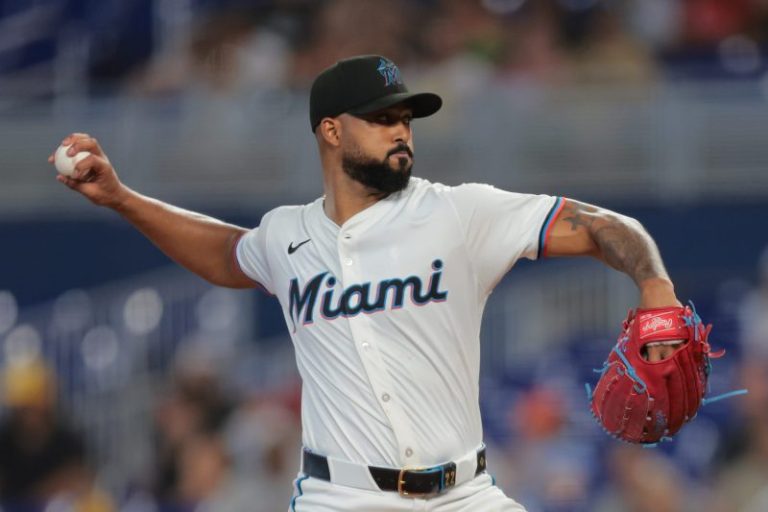
A few deals have come together in the past week, notably Josh Naylor (Mariners) and Ryan McMahon (Yankees) finding new homes. Some of the other top players who have surfaced in trade rumors are Arizona Diamondbacks slugger Eugenio Suárez and Miami Marlins pitcher Sandy Alcantara. Suárez is in the midst of a spectacular season, on pace for 55 home runs and 133 RBIs, while former Cy Young winner Alcantara has struggled after missing all of 2024 following Tommy John surgery.

Top contenders will be jockeying to add to their lineups, rotations and bullpens for the stretch run with the ultimate goal of playing deep into October.

Potential trade target Eugenio Suarez drilled by pitch, exits game

As MLB trade deadline week heats up, one of the top targets on the market received a scare on Monday, July 28.

In the top of the ninth inning of a 5-1 loss to the Detroit Tigers at Comerica Park in Detroit, Arizona Diamondback third baseman Eugenio Suárez took a 96 mph fastball to his left hand from Tigers right-hander Will Vest.

Suárez, who is hitting .248 on the season with 36 home runs and 87 RBIs, was immediately tended to by a member of the Diamondbacks training staff before exiting the game in what appeared to be significant pain. — John Leuzzi

Rays trying to add catcher to replace Danny Jansen

After moving Jansen to the Milwaukee Brewers, the Rays are wasting no time trying to find his replacement. Ken Rosenthal reports that the Rays are hoping to acquire Nick Fortes from the Miami Marlins.

Brewers close to acquiring Danny Jansen

With the Chicago Cubs right next to them in the standings, the Milwaukee Brewers are looking to mave a move that will push them over the edge. Per Jeff Passan, the team is currently interested in Rays’ catcher Danny Jansen in exchange for infield prospect Jadher Areinamo.

The Brewers’ backstops, William Contreras and Eric Haase, have struggled this year. After a standout campaign in 2024, Contreras has regressed to league average hitting numbers in 2025, posting an OPS nearly 150 points lower than his mark from a year ago.

Together, Haase and Contreras have recorded 2.1 combined WAR on the season, per Baseball-Reference. Jansen has a 1.8 WAR on his own.

Chris Paddack headed to Detroit

There has been tons of speculation on whether or not the Minnesota Twins would sell this offseason. Well, they’ve made their first move, sending veteran right-hander Chris Paddack alongside right-hander Randy Dobnak, to their division rivals, the Detroit Tigers in exchange for minor league catcher Enrique Jimenez, the Twins’ No. 12 prospect, per The Athletic. Bob Nightengale reports that the New York Yankees were also in pursuit of Paddack.

Paddack provides rotation depth to a Tigers team that lost Jackson Jobe to a UCL tear earlier this season. The Tigers have a multitude of options on how they could use Paddack as well. Paddack has done well for the Twins in relief roles in the past, including 3.2 one-hit innings as a reliever for the Twins during the 2023 postseason.

Dodgers in market for closer?

The biggest surprise at the trade deadline would be if the Dodgers don’t come up with another closer, USA TODAY’s Bob Nightengale writes. Even though they just activated Blake Treinen, who led the team with four saves in last year’s playoffs, the Dodgers have checked in with virtually every team for bullpen help.

Among the most intriguing closers who could be moved at the deadline: Ryan Helsley of the Cardinals, Raisel Iglesias of the Braves, David Bednar of the Pirates, Pete Fairbanks of the Rays and Jhoan Duran of the Twins.

The Dodgers also are looking to upgrade their outfield with Michael Conforto’s season-long struggles. Nightengale says they have expressed interest in Twins outfielder Harrison Bader and Cardinals utilityman Brendan Donovan.

Braves’ pitching overhaul continues

Even after adding veteran starter Erick Fedde, the Atlanta Braves still have more holes to fill in their rotation.

He has been pitching with New York’s Class AAA affiliate in Scranton-Wilkes Barre (Pa.), where he was 4-2 with a 3.27 ERA in 52 1/3 innings.

Hot corner a priority in Houston

The Houston Astros would like to find a third baseman while Isaac Paredes recovers from his hamstring tear but have no interest in reigniting talks with the St. Louis Cardinals for third baseman Nolan Arenado, USA TODAY’s Bob Nightengale writes.

The two teams agreed to a trade during the winter, and the Astros had permission to speak to Arenado, but they couldn’t convince him they were still going to contend this year. ‘We tried to convince him that we’re not rebuilding, that the window is always open with our owner,’ GM Dana Brown said. ‘We planned to compete in 2025 and beyond. He misunderstood the plan.’

The Astros could make a play for slugging third baseman Eugenio Suarez of the Diamondbacks. However, the team could also use a left-handed bat to balance out the lineup. Switch-hitting utilityman Willi Castro of the Twins might fit the bill – and he could help out elsewhere if/when Paredes returns, The Athletic’s Chandler Rome reports.

Braves acquire veteran SP Erick Fedde

With all five members of their opening day rotation now on the injured list, the struggling Atlanta Braves have added a veteran starter. Erick Fedde, who was designated for assignment by the St. Louis Cardinals last week, fills the void in Atlanta’s rotation after Grant Holmes hit the injured list with elbow inflammation. He joins fellow rotation mates Chris Sale, Spencer Schwellenbach, Reynaldo Lopez and A.J. Smith-Shawver on the 60-day IL.

The Braves acquired Fedde (3-10, 5.22 ERA this season) in exchange for a player to be named later or cash considerations.

Seth Lugo, Royals agree to extension

Royals right-hander Seth Lugo was considered one of the top pitching names on the trade market, but Kansas City put that to rest late Sunday night. The Royals on Monday announced Lugo has agreed to a two-year contract extension with a vesting option for 2028 with the team. Lugo is 7-5 with a 2.95 ERA in 19 starts this season after finishing second in the AL Cy Young voting in 2024 with 206⅔ innings pitched, a 16-9 record and a 3.00 ERA in 33 starts.

Diamondbacks trade rumors continue

“Do I think there’s a chance we make more trades? Yes, I do,” Diamondbacks GM Mike Hazen said. “I think there’s going to be enough interest that we probably will have to look at — think long and hard about what we’re doing. I just don’t know the extent to which that’s going to happen and how many that’s going to be.”

Yankees add depth with Amed Rosario trade

The New York Yankees acquired Amed Rosario in a trade with the Washington Nationals, providing depth as a player who has the versatility to play all around the infield. Rosario has started 20 games at third base and 13 games at second base for the Nationals this season.

He’s also proven to be trouble for left-handed pitchers. He’s batting .299 with an .816 OPS against lefties in 2025.

Should Detroit Tigers trade Tarik Skubal this winter?

Sandy Alcantara trade interest picking up?

After tossing seven strong innings in his last start, Sandy Alcantara’s name is back atop deadline wish lists, with USA TODAY Sports’ Bob Nightengale reporting that trade interest has soared. The 2022 NL Cy Young winner has struggled this season after missing all of 2024 following Tommy John surgery.

When is MLB trade deadline 2025?

Major League Baseball’s trade deadline is set for 6 p.m. ET on Thursday, July 31.

This post appeared first on USA TODAY

WWE continues to pay tribute to one of its icons, Hulk Hogan.

The wrestling company honored Hogan at the start of Monday Night Raw on July 28 at Little Caesars Arena in Detroit, four days after his death.

The Raw roster came out in the arena to kick off the show, with WWE chief content officer Paul ‘Triple H’ Levesque speaking about Hogan’s impact of wrestling.

‘We lost one of the biggest and most globally recognized icons in the world. A man I grew up watching was fortunate enough to share the ring with and like so many of us were honored to call a friend,’ Levesque said. ‘He captivated millions of people and inspired them around the globe. We would not be standing here right now, all of us together, if it was not for him.’

The honorary 10-bell salute then rang as people in the crowd held up signs and chanted Hogan.

Also with the roster was Hogan’s son, Nick, and longtime friend and WCW collaborator Eric Bischoff.

A tribute video also played highlighting the biggest moments of his Hogan’s career, along with other moments outside of the ring.

It was the second tribute for Hogan after one was done at Friday Night SmackDown on July 25, the day after his death.

Hogan died at the age of 71 after he suffered a cardiac arrest at his home in Clearwater, Florida. Considered one of the biggest wrestling stars in history, he was a six-time WWE Champion and inducted into the WWE Hall of Fame twice, in 2005 for himself and in 2020 as part of the New World Order.

This post appeared first on USA TODAY

A Texas man facing felony stalking charges for sending sexually explicit and threatening messages via social media to WNBA star Caitlin Clark pleaded guilty on Monday, July 29 and was sentenced to two and a half years in prison by an Indiana judge.

Michael Lewis was arrested last January following an investigation that determined he traveled to Indianapolis with the intent to be in close proximity to Clark, who plays for the WNBA’s Indiana Fever. After being questioned by police about traveling from Texas to Indiana, Lewis continued to send messages to Clark.

Lewis, 55, received the maximum sentence for the felony charge, the Marion County Prosecutor’s Office told The Indianapolis Star. He also has a no-contact order with Clark for the duration of the sentence and has agreed to stay away from Gainbridge Fieldhouse and all Indiana Fever events, according to court records.

Clark told police in an interview last January that ‘she has been very fearful since learning of the messages and that she has altered her public appearances and patterns of movement due to fear for her safety,’ according to the charging affidavit. ‘Clark stated that she has become very concerned for her safety after learning that Lewis was in Indianapolis. Clark also stated that she doesn’t know Lewis and has never responded to any of his messages or posts.’

An arrest affidavit for the case detailed more than 15 messages sent from Lewis’ X account to Clark, and many of the messages were sexually explicit or violent.

Police discovered Lewis’ messages in January had come from IP addresses at a Hilton Garden Inn near Gainbridge Fieldhouse in Indianapolis, as well as the downtown Indianapolis Public Library. Lewis’ presence in Indianapolis was concerning as he is Denton, Texas, resident, according to the affidavit.

The Indianapolis Metropolitan Police Department made contact with Lewis on Jan. 8 at his hotel room concerning the messages, according to police documents. Lewis said the posts that were threatening in nature were not from him and acknowledged, ‘this is just an imaginary relationship.’

Despite the initial encounter with law enforcement, the inappropriate messages from Lewis to Clark continued. The Marion County Prosecutors office announced Lewis’ arrest on Jan. 13.

‘No matter how prominent a figure you are, this case shows that online harassment can quickly escalate to actual threats of physical violence,’ Marion County prosecutor Ryan Mears said in a statement issued last January. ‘It takes a lot of courage for women to come forward in these cases, which is why many don’t. In doing so, the victim is setting an example for all women who deserve to live and work in Indy without the threat of sexual violence.’

Clark has missed 13 games this season and is currently out with a right groin injury. The Fever (14-12) host the Mercury at 7 p.m. ET on Wednesday, July 30.

This post appeared first on USA TODAY

Forward Cameron Brink is expected to make her return for the Los Angeles Sparks on Tuesday, July 29 in a home game vs. the Las Vegas Aces.

Brink, the No. 2 overall pick in the 2024 WNBA Draft, has not played since last season when she suffered an ACL injury in the 15th game of her rookie campaign.

She previously told reporters on July 26 that she was cleared to make her return but wanted to get some more practice with the team and be fully up to speed with everything before playing.

‘I’m really excited to be able to just go out there and do what I love,’ Brink told reporters.

There had been some indication that Brink was working her way closer to a return after she was spotted participating in parts of practice in recent weeks.

On Monday, July 28, Brink spoke with the Long Beach Press-Telegram’s John W. Davis and revealed that she is hopeful of being back on the court for the team’s next game.

‘I don’t know if I can say that, but yeah,’ Brink answered when asked if she planned on playing Tuesday. ‘It means the world. I am very excited, very humbled by this experience. It’s no easy thing to come back from.’

As of Monday, Brink’s status was listed as out. WNBA.com previously reported she was expected to play at some point in July. The game against the Aces would be the last contest before the Sparks’ Aug. 1 game.

On July 25, Brink was listed as “doubtful” on the Los Angeles injury report with a ‘left knee injury’ ahead of the Sparks’ road game against the New York Liberty. While she did not play in the game, it was the first time Brink had been listed as anything other than “out” this season.

Her first game back would put her in the lineup alongside All-Star guard Kelsey Plum, who was acquired in a trade with the Las Vegas Aces before the start of the 2025 season.

The Sparks are 11-14 overall as of July 28 and in 10th place in the standings. Only the top eight teams make the playoffs, and Los Angeles sits one game behind the eighth-place Washington Mystics.

The Sparks will host the Aces on Tuesday, July 29 at 10 p.m. ET.

How did Cameron Brink get injured?

Brink tore the Anterior Cruciate Ligament in her left knee after she slipped while attempting to drive toward the basket during the first quarter of a game against the Connecticut Sun on June 18, 2024. 

The injury cut Brink’s rookie season short after just 15 games as a starter. She averaged 7.5 points, 5.3 rebounds, and 2.3 blocks per game.

Brink was a three-time AP All-American at Stanford and was named to the first team during her senior season with the Cardinal. The Sparks selected her as the No. 2 overall pick in the first round of the 2024 WNBA Draft.

This post appeared first on USA TODAY

‘The uranium story itself is finally getting better… the near perfect storm is here.’ he said, noting that all the factors that should drive electrical demand higher are merging, particularly electrification and AI data center needs.

‘I don’t think uranium has to go to US$200 in order to make money,” said Grandich. I just think it needs to go back to where it was a couple years ago, a little above US$100 and these stocks will quadruple.’

Watch the interview above for more from Grandich on the energy sector and gold’s 2025 performance.

Securities Disclosure: I, Georgia Williams, hold no direct investment interest in any company mentioned in this article.

This post appeared first on investingnews.com

After spiking above US$20,000 per metric ton in May 2024, nickel prices have experienced a downward trend, mainly remaining in the US$15,000 to US$16,000 range.

Indonesia’s elevated production levels have been a primary factor contributing to low commodity prices, as sustained high output continues to oversupply the market. The supply surplus has had a knock-on effect, putting pressure on Western producers who have been forced to slash their production to maintain profitability.

Elevated output coincides with electric vehicle (EV) demand, which is under threat as market uptake has slowed, and policy changes in the United States are expected to increase costs for consumers and lower sentiment for the vehicles.

Nickel sinks to 2020 lows

Commodity prices crashed at the start of the quarter, with nickel falling to a five-year low, reaching US$14,150 per metric ton on April 8. However, prices quickly recovered from the rout and reached US$15,880 on April 24.

The end of April saw the price once again retreat to US$15,230 as downward trend indications began to take hold. The price through May was largely rangebound, starting the month rising to US$15,850 on May 9 before collapsing again to US$15,085 on May 27.

Nickel price chart, April 01 to July 24, 2025

via TradingEconomics

June started with a short-lived rebound to US$15,510 on June 2, before falling to below the US$15,000 mark to reach US$14,840 on June 24. Since then, the price experienced some upward momentum, reaching US$15,575 on July 23.

Supply surplus causing price pressures

In a presentation at the Indonesian Mining Conference on June 30, Ricardo Ferreira, Director of Market Research and Statistics at the International Nickel Study Group (INSG) outlined the current state of the nickel market.

He suggested that high output from Indonesian miners continued to exert downward price pressures on nickel over the last several years, resulting in a decline from an average price of US$30,425 per metric ton in 2022 to an average of US$15,000 per metric ton during the first five months of 2025.

Meanwhile, combined inventories on the London Metals Exchange (LME) and the Shanghai Futures Exchange (SHFE) have exploded from 38,200 metric tons at the end of May 2023 to 230,600 metric tons at the end of April 2025.

This coincides with a 15.1 percent increase in global nickel production in 2023 and a 2.3 percent increase in 2024. The expectation is that nickel output will surge an additional 8.5 percent in 2025, with a significant portion to come from Indonesia, whose share is forecast to grow to 63.4 percent from 61.6 percent in the previous year.

The demand outlook

However, demand has not kept pace with the increase in production. Ferreira stated that demand increased by 7.8 percent in 2023, 4.8 percent in 2024, and is expected to grow by 5.7 percent in 2025.

Stainless steel has been the primary driver of nickel demand for decades. Still, Olivier Masson, Principal Analyst for Battery Raw Materials at Fastmarkets, predicts a changing demand landscape over the next couple of years.

During his CAM Minerals Market Forecast at the Fastmarkets LBRM Las Vegas conference on June 22 to 25, Masson provided insight into why he believes the current oversupply situation will begin to shift by 2027.

Currently, nickel’s primary demand driver is in the production of stainless steel, accounting for just over 2 million metric tons per year. However, the expectation is that between now and 2035, total demand for nickel will increase by 2 million tons, with stainless production accounting for just 564,000 metric tons. A compound annual growth rate (CAGR) of 2 percent.

“We expect to see more end-of-life scrap being generated within China, and then that should start slowing down the growth requirements for primary nickel in the Chinese stainless-steel industry,” Masson explained.

The remaining demand is predicted to come from a 12.8 percent, or 1.4 million metric ton, increase from the EV sector.

“Most of this growth will come from pure EV, so pure battery electric vehicles, where we expect sales growth of over 30 million vehicles… But we still expect an increase in plug-in hybrids with an additional 11.5 million vehicle sales over the next decade,” Masson said.

He went on to say that over that time, supply is expected to grow at a slower rate, with the majority owed to increases in nickel sulphate destined for battery manufacturing.

“So what does that mean for the balance for the nickel market? Well, the nickel market has been oversupplied for the past couple of years. We expect that to continue this year and for the next few years. So we are in a state of structural oversupply. That said, its only by around 2027 or 2028 that we think the market will start to return to a semblance of Balance,” Masson explained

In the long term, he stated that an additional 750,000 metric tons will be needed by 2035, which he doesn’t see as a significant problem.

Production curtailments continue

With the market currently experiencing a supply glut, more producers have taken to curtailing production or shuttering operations.

Since 2024, there have been closures of significant operations, including First Quantum’s (TSX:FM,OTC:FQVLF) Ravensthorpe and Panoramic Resources’ Savannah operations in Australia and Glencore’s (LSE:GLEN,OTC Pink:GLCNF,OTC:GLCNF) Koniambo Nickel mine in New Caledonia.

Likewise, Refiners have also been under pressure as BHP (ASX:BHP,NYSE:BHP,LSE:BHP,OTC:BHPLF) suspended operations at its Nickel West refinery in Australia until 2027, and Sibanye Stillwater (NYSE:SBSW) repurposed its Sandouville nickel refinery in France to produce precursor cathode active material during the first half of 2025.

According to INSG data, 32 percent of global nickel production lines are currently offline.

One of the few companies to buck the trend was Vale (NYSE:VALE), which announced a 44 percent year-over-year increase in nickel production in its Q2 2025 report released on July 22. The report indicated that nickel output rose to 40,300 metric tons from 27,900 during the same quarter last year. The company said gains were driven by strong performance from its Canadian assets and the Onca Puma mine in Brazil.

While there was some speculation that Indonesia may reduce its output, no cuts have materialized, which has in part led Australian investment bank Macquarie to downgrade its nickel outlook to US$14,500 per metric ton by the end of the year, from the US$15,500 it predicted at the end of Q1.

The impact of trade uncertainty

Base metals were caught up as part of the fallout from Donald Trump’s “Liberation Day” announcement on April 2. The move applied a 10 percent across-the-board baseline tariff to all but a handful of countries and threatened to impose more significant retaliatory tariffs starting on April 9.

However, a steep US$6.6 trillion sell-off in equity markets and a squeeze in the bond market that sent yields for 10-year Treasuries up more than half a percent caused the US administration to walk back its plans. Instead, it announced a 90-day pause on the higher tariff rate and stated that it would work to negotiate new trade agreements.

The commodity price rout came as more analysts began to speculate about a recession later in 2025, which would reduce consumer spending on steel-dependent goods, such as light vehicles and new home builds.

In statements made during S&P Global’s State of the Market: Mining Q1’ 25 webinar on May 14, Naditha Manubag, Associate Research Analyst of Metals and Mining Research, suggested that nickel is likely to experience headwinds from the evolving trade policy in the United States.

“We expect nickel prices to remain volatile in the near term as the Trump administration’s trade policies continue to evolve. Forecast for 2025 global primary nickel demand is lowered to 2.8 percent year-over-year due to the expected slowdown in global economic activity,” she said.

Manubag said the slowdown would have a negative impact on demand for Chinese consumer goods, which would come alongside a rising Indonesian mining quota in 2025. Although prices spiked in March, she explained that it was due to tight supplies from the rainy season and increased royalty rates.

Manubag suggested that S&P’s overall expectation is that the nickel market will be in a surplus of 198,000 metric tons in 2025. As a result, the organization has lowered its nickel price forecast to US$15,730 per metric ton.

It’s more than just US tariffs that are expected to weigh on nickel prices in the short term. When Donald Trump signed the “One Big Beautiful” spending bill into law on July 4, it marked an end to the federal EV tax credit and other tax credits aimed at expanding charging infrastructure, a cornerstone of the Inflation Reduction Act.

The consumer credit was meant to provide a US$7,500 rebate toward the purchase of new EVs, and is expected to have an impact on overall demand when it expires on September 30.

Although the majority of nickel’s demand comes from the production of stainless steel, the growing demand from EV battery production has provided additional tailwinds; however, a decline in EV demand could impact future demand growth.

“If and when this bill is passed, a slowdown of EV uptake is expected to lead to higher EV prices and slower rollout of charging infrastructure,” Manubag said.

The big picture for investors

Currently, the easiest way to sum up the nickel market is that it’s widely disliked. The fundamentals aren’t there. A significant portion of nickel is being produced at a loss.

“You know, nickel is hated right now. I think there’s a decent case for nickel, just like when we went into platinum, right? Platinum did nothing for a decade; it just hung around US$900 to US$1,000, and now we’ve finally broken out… You have no idea when, but buy it when it’s boring. At US$900, no one cares, and then you get to ride the wave up. So I think that would be it. Pay attention to what’s unloved and hated and buy that,” he said.

Others in the investment community have expressed a similar sentiment. Although fundamentals for nickel are currently lacklustre, demand, especially from the automotive sector, is expected to grow over the next 10 years.

Securities Disclosure: I, Dean Belder, hold no direct investment interest in any company mentioned in this article.

This post appeared first on investingnews.com

The copper price climbed to a record high of US$5.64 per pound on the COMEX during the second quarter of 2025.

The price rise comes on the back of escalating trade tensions and economic chaos from the United States’ new tariff policy.

While copper was initially spared from tariffs at the start of the year, US President Donald Trump announced the US would be imposing a 50 percent tariff on all copper products entering the US. The announcement sparked speculative buying by US metals traders, who sought to position themselves ahead of the yet-to-be-announced tariff deadline.

How has this affected small-cap copper-focused companies on the TSX Venture Exchange? Read on to learn about the five best-performing junior copper stocks since the start of 2025.

Data for this article was gathered on July 17, 2025, using TradingView’s stock screener, and copper companies with market caps of over C$10 million at that time were considered.

1. Camino Minerals (TSXV:COR)

Year-to-date gain: 655.56 percent
Market cap: C$13.5 million
Share price: C$0.34

Camino Minerals is a copper exploration and development company with a portfolio of projects in South America.

Among its primary focuses since the start of the year is the construction-ready Puquois copper project in Chile, a 50/50 joint venture with Nittetsu Mining (TSE:1515). The partners jointly acquired Cuprum Resources, the project’s owner, through a October 2024 definitive agreement that was completed on April 17, and are now focused on project financing.

Prior to the closing of the acquisition, the partners completed a prefeasibility study for the project in Chile on March 17.

The study results demonstrate a post-tax net present value of US$118 million, with an internal rate of return of 23.4 percent and a payback period of 3.1 years at a fixed copper price of US$4.28. It also outlines all-in sustaining costs of US$2.00 per pound for the 14.2 year mine life.

In addition to the economic details, the included mineral resource estimate shows a measured and indicated resource of 149,000 metric tons of copper from 32.16 million metric tons of ore grading 0.46 percent copper.

Camino also owns the Los Chapitos project, located near the coastal town of Chala, Peru, which covers approximately 22,000 hectares and hosts near-surface mineralization. Nittetsu Mining has an earn-in agreement for the project through which it can earn a 35 percent interest in the project for a total investment of C$10 million over three years.

Camino announced on January 22 that it had initiated a discovery exploration program at Los Chapitos, with work funded by Nittetsu. The company said the program would consist of 11 holes and 1,200 meters of drilling along the La Estancia fault, focusing on newly identified copper breccias and mantos to determine their extension at depth.

Camino released results from the program on May 6, reporting continuity of mineralization at depth at the Pampero prospect, with a 0.5 meter interval found 157.6 meters downhole grading an average of 0.5 percent copper and 3.15 grams per metric ton (g/t) silver. The company also reported that rock chip samples at the prospect graded up to 3.8 percent copper and 4 g/t silver.

The company has continued its exploration efforts at Los Chapitos, with another fully funded campaign running from June 1 to November 30. On July 16, it reported trench results from the newly identified Mirador zone, including 1.07 percent copper over 90 meters, with a 4 meter section grading 3.05 percent copper.

Shares of Camino reached a year-to-date high of C$0.34 on July 16.

2. Finlay Minerals (TSXV:FYL)

Year-to-date gain: 425 percent
Market cap: C$15.84 million
Share price: C$0.105

Finlay Minerals is an exploration company with a portfolio of five projects in British Columbia, Canada.

In 2025, the company has largely focused on its ATTY and PIL projects, which cover 3,875 hectares and 13,374 hectares respectively in BC’s Toodoggone mining district. The region is known for copper-molybdenum-gold porphyry deposits and gold-silver epithermal deposits.

Finlay’s shares rose sharply early in the year after Amarc Resources announced the significant AuRORA discovery at its JOY property, located just south of the PIL project in the same porphyry corridor as PIL and ATTY. On January 20, shortly after the discovery, Finlay announced it would be renewing its focus on its PIL project’s PIL South target, which lies approximately 750 meters from AuRORA.

One month later, Finlay reported it had outlined numerous copper targets at both the PIL and ATTY properties after reviewing geological data, and was planning its 2025 exploration program at PIL to delineate drill targets.

Shares surged in Q2 after Finlay announced on April 17 that it had entered into an earn-in agreement with Freeport McMoRan for PIL and ATTY. Under the terms of the agreement, Freeport can earn an 80 percent stake in the properties through a total of C$35 million in exploration expenditures and C$4.1 million in cash payments over the next six years.

In an update on June 18, Finlay reported that it had begun its exploration programs at both properties, fully funded by Freeport. At both properties, exploration will include property-wide airborne magnetic surveys, and induced polarization geophysical surveys. It will also include detailed geological and alteration mapping, along with rock and soil sampling, on up to eight targets at PIL and three targets at ATTY.

The most recent news came on July 17, when Finlay announced it had increased the exploration program budget for PIL to C$2.6 million from C$750,000 and the budget for ATTY to C$1 million from C$500,000. The company stated that the additional funding will be utilized to identify and prioritize as many targets as possible for drilling in 2026.

3. King Copper Discovery (TSXV:KCP)

Year-to-date gain: 420 percent
Market cap: C$52.92 million
Share price: C$0.26

King Copper Discovery is a copper, silver and gold explorer that is developing a portfolio of projects in South America. The company changed its name from Turmalina Metals in March.

Its primary focus is the Colquemayo project in Moquegua, Peru. In July 2024, King Copper entered into an option agreement with Compania de Minas Buenaventura (NYSE:BVM) to wholly acquire the property.

The company has been relogging the historic drill core from the site. The 6,600 hectare site has seen more than 20,000 meters of historic core drilling and hosts multiple porphyry targets that have been identified but had gone untested. Highlighted drill samples show results of 2.4 percent copper and 10 grams per metric ton (g/t) silver over 237.3 meters, including 14.8 percent copper and 47 g/t silver over 31.3 meters.

In a broad corporate update on February 12, the company said it was intensifying its focus on the project and rebranding from Turmalina to reflect that. Additionally, it hired Insideo, a Lima-based environmental consulting firm, to help advance baseline studies and the drill permit process. Additionally, CEO Roger James stepped down, maintaining a seat on the board, and was replaced by Jonathan Richards as interim CEO.

On March 11, the company began trading under its new name and ticker.

The company has not provided any updates from its projects in the second quarter of the year, but shares have traded higher alongside a rising copper price. On July 15, it released an updated corporate presentation with plans for a 15,000 meter drill program in Q4 testing porphyry systems at the site with holes over 1,000 meters deep.

Shares of King Copper reached a year-to-date high of C$0.26 on July 16.

4. Amarc Resources (TSXV:AHR)

Year-to-date gain: 251.22 percent
Market cap: C$166 million
Share price: C$0.72

Amarc Resources is a copper exploration company primarily focused on advancing its JOY district in Northern British Columbia.

The 495 square kilometer property lies within the Toodoggone region and hosts the AuRORA prospect.

Shares in Amarc surged early in the year after it announced the discovery of AuRORA on January 17. In the release, it outlined the high-grade potential of the deposit, highlighting an assay of 0.63 percent copper over 162 meters, including an 81 meter intersection grading 0.92 percent copper, from near surface depths.

The exploration program was funded as part of a May 2021 earn-in agreement with Freeport McMoran that could see Freeport earn a 70 percent stake in the project once funding milestones are met.

Amarc provided more drill assays from its 2024 program on February 28. One assay graded 0.63 percent copper over 132 meters, including 0.81 percent over a 90 meter segment.

On February 11, Amarc agreed to acquire the Brenda property, which lies directly to the east of the AuRORA discovery, from Canasil Resources. Under the terms of the deal, Amarc has the option to acquire a 100 percent interest in Brenda over five years. Canasil will retain a 2 percent net smelter return.

The most recent news from JOY came on July 16, when the company announced it commenced drilling at targets including the AuRORA and PINE deposits and the Twins and Canyon discoveries. The announcement also reported the expansion of the JOY district through Freeport’s options on Finlay’s PIL property.

In addition to exploration at JOY, Amarc also released assay results from its 2024 exploration at its IKE copper-gold project in Southern British Columbia on May 14. The company reported copper grades of 0.29 percent copper over 181 meters, including an intersection with 0.56 percent copper over 60 meters.

Shares in Armac reached a year-to-date high of C$0.77 on July 4.

5. C3 Metals (TSXV:CCCM)

Year-to-date gain: 233.33 percent
Market cap: C$74.91 million
Share price: C$0.80

C3 Metals is an exploration company working to advance its assets in Jamaica and Peru.

C3’s primary Jamaican asset is the Bellas Gate project, a 13,020 hectare site featuring 14 porphyry and over 30 epithermal prospects along an 18 kilometer strike. To date, drilling at the site has concentrated on a 4 kilometer zone encompassing the Provost, Geo Hill, Camel Hill and Connors prospects.

Shares of C3 experienced significant gains after it announced on February 11 that it had signed an earn-in agreement with a Freeport-McMoRan subsidiary, which can gain up to a 75 percent interest in the project. Under the agreement, Freeport must contribute US$25 million in exploration and project expenditures over five years to earn the initial 51 percent interest, and an additional US$50 million over the following four years for the remaining 24 percent.

In Peru, C3 has focused on advancing its Jasperoide copper-gold project. The site in Southern Peru spans 30,000 hectares and hosts two porphyry and more than 15 skarn prospects across two 28 kilometer belts.

According to a July 2023 technical report, a resource estimate outlines a measured and indicated resource of 51.94 million metric tons of ore with an average grade of 0.5 percent copper and 0.2 g/t gold for contained metal totaling 569.1 million pounds of copper and 326,800 ounces of gold.

C3 released an exploration update from its Khaleesi copper-gold project area in Jasperoide on February 19, reporting that a soil sampling campaign defined a copper-molybdenum anomaly extending 1,900 meters by up 650 meters. Two zones contain average concentrations of 950 parts per million copper and 650 ppm of copper.

The company said it is working to complete geophysical surveys by the end of March and will use the data to implement a maiden diamond drill program at the target. It closed a US$11.5 million bought-deal private placement on March 19 that will be used in part for exploration and development at the Khaleesi target.

The company has not provided further updates on the project.

Shares of C3 reached a year-to-date high of C$0.80 on July 17.

Securities Disclosure: I, Dean Belder, hold no direct investment interest in any company mentioned in this article.

This post appeared first on investingnews.com