Author

admin

Browsing

Visit Rapid Critical Metals (ASX: RCM) at Booth #3142 at the Prospectors & Developers Association of Canada’s (PDAC) Convention at the Metro Toronto Convention Centre (MTCC) from Sunday, March 1 to Wednesday, March 4, 2026.

About Rapid Critical Metals

Rapid Critical Metals (ASX: RCM) (ASX: RCMO) is an exploration company driving the discovery and development of high-grade silver and critical mineral assets. Following a transformational pivot in mid-2025, Rapid has assembled a high-impact portfolio anchored by the Webbs and Conrads Silver Projects in New South Wales and the Prophet River Gallium–Germanium Project in British Columbia, Canada. Both projects sit within geologically rich, infrastructure-ready regions and present strong potential for near-term exploration success.Headquartered in Sydney, Rapid is fully funded and strategically positioned to deliver growth through aggressive exploration and value-accretive development. Led by an experienced team, including Chairman John Poynton AO and Managing Director Byron Miles, the Company is advancing a catalyst-rich program — with resource upgrades, step-out drilling, and new target testing set to drive a steady flow of news and shareholder value in the months ahead.

About PDAC

The World’s Premier Mineral Exploration & Mining Convention is the leading convention for people, governments, companies and organizations connected to mineral exploration. In addition to meeting more than 1,100 exhibitors, 2,500 investors and 26,000 attendees in person in 2024, participants could also attend programming, courses and networking events.

The annual convention is held in Toronto, Canada. It has grown in size, stature and influence since it began in 1932 and today is the event of choice for the world’s mineral industry.

For more information and/or to register for the conference please visit: https://www.pdac.ca/convention.

We look forward to seeing you there.

For further information:

Rapid Critical Metals
Byron Miles
+61 2 9290 9600
info@investability.com.au
https://rapidmetals.com.au/

News Provided by TMX Newsfile via QuoteMedia

This post appeared first on investingnews.com

Steadright Critical Minerals (CSE:SCM) is a Canadian-listed exploration and development company focused on unlocking value from Morocco’s mineral-rich terrain. It prioritizes assets with past production, strong geological datasets, and defined development pathways, aiming to shorten timelines, lower risk, and balance near-term cash flow with longer-term discovery upside.

Its core assets include the fully permitted, past-producing Goundafa polymetallic mine, the Copper Valley copper-lead-silver project in a proven mining district, and the TitanBeach heavy mineral sands project along Morocco’s Atlantic coast. A recent letter of intent with SilverLine Mining SARL could further strengthen the portfolio by adding a licensed, silver-focused asset, reinforcing Steadright’s strategy of acquiring high-quality, permitted projects.

Operating in Morocco—a jurisdiction known for modern mining legislation, strong infrastructure, and competitive fiscal incentives—Steadright benefits from a supportive mining environment. The company is led by an experienced management team with decades of global mining, exploration, and capital markets expertise, positioning it to advance its projects efficiently.

Company Highlights

  • Near-Term Production: The historic Goundafa Polymetallic mine is fully permitted with a legacy of high-grade zinc, lead, copper, silver, and gold production, Goundafa offers near-term, non-dilutive cash flow from historic stockpile sales under a binding processing agreement.
  • Diversified Portfolio: Fully permitted Goundafa Polymetallic mine (PbZn-Cu-Ag-Au), the Copper Valley CopperLead-Silver Project, SilverLine Mining Sarl (LOI) and the TitanBeach Heavy Mineral Sands
  • Strategic Moroccan Operations: Operating in a mining-friendly jurisdiction with modern legislation, strong infrastructure, and significant fiscal incentives including corporate tax exemptions.
  • Experienced Leadership: Management and technical teams bring decades of international mining, exploration, and capital markets experience.

This Steadright Critical Minerals profile is part of a paid investor education campaign.*

Click here to connect with Steadright Critical Minerals (CSE:SCM) to receive an Investor Presentation

This post appeared first on investingnews.com

Investor Insight

LaFleur Minerals is advancing a district-scale gold platform anchored by a defined resource base and a fully permitted processing facility in Québec’s Abitibi region. With ongoing mill restart activities and a targeted gold pour on the horizon, the company offers investors exposure to both near-term production potential and meaningful exploration upside.

Overview

LaFleur Minerals (CSE:LFLR,OTCQB:LFLRF) is a growth-oriented gold exploration and development company focused on building a scalable mining platform within Québec’s Abitibi region, a belt that has produced more than 190 million ounces of gold historically. The company’s strategy is centered on advancing its flagship Swanson deposit while leveraging existing infrastructure to accelerate timelines to production.

A key differentiator is LaFleur’s vertically integrated model: combining resource expansion with ownership of a permitted processing facility. This approach reduces development risk, lowers capital intensity, and positions the company to monetize discoveries faster than traditional single-asset explorers.

With a market valuation that management believes does not yet reflect the combined value of its resource base, infrastructure and exploration pipeline, LaFleur offers exposure to both near-term catalysts and long-term district-scale discovery potential.

Company Highlights

  • District-Scale Land Position: Controls ~183 sq km of claims near Val‑d’Or in Québec, one of the world’s most prolific gold jurisdictions.
  • Flagship Resource Asset: Swanson Gold Project hosts NI 43-101 resources of 123,400 oz indicated and 64,500 oz inferred with expansion potential.
  • Strategic Infrastructure Ownership: Owns the fully permitted Beacon Gold Mill with 750 tpd capacity and low restart cost.
  • Growth-Focused Exploration: 5,000 m drill program underway targeting resource growth to >1 Moz.
  • Proven Asset Consolidation: Claims assembled from prior operators including Monarch Mining, Abcourt Mines and Globex.
  • Tier-1 Jurisdiction: Québec ranks among the world’s top mining investment regions according to the Fraser Institute.
  • Experienced Leadership: Led by CEO Paul Ténière, a geologist with extensive development and technical reporting expertise.

Key Projects

Swanson Gold Project – Flagship Asset

The Swanson project forms the cornerstone of LaFleur’s growth strategy. Spanning more than 18,300 hectares, the property hosts multiple deposits and mineralized trends along favorable regional structures and deformation corridors. Historic drilling exceeding 36,000 meters demonstrates strong geological continuity and supports expansion potential across the broader land package.

Located approximately 66 km north of Val-d’Or with road and rail access, Swanson sits in close proximity to established operators such as Agnico Eagle and Eldorado, as well as developers including Probe Gold and O3 Mining. Ongoing geophysics, soil geochemistry and drilling continue to identify new targets, reinforcing the project’s potential to evolve into a large-scale gold system.

Project Highlights:

  • Spans +18,300 hectares (183 sq km) and rich in gold and critical metals, hosts the Swanson, Bartec and Jolin gold deposits
  • Previously held by Monarch Mining, Abcourt Mines and Globex
  • Accessible by road/rail, 66 km north of Val-d’Or on the Southend Abitibi gold belt, close proximity to established producers such as Agnico Eagle and Eldorado, as well as developers like Probe Gold and O3 Mining, with direct access to several nearby gold mills
  • Mineral resource estimate reinforces status as flagship project:
    • Indicated mineral resource estimate of 2,113,000 t with average grade of 1.8 g/t gold, containing 123,400 oz of gold.
    • Inferred mineral resource estimate of 872,000 t with average grade of 2.3 g/t gold, containing 64,500 oz of gold
    • The project’s current MRE was optimized with a price of gold at US$1,850/oz, current gold market price has hit above US$3,000/oz
  • $3 million in flow-through to deploy with immediate plans to increase gold resources through diamond drilling at Swanson, Bartec, Jolin, and other gold deposits
  • Other key developments include a decline portal and ramp extending to a depth of 80 metres; well positioned for advanced exploration with over $5 million invested by the previous owner between 2021 and 2023
  • Since acquiring the Swanson deposit and consolidating the large claims package, the company has deployed in excess of $1 million in flow-through funds, completed detailed soil geochemistry and prospecting across several gold targets, completed a very-high resolution airborne magnetic and VLF-EM geophysical survey, and is currently in the process of completing a ground IP survey over the Swanson, Jolin, and Bartec gold deposits
  • Several new promising gold targets have been identified from the recent surface exploration and geophysics programs, highlighting the potential for mineral resource growth and new discoveries at Swanson

With advanced assets and infrastructure in place, LaFleur Minerals is well-positioned as a leading gold development company in Québec.

Beacon Gold Mill – Near-term Production

The Beacon Gold Mill is a strategically located processing facility less than 50 km from Swanson and represents a rare asset for a junior developer: a fully permitted plant capable of near-term restart. The 750-tpd mill underwent approximately $20 million in upgrades and refurbishment, placing it in excellent operational condition and substantially reducing restart timelines.

An independent valuation by Bumigeme estimated rehabilitation costs at about C$4.1 million and a replacement value exceeding C$71.5 million, underscoring its strategic importance. Beyond processing Swanson material, the mill also offers potential toll-milling revenue from regional deposits, providing LaFleur with multiple pathways to cash flow as it transitions toward producer status.

Project Highlights:

  • Capable of custom milling operations for other nearby gold projects
  • Currently being evaluated for processing mineralized material from Swanson as part of a high-level preliminary mining and economic study
  • Past-producing Beacon Mine is located on the site of the Beacon Mill: the property consists of a mining lease, a mining concession, and 11 mining claims
  • Beacon I and II mines include mineralized zones where limited historical gold production was achieved during the period of 1984 to 1988 and again in 2005
  • The advancement of operations at the Beacon Mill has transformational qualities for the company, evolving it from explorer to a near-term gold producer in a Tier 1 jurisdiction with significant upside potential

Management Team

Kal Malhi – Chairman

A successful entrepreneur and the founder of Bullrun Capital, Kal Malhi has raised over $300 million for various public and private companies across multiple industries, including mining, biotechnology and technology.

Paul Ténière – CEO

Paul Ténière has more than 20 years of experience in mine development, geology and project management. He has held senior leadership roles across multiple mining companies and is a recognized expert in NI 43-101 compliance and technical reporting.

Harry Nijjar – CFO and Corporate Secretary

Harry Nijjar is currently a managing director with Malaspina Consultants and provides CFO and strategic financial advisory services to his clients across many industries. This experience has allowed him to help his clients successfully navigate regulatory and financial environments within which they operate. Harry holds a CPA CMA designation from the Chartered Professional Accountants of British Columbia and a BComm from the University of British Columbia

Louis Martin – Technical Advisor and Exploration Manager

Louis Martin is a professional geoscientist. and has been a major contributor to the discovery of several gold and base metal deposits during his more than 40-year career. Martin has been fortunate to be part of the exploration teams that were awarded the Discovery of the Year by the AEMQ for the West Ansil Deposit (2005) and the Louvicourt Deposit (1989). He has worked on several advanced exploration projects that included bringing four of these projects into production. For the last eight years, Martin has worked as a technical advisor and geological consultant for numerous junior and major mining companies.

Preet Gill – Director

Preet Gill is a business professional offering leading development and implementation of superior business strategy. Gill has a proven track record of identifying and creating profitable business opportunities, qualifying authentic prospects, and cultivating strong partnerships. She has over 28 years of experience in leadership roles within Home Depot Canada and has an MBA from Royal Roads University and certificates in business leadership from Queen’s University.

Harveer Sidhu – Director

Harveer Sidhu is the founder of BuildSmartr.com and has served as a director, officer and audit committee member for publicly listed companies. Sidhu is experienced in manufacturing, import and exporting, information technology systems, e-commerce and construction project management. He is also the president and director of Beyond Medical Technologies. He holds a bachelor’s degree from Simon Fraser University and has been a licensed builder with BC Housing since 2014.

Michael Kelly – Director

Michael Kelly is a former member of the Canadian Armed Forces Military Police and a retired member of the Royal Canadian Mounted Police. Kelly currently serves as a Partner at BullRun Capital Inc. and is a respected businessman based in Kelowna, British Columbia. He is also a director and member of the audit committee of Beyond Medical Technologies, an industrial/technology company with a manufacturing facility located in Delta, British Columbia.

Jean Lafleur – Senior Advisor

A highly respected geologist with over 40 years of experience in the mining sector, Jean Lafleur has led multiple exploration programs and mining projects, contributing to major gold discoveries worldwide.

This post appeared first on investingnews.com

The men’s ice hockey playoffs at the 2026 Milano Cortina Winter Olympics are heating up.

The quarterfinals saw three overtime thrillers on Wednesday — tournament-favorite Canada rallied to avoid an upset by Czechia, Finland outlasted Switzerland and the United States survived a late comeback by Sweden. Slovakia, meanwhile, breezed through its quarterfinal matchup against Germany in a 6-2 rout.

The 2026 Winter Games are down to the last few days, but they’re doing anything but winding down. Here is the full bracket for the men’s ice hockey semifinals and finals:

2026 Winter Olympics men’s ice hockey bracket

Here is the full schedule for the men’s ice hockey semifinals and finals this weekend:

Semifinals: Friday, Feb. 20

  • Canada vs. Finland, 10:40 a.m. ET | Milan Santagiulia Ice Hockey Arena | USA Network, Peacock, NBCOlympics.com
  • USA vs. Slovakia, 3:10 p.m. ET | Milan Santagiulia Ice Hockey Arena | Peacock, NBCOlympics.com

Bronze medal game: Saturday, Feb. 21

  • TBD vs. TBD, 2:30 p.m. ET | Milan Santagiulia Ice Hockey Arena | USA Network, Peacock, NBCOlympics.com

Gold medal game: Sunday, Feb. 22

  • TBD vs. TBD, 8:10 a.m. ET | Milan Santagiulia Ice Hockey Arena | NBC, Peacock, NBCOlympics.com

Scores for quarterfinals, first round

First round scores

  • Switzerland 3, Italy 0
  • Germany 5, France 1
  • Czechia 3, Denmark 2
  • Sweden 5, Latvia 1

Quarterfinals scores

  • Slovakia 6, Germany 2
  • Canada 4, Czechia 3 (OT)
  • Finland 3, Switzerland 2 (OT)
  • USA 2, Sweden 1 (OT)
This post appeared first on USA TODAY

According to WSOC, the collision happened when Ball’s vehicle — driving west on Trade Street — attempted to make a left turn onto Tryon Street and crashed into the gray Kia, which was going east on Trade.

One person had minor injuries, and witnesses reportedly saw Ball hop out of the Hummer and into a Lamborghini.

Footage and photos of the incident can be seen below:

This post appeared first on USA TODAY

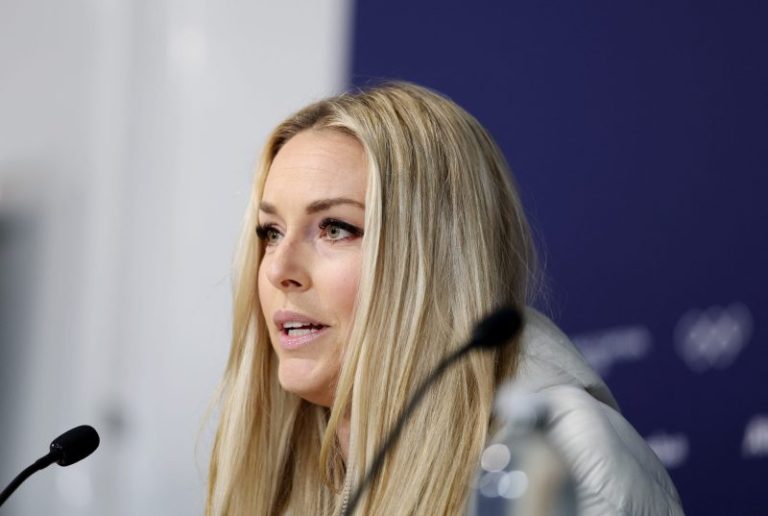
CORTINA D’AMPEZZO, Italy — Lindsey Vonn will have another surgery today on the leg she shattered during a crash at the 2026 Winter Olympics, she announced in an Instagram post Wednesday, Feb. 18.

Vonn also shared her dog Leo died Feb. 9, the day after her crash at the Tofana Alpine Skiing Center during the Winter Olympics. This is the second of Vonn’s dogs to die since last spring. Lucy, her spaniel, died right after World Cup finals.

‘This has been an incredibly hard few days,’ Vonn wrote. ‘Probably the hardest of my life.

‘… The day I crashed, so did Leo.’

Vonn shared that Leo had recently been diagnosed with lung cancer after surviving lymphoma a year-and-a-half ago. ‘He was in pain,’ she wrote, ‘and his body could no longer keep up with his strong mind. As I layed in the hospital bed the day after my crash, we said goodbye to my big boy.’

Leo was with Vonn for 13 years, comforting her through the 2014 Sochi Olympics (which she missed due to injury), her retirement in 2019 and comeback.

‘There will never be another Leo,’ she wrote. ‘He will always be my first love.

‘Heading in for more surgery today. Will be thinking of him when I close my eyes. I will love you forever my big boy.’

Opinion: Lindsey Vonn’s crash was cruel. Her bravery epitomizes Olympic spirit

What happened to Lindsey Vonn?

Vonn hooked the fourth gate with her right arm, which sent her spinning and hurtling into the hard, packed snow. She tumbled end over end several times before coming to a stop.

‘Things just happen so quick in this sport,’ U.S. teammate Bella Wright said after the race. ‘It looked like Lindsey had incredible speed out of that turn, and she hooked her arm and it’s just over just like that.’

The three-time Olympic medalist remained prone in the snow, and she could be heard wailing in pain. The gasps and groans from fans faded into shocked silence as medics worked on her. Vonn remained on the course for approximately 13 minutes before being loaded into a helicopter.

What is Lindsey Vonn’s injury?

In an Instagram post on Feb. 9, Vonn shared the devastating news that she suffered a complex tibia fracture that will require multiple surgeries. The 41-year-old updated fans on Feb. 11 after a third surgery in Italy and included some gruesome photos of her progress . Upon returning to the United States on Feb. 17, Vonn shared that her injury was ‘a lot more sever than just a broken leg’.

‘I’m still wrapping my head around it, what it means and the road ahead.’ Vonn wrote. ‘But I’m going to give you more detail in the coming days.”

A tibia fracture is a break in the shin bone that is an emergency needing immediate treatment. ‘Your tibias are some of the strongest bones in your body. It usually takes a lot of force to break one,’ according to the Cleveland Clinic. ‘You probably won’t be able to stand, walk or put weight on your leg if you have a broken shin bone.’

A complex fracture involves multiple breaks in a bone and damaged soft tissue, according Yale Medicine. Symptoms include extreme pain, numbness and, sometimes, a bone that protrudes through the skin. Treatment involves stabilization and surgery.

Lindsey Vonn crash video

NBC broadcasts the Olympics and posted video of Vonn’s crash .

USA TODAY Sports’ Samantha Cardona-Norberg breaks down Linsdey Vonn’s crash just after it happened.

Fans went silent as soon as Vonn crash, reacting with shock, grief and later support as the helicopter lifted her into the sky. USA TODAY Sports talked to some fans after the crash .

Is Lindsey Vonn OK?

Vonn was in obvious pain after the crash, but she was moving her arms, head and neck.

About 18 minutes after the crash, the helicopter slowly began flying toward Cortina. ‘Let’s let Lindsey Vonn hear us!’ the American announcer said as the chopper flew away with her, and the crowd cheered and applauded.

Vonn’s sister Karin Kildow was at the course today for the downhill and spoke to NBC reporters during their live broadcast:

‘I mean that definitely was the last thing we wanted to see and it happened quick and when that happens, you’re just immediately hoping she’s okay. And it was scary because when you start to see the stretchers being put out, it’s not a good sign,’ Kildow said. ‘But she really … She just dared greatly and she put it all out there. So it’s really hard to see, but we just really hope she’s okay.

‘She does have all of her surgeons and her PT staff here and her doctors, so I’m sure they’ll give us a report and we’ll meet her at whatever hospital she’s at.’

Lindsey Vonn torn ACL

It was second time in as many weeks Vonn left a mountaintop on a chopper. She fully ruptured her left ACL, sustaining meniscus damage and bone bruising , in a downhill crash on Jan. 30, in the final World Cup event prior to the start of the Olympics.

Vonn is also skiing with a partial replacement of her right knee. She had dominated the sport before the crash, making the podium in all five downhill races this season and winning two of them.

Despite the latest injury, Vonn was determined to race at her fifth and final Olympics. She said her knee felt stable and strong, and she had spent the last week doing intense rehab , pool workouts, weight lifting and plyometrics. She skied both training runs, posting the third-fastest time in the second run before it was canceled because of fog and snow.

Lindsey Vonn torn ACL

Vonn is 41 and was skiing in her fifth Winter Olympics (2002, 2006, 2010, 2018, 2026). She has won three Olympic medals (1 gold, 2 bronze).

This post appeared first on USA TODAY

  • Mikaela Shiffrin won her first Olympic gold medal since the death of her father in 2020.
  • Shiffrin won the women’s slalom by a 1.50-second margin, the largest in any Olympic Alpine event since 1998.
  • After crossing the finish line, Shiffrin took a moment of silence to honor her late father.

CORTINA D’AMPEZZO, Italy — Mikaela Shiffrin wanted to win Olympic gold in women’s slalom as much as she feared it.

‘Everything in life that you do after you lose someone you love is like a new experience,’ Shiffrin said. ‘It’s like being born again.’

A feeling she’s resisted every day since her father Jeff died on Feb. 2, 2020. A feeling she embraced at the bottom of la Olimpia delle Tofane Wednesday afternoon, Olympic champion once more.

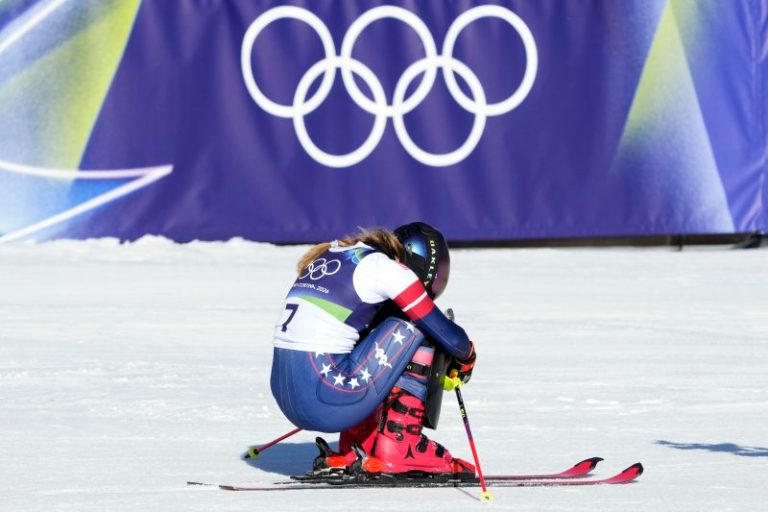
After she crossed the finish line, 1.50 seconds ahead of the next closest skier — an eternity in the sport — she dropped her chest to her knees and her head in her lap. Gliding along the smooth snow at the bottom of the track in silence. Awkward, perhaps, to the average onlooker. But not to Shiffrin. This was her first Olympic gold medal without her dad there to witness it. And she was going to take the moment to sit in silence with him.

‘Maybe he doesn’t have to specifically answer,’ she said, reflecting on the last six years, ‘Which is hard. But it’s OK.’

Shiffrin used to resent people who said their departed loved ones were with them in big moments. Carrying them through the day. Anchoring them with their spiritual presence.

‘Where? The (expletive)?’ she’d think to herself, frustrated beyond comprehension. ‘… Why do you get to feel that way?’

Shiffrin’s mother Eileen didn’t think her daughter would ever ski again after Jeff fell off the roof of their family home. She heard his heart stop beating in the hospital. She struggled to get out of bed, eat or drink. She lost weight.

She battled between a refusal to accept a life without her dad and a desire to stick around for ski racing. Something she loved to do. And something she was great at. Her grief compounded with traumatic injuries — to her own body as well as her fiancé Norwegian skier Aleks Aamodt Kilde — to create what she described as ‘a perfect-storm situation for PTSD to take hold.’

Treatment has been an ongoing process. Lots of self-reflection. Lots of manifesting. Lots of loud, positive self-talk.

Redemption defined the buzz around Shiffrin heading into the 2026 Milan Cortina Winter Games. Could the most accomplished skier of all time end an 0-for-6 Olympic medal drought here? She blew the first event, women’s team combined, by squandering speed skier Breezy Johnson’s lead in the downhill with the 15th slowest slalom in the field of 18. They finished fourth — 0.06 seconds off the podium.

‘There will always be criticism,’ Shiffrin said Wednesday, reflecting on the overwhelming narrative after her fourth-place finish that Cortina may just be Beijing all over again. ‘But I am here to earn the moment.’

Shiffrin wasn’t a medal favorite in her next race: Giant slalom. She finished third in her last GS before the Olympics, but it was her first podium in the event in two years. She hasn’t won a GS since December 2023. A devastating crash during the event 15 months ago left her with an abdominal puncture wound.

Feeling good rounding curves bodes well for slalom skiing, which means a shorter course with quicker turns. And sure enough, she obliterated the competition Wednesday. Her 1.50-second margin of victory was the largest in any Olympic Alpine skiing event since 1998. It was one one-hundredth slower than the combined margin of victory from every women’s Olympic slalom race from Nagano to Beijing.

She looked over at the big screen for her time, unable to read it for a moment, which isn’t unusual. Green means good, but sometimes it’s hard to believe. This was one of those times.

‘Wait, are we sure?’ she thought. ‘Because it would be embarrassing to celebrate and have that not be real.’

Oh, we’re sure. More than sure. She won Olympic gold. By a lot.

That’s when Shiffrin communed with her dad, whom she could finally accept was really gone.

Before stepping up to accept her medal, Shiffrin kissed her fingertips, pressed them into the snow.

‘I don’t want to be in life without my dad,’ she said after ceremony. ‘And maybe today was the first time that I could actually accept this like reality, and instead of thinking I would be going in this moment without him, to take the moment to be silent with him.’

Reach USA TODAY Network sports reporter Payton Titus at ptitus@gannett.com, and follow her on X @petitus25.

This post appeared first on USA TODAY

MILAN U.S. defenseman Quinn Hughes promises he’s having a good time. 

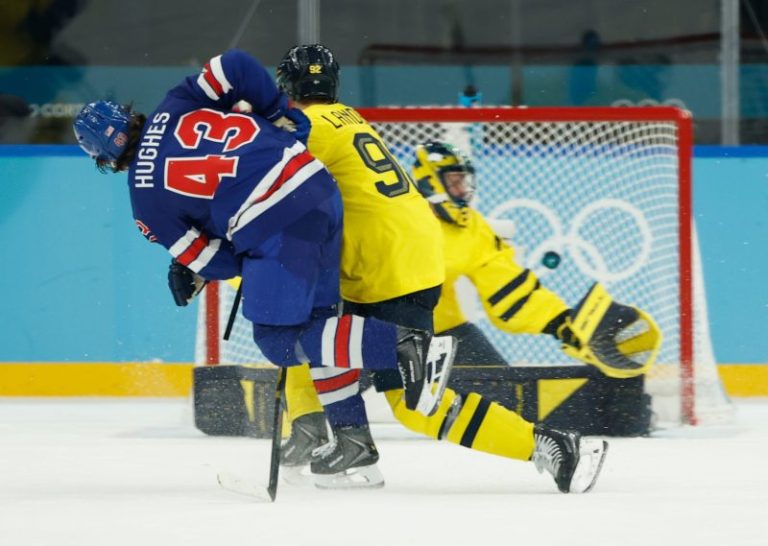
As internet sleuths debate whether the U.S. defender is happy based on his facial expressions (or lack thereof), Hughes’ excitement was on full display after he scored the game-winning overtime goal to defeat Sweden 2-1 in the quarterfinals on Wednesday at the 2026 Winter Olympics.

When asked what he felt after finding the back of the net, Hughes simply said, ‘Relief.’

Hughes’ teammates embraced him in celebration after the goal, which punched Team USA’s ticket to the semifinals, where they will face Slovakia on Friday. Hughes then shared a hug with his brother, Jack Hughes.

‘That is unreal. That is a massive goal, in a massive moment. It was just one of our best players taking over and winning the game for us,’ Jack Hughes said.

Dylan Larkin added, ‘Unbelievable moment for our country and for USA hockey. For him to do it, it gives me chills. It was an unbelievable performance.’

Matthew Tkachuk said the Hughes’ first career Olympic goal sent him airborne. “It was definitely the highest I’ve jumped since my surgery. … I’ll have to hit the foam roll,’ he joked.

Hughes was ‘disappointed’ he wasn’t able to represent his country in last year’s 4 Nations Face-Off due to injury, but he’s making up for lost time at the Olympics, the first to include NHL players since 2014.

‘I felt like I was playing great hockey at the time and wasn’t able to be there,’ he said of the 4 Nations tournament in 2025. ‘It sucks, but you’re moving on. I’m here this time. I’m just really enjoying it.

Hughes has six points in four games with one goal and five assists. He’s one of two players on Team USA to record at least one point in every game of the tournament, joining Auston Matthews, who assisted on his overtime goal along with Matt Boldy. Hughes’ five assists ties Brian Leetch for the most by a U.S. defenseman in the Olympics with NHL players participating. 

‘I have been enjoying wearing the crest and playing with the superstars that we have on our team, getting to know these guys in the (Olympic) Village,’ Hughes said. ‘I just wanted to extend it as long as I can.’

The Hughes brothers collaborated on an assist on Larkin’s goal to open scoring in the second period. The siblings’ connection has been productive — Quinn Hughes and Jack Hughes have contributed to half of Team USA’s goals, according to ESPN Insights.

‘That is family business, right there,’ Jack Hughes said.

‘There’s something unique about an opportunity to play with your brother,’ U.S. head coach Mike Sullivan added. ‘I just think that that’s another added inspiration for a guy like him to want to participate in these types of events. I know I spoke to him last year before the 4 Nations and during the 4 Nations and told him how much we missed them and what he meant to this team and there would be a time that he would join the group and this is it. And I couldn’t be happier that he’s healthy and he’s competing hard for us.’

The Americans led 1-0 in the closing minutes of the game and were 1:31 away from a regulation win when Sweden’s Mika Zibanejad scored an equalizer. The shot sent the quarterfinal game to overtime, a 10-minute sudden-death period played at 3-on-3. Space and opportunity is where Hughes thrives.

Quinn Hughes, Jack Eichel and Jake Guentzel took the ice for the USA as their teammates anxiously watched from the bench. Larkin said that was ‘as nervous as (he’s) ever been in a hockey game,’ but seeing Hughes with the puck gave him reassurance: ‘I calmed down a lot when I saw Quinn (Hughes) with it.’

Hughes said he ‘created some space for myself’ on the shot. ‘Got lucky. Kind of got the defenders in the position that I wanted and was able to get the shot off. … Took it to my forehand where I wanted it.’

But his teammates wouldn’t describe it as luck.

“He’s got to be one of the hardest guys in the world to cover 3-on-3. the way he’s able to move laterally and get a shot off quick,” Matthew Tkachuk said. “He does it 5-on-5. He does it on the power play. We had a lot of looks like right in that middle area. I don’t know if he was the third or fourth one. Went glove side, post-and-in and live to fight another day. It’s just most incredible feeling.”

Hughes’ performance was all the more impressive considering he played many minutes in Wednesday’s overtime win. Coach Sullivan said overtime was their ‘Game 7’ and they were emptying the tank to keep their gold-medal dreams alive.

‘There’s nothing to play for unless we win,’ Sullivan added. ‘So we were going to make decisions behind the bench based on that. Just trying to put guys on the ice in certain situations that we think ourselves give our team the best chance to win and (Hughes) in a lot of those situations. ‘

Hughes and Team USA will face Slovakia in the semifinals on Friday. The Hughes brothers may be back at the Milano Santagiulia Ice Hockey Arena on Thursday for the U.S. women’s national team’s gold medal game against Canada. Hughes mother, Ellen Hughes, serves as the performance consultant for the women’s national team.

Reach USA TODAY National Women’s Sports Reporter Cydney Henderson at chenderson@gannett.com and follow her on X at @cydhenderson.

The USA TODAY app gets you to the heart of the news — fast. Download for award-winning coverage, crosswords, audio storytelling, the eNewspaper and more.

This post appeared first on USA TODAY

Christopher Aaron, founder of iGoldAdvisor and Elite Private Placements, explains where gold and silver are in the current cycle and what his strategy looks like now.

‘This cycle is going to end in a mania,’ he said. ‘You want to position not when the mania is unfolding, but when it gets quiet, and I think we’re in one of those windows now to be positioning.’

Securities Disclosure: I, Charlotte McLeod, hold no direct investment interest in any company mentioned in this article.

This post appeared first on investingnews.com

Precious metals prices continued to face downward pressure this week as investors took strong US economic data and a changing geopolitical landscape into consideration.

After climbing to fresh all-time highs at the start of 2026, a myriad of factors in February have seemingly taken the sails out gold, silver and platinum prices. However, the underlying fundamentals for the precious metals remain strong, resulting in a resiliency that lends optimism to higher price points to come in 2026.

Let’s take a look at what got spot prices moving over the past week.

Gold price

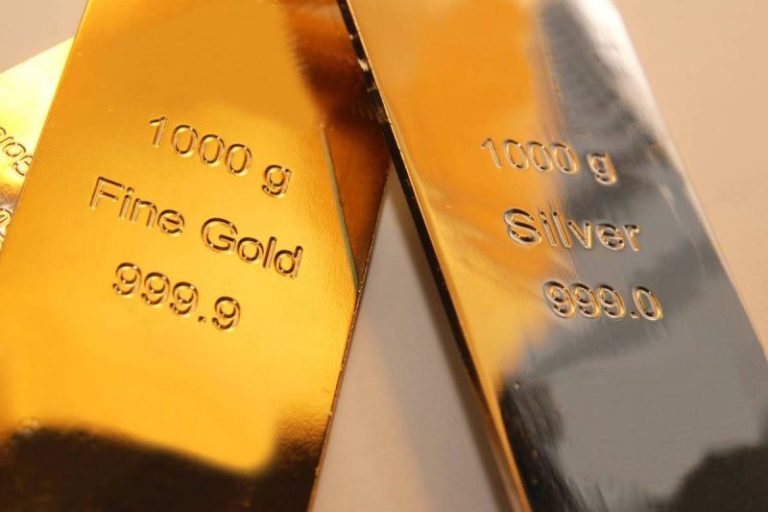
Gold hit a record high of close to US$5,600 per ounce at the end of January before sliding into one of the largest price drops in decades, dipping as low as US$4,400 as February kicked off.

Over the past week, the metal has oscillated between slumps and cautious recovery. The spot price lost the battle to remain above the key US$5,000 mark in morning trading on February 12, falling to an intraday low of US$4,907.41. February 13 saw gold rebound slightly and trade in a tight range between US$5,000 and US$5,040.

Gold couldn’t hold that level on Monday (February 16), and the next day it began sliding below the US$4,900 support level. Wednesday (February 18) brought some relief, with gold once again fighting to stay above US$5,000.

Gold price chart, February 12, 2026 to February 18, 2026.

The primary drivers for gold this past week are:

      • Seasonal liquidity is also at play this week as the Lunar New Year holiday, which runs from February 16 to 23, typically results in lower trading volumes.

      In other gold news, the 2026 TSX Venture 50 list was released on Wednesday, with several gold companies named as top performers. The top five gold stocks on the list are: 1911 Gold (TSXV:AUMB,OTCQB:AUMBF), TDG Gold (TSXV:TDG,OTCQX:TDGGF), Omai Gold Mines (TSXV:OMG,OTCQB:OMGGF), Prospector Metals (TSXV:PPP,OTCQB:PMCOF) and Goldgroup Mining (TSXV:GGA,OTCQX:GGAZF).

      Silver price

      Silver has broadly tracked gold’s price movements over the past week.

      However, the white metal has exhibited significantly higher volatility, and the silver spot price is far outside of striking range of its all-time high of more than US$121 per ounce, which it reached on January 29.

      Silver fell by more than 9 percent on February 12 as it followed gold on the downtrend, falling from around US$83 to US$75. On Friday the 13th, silver managed not to scare investors as it traded mostly sideways at the US$77 level.

      For most of Monday and Tuesday (February 17), silver continued to limp along this trend line, but has managed to gain ground, rising from the US$75 level to an intraday high of US$78.24 as of 11:00 a.m. PST on Wednesday.

      Silver price chart, February 12, 2026 to February 18, 2026.

      In addition to the macro factors influencing gold, volatility in the silver market has also come from the ups and downs in the artificial intelligence (AI) sector. Silver, the most electrically and thermally conductive metal on the planet, is considered a key material for AI tech, particularly in data centers and high-performance computing.

      Over the past week, the Global X Artificial Intelligence & Technology ETF (NASDAQ:AIQ) has slid from approximately US$50.55 to US$49.94 as of midday on Wednesday, reflecting broader weakness in the sector.

      In other silver news, in its latest annual outlook, published on February 10, the Silver Institute reported that it expects macroeconomic and geopolitical conditions to remain broadly supportive for silver in 2026.

      Platinum price

      On February 12, platinum was trading as high as US$2,136 per ounce in early morning trading, but soon followed its precious metals sisters on a downward slide to an intraday low of US$1,982.50. The metal was back above US$2,070 the next day, and for the first part of this week it’s managed to trade above the US$2,000 level.

      Wednesday was a recovery day for platinum as it reached an intraday high of US$2,122.90 as of 11:00 a.m. PST.

      Platinum price chart, February 12, 2026 to February 18, 2026.

      Platinum is one of the top-performing metals over the past year, reaching 12 year highs in recent weeks. Demand is being driven by the metal’s essential role in the emerging hydrogen economy. It’s also still seeing robust demand from the auto sector despite the emergence of electric vehicles and uneasy consumer confidence in the economy.

      On the supply side, global platinum reserves remain critically low, especially as the world’s biggest producer, South Africa, continues to be plagued by power shortages and operational disruptions.

      This week, Johnson Matthey (LSE:JMAT,OTCPL:JMPLF), Sibanye-Stillwater (NYSE:SBSW) and Valterra Platinum (LSE:VALT,JSE:VAL,OTCPL:AGPPF) launched a multimillion-dollar partnership to develop new platinum-group metals clean energy and industrial technologies outside of the auto sector.

      Palladium price

      Palladium has been the black sheep of the precious metals family for the past few years, remaining well below its March 2022 all-time record of US$3,440.76 per ounce.

      On February 12 it followed the precious metals pack down from US$1,741 to as low as US$1,664.

      After a rebounding above to US$1,783 level on Monday, the following trading today brought much volatility to the metal, which traded in the US$1,670 to US$1,720 range. Platinum managed to to make gains to the upside on Wednesday with an intraday high of US$1,774 as of 11:00 a.m. PST.

      Palladium price chart, February 12, 2026 to February 18, 2026.

      The palladium price is being held down by a slump in demand for electric vehicles and a looming oversupply situation. Analysts at Heraeus Precious Metals predict that the palladium market may move into a surplus in 2026 as secondary supply from recycling increases by 10 percent.

      On that note, an announcement shaping the outlook for palladium on the supply side this past week came from the US Department of Commerce, which issued a preliminary statement of support for anti-dumping duties of approximately 133 percent on unwrought Russian palladium imports.

      This follows a petition from Sibanye-Stillwater over allegations that Russian metal is being sold in the US at less than fair value. A final decision is expected in the case by June of this year.

      Securities Disclosure: I, Melissa Pistilli, hold no direct investment interest in any company mentioned in this article.

      This post appeared first on investingnews.com