Author

admin

Browsing

After the men’s Olympic hockey tournament kicked off at the 2026 Winter Olympics with a doubleheader on Wednesday with National Hockey League players participating for the first time in 12 years, eight nations will take the ice on Thursday.

Canada won the last two Olympics to feature NHL players, in 2010 and 2014, and looks to add their 10th gold overall, but Finland is the defending Olympic champion after its triumph at the 2022 Beijing Olympics.

The United States last won a gold medal in the event in 1980, part of the ‘Miracle on Ice’ run, and last medaled in 2010, taking home the silver after an overtime loss to Canada at the Vancouver games.

Here is the full men’s hockey Olympic schedule for Thursday, Feb. 12:

  • 6:10 a.m. – Switzerland vs. France | Milano Santagiulia Ice Hockey Arena | Peacock, NBCOlympics.com
  • 10:40 a.m. – Canada vs. Czechia | Milano Santagiulia Ice Hockey Arena | USA Network, Peacock, NBCOlympics.com
  • 3:10 p.m. – USA vs. Latvia | Milano Santagiulia Ice Hockey Arena | USA Network, Peacock, NBCOlympics.com
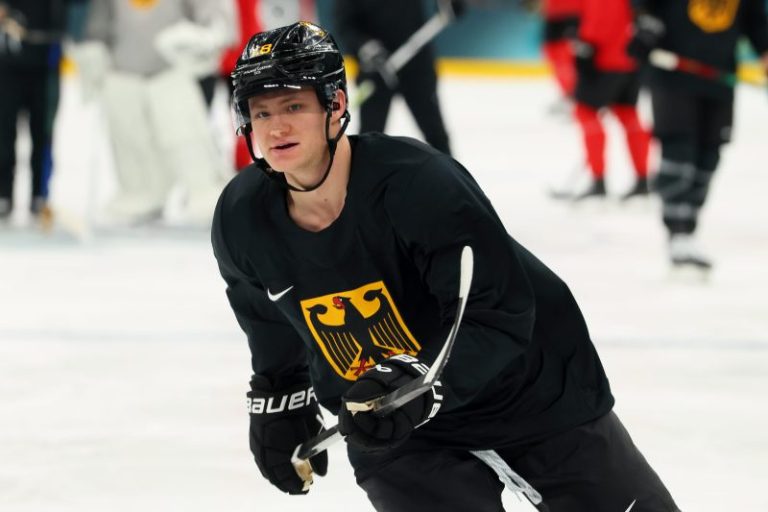
  • 3:10 p.m. –  Germany vs. Denmark | Milano Rho Ice Hockey Arena | Peacock, NBCOlympics.com
This post appeared first on USA TODAY

Kyle Busch will start on the pole for the 68th annual Daytona 500 at Daytona International Speedway on Sunday, Feb. 15.

It’s Busch’s first time on the pole for the big race during a career that’s spanned over two decades.

‘It sounds really good right now,’ Busch said on the FS1 broadcast. ‘This feels really good. It would be really nice to be doing an interview like this on Sunday night after finishing No. 1.’

Busch will be one of just seven NASCAR Cup champs in the field this weekend. Chase Briscoe will start from the second position.

The rest of the Daytona 500 lineup will be set Thursday following two Daytona Duel races.

The Daytona Duel races use Wednesday’s qualifying results to determine the starting order. Whichever driver qualifies on the pole will start first in Duel 1 and the second-fastest driver will lead the way in Duel 2.

This year’s Daytona 500 marks the Cup Series debut of Connor Zilisch with Trackhouse Racing. Nine drivers are attempting to race without a charter and will have to qualify via the Duel races. There are 41 spots in the race and 45 drivers vying to compete.

Here’s the results from Wednesday night’s qualifying:

Kyle Busch on pole for Daytona 500

Kyle Busch will be on the pole for the Daytona 500 this weekend. Busch claimed the top spot with a time of 49.006 in the final round of qualifying on Wednesday. Chase Briscoe will start in the second position.

Dayton 500 final qualifying round results

  • Kyle Busch (49.006)
  • Chase Briscoe (49.023)
  • Ryan Preece (49.061)
  • Denny Hamlin (49.100)
  • Corey Heim (49.148)
  • Alex Bowman (49.152)
  • Kyle Larson (49.158)
  • Chris Buescher (49.184)
  • Chase Elliott (49.220)
  • Joey Logano (49.275)

Justin Allgaier qualifies for Daytona 500 as open driver

Justin Allgaier locked in a spot for the 2026 Daytona 500 after finishing the first round of qualifying with a time of 49.201. He also bumped Corey LaJoie out of the top 10.

Allgaier was also bumped out of the top 10 moments later after Joey Logano (49.138) jumped into the top 10. Regardless of his placement at the end of the round, Allgaier secured a spot in the Daytona 500 as one of the two fastest non-chartered drivers along with Corey Heim.

Corey Heim qualifies for Daytona 500

Corey Haim of 23XI Racing qualified for the Dayton 500 on time on Wednesday evening. Heim was ranked third with a time of 49.14 seconds (183.16 MPH) in the first round when he officially qualified.

Kyle Busch (48.932) and Ryan Preece (49.081) remain in first and second, respectively.

Noah Gragson’s time disallowed

Noah Gragson had his initial first-round time disallowed after he broke a new window rule.

NASCAR set a new rule that penalizes drivers who put their hand in the side window. Gragson was seen sticking his hand out of the netting of his car. The rule was set in place by NASCAR to prevent drivers from taking their hands off the wheel, according to the FS1 broadcast.

‘I forgot about that rule, … ‘ Gragson said on the FS1 broadcast. ‘I feel like an idiot.’

Gragson will return on Thursday to compete in the Duels. The duels will be two 150-mile qualifying races that help determine the third to 40th positions for the Daytona 500.

Kyle Busch, Ryan Preece lead pack early

Kyle Busch has jumped ahead of the field early, with the fastest qualifying time in round one so far, at 48.932 seconds through the first 17 drivers. Ryan Preece is currently second with a time of 49.081.

How to watch Daytona 500 pole qualifying

  • Date: Wednesday, Feb. 11
  • Time: 8:15 p.m. ET
  • Location: Daytona International Speedway in Daytona Beach, Florida
  • TV: FS1
  • Stream:Fubo, foxsports.com, Fox Sports app

How to watch and stream 2026 Daytona 500

  • Date: Sunday, Feb. 15
  • Time: 2:30 p.m. ET
  • Location: Daytona International Speedway in Daytona Beach, Florida
  • TV: Fox
  • Stream: Fubo, foxsports.com, Fox Sports app

Watch the 2026 Daytona 500 with a Fubo subscription

This post appeared first on USA TODAY

Bobsled, one of the oldest sports at the Winter Olympics, returns to the 2026 Milano Cortina Games and will showcase athletes with nerves of steel as they steer a high-tech sled down a fast, icy track with multiple turns.

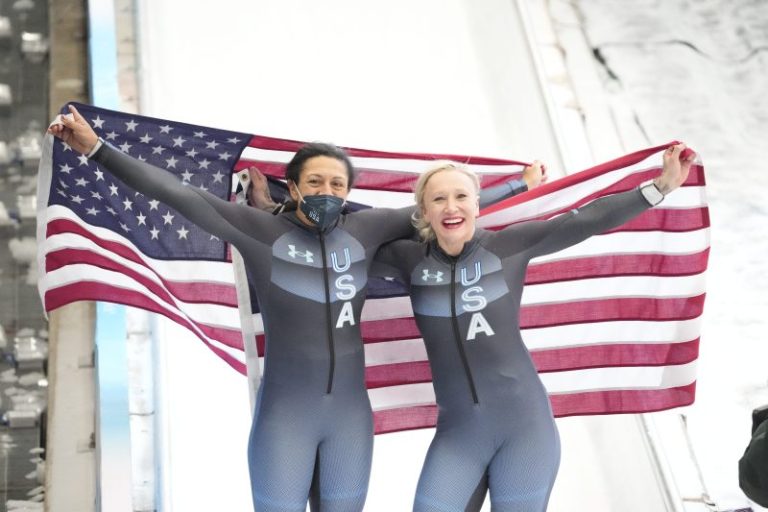
Veteran U.S. bobsledders Kaillie Humphries and Elana Meyers Taylor are set to make their fifth appearance at the Winter Games and are heavy favorites to podium. Humphries and Meyers Taylor finished first and second respectively in the inaugural women’s monobob event at the 2022 Beijing Winter Olympics.

Bobsled includes a total of four events, which will be contested at the Cortina Sliding Centre in Cortina d’Ampezzo.

When did bobsled become a Winter Olympic sport?

Bobsled has been part of the Winter Olympics since the inaugural 1924 Chamonix Winter Games, although it wasn’t contested in Squaw Valley in 1960 to cut down expenses by not building a bobsled track. The two-man event was added to the program at the 1932 Lake Placid Winter Games and the two-woman race made its Olympic debut in Salt Lake in 2002. The Olympic women’s monobob was first held at the 2022 Games in Beijing.

How does Olympic bobsled work?

Each sled has one driver, while others push the sled from the starting gate before jumping into the back of the sled for the rest of the ride. Bobsled events each last two days, with two runs each day. The fastest combined time determines the winner. Men and women each compete in their own events:

Men

  • 4-man bobsled: One driver and three pushers in each sled
  • 2-man bobsled: One driver and one pusher in each sled

Women

  • 2-women bobsled: One driver and one pusher in each sled
  • Monobob: One driver, no pushers

Top Team USA athletes

  • Kaillie Humphries: The 40-year-old pilot won gold for the U.S. in monobob at the 2022 Beijing Games and also won gold in two-man in 2014 and 2010 while representing Canada. She joined short-track speedskater Viktor Ahn as the only Winter Olympians to win gold for different countries. Milano Cortina marks her fifth Games and first as a mother after giving birth to son Aulden in June 2024.
  • Elana Meyers Taylor: The 41-year-old pilot/brakeman enters Milano Cortina, her fifth Winter Games, with five Olympic medals, including three silvers and two bronzes. She earned a silver medal in the inaugural women’s monobob at the 2022 Beijing Winter Olympics and a bronze in the two-woman bobsled race with Sylvia Hoffman to become the most decorated Black athlete in Winter Olympics history.
  • Kaysha Love: The up-and-coming bobsledder won gold in women’s monobob at the 2025 IBSF World Championships. Love, 28, made her Olympic debut at the 2022 Beijing Winter Games, less than two years after beginning bobsled following a track and field career at the University of Nevada, Las Vegas.

International landscape

German bobsledder Francesco Friedrich is in pursuit of a record fifth gold medal. His four gold medals are tied for the most in the sport after winning the two-man and four-man event in Pyeongchang in 2018 and Beijing in 2022. Milano Cortina will mark his fourth Winter Games. Germany’s Laura Nolte is also a top contender after winning gold in the two-woman bobsleigh in 2022 in Beijing.

The USA TODAY app gets you to the heart of the news — fastDownload for award-winning coverage, crosswords, audio storytelling, the eNewspaper and more.

This post appeared first on USA TODAY

Investor Insight

Tartisan Nickel offers investors exposure to a high-grade, advanced-stage nickel sulfide project with existing infrastructure and clear near-term catalysts, alongside a past-producing silver asset providing significant upside and growth potential.

Overview

Tartisan Nickel (CSE:TN,OTCQX:TTSRF,FSE:8TA) is a Canadian exploration and development company focused on advancing high-quality critical mineral assets in Ontario. The company’s primary asset, the Kenbridge nickel project in Northwestern Ontario, is an advanced-stage nickel sulfide deposit hosting nickel, copper and cobalt. Management’s strategy for Kenbridge is straightforward and execution-focused: increase the size and confidence of the Kenbridge resource through drilling, extend mine life, and continue de-risking the project.

The Kenbridge project has undergone extensive historical work, including more than 100,000 meters of drilling.

At the same time, Tartisan controls the Sill Lake silver project, a past-producing silver-lead property near Sault Ste. Marie, Ontario. With strong commodity fundamentals across nickel, copper and silver, management views Tartisan as a company with “more than one leg under the table,” offering investors exposure to multiple value drivers within a single platform.

Company Highlights

  • Clear focus on drilling-driven value creation, with active programs designed to upgrade inferred resources, expand the deposit at depth, and extend mine life into the mid-teens
  • Low-capex development profile relative to many peer nickel projects, supported by a historic shaft, road access, and established infrastructure
  • Sill Lake Silver Project provides additional, underappreciated value, offering exposure to silver through a brownfields, past-producing asset with a defined historic resource
  • Experienced leadership team with deep capital markets and mine development experience, focused on disciplined capital allocation and unlocking value from opportunity-acquired assets

Key Projects

Kenbridge Nickel-Copper-Cobalt Project

The Kenbridge project is Tartisan’s flagship asset and the company’s primary focus. It is a high-grade, Class 1 nickel sulfide deposit located in a mining-friendly jurisdiction with established infrastructure and access. Kenbridge benefits from extensive historical work, including more than 100,000 metres of drilling and a three-compartment shaft extending to a depth of approximately 622 metres, placing the project closer to development than many earlier-stage peers.

A preliminary economic assessment (PEA) completed in 2022 outlined a potentially economic underground mining operation, supported by relatively modest initial capital requirements compared to large, low-grade nickel projects.

Current drilling is aimed at upgrading inferred resources to measured and indicated categories, and expanding the deposit both along strike and at depth, where historical data indicate improving grades.

The company’s near-term objective is to meaningfully extend the mine life beyond the nine years outlined in the PEA, with the longer-term goal of positioning Kenbridge as a strategic asset in a tightening nickel market. With existing road access, proximity to power, and ongoing engagement with Treaty #3 First Nations, Kenbridge is viewed as an advanced project with clear pathways to further value creation.

Tartisan Nickel has been engaging with Treaty # 3 First Nations since May 2007.

Sill Lake Silver-Lead Project

The Sill Lake project is a 100-percent-owned, past-producing silver-lead asset located approximately 30 kilometres north of Sault Ste. Marie, Ontario. The property hosts an NI 43-101-compliant historic mineral resource and benefits from existing underground development, including ramp access and historic workings.

Tartisan considers Sill Lake a brownfields opportunity with relatively low capital intensity, particularly in the context of stronger silver prices. Planned work includes validation of historic data, evaluation of multiple mineralized trends, and the potential for future drilling and bulk sampling. Importantly, management believes Sill Lake’s value is largely unrecognized by the market, providing investors with additional upside that is not currently built into Tartisan’s valuation.

Management Team

Mark Appleby – President, CEO and Director

Mark Appleby has more than 38 years of experience in investment banking, corporate finance and capital markets. He has led numerous public resource companies through exploration, development and financing cycles, and brings a strong focus on disciplined capital allocation and asset-driven value creation.

Yves Clément – Director

Yves Clément is a professional geologist with more than 35 years of experience in mineral exploration and development across Canada, South America and West Africa, contributing deep technical oversight at the board level.

Carl J. McGill – Director

Carl McGill has over 30 years of experience in capital markets and financial management, with a background spanning banking, corporate finance and public company leadership.

Dean MacEachern – Geological Advisor

Dean MacEachern has more than 35 years of global exploration experience and has worked on the Kenbridge project under previous ownership, providing valuable continuity and geological insight as a Qualified Person under NI 43-101.

Greg Edwards – Project Manager

Greg Edwards brings over 25 years of Canadian exploration and project development experience and plays a key role in advancing Kenbridge while supporting community and First Nations engagement.

Get access to more exclusive Nickel Investing Stock profiles here

This post appeared first on investingnews.com

TomaGold (TSXV:LOT;OTC:TOGOF) is a Canadian exploration company targeting precious and base metals, with a strong focus on gold and copper projects in Québec and Ontario. Its flagship assets are in Québec’s Chibougamau Mining Camp, where it owns the Obalski and Chicot projects and holds options to earn up to 100 percent interests in several additional properties, including Berrigan Mine, David, Radar and Dufault. The company also holds a 24.5 percent joint venture stake in the Baird gold project near Ontario’s Red Lake camp, along with early-stage lithium and rare earth element (REE) exposure in Québec’s James Bay region.

In January 2026, TomaGold reported deep drilling results from the Berrigan Mine, highlighted by a broad interval of semi-massive to massive sulphide mineralization in hole TOM-25-015. The company also noted that the “Berrigan Deep” zone remains open at depth, underscoring further exploration potential.

In February 2026, TomaGold released results from a borehole electromagnetic (BHEM) survey, stating that modeled conductive plates correlate with mineralization intersected in multiple holes. The survey also identified a priority plate, BER-14C, as a target for follow-up drilling and additional geophysical work.

This TomaGold profile is part of a paid investor education campaign.*

Click here to connect with TomaGold (TSXV:LOT) to receive an Investor Presentation

This post appeared first on investingnews.com

Investor Insight

TomaGold is advancing a portfolio centered on Québec’s Chibougamau Mining Camp, combining owned assets with near-term, catalyst-driven exploration at its optioned Berrigan Mine project. Recent deep drilling and downhole geophysics at Berrigan have identified sulphide mineralization and EM conductors that the company is using to prioritize follow-up targets, while it continues to advance the owned Obalski project and a broader pipeline of Chibougamau-area options.

Overview

TomaGold (TSXV:LOT,OTC:TOGOF) is a Canadian exploration company focused on precious and base metal opportunities, with a primary emphasis on gold and copper in Québec and Ontario. The company’s core assets are located in Québec’s Chibougamau Mining Camp, where it owns the Obalski and Chicot projects and holds options to earn up to 100 percent interests in multiple additional properties, including the Berrigan Mine, David, Radar and Dufault projects. TomaGold also holds a 24.5 percent joint venture interest in the Baird gold project near Ontario’s Red Lake camp, and maintains early-stage lithium and rare earth element (REE) exposure in Québec’s James Bay region.

In January 2026, TomaGold reported deep drilling results from Berrigan Mine, including a broad interval of semi-massive to massive sulphide mineralization in hole TOM-25-015 and described the “Berrigan Deep” zone as open at depth. In February 2026, the company reported results from a borehole electromagnetic (BHEM) survey, stating that modeled conductive plates correlate with mineralization intersected in multiple holes and identifying a priority plate (BER-14C) for follow-up drilling and additional geophysical work.

Company Highlights

  • Portfolio anchored in Québec’s Chibougamau Mining Camp, combining owned assets (including Obalski and Chicot) with multiple optioned projects that provide pipeline depth.
  • Near-term exploration catalysts focused on Berrigan, supported by recent deep drilling and BHEM interpretation used to prioritize conductors for follow-up.
  • Berrigan Mine: January 2026 drilling highlighted a broad sulphide interval in hole TOM-25-015 and introduced the “Berrigan Deep” zone; February 2026 BHEM interpretation identified a priority conductor (BER-14C) described as open at depth and to the northeast.
  • Obalski is a 100 percent owned project with extensive historical work and multiple zones, providing a second core asset within the company’s Chibougamau footprint.
  • Management describes a disciplined, data-driven reinterpretation of existing datasets, targeted drilling and geophysics to generate technical newsflow and refine targets over time, with the objective of advancing projects toward updated NI 43-101-compliant technical disclosure.

Key Projects

Berrigan Mine Project (Option to Acquire 100 percent)

The Berrigan Mine project comprises 16 claims totaling 483 hectares and is located approximately 4 km NNW of Chibougamau in the Chibougamau Mining Camp. TomaGold holds an option to acquire a 100 percent interest in the property from Chibougamau Independent Mines. The project has a significant historical database and has been the focus of the company’s recent exploration drilling and geophysics. Any historical resource estimates referenced for the project are historical in nature, are not current NI 43-101 compliant, and should not be relied upon.

In January 2026, TomaGold reported drilling results including hole TOM-25-015, which intersected 98.5 metres of semi-massive to massive sulphide mineralization and was presented as a new “Berrigan Deep” zone that remains open at depth. The company also reported additional intervals from drilling designed to test extensions of mineralization at depth. In February 2026, TomaGold reported interpretation from a borehole electromagnetic (BHEM) survey, stating that conductive plates modeled from downhole data correlate with mineralization intersected in holes TOM-25-009 through TOM-25-015. The company highlighted a priority target plate (BER-14C), described as approximately 160 x 300 metres and open at depth and to the northeast, and outlined follow-up steps including additional drilling and EM work.

TomaGold has stated it reverted to reporting elemental assays rather than metal-equivalent grades due to uncertainty around metallurgical recovery assumptions at the current stage of evaluation.

Obalski Project (100 percent owned)

The Obalski project is 100 percent owned and consists of 75 claims totaling 2,724 hectares located roughly 2 km south of Chibougamau. The project hosts multiple mineralized zones and has seen extensive historical exploration and drilling. TomaGold highlights Obalski as a core owned asset within its Chibougamau platform, supported by a large database and multiple target zones that remain open along strike and at depth.

David Project (Option to Earn 100 percent)

The David project consists of 49 claims totaling approximately 20.09 sq km and is located within the Chibougamau camp. The project hosts multiple mineral occurrences and is positioned by the company as part of its broader Chibougamau consolidation strategy.

Radar Project (Option to Earn 100 percent)

The Radar project consists of 14 claims totaling approximately 7.75 sq km and is located north of Chibougamau. The company highlights multiple showings and historical work that support ongoing target development within the district.

Dufault Project (Option to Earn 100 percent)

The Dufault project consists of 14 claims totaling approximately 5.22 sq km and is located north of Chibougamau. The company highlights the project as prospective within the camp and references historical drilling that supports continued evaluation.

Other Assets and Optional Exposure

TomaGold’s portfolio also includes the Chicot project (owned) and additional Chibougamau-area properties (optioned) that provide pipeline optionality. Outside of Chibougamau, the company holds a 24.5 percent joint venture interest in the Baird gold project near Ontario’s Red Lake camp, and early-stage lithium and REE exposure in Québec’s James Bay region through the Star Lake (REE) and Brisk Extension (lithium/REE) projects.

Management Team

David Grondin — President and CEO

David Grondin is a seasoned mining financial entrepreneur and developer with over 25 years of experience in acquiring, financing, and advancing mining assets across the Americas and Europe.

Martin Nicoletti — CFO

Martin Nicoletti is the founder of SKTM Financial and a certified accountant with more than 32 years of corporate experience.

Jean Lafleur — VP Exploration

Jean Lent is a highly skilled professional geologist with 45 years of global experience in mineral exploration, resource evaluation, and project assessment and development.

Michel E. Labrousse — Senior Advisor

For the past twenty years, Michel Labrousse has developed various businesses in investment banking and financial markets in Europe and Asia.

Board of Directors

The board includes David Brousse, Jean-Sébastien Jacquetin and Caitlin Jeffs.

Get access to more exclusive Gold Investing Stock profiles here

This post appeared first on investingnews.com

Here’s a quick recap of the crypto landscape for Wednesday (February 11) as of 9:00 p.m. UTC.

Get the latest insights on Bitcoin, Ether and altcoins, along with a round-up of key cryptocurrency market news.

Bitcoin (BTC) was priced at US$67,551.42, down 18 percent over the last 24 hours.

Bitcoin price performance, February 11, 2026.

Chart via TradingView.

“Bitcoin appears to be entering a stabilization phase before its next directional move. In the near term, prices are likely to consolidate around the US$70,000 level as the market digests recent volatility and continued profit-taking, but the broader setup points to a gradual recovery toward the US$85,000 to US$95,000 range by mid-2026.

“The key driver is institutional behavior: ETF outflows are slowing rather than accelerating, suggesting that forced selling pressure is easing and longer-term allocators are becoming more selective instead of exiting outright. At the same time, regulatory progress — particularly around stablecoin frameworks and clearer market structure — continues to strengthen Bitcoin’s position as a maturing asset within global portfolios, especially as investors look for inflation hedges amid ongoing macro uncertainty.

“While short-term price action may remain uneven, innovation across DeFi and tokenized assets is reinforcing the underlying crypto ecosystem, creating conditions that have historically supported post-correction recoveries and attracted long-term capital back into Bitcoin.”

Ether (ETH) was priced at US$1,955.33, down by 2.8 percent over the last 24 hours.

Altcoin price update

  • XRP (XRP) was priced at US$1.38, down by 1.2 percent over 24 hours.
  • Solana (SOL) was trading at US$79.64, down by 3.5 percent over 24 hours.

Today’s crypto news to know

Robinhood shares Q4 earnings

Robinhood Markets (NASDAQ:HOOD) released its latest quarterly report on Wednesday, revealing net income totaling US$605 million for Q4 2025 and US$1.9 billion for the year.

The company reported a record US$1.28 billion in quarterly revenue, a 27 percent increase year-on-year, but shy of estimates of about US$1.36 billion. Its full‑year 2025 revenue reached US$4.5 billion, up 52 percent.

However, crypto revenue fell 38 percent to US$221 million in Q4.

Despite a fundamentally solid quarter, with record earnings per share of US$0.66 in Q4 and US$2.05 for 2025, shares dropped between 7 and 12 percent after the print and closed 9 percent lower on the day.

In other news, Robinhood launched a public testnet for Robinhood Chain, an Ethereum Layer 2 built on Arbitrum technology and designed to support tokenized real‑world and digital assets.

Developers can begin building and testing apps on it ahead of a future mainnet launch. The testnet offers network access, developer docs and compatibility with standard Ethereum tools, plus early support from infrastructure providers such as Alchemy, Chainlink and LayerZero. Robinhood also said it is committing US$1 million to the 2026 Arbitrum Open House program to encourage developer activity on the testnet and eventual mainnet.

Banks dig in on stablecoin yield as CLARITY Act stalls

US banks are hardening their position on stablecoin rules, escalating a policy clash that has left the long-awaited CLARITY Act stuck in Congress. During a White House-hosted meeting led by the administration’s crypto council, banking groups circulated a proposal calling for an outright ban on paying interest or other incentives to stablecoin holders.

The draft language states: “No person may provide any form of financial or non-financial consideration to a stablecoin holder” in connection with holding or using a payment stablecoin.

Banking groups warned that allowing yield on stablecoins could “drive deposit flight that would undercut Main Street lending,” while crypto advocates argued innovation should not be stifled. The dispute centers on whether stablecoin rewards resemble bank deposits, potentially siphoning funds from traditional lenders.

‘As we noted during the meeting, that framework can and must embrace financial innovation without undermining safety and soundness, and without putting the bank deposits that fuel local lending and drive economic activity at risk. We look forward to ongoing discussions to move market structure legislation forward,’ the American Bankers Association said in a statement following the meeting.

The standoff has become the main obstacle preventing the CLARITY Act from advancing, despite earlier passage of the GENIUS Act, which created a federal framework for dollar-backed stablecoins.

Goldman Sachs maintains US$1 billion Bitcoin ETF exposure

Goldman Sachs (NYSE:GS) disclosed in its latest US Securities and Exchange Commission filing that it holds just over US$1 billion in exposure to Bitcoin through exchange-traded funds (ETFs).

The exposure is split across products, including BlackRock’s iShares Bitcoin Trust ETF (NASDAQ:IBIT) and Fidelity’s Wise Origin Bitcoin ETF (NEO:FBTC). Bitcoin has dropped roughly 47 percent from its high and is trading near US$67,000, part of a broader US$2 trillion drawdown across the crypto market. ETF flows have been volatile, with more than US$6 billion exiting spot Bitcoin funds since November, according to industry data.

Despite the slump, Goldman has also expanded into Ether, XRP and Solana ETFs.

Monad launches Nitro accelerator

Blockchain company Monad announced Tuesday (February 10) launch of a new three month accelerator program, Nitro, supported by notable firms including Paradigm, Electric Capital, Dragonfly and Castle Island Ventures.

According to commentary provided in a media briefing accompanying the announcement, “The program is designed to address a common issue in crypto venture funding: teams often raise capital quickly but struggle to ship production-ready products or reach product-market fit. Nitro is structured around execution, shipping cadence, and validation, rather than short-term growth metrics or token-driven incentives.”

The press release notes that the Monad ecosystem has already seen US$108 million raised by projects.

The three month program includes an in-person first month in New York City, and will be followed by two months of focused execution, concluding with a Demo Day for crypto and tech investors.

Interactive Brokers adds Coinbase nano contracts

Interactive Brokers said it is adding “nano contracts’ from Coinbase Global’s (NASDAQ:COIN) derivatives arm to its trading platform. These contracts control fractions of a Bitcoin or Ether coin and require less upfront investment.

Clients can trade these futures, some with set expiry dates and others that track the current price over time, 24/7 within Interactive Brokers’ standard brokerage environment, alongside stocks and options.

The move is meant to make it easier and cheaper for people to get exposure to crypto prices and manage risk, while still using a regulated broker and exchange.

Securities Disclosure: I, Meagen Seatter, hold no direct investment interest in any company mentioned in this article.

Securities Disclosure: I, Giann Liguid, hold no direct investment interest in any company mentioned in this article.

This post appeared first on investingnews.com

Tartisan Nickel (CSE:TN,OTCQX:TTSRF,FSE: 8TA) is a Canadian exploration and development company focused on advancing high-quality critical mineral assets in Ontario. Its flagship asset, the Kenbridge nickel project in Northwestern Ontario, is an advanced-stage nickel sulphide deposit containing nickel, copper and cobalt.

Management’s strategy for Kenbridge is clear and execution-driven: expand and upgrade the resource through drilling, extend potential mine life, and continue systematically de-risking the project.

Tartisan Nickel has been engaging with Treaty # 3 First Nations since May 2007.

At the same time, Tartisan holds the Sill Lake silver project, a past-producing silver-lead property near Sault Ste. Marie, Ontario. Supported by strong fundamentals for nickel, copper and silver, management positions Tartisan as a multi-asset story—providing investors with exposure to several value drivers within a single platform.

Company Highlights

  • Clear focus on drilling-driven value creation, with active programs designed to upgrade inferred resources, expand the deposit at depth, and extend mine life into the mid-teens
  • Low-capex development profile relative to many peer nickel projects, supported by a historic shaft, road access, and established infrastructure
  • Sill Lake Silver Project provides additional, underappreciated value, offering exposure to silver through a brownfields, past-producing asset with a defined historic resource
  • Experienced leadership team with deep capital markets and mine development experience, focused on disciplined capital allocation and unlocking value from opportunity-acquired assets

This Tartisan Nickel profile is part of a paid investor education campaign.*

Click here to connect with Tartisan Nickel (CSE:TN,OTCQX:TTSRF,FSE: 8TA) to receive an Investor Presentation

This post appeared first on investingnews.com

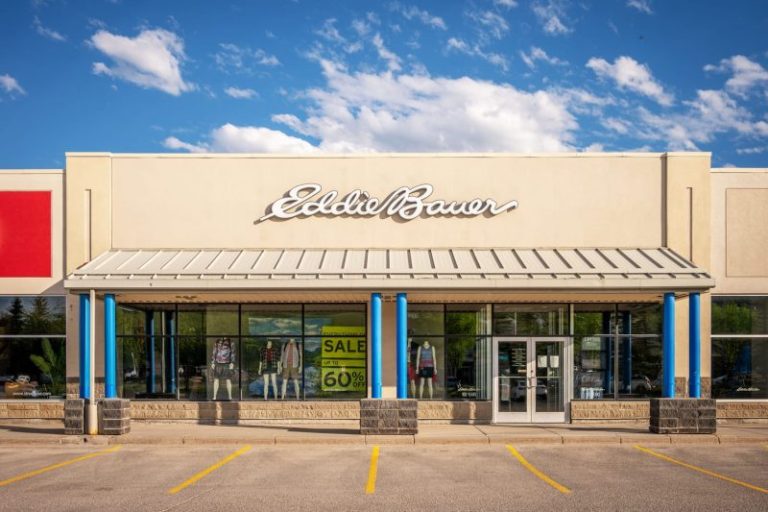
The operator of roughly 180 Eddie Bauer stores across the U.S. and Canada has filed for Chapter 11 bankruptcy protection, blaming declining sales and a litany of other industry headwinds.

The bankruptcy filing marks the third time in a little over two decades for the storied-but-now-tired brand that began as a Seattle fishing shop, later outfitted the first American to climb Mount Everest and made thousands of newfangled down jackets and sleeping bags for the military during World War II.

Eddie Bauer LLC said Monday it had entered into a restructuring pact with its secured lenders as it made the filing in the U.S. Bankruptcy Court for the District of New Jersey.

Most Eddie Bauer retail and outlet stores in the U.S. and Canada will remain open as the company winds down certain locations. It noted that it will conduct a court-supervised sales process, and if a sale can’t be executed, it will begin a wind-down of its U.S. and Canadian operations.

“This is not an easy decision,” said Marc Rosen, CEO of Catalyst Brands, which maintains the license to operate Eddie Bauer stores in the U.S. and Canada. “However, this restructuring is the best way to optimize value for the retail company’s stakeholders and also ensure Catalyst Brands remains profitable and with strong liquidity and cash flow.”

Eddie Bauer’s stores outside of the U.S. and Canada are operated by other licensees, are not included in the Chapter 11 filings, and will stay open, according to the release.

Authentic Brands Group continues to own the intellectual property associated with the Eddie Bauer brand and may license the brand to other operators, the company said. The operations of other brands in the Catalyst Brands portfolio are not affected by this filing and will continue in the normal course, according to the company.

Eddie Bauer’s e-commerce and wholesale operations will also not be impacted by the wind down, as they are operated by a company called Outdoor 5, LLC. That was a transition it made in January and became effective Feb. 2.

Eddie Bauer joins a growing list of U.S. retailers this year that are closing stores, as companies reorganize under bankruptcy protection or pare down their operations to focus on the most profitable businesses.

The parent company of Saks Fifth Avenue said last month that it was seeking bankruptcy protection, buffeted by rising competition and the massive debt it took on to buy its rival in the luxury sector, Neiman Marcus, just over a year ago. A few days later, the parent company said it was closing most of its Saks Off 5th stores.

Amazon said earlier this month that it was closing almost all of its Amazon Go and Amazon Fresh locations within days as it narrows its focus on food delivery and its grocery chain, Whole Foods Market.

Eddie Bauer’s namesake founder — an avid outdoorsman — started the company in Seattle in 1920 as Bauer’s Sports Shop, according to the brand’s website. In 1945, after making more than 50,000 jackets for the military, it launched a mail-order catalog.

“Bauer’s Sports Shop was not just a place where people purchased clothing and gear, it was a community hub where folks gathered to share their wisdom, learn, and talk about their experiences in the outdoors,” the website says.

The company created an American goose-down insulated jacket, known as the “Skyliner,” in 1936, and it became the company’s first patented jacket. It also outfitted the first American to climb Mount Everest — James W. Whittaker — with an Eddie Bauer parka in 1963.

After Bauer retired in 1968 and sold the business to his partner, the outdoor brand shifted more toward casual apparel and was bought by General Mills Inc. in 1971 and then by Spiegel Inc. in 1988. After Spiegel filed for bankruptcy in 2003 and most of its assets were sold, the remainder of the company was reorganized in 2005 as Eddie Bauer Holdings Inc.

In June 2009, Eddie Bauer filed bankruptcy and was acquired by Golden State Capital, the following month. In 2021, it was acquired by Authentic Brands and SPARC Group LLC.

A year ago, Catalyst was formed by the merger of SPARC and JCPenney, which Simon Property Group and fellow mall landlord Brookfield bought out of bankruptcy.

Rosen noted that even prior to the inception of Catalyst Brands last year, Eddie Bauer was in a “challenged situation.”

“Over the past year, these challenges have been exacerbated by various headwinds, including increased costs of doing business due to inflation, ongoing tariff uncertainty, and other factors,” he said.

He noted that while Catalyst’s leadership was able to make improvements in product development and marketing, those changes could not be implemented fast enough to fully address the problems created over several years.

Eddie Bauer had nearly 600 stores at its peak in 2001, according to CoStar Group Inc., a commercial real estate data firm.

In a note published earlier this month, Neil Saunders, managing director of GlobalData Retail, wrote that while the Eddie Bauer name is “well known,” the brand hasn’t kept pace with rivals like Swedish outdoor brand Fjallraven and Canadian label Arc’teryx. He also cited issues with quality deteriorating, which, for an outdoor brand measured by the performance of its products, is very problematic.

“And for many younger shoppers, the brand is seen as somewhat old-fashioned and a bit irrelevant,” he said.

This post appeared first on NBC NEWS

  • Maddy Schaffrick, 31, has returned to professional snowboarding after a decade-long hiatus that included coaching and plumbing.
  • She is now teammates with several athletes she previously coached, including Chloe Kim and Maddie Mastro.
  • Schaffrick overcame numerous injuries and a period of burnout to make the U.S. Ski and Snowboard team.
  • Her teammates and coaches praise her positive energy and inspiring comeback story.

LIVIGNO, Italy – Maddy Schaffrick asked to pause the interview. Not for any selfish reason. Quite the opposite, actually.

She was trying something. The 31-year-old wanted to be present and watch teammate Chase Josey execute his run in the men’s halfpipe finals of the 2026 Aspen Grand Prix in January. Maybe it was the former coach in her, too, that was keen on keeping a watchful eye on Josey as he flipped and turned around the U-ditch.  

“Let’s go! Yeah dude!” Schaffrick yelled, eventually hugging Josey at the bottom of the run once he was done. “So sick! Oh yeah!”

Schaffrick turned around.   

“Where were we?”

Great question. It’s one Schaffrick has asked herself over the past decade or so, but in the present tense. Where am I? And the answer could have been anywhere from the operating table – countless knee surgeries – to a plumbing job – the career she temporarily turned to after snowboarding didn’t love her back, and she grew to hate it – to the top of a halfpipe, where she fell back in love with the sport as a coach. She was part of the U.S. Ski and Snowboard staff for the 2022 Winter Games in China.

And four years later, Schaffrick is on that very team, alongside two riders she coached – Chloe Kim and Maddie Mastro – and the up-and-coming Bea Kim.

“I feel like Maddy is the vibes on our team,” Chloe Kim said. “She always has the biggest smile on her face, such good energy, so positive, and I think that’s so special to have. So, I’m really grateful that she’s here with us because she always brightens our day.”

Kim and Schaffrick were teammates when Kim first arrived on the pro team. For her, it’s even more exciting to have Schaffrick by her side.

“And now we’re here,” Kim said from a dais ahead of the women’s halfpipe qualification (Wednesday Feb. 11, 4:30 a.m. ET). 

“It’s been really fun to compete with Maddy and have her as a teammate,” Mastro said. “I feel like it’s built our relationship to a fun, new friendship level, which has been great. And I look forward to building it more.”

Mastro added: “You’ve been fun to hang out with.”

“Back at you,” Schaffrick shot back.

‘A totally new person’

Schaffrick, 31, competed in her first World Cup more than 15 years ago. For somebody who has been in the snowboarding world for so long, there is an element of freshness in everything she’s done.

“In some ways, I’m in the same place,” said Mastro, who has battled deep depression and even had suicidal thoughts. “But I feel like a totally new person. This does feel new. And I’m approaching things so much differently than I used to.”

Bea Kim, a member of a legitimately different generation than Schaffrick, is often left speechless by her teammate and former coach.  

“I’m blown away … not only just (to) come back, but to be able to put down runs to be on the U.S. team, to make the Olympic team, to make finals, to be on podiums has – I’m very inspired by just watching her do that and I think it just shows how capable women are of everything that they’re doing,” Kim told USA TODAY Sports. “Age is just a number.

“Not that she’s old or anything like that.”

At times, Schaffrick wishes the coaching part of herself influenced her riding more.

“Honestly, it’s sometimes hard because I’ll watch my videos or get real analytical with my own riding,” she said, “and it just makes me frustrated because it’s so much easier said than done. And I’m like ‘Why don’t I just ride through the lip? Why am I going early? Gah!’ 

“So I’ve had to kind of learn to turn off the coach side and be compassionate with myself and have some fun. But also, yeah, click in when I need to. It’s funny. That coach side hasn’t helped at all.”

Schaffrick would not describe herself as coachable in her youth.

“For real,” she said. “I was the worst.”

U.S. Snowboard director Rick Bower was her pro coach from ages 16 to 20, the peak burnout and disappointing years of Schaffrick’s life, “during my glory days of being a little (expletive).”

“In many ways, making this team is even harder than the Olympics themselves,” Bower said in a statement announcing the team. “The depth of our field is incredible and selection truly came down to the wire. These athletes pushed each other all season and every spot was earned.”

Being present for family – and self

At that Aspen Grand Prix, where she took second to essentially lock up her spot in Italy, Schaffrick had many of her cousins in attendance. As an only child, her cousins are like her siblings. They hadn’t seen her compete in nearly a decade and a half.

She spoke with her sports psychologist about the pressure that came with that. They talked about wanting to do well in front of them.

“What you can lean into is wanting to show them what you do well,” the therapist said.

“It was about me really leaning into ‘OK, what do I feel like I do well?’” Schaffrick said.

That would be going big. Looking smooth. Trying to add style.

“When I am leaning into that aspect of my snowboarding, it’s so much fun. I have a lot of fun. Opposed to just forcing things,” she said.

The contingent brought the energy for her to unlock that.

Schaffrick dislocated her shoulder during her second finals run at the Copper Mountain Grand Prix in December. The next event was in Aspen and the first day of practice consisted of her “faking it until I made it,” she said.  

“That instability or pain, awareness of my brace restricting me, that really held me back,” Schaffrick admitted in Italy. “When I dropped into the rest of my body and felt that confidence, it didn’t hold me back.”

“I feel like what’s helped me here is going to help me there,” she said in Aspen. “It’s just about being present.”

And what a gift that is for Schaffrick. 

Additional reporting for this story took place in Aspen, Colorado.

This post appeared first on USA TODAY