Author

admin

Browsing

Gold has seen wild swings over the last week, hitting record highs near US$5,600 per ounce before plunging nearly 10 percent to around US$4,700 in the sharpest drop in over a decade. The real story, though, isn’t just the price action, but how tokenized gold is modernizing one of the world’s oldest reserve assets for a new era.

Leading this charge is Gold Token SA (GTSA), the gold tokenization arm of Swiss precious metals giant MKS PAMP.

Under the leadership of CEO Kurt Hemecker, GTSA is transforming how institutions and individual investors interact with the world’s oldest reserve asset by placing it on modern rails.

As digital assets like Bitcoin struggle to maintain their safe-haven narrative amid high-profile fraud cases, institutions are seeking trusted assets on modern rails, where blockchain’s functional advantages — such as 24/7 liquidity and instant settlement — can upgrade low-volatility reserve assets via tokenization.

The infrastructure bridge: Legal title and institutional trust

MKS PAMP is a family-owned global powerhouse that operates one of the world’s most renowned refineries.

By launching the DGLD token on the Base network, Coinbase’s Layer 2 blockchain, in mid-December 2025, GTSA effectively bridged the gap between 60 years of Swiss precious metals heritage and US-centric blockchain technology.

Unlike speculative crypto tokens, “DGLD is designed to represent allocated physical gold rather than a claim on an issuer,” prioritizing the institutionalization of real-world assets through transparent governance, Hemecker said.

”That design approach is important in jurisdictions like the US, where regulators are still clarifying the boundaries between securities and other digital assets,” he added. Physical gold’s familiarity reduces ambiguity, giving institutions clear legal title to specific vaulted bars, not issuer promises or derivatives.

According to Hemecker, this structure earns policymaker support as “controlled tokenization, where digital representations of existing assets are well-governed and clearly backed, rather than creating new, untested monetary substitutes.” Investors gain direct property rights over high-security Swiss vaults, outpacing tech-first rivals.

Transparency serves as a competitive advantage in this new era of digital commodities. Gold investors, who are traditionally obsessed with provenance, can utilize GTSA’s Bar Mapper tool. This technology allows a digital holder to trace their token back to specific gold bars certified by the London Bullion Market Association

Users can view non-sensitive metadata, including the refiner, weight, purity and serial number of the bars, providing a level of auditability that was previously impossible in the gold market. This creates a transparent link between digital ownership and physical existence, ensuring that every token is backed by real, verifiable gold.

Overcoming hurdles

The operational hurdles once plaguing tokenization are rapidly fading. “Several early frictions are already easing,” Hemecker said. “Operational and technical uncertainty is declining as standards around custody, issuance and lifecycle management mature. Institutional access is improving, and credibility gaps are narrowing.

This maturity drives a shift from experimental pilots to institutional balance-sheet allocations.

“What we’re seeing from institutions and central banks is not a move away from traditional safe-haven assets, but a desire to modernize the infrastructure around them,” he explained. Blockchain’s 24/7 availability, near-instant settlement and efficient reporting keep gold exposure while accelerating infrastructure.

“Tokenized gold allows institutions to maintain exposure to a familiar reserve asset, while benefiting from faster settlement … This is about putting trusted assets on modern rails.”

Liquidity follows suit. “Liquidity will increasingly be judged by depth and reliability, not headline volumes,” Hemecker noted. “Custody quality will move to the foreground, with institutions favoring allocated, insured gold held with reputable vaulting partners.” DGLD delivers this via Base and Aerodrome DEX’s nonstop trading.

Finally, redemption seals the trust: “Redemption down to 1 gram expands accessibility and utility for collateral, lending, repos and beyond. Redemption builds trust, but tokenization is where the real utility comes from.”

The regulatory landscape

The regulatory landscape continues to play a pivotal role in the adoption of tokenized gold.

While GTSA is a Swiss-regulated entity supervised by FINMA-level standards, its presence on the Base network demonstrates a strategic navigation of global demand.

“Regulatory trends are likely to support tokenized gold adoption by rewarding transparent, well-governed structures that fit within existing financial and commodity frameworks,” Hemecker said. “Products with clear custody, governance and legal ownership are simply easier for institutions to assess and approve.”

The GENIUS Act, passed in the US in 2025, clarifies stablecoin rules, prioritizing 1:1 reserves and audits, which favor insured custody like MKS PAMP’s. The proposed CLARITY Act would split Securities and Exchange Commission (SEC) and Commodity Futures Trading Commission (CFTC) purview, classifying some assets as “digital commodities.”

This past January, the SEC and CFTC held a joint harmonization event to align on digital asset oversight, while the CLARITY Act awaits Senate action after House passage in 2025.

Looking ahead

Looking ahead, Hemecker believes the trend favors “consolidation rather than proliferation.’

Tokenization can improve traceability and data continuity, aiding secondary markets like recycled gold. It connects the value chain from mine to vault to wallet, but needs “standards, audits, operational integration and regulatory alignment” for real transparency, according to Hemecker.

For mining and finance, DGLD modernizes the Swiss gold standard.

“Our focus … is building the foundations … so (it’s) ready to scale responsibly,’ said Hemecker.

Securities Disclosure: I, Meagen Seatter, hold no direct investment interest in any company mentioned in this article.

This post appeared first on investingnews.com

Mr. Thordarson brings two decades of expertise in operations, infrastructure development, and large-scale business transformation in the aviation industry

Syntholene Energy Corp. (TSXV: ESAF,OTC:SYNTF) (OTCQB: SYNTF) (FSE: 3DD0) (‘Syntholene’ or the ‘Company’) announces the nomination of Jens Thordarson, former Chief Operating Officer of Icelandair, to its Advisory Board. With nearly two decades of leadership experience in the aviation industry, Mr. Thordarson brings expertise in operations, infrastructure development, and large-scale business transformation, critical elements as Syntholene advances its synthetic fuel solutions for global transportation and logistics.

Mr. Thordarson held multiple executive roles at Icelandair over his 17-year tenure, including Chief Operating Officer and Vice President of Technical Operations. In these roles, he spearheaded large-scale operational improvements, optimized fleet management, and integrated advanced technologies to enhance efficiency and sustainability in one of the world’s most demanding industries. Currently, he serves as CEO of GeoSalmo, a company focused on sustainable aquaculture, further reinforcing his commitment to innovative and environmentally responsible industries. Mr. Thordarson also serves as the Honorary Consul of Ireland in Iceland, encouraging tourism, trade, and foreign affairs between the two nations.

‘Jens’ leadership in aviation and operations, combined with his strategic network in the nation of Iceland, makes him an ideal contributor to Syntholene’s Advisory Board,’ said Dan Sutton, Chief Executive Officer of Syntholene Energy Corp. ‘As we work to bring sustainable synthetic fuels to Icelandic and European markets, his insights into politics, regulatory landscape, and infrastructure readiness will be instrumental in driving our commercialization strategy.’

Syntholene Energy Corp. is at the forefront of developing sustainable synthetic fuels designed to seamlessly integrate with existing energy infrastructure while significantly reducing carbon emissions. The nomination of Mr. Thordarson reinforces the Company’s commitment to drawing expertise from industries where fuel efficiency, innovation, and operational scale are paramount.

‘I am excited to join Syntholene’s Advisory Board and contribute my experience in aviation, operations, and strategic growth,’ said Mr. Thordarson. ‘The transition to sustainable fuels is essential for industries like aviation, and Syntholene’s technology represents a major step forward, taking a fundamentally different and more disciplined approach to the challenge. I look forward to working with the team as they move toward scale.’

About Syntholene

Syntholene is actively commercializing its novel Hybrid Thermal Production System for low-cost clean fuel synthesis. The target output is ultrapure synthetic jet fuel, manufactured at 70% lower cost than the nearest competing technology today. The company’s mission is to deliver the world’s first truly high-performance, low-cost, and carbon-neutral synthetic fuel at an industrial scale, unlocking the potential to produce clean synthetic fuel at lower cost than fossil fuels, for the first time.

Syntholene’s power-to-liquid strategy harnesses thermal energy to power proprietary integrations of hydrogen production and fuel synthesis. Syntholene has secured 20MW of dedicated energy to support the Company’s upcoming demonstration facility and commercial scale-up.

Founded by experienced operators across advanced energy infrastructure, nuclear technology, low-emissions steel refining, process engineering, and capital markets, Syntholene aims to be the first team to deliver a scalable modular production platform for cost-competitive synthetic fuel, thus accelerating the commercialization of carbon-neutral eFuels across global markets.

For further information, please contact:
Dan Sutton, CEO
comms@syntholene.com
www.syntholene.com

Investor Relations
KIN Communications Inc.
604-684-6730
ESAF@kincommunications.com

Forward-Looking Statements
This press release contains forward-looking statements within the meaning of applicable securities laws. The use of any of the words ‘expect’, ‘anticipate’, ‘aims’, ‘continue’, ‘estimate’, ‘objective’, ‘may’, ‘will’, ‘project’, ‘should’, ‘believe’, ‘plans’, ‘intends’ and similar expressions are intended to identify forward-looking information or statements. All statements, other than statements of historical fact, including but not limited to statements regarding the completion of the definitive agreement, successful implementation of the test facility, commercial scalability, technical and economic viability, anticipated geothermal power availability, anticipated benefit of eFuel, and future commercial opportunities, are forward-looking statements.

The forward-looking statements and information are based on certain key expectations and assumptions made by the Company, including without limitation the assumption that the Company will be able to execute its business plan, that the eFuel will have its expected benefits, that there will be market adoption, and that the Company will be able to access financing as needed to fund its business plan. Although the Company believes that the expectations and assumptions on which such forward-looking statements and information are based are reasonable, undue reliance should not be placed on the forward-looking statements and information because the Company can give no assurance that they will prove to be correct. Since forward-looking statements and information address future events and conditions, by their very nature, they involve inherent risks and uncertainties.

Actual results could differ materially from those currently anticipated due to a number of factors and risks, including, without limitation, Syntholene’s ability to meet production targets, realize projected economic benefits, overcome technical challenges, secure financing, maintain regulatory compliance, manage geopolitical risks, and successfully negotiate definitive terms. Syntholene does not undertake any obligation to update or revise these forward-looking statements, except as required by applicable securities laws.

Readers are advised to exercise caution and not to place undue reliance on these forward-looking statements.

To view the source version of this press release, please visit https://www.newsfilecorp.com/release/282796

News Provided by TMX Newsfile via QuoteMedia

This post appeared first on investingnews.com

Here’s a quick recap of the crypto landscape for Wednesday (February 4) as of 9:00 p.m. UTC.

Get the latest insights on Bitcoin, Ether and altcoins, along with a round-up of key cryptocurrency market news.

Bitcoin and Ether price update

Bitcoin (BTC) was priced at US$73,420.53, down by 3.9 percent over 24 hours.

Bitcoin price performance, February 4, 2026.

Chart via TradingView.

Expectations of tighter monetary policy and unresolved regulatory tensions are also weighing on investors.

Meanwhile, XS.com’s Samer Hasn is observing positive sentiment marked by long-term investors and new Bitcoin addresses accumulating at current low prices, despite speculative money leaving. He views the downtrend as a buying opportunity while the broader market anticipates crucial economic data and earnings from Alphabet (NASDAQ:GOOGL).

Ether (ETH) was priced at US$2,164.80, down by 5.7 percent over the last 24 hours.

Altcoin price update

  • XRP (XRP) was priced at US$1.54, down by 4.7 over 24 hours.
  • Solana (SOL) was trading at US$93.04, down by 7.7 percent over 24 hours.

Today’s crypto news to know

Bitcoin-led selloff wipes nearly US$500 billion from crypto market

A sharp crypto selloff has erased nearly half a trillion dollars in market value in less than a week, with Bitcoin leading the decline, according to a Bloomberg report.

The total market cap for crypto has fallen by about US$467.6 billion since January 29.

Meanwhile, Bitcoin slid to its lowest level since US President Donald Trump’s re-election in early November 2024, briefly touching US$72,877 in US trading before clawing back to around US$75,900.

The pullback comes despite a more crypto-friendly White House and growing institutional adoption, reflecting how fragile sentiment remains after months of heavy leverage.

More than US$700 million in bullish and bearish bets were liquidated in the past 24 hours alone, taking total liquidations since January 29 to over US$6.6 billion, according to CoinGlass data.

Burry warns Bitcoin slide could trigger cascading financial stress

In a Substack post published on Monday (February 2), Michael Burry speculated that Bitcoin’s recent sharp decline could be something beyond a normal bear market, framing it as a uniquely dangerous setup that could trigger cascading financial turmoil across leveraged portfolios, as well as the entire crypto market and metals.

As Bitcoin is deeply embedded into leveraged structures, further price drops could force more selling. He outlined several ‘sickening scenarios,’ including 15 to 20 percent hits for large institutional holders like Strategy (NASDAQ:MSTR), a company he predicts could see major losses if Bitcoin were to fall to US$60,000.

If the cryptocurrency were to dip toward US$50,000, Burry said miners could dump reserves to avoid bankruptcy, dragging minerals and tokenized metal futures into a collapse. Burry sees Bitcoin as a purely speculative asset that has failed to act as a reliable debasement hedge like gold, so its drawdown exposes broader balance sheet fragility driven not just by price moves, but also by over‑levered positions, aggressive artificial intelligence and cloud CAPEX accounting and weak capital discipline that will only become apparent when liquidity tightens.

Strategy’s Bitcoin bet goes underwater

Michael Saylor doubled down on his Bitcoin conviction this week even as Strategy’s vast holdings slipped below their average purchase price. Bitcoin’s drop under roughly US$76,000 has pushed the firm’s estimated cost basis into negative territory, leaving it about US$630 million underwater on paper, according to market estimates cited by critics.

The company has accumulated more than 712,000 BTC since 2020 using a mix of share issuance and convertible debt, a strategy that paid off during the bull market, but now faces renewed scrutiny.

Bitcoin critics, including Peter Schiff, argue that Strategy’s aggressive buying helped fuel the earlier rally and that slowing purchases are now exacerbating the decline. Saylor has rejected that view, posting on X that volatility is “Satoshi’s gift to the faithful” and reiterating his rule to “Buy Bitcoin.”

TRM Labs hits US$1 billion valuation

Blockchain intelligence firm TRM Labs has reached a US$1 billion valuation after closing a US$70 million Series C funding round that was led by Blockchain Capital and included backing from Goldman Sachs (NYSE:GS), Bessemer Venture Partners, Brevan Howard, Thoma Bravo and Citi Ventures.

Co-founder Esteban Castaño said the company was built around the belief that widespread crypto adoption would inevitably require sophisticated risk and compliance tools.

TRM gained traction with law enforcement agencies and financial institutions by tracking activity across multiple blockchains, an early strategic choice that helped it compete with more established rivals.

Bessent reasserts government Bitcoin stance

During testimony before the House Financial Services Committee during a mandatory oversight hearing on the annual report of the Financial Stability Oversight Council, US Secretary of the Treasury Scott Bessent reasserted his stance that Bitcoin is an asset of the US government, not a liability, and that the Strategic Bitcoin Reserve built from forfeited coins is a legitimate balance sheet asset that the treasury is treating as part of the nation’s financial toolkit.

Bessent noted that roughly US$500 million in seized Bitcoin retained by the government has appreciated to over US$15 billion while in custody, underscoring Bitcoin’s role as a high‑growth strategic asset on the federal balance sheet.

He reiterated that the US is not planning to buy more Bitcoin on the open market, but will continue to accumulate it in budget‑neutral ways to build the reserve, such as through forfeitures and seizures.

Securities Disclosure: I, Meagen Seatter, hold no direct investment interest in any company mentioned in this article.

Securities Disclosure: I, Giann Liguid, hold no direct investment interest in any company mentioned in this article.

This post appeared first on investingnews.com
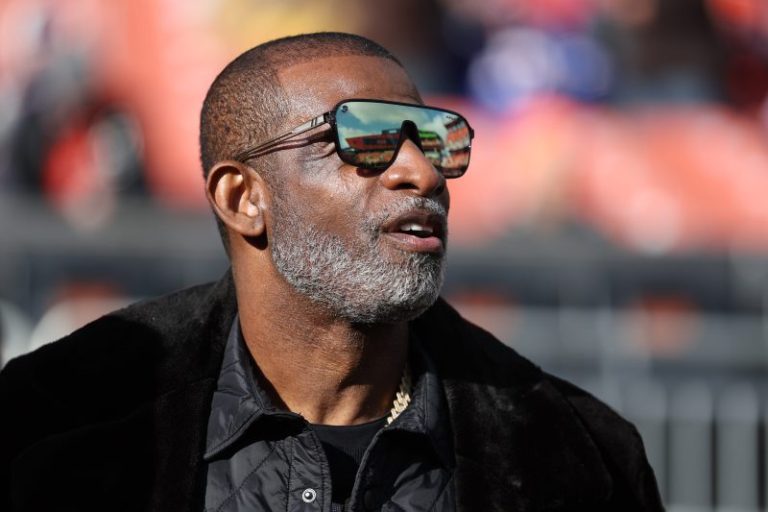
For at least two decades, former Amazon executive Dave Clark ended his work week the same way: a standing Friday date night with his wife, Leigh Anne.

Over dinner, the Clarks would talk through the “peak and pit” of their weeks. The ritual often revolved around Amazon, where Clark played a central role in building the logistics infrastructure that helped launch the e-commerce era.

During those years, Leigh Anne was a sounding board for her husband. In the process, she had a front-row seat to Amazon’s growth from what she called “a baby to a behemoth.”

By the time Clark left Amazon in 2022, he was CEO of the Worldwide Consumer division and one of billionaire founder Jeff Bezos’ top lieutenants.

Dave Clark at Auger headquarters Monday.David Jaewon Oh for NBC News

But these days, Fridays for the Clarks look very different.

Their dinner date has morphed into afternoon cocktails — a bourbon with Diet Coke for her and a Manhattan for him. And the conversation isn’t focused on Amazon anymore. It’s about Auger, the supply-chain startup they run together.

In their first joint interview from Auger’s Seattle office, the Clarks described how their marriage and complementary skill sets are shaping the company.

“We’ve been together for so long that we kind of just read each other’s minds,” Leigh Anne said. Working together, she said, “felt like a natural fit.”

This post appeared first on NBC NEWS

Ryan Kennedy – the Detroit Lions fan who was shoved by Pittsburgh Steelers wide receiver DK Metcalf during an altercation at a Dec. 21 NFL game between the two teams – has filed a new lawsuit in Wayne County Court seeking $100 million in damages.

Kennedy’s lawsuit was filed on Feb. 3, according to the Detroit Free Press of the USA Today Network. The lawsuit names Metcalf, the Steelers, former NFL wide receiver Chad Johnson, Ford Field management and several media platforms for what he alleges is their role in making ‘defamatory and life altering statements’ about him after the incident.

Nine total counts are listed in the lawsuit. Included among those are two counts of defamation against Metcalf, Johnson, Shannon Sharpe’s company, Shay Shay Media, and one count of negligence against Ford Field.

Kennedy is also suing Metcalf for assault and battery and both the Steelers and Ford Field management for their liability in the incident.

‘Defendant Ford Field Management, LLC breached its duty by failing to establish or enforce adequate barriers, protocols, or security measures to prevent players from reaching into the stands and making physical contact with patrons,’ the lawsuit reads.

Kennedy and Metcalf’s altercation took place during the second quarter of the Detroit Lions’ Dec. 21 game against the Steelers. Metcalf was suspended two games for the incident, which saw him take a swipe at Kennedy after a brief conversation between the two.

‘He doesn’t like his government name,’ Kennedy said. ‘I called him that and then he grabbed me and ripped my shirt. I’m a little shocked. Like everyone’s talking to me. I’m a little rattled, but I just want the Lions to win, baby.’

But on Sharpe and Johnson’s ‘Nightcap’ podcast released Dec. 22, Johnson relayed that Metcalf told him Kennedy had used a racial slur against Metcalf and a misogynistic slur aimed at the wide receiver’s mother.

Kennedy steadfastly denied those allegations at a press conference regarding the incident on Dec. 26.

‘I guess want to be crystal clear about one thing: I didn’t use any racial slurs, no hate speech, none of that stuff at the game,’ Kennedy said. ‘Actually, never. Fifteen years as a season ticket holder for the Lions, I’ve never done that at all.’

Kennedy – who is being represented by Jon Marko – continues to deny that allegation in the lawsuit.

‘The statements were false and reckless,’ the lawsuit reads. ‘Plaintiff Kennedy did not call Defendant Metcalf the ‘N-word’; did not call Defendant Metcalf mother a ‘c—‘; and did not ever use any racial slurs or hate speech whatsoever … Defendant Metcalf provided false information to Defendant Johnson about what Plaintiff Kennedy allegedly said, thereby instigating and authorizing the publication of the defamatory and reckless statements which were intended to harm Plaintiff Kennedy.’

In addition to the $100 million Kennedy is seeking in damages, he is also seeking a ‘full public retraction and correction of defamatory statements’ from Johnson and Sharpe.

This post appeared first on USA TODAY

Tampa Bay Lightning center Anthony Cirelli, who was injured in the Stadium Series game, will miss the 2026 Winter Olympics.

He was replaced by Team Canada by Florida Panthers center Sam Bennett, who won the Conn Smythe Trophy as 2025 playoff MVP. He is currently day-to-day with an injury.

Cirelli left Sunday’s game after being hit by the Boston Bruins’ Mark Kastelic.

Injured Buffalo Sabres goalie Ukko-Pekka Luukkonen was also ruled out for the Olympics. He was replaced by Bruins goalie Joonas Korpisalo.

The USA’s Seth Jones (Florida), Sweden’s Jonas Brodin (Minnesota) and Leo Carlsson (Anaheim) and Philadelphia’s Rodrigo Abols (Latvia) earlier were replaced because of injury.

Here are other NHL Olympians who are currently out with injury, with Olympic status to be determined:

USA: Jack Hughes (New Jersey).

Canada: Brayden Point (Tampa Bay), Brad Marchand (Florida), Logan Thompson (Washington).

Sweden: Gabriel Landeskog (Colorado), Elias Lindholm (Boston).

Czechia: Martin Necas (Colorado), Pavel Zacha (Boston).

Finland: Anton Lundell (Florida).

France: Alexandre Texier (Montreal).

This post appeared first on USA TODAY

This year’s Super Bowl matchup between the New England Patriots and Seattle Seahawks was not predicted by many NFL fans before the season began, and it’s become a problem for the league’s exclusive supplier of Nike adult products and one of the country’s largest online apparel retailers.

Fanatics issued an apology on Monday, Feb. 2, ahead of Super Bowl 60 after complaints about jersey availability and quality from Seahawks and Patriots fans. The backlash even sparked an #endfanatics hashtag on social media with consumers posting photos of jerseys that were allegedly of poor quality.

The company eventually acknowledged it could not keep up with demand in recent weeks, but pushed back on alleged issues regarding product quality associated with its Super Bowl gear.

‘We’ve let Patriots and Seahawks fans down with product availability – we own that and we are sorry,’ Fanatics said in a statement posted to social media.

The company went on to note that this predicament is, in part, due to the limited on-field expectations the Seahawks and Patriots had before the season began.

‘This Super Bowl matchup has created unprecedented challenges for us because of the massive surge in demand we saw from Patriots and Seahawks fans,’ Fanatics wrote. ‘Both teams went from missing the playoffs last season to being in the Super Bowl, an incredibly rare occurrence that led to these two fanbases buying nearly 400% more jerseys since Thanksgiving vs. last year. Even though we ordered substantially more jerseys for these teams than ever before, we’ve struggled to meet the overwhelming demand to keep team color jerseys in stock, which we know is your expectation. As sports fans, we understand your frustration and we will work tirelessly to be better.’

But Fanatics emphasized that its available alternate jersey options are identical to its standard Nike replica game jerseys, ‘despite some unflattering photos’ featured on social media. Fanatics added customers can still return any product they’re not fully satisfied with free of charge, as has been the company’s long-standing policy.

The NFL and Fanatics agreed to a 10-year partnership in 2018 that granted Fanatics exclusive consumer product licensing rights to manufacture and distribute all Nike NFL adult products (jerseys, sideline apparel and fan gear) sold through the retail community, including NFLShop.com and NFL teams. The NFL has also invested more than $400 million in Fanatics over the past decade.

This post appeared first on USA TODAY

This time it came down to a missed fadeaway 3-pointer from Buffalo’s Ryan Sabol to win 73-71 after the 24th-ranked Redhawks (23-0, 11-0 in MAC play) were unable to go up 5-points on a pair of missed free throws from Luke Skaljac, who finished with a team-high 19 points on 9-of-15 shooting from the field and five steals, four rebounds and three assists.

It’s the second time in the last two and a half weeks that Miami was able to escape an upset against Buffalo.

The way Miami’s game played out — a missed free throw and having the other team go short on a game-winning 3-point attempt — was its second close call in the last seven days, with the other being an 86-84 win over UMass on Tuesday, Jan. 27.

It also marked the fourth single-digit win in the last five games for the Redhawks, with two of them coming against the Bulls.

‘The results will take care of themselves if our process is right,’ Miami coach Travis Steele told USA TODAY Sports’ Craig Meyer recently on the Redhawks’ run. ‘It may not always happen immediately, but eventually it will figure itself out. That’s why our guys have been so loose. We feel no pressure, none. Our guys are enjoying it. We’re having fun on this journey together.’

Miami will look to extend its 23-game win streak on the road in Huntington, West Virginia against Marshall at 4 p.m. ET on Saturday, Feb. 7.

Miami Ohio basketball 2026 schedule

Here’s who the RedHawks have left on their schedule:

All times Eastern

  • Feb. 7: at Marshall, 4 p.m. (ESPN+)
  • Feb. 13: vs. Ohio, 8 p.m. (ESPNU)
  • Feb. 17: at UMass, 7 p.m. (ESPN+)
  • Feb. 21: vs. Bowling Green, 3:30 p.m. (ESPN+)
  • Feb. 24: at Eastern Michigan, 6:30 p.m. (ESPN+)
  • Feb. 28: at Western Michigan, 2:30 p.m. (ESPN+)
  • March 3: vs. Toledo, 7 p.m. (ESPN+)
  • March 6: at Ohio, 7 p.m. (ESPN+)
  • March 12-14: MAC Tournament, at Cleveland

The USA TODAY app gets you to the heart of the news — fastDownload for award-winning coverage, crosswords, audio storytelling, the eNewspaper and more.

This post appeared first on USA TODAY

SACRAMENTO — The Sacramento Kings had a chance to welcome newly acquired forward De’Andre Hunter to California’s capital during their Tuesday practice following a Jan. 31 trade which sent Keon Ellis and Dennis Schroder to the Cleveland Cavaliers.

Hunter, 28, was acquired in the trade to be a potential piece for the Kings’ future as general manger Scott Perry retools the roster with aspirations of establishing a winning culture.

Hunter, who will make $23.3 million this season as part of a four-year $90 million rookie contract extension he signed with the Hawks in 2022, expressed his excitement to get going in Sacramento and becoming acclimated with his new team.

‘It’s good energy here,’ Hunter told reporters after his first Kings practice. ‘A lot of great coaches that have a lot of experience in the league. Very experienced players who have been here in the league for a while, I’m just excited for a new opportunity.’

Hunter, a 6-foot-7, 221-pound swingman, is averaging 14 points, 4.2 rebounds and 2.1 assists in 26.2 minutes per game so far during the 2025-26 regular-season.

Through 43 games, Hunter has shot the ball at a 42.3% rate on field goals. He shoots 30.8% from deep and is a solid free throw shooter at 86.9%.

Defensively, he averages 0.7 blocks and 0.1 steals per game.

Hunter told USA TODAY Sports what he intends to bring to the Kings as he becomes engulfed in the basketball culture in Sacramento.

‘Just versatility, on both ends,’ Hunter said. ‘A guy that plays hard, a guy that’s gong to do what the team needs. I feel like that’s kind of what everyone says but night in, night out I’m going to give my best effort.’

Hunter’s versatility will allow the Kings to play him at the three (small forward) or experiment playing him at the four (power forward).

For Hunter, it’s nothing new.

‘I don’t think there’s much difference in the league right now,’ he said. ‘A lot the threes play four when guys go small, teams go small. I don’t see much of a difference, but I’m very comfortable playing both, I’ve been doing it for the past four or five years. It’s not really difficult to adjust to.’

He’s most likely going to play alongside Kings forward Keegan Murray.

The team announced Tuesday that Murray is progressing in his rehabilitation of a moderate left ankle sprain he suffered in their loss against the Milwaukee Bucks on Jan. 4.

‘Murray has been approved for on-court contact activities. He will be reevaluated in two weeks,’ the Kings said in a news release.

Hunter anticipates playing with Murray because their abilities to do some of the same things on the floor.

‘Playing with a guy like Keegan, he’s another versatile guy who can defend, who can shoot, who can score. I think it’ll be fun,’ Hunter said. ‘Definitely (exciting). Like I said, he’s another guy with size, another guy that guard one through four. As a guy that could do that, it’s always good to see another dude on the court that can help you out when you’re a little tired.’

Kings head coach Doug Christie was all smiles when discussing the acquisition of Hunter.

‘Super excited man,’ Christie told reporters. ‘The weather didn’t allow us to practice on the road, but got up and down a little bit. Watching him on the defensive end makes me smile. Elite length, athleticism, knowing that he can stretch the floor and shoot the three-ball, has midrange, like just a really, really good player. A smart player, very heady, as far as the communication. We’ll get him in a game, [I’m] excited to see him get out there.’

Christie, too, envisions a lineup that will feature both Hunter and Murray, when he’s back from injury. When asked about the possibility, he grinned from cheek-to-cheek.

‘Both of their size and athleticism allows you to you to guard across the board,’ Christie said. ‘They can switch if there’s a matchup that you like more. But definitely, his size and his ability to guard can keep Keegan at the three.’

He added: ‘I’m just excited to see them. When you think about it, you have two long wings, both of them can shoot the basketball, both of them can guard pretty much one through five, rebounding, cutting, midrange and they both play the right way, for the right reasons. They are team players. They’re going to move the basketball, move their body when we talk about next actions, when we talk about crashing [for rebounds] all of the little things that equate to winning, both of them do so really excited to see them out there together.’

Hunter said that he hadn’t had many interactions with Perry, Kings general manager, but was told by Perry that he had him on his radar for many years and that Perry ‘sees potential’ in him.

‘He knows a few people that I know. I heard through the grapevine what kind of guy he is and vice versa. I think that played a huge part in me coming here. I’m excited to get to know the guys and get acclimated to the city,’ Hunter said. ‘It was more so just talking about how he previously wanted me. In previous years but we at a different team so he couldn’t make it happen but he was just really glad that he could make this happen. He sees potential in me, he knows the things I can do, just looking to do that.’

Hunter is ready to work and provide a spark for Kings basketball. No one is asking more of Hunter than himself.

‘I have my own expectations,’ he said. ‘I feel like my own expectations are higher than what anyone else expects of me. I just try to hold myself to a standard.’

As far his new city and getting used to his surroundings, Hunter looks forward to seeing what Sacramento has to offer.

‘I never did much here honestly, so I don’t really know about the city,’ Hunter said about his knowledge of Sacramento as a visiting player. ‘I usually stay in the hotel because we usually come here on a long west coast trip. I’m excited to get out there and probably get some recommendations from some people on what to do and where to eat and stuff.’

This post appeared first on USA TODAY