
Author

admin

Browsing

Optimism was building at last year’s Vancouver Resource Investment Conference (VRIC), with fresh capital flowing back into the mining sector, lifting project financings and investor portfolios alike.

This year’s VRIC, which ran from January 25 to 26, saw that optimism tip into outright exuberance.

Record-breaking gold and silver prices drew a larger, more diverse crowd, while speakers openly compared the current market to the great bull runs of the late 1970s and early 1980s.

Yet beneath the enthusiasm, a note of caution emerged. While few questioned the strength of the rally, debates centered on whether the move is still in the early innings or edging closer to bubble territory.

Gold, silver and the need to take profits

Precious metals were front and center throughout VRIC.

The price of gold crossed the US$5,200 per ounce mark during the show, and silver’s incredible run peaked at US$116 per ounce, gaining more than 250 percent since January 2025.

Over the past couple of years, gold’s shine has been brought about by significant central bank buying. Considered the ultimate buy-and-hold participants, these entities have been acquiring large quantities of gold for several reasons, including runaway global debt and concerns over the weaponization of the US dollar.

Central bank purchases, along with geopolitical and financial uncertainty, have helped to revive a beleaguered retail segment, effectively pouring gasoline onto the fire.

For silver, structural shortages that have developed over the past several years came into focus and were exacerbated by a surge of investors seeking a cheaper physical asset alternative to gold.

Flashpoints in the Middle East, a simmering trade war driven by tariff threats, disrupted supply lines and currency devaluation have also helped bring the monetary aspects of gold and silver to the forefront.

In the 2026 ‘Gold Forecast’ panel at VRIC, Gold Royalty (NYSEAMERICAN:GROY) Chair and CEO David Garofalo explained why precious metals were one of the best-performing asset classes last year.

“Gold has been a one-way trade for 50 years … the purchasing power of our dollars has gone down 99 percent over that period of time. The negative correlation between the gold price and the purchasing power of our underlying currencies is undeniable,” he said, adding that “gold can only go in one direction.”

Garofalo added that the debt-to-GDP ratio rose to 350 percent in 2025 from 100 percent in the 1970s, creating a “ticking time bomb” that leaves central banks with no wiggle room to raise interest rates. “Gold can only go in one direction in that market because there is a limited supply of gold. Gold can’t be printed,” Garofalo said.

With those circumstances in mind, how high can gold and silver prices go? There were differing perspectives throughout the conference on whether precious metals are in a bull market or a bubble.

At the ‘This Isn’t Our First Bull Market’ panel, Ross Beaty, Equinox Gold (TSX:EQX,NYSEAMERICAN:EQX) chair and Canadian Mining Hall of Famer, was one of those who suggested the market is in a bubble.

He also compared the state of the market to the late 1970s and early 1980s, and spoke about how gold went above US$700 per ounce before crashing to US$250 an ounce in a matter of months. “You only know you’re at the top after the fact. From my standpoint today, it is. It’s a bubble, it’s a frothy market,” Beaty said.

Fellow panelist Rick Rule, proprietor at Rule Investment Media, didn’t go so far as to say the market is in a bubble, but did point out that even in a strong bull market, there are risks.

He pointed out that in 1975, as the gold bull market was running, the gold price fell by half.

Both speakers suggested there is still upside in the market, but acknowledged that now is a good time for investors to take some profits. For his part, Beaty was blunt in his advice.

“It is time to take some money off the table. I think probably not all, because I think we have more room to run, but we’re not in the early innings of this game, we’re in the late innings,” he said.

Rule’s approach was more one of preparation, especially for less experienced investors.

“If you aren’t financially and psychologically prepared to deal with 30 or 35 percent declines, or 50 percent declines, you really have to get some money in the bank now, because you’re going to experience that,” Rule said.

During VRIC, Rule also spoke about how he recently sold off 25 percent of his junior mining portfolio, noting, “I sold off 25 percent of my upside, and I eliminated 100 percent of my downside.”

Copper, uranium and the AI bubble

If industry stalwarts like Beaty, Rule and Garofalo are suggesting it’s time to take some money off the table, were there any suggestions where to look next?

On the gold panel, Incrementum AG Managing Partner and Fund Manager, Ronald-Peter Stöferle gave insight that his fund had cycled funds from precious metals into other areas of the resource sector.

“We reallocated some capital, took some profits, because the risk has been too dominant and reallocated into oil, into copper, into uranium,” he said.

What’s become more apparent over recent years is the growing need to add gigawatts to the electrical grid. To meet growing demand, electricity must be generated, and uranium is increasingly used as a fuel. However, delivering it requires infrastructure, and copper remains one of the best ways to do so.

However, both copper and uranium have demand exceeding supply.

While copper has been in balance over the last couple of years, incidents at Freeport-McMoRan’s (NYSE:FCX) Grasberg mine and Ivanhoe’s (TSX:IVN,OTCQX:IVPAF) Kamoa-Kakula mines tipped the market into supply deficits in 2025, and it’s likely to stay there for some time.

Both copper and uranium have been increasingly tied to the artificial intelligence (AI) revolution.

At the ‘Copper Forecast’ panel, Independent Speculator Editor Lobo Tiggre noted the connection but pointed out that underlying fundamentals beyond AI continue to make the case for investing in copper and uranium. He noted that the release of Chinese AI DeepSeek affected Western equities tied to the AI boom.

“If you think it (AI) is a bubble, remember what happened in the DeepSeek moment. Copper wobbled, uranium wobbled … The good news, in my view, is that means that whenever the next wobble comes, there’s potentially a buying opportunity, given the fundamentals we’re talking,” he said.

The fundamentals are that AI and data centres are just additional demand. Through several of his appearances, Rick Rule noted that there are a billion people on the planet who don’t have access to reliable electricity.

Additionally, global infrastructure needs to be upgraded as more people rely on electricity for a wider range of uses, including EVs. However, there are only a few new mines on the horizon, and not enough to meet baseline demand.

Ivan Bebek, CEO and chair of Coppernico Metals (TSX:COPR,OTCQB:CPPMF), said on the copper panel that all the easy copper deposits have been found.

“Copper mines are hidden behind geopolitical boundaries, social issues or undercover. They’re mined, and all the easy ones have been found. Look at the chart I presented earlier, and it shows the decline basically falls off a cliff in 2015. There hasn’t been any major copper discovery of consequence since then,” he said.

It’s not just a lack of discovery; copper mines require significant capital investment and can take decades to complete permitting.

Likewise, uranium is in a similar boat. Although it’s far from its US$140 per pound high in 2007, uranium has solid supply and demand fundamentals and has significant upside potential.

In his fireside chat, Uranium Energy (NYSEAMERICAN:UEC) CEO Amir Adnani said that he expects uranium prices to continue to increase.

“The uranium price has no business hanging around under US$100 per pound. The uranium price should be doing what silver and gold are doing. It will do that, in my opinion, because it is fundamentally in a structural deficit,” he said.

Adnani pointed to a cumulative shortage of 379 to 840 million pounds over the next 10 to 15 years, and stated it should be at least US$1,000 per pound. He noted that both China and the US have designated uranium a critical mineral, with the US even establishing a strategic reserve.

Investors are faced with choices

With consensus at the conference that AI is a bubble that’s ready to burst, the overall fundamentals for copper and uranium remain strong even without it.

As for precious metals, given the strain on global financial systems in recent years, and uncertainty when it comes to US debt loads and a weakening US dollar, they should still hold a place in an investor’s portfolio.

However, as many at the conference suggested, the time to take profits is before the peak, not after investors look back on it.

Though some suggest cycling that money into other equities to take advantage of copper and uranium, there was also the suggestion that holding cash can be a good thing, remaining liquid and ready to take advantage of pullbacks and corrections in the market.

Securities Disclosure: I, Dean Belder, hold an investment interest in Equinox Gold.

This post appeared first on investingnews.com

Ross Beaty of Equinox Gold (TSX:EQX,NYSEAMERICAN:EQX) and Pan American Silver (TSX:PAAS,NASDAQ:PAAS) shares his thoughts on gold and silver’s record-setting runs.

While high prices are exciting, he noted that even US$50 per ounce silver is good for miners.

‘At the end of the day, there’s still great value in the silver equities,’ Beaty said.

Securities Disclosure: I, Charlotte McLeod, hold no direct investment interest in any company mentioned in this article.

This post appeared first on investingnews.com

Did gold and silver just experience a blow-off top, or do they have more room to run?

Lobo Tiggre, CEO of IndependentSpeculator.com, shares his thoughts on what’s going on with the precious metals, and how investors may want to position.

Securities Disclosure: I, Charlotte McLeod, hold no direct investment interest in any company mentioned in this article.

This post appeared first on investingnews.com

Gold and silver are wrapping up a record-setting week once again.

Starting with gold, the yellow metal left market participants hanging last week after finishing just shy of US$5,000 per ounce. However, it made up for it in spades this week, breaking through that level and continuing on up to smash through US$5,500.

Silver was no slouch either. After hitting triple digits at the end of last week it moved even higher this week, spending time above US$121 per ounce.

Unfortunately, it didn’t take long for those questions to be answered.

Gold and silver prices dropped precipitously as the week drew to a close, with the yellow metal finishing Friday (January 30) just below US$4,900 and silver sitting at about the US$85 level.

What’s going on, and more importantly, what should investors do?

Let’s tackle what’s going on first. The broad consensus from the experts I spoke to at VRIC was that gold and silver prices continue to be driven by elements that have been in play for years, such as strong central bank gold buying and silver’s persistent deficit. But both metals have new factors contributing to their gains.

Adrian Day of Adrian Day Asset Management highlighted two points that have changed for gold, with the first being increasing global chaos. Here’s how he explained it:

Day also mentioned gold purchases from stablecoin issuer Tether as a new factor for gold:

On the silver side, the dynamics are undeniably complex, but Willem Middelkoop of the Commodity Discovery Fund summed it up like this:

So how should investors approach this environment? Personalization was a major theme among the people I spoke to at VRIC, with many emphasizing the importance of understanding why you own the assets in your portfolio and what circumstances would lead you to sell.

Here’s Lobo Tiggre of IndependentSpeculator.com on how that could look right now:

With that said, two key themes emerged when it comes to what experts are doing now.

The first is silver stocks. Multiple market watchers, including Rick Rule of Rule Investment Media, believe silver stocks are set to move higher now that the metal itself has broken out.

Rule said he sold 80 percent of his physical silver and used around half of the money to buy silver companies. This is why he did it:

The second place people are rotating to is oil and gas stocks. You may remember that I touched on this in last week’s video, and the theme strengthened at VRIC — Rick himself took 25 percent of the money he made selling physical silver and put it in oil and gas stocks.

While opinions differ on whether now is the exact right time to buy, I heard multiple times that senior dividend-paying oil and gas companies are a play to consider for those who have taken profits in the gold and silver sector and are looking for the next ‘buy low’ opportunity.

Securities Disclosure: I, Charlotte McLeod, hold no direct investment interest in any company mentioned in this article.

This post appeared first on investingnews.com

Statistics Canada released November’s gross domestic product (GDP) data on Friday (January 30). The numbers show that the economy remained flat overall with the prior month, following a 0.3 percent decline in October.

The goods-producing industries fell by 0.3 percent in November, weighed down by a 1.3 percent contraction in manufacturing and a 2.1 percent decline in wholesale trade amid ongoing trade tensions between Canada and the United States.

Declines were offset by increases to the retail trade sector, which grew 1.3 percent alongside a 0.9 percent increase to the transportation and warehousing sector.

The release also included advanced data for December that shows real GDP increased by 0.1 percent. Although the data for the month are preliminary, they point to a 0.1 percent contraction in the fourth quarter and a 1.3 percent annual gain in 2025.

This week also marked the first rate-setting meetings of 2026 by the Bank of Canada and the US Federal Reserve.

Both central banks decided to keep their rates unchanged. On Wednesday (January 28), the BoC reported it would maintain its benchmark rate at 2.25 percent. In its announcement, the bank said the outlook remains little changed from its October projection but noted it is vulnerable to evolving US trade policy and geopolitical risks.

South of the border, the Fed held its Federal Fund Rate at 3.25 percent to 3.75 percent. In its announcement, the Fed shared similar sentiments, suggesting that uncertainty remained elevated.

Against that backdrop, gold and silver experienced significant volatility this week, with prices for both metals dropping on Thursday (January 29). Gold fell from above US$5,500 toward the US$5,100 mark during the first hour of trading on US markets, while silver fell from the US$120 mark to around US$108.

Both metals rebounded on the day, posting slight losses from their opening levels, but on Friday prices collapsed further, with gold trading below US$4,800 and silver approaching US$80 in morning trading.

For more on what’s moving markets this week, check out our top market news round-up.

Markets and commodities react

Canadian equity markets were in retreat to end the week.

The S&P/TSX Composite Index (INDEXTSI:OSPTX) lost 3.4 percent over the week to close Friday at 31,923.52, while the S&P/TSX Venture Composite Index (INDEXTSI:JX) fared worse, shedding 8.15 percent to 1,051.08. The CSE Composite Index (CSE:CSECOMP) dropped 9.54 percent to 169.92.

The gold price saw significant declines from mid-week highs, losing 9.76 percent during Friday’s trading day. However, it fell just 1.76 percent from the week’s start to close at US$4,840.76 per ounce on Friday at 4:00 p.m. EST.

The silver price fared even worse, plummeting 28.17 percent on Friday, and closing the week 13.62 percent lower overall at US$83.43 on Friday.

In base metals, the Comex copper price recorded a 1.32 percent drop this week to US$5.98.

On the other hand, the S&P Goldman Sachs Commodities Index (INDEXSP:SPGSCI) was up 4.24 percent to end Friday at 598.20.

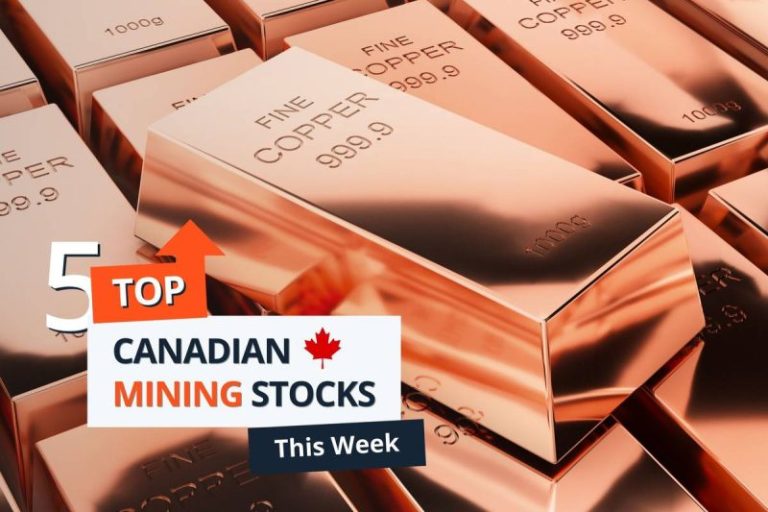
Top Canadian mining stocks this week

How did mining stocks perform against this backdrop?

Take a look at this week’s five best-performing Canadian mining stocks below.

Stocks data for this article was retrieved at 2:00 p.m. EST on Friday using TradingView’s stock screener. Only companies trading on the TSX, TSXV and CSE with market caps greater than C$10 million are included. Mineral companies within the non-energy minerals, energy minerals, process industry and producer manufacturing sectors were considered.

1. Vanguard Mining (CSE:UUU)

Weekly gain: 141.18 percent
Market cap: C$29.82 million
Share price: C$0.41

Vanguard Mining is an exploration company working to advance a portfolio of uranium, copper and nickel assets in Canada and Paraguay. Its flagship project is the Yuty Prometeo uranium project in Paraguay.

Among its properties is the Redonda copper and molybdenum project near Campbell River, British Columbia. The site consists of nine mineral claims covering 2,746 hectares and hosts porphyry-style mineralization.

On Tuesday (January 27), Vanguard announced plans for its phase 2 drill program at Redonda, comprising up to 7 holes totaling 2,800 meters, targeting areas in the southeast portion of the property between historic drill holes.

The company also said it would conduct detailed mapping and prospecting in the northern and western portions of Redonda to identify additional priority drill targets and would use phase 1 results to refine targeting.

The program is being advanced quickly to build on drilling results that “confirmed a significantly expanded copper-molybdenum mineralized system at Redonda,” the company said.

2. San Lorenzo Gold (TSXV:SLG)

Weekly gain: 85.6 percent
Market cap: C$185.63 million
Share price: C$2.32

San Lorenzo Gold is an exploration company working to advance its Salvadora project in the Chañaral province of Chile.

The property consists of 25 exploration and nine exploitation concessions covering an area of 8,796 hectares. It hosts a large copper and gold porphyry system with several significant targets. According to the project page, the site geology resembles that of the nearby Codelco-owned Salvador copper mine, which has operated since the early 1950s and is expected to continue until the mid-2060s following an expansion.

On January 26, San Lorenzo provided assay results from the first hole of a drilling program at the Cerro Blanco target at Salvadora. The hole was drilled to a depth of 472 meters, of which it encountered 222.4 meters of mineralization across five sections. The widest interval graded 1.09 grams per metric ton (g/t) gold over 132.2 meters from a depth of 201.5 meters.

The company said it believes the mineralization represents the upper level of a porphyry system and that it suggests a continuation of the system encountered during drilling at the site in 2025.

3. Ameriwest Critical Metals (CSE:AWCM)

Weekly gain: 75.76 percent
Market cap: C$14.69 million
Share price: C$0.58

Ameriwest Critical Minerals is an exploration company with a portfolio of assets in British Columbia, Canada, as well as the US states of Nevada, Oregon and Arizona.

The company announced in August that it was changing its name from Ameriwest Lithium to better reflect a portfolio diversifying into copper and rare earth minerals.

In October 2025, Ameriwest entered into a definitive agreement for the option and potential purchase of the Xeno RAR rare earth mineral claims in British Columbia. Under the terms of the deal, Ameriwest will pay C$55,000 in cash considerations, C$125,000 in exploration expenses over 18 months, a 2 percent net smelter return royalty and 2 million shares.

Then, in November, the company completed the acquisition of 34 unpatented mineral claims in Oregon that form the Bornite copper project in exchange for US$100,000 and a 2 percent net smelter return royalty.

Previous exploration of the Bornite property by Plexus in the 1990s identified a historic resource of 138.5 million pounds of copper, 54,000 ounces of gold and 1.7 million ounces of silver from 3.2 million metric tons of ore. Ameriwest’s current CEO was part of the Plexus team who explored Bornite.

In addition to its recently acquired properties, Ameriwest also owns the Thompson Valley lithium project in Arizona and the Railroad Valley lithium project in Nevada.

The most recent news from the company came on January 20, when it upsized a non-brokered private placement from C$2 million to C$3 million. The company said proceeds would be used to accelerate exploration efforts at its Bornite project.

In the release, Ameriwest says its long-term goal at the project, if results, financing and permitting are successful, is “evaluating the development of an approximately 1,000-tonne-per-day underground copper mining operation.”

4. Tectonic Metals (TSXV:TECT)

Weekly gain: 61.78 percent
Market cap: C$217.87 million
Share price: C$2.54

Tectonic Metals is a gold exploration company working to advance the Flat project in Alaska, US.

The project covers 98,840 acres in Western Alaska and hosts a reduced intrusion-related gold system and six district-scale targets. According to Tectonic, the mineralization is analogous to Kinross Gold’s (TSX:K,NYSE:KGC) Fort Knox mine in Eastern Alaska.

Among the targets is the Chicken Mountain intrusion, where exploration has identified 3 kilometers of mineral strike that remains open in all directions. Each of the 87 holes drilled at Chicken Mountain have intercepted gold.

The most recent update from the Flat project came on Thursday, when Tectonic announced results from 20 drill holes across four target areas.

Most significantly, its first drilling at the Black Creek intrusion, located 6 kilometers north of Chicken Mountain, discovered a new gold zone. The discovery hole, which started from surface, returned grades of 4.5 g/t gold over 48.77 meters. This included a core interval of 7.79 g/t over 24.38 meters, inside of which was a 6.1 meter interval grading 15.19 g/t.

The company said drilling has now confirmed gold mineralization across five intrusion targets: Chicken Mountain, Alpha Bowl, Golden Apex, Black Creek and Jam. It also said that results from 14 other holes are still pending.

5. Golden Lake Exploration (CSE:GLM)

Weekly gain: 60 percent
Market cap: C$12.48 million
Share price: C$0.12

Golden Lake Exploration is a gold exploration company that owns the Jewel Ridge gold project in Nevada, United States.

The project sits along the prolific Battle Mountain–Eureka Gold trend, which has produced more than 40 million ounces to date and hosts operations from McEwen Mining (TSX:MUX,NYSE:MUX) and North Peak Resources.

More than 700 meters of strike have been identified on the property across three primary targets: Eureka Tunnel, Jewel Ridge and Hamburg.

On Wednesday, Golden Lake announced that it had entered into a definitive agreement to be wholly acquired by McEwen Mining and become its subsidiary. Among the highlights of the deal is the ability for Jewel Ridge to be integrated into McEwen’s neighboring Gold Bar mine complex, providing access to infrastructure and funding.

FAQs for Canadian mining stocks

What is the difference between the TSX and TSXV?

The TSX, or Toronto Stock Exchange, is used by senior companies with larger market caps, and the TSXV, or TSX Venture Exchange, is used by smaller-cap companies. Companies listed on the TSXV can graduate to the senior exchange.

How many mining companies are listed on the TSX and TSXV?

As of December 2025, 898 mining companies and 71 oil and gas companies are listed on the TSXV, combining for more than 60 percent of the 1,531 total companies listed on the exchange.

As for the TSX, it is home to 175 mining companies and 51 oil and gas companies. The exchange has 2,089 companies listed on it in total.

Together, the TSX and TSXV host around 40 percent of the world’s public mining companies.

How much does it cost to list on the TSXV?

There are a variety of different fees that companies must pay to list on the TSXV, and according to the exchange, they can vary based on the transaction’s nature and complexity. The listing fee alone will most likely cost between C$10,000 to C$70,000. Accounting and auditing fees could rack up between C$25,000 and C$100,000, while legal fees are expected to be over C$75,000 and an underwriters’ commission may hit up to 12 percent.

The exchange lists a handful of other fees and expenses companies can expect, including but not limited to security commission and transfer agency fees, investor relations costs and director and officer liability insurance.

These are all just for the initial listing, of course. There are ongoing expenses once companies are trading, such as sustaining fees and additional listing fees, plus the costs associated with filing regular reports.

How do you trade on the TSXV?

Investors can trade on the TSXV the way they would trade stocks on any exchange. This means they can use a stock broker or an individual investment account to buy and sell shares of TSXV-listed companies during the exchange’s trading hours.

Article by Dean Belder; FAQs by Lauren Kelly.

Securities Disclosure: I, Dean Belder, hold no direct investment interest in any company mentioned in this article.

Securities Disclosure: I, Lauren Kelly, hold no direct investment interest in any company mentioned in this article.

This post appeared first on investingnews.com

  • A mid-air collision over Washington D.C. in January 2025 resulted in the deaths of 67 people.
  • The crash killed 28 members of the U.S. figure skating community, including 11 young skaters.
  • The skaters were returning from a national development camp in Wichita, Kansas.
  • Coaches and family members reflect on the loss of the talented young athletes one year after the tragedy.

As 1998 Olympic men’s figure skating gold medalist Ilia Kulik and two-time Olympic coach Audrey Weisiger stepped outside Fairfax Ice Arena in Northern Virginia on a cold January morning a year ago, there was so much they feared, yet so much they still didn’t know.

They were well aware there had been a midair collision over the Potomac River at Washington Reagan National Airport less than 12 hours earlier. They knew a group of young figure skaters, coaches and families had been on the plane. But they weren’t certain who exactly was on that flight, or perhaps on a different flight coming back from the national development camp for up-and-coming skaters after the 2025 U.S. championships in Wichita, Kansas. 

It was 8 a.m. Thursday, January 30, 2025. “Olivia has a lesson now,” said Kulik, who competed for his native Russia but now coaches in the Washington, D.C., suburbs. Olivia Eve Ter, 12, was one of Kulik’s top young skaters.

Weisiger looked at him, steeling herself. “Did you text her mom to see if they were on the flight?”

“I can’t do it,” Kulik said. “I’m shaking.” 

So Weisiger took his phone and texted Olivia’s mother as they stood outside in the parking lot in front of the rink. 

They waited a couple of minutes, staring at the phone. There was no reply. 

“Ilia, I don’t think they’re coming,” Weisiger said.

“No, she’ll be here,” he insisted. 

They stood in excruciating silence for several more minutes.

“Ilia, they aren’t coming,” Weisiger finally said, softly, as Kulik, one of his sport’s great champions, collapsed to the pavement, sobbing uncontrollably. 

Olivia Eve Ter was one of 11 skaters to perish on American Airlines Flight 5342. Her mother, Olesya Taylor, also was killed. In all, 28 members of the figure skating community and a total of 64 passengers and crew died when a Black Hawk helicopter collided with the plane as it was about to land in Washington at 8:47 p.m. Wednesday, Jan. 29, 2025. Three on the helicopter also were killed. 

That same Thursday morning, 10 miles away from Fairfax Ice Arena at his home rink in Reston, Virginia, world and national champion Ilia Malinin arrived to spend what should have been four to six hours practicing on the ice. He left after 30 minutes.

“I knew I had to go to the rink,” Malinin told USA TODAY Sports later that day, “but it got so bad that I had no strength, mentally or physically, to skate. It was very hard for me to be around a skating rink, especially after what happened, knowing that a lot of them were part of my skating club and clubs that I knew. It’s really heartbreaking. It’s like their chances just disappear.” 

Malinin knew them as the talented youngsters in the Washington area who took lessons at different rinks and occasionally buzzed near him on the ice as he was practicing his famous quadruple jumps and they were learning their triples. 

Weisiger was one of the people teaching them. Figure skating coaching is so different from what we’re used to in major league sports. In baseball, a major league manager doesn’t also coach little leaguers. But in figure skating, that’s exactly what happens. The top coaches also train the younger skaters. So while Weisiger coached Olympians and U.S. champions like Michael Weiss and Timothy Goebel, she also was giving lessons to young children and teenagers.

Four of them were on the plane: 12-year-old Brielle Beyer, 16-year-old Edward Zhou, 16-year-old Cory Haynos and Olivia. A year later, Weisiger proudly talked about each for USA TODAY’s Milan Magic podcast: How they learned a new jump, how they tore across the ice, how proud they were to be selected for the national development camp. 

Brielle, she said, “was this little sprite that motored around the rink and she was unstoppable.” 

Edward? “There was something so magical about little Eddie. … He was one of those kids that everybody felt joyful around.” 

Cory? “Right before they went to (Kansas), Cory achieved his triple axel, which was unbelievable.” 

And Olivia? “She was my last lesson with those kids before they went to Kansas. She said, ‘Coach Audrey, this is the biggest moment of my life, I’ve been working for so long to try and get to this camp. I’ll make you proud.’’

Now, when Weisiger visits the kids’ gravesites, disbelief often sets in. “I had never been to so many funerals for children in my life,” she said. 

Birthdays still come. Brielle’s father, Andy Beyer, just hosted a celebration at his house to honor his daughter on what would have been her 13th birthday. Brielle’s friends from the neighborhood and from skating observed a moment of silence when they lit the candle on a birthday cake and listened to one of the poems she had written, which he had set to music, “a really special but hard and tearful moment,” he said. 

They released balloons into the night sky and walked through Brielle’s bedroom, which was also where Andy was set up remotely to speak on the Milan Magic podcast. He proudly held up Post-It notes she left with her goals written on them. 

And he cherishes the red jacket she earned for being invited to the national development camp. “I still have that national development team jacket that they sent me because, you know, unfortunately, she died wearing hers on the airplane.” 

Sad reminders of the young lives lost began for Weisiger the day after the plane crash when a delivery came to Fairfax Ice Arena. The pro shop manager beckoned Weisiger to come see what it was, so she did. 

It was a box addressed to Edward Zhou. She opened it. Inside was a new pair of skates.

This post appeared first on USA TODAY

NFL coaching vacancies continue to fill across the league. Ten teams will start the 2026 season with a different head coach this September than they had in Week 1 of the 2025 season: Arizona, Atlanta, Baltimore, Buffalo, Cleveland, Las Vegas, Miami, Pittsburgh, Tennessee and the New York Giants.

As of Jan. 29, eight of those positions have been filled. Only the Cardinals and Raiders are without a new leader for 2026.

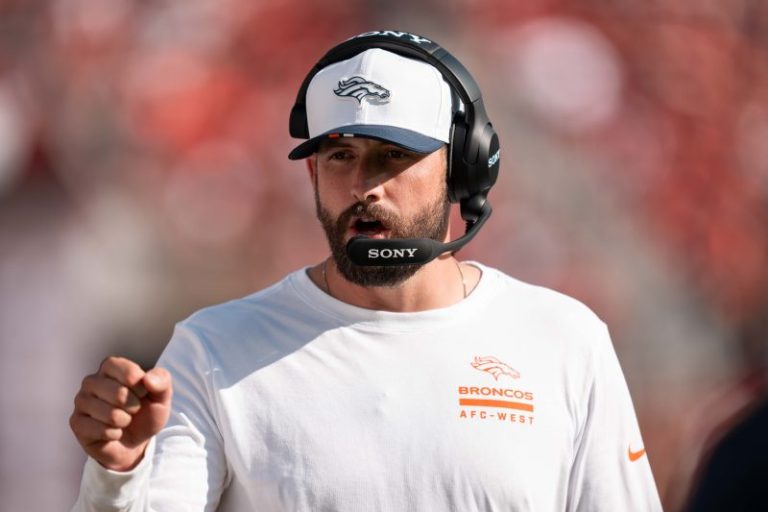
One major name has removed himself from consideration for the Raiders’ job: Denver Broncos assistant Davis Webb, per multiple reports.

Webb was on four teams in his six-year NFL career before getting into the coaching ranks. He joined the Broncos in 2023 as the team’s quarterbacks coach under Sean Payton and was promoted to passing game coordinator in 2025.

The Raiders have interviewed 15 people for their head coach opening, including Webb. Six were hired to either head coaching or offensive coordinator positions with other teams.

The other eight people the Raiders have interviewed for their head coaching vacancy include:

  • Klay Kubiak (San Francisco 49ers offensive coordinator)
  • Mike LaFleur (Los Angeles Rams offensive coordinator)
  • Nate Scheelhaase (Los Angeles Rams pass game coordinator)
  • Chris Shula (Los Angeles Rams defensive coordinator)
  • Ejiro Evero (Carolina Panthers defensive coordinator)
  • Klint Kubiak (Seattle Seahawks offensive coordinator)
  • Vance Joseph (Denver Broncos defensive coordinator)
  • Matt Nagy (former Kansas City Chiefs offensive coordinator)

NFL head coaching hires

Eight head coach positions have been filled at time of publishing. Here’s the list of new hires:

  • Atlanta Falcons: Kevin Stefanski
  • Baltimore Ravens: Jesse Minter
  • Buffalo Bills: Joe Brady
  • Cleveland Browns: Todd Monken
  • Miami Dolphins: Mike McDaniel
  • New York Giants: John Harbaugh
  • Pittsburgh Steelers: Mike McCarthy
  • Tennessee Titans: Robert Saleh
This post appeared first on USA TODAY

  • LSU offensive coordinator Charlie Weis Jr. is praised for his loyalty and commitment in college football.
  • Weis turned down an offer from the Philadelphia Eagles to honor his commitment to LSU.
  • Weis is considered a rising star in coaching, earning high praise from figures like Gil Brandt.

Just when you can’t take another selfish, me-first college football story, do I have the remedy for you. 

When you can’t watch another player or coach using one job to find another, and can’t stomach money becoming the driving force of all things success and stature, let me introduce LSU offensive coordinator Charlie Weis Jr. 

The next big thing in college football.

Doesn’t care about job hopping. Doesn’t care that the NFL desperately wants him, or about his current boss’ sophomoric spite.

He cares about his word and commitment.  

In the rapidly-evolving era of get yours — from coaches and players and university presidents — Weis is standing in the middle of it all and giving his. To his boss and his players, without fear of consequence. 

In the last two months alone, Weis, 32, made three moves that should have every university president and NFL owner thinking seriously about making the big hire before it’s too late.

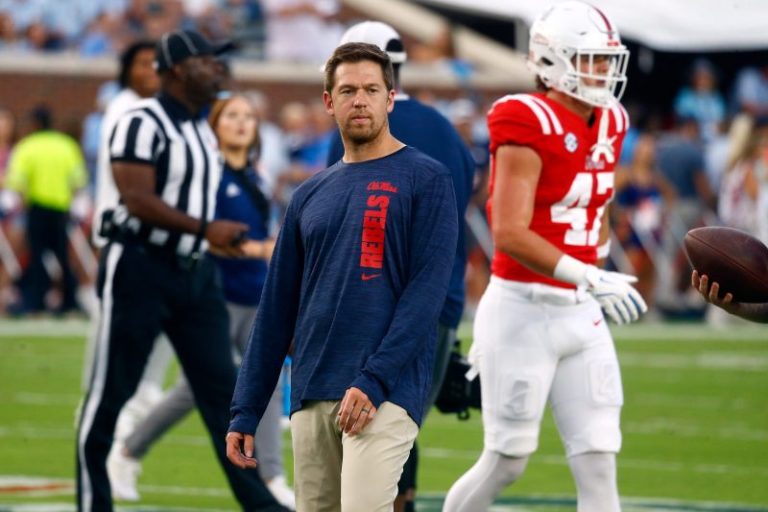
In December, days after Lane Kiffin left his job at Ole Miss for LSU — after Kiffin told his Ole Miss assistants if they wanted to keep their job, they’d get on a plane with him to Baton Rouge — Weis walked into Kiffin’s office and told him he couldn’t take it anymore.

He simply couldn’t walk away from the players he developed and coached into the rare position of competing for a national championship in the College Football Playoff. He felt so strongly about it, felt so loyal to the players, that he was willing to risk his job at LSU to return to Ole Miss and coach those players in the CFP while also spending his time working for LSU.

Not long after Ole Miss’ magical run in the CFP, where Weis’ offensive ingenuity and play-calling skills were showcased — and it was clear that Weis, not Kiffin (as Kiffin has said many times), was the primary play-caller of the most creative offense in college football — new Rebels coach Pete Golding made a push for Weis’ permanent return to Ole Miss.

They’d buy out his LSU contract. They’d do what it took to bring him back into the fold. 

Weis told Golding he’d already made a commitment to Kiffin and LSU, and wasn’t going back on it. No matter how much money Ole Miss threw at him. 

Not long after that, after the Philadelphia Eagles were bounced in the first round of the NFL playoffs, Eagles coach Nick Sirianni offered Weis the offensive coordinator/play-caller job. He’d work at the highest level of football, and work with a dynamic Eagles offense that arguably has the best collection of skill talent in the league.

The Eagles, like Ole Miss, would pay him what he wanted. But Weis told Sirianni he made a commitment to LSU and Kiffin, and wasn’t going back on it.

You want the next big thing in college football? Here’s your man.

Years ago, when Weis first officially worked for Kiffin as a 24-year-old at Florida Atlantic, I spoke with legendary NFL personnel man Gil Brandt — the iconic NFL general manager who built the Dallas Cowboys into America’s Team.

Brandt met Weis at Florida in 2011, where he was an 18-year-old student as his dad, Charlie Weis Sr., was offensive coordinator for the Gators under then-coach Will Muschamp. They sat down for nearly 90 minutes and talked ball on a brisk spring day, analyzing everything from coverages and fronts, to passing and run-game concepts, to organizational planning and growth. 

All of it, from soup to nuts.  

“So Charlie Jr. leaves, and his dad walks in and asks me, ‘So what did you think of him?’” Brandt told me in 2018. “I told (Charlie Sr.) that I’ve met two people in my life where I knew, without a doubt, he would be a successful coach. One was Bill Belichick. Then (Charlie Sr.) asks me, ‘Who was the other?’ I said he just got up and walked away.”

Not long after that, Weis met Kiffin, then the Alabama offensive coordinator. Nick Saban needed an offensive analyst, and Eric Kiesau, another analyst on staff, told Saban and Kiffin about this young guy who would blow them away if they talked to him. Two years later, near the end of Kiffin’s run with the Tide, Kiffin admitted Weis had become such a factor with game-planing annd opponent evaluation, that he could predict Kiffin’s play calls.

The young coach with the photographic memory, who can recite play calls and down and distance situations from games and years past on demand, then left for a season to work as an offensive assistant with the NFL’s Atlanta Falcons. A year later, Kiffin got the Florida Atlantic job and hired Weis as his offensive coordinator.

And wouldn’t you know it ― to bring this story full circle ― then Falcons offensive coordinator Steve Sarkisian offered to keep Weis with a position job in the NFL at 24 years old. 

But Weis stayed with Kiffin because he made the commitment. Just like he did with the Ole Miss players. Like he did with Kiffin again after Ole Miss tried to poach him back, and after the NFL came calling again.

Soon enough, when the right job comes along with the right president and athletic director — or NFL owner — Weis will finally accept his first head-coaching gig.

That’ll be the best story of all.

This post appeared first on USA TODAY

The Atlanta Falcons’ organizational remodel is nearing completion.

The Falcons are expected to hire Ian Cunningham to be the team’s next general manager, according to multiple reports.

Cunningham is a longtime NFL scout who spent the last four seasons as the Chicago Bears’ assistant general manager. The 40-year-old worked closely with Bears general manager Ryan Poles – a college teammate of new Falcons president of football operations Matt Ryan – to rebuild Chicago into a playoff team.

That, plus Cunningham’s experience working under Ozzie Newsome with the Baltimore Ravens (2008-16) and Howie Roseman with the Philadelphia Eagles (2017-21), helped him earn general manager interviews in recent seasons.

Ultimately, Atlanta was the team to give Cunningham his first general manager opportunity. He will now work with Ryan and new Falcons coach Kevin Stefanski to try to get Atlanta to the playoffs for the first time since the 2017 NFL season.

First up on Cunningham’s to-do list will be figuring out what to do at quarterback. Michael Penix Jr. suffered a torn ACL midway through the season while Kirk Cousins could be a cap casualty ahead of the third season of his four-year, $180 million free-agent deal.

The Falcons went 8-9 last season under the leadership of coach Raheem Morris and general manager Terry Fontenot. They have not had a winning season since 2017.

This post appeared first on USA TODAY

Drake Maye appeared on the New England Patriots’ injury report for the first time of the 2025 NFL season less than two weeks ahead of his team’s Super Bowl 60 matchup with the Seattle Seahawks.

Maye was estimated to be a ‘limited’ participant on the Patriots’ Jan. 28 practice report because of an injury to his right shoulder.

The Patriots did not actually practice on Jan. 28, and Mike Vrabel expressed little concern about Maye’s injury during a news conference the previous day. Nonetheless, many will be watching the second-year quarterback’s status with a keen eye as he battles an injury in his throwing shoulder.

Here are the latest updates about Maye’s injury as the 23-year-old prepares to make his first-ever Super Bowl start in just his second season.

Drake Maye injury update

Maye provided a positive update about his shoulder injury when asked about it by reporters during a post-practice media availability on Jan. 29.

‘Yeah, I feel good,’ Maye said. ‘Got out there, moved around a good bit today, and went in to do some jog-throughs, so, feeling good.’

Maye also indicated he would be ready to play in Super Bowl 60, which is set to kick off on Feb. 8.

‘I’m looking forward to be ready to go,’ Maye said. ‘This is the game you dream of playing in, so looking forward to getting out there and getting a chance to play in the Super Bowl.’

Maye further expressed his belief that his shoulder injury isn’t anything severe and shouldn’t limit him greatly as he prepares to suit up for the Super Bowl.

‘I think it’s just been one of those things where it’s a long season,’ Maye explained. ‘Sometimes, things show up. I’ll do whatever I can to, you know, feel 100% and I’m sure I’ll get if not there as close as I can or 99[%] or do whatever I can to make sure, I’m throwing and, like I said, do whatever I can to help the team win.’

Vrabel also addressed Maye’s injury during his Jan. 29 media availability. Notably, he told reporters the 23-year-old quarterback’s injury was new and not an aggravation of a previous injury, as such a malady would have been listed on the injury report.

Additionally, Vrabel expressed he wasn’t overly concerned about Maye’s injury as Super Bowl 60 approaches.

‘I try not to have a whole lot of concern,’ Vrabel said. ‘I just want to try to prepare the football team, make sure that everybody’s read, that we all have a plan, not to surprise anybody and make sure that our guys are focusing on the first and second down plan.’

This post appeared first on USA TODAY