Author

admin

Browsing

Here’s a quick recap of the crypto landscape for Wednesday (December 10) as of 9:00 p.m. UTC.

Get the latest insights on Bitcoin, Ether and altcoins, along with a round-up of key cryptocurrency market news.

Bitcoin and Ether price update

Bitcoin (BTC) was priced at US$92,516.67 down by 0.7 percent over 24 hours.

Bitcoin price performance, December 10, 2025.

Chart via TradingView.

The Bitcoin price reclaimed US$92,000 ahead of Wednesday’s US Federal Reserve meeting, with traders pricing in an interest rate cut, but holding back without signals of extended easing into 2026.

Bitcoin’s continued volatility and subdued options activity have dampened expectations for a typical year-end rally, with 30 day implied volatility easing to 49 percent and analysts seeing a December surge as unlikely.

ARK Invest CEO Cathie Wood remains bullish on Bitcoin in the longer term, arguing that the current pause does not signal a new bear cycle, and that Bitcoin is behaving as a resilient risk‑on asset.

Ray Youssef, CEO of NoOnes, called Wednesday’s Fed meeting outcome — the central bank cut rates as expected, but its dot plot signals just one more cut in 2026 with hawkish dissents.

Glassnode notes that Bitcoin is stuck in a fragile price range around US$92,700, held up by steady buying, but weighed down by big investors taking losses and long-term holders cashing in profits. Losses among holders are growing as time passes without a strong rebound, pushing more people to sell into small price upticks; combined with low spot activity and negative exchange-traded fund flows, this leaves the market highly sensitive to macro events.

Futures trading has shown caution, with little leveraged positioning for big moves, while options traders are buying short‑dated downside protection. Analysts project that Bitcoin could test higher levels near US$95,000 if sellers tire out, but staying below key supports risks a pullback without fresh demand.

Meanwhile, traders have been driving the Ether/Bitcoin ratio up, signaling that capital is rotating from Bitcoin into altcoins, a dynamic that often precedes broader altcoin rallies. Bitcoin dominance is at 55.25.

Ether (ETH) was priced at US$3,362.98, up by 1 percent over the last 24 hours.

Altcoin price update

  • XRP (XRP) was priced at US$2.07, down by 2.2 percent over 24 hours.
  • Solana (SOL) was trading at US$138.48, down by 1.2 percent over 24 hours.

Crypto derivatives and market indicators

Bitcoin open interest rose 0.42 percent to US$59.47 billion, while Ether open interest stood at US$41.66 billion.

Bitcoin’s -0.002 percent funding rate reflects long pain, while a neutral relative strength index of 52.62 doesn’t indicate overbought or oversold extremes.

Today’s crypto news to know

Strategy’s letter to MSCI on DAT exclusion proposal

Bitcoin treasury pioneer Strategy (NASDAQ:MSTR) submitted a letter to MSCI’s Equity Index Committee on Tuesday (December 9), urging it to reject a proposal excluding digital asset treasury companies (DATs).

DATs are defined as firms with more than 50 percent of their assets in crypto.

“The proposal’s 50% rule arbitrarily singles out digital asset businesses for uniquely unfavorable treatment, while leaving untouched businesses in other industries (such as oil, timber, gold, media and entertainment, and real estate) that have similarly concentrated holdings in a single asset type,” the letter argues before concluding that the proposal “rests on a broad mischaracterization of DATs and would impose arbitrary, unworkable conditions that would stifle innovation, damage the reputation of MSCI’s indices, and conflict with national priorities.”

OCC says banks can conduct riskless principal crypto trades

The Office of the Comptroller of the Currency (OCC) issued new guidance confirming that US national banks are allowed to execute riskless principal transactions involving crypto assets.

In these deals, a bank briefly takes the opposite side of a customer trade and immediately offsets it with a matching transaction, eliminating balance-sheet exposure to the digital asset. The clarification is seen as a step toward giving regulated institutions more operational certainty when serving crypto-active clients. Banks conducting such activity must also comply with all existing consumer protection and anti-money-laundering rules.

Singapore leads new global crypto competitiveness index

Singapore has taken the top spot in Bybit and DL Research’s World Crypto Rankings 2025, edging out the US and Lithuania.

Analysts credit the city-state’s strong licensing regime, high digital literacy, and active institutional participation for pushing its total score to 7.5 out of 10. The report also highlights Singapore’s growing role in real-world asset tokenization, an area where market value has increased over 63 percent since early 2024 to reach US$25.7 billion.

The US remains closely behind with a score of 7.3, while Lithuania ranks third at 6.3.

US teachers union warns Senate against crypto market structure bill

The American Federation of Teachers (AFT) is urging the US Senate to throw out the Responsible Financial Innovation Act, arguing the proposal would undermine protections for retirement investors.

In a letter to Senate leadership, AFT President Randi Weingarten said the legislation could expose pension funds to “unsafe assets” and elevate risks tied to fraud and price instability in the crypto market.

The union fears that the bill’s tokenization provisions would allow companies to shift assets onto blockchain rails while sidestepping existing registration and disclosure rules. Weingarten argued that weaker oversight could ultimately threaten market stability and “lay the groundwork for the next financial crisis.”

Lummis comments on Responsible Financial Innovation Act

Speaking at the Blockchain Association Policy Summit on Tuesday, Wyoming Senator Cynthia Lummis, a member of the US Senate Banking Committee, said she anticipates that the markup hearing for the Responsible Financial Innovation Act will happen before Congress breaks for the holidays.

Lummis is a prominent proponent for addressing digital asset market structure in Congress.

Japan’s crypto regulation shift

Japan’s Financial Services Agency released a report from the Financial System Council’s Working Group on cryptocurrency regulation. The agency proposes moving the legal basis for crypto regulation from the Payment Services Act to the Financial Instruments and Exchange Act, the primary law governing securities markets, trading and disclosures.

Securities Disclosure: I, Meagen Seatter, hold no direct investment interest in any company mentioned in this article.

Securities Disclosure: I, Giann Liguid, hold no direct investment interest in any company mentioned in this article.

This post appeared first on investingnews.com

Standard Uranium Ltd. (TSXV: STND,OTC:STTDF) (OTCQB: STTDF) (FSE: 9SU0) (‘Standard Uranium’ or the ‘Company’) announces the conclusion, effective December 11, 2025, of an arm’s length property option agreement (the ‘Agreement’) with Aero Energy Ltd. (‘Aero’) dated October 20, 2023, that had allowed Aero to earn up to 100% interest in the Sun Dog Project (‘Sun Dog’, or the ‘Project’). Following the conclusion of the Agreement, full and unencumbered ownership of the Project has been returned to the Company. Standard Uranium is currently working on plans to advance exploration on Sun Dog, building upon recent drilling and geophysical programs in 2024 and 2025.

Sun Dog covers an area of 48,443 acres (19,604 ha) across nine mineral claims and is located 15 km Southeast of Uranium City on the northern margin of the Athabasca Basin (Figure 1). It hosts the historical Gunnar Uranium Mine, discovered in 1952, which doubled Canada’s uranium production and became the largest uranium producer globally in 1956. The Gunnar Mine produced approximately 18M lbs of U3O8 between 1953 and 19811,2.

Jon Bey, CEO & Director of Standard Uranium, commented, ‘Sun Dog is a fantastic project that continues to garner a great deal of interest from multiple companies. We are excited to have the Sun Dog project returned to our portfolio and confident that we will have another joint venture partner funding further exploration in the next year. I would also like to wish the team at Aero Energy future success as they focus their sites on their other uranium projects in Canada and the USA. They were a great partner to work with the past two years.’

Figure 1. Overview of the Sun Dog Project highlighting drill target areas, historical high-grade* uranium occurrences3, and EM-conductors4.

To view an enhanced version of this graphic, please visit:
https://images.newsfilecorp.com/files/10633/277772_82df2fcd64d3c957_001full.jpg

Sun Dog Highlights

  • History of Production: The project hosts the historical Gunnar Mine which produced 18M pounds of U3O8 between 1953 and 1981 and was formerly the world’s largest uranium producer1,2.

  • Uranium Above and Below the Unconformity: Numerous recent and historical high-grade* uranium assays from outcrop samples across the Project range from 0.01% to 17.4% U3O83,4. These showings occur in both basement rocks below the Unconformity and perched within Athabasca sandstones above the Unconformity thus confirming the presence of unconformity-related high-grade uranium on the Sun Dog Project.

  • Verified Targets: Stacked graphitic structural zones associated with uranium mineralization and prospective hydrothermal alteration have been intersected in multiple target areas during modern drill programs. The drill program results to date confirm a favorable geological environment for fluid movement and uranium deposition on the Project.

Modern Exploration

Recent exploration efforts by Standard Uranium have focused on multiple target areas across the Project, testing down-dip extensions of structures hosting uranium at surface with the aim of discovering high-grade unconformity mineralization and basement ‘roots’ of the mineralizing systems underlying the Athabasca sandstones.

Prospecting & Surface Exploration

Prospecting in 2020 led to the discovery of a new high-grade uranium showing named the Haven discovery and several zones of visible uranium mineralization at surface that returned uranium assay results of 3.58% U3O8, 1.7% U3O8, and 0.7% U3O8.5

In the summer of 2022, Standard Uranium executed a field mapping and prospecting program to expand upon the results of the 2020 prospecting program. Handheld RS-120 and RS-125 scintillometers were used to track radioactivity with more than 80 new mineralized boulder and bedrock locations discovered on Johnston and Stewart islands.

In 2024, occurrences of strong to intense radioactivity in outcropping basement rocks were identified at surface while prospecting at the Wishbone and Spring-Dome target areas, returning highly anomalous assays ranging from 0.02% to 13.0% U3O8.6

Additionally, the analytical results revealed a correlation between uranium and gold, while boron and other pathfinder elements highlighted the potential for a robust alteration footprint associated with uranium mineralization. Surficial grab samples from faults and veins cutting sandstone outcrop returned high concentrations of dravite (up to 75%), a uranium pathfinder mineral commonly associated with uranium-fertile systems.

Geophysical Surveys

In the winter of 2022, MWH Geo-Surveys Ltd. carried out a ground gravity survey and UAV-borne magnetic surveys in the areas of Johnston and Stewart islands on behalf of Standard Uranium. The gravity survey consisted of 3,388 unique gravity measurement stations with a station spacing of 50 to 100 m. The survey identified several variations in residual gravity and outlined multiple gravity low target areas on and around Stewart and Johnston islands.

An airborne VTEMTM Plus survey was completed in 2024 to pinpoint graphitic rocks (conductors) favourable for hosting significant concentrations of uranium. This modern electromagnetic (‘EM’) survey improved upon historical surveys which have identified at least 40 km of combined conductor strike length.

In 2025, MWH Geo-Surveys Ltd. completed high-resolution ground gravity surveys along known conductive exploration trends across the Wishbone, McNie, and Armbruster South target areas, filling in the gaps between the previous 2022 gravity grids (Figure 2). These surveys have identified numerous density-low bullseye anomalies representing potential zones of hydrothermal alteration or structural disruption which are commonly associated with uranium mineralization events.

Figure 2. 2025 ground gravity survey areas covering the Armbruster South, Wishbone, and McNie EM conductor trends. Density-low anomalies representing potential alteration zones are highlighted by cool colours on the inverted gravity grids.

To view an enhanced version of this graphic, please visit:
https://images.newsfilecorp.com/files/10633/277772_82df2fcd64d3c957_002full.jpg

Drill Programs

Standard Uranium carried out two drill programs on the Project during the winters of 2022 and 2023, in addition to operating a program in 2024 funded by Aero. In total, 4,062 m of diamond drilling has been completed by the Company across 21 drill holes on the Project.

Historical exploration efforts primarily focused on the ‘Beaverlodge-style’ deposit model, targeting lower-grade, fault-hosted mineralization visible at the surface. This approach did not target, and would not have been effective for, the high-grade ‘Unconformity-related’ basement-hosted deposits associated with graphitic rocks more recently discovered near the Athabasca Basin’s edge (e.g. Arrow, Triple R).

Recent diamond drill programs have been successful in identifying key geological characteristics prospective for significant uranium mineralizing systems on the Project, which in turn will aid in planning and prioritization of additional exploration targets for follow-up drill programs.

Drilling highlights include3,8:

  • Widespread hydrothermal alteration zones containing illite-rich and dravitic clays and abundant iron-oxide minerals intersected in multiple drill holes, indicating a robust fluid system with prospective chemistry for uranium.

  • Significant structural influence evidenced to control high-grade uranium mineralization and anomalous radioactivity in drill holes.

  • Reactivated graphitic shear zones & quartz-hematite breccias intersected over 10s of metres in several drill holes indicate ideal structural regime providing the plumbing system for uranium mobilization.

  • Favorable geochemistry returned in multiple drill holes, including prospective clay spectroscopy results (dravite), elevated pathfinder elements, and anomalous uranium correlated to lead isotope ratios which may be used as an additional exploration vector.

  • Uranium mineralization confirmed by anomalous uranium assays was intersected in multiple drill holes, coinciding with prospective structure and favorable alteration.

Qualified Person Statement

The scientific and technical information contained in this news release has been reviewed, verified, and approved by Sean Hillacre, P.Geo., President and VP Exploration of the Company and a ‘qualified person’ as defined in NI 43-101 – Standards of Disclosure for Mineral Projects.

Samples collected for analysis by the Company were sent to SRC Geoanalytical Laboratories in Saskatoon, Saskatchewan for preparation, processing, and ICP-MS multi-element analysis using total and partial digestion, gold by fire assay, and boron by fusion. Basement samples were tested with ICP-MS2 uranium multi-element exploration package plus boron. All basement samples marked as radioactive upon arrival to the lab were also analyzed using the U3O8 assay (reported in wt %). Basement rock split interval samples range from 0.1 to 0.5 m. SRC is an ISO/IEC 17025:2005 and Standards Council of Canada certified analytical laboratory. Blanks, standard reference materials, and repeats were inserted into the sample stream at regular intervals in accordance with Standard Uranium’s quality assurance/quality control (QA/QC) protocols. All samples passed internal QA/QC protocols, and the results presented in this release are deemed complete, reliable, and repeatable.

Samples containing clay alteration were sent to Rekasa Rocks Inc. in Saskatoon, Saskatchewan to be analyzed by Short Wavelength Infrared Reflectance (‘SWIR‘) via a Portable Infrared Mineral Analyzer (‘PIMA‘) to verify clay species. All depth measurements reported are down-hole measurements and true thicknesses are yet to be determined.

Historical data disclosed in this news release relating to sampling results from previous operators are historical in nature. Neither the Company nor a qualified person has yet verified this data and therefore investors should not place undue reliance on such data. The Company’s future exploration work may include verification of the data. The Company considers historical results to be relevant as an exploration guide and to assess the mineralization as well as economic potential of exploration projects. Any historical grab samples disclosed are selected samples and may not represent true underlying mineralization.

Natural gamma radiation from rocks reported in this news release was measured in counts per second (‘cps’) using a handheld RS-125 super-spectrometer and RS-120 super-scintillometer. Readers are cautioned that scintillometer readings are not uniformly or directly related to uranium grades of the rock sample measured and should be treated only as a preliminary indication of the presence of radioactive minerals. The RS-125 and RS-120 units supplied by Radiation Solutions Inc. (‘RSI‘) have been calibrated on specially designed Test Pads by RSI. Standard Uranium maintains an internal QA/QC procedure for calibration and calculation of drift in radioactivity readings through three test pads containing known concentrations of radioactive minerals. Internal test pad radioactivity readings are known and regularly compared to readings measured by the handheld scintillometers for QA/QC purposes.

References

  1. Gunnar Uranium Mine: From Cold War Darling to Ghost Town, L. Schramm, Saskatchewan Research Council, 2018.
  2. Geology and Genesis of Major World Hardrock Uranium Deposits, United States Geological Survey, Open-File Report 81-166, 1981.
  3. Technical Report on the Sun Dog Property – Northwestern Saskatchewan, Canada, Effective date June 30, 2023
  4. Information obtained from Saskatchewan Mineral Deposit Index and historical report from Uranium City Resources, 2007

*The Company considers uranium mineralization with concentrations greater than 1.0 wt% U3O8 to be ‘high-grade’.

**The Company considers radioactivity readings greater than 65,535 counts per second (cps) on a handheld RS-125 Super-Spectrometer to be ‘off-scale’.

***The Company considers radioactivity readings greater than 300 counts per second (cps) on a handheld RS-125 Super-Spectrometer to be ‘anomalous’.

About Standard Uranium (TSXV: STND,OTC:STTDF)

We find the fuel to power a clean energy future

Standard Uranium is a uranium exploration company and emerging project generator poised for discovery in the world’s richest uranium district. The Company holds interest in over 235,435 acres (95,277 hectares) in the world-class Athabasca Basin in Saskatchewan, Canada. Since its establishment, Standard Uranium has focused on the identification, acquisition, and exploration of Athabasca-style uranium targets with a view to discovery and future development.

Standard Uranium’s Davidson River Project, in the southwest part of the Athabasca Basin, Saskatchewan, comprises ten mineral claims over 30,737 hectares. Davidson River is highly prospective for basement-hosted uranium deposits due to its location along trend from recent high-grade uranium discoveries. However, owing to the large project size with multiple targets, it remains broadly under-tested by drilling. Recent intersections of wide, structurally deformed and strongly altered shear zones provide significant confidence in the exploration model and future success is expected.

Standard Uranium’s eastern Athabasca projects comprise over 43,185 hectares of prospective land holdings. The eastern basin projects are highly prospective for unconformity related and/or basement hosted uranium deposits based on historical uranium occurrences, recently identified geophysical anomalies, and location along trend from several high-grade uranium discoveries.

Standard Uranium’s Sun Dog project, in the northwest part of the Athabasca Basin, Saskatchewan, is comprised of nine mineral claims over 19,603 hectares. The Sun Dog project is highly prospective for basement and unconformity hosted uranium deposits yet remains largely untested by sufficient drilling despite its location proximal to uranium discoveries in the area.

For further information contact:

Jon Bey, Chief Executive Officer, and Chairman
Suite 3123, 595 Burrard Street
Vancouver, British Columbia, V7X 1J1

Tel: 1 (306) 850-6699
E-mail: info@standarduranium.ca

Cautionary Statement Regarding Forward-Looking Statements

This news release contains ‘forward-looking statements’ or ‘forward-looking information’ (collectively, ‘forward-looking statements’) within the meaning of applicable securities legislation. All statements, other than statements of historical fact, are forward-looking statements and are based on expectations, estimates and projections as of the date of this news release. Forward-looking statements include, but are not limited to, statements regarding: the timing and content of upcoming work programs; geological interpretations; timing of the Company’s exploration programs; and estimates of market conditions.

Forward-looking statements are subject to a variety of known and unknown risks, uncertainties and other factors that could cause actual events or results to differ from those expressed or implied by forward-looking statements contained herein. There can be no assurance that such statements will prove to be accurate, as actual results and future events could differ materially from those anticipated in such statements. Certain important factors that could cause actual results, performance or achievements to differ materially from those in the forward-looking statements are highlighted in the ‘Risks and Uncertainties’ in the Company’s management discussion and analysis for the fiscal year ended April 30, 2025.

Forward-looking statements are based upon a number of estimates and assumptions that, while considered reasonable by the Company at this time, are inherently subject to significant business, economic and competitive uncertainties and contingencies that may cause the Company’s actual financial results, performance, or achievements to be materially different from those expressed or implied herein. Some of the material factors or assumptions used to develop forward-looking statements include, without limitation: that the transaction with the Optionee will proceed as planned; the future price of uranium; anticipated costs and the Company’s ability to raise additional capital if and when necessary; volatility in the market price of the Company’s securities; future sales of the Company’s securities; the Company’s ability to carry on exploration and development activities; the success of exploration, development and operations activities; the timing and results of drilling programs; the discovery of mineral resources on the Company’s mineral properties; the costs of operating and exploration expenditures; the presence of laws and regulations that may impose restrictions on mining; employee relations; relationships with and claims by local communities and indigenous populations; availability of increasing costs associated with mining inputs and labour; the speculative nature of mineral exploration and development (including the risks of obtaining necessary licenses, permits and approvals from government authorities); uncertainties related to title to mineral properties; assessments by taxation authorities; fluctuations in general macroeconomic conditions.

The forward-looking statements contained in this news release are expressly qualified by this cautionary statement. Any forward-looking statements and the assumptions made with respect thereto are made as of the date of this news release and, accordingly, are subject to change after such date. The Company disclaims any obligation to update any forward-looking statements, whether as a result of new information, future events or otherwise, except as may be required by applicable securities laws. There can be no assurance that forward-looking statements will prove to be accurate, as actual results and future events could differ materially from those anticipated in such statements. Accordingly, readers should not place undue reliance on forward-looking statements.

Neither the TSX-V nor its Regulation Services Provider (as that term is defined in the policies of the TSX-V) accepts responsibility for the adequacy or accuracy of this release.

To view the source version of this press release, please visit https://www.newsfilecorp.com/release/277772

News Provided by Newsfile via QuoteMedia

This post appeared first on investingnews.com

Copper prices were volatile in 2025 amid several competing narratives, including the possibility of a global recession early in the year and tariff measures in July.

By the end of the year, prices found support as supply and demand conditions came into focus and pointed to a deepening supply deficit in 2026.

Significant disruptions added to already tight market conditions, as two of the world’s largest mines, Ivanhoe Mines’ (TSX:IVN,OTCQX:IVPAF,OTC:IVPAF) Kamoa-Kakula and Freeport McMoRan’s Grasberg, were shut down following seismic events and the ingress of wet materials, respectively.

The closure of the mines comes as demand for the base metal surges, driven by artificial intelligence and the energy transition.

Against that backdrop, how have TSX-listed copper companies performed? Learn about the top five best-performing copper stocks in 2025 by year-to-date gains below. Data for this article was retrieved on December 9, 2025, using TradingView’s stock screener, and only companies with market capitalizations greater than C$50 million are included.

1. Imperial Metals (TSX:III)

Year-to-date gain: 333.7 percent
Market cap: C$1.4 billion
Share price: C$7.98

Imperial Metals is a mine development and production company with operations in British Columbia, Canada.

It holds a 30 percent interest in the Red Chris mine in BC’s Golden Triangle, with the remainder owned by Newmont (TSX:NGT,NYSE:NEM,ASX:NEM). Imperial also fully owns the Mount Polley copper-gold mine, which reopened in June 2022, and the Huckleberry copper mine, which has been under care and maintenance since 2016.

Provincial approvals for a 4 meter raise of the embankment at the Mount Polley tailings storage facility have been the subject of a lawsuit after the Xatśūll First Nation applied for an interim injunction challenging them in April.

A June 30 update reported that the BC Supreme Court had reserved judgment on the case following a four day hearing. The Supreme Court ultimately dismissed the Xatśūll First Nation’s application for the injunction and judicial review of the approvals on August 6. Imperials’ most recent update on the case came on September 3, when the Xatśūll First Nation filed a notice of appeal to overturn the dismissal of the judicial reviews. However, it did not appeal the injunction decision, meaning the company can complete the raise and continue mining at Mount Polley.

On August 29, Imperial announced that it received approval for a permit amendment allowing the company to expand Mount Polley’s operations and extend its operating life, including pit development and expansion of storage areas within the existing mine site footprint.

In the company’s Q3 production report for Red Chris, released on October 23, it indicated that total copper production at the mine increased 10 percent year-over-year to 20.9 million pounds, up from 18.98 million pounds in Q3 2024. Through the first nine months of the year, copper production increased even more, rising 20 percent to 67.51 million pounds from 56.37 million pounds during the same period of 2024.

The most recent update from Imperial came on November 27, when it released an exploration update from its Huckleberry mine, reporting it completed all nine holes of its 2025 diamond drill campaign testing an area southwest of the Main Zone. One hole returned a grade of 0.5 percent copper over 52.7 meters, including an intersection of 0.81 percent copper and 0.23 grams per metric ton (g/t) gold over 22.6 meters.

Shares of Imperial reached a year-to-date high of C$7.95 on December 10.

2. Meridian Mining (TSX:MNO)

Year-to-date gain: 313.33 percent
Market cap: C$656.72 million
Share price: C$1.55

Meridian Mining is an exploration and development company that is currently developing its flagship Cabaçal copper-gold project in Mato Grosso, Brazil. The project license covers a 50 square kilometer area and hosts an 11 kilometer volcanogenic massive sulfide corridor containing gold, copper and silver.

A prefeasibility study released March 10 demonstrates a post-tax base case net present value of US$984 million with an internal rate of return of 61 percent and a payback period of 17 months. The project has a predicted mine life of 10.6 years with total life of mine production of 169,647 metric tons of copper.

The included mineral resource estimate for Cabaçal shows a measured and indicated resource of 204,470 metric tons of contained copper from 51.43 million metric tons of ore with an average grade of 0.4 percent. It also hosts significant gold and silver resources.

Additionally, Meridian reported on May 8 that it has hired Ausenco Brazil as the lead engineer to complete a definitive feasibility study for Cabaçal, targeting the first half of 2026 for completion.

Meridian has been carrying out an extensive exploration program at the site as part of the study.

The company announced results from the final phase of the drill program on October 7, when it reported significant copper grades. It highlighted an interval of 1.4 percent copper equivalent over 27.5 meters, including an intersection of 6.1 percent copper equivalent over 6.4 meters.

The company stated that the drill program yielded robust grades of gold, copper and silver mineralization, which will contribute to the mineral resource and reserve upgrades included in the definitive feasibility study. It also reported exploration success at the Cigarra target.

On November 3, Meridian announced that the State of Mato Grosso had formally approved the preliminary license for Cabaçal, which the company stated is the first of three licenses required to commence operations. Meridian said that it would now turn its attention to its application for an installation license. If approved, the installation license would allow the company to begin construction at the site.

Shares of Meridian reached a year-to-date high of C$1.65 on December 4.

3. St. Augustine Gold and Copper (TSX:SAU)

Year-to-date gain: 300 percent
Market cap: C$331.75 million
Share price: C$0.32

St. Augustine Gold and Copper is a development company focused on its King-king copper-gold project in the Philippines’ Davao de Oro province. The project consists of 184 mining claims.

On May 30, St. Augustine entered into an agreement with the National Development Corporation (Nadecor) to acquire a 100 percent interest in Nadecor’s wholly owned subsidiary Kingking Milling, which holds the development rights to King-king. Under the terms of the deal, Nadecor will receive C$9.02 million convertible into 185 million shares.

The project’s exploration and development permits are held by Kingking Mining, which remains a 40/40/20 joint venture between St. Augustine, Nadecor and Queensberry Mining and Development. The release also includes details of new ore sales and royalty agreements between Kingking Milling and Kingking Mining.

On June 18, St. Augustine completed a debt conversion with Queensberry Mining, converting C$1.67 million in debt owed to Queensbury into 25.31 million common shares of St. Augustine at C$0.066 per share.

A follow-up announcement from Queensberry Mining stated that the shares represent a 2.5 percent stake in St. Augustine, increasing Queensberry’s holdings in the company to 52 percent of the total issued and outstanding shares.

As for Q3, on July 31, the company released an updated feasibility study for the project. Based on a copper price of US$4.30 per pound and a gold price of US$2,150 per ounce, the project’s economics included an after-tax net present value of US$4.18 billion, with an internal rate of return of 34.2 percent and a payback period of 1.9 years.

The report estimates a 31 year mine life with average annual production of 96,411 metric tons of payable copper and 185,828 ounces of gold. The six phase development plan will see higher average production in the first five years at 129,000 metric tons of copper and 330,000 ounces of gold.

On October 8, St. Augustine announced that it had engaged with Stantec Consulting and Independent Mining Consultants to produce a definitive feasibility study for Kingking. The company said the study will optimize key recommendations from the pre-feasibility study, including a chloride leach process to improve recovery from low-grade sulfide stockpiles early in the mine life, as well as increased throughput capacity.

Shares of St. Augustine Gold and Copper reached a year-to-date high of C$0.58 on July 29.

4. Trilogy Metals (TSX:TMQ)

Year-to-date gain: 269.23 percent
Market cap: C$1.07 billion
Share price: C$6.24

Trilogy Metals is a polymetallic exploration and development company working to advance its Upper Kobuk mineral projects in Northern Alaska, US, which it owns in a 50/50 joint venture with South32 (ASX:S32,OTC Pink:SHTLF).

Its most advanced asset is the Arctic copper, zinc, lead, gold and silver project, which is in the feasibility stage.

In an updated feasibility study from February 2023, the company reported annual payable production volumes of 148.68 million pounds of copper, 172.6 million pounds of zinc, 25.75 million pounds of lead, 32,538 ounces of gold and 2.77 million ounces of silver. After tax, the study pegs the project’s net present value at US$1.11 billion, with an internal rate of return of 22.8 percent and a payback period of 3.1 years.

Trilogy’s other key asset is the Bornite copper-cobalt project located 25 kilometers southwest of its Arctic project. The site hosts widespread mineralization and has seen historic exploration dating back to the 1950s.

A preliminary economic assessment for Bornite, dated January 15, established an after-tax net present value of US$393.9 million, with an internal rate of return of 20 percent and a payback period of 4.4 years.

The updated mineral resource included with the report estimates an inferred resource of 6.53 billion pounds of copper with an average grade of 1.42 percent from 208.9 million metric tons of ore.

Trilogy’s Upper Kobuk assets are among the mineral projects dependent on the approval and construction of the Ambler Access Road, a planned 211 kilometer industrial road through Alaska.

Trilogy’s share price saw substantial gains in October after the US Senate repealed a land management plan that prevented the construction of the access road due to environmental concerns.

Additionally, on October 6, Trilogy entered into a binding letter of intent that will see the US Department of Defense (DoD) invest US$17.8 million in Trilogy in exchange for 8.22 million Trilogy shares, or 10 percent of the company. The DoD will also hold warrants for an additional 7.5 percent, exercisable only after the road is constructed.

The funds are earmarked for exploration and development of the Upper Kobuk projects.

According to the release, the DoD will work to facilitate financing for the road’s construction and collaborate with Trilogy to expedite mine permitting using the FAST-41 process.

In an update on October 24, Trilogy stated that the Alaska Industrial Development and Export Authority executed the right-of-way permits for the Ambler Access Road with the US Army Corps of Engineers, the National Parks Service and the Bureau of Land Management, which re-established the necessary federal authorizations to advance the project.

Shares of Trilogy reached a year-to-date high of C$14.70 on October 14.

5. Northern Dynasty Minerals (TSX:NDM)

Year-to-date gain: 234.12 percent
Market cap: C$1.53 billion
Share price: C$2.84

Northern Dynasty Minerals is an exploration and development company focused on the Pebble project, a copper-molybdenum-gold-silver project located 200 miles southwest of Anchorage in the Bristol Bay region of Alaska.

Pebble, which the company says is “one of the greatest stores of mineral wealth ever discovered,” hosts a measured and indicated copper resource of 6.5 billion metric tons and an inferred copper resource of 4.5 billion metric tons.

The Pebble property’s measured and indicated resources for molybdenum, gold and silver total 1.26 million metric tons, 53.82 million ounces and 249.3 million ounces, respectively.

The project stalled in 2020 during the permitting phase following a US Environmental Protection Agency (EPA) veto that suggested the proposed mine would damage the Bristol Bay watershed.

Early in 2024, the Supreme Court declined to hear the matter on procedural grounds, sending it back to the federal district court and the federal circuit of appeals before the Supreme Court would hear it.

Northern Dynasty spent the rest of 2024 advancing its case in Alaska’s state court. In March of that year, it announced the filing of actions to vacate the EPA’s veto.

In 2025, shares of Northern Dynasty began to surge following Trump’s March 20 executive order that called for expedited approvals for domestic mineral production and included copper as a strategically important mineral.

Since Trump became president, Northern Dynasty has been attempting to work with the EPA to vacate the veto on the project. On February 18, the company agreed to grant the EPA a requested 90 day extension to allow for review by the new leadership in the agency, and granted a further 30 day extension on May 14 and a 20 day extension on June 12.

Although the company had hoped to reach a settlement in early July, it ultimately was forced to file a motion for summary judgment on July 17 to have the EPA veto removed.

The most recent update came on October 8, when Northern Dynasty reported that it had filed a brief with the court and presented arguments as to why the veto should be removed. The company’s president and CEO stated in the release that he believes the company has a strong case.

On November 19, the company provided an updated timeline, noting delays due to the US Federal Government shutdown. It said the Department of Justice must file its opening brief by February 16, 2026, and plaintiffs must file their response by April 15. Northern Dynasty stated that, while it understands the challenges, it believes the extension of the original January 2 date is excessive and would prefer the government withdraw its veto.

The most recent update from the case came on December 1, when the company reported that the National Mining Association, the American Exploration and Mining Association, the Alaska Mining Association and the US Chamber of Commerce filed amicus briefs in support of their case.

The three associations’ summary of their argument began, “This case is exceptionally important to Amicis members, the mining industry, and the nation’s economy. The proposed mine – which the US EPA has unlawfully vetoed – will provide a crucial source of copper for construction, transportation, electrical and electronic projects, industrial machinery, and defense applications.”

Shares of Northern Dynasty reached a year-to-date high of C$3.89 on October 14.

FAQs for investing in copper

Is copper a good investment in 2025?

Many experts have a positive long-term outlook for the red metal based on supply concerns and its growing role in the energy transition. Copper’s price has climbed to new all time highs in 2025, bringing many stocks with it.

Investors who are interested in copper should make sure to perform their due diligence, as the volatility and unpredictability of markets and economies at the moment means that nothing is guaranteed.

What is copper used for?

Copper is used in many industries, from construction to electronics to medical equipment. In fact, in 2022, 32 percent of copper globally was used in equipment manufacturing and 26 percent in building construction.

Two other growing sectors for copper are the burgeoning electric vehicle and green energy industries. Electric vehicles require a significant amount of the red metal per vehicle.

Check out our article on the topic for more copper uses.

How to invest in copper?

Investors can invest in copper in a variety of ways. Holding physical copper is possible, but plenty of storage would be required to hold any significant value of the metal.

For investors looking to invest in the metal without physically holding it, there are a few options. Copper stocks such as those on the TSX, TSXV and ASX are worth looking at. Additionally, there are copper exchange-traded funds and the copper options and futures markets on the London Metal Exchange.

How to invest in a copper ETF?

Copper exchange-traded funds (ETFs) focused on mining companies can be a good way to diversify an investment portfolio, and they can be a more stable option compared to individual copper miners or explorers. There are multiple options available on the market, and they can usually be purchased in the same way one could purchase stocks through a broker or trading platform.

In May 2022, Horizons launched Canada’s first copper equities ETF, the Horizons Copper Producers Index ETF (TSX:COPP). This Canadian copper ETF is focused solely on pure-play and diversified copper-mining companies.

There are multiple ETFs available on the US ARCA exchange as well. The Global X Copper Miners ETF (ARCA:COPX) tracks the Solactive Global Copper Miners Index, which includes copper miners, as well as copper explorers and developers. The other option is the United States Copper Index Fund (ARCA:CPER), which gives investors exposure to copper futures contracts by tracking the SummerHaven Copper Index Total Return.

How is copper priced?

The copper price is tracked in two ways: COMEX copper and London Metal Exchange (LME) copper. The COMEX and LME are both options and futures metal exchanges, with the former being headquartered in New York and the latter in London. COMEX copper is priced by the pound, while LME copper is priced per metric ton.

How is copper processed?

Once copper is mined, the ore goes through multiple steps to reach a market-ready state. First, the ore is ground to roughly separate the rock from the copper, as copper typically only makes up 1 percent of the mined rock.

The resultant copper is then slurried with water and chemical reagents, after which air is used to float the copper to the top of the mixture. After the copper is removed from this, it is typically at 24 to 40 percent purity.

Where is copper mined?

Copper is mined throughout the world, with significant production found on every continent besides Antarctica. Chile was the top producer in 2024, putting out 5.3 million metric tons of the metal. Other major top copper producers are the Democratic Republic of Congo with 3.3 million metric tons, Peru with 2.6 million metric tons and China with 1.8 million metric tons. Indonesia and the US were tied in 2024 at 1.1 million metric tons of copper.

Article by Dean Belder; FAQs by Lauren Kelly.

Securities Disclosure: I, Dean Belder, own shares of Northern Dynasty Minerals.

This post appeared first on investingnews.com

Located in Idaho’s prolific Silver Valley, the historical Ranger-Page workings and mineralized zones are geologically continuous with the Bunker Hill system

Silver Dollar Resources Inc. (CSE: SLV,OTC:SLVDF) (OTCQX: SLVDF) (FSE: 4YW) is pleased to announce that, further to the news release of October 27, 2025, it has completed the sale of the Ranger-Page Project, whereby Bunker Hill Mining Corp. and its subsidiary (together, ‘Bunker Hill’) have acquired from Silver Dollar Resources Inc. and its subsidiary (together, ‘Silver Dollar’ or the ‘Company’), the right, title and interest in the assets related to the Ranger-Page Project located in Shoshone County, Idaho, USA, which includes Silver Dollar’s 75% interest in the Government Gulch property and its related option rights under the Government Gulch Option and Joint Venture Agreement and the Page Mine Mineral Rights Lease and Option Agreement.

Figure 1: Plan map showing the location of the Bunker Hill – Ranger-Page land package in the Silver Valley.

To view an enhanced version of this graphic, please visit:
https://silverdollarresources.com/images/Ranger-Page/BNKR-RP_Silver-Valley.jpg

‘Finalizing this transaction represents the successful execution of our strategic vision for Ranger-Page. The closing immediately establishes Silver Dollar as a significant and supportive shareholder in a near-term producer, providing our investors with direct, leveraged exposure to the restart of the Bunker Hill Mine that is on track for first production in H1 2026,’ said Greg Lytle, President and CEO of Silver Dollar. ‘We believe this transaction delivers an accelerated path to value creation for our shareholders compared to the independent development of Ranger-Page, and we look forward to the growth of Bunker Hill in the years ahead through production and exploration.’

Figure 2: Cross-Section showing the Bunker Hill – Ranger-Page underground workings and target area.

To view an enhanced version of this graphic, please visit:
https://silverdollarresources.com/images/Ranger-Page/BunkerHill_RP-X-Section-Target-Area.jpg

Strategic Highlights:

  • Consolidated Land Position: The acquisition unites the Ranger-Page and Bunker Hill properties into a contiguous land package, creating one of the largest and most prospective holdings by any single company in the Silver Valley.

  • Exploration Upside: Historical drilling and production data from the Ranger-Page indicate high-grade silver-lead-zinc mineralization along the Page vein system, which remains open at depth and along strike.

  • Infrastructure Synergies: The Ranger-Page Mines’ existing underground workings and surface access points could provide additional flexibility for future mine planning, ventilation, and exploration access to deeper levels of the Bunker Hill system.

  • Complementary to Restart Plan: The acquisition is aligned with Bunker Hill’s ongoing restart of operations at the Bunker Hill Mine, targeted for H1 2026, and enhances the Company’s upside optionality for future resource expansion and mill feed sources.

  • Community benefits: This has the potential to create more local employment opportunities within the Silver Valley and stimulate procurement from regional suppliers in ways that benefit the local communities.

Transaction Summary

Under the terms of the asset purchase agreement with Bunker Hill, Silver Dollar received 23,333,334 common shares of Bunker Hill valued at approximately $5,800,000 based on yesterday’s closing price of Bunker Hill’s shares on the TSX Venture Exchange. The Bunker Hill common shares will be subject to a statutory six-month hold period and contractual escrow, and will be released in accordance with the following schedule:

Release Date Release Schedule from Contractual Escrow
6-month anniversary of Closing Date 2,333,333 Shares
9-month anniversary of Closing Date 2,333,333 Shares
12-month anniversary of Closing Date Balance of Shares (18,666,668 Shares)


About the Ranger-Page Project

Located in a world-class silver district, the Ranger-Page land package covers six historic mines and adjoins the Bunker Hill Mining property. The primary target areas are up and down plunge from historic underground mining, along strike where ground-induced polarization (IP) surveys have identified anomalies, and where surface trenching has identified near-surface mineralization. Additional exploration targets have also been identified away from historic mine infrastructure, using soil geochemical data, mapping, and ground IP survey data.

About Bunker Hill Mining Corp.

Bunker Hill is an American mineral exploration and development company focused on revitalizing its historic mining asset: the renowned zinc, lead, and silver deposit in northern Idaho’s prolific Coeur d’Alene mining district. This strategic initiative aims to breathe new life into a once-productive mine, leveraging modern exploration techniques and sustainable development practices to unlock the potential of this mineral-rich region. Bunker Hill Mining Corp. aims to maximize shareholder value by responsibly harnessing the mineral wealth in the Silver Valley mining district, focusing its efforts on this single, high-potential asset. Information about the Company is available on its website, www.bunkerhillmining.com, or within the SEDAR+ and EDGAR databases.

About Silver Dollar Resources Inc.

Silver Dollar is a dynamic mineral exploration company focused on North America’s premier mining regions. Our portfolio includes the advanced-stage La Joya Silver (Cu-Au) Project, and the early-stage Nora Silver-Gold Project, both located in the prolific Durango-Zacatecas silver gold belt. The Company is fully funded for 2026 having recently closed a financing with continued support from financial backers that include renowned mining investor Eric Sprott, our largest shareholder. Silver Dollar’s management team is committed to an aggressive growth strategy and is actively reviewing potential acquisitions with a focus on drill-ready projects in mining-friendly jurisdictions.

For additional information, you can visit our website at silverdollarresources.com, download our investor presentation, and follow us on X at x.com/SilverDollarRes.

ON BEHALF OF THE BOARD,

Signed ‘Gregory Lytle’

Gregory Lytle,
President, CEO & Director
Silver Dollar Resources Inc.
Direct line: (604) 839-6946
Email: greg@silverdollarresources.com
179 – 2945 Jacklin Road, Suite 416
Victoria, BC, V9B 6J9

Forward-Looking Statements:

This news release contains forward-looking statements and forward-looking information (collectively, ‘forward-looking statements’) within the meaning of applicable Canadian securities legislation. All statements, other than statements of historical fact, included herein including, without limitation, statements regarding the closing of the transaction, the benefits of the transaction for the Company, the exploration and development potential of the Ranger-Page and Bunker Hill projects, and the Company’s strategy and future plans, are forward-looking statements. Often, but not always, forward-looking information can be identified by words such as ‘pro forma,’ ‘plans,’ ‘expects,’ ‘will,’ ‘may,’ ‘should,’ ‘budget,’ ‘scheduled,’ ‘estimates,’ ‘forecasts,’ ‘intends,’ ‘anticipates,’ ‘believes,’ ‘potential’ or variations of such words including negative variations thereof, and phrases that refer to certain actions, events or results that may, could, would, might or will occur or be taken or achieved.

In making the forward-looking statements in this news release, the Company has made certain assumptions, including without limitation, the operational restart of the Bunker Hill Mine will proceed as planned, the integration of the Ranger-Page and Bunker Hill properties will deliver the anticipated operational and exploration synergies, and that market conditions for silver, zinc, and lead will remain supportive.

Forward-looking statements involve known and unknown risks, uncertainties and other factors which may cause the actual results, performance or achievements of the Company to differ materially from any future results, performance or achievements expressed or implied by the forward-looking statements. Such risks and other factors include, among others, the operational restart of the Bunker Hill Mine may be delayed or unsuccessful, the integration of the Ranger-Page and Bunker Hill properties may not deliver the anticipated operational and exploration synergies, and market conditions for silver, zinc, and lead may deteriorate. 

Readers are cautioned not to place undue reliance on forward-looking statements. The Company undertakes no obligation to update any of the forward-looking statements in this news release except as otherwise required by law.

The Canadian Securities Exchange (operated by CNSX Markets Inc.) has neither approved nor disapproved of the contents of this news release.

To view the source version of this press release, please visit https://www.newsfilecorp.com/release/277808

News Provided by Newsfile via QuoteMedia

This post appeared first on investingnews.com

Former Michigan football coach Sherrone Moore has been arrested and booked into Washtenaw County Jail in Michigan on Wednesday, Dec. 10.

Prior reports noted he had been detained by police, though no reason for his detainment was given.

It’s the latest development in a day that had already seen Moore fired from his position as the Wolverines’ coach after the university found ‘credible evidence’ he ‘engaged in an inappropriate relationship with a staff member.’

Here are the latest updates surrounding Moore:

Sherrone Moore updates, news

All times Eastern

Sherrone Moore arrested, booked in Washtenaw County Jail

According to online court records, Moore was booked into Washtenaw County Jail at 8:30 p.m. He remained in custody as of 10:30 p.m., though no charges or booking information was immediately available.

According to a statement from Pittsfield Township Police, police responded to a location at 4:10 p.m. ‘for the purposes of investigating an alleged assault.’ The statement went on to read that the suspect in the incident was taken into custody, but did not name the individual.

Per Pittsfield Township Police, the incident ‘does not appear to be random in nature,’ and an ‘investigation is ongoing.’

Sherrone Moore detained, per reports

Shortly after 7 p.m., reports surfaced that Moore had been detained in Saline, Michigan, less than 10 miles south of the University of Michigan in Ann Arbor. Reports indicated the Saline Police Department ‘assisted in locating and detaining’ Moore before transferring him to Pittsfield Township Police.

No reason was given for his detainment, nor did Moore show up in arrest or jail records.

Sherrone Moore fired for cause from Michigan

At 4:43 p.m. ET, Michigan athletic director Warde Manuel issued a statement confirming reports the Wolverines had fired Sherrone Moore ‘for cause.’

‘U-M head football coach Sherrone Moore has been terminated, with cause, effective immediately. Following a University investigation, credible evidence was found that Coach Moore engaged in an inappropriate relationship with a staff member. This conduct constitutes a clear violation of University policy, and U-M maintains zero tolerance for such behavior.

‘Biff Poggi has been appointed head football coach in an interim capacity, effective immediately.’

This post appeared first on USA TODAY

Is Joe Burrow still having fun playing football? That’s a question the Cincinnati Bengals quarterback is still trying to figure out.

In a Dec. 10 press conference, one reporter asked Burrow if the turf toe injury that kept the quarterback sidelined for 10 weeks had affected ‘the way [he] views the game.’ After saying the injury didn’t affect how he felt about winning, Burrow became more reflective about the bigger picture.

‘If I want to keep doing this, I have to have fun doing it,’ said Burrow. ‘I have been through a lot. If it’s not fun, then what am I doing it for?’

One reporter asked a follow-up question on whether it’s been difficult for Burrow to have fun this season with his injury and the Bengals’ poor record.

Burrow said, ‘Yeah, certainly.’

Another reporter asked when playing football started to feel less fun for Burrow. The Bengals quarterback said there wasn’t a specific changing point, but that he’s been reflecting in recent days and weeks.

‘It’s just reflection on a lot of things that I’ve done and been through in my career,’ Burrow said. ‘I think I’ve been through more than most, and it’s certainly not easy on the brain or body.

‘(I’m) just trying to have fun doing it again.’

Moments later, someone else told Burrow he seemed especially reflective and asked if he had something specific on his mind.

‘There’s just a lot of things going on right now,’ Burrow said.

‘Football related? Personally?’ the reporter asked.

‘All of the above,’ Burrow said.

Joe Burrow injury history: Full injury timeline for Bengals QB

  • Aug. 22, 2017: Burrow, a backup quarterback at Ohio State, undergoes surgery after breaking a bone in his throwing hand during practice. The surgery knocks him out of a competition with Dwayne Haskins Jr. for the QB2 spot.
  • Jan. 13, 2020: Burrow, the starting quarterback for LSU, tears his rib cartilage in the first half of the 2020 CFP National Championship against Clemson. He remains in the game and wins the national title.
  • Nov. 22, 2020: In Week 11 of Burrow’s rookie season with the Bengals, he takes a low hit while throwing his pass. He tears his ACL and MCL and suffers additional damage to his PCL and meniscus in his left knee.
  • Dec. 5, 2021: Burrow dislocates his pinky finger on his throwing hand while taking a sack on the first series of the game. He remains in the game, throwing for 300 yards with one touchdown and two interceptions.
  • Jan. 2, 2022: Burrow aggravates previous knee injury on one of the final plays in a game against the Chiefs. NFL Network’s Ian Rapoport reports that Burrow told head coach Zac Taylor he could have gone back in.
  • Feb. 13, 2022: Burrow sprains his MCL while taking a sack in the fourth quarter of the Super Bowl. The injury requires rehab, but Burrow avoids surgery.
  • July 27, 2023: Burrow strains his calf during a training camp practice and is carted off the field. He returns in time for the regular season.
  • Nov. 16, 2023: Burrow tears a ligament in his wrist in the first half of a Week 11 game against the Ravens. He misses the rest of the season.
  • Sept. 14, 2025: Burrow sustains a turf toe injury in a Week 2 game against the Jaguars while taking a sack in the second quarter. The Bengals declare him out for the game, and Burrow gets surgery to repair the ligaments in his foot. He missed 10 weeks with the injury before returning on Thanksgiving.
This post appeared first on USA TODAY

The semifinals of the NBA Cup in Las Vegas are set.

The San Antonio Spurs held off the Los Angeles Lakers Wednesday, Dec. 10 in a 132-119 victory in the final game of the NBA Cup quarterfinals. San Antonio had seven different players reach double figures in scoring, but guard Stephon Castle posted a 30-point double-double with 10 rebounds and 6 assists.

He, alongside fellow speedy guard De’Aaron Fox, led the San Antonio attack, which prioritized speed and transition offense. The Spurs scored 27 fast-break points and 16 off of turnovers. That San Antonio has done this without phenom Victor Wembanyama is all the more impressive, though Wembanyama is nearing his return and may be available for the rest of the NBA Cup.

The Spurs have booked their trip to the semifinals Saturday, Dec. 13, where they will play the 24-1 Oklahoma City Thunder.

Luka Dončić led the Lakers with 35 points on 11-of-24 shooting and added 8 assists and 5 rebounds.

Spurs vs. Lakers highlights

Lakers making it interesting late

Los Angeles went on an 11-0 run to close the deficit to 8 points late in the fourth. Spurs guard De’Aaron Fox ended the run with a corner 3, but Los Angeles has given itself a chance to make this a game late.

End Q3: Spurs 104, Lakers 87

Needing to mount a comeback, the Laker offense sputtered in the third.

Los Angeles finished the first half with momentum after it launched a scoring run, but the Lakers missed 9 of their first 13 shots in the third. That allowed the Spurs, who stayed on the offensive, to build their lead.

All game long, the Lakers have struggled to defend in transition, getting back slowly. This has led to San Antonio attacking the basket, drawing contact, and getting to the line; the Spurs have attempted 32 free throws, doubling up L.A.’s 16.

San Antonio is also beating the Lakers in fast break points (24-15), bench points (42-16) and points off turnovers (11-2).

WATCH: LeBron James posterizes Luke Kornet

End Q2: Spurs 70, Lakers 58

The Lakers appeared to have no answer for what San Antonio is doing on offense, but they did course correct behind their offense.

The Spurs — behind their speedy and athletic trio of guards De’Aaron Fox, Stephon Castle and Dylan Harper — are racing out in transition, getting paint touches and attacking the rim or setting up kick-out shots.

The Spurs eventually opened an 18-point lead, their biggest of the game. Los Angeles, however, clogged the paint and did a better job of contesting shots. That led to better offense for Los Angeles, though the Lakers often found themselves distracted with the officials.

Several times in the second quarter, the Lakers complained to the officiating crew, trying to leverage for calls. The Spurs used that to their advantage and pushed pace in transition even more.

Luka Dončić leads all players with 24 points on 8-of-17 shooting. LeBron James has added 12, though he brought the crowd to its feet with a thunderous dunk over Spurs center Luke Kornet.

The Spurs have shot 10-of-20 from 3-point range.

End Q1: Spurs 39, Lakers 30

After a shaky start to the game, the Spurs have shored up their low-post defense and have dictated the pace and tempo of this game.

San Antonio gave up 12 points in the paint in the first few minutes of the game and followed that up by allowing just 4 more the rest of the quarter. It also helped the Spurs that backup forward Keldon Johnson came out on an absolute heater.

Johnson played just 5:24 in the period, but hit all three of his 3-pointers and dropped 13 points in the first. He leads all scorers, while point guard De’Aaron Fox added 8 points, 3 rebounds and 2 assists.

Luka Dončić led the way for the Lakers with 11 points on 4-of-10 shooting. The difference thus far has been San Antonio’s efficiency in pushing the pace off of turnovers; the Spurs have scored 7 points off turnovers, compared to the Lakers, who have none.

Spurs-Lakers underway

Los Angeles is taking advantage of Victor Wembanyama’s absence.

As Wembanyama continues to nurse a calf strain, his defensive presence in the paint is gone, and the Lakers are clearly looking to exploit that. Twelve of L.A.’s 15 points have come in the paint.

San Antonio is going to drop coverage on pick-and-rolls, which is creating space for Laker attackers. Los Angeles is taking an early 15-11 lead midway through the first.

Lakers starting lineup

  • LeBron James
  • Rui Hachimura
  • Deandre Ayton
  • Austin Reaves
  • Luka Doncic

Spurs starting lineup

  • De’Aaron Fox
  • Stephon Castle
  • Devin Vassell
  • Harrison Barnes
  • Luke Kornet

What time is Spurs vs. Lakers NBA Cup game today?

The Los Angeles Lakers will host the San Antonio Spurs on Wednesday, Dec. 10 at 10 p.m. ET (7 p.m. local) at Crypto.com Arena in Los Angeles.

Watch NBA Cup games with Amazon Prime Video

How to watch Spurs vs. Lakers NBA Cup game: TV, live streaming

The game between the San Antonio Spurs and Los Angeles Lakers will be live streamed nationally on Amazon Prime Video.

  • Date: Dec. 10
  • Time: 10 p.m. ET
  • Location: Crypto.com Arena (Los Angeles)
  • TV: None
  • Streaming: Amazon Prime Video

Lakers will not use NBA Cup court vs. Spurs

The Los Angeles Lakers will not use the alternate NBA Cup court for their quarterfinal game against the San Antonio Spurs at Crypto.com Arena in Los Angeles on Wednesday.

The decision not to use the yellow alternate court was made ‘out of an abundance of caution.’

Lakers star Luka Doncic was among the players who had issues slipping on the court during the team’s 135-118 victory over the L.A. Clippers on Nov. 25. — James H. Williams

This post appeared first on USA TODAY

This is a sting the Canadians are going to be feeling until February. 

The U.S. women clinched this year’s Rivalry Series in resounding fashion Wednesday night, tagging their archrivals for a record 10 goals. It’s the most goals Canada has ever allowed in international play, topping the nine they gave up to the U.S. at the 2012 world championships. The U.S. women have now outscored Canada by a whopping 20-6 through the first three games in this edition of the Rivalry Series. 

The fourth and final game is Saturday night. 

The U.S. and Canada dominate the women’s game, playing each other for gold in all but one Olympics and one world championships. And Canada has traditionally gotten the better of the Americans, winning five of the seven Olympic gold medals and 13 of the 24 world titles. 

But the momentum seems to have shifted the U.S. women’s way. 

The Americans have won two of the last three world championships, including an overtime thriller in the spring, and have thoroughly dominated Canada in the first three games of this rivalry series. They look faster, scrappier and deeper, with 12 different players scoring in the first three games. 

And Canada as powerless to do anything about it. The Canadians even brought back their stalwart goalkeeper, Ann-Renee Desbiens, for Game 3 after being outscored 10-2 in the first two games. She was gone midway through the second period.  

Now, this doesn’t mean the Americans are going to win the gold medal at the Milano Cortina Olympics. But coach John Wroblewski has to look how his team is looking while Canada needs to look for some answers. 

Final score: USA 10, Canada 4

Canada might have had the momentum entering the third period, but the USA scored four consecutive goals for the win. Kelly Panek and Abbey Murphy each scored their second goal of the game to complete the rout. The USA is now 3-0 in the Rivalry Series, outscoring Canada 20-6.

The fourth and final game of the Rivalry Series is Saturday (9 p.m. ET) in Edmonton.

Abbey Murphy scores USA’s 10th goal

Abbey Murphy is on her way to another hat trick. 

Murphy, who had three goals in the first game of this Rivalry Series, got her second goal of the night 11:12 into the third period to push the U.S. lead to 10-4. Murphy also scored in the first period. Her five goals (so far) lead all scorers in this edition of the Rivalry Series. 

USA rout is on

The U.S. power play has been a killer. 

Natalie Spooner was whistled for hooking 5:49 into the first period. With 15 seconds left in the power play, Kirsten Simms scored, giving the Americans a 9-4 lead. 

USA’s Kelly Panek scores again

That’s two goals tonight for Kelly Panek. And two assists for Hilary Knight. 

Panek padded the U.S. lead 3:53 into the third period, her goal making it 8-4. Panek was assisted on the goal by Knight, who also had an assist on Alex Carpenter’s goal about three minutes earlier. 

Alex Carpenter adds to USA lead

Alex Carpenter put a stop to Canada’s rally. 

Carpenter scored 1:13 into the third period, extending the U.S. lead to 7-4. Her goal comes after Canada had scored three goals over the final 13:01 of the second period, including two in the final 90 seconds. 

Carpenter is the seventh U.S. player to score in Game 3 of this edition of the Rivalry Series. The U.S. women have gotten goals from 11 different players, so far, in the three games. 

Third period underway

USA leads 6-4 but is short-handed to start the period because of the unsuccessful challenge on the Sophie Jaques goal. Jaques hits the post in the final second of the power play.

End of second: USA 6, Canada 4

Anyone who thought Canada was going to go down without a fight hasn’t experienced the Rivalry Series before. 

Canada scored three goals in the second period, including two in a 54-second span, to cut the U.S. lead to 6-4 going into the final period. 

‘The Canada-USA rivalry is insane,’ Abbey Murphy said of the frenzy of goals. 

The Americans dominated their archrivals in the first two games, and this looked like more of the same early. After Sarah Fillier scored 48 seconds into the first period, the Americans scored five unanswered goal. Sophie Jaques finally ended the U.S. run, scoring 13:01 into the second period. Kelly Panek extended the U.S. lead again, to 6-3, before Julia Gosling and Jaques kept the game from getting out of hand. 

Gosling scored a power-play goal 18:43 into the period, and Jaques followed with her second goal of the night 19:47 into the period. 

Despite trailing, Canada has outshot the Americans 30-21. 

Canada scores two quick goals

We’ve got ourselves a game again.

Julia Gosling and Sophie Jaques scored in a 54-second span to cut the U.S. lead to 6-4 as the second period is winding down. Gosling scored first, on a power play 18:43 into the second period. Jaques followed 19:43 into the period. It was her second goal of the game.

Officials took an extended look at Jacques goal after the Americans challenged, arguing that Jaques had made contact with U.S. goalkeeper Gwyneth Philips. But officials decided Jaques was outside the crease when the contact occurred, and a loud cheer went up when the goal was confirmed. The USA goes short-handed because of the lost challenge.

Kelly Panek adds to USA lead

The U.S. women better hope they’re not using up all their goals before the Olympics. 

Kelly Panek is the latest American to get on the score sheet, scoring 16:24 into the second period to give the U.S. a 6-2 lead. She’s the sixth U.S. woman with a goal in Game 3, following Tessa Janecke, Abbey Murphy, Jesse Compher, Kendall Coyne-Schofield and Britta Curl-Saleme. 

Canada gets one back

Sophie Jaques got Canada back in the game. 

After the Americans had scored five unanswered goals, Jaques scored 13:01 into the second period to cut the U.S. lead to 5-2. This is the first time in the first three Rivalry Games that Canada has had a multi-goal game. The U.S. women won the first two games 4-1 and 6-1. 

USA scores again, chases Canada goalie

And you get a goal! And you get a goal! 

Britta Curl-Salemme scored 11:10 into the second period to give the U.S. women a 5-1 lead over Canada. She’s the fifth different American to score — a bit of a change from the first two games, which both featured hat tricks. Abbey Murphy had three goals in the first game and Hilary Knight matched her in the second. 

Curl-Salemme’s goal resulted in a change in net for the Canadians. Ann-Renee Desbiens, Canada’s longtime starter, was replaced by Emerance Maschmeyer.

Canada power play

Cayla Barnes is in the penalty box for the next two minutes for cross-checking.

Barnes shoved Sarah Fillier in the back 6:55 into the second period. It’s only the second penalty of the night for the U.S. women. 

The USA kills it off. Gwyneth Philips stops Natalie Spooner on a breakaway.

Second period underway

USA leads 4-1 despite being outshot 17-10 in the first period. The Americans are on a power play to start the period, but Canada kills it off.

End of first: USA 4, Canada 1

The Americans aren’t letting up. 

After Canada managed just two goals in the first two games of the Rivalry Series, it looked as if this one might be different when the Canadians scored 48 seconds into the game. With Canadian stalwart Ann-Renee Desbiens returning to goal, the momentum seemed to have shifted in Canada’s favor. 

But the Americans rebounded with a vengeance, scoring four goals over the last 12:11 of the first period. 

Tessa Janecke got the Americans on the board first, scoring just as time on a power play was about to expire 7:49 into the game. Abbey Murphy got her fourth goal of the series, scoring 11:47 into the period. 

And then things got crazy. Jesse Compher got her own rebound and found the net on her second try, making it 3-1 18:18 into the game. Thirty-nine seconds later, Kendall Coyne Schofield made it 4-1. 

That gives the U.S. women 14 goals in the first two-plus games of this edition of the Rivalry Series. 

USA scores two quick goals

The goalfest continues for the U.S. women. 

Jesse Compher scored 18:18 into the first period to give the Americans a 3-1 lead over their archrival. The teams were barely off the faceoff when Kendall Coyne Schofield made it 4-1 on a breakaway.

The Americans have now scored four unanswered goals after Canada took a 1-0 lead 48 seconds into the game. 

Big USA save

Gwyneth Philips stops Canada captain Marie-Philip Poulin on a breakaway.

USA kills off penalty

The USA’s Kirsten Simms was whistled for boarding 13:08 into the first period. Canada gets five shots on goal on the power play but can’t capitalize.

Abbey Murphy gives USA lead

Abbey Murphy is on the board again. 

Murphy, who had a hat trick in the first game of the Rivalry Series, scored 10:47 into the first period on a breakaway to give the U.S. women a 2-1 lead over Canada. Her goal, assisted by Laila Edwards and Alex Carpenter, came just two minutes after Tessa Janecke had scored to even it up.

USA ties it up

The U.S. women took advantage of a power play. 

With four seconds left in Emily Clark’s 2-minute penalty for interference, Tessa Janecke went backdoor to even the game 1-1 at 7:49. Abbey Murphy and Taylor Heise had assists on the goal, which came after a faceoff. 

That’s the fifth assist of the Rivalry Series for Heise. 

USA on power play

The first penalty of the night goes to Canada. Emily Clark was given two minutes for interference with 15:08 to play in the first period.

Canada takes quick lead

Well that didn’t take long. 

Less than a minute into the game and Canada has a 1-0 lead, courtesy of a goal from Sarah Fillier at 48 seconds. Ella Shelton had the puck on the left side and sent a pass toward the goalmouth, where Fillier flicked it past US goaltender Gwyneth Philips. It’s only the third goal for the Canadians in this edition of the Rivalry Series. 

Game underway

USA leads 2-0 in the series.

What time is USA vs Canada Rivalry Series game today?

The USA and Canada will play at 9 p.m. ET on Wednesday, Dec. 10 at Rogers Place in Edmonton, Alberta. The teams will play again in Edmonton at 9 p.m. on Saturday, Dec. 13.

What channel is USA vs Canada Rivalry Series game?

The game will be shown on NHL Network.

When is Rivalry Series game? How to watch, TV channel

  • Date: Dec. 10, 2025
  • Time: 9 p.m. ET
  • Location: Rogers Place (Edmonton, Alberta)
  • TV: NHL Network
  • Streaming: Fubo, which offers a free trial to new subscribers.

Watch US women’s hockey vs. Canada on Fubo

Goaltending matchup

USA’s Gwyneth Philips vs. Canada’s Ann-Renee Desbiens

Team Canada lines

Team USA’s top line remains same

We’re getting a good idea of what US women’s coach John Wroblewski is thinking as far as his lineup. 

Once again, Tessa Janecke, Alex Carpenter and Hilary Knight are the forwards on the No. 1 line while Megan Keller and Laila Edwards are on defense. That line has not changed in the first three games of the Rivalry Series. 

Wroblewski has been experimenting with different forward combinations on the second line, with Taylor Heise the only constant in the first three games. No surprise, she has a goal and four assists after the first two games. 

Team USA lines

Who is playing in the Rivalry Series?

While Canada has kept the core of its 2022 team, the U.S. women will bring a mixture of veterans and new stars to Milano Cortina.

Hilary Knight, arguably the greatest player ever, has said Milano Cortina will be her final Olympics, while Kendall Coyne Schofield is trying to make her fourth Olympic team.

The younger players are equally exciting. Caroline Harvey, who made her Olympic debut in Beijing, has either won best Defenseman Honors or been on the All-Star Team at every world championships since 2022. Taylor Heise (2022) and Laila Edwards (2024), who would be making their Olympic debuts, were both MVPs at the world championships. 

Results of second USA-Canada game

Hilary Knight had a hat trick and Laila Edwards had a goal and two assists in the second Rivalry Series game, which the Americans won 6-1.

Kelly Pannek and Hayley Scamurra also had goals in the second game.

Results of first USA-Canada game

Abbey Murphy had a hat trick and Taylor Heise had a goal and three assists in the first Rivalry Series game, which the Americans won 4-1.

What is the Rivalry Series? 

Now in its sixth season, the Rivalry Series features the U.S. and Canadian women’s national teams. This year’s edition consists of four games, two in the United States and two in Canada. 

The U.S. women won the first two games, played last month in Cleveland and Buffalo, New York, handily.

This post appeared first on USA TODAY
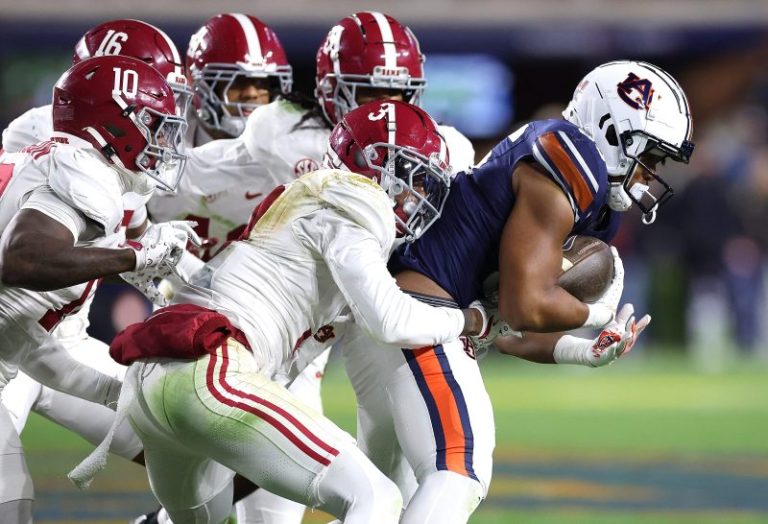
finlay minerals ltd. (TSXV: FYL,OTC:FYMNF) (OTCQB: FYMNF) (‘Finlay’ or the ‘Company’) announces that it has granted an aggregate of 2,725,000 stock options of the Company (each, a ‘Stock Option’) to certain directors, officers, employees and consultants of the Company. Each Stock Option entitles the holder thereof to acquire one common share of the Company at an exercise price of $0.13 until December 10, 2030. The Stock Options were issued pursuant to the terms of the Company’s rolling 10% stock option plan, which was most recently approved by the shareholders of the Company on June 20, 2025.

The above-noted stock option grant brings the total number of the Company’s issued and outstanding stock options to 11,925,000.

The Stock Options vest as of the date of the grant. The Stock Options and any common shares of the Company issued upon exercise of the Stock Options will be subject to a four-month resale restriction from the date of grant of the Stock Options.

About finlay minerals ltd.

Finlay is a TSXV company focused on exploration for base and precious metal deposits through the advancement of its ATTY, PIL, JJB, SAY and Silver Hope Properties; these properties host copper-gold porphyry and gold-silver epithermal targets within different porphyry districts of northern and central BC. Each property is located in areas of recent development and porphyry discoveries with the advantage of hosting the potential for new discoveries.

Finlay trades under the symbol ‘FYL’ on the TSXV and under the symbol ‘FYMNF’ on the OTCQB. For further information and details, please visit the Company’s website at www.finlayminerals.com

On behalf of the Board of Directors,

Robert F. Brown,
Executive Chairman of the Board

Neither the TSXV nor its Regulation Services Provider (as that term is defined in the policies of the TSXV) accepts responsibility for the adequacy or accuracy of this release.

Forward-Looking Information: This news release includes certain ‘forward-looking information’ and ‘forward-looking statements’ (collectively, ‘forward-looking statements’) within the meaning of applicable Canadian securities legislation. All statements in this news release that address events or developments that we expect to occur in the future are forward-looking statements. Forward-looking statements are statements that are not historical facts and are generally, although not always, identified by words such as ‘expect’, ‘plan’, ‘anticipate’, ‘project’, ‘target’, ‘potential’, ‘schedule’, ‘forecast’, ‘budget’, ‘estimate’, ‘intend’ or ‘believe’ and similar expressions or their negative connotations, or that events or conditions ‘will’, ‘would’, ‘may’, ‘could’, ‘should’ or ‘might’ occur. All such forward-looking statements are based on the opinions and estimates of management as of the date such statements are made. Forward-looking statements in this news release include statements regarding, among others, the exploration plans for the Properties. Although Finlay believes the expectations expressed in such forward-looking statements are based on reasonable assumptions, such statements are not guarantees of future performance and actual results or developments may differ materially from those forward-looking statements. Factors that could cause actual results to differ materially from those in forward-looking statements include market prices, exploration successes, and continued availability of capital and financing and general economic, market or business conditions. These forward-looking statements are based on a number of assumptions including, among other things, assumptions regarding general business and economic conditions, the timing and receipt of regulatory and governmental approvals, the ability of Finlay and other parties to satisfy stock exchange and other regulatory requirements in a timely manner, the availability of financing for Finlay’s proposed transactions and programs on reasonable terms, and the ability of third-party service providers to deliver services in a timely manner. Investors are cautioned that any such statements are not guarantees of future performance and actual results or developments may differ materially from those projected in the forward-looking statements, and accordingly undue reliance should not be put on such statements due to the inherent uncertainty therein. Finlay does not assume any obligation to update or revise its forward-looking statements, whether as a result of new information, future or otherwise, except as required by applicable law. 

SOURCE finlay minerals ltd.

View original content to download multimedia: http://www.newswire.ca/en/releases/archive/December2025/10/c0609.html

News Provided by Canada Newswire via QuoteMedia

This post appeared first on investingnews.com