

Author

admin

Browsing

Aided by rising demand for permanent magnets, the rare earths market entered 2025 on firmer footing, with prices and investor sentiment trending higher.

That early optimism, however, was quickly overtaken by mounting geopolitical risk as US-China trade tensions returned rare earths to the center of global supply chain concerns.

Through the first quarter, uncertainty around tariffs and the prospect of tighter Chinese controls weighed heavily on downstream industries and reinforced the strategic value of rare earths.

That risk crystallized in early April, when China issued Announcement 18, a sweeping export control regime covering a range of medium and heavy rare earths — including terbium, dysprosium, samarium and yttrium — as well as related oxides, alloys, compounds and permanent magnet technologies.

Framed by Beijing as a national security and nonproliferation measure, the policy added a new layer of regulatory friction to supply chains underpinning electric vehicles, defense systems, clean energy and advanced manufacturing.

The response was swift. In Washington, the Trump administration moved to reassess US critical minerals security, singling out rare earths as a strategic vulnerability.

“An overreliance on foreign critical minerals and their derivative products could jeopardize US defense capabilities, infrastructure development, and technological innovation,” the White House said, underscoring a shift from market-driven concern to national security imperative.

For Jon Hykawy, president and chief executive at Stormcrow Capital, the Trump administration’s rare earths ambitions and its understanding of the minerals markets was the most impactful trend of 2025, commenting, “By far the biggest impact was the implication from re-elected US President Donald Trump that rare earths and other critical materials, to be found in Ukraine or Greenland or Canada or wherever, are the most bigly important things, ever.’

The seasoned market analyst also questions the administration’s broader goals.

“Critical materials are, to me, what is necessary for ensuring that important projects can be completed,’ he said.

‘But President Trump has also decided that climate change is a scam, that electrified vehicles and wind power are terrible and coal and oil are where it’s at,’ Hykawy continued.

‘In that case, whether or not Trump has even the concept of a plan regarding what a rare earth actually is, and he isn’t using ‘rare earth’ as a catch-all phrase for ‘weird metal that I don’t know how to spell,’ then rare earths or lithium are not critical materials, as far as the USA should be concerned: if you don’t need ‘em, they ain’t critical.”

China’s rare earths chokehold exposes supply chain fault lines

By mid-year, the impact of China’s controls was being felt most acutely in the automotive sector. European suppliers warned of production shutdowns as licensing delays rippled through tightly integrated supply chains.

The Asian nation controls roughly 70 percent of global rare earths mine output, as well as 85 percent of refining capacity and about 90 percent of magnet manufacturing.

That concentration left markets highly exposed when Beijing escalated restrictions again in October, expanding export controls to cover a total of 12 rare earths and associated permanent magnets.

Although some measures were later paused through November 2026, earlier dual-use restrictions stayed in place, reinforcing the perception that rare earths are now a tool of geopolitical leverage.

“At its core, China has shown a greater willingness to use its dominance in critical minerals to advance its trade and geopolitical influence, potentially causing significant disruptions to global supply chains for industries like automotive, aerospace, defense, and electronics,” states a S&P Global Energy report.

Against that backdrop, efforts to diversify supply accelerated.

In the US, government support moved from rhetoric to capital. The Department of Defense committed US$400 million to MP Materials (NYSE:MP) to expand processing at Mountain Pass and build a second domestic magnet plant, securing a US-based source of permanent magnets for defense applications.

Days later, Apple (NASDAQ:AAPL) announced a US$500 million agreement with MP to supply recycled rare earth magnets for hundreds of millions of devices starting in 2027, tying supply chain security to sustainability.

As Hykawy explained, these developments are setting the stage for ex-China supply:

“We are at the beginning of producing, processing and utilizing rare earths in a supply chain entirely outside of China. There is absolutely nothing that prevents us from building that western supply chain except time and money. Rare earth deposits of all types, including ionic clays and their relatively inexpensive production of heavy rare earths, are readily available outside of China.”

He went on to note that there has been a misconception about the impacts of rare earths production, paired with a lack of investment and expertise that has prevented a faster buildout.

“It’s a media cliché that rare earth mining and processing is somehow much more destructive to the environment than other types of mining, but that’s also just plain wrong,” Hykawy added.

“Unfortunately, building that supply chain will take money and, especially, time, because we need the people who know how to do all of this, and there is no substitute for the time required to give them their required experience.”

Rare earths supply security and growing demand

As global demand for rare earths accelerates and supply chain risks heighten, experts believe the sector’s importance on the global stage will keep intensifying.

During a Benchmark Week presentation, Michael Finch of Benchmark Mineral Intelligence explained that rare earths have “become far more strategic in nature” over recent years, with applications spanning electric vehicles, consumer electronics, wind energy, robotics and modern military systems.

While permanent magnets remain a headline driver, non-magnetic uses now account for a larger share of total demand, underscoring the material’s broad industrial importance.

Demand projections for rare earths forecast robust growth, underpinned key segment expansion.

According to Finch’s data an average 100 kW EV traction motor contains roughly five kilograms of neodymium-praseodymium and about one kilogram of dysprosium oxide, illustrating how electrification is fueling consumption.

Additionally, permanent magnet applications are projected to grow at an 8.5 percent compound annual rate through 2030, with magnetic and non-magnetic uses expected to reach parity over the next decade.

Military demand is also a significant driver.

“(There are) 418 kilograms of rare earths going into an F 35 type two fighter (jet), 2.6 metric tons going into a type 51 (naval) destroyer, and 4.6 metric tons going into a Virginia class submarine,” said Finch.

As stated, supply remains heavily concentrated in China which controls 91 percent of the overall supply chain, from mining to permanent magnets. Finch emphasized that this concentration creates a single-country risk, noting, “When a country owns so much of a supply chain, it’s easy to use it as a bargaining chip.”

The global rare earths supply chain is gradually diversifying. North America and Africa are emerging as key growth regions, with projects expected to significantly expand non-Chinese production in the coming decade.

Finch pointed to Africa, which could account for up to 7 percent of global supply after 2030, driven by low capital intensity and favorable mining costs. Despite this progress, he cautioned that complete self-sufficiency outside China remains a distant prospect, emphasizing the need for rapid investment and strategic coordination to secure supply.

Rare earths investment bolstered by government support

In addition to the Department of Defense’s MP Materials investment, the US government has established a price floor for NdPr oxide, the high-value rare earths ingredient inside permanent magnets.

During a fireside chat at Benchmark Week, Ryan Corbett, CFO of MP Materials, explained the impact of the price floor in support of the burgeoning US supply chain. He told the audience that the deal is “absolutely transformational,’ and pointed to China’s ability to control pricing by flooding or starving the market. “What good is it to invest billions of dollars if the second you turn your refinery on, prices go from US$170 to US$45?” said Corbett.

In October, the Trump administration announced another strategic investment aimed at reshoring critical supply chains through a US$1.4 billion public-private partnership with Vulcan Elements and ReElement Technologies.

Under the agreement, the Commerce Department will provide US$50 million in CHIPS Act incentives for neodymium-iron-boron magnet production in exchange for an equity stake, alongside up to US$700 million in conditional Defense Department loans to support facilities targeting up to 10,000 metric tons of annual output.

On the private investment side, Rare earths developer Pensana (LSE:PRE,OTCPL:PNSPF) secured a US$100 million strategic investment to advance its mine-to-magnet ambitions in the US, at the end of 2025.

Although the rare earths sector saw several multimillion-dollar deals in 2025, exploration capital remains scarce.

According to S&P Global’s Senior Principal Analyst, Mining Studies & Mine Economics, Paul Manalo the rare earths account for 1 percent of global exploration budgets, however, that number has improved in recent years.

“For the sixth consecutive year, budgets for rare earths were up reaching US$155 million in 2025; it’s the highest level since 2012,” Manalo said during the S&P Global Market Intelligence 2026 Corporate Exploration Strategies webinar.

Although exploration budgets are growing, the expert said 80 percent of that capital is being deployed in only four countries: Australia, Brazil, USA and Canada. “Just like in other minor metals, the juniors are the primary drivers for exploration of rare earths, with only a few majors dabbling in it,” Manalo told listeners, adding, “There are few rare earth mines outside of China, so most pending exploration is for late stage projects.”

The government funding and strategic stockpile proposal were acknowledged as a good starting point by Stormcrow Capital’s Hykawy, who also cautioned that they may not be as meaningful as markets anticipate.

“I give the efforts so far an ‘A’ for enthusiasm but a ‘C-‘ for effectiveness. From what I have seen, the powers-that-be are beavering away to create a supply chain that can provide what the world is demanding, today,” he said.

“Unfortunately, many of their efforts can’t bear fruit for 5 years or more, and none of these agencies seemed to think it worthwhile to try and evaluate what will be required in 5 or 10 years.”

More long-term foresight is needed.

“Technology giveth, but technology also taketh away, and while no one can be sure what the technology-driven need will be in 5 or 10 years, we should at least try to incorporate that into planning,” he said.

“If the wrong projects are being backed, the economics for that producer or processor in 5 or 10 years are not going to look good and money and time will have been completely wasted.”

Securities Disclosure: I, Georgia Williams, hold no direct investment interest in any company mentioned in this article.

This post appeared first on investingnews.com

Questcorp Mining Inc. (CSE: QQQ,OTC:QQCMF) (OTCQB: QQCMF) (FSE: D910) (the ‘Company’ or ‘Questcorp’) along with its partner Riverside Resources Inc. (TSXV: RRI) (OTCQB: RVSDF) (FSE: 5YY0) (‘Riverside’), is pleased to announce a new discovery of potential Carlin-like gold mineralization at the Luis Hill target within the La Union Project in Sonora, Mexico.

Initial drilling in the Luis Hill target returned a 42m @ 0.3 g/t gold drill-width intersection of sediment-hosted gold mineralization in black shales and carbonate strata—a style not previously recognized at the Union Project. This was the only hole drilled into the Luis Hill target during the initial H2 2025 drill program.

Highlights of the Drill Program:

  • Target Reporting: This release reports results from Luis Hill, Famosa, and Famosa Mag targets.
  • New Discovery: Discovery of previously unknown Carlin-like gold mineralization in black shales and carbonate strata at Luis Hill, returning 0.3 g/t gold over 42m. Results to date show sulfides, mineralization types, and intrusions aligned with a carbonate-hosted metal system.
  • Program Scale: Completed 12 core holes totaling >1,600 m across six targets: the past-producing Union, Union Norte, and Famosa Mine, as well as Cobre, Luis Hill, and Famosa EM.
  • Assays Pending: Over 700 half-core samples have been shipped; further assays are pending for Union, Union North and Cobre targets.
  • Strategic Orientation: Holes were oriented at angled and near-vertical positions to cut stratigraphy and structures typical of Carbonate Replacement Deposit (CRD) systems, focusing beneath oxidized horizons generally <150 m in depth.

Questcorp President & CEO, Saf Dhillon stated, ‘We are incredibly pleased with the work from the team at Riverside Resources. This story is starting to evolve quite efficiently, especially considering a first phase of drilling is more of a data gathering process that is utilized primarily to hone future work programs. Hitting a number of gold anomalies in the early stages is very promising as we continue to work towards making a new potential discovery in the rich Sonora Gold Belt. I believe 2026 could be an inflection point for the success and growth of both Questcorp and Riverside!’

Figure 1- Luis Hill cross section with drill hole 9.

To view an enhanced version of this graphic, please visit:
https://images.newsfilecorp.com/files/10197/280127_3a05f3b904909978_001full.jpg

Target Hole_ID Starting at Length (m) Au_ppm Comments
Luis Hill UND25-009 198.25 42.70 0.286 Shale hosted, silicification, CRD style alteration
   
Famosa Targets
Famosa Mine UND25-004 19.10 14.90 Test CRD mineralization (Manto)
     
UND25-005 39.10 1.85 0.345
UND25-011 11.50 11.85 Test CRD Mineralization (Manto) at Famosa Mine
UND25-012 9.65 17.45
Including 14.90 2.00 0.162
Famosa EM UND25-010 146.40 1.65 0.134 Test EM Geophysics anomaly


Table 1- Assay results table with gold for Luis Hill hole 9, Famosa Area holes 4, 5, 10, 11, 12.

Riverside CEO, John-Mark Staude, states,

‘Riverside is pleased to be working with Questcorp on the Union Project and these first 6 drill holes, representing half of the program so far is exciting and sets up for the next news release of the next 6 holes of the overall 12-hole program. Hole 9 into the Luis Hill exploration target is an exciting start finding a new western area that has scale and could be a great step for the program. Drilling at Famosa was positive for the structure and further drilling is warranted along strike north and south for over 1 km is wide open for discovery there and past assay results in earlier news releases of high-grade gold and past mining, make the Famosa area a priority as well. We are excited for a good 2026 and next exploration phase at Union.’

Luis Hill Target Detail

Hole 9 was drilled vertically in the southern area of a large, 1,500m by 500m magnetic high Luis Hill target. While Hole 9 did not hit an obvious large magnetic source, however several magnetic dioritic dikes which may be emanating from a deeper, larger magnetic source likely intermediate composition intrusion were intersected. The discovery interval consists of gold in siliceously replaced jasperoid-like dolomite and silica flooded black shale, which is similar to some sediment hosted gold deposits in Nevada (USGS Prof Paper 1267, 1985). The discovery, a new finding for this part of Sonora, is important for both the property and in the region as it shows the potential for previously unknown sediment hosted gold inside of one of the most prolific gold belts in Mexico, the Sonora Gold Belt – also referred to as the Megashear Gold Belt in past scientific studies. Folding and Basin and Range block faulting is expected to bring the mineralized formations closer to surface for 2026 H1 drilling within the magnetic target area. The Companies feel Luis Hill has the potential to become a major new discovery in Mexico.

The discovery interval of 0.3 g/t gold over 42 metres included 23 assay intervals ranging in width from 0.45m to 2m, with assays ranging from 0.005 g/t to 1.31 g/t gold. Fifteen intervals returned gold values in excess of 0.1 g/t, with three in excess of 0.5 g/t.

Sample ID m From m To Interval Au_ppm Sample ID m From m To Interval Au_ppm
RRI-U545 198.25 200.25 2 0.38 RRI-U557 219.5 221.5 2 0.014
RRI-U546 200.25 202.25 2 0.678 RRI-U558 221.5 223.5 2 0.012
RRI-U547 202.25 203.8 1.55 0.393 RRI-U559 223.5 225.5 2 0.187
RRI-U548 203.8 205.8 2 0.007 RRI-U561 225.5 226.9 1.4 0.011
RRI-U549 205.8 207.8 2 -0.005 RRI-U562 226.9 228.3 1.4 0.114
RRI-U550 207.8 209.8 2 0.059 RRI-U563 228.3 228.9 0.6 pending
RRI-U551 209.8 211.8 2 0.012 RRI-U564 228.9 230.9 2 0.158
RRI-U552 211.8 213.8 2 0.849 RRI-U565 230.9 232.9 2 0.724
RRI-U553 213.8 215.5 1.7 0.316 RRI-U566 232.9 234.2 1.3 0.135
RRI-U554 215.8 217.8 2 1.31 RRI-U567 234.2 235.55 1.35 0.083
RRI-U555 217.8 218.9 1.1 0.319 RRI-U568 235.55 236 0.45 0.131
RRI-U556 218.9 219.5 0.6 0.321 All intervals are down hole widths.


Table 2- Full Assay Interval for UND25-009 Discovery Intersection.

Figure 2- Cross section Famosa Mine area with 4 holes intersecting mineralized horizon that is the downdip projection from the Famosa mine and remains open for further drilling along strike north-south and further down dip to the west. Note the map shows how drill holes are projected onto a simplified single plane for schematic purposes.

To view an enhanced version of this graphic, please visit:
https://images.newsfilecorp.com/files/10197/280127_3a05f3b904909978_002full.jpg

Famosa Mine and Famosa EM Target

This release is also reporting results from the 5 holes drilled at the Famosa Mine and the Famosa Electro-Magnetic (‘EM’) target. Drilling at the Famosa mine focussed on extensions of the CRD mineralization, where past mining and the geology and structure indicate a manto horizon. One hole tested the EM Target located 500 m west of the Famosa Mine workings.

Four core holes tested a west-dipping dolomite manto target and adjacent structures in the Famosa Mine Area, where historical small-scale mining left surface dumps. Dump sampling reported highlight gold grades in excess 0.5 oz/t (>15 g/t) gold as detailed in the May 7, 2025, technical report found under Questcorp’s profile on SEDARplus. Holes were drilled at angles toward the east to intersect the target as close to perpendicular as practical and to evaluate continuity of alteration and mineralization with intrusive dikes and breccias noted in the core logging. A drill width intersection of 1.85m @ 0.345 gold, starting at 39m, on the down dip projection from the horizon at the Famosa Mine 70o CRD shaft was recorded in Hole 5.

Hole 10 tested the Famosa EM target, intersecting the favorable dolomitic stratigraphy. The Famosa drilling results will be followed up.

The summary collar and drilling information for all 12 holes and 1625m drilled in Phase 1 is provided in the table below.

Table for Phase 1 Drilling Union Project H2, 2025 All Holes, 1625m total
Hole_lD Easting Northing Elevation Azimuth Dip Total Depth Target
UND25-001 376043 3347225 358.66 131 -50 198.25 Union Mine
UND25-002 375606 3347813 381.37 65 -50 201.30 El Cobre
UND25-003 376048 3347598 378.34 65 -50 25.90 Union Norte
UND25-004 375137 3344629 360.47 110 -70 129.35 Famosa Mine
UND25-005 375146 3344578 362.35 92 -70 104.80 Famosa Mine
UND25-006 376099 3347627 389.13 100 -80 118.45 Union Norte
UND25-007 376199 3347156 355.46 280 -80 166.20 Union Mine
UND25-008 376111 3347136 369.34 125 -80 128.10 Union Mine
UND25-009 375261 3347551 400.64 0 -90 292.80 Luis Hill
UND25-010 374941 3344765 363.95 90 -70 161.60 Famosa EM
UND25-011 375171 3344608 362.45 90 -85 51.00 Famosa Mine
UND25-012 375171 3344608 362.45 90 -90 47.25 Famosa Mine


Table 3- Drill collar information with the bolded and italicized holes are in this news release.

To view an enhanced version of this graphic, please visit:
https://images.newsfilecorp.com/files/10197/280127_3a05f3b904909978_003full.jpg

Figure 3- Map of the location of the Luis Hill and Famosa areas among the other areas that were drilled and results will be coming next from the other target areas when available.

To view an enhanced version of this graphic, please visit:
https://images.newsfilecorp.com/files/10197/280127_3a05f3b904909978_004full.jpg

Geological Model and Strategy

The H2 2025 Phase I program was designed to test primary areas of historical mining and key magnetic targets. The program followed the geological model of the South 32 Taylor deposit in southern Arizona. Drilling intersected gold, zinc, and silver indications consistent with vectors toward a major discovery.

Furthermore, the sediment-hosted gold style found at Luis Hill is comparable to Nevada’s carbonate platform geology, making it an intriguing new development area for the Union Project.

Sampling Procedures and QA/QC

Core was logged, saw-cut, and half-core samples were shipped for analysis. Samples from the first eight holes were delivered to Bureau Veritas (Hermosillo, Sonora) for gold fire assay, with pulps forwarded to Vancouver, Canada for Inductively Coupled Plasma-Mass Spectrometry (‘ICP-MS’) following four-acid digestion to determine silver, base metals, and pathfinders. Samples from the final four holes were shipped to ACT Labs Zacatecas, where preparation, gold assay, and multi-element ICP are completed in Mexico. The final 4 holes of the program were shipped to ACT Labs where they were similarly assayed using the same processing methods but with their initial preparation and assaying completed in Zacatecas, Mexico using the same ICP and gold fire assay methods. The change in lab halfway through the program was due to assay turn around issues. Samples were maintained in chain of custody being delivered to the laboratory in sealed bags. Remaining half-cores are retained for reference.

Standards were inserted every 20 samples and blanks every 100 samples. The laboratory also did duplicates every 20 samples as additional check on the quality control. The QA/QC was analyzed with a check for any variations in the standards beyond 2 standard deviations and the standards passed.

Next Steps

After all assays are interpreted and released, the Companies will work together on organizing the H1 2026 Phase 2 exploration program, building from the Phase I exploration results. Along with follow-up drilling, Phase 2 will likely include geophysics, geochemistry and mapping. The results announced here are exciting for the western Luis Hill area, which has never seen prior drilling, although small scale mines indicate potential locations. Based on these drill results, a focused follow-up is strongly warranted at Union for this target, as well as other targets.

The Companies are diligently working toward an expanded drill program for H1 2026, as all permits and access are in good standing. With the new data, targets will be ready to explore, with the potential to immediately begin field work portions early this year.

The Company will release the next set of drill results once a QA/QC review is completed.

Qualified Person:

The technical content of the new release has been reviewed and approved by R. Tim Henneberry, P.Geo (British Columbia), a director of the company and a qualified person under National Instrument 43-101.

The Union Agreement

Questcorp currently holds an option to earn a 100% interest in the Union Project with business terms announced May 6, 2025, and align Questcorp and Riverside through Riverside being a share owner initially 9.9% of Questcorp and upon earn-in Riverside will become a 19.9% share owner and retain a 2.5% NSR.

About Questcorp Mining Inc.

Questcorp Mining is engaged in the business of the acquisition and exploration of mineral properties in North America, with the objective of locating and developing economic precious and base metals properties of merit. The company holds an option to acquire an undivided 100-per-cent interest in and to mineral claims totalling 1,168.09 hectares comprising the North Island copper property, on Vancouver Island, B.C., subject to a royalty obligation. The company also holds an option to acquire an undivided 100-per-cent interest in and to mineral claims totalling 2,520.2 hectares comprising the La Union project located in Sonora, Mexico, subject to a royalty obligation.

ON BEHALF OF THE BOARD OF DIRECTORS,

Saf Dhillon
President & CEO

Questcorp Mining Inc.
saf@questcorpmining.ca
Tel. (604-484-3031)

Suite 550, 800 West Pender Street
Vancouver, British Columbia
V6C 2V6.

Certain statements in this news release are forward-looking statements, which reflect the expectations of management regarding completion of survey work at the North Island Copper project. Forward-looking statements consist of statements that are not purely historical, including any statements regarding beliefs, plans, expectations or intentions regarding the future. Such statements are subject to risks and uncertainties that may cause actual results, performance or developments to differ materially from those contained in the statements. No assurance can be given that any of the events anticipated by the forward-looking statements will occur or, if they do occur, what benefits the Company will obtain from them. Except as required by the securities disclosure laws and regulations applicable to the Company, the Company undertakes no obligation to update these forward-looking statements if management’s beliefs, estimates or opinions, or other factors, should change.

To view the source version of this press release, please visit https://www.newsfilecorp.com/release/280127

News Provided by Newsfile via QuoteMedia

This post appeared first on investingnews.com

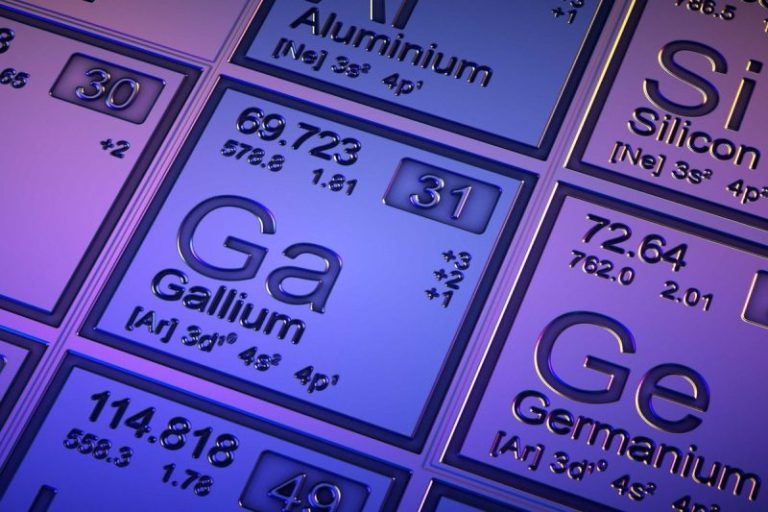
The Trump administration is considering a direct equity stake in a Louisiana-based refinery to establish what officials say would become the only large-scale producer of gallium in the US.

The Department of Defense is set to invest US$150 million in preferred equity in Atlantic Alumina, known as ATALCO, as part of a strategic partnership with an affiliate of Pinnacle Asset Management, according to Bloomberg.

The unannounced deal will fund an expansion of ATALCO’s alumina output and the construction of a new circuit to recover gallium, a critical metal used in military systems and advanced semiconductors.

Under the agreement, ATALCO will pair the Pentagon’s investment with an additional US$300 million from Pinnacle. The US government is also expected to provide additional funding within 30 days of the transaction’s closing.

“This strategic partnership is an essential step in reducing reliance on foreign nations for critical minerals,” ATALCO said.

Once fully built out, the facility is expected to produce more than 1 million metric tons of alumina annually and up to 50 metric tons of gallium per year. Gallium is typically recovered as a by-product of alumina refining, and China currently dominates both global alumina processing and gallium supply.

ATALCO has operated continuously since the late 1950s at its refinery in Gramercy, Louisiana, where it processes Jamaican bauxite into alumina, a fine white powder used in aluminum production.

After the closure of a neighboring refinery in 2020, the facility became the last alumina refinery of its kind in the country. The company says it currently supplies roughly 40 percent of domestic alumina demand.

The investment is a continuation of the Trump administration’s shift toward taking direct financial stakes in companies it views as strategically important in its effort to rebuild a domestic supply chain for rare earths and critical minerals.

Last November, the government backed a US$1.4 billion public-private partnership involving Vulcan Elements and ReElement Technologies, a subsidiary of American Resources (NASDAQ:AREC), to expand domestic rare earth magnet production.

In October, officials explored taking an equity stake in Critical Metals (NASDAQ:CRML), a US-listed company developing Greenland’s Tanbreez rare earths deposit.

Securities Disclosure: I, Giann Liguid, hold no direct investment interest in any company mentioned in this article.

This post appeared first on investingnews.com

Doug Casey of InternationalMan.com and the podcast Doug Casey’s Take shares his thoughts on gold, silver and more heading into the new year.

Casey, who is also a best-selling author, sees higher prices for both precious metals ahead.

Securities Disclosure: I, Charlotte McLeod, hold no direct investment interest in any company mentioned in this article.

This post appeared first on investingnews.com

United States bobsled driver Kris Horn went for a frightening solo ride down a track in St. Moritz, Switzerland, during a World Cup event on Sunday, Jan. 11.

Horn was the only passenger in the bobsled after his three American teammates, who make up the four-man sled team, did not make it into the bobsled after the initial push at the top of the track.

Horn is the team’s driver and is expected to be the first one in the bobsled. Not having his teammates on board led to trouble navigating the course.

The sled moved swiftly down the course with Horn at the front of the sled in his usual seat before managing to position himself at the back, where he could pull on the brake in a reasonable time and prevent serious injuries, reaching a speed of 75 mph during the run that lasted just over a minute, according to the Associated Press.

Horn started his bobsledding career as a brakeman and that knowledge helped prepare him for Sunday’s scary situation.

‘We are fortunate it wasn’t worse,’ USA Bobsled head coach Chris Fogt said in a text message to the AP.

Pushers Ryan Rager, Hunter Powell and Caleb Furnell had trouble getting in the bobsled, which left Horn in a position to try and maneuver the sled down the twisty course with no additional weight or anyone to pull the brakes.

Rager was seen in a video stumbling as he tried to get into the sled, which affected the ability of Powell and Furnell to also jump in. The trio hit the ice before sliding briefly behind the sled. The team confirmed that the three pushers all avoided serious injuries, and the X-rays for each of them came back negative.

There is one World Cup race weekend left before USA Bobsled and Skeleton picks its team for the 2026 Milan Cortina Winter Olympics. Horn is a strong contender to make the team as one of the men’s bobsled drivers.

This post appeared first on USA TODAY

A prep wrestling coach has accused Notre Dame football coach Marcus Freeman of battery following an incident at a high school meet on Jan. 3.

The South Bend Tribune, part of the USA TODAY Network, reported on Sunday, Jan. 11, that New Prairie (Indiana) High School assistant wrestling coach Chris Fleeger filed a police report last week alleging Freeman made physical contact with him in a hallway after Freeman’s son Vinny — a senior at Penn High School — lost his match.

According to the Tribune, Freeman, his son and Penn head coach Brad Harper were leaving the gym when Fleeger allegedly began exchanging words with the group. Per the Tribune, Fleeger and Freeman’s wife Joanna ‘engaged in a shouting match’ before local law enforcement officers and school officials separated everyone.

‘Vinny Freeman, head coach Marcus Freeman’s son, was verbally accosted during and after his wrestling match by a local wrestling coach. Marcus and Joanna Freeman intervened and removed Vinny from the situation,’ Notre Dame said in a statement. ‘At no point did Coach Freeman physically engage with anyone. We believe that the police report, which includes video evidence, fully exonerates Coach Freeman and makes clear these accusations are totally unfounded.’

Mishawaka (Indiana) Police investigated and turned over the completed report to the prosecutor’s office to determine if any charges will be filed.

This post appeared first on USA TODAY

SACRAMENTO ― The Sacramento Kings ended their seven-game losing streak for their first win, and first lit beam, of 2026 in a 111-98 victory against the Houston Rockets at Golden 1 Center on Sunday, Jan. 11.

Sacramento fans walked away with free pizza and a sighting of their purple beam that shoots into the air from Golden 1 Center with each win, something that has been a rare sight during the 2025-26 season.

The Kings were led by DeMar DeRozan, who became the 23rd player in NBA history to reach 26,000 career points after a 14-foot fadeaway jumper with 7:09 remaining in the second quarter. DeRozan ended the game with a team-high 22 points, while shooting 8-of-13 (61%) from the field.

‘It’s always satisfying getting a win,’ DeRozan told reporters after the game about scoring his 26,000th point. ‘I think as far as everything else, scoring and points, I think that really won’t hit me until it’s all said and done.’

Sacramento received contributions from everywhere. Guard Zach LaVine finished with 18 points. Russell Westbrook added 15 points, six rebounds and 10 assists in the win. Maxime Raynaud notched a double-double with 12 points and 10 rebounds.

Malik Monk, who had been previously in and out the rotation, saw 26 minutes off the bench against the Rockets and scored 15 points.

‘That’s kind of been my role since I’ve been in the NBA, being a backup ballhandler and taking the pressure off the point, the first group so I was out there flowing and free. It felt good though,’ Monk said.

He received a loud standing ovation when he was first subbed into the game off the bench.

‘It takes a lot of weight off my shoulders,’ Monk told USA TODAY Sports about his warm welcome from the fans. ‘I can go out there and miss two, three shots in a row and the fans (are) still going to be on my side. So it’s always good to get a win in front of the fans. It’s always good to go out there and perform like I did today.’

The Kings got bursts of energy whenever rookie center Dylan Cardwell stepped on the floor. He hustled, grabbed rebounds, finished under the rim and hyped up the crowd nearly every chance he got.

Cardwell finished with nine points and 10 rebounds in 19 minutes. He was even selected to light the Kings’ victory beam at the end of the game, and still then he was hyping the crowd up.

After the game, King coach Doug Christie smiled and told USA TODAY Sports that Cardwell is ‘the spirit animal.’

‘Dylan is a special young man. He has an energy about him,’ Christie said. ‘Whenever we talk basketball, whether it’s me sitting down with him showing him film or him coming up and saying ‘coach, let me have it, what you got for me, how can I get better?’ Those are moments that you just, as a coach, I personally love because there’s teaching, there’s communication.’

He added: ‘Watching him rebound the basketball, play with joy, physicality, I think our team is confident when he’s protecting the paint. I know from being a player that when you have somebody back there protecting the paint it allows you on the perimeter to be a little more aggressive and he continues to impress.’

The Rockets were led by guard Amen Thompson as he scored 31 points, including 16 in the third quarter.

Rockets forward Kevin Durant finished with 23. Alperen Sengun had 19 points and nine rebound for Houston.

The Kings play the Los Angeles Lakers at Golden 1 Center on Monday, Jan. 12. Tip-off is 7 p.m. PT (10 p.m. ET).

‘The win is for the team,’ Christie told USA TODAY Sports. ‘I take all the shots. As soon as I walk out of here, I’m thinking about the Lakers. I love it and appreciate it but it’s on to the next.’

Kings vs. Rockets highlights

Game recap

Kings were behind by a point, 23-22, after the first quarter.

Zach LaVine led the Kings in the first period, scoring eight points. The Kings had five first quarter turnovers for eight points.

Kevin Durant had seven points in opening period for Houston. Rockets center Alperen Sengun had five points in the first quarter.

Sacramento made it a back-and-forth affair in the second quarter with the Rockets.

There were a couple of standout moments in the second.

DeRozan had his milestone moment with 7:09 in the second quarter, surpassing 26,000 points in his NBA career, the 23rd player in NBA history to do so.

Minutes later, Kings guard Malik Monk brought the house down, electrifying the Golden 1 Center crowd with a thunderous slam as he rose over the top of Rockets center Alperen Sengun for two with 4:34 in the second period.

The Kings settled in the game and had zero turnovers in the second period. They turned their defense up, forcing the Rockets to commit four turnovers in the quarter.

DeRozan had 13 points in the first half after hitting a baseline fadeaway at the end of the first half. The Kings went into the locker room holding on to a narrow, 51-48, lead after 24 minutes.

Sacramento made attempts to pull away from Houston as LaVine and DeRozan combined for 14 points in the third.

However, the Rockets were carried in the third quarter by Amen Thompson. He scored 16 points in the period. He, too, had a monstrous dunk in the game, going down the lane over Kings rookie Dylan Cardwell.

Things got physical with 40 seconds remaining in the third quarter as Cardwell and Rockets forward Dorian Finney-Smith were jockeying for position on a rebound when Finney-Smith shoved Cardwell who had just leaped airborne for the board.

Players had to be separated after a brief confrontation that resulted in a Finney-Smith flagrant one penalty and a technical foul assessed to Monk.

DeRozan followed with a mid-range shot through contact and made the awarded free throw. The Kings led 78-76 after the third quarter.

The Kings continued to pour it on in the fourth quarter. Monk hit back-to-back 3s to give the Kings some life as the Rockets kept with them.

No moment was probably bigger for the Sacramento fans than when Sengun missed consecutive free throws with 4:49 left in the fourth quarter, awarding Kings fans with free pizza.

Westbrook knocked down a 3-pointer with two minutes left in the game to give the Kings a 107-94 lead.

Sacramento would hang on to the win the game, 111-98.

This post appeared first on USA TODAY

The setup for the second weekend of the NFL playoffs is coming into focus.

Before the divisional round can be fully set, however, more pieces of wild-card weekend will have to fall into place. The NFC configuration is now in place, with the the Los Angeles Rams, who outlasted the Carolina Panthers, set to face the Chicago Bears, who pushed past the Green Bay Packers. The top-seeded Seattle Seahawks, meanwhile, will host the San Francisco 49ers, who knocked off the defending-champion Philadelphia Eagles.

But the AFC still remains up in the air heading into Sunday night.

Here’s the latest on what we know about the NFL divisional-round schedule:

NFL playoff divisional-round schedule

Jan. 17

  • TBD at TBD
  • TBD at TBD

Jan. 18

  • TBD at TBD
  • TBD at TBD

NFL conference championship game schedule

Jan. 25

  • AFC championship, TBD
  • NFC championship, TBD

Super Bowl 60 schedule

Feb. 8

AFC champion vs. NFC champion, NBC

This post appeared first on USA TODAY

San Francisco 49ers wide receiver Jauan Jennings periodically shows off his quarterback skills. He did so again Jan. 11, tossing a critical touchdown in the 49ers’ 23-19 win over the defending Super Bowl champion Philadelphia Eagles.

49ers coach Kyle Shanahan dialed up a double reverse to Jennings in the fourth quarter. Jennings retrieved the football and threw a perfect pass to running back Christian McCaffrey who caught the ball and ran it into the end zone.

The touchdown and extra point gave San Francisco a 17-16 lead in the fourth quarter.

Shanahan’s play call was well-timed as it resulted in a touchdown. But Jennings is also an ideal player to catch the defense off guard with a trick pass play.

Did Jauan Jennings play QB in high school?

Coming out of high school in 2015, Jennings was rated as a four-star dual-threat quarterback out of Murfreesboro, Tennessee. He was rated above the likes of Lamar Jackson, Joe Burrow and Sam Darnold in the 2015 recruiting class, per 247Sports.

Jennings completed 125 of 219 passes for 2,155 yards and 22 touchdowns with just three interceptions during his senior season. He added 883 yards and 17 TDs rushing en route to being named a Tennessee Mr. Football winner in the state’s largest public school classification.

Jennings went on to sign with Tennessee, where he converted to wide receiver after arriving on campus.

The 49ers drafted Jennings in the seventh round of the 2020 NFL draft.

Jauan Jennings stats

The fifth-year wide receiver has 210 receptions, 2,581 receiving yards and 22 touchdowns in his career. He was the 49ers’ leading wide receiver this season and led the team with nine touchdown receptions. Jennings also had a passing touchdown in the 2023 playoffs.

This post appeared first on USA TODAY