Author

admin

Browsing

Happy Holidays – the penultimate week of the 2025 NFL regular season is upon us. However you might not exactly enjoy what’s underneath the tree on Christmas – the Yuletide’s three streaming contests (Cowboys-Commanders, Lions-Vikings and Broncos-Chiefs) not exactly crackling with compelling subplots or playoff implications despite their intra-divisional pairings.

Saturday’s couplet is a bit more compelling, Texans-Chargers a rematch from last season’s playoffs and potentially a preview of what goes down next month. The Green Bay Packers host the Baltimore Ravens in the night game – both squads residing on the edge of wild-card contention, Baltimore requiring a win to simply survive mathematically into Sunday.

Sunday afternoon isn’t exactly loaded with must-see football, either, though several teams will be jockeying for seeding or trying to stay alive. Cleveland Browns DE Myles Garrett could set the single-season sack record against the Pittsburgh Steelers, who could clinch the AFC North crown … unless the Ravens do that for them by losing Saturday. Eagles-Bills and Bears-49ers look good on paper, the latter – which is the ‘Sunday Night Football’ offering – bound to have significant impact on who gets the NFC’s No. 1 seed, which comes with a first-round bye and home-field advantage.

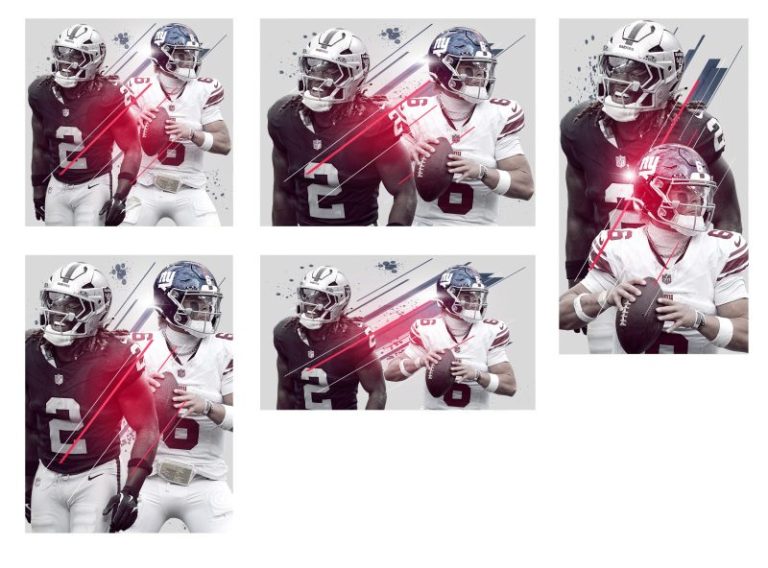
Yet, believe it or not, the most important game of Week 17 might be the one in Sin City, where the Las Vegas Raiders will host the New York Giants – they share a league-worst 2-13 record – in the game that could determine who picks atop the 2026 draft.

The recently revitalized Atlanta Falcons host the LA Rams on Monday.

How does the docket unfold? USA TODAY Sports’ panel of NFL experts weighs in with their picks:

(Odds provided by BetMGM)

Week 17 picks, predictions, odds

  • Cowboys at Commanders
  • Lions at Vikings
  • Broncos at Chiefs
  • Texans at Chargers
  • Ravens at Packers
  • Seahawks at Panthers
  • Jaguars at Colts
  • Saints at Titans
  • Cardinals at Bengals
  • Steelers at Browns
  • Patriots at Jets
  • Buccaneers at Dolphins
  • Giants at Raiders
  • Eagles at Bills
  • Bears at 49ers
  • Rams at Falcons
This post appeared first on USA TODAY

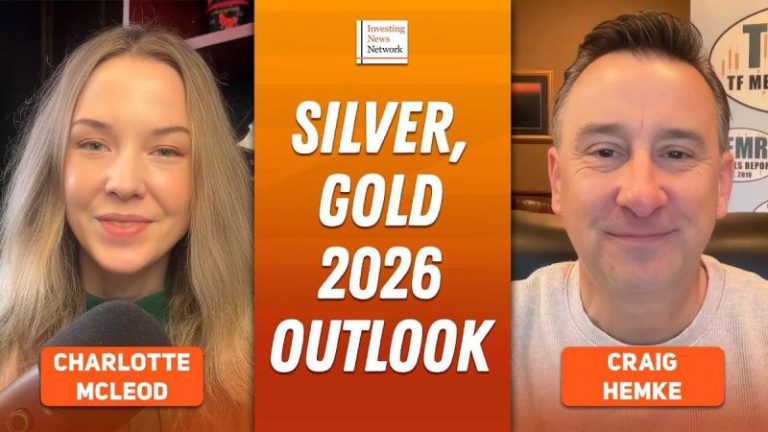
Craig Hemke, publisher of TFMetalsReport.com, shares his thoughts on the gold and silver markets heading into 2026, outlining why he remains bullish.

‘Just keep adding some — it’s your protection against the madness. It’ll get you through the storm,’ he said. ‘It preserves your net worth from the destruction of these bankers and politicians.’

Securities Disclosure: I, Charlotte McLeod, hold no direct investment interest in any company mentioned in this article.

This post appeared first on investingnews.com

The holiday season brings more than festive cheer, as for investors, it may signal the start of the so-called Santa Claus rally.

The Santa Claus rally is a period between the final trading days of December and the first days of January when stocks tend to climb. While this seasonal uptick isn’t guaranteed, historical data shows that markets rise more often than not during this window, driven by investor optimism, low trading volumes and year-end portfolio adjustments.

Historically, the last five trading days of December and the first two of January have been a period of above-average stock gains, offering a short, sharp rally for markets heading into the new year.

According to the Stock Trader’s Almanac, the Santa Claus rally has delivered an average gain of 1.3 percent for the S&P 500 (INDEXSP:.INX) since 1950. The phenomenon was first documented in 1972 by Yale Hirsch, founder of the Almanac, and continues to shape investor expectations today.

As for whether 2025 will deliver a Santa Claus rally to close out the year, after a choppy first half for December, markets have shown signs that a late-year recovery is possible.

When does the Santa Claus rally start?

The Santa Claus rally typically occurs over the final five trading days of December and the first two trading days of January. For 2025, the rally window begins on Wednesday, December 24, and runs through Monday, January 5, if historical patterns hold.

This narrow window often yields modest, yet consistent, returns for investors who time the market correctly.

While the rally’s timeframe is traditionally short, its effects can ripple through the market into early January. Essentially, a strong performance during this period can set the tone for January.

However, the exact timing of the Santa Claus rally can vary. Some analysts suggest that the rally has started earlier in recent years as investors attempt to front run the effect by increasing their positions in mid-December. This shift may blur the lines between the Santa Claus rally and broader December market upswings.

Will 2025 deliver a Santa Claus Rally?

This year, the S&P 500 fell during the middle of the month following a cooler-than-expected, albeit controversial, inflation report, which raised hopes for additional interest-rate cuts next year.

Despite this downturn, analysts note that a weak start to December has often failed to derail Santa’s run. Since 1950, the S&P 500 finished the Santa Claus rally period higher in 77 percent of years, even after early-month declines. By the end of the week, the index had already regained some ground, and it continued higher in the days leading up to Christmas.

“Barring any major shocks, it will be hard to fight the overwhelmingly positive seasonal period we are entering and the cleaner positioning set-up,” Goldman Sachs’ (NYSE:GS) trading desk team wrote in a note to clients, as reported by Bloomberg. ‘While we don’t necessarily see a dramatic rally, we do think there is room to go up from here into year end.”

Jeffrey Hirsch, editor-in-chief of the Stock Trader’s Almanac and Yale Hirsch’s son, also weighed in on the markets.

“It looks like (the Santa Claus rally) is set up and we can make another high by the end of the year,” he told MarketWatch. Hirsch cited cooler inflation readings and slower job growth in November, which may give the Federal Reserve room to cut interest rates in 2026.

It remains to be seen whether these predictions will come true, or if the market will be weighed down by factors including recent volatility in technology and artificial-intelligence-linked stocks.

Is the Santa Claus rally reliable?

Despite skepticism in some quarters, historical data supports the existence of the Santa Claus rally, and it is well documented.

Historically, the Santa Claus rally has been a relatively consistent period of gains. That said, historical patterns do not guarantee results, and not every year delivers the expected results. The S&P 500 lost about half a percentage point during the Santa rally period in 2024, and consecutive losses are rare but possible.

Columnist Mark Hulbert has expressed skepticism about the event in the past, noting that there is no definitive evidence that the market consistently outperforms during this period.

“An analysis of the past century reveals that the stock market in the weeks prior to Christmas is no more likely to rally than at other times of the year. (I suggest investors) ignore any arguments based on an alleged Santa Claus Rally,” Hulbert warned in an opinion piece posted on MarketWatch in 2018.

In 2019, for example, the market experienced volatility in December, defying the usual pattern.

In a December 2025 interview with CNBC, Jeffrey Hirsch cautioned that failure to rally is not an immediate bear-market signal, but rather “a flag to start looking at the other data — whether it’s seasonal indicators or other fundamental or technical measures.”

Despite the varying takes, many investors view the rally as a psychological phenomenon — one that influences market sentiment even if the returns are marginal.

Strategies for the Santa Claus rally

Now that the Santa Claus rally seems to be underway, investors interested in joining in have a variety of options, including domestic markets, international diversification or targeted sector plays such as mega-cap tech stocks.

As always, consulting with a financial advisor and conducting thorough research remains essential. While the Santa Claus rally offers potential rewards, market conditions can shift quickly, making flexibility and prudence key to success.

Securities Disclosure: I, Giann Liguid, hold no direct investment interest in any company mentioned in this article.

This post appeared first on investingnews.com

The biotech sector is entering 2026 with a positive outlook, characterized by reasonable valuations, robust oncology momentum and supportive policy tailwinds. This combination is setting the stage for a continued recovery, driven in part by the integration of artificial intelligence (AI).

However, this sectoral resurgence must navigate a tug-of-war between supportive stimulus and structural risks, which have the potential to challenge the pace of recovery.

Biotech sector rebounding after US uncertainty

According to Song, biotech has rebounded since its lows in April of this year.

Company valuations are trading at a 15 percent discount to broader markets on forward price-to-earnings, with secular demand intact for oncology, obesity and chronic diseases. In Song’s view, the biotech industry’s rebound stems from reduced uncertainty under the administration of US President Donald Trump.

Song added that valuations across healthcare are reasonable, noting rotational flows from cooling AI hype.

“I can’t deny that there have been some rotational effects that not just biotech has benefited (from), but healthcare in general,’ he commented. “While AI is an important driver in healthcare, to our view, it certainly is not priced in to the largest extent in many pockets of healthcare.”

Key biotech sector catalysts in 2026

Song sees healthcare’s recovery extending into 2026, with oncology remaining the primary growth engine.

He characterized the current sector resurgence as a durable structural shift being fueled by key developments that present tangible investment opportunities, including anticipated positive clinical trial outcomes, such as those for Revolution Medicines’ (NASDAQ:RVMD) pancreatic cancer drug.

“They have a lead drug that blocks an important pathway called RAS … and they could have a potential breakthrough in pancreatic cancer. They’re running a Phase III trial to demonstrate a potential survival benefit. There could be meaningful progress there,” Song noted. A data readout is expected next year.

Outside oncology, Song flagged high-profile biotech catalysts that could broaden the sector’s 2026 rally.

“Non-peptide oral GLP-1s … are clearly going to be an important data set readout and launch that could occur next year,” he explained, citing Eli Lilly’s (NYSE:LLY) orforglipron, a daily pill that hit Phase III success for type 2 diabetes and obesity in 2025. Approval is expected in 2026, and he believes it could be a potential game changer in obesity and chronic disease treatments, an area dominated by biotech innovators.

Song also sees validation ahead for platform technologies.

A dual-track recovery for biotech

While macro analysts see a broad cyclical recovery in 2026, Song predicts that the market will be defined by a dual-track recovery: a diagnostics-led initial public offering (IPO) surge, and a biopharma M&A environment focused on companies with the clinical validation required to alter the current standard of care.

Renaissance Capital predicts a faster pace for biotech IPOs, with a strong pipeline of companies such as Aktis Oncology, a radiopharma diagnostics firm targeting solid tumors, ready to list for US$100 million.

Additionally, AlphaSense forecasts steady M&A flow as companies rebuild their pipelines in the new year, a trend that Song sees as a structural necessity rather than a simple trend. “It’s an important pillar where Big Pharma needs to replenish their pipelines, and they can’t all do it internally,” he explained.

Consequently, he believes the primary “hunting ground” for these deals is mid-cap territory, where acquiring one or two proven drugs can effectively move the needle for a large pharmaceutical giant.

AI in the biotech sector

Song maintained that AI has not reached full valuation in the sector, and its role is expected to grow, with significant future productivity gains predicted in biopharma, drug discovery, clinical development and healthcare delivery.

“We’ve done some preliminary work that that that suggests there could be … productivity gains in areas like biopharmaceuticals and drug discovery and clinical development,” Song explained, adding that these are long-term projections. He sees a more immediate economic impact in how care is managed.

“Since healthcare is a large part of the US and global economy, and growing quickly in terms of healthcare costs, there are also opportunities for efficiency gains, which could lead to margin and consumer gains,” he noted. This revolution in delivery is already a key focus for his firm’s Tema Oncology ETF (NASDAQ:CANC).

However, life science market analyst Anastasia Bystritskaya warned that valuation and productivity are not synonymous, as high-performing models do not automatically become revenue-producing products. For investors, the real inflection point is operational integration rather than operating as a standalone prototype.

Drive for efficiency is expected to take a practical form in 2026 through what Sergey Jakimov, managing partner at longevity and biotech venture capital firm LongeVC, described as the “doctor in your hand.”

This AI companion manages routine, low-complexity tasks between clinic visits.

LongeVC anticipates that this shift to a regulated digital workflow will allow AI to identify meaningful clinical signals continuously without overburdening primary care teams.

This democratization of discovery creates a new competitive landscape for the hunting ground Song described; if AI-enabled teams can dissect complex pathways without a billion-dollar balance sheet, the traditional R&D model of Big Pharma faces a permanent disruption. In this new era, the innovation gap could be filled by agile players who use technology to act with the scale of a giant, but the speed of a startup.

Investor takeaway

Despite sector momentum, headwinds remain, particularly regarding the stability of clinical research funding.

A November report in JAMA Internal Medicine reveals that 383 clinical trials recently had their grants terminated, disrupting progress for over 74,000 participants. Dr. Gary K. Zammit, founder of Clinilabs, warned these reductions in National Institutes of Health funding risk slowing future commercial development of innovative therapies.

Macroeconomic headwinds, including rising tariffs and early labor market weakness, also present a material challenge.

Ultimately, the 2026 biotech outlook balances promising catalysts with the need for strategic capital deployment and a focus on clinically validated platform technologies, ensuring a durable expansion for the sector.

Securities Disclosure: I, Meagen Seatter, hold no direct investment interest in any company mentioned in this article.

This post appeared first on investingnews.com

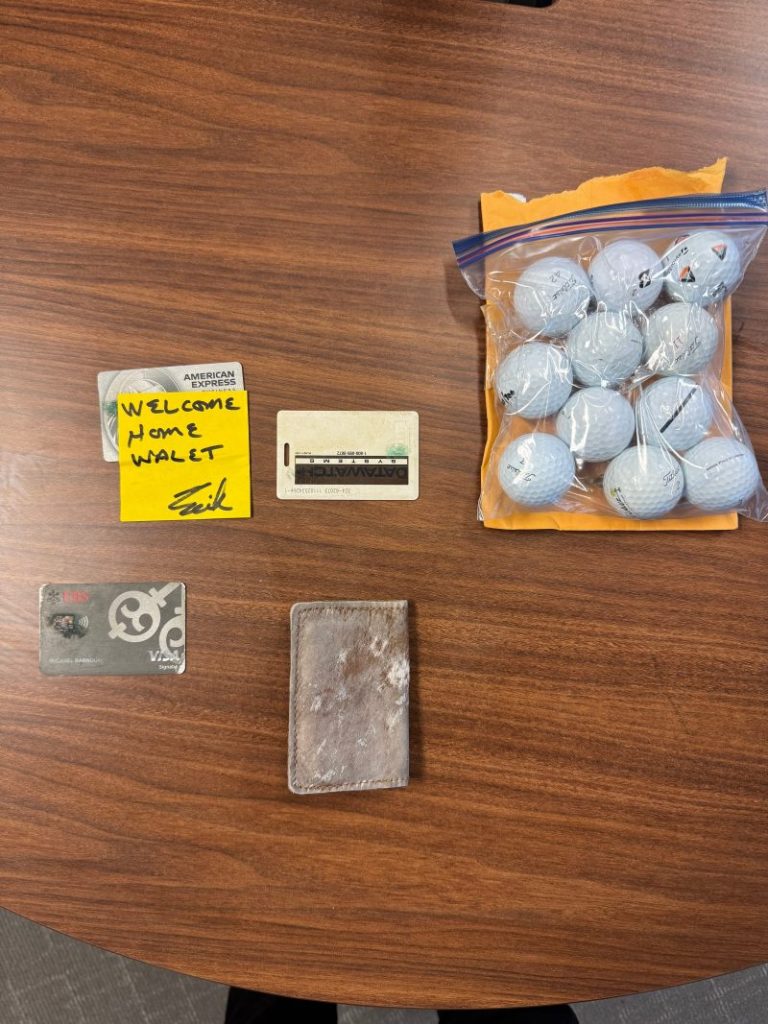
Christmas came early for Atlanta-based real estate developer and avid golfer Michael Barnouin, who was recently gifted back his stolen cowhide wallet that he bought in Montana.

The culprit – a gull scavenger with white feathered arms, webbed feet and thin beak – often roamed in bunches near Pebble Beach Golf Links, a public golf course at Pebble Beach Resort in Monterey, California.

Barnouin, 30, was playing there for the first time earlier this year on Aug. 7 after finishing a residential renovation project in nearby Carmel.

‘One of my favorite things about taking trips down to Carmel is just throughout Monterey County, you have some of the best golf courses in the in the country,’ Barnouin said. ‘You’ve got Pebble Beach (Golf Links), you have Spyglass Hill, you’ve got Spanish Bay. I personally like Carmel Valley Ranch.’

Pebble Beach Golf Links also happens to be where basketball Hall of Famer Dwyane Wade hit his first-ever hole in one. Barnouin would’ve never considered any threat to his belongings, certainly not a herring gull seabird commonly referred to as a seagull.

‘I’m playing really well. I was having a great round. Hole 7 is the kind of famous par three, you know that Dwyane Wade hit that hole in one,’ Barnouin said. ‘Hole 8, it’s a it’s a long par 4 and you’ve got to kind of lay up and then you have this Bay that that you have to kind of smack it onto the green for your second shot over.’

Barnouin took his swing and got the ball over the water and eventually finished the hole. As he’s setting up for the ninth hole, people he’s playing with tell him that a seagull is in his cart.

Golf is a sport that requires concentration. Silence during one’s swing is a display of sportsmanship, so naturally Barnouin was ‘kind of frustrated’ when they were talking during his backswing.

‘I don’t care about the seagull in my golf cart,’ he said. ‘It can take whatever it wants.’

Little did he know that it was making off with his cowhide wallet.

‘When I turn around to go back to my cart, I notice a seagull is standing on the seat and it’s got something in its mouth. It was my wallet,’ said Barnouin. ‘And so stupidly I start to chase it and I’ve got my driver in my hand. I start to chase the seagull and it kind of goes down the fairway.’

He added: ‘I don’t think seagulls are that stupid either because this thing kept looking back at me as if I knew that I was chasing it and it knew that I wanted what was in its mouth.’

As the seagull had his wallet locked in its beak, flying around the bay, others quickly began to swarm it, assuming it was food. Seconds later, it was dropped.

Barnouin and other golf mates searched for the wallet, but cold temperatures near the water made them stop and finish the round of golf. Barnouin said he ‘played terrible the next two holes’ before getting it together. He searched the next day at low tide but to no avail, assuming the tides washed it away.

‘Welcome home wallet’

Barnouin never thought he would see his wallet again. He canceled his credit and debit cards.

Months later, he received some mail at one of his properties in Carmel from someone named Erik Bueno.

Bueno is a retired Southern California real estate agent who has spent the decade traveling. He said he owns a couple of rentals in Carmel, and when one of them is empty, he’ll go and stay a while.

‘This particular trip, I stayed six weeks and while I’m there I walk a lot and I go look for golf balls sometimes at low tide,’ Bueno said. ‘I would say I found his wallet maybe around the 20th of October then mailed it out.’

Bueno, 68, wrote a letter that read ‘I found your wallet with AMEX and VISA cards. No cash. Do you want me to mail or trash them?’ and signed off with his name and number.

‘He contacted me and then I took the wallet and a Ziploc bag of golf balls to his buddy’s house,’ Bueno told USA TODAY Sports.

‘I always walk a lot and I always look for golf balls for a couple of reasons. One, it’s great exercise,’ Bueno said. ‘Number two, I want to get the golf balls out of the ocean because it pollutes the ocean. The balls will rub and scratch, the fish will eat the plastic.’

He’ll also donate the balls to junior golf because he said that it’s ‘kind of expensive to play Pebble Beach.’

‘It’s an amazing golf course. So everyone that plays there, they’re usually playing with like excellent golf balls. So I tend to find a lot of Titleist Pro V ones. And then I donate them to junior golf and they love it.’

Bueno found 1,200 golf balls in three days, he said. He knows where to search because it’s the same spot many people get hung up at. The same eighth hole that Barnouin chased the seagull around before his wallet was dropped.

‘It’s the second shot on No. 8 that everybody dumps into the ocean and I didn’t find his ball, but I found his wallet right there on the ocean,’ Bueno said. ‘I think I had mailed the driver’s license and that’s one of the things I thought he wanted the most.’

Bueno certainly could understand where Barnouin was coming from because nearly 25 years ago the same experience happened to him.

‘I played Pebble Beach many times, but about 20 to 25 years ago I was playing with my dad and a seagull came down, took my wallet out of my golf cart,’ Bueno said. ‘But it dropped it right next to the cart. He didn’t fly away with it. My story was not as fun as Michael’s dumping in the ocean. But yeah, my wallet got snagged also.’

Barnouin was ‘absolutely ecstatic’ to get his wallet back and said he plans to play at Pebble Beach again, but next time he’ll be sticking to Apple Wallet, instead.

However, this is a core memory for Barnouin.

‘I don’t know if I birdied the hole eight, but I certainly parred because I remember I was not that upset going into the hole nine, but I did not think I’d get a seagull on hole nine,’ Barnouin said. ‘People are looking for albatross as birdies. I’m the only guy who’s ever gotten ‘seagull’ on Pebble Beach.’

This post appeared first on USA TODAY

Altius Minerals (TSX:ALS,OTCQX:ATUSF) is making a bet on a lithium market recovery, agreeing to acquire Lithium Royalty (TSX:LIRC) in a C$520 million deal that will expand its exposure to battery metals.

Under a definitive agreement announced by the two companies on Monday (December 22), Altius plans to purchase all of the issued common and convertible common shares of Lithium Royalty for C$9.50 each.

The amount will be paid as either C$9.50 in cash or 0.24 of a common Altius share, according to shareholders’ election.

For Altius, the acquisition will allow it to bring a portfolio of 37 lithium royalties into its fold. None of them involve streams, and they span projects from production through early exploration.

Four of the royalties are tied to producing assets, three of which were commissioned in 2025 and are currently ramping up or expanding. Another 12 projects are in advanced stages with completed economic studies, while three to five additional assets are targeting startup between 2026 and 2030.

The company said the portfolio is geographically concentrated in lower-risk jurisdictions, with most assets located in Canada, Australia and South America, and diversified across both brine-based and hard-rock lithium production.

At the current spot price, Altius expects the acquired royalties to contribute between US$29 million and US$43.7 million in annual revenue by the end of the decade. Lithium carbonate equivalent prices fell to multi-year lows in 2025, holding below US$9,000 per metric ton for most of the year, even as demand continues to expand beyond electric vehicles.

Altius said global lithium demand is expected to exceed 1.5 million metric tons of lithium carbonate equivalent in 2025, with supply deficits potentially re-emerging as early as 2026 after years of oversupply.

Altius Chief Executive Brian Dalton said lithium has “emerged as a mainstream scale mined commodity,” and described the acquired portfolio as featuring “very long resource lives,” strong cost positioning and low jurisdictional risk.

A special shareholders’ meeting is scheduled to happen no later than March 10, 2026.

If approved, the deal is expected to close in the first quarter of 2026, after which Lithium Royalty shares will be delisted and the company will cease to be a reporting issuer in Canada.

Securities Disclosure: I, Giann Liguid, hold no direct investment interest in any company mentioned in this article.

This post appeared first on investingnews.com

Western Kentucky football offensive lineman Elijah Williams was carted off the field during the first quarter of the New Orleans Bowl on Tuesday, Dec. 23.

Williams appeared to have sustained a lower left leg injury at the end of a run on second down where he got rolled up on by Hilltoppers running back La’Vell Wright. He immediately went down on the field at Caesars’ Superdome in New Orleans and was tended to by members of Western Kentucky’s medical staff. Williams had an air cast put on his left leg.

He was then carted off, where he was seen giving a thumbs-up to those inside the stadium. ESPN’s Ian Fitzsimmons mentioned on the broadcast during a second-quarter hit that Williams underwent X-rays in the stadium and sustained a lower-leg injury.

The 6-foot-2 redshirt freshman offensive lineman was moved into the starting center position on Western Kentucky’s offensive line for the New Orleans Bowl against Southern Miss, according to ESPN’s broadcast.

Here’s the latest on Williams:

Elijah Williams injury update

Williams sustained an apparent leg injury in the first quarter of the New Orleans Bowl after getting rolled up on during a run play. ESPN’s broadcast mentioned that he was talking to members of Western Kentucky’s staff as he was being tended to on the field.

Fitzsimmons mentioned on the ESPN broadcast that after speaking with Williams’ parents at the stadium, Williams was seen with both hands over his face coming out of the X-ray room and was in ‘a lot of pain.’

‘It’s a lower leg injury, meaning his left ankle, left foot are in an air cast. If they do take him to a hospital, it’ll be to University Medical Hospital, which is a Level 1 Trauma Facility that’s only 0.7 miles away here from the Superdome,’ Fitzsimmons said on the broadcast.

This story will be updated

The USA TODAY app gets you to the heart of the news — fastDownload for award-winning coverage, crosswords, audio storytelling, the eNewspaper and more.

This post appeared first on USA TODAY
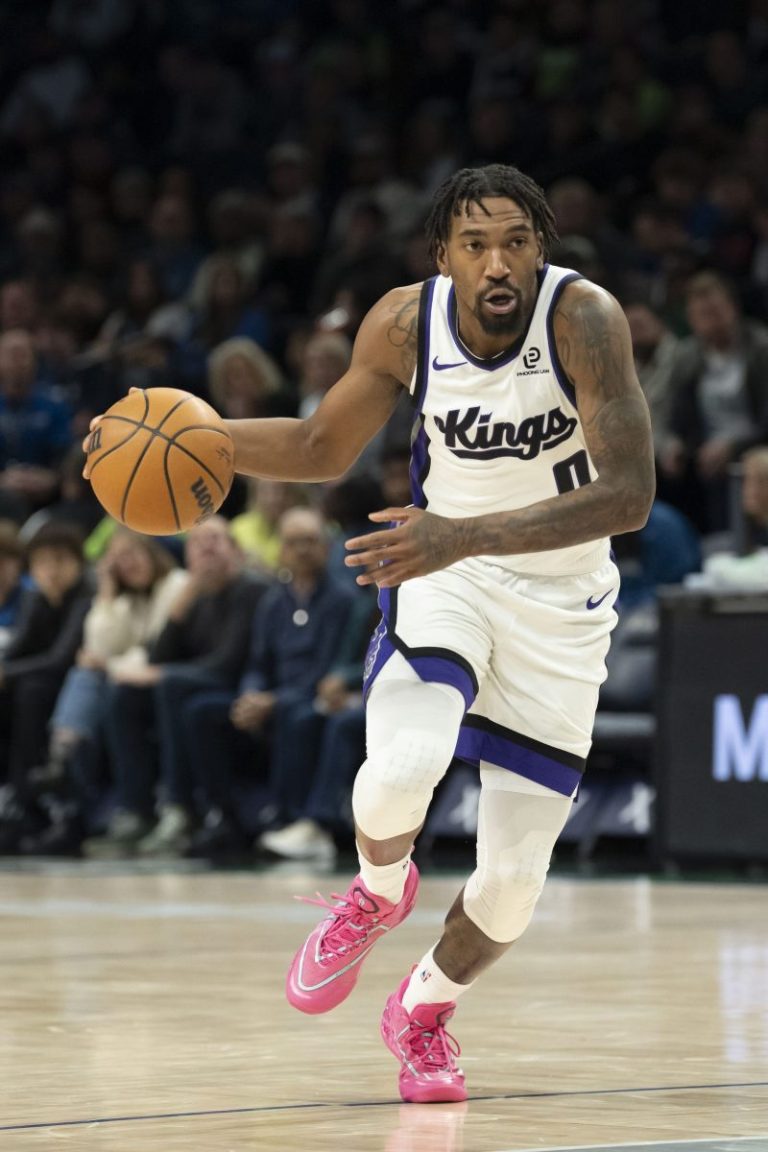
Sacramento Kings guard Malik Monk has seemingly fell out of the rotation after playing less than five minutes in the team’s 125-124 win against the Houston Rockets.

Before that in back-to-back losses versus the Portland Trail Blazers, Monk did not play as part of a coach’s decision on Dec. 18 and 20.

Kings head coach Doug Christie told reporters following the Houston game, where he logged 4 minutes and 50 seconds, that he told Monk he appreciates him for ‘being a pro’ regarding his frustration about not playing.

‘That’s part of what it is to be a part of a team and a good teammate. It was big time for him,’ Christie said. ‘It was five minutes, but they were a really good five minutes that we needed and he supplied it.’

Monk, an eight-year NBA veteran who’s in his fourth season with Sacramento, is averaging 12.5 points in 23 minutes per game, the lowest scoring output in his Kings tenure. In five minutes against the Rockets, he scored two points.

He told The Sacramento Bee in an interview that he is ‘1,000% confused’ at the recent change in his playing time.

‘It’s not my job to try to figure out why I’m not playing because I deem myself more than the whole,’ he said. ‘So I’ll just be ready when my name is called. I’ve been in the league long enough where I don’t let this stuff get to me. Everybody knows I want to be out there, especially playing in front of this crowd in Sac, but there ain’t (expletive) I can do about it.”

Given the recent turn of events, combined with the Kings 7-22 record, there could be signs that Monk is out the door.

Sacramento Kings: news, stats, trade rumors and more

Malik Monk rumors: Could Malik Monk be traded?

Monk could be in some of his final days suiting up as a Sacramento King.

According to senior NBA insider Chris Haynes, Monk has been available for trade ahead of the Feb. 5 deadline.

Kings trade rumors

With their lackluster start to the season and a boatload of veteran contracts, the Kings plan to offload many contracts via trades. Monk, who is owed $18 million this year and $41.7 million through 2028, isn’t the only one.

So far, rumors have swirled that Sacramento could also be looking to depart from veteran players such as Zach LaVine. DeMar DeRozan, a Compton-native, has drawn interest from the Los Angeles Clippers, according to The Athletic. And although teams have expressed interest in Kings forward-center Domantas Sabonis, he remains committed and plans to stay in Sacramento.

Another player whose name has been thrown into trade talks is fourth-year guard Keon Ellis. Ellis is in the final year of his contract and will be a free agent looking for a big payday in the summer of 2026.

This post appeared first on USA TODAY
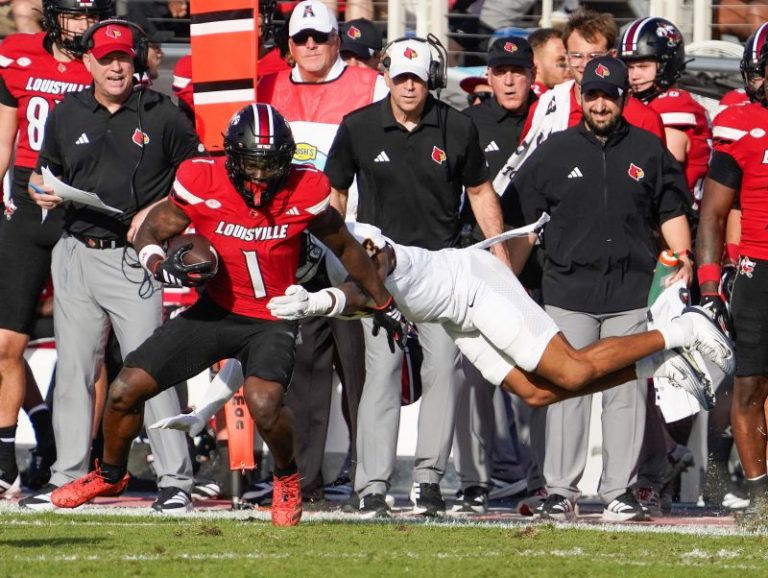
An emotional Boca Raton Bowl between Louisville and Toledo finally boiled over in the waning moments.

As the Cardinals tried to kill the clock within the last two minutes of the game up 27-22, Isaac Brown was seemingly hit late out of bounds by linebacker K’Von Sherman.

The Louisville bench took issue with the hit, and a dust-up ensued, with multiple players getting involved in a scrum.

Several minutes and innumerable shoves later, offsetting unsportsmanlike conduct penalties were called. Notably absent was a call for a late hit, implying Sherman’s hit was within the field of play in the eyes of the officials.

Earlier in the quarter, Louisville linebacker Clev Lubin was ejected for targeting, adding a punctuation mark to what had been a physical game. The scrum to end the game ultimately amounted to nothing, with Louisville successfully killing the clock to win 27-22. In the final moments, Toledo was flagged for a delay of game for interrupting a snap on a kneeldown by Louisville, but the final moments of the game were otherwise without incident.

This post appeared first on USA TODAY

Attorneys for Miami Heat guard Terry Rozier are asking a federal judge to dismiss the two felony charges he’s facing for his alleged role in the NBA’s wide-ranging gambling scandal, according to a new motion filed on Rozier’s behalf.

Rozier’s attorney, Jim Trusty, wrote in court documents provided to USA TODAY Sports on Tuesday, Dec. 23, that federal prosecutors in the case are overreaching and going against recent Supreme Court precedent by charging Rozier with conspiracy to commit wire fraud and money laundering in the alleged scheme. Trusty instead argued the federal government is attempting to ‘enforce its view of integrity in sports wagering’ and that the allegations are a violation of the wagering rules set by state-licensed betting companies.

Rozier’s side wants the charges thrown out by the U.S. District Court for Eastern New York since this is conduct traditionally regulated at the state level. Rozier was arraigned on Dec. 9 and pleaded not guilty to both charges in federal court in Brooklyn.

‘The government has billed this case as involving ‘insider betting’ and ‘rigging’ professional basketball games,’ Trusty wrote. ‘But the indictment alleges something less headline-worthy: that some bettors broke certain sportsbooks’ terms of use against wagering based on non-public information and ‘straw betting,” Trusty wrote, in reference to the practice of one person placing bets on another’s behalf.

The 2025-26 NBA season began with the startling revelation that Rozier, Portland Trail Blazers coach Chauncey Billups and former NBA player Damon Jones had been arrested in connection with two federal indictments related to illegal gambling on games and rigged poker games that had Mafia ties.

Federal authorities allege the extensive scheme spanned years, and there are more than 30 co-defendants accused in the case along with these prominent NBA figures. Rozier has only been charged in the indictment involving illegal gambling on games, though authorities said in October that the investigation is still ongoing. Rozier was placed on immediate and indefinite leave from the Heat until the situation is resolved and NBA commissioner Adam Silver told reporters last week the league will look into the possibility of giving Miami some sort of ‘satisfactory relief’ since Rozier can’t play and he’s earning $26.6 million against the salary cap this season.

The 31-year-old is accused of being part of an illegal betting scheme by alerting gamblers he intended to fake an injury in order to make money off a prop bet related to his performance in a game when he played for the Charlotte Hornets.

Prior to a March 23, 2023, game between the Hornets and New Orleans Pelicans, according to the federal indictment, Rozier told co-defendant Deniro Laster that he planned to prematurely remove himself from the game in the first quarter due to injury and not return to play. Rozier had not been listed on the injury report.

Federal authorities allege Laster then sold the information to co-defendant Marves Fairley, and more than $200,000 in prop bets were subsequently placed on Rozier’s ‘unders’ for the game. Rozier played 9 minutes, 34 seconds for the Hornets in the game before leaving with an injury and finished ‘under’ his prop bet totals for points, assists and 3-pointers.

The indictment also states that once Laster collected his cut of the winnings from Fairley in Philadelphia, he drove from Philadelphia to Rozier’s home in Charlotte and counted the money with Rozier during the early morning hours of April 1, 2023. Rozier did not appear in another game that season for the Hornets.

Rozier’s motion countered, however, the federal government’s money laundering case is predicated on the alleged wire fraud that it believes should also be dismissed. ‘Moreover,’ according to the motion, ‘the indictment fails to allege an essential element of money laundering conspiracy: that Mr. Rozier agreed to commit the offense.’

‘The indictment does not allege that Mr. Rozier ever placed a bet, whether himself or through a proxy, on any NBA game,’ Trusty wrote in the motion to dismiss. ‘Nor does it allege that he knew that Laster intended to sell this information to others, or that using it to place wagers would violate the betting companies’ rules.’

Rozier, Jones and former NBA player Jontay Porter were each accused of providing inside information for the illegal gambling scheme as part of the investigation. Porter was banned for life from playing in the NBA in April 2024 and pleaded guilty to wire fraud conspiracy in July 2024.

Joseph Nocella Jr., the U.S. Attorney for the Eastern District of New York, called it ‘one of the most brazen sports corruption schemes since online sports betting became widely legalized in the United States’ during an Oct. 23 news conference announcing the indictments in the two cases.

Rozier’s motion filed Tuesday included reference to that moment, and noted ‘countless instances of speakers blurring Mr. Rozier’s case with a 31-defendant indictment that alleges Mafia involvement and several examples of condemning Mr. Rozier’s morality, rather than describing criminal allegations.’

‘Charging the alleged wagering scheme as a federal wire fraud conspiracy runs counter to the Supreme Court’s repeated warnings against using the federal fraud statutes to federalize state matters and criminalize civil matters,’ Trusty wrote. ‘Contrary to the theory underlying the indictment here, the federal wire fraud statute does not vest the government with the general power to enforce its view of integrity in sports wagering.’

This post appeared first on USA TODAY