Author

admin

Browsing

Sidney Crosby is now the Pittsburgh Penguins’ all-time leading scorer, passing legend Mario Lemieux.

Crosby picked up a goal and an assist in the first period against the Montreal Canadiens on Sunday, Dec. 21 to give him 1,724 career points, all with the Penguins. That moved him past Hall of Famer Lemieux, who had been the Penguins’ leader since he passed Rick Kehoe in 1989.

Crosby also moves into sole possession of eighth place on the all-time NHL scoring list by passing Lemieux.

He scored his 20th goal of the season, then set up Rickard Rakell on the power play for the milestone point. Teammates streamed onto the ice to congratulate him.

Lemieux got his point total in 915 games (in two stints after coming out of retirement in 2000) as he dominated despite battling back problems and missing time for cancer treatment. Crosby, who had concussion issues early in his career, has played 1,387 games.

Lemieux was drafted No. 1 overall in 1984 and helped turn around the franchise, winning Stanley Cup titles in 1991 and 1992.

Crosby, too, was a No. 1 overall draft pick and had a similar impact on the Penguins and the NHL after being selected in 2005 following a season-long lockout. He has led the Penguins to three championships.

Crosby’s first season (2005-26) was Lemieux’s last in the league. Lemieux, the Penguins co-owner at the time, had the generational prospect stay at his house early in his career, knowing he would be a special player.

Crosby has shown that and more.

In addition to the three Stanley Cups, he has won two points titles and two goal titles and was voted regular-season and playoff MVP twice. Like Lemieux, he was named to the NHL’s 100th anniversary team.

Last year, he broke Wayne Gretzky’s record with a 20th season averaging at least a point a game. He’s averaging that again this season. He has 645 goals and 1,079 assists in his career.

Next up on the scoring list for Crosby is No. 7 Steve Yzerman at 1,755.

This post appeared first on USA TODAY

Silver Dollar Resources (CSE:SLV,OTCQX:SLVDF,FSE:4YW) (CSE:SLV,OTCQX:SLVDF,FSE:4YW) is a precious metals exploration company targeting high-grade silver and gold opportunities in Mexico. Its cornerstone asset is the La Joya silver–gold–copper project, situated in the southern Durango–Zacatecas silver belt, one of the most productive silver districts globally.

La Joya has seen substantial historical exploration, with more than 51,600 metres drilled in 182 holes defining several mineralized zones, including the Main Mineralized Trend, Santo Niño, and Coloradito. The company is now revisiting the project with an underground-oriented exploration approach, combining structural interpretation, underground sampling, and a detailed review of historic drill core to pinpoint higher-grade mineralization at depth.

Beyond La Joya, Silver Dollar owns the Nora silver–gold project in Durango, home to the historic Candy mine and an epithermal vein system that has delivered high-grade surface sampling results. The company also holds an equity stake in Bunker Hill Mining following the divestment of the Ranger-Page project, offering leveraged exposure to the anticipated production restart in Idaho’s Silver Valley in early 2026.

Company Highlights

  • 100 percent owned La Joya project, an advanced-stage silver-gold-copper system in Mexico’s Durango-Zacatecas silver belt
  • La Joya was originally proposed as an open pit in 2013 based on US$24 silver, US$1,200 gold and US$3 copper
  • Strategic shift toward evaluating La Joya’s high-grade underground potential supported by new 3D geological modeling, underground sampling, and drill target development
  • Completed sale of the Ranger-Page project to Bunker Hill Mining, providing equity exposure to a near-term US silver producer
  • Fully funded to carry out planned exploration programs through 2026
  • Largest shareholder is mining investor Eric Sprott, with approximately 17.5 percent ownership
  • Multiple exploration catalysts planned, including drilling at La Joya in early 2026

This Silver Dollar Resources profile is part of a paid investor education campaign.*

Click here to connect with Silver Dollar Resources (CSE:SLV,OTCQX:SLVDF,FSE:4YW) to receive an Investor Presentation

This post appeared first on investingnews.com

Investor Insight

With a tight capital structure, experienced management and strategic gold, silver and copper project locations near major past-producing mines, Questcorp is well-positioned to deliver discovery-driven growth to investors.

Overview

Questcorp Mining (CSE:QQQ,OTC:QQCMF,FSE:D910) is a Canadian junior exploration company focused on unlocking value in two high-potential mineral districts: the Sonoran Gold Belt in Mexico and Vancouver Island in British Columbia.

The company aims to build shareholder value through disciplined exploration of assets with near-surface mineralization and proven geologic continuity. The company operates in mining-friendly jurisdictions, close to infrastructure and within major metal-producing belts. Its flagship La Union gold project offers high-grade gold-silver-lead-zinc potential in Mexico, while the North Island copper project provides exposure to porphyry copper and skarn systems in a district that hosts multi-billion-pound copper resources.

With gold prices near all-time highs and a copper supply crunch emerging, Questcorp is targeting discoveries that can drive exponential value from a tightly held share structure.

Company Highlights

  • Flagship Asset – La Union Gold Project (Mexico): A high-grade carbonate replacement gold system in the Sonoran Gold Belt, boasting historical production, strong geologic signatures and drill-ready targets with >80 g/t gold surface samples.
  • Copper Exposure in Tier-1 Jurisdiction: The North Island copper project lies just north of BHP’s historic Island Copper Mine. It shows promising porphyry and skarn-style mineralization and is adjacent to Northisle’s multi-million-ounce copper-gold deposits.
  • Tight Capital Structure and Strategic Investors: ~93 million shares outstanding with over 80 percent held by long-term, high-net-worth, US and International investors with 3-5 year investment window.
  • Execution-focused Management: Led by Founding President & CEO Saf Dhillon, a veteran builder of public companies, and geologist Tim Henneberry, with over 45 years of global exploration success.
  • Immediate Catalysts: Near-term exploration at both assets with active permitting, drill programs and news flow expected throughout 2025.

Key Projects

La Union Gold Project – Sonora, Mexico (Flagship Asset)

The La Union gold project is a 2,604-hectare, road-accessible high-grade carbonate replacement deposit (CRD) located at the edge of the Sonoran Gold Belt, one of the richest gold-producing regions in Mexico. The property is located near major mines, including La Herradura (6.7 Moz, measured and indicated) and San Francisco (1.4 Moz, measured and indicated), and boasts historical production from underground operations by Peñoles and others, reportedly yielding ~50,000 ounces of gold in the 1950s at grades of 7 to 20 grams per ton (g/t) gold.

La Union gold project location

Work done to date includes consolidation of seven historical properties into a single district-scale project by Riverside Resources, which invested more than US$2.5 million in geological mapping, sampling and target definition. Sampling has returned high-grade grab samples including 83.2 g/t gold, 4,816 g/t silver, 30 percent zinc, and 19.8 percent lead. Channel sampling and geological work identified eight mineralized zones, three of which – Plomito, La Famosa and La Union – are drill-ready and fully permitted.

Geology and history of La Union

Questcorp executed a definitive agreement with Riverside in May 2025 to earn up to 100 percent interest in the project. The planned Phase I program includes drilling 10 diamond drill holes averaging 300 meters in depth across the three priority targets, alongside geophysical (gravity and EM) surveys to refine targets. Questcorp will also continue surface exploration at the remaining five targets to identify additional drill candidates. The project’s polymetallic nature and porphyry potential at depth suggest significant resource upside. Riverside remains as the operator during the earn-in, bringing proven success in similar deposits such as Alamos Gold’s Mulatos.

North Island Copper Project (NICP) – Vancouver Island, BC

The North Island copper property is an exploration-stage project located on the northern tip of Vancouver Island, approximately 7.5 km northwest of BHP’s historic Island Copper Mine. The Island Copper operation historically produced 1.2 billion kg copper, 35,268 kg gold, 360,800 kg silver, and significant molybdenum and rhenium from 367 million tonnes of ore, underscoring the district’s endowment.

NICP hosts eight documented copper-silver skarn occurrences and displays porphyry-style mineralization associated with the Island Intrusive suite. The property is geologically anchored by two main target areas: skarns associated with Quatsino limestones in the east and a porphyry copper target to the west, known as the Marisa Zone. Historical drilling by previous operators at Marisa intersected broad zones of copper mineralization, including:

  • DDH92-01: 0.078 percent copper over 56.39 m, including 0.171 percent copper over 16.17 m
  • DDH92-03: 0.041 percent copper over 70.71 m, with increasing grade at depth

Despite promising results, these zones were never followed up. Questcorp intends to revisit and expand on this historic work. The next steps include completing a 3D induced polarization (IP) survey to model chargeability and resistivity anomalies, followed by a focused drill campaign targeting extensions of the Marisa porphyry.

The project benefits from excellent access via the Vancouver Island Highway and logging roads, plus nearby hydro infrastructure, offering low-cost exploration potential. With a favorable neighborhood, including Northisle Copper & Gold Inc. (TSXV:NCX) with a ~$800 million market cap, NICP represents a high-upside copper exploration story in a Tier-1 jurisdiction.

Founding Directors and Management Team

Saf Dhillon – President, CEO and Director

Saf Dhillon has been involved in the development of public companies for over 20 years, holding various positions including investor relations, business development and senior management, as well as board directorships, building an extensive worldwide list of contacts. He was a key member of the Idaho-based US Geothermal’s management team, which grew the company from an approximately US$2 million startup to a successful independent renewable energy power producer with three new power plants operating in the Pacific Northwest. Saf is President & CEO of iMetal Resources Inc. (TSXV:IMR), President & CEO of Bayridge Resources Corp. (CSE:BYRG). He is also a founding director of Torrent Gold (CSE:TGLD), a board member of Lake Winn Resources (TSXV:LWR), and provides assistance to several other private and public companies.

R. Tim Henneberry – Director

R. Tim Henneberry is a professional geoscientist with over 43 years of experience in domestic and international exploration and production for base and precious metals and industrial minerals. He founded Mammoth Geological in 1991, providing geological consulting services to numerous private and publicly traded companies. Henneberry has been involved in senior management of several TSX Venture and CSE-listed companies over the last 30+ years, serving as director, senior officer or advisor, including the founding of several.

Scott Davis – Director

Scott Davis is a partner of Cross Davis & Company LLP, Chartered Professional Accountants, providing accounting and management services for publicly listed companies. His experience includes CFO positions of several companies listed on the TSX Venture Exchange, and his past experience consists of senior management positions, including four years at Appleby as an assistant financial controller. Prior to that, he spent two years at Davidson & Company LLP, Chartered Professional Accountants, as an auditor, and five years with Pacific Opportunity Capital as an accounting manager.

This post appeared first on investingnews.com

After peaking above US$20,000 per metric ton (MT) in May 2024, nickel prices have trended steadily downward.

Behind the numbers is a persistent oversupply driven by Indonesia’s high output, the world’s largest nickel producer.

At the same time, demand from China’s manufacturing and construction sectors, a traditional driver of stainless steel, has been weak as the country’s beleaguered real estate sector continues to find its footing.

Read on to learn what other key factors moved the nickel sector in 2025.

Nickel price in Q4

There wasn’t much change at the start of the quarter; the price was essentially trading in the US$15,000 to US$15,500 range, the same as it had since recovering from the post-liberation day tariff announcement rout in the base metals market in April that sent the price spiraling to a year-to-date low of US$14,150.

Nickel price, December 19, 2024, to December 18, 2025.

Chart via TradingEconomics.

However, cracks began to form at the end of October as it became clearer that the oversupply situation was likely to persist, pushing prices back below the US$15,000 mark by mid-November.

Prices for nickel rebounded in late November, but failed to break the US$15,000 again and slid toward a yearly low, reaching US$14,235 on December 15.

Oversupply continues to weigh on nickel

At the end of the year’s third quarter, the expectation was that nickel prices would carry momentum as the monsoon season arrived in the Philippines; however, despite seasonal declines in output, the market ‘s supply glut persisted, and prices continued to trend lower at the end of the period.

As of September 30, London Metal Exchange (LME) warehouses held 231,504 MT of nickel, and by November 28, stockpiles had grown to 254,364 MT, nearly 100,000 MT higher than the start of 2025.

According to a mid-December Shanghai Metals Market article, refined production decreased by 25,800 MT in November. Still, it was outpaced by inventory accumulation, as downstream demand remained soft.

On the demand side, stockpile buildups coincided with the traditional off-season for stainless steel producers, which accounts for 60 percent of total nickel demand, and weak end-use consumption led some producers to initiate output cuts. Additionally, Shanghai Metals Market notes that stainless demand was further impacted by the superior economics of recycled materials. The outlet also states that although production costs in Indonesia are lower than elsewhere, the price of nickel is rapidly approaching producers’ break-even point.

In February, the Indonesian government changed its quota system, increasing nickel ore output to 298.5 million wet metric tons from 271 million wet metric tons in 2024. The move from the top nickel producer was designed to alleviate supply pressures, with increased production limited to major production areas.

This was followed in October by a change to the length of time production quotas were valid, shortening it to one year from three years, and forcing miners to reapply for previously approved quotas for 2026 and 2027.

Changes were made to the application system after companies failed to meet environmental obligations, and companies will now have to submit proof they have the financial means to remediate land after operations are complete.

Adding to the metal’s woes at the end of the year is demand from the electric vehicle (EV) sector slipping as more battery producers pivot away from nickel in their chemistries, as cheaper lithium-iron-phosphate batteries improve efficiency.

For her part, Manthey, explained that everything has aligned for a bear market.

“LME stockpiles are at a four-year high, with Chinese and Indonesian cathode dominating,” she said, adding that growth in battery metals was slower than expected, and that demand for stainless steel was sluggish on the back of global weakness in manufacturing.

How did nickel perform for the rest of the year?

The rest of the year wasn’t much different for nickel.

The oversupply situation carried over from 2024, with Indonesian producers making up roughly 60 percent of the market. Likewise, curtailments continued among western producers as prices were unable to cover costs.

In April, the Indonesian government made a significant change to its royalty rates, hiking them to between 14 and 19 percent, depending on the nickel price. That’s up from the country’s previously imposed 10 percent flat rate, with a 2 percent royalty on nickel mattes destined for battery production.

As the second quarter began, base metal prices sank amid rising expectations of a global recession following US President Donald Trump’s “Liberation Day” tariff announcement on April 2.

Markets rebounded after their initial tariff plans were walked back, following a bond market squeeze that pushed 10 year treasury yields up by more than half a percentage point.

Nickel faced further pressures in July as the One Big Beautiful Bill was signed into law in the US, ending the federal EV tax credit, as well as other tax credits for expanding charging infrastructure. The change came into effect on September 30 and eliminated a US$7,500 rebate on the purchase of new EVs. Before the end of the tax credit, data showed that American EV sales reached a record 1.2 million through the first nine months of 2025, with the share for EVs climbing to 12 percent in Q3 as consumers made purchases ahead of the program’s end.

Q4 data shows EV sales have declined significantly since the tax credit expired, and interest in EVs has fallen by 20 percent. The fall caused Ford Motor (NASDAQ:F) to pull back on its EV plans and take a US$19.5 billion writedown.

Investor takeaway

Nickel prices continued on a downtrend in 2025, and expectations aren’t much different for the year ahead.

Until the metal see ssustained upward momentum, it’s unlikely that curtailed western operations will be restarted.

For experienced investors, this may offer an opportunity to enter a market closer to the bottom than the top. However, until there is a significant correction in supply and demand fundamentals, the nickel market won’t have much of a tailwind, leading to a riskier market, that may have a lengthy period before returns are realized, if at all.

Securities Disclosure: I, Dean Belder, hold no direct investment interest in any company mentioned in this article.

This post appeared first on investingnews.com

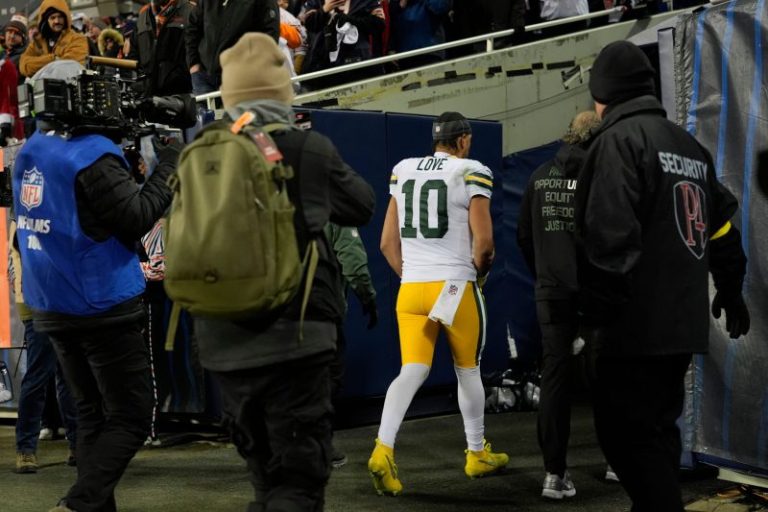
Green Bay Packers quarterback Jordan Love was injured in the second quarter of the team’s Week 16 game against the Chicago Bears.

Love’s injury occurred when he was hit by Bears defensive lineman Austin Booker. Booker lowered his head and hit Love square in the helmet while bringing the 27-year-old quarterback to the ground.

Love remained down on the ground after the play and was unable to get up. The Packers’ medical staff quickly came out to tend to him as the officials flagged Booker for a 15-yard penalty.

Love was able to run off the field under his own power but went straight into the blue medical tent. After a brief evaluation, he was taken to the locker room.

Jordan Love injury update

The Packers have officially ruled Love out for the remainder of Saturday’s game because of a concussion. He had originally been deemed ‘questionable’ to return but the team announced he would not return after halftime.

Love completed 8 of 13 passes for 77 yards before leaving the game. Green Bay was leading Chicago 3-0 when he exited.

Who is the Packers backup QB?

Willis, 26, is a four-year pro who is in his second season with the Packers. He was a third-round pick by the Tennessee Titans in the 2022 NFL Draft out of Liberty and has completed 63.4% of his career passes for 913 yards, four touchdowns and three interceptions.

Willis went 2-0 in two starts in relief of Love last season with the Packers and has a career record of 3-2 as a starter. The 6-1, 225-pound signal-caller is well-known for his mobility and has 301 rushing yards and two touchdowns on 55 career carries.

Packers QB depth chart

The Packers have three quarterbacks currently in their organization. They are as follows:

  1. Jordan Love
  2. Malik Willis
  3. Clayton Tune (practice squad)

Tune was not elevated for Saturday’s game, so the Packers do not have another quarterback available behind Willis against the Bears.

Fox Sports’ Erin Andrews reported Packers coach Matt LaFleur told her the team’s emergency QB would likely be starting running Josh Jacobs if Willis needs to leave the game for any reason.

(This story will be updated as more information becomes available.)

This post appeared first on USA TODAY

Luka Doncic was ruled out by the Los Angeles Lakers for the second half of Saturday night’s game against the L.A. Clippers.

The Lakers announced in the early minutes of the third quarter that Doncic would miss the rest of the game due to a left leg contusion.

He had a noticeable limp during the second quarter. The Lakers trailed the Clippers 54-39 at halftime.

Doncic has had three different stints in which he’s missed time this season, including one as a result of a leg injury on Nov. 3.

He also missed the early part of the season in October with a combination of a knee and foot injury. He was away from the team earlier this month for the birth of his second child.

What is a leg contusion?

‘A muscle contusion is a muscle bruise. It happens from a direct, blunt blow to your muscle,’ according to the Cleveland Clinic.

Luka Doncic stats vs. Clippers

Doncic was 4-for-13 from the field for 12 points in 20 minutes of play. He also had five rebounds, two assists and four turnovers. He was 1-for-6 from the 3-point line.

This post appeared first on USA TODAY

The Green Bay Packers appeared to be well on their way to a win over the Chicago Bears in Week 16 of the 2025 NFL season when they took a 10-point lead with about five minutes remaining in regulation.

Instead, the Bears came storming back thanks to an onside kick from Cairo Santos and heroics from Caleb Williams to earn a critical, 22-16 victory.

Chicago is now in firm control of the NFC North and can clinch a playoff berth if the Detroit Lions lose to the Pittsburgh Steelers on Sunday.

Even so, the divisional race is not over, and both the Packers and Lions will be hoping against hope they can make a last-ditch effort to challenge the Bears as they look to win a divisional title for the first time since Matt Nagy was the team’s head coach.

Here’s what to know about the NFC North standings after the result of the Bears vs. Packers Week 16 game.

NFC North standings

Below is a look at the pecking order in the NFC North after the Bears’ 22-16 win over the Packers:

  1. Chicago Bears (11-4)
  2. Green Bay Packers (9-5-1)
  3. Detroit Lions (8-6)
  4. Minnesota Vikings (6-8)

The Bears now hold a one-and-a-half game lead over the Packers atop the NFC North. As such, Chicago needs only to win one of its final two games to clinch the division title for the first time since 2018.

Chicago’s win over Green Bay also prevented the Packers from earning a head-to-head tiebreaker over the Bears. That likely won’t be consequential, as the Packers’ tie made it unlikely they’d finish with an identical record to the Bears, but it will give Chicago just a modicum more flexibility in the unlikely event of another tie.

Meanwhile, the Bears’ win figures to make it difficult, but not impossible, for the Lions to win the division. Detroit would need to win out and have Chicago lose out to have a chance at winning the divisional crown.

The Lions’ best chance of making the playoffs is now to catch the Packers in the NFC standings. With a win over the Pittsburgh Steelers in Week 16, Detroit can position itself to be a half-game back of Green Bay in the NFC North and wild-card standings.

That said, the Lions may have actually preferred a Bears loss. Why? Because Detroit still has a game remaining on the schedule against Chicago, which would have put the Lions in a better position to control their playoff chances. They would only have needed to be within one game of the Bears in the standings before their Week 18 matchup to have a potential win-and-in scenario.

Instead, the Lions will have less ground to make up on the Packers, but no control over Green Bay’s potential results. As such, the Lions will rely on a slip-up from the Packers or another NFC wild-card team down the stretch, while Detroit will also need to take care of business on its own end to mount an 11th-hour playoff push.

Bears remaining schedule

The Bears can clinch the NFC North with a win in one of their last two games. That won’t be an easy task, however, as Chicago is playing a couple of teams who are in the thick of the NFC playoff race to close the season.

Below is a look at the Bears’ remaining opponents:

  • Week 17: at San Francisco 49ers (10-4)
  • Week 18: vs. Detroit Lions (8-6)

Packers remaining schedule

Neither of the Packers’ two remaining opponents has a winning record entering Week 16. Below is a look at Green Bay’s schedule over the season’s final two weeks:

  • Week 17: vs. Baltimore Ravens (7-7)
  • Week 18: at Minnesota Vikings (6-8)

Lions remaining schedule

The Lions still have to play their Week 16 game against the Steelers. After that, they will hit the road for a couple of divisional contests, including what could prove to be a critical, Week 18 battle with the Bears, pending the shape of the NFC playoff picture.

Below is a look at the Lions’ remaining opponents:

  • Week 16: vs. Pittsburgh Steelers
  • Week 17: at Minnesota Vikings
  • Week 18: at Chicago Bears

NFC North division winner odds

The Bears’ win has established them as the clear-cut favorites to win the NFC North, according to odds from DraftKings Sportsbook. Below is a look at each team’s chances of winning the tightly packed division:

  • Chicago Bears (-380)
  • Green Bay Packers (+650)
  • Detroit Lions (+750)
This post appeared first on USA TODAY

The final spot in the College Football Playoff quarterfinals has been secured, and it belongs to Oregon football.

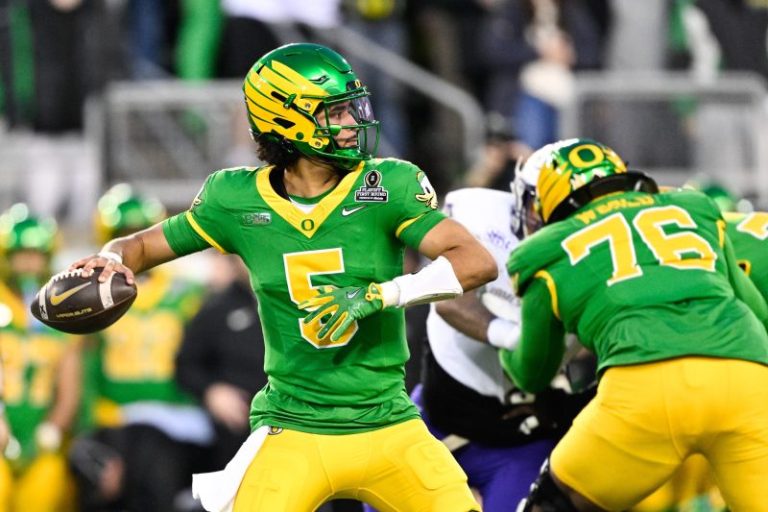
Behind a big game from quarterback Dante Moore, the fifth-seeded Ducks defeated No. 12 James Madison 51-34 on Saturday, Dec. 20 at Autzen Stadium in Eugene, Oregon. It’s the first win in the College Football Playoff for the Ducks under Dan Lanning.

Moore was outstanding for the Ducks’ offense, as he completed 19-of-27 passes for 313 yards with four passing touchdowns on the night. He also had a rushing touchdown on the night, which came near the end of the first quarter.

Here’s a quick look at what you need to know about who the Ducks/Dukes play next in the College Football Playoff:

Who does Oregon football play next in CFP?

With its first-round win, Oregon will now face fourth-seeded Texas Tech in the next round of the College Football Playoff. The Ducks will have their hands full in the CFP quarterfinals against the Red Raiders, who have one of the top defenses in the country, led by their Chuck Bednarik Award-winning linebacker Jacob Rodriguez. The Red Raiders’ defense ranks third in scoring defense (10.9 points allowed per game), fifth in total defense (254.4 yards per game), and first in rushing defense (68.5 points per game).

The Red Raiders secured the top-four seed in the CFP bracket with their Big 12 Championship win over BYU, a game in which Texas Tech’s defense created four takeaways and two sacks.

Texas Tech football: What to know on Red Raiders vs Oregon

Here’s three things to know on the Red Raiders:

Stat leaders:

  • Leading passer: QB Behren Morton, 2,643 yards with 22 touchdowns and four interceptions
  • Leading rusher: RB Cameron Dickey, 1,095 rushing yards with 14 rushing touchdowns
  • Leading receiver: WR Caleb Douglas, 846 receiving yards and seven receiving touchdowns on 54 receptions
  • Top defender: LB Jacobs Rodriguez, 117 total tackles, seven forced fumbles, six broken-up passes, four interceptions, two fumble recoveries (one touchdown score) and a sack

How they got here:

  • Schedule: 12-1 overall, 8-1 in Big 12 play
  • Big wins: at Utah, vs. BYU, vs. BYU (Big 12 championship game)

Playoff history:

  • Have they been here before? No, Texas Tech is making its first appearance in the College Football Playoff.

Texas Tech vs Oregon in CFP quarterfinals time, date, schedule

  • Date: Thursday, Jan. 1
  • Time: Noon ET
  • Where: Hard Rock Stadium (Miami Gardens, Fla.)
  • TV channel: ESPN
  • Streaming option: ESPN app | Fubo (free trial)

Texas Tech and Oregon will meet in the Orange Bowl on Thursday, Jan. 1 at noon ET inside the Hard Rock Stadium in Miami Gardens, Florida. ESPN will broadcast the game with streaming options consisting of the ESPN app (with a TV login) and Fubo, which carries the ESPN family of networks and offers a free trial to new subscribers.

This post appeared first on USA TODAY

COLLEGE STATION, TX – It ended with a smooch.

Mario Cristobal could’ve done without that smacker.

Moments after Miami upset Texas A&M 10-3 in a College Football Playoff game, former Hurricanes wide receiver Michael Irvin found Cristobal and kissed him on the cheek during his on-field postgame interview with ESPN.

“That,” Cristobal said, “was disgusting.”

Cristobal laughed in the moment, in response to Irvin’s hijinks, but upon further reflection …

“I couldn’t find enough wipeys to clean myself,” Cristobal joked.

Call it the cost of victory — and the realities of the effervescent Irvin being one of the program’s biggest supporters.

“That guy means so much to the program, to its fan base, to our community,” said Cristobal, himself a former Miami player. “The pride is returning to so many former players.”

Pucker up, because the Hurricanes are on to the CFP quarterfinals.

Blake Toppmeyer is the USA TODAY Network’s senior national college football columnist. Email him at BToppmeyer@gannett.com and follow him on X @btoppmeyer.

This post appeared first on USA TODAY