Author

admin

Browsing

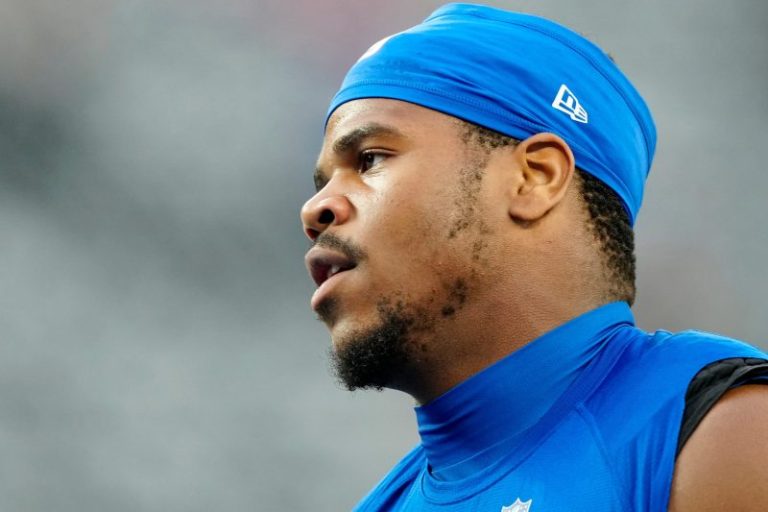
FOXBOROUGH, MA — For the second time in three games, New York Giants rookie defensive lineman Abdul Carter was nowhere to be found when the “Big Blue” defense took the field for the first time. 

And neither he nor interim head coach Mike Kafka wanted to discuss after the Giants’ thrashing at the hands of the New England Patriots, 33-15. Kafka repeatedly said it was ‘my decision’ during his postgame news conference, while Carter’s refrain to reporters was ‘(expletive) happens.’

In fact, Kafka repeated the phrase ‘my decision’ 11 times during his back-and-forth with reporters, who continually pressed him on his reasoning. Kafka said he did not regret the choice.

Carter wore a long blue overcoat near the Giants’ bench as the defense allowed a field goal on the opening drive of the “Monday Night Football” matchup and remained on the sideline for their touchdown drive later in the quarter. 

‘Listen, when he came back in the game you saw the kind of impact he had and the player this guy is,’ he said. ‘This is a kid that I, again, I back, I support this kid highly and for any young player that we have on the roster, whether it’s Abdul or any rookie or young player, we’re going to make sure we him under our wing and continue to develop these guys because they’re important to us. They’re important to me.

‘That was my decision, my decision only. Anything else outside of it is going to be kept in house.’

Kafka benched Carter for the first defensive series against the Green Bay Packers on Nov. 16 because he missed a walkthrough while in a recovery bed; Carter disputed reports he napped through a team activity and said the treatment was part of his training. 

‘Again, those are tough decisions to make, but that was my decision and, again, the kid, nothing with him,’ Kafka said. ‘Everything that we did was my decision and obviously I’m sure he wasn’t happy about it, which I understand, but I thought that was the best thing for the team and it was my decision to move forward with it and that’s where we’re at.’

The Giants selected Carter third overall out of Penn State in the 2025 draft. He rejoined his unit in the second quarter in search of his first full sack of the season, which came three plays later when he took down Patriots quarterback Drake Maye at the line of scrimmage.

‘Like I said, I have to be better,’ Carter told reporters. ‘I have to take pride in what I do, be where I have to be at. Simple as that.’

This post appeared first on USA TODAY

Monday Night Fights.

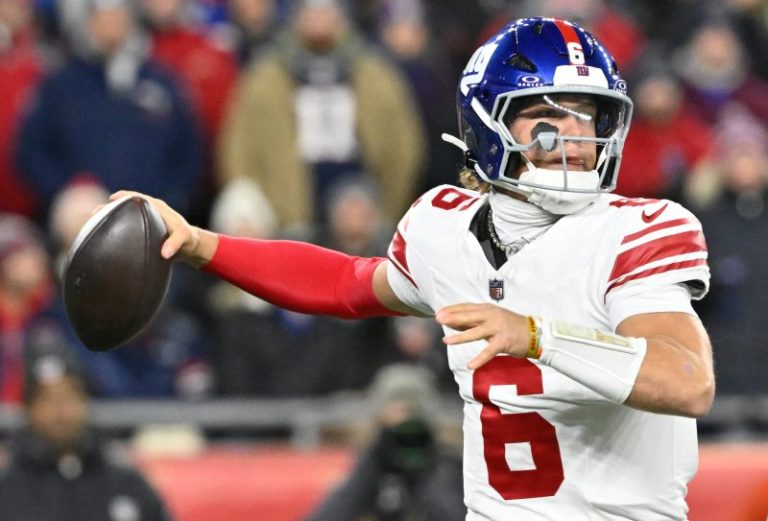
The New York Giants might be eliminated from playoff contention, but they aren’t going quietly into the night. Especially as the New England Patriots take aim at Big Blue’s rookie quarterback.

Jaxson Dart cleared concussion protocol ahead of the Giants’ Week 13 trip to New England, allowing him to retake his spot at the starting quarterback.

The Patriots certainly didn’t waste any time reintroducing the rookie to the pros, however, as Christian Elliss laid the boom on Dart.

Both teams sparred following the play, but only the Giants’ Theo Johnson was flagged for a personal foul.

It was the second time in as many drives that Dart took a big hit from a Patriots’ defender and the second time it drew a reaction from the visiting team.

Reports indicated that the Giants were going to protect Dart from himself, opting to remove designed runs from the playbook to avoid any unnecessary hits, according to ESPN’s Jordan Raanan.

While the hit didn’t look good, it was a legal one from Elliss. The linebacker hit the quarterback in the shoulder while he was still in bounds.

The Giants are hoping to coach that out of Dart, encouraging him to prioritize his health more going forward.

Early returns aren’t promising, but Elliss’ hit was yet another teaching moment for the rookie quarterback.

This post appeared first on USA TODAY

The reliever market is starting to heat up, and the latest maneuver signals a significant change for the New York Mets.

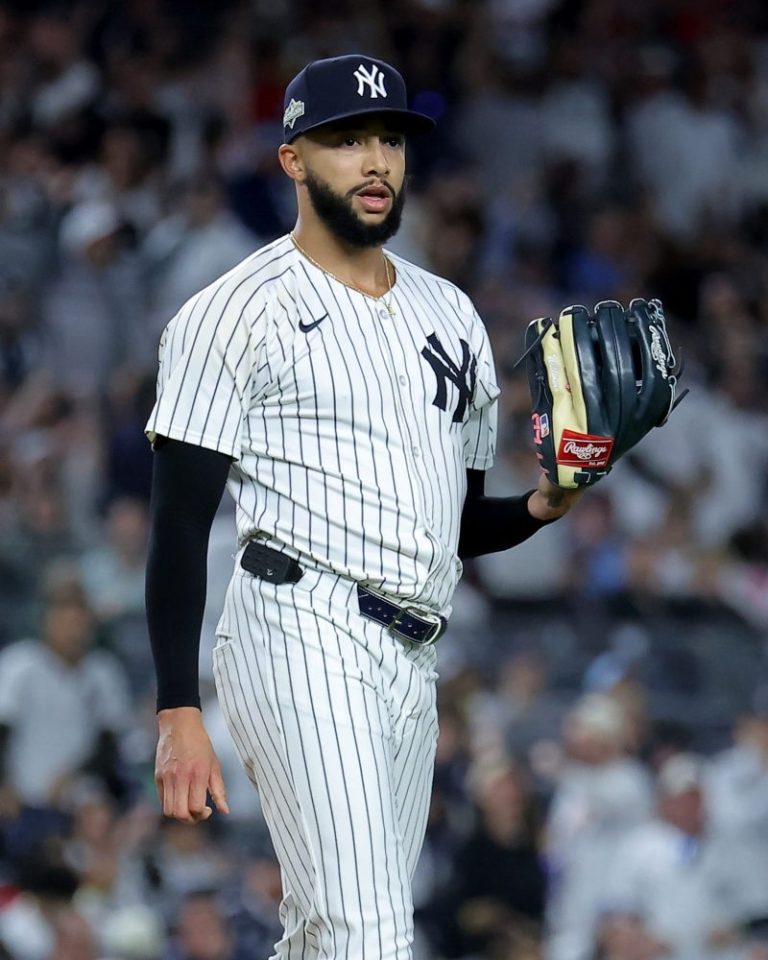
The Mets agreed to terms with two-time All-Star Devin Williams on a three-year contract, The Athletic reported, a sign the club is almost certainly moving on from stalwart Edwin Diaz.

Williams, 31, was the 2020 NL Rookie of the Year and earned an NL reliever of the year nod with the Milwaukee Brewers, when he played for current Mets president of baseball operations David Stearns. After a trade to the New York Yankees, struggled for significant stretches and lost his closer job.

Yet with his trademark changeup and career marks of 14.1 strikeouts per nine and a 1.04 WHIP, Williams remains one of the game’s elite relievers. And with a reported value of more than $50 million, the Mets’ investment in Williams likely marks their major relief splash this winter.

That means Diaz, who transitioned from volatile closer to folk hero, will likely move on. He opted out of the final two years of his five-year, $102 million deal with the Mets after posting his second All-Star campaign with the club.

Diaz should easily top Williams’ guaranteed dollars on the open market, where the Los Angeles Dodgers and other top spenders are expected to vie for his services. He struck out 118 batters in 62 innings in his epic 2022 season, when his trumpet-fueled Citi Field entrance became a part of franchise lore.

This post appeared first on USA TODAY

We are officially one week away from the 2025 fantasy football playoffs.

With ‘Monday Night Football’ pending, the following quarterbacks failed to record 15 fantasy points: Baker Mayfield, Justin Herbert, Matthew Stafford, Caleb Williams, Lamar Jackson, and Sam Darnold. Meanwhile, two of the top four passers are Marcus Mariota and Bryce Young. At running back, Jahmyr Gibbs, Josh Jacobs, Ashton Jeanty, Rico Dowdle, Saquon Barkley and Travis Etienne all rank outside the top 25. Wide receiver was no different, with Jaxon Smith-Njigba, Amon-Ra St. Brown (ankle injury), DeVonta Smith, Emeka Egbuka, Justin Jefferson, Jaylen Waddle, DK Metcalf and Michael Pittman Jr. all scoring fewer than 10 half-PPR points. Weirdly, tight end felt like the most predictable position.

Here’s a look at Week 14 fantasy football rankings. Toggle between standard, half PPR (point per reception) and full PPR to see where players rank in your league’s format. Scroll to the bottom to view the complete rankings.

Our team at USA TODAY Sports has you covered with plenty of content to help with your Week 14 waiver wire and roster decisions. Looking for up-to-date player news? We’ve got it. Don’t forget to check out the rest of our content:

Waiver wire and transactions: 9 players to add | 10 players to buy or sell

Please note: These rankings will change significantly as the week goes on. Check back on Sunday morning for final updates.

(The risers and sleepers sections will focus on players available in at least half of Yahoo leagues. All snap and target data from PFF.)

Week 14 fantasy football quarterback rankings: Risers and sleepers

  • Jaguars QB Trevor Lawrence (52% rostered) – This one is cheating a bit, as Lawrence is rostered in 52% of leagues, but the state of streaming options in Week 14 is not pretty. The 26-year-old has posted at least 16 fantasy points in seven of his last eight games, and he’ll be going up against a Colts defense that will likely be without star corner Sauce Gardner.
  • Commanders QB Marcus Mariota (10%) – There’s a slight possibility that Jayden Daniels will be back in Week 14, but if he isn’t, Mariota would be a top streaming option. The veteran has eclipsed 16 fantasy points in five of his six starts, including 24.3 against a tough Denver defense.
  • Saints QB Tyler Shough (7%) – Starting Shough is not for the faint of heart, but the rookie has dropped 19.0 and 18.4 fantasy points in two of his last three outings. Shough will get the benefit of facing a Bucs defense that’s allowed the most fantasy points to quarterbacks since their Week 9 bye.
  • Other QB streamers to consider – Jets QB Tyrod Taylor (4%), Dolphins QB Tua Tagovailoa (20%), Vikings QB J.J. McCarthy (31%)

Week 14 fantasy football running back rankings: Risers and sleepers

  • Commanders RB Chris Rodriguez Jr. (24%) – Washington’s backfield is a mess, but Rodriguez has seen fairly consistent usage recently. The 26-year-old has garnered at least 12 opportunities in three of his last four games, including an average of 2.8 red zone carries during that stretch. He’ll be a good bet to reach the end zone against a Vikings defense that’s surrendered seven rushing scores to backs over their last six games.
  • Cardinals RB Bam Knight (25%) – Trey Benson looked like he was on the verge of returning, but then he didn’t practice last Thursday, suggesting his return might not be as imminent as we thought. In his stead, Knight and Michael Carter split the load, with the former seeing a 14-10 edge in opportunities. Knight is now averaging 13.4 opportunities per game over his last seven outings. A brutal matchup with the Rams makes the 24-year-old a desperation-only play in Week 14.
  • Bengals RB Samaje Perine (3%) – While Chase Brown was still the lead back in Week 13 against the Ravens, Perine saw plenty of work. The veteran totaled 14 games and two targets in a game where the Bengals were leading for the entirety of the second half. That kind of volume puts him in play against a Bills defense that’s ceding the fourth-most fantasy points to opposing running backs.
  • Other RB streamers to consider – Ravens RB Keaton Mitchell (3%), Jaguars RB Bhayshul Tuten (44%), Rams RB Blake Corum (16%), Cardinals RB Michael Carter (5%)

Week 14 fantasy football wide receiver rankings: Risers and sleepers

  • Jets WR Adonai Mitchell (2%) – Without Garrett Wilson in the lineup, Mitchell has joined John Metchie II atop the Jets’ wide receiver depth chart. Over his last three games, Mitchell has racked up 6, 7, and 12 targets, respectively. This past week, he turned his 12 targets into 8 receptions for 102 yards and a score. The 23-year-old will be in the WR3 conversation as long as he maintains that kind of volume.
  • Packers WRs Jayden Reed (38%) and Dontayvion Wicks (1%) – Over the final nine weeks of his rookie season, Reed ranked as the overall WR9 despite missing a game to injury. Reed could be back this week, and he should be rostered in most leagues. Meanwhile, Wicks is coming off one of the best games of his young career. While he ranked behind Christian Watson and Romeo Doubs in snaps and routes, he finished with seven targets, six receptions, 100 total yards, and two tuddies. Four of Green Bay’s next five games are against teams that are in the bottom 10 against fantasy wideouts, making both Reed and Wicks worth picking up.
  • Texans WR Jayden Higgins (35%) – Higgins’ run as Houston’s WR2 didn’t end with C.J. Stroud’s return, as the rookie finished second on the team in snaps (44) and routes (24), as well as third in targets (5). Higgins has now generated at least five looks in five of his last six games. The 22-year-old has totaled at least nine half-PPR points in four of his last six.
  • Saints WR Devaughn Vele (1%) – With Brandin Cooks and Rashid Shaheed out of the picture, Vele seems to have cemented himself as the WR2 in New Orleans. On Sunday, he led the team in targets (8), tied for the team lead in snaps (64), and ranked second in routes (40). Vele turned his eight targets into eight receptions for 93 yards and a touchdown. He’s a solid streaming option against a Bucs secondary that’s surrendered the eighth-most fantasy points to the position since Week 3.
  • Lions WR Isaac TeSlaa (1%) – The Lions, who were already down tight end Sam LaPorta, could be without Amon-Ra St. Brown for a week or two. On Thanksgiving, TeSlaa finished just one snap and route behind Jameson Williams for the team lead. Given how electric he’s looked on just a few targets, he should be more involved against Dallas in Week 14. No team has allowed more fantasy points to wideouts than the Cowboys in 2025.
  • Other WR streamers to consider – Colts WR Josh Downs (48%), Broncos WR Pat Bryant (2%), Lions WR Tom Kennedy (0%), Bears WR Luther Burden III (10%)

Week 14 fantasy football tight end rankings: Risers and sleepers

  • Jaguars TE Brenton Strange (32%) – Strange has recorded 11.8 and 12.0 half-PPR points in the two games since he returned from injury, putting him very much on the TE1 map going forward. The 24-year-old will be a top-10 play against a Colts defense that’s allowing the fifth-most fantasy points to tight ends this season.
  • Dolphins TE Darren Waller (30%) – Waller played just 46% of the snaps in his return from IR, and he ended up leading the team in receiving on just three targets. The veteran will face the Jets, Steelers, and Bengals over his next three games, making him a priority pickup at the position.
  • Other TE streamers to consider – Rams TE Colby Parkinson (2%), Bills TE Dawson Knox (3%), Browns TE Harold Fannin Jr. (33%), Ravens TE Isaiah Likely (5%)

Week 14 fantasy football rankings: PPR, half-PPR and standard

This post appeared first on USA TODAY

One day after the WNBA and Women’s National Basketball Association (WNBPA) agreed to extend the current collective barging agreement (CBA) through Jan. 9, the league has reportedly come to the negotiating table with a new proposal that increases player compensation.

The league’s latest offer includes a maximum $1 million guaranteed base salary with projected revenue sharing raising max players’ total earnings to more than $1.2 million in 2026, a source close to the situation told USA TODAY Sports. They spoke on condition of anonymity because they’re not authorized to speak publicly about ongoing negotiations.

The offer also raises the league’s minimum salary to more than $225,000 and the average salary to more than $500,000, up from $220,000 and $460,000, respectively, in the WNBA’s previous proposal on Nov. 18.

The latest proposal also raises the salary cap to $5 million a season per team, an increase from $1.5 million salary cap in 2025. The salary cap would reportedly increase over the length of the CBA and be directly tied to the league’s revenue growth each year, although the specific revenue sharing details weren’t disclosed.

USA TODAY Sports reached out to the WNBA and WNBPA for comment. 

Although the WNBA and WNBPA are on the record saying players deserve a significant pay increase in the next CBA, the sides have differing opinions on how to go about it has led the current standoff.

The league previously proposed a maximum salary of more than $1.1 million including both the base salary and revenue sharing component available to more than one player per team on Nov. 18, but the proposal didn’t move the needle for the players. Both sides subsequently agreed on the Nov. 30 deadline to extend the CBA for a second time as revenue sharing and pay structure remain points of contention in negotiations.

Last season, the minimum salary was $66,079, while the supermax was worth $249,244. Only five WNBA players made more than $225,000 last season and they included Kelsey Mitchell at $269,244, Arike Ogunbowale at $249,032, Jewell Loyd, at $249,032, Kahleah Copper at $248,134 and Gabby Williams at $225,000

The current CBA was previously set to expire on Oct. 31 after the WNBPA exercised its right to opt out of the agreement in October 2024. However, the WNBA and players association agreed to a 30-day extension to extend the deadline to Nov. 30 to allow more time for a deal to be reached. The new deadline has been moved to Jan. 9, 2026, and both sides have the option to terminate the extension with 48 hours’ advance notice.

The league and players association previously agreed to a 60-day extension in 2019, three days before the last CBA was set to expire on Oct. 31, 2019. A new deal was subsequently reached on the current CBA on Jan. 14, 2020 and singed into effect three days later on Jan. 17, 2020. The WNBA has not had a work stoppage in its nearly 30-year existence.

The USA TODAY app gets you to the heart of the news — fastDownload for award-winning coverage, crosswords, audio storytelling, the eNewspaper and more.

This post appeared first on USA TODAY

As scrutiny continues to intensify across the battery metals supply chain, the conversation around sustainability has moved far beyond carbon footprints.

At this year’s Benchmark Week, Stefan Debruyne, director of external affairs at Sociedad Quimica y Minera de Chile (SQM) (NYSE:SQM), made that point unmistakably clear: sustainability in lithium is as much about people, process and transparency as it is about emissions — and it must be learned, not imposed.

SQM, one of the world’s largest lithium producers, has long been at the center of debates about extraction in Chile’s Salar de Atacama. But for Debruyne, the company’s vision of leadership goes beyond scale.

“We approach leadership in a holistic way,” he said. “It’s not only about having trust to produce and being able to deliver the quality the market needs, but also doing it in a responsible way — dialogue, working closely with stakeholders and civil society. We work very hard on all components.”

Building social license

Much of Debruyne’s role over the past five years has centered on improving engagement with Indigenous communities, many of which have deep historical grievances tied to land, water and the impact of large-scale resource extraction.

“It’s really about being the best neighbor possible,” he said.

But getting there has required fundamental shifts in mindset and method. One of the clearest examples is what Debruyne called the principle of horizontality — a change born from early missteps.

A decade ago, when communities questioned the mine’s hydrological impacts, SQM responded the way many industrial operators would: it sent engineers to explain the technical data.

“You would think that’s a great thing to do,” Debruyne said. “But we learned that’s not the right way, because community members aren’t hydrologists. There’s a vertical difference.”

Instead, SQM now helps communities secure independent experts of their choosing, ensuring conversations happen “on a horizontal level.” This shift has been crucial to rebuilding trust.

Just as important, Debruyne said, is abandoning the western notion of time.

“Communities have a different concept of time. It’s about giving them the time they need — taking information back, returning, iterating. You may think you’re doing things the right way, but there’s always room for improvement.”

Why social investment reduces risk

For Oxfam policy advisor Andrew Bogrand, these types of changes are not just ethical — they’re also practical.

The expert, who also spoke on the panel, noted that since 2010, more than 800 protests or violent incidents have occurred around mine sites globally, including 300 since 2021 alone.

Each one carries real costs: slowdowns, legal expenses, rising insurance premiums — and, as Bogrand pointed out, the hidden cost of executive time diverted to crisis management.

“There is a win-win solution,” he told the Benchmark Week audience. “It’s engaging communities, making sure everyone’s on the same page. Sometimes the solutions are very simple.”

As an example, he pointed to mining projects where warning messages were sent in English to communities that do not speak the language, or where key safety information was delivered over SMS when what residents needed was a physical noticeboard in their own dialect.

Bogrand described companies that “step over a dollar to pick up a penny” — refusing modest community requests, only to face shutdowns costing tens of millions of dollars.

Transparency: A tool, not a threat

Debruyne described transparency as one of SQM’s most effective tools, even if it initially felt counterintuitive.

A few years ago, the company made all hydrological data from its government reporting publicly accessible online.

“I was bracing myself,” he said, expecting to receive dozens of questions about brine levels. But counter to his fears, transparency defused tension rather than fueling it. “I received complete silence,’ Debruyne noted.

It also created a foundation for future collaboration, including joint environmental monitoring programs with communities that had refused to speak with SQM for years.

Moving slow to move fast

The tension between rapid industry growth and slow, iterative sustainability processes often surfaces in investor discussions. For Bogrand, the answer is simple: “You have to move slow to move fast.”

Rushing early stage engagement almost always backfires, he argued, while early investment in community relationships pays dividends across the life of a mine.

Debruyne echoed this idea, noting that patience, consistency and presence — not promises — win trust. In one case, SQM organized a visit for Atacama Indigenous women leaders to electric vehicle and battery plants in Germany and Poland, allowing them to see firsthand where lithium fits in a finished product.

One participant, surprised that the metal formed only a thin coating on a cathode, admitted she had imagined an “Avatar-like” scenario where mines destroyed massive volumes of land for each battery.

“Because they don’t have visibility on the value chain, they make interpretations, which is human,” Debruyne told listeners. “Dialogue is so important.”

Both Debruyne and Bogrand agree that the lithium supply chain cannot scale without social acceptance, credible transparency and deep engagement with affected communities.

As Debruyne noted, “Ultimately, it’s about people.”

Securities Disclosure: I, Georgia Williams, hold no direct investment interest in any company mentioned in this article.

This post appeared first on investingnews.com

Humanoid robotics is rapidly advancing.

Driven by the convergence of technological innovation, evolving labor market demands and growing investor interest, the humanoid robotics industry is expanding at a rapid rate. A handful of humanoid robotics companies have announced initial public offerings in 2025, such as China’s Unitree and Singapore’s Otsaw, with more predicted in 2026.

Ark Invest CEO Cathie Wood said in October that humanoid robots “will be the biggest of all” artificial intelligence (AI) opportunities, highlighting their potential in transportation, healthcare and productivity enhancement.

Samimi discussed the impact AI integration has had on the robotics industry, challenges such as labor shortages and supply chain disruptions and how the firm evaluates opportunities within this nascent yet promising market.

Key trends in humanoid robotics

According to Samimi, recent trends in robotics include enhanced automation in the industrial and logistics sectors.

“We’re seeing a lot of new trends on foundation models and control stacks within the robotic sector, as well as new sorts of electronic assemblies to put all of these components together,” he explained, pointing to companies like Amazon (NASDAQ:AMZN), BMW (ETR:BMW,OTC Pink:BMWKY) and Mercedes-Benz Group (ETR:MBG,OTC Pink:MBGAF) as current adopters of humanoid robots in factories and warehouses.

Additionally, Samimi highlighted that recent battery advances have improved energy density, enabling longer robot operation for industrial and logistics tasks. Meanwhile, lighter, more efficient actuators enhance precision and energy use, supporting dynamic interaction and human collaboration.

Finally, advances in robotics control systems are powered by cutting-edge AI algorithms. Platforms like RideScan, a Humanoid Global portfolio company, harness continuous, independent AI-driven monitoring, risk scoring and anomaly detection to optimize robot performance. The company recently filed a patent in the UK for its core AI technology

Samimi added that safety and reliability remain critical focal points amid these technological advances.

Advances in algorithms, machine learning and operational intelligence systems are enabling comprehensive, scalable safety and maintenance solutions for robots deployed across different facilities, supported by digital twin technologies and a closed-loop data cycle for continuous improvement.

Addressing labor shortages via robotics

Labor shortages and constrained supply chains are accelerating innovation by prompting industrial sectors to adopt robotics to augment limited labor resources.

The 2025 MHI Annual Industry Report, a document that covers emerging disruptive technologies, confirms robotics is thriving amid labor shortages and rising complexity in logistics and manufacturing.

During the US-Saudi Investment Forum, Tesla (NASDAQ:TSLA) CEO Elon Musk made a bold prediction about the long-term effects of robotics and AI: work will become optional, and money will be obsolete.

“I don’t know what long term is — maybe it’s 10, 20 years or something like that,” Musk said, adding that there is still a lot of work to be done before society gets to that point.

In the meantime, the workforce will likely see more human-robot collaboration. Samimi said he has observed that humanoid robots and collaborative robots (cobots) are increasingly taking over repetitive manual tasks.

“Human labor now shifts to more, higher-value tasks, rather than moving a warehouse box or a palette from A to B. So we’re seeing somewhat of a shift (that’s) helping make labor more scalable and more productive, and really less dependent on that shrinking labor pool,” he said.

Resource-heavy and industrial sectors present strong opportunities for robotics, especially amid a limited labor pool. Areas like agriculture, mining, pharmaceuticals and lumber stand to benefit from automation and upskilling via robotics.

Robotics investment thesis and portfolio evaluation

Humanoid Global views its role not only as an investor, but also as an ecosystem builder, actively fostering collaboration and knowledge sharing across its portfolio companies.

By strategically connecting early stage innovators with mature industry players, Humanoid Global seeks to accelerate the global deployment and scale of humanoid robotics technologies.

The firm emphasizes balancing risk across a portfolio that includes both disruptive technology developers and companies closer to full commercial deployment, allowing for diversified exposure while driving integrated growth.

Companies are evaluated with a strong prioritization for teams with proven execution capabilities and sustainable technological moats, such as proprietary IP or unique data networks. Scalability and clear go-to-market strategies are equally important, as is a strong safety architecture embedded in the technology.

This approach highlights the importance of strategic relationships, market education and risk-managed growth in realizing the transformative potential of humanoid robotics.

Securities Disclosure: I, Meagen Seatter, hold no direct investment interest in any company mentioned in this article.

This post appeared first on investingnews.com

Investors looking for exposure to the silver price and silver-mining companies should consider silver exchange-traded funds (ETFs).

Spurred by moves in the gold market, safe-haven buying as well as increasing demand from industrial sectors, in the fourth quarter of 2025 the price of silver broke through its all-time high of US$49.95, which it set in 1980, and set a new-all time high of US$58.83.

While silver has often been seen as a more approachable precious metal owing to its lower per ounce price, its performance has lagged gains seen in the gold price over the past few years. However, silver has stolen some of the spotlight in 2025 as it sees significant gains on the back of geopolitical tension and economic uncertainty from the US trade and tariff policy.

Like gold investing, investors can invest in silver in several ways that each offer their own pros and cons, along with differing costs and risks. For example, investors can purchase physical silver bars or coins, or trade silver futures.

Another way for investors to diversify their portfolio with silver is to invest in ETFs. These products work similarly to mutual funds in that they pool investor resources into an asset. However, as their name suggests, ETFs are traded on exchanges like stocks, making them more accessible to investors than mutual funds are.

While ETFs aren’t without risk, they can offer a more stable investment compared to individual stocks thanks to their diversification and the fact that they are often managed and rebalanced.

Silver ETFs come in several forms, such as ones that hold physical silver and ones that hold silver mining, royalty and exploration stocks. Investors looking to start trading silver ETFs should be aware of the options available to them to determine which silver ETF will best suit their precious metals investing needs and risk tolerance.

Here’s a brief look at 10 of the top silver ETFs by total assets. The first five ETFs offer exposure to the price of silver, while the last five provide exposure to silver-mining stocks.

Assets and prices for these silver ETFs were collected on December 1, 2025, using data from the funds’ web pages.

5 ETFs for exposure to the silver price

1. iShares Silver Trust (ARCA:SLV)

Total assets: US$26.33 billion
Unit price: US$51.21

The iShares Silver Trust provides investors with access to the silver price performance, using the London Bullion Market Association silver price as its benchmark.

As the iShares Silver Trust’s web page warns, it is not an investment company registered under the Investment Company Act of 1940, or a commodity pool under the Commodity Exchange Act. Because of this, it is not subject to the regulatory requirements that apply to mutual funds or ETFs.

This silver trust holds 508 million ounces of silver bullion.

2. Sprott Physical Silver Trust (ARCA:PSLV,TSX:PSLV)

Total assets: US$11.61 billion
Unit price: US$18.65

The Sprott Physical Silver Trust is an option for investors looking for the security of physical silver without the need to find secure storage.

The ETF is backed by 191.12 million ounces of silver held in trust in fully allocated London Good Delivery silver bars.

Additionally, the ETF is fully convertible into physical silver, should investors decide they want the precious metal on hand. However, the fund states that holders ‘must have enough units to equate to ten 1000 oz silver bars.’

3. Aberdeen Standard Physical Silver Shares ETF (ARCA:SIVR)

Total assets: US$3.71 billion
Unit price: US$53.71

The Aberdeen Standard Physical Silver Shares ETF’s investment objective is for its shares to reflect the performance of the silver price less the expenses of the trust’s operations. It has an expense ratio of 0.3 percent.

This ETF comes with the same warnings as the iShares Silver Trust.

The fund is backed with 45.51 million ounces of silver held with JPMorgan Chase Bank in London in a secured vault.

4. ProShares Ultra Silver ETF (ARCA:AGQ)

Total assets: US$1.33 billion
Unit price: US$107.32

The ProShares Ultra Silver ETF, established in 2008, was designed to offer daily investment results that correspond with twice the daily performance of the Bloomberg Silver Subindex. Because of this, the ETF is aimed at investors who are bullish on silver and able to monitor their investments on a daily basis.

The fund uses derivatives such as futures contracts to invest in silver and has an expense ratio of 0.95 percent.

5. ProShares UltraShort Silver ETF (ARCA:ZSL)

Total assets: US$73.71 million
Unit price: US$9.51

The ProShares UltraShort Silver ETF is designed to provide investors with a hedge against declines in the silver market. ProShares launched it alongside the ProShares Ultra Silver ETF in late 2008. It also has an expense ratio of 0.95 percent.

Because the fund is built around providing results at a negative two times daily performance of the Bloomberg Silver Subindex, it is meant for traders who have a high capacity for risk and who are willing to monitor their positions on a daily basis. The fund should be treated in the same way as the Ultra Silver ETF.

5 ETFs for exposure to silver-mining stocks

1. Global X Silver Miners ETF (ARCA:SIL)

Total assets: US$3.93 billion
Unit price: US$77.66

The Global X Silver Miners ETF gives investors access to a basket of silver-mining and royalty stocks. The ETF benefits from the fact that these companies can climb when the silver price is rising. It also allows investors to avoid the risks associated with individual companies and lets them add geographical diversity to their portfolios.

This ETF has an expense ratio of 0.65 percent, and its top holdings include streaming company Wheaton Precious Metals (TSX:WPM,NYSE:WPM) at a weight of 22.5 percent, Pan American Silver (TSX:PAAS) at a weight of 12.3 percent and Coeur Mining (NYSE:CDE) at 8.1 percent.

2. Amplify Junior Silver Miners ETF (ARCA:SILJ)

Total assets: US$2.97 billion
Unit price: US$26.09

The Amplify Junior Silver Miners ETF bills itself as the ‘first and only ETF to target small cap silver miners.’ The index provides a benchmark for investors to track public small-cap companies in the silver space.

The ETF has an expense ratio of 0.69 percent and its holdings span Canada, the US and the UK, with key silver companies such as Hecla Mining Company (NYSE:HL) at a weight of 11.3 percent, First Majestic Silver (TSX:AG,NYSE:AG) at 10.3 percent and Coeur Mining at 8.7 percent.

3. iShares MSCI Global Silver Miners ETF (BATS:SLVP)

Total assets: US$630 million
Unit price: US$31.59

The iShares MSCI Global Silver Miners ETF tracks an index composed of global equities of companies primarily engaged in silver exploration or metals mining.

The ETF has the lowest expense ratio of the three ETFs focused on silver stocks at 0.39 percent.

The large majority of companies in its holdings, about 69 percent, are traded on Canadian exchanges, and companies on US and Mexican exchanges combine for 27 percent.

The top three holdings for the iShares MSCI Global Silver Miners ETF are Hecla Mining at a weight of 15.5 percent, Industrias Peñoles (BMV:PE&OLES) with a weight of 11.7 percent and Fresnillo (LSE:FRES) at 10 percent.

4. Sprott Silver Miners & Physical Silver ETF (NASDAQ:SLVR)

Total assets: US$453.7 million
Unit price: US$51.31

The Sprott Silver Miners & Physical Silver includes a combination of physical silver holdings as well as equities, setting it apart from the other silver-mining ETFs on the list.

The fund launched in January 2025, making it one of the newest entries to the list. Its management fee is 0.65 percent.

This silver ETF’s second largest holding is its counterpart Sprott Physical Silver Trust, which provides investors exposure to physical silver, at a 14.3 percent weight. Its other top holdings are First Majestic Silver at 27.12 percent and Endeavour Silver (TSX:EDR,NYSE:EXK) at 10.6 percent.

5. Sprott Active Gold and Silver Miners ETF (NASDAQ:GBUG)

Total assets: US$134.42 million
Unit price: US$41.18

Established in February 2025, the Sprott Active Gold and Silver Miners ETF is designed to provide investors broad access to both gold and silver equities. Additionally, as an active fund, it will see more frequent rebalancing to increase the potential of better returns for investors.

The fund’s top holdings consist of OceanaGold (TSX:OGC,OTCQX:OCANF) weighted at 4.32 percent, G Mining Ventures (TSX:GMIN,OTCQX:GMINF) at 4.18 percent and Equinox Gold (TSX:EQX,NYSEAMERICAN:EQX) at 4.16 percent.

Its management fee is 0.89 percent.

Securities Disclosure: I, Dean Belder, hold an investment in Sprott Active Gold and Silver Miners ETF.

This post appeared first on investingnews.com

PARIS — Airbus fleets were returning toward normal operations on Monday after the European plane maker pushed through abrupt software changes faster than expected, as it wrestled with safety headlines long focused on rival Boeing.

Dozens of airlines from Asia to the United States said they had carried out a snap software retrofit ordered by Airbus, and mandated by global regulators, after a vulnerability to solar flares emerged in a recent mid-air incident on a JetBlue A320.

Airbus said on Monday that the vast majority of around 6,000 of its A320-family fleet affected by the safety alert had been modified, with fewer than 100 jets still requiring work.

JetBlue Airbus A320 planes at LaGuardia Airport in New York City.Nicolas Economou / NurPhoto via Getty Images file

But some require a longer process and Colombia’s Avianca continued to halt bookings for dates until December 8.

Sources familiar with the matter said the unprecedented decision to recall about half the A320-family fleet was taken shortly after the possible but unproven link to a drop in altitude on the JetBlue jet emerged late last week.

Shares in Airbus were down 2.1% in early trading in Paris.

Following talks with regulators, Airbus issued its 8-page alert to hundreds of operators on Friday, effectively ordering a temporary grounding by ordering the repair before next flight.

“The thing hit us about 9 p.m. [Jeddah time] and I was back in here about 9:30. I was actually quite surprised how quickly we got through it: there are always complexities,” said Steven Greenway, CEO of Saudi budget carrier Flyadeal.

The instruction was seen as the broadest emergency recall in the company’s history and raised immediate concerns of travel disruption particularly during the busy U.S. Thanksgiving weekend.

The sweeping warning exposed the fact that Airbus does not have full real-time awareness of which software version is used given reporting lags, industry sources said.

At first airlines struggled to gauge the impact since the blanket alert lacked affected jets’ serial numbers. A Finnair passenger said a flight was delayed on the tarmac for checks.

Over 24 hours, engineers zeroed in on individual jets.

Several airlines revised down estimates of the number of jets impacted and time needed for the work, which Airbus initially pegged at three hours per plane.

“It has come down a lot,” an industry source said on Sunday, referring to the overall number of aircraft affected.

The fix involved reverting to an earlier version of software that handles the nose angle. It involves uploading the previous version via a cable from a device called a data loader, which is carried into the cockpit to prevent cyberattacks.

At least one major airline faced delays because it lacked enough data loaders to handle dozens of jets in such a short time, according to an executive speaking privately.

UK’s easyJet and Wizz Air said on Monday they had completed the updates over the weekend without cancelling any flights.

JetBlue said late Sunday it expected to have completed work to return to service 137 of 150 impacted aircraft by Monday and plans to cancel approximately 20 flights for Monday due to the issue.

Questions remain over a subset of generally older A320-family jets that will need a new computer rather than a mere software reset. The number of those involved has been reduced below initial estimates of 1,000, industry sources said.

Industry executives said the weekend furor highlighted changes in the industry’s playbook since the Boeing 737 MAX crisis, in which the U.S. plane maker was heavily criticized over its handling of fatal crashes blamed on a software design error.

It is the first time Airbus has had to deal with global safety attention on such a scale since that crisis. CEO Guillaume Faury publicly apologized in a deliberate shift of tone for an industry beset by lawsuits and conservative public relations. Boeing has also declared itself more open.

“Is Airbus acting with the Boeing MAX crisis in mind? Absolutely — every company in the aviation sector is,” said Ronn Torossian, chairman of New York-based 5W Public Relations.

“Boeing paid the reputational price for hesitation and opacity. Airbus clearly wants to show … a willingness to say, ‘We could have done better.’ That resonates with regulators, customers, and the flying public.”

This post appeared first on NBC NEWS