Author

admin

Browsing

Pope Leo XIV, the head of the Catholic Church and a native of Chicago, is renowned as the most famous Chicago White Sox fan in the world. During a parade in Vatican City, he seized the opportunity to humorously tease a Chicago Cubs fan.

A person in the crowd was heard yelling, ‘Go Cubs!’ as Pope Leo XIV rode in the Popemobile, greeting the crowd. The first American-born Pope quickly responded, ‘Han perdido! They lost!’

The Cubs’ postseason journey came to an end after a 3-2 series loss to the Milwaukee Brewers in the NL Divisional Series. This marked the Brewers’ first postseason series win since 2018.

It was confirmed by his brother, John Prevost, following his election to the highest position in the Catholic Church in May, that Pope Leo is indeed not a Cubs fan but an avid Chicago White Sox fan.

Pope addresses Chicago Cubs fan

This post appeared first on USA TODAY

New York Knicks guard Malcolm Brogdon announced his retirement from the NBA on Wednesday, Oct. 15.

Brogdon played for five teams over his nine years in the league and was expected to play his 10th season as a member of the New York Knicks before announcing his decision to retire.

He was the 2016-17 Rookie of the Year and the 2022-23 Sixth Man of the Year. While he had still shown an ability to compete at a high level in recent years, Brogdon was expected to be a backcourt depth piece and reserve playmaker.

Here’s what Brogdon’s announcement means for him and the New York Knicks:

Why did Malcolm Brogdon retire?

Brogdon released a statement on his decision to retire.

“I have proudly given my mind, body and spirit to the game over the last few decades,” Brogdon said. “… I am deeply grateful to have arrived at this point on my own terms. …”

What does this mean for Knicks’ roster?

With Brogdon’s decision to retire, New York is expected to have an open roster spot.

He had only been with the team for a month and would have had to compete for minutes on the floor with backup guards Jordan Clarkson, Miles McBride and Landry Shamet on the roster.

What does this mean for Knicks’ salary cap?

NBA teams had until Saturday to waive a player on a non-guaranteed contract and not incur a salary cap charge, according to SNYtv’s Ian Begley. 

Brogdon was one of three veterans on the roster, along with Shamet and Garrison Mathews, to be on non-guaranteed deals with the Knicks.

Brogdon signed a 1-year deal worth $2.3 million with the Knicks on Sept. 15.

This post appeared first on USA TODAY

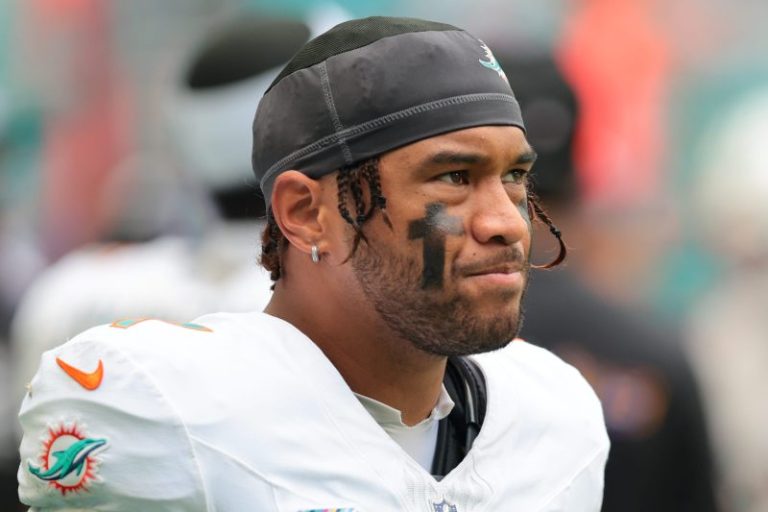
Miami Dolphins quarterback Tua Tagovailoa opened up his scheduled press conference on Wednesday with a public apology to his teammates.

“As a leader of this team, of the Miami Dolphins. The comments that had been said, I would say I’ve made a mistake, and I’m owning up to that right now,” Tagovailoa said to reporters. “I’ve talked to guys on the team about it, talked to the leaders about it. They know my heart. They know that the intent was right, but no matter the intent, the intent can be right, but when things get misconstrued or however the media wants to portray it that leaves a void of silence and a lot of questions for the guys on our team.

“For myself, I got to look at myself as, as the leader, protecting the team. I don’t feel like I did that to the best of my abilities. I felt like I let the emotions of the game get to me after the game. That’s something that I can learn from as a leader on this team. And what happens in house should be protected, and none of that should have gotten out. And so want to publicly apologize about that.”

Tagovailoa’s apology came in the aftermath of the 29-27 Week 6 loss to the Los Angeles Chargers. The quarterback called out his teammates during the postgame press conference for being late or skipping team meetings.

Many people around the league have criticized Tagovailoa for airing out the team’s dirty laundry.

“I think regardless of intent and what was on Tua’s mind after a loss as the franchise quarterback, that’s not the forum to displace that. I think he knows that now. I do honestly believe there was no ill intention,” Dolphins coach Mike McDaniel said earlier this week. “What I do know is that he’s directly communicated with a lot of guys…That’s what teammates do and you live and you learn.”

Tagovailoa and the Dolphins are in the midst of a frustrating season. The quarterback’s seven interceptions are the third most in the NFL entering Week 7.

The 1-5 Dolphins are off to their worst start since the 2021 season. Three of their five losses have been within one score. McDaniel and Dolphins general manager Chris Grier are both rumored to be on the hot seat.

Miami’s on the road this week against the Cleveland Browns.

‘I want to move forward,’ Tagovailoa said. ‘Now I want to focus on the Cleveland Browns.’

Follow USA TODAY Sports’ Tyler Dragon on X @TheTylerDragon.

This post appeared first on USA TODAY

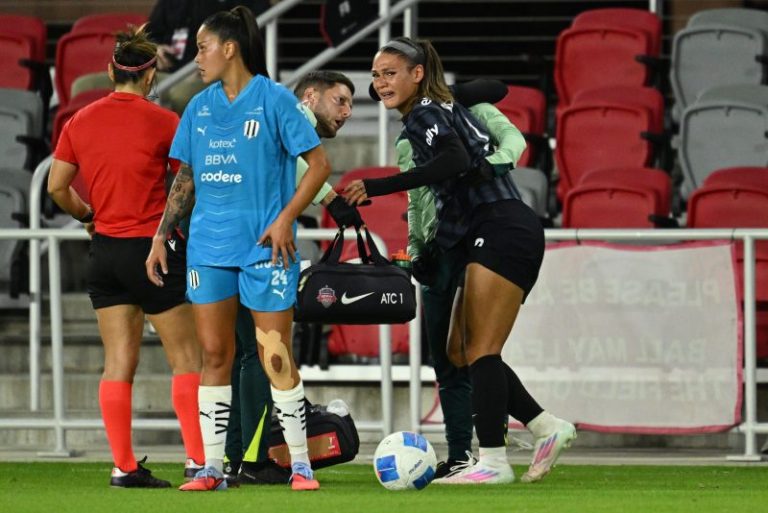
Rodman and Monterrey’s Daniela Monroy competed over a ball along the touchline in the 37th minute, with the California native appearing to suffer the injury as she attempted to poke the ball loose.

Rodman stayed down before signaling that she needed help from the trainers, and looked to be in serious pain as she was attended to. Spirit staff carried her off the pitch at Audi Field, with Rodman placing no weight on her right leg. Washington would eventually substitute her, sending Brittany Ratcliffe on in the 41st minute.

During the halftime break, Rodman headed from the Spirit bench to the locker room on crutches.

‘We need to wait until tomorrow,’ Spirit coach Adrián González told reporters after the match. ‘She’s going to get scanned tomorrow, and we will have more information.’

The injury comes at a difficult time for Rodman and the USWNT. Earlier on Wednesday, she received her first call-up since April, having overcome a long-term battle with a persistent back injury over the summer.

Since returning to the pitch for the Spirit, Rodman has been in imperious form. The 23-year-old was named the NWSL Player of the Month in September after scoring three times and adding two assists across four games. Rodman scored again for Washington this past Saturday in a 1-1 road draw against the North Carolina Courage.

This post appeared first on USA TODAY

Questcorp Mining Inc. (CSE: QQQ,OTC:QQCMF) (OTCQB: QQCMF) (FSE: D910) (the ‘Company’ or ‘Questcorp’) is pleased to further update investors on its maiden drilling program at the La Union gold and silver project in Sonora, Mexico, which continues on track and on budget. The program is now two-thirds complete with initial and second holes now completed at four of the five main targets. This update follows the company’s Aug. 6, 2025, announcement marking the start of the program and Aug. 19, Sept. 10 and Sept. 24 news releases chronicling the progress of the program.

Saf Dhillon, President and Chief Executive Officer, states: ‘The drilling had started of a little slower and then was paused for unusually heavy rains. The initial plan was to drill 4 to 6 holes but, the Riverside team and their subcontracted drillers have been making substantial progress and we’re now at 7 completed holes with plans for another 2 to 5. In total, four of the five target zones have been drill tested with at least one hole.’

Two holes have now probed the Union mine target beneath historic workings, cutting through the Clemente and Caborca formations – both key host units for past mining at Union, encountering the distinctive microconglomeratic carbonate unit that historically hosted mineralization at the bottom of the Union mine.

Two holes have been completed at Famosa, testing the dip and strike extension of the mineralization in the historic workings as well as the foot wall and hanging wall of a steeply west-dipping major structural feature. Riverside select grab sampling from the Famosa dump retuned gold grade highlights of 59.4 g/t gold along with 833 g/t silver.

Two holes tested the North Union target and one tested the El Cobre target again probing beneath the historic workings for chimney and manto mineralization.

Additional holes are planned for all four of these targets, with one hole also planned for the El Creston Target.

Figure 1. Drill progress to 2025-Oct-09. Geologic map with the tenure of the Union internal concession shown in pink. Manto and chimney type CRD targets are shown as red polygons. Riverside now controls all mineral tenures on this map. 

To view an enhanced version of this graphic, please visit:
https://images.newsfilecorp.com/files/10197/270509_719d25609410fb43_001full.jpg

Questcorp cautions investors grab sample by their very nature are select samples and may not be indicative of mineralization on the property.

Initial drilling is also planned for newly generated targets to the west of the known mineralization trend. The target is feeder zones along pre-mineral fault structures.

Once this initial campaign is completed, follow-up work will integrate assay results, ongoing surface programs, additional induced polarization (IP) surveys, and refined geological interpretations based on stratigraphy and structure observed in drilling.

Figure 2. Cross section looking west with conceptual drill targets and schematic drillhole traces. Assays from Riverside’s sampling of rock dump materials from the two mine areas are labeled in black. Red areas are interpreted as manto and chimney target bodies that are now well defined and drill ready. Assays shown on figures 1 and 2 have been previously released and disclosed as summarized below the geochemical QA/QC and in published NI 43-101 Report that Questcorp published 2025 on Sedar+. 

To view an enhanced version of this graphic, please visit:
https://images.newsfilecorp.com/files/10197/270509_719d25609410fb43_002full.jpg

Qualified Person & QA/QC:

The technical content of this news release has been reviewed and approved by R. Tim Henneberry’, P.Geo (BC) a Director of the Company and a Qualified Person under National Instrument 43-101.

Rock samples from previous exploration programs discussed above at the Project were taken to the Bureau Veritas Laboratories in Hermosillo, Mexico for fire assaying for gold. The rejects remained with Bureau Veritas in Mexico while the pulps were transported to Bureau Veritas laboratory in Vancouver, BC, Canada for 45 element ICP/ES-MS analysis using 4-acid digestion methods. A QA/QC program was implemented as part of the sampling procedures for the exploration program. Standards were randomly inserted into the sample stream prior to being sent to the laboratory.

About Questcorp Mining Inc.

Questcorp Mining is engaged in the business of the acquisition and exploration of mineral properties in North America, with the objective of locating and developing economic precious and base metals properties of merit. The company holds an option to acquire an undivided 100-per-cent interest in and to mineral claims totalling 1,168.09 hectares comprising the North Island copper property, on Vancouver Island, B.C., subject to a royalty obligation. The company also holds an option to acquire an undivided 100-per-cent interest in and to mineral claims totalling 2,520.2 hectares comprising the La Union project located in Sonora, Mexico, subject to a royalty obligation.

ON BEHALF OF THE BOARD OF DIRECTORS,

Saf Dhillon
President & CEO

Questcorp Mining Inc.
saf@questcorpmining.ca
Tel. (604-484-3031)

Suite 550, 800 West Pender Street
Vancouver, British Columbia
V6C 2V6.

Certain statements in this news release are forward-looking statements, which reflect the expectations of management regarding completion of survey work at the North Island Copper project. Forward-looking statements consist of statements that are not purely historical, including any statements regarding beliefs, plans, expectations or intentions regarding the future. Such statements are subject to risks and uncertainties that may cause actual results, performance or developments to differ materially from those contained in the statements. No assurance can be given that any of the events anticipated by the forward-looking statements will occur or, if they do occur, what benefits the Company will obtain from them. Except as required by the securities disclosure laws and regulations applicable to the Company, the Company undertakes no obligation to update these forward-looking statements if management’s beliefs, estimates or opinions, or other factors, should change.

To view the source version of this press release, please visit https://www.newsfilecorp.com/release/270509

News Provided by Newsfile via QuoteMedia

This post appeared first on investingnews.com

The gold price continued to rise in Q3, breaking through key milestones to set new all-time highs.

Much like the first half of the year, the yellow metal was supported by ongoing factors like central bank buying, geopolitical tensions and uncertainty caused by US trade and tariff policies.

And it wasn’t just the price of gold that soared — higher margins and a more positive outlook for the sector helped drive increases in gold stocks. Read on for a look at gold’s Q3 activity and the outlook for Q4.

What happened to the gold price in Q3?

Gold has gained nearly US$1,400 since starting the year at US$2,658 per ounce on January 2.

By the beginning of Q3, gold had climbed to US$3,338.86, and it remained rangebound at that level for most of July and August. However, it climbed above the US$3,400 mark on July 22 and then again on August 6.

Gold price, July 9 to October 10, 2025.

The price started to gain traction at the end of August, after US Federal Reserve Chair Jerome Powell signaled a change in policy during his remarks at the Jackson Hole Economic Policy Symposium. By September 2, the gold price had broken through US$3,500 for the first time, and by September 8 it had climbed above US$3,600.

As the month wore on, gold continued its unprecedented climb. It broke through US$3,700 on September 22, US$3,800 on September 29 and reached its quarterly high of US$3,858.41 on September 30.

The price continued on its upward trajectory as the fourth quarter began, rising above US$3,900 on October 6, and finally setting a new record high of US$4,040.42 on October 8.

What’s driving gold demand?

Although there was a dip in central bank gold purchases in July, with just 10 metric tons added to reserves, the World Gold Council (WGC) reported that the buying trend that has developed over the past few years remains firm.

In August, central banks once again increased their gold acquisitions, purchasing a total of 19 metric tons. Overall, central banks bought 415 metric tons of gold in H1, bringing the 2025 total to 444 metric tons as of the end of August.

Although it appeared to pause its gold buying in August, the National Bank of Poland has been the top purchaser of gold in 2025, adding 67 metric tons. It has vowed to have 20 to 30 percent of its international reserves in gold.

The WGC notes that seven central banks boosted their reserves in August. Kazakhstan was the leading buyer, adding 8 metric tons to its holdings and bringing its year-to-date increase to 32 metric tons. Turkey, Bulgaria, China, Uzbekistan, Ghana, Indonesia and the Czech Republic each added 2 metric tons. Russia was the only seller in August, divesting itself of 3 metric tons of gold; the WGC suggests its reduction was owed to its coin-minting program.

It wasn’t just central banks buying gold. Western investors helped drive record exchange-traded fund (ETF) inflows of US$26 billion for the third quarter, with North American markets accounting for US$16.1 billion.

Total assets under management surged to US$472 billion, a 23 percent increase over the second quarter, with holdings rising to 3,838 metric tons, just shy of the 3,929 metric tons recorded in November 2020.

Why are investors interested in gold?

Mind Money CEO Julia Khandoshko suggested that geopolitics is a driving force behind gold’s record-breaking run, noting that tensions are high as the world becomes increasingly divided into “risk” and “stability” zones.

While geopolitics may be a primary factor, it’s far from the only one.

The third quarter saw declining yield curves, a weakening US dollar and a 25 basis point interest rate cut from the Fed in September, all of which added tailwinds to the gold price. Looking forward, the expectation is that the Fed will make further rate cuts before the end of the year, which could further fuel a rising gold price.

‘The history of the last hundred years shows that gold grows confidently at low rates. Combine this with stubborn inflation, and we can say with confidence that it will create more space for gold’s price rise,” Khandoshko stated.

Additionally, there is an expectation that a weaker US dollar will help to keep the price of gold elevated. So far this year, the US Dollar Index has declined 8 percent.

“The US dollar is a critical component to what happens to gold, because gold is denominated in US dollars, so the weaker the US dollar, the stronger the commodity price. What we’re expecting to see over the next 12 to 24 months is continued devaluation of the US dollar, which means gold should continue to be stronger going forward,” he said.

Among the recent drags on the dollar is fear of a prolonged shutdown of the US federal government after lawmakers failed to reach an agreement to continue funding government agencies and employees.

In the aftermath of the shutdown, the US Dollar Index posted its worst week since July. In an October 3 Reuters article, Thierry Wizman, monetary strategist with Macquarie, suggests that a prolonged shutdown could have a significant impact on trust in the federal government and further impact the strength of the greenback.

Gold price forecast for 2025

Hodaly sees the factors behind gold’s price rise remaining in place for the foreseeable future.

“We are expecting this could go much higher, at least 10 to 20 percent higher in the near term,’ he said.

‘Nothing has changed with the demand outlook for gold and the projected weakness of the US dollar, and that’s what’s going to drive the commodity price higher,’ added the executive.

Gold equities are also expected to benefit as the rising price boosts their margins and share prices.

Leading producers such as Agnico Eagle Mines (TSX:AEM,NYSE:AEM), Newmont (NYSE:NEM,ASX:NEM) and Barrick Mining (TSX:ABX,NYSE:B) have seen their share prices rise by over 100 percent in 2025.

The junior space has also been impacted, with PPX Mining (TSXV:PPX,OTC Pink:SNNGF) posting a year-to-date gain of 642 percent as of October 1, and San Lorenzo Gold (TSXV:SLG,OTC Pink:SNLGF) increasing 629 percent.

With gold now trading above US$4,000, the sector could attract renewed interest and offer new opportunities for investors. Those seeking to include gold or gold stocks in their portfolios might consider options ranging from the relative safety of ETFs and established producers to riskier assets at the development or exploration stages.

Securities Disclosure: I, Dean Belder, hold no direct investment interest in any company mentioned in this article.

This post appeared first on investingnews.com

The gold price rose to repeated record highs during the third quarter of the year, breaking through significant milestones of US$3,700 and US$3,800 per ounce.

The price rises were fueled by several factors, including safe haven demand led by economic uncertainty as US tariffs continued to impact the broader economy, as well as falling interest rates following the US Federal Reserve’s 25-basis-point cut to its benchmark rate in September.

Additionally, a government shutdown provided even more momentum on September 29, as Democrats and Republicans failed to reach a funding agreement. It marked the first time in seven years that lawmakers were not able to close funding gaps, forcing a shutdown of most federal government offices.

The gold bull market has been a boon for gold producers following several years of increasing costs and smaller margins, and has also lifted gold exploration and development companies.

Data for this article was retrieved on October 1, 2025, using TradingView’s stock screener, and only companies with market capitalizations greater than C$10 million are included.

1. Talisker Resources (TSX:TSK)

Year-to-date gain: 390.63 percent
Market cap: C$204.34 million
Share price: C$1.57

Talisker Resources is a gold exploration and development company focused on advancing its flagship Bralorne gold project in British Columbia, Canada, towards production from the Mustang underground mine.

The brownfield project consists of the historic Bralorne mine complex, which hosts three past-producing mines: Bralorne, Pioneer and King. Throughout their lifetimes, these mines produced 4.2 million ounces of gold, but operations were halted in 1971 due to low gold prices.

A January 2023 resource estimate outlines an indicated resource of 33,000 ounces of gold from 117,000 metric tons of ore with an average grade of 8.9 grams per metric ton (g/t) gold, along with an inferred resource of 1.63 million ounces from 8 million metric tons of ore at 6.3 g/t.

On January 8, Talisker announced that its 2025 Mustang mine plan had been reviewed by inspectors from the BC Ministry of Mines and Critical Minerals, and on February 11, the company indicated that early-stage work at the site had begun and was on schedule. Further updates throughout the first and second quarters indicated that development was continuing, noting the blasting of a diamond drill bay on March 26 and the lateral development toward the Alhambra vein on April 9.

On July 30, Talisker reported that it entered into three definitive agreements with metals trader Ocean Partners, including two sales agreements, under which Ocean Partners will buy 100 percent of gravity and sulfide gold concentrates produced under Talisker’s current milling agreement. The third agreement makes Ocean Partners the exclusive agent for end-to-end transport of concentrates from the mill to international buyers.

The most recent update from the mine came on September 8, when Talisker announced that it had completed its first sale, selling 707 ounces of gold from Bralorne for US$2.3 million. The company stated that the sale marked a key milestone as it transitions from developer to active producer.

After climbing through Q3, shares of Talisker reached a year-to-date high of C$1.66 on October 6.

2. Troilus Gold (TSX:TLG)

Year-to-date gain: 347.46 percent
Market cap: C$504.70 million
Share price: C$1.32

Troilus Gold is advancing its namesake property in Northern Québec, Canada. The project is situated within the region covered by Plan Nord, a 25 year, C$80 billion development initiative focused on mining launched by the Government of Québec.

A May 2024 feasibility study for the Troilus project revealed financials with a post-tax net present value of US$884.5 million, an internal rate of return of 14 percent and a payback period of 5.7 years based on a gold price of US$1,975 per ounce.

The included mineral resource estimate reports a probable mineral reserve of 6.02 million ounces of gold from 380 million metric tons of ore at an average grade of 0.49 g/t gold. It also hosts probable copper and silver reserves of 484 million pounds and 12.15 million ounces respectively.

Troilus has spent much of 2025 raising funds for the project’s development. The most significant came on March 13, when the company executed a mandate letter for a non-binding term sheet to arrange a debt financing package of up to US$700 million. The package is underpinned by four letters of intent from global export credit agencies in late 2024 for up to US$1.3 billion in combined potential financing.

On June 18, the company entered into an offtake agreement for gold-copper concentrate with German smelting company Aurubis (OTC Pink:AIAGF,XETRA:NDA), and the two companies signed a memorandum of agreement on August 26, establishing terms for the long-term offtake deal.

On July 10, Troilus entered into another commercial offtake agreement for copper and gold concentrates, this time with global metals company Boliden.

According to Troilus, these offtake agreements will be executed in connection with the previously announced US$700 million in debt financing.

Shares of Troilus reached a year-to-date high of C$1.42 on October 6.

3. Euro Sun Mining (TSX:ESM)

Year-to-date gain: 300 percent
Market cap: C$72.47 million
Share price: C$0.18

Euro Sun Mining is a development-stage company advancing its Rovina Valley copper-gold project in Romania. The project’s mining license received full approval for 20 years in 2018, with the option to renew it in five year increments.

An updated feasibility study from March 2022 shows a post-tax net present value of US$512 million and an internal rate of return of 20.5 percent, assuming a base case gold price of US$1,675 and a copper price of US$3.75 per pound.

Proven and probable mineral reserve estimates for the site include 1.84 million ounces of gold and 197,522 metric tons of copper from 123.3 million metric tons of ore with an average grade of 0.47 g/t gold and 0.16 percent copper.

Shares of Euro Sun saw significant gains around the same time as a March 25 announcement that the EU included Rovina Valley on its first list of strategic assets. The inclusion, which Euro Sun applied for in May 2024, will enable the company to expedite permitting at Rovina Valley and shorten the development timeline.

On May 7, Euro Sun reported it met with Romania’s Minister of the Environment to discuss the advancement of the project. Both parties agreed that a single point of contact was needed to ensure compliance and fulfill requirements under the CRMA framework. The company plans to submit an updated environmental act in the near future.

On June 20, Euro Sun signed a copper concentrate prepayment facility for up to US$200 million with private metals trader Trafigura, with the funding going toward permitting and investment to advance Rovina over the next 18 months.

Then, on July 11, the companies entered into a definitive pre-development facility agreement, with Trafigura making a facility of up to US$2.5 million available to Euro Sun for general corporate purposes while negotiating the terms of the US$200 million prepayment facility.

Euro Sun and Trafigura also agreed to a binding offtake agreement for up to 100 percent of commercial production for nine years or until a specified quantity of metals is delivered.

Shares of Euro Sun reached a year-to-date high of C$0.235 on August 14.

4. Vista Gold (TSX:VGZ)

Year-to-date gain: 282.5 percent
Market cap: C$369.28 million
Share price: C$3.06

Vista Gold is a development company advancing its flagship Mount Todd project in the Northern Territory, Australia, to production. The site covers an area of 153,700 hectares and hosts two significant gold deposits, Batman and Quigley.

Vista Gold has invested more than US$110 million since it acquired the property in 2006, with expenses including more than 60,000 meters of drilling along with metallurgical testing. The company has also received environmental and operating permits to begin development at Mount Todd.

On July 29, Vista Gold released its feasibility study for Mount Todd evaluating near-term development of a smaller, 15,000 metric ton per day operation compared to the option in 2024’s feasibility study. The new report demonstrated strong project economics, indicating an after-tax net present value of US$1.1 billion, with an internal rate of return of 27.8 percent and a payback period of 2.7 years, assuming a gold price of US$2,500 per ounce.

Once complete, the mine is expected to produce an average of 146,000 ounces of gold per year over a 30 year mine life, with an average of 153,000 ounces of gold over the first 15 years.

Additionally, an included updated mineral resource estimate reports a measured and indicated resource of 9.12 million ounces of contained gold from the property, with an average grade of 0.83 g/t, derived from 340.43 million metric tons of ore.

Shares in Vista Gold spiked in September, reaching a year-to-date high of C$3.08 on September 19.

5. International Tower Hill Mines (TSX:ITH)

Year-to-date gain: 250 percent
Market cap: C$473.98 million
Share price: C$2.45

International Tower Hill Mines is an exploration and development company focused on advancing its Livengood gold property in Alaska, US.

The property, situated in the Tolovana Mining District, comprises multiple patented, state, and federal mining claims spanning an area of 19,546 hectares. Extensive gold exploration has been conducted at the site since the early 1900s, resulting in the production of more than 500,000 ounces of gold in the area.

A 2021 pre-feasibility study demonstrated a significant resource: The site hosts proven and probable reserves of 9 million ounces of gold with an average grade of 0.65 g/t gold from 430.1 million metric tons of ore.

The economic case suggested an after-tax net present value of US$45 million, with an internal rate of return of 5.3 percent and a payback period of 10.4 years, assuming a gold price of US$1,680 per ounce.

International Tower Hill Mines announced on March 4 that it had completed a non-brokered private placement for gross proceeds of US$3.9 million.

The funds were largely earmarked for a US$3.7 million work plan announced on March 12, with a significant focus on the metallurgical study of antimony mineralization in the stibnite at the Livengood gold project. The plan also includes advancing baseline environmental data collection and waste rock geochemical analysis to support permitting efforts, as well as community engagement.

Results from the metallurgical tests, released on September 4, indicated that the stibnite at Livengood also carried significant grades of antimony, with one assay sample submitted for revaluation returning a grade of 4.19 g/t gold and 2.75 percent antimony.

The company stated that the results warrant a further phase of test work to assess how the samples respond to flotation and determine the characteristics of any resulting concentrates.

Shares in International Tower Hill Mines reached a year-to-date high of C$2.60 on October 3.

Securities Disclosure: I, Dean Belder, hold no direct investment interest in any company mentioned in this article.

This post appeared first on investingnews.com

For a long time, most of the world’s lithium was produced by an oligopoly of US-listed producers. However, the sector has transformed significantly in recent years.

Interested investors should cast a wider net to look at global companies — in particular those listed in Australia and China, as companies in both countries have become major players in the industry.

While Australia has long been a top-producing country when it comes to lithium, China has risen quickly to become not only the top lithium processor and refiner, but also a major miner of the commodity. In fact, China was the third largest lithium-producing country in 2024 in terms of mine production, behind Australia and Chile.

Chinese companies are mining in other countries as well, including top producer Australia, where a few are part of major lithium joint ventures. For example, Australia’s largest lithium mine, Greenbushes, is owned and operated by Talison Lithium, which is 51 percent controlled by Tianqi Lithium Energy Australia, a joint venture between China’s Tianqi Lithium (SZSE:002466,HKEX:9696) and Australia’s IGO (ASX:IGO,OTC Pink:IPDGF). The remaining 49 percent stake in Talison is owned by Albemarle (NYSE:ALB). Joint ventures can offer investors different ways to get exposure to mines and jurisdictions.

Mergers and acquisitions are common in the lithium space, with the biggest news in the industry recently being Rio Tinto’s (ASX:RIO,NYSE:RIO,LSE:RIO) acquisition of Arcadium Lithium for US$6.7 billion in March of this year. The acquisition transforms Rio Tinto into a global leader in lithium production with one of the world’s largest lithium resource bases.

As for Chile, the country’s lithium landscape is changing following the December 2024 announcement that, as a part of its National Lithium Strategy toward public-private partnerships, the government opened up the process of assigning special lithium operation contracts to a total of 12 priority areas.

All in all, lithium investors have a lot to keep an eye on as the space continues to shift. Read on for an overview of the current top lithium-producing firms by market cap. Data was current as of October 1, 2025.

Biggest lithium-mining stocks

1. Rio Tinto (ASX:RIO,NYSE:RIO,LSE:RIO)

Market cap: US$112.17 billion
Share price: AU$122.58

Rio Tinto, a global powerhouse in the resource sector for decades, is mostly known for its iron and copper production. However, in recent years, the mining giant has been expanding its position in the world’s lithium market.

In March 2025, the company cemented its position as one of the biggest lithium-producing companies in the world with the US$6.7 billion all-cash acquisition of Arcadium Lithium, the lithium giant formed after the US$10.6 billion merger of lithium majors Allkem and Livent.

Rio Tinto is consolidating Arcadium’s assets with its own under a new unit called Rio Tinto Lithium, adding brine operations at Salar del Hombre Muerto and Olaroz in Argentina, as well as the Mount Cattlin hard-rock mine in Australia, which entered care and maintenance in March of this year. Arcadium also brings lithium hydroxide capacity in the US, Japan and China.

At the time, Rio Tinto said the acquisition will increase its lithium carbonate equivalent production capacity to over 200,000 metric tons (MT) annually by 2028.

The move follows Rio Tinto’s 2022 acquisition of Argentina’s Rincon project, where a 3,000 MT per year pilot battery-grade carbonate plant entered production in November 2024. Construction for the 60,000 MT expanded plant begins in Q4 2025, with first production expected in 2028.

In May 2025, Rio Tinto strengthened its South American lithium portfolio through a joint venture deal with Chile’s state miner Codelco to develop the high-grade Salar de Maricunga lithium project in Chile’s Atacama Region.

The deal gives Rio Tinto a 49.99 percent stake in exchange for up to US$900 million in staged investments, including US$350 million for studies and development, US$500 million toward construction, and an additional US$50 million if production begins by 2030.

In another deal focused on the Atacama Region, in July Rio Tinto penned a binding agreement with state-owned Empresa Nacional de Minería (ENAMI) to form a joint venture for the Salares Altoandinos lithium project. Under the deal, Rio Tinto will take a 51 percent stake and invest up to US$425 million in cash and technology contributions, including its direct lithium extraction (DLE) technology.

2. Ganfeng Lithium (OTC Pink:GNENF,SZSE:002460,HKEX:1772)

Market cap: US$14.79 billion
Share price: US$5.47

Founded in 2000 and listed in 2010, Ganfeng Lithium has operations across the entire electric vehicle battery supply chain. Even though it is relatively new compared to some companies on the list, Ganfeng has become one of the world’s largest producers of both lithium metals and lithium hydroxide. This is due to its strategy of investing heavily in overseas projects to secure long-term lithium resources, with its first such investment in 2014.

Ganfeng Lithium holds a global lithium portfolio including operations in Argentina, Australia, China, Mexico and Mali.

In Argentina, the company has a 51 percent stake in the Caucharí-Olaroz lithium brine operation with Lithium Argentina (TSX:LAR,NYSE:LAR). Additionally, Ganfeng brought its US$790 million Mariana project in Argentina into production in February of this year. The Mariana mine is situated on the Llullaillaco salt flat, and has the capacity to produce 20,000 MT of lithium chloride per year. The company also owns LitheA, which controls two lithium salt lakes in Argentina’s Salta province.

Ganfeng executed a 67/33 joint venture with Lithium Argentina in August 2025 that will consolidate Ganfeng’s Pozuelos-Pastos Grandes project with Lithium Argentina’s Pastos Grandes and Sal de la Puna projects. The merged operation, representing US$1.8 billion in existing investments, aims to produce up to 150,000 MT per year of lithium carbonate equivalent through a three phase development approach that will employ DLE and solar evaporation.

In Mali, Ganfeng operates the Goulamina lithium mine, which entered production in December 2024. Goulamina has a mine capacity of 506,000 MT of spodumene per year, and Ganfeng’s goal is to double that capacity to 1 million MT per year. The Malian government holds a 35 percent stake in Goulamina and Ganfeng holds the remaining 65 percent after purchasing joint venture partner Leo Lithium’s (ASX:LLL,OTC Pink:LLLAF) interest.

Ganfeng has a controlling interest in Mexico-focused Bacanora Lithium and its Sonora lithium project, as well as a 49 percent stake in a salt lake project in China owned by China Minmetals. It also holds a non-operating 50 percent interest in the Mount Marion mine in Western Australia through its 50/50 joint venture with Mineral Resources.

On the sales side, Ganfeng has supply deals with companies such as Tesla (NASDAQ:TSLA), BMW (OTC Pink:BMWYY,ETR:BMW), Korean battery maker LG Chem (KRX:051910), Volkswagen (OTC Pink:VLKAF,FWB:VOW) and Hyundai (KRX:005380).

3. SQM (NYSE:SQM)

Market cap: US$12.05 billion
Share price: US$44.20

SQM has five business areas, ranging from lithium to potassium to specialty plant nutrition. Its primary lithium operations are in Chile, where it is a longtime producer, and it is now also producing lithium in Australia.

In Chile, SQM sources brine from the Salar de Atacama; it then processes lithium chloride from the brine into lithium carbonate and hydroxide at its Salar del Carmen lithium plants located near Antofagasta.

Chile’s aforementioned National Lithium Strategy has created some uncertainty for SQM, but the government has stated that it will respect its current contracts, which run through 2030.

In May 2024, state-owned Codelco and SQM formed a joint venture in which Codelco will hold a 50 percent stake plus one share to give it majority control. As of 2031, the state will begin receiving 85 percent of the operating margin of the new production from SQM’s operations.

Outside South America, SQM operates the Mount Holland lithium mine and concentrator in Australia through Covalent Lithium, a 50/50 joint venture with Wesfarmers (ASX:WES,OTC Pink:WFAFF). In July 2025, Covalent Lithium produced its first battery-grade lithium hydroxide at its Kwinana refinery, and expects to reach nameplate capacity of 50,000 metric tons per year by the end of 2026.

SQM has a long-term supply deal with Hyundai (KRX:005380) and Kia (KRX:000270) to provide lithium hydroxide for electric vehicle batteries from its future lithium hydroxide supply. SQM also has supply agreements with Ford Motor Company (NYSE:F) and LG Energy (KRX:373220).

4. Tianqi Lithium (OTC Pink:TQLCF,SZSE:002466,HKEX:9696)

Market cap: US$10.8 billion
Share price: 47.57 Chinese yuan

Tianqi Lithium, a subsidiary of Chengdu Tianqi Industry Group, is the world’s largest hard-rock lithium producer. The company has assets in Australia, Chile and China. It holds a significant stake in SQM.

In Australia, Tianqi holds a 51 percent stake of the Tianqi Lithium Energy Australia joint venture with IGO. The joint venture has a 51 percent interest in the Greenbushes mine and wholly owns the Kwinana lithium hydroxide plant.

The world’s largest hard rock lithium mine, Greenbushes entered production in 1985 and now has spodumene concentrate production capacity of 1.5 million MT per year. The joint venture updated the total mineral resources at Greenbushes in February to 440 million MT at an average grade of 1.5 percent lithium oxide, and its total ore reserve estimate to 172 million MT grading 1.9 percent lithium oxide.

The Kwinana lithium hydroxide plant processes lithium spodumene feedstock from Greenbushes. The refinery has struggled to reach its nameplate capacity of 24,000 MT due to technical issues, high costs and more.

Construction work for the Phase 2 expansion at Kwinana, which would have doubled its capacity, was terminated in January 2025 due to the current low-price environment for lithium making it economically unviable.

As of late August, the partners are in discussions about a path forward for the refinery, and Tianqi signaled it is open to renegotiating partner IGO’s 49 percent stake.

Earlier in the year, Tianqi Lithium announced collaborations with a number of academic research institutions including the Institute for Advanced Materials and Technology of the University of Science and Technology Beijing on the research and development of next-generation solid-state battery materials and technology.

5. Albemarle (NYSE:ALB)

Market cap: US$10.5 billion
Share price: US$85.42

North Carolina-based Albemarle is dividing into two primary business units, one of which — the Albemarle Energy Storage unit — is focused wholly on the lithium-ion battery and energy transition markets. It includes the firm’s lithium carbonate, hydroxide and metal production.

Albemarle has a broad portfolio of lithium mines and facilities, with extraction in Chile, Australia and the US, as well as lithium carbonate and hydroxide facilities in China and Taiwan.

Looking first at Chile, Albemarle produces lithium carbonate at its La Negra lithium conversion plants, which process brine from the Salar de Atacama, the country’s largest salt flat. Albemarle is aiming to implement direct lithium extraction technology at the salt flat to reduce water usage.

Albemarle’s Australian assets includes the MARBL joint venture with Mineral Resources (ASX:MIN,OTC Pink:MALRF). The 50/50 JV owns and operates the Wodgina hard-rock lithium mine in Western Australia. Albemarle wholly owns the on-site Kemerton lithium hydroxide facility. The company’s other Australian joint venture is the aforementioned Greenbushes mine, in which it holds a 49 percent interest alongside Tianqi and IGO.

As for the US, Albemarle owns the Silver Peak lithium brine operations in Nevada’s Clayton Valley, which is currently the country’s only source of lithium production. In its home state of North Carolina, Albemarle is planning to bring its past-producing Kings Mountain lithium mine back online, subject to permitting approval and a final investment decision. The mine is expected to produce around 420,000 MT of lithium-bearing spodumene concentrate annually.

Albemarle has received US$150 million in funding from the US government to support the building of a commercial-scale lithium concentrator facility on site. The US Department of Defense has given the company a US$90 million critical materials award to boost its domestic lithium production and support the country’s burgeoning EV battery supply chain.

6. PLS (ASX:PLS,OTC Pink:PILBF)

Market cap: US$5.36 billion
Share price: AU$2.36

PLS, formerly named Pilbara Minerals, operates its 100 percent owned Pilgangoora lithium-tantalum asset in Western Australia. The operation entered commercial production in 2019 and consists of two processing plants: the Pilgan plant, located on the northern side of the Pilgangoora area, which produces a spodumene concentrate and a tantalite concentrate; and the Ngungaju plant, located to the south, which produces a spodumene concentrate.

PLS has recently completed a few critical expansion projects at Pilgangoora. Its P680 expansion, for a primary rejection facility and a crushing and ore-sorting facility, was completed in August 2024. The P1000 expansion, targeting a spodumene production increase at the site to 1 million MT per year, was completed in January 2025 ahead of schedule and within budget. The company says the ramp-up to full capacity is expected to be completed in the third quarter of 2025.

PLS and its joint venture partner Calix are developing a midstream demonstration plant at Pilgangoora using Calix’s electric kiln technology to reduce the carbon footprint of spodumene processing, decreasing transport volumes and improving value-add processing at the mine. After garnering a AU$15 million grant from the Western Australian Government, construction of the project is expected to be completed in the fourth quarter of 2025.

The company made a move to expand its footprint in Brazil in August 2024 with the acquisition of Latin Resources (ASX:LRS,OTC Pink:LRSRF) and its Salinas lithium project. The project’s resource estimate, which covers the Colina and Fog’s Block deposits, stands at 77.7 million MT at 1.24 percent lithium oxide. The AU$560 million deal was approved by the Western Australia Government in January 2025.

PLS and joint venture partner POSCO (NYSE:PKX) launched South Korea’s first lithium hydroxide processing plant in late 2024, which will be supplied with spodumene from Pilgangoora. PLS also has offtake agreements with companies such as Ganfeng, Chengxin Lithium Group and Yibin Tianyi Lithium Industry.

In May 2025, PLS powered up a new lithium battery energy storage system at its Pilgangoora operation, completing Stage 1 of its power strategy. The system is designed to boost power stability and reliability while reducing intensity of emissions related to power at the site.

7. Mineral Resources (ASX:MIN,OTC Pink:MALRF)

Market cap: US$5.33 billion
Share price: AU$39.58

Australia-based Mineral Resources (MinRes) is a commodities company that mines lithium and iron ore in the country.

Two of MinRes’ lithium mines are joint ventures with other companies on this list. MinRes’s Wodgina mine in Western Australia is operated by the 50/50 MARBL joint venture with Albemarle. MinRes also owns 50 percent of the Mount Marion lithium operation through a joint venture with Ganfeng Lithium.

Production of lithium concentrate began at Mount Marion in 2017, and all mining is managed by MinRes, which also has a 51 percent share of the output from the spodumene concentrator at the site. MinRes completed the expansion of Mount Marion’s spodumene processing plant in 2023. Currently, the plant has an annual production capacity of 600,000 MT spodumene concentrate equivalent.

In August 2024, in light of lithium’s low price environment, MinRes decided to lower production at Mount Marion and Wodgina for the fiscal 2025 year, focusing on improving performance and reducing stripping ratios. Production at Mount Marion ultimately decreased by 21 percent to 514,000 dry MT of spodumene concentrate in its FY2025. On the other hand, it increased by 18 percent to 502,000 dry MT at Wodgina.

MinRes acquired the Bald Hill lithium mine, which is also located in Western Australia, in 2023. The company released an updated mineral resource estimate in November 2024 of 58.1 MT at 0.94 percent lithium oxide, up 168 percent from the prior June 2018 estimate.

In the same news release, MinRes announced that it would have to place the mine on care and maintenance until global lithium prices improve. The final shipment of Bald Hill spodumene concentrate was made in December 2024.

More large lithium mining companies to watch

Aside from the world’s top lithium producers profiled above, a number of other large lithium companies are producing this key electric vehicle raw material, including:

    FAQs for investing in lithium

    Is lithium a metal?

    Lithium is a soft, silver-white metal used in pharmaceuticals, ceramics, grease, lubricants and heat-resistant glass. It’s also used in lithium-ion batteries, which power everything from cell phones to laptops to electric vehicles.

    How much lithium is there on Earth?

    Lithium is the 33rd most abundant element in nature. According to the US Geological Survey, due to continuing exploration, identified lithium resources have increased to about 115 million metric tons worldwide. Global lithium reserves stand at 30 million MT, with production reaching 240,000 MT in 2024.

    How is lithium produced?

    Lithium is found in hard-rock deposits, evaporated brines and clay deposits. The largest hard-rock mine is Greenbushes in Australia, and most lithium brine output comes from salars in Chile and Argentina.

    There are various types of lithium products, and many different applications for the mineral. After lithium is extracted from a deposit, it is often processed into lithium carbonate, lithium hydroxide or lithium metal. Battery-grade lithium carbonate and lithium hydroxide can be used to make cathode material for lithium-ion batteries.

    What country produces the most lithium?

    The latest data from the US Geological Survey shows that the world’s top lithium-producing countries are Australia, Chile and China, with production reaching 88,000 metric tons, 49,000 metric tons and 41,000 metric tons, respectively.

    Global lithium production reached 240,000 metric tons of lithium in 2024, up from 204,000 MT in 2023, according to the US Geological Survey. About 87 percent of the lithium produced currently goes toward battery production, but other industries also consume the metal. For example, 5 percent is used in ceramics and glass, while 2 percent goes to lubricating greases.

    Who is the largest miner of lithium?

    The world’s largest lithium-producing mine is Talison Lithium and Albemarle’s Greenbushes hard-rock mine in Australia, which produced 1.38 million metric tons of spodumene concentrate in its fiscal year 2024. The top-producing lithium brine operation was SQM’s Salar de Atacama operations in Chile, with 2024 production of 201,000 metric tons of lithium carbonate equivalent.

    Who are the top lithium consumers?

    The top lithium-importing country is China by a long shot, and second place South Korea is another significant importer. China is also the top country for lithium processing, and both are home to many companies producing lithium-ion batteries.

    Why is lithium so hard to mine?

    The different types of lithium deposits come with their own challenges.

    For example, mining pegmatite lithium from hard-rock ore is known for being expensive, while extracting lithium from brines requires vast amounts of water and processing times that can sometimes be as long as 12 months. Lithium mining also comes with the difficulties associated with mining other minerals, such as long exploration and permitting periods.

    What are the negative effects of lithium?

    Both major forms of lithium mining can have negative effects on the environment. When it comes to hard-rock lithium mining, there have been incidents of chemicals leaking into the water supply and damaging the local ecosystems; in addition, these operations tend to have a large environmental footprint.

    As mentioned, lithium brine extraction requires a lot of water for the evaporation process, but it’s hard to understand the scope without numbers. It’s estimated that approximately 2.2 million liters of water are required to produce 1 metric ton of lithium, and that can sometimes mean diverting water from communities that are experiencing drought conditions. This form of lithium extraction also affects the condition of the soil and air.

    Will lithium run out?

    Although future demand for lithium is expected to keep rising due to its role in green energy, the metal shouldn’t run out any time soon, as companies are continuing to discover new lithium reserves and are developing more advanced extraction technologies. Additionally, there are companies working on technology to recycle battery metals, which will eventually allow lithium from lithium-ion batteries to re-enter the supply chain.

    What technology will replace lithium?

    Researchers have been working on developing and testing a variety of lithium alternatives for batteries. Some of these options include hydrogen batteries, liquid batteries that could be pumped into vehicles, batteries that replace lithium with sodium or magnesium and even batteries powered by sea water. While nothing looks ready to replace lithium-ion batteries right now, there is potential for more efficient or more environmentally friendly options to grow in popularity in the future.

    How to buy a lithium stock?

    Investors are starting to pay attention to the green energy transition and the raw materials that will enable it.

    When it comes to choosing a stock to invest in, understanding lithium supply and demand dynamics is key, as there are unique factors to watch for in lithium stocks. The main demand driver for lithium is what happens in the electric vehicle industry, which is expected to keep growing, and also the energy storage space. Analysts remain optimistic about the future of lithium, with many predicting the market will be tight for some time.

    Investors interested in lithium stocks could consider companies listed on US, Canadian and Australian stock exchanges. They can also check out our guide on what to look for in lithium stocks today.

    Securities Disclosure: I, Georgia Williams, hold no direct investment interest in any company mentioned in this article.

    This post appeared first on investingnews.com

    LendingTree CEO and founder Doug Lebda died in an all-terrain vehicle accident over the weekend, the online loaning platform said Monday.

    In a company announcement, LendingTree confirmed that Lebda unexpectedly died on Sunday and that its leadership “deeply mourns his passing” while extending condolences to the executive’s loved ones.

    “Doug was a visionary leader whose relentless drive, innovation and passion transformed the financial services landscape, touching the lives of millions of consumers,” LendingTree’s board of directors said in a statement. “His passion will continue to inspire us as we move forward together.”

    Scott Peyree, LendingTree’s chief operating officer and president, has now been appointed CEO effective immediately. And lead independent director Steve Ozonian will also step into Lebda’s role as chairman of the board, the company said.

    Shares of Charlotte, North Carolina-based LendingTree fell more than 2% by early afternoon trading on Monday.

    Lebda founded LendingTree in 1996 — to “simplify the loan shopping process” after experiencing his own frustrations when getting his first mortgage, LendingTree’s website notes. The platform launched nationally in 1998 and became a public company in 2000. It was later acquired by internet conglomerate IAC/InterActiveCorp, before spinning off on its own again in 2008.

    Today, LendingTree’s central online loaning marketplace helps users find and compare loans for mortgages, credit cards, insurance needs and more. LendingTree, Inc. also owns brands across the financial sector — including CompareCards and Value Penguin.

    In addition to his multiple-decade career at LendingTree, Lebda also co-founded a financial services platform for children and families called Tykoon in 2010. He previously worked as an auditor and consultant for PriceWaterhouseCoopers.

    “All of my ideas come from my own experiences and problems,” Lebda told The Wall Street Journal in a 2012 interview.

    This post appeared first on NBC NEWS

    The Dallas Cowboys’ loss to the Carolina Panthers drops them to 2-3-1 six weeks into the 2025 NFL season. They’re in danger of falling to last in the NFC East in Week 7 with a game against divisional foe Washington.

    But Cowboys owner and general manager Jerry Jones still thinks his team is in the hunt for the division and a playoff spot. Washington’s loss to the Chicago Bears in the final game of Week 6 gave him some hope.

    ‘It just reminded me that we are still in it,’ Jones said today during an announcement that the 2026 East-West Shrine Bowl will be played at the team’s practice facility – The Star – in Frisco, Texas. ‘I see so much parity, then you factor in that these teams get compromised with injury. We can have and may [have it too] but if we should have some good go of it here over the next weeks ahead with our injury situation and return of injury and we can get some wins.’

    The Cowboys may be expecting two players back on what’s been a struggling defense so far in 2025. Linebacker DeMarvion Overshown could be back after the team’s bye Nov. 9 after a serious knee injury last year. Rookie cornerback Shavon Revel Jr. may make his debut in the next month or so as he finishes rehabilitation on a torn ACL suffered in college.

    But what if Jones and company don’t wait for those two players to make their debut? Dallas is armed with extra draft picks thanks to the Micah Parsons trade – an extra first-round pick in the 2026 and 2027 NFL Drafts – and more cap space.

    Jones revealed the team is weighing their options ahead of the Nov. 4 deadline.

    ‘We will weigh what are the likelihood of the players we’ve got coming back, how will they impact where that will put this team as opposed to should we add a player in a trade?’ Jones said. ‘And I don’t have a trade in mind at all. And that comes about right now if someone is on the phone calling.’

    Dallas could be active at the trade deadline. Here are six targets they should consider:

    Dallas Cowboys trade targets

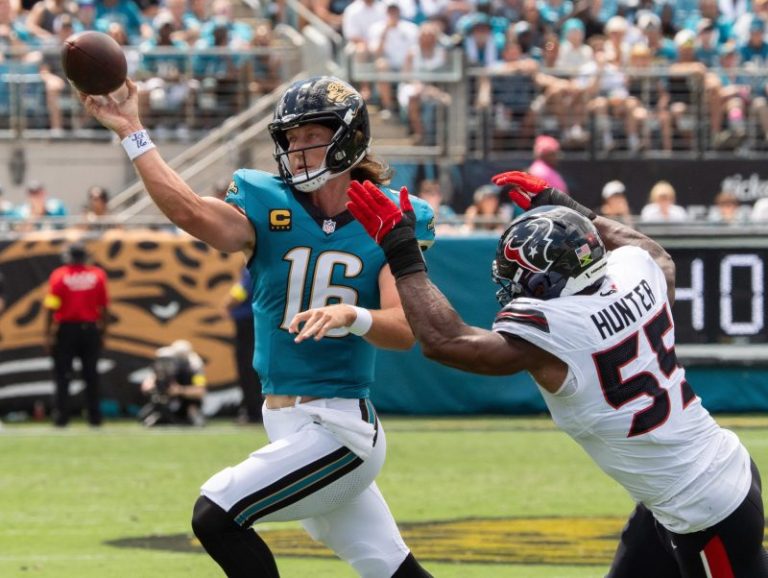
    Edge Danielle Hunter, Houston Texans

    Hunter’s been one of the best and most productive pass rushers in the league for a decade. He’ll turn 31 years old later this month but he’s shown no signs of slowing down with age. The Texas native has four sacks through five games this year and ranks eighth league-wide in sack percentage, per NFL Next Gen Stats. His pass-rush get-off time is 0.84 seconds which is also top-10 league-wide.

    Dallas’ defense needs help against both the run and pass. Hunter’s the type of edge rusher who can assist in both areas. He’s on pace for career-highs in tackles for loss as well as sacks this season.

    What may make this worth it for Houston is the long-term outlook for the franchise. They have contract extensions looming for franchise cornerstones Will Anderson Jr. and C.J. Stroud amid a 2-3 start to the 2025 season. Their playoff chances aren’t looking good and it’d be worth getting value for Hunter, who is only on the books through next season (with three void years tacked on to his contract).

    CB Trent McDuffie, Kansas City Chiefs

    This one will definitely require one of those extra first-rounders. McDuffie’s been a top-10 cornerback in the NFL since 2023 and is arguably the best slot cornerback in the league. He’s spent more time outside for the Chiefs in 2024 and 2025 and is certainly usable in that alignment.

    McDuffie is playing on the fourth year of his five-year rookie contract. Dallas already has two high-priced cornerbacks on the roster in DaRon Bland and Trevon Diggs and adding McDuffie would make this the most expensive cornerback room in the league once he’s on his fifth-year option. But he’d also give the team a huge boost in coverage which it needs; Dallas ranks last in the NFL in expected points added (EPA) per pass allowed, per SumerSports.

    Kansas City’s developed plenty of great cornerbacks over the years. They could bet on their infrastructure to develop another corner and/or use a first-rounder on a player at the position.

    S Jessie Bates III, Atlanta Falcons

    Atlanta’s defense has turned things around in 2025 and it’s allowing more fans to understand just how good Bates is in the secondary. The 2023 second-team All-Pro is having a slightly down year by his high standards but is still one of the better safeties in the league.

    That’d come in handy for Dallas. Their starting safeties, Juanyeh Thomas and Donovan Wilson, rank 58th and 70th league-wide among 83 qualifying players at their position, per Pro Football Focus (PFF) grading. It’d likely be less expensive than trading for a younger cornerback like McDuffie. And Bates, who is in his age-28 season, still has a couple more years left in his prime.

    Bates is a standout run defender who is more than capable in coverage. He’s spent nearly equal amounts of time at the box and free safety positions in 2025, per PFF data, and would be a versatile piece to help in both phases. Plus, Atlanta could recoup a first-round pick after sending theirs in 2026 to the Los Angeles Rams.

    DB Jalen Pitre, Houston Texans

    Pitre offers youth like McDuffie and versatility like Bates. Though he’s listed as a safety, Pitre’s lined up in the slot for 172 snaps in 2025 compared to 71 everywhere else (defensive line, box safety, free safety, outside corner) combined, per PFF. He’s an absolute menace when he gets a head of steam in run defense and has grown into one of many hard-charging defenders for the Texans.

    Like Hunter, Houston could look over the roster given how their season’s gone so far and look to find value if the right call came in. Pitre would likely stay in the slot primarily with Bland and Diggs on the outside much like he does with the Texans. He’s already on a relatively team-friendly deal through 2028 that sees his cap number stay at $13 million at most, per OverTheCap.

    There is a question of availability, though. Pitre missed two games in 2023 and five in 2024. But when he’s on the field, he’s a force in the secondary.

    WR Jaylen Waddle, Miami Dolphins

    If the Cowboys would rather invest even more in the offense rather than help the defense, Waddle could make sense at wide receiver. George Pickens is absolutely balling out for the Cowboys’ offense this season as CeeDee Lamb sits with an injury, but is on the last year of his contract. He’ll likely command a lot of money in free agency next offseason and Dallas may not want to pay up.

    Waddle is older than Pickens but currently on a deal that keeps him signed through 2028. Those later years do involve a higher cap hit: $33.83 million in 2027 and $37.21 million in 2028. But with how extensions league-wide are going in recent years, signing players sooner than later is a good call and Waddle’s deal could age well.

    Tyreek Hill is out for the season and Waddle’s stepping into a bigger role. He’s a deep threat the Cowboys could use knowing they have him longer-term than Pickens. Miami may be facing a full rebuild this offseason and an extra first-round pick would certainly help that outlook.

    Edge Montez Sweat, Chicago Bears

    This would be a familiar face for Cowboys defensive coordinator Matt Eberflus, who was the head coach in Chicago when the Bears traded for Sweat in 2023.

    Sweat is performing well in 2025 as one of the better starters on defense for the Bears. He’s been a key contributor in both pass rush (13 pressures, per NFL Next Gen Stats) and run defense (seven ‘defensive stops’ per PFF). That’d be a welcome sight for the Cowboys up front and would ease pressure on the team’s younger talents at the edge to perform.

    Sweat has a higher cap hit than others on this list at $25.09 million every year from 2025 to 2027. But that’s only going to look better in comparison to others at the position as the years go on.

    This post appeared first on USA TODAY