
Author

admin

Browsing

Bitcoin is prone to price volatility, with wide swings to the upside and downside, making it difficult for investors to know when the right time to buy the top crypto is.

There has been renewed interest in cryptocurrencies following the election of US President Donald Trump, leading the Bitcoin price to soar to new heights in 2025, as investors and other industry insiders speculate on how the Trump administration’s policies could further grow the sector and encourage mainstream adoption.

Trump ran on a platform that promised to make the US the Bitcoin capital of the world, vowing to establish a national reserve for the asset, and several states have already introduced legislation to create similar reserves within their borders.

The price of Bitcoin pulled back to under US$100,000 in February 2025 and fell as low as US$75,000 by April 9, marking a strong buying opportunity for crypto investors. Bitcoin rebounded in May, breaking past the US$100,000 level and surging further over the summer to hit fresh all-time highs in July and August of more than US$120,000 per BTC.

Meanwhile, institutions and businesses like Michael Saylor’s Strategy have continued to buy Bitcoin by the millions, and spot Bitcoin exchange-traded funds (ETFs) remain popular.

This surge of interest paints a bullish picture of Bitcoin’s continued growth. However, buying Bitcoin isn’t a simple decision. Read on to learn the basics of Bitcoin fundamentals, price forecasts and methods for determining if now’s the right time to buy Bitcoin, including several popular technical trading indicators you should know.

In this article

    What gives Bitcoin its value? 5 factors to know

    Before you decide if Bitcoin is a good investment for you, you need to understand Bitcoin and the wider crypto market.

    Bitcoin was the world’s first cryptocurrency, created in January 2009 by the mysterious Satoshi Nakamoto.

    Conceived as a virtual alternative to fiat currency, Bitcoin is built atop blockchain technology, which it uses for both validation and security. Blockchain itself is a distributed digital ledger of transactions, operating through a combination of private keys, public keys and network consensus.

    The best analogy to explain how this works in practice involves Google Docs. Imagine a document that’s shared with a group of collaborators. Everyone has access to the same document, and each collaborator can see the edits other collaborators have made. If anyone makes an edit that the other collaborators don’t approve of, they can roll it back.

    Going back to Bitcoin, the virtual currency primarily validates transactions through proof of work. Also known as Bitcoin mining, this competitive and incredibly resource-intensive process is the means by which new Bitcoins are generated.

    How it works is deceptively simple. Each Bitcoin transaction adds a new ‘block’ to the ledger, identified by a 64-digit encrypted hexadecimal number known as a hash. Each block uses the block immediately preceding it to generate its hash, creating a ledger that theoretically cannot be tampered with. Bitcoin miners collectively attempt to guess the encrypted hex code for each new block — whoever correctly identifies the hash then validates the transaction and receives a small amount of Bitcoins as a reward.

    From an investment perspective, Bitcoin toes the line between being a medium of exchange and a speculative digital asset. It also lacks any central governing body to regulate its distribution. As one might expect, these factors together make Bitcoin quite volatile, and therefore somewhat risky as an investment target.

    As for the source of this volatility, Bitcoin’s value is primarily influenced by five factors.

    1. Supply and demand

    It’s widely known that no more than 21 million Bitcoins can be produced, and that’s unlikely to happen before 2140.

    Only a certain number of Bitcoins are released each year, and this rate is reduced every four years by halving the reward for Bitcoin mining. The last of these ‘halvings’ occurred in April 2024 and the next one is due sometime in 2028. When it happens, there may be a significant increase in Bitcoin demand, largely driven by media coverage and investor interest.

    Bitcoin demand is also strengthening in countries experiencing currency devaluation and high inflation.

    It would be remiss not to mention that Bitcoin represents an ideal mechanism for supporting illicit activities — meaning that increasing cybercrime could itself be a demand driver.

    2. Production costs

    It’s said that Bitcoin benefits from minimal production costs. This isn’t exactly true, however. Solving even a single hash requires immense processing power, and it’s believed that crypto mining collectively uses more electricity than some small countries. It’s also believed that miners were largely responsible for the chip shortage experienced throughout the pandemic due to buying and burning out vast quantities of graphics cards.

    These costs together have only a minimal influence on Bitcoin’s overall value. The complexity of Bitcoin’s hashing algorithms and the fact that they can vary wildly in complexity are far more impactful.

    3. Competition

    Bitcoin’s cryptocurrency market share has sharply declined over the years. In 2017, it maintained a market share of over 80 percent. Bitcoin’s current market share is just under 60 percent.

    Despite that fall, Bitcoin remains the dominant force in the cryptocurrency market and is the marker by which many other cryptocurrencies determine their value. However, there is no guarantee that this will always remain the case. There are now scores of Bitcoin alternatives, known collectively as altcoins, which you can learn more about here.

    The most significant alternative to Bitcoin is Ethereum. Currently accounting for roughly 10 percent of the crypto market, Ethereum has long maintained its position as the second largest cryptocurrency. Some experts have suggested that Ethereum may even overtake Bitcoin, but others don’t see that as a possibility in the near future.

    4. Regulations

    Bitcoin may itself be unregulated, but it is not immune to the effects of government legislation. For instance, China’s 2021 ban of the cryptocurrency caused a sharp price drop, though it quickly rallied in the following months. The European Union has also attempted to ban Bitcoin in the past, and Nic Carter, a partner at Castle Venture, accused the US of trying to do the same in February 2023.

    There has been plenty of discussion surrounding the role of the US Securities and Exchange Commission (SEC) in regulating Bitcoin and other crypto as investment assets. The US made progress in establishing crypto legislation in 2024 when the House passed the Financial Innovation and Technology for the 21st Century (FIT21) Act in a bipartisan 279 to 136 vote on May 22 of last year.

    While that act has yet to make further progress, the new Trump administration has already loosened some crypto regulation with regards to crypto reporting for banks and decentralized finance businesses.

    In April 2025, the SEC approved rule changes allowing Ether ETF options, and also updated its guidance on crypto company disclosures.

    Around the same time, President Trump signed a resolution repealing the Internal Revenue Services’ (IRS) controversial DeFi broker rule. Enacted at the end of the Biden Administration, the rule expanded the definition of “broker” to include decentralized finance, or DeFi, platforms. The reversal passed both chambers of Congress with bipartisan support.

    In July, Trump signed the GENIUS Act into law, which establishes a regulatory framework for payment in stablecoins. Secretary of the Treasury Scott Bessent has stated that the law paves the way for a potential stablecoin market worth US$3.7 trillion by 2030.

    5. Public interest and media coverage

    As with any speculative commodity, Bitcoin is greatly influenced by the court of public opinion.

    Perhaps the best example of this occurred in 2021. At that time, a tweet from Tesla’s (NASDAQ:TSLA) Elon Musk caused Bitcoin’s price to drop by 30 percent in a single day. This also wiped about US$365 billion off the cryptocurrency market.

    Another example occurred on January 9, 2024, leading up to the deadline for eight spot Bitcoin ETFs by the US Securities and Exchange Commission (SEC). In a since-deleted post on X, formerly known as Twitter, a hacker falsely stated that the SEC had approved all eight pending Bitcoin ETFs. This caused the price of Bitcoin to spike to US$48,000, but it quickly dropped back down to around US$46,000 after the SEC confirmed it was a hack, leading some analysts to consider it a ‘sell-the-news’ event.

    Is now a good time to buy Bitcoin?

    The current US administration is crypto friendly, and Bitcoin and altcoins are seeing support in 2025. Could they go even higher, or should you wait for a dip to buy? Bitcoin is notoriously volatile, which can make it difficult to judge where the crypto is going next, but there are several strategies to help investors decide when to invest.

    To determine if it is a good time to invest in Bitcoin, investors should pay attention to the market and listen to the experts, as generally speaking, Bitcoin’s price action is sentiment-driven. To keep on top of big news in the sector, follow our frequent Crypto Market Updates, which drop several times a week.

    There are also different technical indicators that crypto traders use to help them decide if now is the time to buy or sell Bitcoin. We run through some popular indicators below.

    For example, the Relative Strength Index (RSI) is a technical indicator used to gauge the momentum of a cryptocurrency’s price. It fluctuates on a scale from 0 to 100. By analyzing the magnitude of recent price changes relative to the previous 12-month period, the RSI helps traders identify whether a cryptocurrency is potentially overbought or oversold. An RSI above 70 often signals an overbought market, while an RSI below 30 suggests an oversold market.

    Another metric to consider is the MVRV Z-score, calculated by subtracting the ‘realized’ value of Bitcoin, which is an average of the prices at which each Bitcoin was last moved, from the current market value. This is then divided by the standard deviation of the Bitcoin market cap.

    This indicator helps identify when market value deviates strongly from realized value, which could show the market is at a turning point. A score above 7 likely indicates that Bitcoin is overvalued, meaning it could be due for a correction, while a score below 0 suggests that Bitcoin is undervalued, meaning it could be a good buying opportunity.

    Finally, to gauge the overall market sentiment, investors can look at the Fear & Greed Index. This index provides a snapshot of how optimistic or fearful the market is about Bitcoin, with high readings potentially signaling overenthusiasm and a possible correction.

    While it’s useful to learn these technical indicators to help you trade, it is important to remember that there’s no such thing as a guaranteed investment, especially when it comes to cryptocurrencies. On the one hand, there’s virtually no chance that Bitcoin will experience a crash to zero. On the other hand, we also cannot take for granted that its value will continue to climb.

    What is Bitcoin’s long-term price outlook?

    For those considering Bitcoin as a long-term investment, it’s worth considering experts’ thoughts on Bitcoin in the future.

    During the run-up to the new highs posted in July 2025, Eugene Cheung, chief commercial officer of crypto platform OSL, told Cointelegraph that he thinks the digital asset could reach US$130,000 to US$150,000 by the end of the year.

    Fundstrat’s Tom Lee, who predicted Bitcoin’s peak in 2024, is calling for the digital currency to reach US$250,000 before 2025 comes to a close.

    Not everyone is so optimistic about Bitcoin’s prospects. Top Economist Henrik Zeberg has expressed concerns about Bitcoin’s future in the context of continued economic uncertainty, as its price remains highly linked with the performance of the tech-stock heavy NASDAQ.

    Billionaire investor Warren Buffet, meanwhile, has not minced words regarding his opinion on Bitcoin and its future. According to Buffet, Bitcoin is an unproductive asset with no unique value. He also feels that it doesn’t count as a true currency — in fact, he called it “rat poison.” Moreover, he believes that the crypto market as a whole will end badly.

    Who holds the most Bitcoin?

    Regardless of whether you believe Bitcoin’s proponents or naysayers, it’s clear that it has some incredibly prominent backers in both the investment world and the wider business landscape.

    Business analytics platform Strategy (NASDAQ:MSTR) is by far the largest public company in the Bitcoin space, with 628,946 Bitcoin to its name as of August 11, 2025. The next three public companies with the largest Bitcoin holdings are Marathon Digital Holdings (NASDAQ:MARA) with 50,639 Bitcoin, soon-to-list Twenty One Capital (NASDAQ:XXI) with 37,229.7 Bitcoin and Bullish (NYSE:BLSH) with 24,340 Bitcoin.

    The US, China and the United Kingdom hold the top three spots for countries with the most Bitcoin holdings, with 198,012, 194,000 and 61,245 Bitcoin respectively at that time.

    There are also plenty of individuals with large holdings, the most significant of which is believed to be Bitcoin’s creator, Satoshi Nakamoto. Other prominent names include Michael Saylor, Cameron and Tyler Winklevoss, and Tim Draper.

    How to smartly invest in Bitcoin?

    To help increase the odds of crypto being a good investment, investors in the Bitcoin market should learn the basics of safely investing in Bitcoin.

    How to buy Bitcoin

    The good news is that investing in Bitcoin is actually quite simple. If you’re purchasing through a stockbroker, it’s a similar process to buying shares of a company. Otherwise, you may need to gather your personal information and bank account details. It’s recommended to secure your network with a VPN prior to performing any Bitcoin transactions.

    The first step in purchasing Bitcoin is to join an exchange. Coinbase Global (NASDAQ:COIN) is one of the most popular, but there’s also Kraken and Bybit. If you’re an advanced trader outside the US, you might consider Bitfinex.

    Once you’ve chosen an exchange, you’ll need a crypto wallet. Many first-time investors choose a software-based or ‘hot’ wallet either maintained by their chosen crypto exchange or operated by a service provider. While simpler to set up and more convenient overall, hot wallets tend to be less secure as they can be compromised by data breaches.

    Another option is a ‘cold’ wallet — a specialized piece of hardware specifically designed to store cryptocurrency. It’s basically a purpose-built flash drive. If you plan to invest large amounts in crypto, a cold wallet is the better option.

    Once you’ve acquired and configured your wallet, you may choose to connect either the wallet or your crypto exchange account to your bank account. This is not strictly necessary, and some seasoned investors don’t bother to do this.

    Finally, with your wallet fully configured and your exchange account set up, it’s time to place your order.

    Best practices for investing in Bitcoin

    The most important thing to remember about Bitcoin is that it is a high-risk asset. Treat Bitcoin as a means of slowly growing your existing wealth rather than an all-or-nothing gamble, and never invest money that you aren’t willing to lose.

    As with other investments, it’s important to hedge your portfolio. Alongside Bitcoin, you may want to consider investing in other cryptocurrencies like Ethereum, or perhaps an altcoin. You may also want to explore other blockchain-based investments, given that even the most stable cryptocurrencies tend to be fairly volatile.

    It’s also key to ignore the hype surrounding cryptocurrencies. Recall how many people whipped themselves into a frenzy over non-fungible tokens in 2022. The majority of NFTs created during that time are now worthless.

    Make decisions based on your own market research and advice from trusted — and more importantly, certified — professionals. If you’re putting up investment capital based on an influencer’s tweets, you are playing with fire.

    You should also start small. A good rule of thumb is not to dedicate more than 10 percent of your overall capital to cryptocurrency. Even that number could be high — again, it’s all about moderation.

    Make sure to prioritize cybersecurity as well. Cryptocurrencies are an immensely popular target for cybercriminals. In addition to maintaining a cold wallet, make sure you practice proper security hygiene. That means using a VPN and a password manager while also exercising mindfulness in how you browse the web and what you download.

    Finally, make an effort to understand what cryptocurrencies are and how they work. One of the reasons Sam Bankman-Fried was able to run FTX as long as he did was because many of his investors didn’t fully understand what they were putting their money into. Don’t let yourself be fooled by buzzwords or lofty promises about Web3 and the metaverse.

    Do your research into the technology behind it all. That way, you’ll be far better equipped to recognize when something is a sound investment versus a bottomless money pit.

    Indirect crypto investing

    Given Bitcoin’s volatility, it’s understandable that you might be leery of making a direct investment. The good news is that you don’t have to. You can indirectly invest into the crypto space through mutual funds, stocks and ETFs.

    ETFs are a popular and flexible portfolio choice that allows investors to benefit from a sector’s performance without the need to directly own individual stocks or assets. They are an especially appealing option in the cryptocurrency market as the technical aspects of purchasing and holding these coins can be confusing and intimidating for the less technologically inclined.

    Bitcoin futures ETFs provide exposure to the cryptocurrency’s price moves using Bitcoin futures contracts, which stipulate that two parties will exchange a specific amount of Bitcoins for a particular price on a predetermined date.

    Conversely, spot Bitcoin ETFs aim to track the price of Bitcoin, and they do so by holding the asset. Spot Bitcoin ETFs have been offered to Canadians since 2021, and there are now 13 Canadian cryptocurrency ETFs you can buy. Spot Bitcoin ETFs began trading in the US on January 11, 2024. For investors interested in blockchain technology, there are also several blockchain ETFs.

    Do a bit of research and touch base with your stockbroker or financial advisor before you go in this direction.

    Investor takeaway

    Bitcoin is a fascinating asset. Simultaneously a transactional tool and a speculative commodity, it’s attracted the attention of investors almost since it first hit the market. Unfortunately, it’s also incredibly volatile.

    For that reason, while current market conditions are favorable for anyone considering buying Bitcoin, it is an asset you should purchase only at your own risk. Because while Bitcoin may have the potential for significant returns, you may also lose most of your investment. If that knowledge doesn’t bother you, then by all means, purchase away.

    Otherwise, there are better — less volatile — options for your capital.

    FAQs for buying Bitcoin

    What does Cathie Wood say about Bitcoin?

    ARK Invest CEO Cathie Wood is extremely bullish on Bitcoin, telling Bloomberg in February 2023 that her firm believes the cryptocurrency could reach a value of US$1 million by 2030. In July 2025, Wood hiked her 2030 bitcoin price prediction to US$3.8 billion.

    Securities Disclosure: I, Meagen Seatter, hold no direct investment interest in any company mentioned in this article.


    This post appeared first on investingnews.com

    Tavi Costa, macro strategist at Crescat Capital, shares his thoughts on gold, including what could unleash the yellow metal’s next move higher.

    He sees a ‘major collapse’ in the US dollar, saying a break in a key support line could boost gold.

    Costa also shares his outlook for silver and copper.

    Securities Disclosure: I, Charlotte McLeod, hold no direct investment interest in any company mentioned in this article.
    This post appeared first on investingnews.com

    Silver47 Exploration Corp. (TSXV: AGA,OTC:AAGAF) (OTCQB: AAGAF) (‘Silver47’ or the ‘Company’) is pleased to announce that it has entered into an agreement with Research Capital Corporation, to act as lead agent and sole bookrunner, on behalf of a syndicate of agents including Eventus Capital Corp. and Haywood Securities Inc., in connection with a brokered private placement (the ‘Offering’) of up to 20,000,000 units (each, a ‘Unit’) at a price of $0.70 per Unit, for aggregate gross proceeds of up to $14,000,000.

    Each Unit will be comprised of one common share of the Company (a ‘Common Share‘) and one-half of one Common Share purchase warrant (each whole warrant, a ‘Warrant‘). Each whole Warrant shall be exercisable to acquire one Common Share at a price of $1.00 per Common Share for a period of 36 months from the closing of the Offering.

    The Company intends to use the net proceeds of the Offering for further exploration work on the Company’s projects and for general working capital purposes.

    In addition, the Company has granted the Agents an option (the ‘Agents’ Option‘) to increase the size of the Offering by up to $2,100,000 by giving written notice of the exercise of the Agent’s Option, or a part thereof, to the Company at any time up to 48 hours prior to closing of the Offering.

    Subject to compliance with applicable regulatory requirements and in accordance with National Instrument 45-106 – Prospectus Exemptions (‘NI 45-106‘), the Units are being offered for sale to purchasers resident in all provinces of Canada, except Quebec, in reliance on the ‘listed issuer financing exemption’ from the prospectus requirement available under Part 5A of NI 45-106, as amended by Coordinated Blanket Order 45-935 – Exemptions from Certain Conditions of the Listed Issuer Financing Exemptions (the ‘Listed Issuer Financing Exemption‘). The securities offered under the Listed Issuer Financing Exemption will not be subject to a hold period in accordance with applicable Canadian securities laws.

    There is an offering document (the ‘Offering Document‘) related to the Offering that can be accessed under the Company’s profile at www.sedarplus.ca and on the Company’s website at www.silver47.ca. Prospective investors should read this Offering Document before making an investment decision.

    The Company expects to close the Offering on or about September 16, 2025, or such other date as mutually agreed by the Company and the Agents. The Offering remains subject to the satisfaction of certain conditions including the receipt of all necessary regulatory approvals, and the approval of the TSX Venture Exchange.

    The Company has agreed to pay to the Agents a cash commission equal to 6% of the gross proceeds of the Offering, subject to a reduction for orders on a president’s list. In addition, the Company has agreed to issue to the Agents broker warrants of the Company exercisable for a period of 36 months, to acquire in aggregate that number of common shares of the Company which is equal to 6% of the number of Units sold under the Offering, subject to a reduction for orders on a president’s list, at an exercise price of $0.70.

    This news release does not constitute an offer to sell or a solicitation of an offer to buy nor shall there be any sale of any of the securities in any jurisdiction in which such offer, solicitation or sale would be unlawful, including any of the securities in the United States of America. The securities have not been and will not be registered under the United States Securities Act of 1933, as amended (the ‘1933 Act‘) or any state securities laws and may not be offered or sold within the United States or to, or for account or benefit of, U.S. Persons (as defined in Regulation S under the 1933 Act) unless registered under the 1933 Act and applicable state securities laws, or an exemption from such registration requirements is available.

    About Silver47 Exploration

    Silver47 Exploration Corp. is a mineral exploration company, focused on uncovering and developing silver-rich deposits in North America. The Company is creating a leading high-grade US-focused silver developer with a combined resource totaling 236 Moz AgEq at 334 g/t AgEq inferred and 10 Moz at 333 g/t AgEq Indicated. With operations in Alaska, Nevada and New Mexico, Silver47 Exploration is anchored in America’s most prolific mining jurisdictions. For detailed information regarding the Company’s properties, please refer to the technical reports and other filings available on SEDAR at www.sedarplus.ca.

    For more information about the Company, please visit www.silver47.ca.

    Follow us on social media for the latest updates:

      On Behalf of the Board of Directors
      Mr. Galen McNamara
      CEO & Director

      For investor relations
      Giordy Belfiore
      604-288-8004
      gbelfiore@silver47.ca

      Neither the TSXV nor its Regulation Services Provider (as that term is defined in the policies of the TSXV) accepts responsibility for the adequacy or accuracy of this release.

      FORWARD-LOOKING STATEMENTS

      This news release contains ‘forward-looking information’ within the meaning of applicable Canadian securities legislation. ‘Forward-looking information’ includes, but is not limited to, statements with respect to the activities, events or developments that the Company expects or anticipates will or may occur in the future, including the expectation that the Offering will close in the timeframe and on the terms as anticipated by management, that the Offering will be completed at all, and the use of proceeds. Generally, but not always, forward-looking information and statements can be identified by the use of words such as ‘plans’, ‘expects’, ‘is expected’, ‘budget’, ‘scheduled’, ‘estimates’, ‘forecasts’, ‘intends’, ‘anticipates’, or ‘believes’ or the negative connotation thereof or variations of such words and phrases or state that certain actions, events or results ‘may’, ‘could’, ‘would’, ‘might’ or ‘will be taken’, ‘occur’ or ‘be achieved’ or the negative connotation thereof.

      Such forward-looking information and statements are based on numerous assumptions, including among others, that the Company will complete the Offering in the timeframe and on the terms as anticipated by management, and that the Company will receive all regulatory and Exchange approvals. Although the assumptions made by the Company in providing forward-looking information or making forward-looking statements are considered reasonable by management at the time, there can be no assurance that such assumptions will prove to be accurate and actual results and future events could differ materially from those anticipated in such statements.

      Important factors that could cause actual results to differ materially from the Company’s plans or expectations include risks relating to the failure to complete the Offering at all or in the timeframe and on the terms as anticipated by management, market conditions and timeliness of regulatory approvals. Although the Company has attempted to identify important factors that could cause actual results to differ materially from those contained in the forward-looking information or implied by forward-looking information, there may be other factors that cause results not to be as anticipated, estimated or intended. There can be no assurance that forward-looking information and statements will prove to be accurate, as actual results and future events could differ materially from those anticipated, estimated or intended. Accordingly, readers should not place undue reliance on forward-looking statements or information.

      NOT FOR DISTRIBUTION TO U.S. NEWSWIRE SERVICES OR DISSEMINATION IN THE UNITED STATES

      To view the source version of this press release, please visit https://www.newsfilecorp.com/release/263859

      News Provided by Newsfile via QuoteMedia

      This post appeared first on investingnews.com

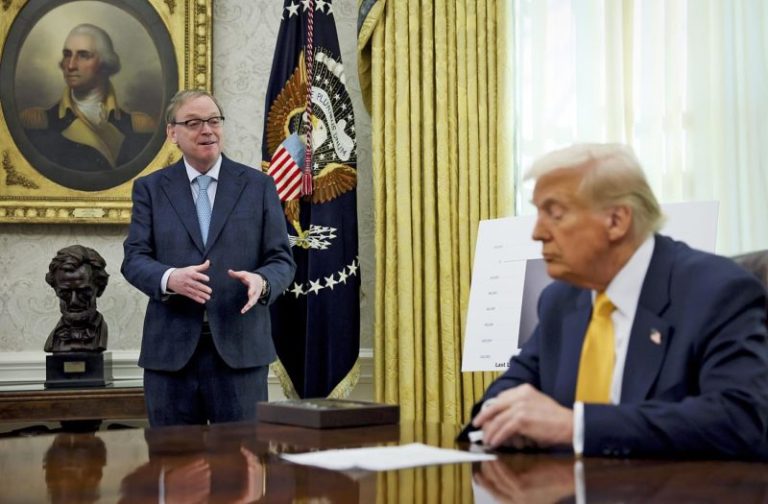
      The U.S. government could take equity stakes in more companies, potentially through an American sovereign wealth fund, according to one of President Donald Trump’s top economic advisers.

      National Economic Council Director Kevin Hassett made the comments Monday, days after the United States took a nearly 10% stake in Intel. The government secured a piece of the semiconductor maker with money intended for grants as part of the CHIPS and Science Act, passed during the Biden administration.

      Speaking about the new Intel position, Hassett told CNBC: “It’s like a down payment on a sovereign wealth fund, which many countries have.” Governments throughout Europe, Asia and the Middle East use such funds to invest in companies and other financial assets.

      The federal government has taken ownership stakes in private companies before, but only under extraordinary circumstances, such as during the global financial crisis of 2008.

      Hassett said the Intel investment was a ‘very, very special circumstance because of the massive amount of CHIPS Act spending that was coming Intel’s way.’

      He added: “So I’m sure that at some point there’ll be more transactions, if not in this industry, in other industries.’

      The CHIPS Act was established as a way for the government to provide financing and capital to foreign and domestic companies that manufactured semiconductors and related products in the United States.

      Americans and the American economy received the benefit of more than $200 billion in private capital investments since the act was signed into law, according to the Council on Foreign Relations. Many companies also announced plans to create new U.S. manufacturing and construction jobs.

      Hassett has said the money was ‘going out and disappearing into the ether.’

      He has also said, ‘We’re absolutely not in the business of picking winners and losers.’ However, the United States is now Intel’s largest single shareholder. The administration has also taken a ‘golden share’ in U.S. Steel as part of approving its merger with Japan’s Nippon Steel. Trump also said he negotiated with Nvidia CEO Jensen Huang to take a 15% cut of the chipmaker’s revenue from some chips sold in China. He also has a similar deal with rival chipmaker AMD.

      Later Monday, Trump said, ‘I want them to do well anyway, but I want them to do well in particular now.’

      He added, ‘I hope I’m going to have many more cases like’ the Intel stake. Asked whether taking equity stakes in private companies was the new way of doing business in the United States, Trump responded: ‘So are tariffs.’

      After Hassett’s interview, Trump said on Truth Social: ‘I PAID ZERO FOR INTEL, IT IS WORTH APPROXIMATELY 11 BILLION DOLLARS. All goes to the USA.’ He also said he would ‘help those companies that make such lucrative deals with the United States.’

      It was unclear why Trump said the United States did not pay anything for the stake. The government purchased 433.3 million Intel shares at $20.47 each, which equates to $8.9 billion.

      Trump has also pushed companies to change course on key products, such as when he pre-emptively announced that Coca-Cola would add cane sugar to an American version of its namesake product.

      Trump has also threatened firms such as Amazon, Mattel, Hasbro and Walmart with retaliation for hiking prices as a result of his sweeping global tariff regime.

      Trump intervention in private industry has sparked widespread criticism, some of it from Republicans. Trump’s former U.N. ambassador Nikki Haley, a former Boeing board member, said on X: ‘Intel will become a test case of what not to do.’

      After the CNBC interview, NBC News asked Hassett about setting up a sovereign wealth fund.

      ‘As we acquire things like Intel, then there’s sort of a question of where it goes and it’s held by the U.S. Treasury. And if the U.S. Treasury has more of that stuff, that is starting to look like [a] sovereign wealth fund, whether an official sovereign wealth fund is established is another question,’ he said.

      ‘But it’s not unprecedented for the U.S. to own equity’ in private companies, he added.

      The United States took equity stakes in private companies during the global financial meltdown of 2008 and 2009.

      Then, it bought troubled assets and took equity stakes in the likes of JPMorgan, Wells Fargo, Citigroup, Bank of America, AIG and other systemically important firms to stabilize the global financial system.

      Trump has expanded his power over the business world, fueled by his view that the U.S. economy is like ‘a department store, and we set the price.’

      ‘I meet with the companies, and then I set a fair price, what I consider to be a fair price, and they can pay it, or they don’t have to pay it,’ Trump said in an April interview.

      This post appeared first on NBC NEWS

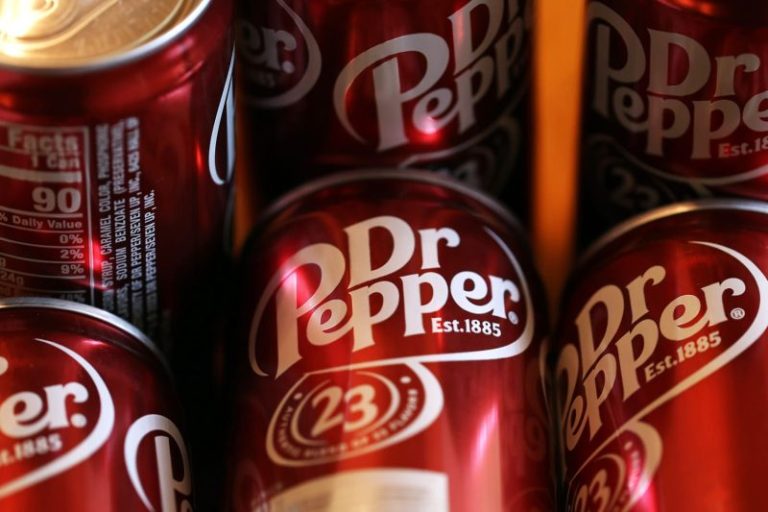
      Keurig Dr Pepper said Monday it will buy Peet’s Coffee owner JDE Peet’s in a deal worth about $18 billion (15.7 billion euro).

      When the acquisition is complete, the company plans to split into two separate companies, one focused on coffee and the other focused on beverages including Dr Pepper, Canada Dry, 7Up and energy drinks.

      The coffee business will have about $16 billion in combined sales and the beverage business about $11 billion.

      “Through the complementary combination of Keurig and JDE Peet’s, we are seizing an exceptional opportunity to create a global coffee giant,” said Tim Cofer, Keurig Dr Pepper’s CEO.

      In addition to Peet’s, Amsterdam-based JDE Peet’s brands include L’OR, Jacobs, Douwe Egberts, Kenco, Pilao, OldTown, Super and Moccona.

      Once the two companies are separated, Cofer will become CEO of the beverage business, which will be based in Frisco, Texas, and Keurig Dr Pepper CFO Sudhanshu Priyadarshi will lead the coffee business, which will be located in Burlington, Mass., with its international headquarters in Amsterdam.

      This post appeared first on NBC NEWS

      Summer camp: It’s for munching on s’mores, seizing victory in tug-of-war and making lifelong friends.

      For this group of successful businesswomen, though, it’s also about trading tactical advice about managing boards of directors and selling companies. And fighting to get a piece of an investment world dominated by men.

      Welcome to Camp Female Founders Fund, a coastal oasis in Montauk, New York, on eastern Long Island, where female business leaders broaden their networks, share their struggles and triumphs and have some fun.

      This post appeared first on NBC NEWS

      From American Eagle to Swatch, brands appear to be making a lot of blunders lately.

      When actress Sydney Sweeney’s jeans campaign came out last month, critics lambasted the wordplay of good “jeans” and “genes” as tone deaf with nefarious undertones.

      More recently, an advert from Swiss watchmaker Swatch sparked backlash for featuring an Asian model pulling the corners of his eyes, in an offensive gesture.

      Colgate-Palmolive’s ad for Sanex shower gel was banned in the U.K. for problematic suggestions about Black and white skin tones. And consumers derided Cracker Barrel’s decision to ditch its overalls-clad character for a more simplistic text-based logo as “sterile,” “soulless,” and “woke.”

      The new Cracker Barrel logo.Wyatte Grantham-Philips / AP

      Meanwhile, recent product launches from Adidas and Prada have raised allegations of cultural appropriation.

      That has reignited the debate about when an ad campaign is effective and when it’s just plain offensive, as companies confront increased consumer scrutiny.

      “Each brand had its own blind spot,” David Brier, brand specialist and author of “Brand intervention” and “Rich brand, poor brand” told CNBC via email.

      He noted, however, that too many brands are attempting to respond to consumers with an outdated playbook.

      “Modern brands are trying to navigate cultural complexity with corporate simplicity. They’re using 1950s boardroom thinking to solve 2025 human problems,” he continued.

      “These aren’t sensitivity failures. They’re empathy failures. They viewed culture as something to navigate around rather than understand deeply.”

      Some companies have had success in tapping into the zeitgeist — and, in some cases, seizing on other brands’ shortcomings.

      Gap, for instance, this week sought to counter backlash against Sweeney’s advertisement with a campaign in which pop group Katseye lead a diverse group of dancers performing in denim against a white backdrop.

      Brier said companies should consider how they can genuinely connect with consumers and be representative, rather than simply trying to avoid offense.

      “No brand can afford to fake understanding. No brand can ‘committee its way’ to connection. No brand can focus-group its way to authenticity. In 2025, customers can smell the difference from a mile away,” he added.

      Nevertheless, ads are meant to spark conversation, and at a time when grabbing and maintaining consumers’ attention — and share of wallet — is increasingly difficult, brands have a fine balance to tread.

      “Brands live and die by standing out and grabbing attention. On top of that, iconic and culturally relevant brands want to stand for something and be recognized for it. Those are tough asks,” Jonathan A.J. Wilson, professor of brand strategy and culture at Regent’s University London.

      In an age of social media and with ever more divided public opinions, landing one universal message can be difficult, Wilson noted. For as long as that remains the case, some brands may still see value in taking a calculated risk.

      “It’s hard to land one universal message, and even if you try and tailor your message to various groups, others are watching,” he said.

      “Controversy grabs attention and puts you at the front of people’s minds. It splits crowds and forces people to have a decision when otherwise they probably wouldn’t care. That can lead to disproportionate publicity, which could be converted into sales.”

      This post appeared first on NBC NEWS

      The Trump administration said Friday that it had taken a 10% stake in Intel, the president’s latest extraordinary move to exert federal government control over private business.

      The United States will not seek direct representation on Intel’s board and pledged to vote with the current Board of Directors on matters requiring shareholder approval, ‘with limited exceptions,’ according to a joint release from the Trump administration and Intel. The move also comes as the United States vies with China in the race to dominate the artificial intelligence industry.

      President Donald Trump announced the deal on his Truth Social platform Friday, praising the company’s CEO just two weeks after he called on the executive to resign over alleged China ties.

      ‘It is my Great Honor to report that the United States of America now fully owns and controls 10% of INTEL, a Great American Company that has an even more incredible future,’ he wrote. ‘I negotiated this Deal with Lip-Bu Tan, the Highly Respected Chief Executive Officer of the Company. The United States paid nothing for these Shares, and the Shares are now valued at approximately $11 Billion Dollars. This is a great Deal for America and, also, a great Deal for INTEL. Building leading edge Semiconductors and Chips, which is what INTEL does, is fundamental to the future of our Nation.’

      While the U.S. held temporary stakes in firms at the center of the 2008-2009 global financial meltdown as part of a bailout, this move is unusual since the economy is not embroiled in a crisis. Congress published a study in 2003 that examined the impact of the federal government taking direct stakes in public companies, concluding that doing so would “not offer a free lunch” and expose taxpayers to “greater risk” alongside the upside potential.

      The stake will be paid for through $5.7 billion in grants previously awarded to Intel under the 2022 U.S. CHIPS and Science Act, plus $3.2 billion awarded to the company as part of a program called Secure Enclave. It’s a formerly classified initiative that Congress appropriated funds for in 2024 after lobbying by Intel, Politico reported in 2024.

      Including $2.2 billion in CHIPs grants Intel has received so far, the total investment is $11.1 billion, or 9.9%. Intel is valued at about $108 billion on the stock market.

      Trump continues to bulldoze through long-held norms regarding government and business, departing from the free-market ethos that has long prevailed in both major U.S. political parties.

      This month, Trump persuaded the chipmakers Nvidia and AMD to pay the U.S. government 15% of their revenues from some sales to China in return for securing export licenses there.

      While those firms have seen their fortunes rise amid the larger artificial intelligence boom, a windfall from any of them is no sure thing. In the case of California-based Intel, the company has struggled to keep up with rivals in recent years, with its shares down some 60% from the highs seen during the pandemic.

      But amid the ongoing artificial intelligence arms race — and the goal of making computer chips a national security priority — Trump officials zeroed in on Intel as a means of leveling up U.S. control over semiconductor production.

      Earlier this week, Japan’s SoftBank also announced it would invest $2 billion in Intel to “deepen their commitment to investing in advanced technology and semiconductor innovation in the United States.’

      Some Democrats signaled they were on board with the move.

      ‘U.S. leadership is critical for both our economy and national security,’ U.S. Senator Mark Warner, D-Virginia, said in a statement Friday evening.

      ‘Taking an equity stake in Intel may or may not be the right approach, but one thing is clear: allowing cutting-edge chips to flow to China without restraint will erode the value of any investment we make here at home. We need a strategy that protects American innovation, strengthens our workforce, and keeps the technologies of the future firmly in American hands.’

      This post appeared first on NBC NEWS

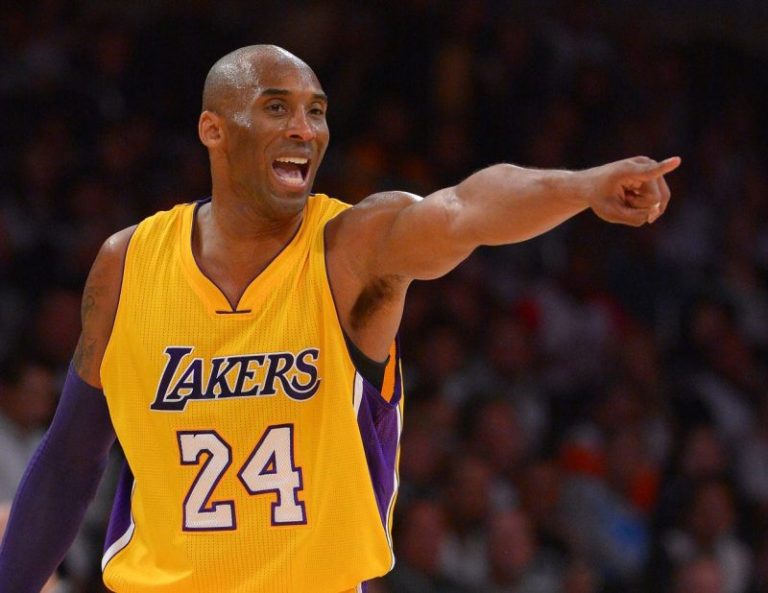
      Bryant’s birthday was Saturday, Aug. 23 and Mamba Day was Sunday, Aug. 24. Mamba Day is an annual day of remembrance for Bryant because the date represents the two jersey numbers he wore during his pro career, No. 8 and No. 24.

      It’s been 5.5 years since Bryant and eight other passengers, including his daughter Gianna, lost their lives in a helicopter accident on Jan. 26, 2020.

      Many went to social media to share photographs, graphics and video highlights from Bryant’s Hall of Fame career in his honor.

      Kobe Bryant remembered

      Nike had a longstanding partnership with Kobe Bryant, aka the ‘Black Mamba.’

      The notable athletic apparel brand honored the basketball player with the 3rd annual Mamba League Invitational, a basketball event for boys and girls, held in Los Angeles this weekend.

      The winners were awarded a Mamba-themed trophy. The players also got exclusive ‘Mamba League’ Nike Kobe 5 shoes.

      Earlier this month, Kobe Bryant’s wife Vanessa and daughters Bianka, Capri and Natalia were in attendance at the Los Angeles Dodger game on Aug. 8 for Kobe Bryant bobblehead night. Bianka also threw out the first pitch before the Dodgers took on the Toronto Blue Jays.

      Kobe Bryant highlights

      Kobe Bryant moments

      The USA TODAY app gets you to the heart of the news — fastDownload for award-winning coverage, crosswords, audio storytelling, the eNewspaper and more.

      This post appeared first on USA TODAY

      • Emmanuel Clase and Luis Ortiz are the subjects of MLB gambling investigations.
      • Cleveland without the top pitchers indefinitely, but they may have played last games.
      • Cleveland is fading in the AL wild-card standings in August.

      Corrections and clarifications: A previous version of this article incorrectly stated the teams who will play in the 2026 Field of Dreams Game.

      PHOENIX — They no longer have lockers in the Cleveland Guardians clubhouse.

      There are no jerseys or equipment to be found.

      There’s no sign they even played for the Guardians.

      Their names are spoken only when brought up by outsiders, and then, only in a whisper.

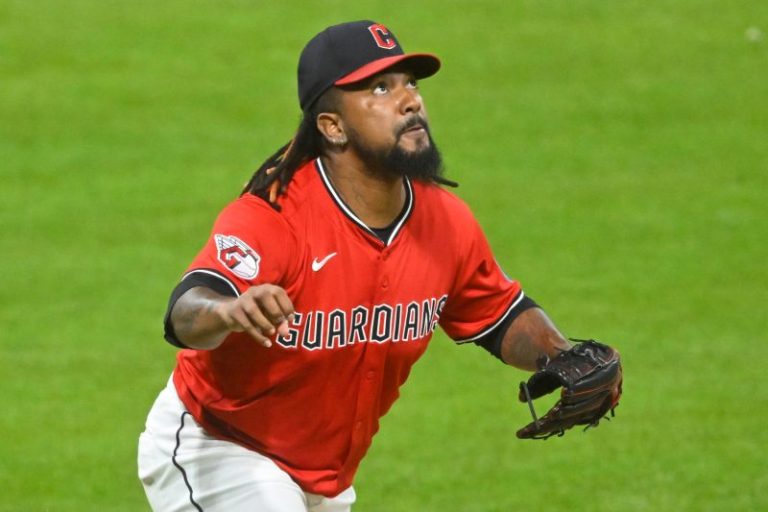
      It’s as if Guardians closer Emmanuel Clase and starter Luis Ortiz never existed, vanishing into the night.

      “This definitely is a huge loss to the team,’ Cleveland’s new closer Cade Smith tells USA TODAY Sports. “They’re gone. We don’t know if they’re coming back. But we have no choice but to forget about it and move on.

      “We’ve got no choice.’

      MLB’s investigation has been underway since July into suspicious betting activity on games that Clase and Ortiz appeared. They are on paid administrative leave until Aug. 31. Yet, considering the evidence, MLB and the players union are expected to extend their leave through the end of the regular season and into the winter.

      The painstakingly slow process is necessary considering livelihoods are at stake.

      If Clase and Ortiz are guilty of betting on baseball, or if they intentionally influenced prop bets, they are done for life.

      Oh, sure, they could pitch in Mexico. Maybe Japan or Korea, too. But they would never, ever be able to put on another MLB uniform.

      What a waste, particularly for Clase, if found guilty, throwing away a star-studded career where he was on an early Hall of Fame trajectory, leading the American League in saves each of the past three seasons.

      “I’ve talked to them a little bit,’ Guardians first baseman Carlos Santana says. “I don’t really know what to say. I hope they’ll be OK. But I don’t know. I don’t know what happened. None of us do.’

      It was Ortiz who first went on disciplinary leave July 3 while MLB opened a gambling investigation, and three weeks later, Clase’s name surfaced, too.

      Just like that, they were gone, never having a chance to say good-bye, and not knowing if they’ll ever see their former teammates again.

      Their absence is what made the Guardians’ torrid performance, an American League-best 23-9 from July 7 to Aug. 14, to climb right back into the AL Central race so stunning. Instead of wilting, they were thriving, pulling within 5 ½ games of the first-place Detroit Tigers and just one game out of the wild-card race.

      Now, all of a sudden, it is over.

      They are 12 ½ games behind the Tigers and 4 ½ games back in the wild-card race.

      Technically, the Guardians are still alive, but when you lose seven of eight games after already enduring a 10-game losing streak, and your new closer blows back-to-back games, there’s precious time remaining to recover.

      The Guardians, to their credit, refuse to feel sorry for themselves. They’re not blaming the gambling investigation for their downturn spiral. They try to pretend that it’s no different than losing a player to injury.

      “Honestly, we’ve lost lots of guys to injuries or guys who have been optioned or whatever,’ Guardians veteran catcher Austin Hedges says. “In baseball, it’s not a 26-man roster. It’s more like a 40-, 50-, 60-man roster. Our group is so resilient, whatever 26 we’re going to throw out there, we’re going to believe in them.’

      The Guardians won’t come out and say it publicly, knowing that Clase and Ortiz are innocent until proven guilty, but considering that MLB’s investigation into Shohei Ohtani’s potential ties with an illegal bookie was cleared in a matter of days, it’s rather worrisome that this investigation is still ongoing with no immediate resolution.

      The Guardians have no choice but to play the waiting game, but they also don’t expect either one to walk through the clubhouse door again this season, wondering if it’s the last time they’ll even see them.

      “That day really sucked, I mean, it’s definitely a blow when you lose two great players like that,’ Guardians All Star outfielder Steven Kwan says. “I think we gave ourselves one day to mourn and get over it, but then you got to jump back into it.

      “We’d love to see them back, but we also have to be prepared if they’re not.’

      Guardians first baseman Carlos Santana says he still keeps in touch with Clase and Ortiz, but like everyone else, has no idea about the findings of the investigation, wondering what will happen to their future.

      “I keep in touch, I talk to them, make sure they’re OK,’ Santana says. “Hopefully, everything will be fine. No matter what, we’ll be friends.’

      The Guardians are cautious speaking about Ortiz and Clase with the ongoing investigations, but they refuse to let their absence torpedo their chances for the postseason.

      Besides, even if Clase wasn’t under investigation, he might have been dealt at the trade deadline. Clase, who has averaged 44 saves a year the past three seasons, was under team control for 3 ½ more years. The Guardians would have raked in a haul of prospects considering the robust relief market.

      “Our message to the guys was that we don’t know what we don’t know,’ says Guardians manager Stephen Vogt. “All we can control is us working hard every day. I mean, our guys are resilient. These guys have handled things over the last year and a half, so they’re built for it.’’

      While the Guardians were able to survive their absence for several weeks, reality is starting to hit now. You don’t lose perhaps the best closer in baseball and a healthy starter who made 16 starts and pitched 88 ⅔ innings, and shrug it off.

      The Guardians are paying the price with their skid. Their last four losses have all been by one run, with Smith blowing saves in their last two games.

      “It’s a sticky situation losing those guys,’ injured Guardians pitcher Ben Lively says. “You just hope for the best case possible. But we’ll be fine. We got Clark Kent over there [in Smith].’

      The Guardians believe that Smith is ready for the closer’s role, and while there certainly will be growing pains, are prepared to ride it out while he makes the adjustment to being in the pressure cooker of the ninth inning.

      “It’s different pitching the ninth,’ says Smith, who has been successful in four of seven save opportunities with a 3.55 ERA since replacing Clase. “There’s more on the line. It’s the last inning of a game. Fans get into it. Everyone’s aware of the situation. If you fail, it feels like you let everybody down.

      “But it doesn’t mean that my job changes. My job is to still go out and put up a zero and compete and leave everything I have on the field. I’m going to make sure that trust is not misplaced with the way that I work, the way I carry myself, and how I bounce back.’’

      Really, it’s no different for the entire Guardians’ team. Everyone counted them out when they lost 10 games in a row. Everyone counted them out when Ortiz and Clase were placed on administrative leave. And everyone is counting them out now that they’ve fallen four games back in the wild card race after a series of gut-wrenching losses.

      “We’ve been through a lot as a team,’’ Vogt says. “These guys have been punched in the gut over and over. But they’ve handled it like pros.’’

      Fair or not, they’ve got no choice.

      MLB expansion, realignment news

      The firestorm reaction to commissioner Rob Manfred’s comments that MLB will have wholesale realignment when baseball expands is comical considering this has been the plan all along, dating back to at least the past decade.

      Expansion still is scheduled to take place in 2031 or 2032, Manfred tells owners, with Salt Lake City and Nashville as the two heavy favorites.

      This will be the first expansion since Arizona and Tampa Bay in 1998, and apparently in the last quarter-century, it has been forgotten that baseball planned to expand again once the stadium issues in Oakland and Tampa were resolved.

      While the projected expansion cities have changed over the years, the original plan MLB floated was revealed back in 2017 by BBWAA Hall of Fame writer Tracy Ringolsby in a column published by Baseball America.

      The concept, which had Montreal and Portland as the original sites, was to have four eight-team divisions, not eight four-team divisions:

      • East: Atlanta, Baltimore, Cincinnati, Miami, Philadelphia, Pittsburgh, Tampa Bay and Washington.
      • North: Boston, Cleveland, Detroit, Minnesota, *Montreal, New York Yankees, New York Mets and Toronto.
      • Midwest: Chicago Cubs, Chicago White Sox, Colorado, Houston, Kansas City, Milwaukee, St. Louis and Texas.
      • West: Arizona, LA Angels, LA Dodgers, Oakland, *Portland, San Diego, San Francisco and Seattle.

      That schedule would have teams playing 12 games against each divisional opponent, and three games against each of the teams in the three other divisions.

      The realignment would reduce travel, with only the Rockies, Twins and now perhaps Salt Lake City playing divisional games outside their own time zone.

      It will still be at least another six years before expansion and realignment actually takes place, but in the meantime, well, it generated plenty of conversation in the dog days of summer, even though it’s old news.

      Around the basepaths

      – The 2026 MLB schedule will be released Tuesday and is set to feature a return to the Field of Dreams venue in Iowa featuring the Philadelphia Phillies and Minnesota Twins.

      The season will start Thursday, March 26, and will also include a return to Mexico City where the Arizona Diamondbacks will play the San Diego Padres.

      – The Baseball Writers’ Association of America, for the first time, will have a Relief Pitcher of the Year award for both leagues in 2026. It’ll be the first addition to one of BBWAA’s prestigious awards since 1983 when it included the AL and NL Manager of the Year.

      The award was the brainchild of Hall of Fame writer Jayson Stark, reminding writers that Mariano Rivera, considered the greatest reliever of all time, never once won a single award by the BBWAA, while no reliever has won the Cy Young since Eric Gagne in 2003.

      – It should be quite the emotional game Sunday for Los Angeles Angels veteran starter Kyle Hendricks, who will face the Chicago Cubs, his former team of 11 years, for the first time in his career.

      It also may be be the last time.

      Hendricks, 35, could retire after the season.

      – Brutal news for Phillies ace Zack Wheeler, and a huge blow to the Phillies’ World Series hopes. Wheeler is out for the season and likely will miss the start of next season. Wheeler, who had a blood clot removed, has been diagnosed with thoracic outlet syndrome and will undergo surgery that will sideline him for six to eight months.

      The Phillies certainly have plenty of pitching depth, but Wheeler is one of the true aces of the game and will be sorely missed in October.

      Mathew Bowyer, who ran an illegal gambling operation that accepted in excess of $300 million worth of bets from Ippei Mizuhara, the former interpreter for Dodgers star Shohei Ohtani, will be sentenced on Aug. 29 at the Santa Ana, Calif., federal court.

      Mizuhara is currently serving a 57-month sentence.

      – If the Yankees still don’t have enough scars from that 2004 ALCS when they blew a 3-0 lead to the Boston Red Sox, they now have lost eight consecutive games to the Red Sox for the first time since 2009.

      – There will be no bigger position player on the trade block this winter than Baltimore Orioles catcher Adley Rutschman. Rutschman became expendable once the Orioles signed 21-year-old catcher Samuel Basallo to a team-friendly eight-year, $67 million contract that won’t pay him more than $1 million annually until 2029. Basallo, their prized prospect who made his MLB debut just five days before agreeing to the contract, is the first player to receive a contract extension since GM Mike Elias joined the Orioles in 2018.

      Basallo becomes the everyday catcher as Rutschman hits the injured list, priming him for a potential move to first and part-time catcher.

      Look for him to be wearing another uniform come spring training.

      – While there already is rumblings of a potential work stoppage threatening the 2027 All-Star Game at Wrigley Field, the Cubs have been guaranteed that they would host the 2029 game as a contingency plan.

      – Hey, whatever happened to all of the drama we were promised with the expanded playoffs?

      Here we are, a week before the calendar turns September, and outside of playoff seeding, the field is virtually set.

      The only real drama in the American League is whether the Kansas City Royals can squeeze past the Yankees or runner-up in the AL West for the final wild-card berth. And in the National League, the only team that has a chance to crash the wild-card dance is the Cincinnati Reds.

      Little wonder why MLB will again push for the postseason field to be expanded to 14 teams in the next labor agreement.

      – The Toronto Blue Jays, who made the gutsiest move at the trade deadline to acquire Shane Bieber, who has not pitched a big league game since April 2, 2024, marveled watching him dominate the Miami Marlins in his first start in 502 days. He struck out nine and gave up just two hits and one run in six innings.

      Yep, just like ol’ times.

      “It felt very familiar,’ Bieber told reporters after the game.

      Bieber’s return makes the Blue Jays awfully scary in October.

      – Kudos to Chicago Cubs All-Star right fielder Kyle Tucker for continuing to post while he played with a hairline fracture in his ring finger suffered June 1. He refused to make excuses for his struggles. Tucker had his best offensive month in June after the injury, hitting .311 with a .982 OPS, including five homers, nine doubles only for his numbers to crater the next six weeks. He hit .218 with a .675 OPS in July with one homer and three doubles, and just .138 without an extra-base hit until homering Friday night.

      Tucker could have easily used his injury as an alibi with his numbers eroding his free agent value, but not once did he even mention his finger being broken until Milwaukee Brewers manager Pat Murphy spilled the beans.

      _Brutal news for Orioles closer Felix Bautista, who was the 2023 Mariano Rivera award winner as the American League’s finest reliever with his 1.48 ERA and 46.4% strikeout rate, who needs shoulder surgery to repair a torn rotator cuff and labrum that will sideline him once again for an entire season. It’s his second major surgery in the last two years after undergoing Tommy John surgery in 2024.

      While it leaves the Orioles badly needing a closer, the free-agent market should be plentiful with Robert Suarez, Edwin Diaz, Aroldis Chapman, Ryan Helsley, Devin Williams and Luke Weaver.

      – The Houston Astros, fearing that All-Star closer Josh Hader is done for the season, decided to sign Craig Kimbrel instead of bringing back former Astros closer Ryan Pressly. Kimbrel has pitched only one major league inning this season after being released by Atlanta.

      – Maybe the Pirates should have traded starter Mitch Keller at the deadline, after all.

      Keller has been shelled this month, yielding a 8.64 ERA in his last five starts while yielding at least seven hits and five runs in three of his last four starts.

      – Former GM Doug Melvin, Walt Jocketty’s closest friend in baseball, reminded everyone at Jocketty’s memorial service in Minneapolis last week of their special bond as fellow GMs who even vacationed together with their families each winter:

      “Walt and I had this buddy agreement that if our teams were on losing streaks or not performing well, we would call each other to give each a boost,’ Melvin said, “because when you win everyone knows you and when you lose nobody calls you.

      “So, in 1988, I was with the Baltimore Orioles as an assistant GM and farm director and we lost our first six games. So, Walt calls and says, ‘Remember our agreement, hang in there don’t get down.’

      “So, Walt calls the next five days in a row because we were now 0-11, ‘Hang in there and don’t get down.’

      “So, every day I get a call from Walt and how many times can you say, ‘Hang in there and don’t get down.’

      “It was 10 more days as we started the season 0-21.

      “After our first win, I heard from a lot of people but not from Walt. Finally, I called him and said, ‘I did not hear from you to say congratulations on the first win. He said, ‘I did not need to call because you are on a hot streak now.’

      “I did not think 1-21 was a hot streak.’

      – Brian Sabean, the brilliant architect of the San Francisco Giants during their World Series run, was heartbroken this week to learn that he lost another one of his trusted advisers with the passing of Lee Elder. Elder, and the late Pat Dobson, Ted Uhlaender and Dick Tidrow who were all invaluable to Sabean and instrumental to the Giants’ success.

      Also, Roy Clark, the brilliant scout for Atlanta who later went to the Washington Nationals and Kansas City Royals, passed away Friday.

      – So much for all of the consternation where the Rays would play their home games in the playoffs.

      Turns out they’ll be sitting home as they sit six games below .500 for the first time since 2018.

      – The Robert Clemente documentary will premier in theaters on Sept. 12, three days before Roberto Clemente Day. Clemente’s three sons, Luis, Roberto Jr. and Roberto Enrique, produced the film along with the likes of NBA legend LeBron James and business partner Maverick Carter.

      – Do you realize that Brewers outfielder Isaac Collins, 28, could become the oldest player to win Rookie of the Year outside the five previous players 28 or older who played in the Negro Leagues or in Japan?

      – Is there a manager more entertaining than Brewers skipper Pat Murphy, who might have set an all-time record of having six kids accommodate him to the podium after their victory Friday night?

      He not only broke the news that Cubs outfielder Kyle Tucker was playing hurt, but provided his own scouting report on Cubs rookie Owen Caissie:

      “Big-time prospect,’’ Murphy says. “He’s 6-foot-12 and he’s a redhead. There’s not too many redheads in the big leagues that can’t hit. Check it out. They don’t bring redheads up here if they can’t hit.’’

      – Arizona Diamondbacks All-Star right fielder Corbin Carroll is on pace to hit 35 homers, 20 triples and steal 20 bases this season.

      The only player in baseball history to accomplish the feat?

      Willie Mays in 1957.

      Mays, Jim Bottomly (1928) and Jimmy Rollins (2007) are the only players to even hit 30 homers and 20 triples in a season.

      “There’s a lot of jet fuel in that,’ D-backs manager Torey Lovullo says of Carroll’s speed. “He’s coming. I’ve never seen anybody faster. I played the game, I’ve been a coach a long time. I go back to Deion Sanders and the type of speed I remember.’’

      – Brewers outfielder Christian Yelich believes the Brewers still don’t get the respect they deserve with MLB’s best record, but he’s perfectly fine with it.

      “Just tell us you don’t think we’re good,” Yelich told reporters. “That’s kind of how we take it. Everyone just thinks we stink still, but we don’t care. It just kind of feeds a little bit into what we’re all about. Just count us out. People don’t believe we can win.’’

      – The Athletics are well on pace to break the club’s single-season record of allowing 220 homers, set back in 1964 when they played in Kansas City at Municipal Stadium.

      – While the Marlins appeared to fleece the Orioles at last year’s trade deadline by acquiring outfielder Kyle Stowers, who turned into an All Star, it turns out that starter Trevor Rogers has turned out just fine with Baltimore.

      He set a franchise record with a 1.41 ERA in his first 12 starts this season, the best in franchise history, and matched only by 24 starters since 1920.

      – Prayers to former Red Sox outfielder Mike Greenwell, who announced that he has been diagnosed with medullary thyroid cancer.

      – Dodgers starter Clayton Kershaw quietly hit all of his incentives that maxed out with Thursday’s start, paying him a total of $16 million this season: $8.5 million in bonuses atop his $7.5 million base salary.

      He got paid $1 million apiece for his last four starts, along with $4.5 million for being on the active roster at least 90 days.

      Considering the way he has pitched this season, 8-2 with a 3.13 ERA, he has been as invaluable as ever to the Dodgers.

      – The Seattle Mariners are going to have to play a man short when rosters expand by two players on Sept. 1 with outfielder Victor Robles receiving a 10-game suspension that he’s appealing after throwing his bat towards opposing pitcher Joey Estes of the Las Vegas Aviators.

      – Has there been a more remarkable turnaround than Atlanta center fielder Michael Harris’s resurgence since the All-Star break? He went from having the worst OPS (.551) among all major league qualifiers before the All-Star break to now having the third-highest (1.080) since the All-Star break. He hit .210 before the break and now is hitting .370 the second half.

      “Better late than never,” he says.

      – The Colorado Rockies probably won’t break the White Sox’s record for futility this year, but they can set another dubious record.

      Their starting rotation is yielding a 6.59 ERA, currently eclipsing the franchise record of 6.19 ERA, set in 1999 before they brought the humidor to Coors Field.

      – Cool moment seeing Rockies third baseman Kyle Karros homering against his dad’s former team, the Los Angeles Dodgers, with Eric Karros in attendance.

      – Rafael Devers is striking out at an alarming pace since being traded to the Giants from the Boston Red Sox, with his 31% strikeout rate the third-highest in the NL.

      – The free-falling Texas Rangers have scored three or fewer runs in 65 games this season, and on pace to score three or fewer in a whopping 83 games.

      – Max Scherzer is dominating like he’s in his 30s again, yielding just five earned runs in 25 innings while the opposition is hitting just .215.

      – The best trade of the year was the Brewers acquiring starter Quinn Priester (11-2) from the Boston Red Sox on April 7, and have now won 15 consecutive games in which Priester has pitched.

      – The Dodgers no longer can count on rookie Roki Sasaki helping them down the stretch. His velocity is nowhere near the 102 mph he threw in Japan. He has thrown 59 fastballs through his two rehab starts, and has generated only one swing-and-miss.

      – The Dodgers are toying with the idea of using Shohei Ohtani in relief during the postseason, but if they do, he would vacate his spot in the lineup when his turn came up to hit. If he’s a starter, he’s permitted to stay in the game as a DH after he’s done pitching.

      – The Athletics have already won 33 road games, their most in four years. Unfortunately, they can’t win at home, going 26-37 at Sutter Health Park in Sacramento, third-worst in MLB.

      – You think the folks in San Diego love their Padres?

      They are projected to set the franchise attendance record for the third consecutive year at nearly 3.4 million. Their average attendance of 42,521 ranks second in the major leagues behind only the Dodgers. The Padres project they will draw more than 300,000 fans for their seven-game homestand that concludes Sunday, setting another franchise record.

      – Meanwhile, in St. Louis, the Cardinals are averaging 28,828 fans a game, the lowest for a full season since 1984.

      – The Padres are trying to buck history. They have hit only 110 home runs this year, the second-fewest in baseball. No team has won a World Series after ranking in the bottom five in home runs since the 2012 Giants, who finished last. None of the past five World Series winners ranked lower than fourth in home runs.

      – The Seattle Mariners’ brutal 2-7 road trip exemplified their mysterious struggles on the road this season by their vaunted starting rotation. They yielded a 6.49 ERA, lasting fewer than four innings a start on the trip. They have baseball’s fifth-worst road ERA (4.93) and second worst opponents’ batting average (.281) and slugging percentage (.472) on the road. Yet, once they’re home, they have the third-best ERA (3.22), second-best opponents’ average (.206) and third-best opponents’ slugging percentage (.348).

      Certainly, with these drastic home-road splits, they understand the importance of winning the AL West instead of taking their chances of a three-game wild card series with potentially every game on the road.

      – Just how bad was the Nolan Arenado trade four years ago by the Colorado Rockies with the St. Louis Cardinals?

      Well, after the Rockies just released starter Austin Gomber (0-7, 7.49 ERA), they now have exactly no one left from the trade. The Rockies received five players in the deal: infielders Mateo Gil and Elehuris Montero along with pitchers Tony Locey and Jake Sommers. None remain in the Rockies’ organization.

      – So just why did the Diamondbacks strip Shaun Larkin from their third-base coaching duties with just 35 games remaining in the season?

      If they didn’t, they might have had a mutiny on their hands with their players growing exasperated after a series of wrong decisions.

      “I saw the reactions of certain guys,” D-backs manager Torey Lovullo said. “I’m not an idiot; I pay attention. … That was a little bit of my calculus, for sure.”

      Larkin was replaced by Tim Bogar, who was last a big-league third-base coach in 2011.

      – There’s no one quite like Detroit Tigers veteran starter Charlie Morton, who is enjoying a renaissance since being traded to the Tigers, but is still brokenhearted by his struggles with Baltimore.

      ‘If it didn’t affect me, I wouldn’t be playing,’ Morton told reporters. “Part of what drives me back to the game is the failure. It’s not the incessant failure. But for me, earlier in the year with the Orioles, that was difficult. That was really, really difficult. I’m failing on the field with a group of guys who don’t really know me, a new organization, high expectations.

      ‘Here I am with the limited time I have left on this earth and I’m spending it failing at baseball while I’m not present at home with my wife and kids. That was really tough.’’

      – There’s no one the Dodgers hate facing more than Padres starter Yu Darvish these days. In Darvish’s 19 starts against the Dodgers since joining the Padres in 2021, he has a 2.63 ERA and 0.88 WHIP, including a 2.89 ERA and 0.96 WHIP in three postseason starts. He has given up no more than one run in eight of those starts.

      Not bad for a guy who became the Padres’ first starter 39 years or older to win a game since Hall of Famer Greg Maddux in 2008.

      – What a beautiful evening in Atlanta where they celebrated the 30-year anniversary of their 1995 World Series championship Friday highlighted by Hall of Fame manager Bobby Cox making a rare appearance. Cox, surrounded by family members, stood up from his wheelchair in a suite and received a thunderous ovation. It was only Cox’s third visit to the stadium since suffering a severe stroke at the beginning of the 2019 season that left his right side paralyzed with difficulty speaking.

      “He’s the toughest son of a gun I’ve ever seen,’’ Hall of Fame pitcher John Smoltz said. “The fact he is here just blows my mind.’’

      Follow Nightengale on X:@Bnightengale

      This post appeared first on USA TODAY