Author

admin

Browsing

Seattle Mariners catcher Cal Raleigh hit his 57th home run in the third inning against the Houston Astros on Saturday, Sept. 20, to pass Ken Griffey Jr.’s team record for most home runs in a season.

Griffey hit 56 homers for Seattle in 1997 and 1998.

With one out in the top of the third, Raleigh launched a solo home run to right-center field to give the Mariners a 3-0 lead and officially pass Griffey on the single-season home run list.

Earlier in the week, Raleigh had knocked in two home runs against the Royals in Kansas City, allowing him to surpass Mickey Mantle’s single-season record for long balls by a switch hitter (set in 1961) and equal the franchise record held by Griffey.

A first-time All-Star this year, Raleigh leads the major leagues in home runs and paces the American League with 118 RBIs. Earlier this year, he also set the single-season record for home runs by a full-time catcher, previously held by Salvador Perez of the Royals (48 in 2021).

The first-place Mariners (85-69) led the Houston Astros (84-70) by a game in the American League West entering Saturday’s game.

The USA TODAY app gets you to the heart of the news — fast.Download for award-winning coverage, crosswords, audio storytelling, the eNewspaper and more.

This post appeared first on USA TODAY

Indiana Fever star Caitlin Clark’s recent remarks on social media have resulted in her receiving a fine from the WNBA.

Clark made a pair of comments on an Instagram post following the team’s 77-66 victory over the Atlanta Dream on Tuesday.

The comments read: ‘Elite bench mob’ and ‘Refs couldn’t stop us.’

Clark announced what her fine was in a Sept. 20 post on X.

Teammate Sophie Cunningham responded to Clark’s post: ‘that’s gonna really break the bank for her. starting a GoFundMe now!’

When is the Indiana Fever’s next game?

The Indiana Fever will travel to play the Las Vegas Aces on Sunday in Game 1 of the WNBA semifinals series. The game will start at 3 p.m. ET.

This post appeared first on USA TODAY

Coach Deion Sanders and the Colorado Buffaloes will introduce a new live buffalo mascot before kickoff Saturday night at their sold-out football game against Wyoming. Her name is Ralphie VII, the newest “Ralphie” bison to charge onto the turf at Folsom Field after the previous mascot, Ralphie VI, “retired” amid an “indifference to running.”

The new Ralphie, a 1-year-old, weighs 700 pounds. The university said she is a gift from the Beauprez Family, who are multigenerational University of Colorado alumni and owners of Eagle’s Wing Ranch outside of Steamboat Springs, Colorado.

She replaces Ralphie VI, who was put out to pasture in retirement with Ralphie V. Her retirement was announced before the season after four years of service, most of which were marked by slow and short runs on the field before games, especially in her last appearance at the Alamo Bowl in San Antonio in December.

By contrast, the university said Ralphie VII “is definitely not indifferent to running.”

Colorado’s football team took the field in its past two home games without any traditional pregame run from Ralphie. Sanders was asked about that after his team lost the season opener against Georgia Tech on Aug. 29.

“I’m not disappointed,” Sanders said. “Ralphie gotta do what Ralphie gotta do. I think you guys have taken a day off, right? … So give Ralphie some grace. I mean, she had a good run, right. So they’re preparing another Ralphie. … And we gonna be all right. Ralphie’s gonna be straight.”

Follow reporter Brent Schrotenboer @Schrotenboer. Email: bschrotenb@usatoday.com

This post appeared first on USA TODAY

One of baseball’s biggest rivalries takes center stage with future Hall of Famer Clayton Kershaw set to make his final regular-season start at Dodger Stadium on Friday against the San Francisco Giants, in a game crucial for both teams’ playoff hopes.

Kershaw, the three-time Cy Young winner, announced Thursday that he would be retiring at the end of the 2025 season, giving fans precious little time to scramble and buy tickets for the contest at Chavez Ravine. One of the greatest pitchers – lefty or otherwise – in Major League Baseball history, Kershaw has a 222-96 career record in 2844 ⅔ innings across 18 seasons.

The Dodgers hold a 2.5-game lead over the San Diego Padres in the NL West entering Friday, while the Giants trail are three games out of the NL’s final wild-card spot. All-Star lefty Robbie Ray (11-7, 3.50 ERA) takes the mound for San Francisco.

Dodgers clinch playoff berth

The Dodgers are headed back to the playoffs for a 13th consecutive season after the Philadelphia Phillies beat the Arizona Diamondbacks 8-2.

Miguel Rojas adds to Dodgers lead

Migual Rojas scored his second run of the evening after Andy Pages hit a double in the bottom of the sixth inning. The Dodgers lead the Giants 6-2 in the bottom of the sixth inning.

Clayton Kershaw stats vs. Giants

  • Innings pitched: 4.1
  • Hits allowed: 4
  • Runs: 2
  • Earned Runs: 2
  • Walks: 4
  • Strikeouts: 6
  • Home Runs: 1
  • Pitch Count: 91
  • Strikes: 56
  • ERA: 3.55

Clayton Kershaw’s night is done

Clayton Kershaw struck out Rafael Devers in the top of the fifth inning before exiting the game. Kershaw received a standing ovation from Magic Johnson and the rest of the crowd at Dodger Stadium.

Kershaw thanked the crowd while holding his hat in the air. He would hug everyone in the dugout before coming back out for a curtain call.

The Dodgers’ offense came alive in the bottom of the fifth inning to support Kershaw’s effort.

Shohei Ohtani hit a 3-run home run to left field, providing the Dodgers with their first lead of the game. Mookie Betts hit a solo home run on the next at-bat. The Dodgers lead the Giants 5-2.

Kershaw gets through the fourth inning

Clayton Kershaw caught Willy Adames swinging to record another strikeout and send the game to the bottom of the fourth inning.

Kershaw threw over 20 pitches in the inning. He allowed a hit to Patrick Bailey, who singled to center field.

The Giants remain in front of the Dodgers 2-1.

Roberts indicated in an interview on Apple TV during the top of the fourth inning that he’s monitoring Kershaw’s performance closely.

“I’m watching him closely,” Roberts said. “… Given the emotion of yesterday, he’s not as sharp (tonight). The pitch count (70) is higher than we would like.”

Kershaw is expected to come back out in the fifth inning. There was activity in the bullpen late in the fourth inning.

Giants score in third inning

Kershaw struck out Rafael Devers before Matt Chapman hit a double to center the next at-bat.

Chapman scores after Wilmer Flores singles to center. The Giants take a 2-1 lead in the top of the third inning.

Kershaw throws a hitless second inning

Clayton Kershaw and the Dodgers get out of the top of the second inning without allowing a run. Heliot Ramos and Willy Adames hit back-to-back pop-ups that were caught by Mookie Betts to get out of the inning.

Miguel Rojas hit a 402-foot solo home run to left-center field in the bottom of the second inning to even the score for the Dodgers at 1. Andy Pages bangs one off the wall in left centerfield for a double on the very next pitch.

Clayton Kershaw allows home run to first batter

Heliot Ramos hit a solo home run 431 feet over the fence in center field on Kershaw’s third pitch of the game. The Giants take an early 1-0 lead in the top of the first inning.

Kershaw struck out two and walked one in the inning. Seventeen of his 23 pitches were strikes.

The Dodgers pitcher became the all-time leader in strikeouts against the Giants’ franchise with 417, passing Warren Spahn (416).

Clayton Kershaw acknowledged by fans ahead of game

Dodgers pitcher Clayton Kershaw walked out of the dugout and onto the mound for his warm-up in the final minutes before the game started. Kershaw received a warm welcome from the crowd and gave them a wave. His teammates stayed in the dugout so the pitcher could have his moment.

Dodgers lineup vs. Giants

Giants lineup vs. Dodgers

Clayton Kershaw arrives for final regular-season home start

Where to watch Dodgers vs. Giants on Apple TV

The Dodgers vs. Giants game Friday night will air on Apple TV+ with first pitch scheduled for 10:10 p.m. ET.

Watch Dodgers-Giants on Apple TV+

Dodgers vs. Giants odds

Clayton Kershaw stats

  • 222-96 career record in 2844 ⅔ innings
  • 3,039 strikeouts
  • 2014 National League MVP
  • 2011, 2013 and 2014 NL Cy Young winner

How many rings does Clayton Kershaw have?

Kershaw has won two World Series rings with the Los Angeles Dodgers – in 2020 and 2024.

The Dodgers beat the Tampa Bay Rays in the 2020 World Series, with Kershaw winning two games in the Fall Classic at the end of the COVID-shortened season. In 2024, the left-hander was injured and unable to pitch in the Dodgers’ postseason run that culminated with a World Series win over the New York Yankees.

San Francisco Giants congratulate Clayton Kershaw

Clayton Kershaw’s former teammates in attendance

Several of Kershaw’s former teammates have been spotted around Dodger Stadium before he takes the mound for his final regular-season home start. The former players included Andre Ethier, Austin Barnes, Trayce Thompson, Russell Martin and AJ Pollock.

Kershaw’s childhood friend and Los Angeles Rams quarterback Matthew Stafford was also in attendance for the game.

This post appeared first on USA TODAY

PHOENIX The Phoenix Mercury have claimed the final spot in the semifinals of the 2025 WNBA playoffs.

The No. 4 seed Mercury defeated the No. 5 seed New York Liberty, 79-73, in Game 3 on Friday at PHX Arena, ending the defending champions dreams of repeating. With the win, the Mercury advance to the semifinals for the first time since their 2021 WNBA Finals run and will face the No. 1 overall seed Minnesota Lynx.

Mercury forward Alyssa Thomas recorded her ninth triple-double of the season and fifth in the playoffs with 20 points, 11 rebounds and 11 assists. Thomas, who was named one of five WNBA MVP finalists earlier Friday, stepped to the free throw line with 17.6 seconds remaining as the arena erupted in ‘MVP’ chants. Thomas made one of two to effectively ice the game.

‘We aren’t ready for this to be over,’ Thomas said postgame. ‘We got a special group, we want to keep playing. Tonight was just about coming in here and taking this win.’

Mercury forward Satou Sabally recorded a double-double with a team-high 23 points, 12 rebounds and three assists and guard Kahleah Copper added 12 points and nine rebounds. The Mercury improve to 15-0 this season when their Big 3 scores 10 or more points each.

Liberty forward Breanna Stewart finished with 30 points, nine rebounds, three assists, two steals and two blocks. Guard Sabrina Ionescu was held scoreless in the fourth quarter and finished with 22 points in the loss.

Liberty vs. Mercury highlights

Jonquel Jones in foul trouble

Liberty center Jonquel Jones picked her fifth personal foul while jockeying for position with Mercury guard DeWanna Bonner with 6:40 remaining in the fourth quarter as the Mercury led 65-64. Jones was immediately subbed out. Breanna Stewart is up to four fouls, while Phoenix’s Bonner has five fouls.

End of Q3: Mercury 60, Liberty 59

The Mercury have a one-point advantage over the Liberty heading into the fourth quarter. Phoenix’s first semifinal appearance since the team’s Finals run in 2021 is on the line.

Liberty guard Sabrina Ionescu started to heat up in the third quarter, scoring eight of her 22 points. New York forward Breanna Stewart added 16 points, eight rebounds, three assists and two steals.

Mercury forwarded Satou Sabally has a team-high 18 points and is one rebound away from recording a double-double. Forward Alyssa Thomas is closing in on a triple-double with 15 points, nine rebounds and eight assists. The Mercury are controlling the boards (39-23), but must take better care of the ball. Eleven Mercury turnovers has led to 16 points for the Liberty.

Halftime: Mercury 45, Liberty 41

The Mercury led by as many as 12 points in the second quarter, but the Liberty went on a 10-2 run in the closing minutes of the half to come within one point. Kahleah Cooper answered back with a 3-pointer to stretch Phoenix’s lead back to four points at halftime, 45-41.

Mercury forward Alyssa Thomas (12 points, five rebounds and four assists), forward Satou Sabally (14 points, six rebounds and three assists) and guard Kahleah Copper (10 points and five rebounds) have each reached double-digit scoring. The Mercury are 14-0 this season when their Big 3 scores 10 or more points each.

Phoenix has 28 rebounds, including seven offensive rebounds, compared to 15 for the Liberty.

New York forward Breanna Stewart has 14 points and three rebounds and passed Tamika Catching (352) for sixth place on the all-time playoff field goals list. Teammate Sabrina Ionescu is up to 14 points (6-of-10 FG, 2-of-5 3PT).

Several players are in foul trouble on both teams. Liberty guard Natasha Cloud and Mercury guard DeWanna Bonner each have three fouls.

End of Q1: Mercury 22, Liberty 15

The Mercury have a seven-point lead over the Liberty heading into the second quarter. Neither team has got off to the best start offensively, with the Mercury shooting 27.8% from the field and 2-of-6 from the 3-point line, compared to 33.3% from the field and 3-of-9 from 3 for the Liberty.

Mercury forward Alyssa Thomas has a team-high six points and two assists, while Satou Sabally added five points and three rebounds. Sami Whitcomb is up to four points and one steal off the bench.

Liberty forward Breanna Stewart opened 2-of-2 from the 3-point line, but she picked up two fouls in the first quarter. Guard Natasha Cloud added three points and Sabrina Ionescu has two (1-of-3 FG, 0-of-2 3PT).

The Mercury are controlling the boards early, outrebounding the Liberty 14-7 (including two offensive rebounds). Phoenix has made 10-of-10 free throws, while New York missed its two free throws attempts.

Liberty forward Leonie Fiebich goes down early

Both teams appeared to have some nerves to start, with the opening minute of Game 3 featuring turnovers by both teams. The Liberty got on the board first with a 3-pointer from Breanna Stewart, but the injury bug appeared to strike again. Liberty forward Leonie Fiebich took a knee to the abdomen area when Mercury guard Kahleah Copper went up for a layup with 8:47 remaining in the first quarter. Fiebich’s teammates surrounded her with towels. Eventually she was helped to her feet and gingerly walked to the bench.

What time is New York Liberty at Phoenix Mercury?

The Phoenix Mercury host the New York Liberty in the decisive Game 3 on Friday, Sept. 19 at 9 p.m. ET at PHX Arena in Phoenix. The game will be broadcast nationally on ESPN2.

How to watch New York Liberty at Phoenix Mercury: TV, stream

  • Time: 9 p.m. ET (6 p.m. PT)
  • Location: PHX Arena (Phoenix, Arizona)
  • TV channel: ESPN2
  • Streaming: ESPN+, Disney+, Fubo (free trial to new subscribers)

New York Liberty starting lineup

Head coach: Sandy Brondello

  • 9 Natasha Cloud | G 5′ 10′ – St. Joseph’s
  • 13 Leonie Fiebich | F 6′ 4′ – Germany
  • 20 Sabrina Ionescu | G 5′ 11′ – Oregon
  • 30 Breanna Stewart | F 6′ 4′ – UConn
  • 35 Jonquel Jones | C 6′ 6′ – George Washington

Phoenix Mercury starting lineup

Head coach: Nate Tibbetts

  • 0 Satou Sabally | F 6′ 4′ – Oregon
  • 2 Kahleah Copper | G 6′ 1′ – Rutgers
  • 4 Natasha Mack | C 6′ 4′ – Oklahoma State
  • 8 Monique Akoa Makani | G 5′ 11′ – Cameroon
  • 25 Alyssa Thomas | F 6′ 2′ – Maryland

Phoenix Mercury injury report

The Mercury will have all of their players available for Game 3.

WNBA MVP finalists 2025

Minnesota Lynx forward Napheesa Collier, Atlanta Dream guard Allisha Gray, Indiana Fever guard Kelsey Mitchell, Phoenix Mercury forward Alyssa Thomas and Las Vegas Aces center A’ja Wilson are finalists for the 2025 WNBA MVP award. The winner will be announced on Sunday at 11:30 a.m. ET.

Phoenix Mercury forward Alyssa Thomas stats

Thomas averaged 15.4 points, a league-leading 9.2 assists and 7.2 rebounds in 39 games (all starts) this season. The 33-year-old recorded eight triple-doubles this season, a WNBA single-season record. Thomas, who was traded to the Mercury in February following 11 seasons in Connecticut, nearly reached a triple-double in Phoenix’s Game 1 loss, finishing with 14 points, nine rebounds and eight assists. Thomas had 15 points, seven assists and six rebounds in Game 2.

New York Liberty guard Sabrina Ionescu stats

Ionescu averaged 18.2 points, 5.7 assists and 4.9 rebounds in 38 games (all starts) this season, shooting 40.1% from the field and a career-low 29.9% from the 3-point line. Ionescu had 16 points, seven assists and two blocks in Game 1, shooting 6-of-18 from the field and 3-of-12 from beyond the arc. She had nine points in Game 2, shooting 3-of-13 from the field, 1-of-8 from the 3-point line and 2-of-6 from the free throw line.

2025 WNBA Finals schedule

*if necessary

The USA TODAY app gets you to the heart of the news — fastDownload for award-winning coverage, crosswords, audio storytelling, the eNewspaper and more.

This post appeared first on USA TODAY

The Los Angeles Dodgers are going to the postseason for a 13th consecutive season.

The defending World Series champions clinched a spot in the playoffs via the Philadelphia Phillies’ 8-2 win over the Arizona Diamondbacks on Friday night. For good measure, Los Angeles defeated the rival San Francisco Giants a short time later to improve to 87-67 this season and remain atop the NL West with the San Diego Padres now sitting 4 games back.

Dodgers’ playoff matchup if season ended Friday, Sept. 19

The Dodgers would host the New York Mets in an NL wild card series. The Padres would travel to play the Chicago Cubs.

The Milwaukee Brewers and the Philadelphia Phillies would have a bye.

This post appeared first on USA TODAY

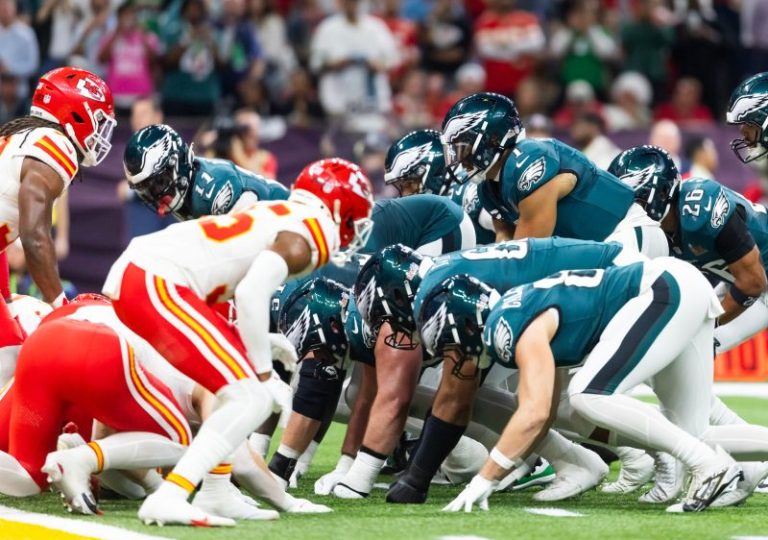
  • The NFL acknowledged in a training video that the Philadelphia Eagles should have been penalized for a false start on a ‘tush push’ play against the KC Chiefs, according to The Washington Post.
  • NFL vice president of officiating training and development Ramon George stated that officials need to be ‘as tight as we can be’ on short-yardage plays.
  • The training video also highlighted officiating mistakes on a similar play attempted by the New Orleans Saints.

In a video distributed to all 32 head coaches and general managers this week, the NFL focused on pre-snap infractions.

And according to the Washington Post, the Philadelphia Eagles should have been penalized at least once during their multiple ‘tush push’ attempts in a Super Bowl rematch victory over the Kansas City Chiefs, 20-17, last Sunday.

The Post first reported the contents of the training tape, which is a weekly analyzing of the most-recent games. This one showed Philadelphia quarterback Jalen Hurts converting a third-and-1 play with 5:29 left in the game.

Online sleuths noted that it appeared guards Tyler Steen and Landon Dickerson moved before center Cameron Jurgens, who may have been lined up offsides, snapped the ball. NFL vice president of officiating training and development Ramon George said in the video that Steen moved early, although the Eagles were not penalized on the play.

“Anytime we have this situation we’re in short yardage, we know we want to make sure that we officiate these plays — the offensive team has to be perfect in every aspect,” George said in the video, according to the Post. “We want to officiate it tight. We want to be black and white and be as tight as we can be when we get into this situation where teams are in the bunch position and we have to officiate them being onsides, movement early.

‘Prior to the snap, looks like we have movement by the right guard. We also have movement coming across from the defensive side. This is a very hard play to officiate. I get it.”

Indeed, during the FOX broadcast, rules analyst Dean Blandino said he was ‘done’ with the tush push because of the degree of difficulty required to officiate it consistenly.

The video also showed the New Orleans Saints’ attempt to run their version of the play, with NFL officiating rules analyst saying formations have to be legal and that the Saints lined up with multiple players offside.

The play was nearly banned this offseason during the May owners’ meetings in Minnesota, but fell two votes shy of the required 24 to prohibit it.

This post appeared first on USA TODAY

Statistics Canada released July’s monthly mineral production survey on Friday (September 19). The data showed gold production increased month-over-month, while copper and silver declined; shipments, however, saw broad declines from June for all three metals.

Gold production increased significantly to 18,855 kilograms compared to 16,935 kilograms in June. Meanwhile, copper production fell to 37.99 million kilograms from 39.17 million kilograms in June, and silver production slipped to 25,345 kilograms from 28,390 kilograms.

As for shipments, gold shipments slid to 16,748 kilograms from 18,554, copper fell to 39.28 million kilograms from 45.96 million, and silver decreased to 26,397 kilograms from 31,181.

StatsCan released August’s consumer price index (CPI) data on Tuesday (September 16), the day before the Bank of Canada’s interest rate decision. The release showed that all-items inflation rose 1.9 percent on a yearly basis, up from the 1.7 percent recorded in July.

The agency attributed the faster growth in headline inflation in part to a slower year-over-year decline in gasoline prices, which fell 12.7 percent in August versus 16.1 percent in July, resulting in a less moderating effect on inflation than during the previous month.

StatsCan noted that without volatile gasoline prices included, CPI in August rose 2.4 percent year-over-year after registering a 2.5 percent increase in the three previous months.

The Bank of Canada chose to reduce its benchmark lending rate by 25 basis points to 2.5 percent on Wednesday (September 17), noting ‘a weaker economy and less upside risk to inflation.’ It marks the first cut since March, when it set the rate at 2.75 percent.

South of the border, the US Federal Reserve held its September meeting of the Federal Open Market Committee on Tuesday and Wednesday. The US central bank also chose to cut 25 basis points from the Federal Funds Rate, bringing it to the 4 percent to 4.25 percent range. It is the first change to the interest rate since the last 25 basis point cut in December 2024.

For more on what’s moving markets this week, check out our top market news roundup.

Markets and commodities react

Canadian equity markets were in positive territory this week.

The S&P/TSX Composite Index (INDEXTSI:OSPTX) set another new record high this week, ending the week up 1.29 percent to 29,768.36. The S&P/TSX Venture Composite Index (INDEXTSI:JX) performed even better, climbing 2.65 percent to finish Friday at 904.80, its first close above 900 since January 2022. The CSE Composite Index (CSE:CSECOMP) also jumped, gaining 4.98 percent to end the week at 162.04.

The gold price was in focus again this week as it climbed to another new record, reaching an intraday high of US$3,707 per ounce on Wednesday ahead of the FOMC meeting. While the price retreated slightly to US$3,642 on Thursday, it ended the week up 1.15 percent overall at US$3,685.26 per ounce.

The silver price was also volatile, rising to US$42.83 per ounce early in the week before dipping below US$42 per ounce in mid-week trading. It bounced back to end the week on 14 year highs, gaining 2.11 percent to close Friday at US$43.08.

Copper saw its mid-week gains erased by the end of the week, closing Friday largely flat at US$4.63 per pound. The S&P Goldman Sachs Commodities Index (INDEXSP:SPGSCI) echoed those movements with a 0.06 percent gain to end the week at 545.95.

Top Canadian mining stocks this week

How did mining stocks perform against this backdrop?

Take a look at this week’s five best-performing Canadian mining stocks below.

Stocks data for this article was retrieved at 4:00 p.m. EDT on Friday using TradingView’s stock screener. Only companies trading on the TSX, TSXV and CSE with market caps greater than C$10 million are included. Mineral companies within the non-energy minerals, energy minerals, process industry and producer manufacturing sectors were considered.

1. Japan Gold (TSXV:JG)

Weekly gain: 119.05 percent
Market cap: C$50.3 million
Share price: C$0.23

Japan Gold is an exploration company focused on a portfolio of Japan-based gold assets.

Its most advanced property is the Mizobe gold project located in Southern Kyushu. The site hosts several exploration targets covering an area of 2 kilometers by 2.5 kilometers and has produced river float samples up to 18.9 g/t of gold.

The company is also working on a trio of projects with Barrick (TSX:ABX,NYSE:B), the most advanced of which is the Hakuryu project located in Northern Hokkaido. The company has identified several targets, including the Hakuryu No. 3 vein, which hosts a 360 meter main zone with a thickness of 20 meters.

Shares in Japan Gold gained significantly at the end of the week; however, the company has not released news since September 9, when it reported that it had mobilized for a four-hole, 1,600 meter drill program at Mizobe.

2. Minnova (TSXV:MCI)

Weekly gain: 110 percent
Market cap: C$21.06 million
Share price: C$0.21

Minnova is an exploration and development company advancing its brownfield PL gold mine in Manitoba, Canada.

The property consists of 28 mining claims and covers an area of 5,114 hectares. An April 2018 feasibility study for the project indicated project economics with an after-tax net present value of C$36.7 million, an internal rate of return of 53 percent and a payback period of 1.2 years, calculated at a gold price of US$1,250 per ounce.

The company has been working to restart the mine over the past few years, but faced funding shortfalls. Trading for Minnova was halted on August 6 as it worked to resolve financial issues to maintain its listing on the TSXV.

On September 11, the company announced that trading would resume on the TSXV alongside a corporate update. It disclosed that it had a working capital deficiency of C$544,611 and is planning a private placement to address the shortfall. Funds will also go towards ongoing activities at PL, including drilling, test work and updated NI 43-101 techno-economic studies.

Minnova also announced that it is advancing plans for preliminary open-pit and underground mine design and layout, and that work on a new mine development plan that takes into account higher gold prices is underway.

Shares in Minnova have surged since trading resumed earlier this week from their price of under C$0.10 before the halt.

3. Stamper Oil and Gas (TSXV:STMP)

Weekly gain: 98.26 percent
Market cap: C$16.02 million
Share price: C$0.018

Stamper Oil and Gas is an exploration and development company working to advance offshore projects in Namibia.

The company holds an interest in five exploration blocks in Namibia; its most significant holding is a 32.9 percent stake in PEL 107 located in the Orange Basin. PEL 107 covers an area of 5,484 square kilometers and is located 210 kilometers from shore in an area that hosts three multi-billion-barrel discoveries since 2022.

The company has been conducting seismic work ahead of the planned drilling of an exploration well set to commence in 2027.

Stamper completed the acquisition of its holdings in the Namibian blocks on September 10, when it reported it had closed its purchase of BISP Exploration, originally announced on May 12.

4. New Break Resources (CSE:NBRK)

Weekly gain: 93.33 percent
Market cap: C$17.03 million
Share price: C$0.29

New Break Resources is a gold exploration company working to advance its Moray gold project in Northeastern Ontario, Canada.

The property is located near Timmins, within the Abitibi Greenstone Belt, and spans an area of 10,326 hectares. Additionally, it is situated 32 kilometres northwest of Alamos Gold’s (TSX:AGI) Young-Davidson gold mine, which produced 174,000 ounces of gold in 2024.

On Wednesday, New Break announced results from its six-hole, 1,502-meter maiden diamond drilling program at the site. The company highlighted one assay with an average grade of 4.11 grams per metric ton (g/t) gold over 31.3 meters, including an interval of 6.75 g/t over 7.1 meters.

The prior week, the company closed the final tranche of an oversubscribed private placement. In total, the company raised proceeds of C$1 million over three tranches, which will be used for ongoing exploration at Moray and for general working capital purposes.

5. Clean Tech Vanadium Mining (TSXV:CTV)

Weekly gain: 91.67 percent
Market cap: C$15.77 million
Share price: C$0.115

CleanTech Vanadium is an exploration company working to advance several critical mineral projects in the US.

Its most recent focus has been on its Kentucky-Illinois fluorspar projects, which consist of over a dozen deposits covering over 8,150 acres along the border of Kentucky and Illinois. Mining in the region dates back to the late 1800s and has produced 12.5 million metric tons of fluorspar, according to the company.

CleanTech also owns the Gibellini vanadium project in Nevada, US. The project has been approved for multiple state permits and received a positive environmental impact statement from the Bureau of Land Management. According to the project page, the site covers 21 kilometers and hosts a measured and indicated vanadium oxide resource of 127 million pounds.

Additionally, the company announced on August 6 that it had acquired the El Triunfo gold-antimony project near La Paz, Bolivia, from Silver Elephant for cash considerations of C$155,000.

The most recent announcement from CleanTech came on Tuesday when it welcomed an additional US$1 billion in funding programs from the Department of Energy (DoE) that was announced on August 13. It also highlighted the continued inclusion of fluorspar, germanium, gallium, indium and vanadium on the US Geological Survey’s Critical Minerals list.

CleanTech stated that it intends to explore funding options with the DoE, with a focus on advancing its Illinois-Kentucky fluorspar district. The company noted that the Department of Defense is funding research at the nearby Hicks Dome rare earth and fluorspar project in Illinois.

FAQs for Canadian mining stocks

What is the difference between the TSX and TSXV?

The TSX, or Toronto Stock Exchange, is used by senior companies with larger market caps, and the TSXV, or TSX Venture Exchange, is used by smaller-cap companies. Companies listed on the TSXV can graduate to the senior exchange.

How many mining companies are listed on the TSX and TSXV?

As of May 2025, there were 1,565 companies listed on the TSXV, 910 of which were mining companies. Comparatively, the TSX was home to 1,899 companies, with 181 of those being mining companies.

Together, the TSX and TSXV host around 40 percent of the world’s public mining companies.

How much does it cost to list on the TSXV?

There are a variety of different fees that companies must pay to list on the TSXV, and according to the exchange, they can vary based on the transaction’s nature and complexity. The listing fee alone will most likely cost between C$10,000 to C$70,000. Accounting and auditing fees could rack up between C$25,000 and C$100,000, while legal fees are expected to be over C$75,000 and an underwriters’ commission may hit up to 12 percent.

The exchange lists a handful of other fees and expenses companies can expect, including but not limited to security commission and transfer agency fees, investor relations costs and director and officer liability insurance.

These are all just for the initial listing, of course. There are ongoing expenses once companies are trading, such as sustaining fees and additional listing fees, plus the costs associated with filing regular reports.

How do you trade on the TSXV?

Investors can trade on the TSXV the way they would trade stocks on any exchange. This means they can use a stock broker or an individual investment account to buy and sell shares of TSXV-listed companies during the exchange’s trading hours.

Article by Dean Belder; FAQs by Lauren Kelly.

Securities Disclosure: I, Dean Belder, hold no direct investment interest in any company mentioned in this article.

Securities Disclosure: I, Lauren Kelly, hold no direct investment interest in any company mentioned in this article.

This post appeared first on investingnews.com

Here’s a quick recap of the crypto landscape for Friday (September 19) as of 9:00 p.m. UTC.

Get the latest insights on Bitcoin, Ethereum and altcoins, along with a round-up of key cryptocurrency market news.

Bitcoin and Ethereum price update

Bitcoin (BTC) was priced at US$115,191, a 1.9 percent decrease in 24 hours, and its lowest valuation of the day, after an earlier price peak to US$116,450.

Bitcoin price performance, September 19, 2025.

Chart via TradingView.

The crypto market showed strength this week, bolstered by investor confidence after the US Federal Reserve’s interest rate cut on Wednesday (September 17) and NVIDIA’s (NASDAQ:NVDA) US$5 billion investment in Intel (NASDAQ:INTC).

Meanwhile, the US Securities and Exchange Commission’s (SEC) adoption of new generic listing standards for spot crypto exchange-traded products paves the way for faster approvals of products tracking digital assets.

The REX-Osprey XRP ETF (NYSEAMERICAN:XRPR) and the REX-Osprey DOGE ETF (NYSEAMERICAN:DOJE) launched on Thursday (September 18) as the first implementations of this rule change.

The funds saw US$37.7 million and US$17 million traded on the day, respectively.

Ether (ETH) was trading at US$4,445.54, down by 3.2 percent to its lowest valuation on Friday. The cryptocurrency’s highest valuation was US$4,541.88.

Altcoin price update

  • Solana (SOL) was priced at US$236.73, a decrease of 4.8 percent over the last 24 hours. Its lowest valuation of the day was US$236.10, while its highest valuation was US$242.53.
  • XRP was trading for US$2.99, down by 3.8 percent in the past 24 hours, its lowest valuation of the day. Its highest was US$3.04.
  • SUI (Sui) was valued at US$3.65, trading at its lowest valuation of the day and down by 7.6 percent over the past 24 hours. Its highest price point on Friday was US$3.75.
  • Cardano (ADA) was priced at US$0.8959, down by 3.6 percent over 24 hours. Its lowest value of the day was US$0.8933, while its highest value was US$0.9075.

ETF data & derivatives trends

Spot Bitcoin ETFs drew record inflows this week, with around 20,685 BTC were added. The influx pushed US spot Bitcoin ETF holdings to around 1.32 million BTC worth US$150 billion.

BlackRock’s iShares Bitcoin Trust ETF (NASDAQ:IBIT) led with US$1 billion in net buys, while Fidelity’s Advantage Bitcoin ETF (TSX:FBTC) topped US$843 million and ARK 21Shares Bitcoin ETF (BATS:ARKB) added US$182 million.

Meanwhile, US Ethereum ETFs saw outflows of US$62 million over the week.

Altcoin ETFs are also taking shape. In mid-September, the SEC approved the first US ETFs for XRP and Dogecoin. DOGE jumped by 20 percent upon its ETF debut. This altcoin ETF wave, now backed by giants like Grayscale and Franklin Templeton, is reshaping flows and legitimizing more speculative assets.

On the derivatives side, leverage is at a near-record level.

Bitcoin futures open interest surpassed US$220 billion in September. CryptoQuant notes clusters of orders just above and below the spot price, so any sharp swing, even a small break, could trigger “record liquidations.”

Bitcoin liquidations have totaled approximately US$13.71 million over the past four hours, predominantly from long positions, indicating continued selling pressure in the market.

Ethereum liquidations reflected a similar trend, with about US$10.85 million liquidated in the same period, of which US$10.08 million were long positions, signaling sustained bearish momentum.

The perpetual funding rate for BTC was at 0.0064 percent, while the ETH funding rate stood at 0.001 percent, indicating a neutral or balanced market without strong bias toward bullish or bearish positioning.

Market indicators showed an RSI level of 41.03 as of 8:00 p.m. UTC, suggesting neutral conditions.

Next week’s crypto news to watch

Bitcoin has formed a rising wedge pattern over the past month, with a bearish divergence noted by on-chain analysts. Technically, Bitcoin appears to be in a mild consolidation after last week’s surge.

CryptoQuant analyst Axel Adler has observed that Bitcoin is trading just above its short-term holder realized price.

In equities, the S&P 500 (INDEXSP:.INX) and Nasdaq Composite (INDE XNASDAQ:.IXIC) hit record highs as crypto pulled back modestly on Friday, reflecting a temporary decoupling.

Key crypto catalysts to watch next week include potential announcements out of Korea’s Blockchain Week, scheduled to run in Seoul from September 22 to 28.

Additionally, LayerZero (ZRO) is scheduled for a major token unlock on September 20 of approximately 25.7 million ZRO tokens, roughly 8.5 percent of the current circulating supply, valued at around US$52.5 million

Other significant upcoming unlocks include Optimism’s 116 million OP tokens on September 21 and AltLayer’s 3.7 million ALT token release on September 25.

Today’s crypto news to know

Stablecoin startups post fundraising record

Funding for stablecoin-related companies has surged to unprecedented levels this year, with 14 firms raising a combined US$537 million so far, according to DefiLlama data. That figure marks a sharp jump from the US$84 million raised across all of 2024, underscoring a wave of investor confidence in fiat-pegged digital assets.

The year’s biggest deal came in July, when Hong Kong’s OSL Group (HKEX:0863) secured US$300 million.

Analysts have linked the momentum to favorable regulatory shifts, including the GENIUS Act, signed into law by U.S. President Donald Trump in July, which provided legal clarity for stablecoin issuers.

The sector’s rapid rise is also visible in secondary markets. For instance, after its initial public offering in June, Circle (NYSE:CRCL) is now trading at four times its debut value.

Watchdog flags Trump-linked crypto firm for token sales to sanctioned actors

A watchdog group has accused World Liberty Financial, a cryptocurrency venture tied to US President Donald Trump, of allowing its tokens to flow into the hands of users connected with sanctioned entities.

According to Accountable.us, WLFI tokens ended up with wallets linked to North Korea’s Lazarus Group, Iran’s Nobitex exchange, and Russian traders, despite long-standing US restrictions.

The report highlights one case on Jan. 20, 2025, when WLFI sold 600,000 tokens, worth roughly US$10,000, on Trump’s inauguration day to a wallet later tied to Lazarus transactions.

Even after DeFi platforms flagged the account, the wallet continued operating until late August, receiving WLFI’s branded USD1 stablecoin as part of an airdrop. Separate sales were traced back to Iran’s Nobitex in October 2024, a platform that Chainalysis has previously identified as a hub for sanctions evasion.

The allegations raise questions over WLFI’s compliance and could intensify regulatory pressure on the company.

Trump’s team has not publicly responded to the claims.

Ethereum Foundation announces next hard fork details and timeline

Ethereum’s Fusaka hard fork is scheduled for mainnet launch on December 3, 2025, according to an announcement shared by Ethereum researcher Christine D. Kim.

The upgrade will include 11 to 12 Ethereum improvement proposals focused on scalability and network efficiency, particularly doubling blob capacity to enhance layer-2 transaction throughput.

Testing will occur on public testnets throughout October and November. A US$2 million audit competition is underway to ensure Fusaka’s code security ahead of deployment.

The upgrade follows May’s Pectra hard fork and sets the stage for subsequent improvements planned for 2026.

PayPal’s US dollar stablecoin expands to nine blockchains

PayPal Holdings’ (NASDAQ:PYPL) US dollar stablecoin, PYUSD, is expanding to nine new blockchains through a partnership with interoperability protocol LayerZero.

The move broadens the token’s reach beyond its native issuance on Ethereum, Solana, Arbitrum, and Stellar, making it accessible across networks like Avalanche, Aptos, Tron, and others.

As part of the rollout, LayerZero created a wrapped version called PYUSD0, which is fully interchangeable with the original token and operates within its Hydra Stargate system.

The expansion is designed to accelerate adoption and cement PYUSD’s role as a dollar-backed instrument across the crypto ecosystem. Since launching in 2023 through issuer Paxos, PYUSD has grown steadily, with supply climbing from US$520 million at the start of the year to US$1.3 billion.

Kraken, Trust Wallet partner to expand xStocks access

Kraken has partnered with Trust Wallet to expand access to xStocks, a tokenized equities product developed by Backed.

This collaboration, announced on Friday, brings 60 tokenized US equities to over 200 million Trust Wallet users worldwide, allowing them to trade these assets across multiple blockchains using a variety of local fiat currencies.

“For xStocks to achieve true mass adoption, seamless integration with the world’s most popular self-custody wallets is vital. Bringing xStocks to Trust Wallet places open and interoperable tokenized equities directly into the hands of millions, alongside the crypto, stablecoins and DeFi assets they already use every day,” said Kraken co-CEO Arjun Sethi.

In the coming weeks, the team said it will continue collaborating with partners to introduce xStocks to additional high-performance blockchains and leading consumer applications.

Canadian regulators called to crypto action

In a speech on Thursday, the Bank of Canada’s executive director of payments, Ron Morrow, said that Canada is behind other countries in developing rules for the use of stablecoins and should consider regulations for digital assets given the growing interest in them domestically and the US’ efforts to enable widespread adoption.

“Governments are moving to regulate stablecoins and other cryptocurrencies so consumers can reap their benefits and be protected from credit and liquidity risks. In fact, many jurisdictions worldwide either have, or will soon have, a regulatory framework for cryptoassets,” Morrow said during a keynote speech at the ONE Conference in Ottawa.

He called on federal and provincial regulators to “work quickly and collaboratively to evolve our regulatory frameworks.”

Securities Disclosure: I, Giann Liguid, hold no direct investment interest in any company mentioned in this article.

Securities Disclosure: I, Meagen Seatter, hold no direct investment interest in any company mentioned in this article.

This post appeared first on investingnews.com

Modern warfare is evolving quickly alongside emerging technologies, unlocking unprecedented investment opportunities in diverse areas of the defense sector.

Escalating conflicts in Europe and the Middle East are prompting governments worldwide to increase military spending. Looking at the US alone, the passage of the One Big Beautiful Bill Act has the potential to bring a US$150 billion investment into the defense industry. In addition, the Trump administration is proposing a US$1 trillion defense budget for 2026 with a focus on cybersecurity, artificial intelligence (AI) and autonomous systems capabilities.

The biggest US defense contractors and exchange-traded funds (ETFs) are expected to benefit greatly from the huge government spending expected in the sector. As for up-and-coming American defense companies that offer investors growth opportunities, those that can quickly develop and commercialize dual-capability technologies (i.e. for both civil sector and defense markets) are looking equally as attractive.

“If the opportunity is purely in the defense sector, that’s a big, but ultimately limited, opportunity. If the opportunity is in defense and a range of other sectors because the technology has got a transversal application, then it becomes far more interesting for an investor,” notes Joe Cassidy, partner, technology, media and telecom at KPMG in the UK.

Defense and security trends: Nature of war is changing

Defense spending jumped nearly 10 percent in 2024, according to a KPMG report on emerging trends in the aerospace and defense sector, representing “its fastest growth rate in nearly four decades.’

The firm attributes this growth to geopolitical destabilization both in Europe and in the Middle East. The global trade war surrounding rare earths, platinum-group metals, aluminum, steel and semiconductors is adding further pressure.

This increase in domestic defense spending has been translating into big wins for defense and security stocks. As Raymond James’ September Defense & Government Market Intel Report shows, publicly traded companies in the US defense sector are up by 57.8 percent since September 2024.

In a June interview with Federal News Network’s Terry Gerton, Sam Maness, managing director of Raymond James’ Defense and Government Group, ascribed the growth to the anticipated increase in funding for domestic defense contractors. He noted that US-China tensions and other geopolitical conflicts are “lead(ing) to bullishness for anything that is more meaningfully touching mission, and defense technology naturally does that.’

Looking forward, analysts expect supply chain sovereignty and cutting-edge technological advancements to be the major themes in this sector as nations look to cost effectively build out their domestic defense industries. At the same time, new weapons systems are reshaping the nature of war both on the battlefield and online.

“The way conflicts are resolved is changing rapidly and new technologies are disrupting the battlefield strategy,” states KPMG in its report. “Defense departments need rapid innovation and are no longer willing to wait years for a custom system when an ‘80% Solution’ can be purchased off-the-shelf.”

So what technologies are getting the most attention in the defense sector?

As mentioned, cybersecurity, autonomous systems and AI solutions are in the spotlight, and companies with dual-capability technologies are getting recognition. Below are examples of defense stocks tracked by Raymond James that are focused on providing these technologies to both the civil and defense sectors.

Cybersecurity defense stocks

One of the greatest threats to modern militaries is cyber attacks. This makes securing military IT infrastructure, communications networks and weapons systems mission critical for today’s armed forces.

L3Harris Technologies (NYSE:LHX) is a leading US defense contractor that provides cybersecurity solutions such as end-to-end technologies across air, land, sea, space and cyber domains.

The firm also serves public safety sectors such as law enforcement and fire; commercial sectors such as utilities and transportation; the commercial aviation space; and the healthcare industry.

Mercury Systems (NASDAQ:MRCY) develops secure processing subsystems, embedded computing and mission-critical technologies with advanced cybersecurity features for military and defense applications.

The company also supplies the aviation and industrial sectors.

V2X (NYSE:VVX) supplies vehicle-to-everything cybersecurity to secure communications between military vehicles, drones and command centers. It is in the process of acquiring federal IT business of QinetiQ Group (LSE:QQ), which provides data engineering, intel mission support and cyber solutions for US intelligence agencies.

In the civil and commercial space, the company provides solutions to first responders, commercial fleets and the auto sector, as well as urban mobility and utilities.

Zscaler (NASDAQ:ZS) is a leader in cloud-native security and its zero-trust architecture platforms are used by the US Department of Defense, intelligence agencies and other defense contractors. In August, the company acquired Red Canary, adding to its portfolio of cybersecurity detection and response solutions for US defense and intelligence agencies. Zscaler also serves the healthcare, finance, retail, energy, manufacturing and public sectors.

    Autonomous system defense stocks

    The changing nature of war is probably best represented in the rapid innovation and adoption of lower-cost autonomous systems such as drones, unmanned ground vehicles, robotics and counter-drone technologies.

    A key supplier to the US military, AeroVironment (NASDAQ:AVAV) designs and manufactures unmanned aerial vehicles and robotics systems primarily for military surveillance and reconnaissance.

    The company also provides electric energy systems to the commercial and public sectors.

    Kratos Defense & Security Solutions (NASDAQ:KTOS) specializes in advanced defense technologies such as unmanned systems, satellite communications and hypersonics, while adapting them for commercial markets.

    Teledyne Technologies (NYSE:TDY) provides drones, unmanned vehicles and robotics-related technologies to the defense sector through its subsidiary Teledyne FLIR.

    It also provides these technologies for the civil aviation, manufacturing and energy sectors.

    Through its subsidiary Textron Systems, Textron (NYSE:TXT) develops and integrates autonomous and robotics systems for the US Department of Defense and military operations for intelligence, surveillance and reconnaissance missions. The company’s autonomous technologies portfolio also extends into civil aviation, law enforcement and critical infrastructure protection for government and civilian operations.

      Artificial intelligence defense stocks

      AI technologies are rapidly being integrated into existing and emerging defense tech, including unmanned aerial and ground vehicles, reconnaissance and surveillance systems as well as hypersonic weapons.

      Curtiss-Wright (NYSE:CW) is a global engineering company that provides products such as sensors, controls and data acquisition systems for the defense, aviation, nuclear power and industrial markets. Its defense solutions division has produced AI-optimized rugged embedded computing systems for use on the battlefield.

      Leonardo DRS (NASDAQ:DRS) specializes in AI-enabled computing and sensing for tactical military platforms, including for use in US Army ground vehicles. Its technology is also used for public safety and infrastructure protection during disaster responses, as well as in industrial automation, medical diagnostics and commercial transportation.

      Palantir Technologies (NASDAQ:PLTR) is a leading defense contractor that delivers AI platforms for the US military and its allies. It partners with other major defense industry companies such Northrop Grumman (NYSE:NOC) and Anduril Industries. Palantir’s technology is also widely used in the civil sector, as well as by more than half of Fortune 500 companies in sectors such as healthcare, energy, finance and manufacturing.

      Voyager Technologies (NYSE:VOYG) is a defense- and space-focused AI technology company that provides national security solutions with partners such as Palantir. In August, it acquired Electromagnetic Systems, adding AI-based automated target recognition software and intelligence analytics for space-based radar systems to its portfolio. Voyager’s AI tech is also used by NASA and commercial satellite operators.

        Securities Disclosure: I, Melissa Pistilli, hold no direct investment interest in any company mentioned in this article.

        This post appeared first on investingnews.com