Author

admin

Browsing

The Philadelphia Eagles lost running back Will Shipley to a rib injury in Week 1. They quickly moved to replace him on the trade market.

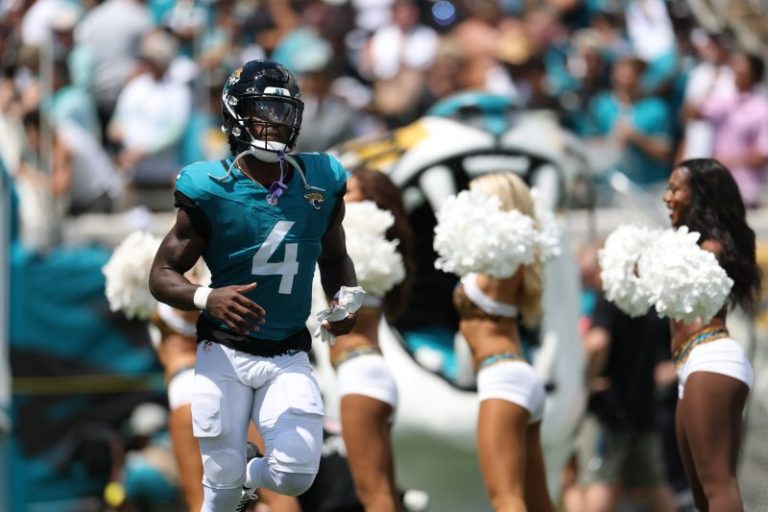
The Eagles acquired veteran running back Tank Bigsby from the Jacksonville Jaguars, according to multiple reports. Philadelphia will send multiple late-round picks to complete the trade.

Bigsby, 24, was a third-round pick in the 2023 NFL Draft. He recorded career-high marks in carries (168), rushing yards (766) and rushing touchdowns (7) during the 2024 season and was expected to battle Travis Etienne Jr. for Jacksonville’s starting job in 2025.

However, Bigsby was clearly behind Etienne in the Jaguars’ pecking order to open the 2025 season. He handled just five carries and totaled 12 yards while splitting the backup role with rookies Bhayshul Tuten and LeQuint Allen.

That gave the Eagles an opportunity to swoop in and add depth behind Saquon Barkley.

Tank Bigsby trade details

Eagles get:

  • RB Tank Bigsby

Jaguars get:

  • 2026 fifth-round pick
  • 2026 sixth-round pick

Eagles RB depth chart

The addition of Bigsby makes Philadelphia’s running back room four-deep. Below is a look at the projected pecking order within the group:

  1. Saquon Barkley
  2. Will Shipley
  3. Tank Bigsby
  4. A.J. Dillon

Shipley’s injury could allow Bigsby a chance to quickly earn the No. 2 role behind Barkley on Philadelphia’s depth chart. The third-year veteran’s physicality – he averaged 2.8 yards per carry after contact last season, tied with Derrick Henry for the most in the NFL – should make him a strong partner for Barkley.

(This story will be updated as more information becomes available.)

This post appeared first on USA TODAY

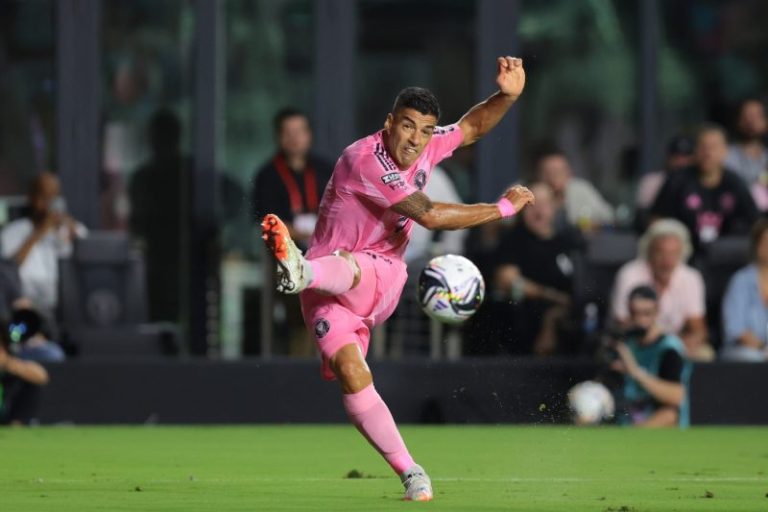
  • Major League Soccer has suspended Inter Miami star Luis Suarez for three matches after he was seen spitting on a Seattle Sounders security staffer after the Leagues Cup final.
  • The league’s suspension on Monday, Sept. 8, follows disciplinary action announced Friday by the Leagues Cup tournament, which issued a six-match tournament ban to Suarez.
  • MLS also revoked the credentials of a different Sounders staffer for the rest of the year, throughout the postseason.

Major League Soccer has suspended Inter Miami star Luis Suarez for three matches after he was seen spitting on a Seattle Sounders staffer after the Leagues Cup final.

Suarez will serve the suspension during Inter Miami’s next three matches: Sept. 13 at Charlotte FC, Sept. 16 vs. Seattle, and Sept. 20 vs. D.C. United. He is eligible to return when Inter Miami visits New York City FC on Sept. 24.

The league’s suspension on Monday, Sept. 8, follows disciplinary action announced Friday by the Leagues Cup tournament, which issued a six-match tournament ban to Suarez. Essentially, Suarez would miss the entire 2026 Leagues Cup if Inter Miami were to reach the final.

Suarez was seen spitting on Sounders security staffer Gene Ramirez after Seattle beat Inter Miami 3-0 to win the Leagues Cup tournament on Aug. 31.

Suarez, the Uruguayan legend known for his misconduct, issued an apology on social media last week.

“It was a moment of great tension and frustration, where as soon as the game ended, things happened that shouldn’t have happened. But that doesn’t justify the reaction I had. I was wrong and I sincerely regret it,” Suarez said on Instagram.

Lenhart will only be permitted in public seating areas during Sounders home matches. He’s not allowed on or near the pitch or locker rooms. His access will again be reviewed ahead of the 2026 MLS season.

Seattle was also fined for an undisclosed amount for misappropriation of credentials by the league.

Leagues Cup also suspended Lenhart from the Sounders’ next five Leagues Cup matches.

Inter Miami midfielder Sergio Busquets received a two-game Leagues Cup suspension for violent conduct after striking Seattle’s Obed Vargas, while defender Tomás Avilés was suspended for three games for his role in the postgame scene. However, both Inter Miami players did not receive further discipline from MLS.

Seattle is fourth in the MLS Western Conference with 44 points from 12 wins, seven losses and eight draws. Inter Miami ranks sixth in the East with 46 points from 13 wins, five losses and seven draws.

While most MLS clubs have played 29 matches, Inter Miami (25) and Seattle (27) have matches in hand to play that could elevate them in the standings by season’s end.

The final day of the 2025 MLS season is Oct. 18, while the MLS Cup playoffs begin with wild card matches on Oct. 22. The MLS Cup will be Dec. 6.

This post appeared first on USA TODAY

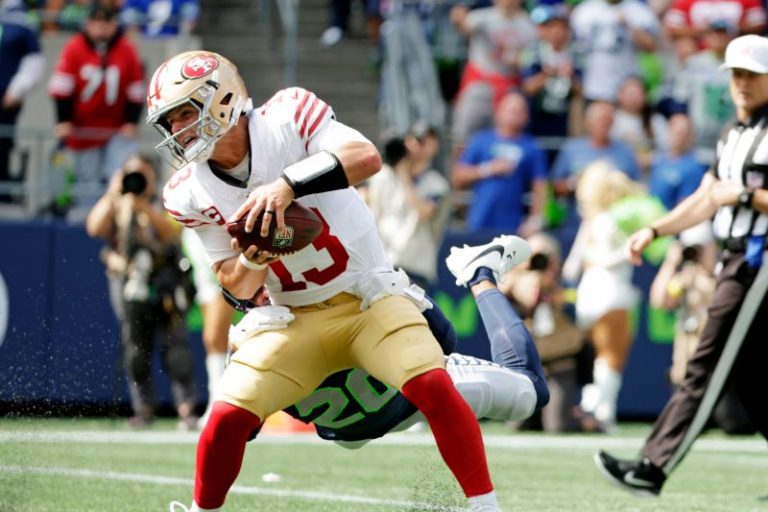
San Francisco 49ers quarterback Brock Purdy suffered shoulder and toe injuries in Week 1 that could keep him out of the team’s Week 2 game against the New Orleans Saints.

49ers coach Kyle Shanahan broke the news of Purdy’s injuries at a Monday media availability, per NFL Network’s Ian Rapoport. Shanahan specified Purdy’s shoulder injury was to his left, non-throwing shoulder and also provided that malady was worse than the quarterback’s toe problem.

Shanahan outlined that a decision about Purdy’s status for Week 2 would be made at a later date.

It isn’t clear at what point in Sunday’s game Purdy suffered the injuries. He played the entirety of San Francisco’s 17-13 win over the Seattle Seahawks, completing 26 of 35 passes for 277 yards, two touchdowns and two interceptions.

Who is the 49ers backup quarterback?

If Purdy is unable to play against the Saints, the 49ers would turn to backup Mac Jones in his stead.

The 49ers signed Jones, a fifth-year veteran and a first-round pick in the 2021 NFL Draft, as a free agent during the offseason. He has a career record of 20-29 across 49 starts with the New England Patriots and Jacksonville Jaguars and has completed 65.9% of his career passes for 10,590 yards, 54 touchdowns and 44 interceptions.

49ers QB depth chart

The 49ers currently have just two quarterbacks on their 53-man roster and three in their organization. Below is a look at the team’s depth chart:

  1. Brock Purdy
  2. Mac Jones
  3. Adrian Martinez (practice squad)

(This story will be updated as more information becomes available.)

This post appeared first on USA TODAY

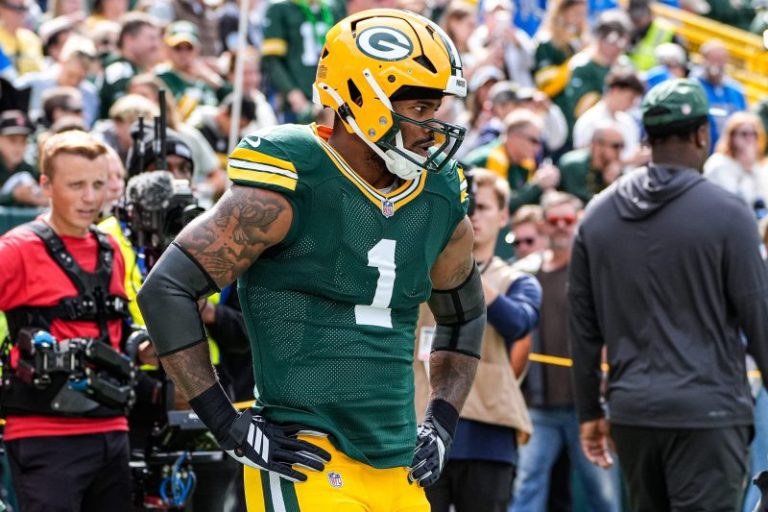
The former Dallas Cowboys star was locked in a contract dispute since the end of the 2024 season, hoping that an extension would come in the Lone Star State. After a war of words (and podcasts) Dallas relented – trading the All-Pro to the Green Bay Packers a week before the season started.

Parsons received not only a change of scenery, but a nice payday to go along with it, inking a four-year, $186 million extension. Following his debut in the team’s dominating 27-13 victory over the Detroit Lions, Parsons made it clear that he’s happy in Wisconsin – and even happier to put the past behind him.

“These last six months was super draining, super toxic for everyone,’ Parsons told reporters after the game. ‘It’s something that I don’t think no player should have to go through. … The fact that I was traded a week before the season was really outrageous and rough. It’s something where I could’ve been with these guys getting better and better and we could’ve had probably (an) even more dominant start.’

The new Packer played sparingly in his debut, logging 29 of the team’s 65 snaps (45%) on Sunday. Parsons, who has been nursing a back injury, still made his presence felt as he ramps back up to full strength.

He finished with three pressures that resulted in a two-yard loss on a completion, an interception and a sack, according ESPN Research via Rob Demovsky.

Parsons is cognizant of what the Packers gave up for him and plans on doing whatever it takes.

“These guys embraced me,’ Parsons said. ‘They believe in my talents. They believed in me and I’m just gonna give these guys everything I have because I know what’s at stake and I know what they gave up for me to be here and I’mma do what it takes for us to win.”

The Packers are hopeful that acquiring Parsons can catapult them into Super Bowl contention. If Sunday was any indication, they’re off to a good start – and they should only get better when their newest star has his full powers.

This post appeared first on USA TODAY

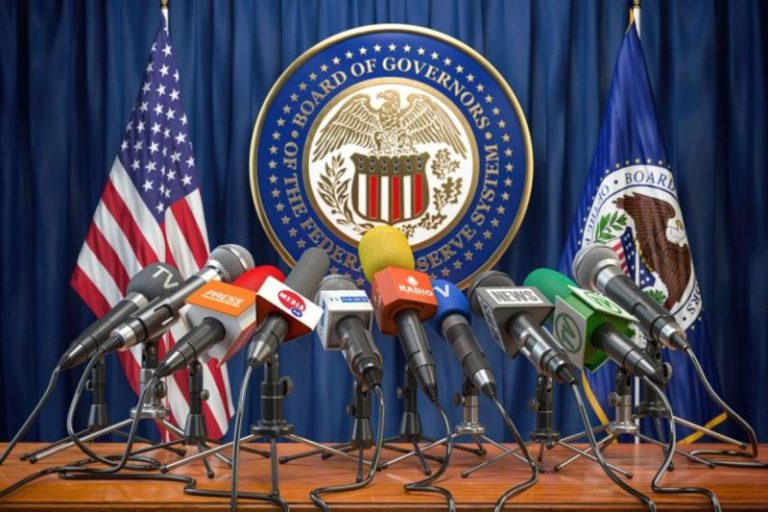
Tackling soaring inflation in the US is the job of the country’s central bank, known as the US Federal Reserve, or the Fed.

The US Fed has consistently made headlines in recent years due to its role in managing inflation through the use of interest rate changes.

Between mid-2021 and 2023, the US economy experienced high inflation, peaking at 8.5 percent in July 2022. The Fed has helped bring it largely under control through careful interest rate increases during that time period.

According to US Labor Department data, the inflation rate in July 2025 was 2.7 percent. As this is still above the Fed’s target of 2 percent, the bank has been slow to lower interest rates so far.

It’s important for any investor to understand the ins and outs of the Fed’s role in US monetary policy and interest rates, as its decisions have a strong impact on US and global markets as well as precious metals prices.

In this article

    What is the US Federal Reserve?

    The Federal Reserve, often referred to as the Fed, is the US central bank and monetary authority. It was established by the Federal Reserve Act in 1913, which gave the Fed responsibility for setting monetary policy in response to the 1907 Banker’s Panic.

    “The Panic was caused by a build-up of excessive speculative investment driven by loose monetary policy,” explains Investopedia. “Without a government central bank to fall back on, U.S. financial markets were bailed out from the crisis by personal funds, guarantees, and top financiers and investors, including J.P. Morgan and John D. Rockefeller.”

    Although it is an independent government agency, the Fed is accountable to the public and US Congress. The current Fed Chair is Jerome Powell, an investment banker who served as assistant secretary and undersecretary of the Department of the Treasury under former President George H.W. Bush. Powell took the helm at the Fed in 2018.

    The Fed has a dual mandate: to achieve stable prices and stable employment. The government agency also provides banking services and is the main regulator of the nation’s banks. In times of economic turmoil, the Fed also acts as a lender of last resort.

    It’s important to note that while the Fed manages the national monetary policy and regulates the financial system in the US, its actions also have a powerful influence on the global economy.

    What is the FOMC?

    The Federal Open Market Committee (FOMC) is the Fed’s monetary policy-making body. The 12 members of the FOMC are the seven members of the board of governors of the Federal Reserve System, the president of the Federal Reserve Bank of New York and four of the 11 reserve bank presidents who rotate through the positions for one year terms.

    Why does the US Federal Reserve hike or cut interest rates?

    For more than a century, the Fed has been tasked with keeping a watchful eye on any structural risk to monetary stability in the US financial system, and rising inflation and high unemployment are two of the biggest threats to monetary stability.

    In the face of rising inflation, the Fed raises interest rates in the hopes of reigning in rapidly rising prices by curbing demand. When interest rates are higher, borrowing money becomes more expensive, which ultimately slows consumer spending and curtails corporate growth.

    During times of slow economic growth, the Fed lowers interest rates in order to stimulate the economy. Lower interest rates in effect lower the cost of borrowing and investing for both businesses and individuals.

    The Fed’s goal is to keep inflation around its target rate of 2 percent, and unemployment around 4 to 4.5 percent.

    “The principle of inflation targeting is based on the belief that long-term economic growth is best achieved by maintaining price stability, and price stability is achieved by controlling inflation,” according to Investopedia.

    What are the biggest contributors to US inflation?

    Inflation is calculated through factoring in price changes of a weighted basket of goods and services, as well as housing.

    For example, the COVID-19 pandemic that began in 2020 caused a surge of inflation in the US and globally.

    Prices of goods were driven higher by a mix of factors, including significant supply chain disruptions hurting product availability, and economic stimulus packages increasing spending power and demand.

    Additionally, the lasting switch to work-from-home for many led to increased demand for homes with space for offices, driving up housing prices. As housing is the highest weighted factor when calculating US inflation, this was one of the biggest drivers of inflation in the 2020s.

    Global supply chains have since been hampered by factors like Russia’s ongoing war in Ukraine and growing conflict in the Middle East. There is also the uncertainty generated from the global wave of tariffs sparked by US President Donald Trump’s trade policies, which will raise the cost of goods purchased by American consumers.

    This global supply and demand imbalance has led to rising prices for a wide range of consumer products, from gas to groceries. The result has been a loss in purchasing power for US consumers as their dollar needs to stretch further.

    How much has the US Federal Reserve hiked rates since 2022?

    In an effort to fight inflation, the American central bank consistently increasing rates from its March 2022 meeting with an initial boost of 25 basis points. Its hike of 75 basis points in June 2022 was at the time its largest since 1994, and it was followed by another three hikes of this magnitude in 2022.

    The Fed raised interest rates by 5.25 percentage points between March 2022 and July 2023 before holding at 5.50 percentage points for more than a year. The Fed’s current rate cutting cycle began with a .50 drop in September 2024.

    _FOMC meeting date___

    Rate hike in basis points_

    Target federal funds rate_

    January 25 to 26, 2022

    N/A

    0 to 0.25 percent

    March 15 to 16, 2022

    +25

    0.25 to 0.5 percent

    May 3 to 4, 2022

    +50

    0.75 to 1 percent

    June 14 to 15, 2022

    +75

    1.5 to 1.75 percent

    July 26 to 27, 2022

    +75

    2.25 to 2.5 percent

    September 20 to 21, 2022

    +75

    3.0 to 3.25 percent

    November 1 to 2, 2022

    +75

    3.75 to 4.0 percent

    December 13 to 14, 2022

    +50

    4.25 to 4.5 percent

    January 31 to February 1, 2023

    +25

    4.5 to 4.75 percent

    March 21 to 22, 2023

    +25

    4.75 to 5.0 percent

    May 2 to 3, 2023

    +25

    5.0 to 5.25 percent

    July 25 to 26, 2023

    +25

    5.25 to 5.5 percent

    How many times does the Fed meet each year?

    The FOMC holds eight meetings per year, typically scheduled every seven weeks. According to the Fed’s website, during these meetings the FOMC “reviews economic and financial conditions, determines the appropriate stance of monetary policy, and assesses the risks to its long-run goals of price stability and sustainable economic growth.”

    How many more US Federal Reserve meetings this year?

    As of August 21, three more Fed meetings are scheduled for 2025, and market participants will be closely watching these events.

    It’s too soon to know what exactly the Fed will do at these remaining meetings, but its July statement gives some clues — in it, the central bank said that it ‘seeks to achieve maximum employment and inflation at the rate of 2 percent over the longer run. Uncertainty about the economic outlook remains elevated. The Committee is attentive to the risks to both sides of its dual mandate.’

    At the time, the Federal Reserve decided to hold rates steady at 4.25 to 4.5 percent for the fifth straight meeting as inflation remained elevated and job numbers appeared strong. The decision placed downward pressure on the gold price as a better economic outlook dimmed demand for the safe-haven asset.

    While the current tariff war between the US and many of its major trading partners has some calling for a return to higher inflation, weak unemployment figures and other economic data published since the last meeting has caused others to consider the potential for a recession before the end of the year.

    ‘At present, the latest economic data have been sufficiently mixed as to support either policy alternative,’ according to analysts writing for the Peterson Institute for International Economics. ‘The case for a rate cut is driven by the pronounced slowing in job creation, the failure of inflation to respond much to the initial tariff increases, and the fact that most FOMC participants view the current stance of policy as slightly tighter than neutral.’

    Securities Disclosure: I, Melissa Pistilli, hold no direct investment interest in any company mentioned in this article.

    This post appeared first on investingnews.com

    Shares of Kenvue fell more than 10% on Friday after a report that Health Secretary Robert F. Kennedy Jr. will likely link autism to the use of the company’s pain medication Tylenol in pregnant women.

    HHS will release the report that could draw that link this month, The Wall Street Journal reported on Friday.

    That report will also suggest a medicine derived from folate — a water-soluble vitamin — can be used to treat symptoms of the developmental disorder in some people, according to the Journal.

    In a statement, an HHS spokesperson said, “We are using gold-standard science to get to the bottom of America’s unprecedented rise in autism rates.”

    “Until we release the final report, any claims about its contents are nothing more than speculation,” they added.

    Tylenol could be the latest widely used and accepted treatment that Kennedy has undermined at the helm of HHS, which oversees federal health agencies that regulate drugs and other therapies. Kennedy has also taken steps to change vaccine policy in the U.S., and has amplified false claims about safe and effective shots that use mRNA technology.

    Kennedy has made the disorder a key focus of HHS, pledging in April that the agency will “know what has caused the autism epidemic” by September and eliminate exposures. He also said that month that the agency has launched a “massive testing and research effort” involving hundreds of scientists worldwide that will determine the cause.

    In a statement, Kenvue said it has “continuously evaluated the science and [continues] to believe there is no causal link” between the use of acetaminophen, the generic name for Tylenol, during pregnancy and autism.

    The company added that the Food and Drug Administration and leading medical organizations “agree on the safety” of the drug, its use during pregnancy and the information provided on the Tylenol label.

    The FDA website says the agency has not found “clear evidence” that appropriate use of acetaminophen during pregnancy causes “adverse pregnancy, birth, neurobehavioral, or developmental outcomes.” But the FDA said it advises pregnant women to speak with their health-care providers before using over-the-counter drugs.

    The American College of Obstetricians and Gynecologists maintains that acetaminophen is safe during pregnancy when taken as directed and after consulting a health-care provider.

    Some previous studies have suggested the drug poses risks to fetal development, and some parents have brought lawsuits claiming that they gave birth to children with autism after using it.

    But a federal judge in Manhattan ruled in 2023 that some of those lawsuits lacked scientific evidence and later ended the litigation in 2024. Some research has also found no association between acetaminophen use and autism.

    In a note on Friday, BNP Paribas analyst Navann Ty said the firm believes the “hurdle to proving causation [between the drug and autism] is high, particularly given that the litigation previously concluded in Kenvue’s favor.”

    This post appeared first on NBC NEWS