Author

admin

Browsing

Canada is a premier destination for mineral exploration and mining, but the nation’s exploration-stage companies are still struggling to attract investment dollars.

The country’s appeal is showcased in the Fraser Institute’s most recent Annual Survey of Mining Companies, which tracks the investment attractiveness of global mining jurisdictions. It places the Canadian provinces of Ontario and Saskatchewan among the world’s top mining jurisdictions, behind only Nevada.

The Canadian mining industry “serves as a proxy for the global (mining) industry” as it is home to “the largest concentration of public mineral companies in the world,” with Toronto at “the center of the mining finance universe,” said Douglas Silver, partner and senior advisor at Benwerrin Investment Partners, during his presentation at this year’s Prospectors & Developers Association of Canada (PDAC) convention, held last week.

Jeff Killeen, director of policy and programs for PDAC, shared similar sentiments in his own presentation, telling conference attendees, “Almost 30 percent of every dollar raised somewhere in the world for the (mining) sector comes through the Canadian marketplace: the TSX, the Venture and the CSE.”

Canada’s unique tax incentives crucial for mining investment

Canada owes its leading position in the global mining industry to its large landmass and abundance of natural resources. However, both Silver and Killeen pointed out that the nation’s flow-through share tax incentive — unique to Canada — is also “incredibly critical” to the success of the natioin’s mining sector.

Flow-through shares are a highly specialized financing tool that allow resource companies to transfer eligible exploration and development expenses to investors, who then deduct them from their own taxable income.

Under the Mineral Exploration Tax Credit (METC), funds generated from this type of capital raise must be put into a project within 18 months. There’s also the Critical Mineral Exploration Tax Credit (CMETC), which applies to critical minerals used for batteries and magnets, including rare earths, nickel, uranium, lithium and graphite, among others.

Generational shift shrinking pool of mining investors

Although Canada dominates the global mining finance sector and is teeming with multiple types of mineral deposits, it’s becoming increasingly difficult for the nation’s exploration-stage companies to attract investment dollars.

The tight financial landscape for today’s explorers stems in part from both a complex regulatory system that limits the areas open to mining activity, and a lack of proper infrastructure in the more remote regions of the country. Both of these shortcomings strike at the heart of perceived jurisdictional risk for both retail and institutional investors.

During his presentation, Killeen highlighted a few of the key financing trends affecting access to capital in the mineral industry, noting that last year saw a dramatic uptick in investment in the mining sector.

Where is capital originating from? Most of it was equity raised through private placements, which poses a problem as it represents a very narrow investor base that consists of friends and family of the management team and strategic investors that probably already own shares in the company.

“That just tells us that we’re not broadening the investor base. We’re not pulling in more investors. There’s no more new retail folks coming in investing in shares in Canada. This tells us that we’re in a very risky balance in terms of who actually can fund the sector through the next generation,” he warned the PDAC audience.

“There is a lesser population of retail investors as time goes on. You know that the Boomer generation is going away in terms of an investment pool, and the next generation isn’t necessarily replicating that.”

Silver also views the generational shift in the investment landscape as a problem for raising money in the mining industry. “There’s no question from what I’ve read and heard that the younger generations don’t pick individual stocks. They tend to lean towards ETFs or crypto or other stuff,” he said. “Crypto is definitely competing with mining.”

Gold grabbing all the dollars

Canada’s minerals industry did experience a strong rebound in terms of equity investment in 2025, but it was heavily targeted at producers and developers with large-scale, near-production projects. Gold dominated, but investment also increased in projects associated with critical minerals like lithium, nickel, copper and graphite.

“How much is going to the bottom end, to those sub-$100 million market cap companies, the lion’s share of the junior explorers that are out there? Well, in the Canadian marketplace, only about 10 percent of every dollar raised is getting down to those size of companies,” explained Killeen, highlighting the discrepancy.

In his view, the lack of investment over the past decade is bringing about a decline in grassroots exploration.

Gold is grabbing many mineral investment dollars, not only because its price is surging to unprecedented highs, but also because there’s a faster return on investment compared to other metals. Killeen said that’s due to the fact that gold mining doesn’t require large amounts of infrastructure such as railways and ports.

“In some cases, you don’t need roads. The capital to develop a gold mine might be one-sixth of, one-10th of or one-20th of a copper mine or a zinc mine,” he commented. “So the rate of return for the average investor who’s looking at an exploration stock saying, ‘Could I get money back into this? Could I get value back into this?’ Today that timeframe is much shorter, and the capital to bring it to market is much lower.”

Looking at copper, which is much more capital intensive, Killeen said production is down nearly 30 percent from seven or eight years ago. Reserves are also down, even though rising copper prices have resulted in more resources being upgraded to reserves. Silver agreed with that take — his research shows that the Canadian mining industry is overflowing with gold companies. Of the 1,555 mining companies in Canada in 2024, 42 percent of them were gold-focused firms compared to only 17 percent for copper, the second highest amount.

“So why do we have so many gold companies? I think the answer is pretty obvious to me, which is if you want to build a porphyry copper mine, you’ve got to go raise $5 (billion) or $10 billion,” said Silver. “That’s very difficult in the mining industry, because we just don’t have that much gross capital available to us relative to what some of the other industries have … but you can build a gold mine for a couple hundred million (dollars).’

Despite the massive focus on gold, Killeen and Silver both noted that Canada is actually seeing increasing exploration activity for rare earths, lithium, cobalt, graphite and uranium.

Improving the investment case for Canada’s juniors

Killeen said PDAC and its members are pushing for the Canadian government to make the METC and CMETC permanent to bring more investment into mineral exploration in greenfield regions and making new discoveries.

Last year, flow-through shares generated C$1.6 billion in investment into the sector, according to Silver’s research, or about 76 percent of funding received by mineral exploration companies in Canada.

“When you look at the role of Canadian flow through, it’s so incredibly critical to Canadian mining,” he said. Silver too is advocating for the mining industry and investors to “fight for flow through way more than you do.’

To address infrastructure challenges for bringing critical metals projects into production sooner for a quicker return on investment, Killeen suggested more pension funds investing in Canada and easing government regulations.

“We need them cooperating together with the federal government to develop major infrastructure that doesn’t exist beyond 100 kilometers from the border,” he said.

Killeen noted that “the world is changing” and governments, including Canada’s, are becoming more focused on securing domestic sources of critical minerals. For example, at PDAC, Tim Hodgson, Canada’s minister of energy and natural resources, announced a C$3.6 billion suite of investments targeting the critical minerals sector.

Securities Disclosure: I, Melissa Pistilli, hold no direct investment interest in any company mentioned in this article.

This post appeared first on investingnews.com

Copper prices surged through 2025 and into 2026, placing the red metal firmly back into the spotlight as concerns about a looming global supply shortfall mount among market watchers.

Analysts say the tightening outlook reflects a powerful mix of rising demand — driven by urbanization, the energy transition and the rapid expansion of artificial intelligence infrastructure — against a backdrop of stagnant mine supply.

Speaking at the Benchmark Summit, held in Toronto on March 2, Carlos Piñeiro Cruz, principal copper analyst at Benchmark Mineral Intelligence, outlined the key forces shaping the copper market in the near term, while warning that structural supply challenges could intensify over the coming decade.

Copper supply side increasingly tight

It would be a lie to suggest that the copper supply and demand situation is tenable.

In 2025, mining disruptions led to significant declines in output. Cruz noted that production in Q4 2024 exceeded that of any quarter in 2025; in fact, the sector lost around 1 million metric tons (MT) of output in total.

Much of the reduction was due to unforeseen situations, such as the mudslide at Freeport-McMoRan’s (NYSE:FCX) Grasberg in Indonesia, seismic events at Ivanhoe Mines’ (TSX:IVN,OTCQX:IVPAF) Kamoa-Kakula in the Democratic Republic of the Congo and worker strikes at BHP’s (ASX:BHP,NYSE:BHP,LSE:BHP) Escondida in Chile.

While the operations will eventually recover, the incidents come at a time when the copper market is increasingly tight and is expected to enter into a supply deficit in the coming years.

Cruz is predicting copper production growth of 1.5 percent in 2025, suggesting that the growth rate is behind what is expected from refined copper demand. The majority of the increase will come from mines returning to normal operations, with additional amounts from projects or expansions that began ramping up in 2025.

Cruz stated that pre-disruption growth was originally forecast at around 2 million MT in 2026, but has since been downgraded by around 700,000 MT, with the majority of the reduction coming from Escondida.

“We see that supply coming in this year will be highly skewed towards H2 as mines recover, with a 9 percent increase between Q1 and Q4, with most of this growth coming from South America, Africa and Asia, ex-China,” Cruz said.

From there, he expects growth to stabilize in 2027 at a much higher rate than this year, with Africa to experience a faster growth rate than the overall market. In the long run, Cruz predicts a compound annual growth rate of 0.9 percent between 2025 and 2035, with copper output peaking in 2033 at 27 million MT.

Copper demand drivers to watch

One of the main areas Cruz focused on was the acceleration of demand driven by the energy transition, artificial intelligence and technology. A lot of the new demand is coming from electric vehicles (EVs) — while the amount of copper in each EV is seen declining, demand growth will remain strong as sales increase.

“We do think that copper density on EVs is going to go down substantially. From 2010 to 2035, it’s going to go from 85 kilograms per unit to 64 kilograms per unit. In spite of this, we still think that copper demand from battery EVs and hybrid vehicles will grow substantially from around 2.3 million MT in 2025 to 6 million MT in 2035,” Cruz said.

It’s not just EVs, other technologies like artificial intelligence, data centers and communications are placing additional strains on the electrical infrastructure. Increasing demand for new power lines, electrical generators and energy storage is further bolstering downstream demand for copper.

“We anticipate demand from these particular sectors will grow from around 10 million MT in 2025 to 14 million MT in 2035. With most of the demand coming from energy transmission and generation,” Cruz said.

He went on to explain that transmission and generation account for 77 percent of the anticipated growth.

Cruz thinks energy demand has been overshadowed by the growth in data centers, where he suggested that copper demand will increase by only about 400,000 MT between 2025 and 2035.

“Of the growth I told you about from EVs with almost 4 million MT, or the demand from energy infrastructure with a little less than 3 million MT, it’s not that impressive. Although it still adds up to a substantial growth,” he said.

100 new copper mines by 2035?

The key takeaway from Cruz’s presentation was that a copper supply gap is developing. While he pointed out that the annual supply growth rate will come in at around 1 percent, demand is nearly double at 1.9 percent.

“This basically means that with the mines that currently exist, plus the projects that are under construction, we expect to see a difference in what needs to be mined and what will be mined in 2035 of around 7.4 million MT,” he said.

When probable projects are factored in, the supply gap narrows, but a 2.2 million MT shortfall still exists. However, these additional projects are not guaranteed. Cruz suggested that to avoid shortfalls, 100 new mines with output in the 75,000 MT range need to be built by 2035 — but this won’t be an easy task. Of the 10 largest mines in the world, only two were built after 2010; meanwhile, many of the others are decades or over 100 years old.

One reason new mines are scarce is long permitting processes, but Cruz also acknowledged that newly found large-scale deposits are at greater depths and lower grades. This has led to a scarcity of greenfield projects, with most growth coming from expansions at existing mines, a trend Cruz expects to continue over the coming years.

“Looking ahead, we expect this trend to continue to the point that we anticipate that by 2031, new production from greenfield projects will be half of what it was in 2011,” he said.

Additionally, Cruz said the copper market is becoming increasingly bifurcated, with China set to be a dominant force in both production and refinement of the red metal moving forward.

“The supply gap, or the future copper shortage, is something that the industry has been warning about for years now. The truth is, it seems not a lot of people are paying attention to it, but China has,” he said.

Cruz explained that China’s involvement in the Democratic Republic of Congo was the result of extensive planning and considerable investment. In fact, Chinese companies have collectively surpassed western producers and are securing their own supply chain.

Investor takeaway

Overall, Cruz believes the copper sector is well positioned for investment.

While he has some concern that smelting capacity is nearing saturation, he expects the situation to return to balance by 2031 and thinks that competition for concentrate will keep producer costs lower until then.

The combination of low treatment charges, high copper prices and even higher by-product gold, silver and molybdenum prices has helped increase margins and profitability for operators.

“We think that the market is in a very good position right now for miners at least. You could argue that for smelters it’s good as well despite the treatment and refinement charges, and we think that if these factors last a little bit longer, we expect some of these projects to bring the copper that humanity needs,” Cruz said.

Securities Disclosure: I, Dean Belder, hold no direct investment interest in any company mentioned in this article.

This post appeared first on investingnews.com

Silver mining companies are being supported by a silver price bull run in 2026.

After climbing through 2025, silver broke its all-time high set in 1980 in October before reaching a new high of US$121.62 per ounce on January 29.

The factors driving the metal’s rise remain, most notably tightening supply and demand fundamentals driven by higher demand from industrial sectors and its use in photovoltaics.

Additionally, prices have found tailwinds from safe-haven investors who find silver’s lower entry price compared to gold appealing. They have moved toward silver on the back of uncertainty in global financial markets as the US implements tariff policies, as well as escalating tensions in the Middle East and the unresolved conflict between Russia and Ukraine.

Below is an overview of the five largest silver-mining stocks by market cap as of February 26, 2026, as per TradingView’s stock screener. Read on to learn more about the activities and operations of these large-cap silver stocks.

1. Pan American Silver (TSX:PAAS,NYSE:PAAS)

Market cap: C$37.1 billion
Share price: C$92.37

Pan American Silver is among the world’s largest primary silver producers, with silver assets located throughout the Americas and operations in Peru, Mexico, Bolivia, Argentina and Chile. Its largest wholly owned silver-producing asset is its La Colorada mine in Mexico.

Pan American also has a 44 percent stake in the Juanicipio mine in Central Mexico following its US$2.1 billion acquisition of MAG Silver that closed in September 2025. The mine is operated by Fresnillo (LSE:FRES), which holds the remaining 56 percent.

According to Pan American’s Q4 and full year 2025 report, its operations produced a record 7.28 million ounces of attributable silver in Q4 boosted by the addition of the Juanicipio mine. Juancipio is now the company’s biggest silver producer, producing 1.91 million ounces of attributable silver in Q4.

The La Colorada mine was the second highest contributor at 1.61 million ounces of silver. Other significant contributions came from the El Peñon gold-silver mine in Chile at 1.06 million ounces of silver, Cerro Moro in Argentina at 920,000 ounces, Huaron in Peru at 780,000 ounces and San Vicente in Bolivia at 760,000 ounces.

For the full year, Pan American produced 22.8 million ounces of attributable silver, coming in above its annual guidance. The company also provided guidance for 2026, estimating production of 25 million to 27 million ounces of attributable silver and all-in sustaining costs for its silver segment of US$15.75 to US$18.25 per ounce.

2. First Majestic Silver (TSX:AG,NYSE:AG)

Market cap: C$19.75 billion
Share price: C$42.59

First Majestic Silver has three wholly owned silver-producing mines in Mexico: San Dimas in Durango, Santa Elena in Sonora and La Encantada in Coahuila. The first two produce gold as well.

Additionally, the company holds a 70 percent stake in the Los Gatos silver mine in Chihuahua, which also produces zinc, lead and gold as byproducts. First Majestic acquired the property in January 2025 through a merger with Gatos Silver; Japan’s Dowa Holdings (TSE:5714) owns the remaining 30 percent.

On top of its mining operations, First Majestic mints and sells silver bullion from its First Mint facility in Nevada, US. The company commenced sales in March 2024.

According to its full year 2025 production report, First Majestic achieved record Q4 silver production of 4.17 million ounces of silver, a 77 percent year-over-year increase from 2.35 million ounces.

First Majestic’s Los Gatos mine was its largest producer, delivering 1.49 million attributable ounces of silver during the quarter. San Dimas took second place at 1.32 million ounces, while La Encantada and Santa Elena produced 1 million ounces and 358,185 ounces, respectively.

On a yearly basis, First Majestic produced 15.44 million ounces of silver, near the upper end of its guidance. The company set guidance for 2026 at 13 million to 14.4 million ounces of silver, with silver equivalent all-in sustaining costs at US$26.15 to US$27.91 per ounce.

3. Endeavour Silver (TSX:EDR,NYSE:EXK)

Market cap: C$5.33 billion
Share price: C$19.17

Endeavour Silver is a mining company with operations in Mexico and Peru.

In Mexico, Endeavour has two operating silver-gold mines — Guanaceví mine and Terronera — as well as a portfolio of exploration projects that includes the advanced Pitarilla silver project. The company achieved commercial production at Terronera in October 2025.

In Peru, the company owns the Kolpa silver mine, which also produces zinc, lead and copper. It acquired the Peruvian mine’s owner Compañia Minera Kolpa in May 2025 for total consideration of US$145 million in a combination of cash and shares. Endeavour also agreed to pay up to US$10 million in cash in contingent payments if certain events are met.

In its Q4 and full year 2025 results, Endeavour reported Q4 silver production of 2.03 million ounces, up 146 percent year over year. For the full year, Endeavour produced 6.49 million ounces of silver, a 45 percent increase over its production of 4.47 million in 2024.

Much of these gains were driven by new production from Kolpa and Terronera, which contributed 631,867 and 352,002 ounces of silver respectively in Q4. Kolpa delivered 1.61 million ounces during its eight months of ownership in 2025.

A large portion of the increase was due to the acquisition of Kolpa, which

The company also noted that it achieved commercial production at Terronera in October 2025, delivering 352,002 ounces of silver in the final quarter of the year. Another 608,388 ounces of silver were produced at its Bolanitos mine in Mexico in 2025.

On January 15, Endeavour announced it had completed the sale of the mine to Guanajuato Silver for upfront consideration of US$40 million, with additional payments to be made upon meeting production milestones at the mine.

4. Silvercorp Metals (TSX:SVM,NYSEAMERICAN:SVM)

Market cap: C$3.96 billion
Share price: C$18.84

Silvercorp Metals is a production and development company operating two silver mines in China: the Ying Mining District in Henan and the GC mine in Guangdong. It is also working to develop the copper primary El Domo project in Central Ecuador.

In the company’s operations report for its fiscal Q3 2026 ended December 31, Silvercorp reported total silver production for the quarter of 1.9 million ounces, a 4 percent decrease from the same period last year. The majority of its output came from the Ying Mining District, which delivered approximately 1.7 million ounces of silver, with about 100,000 ounces coming from the GC mine, according to the release.

It is constructing the Kuanping project as a satellite deposit for Ying, at which it expects to see minor development ore production beginning in June. In addition to mining activities, the company reported 76,607 meters of exploration drilling and 19,917 meters of tunnelling across Ying and GC.

On February 4, Silvercorp announced that the construction budget for its El Domo project had been increased by US$44 million to US$284 million. The largest component of the rise at US$16 million was an increase in the VAT rate from 10 percent to 15 percent; the company expects to recover the funds through tax credits in the first year of operation.

Silvercorp detailed its 2025 progress at El Domo in the release, which included moving over 2.6 million cubic meters of material for site preparation.

5. Americas Gold and Silver (TSX:USA,NYSEAMERICAN:USAS)

Market cap: C$3.34 billion
Share price: C$12.90

Americas Gold and Silver is a US and Mexico-focused silver producer. Its primary operations consist of the Galena Complex in Idaho, US, and the Cosala operations in Sinaloa, Mexico.

Americas is one of the largest primary silver miners in the US due to its Galena Complex in Nevada’s Silver Valley, a historic mining district that is home to the Bunker Hill, Sunshine and Lucky Friday mines. In addition to silver, Galena produces antimony and copper byproducts. In February, the company announced plans to build an antimony processing facility at the complex through a 51 percent owned joint venture.

In late 2025, Americas Gold and Silver completed a two phase plan to increase efficiency at the mine’s No. 3 shaft. The first phase upgraded the hoisting capacity from 40 to 80 metric tons per hour of material movement, while phase two included upgrades to the hoist pads, the installation of a hoist control console and the deployment of an antenna system in the shaft to support upgrades to automation.

The Cosala operations in Sinaloa comprise 67 mining concessions spanning 19,385 hectares and include the Los Braceros processing facility, the San Rafael mine and the EC120 mine. While San Rafael contains higher levels of zinc and lead, EC120 hosts higher grades of silver and copper. EC120 entered commercial production on January 1, 2026, as the company transitions its operations away from San Rafael.

In December, Americas Gold and Silver completed its acquisition of the past-producing Crescent silver mine, located 9 miles from the Galena Complex in Idaho. The company plans to restart production at the fully permitted mine, which produced more than 25 million ounces of silver between 1917 and 1981. Feedstock from the mine will be delivered to the milling site at the Galena Complex.

The company said it is fully funded and will rapidly advance Crescent to production, while also carrying out aggressive exploration programs at both sites.

On January 21, Americas announced it achieved record production from its Cosala operations, coming in at 1.19 million ounces of silver in 2025 and 463,000 ounces in Q4 alone.

Its combined full year silver production of 2.65 million ounces was up 52 percent over the 1.17 million attributable ounces it delivered in 2024, in part due to the company increasing its stake in Galena from 60 to 100 percent to end 2024.

FAQs for silver investing

Is silver a good investment?

Silver comes with many of the same advantages as its sister metal gold. Both are considered safe-haven assets, as they can offer a hedge against market downturns, a weakening US dollar and inflation.

Additionally, many investors like being able to physically own an asset, and with its lower price point, buying silver coins and bars is an accessible option for building a precious metals portfolio. Of course, physical silver isn’t the only way to invest in the metal — there are also silver stocks and various silver exchange-traded funds.

It’s up to investors to do their due diligence and decide whether silver is the right match for their portfolio.

Does silver go up when the stock market goes down?

Historically, silver has shown some correlation with stock market moves, although it’s not consistent. When the stock market has seen its worst crashes, silver has moved down, but by a less significant amount than the stock market has, showing that it can act as a safety net to lessen losses in tough circumstances.

However, silver is also known for its volatility. What’s more, because it has industrial applications as well as a currency side, silver is less tied to the stock market than gold is.

Securities Disclosure: I, Dean Belder, own shares of Vizsla Silver.

This post appeared first on investingnews.com

Investor Insight

With a strong asset foundation, C$8 million in cash, and an experienced technical team, Prince Silver is well-positioned to capitalize on the current macro tailwinds in the silver and manganese markets. The project has a US Critical Minerals advantage, hosting silver, zinc, lead, and manganese, in addition to gold.

Overview

Prince Silver (CSE:PRNC,OTCQB:PRNCF) is a Vancouver-based exploration company focused on unlocking value at the Prince silver project in southeastern Nevada.

In July 2025, the company completed a transformational acquisition of Stampede Metals Corporation and subsequently rebranded from Hawthorn Resources to Prince Silver Corp.

The flagship asset is a district-scale, past-producing silver-gold-zinc-manganese carbonate replacement system, historically mined through the early to mid-1900s. The immediate objective is to validate and expand upon the 129 historic drill holes (over 16,600 meters) to convert the exploration target into a maiden NI 43-101 mineral resource, targeted for the fourth quarter of 2026.

Company Highlights

  • Flagship Project: 100 percent ownership of the historic Prince silver mine in Lincoln County, Nevada, an open, near-surface silver-gold-zinc carbonate replacement deposit. It has an exploration target of 23 to 45 million tons, with strong historic grades.
  • Fully Funded Drilling Program Underway: A 9,000-meter reverse-circulation drill program is now underway with a steady stream of assay results expected from January to May 2026. This follows an recent funding raise of approximately C$4.75 million in gross proceeds.
  • Clean Corporate Reset: Hawthorn Resources completed the Stampede Metals acquisition and re-listed as Prince Silver Corp. on July 11, 2025.
  • Tight Share Structure: The company has 58.9 million shares issued and outstanding as of February 23, 2026.
  • US Critical Minerals Leverage: The Prince Project hosts critical and strategic minerals on the 2025 USGS list: silver, zinc, lead, and manganese, in addition to gold.
  • Experienced, Hands-on Leadership: President Ralph Shearing, CEO Derek Iwanaka, and new directors Marco Montecinos, Robert Wrixon and Darrell Rader add mine-building, corporate, and capital-markets depth to the leadership team.
  • Expanded Land Position: The land package at the Prince Silver Project has more than doubled, securing over 7 kilometers of prospective strike length along the mineralized fault system.

Key Projects

Prince Silver Project

The Prince silver project is a large-scale, polymetallic Carbonate Replacement Deposit (CRD) located just west of Pioche, a historic mining district in southeastern Nevada. The project hosts a structurally and stratigraphically controlled system of silver-rich mantos, breccias, and fissure veins. Historic underground production between 1912 and 1949 totaled approximately 1.12 million tons (Mt) at average grades of 100 grams per ton (g/t) silver, 4.5 percent zinc, and 10 percent manganese.

Highlights

  • Geological compilation work has defined an exploration target ranging between 23 and 45 Mt, grading approximately 37 to 40 g/t silver, 1.5 percent zinc, and 0.8 percent lead.
  • The fully-funded 9,000 meter drill program is underway with a steady stream of assay results expected from January to May 2026, targeting a maiden NI 43-101 Mineral Resource Estimate (MRE) in the fourth quarter of 2026.
  • The company recently expanded its land position, securing over 7 kilometers of prospective strike length along the mineralized fault system.

Stampede Gap Copper-Gold-Molybdenum Project

The Stampede Gap Copper-Gold-Molybdenum Project is a large, early-stage porphyry target in Nevada featuring over 200 claims. Historical geophysics have identified multiple IP-resistivity anomalies, and a single 700 meter drill hole encountered extensive skarn alteration. Its location is only 150 kilometers south of KGHM’s Robinson copper-gold-silver-molybdenum mine. The project presents a deep-seated exploration target that has the hallmarks of a large-scale copper-molybdenum deposit.

Management Team

Derek Iwanaka – Chief Executive Officer and Director

Derek Iwanaka is a mining-sector executive with over 23 years of investor relations, corporate development, and capital markets experience. He has supported more than 20 corporate transactions and helped raise over US$100 million, including one of Canada’s first at-the-market financings. Iwanaka previously held senior roles at BeMetals and First Mining Gold Corp., contributing to strategic acquisitions, project advancement, and significant market-cap growth.

Ralph Shearing – President and Director

Ralph Shearing is a professional geologist and mine developer with over 35 years in mineral exploration development and public company management. Since 1987, Shearing has held senior executive positions with public junior mining and exploration companies, notably Luca Mining, a company he founded and guided through exploration, development, construction, and pre-production of the Tahuehueto mine in Mexico. He currently acts as a Qualified Person for Prince Silver’s technical disclosure.

Rob Scott – Chief Financial Officer and Corporate Secretary

Rob Scott’s professional experience has helped raise over $200 million in equity with past and current executive and board positions with TSXV issuers, including Great Bear Resources, Valore Metals, Riverside Resources, Capitan Silver, and First Helium.

Dr. Robert Wrixon – Independent Director

Robert Wrixon is the managing director of Starboard Global, a Hong Kong-based project incubator and VC firm. Wrixon is a seasoned executive and engineer with over 20 years’ experience across ASX- and LSE-listed mining companies. He holds a PhD in mineral engineering from UC Berkeley and brings deep technical, corporate development, and mergers and acquisitions experience.

Darrell Rader – Independent Director

Darrell Rader is the president and chief executive officer of Minaurum Gold, a silver explorer in Mexico. He has directly raised over $150 million for mineral exploration and development and has strong relationships with institutional investors and bankers. Rader founded Defiance Silver Corp, a silver developer, and previously was the head of corporate development at IMPACT Silver. Rader holds a BBA in Finance from Simon Fraser University.

Marco Montecinos – Independent Director

Marco Montecinos has over 40 years of mineral exploration experience across the Americas, including a key role in the three-million-ounce Marlin Gold discovery, multiple gold discoveries, and current roles as chief president of exploration at Gunpoint Exploration and US Critical Metals, as well as president of Tigren, Inc.

This post appeared first on investingnews.com

Questcorp Mining Inc. (CSE: QQQ,OTC:QQCMF) (OTCQB: QQCMF) (FSE: D910) (the ‘Company’ or ‘Questcorp’) is pleased to announce the successful completion of 12.8 line kilometres of induced polarization (‘IP’) surveying over the Marisa Zone at its 1,168-hectare North Island Copper Project located near Port Hardy on Vancouver Island, British Columbia.

The Company is currently reviewing the newly acquired geophysical data and will release a detailed interpretation once the technical team has completed its evaluation. As part of this process, Peter E. Walcott and Associates Limited will integrate the historical 1992 IP survey data with the new 2026 survey results to generate a comprehensive 3D inversion model of the target area.

The results of this work are expected to assist in defining priority drill targets. Subject to final interpretation and permitting timelines, the Company intends to initiate permitting for a drill program in late H1 or early H2 2026.

Previous exploration at the Marisa Zone identified copper mineralization associated with an IP chargeability anomaly. In 1992, two of five diamond drill holes were completed to test the anomaly intersected copper mineralization, including:

  • 0.078% copper over 56.39 metres (DDH92-01)
  • 0.041% copper over 70.71 metres (DDH92-03)

Both intercepts were encountered within altered quartz diorite, with copper grades increasing with depth in DDH92-03.

Source: Geophysical and Diamond Drilling Report on the Marisa Property, G.J. Allen and P.G. Dasler, February 29, 1992, prepared for Great Western Gold Corporation.

‘This recently completed IP survey represents an important step in advancing the Marisa Zone target,’ stated Saf Dhillon, President & Chief Executive Officer of Questcorp Mining. ‘The survey has successfully confirmed the presence of the historical chargeability anomaly identified in earlier work. Once Walcott and Associates completes the 3D inversion and our technical team finishes reviewing the results, we expect to refine potential drill targets and move toward a drill program later in 2026.’

The Company cautions that a Qualified Person has not verified the historical exploration data referenced in this release. The presence of mineralization on adjacent or nearby properties, including NorthIsle Copper and Gold and BHP properties, is not necessarily indicative of mineralization on the North Island Copper Project.

The technical content of this news release has been reviewed and approved by R. Tim Henneberry, P. Geo (BC), a Director of the Company and a Qualified Person under National Instrument 43-101 – Standards of Disclosure for Mineral Projects.

About Questcorp Mining Inc.

Questcorp is engaged in the business of the acquisition and exploration of mineral properties in North America, with the objective of locating and developing economic precious and base metal properties of merit. The Company holds an option to acquire an undivided 100-per-cent interest in and to mineral claims totalling 1,168.09 hectares comprising the North Island Copper property, on Vancouver Island, B.C., subject to a royalty obligation. The Company also holds an option to acquire an undivided 100-per-cent interest in and to mineral claims totalling 2,520.2 hectares comprising the La Union project located in Sonora, Mexico, subject to a royalty obligation.

ON BEHALF OF THE BOARD OF DIRECTORS,

Saf Dhillon
President & CEO

Questcorp Mining Corp.
saf@questcorpmining.ca
Tel. (604-484-3031)
Suite 550, 800 West Pender Street
Vancouver, British Columbia
V6C 2V6

https://questcorpmining.ca

This news release includes certain ‘forward-looking statements’ under applicable Canadian securities legislation. Forward-looking statements include, but are not limited to, statements with respect to the intended use of proceeds from the Offering; and closing of subsequent tranches of the Offering. Forward-looking statements are necessarily based upon a number of estimates and assumptions that, while considered reasonable, are subject to known and unknown risks, uncertainties, and other factors which may cause the actual results and future events to differ materially from those expressed or implied by such forward-looking statements. Such factors include, but are not limited to general business, economic, competitive, political and social uncertainties, uncertain capital markets; and delay or failure to receive board or regulatory approvals. There can be no assurance that such forward-looking statements will prove to be accurate, as actual results and future events could differ materially from those anticipated in such statements. Accordingly, readers should not place undue reliance on forward-looking statements. The Company disclaims any intention or obligation to update or revise any forward-looking statements, whether as a result of new information, future events or otherwise, except as required by law.

Neither the Canadian Securities Exchange nor its Regulation Services Provider (as that term is defined in the policies of the Canadian Securities Exchange) accepts responsibility for the adequacy or accuracy of this release.

To view the source version of this press release, please visit https://www.newsfilecorp.com/release/288086

News Provided by TMX Newsfile via QuoteMedia

This post appeared first on investingnews.com

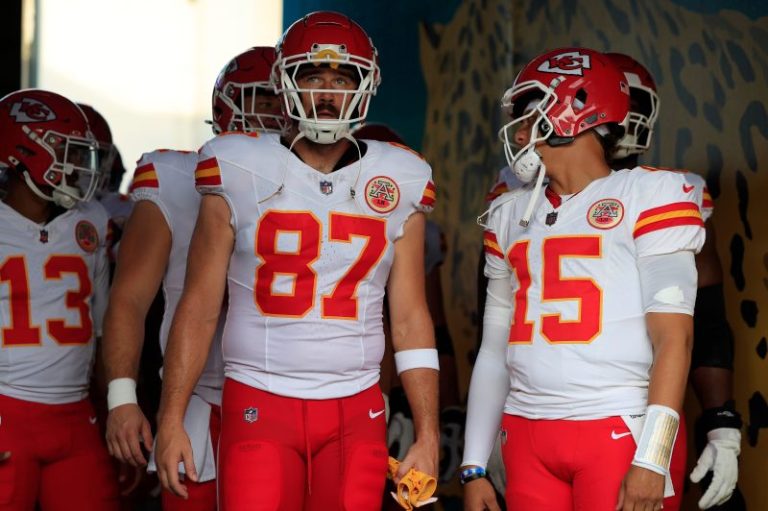
  • Travis Kelce plans to return to the Kansas City Chiefs for his 14th NFL season.
  • The Chiefs also signed Super Bowl MVP running back Kenneth Walker III to a three-year deal.
  • These moves suggest the Chiefs are reloading for another championship run rather than rebuilding.
  • The team still needs to address its secondary and offensive line, particularly at right tackle.

Travis Kelce’s NFL era isn’t over yet. Meanwhile, a new era is also apparently beginning for the Kansas City Chiefs, who also agreed on March 9 to sign Super Bowl MVP Kenneth Walker III away from the Seattle Seahawks.

Kelce, the likely first-ballot Hall of Fame tight end and – more recently – pop culture darling plans to return to the Chiefs for a 14th season, according to multiple reports. Kelce, who just completed a two-year, $34.3 million extension, didn’t quite reach the open free agency market – yet there also didn’t seem to be much doubt he’d play anywhere but K.C., the team that drafted him in 2013.

Meanwhile, Walker – who agreed to a three-year, $45 million deal – brings a new element to a franchise trying to prove, well, that it’s dynastic era isn’t yet over.

What does it all mean? In the spirit of Taylor Swift’s “Question…?,” let’s try to answer some questions here:

Are the Chiefs already back?

Some league observers had mused that Kansas City, which missed the playoffs last season for the first time since 2014 – and first time ever in QB Patrick Mahomes’ nine-year career – might be in the midst of a mini-rebuild, particularly following last week’s trade of CB Trent McDuffie to the Los Angeles Rams. Apparently not – let’s call it a reset or reload instead. No squad is luring a 36-year-old tight end back, nor signing a running back to major money, if it doesn’t expect to contend – and immediately. It remains to be seen if Kansas City can compete for a fourth Lombardi Trophy since the start of the 2019 season, especially following a 6-11 campaign that parked the Chiefs in third place in the AFC West, but they’re clearly not going to waste any time trying. A clear message sent to the locker room − just ask DT Chris Jones.

What do Travis Kelce, Kenneth Walker III contracts mean for Patrick Mahomes?

Maybe – hopefully? – better protection? Kelce, who’s led the Chiefs in receiving yards in six of the past seven seasons, has long been Mahomes’ preferred target – and seemed to enjoy something of a renaissance in 2025 after a lackluster 2024 season capped by a poor outing in Kansas City’s blowout loss in Super Bowl 59. With Kelce continuing to find space in the intermediate area of the field, and Walker providing a huge upgrade in a run game that was virtually non-existent last season – Mahomes had to contribute greatly to it, often running for his life on the way to a career-best 422 yards on the ground – there should be less pressure on the three-time Super Bowl MVP as he recovers from a torn ACL suffered last December. Walker, who’s eclipsed 1,000 rushing yards twice in his four-year career, could be the first to do so in K.C. since 2017. (Still, an upgrade at right tackle sure would be nice for Mahomes, too.)

What will the Chiefs do in the draft?

It’s something of a premature question with free agency a long way from petering out. (And the Chiefs were active Monday aside from striking deals with Kelce and Walker, also reaching an agreement with DL Khyiris Tonga on a three-year, $21 million deal − meaning some help for Jones, too). But a team that now owns three of the draft’s top 40 selections – including a pair in Round 1 following the McDuffie deal – still has plenty of work to do. Joining McDuffie on the Rams is Jaylen Watson, who started opposite him in K.C. last year – meaning the secondary will have to be a point of emphasis at some point. And right tackle also probably ought to be addressed following the release of Jawaan Taylor and struggles Jaylon Moore, who’s only under contract for one more year anyway, had last season. Mahomes was sacked 70 times over the past two seasons and was bagged on 6.3% of his dropbacks in 2025, a career worst. That needs to change for a rehabbing star who will be 31 in September.

What does Travis Kelce’s return to the Kansas City Chiefs mean for Taylor Swift?

So much insight to share here. So much.

More flights to Kansas City and more appearances at Arrowhead for the pop goddess.

No complications to the wedding guest list given Kelce won’t be falling in love with a whole new group of teammates and coaches.

Maybe still a chance Swift performs with her boo on Super Sunday – the Eras Tour did make a stop at SoFi Stadium, site of Super Bowl 61 – if she finally agrees to a long-anticipated Super Bowl halftime show. Our sources tell us … well, we have no sources here. (Try Melissa Ruggieri.)

This post appeared first on USA TODAY

The Bobby Hurley Era at Arizona State is in limbo.

There were multiple reports Monday that mentioned the Sun Devils and Hurley are expected to go their separate ways at the end of the season, which could be as soon as Tuesday afternoon in the Big 12 tournament, after 11 years in Tempe.

Hurley entered the 2025-26 season on the final year of his contract and already under heat after the Sun Devils finished with losing records in back-to-back seasons.

Hurley’s contract, which was obtained by the USA TODAY Sports Network, is set to run through June 30 with the Sun Devils. This means, even if the Sun Devils don’t elect to renew Hurley’s contract, there will be some money going to him if he is let go by the athletic department. Hurley is owed approximately $900,000 if he is fired.

The Sun Devils have only made it to the NCAA Tournament three times under Hurley, and have finished with a winning record in four seasons. Hurley, the former Duke guard and brother to Connecticut coach Dan Hurley, has only won 20 or more games four times and has not led the Sun Devils to a conference title.

Since the Sun Devils moved to the Big 12, they are 29-35 overall and 11-27 in Big 12 play. The best win for Arizona State under Hurley in the Big 12 came just last week against No. 16 Kansas and Darryn Peterson in Tempe. It marked just the 15th win over a ranked team in his 11-seasons, and the ninth over a top-15 ranked team.

Arizona State opens up Big 12 tournament play on Tuesday, March 10 at 12:30 p.m. ET against Baylor at T-Mobile Center in Kansas City, Missouri as the No. 12 seed in the bracket.

Bobby Hurley record at Arizona State

Here’s a season-by-season breakdown of how Arizona State has fared under Hurley:

  • 2015-16: 15-17 overall
  • 2016-17: 15-18 overall
  • 2017-18: 20-12 overall (NCAA Tournament)
  • 2018-19: 23-11 overall (NCAA Tournament)
  • 2019-20: 20-11 overall
  • 2021-22: 14-17 overall
  • 2022-23: 23-13 overall
  • 2023-24: 14-18 overall
  • 2024-25: 13-20 overall
  • 2025-26: 16-15 *

* Denotes season still in progress

The USA TODAY app gets you to the heart of the news — fastDownload for award-winning coverage, crosswords, audio storytelling, the eNewspaper and more.

This post appeared first on USA TODAY

In official terms, the league’s window for signings won’t truly begin until Wednesday. But noon on Monday ushered in the league’s negotiating period, in which other teams are allowed to contact the representation of pending unrestricted free agents and hammer out a deal.

The action cme together quickly, with news breaking on agreements for top players not long after the so-called legal tampering period began. And the movement didn’t end there, with more trades materializing after the likes of Maxx Crosby, Trent McDuffie, DJ Moore and David Montgomery were shipped off last week.

Here’s a look back at all of Monday’s notable action:

Panthers continue to remake defense with LB Devin Lloyd

The Carolina Panthers didn’t stop at adding edge rusher Jaelan Phillips to reimagine their defense.

Linebacker Devin Lloyd agreed to a three-year, $45 million deal with the team late Monday night, according to reports.

Lloyd is coming off a Pro Bowl campaign for the Jacksonville Jaguars in which he tied for second in the NFL with five interceptions.

In the middle of coordinator Ejiro Evero’s defense, he will be tasked with helping solidify the second level for a group that ranked last in ESPN’s run-stop win rate metric at 26%.

Steelers add bruising back Rico Dowdle

The Pittsburgh Steelers are rounding out a busy day by adding a forceful presence to their backfield.

The team is signing running back Rico Dowdle, according to multiple reports.

Dowdle enjoyed his second consecutive 1,000-yard rushing season in 2025 as a grinding ground threat for the Carolina Panthers.

In Pittsburgh, he should spell leading option Jaylen Warren in new coach Mike McCarthy’s attack.

Seahawks re-up speedy WR Rashid Shaheed

It’s only fitting that Rashid Shaheed would run it back with the Seattle Seahawks, given that’s what the speedy receiver is known for.

Shaheed is re-signing with the Seahawks on a three-year, $51 million deal that includes $34.7 million guaranteed, according to multiple reports.

After arriving in a midseason trade with the New Orleans Saints, Shaheed caught just 18 passes in 12 games including the postseason for Seattle. But he returned a punt and kick for scores, and defenses were forced to account for his field-streching speed.

Raiders continue adding to defense with Nakobe Dean, Quay Walker

While the massive payout to Tyler Linderbaum was the Las Vegas Raiders’ marquee move on Monday, the Silver and Black continue to reshape their defense with veteran additions.

The Raiders on Monday reached agreements with linebackers Nakobe Dean (three years, $36 million) and Quay Walker (three years, $40.5 million).

Both are poised to take over in the middle of new coordinator Rob Leonard’s 3-4 scheme. Former sarters Elandon Roberts and Devin White are both free agents.

Dean, 25, proved particularly disruptive as a blitzer for the Philadelphia Eagles, recording four sacks in 10 games last season. Walker had an uneven four-year run with the Green Backers, who opted to trade for former Pro Bowler Zaire Franklin over the weekend as a likely replacemen at linebacker.

The Raiders also added nickel corner Taron Johnson and defensive end Kwity Paye on Monday while re-signing cornerback Eric Stokes and defensive end Malcolm Koonce.

Broncos’ LB room comes into focus with Alex Singleton in, Dre Greenlaw out

The Denver Broncos’ linebacker group isn’t headed for a shake-up after all.

Alex Singleton is re-signing with the team on a two-year deal worth $15.5 million, according to multiple reports. Meanwhile, Dre Greenlaw is being released.

Singleton’s return, alongside with Justin Strnad gives Denver a sense of continuity at the second level of its defense.

Greenlaw’s time with the Broncos was short-lived after he played in just eight games in his lone season with the organization.

Falcons land QB Tua Tagovailoa

Tua Tagovailoa hasn’t been officially released yet, but the soon-to-be former Miami Dolphins quarterback already has found his next home.

The Atlanta Falcons are expected to sign Tagovailoa to a one-year deal for the veteran minimum, according to multiple reports.

Tagovailoa will not officially be released until the start of the new league year on Wednesday. But the Dolphins have already informed him of his fate, and the passer was able to quickly land on his feet with the Falcons.

Tagovailoa could challenge incumbent starter Michael Penix Jr., who is recovering from a torn anterior cruciate ligament and has yet to receive coach Kevin Stefanski’s full endorsement as his QB1.

‘Yeah, not big on giving out positions in February,’ Stefanski told local reporters at the NFL scouting combine. ‘I think you guys know how I feel about Michael, and I’m excited about his trajectory. I also know he’s focused on his rehab, which is the right thing to do.’

Steelers claim a cornerback in Jamel Dean

After taking care of the positional problem that loomed over their offense by trading for wide receiver Michael Pittman Jr., the Pittsburgh Steelers turned their focus to a key spot on the other side of the ball.

Cornerback Jamel Dean and the Steelers agreed to a three-year, $36.75 million deal, according to multiple reports.

Dean, 29, is coming off a season in which he recorded a career-high three interceptions and allowed the fewest yards per target (4.7) and second-lowest catch rate (43.1%) of any player with at least 50 targets, according to Next Gen Stats.

He slides into the starting role opposite Joey Porter Jr., which had been a stubborn spot for Pittsburgh after Darius Slay Jr. didn’t pan out last year.

Commanders pony up for pass rush with Odafe Oweh

So far, this year’s biggest and most surprising deals have been reserved for pass rushers.

That trend continued later Monday when the Washington Commanders reached a four-year, $100 million deal with Odafe Oweh that included $68 million guaranteed.

It’s a major payout for a player who only started four games last season. But Oweh led the Los Angeles Chargers in pressure (37) after being traded to the team in Week 6, according to Next Gen Stats.

Washington had been searching for ways to electrify a pass rush that didn’t generate much heat off the edge last season, though the team still could be on the market for a defensive end in the first round of the draft.

Packers moving on from Elgton Jenkins

The Green Bay Packers are going ahead with an expected shift at center.

The team is releasing two-time Pro Bowl selection Elgton Jenkins, according to multiple reports.

The Packers saved $19.5 million by parting ways with Jenkins, whose season was cut short in November when he suffered a fractured fibula.

On Sunday, the Packers re-signed Sean Rhyan, Jenkins’ replacement last season, to a three-year, $33 million deal.

Bengals get needed defensive help with Bryan Cook, Boye Mafe

The Cincinnati Bengals are patching up one of their biggest defensive vulnerabilities, while the Kansas City Chiefs continue to lose key figures in the secondary.

Safety Bryan Cook agreed to a three-year, $40.25 million deal, with the Bengals, according to multiple reports.

Cook’s addition shores up a Bengals defense that was repeatedly burned by tight ends in the pass game and trampled by running backs.

The Cincinnati native, who also starred for the University of Cincinnati after transferring from Howard, now gets the chance to make his mark on his hometown team.

Meanwhile, the Chiefs’ secondary has lost its third starter with starting cornerbacks Trent McDuffie and Jaylen Watson headed to the Rams.

The Bengals also added edge rusher Boye Mafe on a three-year deal, his agent Mike McCartney confirmed.

Mafe was stuck in the Seahawks’ deep rotation of pass rushers last season but still made his mark with a career-bes 13.2% pressure rate, according to Next Gen Stats.

In Cincinnati, he’ll shoulder a considerable load for a pass rush poised to lose former NFL sack king Trey Hendrickson as well as Joseph Ossai, who agreed to a deal Monday with the New York Jets.

Titans’ spending spree continues with John Franklin-Myers, Cordale Flott, Alontae Taylor

The Tennessee Titans continue to shell out big money at the start of free agency.

Defensive lineman John Franklin-Myers agreed to a three-year, $63 million deal with the team, according to multiple reports.

The former Denver Broncos standout notched a career-best 7½ sacks in 2025. With inside-outside versatility, he affords new coach Robert Saleh plenty of flexibility along a line that also added edge rusher Jermaine Johnson II.

The Titans also added former New York Giants cornerback Cor’Dale Flott on a three-year, $45 million deal and former New Orleans Saints cornerback Alontae Taylor on a three-year, $60 million contract.

Flott and Taylor help solidify one of the more unsettled areas on Saleh’s defense, with L’Jarius Sneed remaining a cut candidate.

Browns bulk up with Zion Johnson

The Cleveland Browns continue to spend big to overhaul their offensive line.

Offensive guard Zion Johnson agreed with the team to a three-year, $49.5 million contract that includes $32.4 million guaranteed, according to multiple reports.

Johnson is the second major addition to the Browns’ offensive front this offseason after the team also traded for right tackle Tytus Howard, who then struck a three-year, $63 million extension with the team.

With guards Wyatt Teller and Joel Bitonio as well as center Ethan Pocic all no longer under contract, the Browns could have four or five new starters up front.

Mike Evans leaves Bucs, joins 49ers

One of the NFL’s longest-tenured receivers is headed to a new setting.

Six-time Pro Bowl selection Mike Evans is leaving the Tampa Bay Buccaneers for the San Francisco 49ers, his agent, Deryk Gilmore, confirmed Monday. Per multiple reports, Evans has agreed to a three-year contract worth up to $60.4 million.

Gilmore wrote in a statement that the Buccaneers ‘presented a strong offer’ but said that Evans wanted to try something new after spending his entire 12-year career in Tampa.

‘In the end, this decision simply came down to Mike wanting a new challenge and a fresh opportunity while he still feels he has a great deal left to give the game,’ Gilmore wrote. ‘Tampa Bay will always be a special place for Mike Evans, and his respect and gratitude for the organization and its fans will never change.”

Evans will work opposite Ricky Pearsall in a San Francisco passing attack that could prove much more potent next season, so long as George Kittle returns from a torn Achilles and the team isn’t saddled with the same level of injury losses it faced in 2025.

Titans spend big at receiver with Wan’Dale Robinson

One of the more widely speculated deals in NFL free agency has come to fruition.

The Tennessee Titans reached an agreement with wide receiver Wan’Dale Robinson on a four-year, $78 million contract, according to multiple reports.

Robinson links back up with Brian Daboll, the former New York Giants coach and new Tennessee Titans offensive coordinator. Daboll coached Robinson for his entire career until being fired last November.

Coming off a career-best 1,014 receiving yards in 2025, Robinson figures to be a distinct run-after-catch weapon for No. 1 pick Cam Ward, who struggled at times as a rookie to compensate for blocking breakdowns and a lack of skill-position support.

Travis Etienne Jr. heads to Saints

The New Orleans Saints could be instituting a changing of the guard in their backfield.

Running back Travis Etienne Jr. agreed to a four-year, $52 million deal with the New Orleans Saints, according to multiple reports.

Etienne last season re-established himself as a dynamic all-purpose threat for the Jacksonville Jaguars, rushing for 1,107 yards for an offense rejuvenated by Liam Coen’s scheme.

The Saints had seemed due for a jolt to their ground game after ranking 31st in yards per carry. Though New Orleans has stuck by Alvin Kamara, the five-time Pro Bowl ball carrier turns 31 in July.

New Orleans also added offensive guard David Edwards on a four-year, $61 million contract.

Tyler Linderbaum hits jackpot with Raiders

The Las Vegas Raiders opened their free agency war chest and shelled out a record deal.

Center Tyler Linderbaum agreed to a three-year, $81 million deal with the team that includes $60 million, according to multiple reports, making him the highest-paid interior lineman in league history.

A three-time Pro Bowl selection, Linderbaum had been considered by many to be the biggest prize on the market, as he came in as the top unrestricted free agent on Nate Davis’ top 100 rankings.

Now, ahead of Fernando Mendoza’s expected arrival as the No. 1 pick, Linderbaum will be counted on to be the linchpin of a line that surrendered a league-worst 64 sacks last season – though a good number of those could be attributed to since-dispatched starting quarterback Geno Smith.

Bears secure a safety in Coby Bryant

The Chicago Bears are embracing some change in the secondary.

Safety Coby Bryant has agreed to a three-year, $40 million contract with the team, according to multiple reports.

Bryant, who was ranked as the No. 14 overall player on USA TODAY Sports’ free agent rankings, found his footing for the Seahawks in the last two years under coach Mike Macdonald, recording 13 passes and seven interceptions defensed in that span while establishing himself as a versatile coverage piece.

With both Jaquan Brisker and Kevin Byard hitting the open market, Chicago opted to retool at safety.

Bryan could be the first of several notable departures in the secondary for Seattle, which could also lose cornerbacks Riq Woolen.

Isaiah Likely teams back up with John Harbaugh on Giants

John Harbaugh is turning to a familiar figure to help Jaxson Dart and the New York Giants chart a new course.

Tight end Isaiah Likely is joining the team on a three-year, $40 million deal, according to multiple reports.

The move reunites Likely with Harbaugh, who was coach for the dynamic pass catcher’s four-year career with the Baltimore Ravens. Likely will be looking for a fresh start after posting personal lows in receptions (27), receiving yards (307) and touchdowns (one).

New York’s offense could provide him a big opportunity in the passing gam, however, with few established weapons for Dart outside of Malik Nabers, who is working his way back from a torn ACL and meniscus. Wan’Dale Robinson is a free agent and widely expected to depart.

Colts trade WR Michael Pittman Jr. to Steelers

Shortly after securing the future of their receiving corps by re-signing Alec Pierce, the Indianapolis Colts further clarified their outlook at the position by shipping off a former top target.

The Colts are trading Michael Pittman Jr. to the Pittsburgh Steelers as part of a deal involving a late-round pick swap, according to multiple reports.

Pittman will also sign a three-year, $59 million extension with the Steelers, per reports.

Indianapolis clears $24 million in cap space by moving on from Pittman, whose 784 yards last season were his fewest since his rookie season.

In Pittsburgh, Pittman should serve as a complement to top target DK Metcalf, working the intermediate area and middle of the field.

Dolphins snag their QB in Malik Willis

On the same day they bid farewell to the passer they once envisioned as their long-term answer at quarterback, the Miami Dolphins turned to a new figure behind center.

The Dolphins agreed to a three-year deal worth $67.5 million that includes $45 million guaranteed, according to muliple reports.

The move reunites general manager Jon-Eric Sullivan and Jeff Hafley with Willis, who showcased his immense potential in three starts for the Green Bay Packers over the last two years.

Sullivan spoke highly of Willis at the NFL scouting combine.

‘Very happy for Malik on a personal level, the situation that he’s put himself in,’ the GM said. ‘Malik’s a very, very good kid. It’s a testament to him and how he played and the opportunities that he got. As it pertains to the Miami Dolphins, listen, I think I’d be lying to you — any team that is potentially in a quarterback situation, a needy quarterback situation, if they tell you they’re not talking about Malik Willis, that would be a lie. But we’ve talked about a lot of people, a lot of free agents. Malik’s just one of them.’

Panthers make a big splash with Jaelan Phillips

The Carolina Panthers have made one of the boldest moves so far this offseason.

The team agreed to a edge rusher Jaelan Phillips to a four-year, $120 million deal that features $80 million guaranteed, according to multiple reports.

Still only 26, Phillips notched 63 quarterback pressures last season, when he was traded from the Miami Dolphins to the Philadelphia Eagles at midseason.

The Eagles had been trying to bring Phillips back, but the Panthers’ bid won out.

In Carolina, Phillips will serve as the game-changing pass rusher the team had lacked since trading away Brian Burns. The Panthers ranked 24th in pass rush win rate last season, when they counted heavily on rookies Nic Scourton and Princely Umanmielen.

Rams grab another ex-Chiefs CB in Jaylen Watson

The Los Angeles Rams are remaking their secondary by importing the Kansas City Chiefs’ starting cornerbacks.

After last week trading for Trent McDuffie and on Sunday handing him a record-setting extension, the Rams on Monday agreed to a three-year deal with fellow Chiefs standout Jaylen Watson.

At 6-2 and 197 pounds, Watson adds the physical presence against bulkier receivers that had been missing for Los Angeles last year.

With McDuffie and Watson joining a secondary that also features Quentin Lake, Kam Curl and Kamren Kichens, the Rams have transformed one of their biggest vulnerabilities into a potential point of strength.

Kansas City, meanwhile, faces major questions on the back end, with little beyond Kristian Fulton and Nohl Williams at corner. Either the No. 9 overall pick or the No. 29 pick could be used to bring aboard more help in coverage.

Chiefs land their big-ticket RB in Kenneth Walker III

The Super Bowl 60 MVP is heading to another former Lombardi Trophy winner.

Running back Kenneth Walker III agreed the Kansas City Chiefs on a three-year, $45 million deal, according to multiple reports.

Walker, who ran for 1,027 yards last season for the Seahawks and 135 yards against the New England Patriots, will be tasked with rejuvenating a ground attack that cratered last season. Kansas City ranked 25th in the NFL with 106.6 rushing yards per game. Explosive plays were particularly hard to come by, with the offense posting a league-worst three carries of 20-plus yards. Walker was tied for third in the NFL with 10 last year.

Walker becomes the fourth Super Bowl MVP to leave his former team for a new one after winning the award.

The Seahawks now have a sizable hole at running back, where backup Zach Charbonnet is facing an uncertain recovery timeline after suffering a torn ACL in the playoffs.

Raiders keep CB Eric Stokes

The Las Vegas Raiders can check off another box on their lengthy offseason to-do list.

Cornerback Eric Stokes is re-signing with the team on a three-year, $30 million deal, according to multiple reports.

Stokes, 27, had been the veteran presence on a secondary that featured several young corners in Kyu Blu Kelly, Decameron Richardson and Darien Porter. With Stokes back and the team trading with the Buffalo Bills for slot defender Taron Johnson, the Raiders further solidified their outlook on the back end.

Patriots get a pass rusher in Dre’Mont Jones

The New England Patriots missed out on a top free agent target in wide receiver Alec Pierce, but they added another piece at a critical area of need.

Edge rusher Dre’Mont Jones is joining the team on a three-year, $39 million deal, Jordan Schultz reported Monday.

Jones notched a career-high seven sacks last season, when he was traded from the Tennessee Titans to the Baltimore Ravens.

In New England, he’ll be counted on to help bolster a pass rush that had to drastically dial up its blitz rate late in the season to compensate for a lack of edge pressure. Outside linebacker K’Lavon Chaisson is a free agent after his breakout season.

Alec Pierce re-ups with Colts

It went down to the wire, but the Indianapolis Colts got a deal done with their top target.

Wide receiver Alec Pierce is set to return to the team on a four-year, $116 million extension, according to multiple reports.

Coming off his first 1,000-yard season and his second campaign leading the NFL in yards per catch, Pierce was viewed by many as the top receiver on the open market. He did not receive the franchise tag from Indianapolis, which instead issued the transition tag to Daniel Jones.

Now, however, the Colts have a key weapon back in the fold.

Trent Williams trade now a possibility?

Things could be reaching a boiling point between Trent Williams and the San Francisco 49ers.

The team is open to moving the 12-time Pro Bowl if his contract standoff can’t be resolved, NFL Media’s Ian Rapoport reported.

Williams will turn 38 in July but remains one of the league’s premier offensive tackles. If made available, he could be a captivating possibility for several contenders looking to upgrade the protection for their quarterback.

Travis Kelce headed back to Chiefs for 14th NFL season

Travis Kelce won’t be entertaining retirement or a change of scenery anytime soon.

The tight end is expected to re-sign with the Kansas City Chiefs for his 14th NFL season, NFL Media’s Ian Rapoport reported.

Kelce’s return adds an additional degree of comfort to an attack that will be looking to recapture its previous form after last season’s tumble to 6-11. Kelce already spoke of his fondness for Eric Bieniemy, who is returning as the team’s offensive coordinator.

Texans bring back DT Sheldon Rankins

With offensive line questions potentially shaping their offseason, the Houston Texans turned their focus to their other front ahead of NFL free agency.

The Texans are re-signing defensive tackle Sheldon Rankins to a two-year, $12 million contract, according to multiple reports.

Rankins started all 31 games for the Texans last season and had three sacks.

Packers finalizing trade to send Rashan Gary to Cowboys

The Green Bay Packers and Dallas Cowboys are once again partnering up for a notable trade. This time, however, the veteran at the center of the deal is headed to Dallas.

The Packers are finalizing a deal to send Rashan Gary to the Cowboys in exchange for a 2027 fourth-round draft pick, according to ESPN’s Adam Schefter.

Gary, 28, was a Pro Bowl selection in 2024 and recorded 7 ½ sacks last season. But he struggled to generate pressure down the stretch after Micah Parsons and Devonte Wyatt were lost for the season, with his pressure rate reaching a career-low 12.1%, according to Next Gen Stats.

In Dallas, he’ll be reunited with defensive tackle Kenny Clark on a defense seeking to establish a more formidable pass rush for new coordinator Christian Parker after the Parsons trade last August.

Green Bay, meanwhile, clears nearly $11 million in cap space.

Dolphins trade Minkah Fitzpatrick to Jets

Minkah Fitzpatrick is on the move once again, this time to another AFC East rival.

The Miami Dolphins agreed to send the safety to the New York Jets in exchange for the team’s 2026 seventh-round pick from the Los Angeles Chargers, according to ESPN’s Adam Schefter. The Jets will also sign Fitzpatrick to a three-year, $40 million contract.

Fitzpatrick, 29, joined the Dolphins last offseason as part of the Jalen Ramsey trade with the Pittsburgh Steelers.

In New York, he fills a notable void in a secondary that’s still reshuffling in the post-Sauce Gardner era.

He becomes the latest Dolphins castoff, joining Tua Tagovailoa, Bradley Chubb, Tyreek Hill and Alec Ingold, among others.

Jaguars keep CB Montaric Brown

The Jacksonville Jaguars are hanging on to one of the standouts of their opportunistic defense.

Montaric Brown is re-signing with the team on a three-year, $33 million contract, according to multiple reports.

Brown, a seventh-round pick out of Arkansas in 2022, rose to a starting role on the outside early in the year and delivered two interceptions and 12 passes defensed. He and Travis Hunter Jr. could be the top cover men for Jacksonville in 2026, with midseason trade acquisition Greg Newsome II ticketed for free agency.

Dolphins releasing QB Tua Tagovailoa

The Miami Dolphins’ new regime is officially enacting a new era behind center for the team.

The Dolphins are releasing quarterback Tua Tagovailoa with a post-June 1 designation at the start of the new league year on Wednesday, the team announced Monday.

‘As I shared with Tua, I have great respect for the person and player he is,’ new general manager Jon-Eric Sullivan said in a statement. ‘On behalf of the Miami Dolphins, I expressed our gratitude for his many contributions, both on the field and in the community, during his six seasons in Miami.’

The record dead-cap hit of $99.2 million will be spread out over two seasons, per reports, with $67.4 million hitting in 2026 and $31.8 million carried over to 2027. That tops the previous high of $85 million, set by the Denver Broncos in 2024 when they released quarterback Russell Wilson.

Sullivan said at the NFL scouting combine that the team had been keeping its options open on the passer.

‘We’ve had conversations with Tua and his representation,’ the GM said. ‘Everything’s on the table, including the potential of a trade. We don’t know which way that’s going to go. There’s a lot of different factors at play, a lot of conversations being had. … Tua, I thought, even though things didn’t go well at the end of the year, did some good things along the way. And it’s my job to infuse competition into that room along with every other room as we go down the road.’

More cornerback depth for Steelers

The Pittsburgh Steelers liked what they saw from Asante Samuel Jr. enough to sign up for another go-around.

Samuel on Monday agreed to a one-year, $4 million deal with the team, according to ESPN’s Jeremy Fowler.

Samuel signed to the Steelers in late November after taking an extended recovery from an April spinal fusion surgery. He started three games for Pittsburgh, collecting 10 tackles and one interception.

Texans keep G Ed Ingram before NFL free agency starts

The Houston Texans prevented one of their key pieces from hitting the open market.

Offensive guard Ed Ingram agreed to a three-year, $37.5 million deal in advance of the legal tampering period on Monday, according to NFL Media’s Ian Rapoport.

Ingram, 27, was traded from the Minnesota Vikings to the Texans last March in exchange for a sixth-round draft pick. He responded with a strong campaign and had come in at 55th on USA TODAY Sports’ top 100 free agent rankings.

Vikings the favorite for Kyler Murray?

J.J. McCarthy could be feeling some heat in short order.

With the Arizona Cardinals set to officially release Kyler Murray on Wednesday, NFL Media’s Tom Pelissero reported Sunday that the Minnesota Vikings had emerged as the front-runner to sign the veteran quarterback.

Vikings executive vice president of football operations Rob Brzezinski said in February that the team was ‘exploring all possibilities’ to improve quarterback play in 2026. McCarthy struggled in his first year at the helm, sparking questions about whether the team could forge on with the 2024 first-rounder.

Murray, 28, is set to receive $36.8 million in guarantees from Arizona in 2026, so he could be a one-year bargain for a team as he looks to revive his career.

Vikings re-up breakout LB Eric Wilson

At 31, Eric Wilson found his place in the NFL. Now, the linebacker is set to stick around with the Minnesota Vikings.

Wilson agreed to a three-year, $22.5 million contract with Minnesota that includes $12.5 million guaranteed, NFL Media’s Mike Garafolo reported on Sunday night.

Wilson had a breakout season for the Vikings in 2025, recording career highs with 6 ½ sacks and four forced fumbles. He’s the only linebacker since 2020 to have 40 or more quarterback pressures and 20 or more run stuffs, according to Next Gen Stats.

The move gives some degree of continuity for a Vikings defense in flux. The team is parting with defensive linemen Jonathan Allen and Javon Hargrave, while edge rusher Jonathan Greenard’s name has popped up in trade talks.

What time does NFL free agency start?

The NFL’s negotiating window – or legal tampering period – officially opens at noon ET on Monday, March 9. Teams are permitted to contact the agents of pending unrestricted free agents and reach agreements with them, though contracts can not become official until the start of the new league year at 4 p.m. ET on Wednesday, March 11. That is also the first time that trades can officially be processed.

What is the legal tampering period in NFL free agency?

The NFL’s legal tampering period precedes the official start of free agency on Wednesday. It also marks the window in which a majority of the deals are completed for big-name players.

From Monday through Wednesday, any news broken will come in the form of agreements rather than signings, as players can not officially reach new contracts until the start of the new league year.

One new wrinkle this year: Per NFL Media’s Tom Pelissero, ‘For the first time, clubs may conduct one video or phone call (maximum 1 hour) with up to five free agents, rather than communicating strictly through their agents as in past years.’

NFL free agency rankings: Top 100 players on the market

Franchise tags, extensions and trades have a way of thinning out the market. But there are still several big names on Nate Davis’ top 100 free agent rankings for USA TODAY Sports (we’ll exclude Dallas Cowboys wide receiver George Pickens, who received the non-exclusive franchise tag):

  • 1. Tyler Linderbaum, C, Baltimore Ravens
  • 2. Trey Hendrickson, DE, Cincinnati Bengals
  • 3. Jaelan Phillips, OLB/DE, Philadelphia Eagles

Take a spin through the entire list here.

Buyer beware: Who could be some of the riskiest free agents?

In NFL free agency, spending sprees almost inevitably produce some degree of buyer’s remorse.

And while dead-cap hits are no longer the source of immense shame they were in previous years, teams can still be weighed down by whiffing on a veteran or two.

Which players could fit the bill this year around? Our rundown of the riskiest free agents had several cornerbacks, a marquee left tackle and some notable second-level defenders.

This post appeared first on USA TODAY

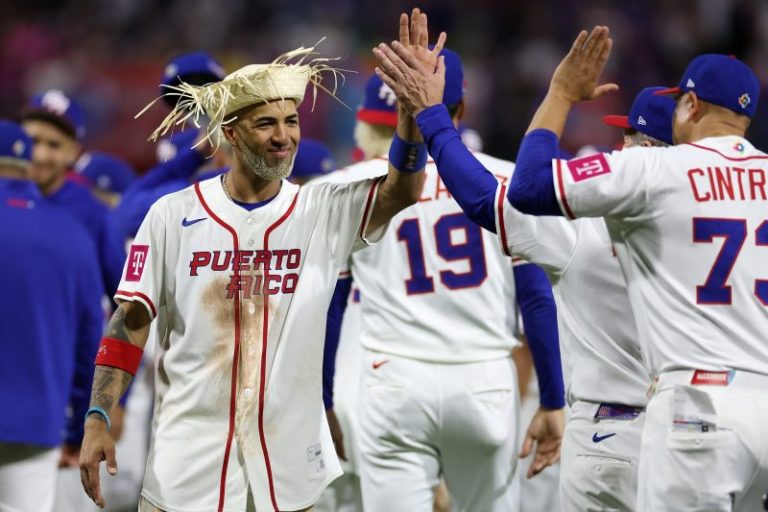
Puerto Rico has once again advanced to the quarterfinals of the World Baseball Classic. As if anything else should have been expected, even given the circumstances.

Stellar pitching and one big swing of the bat – Martín Maldonado’s three-run double in the bottom of the second inning – proved more than enough to subdue Cuba and register a 4-1 victory on March 9 to clinch Pool A and punch the Boricua’s ticket to Houston.

In front of an overflow partisan crowd of 20,000-plus at Estadio Hiram Bithorn, Puerto Rico held Cuba to just two hits and one unearned run. Yankees farmhand Elmer Rodríguez pitched three scoreless innings and a procession of four relievers – capped by All-Star closer Edwin Díaz – gave up just one hit and one unearned run.

Puerto Rico has advanced out of the group stage in all six World Baseball Classics, joining Japan in that exclusive circle. Cuba still has a shot to go forward for the sixth time as well, needing just a win over Canada – or a Puerto Rico win over the Canadians – to reach the quarterfinals.

The Puerto Ricans have no such worries; this night was a relative breeze after a 4-3, 10-inning win over Panama that required erasure of one-run deficits in the ninth and 10th before Darell Hernaiz’s walk-off home run incited bedlam.

On this night against Cuba, relievers Jovani Moran, Yacksel Rios, Fernando Cruz and Díaz pitched carefully and effectively to a veteran Cuban lineup, getting all the runs they needed when Maldonado, the 39-year-old team sage, turned on a slider down the third base line, steering it just fair to score three runs. Cleanup hitter Carlos Cortes added a fifth-inning sacrifice fly.

That was a plenty big enough cushion for Díaz, who set down Cuba in order on just 12 pitches after his signature Timmy Trumpet intro got the crowd predictably hype. The final strikeout set off a raucous celebration in San Juan’s signature stadium in this year that insurance problems decimated the roster before the event began.

Puerto Rico maintains 4-1 lead into bottom of eighth

We’ve reached the elite major league portion of Puerto Rico’s bullpen and it’s just as daunting as the rest of it. Yankees reliever Fernando Cruz recorded two strikeouts in the top of the eighth inning, providing a bridge to peerless closer Edwin Diaz as Puerto Rico maintains a 4-1 lead against Cuba.

Cruz’s second strikeout came courtesy of a two-strike pitch clock violation of Erisbuel Arruebarrena, providing an unexpected thrill for the crowd of 20,000-plus at Estadio Hiram Bithorn in San Juan.

Diaz will face the Nos. 6, 7 and 8 spots in Cuba’s order.

Puerto Rico needs six outs with 4-1 lead

Puerto Rico is getting closer and closer to a trip to Houston. The host squad in Pool A needs just six more outs to subdue Cuba, win the group and advance to the quarterfinals – and three of those outs figure to come courtesy of All-Star closer Edwin Díaz.

Puerto Rico has received four innings of one-hit relief from Jovani Moran and Yacksel Rios, with the lone run surrendered coming on an error following a throw from the outfield. And Díaz, the new Los Angeles Dodgers closer, is poised to punch the ticket.

Cuba gets on board, but Puerto Rico maintains 4-1 lead

Puerto Rico’s nearly perfect night of pitching was dashed in the top of the sixth, when reliever Yacksel Rios hit a batter and gave up an RBI double to Cuban slugger Alfredo Despaigne. But the veteran major league reliever still struck out three batters in the inning, including Omar Hernandez to end the threat, and Puerto Rico holds a 4-1 lead with just nine outs to get to win Pool A.

The Boricua extended their lead in the bottom of the fifth when Cuban reliever Josimar Cousin, battling a blister, gave up a double to Heliot Ramos and yielded a sacrifice fly to Carlos Cortes, giving Puerto Rico a 4-0 lead. Yet it’s still close – and getting late – at Estadio Hiram Bithorn.

Josimar Cousin keeps Cuba in it as Puerto Rico leads 3-0

Josimar Cousin, who reached Class AAA with the Chicago White Sox, has kept Cuba close in its battle against a major league-laden lineup from Puerto Rico. Cousin, a 6-3, 230-pound 28-year-old, inherited a bases-loaded, one-out situation in the second inning, got out of that jam and began a run of eight straight batters retired for Cuba as the game enters the fifth inning

Cousin pitched in the White Sox organization in 2023 and 2024 and spent last season in Mexico. On this night, he loomed large for Cuba. Puerto Rico still leads this winner-moves-on battle 3-0, but it’s still very much a game thanks to Cousin.

Elmer Rodríguez shows Yankee bosses his mettle for Puerto Rico

It didn’t seem like the best timing: Shortly before Puerto Rico took on Cuba, the Yankees announced right-hander Elmer Rodríguez was being optioned to minor league camp – just before he took the mound for his squad.

Oh, he probably had a heads-up about it, but Rodríguez nonetheless had a platform his fellow Yankee farmhands did not. And Rodríguez made the most of it, pitching three shutout innings, working around three walks and protecting Puerto Rico’s 3-0 lead.

The 22-year-old struck out three and in his biggest moment, induced a comebacker to start a 1-4-3 double play in the second inning, shortly after a leadoff walk. He also benefited from a nice play by Nolan Arenado – who ranged well into foul ground and threw out Yoan Moncada for the final out of the third. But Rodriguez looked unflappable, striking out three and displaying what appeared to be a relatively slow heartbeat, given the 20,000 or so partisans jammed into Estadio Bithorn..

And with that, perhaps he earned a longer look someday in Yankee camp.

Martín Maldonado clears bases, gives Puerto Rico 3-0 lead over Cuba

The oldest and perhaps wisest member of Team Puerto Rico gave them a massive edge in their showdown against Cuba. Martín Maldonado, the 39-year-old pressed into service after insurance denials kept several Puerto Ricans off the roster, smoked a first-pitch slider off Cuban starter Julio Robaina just past third baseman Yoan Moncada, clearing the bases and giving Puerto Rico a 3-0 lead through two innings.

The rally was keyed largely by MJ Melendez’s 10-pitch at-bat against Robaina, with Melendez finally drawing a full-count walk. Maldonado finished Robaina with one swing, enabling Darell Hernaiz, Emmanuel Rivera and Melendez to chug around the bases and stake Puerto Rico starter Elmer Rodríguez to a healthy lead.

Right-hander Luis Romero came on in relief for Cuba, walked the first two batters he faced but struck out Nolan Arenado and got Carlos Cortes on a pop fly to shortstop, leaving the bases loaded. Puerto Rico may rue that missed opportunity, but still cashed in nicely in batting around.

Cuba, Puerto Rico scoreless after first inning

Both starting pitchers allowed the leadoff batter to reach but then calmed down to post zeroes as Cuba-Puerto Rico completed the first inning. Puerto Rico starter Elmer Rodríguez issued a leadoff walk and fell behind Yoan Moncada 2-0, but Moncada swung at the next pitch and grounded into a fielder’s choice, short-circuting any threat. Puerto Rico leadoff man Willi Castro singled and, with one out, stole second but advanced no further against Cuban lefty Julio Robaina.

Cuba-Puerto Rico underway in San Juan after delay

First pitch came at 8:21 ET before a jam-packed house at Estadio Hiram Bithorn. Puerto Rico starter Elmer Rodríguez might have been a bit too amped up – his first six pitches to Cuban hitters were balls before inducing a fielder’s choice from Yoan Moncada.

Start time set for Puerto Rico-Cuba: 8:20 ET

Stubborn rain has finally moved out of the area of Estadio Hiram Bithorn, at least enough for officials to declare a first pitch time for Cuba and Puerto Rico: 8:20 p.m. ET, or about an hour and 15 minutes after the originally scheduled first pitch.

At last, certainty.

Rain delays start of Puerto Rico-Cuba

This highly-anticipated Caribbean matchup will have to wait just a bit longer. Rain in San Juan has delayed the start of Puerto Rico and Cuba, although the teams are in the dugout and the tarp expected to be pulled soon.

Estadio Hiram Bithorn is, alas, the lone WBC venue that is not climate-controlled.

Where to watch Puerto Rico vs Cuba baseball game

  • Time: 7 p.m. ET
  • TV channel: Fox Sports 1
  • Live stream: FoxSports.com // Fubo

Watch Puerto Rico vs Cuba live on Fubo

Puerto Rico, Cuba lineups, starting pitchers

Elmer Rodriguez, a 22-year-old right-hander in the New York Yankees organization, will start for Puerto Rico. Rodriguez reached Class AAA last season and has averaged 10.6 strikeouts per nine innings in his major league career. He’ll be opposed by Cuban lefty Julio Robaina, a 5-11 24-year-old and former Astros farmhand who pitched in independent ball in 2025.

The lineups for both teams:

Cuba lineup tonight against Puerto Rico:

  1. CF Roel Santos
  2. 3B Yoan Moncada
  3. 1B Ariel Martínez
  4. DH Alfredo Despaigne
  5. SS Erisbuel Arruebuena
  6. C Omar Hernández
  7. RF Yoelkis Guibert
  8. LF Leonel Moas
  9. 2B Yiddi Cappe

P: LHP Julio Robaina

Puerto Rico lineup tonight against Cuba:

  1. 2B Willi Castro
  2. CF Heliot Ramos
  3. 3B Nolan Arenado
  4. RF Carlos Cortes
  5. SS Darell Hernaiz
  6. LF Eddie Rosario
  7. 1B Emmanuel Rivera
  8. DH MJ Melendez
  9. C Martín Maldonado

SP: Elmer Rodriguez

Puerto Rico WBC roster

Pitchers: Raymond Burgos LHP, Fernando Cruz RHP, José De León RHP, Edwin Díaz RHP, José Espada RHP, Rico Garcia RHP, Jorge López RHP, Seth Lugo RHP, Jovani Morán LHP, Luis Quiñones RHP, Ángel Reyes RHP, Yacksel Ríos RHP, Eduardo Rivera LHP, Elmer Rodríguez RHP, Gabriel Rodríguez LHP, Ricardo Velez RHP

Catchers: Martín Maldonado, Christian Vázquez

Infielders: Nolan Arenado, Edwin Arroyo, Darell Hernáiz, Emmanuel Rivera, Luis Vázquez

Outfielders: Willi Castro, Carlos Cortes, Matthew Lugo, MJ Melendez, Heliot Ramos, Eddie Rosario, Bryan Torres

Cuba WBC roster

Pitchers: Frank Alvarez RHP, Emmanuel Chapman RHP, Josimar Cousin RHP, Naykel Cruz LHP, Daviel Hurtado LHP, Denny Larrondo RHP, Yoan López RHP, Raidel Martínez RHP, Randy Martinez LHP, Liván Moinelo LHP, Darien Núñez LHP, Julio Robaina LHP, Osiel Rodriguez RHP, Yariel Rodriguez RHP, Luis Romero Jr. RHP, Pedro Santos RHP

Catchers: Omar Hernandez, Andrys Pérez

Infielders: Erisbel Barbaro Arruebarruena, Yiddi Cappe, Ariel Martínez, Yoán Moncada, Malcom Nuñez, Alexei Ramírez, Alexander Vargas

Outfielders: Alfredo Despaigne, Yoelquis Guibert, Leonel Moa, Roel Santos, Yoel Yanqui

This post appeared first on USA TODAY

/NOT FOR DISTRIBUTION TO UNITED STATES NEWS WIRE SERVICES OR FOR DISSEMINATION IN THE UNITED STATES/

1911 Gold Corporation (‘1911 Gold’ or the ‘Company’) (TSXV: AUMB) (OTCQX: AUMBF) (FRA: 2KY) is pleased to announce that, further to the news release dated February 20, 2026, the Company has closed the initial drawdown of US$15 million (the ‘Tranche 1 Amount’) under the loan agreement dated February 19, 2026 (the ‘Loan Agreement’) with Auramet International, Inc. (‘Auramet’), which provides for a US$30 million secured credit facility (the ‘Credit Facility’). It is anticipated that the proceeds from the Credit Facility, including the Tranche 1 Amount, will be used to advance critical operational milestones at the True North Gold Project, specifically providing the capital required to purchase essential mining equipment, underground development at the True North mine, and the installation of the new crushing circuit at the mill.

The outstanding principal amount under the Credit Facility accrues interest at a rate of 12% per annum calculated and payable monthly in arrears on the last business day of each calendar month; provided, however, that no interest shall accrue on the Tranche 1 Amount for a period of six months following the closing date of the initial drawdown of the Tranche 1 Amount (the ‘Closing Date‘). The Tranche 1 Amount shall be amortized and repaid to Auramet in 12 equal monthly instalments of US$1.25 million commencing on the date that is 13 months following the Closing Date and ending on the date that is 24 months following the Closing Date (the ‘Maturity Date‘).

The obligations under the Loan Agreement are secured by a first-ranking security interest on all personal property of the Company and a continuing collateral mortgage against the Company’s True North Gold Project and Rice Lake exploration properties. The Loan Agreement includes terms and conditions customary for a transaction of this nature, including certain specified positive and negative covenants and mandatory prepayment terms.

Subject to the satisfaction of certain conditions precedent, the remaining US$15 million of the Credit Facility will be made available during the period commencing on the date that is 90 days following the Closing Date and ending on the date that is 180 days following the Closing Date.

In consideration for the arrangement of the Credit Facility, on the Closing Date, the Company paid Auramet an arrangement fee of US$1,050,000, representing 3.5% of the aggregate principal amount of the Credit Facility, which fee was satisfied by the issuance of 1,369,600 common shares in the capital of the Company (‘Common Shares‘) at a deemed price of C$1.05 per Common Share. Additionally, in consideration for the lending of the Tranche 1 Amount, on the Closing Date, the Company paid Auramet a drawdown fee of US$375,000, representing 2.5% of the Tranche 1 Amount, which fee was satisfied by the issuance of 489,142 Common Shares at a deemed price of C$1.05 per Common Share, and issued to Auramet 4,500,000 common share purchase warrants of the Company (the ‘Tranche 1 Warrants‘), with each Tranche 1 Warrant exercisable to purchase one Common Share at an exercise price equal to C$1.07 per Common Share, representing a 10% premium to the 5-day volume-weighted average price of the Common Shares on the TSXV for the five consecutive trading days ending on (and including) the date of the Loan Agreement, with such Tranche 1 Warrants expiring on the Maturity Date, subject to acceleration.

The Common Shares and the Tranche 1 Warrants issuable pursuant to the Loan Agreement and the Common Shares underlying the Tranche 1 Warrants are subject to a four-month statutory hold period under applicable Canadian securities laws, which will expire on July 10, 2026.

The securities issuable pursuant to the Loan Agreement have not been, and will not be, registered under the United States Securities Act of 1933, as amended (the ‘U.S. Securities Act‘), or any U.S. state securities laws, and may not be offered or sold in the United States or to, or for the account or benefit of, U.S. persons absent registration under the U.S. Securities Act and all applicable state securities laws or compliance with the requirements of an applicable exemption therefrom. This news release shall not constitute an offer to sell or the solicitation of an offer to buy in the United States, nor shall there be any sale of the securities in any state in which such offer, solicitation or sale would be unlawful.

About Auramet

Auramet is a private company established in 2004 by seasoned professionals who have assembled a global team of industry specialists with over 400 years combined industry experience. It is one of the largest physical precious metals merchants in the world and has provided over $1.5 billion in term financing facilities to date. Auramet offers a full range of services, including physical metals trading, metals merchant banking (including direct lending), and project finance advisory services to all participants in the precious metals supply chain.

About 1911 Gold Corporation

1911 Gold is an advanced gold explorer and developer focused on its 100%-owned True North Gold Project in the Archean Rice Lake Greenstone Belt in Manitoba, Canada. The Company controls a large, highly prospective ~62,000-hectare land package with numerous past-producing gold operations within trucking distance of the fully built and permitted True North mine and mill complex. 1911 Gold is positioning itself to restart operations in 2027 and offers a unique, near-term production opportunity with significant exploration upside. The strategy is to build a district-scale gold mining operation around a centralized, and readily expandable infrastructure to support a socially and environmentally responsible, long-term mining operation with little development risk and a growing mineral resource base.

1911 Gold’s True North complex and the exploration land package are located within and among the First Nation communities of the Hollow Water First Nation and the Black River First Nation. 1911 Gold looks forward to maintaining open, cooperative, and respectful communications with all of our local communities and stakeholders to foster mutually beneficial working relationships.

ON BEHALF OF THE BOARD OF DIRECTORS

Shaun Heinrichs
President and CEO

www.1911gold.com

CAUTIONARY STATEMENT REGARDING FORWARD-LOOKING INFORMATION

This news release contains forward-looking information or forward-looking statements within the meaning of applicable securities laws (collectively, ‘forward-looking statements‘). Often, but not always, forward-looking statements can be identified by the use of words and phrases such as ‘plans’, ‘expects’ or ‘does not expect’, ‘is expected’, ‘budget’, ‘scheduled’, ‘estimates’, ‘forecasts’, ‘intends’, ‘anticipates’ or ‘does not anticipate’, or ‘believes’, or that describe a ‘goal’, or variations of such words and phrases, or statements that certain actions, events or results ‘may’, ‘could’, ‘would’, ‘might’ or ‘will’ be taken, occur or be achieved.

All statements that address expectations or projections about the future, including, but not limited to, statements about the use of proceeds of the Credit Facility, including the Tranche 1 Amount, the timing and ability of the Company to satisfy the conditions precedent in respect of the drawdown of the remaining principal amount under the Credit Facility and the Company’s objectives, goals and future plans and strategies, are forward-looking statements. 

All forward-looking statements reflect the Company’s beliefs and assumptions based on information available at the time the statements were made. Actual results or events may differ from those predicted in these forward-looking statements. All of the Company’s forward-looking statements are qualified by the assumptions that are stated or inherent in such forward-looking statements, including the assumptions listed below. Although the Company believes that these assumptions are reasonable, this list is not exhaustive of factors that may affect any of the forward-looking statements.

Forward-looking statements involve known and unknown risks, future events, conditions, uncertainties and other factors which may cause the actual results, performance or achievements to be materially different from any future results, predictions, projections, forecasts, performance or achievements expressed or implied by the forward-looking statements, including, but not limited to, the Company’s inability to satisfy the conditions precedent in respect of the drawdown of the remaining principal amount under the Credit Facility and the Company’s inability to repay the Credit Facility or comply with the covenants set out in the Loan Agreement.

Although 1911 Gold has attempted to identify important factors that could cause actual actions, events or results to differ materially from those described in forward-looking statements, there may be other factors that cause actions, events or results not to be as anticipated, estimated or intended. There can be no assurance that forward-looking statements will prove to be accurate, as actual results and future events could differ materially from those anticipated in such statements. Accordingly, readers should not place undue reliance on forward-looking statements.

All forward-looking statements contained in this news release are given as of the date hereof. The Company disclaims any intention or obligation to update or revise any forward-looking statements whether as a result of new information, future events or otherwise, except in accordance with applicable securities laws.

Neither TSX Venture Exchange nor its Regulation Services Provider (as that term is defined in policies of the TSX Venture Exchange) accepts responsibility for the adequacy or accuracy of this release.

SOURCE 1911 Gold Corporation

View original content to download multimedia: http://www.newswire.ca/en/releases/archive/March2026/09/c6182.html

News Provided by Canada Newswire via QuoteMedia

This post appeared first on investingnews.com