Author

admin

Browsing

Here’s a quick recap of the crypto landscape for Friday (August 29) as of 12 noon (UTC).

Get the latest insights on Bitcoin, Ethereum and altcoins, along with a round-up of key cryptocurrency market news.

Bitcoin and Ethereum price update

Bitcoin (BTC) was priced at US$108,747, a 3.3 percent decrease in 24 hours. Its lowest valuation of the day was US$108,198 and its highest price on Friday was US$112,652.

Bitcoin price performance, August 29, 2025.

Chart via TradingView

Bitcoin’s slip below the US$110,000 threshold stoked fears of a broader crypto market correction on Friday as liquidations doubled, the Federal Reserve’s preferred inflation gauge showed persistent price pressures, and Bitcoin flashed a potential risk pattern. Analysts warned the token could be edging toward bear market territory.

Adding to volatility, a long-dormant Bitcoin whale that resurfaced this month—after buying US$2.5 billion in Ethereum—shifted another US$1.1 billion on Friday.

Ether (ETH) was priced at US$4,335.28, down by 3.2 percent over the past 24 hours. Its highest was US$4,511.09 and its lowest was US$4,279.96.

Altcoin price update

  • Solana (SOL) was priced at US$204.82, down by 2.4 percent. Its lowest valuation on Friday was US$203.74, and its highest valuation was US$217.66.
  • XRP was trading for US$2.94, down by 4.4 percent in the past 24 hours, and at its lowest valuation of the day. Its highest valuation on Wednesday was US$2.98.
  • SUI (Sui) was trading for US$3.30, down by 4.3 percent in the past 24 hours. Its lowest valuation of the day was US$3.29, and its highest level of the day was US$3.50.
  • Cardano (ADA) was priced at US$0.8201, down by 3.8 percent. Its lowest valuation for Friday was US$0.817, and its highest valuation was US$0.8618.

Today’s crypto news to know

Stablecoins cross US$283 billion threshold record

The stablecoin market reached a new milestone on Friday as total supply climbing to $282.8 billion, according to data from DefiLlama.

That marks a 128 percent increase since January, driven by stronger demand for dollar-pegged tokens and fresh regulatory clarity in the US.

The surge also follows passage of the Genius Act, which sets out federal guidelines for stablecoin issuers and has been billed as a growth catalyst within the sector.

Analysts say stablecoins now serve as a “distribution channel” for US dollars, powering cross-border payments and on-chain settlement systems.

Eric Trump hails US–China leadership in Bitcoin

Speaking at the BTC Asia conference in Hong Kong, Eric Trump praised China’s influence on the digital asset industry and said the US and Beijing were “leading the way” in shaping Bitcoin’s future.

He credited the Middle East as another fast-moving hub for crypto adoption, while stressing Bitcoin’s ability to unite people across borders and cultures.

The younger Trump also added that his father’s administration had accelerated digital asset policy faster in seven months than the prior decade managed. He described America as “winning the digital revolution” with support from Wall Street institutions, sovereign wealth funds, and retirement investors.

Asked whether Bitcoin would be on the agenda in an upcoming US–China trade meeting, he suggested broader topics would dominate but said he “would certainly love to talk about bitcoin.”

Trump-Linked miner American Bitcoin targets September Nasdaq listing

American Bitcoin, a mining company backed by Eric Trump and Donald Trump Jr., is preparing to list on Nasdaq in September following its merger with Gryphon Digital Mining, Reuters reported.

The firm is majority-owned by Hut 8, which controls 80 percent of the business, while the Trump brothers are expected to collectively hold about 19 percent. The company has already raised $220 million to expand its operations and accumulate Bitcoin, adding 215 BTC to its balance sheet as of June.

With Bitcoin trading near US$112,000 this week, that stash is valued at roughly US$24 million.

CEO Asher Genoot said American Bitcoin aims to become one of the largest US mining firms, with backing from high-profile investors including Gemini founders Tyler and Cameron Winklevoss.

Hut 8’s own stock has rallied 29 percent this year. If listed today, American Bitcoin would rank among the top 30 public companies holding Bitcoin in the US.

Securities Disclosure: I, Giann Liguid, hold no direct investment interest in any company mentioned in this article.

Securities Disclosure: I, Meagen Seatter, hold no direct investment interest in any company mentioned in this article.

This post appeared first on investingnews.com

Shares of Cameco (TSX:CCO,NYSE:CCJ) were on the rise after the uranium major announced it is reducing its annual production guidance due to expansion delays at the McArthur mine in Saskatchewan, Canada.

Instead of the projected 18 million pounds of U3O8 the company was aiming for from its McArthur River joint venture with Orano, the revised output tally reduces 2025’s production total to between 14 million and 15 million pounds.

In January, Cameco warned that delays at McArthur River — including slower-than-expected ground freezing, development setbacks and labor constraints — could affect its 2025 production outlook.

“We have determined that we are unable to fully mitigate the expected impact of the delayed development and slower than anticipated ground freezing in the first half of 2025,” Cameco’s statement notes.

Strong output from the Cigar Lake mine may help offset the McArthur River delays, the company said, adding that its diversified assets and risk management strategy position it to meet commitments and maintain long-term value.

In total, a strong performance at Cigar Lake could provide an additional 1 million pounds.

The uranium miner offered assurances that it will fulfill all delivery obligations with its customers.

“With favourable market prices for uranium today, we continue to have the option to buy in the spot market if it is advantageous for us to do so,” the company said, noting that it can source material through other means as well.

News of the shortfall sent shares of Cameco higher, with the company rising from C$105.91 on Thursday (August 28) to C$114 during after-trading hours. Values had pulled back to the C$105 range by midday on Friday (August 29).

Broader uranium market challenges

Cameco’s production cut is the second output reduction the sector has seen in as many weeks.

On August 22, Kazatomprom, Kazakhstan’s state-owned uranium producer, reported plans to lower output in 2026, saying that despite firm long-term prices, market conditions don’t support a return to full capacity.

In a corporate update, the company said its production will be about 10 percent lower compared to earlier targets, dropping from 32,777 metric tons of U3O8 to 29,697 metric tons. The reduction, equal to roughly 8 million pounds, or 5 percent of global supply, will largely stem from changes at its Budenovskoye joint venture.

After spiking to triple-digit levels unseen in more than a decade in early 2024, the spot price has been under pressure, falling as low as US$63.36 in March of this year. However, prices have steadily grown since then, reaching a second quarter high of US$79.01 on June 30 and currently holding at the US$75 mark. Kazatomprom notes that while the spot price remains volatile, the long-term uranium price has held steady at around US$80.

The company plans to exercise its option to operate within a 20 percent deviation of its 2026 subsoil use production levels, with formal guidance to come later. The sector major also also reported stable sulfuric acid supply for 2026, easing concerns after last year’s shortages forced a sharp output downgrade. However, its new acid plant won’t be ready until at least 2026, and higher mineral extraction taxes are expected to weigh on costs.

The updates came alongside half-year results showing that net profit was down 54 percent to 263.2 billion tenge (US$489.5 million), while revenue was off 6 percent at 660.2 billion tenge, largely on weaker sales volumes.

Despite lower near-term output, Kazatomprom said it remains committed to exploration in order to replenish its reserves and maintain its dominance as the world’s top uranium supplier.

Beyond market headwinds, the company highlighted Kazakhstan’s nuclear ambitions, with proposals for three domestic reactors that would require about 1.04 million pounds of uranium each year.

Uranium supply shortage unavoidable?

With tightening margins between uranium demand and global mine supply, these latest announcements are likely to impact market sentiment and could push prices higher.

Taking to X, formerly known as Twitter, Uranium Insider’s Justin Huhn posted an ominous message:

According to the World Nuclear Association, mine supply currently accounts for 90 percent of uranium demand, with the other 10 percent being fulfilled through secondary supply sources.

However, secondary supply is declining and mine supply has not grown to account for the discrepancy. This is likely to be further compounded by the addition of 70 new nuclear reactors that are currently in the construction phase.

Coupled with heightening energy demands from the artificial intelligence sector, analysts at FocusEconomics are projecting a higher spot price environment moving forward.

“The Consensus among our panelists is for uranium prices to remain well above the levels that prevailed in the 2010s for the rest of this decade, with prices forecast to hover between US$65 and US$80 per pound,” the firm wrote in an email. “That said, panelists don’t see a return to the highs of 2024, a period when the spot price likely got ahead of underlying market fundamentals due to investor exuberance.”

Securities Disclosure: I, Georgia Williams, hold no direct investment interest in any company mentioned in this article.

This post appeared first on investingnews.com

About Earthwise Minerals

Earthwise Minerals Corp. (CSE: WISE; FSE: 966) is a Canadian junior exploration company focused on advancing the Iron Range Gold Project in southeastern British Columbia near Creston, B.C. The Company holds an option to earn up to an 80% interest in the fully permitted project, which is road-accessible and situated within a prolific mineralized corridor. The property covers a 10 km x 32 km area along the Iron Range Fault System and hosts multiple high-grade gold showings and large-scale geophysical and geochemical anomalies.

For more information, visit www.earthwiseminerals.com.

EARTHWISE MINERALS CORP.,

ON BEHALF OF THE BOARD

‘Mark Luchinski’

Contact Information:

Mark Luchinski
Chief Executive Officer, Director
Telephone: (604) 506-6201
Email: luch@luchccorp.com

Forward Looking Statements

This news release includes statements that constitute ‘forward-looking information’ as defined under Canadian securities laws (‘forward-looking statements’) including, without limitation, statements respecting the Offering and the intended use of proceeds therefrom. Statements regarding future plans and objectives of the Company are forward looking statements that involve various degrees of risk. Forward-looking statements reflect management’s current views with respect to possible future events and conditions and, by their nature, are subject to known and unknown risks and uncertainties, both general and specific to the Company. Although the Company believes the expectations expressed in its forward-looking statements are reasonable, forward-looking statements are not guarantees of future performance, and actual outcomes may differ materially from those in forward-looking statements. Additional information regarding the various risks and uncertainties facing the Company are described in greater detail in the ‘Risk Factors’ section of the Company’s annual management’s discussion and analysis and other continuous disclosure documents filed with the Canadian securities regulatory authorities which are available at www.sedarplus.ca. The Company undertakes no obligation to update forward-looking information except as required by applicable law. The reader is cautioned not to place undue reliance on forward-looking statements.

For more information, please contact Mark Luchinski, Chief Executive Officer and Director, at luch@luchccorp.com or (604) 506-6201.

Source

This post appeared first on investingnews.com

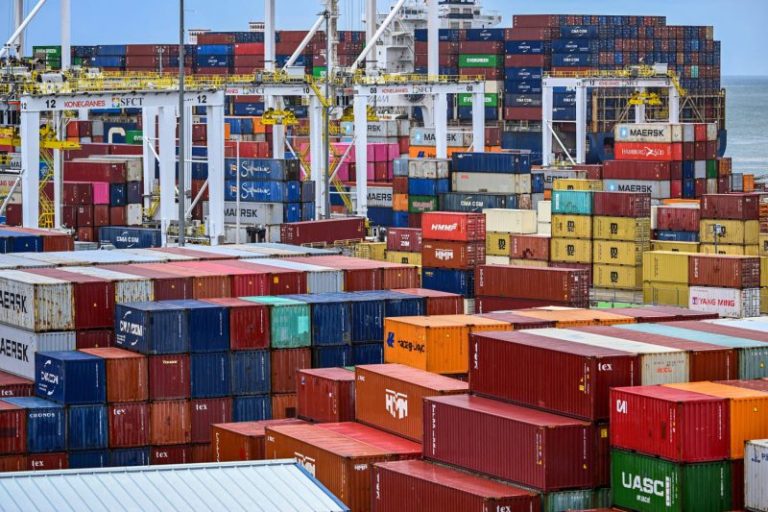
The de minimis exemption, an obscure trade law provision that has simultaneously fueled and eroded businesses across the globe, officially came to an end on Friday following an executive order by President Donald Trump.

For nearly a decade, shipments valued under $800 were allowed to enter the country virtually duty free and with less oversight. Now, those shipments from the likes of Tapestry, Lululemon and just about any other retailer with an online presence will be tariffed and processed in the same way that larger packages are handled.

In May, Trump ended the exemption for goods coming from China and Hong Kong, and on July 30 he expanded the rollback to all countries, calling it a “catastrophic loophole” that’s been used to evade tariffs and get “unsafe or below-market” products into the U.S.

The de minimis exemption had previously been slated to end in July 2027 as part of sweeping legislation passed by Congress, but Trump’s executive order eliminated the provision much sooner, giving businesses, customs officials and postal services less time to prepare.

“The ending of that under-$800-per-person-per-day rule, from a global perspective, is about to probably cause a bit of pandemonium,” said Lynlee Brown, a partner in the global trade division at accounting firm EY. “There’s a financial implication, there’s an operational implication, and then there’s pure compliance, right? Like, these have all been informal entries. No one’s really looked at them.”

Already, the sudden change has snarled supply chains from France to Singapore and led post offices across the world to temporarily suspend shipments to the U.S. so they can ensure their systems are updated and able to comply with the new regulations.

It’s forced businesses both large and small to rethink not just their supply chains, but their overall business models, because of the impact the change could have on their bottom lines — setting off a panic in board rooms across the country, logistics experts said.

“Obviously it’s a big change for operating models for companies, not just the Sheins and the Temus, but for companies that have historically had e-com and brick-and-mortar stores,” Brown said.

The change also means consumers, already are under pressure from persistent inflation and high interest rates, could now see even higher prices on a wide range of goods, from Colombian bathing suits to specialty ramen subscription boxes shipped straight from Japan.

The end of de minimis could cost U.S. consumers at least $10.9 billion, or $136 per family, according to a 2025 paper by Pablo Fajgelbaum and Amit Khandelwal for the National Bureau of Economic Research. The research found low-income and minority consumers would feeling the biggest impact as they rely more on the cheaper, imported purchases.

Popularized by Chinese e-tailers Shein and Temu, use of the de minimis exemption has exploded in the last decade, ballooning from 134 million shipments in 2015 to over 1.36 billion in 2024. Prior to the recent change to limit its use, U.S. Customs and Border Protection said it was processing over 4 million de minimis shipments into the country each day.

A 2023 House report found more than 60% of de minimis shipments in 2021 came from China, but because the packages require less information than larger containers, very little information is known about their origins and the types of goods they contain. That opacity is one of the key reasons why both former President Joe Biden and Trump sought to curtail or end the exemption.

Both administrations have said the exemption was overused and abused and that it’s made it difficult for CBP officials to target and block illegal or unsafe shipments coming into the U.S. because the packages aren’t subject to the same level of scrutiny as larger containers.

“We didn’t have any compliance information … on those shipments, and then that is where the danger of drugs and whatnot being in those shipments” comes in, said Irina Vaysfeld, a principal in KPMG’s trade and customs practice.

The Biden administration particularly focused on how the exemption allowed goods made with forced labor to make it into the country in violation of the Uyghur Forced Labor Protection Act. Meanwhile, Trump has said the exemption has been used to ship fentanyl and other synthetic opioids into the U.S. In a fact sheet published on July 30, the White House said 90% of all cargo seizures in fiscal 2024, including 98% of narcotics seizures and 97% of intellectual property rights seizures, originated as de minimis shipments.

Across the globe, it’s common for countries to allow low-value shipments to be imported duty-free as a means to streamline and facilitate global trade, but typically, it’s for packages valued around $200, not $800, said EY’s Brown.

Until 2016, the U.S.’s threshold for low-value shipments was also $200, but it was changed to $800 when Congress passed the Trade Facilitation and Trade Enforcement Act, which sought to benefit businesses, U.S. consumers and the overall U.S. economy, according to the Congressional Research Service. It said higher thresholds provide a “significant economic benefit” to both business and shoppers and thus, the overall economy.

While well-intentioned, the law came with unintended consequences, said Brown.

The “rise in value, from $200 to $800, just made it kind of like a free for all to say, OK, everything come in,” she said.

Eventually companies designed supply chains around the exemption: They set up bonded warehouses, where duties can be deferred prior to export, in places like Canada and Mexico and then imported goods in bulk to those regions before sending them across the border one by one, duty free, as customer orders rolled in, said Brown.

“Companies have really laid out their supply chain in a very specific way [around de minimis] and that’s really the crux of the issue,” said KPMG’s Vaysfeld. “The way that the supply chain has been laid out now may need to change.”

Until the rise of Shein and Temu, the de minimis exemption was rarely discussed in retail circles. Soon, the e-commerce behemoths began facing widespread criticism for their use of what many called a loophole.

In 2023, the House Select Committee on the Chinese Communist Party released a report on Shein and Temu and said the two companies were “likely responsible for more than 30 percent of all packages shipped to the United States daily under the de minimis provision, and likely nearly half of all de minimis shipments to the U.S. from China.”

The revelation sparked widespread consternation among retail executives, lobbyists and government officials who said the companies’ use of the exemption was unfair competition.

However, behind closed doors, companies large and small began mimicking the same model after realizing how it could reduce the steep costs that come along with selling goods online.

Direct-to-consumer companies that only have online presences have relied on it more heavily, so much so that their businesses may not work without it, said Vaysfeld.

“Some of the companies we’ve spoken to, they’ve modeled out, if the tariffs continue for one year, for two years, how does that impact their profitability, and they know how long they can last,” said Vaysfeld. “These aren’t the huge companies, right? These are the smaller companies … Depending on what country they’re sourcing from or where they’re manufacturing, it could really impact their profitability that they can’t stay in business for the long term.”

While smaller, digital companies are more exposed, “pretty much most companies that you can think of” had been using the exemption in some form before it ended, said Vaysfeld.

Take Coach and Kate Spade’s parent company Tapestry: About 13% to 14% of the company’s sales were previously covered under de minimis and will now be subject to a 30% tariff, according to an estimate by equity research firm Barclays.

On the company’s earnings call earlier this month, Chief Financial Officer Scott Roe said tariffs will hit its profits by a total of $160 million this year, including the impact of the end of de minimis. That amounts to about 2.3% of margin headwind, he said.

Shares of the company fell nearly 16% the day that Tapestry reported the profit hit.

In a statement, Roe said Tapestry used de minimis to help support its strong online business, adding it is a practice that “many companies with sophisticated supply chains have been doing for years.”

To help offset its termination, he said Tapestry is looking for ways to reduce costs and is leaning on its manufacturing footprint across many different countries.

Canadian retailer Lululemon is another company that uses de minimis, according to Wells Fargo. Last week, the bank cut its price target on the company’s stock from $225 to $205, citing the end of de minimis. In the note, Wells Fargo analyst Ike Boruchow said the equity research firm sees a potential 90 cent to $1.10 headwind to Lululemon’s earnings per share from the de minimis elimination.

Lululemon declined to comment, citing the company’s quiet period ahead of its reporting earnings.

The National Retail Federation, the industry’s largest trade organization, has not taken a position in favor of or against the exemption. It has members who both supported and opposed the policy, said Jonathan Gold, vice president of supply chain and customs policy at NRF.

Retailers of all sizes, including independent sellers with digital storefronts, have used the approach as “a convenient way to get products to the consumer” for less, Gold said.

“Their costs are going to go up and those costs could be passed on to the consumer at the end of the day,” Gold said.

The most acute impact of the end of de minimis is expected to be felt on online marketplaces where millions of small businesses sell goods like Etsy, eBay and Shopify and used de minimis to defray costs when sending online orders from other parts of the globe to the U.S.

American shoppers have gotten used to buying artwork, coffee mugs, T-shirts and other items from merchants outside the country without paying duties. With that tariff exemption gone, consumers could face higher costs and a more limited selection of items to choose from.

Etsy, eBay and some other retailers sought to defend the loophole prior to its removal, submitting public comments on proposed de minimis regulation by the CBP. An eBay public policy executive said the company was concerned that restrictions to de minimis “would impose significant burdens on American consumers and importers.”

Etsy’s head of public policy, Jeffrey Zubricki, said the artisan marketplace supports “smart U.S. de minimis reform,” but that it was wary of changes that could “disproportionately affect small American sellers.”

“These exemptions are a powerful tool that help small creators, artisans and makers participate in and navigate cross-border trade,” Zubricki wrote in a March letter to CBP.

An Etsy spokesperson declined to comment on the policy change. Etsy CFO Lanny Baker said at a Bernstein conference in May that transactions between U.S. buyers and European sellers comprise about 25% of the company’s gross merchandise sales.

EBay didn’t immediately provide a comment in response to a request from CNBC. The company warned in its latest earnings report that the end of de minimis outside of China could impact its guidance, though CEO Jamie Iannone told CNBC in July that he believes eBay is generally “well suited” to navigate the shifting trade environment.

Some eBay and Etsy sellers based in the UK, Canada and other countries are temporarily closing off their businesses to the U.S. as they work out a plan to navigate the higher tariffs. Blair Nadeau, who owns a Canadian bridal accessories company, was forced to take that step this week.

“This is devastating on so many levels and millions of small businesses worldwide are now having their careers, passions and livelihoods threatened,” Nadeau wrote in an Instagram post on Tuesday. “Just this past hour I have had to turn away two U.S. customers and it broke my heart.”

Nadeau sells her bespoke wedding veils, jewelry and hair adornments through her own website and on Etsy, where 70% of her customer base is in the U.S. The de minimis provision had been a “lifeline” for many Canadian businesses to get their products in the hands of American consumers, Nadeau said in an interview.

“This is really hitting me,” Nadeau said. “It’s like all of a sudden 70% of your salary has been removed overnight.”

In the absence of de minimis, online merchants are faced with either paying import charges upfront and potentially passing those costs on to shoppers through price hikes, or shipping products “delivery duty unpaid,” in which case it’s the customer’s responsibility to pay any duties upon arrival.

Alexandra Birchmore, an artist based in the Cotswolds region of England, said she expects to raise the price of her oil paintings on Etsy by 10% as a result of paying the duties upfront.

“At the moment every small business forum I am on is in chaos about this,” Birchmore said. “It looks to me to be a disaster where no one benefits.”

The disruption could end up being a boon for the likes of Amazon and Walmart. U.S. consumers may turn to major retailers if they face steeper prices elsewhere, as well as potential shipping delays due to backlogs or other issues at the border.

Amazon, in particular, has already proven resilient after the U.S. axed the de minimis provision for shipments from China and Hong Kong in May. The company’s sales increased 13% in the three-month period that ended June 30, compared with 10% growth in the prior quarter. Amazon’s unit sales grew 12%, an acceleration from the first quarter.

Both Amazon and Walmart have fulfillment operations in the U.S. that allow overseas businesses to ship items in bulk and store them in the companies’ warehouses before they’re dispatched to shoppers. Shein and Temu largely eschewed the model in the past in favor of the de minimis exception, but they’ve since moved to open more warehouses in the U.S. in the wake of rising tariffs.

Since the exemption ended on Chinese imports in May, the impact on Shein and Temu has been swift. Temu was forced to change its business model in the U.S. and stop shipping products to American consumers from Chinese factories.

The end of de minimis, as well as Trump’s new tariffs on Chinese imports, also forced Temu to raise prices, reign in its aggressive online advertising push and adjust which goods were available to American shoppers.

The Financial Times reported on Tuesday that Temu has resumed shipping goods to the U.S. from Chinese factories and will also increase its advertising spend following what it called a “truce” between Washington and Beijing.

Temu didn’t return a request for comment.

Meanwhile, Shein has been forced to raise prices and daily active users on both platforms in the U.S. have fallen since the de minimis loophole was closed, CNBC previously reported. Temu’s U.S. daily active users plunged 52% in May versus March, while Shein’s were down 25%, according to data shared with CNBC by market intelligence firm Sensor Tower.

This post appeared first on NBC NEWS

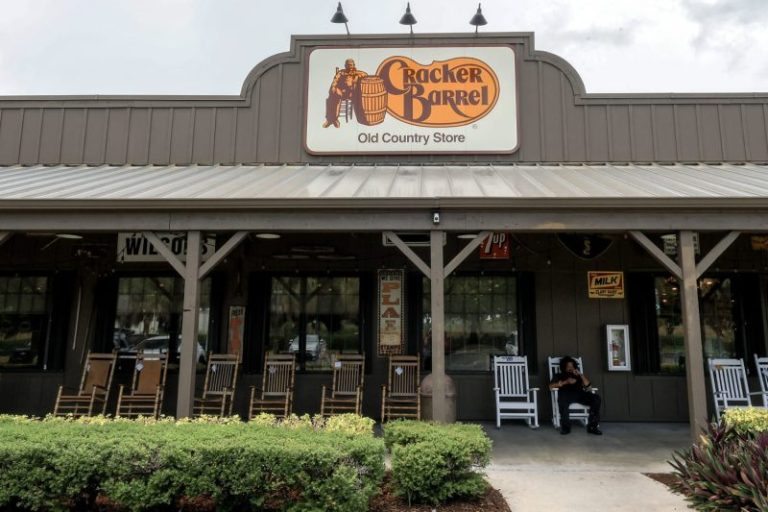
It’s been a busy week for Cracker Barrel Old Country Store’s marketing team.

The restaurant chain announced a rebrand and new logo last week, faced widespread criticism from social media users, including President Donald Trump, and proceeded to walk back its plan to change the logo.

In that span of time, the company lost and regained almost $100 million in market value, bringing it about back to where it started. The stock gained 8% on Wednesday.

The Cracker Barrel saga is just the latest example of a consumer-facing company making big branding decisions, then pulling back after alienating its customer base.

“It’s very tricky to be a brand for everyone today,” Carreen Winters, president of reputation at the global public relations firm MikeWorldWide, said in an interview. “Legacy brands are particularly tricky, because you have to figure out what is cherished and authentic from the old and marry it with the new.

“In Cracker Barrel’s case, they’re trying to attract a new, younger customer [which] is no longer sufficient,” she continued. “You need to actually think about all of your stakeholders and how they will react, respond, feel about what you’re doing or the direction you’re taking. And you need to be sure that what you’re doing is consistent with shared values.”

Rebranding failures are not a new phenomenon. One of the most famous marketing blunders of all time happened in 1985 when the Coca-Cola company introduced “New Coke” with a new formula. After a firestorm of outrage from its customers, the company returned to its classic formula a few months later.

But social media has made backlash from consumers faster and more widespread, meaning businesses are usually quicker to walk back on their branding failures.

In 2010, retailer Gap ditched its decades-old blue box logo for a more minimalist design. It faced intense backlash on social media through thousands of engagements and, within less than a week, the company said it was reverting to its original logo.

More recently in May, Warner Bros. Discovery announced its streaming platform would undergo another name change, after switching from HBO to HBO Max to Max and then back again to HBO Max.

Major rebrands don’t always go awry. For example, Kentucky Fried Chicken successfully rebranded to KFC in 1991. Its customers already used the acronym and the rebrand signified that the restaurant chain offers more than just fried chicken.

Dunkin’ Donuts also successfully underwent its name change to Dunkin’ in 2019. It did face some criticism from its loyal customers at the time, but Winters said today the “Dunkin’” name and branding are widely accepted over its original name.

“Dunkin’ rebranded in accordance with the behavior that the customer created,” she said. “It aligned with their strategy of being more than Donuts and really building their coffee business.”

She also mentioned IHOP as an example of a brand that has been able to freshen up its look and stay relevant in culture. She said IHOP’s change has been an “evolution, not a revolution.”

Beth LaGuardia Cooper, chief marketing officer at Advantage, The Authority Company, added during an interview that Starbucks had subtle changes to its logo over time, which allowed it to hold the base of its identity close.

While some social media users disliked Cracker Barrel’s new branding simply because they said it lacked substance and was too “sterile” or “soulless,” others, especially conservatives, claimed the new logo leaned into “wokeness” and diversity efforts.

Cracker Barrel is widely considered a classic American restaurant chain. It began in Tennessee in 1969 and its branding evokes Southern charm and nostalgia for its consumer base.

Eric Schiffer, chairman of the firm Reputation Management Consultants, said the new branding, without the iconic “Uncle Herschel” figure, suggested to conservatives that having a white man featured on the logo was wrong or politically incorrect.

He said that pushback represents a larger trend where conservatives are feeling under attack by diversity, equity and inclusion efforts.

“I think the perspective of conservatives is, don’t ruin Cracker Barrel with the Bud Light meets Jaguar marketing playbook,” said Schiffer, adding that those brands “attempted to disrupt positively and what they did was they nuked brand sentiment and shareholder confidence.”

In November, Tata Motors-owned Jaguar Land Rover announced a rebrand that removed its “leaper” big cat imagery from its logo and changed the brand’s font. Its new promotional materials included brightly dressed models, but no cars. The brand faced significant pushback, including tens of thousands of responses on social media.

Elon Musk criticized the company on X at the time, asking Jaguar’s official account: “Do you sell cars?”

Earlier this month, Trump piped in with his insults, calling Jaguar’s ad campaign “stupid” and “seriously WOKE.”

The Telegraph reported in May that Jaguar was searching for a new advertising agency after the public backlash.

Similarly, Anheuser-Busch InBev’s Bud Light faced heavy criticism from conservatives in 2023 after a collaboration between the beer brand and social influencer Dylan Mulvaney, who is transgender.

“If you’re trying to be a tough, male-focused, football fan-oriented beer, the last thing you want to do is put the wrong spokesperson in front of the brand,” Schiffer said. “It will turn off that audience and it allows competitors to capture that market share.”

“The throughline in all of this is, don’t rip apart and disrespect audiences that brought you to the dance,” Schiffer said. “Find a way, if you’re going to want to expand, do it in a way that doesn’t cut at the core of what the brand stands for — and in the process, create cognitive dissonance and blow up market cap.”

Branding experts told CNBC that at the end of the day, people are talking about Cracker Barrel, which is a win for the company by itself.

“Everybody loves a comeback in America,” LaGuardia Cooper said. “So I would root for them to make this happen, make something good out of it.”

This post appeared first on NBC NEWS

  • Micah Parsons’s trade to the Green Bay Packers and subsequent extension made him the highest-paid non-quarterback in NFL history.
  • The top 10 highest-paid defensive players by average annual value and total contract value include Parsons, T.J. Watt, and Myles Garrett.

The commonly held belief is that defense wins championships.

For some of the NFL’s top defenders, they are just now starting to get paid that way.

While quarterbacks broke $50 million in terms of average annual value (AAV) years ago, defensive players are now just getting into the $40 million range and moving up the charts.

This offseason has been particularly lucrative for those eyeing new contracts. Since the end of Super Bowl 59, Myles Garrett and Maxx Crosby each broke the record for the highest-paid non-quarterbacks in league history. Danielle Hunter also etched his name onto the list, checking in between those two. Then T.J. Watt managed to pass them all.

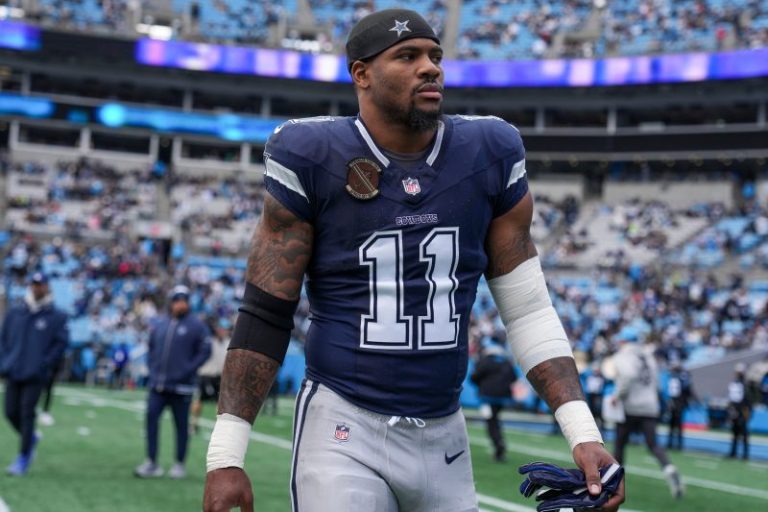
Now Micah Parsons is set to join the party amongst the NFL’s highest-paid. The Cowboys traded Parsons to the Green Bay Packers, and the star pass rusher agreed to a historic extension with his new team, a deal that makes him the new highest-paid non-quarterback in NFL history.

It might not come with the flash or notoriety that a quarterback, running back and receiver might get, but playing defense is still honest work. And hard work at that.

In a world where rule changes have made life difficult for the defense, the best have still managed to make their presence felt and the prices will only grow from here.

Highest-paid NFL defensive players

Here’s a look at the top-10 highest-paid defensive players in terms of AAV and total contract value, according to Spotrac.

AAV

  1. Micah Parsons, Dallas Cowboys: $48 million
  2. T.J. Watt, Pittsburgh Steelers: $41 million
  3. Myles Garrett, Cleveland Browns: $40 million
  4. Danielle Hunter, Houston Texans: $35.6 million
  5. Maxx Crosby, Las Vegas Raiders: $35.5. million
  6. Nick Bosa, San Francisco 49ers: $34 million
  7. Chris Jones, Kansas City Chiefs: $31.75 million
  8. Sauce Gardner, New York Jets: $30.1 million
  9. Derek Stingley Jr., Houston Texans: $30 million
  10. Josh Hines-Allen, Jacksonville Jaguars: $28.25 million

Total contract value

  1. Micah Parsons, Dallas Cowboys: $188 million
  2. Nick Bosa, San Francisco 49ers: $170 million
  3. Myles Garrett, Cleveland Browns: $160 million
  4. Chris Jones, Kansas City Chiefs: $158.75 million
  5. Joshua Hines-Allen, Jacksonville Jaguars: $141.25 million
  6. Brian Burns, New York Giants: $141 million
  7. T.J. Watt, Pittsburgh Steelers: $123 million
  8. Sauce Gardner, New York Jets: $120.4 million
  9. Maxx Crosby, Las Vegas Raiders: $106.5 million
  10. Milton Williams, New England Patriots: $104 million
This post appeared first on USA TODAY

NEW YORK – The problems with Coco Gauff’s serve have been well-documented, with one of the most basic maneuvers in tennis costing the two-time Grand Slam champion matches.

But Gauff, who at times was emotional, persevered once again on Thursday night, in front of a packed crowd at Arthur Ashe Stadium. She can put those concerns away for at least one more day, advancing with an error-filled 7-6 (7-5), 6-2 second-round victory over unseeded Donna Vekic of Croatia.

Gauff moves on to play in the third round against Poland’s Magdalena Fręch.

Gauff, the No. 3 seed and 2023 US Open champion, had eight double faults and 18 unforced errors, and managed to convert 67% of her first serves in play.

Gauff got off to a rocky start and was broken on opening serve, which ended in a double fault. She found herself down two games before battling back, breaking Vekic, who had her own issues with her serve, double-faulting three times in the third game alone.

Vekic, a 2024 Paris Olympics silver medalist, had 10 double faults and 35 unforced errors (mostly balls hit into the net), and received treatment on her right arm from the medical staff. She wasted an opportunity serving for the first set when she was immediately broken, sending the set to a tiebreak, where Gauff’s fewer mistakes were the difference.

Gauff knows she hasn’t played her best during the first two rounds and needed nearly three hours to beat her first-round opponent, Australian Ajla Tomljanović 6-4, 6-7 (2-7), 7-5, double-faulting 10 times during that match.

Coco Gauff vs. Donna Vekic result, highlights

Gauff defeated Vekic 7-6 (7-5), 6-2

Gauff takes first set in tiebreak

After receiving treatment on her arm, Vekic served for the first set but was immediately broken, sending the first set to a tiebreak. Neither player got command during the tiebreak, going back and forth with mostly unforced errors, before Gauff settled the issue with a forehand winner and an error by Vekic to take the set 7-6 (5).

Vekic gets medical treatment

Vekic is receiving treatment on her right arm from the medical staff and is set to serve for the first set, which has been poorly played with dozens of unforced errors and double faults.

Vekic struggling with her serve

Vekic has already double-faulted six times in the first set, including three times in the third game. Gauff failed to take advantage at times and after taking four games in a row after being down 0-2, Vekic has rallied to even up the match.

Gauff down early

Gauff’s serve betrayed her to start the match as she was broken, double-faulting to give Vekic the first game. She was blitzed in the second game and will have to dig out of a hole to get back in the match.

Coco Gauff and Donna Vekic enter stadium court

Expecting a packed house at Arthur Ashe Stadium as Gauff is introduced to loud applause. Gauff’s serve has been the subject of her game lately, so it will be interesting if she can get off to a good start tonight. Vekic, a 29-year-old from Croatia, is ranked No. 49 in the world and is expected to play aggressively from the start.

What time is Coco Gauff vs. Donna Vekic?

Coco Gauff will face off against Donna Vekic in the second-round of the 2025 US Open on Thursday at 7 p.m. ET on Arthur Ashe Stadium at the USTA Billie Jean King National Tennis Center.

Watch Coco Gauff at the US Open on Fubo

How to watch Coco Gauff vs. Donna Vekic: US Open TV channel, stream

  • Time: 7 p.m. ET
  • Location: USTA Billie Jean King National Tennis Center (New York)
  • TV: ESPN
  • Streaming: ESPN+, Fubo

The USA TODAY app gets you to the heart of the news — fast. Download for award-winning coverage, crosswords, audio storytelling, the eNewspaper and more.

This post appeared first on USA TODAY

  • The Dallas Cowboys traded star edge rusher Micah Parsons to the Green Bay Packers.
  • Cowboys owner Jerry Jones has a long and complex history of trades, some successful and others not.

The Dallas Cowboys just traded edge rusher Micah Parsons to the Green Bay Packers. Done deal. Official.

It’s only the latest chapter in the ups and downs of Cowboys owner/general manager Jerry Jones’ trade history.

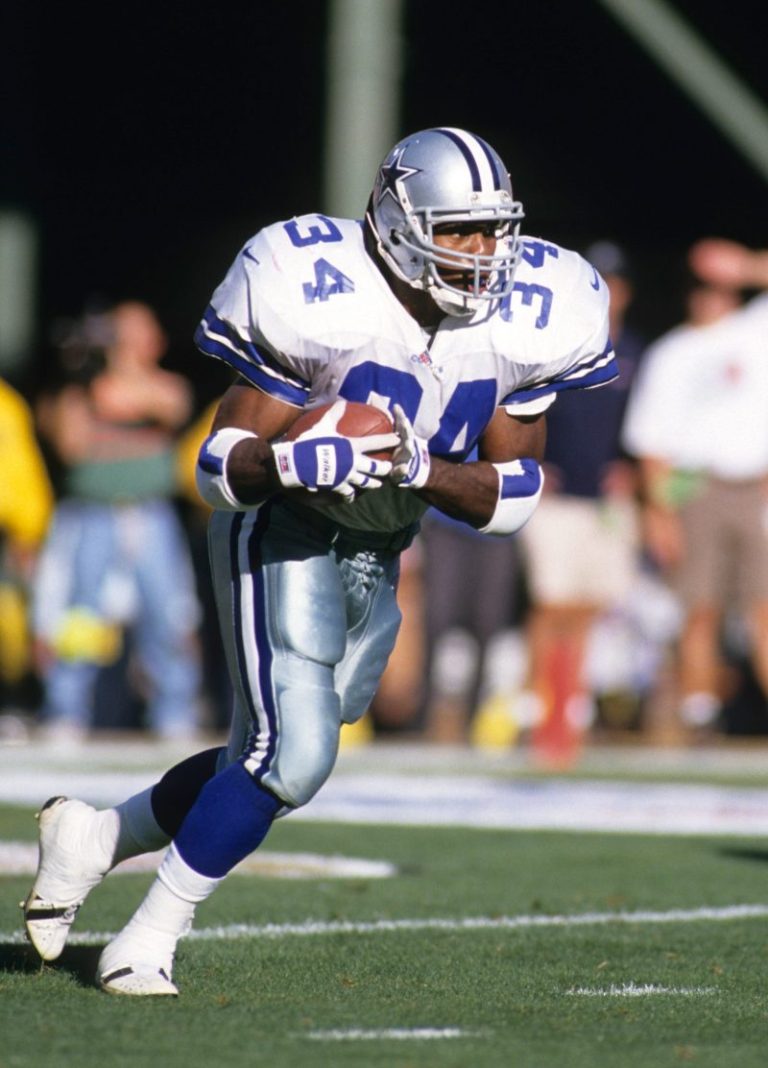
Early in Jones’ tenure as team owner, which began in 1989, his savvy moves as the head of the team’s personnel decisions helped construct a powerhouse. The Cowboys won three Super Bowls in four years, all of which were within the first seven years of Jones’ ownership.

Since the team’s last title in the 1995 season, Dallas has not returned to a conference championship game, let alone a Super Bowl.

USA TODAY Sports examined some of the most notable moves in Jones’ trade history – both good and bad – in the wake of his decision to send Parsons to the Packers.

Here’s what to know:

Jerry Jones trade history

1989: The Herschel Walker Trade

  • Cowboys received:
    • LB Jesse Solomon
    • LB David Howard
    • CB Issiac Holt
    • DE Alex Stewart
    • Vikings’ first-, second- and sixth-round picks in 1990
    • Vikings’ first- and second-round picks in 1991 (conditional on cutting Solomon and Howard)
    • Vikings’ first-, second- and third-round picks in 1992 (conditional on cutting Holt and Stewart)
  • Vikings received:
    • RB Herschel Walker
    • Cowboys’ third- and 10th-round picks in 1990
    • Chargers’ fifth-round pick in 1990
    • Cowboys’ third-round pick in 1991
  • Chargers received:
    • RB Darrin Nelson

To date, this trade is considered the single most lopsided trade in NFL history.

Minnesota hoped Dallas would hold onto the five players it traded after the Cowboys started the season 0-4. Then-head coach Jimmy Johnson had other ideas. He quickly moved to dump all four of the players who reported to Dallas – Nelson did not, hence the Chargers’ involvement in the trade – to recoup the Vikings’ draft picks.

The Cowboys went on to use the extra draft capital they acquired to make aggressive deals in ensuing drafts, trading up and landing players who became key contributors to future title-winning teams.

1990: Up to 17th overall pick in the NFL draft (Emmitt Smith)

  • Cowboys received: No. 17 overall pick in 1990 NFL Draft
  • Steelers received: No. 21 (TE Eric Green), No. 81 (DT Craig Veasey) overall picks in 1990 NFL Draft

The No. 21 overall pick in the 1990 draft was one of the first-round picks Minnesota had traded to Dallas in the Walker trade. The Cowboys went on to use it in a package to trade up four spots and draft Smith, the future Hall of Fame running back who helped the Cowboys win their three Super Bowls.

Smith won an NFL MVP and Super Bowl MVP after the 1993 season. Green played five seasons with the Steelers, making two Pro Bowls with the team. Veasey played two years for Pittsburgh.

1992: Charles Haley trade

  • Cowboys received: DE Charles Haley
  • 49ers received: 1993 second-round pick, 1994 third-round pick

Haley began his career in San Francisco, where he led the 49ers in sacks for six straight years and won two Super Bowls. But by 1992, Haley had butted heads with too many people in the San Francisco locker room, including legendary wide receiver Jerry Rice – according to former teammate Dexter Carter – and head coach George Seifert.

It led to the Niners trading away the then-three-time Pro Bowler to their conference rival. Haley went on to play five years in Dallas, recording 172 tackles and 34 sacks, and helping the Cowboys win three Super Bowls. He was enshrined in the Pro Football Hall of Fame as a member of the class of 2015.

1992: Thomas Everett

  • Cowboys received: S Thomas Everett
  • Steelers received: 1993 fifth-round pick

Everett missed the first two games of the 1992 season while – ironically – holding out for a contract. Jones took advantage of the holdout by sending a fifth-rounder to Pittsburgh for the standout safety – 315 tackles, 16 interceptions and four forced fumbles in his first five years with the Steelers.

Everett went on to play two seasons for the Cowboys. He recorded two interceptions in the team’s Super Bowl 27 victory over the Buffalo Bills, and in 1993, he made his first and only career Pro Bowl. Everett also recorded an interception in the Cowboys’ NFC championship game victory over the 49ers that year.

2000: Joey Galloway

  • Cowboys received: WR Joey Galloway
  • Seahawks received: 2000 first-round pick, 2001 first-round pick

One of the biggest stumbles in Jones’ history as a general manager came at the turn of the century. Looking to replace a retiring Michael Irvin at wide receiver, Jones sent two first-round picks to Seattle for Galloway.

Galloway had tallied more than 1,000 yards in three of his first four seasons but missed all but eight games in his fifth year thanks to – once again, ironically – a contract holdout.

The wideout never reached nearly the same heights in his four years in Dallas. He tore his ACL in his first game with the Cowboys and only had one season with more than 900 yards. Seattle, meanwhile, used the No. 19 overall in the 2000 draft it acquired from Dallas to select running back Shaun Alexander, who won an MVP five years later.

2008: Roy Williams

  • Cowboys received: WR Roy Williams, 2010 seventh-round pick
  • Lions received: 2009 first-, third- and sixth-round picks

A second notable fumbled trade by Jones happened a bit later in the decade.

Williams was a trade deadline acquisition by the Cowboys in 2008. Jones worked quickly to also sign him to a five-year extension to keep him in Dallas through the 2014 season before he had even played a snap with his second team.

Williams failed to record more than 600 yards in a single season during his two and a half years in Dallas, though he did score 13 touchdowns for the Cowboys. Jones released him before the 2011 season, after Williams had played just one year of his extension.

2018: Amari Cooper

  • Cowboys received: WR Amari Cooper
  • Raiders received: 2019 first-round pick

Ten years later, Jones made another trade deadline move that sent away a first-round pick for a wide receiver. This one aged a little better than his previous two first-round-for-wide-receiver trades.

Cooper was Jones’ solution to replace Dez Bryant, whom the team had released ahead of the 2018 season after eight years in Dallas. The Cowboys went 7-2 down the stretch after the Cooper acquisition and finished the year 10-6, enough to win the NFC East.

In his first full year with the Cowboys, Cooper set career-high marks in yards (1,189) and touchdowns (8) en route to his fourth career Pro Bowl nod. However, Dallas finished 8-8 and missed the playoffs. Cooper played two more years in Dallas, recording 1,979 more yards and 13 more touchdowns before conceding the lead receiver role to CeeDee Lamb in 2021 and making his way to the Browns via trade before 2022.

Despite Cooper’s solid production with Dallas, the team only made the playoffs twice – in his first and last seasons – and went 1-2 in the postseason.

2025: George Pickens

  • Cowboys received: WR George Pickens, 2027 sixth-round pick
  • Steelers received: 2026 third-round pick, 2027 fifth-round pick

It’s unclear as of yet how this trade will age for Pickens and the Cowboys.

What is known is that Jones did not give up a first-round pick in this trade to acquire another team’s leading receiver. Pickens will join Lamb in a Dallas receivers room that has lacked depth behind their lead wideout since Cooper’s departure.

The former Steeler is coming off a 900-yard, three-touchdown outing in his third and final season in Pittsburgh, a notable drop from the 1,140 yards and five scores Pickens had in 2023.

2025: Micah Parsons

  • Cowboys received: 2026 first-round pick, 2027 first-round pick, DT Kenny Clark
  • Packers received: Micah Parsons

Like with Pickens, it’s too early to tell how this one will age for Jones.

It’s the second big trade on this list that features Jones and Dallas trading away a player, with the other being the Walker trade to Minnesota.

Parsons is 26, a year younger than Walker was when he was traded, and had been selected to a Pro Bowl in each of his first four seasons. He was one of two players in NFL history to record at least 12 sacks in each of his first four seasons. And according to Pro Football Focus editor John Owning, the Cowboys were the best defense in the NFL by EPA per play with Parsons on the field and the worst defense in the NFL by the same metric without him.

Time will tell how this trade ages, but its early reaction has been one of befuddlement across the NFL world.

This post appeared first on USA TODAY

NEW YORK — US Open champions Naomi Osaka and Aryna Sabalenka were both asked about their thoughts concerning the verbal confrontation between Taylor Townsend and Jelena Ostapenko on Wednesday, Aug. 27 that occurred following their match at the USTA Billie Jean King National Tennis Center.

Ostapenko ripped Townsend’s net-cord etiquette after her 7-5, 6-1 second-round loss to the American on Court 11, saying her opponent had “no class” and “no education.” The 28-year-old from Latvia did not attend a post-match press conference last night but instead took to social media to share her side of the story.

‘Today after the match I told my opponent that she was very disrespectful as she had a net ball in a very deciding moment and didn’t say sorry, but her argument was that she doesn’t have to say sorry at all,’ she said. Ostapenko also denied being a racist after she posted her initial comments online.

Osaka, a two-time US Open champion, was asked about her initial reaction to the incident after her 6-3, 6-1 second-victory over Hailey Baptiste on Thursday, Aug. 28.

‘I mean, it’s really difficult to say,’ Osaka, the No. 23 seed, said. ‘I think obviously it’s one of the worst things you can say to a Black tennis player in a majority White sport. And granted, I know Taylor, and I know how hard she’s worked and I know how smart she is, so she’s the furthest thing from uneducated or anything like that.

‘But if you’re like genuinely asking me about the history of Ostapenko, I don’t think that’s the craziest thing she’s said. I’m going to be honest. I think it’s ill-timing and the worst person you could have ever said it to. And I don’t know if she knows the history of it in America. But I know she’s never going to say that ever again in her life. But, yeah, I mean, it was just terrible. Like, that’s just really bad.’

Aryna Sabalenka weighs in on Ostapenko controversy

Sabalenka, the world’s No. 1 player, has herself been in the spotlight when she has said some things post-match. After she lost the French Open final in June to Coco Gauff, Sabalenka attributed her defeat to the poor weather conditions in Paris and dismissed Gauff’s play.

She later apologized, and the two were actually seen on social media dancing together at Wimbledon’s Centre Court.

Sabalenka, the reigning US Open champion, was also asked about the two players and said she talked to Ostapenko after the match and at first did not know about the incident.

‘Well, I have to say that she’s nice. You know, she just sometimes can lose control. She has some things in life to face and some struggles,’ Sabalenka said.

‘I was just trying to help her to, maybe, I don’t know, just not, like, face it more in mature way, but I was just trying to help her to settle down and kind of, like, just was someone she could speak to and just let it go.

‘You know, I think she just sometimes can just lose control over her emotions, which pretty tough.’

This post appeared first on USA TODAY

It only took the first game of Week 1 to deliver the first upset of the 2025 college football season.

South Florida quarterback Byrum Brown shined and the defense dominated Boise State to soundly defeat the No. 25 Broncos 34-7 in Tampa on Thursday, Aug. 28.

Despite the loss of Heisman Trophy runner-up Ashton Jeanty, Boise State entered the season as the Group of Five’s top College Football Playoff contender after making appearance in the 12-team field last season. The Broncos were the only Group of Five team ranked in the preseason US LBM Coaches Poll. It looked like Boise State could continue the momentum after taking a 7-0 lead in the first quarter.

But it was all Bulls after that.

South Florida scored 34 unanswered points, including a fake punt in the third quarter that resulted in a touchdown and extended the lead to double digits. Boise State’s offense was out of sorts, with two fumbles in the first half stopping any momentum. Playing desperate in the second half, the Broncos couldn’t convert fourth down attempts that resulted in South Florida touchdowns. The game was well wrapped up in the fourth quarter.

Brown was the star of the day, completing 16-of-24 passes for 210 yards while running for two touchdowns and 43 yards on 14 carries.

The loss of Jeanty clearly hurt the Broncos. Last season, they were eighth in the country in rushing yards per game at 240.4. Against South Florida, the Broncos finished with 122 rushing yards, while quarterback Maddux Madsen struggled completing passes with a 25-for-46 mark with 225 passing yards.

It’s the first ranked win for South Florida since 2016, which snapped a 19-game losing streak against ranked opponents.

What USF win, Boise State loss means

The race to represent the Group of Five in the playoff is wide open, and a new contender has been added.

Boise State’s chances of a repeat appearance drastically drop with the blowout loss and it will surely be out of the coaches poll by Week 2. It makes it a tougher hill to climb back into playoff consideration since the only loss it suffered in the regular season in 2024 was a three point loss to Oregon.

Now the Broncos will likely need a perfect rest of the season, which will be tough given they play at Notre Dame to start October. They also play another Group of Five contender in UNLV.

With the Group of Five spot seemingly open, South Florida enters the conversation as coach Alex Golesh continues to turn things around in Tampa; the Bulls are coming off back-to-back 7-6 seasons with bowl wins after they went 1-11 in in 2022 before hiring Golesh.

Even with a statement win to start the season, South Florida still has a daunting starting schedule. It will play at Florida in Week 2 and then host Miami the following week for three straight games against ranked opponents to start the season. A road trip to Memphis is also on the schedule.

However, another upset win could really catapult the Bulls into playoff consideration.

This post appeared first on USA TODAY