Author

admin

Browsing

Joe Cavatoni, senior market strategist, Americas, at the World Gold Council, discusses gold’s ongoing price run, highlighting its key role in risk diversification.

He also notes that western investors are beginning to take a keener interest in gold.

Securities Disclosure: I, Charlotte McLeod, hold no direct investment interest in any company mentioned in this article.

This post appeared first on investingnews.com

The valuation of China’s Zijin Mining Group (OTC Pink:ZIJMF,HKEX:2899,SHA:601899) has topped US$100 billion for the first time despite the firm’s delayed initial public offering (IPO).

Shares of the Fujian-based miner closed at a record high in Shanghai on Thursday (September 25), giving the company a market capitalization of about 732 billion yuan (around US$132.4 billion), according to a Bloomberg report.

That puts Zijin just behind global heavyweights Rio Tinto (ASX:RIO,NYSE:RIO,LSE:RIO), worth roughly US$112 billion, and BHP (ASX:BHP,NYSE:BHP,LSE:BHP) at about US$140 billion.

Founded by geologist Chen Jinghe in the 1980s with a small gold mine in Southeastern China, Zijin concentrated its expansion heavily on gold and copper, which together made up 77 percent of its revenue in the first half of 2025.

That focus has paid off handsomely in the current market climate, with copper prices hitting record averages and gold smashing through historical highs. Gold has been trading at unprecedented levels throughout September, with futures opening on Thursday at US$3,768.30 per ounce, up 1 percent from the previous day’s close of US$3,732.10.

Prices have consistently held above US$3,700 since September 22. Earlier this month, bullion reached an all-time peak of US$3,788.33, eclipsing the inflation-adjusted record set in January 1980.

Analysts attribute the rally to a weaker US dollar and widespread expectations of further US interest rate cuts.

Gold’s strength has reinforced Zijin’s plans to spin off and list its overseas gold assets.

Zijin Gold International, which controls the company’s non-China gold mines, is seeking to raise about US$3.2 billion in what would be the world’s second largest IPO of 2025. The Hong Kong listing was initially scheduled for September 29, but has been pushed back a day to September 30 after Super Typhoon Ragasa battered the city.

The delay stems from Hong Kong exchange rules that automatically extend IPO subscription deadlines when a No. 8 or higher storm warning coincides with the final morning of the retail order period. Because Ragasa effectively shut down financial activity on Wednesday (September 24), Zijin’s offering was forced to adjust by 24 hours.

Despite the storm disruption, Zijin’s offering is expected to draw strong demand. Investors have been closely tracking the company’s trajectory, noting its ability to align growth with bullish commodity cycles.

Market observers say the IPO will also test investor appetite for large-scale resource listings in Hong Kong, which has seen a slowdown in new deals amid geopolitical tensions.

A US$3.2 billion raise would make Zijin Gold’s debut the largest in the city this year and second worldwide.

Securities Disclosure: I, Giann Liguid, hold no direct investment interest in any company mentioned in this article.

This post appeared first on investingnews.com

Gold royalty companies offer investors exposure to gold and silver with the benefits of diversification, lower risk and a steady income stream.

Royalty companies operating in the resource sector will typically agree to provide funding for the exploration or development of a resource in exchange for a percentage of revenue from the deposit if it begins producing. Similarly, a company with a streaming model may work out an agreement with a resource company for a share of the metal produced from a deposit in exchange for an investment.

These kinds of arrangements benefit both parties. Streamers get access to the underlying commodity at a fixed price and are shielded from cost overruns and spikes in production. Further, if there is a price decrease the metals can be warehoused until the market conditions improve. In both cases, mining companies receive considerable upfront investment during the expensive construction and expansion phases, and unlike loans these investments have longer-term payouts at a fixed amount.

Let’s take a deeper look at how royalties and streaming works, their benefits and the gold and silver royalty and streaming stocks you can invest in.

In this article

    How do gold and silver royalties work?

    Gold and silver royalty agreements involve royalty companies agreeing to provide funding for the exploration or development of a precious metals resource in exchange for a percentage of revenue from the deposit if it begins producing metals.

    The foundation for royalties dates back a few hundred years. Originally, they were payments made to the British monarchy in exchange for miners’ rights to operate gold and silver mining operations on lands held by the crown. Today, these arrangements still exist, with mining operators paying the government a share of the revenues generated from exploiting resources on public lands.

    The first royalty paid to a company in the gold sector was an agreement in 1986 in which Franco-Nevada (TSX:FNV,NYSE:FNV) made a US$2 million investment into Western States Minerals’ Goldstrike small heap-leach mine in Nevada, US, for a 4 percent share of revenues collected from the mine. Western States was sold the same year to Barrick Gold (TSX:ABX,NYSE:GOLD). Barrick discovered a far larger resource at the site and the royalty has since earned Franco-Nevada more than US$1 billion.

    This early example set a precedent for the industry. It saw Franco-Nevada, which was then a gold exploration company, lock itself into what became one of the largest gold mineral resources in the world at a relatively low overhead while avoiding future costs associated with the growth and maintenance of the mine.

    How do gold and silver streams work?

    Gold and silver streams work in a similar manner to the royalty model but returns are in the form of physical metals rather than funds. In return for investing in an asset, a gold streaming company may work out an agreement with a resource company for a share of the metal produced from a deposit, or for the ability to purchase the metal at a lower price than market value.

    This is also a popular model with base metal mining companies whose operations result in gold and/or silver by-products. In these cases, gold and silver streaming companies may work out a deal with a base metal mining operation to take delivery of a certain amount of precious metals at an agreed upon price.

    The Goldstrike royalty made Franco-Nevada what it is today, but its largest contributing asset in its portfolio is a deal with Lundin Mining (TSX:LUN,OTC Pink:LUNMF) for a stream of the gold and silver resources extracted from its Candelaria copper mine in Chile.

    Under the terms of the deal, which was part of Lundin’s 2014 acquisition of Freeport-McMoRan’s (NYSE:FCX) stake in Candelaria, Franco-Nevada provided a US$648 million deposit in exchange for a 68 percent stream of the asset’s silver and gold. This will lower to 40 percent once 720,000 ounces of gold and 12 million ounces of silver have been delivered, which the company currently predicts will take place in 2027.

    While Franco-Nevada does have to pay for the metal, the agreed upon amount is far under the current market value. At the time, the deal was set at US$400 for each ounce of gold and US$4 per ounce of silver with a 1 percent inflationary adjustment, or market price if that was less.

    Are royalty and streaming companies a good investment?

    Royalty and streaming companies are largely seen as a lower-risk investment than mining companies. Lower operational costs and higher portfolio diversification means they are hedged against a mine shutdown, natural disaster, market forces or the politics that may affect the nature of an operation or project. However, that’s not to say royalty and streaming deals aren’t without their risks.

    In many ways, gold royalty companies are like venture capitalists in the tech industry, working to fund many projects in the hopes that some will see big payoffs that offset the loss from the ones that don’t make it. This means they need large access to funding in order to build their portfolios.

    To get funding, royalty and streaming companies have several options: using cash on hand, raising debt through loans or issuing more shares. Each of these options carries risk. Using cash to pay for investments could reduce the size of the safety net and eat into company liquidity, debt needs to be managed to ensure that payments don’t exceed income and the issuance of stock could lead to an overall devaluation of share price and impact investor sentiment.

    Once companies have developed strong cash flows and good liquidity, they are able to take advantage of their own reserves, without the need to worry about loans or stock dilution. The same cannot be said for the up-and-coming companies who need to rely on external funding to make deals, making them riskier.

    These companies provide a good entry point for investors with lower share price, and have more potential to return higher percentage gains in share price, they also bear more risk. With more reliance on raising external capital, there is a greater need for deals to be successful and a greater chance for a company to incur more debt load or stock dilution.

    Diverse portfolios can help reduce the risk associated with a royalty company, and companies like Franco-Nevada have the industry knowledge and financial capital to take some risks. As of February 2025, the company has 430 assets on their books; of those, 119 are producing, and 38 are in the advanced stages of development. It’s the 273 more that are in the exploration phase, many of which will never provide returns, that represent the greatest risk.

    Of course, unforeseen events can affect both mining and royalty companies alike, particularly when assets that take up a larger percentage or a portfolio are affected. Franco-Nevada had more than US$1 billion invested in First Quantum’s (TSX:FM,OTC Pink:FQVLF) Cobre Panama mine before it was shuttered by the Panamanian government following protests at the end of 2023. The mine brought in US$223.3 million for Franco-Nevada in 2022 and represented nearly a quarter of its precious metal income. While it fared better than First Quantum, the royalty company’s share price took a significant hit.

    Gold and silver royalty companies

    The biggest companies in the precious metals royalty and streaming space have long histories and have built positive reputations on the backs of strong investments. They offer a means for investors to de-risk an entry into the gold sector by maintaining an arms-length attachment to it.

    The five gold and silver royalty and streaming companies on this list had market caps above $1 billion in their respective currencies as of September 23, 2025.

    1. Wheaton Precious Metals (TSX:WPM,NYSE:WPM)

    Market cap: C$67.59 billion

    Wheaton Precious Metals was established in 2004 as Silver Wheaton with a focus on silver streaming. Goldcorp held a majority interest, but began to reduce it in 2006 and by 2008 had completely divested itself. By that time, Silver Wheaton had begun to diversify into other precious metals. The following year, Silver Wheaton acquired rival silver streaming stock Silverstone Resources in a C$190 million deal.

    Silver Wheaton changed its name in 2017 to Wheaton Precious Metals and has since built itself into one of the largest players in the gold and silver royalty and streaming space, with investments in 16 operating mines and 23 development projects across five continents.

    Included in Wheaton’s assets are investments in Newmont’s (TSX:NGT,NYSE:NEM,ASX:NEM) Peñasquito mine in Mexico, Sibanye Stillwater’s (NYSE:SBSW) Stillwater and East Boulder mines in Montana, US, and Hudbay Minerals’ (TSX:HBM,NYSE:HBM) Copper World Complex project in Arizona, US.

    2. Franco-Nevada (TSX:FNV,NYSE:FNV)

    Market cap: C$57 billion

    A trailblazer in the gold royalty business, Franco-Nevada has set a high bar. The current iteration of the company was spun out of Newmont in what became a C$1.1 billion initial public offering, one of the biggest IPOs of 2007.

    Franco-Nevada now has a portfolio of royalties and streams on 119 producing assets around the world including gold, silver, base metal and oil and gas operations, which generate more than US$1.2 billion for the company annually.

    Among the producing assets for which Franco-Nevada has precious metals streams and royalties are Glencore’s (LSE:GLEN,OTC Pink:GLCNF) Antapaccay mine in Peru, Agnico Eagle’s (NYSE:AEM,TSX:AEM) Detour Lake mine in Ontario, Canada, and Gold Fields’ (NYSE:GFI) Salares Norte mine in Chile.

    See the sections above for more information on Franco-Nevada’s royalty and streaming deals.

    3. Royal Gold (NASDAQ:RGLD)

    Market cap: US$13.63 billion

    Royal Gold got its start in 1981 as oil and gas exploration and production company Royal Resources.

    Responding to shifts in the overall resource market, by 1987, Royal Gold was born with a focus on building a portfolio of minority positions in significant gold properties operated by major mining firms.

    Today, Royal Gold is a leading precious metals streaming and royalty company with interest in 175 properties, of which 42 are producing assets, across 17 countries.

    Among its assets are Barrick Mining (TSX:ABX,NYSE:B) and Newmont’s Cortez mine in Nevada, US, Teck’s (TSX:TECK.A,TECK.B,NYSE:TECK) Andacollo mine in Chile and Centerra Gold’s (TSX:CG,NYSE:CGAU) Mount Milligan mine in British Columbia, Canada.

    Royal Gold is planning to acquire Sandstorm Gold, the fifth largest gold royalty company on this list. The deal is expected to close in the fourth quarter of 2025.

    4. OR Royalties (TSX:OR,NYSE:OR)

    Market cap: C$5.1 billion

    Previously named Osisko Gold Royalties, OR Royalties was created in 2014 as a spinoff deal between Osisko Mining (TSX:OSK), Yamana Gold and Agnico Eagle Mines (TSX:AEM,NYSE:AEM). The deal was made in an attempt to prevent a hostile takeover of Osisko Mining and its Canadian Malartic gold complex by Goldcorp, now part of Newmont.

    In the deal, OR Royalties carried with it a 5 percent net smelter return royalty from the Canadian Malartic mine. Now owned by Agnico Eagle, the complex in Québec remains a cornerstone of the royalty company’s business today.

    The gold and silver royalty and streaming company has gone on to amass royalties, streams and offtakes for 195 assets, 21 of which are producing, across six continents.

    The majority are located in North America, including one of the most well-known gold-producing mines in the world, Agnico Eagle’s Canadian Malartic complex in Québec, as well as SSR Mining’s (NASDAQ:SSRM,TSX:SSRM) Seabee mine in Saskatchewan, Canada, and Kinross Gold’s (TSX:K,NYSE:KGC) Bald Mountain mine in Nevada.

    5. Sandstorm Gold (TSX:SSL,NYSE:SAND)

    Market cap: C$3.51 billion

    Sandstorm Gold Royalties was founded in 2008 as a small startup and has since become a multi-billion dollar gold and silver royalty and streaming company.

    Sandstorm’s royalty portfolio boasts more than 230 assets, of which 40 are producing assets, located across more than a dozen countries.

    Its producing assets include Pan American Silver’s (TSX:PAAS,NYSE:PAAS) Ceo Moro mine and Cerrado Gold’s (TSX:CERT,OTCQX:CRDOF) Las Calandrias mine, both located in Argentina, as well as Ivanhoe’s (TSX:IVN,OTCQX:IVPAF) Platreef mine in South Africa.

    Sandstorm is set to be acquired by fellow royalty company Royalty Gold in a deal expected to close in Q4.

    Small-cap gold and silver royalty companies

    There are also small-cap gold and silver royalty and streaming companies you can invest in and offer a lower-cost option for investors who are comfortable with a little more risk. Like their larger counterparts, small-cap gold royalty stocks offer a lower-risk investment than getting into a small-cap mining company but still provide access to the underlying precious metals market.

    The five small-cap gold and silver royalty companies on this list had market caps above $10 million in their respective currencies as of September 23, 2025.

    1. Gold Royalty (NYSEAMERICAN:GROY)

    Market cap: US$648.7 million

    Gold Royalty is building a diversified portfolio of more than 240 gold royalty and gold streaming interests based on net smelter return royalties on properties in the Americas.

    The company’s revenue generating investments include Agnico Eagle’s Canadian Malartic complex in Québec, Dundee Precious Metals’ (TSX:DPM) Vareš mine in Bosnia and Herzegovina, and Discovery Silver’s (TSX:DSV,OTCQX:DSVSF) Borden mine in Ontario.

    2. Metalla Royalty & Streaming (TSXV:MTA)

    Market cap: C$752.37 million

    Metalla Royalty & Streaming focuses on gold, silver and copper projects. The company’s royalty model involves acquiring royalties and streams by offering resource companies Metalla shares and cash.

    The mid-tier royalty and streaming company’s asset portfolio includes more than 100 projects across North America, South America and Australia. Its cornerstone assets include IAMGOLD (TSX:IMG,NYSE:IAG) and Sumitomo Metal Mining’s (OTC Pink:SSUMF,TSE:5713) Côté gold mine in Ontario, Canada, and First Quantum Minerals’ (TSX:FM) Taca Taca project in Argentina.

    3. Sailfish Royalty (TSXV:FISH,OTCQX:SROYF)

    Market cap: C$227.57 million

    Founded in 2014, Sailfish Royalty’s asset portfolio is much smaller than the other gold royalty stocks on this list. It consists of one producing mine as well as two development-stage and two exploration-stage properties in the Americas.

    In Nicaragua, Sailfish has a gold stream equivalent to a 3 percent net smelter return on Mako Mining’s (TSXV:MKO,OTCQX:MAKOF) San Albino gold mine and a 2 percent net smelter return on the area surrounding the mine. The company also holds a 13,500 ounce per quarter silver stream at the property, which was set to expire in May 2025. At the end of April, Sailfish chose to exercise its option to purchase all silver for the life of the mine.

    4. Empress Royalty (TSXV:EMPR,OTCQX:EMPYF)

    Market cap: C$113.23 million

    Empress Royalty’s business model involves investing in mining companies in various stages of exploration through production who need further non-dilutive capital to fund their projects and operations.

    Empress’ gold and silver royalty and streaming portfolio includes 10 exploration assets in Canada and four producing assets, with two in the Americas and two in Africa: the privately owned Sierra Antapite mine in Peru, Luca Mining’s (TSXV:LUCA,OTCQX:LUCMF) Tahuehueto mine in Mexico, the privately owned Manica mine in Mozambique and Golconda Gold’s (TSXV:GG,OTCQB:GGGOF) Galaxy gold mine in South Africa.

    Empress has a silver stream for Tahuehueto and gold streams for the other three mines.

    5. Silver Crown Royalties (CBOE:SCRI,OTCQX:SLCRF)

    Market cap: C$17.34 million

    Silver Crown Royalties is a revenue-generating silver-only royalty company focusing on silver as by-product credits. The company targets royalty originations on producing or near-producing assets in tier 1 jurisdictions.

    Silver Crown has royalties on two producing assets in its portfolio: Gold Mountain Mining’s (TSX:GMTN) Elk gold project in British Columbia, Canada, and private Canadian company Pilar Gold’s PGDM mine in Brazil.

    Gold and silver royalty ETFs

    Those who want more broad exposure to the precious metals markets may want to buy shares of an exchange-traded fund that includes gold and silver royalty and streaming stocks. Here are a few to get you started, including ASX gold ETFs and a US gold ETF.

    Betashares Global Royalties ETF (ASX:ROYL)
    The Betashares Global Royalties ETF is an Australian ETF that tracks the performance of an index of global companies that earn a significant amount of their revenue from royalty income, royalty-related income and intellectual property income. The fund’s top two holdings are Wheaton Precious Metals and Franco-Nevada, with Royal Gold and OR Royalties also among its significant holdings.

    Betashares Global Gold Miners ETF (ASX:MNRS)
    The Betashares Global Gold Miners ETF tracks the performance of an index of the world’s largest gold mining companies outside of Australia, hedged into Australian dollars. Wheaton Precious Metals, Franco-Nevada and Royal Gold are also among the fund’s top holdings.

    VanEck Gold Miners ETF (ARCA:GDX)
    The VanEck Gold Miners ETF is a US gold ETF that aims to replicate the performance of the MarketVector Global Gold Miners Index by holding large-cap gold mining stocks and precious metals royalty companies. As with the other gold ETFs on this list, its top holdings include Franco-Nevada, Wheaton Precious Metals and Royal Gold.

    Securities Disclosure: I, Dean Belder, hold no direct investment interest in any company mentioned in this article.

    This post appeared first on investingnews.com

    Questcorp Mining Inc. (CSE: QQQ,OTC:QQCMF) (OTCQB: QQCMF) (FSE: D910) (the ‘Company’ or ‘Questcorp’) is pleased to announce that it will offer (the ‘Offering’) up to 17,500,000 units (each, a ‘Unit’) by way of non-brokered private placement at a price of $0.20 per Unit for gross proceeds of up to $3,500,000. Each Unit will consist of one common share of the Company (each, a ‘Share’) and one-half-of-one share purchase warrant (each whole warrant, a ‘Warrant’). Each Warrant will entitle the holder to acquire an additional common share of the Company at a price of $0.30 for a period of twenty-four months following closing of the Offering, subject to accelerated expiry in the event the closing price of the Shares is $0.50 or higher for ten consecutive trading days.

    The Company expects to utilize the proceeds of the Offering for advancement of ongoing exploration and drill work at the La Union Gold and Silver Project, upcoming exploration work at its North Island Copper Property and for general working capital purposes.

    In connection with completion of the Offering, the Company will pay finders’ fees to eligible third-parties who have introduced subscribers to the Offering. All securities issued in connection with the Offering will be subject to restrictions on resale for a period of four-months-and-one-day in accordance with applicable securities laws. Completion of the Offering remains subject to receipt of regulatory approvals.

    About Questcorp Mining Inc.

    Questcorp Mining Inc. is engaged in the business of the acquisition and exploration of mineral properties in North America, with the objective of locating and developing economic precious and base metals properties of merit. The Company holds an option to acquire an undivided 100% interest in and to mineral claims totaling 1,168.09 hectares comprising the North Island Copper Property, on Vancouver Island, British Columbia, subject to a royalty obligation. The Company also holds an option to acquire an undivided 100% interest in and to mineral claims totaling 2,520.2 hectares comprising the La Union Project located in Sonora, Mexico, subject to a royalty obligation.

    Contact Information

    Questcorp Mining Corp.

    Saf Dhillon, President & CEO

    Email: saf@questcorpmining.ca
    Telephone: (604) 484-3031

    This news release includes certain ‘forward-looking statements’ under applicable Canadian securities legislation. Forward-looking statements include, but are not limited to, statements with respect to the intended use of proceeds from the Offering. Forward-looking statements are necessarily based upon a number of estimates and assumptions that, while considered reasonable, are subject to known and unknown risks, uncertainties, and other factors which may cause the actual results and future events to differ materially from those expressed or implied by such forward-looking statements. Such factors include but are not limited to: the ability of Riverside to secure geophysical contractors to undertake orientation surveys and follow up detailed survey to confirm and enhance the drill targets as contemplated or at all, general business, economic, competitive, political and social uncertainties, uncertain capital markets; and delay or failure to receive board or regulatory approvals. There can be no assurance that the geophysical surveys will be completed as contemplated or at all and that such statements will prove to be accurate, as actual results and future events could differ materially from those anticipated in such statements. Accordingly, readers should not place undue reliance on forward-looking statements. The Company disclaims any intention or obligation to update or revise any forward-looking statements, whether as a result of new information, future events or otherwise, except as required by law.

    To view the source version of this press release, please visit https://www.newsfilecorp.com/release/268095

    News Provided by Newsfile via QuoteMedia

    This post appeared first on investingnews.com

    Perth, Australia (ABN Newswire) – American Uranium Limited (ASX:AMU,OTC:GTRIF) (OTCMKTS:GTRIF) is pleased to advise that The State of Wyoming’s Land Quality Division (LQD) has now approved AMU’s resource development drilling program. The first phase of drilling is expected to commence during the coming quarter with further details the timing of the drilling and hydrogeolical testing to be provided in due course.

    Highlights

    – Lo Herma resource expansion and infill drilling campaign approval received

    – Phase one drilling to focus on resource expansion and is expected to start Q4 2025

    AMU CEO and Executive Director Bruce Lane commented:

    ‘We are delighted that our upcoming resource expansion drilling program at Lo Herma is now approved to proceed. The first phase of the program will target expansion of the resource base with a focus on extensions of the known trends to the north of planned mine units one and two. The program is targeting an increase of the current 8.57Mlbs (32% indicated) eU3O8Mineral Resource Estimate by converting Exploration Target Range mineralisation for Lo Herma which currently stands at 5.6 to 7.1 million tonnes at a grade range of 500 ppm to 700 ppm eU3O8. This work is expected to feed into an updated Mineral Resource Estimate and Scoping Study in 2026 positioning us to deliver value from America’s nuclear energy revival.’

    The potential quantity and grade of the exploration target is conceptual in nature, there has been insufficient exploration to determine a mineral resource and there is no certainty that further exploration work will result in the determination of mineral resources.

    Lo Herma Resource Development Drilling

    As previously advised on 18 September 2025, AMU’s drilling permit is for up to 121 drill hole locations with up to 37,500 metres (approximately 123,000 feet) of drilling.

    The drilling is designed to achieve multiple objectives critical to advancing the Lo Herma Project. The primary goals include an initial phase of step-out drilling to target resource expansion to the north of both proposed MU1 and MU2, (Figure 1) where there is potential to increase the Project’s overall resource base. A second phase of infill drilling is planned to upgrade Inferred Mineral Resources to Indicated or Measured category within MU1 and MU2, thereby increasing resource confidence.

    *To view tables and figures, please visit:
    https://abnnewswire.net/lnk/D19Q15DL

    About American Uranium Limited:

    Lo Herma is American Uranium Limited’s (ASX:AMU,OTC:GTRIF) (OTCMKTS:GTRIF) flagship and most advanced ISR uranium development project, leading our project portfolio and strong presence in Wyoming’s Powder River Basin. Whilst Lo Herma is AMU’s first priority, we also hold significant projects in Wyoming’s Great Divide Basin/Green Mountain district and Utah’s Henry Mountains with each offering potential for further growth across proven uranium districts. Located in Wyoming’s premier uranium basin, the 13,500-acre Lo Herma project hosts a JORC compliant resource of 8.57 Mlb U3O8 with substantial growth potential. A recent positive Interim Scoping Study confirms low-cost development potential with drilling ready to expand and upgrade the resource. Surrounded by major ISR producers and backed by strategic investors, Lo Herma is well positioned to support America’s future uranium supply independence.

    Source:
    American Uranium Limited

    Contact:
    Jane Morgan
    Investor and Media Relations Manager
    jm@janemorganmanagement.com.au

    News Provided by ABN Newswire via QuoteMedia

    This post appeared first on investingnews.com

    WASHINGTON — Americans are more likely to watch newly released movies from the comfort of their own homes instead of heading out to a theater, according to a new poll.

    About three-quarters of U.S. adults said they watched a new movie on streaming instead of in the theater at least once in the past year, according to the survey from The Associated Press-NORC Center for Public Affairs Research, including about 3 in 10 who watched new movies on streaming at least once a month.

    Meanwhile, about two-thirds of Americans said that they’ve watched a recently released movie in a theater in the past year, and only 16% said they went at least once a month.

    The results suggest that, on the whole, American moviegoers are more likely to stream a film than see it in the theaters, a shifting tide that was only accelerated during the COVID-19 pandemic and its aftermath. Convenience and cost are both factors for many people who can’t find the time to go to a theater or pay the increasingly high price for a ticket.

    Sherry Jenkins, 69, of New Jersey, turns to streaming for all of her moviegoing needs.

    “It’s much more convenient,” Jenkins said. “I can watch anything I want, I just have to wait a month or two after the movies are released because they usually go to streaming pretty quickly.”

    In the post-pandemic era, films end up on streaming services more quickly. In 2017, a 90-day exclusive theatrical window was common. Now, theaters are fighting for an industrywide standard of 45 days. For studios, the strategy seems to be different for every movie. This year’s best picture winner, “Anora,” had a 70-day exclusive theatrical window. “Wicked,” meanwhile, was available to purchase on demand only 40 days after opening in theaters — and that was a case in which the film was, and continued to be, a box-office hit. It was also profitable on streaming.

    There is some overlap between theatergoers and people who opt for streaming — 55% of U.S. adults have seen a new movie in a theater and skipped the theater in favor of streaming at least once in the past year — but only watching new movies on streaming is more common than only going to the theater.

    Some in the film industry believe that movies that start in theaters still have more cultural cachet, but Jenkins doesn’t see it that way.

    “The studios now are so closely affiliated with the streaming services,” Jenkins said. “There’s really no logic behind why some skip the theaters.”

    The last time she regularly went to the movie theaters was, she thinks, about 20 years ago. But as a tech-savvy retiree, there just hasn’t been enough of a reason to make the trek to the theater. A subscriber to Acorn, BritBox, Paramount+, Peacock, Netflix and Hulu, Jenkins doesn’t even see the need for cable anymore.

    “People tell me, ‘Oh, you have to go to the theaters and see ‘Top Gun: Maverick,’ ” Jenkins said. “But my TV is 75 inches, and I’m comfortable. I’m at home.”

    Maryneal Jones, 91, of North Carolina, said she likes to go to the movies but finds them too expensive.

    “There’s some movies I would like to see, and I say to myself, I’ll just wait until they show them on TV or I’ll go visit a friend who has those apps,” Jones said. “But I just don’t want to pay 12 bucks.”

    The average cost of a movie ticket in the U.S. is $13.17, according to data firm EntTelligence. In 2022, it was $11.76.

    Jones does not subscribe to any streaming services, but she also sees more movies in theaters than many others. She estimates she sees about six to eight a year. Recent films she’s watched in the theater include “The Life of Chuck” and the French romantic comedy “Jane Austen Wrecked My Life.”

    The AP-NORC poll also indicates that streaming may be a more accessible option for lower-income Americans. Higher-income adults are more likely than low-income adults to be at least occasional moviegoers for new releases, but the gap is smaller for watching movies on streaming instead of going to the theater.

    New movies are more popular among young adults, regardless of how they see them. But streaming is more of a go-to for the younger generation.

    Slightly less than half of adults under age 30 say they watched a recently released movie on streaming instead of going to the theater at least once a month in the past year, compared with about 2 in 10 who watched a movie in the theater with that frequency.

    Eddie Lin, an 18-year-old student in Texas, said he mostly watches movies at home, on streamers like Crunchyroll, Hulu, HBO Max and Prime Video, but will go to the theaters for “bigger things” like “A Minecraft Movie,” which is the biggest movie of the year in North America.

    “A couple of my friends wanted to see it,” Lin said. “And there were the memes. I felt like the audience would be more interactive and it would be enhanced by being there with, like, a bunch of people.”

    While streaming will continue to be formidable competition for audience attention and dollars, there has also been rising interest in the value of seeing certain films in IMAX or on other premium format screens, whether it’s “Sinners” or “Oppenheimer.”

    The North American box office is currently up more than 4% from last year, but the industry has struggled to reach pre-pandemic levels of business. Compared with 2019, the annual box office is down more than 22%.

    “I used to go more when I was younger, with my family, seeing all the Marvel movies up to ‘Endgame,’ “ Lin said. “I like movie theaters. It’s an experience. For me, it’s mostly a time thing. But I do feel like a certain charm of watching movies in theaters is gone.”

    This post appeared first on NBC NEWS

    The 2025 Ryder Cup begins later this week at Bethpage Black in Farmingdale, New York. It will feature the best golfers from the United States and Europe competing in the biennial event.

    Keegan Bradley (USA) and Luke Donald (Europe) were tabbed as captains. Team USA’s roster features World No. 1 Scottie Scheffler, U.S. Open champion J.J. Spaun and Xander Schauffele. Team Europe’s roster includes Rory McIlroy, Tommy Fleetwood and Robert MacIntyre.

    Here’s what to know about the Ryder Cup going into the weekend:

    Ryder Cup Odds

    Odds as of Wednesday, Sept. 24:

    • Moneyline: USA (-145); Europe (+160); Tie (+1200)

    Ryder Cup predictions

    Golf.com: Europe storms back

    Josh Schrock writes: ‘Entering singles with a three-point lead and the crowd behind them, the Americans appear to have all the momentum as the final day at Bethpage begins. But the tide soon turns as … Tyrrell Hatton beats Ben Griffin and then (Tommy) Fleetwood takes down (Bryson) DeChambeau 2 and 1 to clinch the cup for Europe.”

    CBS Sports: United States wins close one

    Patrick McDonald writes: “Everything screams Europe — form, experience, continuity, leadership, pedigree, meaning and whatever else you want to pile on — but something inside says the U.S. will get the job done by the thinnest of margins.”

    PGA Tour: Europe will keep it close

    Paul Hodowanic writes: “Two things can be true: 1) This is Europe’s best shot to win an away Ryder Cup since Medinah, boasting an experienced and talented roster that goes toe to toe with the Americans. 2) That still won’t be enough to end the home team dominance. The last five Ryder Cups have all been won by the hosts, all with at least a five-point margin. Europe can keep it closer, but ultimately the U.S. wins out.”

    Sports Illustrated: Team USA falls short at home

    Iain MacMillan writes: ‘We’re going to witness the fall of Team USA at this year’s Ryder Cup. The assumption that the Americans will always be the betting favorite will stop after Europe gets the job done on enemy soil.’

    This post appeared first on USA TODAY

    The 2025 Ryder Cup opening ceremony went through without a hitch despite inclement weather forcing a schedule change ahead of one of golf’s biggest events.

    The opening ceremony was originally scheduled for Thursday, but anticipated thunderstorms caused organizers to switch things up. The PGA released a forecast on Tuesday that included expectations of up to 0.75′ of rain. As such, the Ryder Cup opted to hold the opening ceremonies on Wednesday afternoon, when conditions were more favorable.

    The weather at Bethpage Black figures to be a major theme of the early stages of the Ryder Cup, with showers expected for early play on Friday and possible rain Saturday afternoon. With the tournament already being played on one of the sport’s most challenging courses, this Ryder Cup is shaping up to be a serious test for every player involved.

    The ceremonies themselves were just what you would expect. The captains on both teams offered passionate speeches, tying the Ryder Cup to a sense of national pride and the legacy you leave behind. Luke Donald captivated fans entirely by emphasizing that aspect of the tournament, claiming this year’s Europe team was playing for something ‘money cannot buy.’

    The U.S. team certainly won the video side of the ceremonies though, with Stu Feiner providing voiceover work behind a beautiful video detailing Bethpage Black and the determination the United States needs to have to get the Ryder Cup back into American arms.

    If this ceremony was any indication, we’re certainly in for a great weekend of golf.

    Despite the ceremonies being moved up, they were still hosted by Carson Daly and Kira Dixon. However, at least one aspect changed: while Ryder Cup team captains typically announce opening pairings during the ceremonies, ESPN previously reported Wednesday that those announcements will come out Thursday.

    Here’s what went down at the 2025 Ryder Cup opening ceremony:

    Ryder Cup promo video

    Amidst the programming, Stu Feiner provided the voiceover for this Ryder Cup hype video.

    Foursomes the most important leg?

    As mentioned on the Ryder Cup ceremony broadcast, in each of the last five Ryder Cup tournaments, the team that won the foursomes section went on to win the tournament entirely. In 2023, Europe went 4-0 in Friday foursomes.

    Luke Donald with inspiring speech to Team Europe

    The Ryder Cup is often praised for its ability to bring top golfers together for a common cause. They play for their nationality, their heritage in a sense, but oftentimes, that aspect of the event is not emphasized. That wasn’t the case with European captain Luke Donald’s pre-tournament speech.

    Donald declared that this year’s European team is fueled by ‘something money cannot buy,’ referring to their desire to do their continent proud. If that level of competition holds throughout the weekend, we will be in for an extraordinary Ryder Cup.

    Ryder Cup opening ceremonies: TV, streaming, how to watch

    • Date: Wednesday, Sept. 24
    • Time: 4-5 p.m. ET
    • Location: Bethpage State Park Black course (Farmingdale, New York)
    • TV: Golf Channel
    • Stream: Fubo, rydercup.com and Ryder Cup app

    Watch the Ryder Cup opening ceremony on Fubo (free trial)

    Last 5 Ryder Cup results

    • 2023: Europe 16.5 – U.S. 11.5
    • 2021: U.S. 19 – Europe 9
    • 2018: Europe 17.5 – U.S. 10.5
    • 2016: U.S. 17 – Europe 11
    • 2014: Europe 16.5 – U.S. 11.5

    Who is on the Ryder Cup teams?

    Team USA:

    • Scottie Scheffler
    • Xander Schauffele
    • Collin Morikawa
    • Russell Henley
    • J.J. Spaun
    • Cameron Young
    • Sam Burns
    • Patrick Cantlay
    • Bryson DeChambeau
    • Harris English
    • Ben Griffin
    • Justin Thomas
    • Captain: Keegan Bradley

    Team Europe:

    • Ludvig Aberg
    • Matt Fitzpatrick
    • Tommy Fleetwood
    • Tyrell Hatton
    • Viktor Hovland
    • Rasmus Hojgaard
    • Shane Lowry
    • Robert MacIntyre
    • Rory McIlroy
    • John Rahm
    • Justin Rose
    • Sepp Straka
    • Captain: Luke Donald

    Ryder Cup 2025: TV, streaming, how to watch full tournament

    • Date: Sept. 26-28
    • Location: Bethpage State Park Black course (Farmingdale, New York)
    • TV: NBC, Golf Channel, USA Network
    • Stream: Peacock, Fubo (free trial to new subscribers)

    Watch the 2025 Ryder Cup on Fubo (free trial)

    This post appeared first on USA TODAY

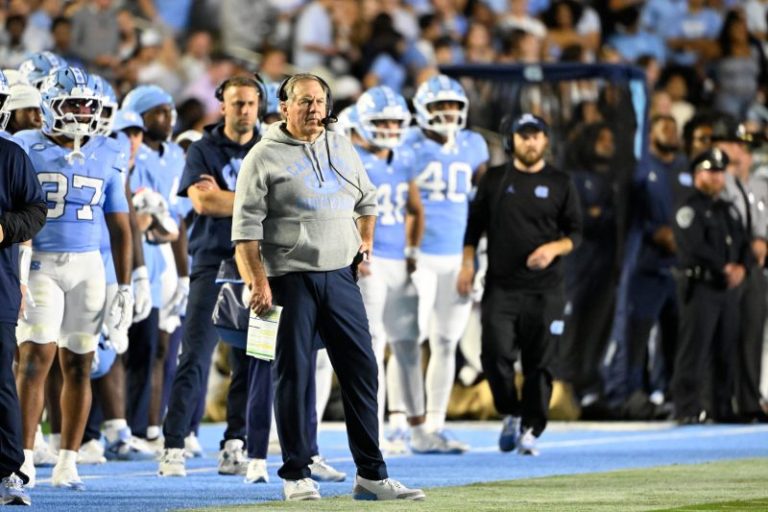
    A lawsuit filed this week by a former University of North Carolina administrator accuses the university’s board of trustees of violating state open meetings laws on issues that include the hiring of football coach Bill Belichick and deliberations over conference realignment.

    The board of trustees “has engaged in pattern and practice of systematically violating the Open Meetings Law by improperly invoking closed session exemptions to shield policy and budget deliberations from public scrutiny,” read the suit filed on behalf of former North Carolina Provost Chris Clemens, who held the title from 2021 through last April.

    Clemens’ suit cites the example of the board’s deliberations over Belichick’s surprise hiring last December. According to the suit, the board “called an ‘emergency meeting’ with minimal notice” and then went into closed session to discuss the terms of the contract for Belichick and his coaching staff, which includes two of his sons.

    The board “did not present any comparable thirty-year ‘net present cost’ analysis, nor did it invoke long-horizon fiscal restraint to defer that decision for a single UNC employee.”

    “The perfunctory nature of the open session demonstrates that substantive deliberation occurred unlawfully in secret.”

    The former New England Patriots coach signed a five-year deal worth $50 million.

    In addition, the suit alleges the board used similar closed-door deliberations to review realignment opportunities in November 2023 and May 2024.

    In the November meeting, the board entered a closed session to discuss “the financial implications of potential moves to the SEC or Big Ten.” In May, the group sat in closed session “to discuss conference realignment strategy and athletics department finances.”

    “These discussions of institutional affiliation and departmental budget strategy are policy matters that must be conducted in open session,” the suit reads.

    Members of the board also used auto-deleting messaging services such as Signal “to evade records retention and public inspection,” according to the suit.

    Groups such as the board of trustees are beholden to North Carolina’s Open Meetings Law, which states that “the hearings, deliberations, and actions of these bodies be conducted openly.”

    In his suit, Clemens said university officials asked him to resign after he raised concerns over tenure discussions conducted in closed session.

    This post appeared first on USA TODAY

    The American League Central is deadlocked no more.

    For the first time since April 22, the Detroit Tigers don’t have at least a share of first place in the division. And that’s because the Cleveland Guardians beat them again Wednesday, Sept. 24, this time 5-1 at Progressive Field in Cleveland.

    Like they did Tuesday, the Guardians fell behind first after the Tigers scored a run in the third inning off starter Tanner Bibee. Cleveland answered in the bottom of the inning when rookie George Valera hit a two-run homer off Detroit starter Jack Flaherty. Steven Kwan gave the Guardians an insurance run with an RBI single in the fifth, and fan favorite Jose Ramirez put the game out of reach with a two-out, two-run double in the seventh.

    Guardians vs Tigers highlights

    Guardians vs Tigers final score

    Cleveland wins 5-1, its fifth consecutive win against the Tigers, to put the Guardians in sole possession of first place in the AL Central.

    Tigers ninth inning

    Junis stays in for the Guardians, who are looking to close this one out.

    • Riley Greene: groundout to second base. 1 out.
    • Wenceel Perez: popout to shortstop in shallow center. 2 outs.
    • Zach McKinstry: singles to left between short and third. Still two outs, and now Cleveland will turn to closer Cade Smith.
    • Dillon Dingler: groundout to second. 3 outs. Ballgame.

    Guardians eighth inning

    Paul Sewald, who started the season on the Guardians roster, became the fifth pitcher of the night for Detroit. He allowed a leadoff single to Bo Naylor, but then got Gabriel Arias, Daniel Schneemann and Petey Halpin to fly out to get out of the inning. Score: Guardians 5, Tigers 1.

    Tigers eighth inning

    Jakob Junis came on for Cleveland and set the Tigers down in order with strikeouts of Gleyber Torres and Spencer Torkelson sandwiching a groundout by Kerry Carpenter. Detroit is down to its final three outs. Score: Guardians 5, Tigers 1.

    Guardians score two more in seventh inning

    Progressive Field is rockin’ after the Guardians adding two more runs to pad their lead over the Tigers, whose stunning late-season collapse appears to be spiraling out of control.

    The Guardians loaded the bases with nobody out, and then got a two-out double by José Ramírez to plate two baserunners.

    The inning opened with Daniel Schneemann taking first on a bases on balls and then C.J. Kayfus singled to right. A dropped foul ball pop fly by catcher Dillon Dingler opened the door for Brayan Rocchio to load the bases on another walk.

    Tigers manager A.J. Hinch wasn’t messing around and called on his closer Will Vest to shut down a scoring threat. It didn’t work. After getting Steven Kwan to fly out and striking out George Valera, Vest gave up the double to Ramírez. Score: Guardians 5, Tigers 1.

    Tigers seventh inning

    The Guardians are counting on their bullpen to close out an 18th win in 21 games.

    Left-hander Tim Herrin replaced Tanner Bibee on the bump and it was nervy at first. After hitting Zach McKinstry with a pitch, Herrin went to a full count against Dillon Dingler before registering a strikeout. After Andy Ibáñez grounded into a force out at second base, Herrin was sent to the dugout in favor of right-hander Hunter Gaddis, who promptly struck out Jahmai Jones. Score: Guardians 3, Tigers 1.

    Guardians sixth inning

    Tyler Holton kept the Tigers’ deficit at two runs with a 1-2-3 inning. After Kyle Manzardo grounded out, Holton struck out Bo Naylor and Gabriel Arias. Score: Guardians 3, Tigers 1.

    Tigers sixth inning

    Tanner Bibee kept the Tigers at bay, again.

    Riley Greene’s single ended a run of seven consecutive batters retired by Bibee, but the hurler had little trouble making sure his team maintained its two-run lead. With 105 pitches through six innings, this was the final inning for Bibee. It was quite an effort for the 26-year-old right-hander in his third big league season. This marks 19 consecutive games that the Guardians’ starting pitcher has given up two or fewer runs. Score: Guardians 3, Tigers 1.

    Guardians add to lead in fifth inning

    Cleveland made the most of Brayan Rocchio’s second hit of the game. Rocchio swiped second base as Steven Kwan faked a bunt. Moments later, Kwan hit a line drive to left center that drove home Rocchio. Classic manufacturing a run baseball from the Guardians. It’s what good teams do to win ballgames.

    Kwan’s hit chased Tigers starter Jack Flaherty from the game. Flaherty, who is tied for the American League lead in losses (14), is on the hook for this one, too. Tyler Holton came on in relief and recorded the final outs of the inning to minimize the damage. Score: Guardians 3, Tigers 1.

    Tigers fifth inning

    Guardians starter Tanner Bibee is cruising right along, completing a casual 1-2-3 inning. Trey Sweeney popped out, Parker Meadows struck out and Gleyber Torres grounded out to shortstop. Score: Guardians 2, Tigers 1.

    Guardians fourth inning

    Cleveland was unable to add to its lead, going down in order.

    Bo Naylor grounded out to shortshop, Gabriel Arias struck out and Daniel Schneemann grounded out to first base. Score: Guardians 2, Tigers 1.

    Tigers fourth inning

    Detroit hitters have done a great job of being patient against Tanner Bibee, who’s now at 80 pitches through four.

    Spencer Torkelson led off the inning with a single and then, after a Riley Greene strikeout, Wenceel Perez drew a walk. Zach McKinstry followed with a fielder’s choice to second and Dillon Dingler ended the inning with a fielder’s choice to third to end the threat. Score: Guardians 2, Tigers 1.

    Guardians bounce back to take the lead

    Cleveland wasted no time grabbing the lead, and it came from unexpected source.

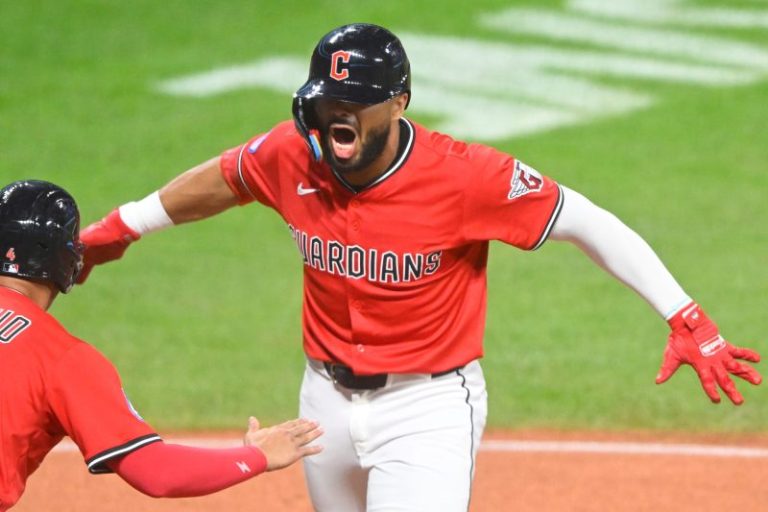
    No. 9 hitter Brayan Rocchio led off the inning with an opposite-field double to left and moved to third on a groundout by Steven Kwan. That brought up rookie designated hitter George Valera, who teed off on the first pitch and sent it over the center-field fence, over a leaping attempt by Parker Meadows. Valera let out a scream as he rounded the bases to celebrate his second career homer. Score: Guardians 2, Tigers 1.

    Tigers get on scoreboard first

    Just like in Tuesday’s series opener, Detroit is the first team to score.

    Back-to-back one-out singles in the third inning by Dillon Dingler and Trey Sweeney, the Tigers’ 8-9 hitters, put runners at first and third. Parker Meadows followed with a hard line drive to right, where C.J. Kayfus secured the catch with a dive. Dingler easily tagged up and scored from third. Following another single by Gleyber Torres, Bibee got Kerry Carpenter to ground out to first to snuff further damage. Score: Tigers 1, Guardians 0.

    Guardians second inning

    For the second inning in a row, Cleveland got a two-out runner into scoring position but couldn’t chase him home. Jack Flaherty retired Bo Naylor and Gabriel Arias on strikes to lead off the inning, but then Daniel Schneemann hit a hard grounder to first that Spencer Torkelson couldn’t field and it trickled into right field. Schneemann ended up at second, where he was stranded after C.J. Kayfus lined out to left. Score: Tigers 0, Guardians 0.

    Tigers second inning

    Tanner Bibee struck out Spencer Torkelson looking to start the second, but then he walked Riley Greene on five pitches. After getting ahead 0-2 against Wenceel Perez, Bibee threw three consecutive balls before getting Perez to hit a smash to second baseman Brayan Rocchio, who gloved and started a 4-6-3 double play to end the top of 2. Score: Tigers 0, Guardians 0.

    Guardians first inning

    Jack Flaherty worked around a two-out double by Jose Ramirez by striking out Kyle Manzardo on three pitches. Steven Kwan led off Cleveland’s half of the first with a hard groundout to second, and then George Valera struck out before Ramirez’s 32nd double of the year. Score: Tigers 0, Guardians 0.

    Tigers first inning

    Tanner Bibee set down the Tigers 1-2-3 in the first inning on 14 pitches. After getting Austin Meadows to fly out and Gleyber Torres to ground out, Bibee struck out Kerry Carpenter on a diverse pitch mix. Score: Tigers 0, Guardians coming to bat.

    How to watch Tigers vs Guardians

    • Date: Wednesday, Sept. 24, 2025
    • Time: 6:40 p.m. ET
    • Where: Progressive Field in Cleveland
    • TV: FOX Sports Detroit, CLEGuardians.TV
    • Stream: Fubo

    Stream Tigers at Guardians with Fubo

    Guardians take the field

    After a 35-minute weather delay, the Guardians take the field, and the second game of this crucial three-game series is about to begin.

    Guardians vs Tigers weather

    Dreary Cleveland skies have cause the start of this AL Central showdown to be delayed. First pitch is now scheduled for 7:15 p.m. ET.

    Guardians starting pitcher

    Cleveland will go with right-hander Tanner Bibee, who has allowed just three earned runs over his last 21⅔ innings, which spans three starts. He’s 2-0 during that stretch, and is 11-1 with a 4.34 ERA on the season. He’s faced Detroit twice this year and is 2-0 with a 0.69 ERA in 13 innings. He’s racked up 16 strikeouts with just three walks against the Tigers in 2025.

    Tigers starting pitcher

    Detroit’s starter Wednesday will be Jack Flaherty, who is 8-14 with a 4.60 ERA this season. Flaherty has faced the Guardians twice this season, going 0-2 with a 3.09 ERA. His last game against Cleveland came last week in Detroit when he allowed one earned run over five innings, but took the loss.

    Guardians starting lineup

    • Steven Kwan, LF
    • George Valera, DH
    • Jose Ramirez, 3B
    • Kyle Mnazardo, 1B
    • Bo Naylor, C
    • Gabriel Arias, SS
    • Daniel Schneemann, CF
    • C.J. Kayfus, RF
    • Brayan Rocchio, 2B

    Tigers starting lineup

    • Parker Meadows, CF
    • Gleyber Torres, 2B
    • Kerry Carpenter, DH
    • Spencer Torkelson, 1B
    • Riley Greene, LF
    • Wenceel Perez, RF
    • Zach McKinstry, 3B
    • Dillon Dingler, C
    • Trey Sweeney, SS

    AL Central standings

    Heading into games on Wednesday, Sept. 24.

    1. Cleveland Guardians: 85-72
    2. Detroit Tigers: 85-72
    3. Kansas City Royals: 79-78
    4. Minnesota Twins: 68-89
    5. Chicago White Sox: 58-99

    MLB playoff bracket

    Heading into games on Wednesday, Sept. 24. (*-denotes playoff berth has been clinched)

    American League playoff bracket

    1. *Toronto Blue Jays 90-67
    2. *Seattle Mariners 88-69
    3. Cleveland Guardians 85-72
    4. *New York Yankees 89-68
    5. Boston Red Sox 86-71
    6. Detroit Tigers 85-72

    National League playoff bracket

    1. *Milwaukee Brewers 95-63
    2. *Philadelphia Phillies 92-65
    3. *Los Angeles Dodgers 88-69
    4. *Chicago Cubs 88-69
    5. *San Diego Padres 87-71
    6. New York Mets 81-76
    This post appeared first on USA TODAY