Author

admin

Browsing

Shemar Stewart is still finding his way with the Cincinnati Bengals after a prolonged holdout that wasn’t resolved until late July. On Wednesday, teammates delivered a pointed message to the first-round rookie defensive end on the need to properly harness his intensity in a practice setting.

Stewart ignited a scuffle during practice when he bumped into quarterback Joe Burrow during a play. Right guard Lucas Patrick confronted the defender, with teammates quickly arriving to separate the two.

Center Ted Karras, a 10th-year who has been a captain for all three of his previous seasons with the Bengals, said the offensive line was ultimately responsible for Burrow’s well-being, noting, ‘We gotta be better up front.’ But he also called for better judgment from the No. 17 overall pick out of Texas A&M.

Asked if he appreciated the edge Stewart brought to the defensive line, Karras said Wednesday, ‘Hell yeah. Just be smarter. … Come on, man. That’s all our hopes and dreams right there.’

Safeguarding Burrow has been a lofty challenge for the Bengals’ maligned offensive line throughout the quarterback’s five-year career. Cincinnati’s offensive front ranked last in ESPN’s pass-block win rate metric in 2024, and the two-time Pro Bowl signal-caller tied for fourth with 48 sacks taken. Burrow missed the final seven games of the 2023 season after suffering a torn ligament in his right wrist.

With receivers Ja’Marr Chase and Tee Higgins re-signed to massive extensions this offseason, the Bengals are once again counting on Burrow to shoulder a heavy load and lead the team back to the playoffs for the first time since 2022.

Stewart, meanwhile, is expected to help revitalize the defensive front and made a strong early impression on teammates.

‘He’s been making some plays out there for us,’ defensive tackle B.J. Hill said earlier in August. ‘He’s a strong, physical, big-time athlete who can do a lot of things for us. Inside or outside. Glad to have him on our side. When he learns this defense, things are going to very explosive for our defense.’

This post appeared first on USA TODAY

Cracking down on fake injuries and penalizing any imitation of brandishing weapons are among rule changes coming to the 2025 college football season. 

The tweaks were announced by the National Football Foundation on Wednesday, August 13 as part of its annual update of rules.

A hot topic among rule implementation, preventing teams from faking injuries was a top priority for the rules committee. It was typically done by defenses to stop high-tempo offenses or teams with momentum, while it was also done on offense to stop the game clock and get a pseudo extra timeout.

Now in place for the 2025 season, if a player presents themselves as injured after officials have spotted the ball, that player’s team will be charged a timeout or a delay of game penalty if it has no timeouts left. The player must also sit out at least one play, regardless of whether a timeout has been assessed or not, and cannot return unless they receive approval from the team’s medical personnel.

Another notable rule change is extending penalties to any celebration that mimics a weapon. Before, only an act that simulated the firing of a weapon resulted in an unsportsmanlike conduct penalty. 

Now in 2025, an unsportsmanlike conduct flag will be called on a player who brandishes a simulated weapon, like raising the jersey to mimic a gun being held at the waist or pretending to carry a gun. 

Other rule changes for 2025 college football season

Several other rules were added, including:

  • Teams will continue to get one timeout in each of the first two overtime periods. Now, teams will only get one timeout starting at the third overtime and for the remainder of the game. 
  • Instead of saying “confirmed” or “stands,” officials will use “upheld” when announcing reviews that will not be overturned.
  • Any player on the receiving team that makes the “T” symbol on kickoff returns forfeits their right to return the ball and the play will be considered dead.
  • Any defensive team player within one yard of the line of scrimmage cannot make any quick, abrupt or exaggerated actions that simulate action at the snap and are not part of normal defensive player movement to try and draw an offensive foul.
  • Defensive players also cannot use disconcerting words or signals, like sounds or cadences to interfere with the offense while it is preparing a play. 
  • If the defense has more than 11 players on the field after the two-minute timeout, it will be penalized and the offense will be given the option to reset the game clock, which won’t start until the next snap.
  • Coach-to-player helmet communication is allowed in FCS.
  • Use of tablets extended to project large images only in the locker room at halftime or during a suspension of play.
  • A player attempting to recover a loose ball is considered defenseless. 
This post appeared first on USA TODAY

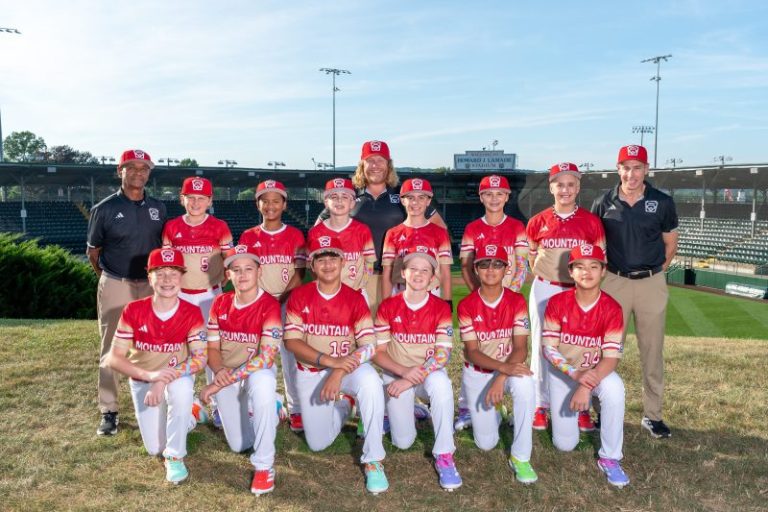
The 2025 Little League World Series kicked off on Wednesday, Aug. 13 with four games across the U.S. and international brackets.

In total, 20 teams will take part in this summer tradition that concludes on Aug. 24, with the final two squads left standing competing for the championship.

Pitcher Luca Pellegrini and Connecticut got the best of Shane Grawe and Texas in the final game of the day. Pellegrini pitched all six innings in the game, allowing just one hit while striking out 11. Grawe held his own against Connecticut, allowing just two hits and an earned run while striking out 11 in five innings pitched.

LLWS 2025 scores, schedule today

United States bracket

Wednesday, Aug. 13

  • Game 2: Nevada 16, Illinois 1
  • Game 4: Connecticut 1, Texas 0

International Bracket

Wednesday, Aug. 13

  • Game 1: Venezuela 5, Puerto Rico 0
  • Game 3: Panama 7, Australia 2

Final: Connecticut 1, Texas 0

Luca Pellegrini and Connecticut earned a shutout victory over Texas. Pellegrini threw a strike to record the final out of the game and complete his six-inning, one-hitter.

Connecticut will play Hawai’i on Friday.

Texas’ no-hitter through, Connecticut scores

It may have taken five innings, but we finally saw our first hit of the game. Texas pitcher Shane Grawe allowed his first hit off the bat of Connecticut’s Jimmy Taxiltaridis. Unfortunately, Taxiltaridis would get thrown out at third attempting to advance on a dropped third strike. All hope for a run looked lost for Connecticut, but just one batter later, a single would drive in Dante Madera for the first run of the game. It was a very close play at the plate, but replay showed that Madera was in fact safe, giving Connecticut the all important first run of the contest.

Two no-hitters going on in Williamsport

After three games where the victor put up at least five runs, we’ve got ourselves a good ol’ fashioned pitcher’s duel in the final game of Day 1. Both Connecticut and Texas’ pitchers are both dominating their opponents. Infact, through three-and-a-half innings, neither pitcher has even allowed a hit. There has also only been one error on both sides, making it even more difficult to get on base.

This game may very well come down to which team can break through first. This has the making of a 1-0 if anyone has ever seen one.

FINAL: Panama 7, Australia 2

Panama won this game on the strength of a monster fourth inning, tallying five runs in that frame alone. Australia’s defense certainly played a role in this outcome as well. The Aussies totaled six errors on the day, granting Panama several more opportunities to score than they would have had.

Outside of their defense, Australia had several bright spots. This could be a team to look out for as the tournament progresses. If they can improve their defense, Australia could be one of the most dangerous teams in the loser’s bracket moving forward.

Australia notches second run

Trailing by six in the fifth inning, Australia needed to put together something for any hope at a comeback. Well, they got something. It may just be one run, but come the sixth inning, perhaps that one run could make the difference.

Australia still trails 7-2, but they’ve proven capable of getting to the Panama pitching. We head to the sixth.

Panama puts together massive fourth inning

What was a close game became much more difficult for the Australians. Panama tallied four runs before recording their second out. Panama would add a fifth run on an error from the Australia second baseman.

Despite the crooked number, it actually could have been much worse for Australia, as Panama left two runners on base to end the inning. It took a great play at short and an even better pick at first in order to secure the final out. Australia fans breathed a major sigh of relief after the play.

We head to the bottom of the fourth. Panama leads 7-1.

Panama hits first home run of LLWS

A long finish to the first United States game delayed a lot of fans from watching Panama vs. Australia. In fact, viewers missed the entirety of the first inning, where Panama made a statement, hitting a two-run home run to kick the game off, the first home run of the tournament.

Australia would retaliate, picking up a run of their own in the bottom of the first, but they still trail 2-1, heading into the second inning.

FINAL: Nevada 16, Illinois 1

This was a statement win from Nevada, announcing to every other team that they are here and here to stay. Eighteen hits, sixteen runs. It just wasn’t fair in the sixth inning. Even though Illinois put up a run in the sixth, it was far too little too late.

Nevada advances to face the Northwest region in the second round on Aug. 15.

Nevada explodes before bottom of the sixth

After scoring five runs in the first two innings, Nevada’s offense went silent for the next three. However, needing just three outs left to put away Illinois, the Nevada offense decided to give their pitchers a little more run support. And by a little, we mean eleven runs. If it wasn’t the sixth inning, this inning alone would have triggered the ten-run mercy rule.

The hits just kept on coming. Nevada was not just walking, they were smoking the baseball, putting up extra base hit after extra base hit, constantly driving in runs. At one point, twelve hitters were able to reach base consecutively. Nevada tallied five doubles in the inning.

Nevada pitcher Gallegos didn’t need much help. After all, he was throwing a shutout before getting pulled in the sixth due to the pitch count. However, you can never have too much run support. Nevada heads into the bottom of the sixth up 16-0.

Nevada two-out rally plants four runs

With two outs in the bottom of the second, Nevada put together an outstanding rally, tallying two singles and two walks to bring home their second run in as many innings.

The second run prompted an Illinois pitching change with shortstop Brody Herold heading to the mound. The change didn’t help though. Nevada’s Dustin Gruesel drilled a single to left center field, driving in two more runs and leaving runners on the corner for the top of the order.

Nevada would score one more run to put themselves up by five. Finally, the inning would end on a fly ball to center field, but the massive damage had been done. It’s Illinois’ turn to put up a crooked number. They trail 5-0.

Illinois leaves them loaded

Looking to get that run right back, Illinois was doing well, loading the bases in the bottom of the first with only one out. However, Nevada pitcher Garrett Gallegos came up clutch, racking up two strikeouts to strand the runners on the bases. Nevada maintains their 1-0 lead.

Nevada off to hot start

It didn’t take long for the offense to get going on the American side. A leadoff walk and a single put two runners on with no one out in the top of the first inning.

Illinois had an opportunity to limit the threat. A taylor-made double play ball ended up with an errant throw, putting runners on the corners. Two pitches later, a wild pitch would allow Brooks Fescher to score, and moving Cache Malan to second.

Nevada would not be able to bring Malan home, but the run is already giving them some momentum. As we’ve already seen, one run can be more than enough to win in Williamsport.

FINAL: Venezuela 5, Puerto Rico 0

A dominant pitching performance from Venezuela was the story for this game. The team’s strong pitching was coupled with immaculate defense and timely hitting, granting Venezuela a strong win to start tournament play.

Puerto Rico had several good moments, but could not find a way to cross the plate. Don’t let the final score fool you though. Puerto Rico had nearly as many hits as Venezuela (four to Venezuela’s five). However, their inability to drive in runners when they reached base was the difference in this game.

Venezuela will play next on August 15 against Canada. Puerto Rico, meanwhile, moves to the loser’s bracket. They’ll play on August 16 against the loser between Mexico and Taipei.

Samuel Castillo pulls off immaculate double play

After a leadoff single from Puerto Rico, Venezuela was looking to halt any hope of a comeback. Samuel Castillo did it on his own. With a ball hit sharply down the left field line, Castillo snagged it out of the air diving to his right, then firing across the diamond to double up the runner at first.

Castillo’s leather work was a massive momentum swing, and the momentum was already in Venezuela’s favor. It remains 3-0 heading into the bottom of the fifth.

Puerto Rico keeps runs off the board

The bottom of the fourth inning started off as well as it could for a trailing Puerto Rico team. However, with two outs, a walk and an error put a runner in scoring position, giving Venezuela a chance to extend their 3-0 lead.

It appeared to be an infield hit at first glance, with Puerto Rico curious how they didn’t get an out. However, after some collaboration from the umpires, they decided that the inning was over. Puerto Rico fans breathed a big sigh of relief. They’ll head to the top of the fifth, down 3-0, looking to mount a comeback.

What time is the Little League World Series today?

The first game Wednesday is at 1 p.m. ET with the final game starting at 7 p.m. ET, with Fairfield, Connecticut, taking on Richmond, Texas, to conclude the day.

Little League World Series 2025: TV, time and how to watch

The Little League World Series begins Wednesday with four games across the U.S. and international brackets. Games will be presented across ESPN, ESPN Deportes and ESPN+. Viewers can also watch with Fubo, which offers a free trial for new users.

  • Times: Coverage begins at 1 p.m. ET with the final game starting at 7 p.m. ET
  • TV: ESPN
  • Streaming: ESPN+ (international games), Fubo

Watch the Little League World Series with Fubo

Previous LLWS champions

Here are the last 20 LLWS champions by year:

  • 2024: Lake Mary, Florida
  • 2023: El Segundo, California
  • 2022: Honolulu, Hawaii
  • 2021: Taylor, Michigan
  • 2019: River Ridge, Louisiana
  • 2018: Honolulu, Hawaii
  • 2017: Tokyo-Kitasuna, Japan
  • 2016: Maine-Endwell, New York
  • 2015: Tokyo-Kitasuna, Japan
  • 2014: Seoul, South Korea
  • 2013: Musashi-Fuchu, Japan
  • 2012: Tokyo-Kitasuna, Japan
  • 2011: Huntington Beach, California
  • 2010: Edogawa Minami, Japan
  • 2009: Chula Vista, California
  • 2008: Waipahu, Hawaii
  • 2007: Warner Robins, Georgia
  • 2006: Columbus, Georgia
  • 2005: ‘Ewa Beach, Hawaii
  • 2004: Willemstad, Curacao

How does the LLWS work?

The Little League World Series is an annual summer tournament hosted in Williamsport, Pennsylvania, home of the first ever LLWS champions in 1947. The tournament is a double-elimination tournament, meaning each team can lose one game before being eliminated from contention following their second loss.

The tournament is also broken up between United States and international brackets, with the championship always being between the U.S. champs and an international opponent.

Which teams are in the tournament this year?

United States teams:

  • Great Lakes Region: Clarendon Hills, Illinois
  • Metro Region: Fairfield, Connecticut
  • Mid-Atlantic Region: Upper Uwchlan Township, Pennsylvania
  • Midwest Region: Sioux Falls, South Dakota
  • Mountain Region: Las Vegas, Nevada
  • New England Region: Braintree, Massachusetts
  • Northwest Region: Bonney Lake, Washington
  • Southeast Region: Irmo, South Carolina
  • Southwest Region: Richmond, Texas
  • West Region: Honolulu, Hawaii

International Teams:

  • Asia-Pacific Region: Chinese Taipei
  • Australia Region: Brisbane, Queensland
  • Canada Region: Vancouver, British Columbia
  • Caribbean Region: Santa Cruz, Aruba
  • Europe-Africa Region: Brno, Czechia
  • Japan Region: Tokyo, Japan
  • Latin America Region: Barquisimeto, Venezuela
  • Mexico Region: Chihuahua, Mexico
  • Panama Region: Arraijan, Panama
  • Puerto Rico Region: Yubucoa, Puerto Rico

The biggest stories, every morning. Stay up-to-date on all the key sports developments by subscribing to USA TODAY Sports’ newsletter.

This post appeared first on USA TODAY

The Cleveland Browns have another quarterback injury to deal with.

As Kenny Pickett and Dillon Gabriel are on the mend from hamstring injuries, rookie Shedeur Sanders left practice today with an oblique injury.

He was throwing during the early portion of today’s joint practice with the Philadelphia Eagles and was held out for the rest of the session.

Sanders was expected to get work vs. the Eagles in the Browns’ second preseason game on Saturday, Aug. 16. He started the opening preseason game against the Carolina Panthers in the Browns’ 30-10 victory.

Shedeur Sanders injury update

The Browns listed Sanders as day-to-day. He will not practice on Thursday, Aug. 14 and he is unlikely to play on Saturday vs. the Eagles.

Sanders suffered an oblique injury during the early stages of the Wednesday, Aug. 12 practice and was held out. He did remain on the sidelines for the remainder of the day.

Browns QB depth chart

The Browns are a little bit snakebitten when it comes to the quarterback position at the moment. While there’s nothing serious affecting the room (outside of Deshaun Watson), Kenny Pickett and Dillon Gabriel are nursing soft-tissue injuries and are making their way back.

Here’s how the room stacks up:

  • Joe Flacco
  • Kenny Pickett
  • Shedeur Sanders/Dillon Gabriel
  • Deshaun Watson (IR)

This story will be updated with more information when available.

This post appeared first on USA TODAY

The price of zinc was on the rise in 2024, but this year has been a different story. The metal’s value has trended down for most of 2025 on the back of increased supply and weakening demand.

Many base metals have taken hit from lagging demand in recent years due to sticky inflation and higher interest rates, and zinc is no exception. Zinc supply has also faced pressure from higher mining and refining costs, causing some major zinc mines and smelters to suspend operations, with more possible if the current economic situation continues.

With its important role in the steel manufacturing process, the zinc market is heavily influenced by international trade. One area of support in the last few months has been turmoil caused by the US-China trade war and tariff threats .

Data was gathered on July 30, 2025, using TradingView’s stock screener, and only zinc stocks with market caps greater than C$50 million at that time were considered. Read on to learn more about their operations and plans.

1. Teck Resources (TSX:TECK.A,TSX:TECK.B)

Market cap: C$22.01 billion
Share price: C$45.04

Teck Resources is a major global polymetallic miner, as well as one of the world’s top zinc producers.

The Vancouver-headquartered company produced 615,900 metric tons (MT) of zinc in concentrate in 2024, with 555,600 MT coming from its Red Dog zinc mine in Alaska. The remaining 60,300 MT came from Teck’s 22.5 percent share of zinc production from the Peru-based Antamina copper-zinc mine.

Teck’s total 2025 production guidance for the base metal is set in a range of 525,000 to 575,000 MT. As of June 30, the company’s zinc production for the year totaled 384,000 MT.

In addition to the sites mentioned, Teck owns the Trail operations, which it describes as ‘one of the world’s largest fully integrated zinc and lead smelting and refining complexes.’ Located in BC, Canada, the Trail operations produced 256,000 MT of refined zinc in 2024, with 190,000 to 230,000 MT of the material expected in 2025.

Teck pays a quarterly dividend. On September 29, it will pay out a dividend of C$0.125 per share.

2. Fireweed Metals (TSXV:FWZ)

Market cap: C$485.11 million
Share price: C$2.32

Fireweed Metals is a critical metals company whose flagship Macmillan Pass zinc project is located in Canada’s Yukon. In 2023, the company acquired the Gayna River zinc project in the Northwest Territories, as well as the Mactung tungsten project, which is adjacent to Macmillan Pass and straddles the border between Yukon and the Northwest Territories. According to Fireweed, Mactung ‘hosts the world’s largest high-grade tungsten deposit.’

Even with these new assets, the company still has a strong focus on Macmillan Pass. In fact, in November 2023, the Fireweed team, led by Dr. Jack Milton, the firm’s vice president of geology, received the Association for Mineral Exploration’s H.H. “Spud” Huestis Award for its work at the Macmillan Pass property.

Fireweed’s best drill intersection to date from Macmillan Pass’ Boundary zone includes 143.95 meters true width at 14.45 percent zinc, including 28.71 meters at 25.52 percent zinc. In September 2024, after its largest regional exploration campaign ever at Macmillan Pass, the company released an updated resource estimate for the Tom and Jason deposits, as well as inaugural resource estimates for the Boundary zone and End zone deposits.

Fireweed launched its 2025 field program in early June, saying it will include 12,000 meters of diamond drilling at Macmillan Pass. The work will target ‘both high-priority regional prospects and step-outs around known zinc-lead-silver-gallium-germanium deposits,’ according to a press release.

3. Trilogy Metals (TSX:TMQ)

Market cap: C$405.68 million
Share price: C$2.47

Trilogy Metals is focused primarily on copper, zinc and cobalt at its Alaskan Upper Kobuk projects, which are held by Ambler Metals, a joint venture operating company owned equally by Trilogy and South32 (ASX:S32,OTC Pink:SHTLF).

Its most advanced zinc project is the Arctic copper-zinc-lead-gold-silver volcanogenic massive sulfide project, which is in the feasibility stage and has proven and probable reserves of 43.44 million MT grading 3.12 percent zinc.

In addition, early stage 2023 field work at the company’s wholly owned Helpmejack project in Alaska’s Ambler schist belt outlined two target areas prospective for volcanogenic massive sulfide and shale-hosted zinc deposits.

Trilogy had been focusing on improving access to the region with its Amber Access project, but it was rejected by the US Bureau of Land Management under the Biden administration in June 2024 due to the impact the proposed road could have on the environment and communities in the region, which have seen little development.

However, under the Trump administration, a series of executive and secretarial orders focusing on developing Alaska’s natural resources have been enacted that could reverse this decision.

“Recent actions taken by President Donald Trump and Interior Secretary Doug Burgum signal a positive path forward for the Ambler Road,’ Trilogy Metals President and CEO Tony Giardini said. ‘This transportation corridor is crucial not only for providing access to the minerals that are vital to U.S. national security and prosperity, but also for much-needed economic growth and job creation in Alaska. Trilogy Metals is committed to working with all stakeholders on progressing the road, to unlock the vast natural resource potential of the Ambler Mining District.”

4. Emerita Resources (TSXV:EMO)

Market cap: C$317.02 million
Share price: C$1.20

Emerita Resources has a portfolio of high-grade, large-scale polymetallic projects covering more than 26,000 combined hectares in Spain’s Iberian Pyrite Belt. The company’s flagship asset is the Iberian Belt West project, which hosts three massive sulfide deposits: La Infanta, La Romanera and El Cura.

Emerita released a resource estimate for Iberian Belt West in May 2023. It finished environmental baseline studies the following month, and completed supporting documentation for its mining license application in December 2023.

In July 2024, the Andalusian government granted Iberian Belt West a declaration of strategic interest, which will streamline the process of moving the project through development.

Phase 2 metallurgical testing results for the La Romanera and La Infanta deposits released in late 2024 show that commercial-grade copper, lead and zinc concentrates can be obtained from both deposits.

In March of this year, Emerita announced an updated resource estimate for Iberian Belt West, showing a 35 percent increase to the total indicated mineral resource tonnage and a 44 percent increase in total inferred mineral resource tonnage. Also this year, Emerita made the cut for the latest TSX Venture 50 list.

Securities Disclosure: I, Melissa Pistilli, hold no direct investment interest in any company mentioned in this article.

This post appeared first on investingnews.com

Graphite prices have experienced volatility recently due to bottlenecks in demand for electric vehicles.

One major factor experts are watching right now is the trade war between China and the US.

China introduced export restrictions on certain graphite products on December 1, 2023, making it a requirement for Chinese exporters to apply for special permits to ship the material to global markets. In July 2024, the Trump administration in the US announced it would raise tariffs on battery-grade graphite imports from China to 93.5 percent.

Another trend shaping the graphite market in 2025 has been increasing substitution of natural graphite with synthetic in battery anode production; this comes in response to Chinese exports restrictions and US tariffs on natural graphite.

This has led to much lower prices for natural graphite, and against that backdrop, many Canadian graphite stocks have trended down. However, several graphite-focused companies have seen strong performances this year.

Below is a look at the year’s best-performing graphite stocks on the TSXV and CSE; TSX companies were considered, but none made the cut this time. Data was obtained on July 29, 2025, using TradingView’s stock screener, and all companies listed had market caps above C$10 million at that time. Read on to learn more about their work this year.

1. HydroGraph Clean Power (CSE:HG)

Year-to-date gain: 384.21 percent
Market cap: C$282.81 million
Share price: C$0.99

HydroGraph Clean Power produces cost-effective, high-purity graphene, hydrogen and other strategic nanomaterials.

Graphene, a pure carbon material extracted from graphite, has myriad potential applications in industries such as transport, solar cells, medicine, electronics, energy, defense and desalination. HydroGraph has an exclusive license from Kansas State University to produce graphene and hydrogen through the organization’s patented detonation process.

Much of HydroGraph’s news flow in 2025 has centered on strategic partnerships.

Results from a research study conducted with Arizona State University were released in January, demonstrating that the company’s HydroGraph’s Fractal Graphene is well suited for ultra-high-performance concretes and 3D-printed structures. In February, HydroGraph announced a technical collaboration with an unnamed global leader in synthetic fiber manufacturing to assess the potential of its graphene technology in high-performance fiber applications.

The following month, HydroGraph shared the launch of a line of advanced graphene dispersions developed in collaboration with battery materials and testing services company NEI. The products have the potential to be used to produce high-performance electrodes for use in energy storage solutions.

The company signed a letter of intent in April that could lead to a leading North American industrial gas supplier providing it with access to large volumes of high-purity acetylene. This is an essential material in HydroGraph’s patented detonation synthesis process. Acquiring this feedstock will help the firm advance its plans to build a new graphene production facility in Texas with the capacity to produce over 350 metric tons of graphene annually.

HydroGraph launched its Compounding Partner Program in July with the goal of attaining commercial-scale production of its high-performance Fractal Graphene in thermoplastics. According to the company, initial certified partners are testing new formulations in the automotive and packaging sectors.

After trading in a range of C$0.22 to C$0.35 for much of the year, shares of HydroGraph jumped nearly 300 percent in a matter of days to reach a year-to-date high of C$0.99 on July 29.

2. Black Swan Graphene (TSXV:SWAN)

Year-to-date gain: 107.35 percent
Market cap: C$60.02 million
Share price: C$1.41

Black Swan Graphene describes itself as an emerging powerhouse in the bulk graphene business.

The company is a spinout of Mason Resources (TSXV:LLG,OTCQX:MGPHF), which owns the Uatnan graphite project in Québec and holds a 39 percent stake in Black Swan. Graphite from Uatnan is used to supply Black Swan.

UK-based global chemicals manufacturer Thomas Swan & Co. holds a 15 percent interest in Black Swan, and brings a portfolio of patents and intellectual property related to graphene production. Through this partnership, Black Swan is building out a fully integrated supply chain of mine-to-graphene products.

Black Swan’s share price traded sideways for much of the year before benefiting greatly from a summer surge. Shares of Black Swan reached their highest year-to-date price of C$1.52 on July 23.

This followed a series of positive news items concerning progress on increasing commercial output. On June 3, Black Swan announced the installation of an additional production unit at its operational facility in the UK. It is working to more than triple its annual production capacity from 40 metric tons of high-quality graphene to 140 metric tons.

Later in the month, the company signed a non-exclusive distribution and sales agreement with Indian specialty materials and polymers supplier METCO Resources. The agreement will allow METCO to “distribute and promote Black Swan’s graphene nanoplatelets and GEM advanced masterbatch products to customers across India’s industrial, packaging, automotive, and construction sectors,” as per a press release.

Black Swan made another key announcement in the following month. On July 9, the market learned the company had secured a US patent for its breakthrough continuous graphene production process.

3. Focus Graphite Advanced Materials (TSXV:FMS)

Year-to-date gain: 100 percent
Market cap: C$12.26 million
Share price: C$0.135

Focus Graphite Advanced Materials is both a graphite miner and a battery technology company. Its wholly owned flagship Lac Knife high-grade crystalline flake graphite project is located in Northeastern Québec.

With a completed feasibility study, Lac Knife is one of North America’s most advanced graphite deposits. The company also holds Lac Tétépisca, the highest-purity graphite project in Québec.

In terms of battery technologies, Focus Graphite has a patent-pending proprietary silicone-enhanced spheroidized graphite technology that is designed to enhance battery performance and efficiency.

In late May, definition drilling at Lac Tétépisca led to an extension of the strike length of the mineralized zone to over 6 kilometers, while preliminary metallurgical testing confirmed the quality of the project’s flake graphite.

In mid-June, the company said thermal purification testing on Lac Knife flake graphite completed by American Energy Technologies Company had resulted in refined concentrate to a purity level of 99.999 percent carbon.

“This milestone underscores Focus Graphite’s potential to supply ultra-high-purity graphite material for nuclear energy applications, a market historically dominated by synthetic graphite and limited to a small cohort of qualifying producers,” states the company’s press release.

Shares of Focus Graphite hit their highest year-to-date value of C$0.17 on June 17.

Securities Disclosure: I, Melissa Pistilli, hold no direct investment interest in any company mentioned in this article.

This post appeared first on investingnews.com

GMV Minerals Inc. (the ‘Company’ or ‘GMV’) (TSXV:GMV)(OTCQB:GMVMF) is pleased to announce positive results from the updated Preliminary Economic Assessment (‘PEA’) study of the Mexican Hat Gold Project (the ‘Mexican Hat Project’), located in Cochise County, southeastern Arizona.

A National Instrument 43-101 –Standards of Disclosure for Mineral Projects (‘NI 43-101’) compliant technical report (the ‘Report’) entitled ‘Updated NI 43-101 Technical Report Preliminary Economic Assessment, Mexican Hat Project’ with an effective date of August 8, 2025 will be filed on SEDAR+ at www.sedarplus.ca under the Company’s profile within 45 days of this news release. All amounts are stated in second quarter 2025 US dollars (US$).

The Mexican Hat hosts a shallow oxide gold resource with excellent metallurgy and high recoveries, supported by a low strip ratio and minimal pre-stripping. Infrastructure is in place and the Mexican Hat Project demonstrates a robust NPV and IRR. With fast leach kinetics and low reagent consumption, the Company believes the Mexican Hat Project offers exceptional potential economics.

Highlights:

    • Based on price sensitivity analysis at approximately the current price of US$3,350 per ounce of gold, the project returns a pre-tax IRR of 106.8% (after-tax 82.5%) and a pre-tax NPV at a 5% discount rate of US$767 million (after-tax US$538.1 million) with a payback period of 1.10 years (1.3 years after-tax).
    • Base Case mine life of 10 years with total production of 597,841 ounces, averaging approximately 60,000 ounces per year.
    • Crushed mineralized material will be conveyor stacked at a rate of approximately 10,000 tonnes/day on a conventional heap leach pad.
    • Capex: US$89,997,000 (including US$15.4 million contingency).
    • Opex: US$788 million LOM with Low LOM Strip Ratio of 2.05
    • Estimated cash cost of production is US$1,354 per ounce with an all-in-sustaining cost of $1,545 per ounce inclusive of sustaining capital and additional overhead support.
    • Engineering design analysis indicates the potential to increase pit size and contained ounces with increased gold prices.

    FINANCIAL INDICATORS

    The following table summarizes the financial indicators for the Mexican Hat Project for both before and after taxes.

    Financial Indicators Before Taxes

    Values

    NPV cash flow (undiscounted)

    US$537.7M

    NPV @ 5%

    US$390.2M

    IRR %

    66.1%

    Payback (years)

    1.53

    Financial Indicators After Taxes

    Values

    NPV cash flow (undiscounted)

    US$377.9M

    NPV @ 5%

    US$268.3M

    IRR %

    50.2%

    Payback (years)

    1.82

    GOLD PRICE SENSITIVITY TABLE (US$ MILLIONS)

    The following table summarizes the pre-tax and post-tax economic results to gold price sensitivity.

    Pre-Tax and Post-Tax Sensitivity to Gold Price

    -60%

    -45%

    -30%

    -15%

    Base

    +15%

    +34%

    +45%

    +60%

    US$/troy oz Gold

    1,000

    1,375

    1,750

    2,125

    2,500

    2,875

    3,350

    3,625

    4,000

    IRR (Pre-Tax)

    18.3%

    45.0%

    66.1%

    85.0%

    106.8%

    118.7%

    134.2%

    NPV @ 5% (Pre-Tax) US$M

    -274.7

    -108.5

    57.7

    224.0

    390.2

    556.4

    767.0

    888.9

    1,055.1

    IRR (Post-Tax)

    11.3%

    33.4%

    50.2%

    65.2%

    82.5%

    91.9%

    104.2%

    NPV @ 5% (Post-Tax) US$M

    -274.9

    -117.3

    25.8

    149.3

    268.3

    387.4

    538.1

    625.4

    744.4

    INITIAL CAPITAL EXPENDITURES (US$ MILLIONS)

    Initial capital expenditures are estimated at US$89,997,000 million as detailed below:

    OPERATING COSTS

    The mine operating costs were calculated to average $3.49 per tonne mined as summarized below.

    Mine Operating Cost Center

    Unit Cost (US$/t mined)

    Owner Mining Personnel

    $0.11

    Owner Supplies & Misc.

    0.03

    Contractor Mining

    3.35

    Total Cost (Rounded)

    $3.49

    The life-of-mine operating costs were calculated to average US$20.44/tonne resource processed as summarized below.

    Operating Cost

    Cost per Tonne of Crushed Material Processed (US$/t)

    Mining

    $10.60

    Processing

    $8.79

    G&A

    $1.05

    Total Site Operating Cost

    $20.44

    MINERAL RESOURCES

    An updated Mineral Resource Estimate prepared by DRW Geological Consultants Ltd., with an effective date of August 8, 2025, was used in the PEA. Details of the Mineral Resource Estimate can be found in the Report to be filed on SEDAR+ within 45 days of this release.

    Category

    Cut-off (g/t Au)

    Grade (Au, g/t)

    Tonnes

    Gold Oz

    Strip Ratio

    Inferred

    0.20

    0.58

    36,733,000

    688,000

    2.36

    • The Mineral Resource Estimate has been constrained to a preliminary optimized pit shell, using the following parameters: SG = 2.57 gm/cc based on testwork, mining costs = $3.00/tonne, mining recovery = 98%, mining dilution = 2%, process cost = $5.00 per tonne, G&A = $1.05 per tonne, gold price = $2,500 per troy ounce, throughput at 10,000 tpd., discount rate = 5%. A cost of $0.03 was added per bench to the mining cost below the existing level surface.
    • A top cut of 32 gpt gold is applied to all zones except Zone 6 which has a top cut of 50 gpt gold.
    • Mineral Resources have been calculated using the Inverse Distance Squared method.
    • Mineral Resources constrained to optimized pit shells are not Mineral Reserves and do not have demonstrated economic viability.
    • Conforms to NI 43-101, Companion Policy 43-101CP, and the CIM Definition Standards for Mineral Resources and Mineral Reserves. Inferred Resources have been estimated from geological evidence and limited sampling and must be treated with a lower level of confidence than Measured and Indicated Resources.
    • All numbers are rounded. Overall numbers may not be exact due to rounding.
    • There are no known legal, political, environmental, or other risks that could materially affect the potential development of the mineral resources.

    MINE PLAN

    The mine plan is conceived as a conventional open pit tuck and shovel/loader operation. There are two independent pits which are developed with five-phase or pushback designs. Pit shells were designed using 6.0-meter benches with a catch bench installed every 18 meters. A bench face angle of 66° was used, resulting in an inner-ramp angle of 45° when catch benches were included. An 88% overall gold recovery has been used in this study, which was based on bottle roll and column leach test results. Base case haulage ramps are 26 meters wide and have a design gradient of 10%. Processing rates are based on a daily crushing rate of approximately 10,000 tonnes per day utilizing two stage crushing

    The mine and crushing will be operated by contractors with oversight by GMV mine management. The mine plan produces a nominal tonnage to the crushing and heap leach of 3,500 Ktonnes per year (10,000 tpd) from a total material movement of 93.8 Ktonnes for the life of mine (26,106 tpd LOM average).

    The PEA is preliminary in nature; it includes inferred Mineral Resources that are considered too speculative geologically to have the economic considerations applied to them that would enable them to be categorized as Mineral Reserves, and there is no certainty that the PEA will be realized. There is no Mineral Reserve at the Mexican Hat Project at this time. Mineral resources that are not mineral reserves do not have demonstrated economic viability. Over the course of the mine life, 38.6 Mtonnes of Mineralized Resource is planned for processing out of a total material movement of 117.8 Mtonnes.

    INFRASTRUCTURE & PROCESS PLANT

    The Mexican Hat Project is located in the southeastern part of the State of Arizona, approximately 72 miles east-southeast of Tucson, and can be accessed from the Old Ghost Town Road., a gravel road extending south of the Town of Pearce or north from Gleeson Road.

    Groundwater will be used as the source of water for mining operations. No permitting restrictions or quantity issues are anticipated.

    A 69 kV powerline to site will be supplied by Sulphur Springs Valley Electric Cooperative from their power plant located 30 km north of the project site.

    The crushing plant will be operated by a contractor to produce a crushed product for heap leaching with a 25 mm top size. Pregnant solution from the heap leach will be processed in a conventional adsorption desorption recovery (ADR) plant. The process plant will produce doré gold bars.

    TECHNICAL REPORT AND QUALIFIED PERSONS

    The Report entitled Updated Preliminary Economic Assessment, Mexican Hat Project’, with an effective date of August 8, 2025 and which was prepared by the following Qualified Persons (as defined under NI 43-101), all of whom are independent of the Company, will be filed by the Company within 45 days of this release on www.sedarplus.com:

    • Mr. Brian Olson, Q.P., Samuel Engineering, Inc. (Metallurgical Test Work and Recovery, Process Plant and Process Operating Costs)
    • Mr. Steven Pozder, P.E., Samuel Engineering, Inc. (Project Economics and Infrastructure)
    • Dr. Dave Webb, Ph.D., P.Eng., P.Geo., DRW Geological Consultants Ltd. (Mineral Resource Estimate, Property Description and Location, Accessibility, Climate, Local Resource, Infrastructure and Physiography, History, Geological Setting and Mineralization, Deposit Types, Exploration, Drilling, Sample Preparation, Analysis and Security, Data Verification).
    • Mr. Thomas L. Dyer, P.E., RESPEC LLC. (Mine Design, Production Schedule, Capital and Operating Costs)
    • Mr. Francisco J. Barrios, P.E., BBA Consultants International LP (Pad Design and Loading)
    • Ms. Dawn Garcia, CPG, PG, Stantec Consulting Services Inc. (Environmental)

    All Qualified Persons have contributed to their corresponding sections in Interpretation, and Recommendations. The Qualified Persons have reviewed and approved the scientific, technical, and economic information obtained in this news release.

    For a description of the data verification process and limitations, underlying assumptions and the results of surveys and quality assurance program regarding exploration information, please refer to the Company’s existing NI 43-101 Technical Report filed on SEDAR+ entitled ‘Preliminary Economic Assessment, Mexican Hat Project’ with an effective date of October 20, 2020.

    Ian Klassen, President & CEO remarked that ‘The robust PEA confirms our contention that the project’s strong economic potential de-risks the development pathway, providing a solid foundation for advancement. The results validate the open-pit, heap-leach concept, demonstrate excellent metallurgy and recoveries, and outline a simple mining and processing strategy. With high margins, rapid payback, and straightforward engineering, the PEA positions the project well for the future, where detailed design, capital optimization, and permitting can advance with confidence.’

    2025-2026 Forward Looking Plan

    The Mexican Hat Project PEA economics justify continued investment in project development. The forward-looking plan for Mexican Hat includes work required to advance the project through Feasibility Study and into the permitting process.

    These tasks include:

    • Approx. 7000 meters of in-fill drilling to increase confidence in the current geological understanding and mineral resource estimation to sufficient level to support mineral reserve development
    • Metallurgical column, hardness, and grinding tests to further optimize and improve heap leach gold recovery, and to provide information for feasibility design work
    • Performing a trade-off study for self-mining and crushing versus contract mining and crushing
    • Geotechnical drilling and analysis to optimize pit slope design parameters
    • Conduct base-line water sampling, and update of hydrologic, cultural, and environmental studies for permitting

    About GMV Minerals Inc.

    GMV Minerals Inc. is a publicly traded exploration company focused on developing precious metal assets in Arizona. GMV, through its 100% owned subsidiary, has a 100% interest in a Mining Property Lease commonly referred to as the Mexican Hat Project, located in Cochise County, Arizona, USA. The project was initially explored by Placer Dome (USA) in the late 1980’s to early 1990’s. GMV is focused on developing the asset and realizing the full mineral potential of the property through near term gold production.

    PEA Information and Cautionary Note Regarding Inferred Mineral Resources

    The mine plan evaluated in the PEA is preliminary in nature and includes Inferred Mineral Resources, as defined by NI 43-101 that are considered too speculative geologically to have the economic considerations applied to them that would enable them to be converted to Mineral Reserves. Additional drilling and technical studies will need to be completed in order to fully assess its viability. There is no certainty that a production decision will be made to develop the Mexican Hat Project or that the economic results described in the PEA will be realized. Mine design and mining schedules, metallurgical flow sheets and process plant designs will require additional detailed work and economic analysis and internal studies to ensure satisfactory operational conditions and decisions regarding future targeted production.

    Cautionary Note to U.S. Investors

    The United States Securities and Exchange Commission permits U.S. mining companies, in their filings with the SEC, to disclose only those mineral deposits that a company can economically and legally extract or produce. We use certain terms in this report, such as ‘measured,’ ‘indicated,’ ‘inferred,’ and ‘resources,’ that the SEC guidelines strictly prohibit U.S. registered companies from including in their filings with the SEC.

    Cautionary Statement Regarding Forward-Looking Information

    This news release includes certain ‘forward-looking information’ under applicable Canadian securities legislation. Forward-looking information include estimates and statements that describe the Company’s future plans, objectives or goals, including words to the effect that the Company or management expects a stated condition or result to occur. Forward-looking information may be identified by such terms as ‘believes’, ‘anticipates’, ‘expects’, ‘estimates’, ‘may’, ‘could’, ‘would’, ‘will’, or ‘plan’. Forward-looking information contained in this news release include, but are not limited to, statements or information with respect to: the results of the PEA, including the IRR and NPV, life of mine and production, capital and operating expenditures, cost estimates; permitting restrictions, and the mine plan, including infrastructure requirements and future plans; the filing of the PEA, including timing thereof, mineral resources; and future gold prices. Since forward-looking information are based on assumptions and address future events and conditions, by their very nature they involve inherent risks and uncertainties as described in the Company’s filings with Canadian securities regulators. Assumptions upon which forward-looking information contained in this news release is based, without limitation, include: results of future exploration; gold prices; accuracy of the results of the PEA, including key assumptions and methods used to determine mineral resources and the results of the PEA; the ability to obtain required permits and approvals; the ability to execute future plans; exchange rates; ability to obtain funding; and changes in regulatory or community environment; Risks, and uncertainties include: results of further exploration; risks related to mineral tenure, permits and approvals; risks related to the execution of future plans; changes in gold price and exchange rates; risks related to obtaining financing; foreign country risks; regulatory risks and liabilities; and those risks and uncertainties as further described in the Company’s filings with Canadian securities regulators which can be found on SEDAR+ at www.sedarplus.ca under the Company’s profile. There can be no assurance that such information will prove to be accurate, as actual results and future events could differ materially from those anticipated in such information. Accordingly, readers should not place undue reliance on forward-looking information. The Company disclaims any intention or obligation to update or revise any forward-looking information, whether as a result of new information, future events or otherwise, other than as required by law.

    Dr. D.R. Webb, Ph.D., P.Geo., P.Eng. is the Q.P. responsible for this release within the meaning of NI 43-101 and has reviewed the technical content of this release and has approved its content.

    ON BEHALF OF THE BOARD OF DIRECTORS

    Ian Klassen, President
    For further information please contact:
    GMV Minerals Inc.
    Ian Klassen
    Tel: (604) 899-0106
    Email: info@gmvminerals.com

    Neither TSX Venture Exchange nor its Regulation Services Provider (as that term is defined in the policies of the TSX Venture Exchange) accepts responsibility for the adequacy or accuracy of this release.

    Source

    Click here to connect with GMV Minerals Inc. (TSXV:GMV)(OTCQB:GMVMF) to receive an Investor Presentation

    This post appeared first on investingnews.com

    Here’s a quick recap of the crypto landscape for Wednesday (August 13) as of 9:00 p.m. UTC.

    Get the latest insights on Bitcoin, Ethereum and altcoins, along with a round-up of key cryptocurrency market news.

    Bitcoin and Ethereum price update

    Bitcoin (BTC) was priced at US$122,444, up by 2.6 percent over the last 24 hours, and its highest valuation of the day. It briefly dropped to its lowest valuation of $120,414 shortly after the opening bell.

    Bitcoin has found itself at the crossroads of macroeconomic data, political influence and shifting capital flows. Inflation statistics and central bank dynamics have introduced caution, while stablecoin activity and institutional appetite are hinting at a redistribution into altcoins.

    Bitcoin price performance, August 13, 2025.

    Chart via TradingView.

    Meanwhile, Ethereum (ETH) continued to rally, up by 4.5 percent to US$4,716.60. The cryptocurrency’s lowest valuation on Wednesday was US$4,638.43, and its highest was US$4,738.59.

    Glassnode notes that ETH is a bellwether for altcoins, and its current move as capital continues to flow into exchange-traded funds suggests further upside. In an X post on Wednesday, Charles Edwards, founder of crypto quantitative digital asset fund Capriole Investments, shared data showing that 75 percent of Coinbase Global’s (NASDAQ:COIN) volume came from institutional players on Tuesday (August 12).

    He pointed to the outlook for interest rates following the release of July inflation data.

    Altcoin price update

    • Solana (SOL) was priced at US$200.74, up by 6.1 percent over 24 hours, and its highest valuation of the day. Its lowest valuation was US$195.81.
    • XRP was trading for US$3.27, up 0.1 percent in the past 24 hours and at its highest valuation of the day. Its lowest was US$3.24.
    • Sui (SUI) was trading at US$3.99, up by 2.3 percent over the past 24 hours, and its highest valuation of the day. Its lowest level was US$3.93.
    • Cardano (ADA) was trading at US$0.8827, up by 4.6 percent over 24 hours, and its highest valuation on Wednesday. Its lowest was US$0.8660.

    Today’s crypto news to know

    World Liberty Financial sets up US$1.5 billion crypto treasury

    World Liberty Financial, a digital asset venture backed by US President Donald Trump and his sons, has announced plans to establish a US$1.5 billion “crypto treasury” in partnership with ALT5 Sigma (NASDAQ:ALTS).

    Under the deal, ALT5 will raise US$1.5 billion through the sale of its own shares. The funds will go toward the purchase of World Liberty’s in-house token, $WLFI, and will also be used to set up a crypto treasury, settle litigation, pay down debt and for other corporate uses. It will ultimately hold about 7.5 percent of $WLFI tokens.

    Unnamed institutional investors and venture capital firms participated in the share sale. Crypto treasury models have grown in popularity this year amid a friendlier US regulatory stance under the Trump administration.

    The project’s leadership is heavily tied to the Trump family, with Trump himself listed as “co-founder emeritus,” and Eric, Donald Jr. and Barron Trump holding co-founder titles.

    As part of the arrangement, Eric Trump will join ALT5’s board and Zach Witkoff will serve as its chair.

    Bullish shares surge on NYSE debut

    Bullish (NYSE:BLSH), the parent company of Bullish Exchange and CoinDesk, began trading on the New York Stock Exchange on Wednesday. Shares were priced at US$37 each, an increase from an earlier target of US$33, with 30 million on offer to raise US$1.1 billion and value the company at nearly US$5.4 billion.

    Shares surged as much as 218 percent to reach US$118 on trading volume of roughly 38 million shares, before pulling back to close at US$70.65. The initial public offering pushed the company’s market cap above US$10 billion.

    Banking groups push for stablecoin loophole closure

    US banking groups, led by the Bank Policy Institute (BPI), are urging Congress to close a loophole that allows stablecoin issuers to indirectly offer yields through affiliates. They argue that while new stablecoin laws prevent issuers from directly offering yield, they don’t prohibit crypto exchanges or affiliated businesses from doing so.

    The groups contend that this circumvents the law and could lead to a US$6.6 trillion outflow of deposits from traditional banks, potentially disrupting credit flow to American businesses and families.

    Banks are concerned that yield-bearing stablecoins undermine their ability to attract deposits, which are crucial for backing loans. The offering of yield is a significant marketing draw for stablecoins, with some, like USDC, already rewarding holders on exchanges such as Kraken and Coinbase (NASDAQ:COIN).

    Safe harbor programs proposed for DeFi

    In a Wednesday letter, Andreessen Horowitz (a16z) and the DeFi Education Fund asked the US Securities and Exchange Commission (SEC) and Hester Peirce, head of the commission’s Crypto Task Force, to set up a safe harbor program from broker-dealer registration requirements for non-fungible token (NFT) and DeFi applications.

    The group said the letter was a follow up to Trump’s Working Group on Digital Assets, which called on the SEC to give certain DeFi service providers relief from registration provisions under the Exchange Act, specifically those related to broker-dealers, exchanges and clearing agencies. SEC Chair Paul Atkins also directed staff to update “antiquated agency rules and regulations” for certain crypto and blockchain applications in July.

    To avoid enforcement actions, a safe harbor provision would exempt some companies that offer crypto-related products and services from enforcement actions. a16z has sent two previous letters to the commission this year recommending safe harbors for NFTs, airdrops and network tokens.

    Securities Disclosure: I, Giann Liguid, hold no direct investment interest in any company mentioned in this article.

    Securities Disclosure: I, Meagen Seatter, hold no direct investment interest in any company mentioned in this article.

    This post appeared first on investingnews.com

    Elon Musk on Monday threatened Apple with legal action over alleged antitrust violations related to rankings of the Grok AI chatbot app, which is owned by his artificial intelligence startup xAI.

    “Apple is behaving in a manner that makes it impossible for any AI company besides OpenAI to reach #1 in the App Store, which is an unequivocal antitrust violation. xAI will take immediate legal action,” Musk wrote in a post on his social media platform X.

    Apple declined to comment on Musk’s threat.

    “Why do you refuse to put either X or Grok in your ‘Must Have’ section when X is the #1 news app in the world and Grok is #5 among all apps? Are you playing politics?” Musk said in another post.

    Apple last year partnered with OpenAI to integrate its ChatGPT chatbot into iPhone, iPad, Mac laptop and desktop products. Musk at the time said: “If Apple integrates OpenAI at the OS level, then Apple devices will be banned at my companies. That is an unacceptable security violation.”

    Prior to his legal threats against Apple, Musk had celebrated Grok surpassing Google as the fifth top free app on the App Store. When contacted by CNBC, xAI did not immediately respond to a request for further information on a potential lawsuit.

    CNBC confirmed that ChatGPT was ranked No. 1 in the top free apps section of the American iOS store, and was the only AI chatbot in Apple’s “Must-Have Apps” section. The App Store also featured a link to download OpenAI’s new flagship AI model, ChatGPT-5 at the top of its “Apps” section.

    OpenAI on Thursday announced GPT-5, its latest and most advanced large-scale AI model, following xAI’s release of its newest chatbot, Grok 4, last month.

    Musk has an ongoing feud with ChatGPT maker OpenAI, which he co-founded in 2015. The billionaire stepped down from its board in 2018, four years after saying that AI was “potentially more dangerous than nukes.”

    He is now suing the Microsoft-backed startup, and its CEO Sam Altman, alleging they abandoned OpenAI’s founding mission to develop artificial intelligence “for the benefit of humanity broadly.”

    Robert Keele, who headed the legal department at xAI, announced last week that he had left the company to spend more time with his family. In his announcement, Keele also acknowledged “daylight between our worldviews,” referring to Musk.

    In response to Musk’s antitrust threats against Apple, OpenAI CEO Sam Altman said in an X post: “This is a remarkable claim given what I have heard alleged that Elon does to manipulate X to benefit himself and his own companies and harm his competitors and people he doesn’t like.”

    This is not the first time Apple has been challenged on antitrust grounds. In a landmark case, the Department of Justice last year sued the company over charges of running an iPhone ecosystem monopoly.

    In June, a panel of judges also denied an emergency application from Apple to halt the changes to its App Store resulting from a ruling that the company could no longer charge a commission on payment links inside its apps, nor tell developers how the links should look.

    — CNBC’s Kif Leswing and Lora Kolodny contributed to this article.

    This post appeared first on NBC NEWS