Author

admin

Browsing

Disney’s ESPN and Fox Corp. are teaming up to offer their upcoming direct-to-consumer streaming services as a bundle, the companies said Monday.

The move comes as media companies look to nab more consumers for their streaming alternatives, and draw them in with sports, in particular.

Last week, both companies announced additional details about the new streaming options. ESPN’s streaming service — which has the same name as the TV network — and Fox’s Fox One will each launch on Aug. 21, ahead of the college football and NFL seasons.

The bundled apps, however, will be available beginning Oct. 2 for $39.99 per month. Separately, ESPN and Fox One will cost $29.99 and $19.99 a month, respectively.

While the bundle will offer sports fans a bigger offering at a discounted rate, the streaming services are not exactly the same.

ESPN’s flagship service will be an all-in-one app that includes all of its live sports and programming from its TV networks, including ESPN2 and the SEC Network, as well as ESPN on Disney-owned ABC. The app will also have fantasy products, new betting tie-ins, studio programming and documentaries.

ESPN will also offer its app as a bundle with Disney’s other streaming services, Disney+ and Hulu, for $35.99 a month. That Disney bundle will cost a discounted $29.99 a month for the first 12 months — the same price as the stand-alone app.

Last week, ESPN further beefed up the content on its streaming app when it inked a deal with the WWE for the U.S. rights to the wrestling league’s biggest live events, including WrestleMania, the Royal Rumble and SummerSlam, beginning in 2026. The sports media giant also reached an agreement with the NFL that will see ESPN acquire the NFL Network and other media assets from the league.

The Fox One service, however, will be a bit different. Fox had been on the sidelines of direct-to-consumer streaming for years after its competitors launched their platforms. Just this year, it said it would offer all of its content — including news and entertainment — from its broadcast and pay TV networks in a streaming offering. Fox One won’t have any exclusive or original content.

Fox’s move into the direct-to-consumer streaming game — outside of its Fox Nation app and the free, ad-supported streamer Tubi — came after it abandoned its efforts to launch Venu, a joint sports streaming venture with Disney and Warner Bros. Discovery.

Both Fox CEO Lachlan Murdoch and Disney CEO Bob Iger said during separate earnings calls last week that they were exploring bundling options with other services. Since Fox announced the Fox One app, Murdoch has said the company would lean into bundles with other streaming services.

“Announcing ESPN as our first bundle partner is evidence of our desire to deliver the best possible value and viewing experience to our shared customers,” said Tony Billetter, SVP of strategy and business development for FOX’s direct to consumer segment, in a release on Monday.

This post appeared first on NBC NEWS

Cleveland Browns star Myles Garrett was cited for speeding early on Saturday morning in Strongsville, Ohio.

Garrett was driving 100 mph in a 60 mph speed limit zone at around 2:01 a.m. ET on Saturday, Aug. 9, according to public police records.

The four-time All-Pro’s speeding incident came after the team played their preseason contest against the Carolina Panthers on Friday night.

It marks the second incident involving a Browns player in Strongsville since June, when Shedeur Sanders was cited for driving 101 mph in the same 60 mph speed limit zone.

Garrett can avoid a court appearance by paying the $250 fine.

As Cabot noted, it’s the eighth speeding ticket for the 29-year-old since he arrived in Cleveland as the first pick in the 2017 NFL Draft.

It has also been three years since Garrett flipped his Porsche while speeding and swerving to avoid an animal in 2022.

Garrett inked a four-year, $160 million contract extension in March, which made him the highest-paid non-quarterback in NFL history at the time.

USA TODAY Sports reached out to the Browns for comment.

This post appeared first on USA TODAY

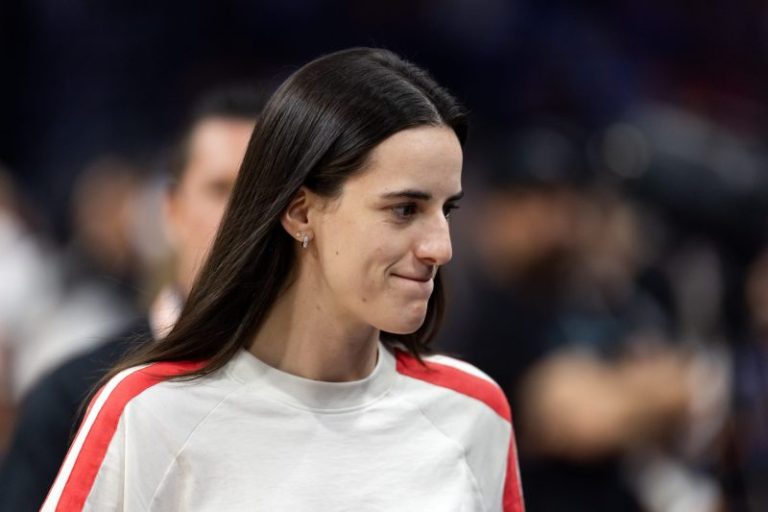
All eyes are on Caitlin Clark’s injury status after the Indiana Fever’s depth chart took yet another hit, but the All-Star won’t be making her highly anticipated return on the court on Tuesday, Aug. 12 against the Dallas Wings.

Fever point guards Sydney Colson (left ACL tear) and Aari McDonald (broken right foot) were both ruled out the remainder of the season after sustaining injuries in the Fever’s loss to the Phoenix Mercury on Aug. 7, further depleting Indiana’s depth at the point guard position amid Clark’s extended absence.

Clark last suited up for the Fever on July 15, when she suffered a right groin injury in Indiana’s 85-77 win over the Connecticut Sun. She subsequently missed 10 games, which will grow after Clark was ruled out of the Fever’s matchup against the Dallas Wings on Tuesday, marking her 11th consecutive missed game.

Head coach Stephanie White said that, although Clark has progressed in her recovery and has started running full court again, she hasn’t returned to practice just yet: an important step in her ramp-up.

‘She’s been able to get a little bit more in her full-court running with all of her body weight,’ White said on Monday, Aug. 11. ‘She’s been able to do a little more on the court in terms of how she moves, but not into practice yet.’

Here’s the latest on Clark’s injury and her expected return to the court:

Is Caitlin Clark playing Tuesday? Injury status for Fever-Wings

Clark was ruled out of the Indiana Fever’s matchup against the Wings in Indianapolis on Tuesday with a right groin injury. There is no timetable for Clark’s return.

The game is scheduled for 7:30 p.m. ET (4:30 p.m. PT) and will be televised on ESPN.

How was Caitlin Clark injured?

Clark suffered a right groin injury in the final minute of the Fever’s 85-77 victory over the Sun at TD Garden in Boston on July 15. With 39.1 seconds remaining in the contest, Clark completed a bounce pass to Kelsey Mitchell to put the Fever up 84-75. After the pass, Clark immediately grabbed for her right groin and grimaced as she gingerly walked over and headbutted the stanchion. She did not return to the game. 

How many games has Caitlin Clark missed this season?

Clark, who previously missed time due to a left quad injury and a left groin injury, has missed 19 of the Fever’s 32 games so far this season. Tuesday’s matchup against the Sparks will mark her 20th total absence. She also missed the Fever’s Commissioner’s Cup win over the Minnesota Lynx on July 1, in addition to the 2025 WNBA All-Star Game and the 3-point competition held in Indianapolis.

Indiana is 8-5 with Clark in the lineup and 10-9 without her on the floor.

Caitlin Clark injury timeline

  • May 24: Clark suffered a left quad injury during the Fever’s 90-88 loss to the New York Liberty, where she recorded a double-double with 18 points and 10 assists. Clark couldn’t pinpoint the specific play that caused her injury, but noted that it happened early in the contest. Clark said, ‘Adrenaline covers up a lot of stuff when you’re in the heat of battle. After the game, I had some pain, and then we got an MRI, and that kind of gave me the result that I didn’t want to see.’ She missed the Fever’s next five games.
  • June 14: Clark returned to Indiana’s lineup in the Fever’s 102-88 win over the Liberty and dropped 32 points, nine assists and eight rebounds in her first game back. 
  • June 24: Clark suffered a left groin injury in the Fever’s 94-86 win over the Seattle Storm, which resulted in Clark missing the team’s next four games. Head coach Stephanie White said she learned of Clark’s groin injury the following night after Clark alerted team trainers of discomfort.
  • July 1: Clark was ruled out of the Fever’s 2025 Commissioner’s Cup win over the Minnesota Lynx in Minneapolis. That didn’t stop Clark from rightfully celebrating the team’s hardware.
  • July 9: Clark returned to the Fever’s lineup in the Fever’s 80-61 loss to the Golden State Valkyries. Clark was limited to 10 points, shooting 4 of 12 from the field and 2 of 5 from the 3-point line, in addition to six assists, five rebounds and four turnovers. Following the blowout loss, Clark said it was ‘going to take me a second to get my wind back. … Just trying to get my legs under me.’
  • July 15: Clark suffered a right groin injury in the final minute of the Fever’s 85-77 victory over the Sun at TD Garden in Boston. White later confirmed Clark ‘felt a little something in her groin.’ This marked the last game for which Clark suited up.
  • July 18: Clark announced that she would sit out the 2025 WNBA All-Star Game in Indianapolis, where she was named a team captain. Clark was also set to participate in the 3-point contest. She said, ‘I am incredibly sad and disappointed to say I can’t participate … I have to rest my body.’
  • July 24: The Fever said Clark’s medical evaluations confirmed there’s ‘no additional injuries or damage,’ but the team said it will be cautious with Clark’s rehab and recovery.
  • August 8: During an appearance on Sue Bird’s podcast, ‘Bird’s Eye View,’ Clark spoke about the frustrations of her injury-filled season: “It’s not like I have a training camp to build up to play in my first game again. It’s like no, you’re tossed into Game 30 — like, ‘Go try to play well.’ It’s hard, it really is.”

Caitlin Clark stats

Clark is averaging 16.5 points, 5.0 rebounds and a career-high 8.8 assists in 13 games this season. Her assists average is the second-highest in the league, behind Phoenix’s Alyssa Thomas (9.0).

The USA TODAY app gets you to the heart of the news — fast. Download for award-winning coverage, crosswords, audio storytelling, the eNewspaper and more.

This post appeared first on USA TODAY

Veteran race car driver Robbie Brewer, 53, died following a crash during a race Aug. 9 at Bowman Gray Stadium in Winston-Salem, North Carolina – his daughter confirmed in a social media post.

Courtney Marquette wrote that her father was a mentor and best friend to her in a tribute posted to Facebook on the morning of Aug. 10.

“There wasn’t much my dad couldn’t fix/do when it came to his cars & racing was his absolute life which was no secret to anyone,” Marquette wrote. “He left this world doing what he loved but it was just way way too soon.”

“Unfortunately, I had a very direct line of sight into Brewer’s vehicle,” Tom Radulovic, who was in the stadium as a fan when the crash occurred, told the Winston-Salem Journal. “When they put him on the stretcher, I was able to see his hands, looking for that little wave athletes often give. There was no movement. My heart sank.”

Bowman Gray Stadium said in a statement provided to the Journal and the Associated Press that Brewer was taken to an area hospital following “an on-track medical incident.”

“Robbie was a talented and passionate racer, and highly respected competitor among his peers. Our thoughts and prayers are with Robbie’s family and friends at this time,” the statement reads.

USA TODAY has reached out to the track for the statement and did not receive an immediate response.

The Journal reported that Brewer’s death was the first at the track since 2002.

Veteran race driver loved at track

Driver Brad Lewis, whose race shop is close to where Brewer lived, told the Journal that Brewer was “like a big brother” and added that he was “a wheelman through and through.”

“I’m bet everybody in that pit area has a Robbie story and that’s a testament to what he meant to that place and to all of us who compete over there,” Lewis said.

Randy Smith, who has worked at the stadium for 16 years and was the track’s chief flagman Saturday night, told the newspaper that, “I don’t think there is one person that can say anything bad about Robbie.” 

Brewer was an 11-time winner in the Sportsman division at Bowman Gray and made 311 career starts at the historic stadium across all divisions, according to FloRacing. The racing outlet noted that Brewer was twice a 602 Modified Tour champion and a 602 Super Limited (Late Model) Series champion.

Marquette said in her tribute that her father had “a smile that was contagious” and an offbeat sense of humor.

“I’ll always try to remember the goofy jokes we had,” she wrote.

This post appeared first on USA TODAY

Baylor University has sued Boston University for the private university’s use of the interlocking ‘BU’ logo design.

The lawsuit, which was filed in Texas federal court on Aug. 8, is against the Trustees of Boston University and for federal trademark infringement, federal unfair competition and false designation of origin under the Trademark Act of 1946, Texas statutory trademark infringement and common law trademark infringement.

‘While Baylor does not generally object to Defendant’s use of the initials ‘BU’ in connection with its university, it does object to Defendant’s adoption and use of a specific interlocking BU design that is identical or strikingly similar to Baylor’s federally registered marks,’ states the lawsuit, which was obtained by the USA TODAY Sports Network.

The lawsuit states that Boston University’s interlocking ‘BU’ mark is ‘essentially identical and/or confusingly similar to Baylor’s federally registered Interlocking BU.’

The school is asking the court to require Boston University to ‘destroy all goods, packaging, signage, advertisements, internet postings and advertisements, and any other materials bearing or using an interlocking BU mark’ and for Baylor to recover the costs of this lawsuit, with interest, and to receive any further financial relief that is determined.

The lawsuit mentions that Baylor became aware of a promotion and sale of three hats by Boston University’s campus spirit store in 2018 that used ‘an essentially identical and/or confusingly similar interlocking BU’ logo. It said when Baylor when notified Boston University of this ‘in or around December 2021,’ the school ‘did not cease use’ of the logo.

Looking at Boston University’s website for the acceptable branding logos for the university and the university’s athletic department, the interlocking ‘BU’ logo that the lawsuit is referring to does not appear. The university’s athletic department page does, however, show a ‘BU’ logo with the letters side by side rather than interlocking.

The interlocking logo does appear in several offerings on Boston University’s Campus Store website and another website that sells Boston University-licensed merchandise, as alluded to in the lawsuit. Notably, the lawsuit mentions that the interlocking ‘BU’ logo that Baylor is seeking removal of is used by several of Boston University’s club sports programs, which look to be sponsored by Boston University’s Fitness and Recreation Center and not its athletic department.

This isn’t the first time that both universities have taken up this matter legally.

As noted in the lawsuit, Baylor applied to register the interlocking ‘BU’ logo design with the U.S. Patent and Trademark Office in 1987, but Boston University opposed the application. Both universities would settle a year later, when they signed an agreement that stated both universities ‘must be able to coexist by using the letters ‘BU’ for their respective universities.’

Baylor University, which competes in the Big 12 Conference, was founded in 1849. Boston University, which competes in the Patriot League and Hockey East, was founded in 1839.

USA TODAY Sports’ Scooby Axson contributed to this story

This post appeared first on USA TODAY

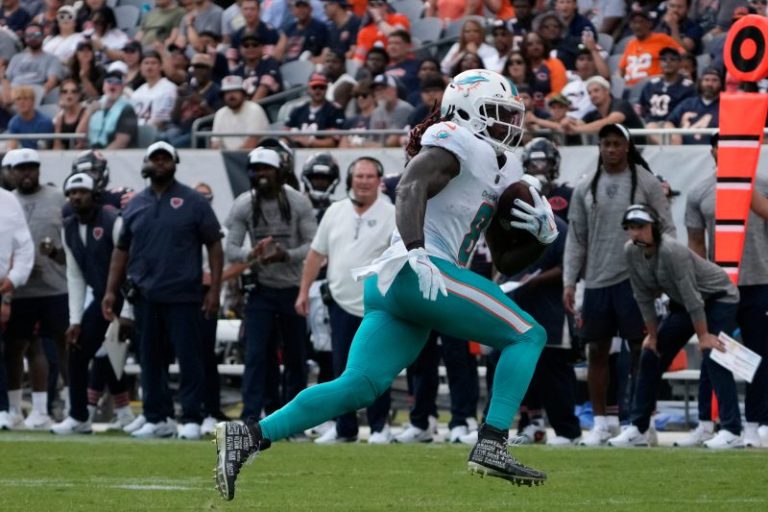
Miami Dolphins running back Alexander Mattison’s promising preseason and 2025 NFL season were cut short on Sunday.

The veteran running back, who was spending his first season with the Dolphins, suffered a neck injury in Miami’s first preseason matchup against the Chicago Bears, which will sideline him for the entirety of the 2025 season.

Mattison was taken to the hospital after suffering the neck injury and subsequently had surgery, according to ESPN.

That ends a promising offseason for Mattison, who was angling to make the roster as a depth running back. He was entering his first season with the Dolphins after signing a one-year deal with the team this offseason, after he spent the 2024 season with the Las Vegas Raiders.

Here’s the latest on Mattison:

Alexander Mattison injury update

The Dolphins running back underwent neck surgery and is out for the entirety of the 2025 NFL season, as confirmed by The Palm Beach Post (part of the USA TODAY Network).

Mattison is expected to make a full recovery and he has full strength and motion.

Mattison injured his neck in Miami’s preseason Week 1 matchup vs. the Bears. Following a catch out of the backfield, Mattison collided with Bears defensive back Alex Cook, and he was thrown to the ground awkwardly.

The running back did walk off the field under his own power and gave a thumbs-up to fans. He was later taken to the hospital by ambulance.

Mattison was a standout in Dolphins camp and entered preseason Week 1 as the second back behind De’Von Achane. Mattison finished his matchup with three rushes for eight yards and one reception for 21 yards.

This story will be updated.

This post appeared first on USA TODAY

Lithium, a naturally occurring trace element in the brain, may be able to unlock a key medical mystery: why some people develop Alzheimer’s disease and others don’t, despite similar brain changes.

In a recently published study, scientists at Harvard Medical School state that lithium not only exists in the human brain at biologically meaningful levels, but also appears to protect against neurodegeneration.

Additionally, their work shows that lithium supports the function of all major brain cell types.

The decade-long study drew on mouse experiments and analyses of human brain and blood samples across the spectrum of cognitive health. The Harvard team discovered that as amyloid beta, the sticky protein associated with Alzheimer’s, begins to accumulate, it binds to lithium and depletes its availability in the brain. This drop in lithium impairs neurons, glial cells and other brain structures, accelerating memory loss and disease progression.

“The idea that lithium deficiency could be a cause of Alzheimer’s disease is new and suggests a different therapeutic approach,” said Bruce Yankner, who is the senior author of the study.

Yankner, a professor of genetics and neurology at Harvard Medical School who in the 1990s was the first to show that amyloid beta is toxic to nerve cells, said the new findings open the door to treatments that address the disease in its entirety, rather than targeting single features like amyloid plaques or tau tangles.

To explore this possibility, researchers screened for lithium compounds that could evade capture by amyloid beta.

They identified lithium orotate as the most promising candidate. In mice, the compound reversed Alzheimer’s-like brain changes, prevented cell damage and restored memory, even in animals with advanced disease.

Crucially, the effective dose was about one-thousandth of that used in psychiatric treatments, avoiding the toxicity risk that has hampered lithium’s clinical use in older patients.

“You have to be careful about extrapolating from mouse models, and you never know until you try it in a controlled human clinical trial,” Yankner cautioned. “But so far the results are very encouraging.”

The path to these findings began with access to an unusually rich source of brain tissue.

Working with the Rush Memory and Aging Project in Chicago, the team examined postmortem samples from thousands of donors, from cognitively healthy individuals to those with mild cognitive impairment and full-blown Alzheimer’s.

Using advanced mass spectrometry, they measured trace levels of about 30 metals. Lithium stood out as the only one whose levels dropped sharply at the earliest stages of memory loss.

The pattern matched earlier population studies linking higher environmental lithium levels, including in drinking water, to lower dementia rates. But unlike those correlations, the Harvard team directly measured brain lithium and established a normal range for healthy individuals who had never taken lithium as medication.

“Lithium turns out to be like other nutrients we get from the environment, such as iron and vitamin C,” Yankner said. “It’s the first time anyone’s shown that lithium exists at a natural level that’s biologically meaningful without giving it as a drug.”

To test whether this deficiency was more than an association, the researchers fed healthy mice a lithium-restricted diet, lowering brain lithium to levels seen in Alzheimer’s patients.

The animals developed brain inflammation, lost connections between neurons and showed cognitive decline; however, replenishing them with lithium orotate reversed these changes. What’s more, mice given the compound from early adulthood were protected from developing Alzheimer’s-like symptoms altogether.

The findings raise several possibilities. Measuring lithium levels in blood could become a tool for early screening, identifying people at risk before symptoms emerge. Furthermore, amyloid-evading lithium compounds could be tested as preventive or therapeutic agents, potentially altering the disease course more fundamentally than existing drugs.

For now, researchers stress that no one should self-medicate with lithium supplements.

The team emphasized that the safety and efficacy of lithium orotate in humans remain unproven, and clinical trials will be needed to determine whether the dramatic benefits seen in mice translate to people.

Securities Disclosure: I, Giann Liguid, hold no direct investment interest in any company mentioned in this article.

This post appeared first on investingnews.com

Strong demand in the face of looming supply shortages has pushed copper to new heights in recent years.

With a wide range of applications in nearly every sector, copper is by far the most industrious of the base metals. In fact, for decades, the copper price has been a key indicator of global economic health, earning the red metal the moniker “Dr. Copper.” Rising prices tend to signal a strong global economy, while a significant longer-term drop in the price of copper is often a symptom of economic instability.

After bottoming out at US$2.17 per pound, or US$5,203.58 per metric ton (MT), in mid-March 2020, copper has largely been on an upward trajectory.

Why is copper so expensive in 2025? Higher copper prices over the past few years have largely been attributed to a widening supply/demand gap. The already tenuous copper supply picture was made worse by COVID-19 lockdowns, and as the world’s largest economies seemingly began to emerge from the pandemic, demand for the metal picked up once again. Copper mining and refining activities simply haven’t kept up with the rebound in economic activity.

In this article

    What key factors drive the price of copper?

    Robust demand has long been one of the strongest factors driving copper prices. The ever-growing number of copper uses in everyday life — from building construction and electrical grids to electronic products and home appliances — make it the world’s third most-consumed metal.

    Copper’s anti-corrosive and highly conductive properties are why it’s the go-to metal for the construction industry, and it’s used in products such as copper pipes and copper wiring. In fact, construction is responsible for nearly half of global copper consumption. Rising demand for new homes and home renovations in both Asian and Western economies is expected to support copper prices in the long term.

    In recent decades, copper price spikes have been strongly tied to rising demand from China as the economic powerhouse injects government-backed funding into new housing and infrastructure. Industrial production and construction activity in the Asian nation have been like rocket fuel for copper prices.

    Additionally, copper’s conductive properties are increasingly being sought after for use in renewable energy applications, including thermal, hydro, wind and solar energy.

    However, the biggest driver of copper consumption in the renewable energy sector is rising global demand for electric vehicles (EVs), EV charging infrastructure and energy storage applications. As governments push forward with transportation network electrification and energy storage initiatives as a means to combat climate change, copper demand from this segment is expected to surge.

    New energy vehicles use significantly more copper than internal combustion engine vehicles, which only contain about 22 kilograms of copper. In comparison, hybrid EVs use an average of 40 kilograms, plug-in hybrid EVs use 55 kilograms, battery EVs use 80 kilograms and battery electric buses use 253 kilograms.

    In 2024, EV sales worldwide increased by 25 percent over 2023 to come in at about 17.1 million units, and analysts at Rho Motion expect that trend to continue in the coming years despite some headwinds in the near-term. Already in the first five months of 2025, EV sales were up 28 percent over the same period in the previous year.

    On the supply side of the copper market, the world’s largest copper mines are facing depleting high-grade copper resources, while over the last decade or more new copper discoveries have become few and far between.

    The pandemic made the situation worse as mining activities in several top copper-producing countries faced work stoppages and copper companies delayed investments in further exploration and development — a challenging problem considering it can take as many as 10 to 20 years to move a project from discovery to production. In addition, delayed investments amid the pandemic will also have long-term repercussions for copper supply.

    There have also been ongoing production issues at major copper mines, most notably the shutdown in late 2023 of First Quantum Minerals’ (TSX:FM,OTC Pink:FQVLF) Cobre Panama mine, which accounted for about 350,000 MT of the world’s annual copper production.

    The International Energy Agency (IEA) is forecasting a 30 percent shortfall in the amount of copper needed to meet demand by 2035. “This will be a major challenge. It’s time to sound the alarm,” IEA Executive Director Fatih Birol said.

    The supply shortage has increased the need for end users to turn to the copper scrap market to make up for the supply shortage. Sometimes referred to as “the world’s largest copper mine,” recycled copper scrap contributes significantly to supplying and balancing the copper market.

    “We are seeing signs this could change. Much of the growth over the last five years has come from brownfield expansions rather than greenfield/new discoveries,’ she said. ‘Technology will likely help increase the chance of discovery, and broadly I would say that policymakers are now more supportive of mineral exploration as the push to secure critical raw materials supply has moved up the agenda.’

    Joannides offered some examples of greenfield projects in the pipeline: Capstone Copper’s (TSX:CS,OTC Pink:CSCCF) Santo Domingo in Chile, Southern Copper’s (NYSE:SCCO) Tia Maria in Peru and Teck Resources’ (TSX:TECK.A,TECK.B,NYSE:TECK) Zafranal in Peru.

    How has the copper price moved historically?

    Taking a look back at historical price action, the copper price has had a wild ride for more than two decades.

    Sitting at US$1.38 per pound in late January 2005, the copper price followed global economic growth up to a high of US$3.91 in April 2008. Of course, the global economic crisis of 2008 soon led to a copper crash that left the metal at only US$1.29 by the end of year.

    Once the global economy began to recover in 2011, copper prices posted a new record high of US$4.58 per pound at the start of the year. However, this high was short-lived as the copper price began a five year downward trend, bottoming out at around US$1.95 in early 2016.

    Copper prices stayed fairly flat over the next four years, moving in a range of US$2.50 to US$3 per pound.

    20 year copper price performance.

    Chart via Macrotrends.

    The pandemic’s impact on mine supply and refined copper in 2020 pushed prices higher despite the economic slowdown. The copper price climbed from a low of US$2.17 in March to close out the year at US$3.52.

    In 2021, signs of economic recovery and supercharged interest in EVs and renewable energy pushed the price of copper to rally higher and higher. Copper topped US$4.90 per pound for the first time ever on May 10, 2021, before falling back to close at US$4.76.

    Also affecting the copper price at that time was expectations for higher copper demand amid supply concerns out of two of the world’s major copper producers: Chile and Peru. In late April 2021, port workers in Chile called for a strike, while in Peru presidential candidate Pedro Castillo proposed nationalizing mining and redrafting the country’s constitution.

    In early May 2021, news broke that copper inventories were at their lowest point in 15 years. Expert market watchers such as Bank of America commodity strategist Michael Widmer warned that further inventory declines into 2022 could lead to a copper market deficit.

    After climbing to start 2022 at US$4.52, the copper price continued to spike on economic recovery expectations and supply shortages to reach US$5.02 per pound on March 6. Throughout the first quarter, fears of supply chain disruptions and historically low stockpiles amid rising copper demand drove prices higher.

    However, copper prices pulled back in mid-2022 on worries that further COVID-19 lockdowns in China, as well as a growing mortgage crisis, would slow down construction and infrastructure activity in the Asian nation. Rising inflation and interest hikes by the Fed also placed downward pressure on a wide basket of commodities, including copper. By late July 2022, copper prices were trading down at nearly a two year low of around US$3.30.

    In the early months of 2023 the copper price was trading over the US$4 per pound level after receiving a helpful boost from continuing concerns about low copper inventories, signs of rebounding demand from China, and news about the closure of Peru’s Las Bambas mine, which accounts for 2 percent of global copper production.

    However, that boost turned to a bust in the second half of 2023 as China continued to experience real estate sector issues, alongside the economic woes of the rest of the world. The price of copper dropped to a low for the year of US$3.56 per pound in mid October.

    Elevated supply levels kept copper trading in the US$3.50 to US$3.80 range for much of Q1 2024 before experiencing strong gains that pushed the price of the red metal to US$4.12 on March 18.

    Those gains were attributed to in part to tighter copper concentrate supply following the closure of First Quantum Minerals’ Cobre Panama mine, guidance cuts from Anglo American (LSE:AAL,OTCQX:AAUKF) and declining production at Chile’s Chuquicamata mine. In addition, China’s top copper smelters announced production cuts after limited supply led to lower profits from treatment and refining charges.

    BHP’s (ASX:BHP,NYSE:BHP,LSE:BHP) attempted takeover of Anglo American also stoked fears of even tighter global copper mine supply. These supply-side challenges continued to juice copper prices in Q2 2024, causing a jump of nearly 29 percent from US$4.04 per pound on April 1 to a then all-time high of US$5.20 by May 20, 2024.

    What was the highest price for copper ever?

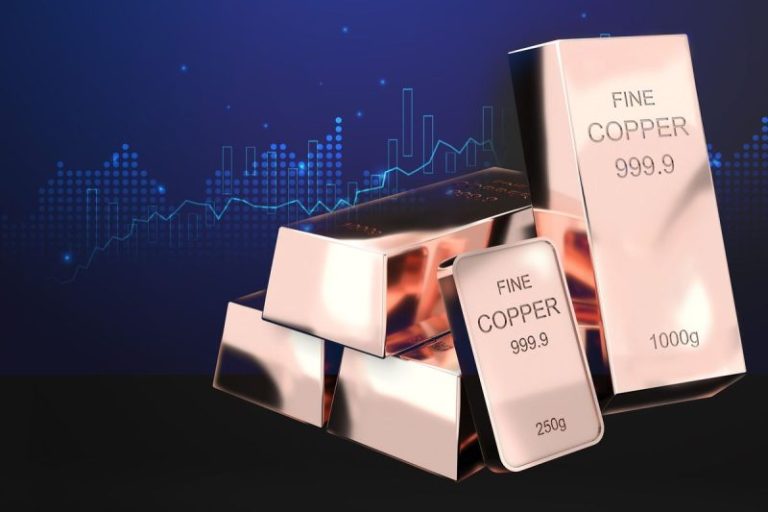
    The price of copper reached its highest recorded price of US$5.959 per pound, or US$13,137.75 per metric ton, on July 24, 2025. It hit this peak during intra-day trading before closing the day at US$5.88. The red metal’s price surged more than 17 percent since the start of July to its new all time high. Read on to found out how the copper price reached those heights.

    Why did the copper price hit an all-time high in 2025?

    After starting 2025 at US$3.99 per pound, copper prices were lifted in Q1 by increasing demand from China’s economic stimulus measures, renewable energy and artificial intelligence (AI) technologies and stockpiling brought on by fear of US President Trump’s tariff threats.

    At the time, Trump had said the US was considering placing tariffs of up to 25 percent on all copper imports in a bid to spark increased domestic production of the base metal.

    In late February, he signed an executive order instructing the US Commerce Department to investigate whether imported copper poses a national security risk under Section 232 of the Trade Expansion Act of 1962. The price of copper reached a new high price of US$5.24 per pound on March 26 as tariff tensions escalated.

    Trump’s tariff talk sparked yet another copper price rally to set its new record high price in early July when he announced he plans to impose a 50 percent tariff on all imports of the red metal, and it moved higher towards the end of the month in anticipation of them entering effect.

    However, copper’s price plummeted from its heights on July 31 following the reveal that tariffs would not be imposed on imports of raw or refined copper, instead targeting semi-finished copper products.

    Looking at the bigger picture, copper’s rally in recent years has encouraged bullish sentiment on prices looking ahead. In the longer term, the fundamentals for copper are expected to get tighter as demand increases from sectors such as EVs and energy storage. A May 2024 report from the International Energy Forum (IEF) projects that as many as 194 new copper mines may need to come online by 2050 to support massive demand from the global energy transition.

    Looking over to renewable energy, according to the Copper Development Association, solar installations require about 5.5 MT of copper for every megawatt, while onshore wind turbines require 3.52 MT of copper and offshore wind turbines require 9.56 MT of copper.

    The rise of AI technology is also bolstering the demand outlook for copper. Commodities trader Trafigura has said AI-driven data centers could add one million MT to copper demand by 2030, reports Reuters.

    Where can investors look for copper opportunities?

    Copper market fundamentals suggest a return to a bull market cycle for the red metal in the medium-term. The copper supply/demand imbalance also presents an investment opportunity for those interested in copper-mining stocks.

    Securities Disclosure: I, Melissa Pistilli, hold no direct investment interest in any company mentioned in this article.

    This post appeared first on investingnews.com

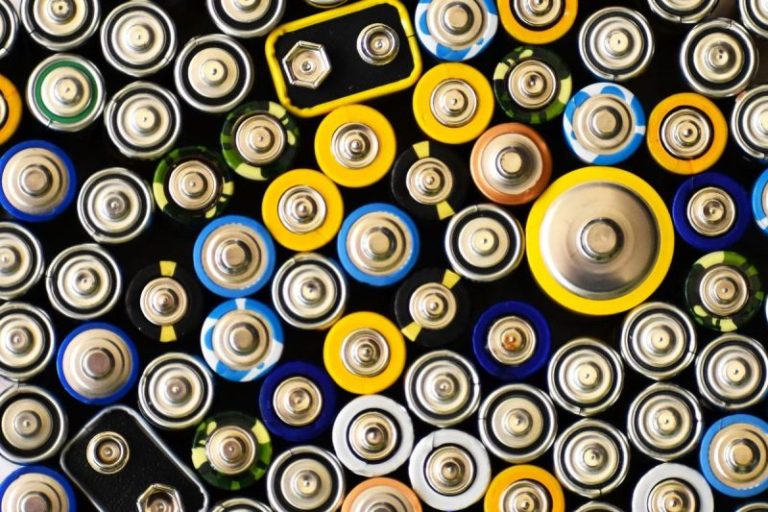
    Generative artificial intelligence (AI) has helped a group of scientists identify five new materials that could power the next wave of batteries without relying on lithium.

    The study, published on June 26 in Cell Reports Physical Science, focuses on materials that could enable multivalent-ion batteries — a technology long touted for its potential, but hindered by practical challenges.

    The lithium problem for batteries

    Lithium dominates in batteries used in everything from smartphones to electric vehicles, but faces challenges — it is costly to extract, geographically concentrated and comes with environmental and geopolitical concerns.

    As global demand for batteries surges, researchers are racing to find viable alternatives that are both abundant and efficient. Multivalent-ion batteries offer one potential path forward. Unlike lithium-ion batteries, which carry a single positive charge, multivalent-ion batteries using materials like magnesium or zinc carry two or three.

    In theory, this means that they can pack more energy into the same space. However, their larger size and stronger charge make it difficult for them to move through standard battery materials.

    “One of the biggest hurdles wasn’t a lack of promising battery chemistries — it was the sheer impossibility of testing millions of material combinations,” said lead author Dibakar Datta, a professor of mechanical and industrial engineering at the New Jersey Institute of Technology. “We turned to generative AI as a fast, systematic way to sift through that vast landscape and spot the few structures that could truly make multivalent batteries practical.”

    To tackle the challenge, Datta’s team developed a “dual AI” system. The first part, a crystal diffusion variational autoencoder (CDVAE), was trained on vast datasets of known crystal structures. It could generate entirely new porous transition metal oxides, a class of material known for its structural flexibility and ionic conductivity.

    The second part was a fine-tuned large language model (LLM) designed to narrow the list.

    It focused on materials closest to thermodynamic stability, a critical factor in determining whether a compound can realistically be made and used in the real world.

    The CDVAE cast a wide net, creating thousands of hypothetical structures with large, open channels. The LLM then acted as a filter, selecting only those most likely to hold up under actual manufacturing and operational conditions.

    Five new battery candidates

    “Our AI tools dramatically accelerated the discovery process, which uncovered five entirely new porous transition metal oxide structures that show remarkable promise,” Datta said.

    These structures, the study suggests, offer unusually large pathways for ion movement, a crucial step toward making multivalent batteries that charge quickly and last for long periods of time. Quantum mechanical simulations and stability tests confirmed that the materials should be both synthetically feasible and structurally sound.

    The five compounds now move to the next stage — experimental synthesis in collaboration with partner laboratories. If successful, they could be incorporated into prototype batteries and eventually scaled for commercial production.

    Traditional materials research is often a painstaking, years-long process of hypothesis, synthesis and testing.

    By contrast, AI can rapidly explore enormous “material spaces” that would be impossible for humans to search manually, flagging only the most promising candidates for further investigation.

    What it means for the batteries of tomorrow

    Multivalent-ion batteries have been studied for decades, yet few have reached commercial readiness because the necessary materials either didn’t conduct ions well enough or degraded too quickly.

    By using AI to overcome that bottleneck, the research team hopes to accelerate not just battery chemistry, but also the infrastructure needed to support electrification on a global scale.

    However, the five materials identified by Datta’s team aren’t ready to replace lithium tomorrow. They still need to be synthesized, tested in lab-scale batteries and proven to perform under real-world conditions.

    Safety, scalability and cost effectiveness all remain open questions.

    Still, the study’s authors argue that their AI framework has already proven its value by shrinking what could have been a decades-long search into a matter of months.

    “This is more than just discovering new battery materials — it’s about establishing a rapid, scalable method to explore any advanced materials, from electronics to clean energy solutions, without extensive trial and error,” Datta added.

    Securities Disclosure: I, Giann Liguid, hold no direct investment interest in any company mentioned in this article.

    This post appeared first on investingnews.com