Author

admin

Browsing

The San Francisco 49ers racked up 13 wins in 2025 but finished third in their own division. They’re looking to improve and catch up to the Los Angeles Rams and Super Bowl champion Seattle Seahawks in 2026.

They’ll have to do it after settling a reported contract dispute with their star offensive lineman.

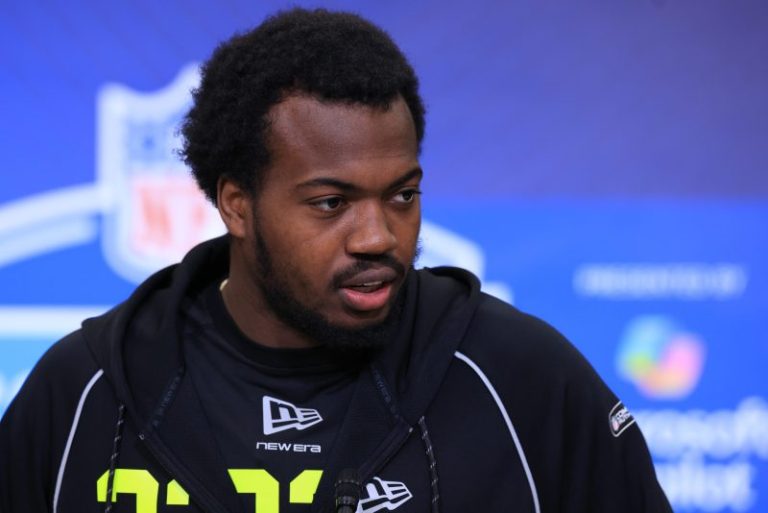
San Francisco and left tackle Trent Williams are ‘struggling to find a contractual solution’ for 2026, per ESPN’s Adam Schefter. Williams, 37, is entering the final year of his current extension and is carrying a nearly $39 million cap hit for 2026.

Williams is the second-highest paid left tackle in the NFL by average annual value (AAV) behind only the Los Angeles Chargers’ Rashawn Slater, per OverTheCap.

Williams signed a new extension late in the 2024 offseason after the 49ers reached Super Bowl 58 following a holdout. He played in 10 games that season but returned healthy for 2025 and made his 12th career Pro Bowl.

The five-time All-Pro left tackle is entering his age-38 season in 2026.

San Francisco currently has $41.2 million in cap space for 2026 per OverTheCap, 11th-most in the NFL for the upcoming season. His cap number of $38.84 million is the second-highest on the team entering 2026 behind edge rusher Nick Bosa ($41.61 million).

This post appeared first on USA TODAY

Gold royalty companies offer investors exposure to gold and silver with the benefits of diversification, lower risk and a steady income stream.

Royalty companies operating in the resource sector will typically agree to provide funding for the exploration or development of a resource in exchange for a percentage of revenue from the deposit if it begins producing. Similarly, a company with a streaming model may work out an agreement with a resource company for a share of the metal produced from a deposit in exchange for an investment.

These kinds of arrangements benefit both parties. Streamers get access to the underlying commodity at a fixed price and are shielded from cost overruns and spikes in production. Further, if there is a price decrease the metals can be warehoused until the market conditions improve.

In both cases, mining companies receive considerable upfront investment during the expensive construction and expansion phases, and unlike loans these investments have longer-term payouts at a fixed amount.

Let’s take a deeper look at how royalties and streaming works, the benefits of the royalty business model, and the gold and silver royalty and streaming stocks you can invest in.

In this article

    How do gold and silver royalties work?

    Gold and silver royalty agreements involve royalty companies agreeing to provide funding for the exploration or development of a precious metals resource in exchange for a percentage of revenue from the deposit if it begins producing metals.

    The foundation for royalties dates back a few hundred years. Originally, they were payments made to the British monarchy in exchange for miners’ rights to operate gold and silver mining operations on lands held by the crown. Today, these arrangements still exist, with mining operators paying the government a share of the revenues generated from exploiting resources on public lands.

    The first royalty paid to a company in the gold sector was an agreement in 1986 in which Franco-Nevada (TSX:FNV,NYSE:FNV) made a US$2 million investment into Western States Minerals’ Goldstrike small heap-leach mine in Nevada, US, for a 4 percent share of revenues collected from the mine. Western States was sold the same year to Barrick Gold (TSX:ABX,NYSE:GOLD). Barrick discovered a far larger resource at the site, and the royalty has since earned Franco-Nevada more than US$1 billion and continues to pay out approximately US$20 million per year.

    This early example set a precedent for the industry. It saw Franco-Nevada, which was then a gold exploration company, lock itself into what became one of the largest gold mineral resources in the world at a relatively low overhead while avoiding future costs associated with the growth and maintenance of the mine.

    How do gold and silver streams work?

    Gold and silver streams work in a similar manner to the royalty model but returns are in the form of physical metals rather than funds. In return for investing in an asset, a gold streaming company may work out an agreement with a resource company for a share of the metal produced from a deposit, or for the ability to purchase the metal at a lower price than market value.

    This is also a popular model with base metal mining companies whose operations result in gold and/or silver by-products. In these cases, gold and silver streaming companies may work out a deal with a base metal mining operation to take delivery of a certain amount of precious metals at an agreed upon price.

    The Goldstrike royalty made Franco-Nevada what it is today, but its largest contributing asset in its portfolio is a deal with Lundin Mining (TSX:LUN,OTC Pink:LUNMF) for a stream of the gold and silver resources extracted from its Candelaria copper mine in Chile.

    Under the terms of the deal, which was part of Lundin’s 2014 acquisition of Freeport-McMoRan’s (NYSE:FCX) stake in Candelaria, Franco-Nevada provided a US$648 million deposit in exchange for a 68 percent stream of the asset’s silver and gold. This will decrease to 40 percent once 720,000 ounces of gold and 12 million ounces of silver have been delivered.

    While Franco-Nevada does have to pay for the metal, the agreed upon amount is far under the current market value. At the time, the deal was set at US$400 for each ounce of gold and US$4 per ounce of silver with a 1 percent inflationary adjustment, or market price if that was less.

    Are royalty and streaming companies a good investment?

    Royalty and streaming companies are largely seen as a lower-risk investment than mining companies. Lower operational costs and higher portfolio diversification means they are hedged against a mine shutdown, natural disaster, market forces or the politics that may affect the nature of an operation or project. However, that’s not to say royalty and streaming deals aren’t without their risks.

    In many ways, gold royalty companies are like venture capitalists in the tech industry, working to fund many projects in the hopes that some will see big payoffs that offset the loss from the ones that don’t make it. This means they need large access to funding in order to build their portfolios.

    To get funding, royalty and streaming companies have several options: using cash on hand, raising debt through loans or issuing more shares. Each of these options carries risk. Using cash to pay for investments could reduce the size of the safety net and eat into company liquidity, debt needs to be managed to ensure that payments don’t exceed income and the issuance of stock could lead to an overall devaluation of share price and impact investor sentiment.

    Once companies have developed strong cash flows and good liquidity, they are able to take advantage of their own reserves, without the need to worry about loans or stock dilution. The same cannot be said for the up-and-coming companies who need to rely on external funding to make deals, making them riskier.

    These companies provide a good entry point for investors with lower share price, and have more potential to return higher percentage gains in share price, they also bear more risk. With more reliance on raising external capital, there is a greater need for deals to be successful and a greater chance for a company to incur more debt load or stock dilution.

    Diverse portfolios can help reduce the risk associated with a royalty company, and companies like Franco-Nevada have the industry knowledge and financial capital to take some risks. As of February 2025, the company has 430 assets on their books; of those, 119 are producing, and 38 are in the advanced stages of development. It’s the 273 more that are in the exploration phase, many of which will never provide returns, that represent the greatest risk.

    Of course, unforeseen events can affect both mining and royalty companies alike, particularly when assets that take up a larger percentage or a portfolio are affected. Franco-Nevada had more than US$1 billion invested in First Quantum’s (TSX:FM,OTC Pink:FQVLF) Cobre Panama mine before it was shuttered by the Panamanian government following protests at the end of 2023. The mine brought in US$223.3 million for Franco-Nevada in 2022 and represented nearly a quarter of its precious metal income. While it fared better than First Quantum, the royalty company’s share price took a significant hit.

    Top 5 gold and silver royalty companies

    The biggest companies in the precious metals royalty and streaming space have long histories and have built positive reputations on the backs of strong investments. They offer a means for investors to de-risk an entry into the gold sector by maintaining an arms-length attachment to it.

    The five large-cap gold and silver royalty and streaming companies on this list had market caps above $1 billion in their respective currencies as of February 24, 2026.

    1. Wheaton Precious Metals (TSX:WPM,NYSE:WPM)

    Market cap: C$96.95 billion
    Share price: C$215.66

    Wheaton Precious Metals was established in 2004 as Silver Wheaton with a focus on silver streaming. Goldcorp held a majority interest, but began to reduce it in 2006 and by 2008 had completely divested itself. By that time, Silver Wheaton had begun to diversify into other precious metals. The following year, Silver Wheaton acquired rival silver streaming stock Silverstone Resources in a C$190 million deal.

    Silver Wheaton changed its name in 2017 to Wheaton Precious Metals and has since built itself into one of the largest players in the gold and silver royalty and streaming space, with investments in 23 operating mines and 25 development projects across five continents.

    Included in Wheaton’s assets are investments in Newmont’s (TSX:NGT,NYSE:NEM,ASX:NEM) Peñasquito mine in Mexico, Sibanye Stillwater’s (NYSE:SBSW) Stillwater and East Boulder mines in Montana, United States, and Hudbay Minerals’ (TSX:HBM,NYSE:HBM) Copper World Complex project in Arizona, US.

    2. Franco-Nevada (TSX:FNV,NYSE:FNV)

    Market cap: C$71.55 billion
    Share price: C$374.47

    A trailblazer in the gold royalty business, Franco-Nevada has set a high bar. The current iteration of the company was spun out of Newmont in what became a C$1.1 billion initial public offering, one of the biggest IPOs of 2007.

    Franco-Nevada now has a portfolio of royalties and streams on 119 producing assets around the world including gold, silver, base metal and oil and gas operations, which generate more than US$1.2 billion for the company annually. Additionally, the company’s portfolio includes 38 advanced-stage assets and 273 exploration-stage assets.

    Among the producing assets for which Franco-Nevada has precious metals streams and royalties are Glencore’s (LSE:GLEN,OTC Pink:GLCNF) Antapaccay mine in Peru, Agnico Eagle’s (NYSE:AEM,TSX:AEM) Detour Lake mine in Ontario, Canada, and Gold Fields’ (NYSE:GFI) Salares Norte mine in Chile.

    See the sections above for more information on Franco-Nevada’s royalty and streaming deals.

    3. Royal Gold (NASDAQ:RGLD)

    Market cap: US$24.43 billion
    Share price: US$288.04

    Royal Gold got its start in 1981 as oil and gas exploration and production company Royal Resources.

    Responding to shifts in the overall resource market, by 1987, Royal Gold was born with a focus on building a portfolio of minority positions in significant gold properties operated by major mining firms.

    Today, Royal Gold is a leading precious metals streaming and royalty company with interest in about 400 properties, of which 82 are producing assets, across 31 countries.

    About half of its portfolio came from its October 2025 acquisition of Sandstorm Gold and Horizon Copper, which combined for 230 royalty assets, including 40 producing assets.

    Among Royal Gold’s royalty assets are Barrick Mining (TSX:ABX,NYSE:B) and Newmont’s Cortez mine in Nevada, US, Teck’s (TSX:TECK.A,TECK.B,NYSE:TECK) Andacollo mine in Chile and Centerra Gold’s (TSX:CG,NYSE:CGAU) Mount Milligan mine in British Columbia, Canada.

    4. Triple Flag Precious Metals (TSX:TFPM)

    Market cap: C$10.96 billion
    Share price: C$53.67

    Triple Flag Precious Metals was founded in 2016 by Shaun Usmar, a former Barrick executive and current CEO of Vale’s (NYSE:VALE) Vale Base Metals.

    Although the company is a relative newcomer to the royalty and streaming space, it has quickly established itself as a frontrunner through several significant deals. Among them was the acquisition of Maverix Metals in January 2023, which helped them become the fourth-largest precious metals royalty company.

    Today, Triple Flag has a global portfolio of gold and silver assets on nearly every continent, comprising 33 production assets and 206 in development or exploration.

    Highlights from its portfolio include streaming and royalty deals on Evolution Mining’s (ASX:EVN,OTC Pink:CAHPF) Northparkes mine in New South Wales, Australia, Nexa Resources’ (NYSE:NEXA) Cerro Lindo mine in Peru, and Westgold Resources’ (ASX:WGX,OTC Pink:WGXRF) Beta Hunt mine in Western Australia.

    5. OR Royalties (TSX:OR,NYSE:OR)

    Market cap: C$11.49 billion
    Share price: C$62.31

    Previously named Osisko Gold Royalties, OR Royalties was created in 2014 as a spinoff deal between Osisko Mining (TSX:OSK), Yamana Gold and Agnico Eagle Mines (TSX:AEM,NYSE:AEM). The deal was made in an attempt to prevent a hostile takeover of Osisko Mining and its Canadian Malartic gold complex by Goldcorp, now part of Newmont.

    In the deal, OR Royalties carried with it a 5 percent net smelter return royalty from the Canadian Malartic mine. Now owned by Agnico Eagle, the complex in Québec remains a cornerstone of the royalty company’s business today.

    The gold and silver royalty and streaming company has gone on to amass royalties, streams and offtakes for 195 assets, 22 of which are producing, across six continents.

    The majority are located in North America, including one of the most well-known gold-producing mines in the world, Agnico Eagle’s Canadian Malartic complex in Québec, as well as SSR Mining’s (NASDAQ:SSRM,TSX:SSRM) Seabee mine in Saskatchewan, Canada, and Kinross Gold’s (TSX:K,NYSE:KGC) Bald Mountain mine in Nevada.

    Small-cap gold and silver royalty companies

    There are also small-cap gold and silver royalty and streaming companies you can invest in and offer a lower-cost option for investors who are comfortable with a little more risk. Like their larger counterparts, small-cap gold royalty stocks offer a lower-risk investment than getting into a small-cap mining company but still provide access to the underlying precious metals market.

    The five small-cap gold and silver royalty companies on this list had market caps above $10 million in their respective currencies as of February 24, 2026.

    1. Gold Royalty (NYSEAMERICAN:GROY)

    Market cap: US$1.04 billion
    Share price: US$4.59

    Gold Royalty is building a diversified portfolio of more than 240 gold royalty and gold streaming interests based on net smelter return royalties on properties in the Americas.

    The company’s revenue generating investments include Agnico Eagle’s Canadian Malartic complex in Québec, DPM Metals’ (TSX:DPM) Vareš mine in Bosnia and Herzegovina, and Discovery Silver’s (TSX:DSV,OTCQX:DSVSF) Borden mine in Ontario.

    2. Metalla Royalty & Streaming (TSXV:MTA,NYSE:MTA)

    Market cap: C$1.04 billion
    Share price: C$11.67

    Metalla Royalty & Streaming focuses on gold, silver and copper projects. The company’s royalty model involves acquiring royalties and streams by offering resource companies Metalla shares and cash.

    The mid-tier royalty and streaming company’s asset portfolio includes more than 100 projects across North America, South America and Australia. Its cornerstone assets include IAMGOLD (TSX:IMG,NYSE:IAG) and Sumitomo Metal Mining’s (OTC Pink:SSUMF,TSE:5713) Côté gold mine in Ontario, Canada, and First Quantum Minerals’ (TSX:FM) Taca Taca project in Argentina.

    3. Vox Royalty (TSX:VOXR,NASDAQ:VOXR)

    Market cap: C$518.16 million
    Share price: C$7.81

    Vox Royalty is a precious metals focused royalty company first established in 2014. The company has acquired an asset portfolio of 70 royalties, 32 of which were added since 2019, across Australia, the Americas and South Africa.

    Roughly 70 percent of its portfolio is dedicated to gold, silver and platinum group companies. The remainder of its portfolio is diversified across a wide range of resources, including copper, uranium, iron and diamonds.

    The majority of the eight producing assets in its portfolio are located in Australia, including a 1 percent net smelter return from Black Cat Syndicate’s Bulong gold mine, and a 2.5 percent net smelter return from Northern Star Resources’s (ASX:NST,OTCPL:NESRF) Otto Bore gold mine.

    As for development stage projects, its assets in Canada include a 1 percent net smelter return on NexGold Mining’s (TSXV:NEXG,OTCQX:NXGCF) Goldlund project and a 2 percent gross proceeds royalty on Alamos Gold’s (TSX:AGI,NYSE:AGI) Lynn Lake project in Canada.

    4. Sailfish Royalty (TSXV:FISH,OTCQX:SROYF)

    Market cap: C$324.08 million
    Share price: C$3.79

    Founded in 2014, Sailfish Royalty’s asset portfolio is much smaller than the other gold royalty stocks on this list. It consists of one producing mine as well as two development-stage and two exploration-stage properties in the Americas.

    In Nicaragua, Sailfish has a gold stream equivalent to a 3 percent net smelter return on Mako Mining’s (TSXV:MKO,OTCQX:MAKOF) San Albino gold mine and a 2 percent net smelter return on the area surrounding the mine. The company also holds a 13,500 ounce per quarter silver stream at the property, which was set to expire in May 2025. At the end of April 2025, Sailfish chose to exercise its option to purchase all silver for the life of the mine.

    5. Nations Royalty (TSXV:NRC,OTCQB:NRYCF)

    Market cap: C$160.68 million
    Share price: C$1.16

    Nations Royalty is a fledgling royalties company that first began trading in June 2024 and holds Indigenous-owned royalties. It was founded by the Nisga’a Nation of British Columbia, Canada, and by Wheaton Precious Metals co-founder Frank Giustra. It is the first publicly traded company in Canada to have a majority Indigenous ownership.

    The company has a portfolio of royalties covering one production and four development assets, all located in Northwestern British Columbia. The majority of these royalties are in the form of annual payments equal to a percentage of the mineral tax the assets’ operators pay.

    The producing mine in its portfolio is Newmont’s (NYSE:NEM,ASX:NEM) Brucejack gold-silver operation. The four development assets consist of Ascot Resources’ (TSX:AOT,OTCID:AOTVF) Premier and Red Mountain projects, Seabridge Gold’s (TSX:SEA,NYSE:SA) KSM project and New Moly’s Kitsault molybdenum project.

    Gold and silver royalty ETFs

    Those who want more broad exposure to the precious metals markets may want to buy shares of an exchange-traded fund that includes gold and silver royalty and streaming stocks. Here are a few to get you started, including ASX gold ETFs and a US gold ETF.

    Betashares Global Royalties ETF (ASX:ROYL)
    The Betashares Global Royalties ETF is an Australian ETF that tracks the performance of an index of global companies that earn a significant amount of their revenue from royalty income, royalty-related income and intellectual property income. The fund’s top two holdings are Wheaton Precious Metals and Franco-Nevada, with Royal Gold and OR Royalties also among its significant holdings.

    Betashares Global Gold Miners ETF (ASX:MNRS)
    The Betashares Global Gold Miners ETF tracks the performance of an index of the world’s largest gold mining companies outside of Australia, hedged into Australian dollars. Wheaton Precious Metals, Franco-Nevada and Royal Gold are also among the fund’s top holdings.

    VanEck Gold Miners ETF (ARCA:GDX)
    The VanEck Gold Miners ETF is a US gold ETF that aims to replicate the performance of the MarketVector Global Gold Miners Index by holding large-cap gold mining stocks and precious metals royalty companies. As with the other gold ETFs on this list, its top holdings include Franco-Nevada, Wheaton Precious Metals and Royal Gold.

    Securities Disclosure: I, Dean Belder, hold no direct investment interest in any company mentioned in this article.

    This post appeared first on investingnews.com

    Perhaps Father Time has not caught up to these two boxing legends yet.

    It was recently announced that Manny Pacquiao and Floyd Mayweather will return to the ring more than a decade after their first fight. Despite both boxers approaching 50 years old, it seems the two are still in good enough shape to throw haymakers.

    Manny Pacquiao’s last professional fight was less than a year ago, a draw against Mario Barrios in July. Mayweather though, hasn’t fought in a professionally-sanctioned bout since 2022 when he defeated YouTuber Deji by KO.

    Though Mayweather got the better of Pacquiao last time around, perhaps Pacman is more prepared this time around. Here’s everything we know about the upcoming fight.

    When is Floyd Mayweather vs. Manny Pacquiao fight?

    The match will take place on Sept. 19, 2026. It will air exclusively on Netflix.

    Who won Floyd Mayweather vs. Manny Pacquiao last fight?

    Mayweather won, maintaining his undefeated record by unanimous decision — 118-110, 116-112, 116-112.

    Floyd Mayweather vs. Manny Pacquiao odds

    Official odds for the rematch have not been released, but the last time the two fought in 2015, Floyd was a -200 favorite with Pacquiao a +170 underdog.

    Why is Mayweather vs. Pacquiao at Las Vegas Sphere?

    The Las Vegas Sphere is Sin City’s latest venue, providing state of the art technical capabilities. The venue itself is a spectacle, which will only add to the intrigue of the fight.

    Floyd Mayweather vs. Manny Pacquiao tickets

    Ticket availability has yet to be announced. Netflix has stated that ‘full details’ will be revealed ‘in the coming weeks.’

    Is Floyd Mayweather vs. Mike Tyson still happening?

    Yes. Mayweather and Tyson are set to square off in an exhibition match. Some reports have indicated that the match will take place on April 25 in the Democratic Republic of Congo, though neither the date nor location has been officially confirmed. Furthermore, there has been no word about any network airing the fight.

    How old is Floyd Mayweather?

    Floyd Mayweather is 48 years old, but turns 49 on Feb. 24.

    How old is Manny Pacquiao?

    Manny Pacquiao is 47 years old. He will turn 48 on Dec, 17 this year.

    This post appeared first on USA TODAY

    Kevin Durant, 37, is feeling the Olympics call to him yet again. After the United States won gold in both men and women’s hockey in Milano Cortina, the former NBA MVP and the United States’ all-time leading Olympic scorer debunked the theory that 2024 was the last Olympic ride for many of the games biggest stars.

    ‘You guys, the media, have projected that,’ Durant told ESPN. ‘That narrative, where did the last dance thing come from? I didn’t say I wasn’t playing. LeBron said he wasn’t. You didn’t hear that from me or Steph.’

    Curry is unlikely to participate in 2028 and James has already said that he will not play. Durant added that he wants to play, but only if he is still at the ‘top of [his] game.’

    He said, ‘I want to produce on the floor and make Grant and whoever is making the decisions, want to put me on the team.’ He continued, ‘I want to still prove I can help the team win.’

    Durant’s Olympic resumé

    As mentioned earlier, Durant is the United States’ all-time leading scorer at the Olympics. He began his Olympic career in 2012, playing in London.

    Durant averaged 19.5 points per game in the London Olympics, all while hitting more than 48.5% of his three-point attempts. Durant has averaged at least 19.8 points per game in every Olympics since with his worst mark coming in 2024, when he averaged just 13.8 points per game in Paris.

    The U.S. has won gold at every Olympics Durant has participated in.

    When and where will the 2028 Olympics be?

    The 2028 Olympics will take place in Los Angeles, California. The basketball games, specifically, will be played at the Intuit Dome in Inglewood.

    The first basketball game of the event will take place two days prior to the Opening Ceremonies on Wednesday, July 12, 2028, with the gold medal game not yet set but likely on Sunday, July 30, 2028. Durant will be 39 years old.

    This post appeared first on USA TODAY
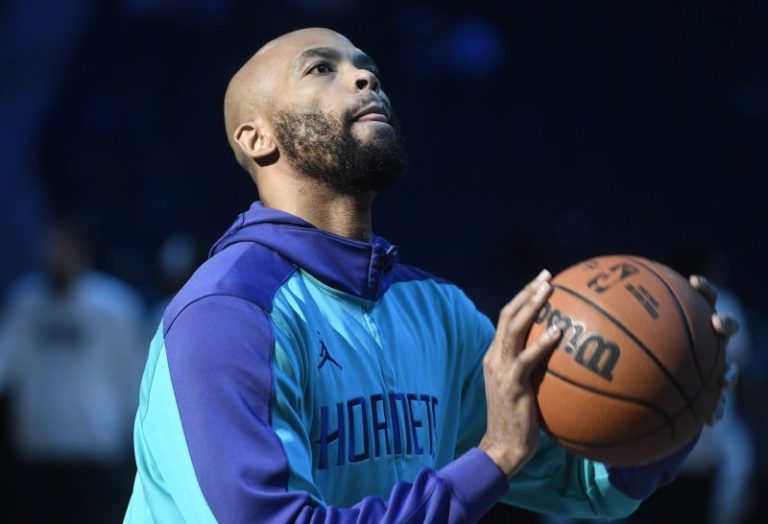
    Another NHL player will miss some regular season time because of an injury that he suffered at the Olympics.

    The Dallas Stars placed forward Mikko Rantanen on the injured list with a lower body injury, retroactive to Feb. 20. That means the earliest he could return is Feb. 27 and he will miss at least one game and possibly more.

    Rantanen, the eighth-leading scorer in the NHL, sat out the bronze medal game at the Olympics, in which Finland beat Slovakia, 6-1, for its fifth medal in Winter Games involving NHL players. He was on the ice after the game for the medal ceremony and team photo.

    Mikko Rantanen injury update

    Mikko Rantanen was placed on the injured list by the Dallas Stars because of a lower-body injury he suffered at the Olympics with Team Finland.

    Mikko Rantanen stats

    Mikko Rantanen leads the Stars and is eighth in the NHL with 69 points in 54 games.

    Other Olympians injury updates

    Five NHL players were hurt in Milan, the most serious being Switzerland’s Kevin Fiala (broken leg), who will miss the rest of the regular season for the Los Angeles Kings.

    Pittsburgh Penguins/Team Canada captain Sidney Crosby was hurt in the quarterfinals and missed the semifinals and gold-medal game. Coach Dan Muse said Monday that Crosby was traveling and they’d have to wait until doctors could see him before getting a clearer picture on whether he’ll miss time.

    Winnipeg Jets/Canada defenseman Josh Morrissey didn’t play after being hurt in the opening game. Coach Scott Arniel said Morrissey would miss the team’s Feb. 25 game and ‘we’ll see where we go from there.’

    Buffalo Sabres/USA forward Tage Thompson missed the third period after blocking a shot in the semifinals but played in the gold medal game.

    This post appeared first on USA TODAY

    There’s a change at the top once again in the USA TODAY Sports men’s basketball coaches poll following a busy week of high-profile matchups.

    Duke is now the No. 1 team. The Blue Devils received 27 of 31 first-place votes this week after upending previous No. 1 Michigan in one of those marquee clashes. The Blue Devils received 27 of 31 first-place votes. The lofty perch is not new for the Duke program, though this is the first No. 1 ranking of the current season for the Blue Devils.

    Arizona claimed the remaining four No. 1 votes and is back up to second overall after a defeat of Houston. Michigan slips to No. 3, and Houston also slides two spots to No. 4. Iowa State moves up a spot to No. 5 as the Cyclones swap positions with Connecticut.

    TOP 25: Complete USA TODAY Sports men’s basketball poll

    Florida continues to climb the rankings after a rough non-conference start. The Gators move up four more places to check in at No. 7 this week, seemingly rounding into form in time to defend their NCAA title. Purdue, Gonzaga and Nebraska round out the top 10.

    A pair of SEC contenders, No. 18 Alabama and No. 22 Tennessee, rejoin the poll this week. Clemson and Wisconsin drop out.

    This post appeared first on USA TODAY
    Johnny Gaudreau was at the Olympic gold medal hockey game on Sunday.

    In spirit.

    Gaudreau was on the ice when Jack Hughes scored the thrilling overtime goal to lift the Americans past favored Canada, 2-1.

    In the hearts of all of the Team USA players.

    Gaudreau, the speedy left wing from New Jersey who dreamed of playing in these Olympics, was there as the USA players carried the American flag and Johnny Hockey’s jersey while skating triumphantly around the ice. It was the most exciting and poignant moment since the Miracle on Ice in 1980.

    At least he was there in the hearts of all Americans.

    And, we suspect, all the people who watched the gold medal game around the world.

    The epic victory was also tinged with great sadness. Gaudreau, who last played for the Columbus Blue Jackets, and his brother, Matthew, were killed while riding bikes and being struck by a suspected drunk driver in New Jersey in August 2024. Their memories live on, especially at the place where their hockey journeys took root, Gloucester Catholic High, a South Jersey school located just across the Walt Whitman Bridge from Philadelphia.

    Both players were stars at Gloucester Catholic, and both made it to the pro ranks. Johnny became a seven-time NHL All-Star Game participant. Matthew became a minor league player and later coached at his high school. Both were outstanding people who volunteered countless hours at a special education school where their mom, Jane, has worked for 40-plus years.

    Shows its character

    Sunday, the proud American team brought memories of Johnny flowing with an incredible display of character and humility. They could have easily hogged the spotlight for the most momentous USA men’s hockey win in 46 years.

    Instead, they put Johnny at the forefront.

    That meant a lot to Tom Iacovone Jr., the principal at the little high school that the Gaudreau brothers attended.

    ‘There wasn’t a dry eye in my house. It was happy and sad tears,’ Iacovone, who watched the game with his wife and three children, said Sunday night. ‘I cannot speak highly enough about the U.S. hockey team for keeping Johnny’s memory alive, and for the tribute they gave him. It’s a once-in-a-lifetime opportunity for them, and to remember Johnny and bring his kids on the ice.

    ‘It took my breath away, and the number of Gloucester Catholic kids who texted and called me in that moment just (blew him away). It’s just amazing that in a moment like that, one that’s bigger than life for the U.S. hockey team, and they made the entire Gloucester Catholic family feel like they were a part of them.’

    Iacovone said during the Olympics, there’s ‘been a ton of excitement’ around his school. The excitement grew as it became known that Team USA hung Gaudreau’s jersey in their dressing room before games.

    Close-knit school

    ‘I teach U.S. History, I and I have a couple of students who are part of the Gloucester Catholic hockey team,’ Iacovone said. ‘And when we left school on Friday, I reminded them that if USA wins on Friday afternoon, it’s U.S. and Canada on Sunday morning, and everyone was so excited to watch it. We’ve been posting on our social media about Johnny’s jersey in the locker room, and having Guy and Jane and Meredith and the kids all go to the game.’

    Guy and Jane are Johnny’s parents. Meredith is Johnny’s wife.

    Katie Gaudreau-Joyce, who is Guy and Jane’s daughter, recently posted a photo on social media of Guy on the plane heading to Italy. Coincidentally, Katie is the dance instructor for Iacovone’s 7-year-old daughter, Nora. 

    It seems like everyone from Gloucester Catholic, past, present and future, is connected, Iacovone said.

    ‘The Gloucester Catholic family is so close. After USA won, my daughter was wearing a USA scarf with a No. 13 on it,’ Iacovone said. ‘My wife took a picture and sent it to Katie. That’s the kind of community we have.’

    Johnny and Matty Gaudreau are at the center of that community, and, thanks to Team USA, the whole world knows a little more today about Johnny’s hockey legacy.

    This post appeared first on USA TODAY
    Red Mountain Mining Limited (ASX: RMX, US CODE: RMXFF, or “Company”), a Critical Minerals exploration and development company with an established portfolio in Tier-1 Mining Districts in the United States and Australia, is pleased to announce an update on the Company’s portfolio of high-quality Antimony projects in the United States.

    Over the past six months, Red Mountain has moved decisively to acquire assets in Tier-1 regions in highly prospective antimony mineral districts in Montana, Utah and Idaho, USA, placing the Company in a strong strategic position as the US Government moves aggressively to secure domestic supply of Antimony which is classified as a Critical Metal by the United States and Australian Governments.

    HIGHLIGHTS:

    • Red Mountain continues to deliver repeated successful project and development programs across its high-quality Critical Minerals portfolio, systematically advancing its United States and Australian projects toward development and directly supporting the US Government’s drive to secure domestic supply of critical metals

    Thompson Falls Antimony Project, High-grade Antimony next to UAMY Antimony Smelter

    • Thompson Falls Antimony Project is 4.2km from the operations of United States Antimony Corporation (NYSE: UAMY; Market Cap $A1.5 billion), with the country’s only operating Antimony smelter
      • Initial sampling from Red Mountain’s Thompson Falls Project returned high-grade values of up 36.5% Sb and 0.65g/t Au
      • Additional assay results are now expected to be received by the end of February
    • Comprehensive surface mapping and sampling program to fast-track the definition of the Thompsons Falls Antimony Project resource potential, planned to launch next month
    • Red Mountain has recently strengthened its US technical team with dedicated drill-permitting expertise, driving the permitting process forward across all of the Company’s US Projects

    Utah Antimony Project, Antimony Mining District

    • Utah Antimony Project adjoins American Tungsten and Antimony Ltd’s (ASX: AT4; Market cap A$200 million) Antimony Canyon Project (ACP), one of the largest and highest-grade Antimony projects in the USA, which has reported assays of up to 33% Sb and has a defined conceptual Exploration Target of 12.8 to 15.6 Mt @ 0.75% to 1.5% Sb, containing between 96,000 to 234,000 tons of Antimony metal
      • Recent visible stibnite mineralisation observed between AT4’s claims and RMX’s project provides evidence the ACP system may extend into the Utah Antimony Project*
      • Mapping analysis previously undertaken by RMX suggests that both the same type of host rocks and extensions of the large epithermal Antimony mineralising system targeted by AT4 at Antimony Canyon are present within the Utah Antimony Project**

    Exceptionally Strong Antimony results from Thompson Falls and further assays pending

    Red Mountain acquired the Thompson Falls Antimony Project on 5 February1, next to the only operating antimony smelter in the USA, US Antimony Corporation’s (NYSE: UAMY; Market Cap ~AU$1.5 billion) Thompson Falls Smelter and UAMY’s Stibnite Hill Mine in Montana (Figure 1).

    First-pass exploration of Red Mountain’s Thompson Falls Antimony Project, by the Company’s US field team, successfully located three historical underground mines and pit within the project area. Initial sampling of material from Eastern Star returned multiple samples with high antimony and gold results, with peak results of 36.5% Sb and 0.65g/t Au1 (Figure 1; Figure 2).

    Samples collected from Eastern Star closely resemble the quartz-stibnite veins mined at UAMY’s Stibnite Hill deposit, ~7km east of Red Mountain’s Thompson Falls Project area, although these veins are not recorded as producing gold. Red Mountain’s field team also collected additional rock samples from the project area, with assay results expected this month.

    Click here for the full ASX Release

    This post appeared first on investingnews.com