Author

admin

Browsing

Dubbed a “central bottleneck of the electrified future,” copper demand is expected to far exceed supply. A recent outlook from S&P Global projects the market could face a shortfall of up to 10 million metric tons by 2040.

Against this backdrop, Domestic Metals (TSXV:DMCU) offers a timely opportunity for investors. Listed on TSX Venture Exchange, OTCQB and Frankfurt Stock Exchange, the company is advancing its flagship Smart Creek Project in Montana, targeting discovery of a porphyry system and a carbonate replacement deposit (CRD).

Smart Creek’s potential is further bolstered by its proximity to significant discoveries like Ivanhoe Electric’s (NYSEAmerican:IE,TSX:IE) Hog Heaven project, which announced the intersection of a porphyry copper-gold-molybdenum system within a large, deep anomaly.

Company Highlights

  • Exceptional Surface Grades: The 2025 field campaign returned high-grade samples, highlighted by 102 g/t gold, 23.1 percent copper, and 3,810 g/t silver.
  • World-Class Team: Dr. Peter Megaw, a globally recognized authority on Carbonate Replacement Deposits (CRDs) and discoverer of MAG Silver’s Juanicipio, has joined the team to guide exploration, together with President & CEO Gordon Neal who has had a successful track record building MAG Silver and New Pacific Metals
  • Mining-Friendly Jurisdiction: Operations are focused in Montana, USA, a mining-friendly state ranked 6th in 2024 by the Fraser Institute for investment attractiveness, with a legacy of massive production at the nearby Butte Mine.

This Domestic Metals profile is part of a paid investor education campaign.*

Click here to connect with Domestic Metals (TSXV:DMCU) to receive an Investor Presentation

This post appeared first on investingnews.com

Precious metals are recovering their safe-haven demand appeal this week.

Gold, silver and platinum are up this week, all still down from the all-time highs recorded in January. Escalating geopolitical tensions and US trade policy shifts are once again at center stage in this sector of the commodities market.

Let’s take a look at what’s got the precious metals moving over the past week.

Gold price

After dropping as low as US$4,400 per ounce on February 2, this past week gold has taken another run well above the key psychological US$5,000 mark; albeit still hundreds of dollars away from its record high of close to US$5,600 reached on January 28.

After trading in a tight range of US$4,985 to US$5,000 for much of Thursday (February 19), the price of gold managed to rise as high as US$5,107 on Friday. That upward climb continued on Monday (February 23) to an intraday high of US$5,248 — a level gold hasn’t seen in a month.

The yellow metal lost that steam by Tuesday’s close with the precious metal trading back down at US$5,143. By Wednesday morning, gold was once again making a run at the US$5,200 level to reach an intraday high of US$5,217.58 at 9:10 a.m. PST. However, it couldn’t hang on for long, sinking back down to US$5,166.25 as of 1:40pm PST on profit-taking and a stronger dollar.

Gold price chart, February 18, 2026 to February 25, 2026.

Here are the primary drivers for gold this past week:

      • Dips this week were brought on by slight downward pressure due to profit-taking and a stronger US dollar.

      In other gold news, JPMorgan Chase (NYSE:JPM) raised its gold forecast to US$6,300 by the end of 2026, citing a ‘reserve currency paradigm shift’ as countries diversify away from the dollar, and ‘significant investor diversification’.

      Looking at major events in the gold mining sector, Kinross Gold’s (TSX:K,NYSE:KGC) Great Bear development in the Red Lake district of Ontario, Canada, has been designated for a reduced permitting timeline under the provincial government’s One Project, One Process (1P1P) framework. 1P1P is a streamlined approval system aimed at reducing government review times by 50 percent. The high-grade, combined open-pit and underground operation is expected to produce more than 500,000 ounces of gold annually during its peak years.

      Silver price

      The price of silver is still well below its all-time high of more than US$120 per ounce it reached on January 29, 2026. For the most part, the white metal continued to track the same trends as gold this week.

      Like gold, silver traded sideways Thursday (February 19) in the US$77.50 to US$78.50 range, and then surged the following day to an intraday high of US$84.61.

      For most of Monday (February 23), silver continued higher but at a much slower pace, to reach as high as US$88.96. Tuesday brought another day of tight trading in the US$86.70 to US$88.10; however, by Wednesday morning the silver price had managed to break through the US$90 level on the same safe-haven demand forces pushing gold prices higher this week.

      The price of silver hit an intraday high of US$91.15 at 11:55am PST before sliding back down below US$89 in the afternoon session.

      Silver price chart, February 18, 2026 to February 25, 2026.

      Silver may still not be back into the triple digits, but its showing strong support despite a slump in artificial intelligence (AI) tech stocks. Silver, the most electrically and thermally conductive metal on the planet, is considered a key material for AI tech, particularly in data centers and high-performance computing. Silver is also in a structural supply deficit which continues to provide upward pressure on silver prices

      In silver mining news, Lundin Gold (TSX:LUG,OTCQX:LUGDF) announced a US$670 million silver stream deal with LunR Royalties (TSXV:LUNR) on its Fruta del Norte mine.

      Platinum price

      Platinum continues to be one of the top performing metals, reaching a 12-year high in recent weeks. This past week it has gained more than 8 percent. Sideways trading on Thursday (February 19) turned into an upward climb on Friday with prices for platinum rising from a low of US$2,060.10 to a high of US$2,117.40 per ounce.

      The first few days of this new week were marked by volatility with wider price swings. The platinum price reached a three week high of US$2,226.30 in late day trading Tuesday. The jump was driven by a combination of geopolitical tensions, trade uncertainty, and structural supply constraints.

      Platinum continued its ascent in overnight trading, reaching as high as US$2,360.50 in early morning trading, and managed to finish off the day just below the US$2,300 level.

      Platinum price chart, February 18, 2026 to February 25, 2026.

      Platinum prices are benefitting from renewed tariff jitters, geopolitical safe-haven demand, and persistent supply tightness from major producer South Africa.

      The emerging hydrogen economy is also adding to demand for the metal on top of robust demand from the auto sector. Consumers are shifting back toward internal combustion engine and diesel vehicles as hurdles to EV adoption remain challenging. This is highly supportive of demand for platinum as its primary use is in automotive catalysts.

      On the supply side, global platinum reserves remain critically low, especially as the world’s biggest producer South Africa continues to be plagued by power shortages and operational disruptions.

      In platinum mining news, Valterra Platinum declared a dividend of 45 rand a share for a total 2025 payout of 12 billion rand (US$757 million) after its net income more than doubled to 15.4 billion rand. Bloomberg reported that the size of the dividend “smashed analyst expectations as earnings jumped last year on soaring metals prices”.

      Palladium price

      Palladium has been the black sheep of the precious metals family for the past few years, remaining well below its March 2022 all-time record of US$3,440.76 per ounce.

      On Thursday (February 19), unlike its sister metals, palladium rallied 4.8 percent to an intraday high of US$1,767.50. The metal closed out last week with another nearly 3.9 percent gain to US$1,836.

      On Monday, palladium lost some of that ground to close out the day at US$1,820. After dipping to a low of US$1,763 in early morning trading on Tuesday, the price of the metal regained those losses and more by the end of the trading day reaching as high as US$1,843.

      Wednesday (February 25) morning brought a spike in palladium prices to US$1,935 as the metal went along for the same ride as platinum, before falling back to the US$1,860 level in afternoon trading.

      Palladium price chart, February 18, 2026 to February 25, 2026.

      As is the case with platinum, demand for palladium is getting support from the auto sector. Rising prices for platinum are leading automakers to make the swap to palladium.

      The US Department of Commerce’s preliminary statement of support for anti-dumping duties of approximately 133 percent on unwrought Russian palladium imports is still shaping the outlook for palladium on the supply side. This follows a petition from Sibanye-Stillwater (NYSE:SBSW) over allegations that Russian metal is being sold in the US at less than fair value. A final decision is expected in the case by June of this year.

      Securities Disclosure: I, Melissa Pistilli, hold no direct investment interest in any company mentioned in this article.

      This post appeared first on investingnews.com

      Many in the United States will no doubt have their eyes glued to President Donald Trump’s State of the Union address on Tuesday.

      After their gold medal triumph over Canada at the Milan Olympics, the United States men’s hockey team will also be closely watched to see whether its players will make it to Washington, D.C. The president invited them to attend, and tour the White House, in a call to the locker room after the victory.

      The women’s hockey team, which also won a gold medal with a victory over Canada, was also invited to attend the State of the Union but declined President Donald Trump’s invitation citing ‘timing and previously scheduled academic and professional commitments.’

      ‘They were honored to be included and are grateful for the acknowledgment,’  a USA Hockey spokesperson said.

      The fallout of the invitations

      Social media was in an uproar following the men’s hockey team’s victory, when Trump spoke to the team by phone to congratulate them while they were celebrating in the locker room. The video showed FBI director Kash Patel chugging beer and celebrating with the hockey players.

      Patel called Trump and put him on speakerphone to talk to the players.

      “What would really be cool, and we’ll do the White House next time, we’ll just have some fun, we have medals for you guys. And we have to, I must tell you, we’re gonna have to bring the women’s team, you do know that?” Trump said on the call.

      Then Trump seemed to slight the women’s hockey team, saying, “I must tell you we’re going to have to bring the women, too; you do know that. Believe me, I probably would be impeached, OK?”

      The men’s hockey team’s laughed at the comment, leading to outrage on social media.

      The men’s hockey team accepted the president’s invitation on Sunday but it’s unknown how many will attend the address.

      There is a petition on Move On asking the men’s hockey team to apologize to women’s team and skip the State of the Union.

      This post appeared first on USA TODAY

      The Olympic gold medal-winning United States women’s hockey team is receiving support online after it declined an invite by the White House to attend the State of the Union address on Tuesday, Feb. 24.

      The winning team, which beat Canada for the gold at the 2026 Winter Olympics, cited ‘timing and previously scheduled academic and professional commitments’ as the reason behind their decline.

      However, the team’s declining of the invite also came after a controversial phone call from President Donald Trump to the U.S. Men’s Hockey Team after they also beat Canada for a gold medal on Sunday, Feb. 22.

      During the call, Trump invited the men’s team to the State of the Union and a White House visit, and offered to transport them on a military plane. He also said on the call, ‘I must tell you, we’re going to have to bring the women’s team, you do know that?’

      The president added, jokingly, ‘I do believe I probably would be impeached’ if he didn’t invite the women’s team.

      The phone call sparked discussion on social media with some upset about the president’s comments and laughter among the men, while others wanted to refocus on unity and country. See reactions.

      Internet, celebrities support women’s hockey team for skipping White House

      His wife, Jennifer Siebel Newsom, also supported the team’s decision to skip the event, writing: ‘Clearly they prefer arenas where women are actually respected!’

      Actor Sophia Bush brought in a ‘Heated Rivalry reference,’ writing ‘our boyfriends would NEVER.’

      ‘@usahockey (obviously the women) you deserve better and you earned the world! We love you!’ Bush said in an Instagram post.

      Some social media users not only expressed distaste over the president’s remarks but were also annoyed at the men’s team for laughing at the joke.

      Jack Hughes: ‘People are so negative’

      Hockey player Jack Hughes, who scored the game-winning goal against Canada, meanwhile, is seemingly unfazed by the criticism, telling the Daily Mail at a victory party in Miami: ‘Everything is so political.’

      ‘They’ve got busy schedules, too,’ Hughes told the media outlet. ‘Everyone is giving us backlash for all the social media stuff today. People are so negative out there, and they are just trying to find a reason to put people down and make something out of almost nothing.’

      Hughes added his team wholly supported the women’s team and ‘everyone in that locker room knows how much we support them, how proud we are of them, and we know the same way we feel about them, they feel about us.’

      ‘We’re athletes,’ Hughes added. ‘We’re so proud to represent the U.S., and when you get the chance to go to the White House and meet the president, we’re proud to be Americans and that’s so patriotic.’

      Olympic mom Ellen Hughes reacts to Trump’s comment

      ‘These players, both the men and women, can bring so much unity to a group and to a country,’ Hughes commented during an appearance on ‘Today’ Feb. 24. ‘People that cheered on that don’t watch hockey, people that have politics on one side or on the other side, and that’s all both the men’s team and the women’s team care about.’

      Hughes added the ‘synergy’ between the two squads is ‘what it’s all about.’

      ‘If you could see what we see from the inside, and the men and women sharing, you know, dorm rooms and halls and flex floors and the camaraderie and the synergy and the way the women cheered on the men and the way the men cheered on the women — that’s what it’s all about,’ she said. ‘And the other things they cannot control. They care about humanity. They care about unity and they care about the country.’

      Flavor Flav invites women’s team to Vegas

      American rapper Flavor Flav, meanwhile, invited the women’s hockey team to Las Vegas for ‘some nice dinners and shows and good times’ to celebrate their achievement. It is not yet clear if the women’s team have accepted his offer, though a post on the Rock and Roll Hall of Famer’s Instagram said the team had accepted it. Several brands, including Alaska Airlines and Stubhub, also offered to help with the celebrations.

      Saman Shafiq is a trending news reporter for USA TODAY. Reach her at sshafiq@usatodayco.com and follow her on X and Instagram @saman_shafiq7.

      This post appeared first on USA TODAY

      Where will A.J. Brown play in 2026?

      When Philadelphia Eagles head coach Nick Sirianni and general manager Howie Roseman spoke to reporters at the NFL scouting combine on Feb. 24, they did not shut down trade speculation surrounding the Pro Bowl wide receiver. Neither of them expressed any certainty that Brown would be with Philadelphia by the start of the 2026 season.

      ‘Will A.J. be here next season?’ Sirianni said. ‘I think we’re still in a spot, like, I can’t guarantee how anything is going to play out into next season. I’m thinking I’m going to be the coach next season but you can’t guarantee anything past tomorrow.’

      Several times throughout the 2025 season, Brown publicly expressed his frustrations with the Eagles and how they used him in their offense. During a video gaming livestream, Brown called his situation in Philadelphia a ‘(expletive)-show’, and during the Eagles’ wild-card game clash with the 49ers, cameras caught him jawing with Sirianni on the sideline.

      ‘I think you go into the league year listening to offers for everything and anything,’ Roseman said at the NFL combine. ”Without getting into specifics on any player, we’re always listening and we’re always kind of open.’

      Brown has played in 62 games over four seasons with the Eagles, catching 339 passes for 5,034 yards and 32 touchdowns. He won a Super Bowl with Philadelphia last year, and his 5,034 receiving yards as an Eagle rank ninth all-time in franchise history.

      In 2025, Brown caught 78 passes for 1,003 yards and seven touchdowns in 15 games.

      If the Eagles do end up trading Brown, these four landing spots make a lot of sense:

      AJ Brown landing spots

      New England Patriots

      Outside of the struggles the Patriots had with their offensive line to end their Super Bowl run, the wide receiver position appeared to be one of the weakest points on their roster. Veteran Stefon Diggs led New England with his 1,013 yards in 2025, but he was streaky – some weeks he’d cross over 100 yards in a game before multi-game stretches with fewer than 50 yards. Diggs also wasn’t a big red-zone target for the Patriots, catching just four touchdowns in his first year in New England.

      Trading for Brown would give Patriots quarterback Drake Maye a younger, bona fide No. 1 receiver to throw to in 2026. Diggs, Kayshon Boutte, Mack Hollins and DeMario Douglas made up a solid receiving corps in 2025, but Brown would push that unit over the top as a true WR1.

      A move like this would also reunite Brown with head coach Mike Vrabel, who was Brown’s first head coach in the NFL during both of their time with the Tennessee Titans. Brown said in a recent appearance on Rob Gronkowski and Julian Edelman’s podcast, ‘Dudes on Dudes,’ that he appreciated Vrabel for holding him accountable during his early years in the league.

      ‘When I say he holds every single player accountable from top to bottom, I don’t care who it is, like that’s who he is,’ Brown said. ‘And it makes the team come together because nobody is bigger than the team.’

      Buffalo Bills

      As with the Patriots, one of the Bills’ greatest roster weaknesses is at wide receiver. Since Diggs left Buffalo after the 2023 season, the Bills have not had a receiver cross the 1,000-yard mark. Khalil Shakir has led Bills receivers in both of the last two seasons, but he failed to crest 750 yards in 2025. And no Buffalo receiver had more than five touchdowns.

      In 2025, the Bills started leaning especially heavily on running back James Cook, who finished the year with 309 rush attempts for 1,621 yards and 12 touchdowns. Even though former offensive coordinator Joe Brady took a promotion to become the team’s head coach, the Bills’ offense can’t rely on Cook having another season like that with the excessive taxation on his legs from 2025.

      Enter Brown, the high-ceiling receiver that would give the Bills their first true WR1 since Diggs left Buffalo after 2023. Adding a receiver like that would help push Buffalo’s offense forward and allow them to deploy a similar strategy to the 2024 Super Bowl-champion Eagles: complement a strong run game with a dynamic passing game, all surrounding a talented, dual-threat quarterback.

      Baltimore Ravens

      The Ravens have taken swing after swing at drafting a lead receiver in the first round for the last two decades. Travis Taylor in 2000, Mark Clayton in 2005, Breshad Perriman in 2015, Hollywood Brown in 2019, Rashod Bateman in 2021 and Zay Flowers in 2023. Only Flowers, the Ravens’ most recent attempt, has made a Pro Bowl.

      Flowers is coming off of the most productive season of his career so far with 86 catches for 1,211 yards, five touchdowns and a second straight Pro Bowl nod. The Boston College product is a dynamic player who excels at creating separation with his route-running and generating yards after the catch. However, Flowers’ 5-foot-9, 182-pound frame has limited his contested-catch ability, something that would give Ravens quarterback Lamar Jackson another tool to work with.

      If Baltimore traded for Brown, it would have one of the strongest 1-2 punches at wide receiver in the NFL. Brown would be the bigger-bodied, No. 1 wide receiver option who’s good for 100+ catches, 1,000+ yards and at least five touchdowns per season. Flowers would be the dynamic No. 2 receiver that can work all three levels of the field by streaking open downfield, creating easy separation over the middle or generating yards after the catch on short throws.

      Los Angeles Chargers

      The Chargers’ plan in the offseason should be building up their trenches in free agency and the draft. But Los Angeles, a team with $81.8 million in cap space, also has the room to take big swings on offensive playmakers like Brown.

      None of the Chargers’ leading trio of receivers in 2025 – Keenan Allen, Quentin Johnston and Ladd McConkey – had more than 800 yards. None of them established themselves as the team’s true No. 1 option, either. McConkey led Los Angeles with 789 yards, Allen led with 122 targets and 81 catches, and Johnston led the Chargers with eight touchdown catches in a breakout season.

      Now, Allen is hitting free agency ahead of his age-34 season, and the Chargers have brought in Mike McDaniel to be their new offensive coordinator. Adding a wide receiver like Brown to Los Angeles’ roster would give quarterback Justin Herbert a true No. 1 target, while McConkey and Johnston provide dynamic secondary and tertiary options. McDaniel’s offense was at its best in Miami when it had two outstanding wide receivers and a promising young running back to scheme around. With Brown, McConkey and Johnston catching passes and second-year back Omarion Hampton leading the run game, the Chargers’ offense could really break out with a more complex, multi-dimensional look in 2026.

      This post appeared first on USA TODAY

      Olympian Jack Hughes and his mom recently responded to the fallout from the U.S. men’s hockey team’s viral call with President Donald Trump.

      During the locker room call with the team, President Trump invited the players to the State of the Union address. He briefly mentioned the U.S. women’s hockey team, who also won gold during the Olympics, beating Canada in an overtime thriller, saying he had to invite them too, or he would be ‘impeached.’ The men’s hockey team laughed at the president’s remark.

      ‘People are so negative out there, and they are just trying to find a reason to put people down and make something out of almost nothing,’ Jack Hughes told the Daily Mail.

      ‘People are so negative about things. I think everyone in that locker room knows how much we support them, how proud we are of them, and we know the same way we feel about them, they feel about us.’

      During an appearance on the Today Show, Ellen Hughes, Jack’s mom, also addressed the backlash. Ellen Hughes is also the mother of Team USA’s Quinn Hughes and a consultant for the U.S. women’s hockey team.

      ‘These players, both the men and women, can bring so much unity to a group and to a country,” Ellen Hughes said. “People that cheered on that don’t watch hockey, people that have politics on one side or on the other side, and that’s all both the men’s team and the women’s team care about.’

      A USA Hockey spokesperson said while the women’s team received an invitation, it wouldn’t be able to attend. They declined the President’s invitation.

      ‘Due to the timing and previously scheduled academic and professional commitments following the Games, the athletes are unable to participate,’ the spokesperson said. ‘They were honored to be included and are grateful for the acknowledgment.’

      Jack Hughes seemed to confirm that he and his teammates will be in Washington for President Trump’s address. ‘We’re so proud to represent the U.S., and when you get the chance to go to White House and meet the president, we’re proud to be Americans, and that’s so patriotic,’ Hughes said.

      Despite the backlash to the phone call with Trump, Hughes’ mom says both rosters supported one another during their respective runs to gold medals.

      “If you could see what we see from the inside, and the men and women sharing, you know, dorm rooms and halls and flex floors and the camaraderie and the synergy and the way the women cheered on the men and the way the men cheered on the women — that’s what it’s all about,’ Hughes’ mom said.

      ‘And the other things they cannot control. They care about humanity. They care about unity, and they care about the country.”

      This post appeared first on USA TODAY

      The San Francisco 49ers racked up 13 wins in 2025 but finished third in their own division. They’re looking to improve and catch up to the Los Angeles Rams and Super Bowl champion Seattle Seahawks in 2026.

      They’ll have to do it after settling a reported contract dispute with their star offensive lineman.

      San Francisco and left tackle Trent Williams are ‘struggling to find a contractual solution’ for 2026, per ESPN’s Adam Schefter. Williams, 37, is entering the final year of his current extension and is carrying a nearly $39 million cap hit for 2026.

      Williams is the second-highest paid left tackle in the NFL by average annual value (AAV) behind only the Los Angeles Chargers’ Rashawn Slater, per OverTheCap.

      Williams signed a new extension late in the 2024 offseason after the 49ers reached Super Bowl 58 following a holdout. He played in 10 games that season but returned healthy for 2025 and made his 12th career Pro Bowl.

      The five-time All-Pro left tackle is entering his age-38 season in 2026.

      San Francisco currently has $41.2 million in cap space for 2026 per OverTheCap, 11th-most in the NFL for the upcoming season. His cap number of $38.84 million is the second-highest on the team entering 2026 behind edge rusher Nick Bosa ($41.61 million).

      This post appeared first on USA TODAY

      Gold royalty companies offer investors exposure to gold and silver with the benefits of diversification, lower risk and a steady income stream.

      Royalty companies operating in the resource sector will typically agree to provide funding for the exploration or development of a resource in exchange for a percentage of revenue from the deposit if it begins producing. Similarly, a company with a streaming model may work out an agreement with a resource company for a share of the metal produced from a deposit in exchange for an investment.

      These kinds of arrangements benefit both parties. Streamers get access to the underlying commodity at a fixed price and are shielded from cost overruns and spikes in production. Further, if there is a price decrease the metals can be warehoused until the market conditions improve.

      In both cases, mining companies receive considerable upfront investment during the expensive construction and expansion phases, and unlike loans these investments have longer-term payouts at a fixed amount.

      Let’s take a deeper look at how royalties and streaming works, the benefits of the royalty business model, and the gold and silver royalty and streaming stocks you can invest in.

      In this article

        How do gold and silver royalties work?

        Gold and silver royalty agreements involve royalty companies agreeing to provide funding for the exploration or development of a precious metals resource in exchange for a percentage of revenue from the deposit if it begins producing metals.

        The foundation for royalties dates back a few hundred years. Originally, they were payments made to the British monarchy in exchange for miners’ rights to operate gold and silver mining operations on lands held by the crown. Today, these arrangements still exist, with mining operators paying the government a share of the revenues generated from exploiting resources on public lands.

        The first royalty paid to a company in the gold sector was an agreement in 1986 in which Franco-Nevada (TSX:FNV,NYSE:FNV) made a US$2 million investment into Western States Minerals’ Goldstrike small heap-leach mine in Nevada, US, for a 4 percent share of revenues collected from the mine. Western States was sold the same year to Barrick Gold (TSX:ABX,NYSE:GOLD). Barrick discovered a far larger resource at the site, and the royalty has since earned Franco-Nevada more than US$1 billion and continues to pay out approximately US$20 million per year.

        This early example set a precedent for the industry. It saw Franco-Nevada, which was then a gold exploration company, lock itself into what became one of the largest gold mineral resources in the world at a relatively low overhead while avoiding future costs associated with the growth and maintenance of the mine.

        How do gold and silver streams work?

        Gold and silver streams work in a similar manner to the royalty model but returns are in the form of physical metals rather than funds. In return for investing in an asset, a gold streaming company may work out an agreement with a resource company for a share of the metal produced from a deposit, or for the ability to purchase the metal at a lower price than market value.

        This is also a popular model with base metal mining companies whose operations result in gold and/or silver by-products. In these cases, gold and silver streaming companies may work out a deal with a base metal mining operation to take delivery of a certain amount of precious metals at an agreed upon price.

        The Goldstrike royalty made Franco-Nevada what it is today, but its largest contributing asset in its portfolio is a deal with Lundin Mining (TSX:LUN,OTC Pink:LUNMF) for a stream of the gold and silver resources extracted from its Candelaria copper mine in Chile.

        Under the terms of the deal, which was part of Lundin’s 2014 acquisition of Freeport-McMoRan’s (NYSE:FCX) stake in Candelaria, Franco-Nevada provided a US$648 million deposit in exchange for a 68 percent stream of the asset’s silver and gold. This will decrease to 40 percent once 720,000 ounces of gold and 12 million ounces of silver have been delivered.

        While Franco-Nevada does have to pay for the metal, the agreed upon amount is far under the current market value. At the time, the deal was set at US$400 for each ounce of gold and US$4 per ounce of silver with a 1 percent inflationary adjustment, or market price if that was less.

        Are royalty and streaming companies a good investment?

        Royalty and streaming companies are largely seen as a lower-risk investment than mining companies. Lower operational costs and higher portfolio diversification means they are hedged against a mine shutdown, natural disaster, market forces or the politics that may affect the nature of an operation or project. However, that’s not to say royalty and streaming deals aren’t without their risks.

        In many ways, gold royalty companies are like venture capitalists in the tech industry, working to fund many projects in the hopes that some will see big payoffs that offset the loss from the ones that don’t make it. This means they need large access to funding in order to build their portfolios.

        To get funding, royalty and streaming companies have several options: using cash on hand, raising debt through loans or issuing more shares. Each of these options carries risk. Using cash to pay for investments could reduce the size of the safety net and eat into company liquidity, debt needs to be managed to ensure that payments don’t exceed income and the issuance of stock could lead to an overall devaluation of share price and impact investor sentiment.

        Once companies have developed strong cash flows and good liquidity, they are able to take advantage of their own reserves, without the need to worry about loans or stock dilution. The same cannot be said for the up-and-coming companies who need to rely on external funding to make deals, making them riskier.

        These companies provide a good entry point for investors with lower share price, and have more potential to return higher percentage gains in share price, they also bear more risk. With more reliance on raising external capital, there is a greater need for deals to be successful and a greater chance for a company to incur more debt load or stock dilution.

        Diverse portfolios can help reduce the risk associated with a royalty company, and companies like Franco-Nevada have the industry knowledge and financial capital to take some risks. As of February 2025, the company has 430 assets on their books; of those, 119 are producing, and 38 are in the advanced stages of development. It’s the 273 more that are in the exploration phase, many of which will never provide returns, that represent the greatest risk.

        Of course, unforeseen events can affect both mining and royalty companies alike, particularly when assets that take up a larger percentage or a portfolio are affected. Franco-Nevada had more than US$1 billion invested in First Quantum’s (TSX:FM,OTC Pink:FQVLF) Cobre Panama mine before it was shuttered by the Panamanian government following protests at the end of 2023. The mine brought in US$223.3 million for Franco-Nevada in 2022 and represented nearly a quarter of its precious metal income. While it fared better than First Quantum, the royalty company’s share price took a significant hit.

        Top 5 gold and silver royalty companies

        The biggest companies in the precious metals royalty and streaming space have long histories and have built positive reputations on the backs of strong investments. They offer a means for investors to de-risk an entry into the gold sector by maintaining an arms-length attachment to it.

        The five large-cap gold and silver royalty and streaming companies on this list had market caps above $1 billion in their respective currencies as of February 24, 2026.

        1. Wheaton Precious Metals (TSX:WPM,NYSE:WPM)

        Market cap: C$96.95 billion
        Share price: C$215.66

        Wheaton Precious Metals was established in 2004 as Silver Wheaton with a focus on silver streaming. Goldcorp held a majority interest, but began to reduce it in 2006 and by 2008 had completely divested itself. By that time, Silver Wheaton had begun to diversify into other precious metals. The following year, Silver Wheaton acquired rival silver streaming stock Silverstone Resources in a C$190 million deal.

        Silver Wheaton changed its name in 2017 to Wheaton Precious Metals and has since built itself into one of the largest players in the gold and silver royalty and streaming space, with investments in 23 operating mines and 25 development projects across five continents.

        Included in Wheaton’s assets are investments in Newmont’s (TSX:NGT,NYSE:NEM,ASX:NEM) Peñasquito mine in Mexico, Sibanye Stillwater’s (NYSE:SBSW) Stillwater and East Boulder mines in Montana, United States, and Hudbay Minerals’ (TSX:HBM,NYSE:HBM) Copper World Complex project in Arizona, US.

        2. Franco-Nevada (TSX:FNV,NYSE:FNV)

        Market cap: C$71.55 billion
        Share price: C$374.47

        A trailblazer in the gold royalty business, Franco-Nevada has set a high bar. The current iteration of the company was spun out of Newmont in what became a C$1.1 billion initial public offering, one of the biggest IPOs of 2007.

        Franco-Nevada now has a portfolio of royalties and streams on 119 producing assets around the world including gold, silver, base metal and oil and gas operations, which generate more than US$1.2 billion for the company annually. Additionally, the company’s portfolio includes 38 advanced-stage assets and 273 exploration-stage assets.

        Among the producing assets for which Franco-Nevada has precious metals streams and royalties are Glencore’s (LSE:GLEN,OTC Pink:GLCNF) Antapaccay mine in Peru, Agnico Eagle’s (NYSE:AEM,TSX:AEM) Detour Lake mine in Ontario, Canada, and Gold Fields’ (NYSE:GFI) Salares Norte mine in Chile.

        See the sections above for more information on Franco-Nevada’s royalty and streaming deals.

        3. Royal Gold (NASDAQ:RGLD)

        Market cap: US$24.43 billion
        Share price: US$288.04

        Royal Gold got its start in 1981 as oil and gas exploration and production company Royal Resources.

        Responding to shifts in the overall resource market, by 1987, Royal Gold was born with a focus on building a portfolio of minority positions in significant gold properties operated by major mining firms.

        Today, Royal Gold is a leading precious metals streaming and royalty company with interest in about 400 properties, of which 82 are producing assets, across 31 countries.

        About half of its portfolio came from its October 2025 acquisition of Sandstorm Gold and Horizon Copper, which combined for 230 royalty assets, including 40 producing assets.

        Among Royal Gold’s royalty assets are Barrick Mining (TSX:ABX,NYSE:B) and Newmont’s Cortez mine in Nevada, US, Teck’s (TSX:TECK.A,TECK.B,NYSE:TECK) Andacollo mine in Chile and Centerra Gold’s (TSX:CG,NYSE:CGAU) Mount Milligan mine in British Columbia, Canada.

        4. Triple Flag Precious Metals (TSX:TFPM)

        Market cap: C$10.96 billion
        Share price: C$53.67

        Triple Flag Precious Metals was founded in 2016 by Shaun Usmar, a former Barrick executive and current CEO of Vale’s (NYSE:VALE) Vale Base Metals.

        Although the company is a relative newcomer to the royalty and streaming space, it has quickly established itself as a frontrunner through several significant deals. Among them was the acquisition of Maverix Metals in January 2023, which helped them become the fourth-largest precious metals royalty company.

        Today, Triple Flag has a global portfolio of gold and silver assets on nearly every continent, comprising 33 production assets and 206 in development or exploration.

        Highlights from its portfolio include streaming and royalty deals on Evolution Mining’s (ASX:EVN,OTC Pink:CAHPF) Northparkes mine in New South Wales, Australia, Nexa Resources’ (NYSE:NEXA) Cerro Lindo mine in Peru, and Westgold Resources’ (ASX:WGX,OTC Pink:WGXRF) Beta Hunt mine in Western Australia.

        5. OR Royalties (TSX:OR,NYSE:OR)

        Market cap: C$11.49 billion
        Share price: C$62.31

        Previously named Osisko Gold Royalties, OR Royalties was created in 2014 as a spinoff deal between Osisko Mining (TSX:OSK), Yamana Gold and Agnico Eagle Mines (TSX:AEM,NYSE:AEM). The deal was made in an attempt to prevent a hostile takeover of Osisko Mining and its Canadian Malartic gold complex by Goldcorp, now part of Newmont.

        In the deal, OR Royalties carried with it a 5 percent net smelter return royalty from the Canadian Malartic mine. Now owned by Agnico Eagle, the complex in Québec remains a cornerstone of the royalty company’s business today.

        The gold and silver royalty and streaming company has gone on to amass royalties, streams and offtakes for 195 assets, 22 of which are producing, across six continents.

        The majority are located in North America, including one of the most well-known gold-producing mines in the world, Agnico Eagle’s Canadian Malartic complex in Québec, as well as SSR Mining’s (NASDAQ:SSRM,TSX:SSRM) Seabee mine in Saskatchewan, Canada, and Kinross Gold’s (TSX:K,NYSE:KGC) Bald Mountain mine in Nevada.

        Small-cap gold and silver royalty companies

        There are also small-cap gold and silver royalty and streaming companies you can invest in and offer a lower-cost option for investors who are comfortable with a little more risk. Like their larger counterparts, small-cap gold royalty stocks offer a lower-risk investment than getting into a small-cap mining company but still provide access to the underlying precious metals market.

        The five small-cap gold and silver royalty companies on this list had market caps above $10 million in their respective currencies as of February 24, 2026.

        1. Gold Royalty (NYSEAMERICAN:GROY)

        Market cap: US$1.04 billion
        Share price: US$4.59

        Gold Royalty is building a diversified portfolio of more than 240 gold royalty and gold streaming interests based on net smelter return royalties on properties in the Americas.

        The company’s revenue generating investments include Agnico Eagle’s Canadian Malartic complex in Québec, DPM Metals’ (TSX:DPM) Vareš mine in Bosnia and Herzegovina, and Discovery Silver’s (TSX:DSV,OTCQX:DSVSF) Borden mine in Ontario.

        2. Metalla Royalty & Streaming (TSXV:MTA,NYSE:MTA)

        Market cap: C$1.04 billion
        Share price: C$11.67

        Metalla Royalty & Streaming focuses on gold, silver and copper projects. The company’s royalty model involves acquiring royalties and streams by offering resource companies Metalla shares and cash.

        The mid-tier royalty and streaming company’s asset portfolio includes more than 100 projects across North America, South America and Australia. Its cornerstone assets include IAMGOLD (TSX:IMG,NYSE:IAG) and Sumitomo Metal Mining’s (OTC Pink:SSUMF,TSE:5713) Côté gold mine in Ontario, Canada, and First Quantum Minerals’ (TSX:FM) Taca Taca project in Argentina.

        3. Vox Royalty (TSX:VOXR,NASDAQ:VOXR)

        Market cap: C$518.16 million
        Share price: C$7.81

        Vox Royalty is a precious metals focused royalty company first established in 2014. The company has acquired an asset portfolio of 70 royalties, 32 of which were added since 2019, across Australia, the Americas and South Africa.

        Roughly 70 percent of its portfolio is dedicated to gold, silver and platinum group companies. The remainder of its portfolio is diversified across a wide range of resources, including copper, uranium, iron and diamonds.

        The majority of the eight producing assets in its portfolio are located in Australia, including a 1 percent net smelter return from Black Cat Syndicate’s Bulong gold mine, and a 2.5 percent net smelter return from Northern Star Resources’s (ASX:NST,OTCPL:NESRF) Otto Bore gold mine.

        As for development stage projects, its assets in Canada include a 1 percent net smelter return on NexGold Mining’s (TSXV:NEXG,OTCQX:NXGCF) Goldlund project and a 2 percent gross proceeds royalty on Alamos Gold’s (TSX:AGI,NYSE:AGI) Lynn Lake project in Canada.

        4. Sailfish Royalty (TSXV:FISH,OTCQX:SROYF)

        Market cap: C$324.08 million
        Share price: C$3.79

        Founded in 2014, Sailfish Royalty’s asset portfolio is much smaller than the other gold royalty stocks on this list. It consists of one producing mine as well as two development-stage and two exploration-stage properties in the Americas.

        In Nicaragua, Sailfish has a gold stream equivalent to a 3 percent net smelter return on Mako Mining’s (TSXV:MKO,OTCQX:MAKOF) San Albino gold mine and a 2 percent net smelter return on the area surrounding the mine. The company also holds a 13,500 ounce per quarter silver stream at the property, which was set to expire in May 2025. At the end of April 2025, Sailfish chose to exercise its option to purchase all silver for the life of the mine.

        5. Nations Royalty (TSXV:NRC,OTCQB:NRYCF)

        Market cap: C$160.68 million
        Share price: C$1.16

        Nations Royalty is a fledgling royalties company that first began trading in June 2024 and holds Indigenous-owned royalties. It was founded by the Nisga’a Nation of British Columbia, Canada, and by Wheaton Precious Metals co-founder Frank Giustra. It is the first publicly traded company in Canada to have a majority Indigenous ownership.

        The company has a portfolio of royalties covering one production and four development assets, all located in Northwestern British Columbia. The majority of these royalties are in the form of annual payments equal to a percentage of the mineral tax the assets’ operators pay.

        The producing mine in its portfolio is Newmont’s (NYSE:NEM,ASX:NEM) Brucejack gold-silver operation. The four development assets consist of Ascot Resources’ (TSX:AOT,OTCID:AOTVF) Premier and Red Mountain projects, Seabridge Gold’s (TSX:SEA,NYSE:SA) KSM project and New Moly’s Kitsault molybdenum project.

        Gold and silver royalty ETFs

        Those who want more broad exposure to the precious metals markets may want to buy shares of an exchange-traded fund that includes gold and silver royalty and streaming stocks. Here are a few to get you started, including ASX gold ETFs and a US gold ETF.

        Betashares Global Royalties ETF (ASX:ROYL)
        The Betashares Global Royalties ETF is an Australian ETF that tracks the performance of an index of global companies that earn a significant amount of their revenue from royalty income, royalty-related income and intellectual property income. The fund’s top two holdings are Wheaton Precious Metals and Franco-Nevada, with Royal Gold and OR Royalties also among its significant holdings.

        Betashares Global Gold Miners ETF (ASX:MNRS)
        The Betashares Global Gold Miners ETF tracks the performance of an index of the world’s largest gold mining companies outside of Australia, hedged into Australian dollars. Wheaton Precious Metals, Franco-Nevada and Royal Gold are also among the fund’s top holdings.

        VanEck Gold Miners ETF (ARCA:GDX)
        The VanEck Gold Miners ETF is a US gold ETF that aims to replicate the performance of the MarketVector Global Gold Miners Index by holding large-cap gold mining stocks and precious metals royalty companies. As with the other gold ETFs on this list, its top holdings include Franco-Nevada, Wheaton Precious Metals and Royal Gold.

        Securities Disclosure: I, Dean Belder, hold no direct investment interest in any company mentioned in this article.

        This post appeared first on investingnews.com

        Perhaps Father Time has not caught up to these two boxing legends yet.

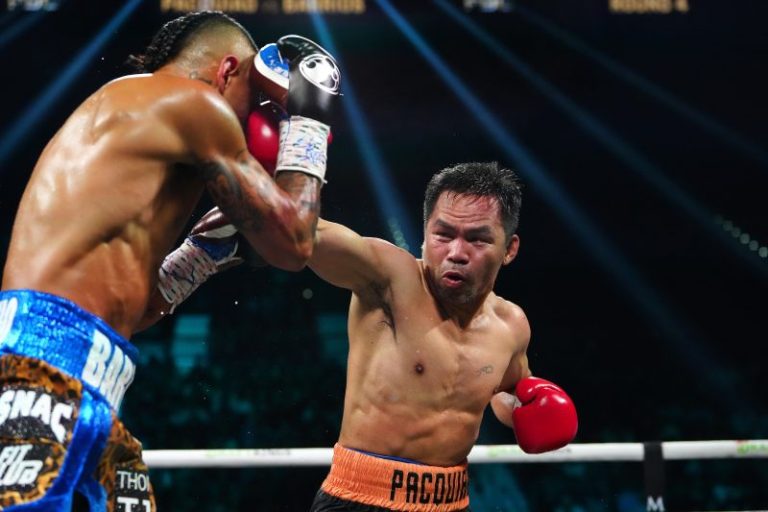
        It was recently announced that Manny Pacquiao and Floyd Mayweather will return to the ring more than a decade after their first fight. Despite both boxers approaching 50 years old, it seems the two are still in good enough shape to throw haymakers.

        Manny Pacquiao’s last professional fight was less than a year ago, a draw against Mario Barrios in July. Mayweather though, hasn’t fought in a professionally-sanctioned bout since 2022 when he defeated YouTuber Deji by KO.

        Though Mayweather got the better of Pacquiao last time around, perhaps Pacman is more prepared this time around. Here’s everything we know about the upcoming fight.

        When is Floyd Mayweather vs. Manny Pacquiao fight?

        The match will take place on Sept. 19, 2026. It will air exclusively on Netflix.

        Who won Floyd Mayweather vs. Manny Pacquiao last fight?

        Mayweather won, maintaining his undefeated record by unanimous decision — 118-110, 116-112, 116-112.

        Floyd Mayweather vs. Manny Pacquiao odds

        Official odds for the rematch have not been released, but the last time the two fought in 2015, Floyd was a -200 favorite with Pacquiao a +170 underdog.

        Why is Mayweather vs. Pacquiao at Las Vegas Sphere?

        The Las Vegas Sphere is Sin City’s latest venue, providing state of the art technical capabilities. The venue itself is a spectacle, which will only add to the intrigue of the fight.

        Floyd Mayweather vs. Manny Pacquiao tickets

        Ticket availability has yet to be announced. Netflix has stated that ‘full details’ will be revealed ‘in the coming weeks.’

        Is Floyd Mayweather vs. Mike Tyson still happening?

        Yes. Mayweather and Tyson are set to square off in an exhibition match. Some reports have indicated that the match will take place on April 25 in the Democratic Republic of Congo, though neither the date nor location has been officially confirmed. Furthermore, there has been no word about any network airing the fight.

        How old is Floyd Mayweather?

        Floyd Mayweather is 48 years old, but turns 49 on Feb. 24.

        How old is Manny Pacquiao?

        Manny Pacquiao is 47 years old. He will turn 48 on Dec, 17 this year.

        This post appeared first on USA TODAY