Author

admin

Browsing

For Diego Pavia, December should have marked the start of a carefully orchestrated four-month march to the NFL draft.

The Vanderbilt quarterback had already positioned himself as a Heisman Trophy finalist after leading his school to its first 10-win season. Along the way, he established himself as one of the most dynamic playmakers in college football, totaling more than 4,000 combined yards and 36 touchdowns on the year. Though his pro prospects lagged significantly behind those of his peers at the ceremony in New York, Pavia earlier in the week accepted an invitation to the Senior Bowl, where he would try to build the case that he possesses the necessary tools to be a trustworthy passer whom a team could bring along.

Then came the massive unforced error.

After finishing second in Heisman voting to Indiana’s Fernando Mendoza on Saturday, Pavia reposted a picture of himself in front of Vanderbilt’s offensive line, writing ‘(Expletive)-ALL THE VOTERS’ with a thumbs down emoji and ‘BUT … FAMILY FOR LIFE.’ A video also circulated on social media of Pavia at a club giving the middle finger to a sign that read ‘(expletive) INDIANA.’

The blowback arrived as swiftly as an SEC defensive end barreling down on him. On Sunday, he posted a lengthy apology.

‘To be so close to my dream and come up short was painful,’ Pavia wrote. ‘I didn’t handle those emotions well at all and did not represent myself the way I wanted to. I have much love and respect for the Heisman voters and the selection process, and I apologize for being disrespectful.’

That’s the first of what is sure to be many forthcoming statements of contrition from the quarterback, who likely will be pressed throughout the pre-draft process about his reaction. And while to suggest that this action somehow tanks his stock would be insincere, the misstep serves as another impediment on what already looked like a rather arduous path to the pros.

If Pavia was at least somewhat close to Mendoza – an almost surefire top-five pick and potential front-runner for the No. 1 overall slot – in his draft standing, the incident might be easy to dismiss. But the Johnny Unitas Golden Arm Award winner is a long way off from that.

Pavia’s height, play style already work against pro prospects

Listed at 6-foot-0, Pavia is sure to cause a stir with his measurements in Mobile, Alabama, given that multiple reports say he might not even clear 5-10. The reckless, structure-breaking playing style that sparked his star turn for the Commodores isn’t particularly tenable at the pro level. And the developmental label given to raw, young prospects might not stick for a passer who will be 24 on draft day.

Despite his progress this season, Pavia still has the profile of a late-round pick or even an undrafted free agent.

Pavia now is on notice to present a more polished and palatable version of himself to the myriad coaches and front-office types he’s sure to meet in the coming months. But it will be difficult for him to convince evaluators that this was a mere lapse in judgment. While at New Mexico State, Pavia urinated on the logo in the middle of rival New Mexico’s practice field. And while his brash persona helped amplify his accomplishments to elevate Vanderbilt football to a much larger stage, his repeated antics might not sit well with NFL teams looking for a more humble presence to round out their depth chart.

‘Diego knows his actions were unacceptable and he has apologized,’ athletic director Candice Lee said in a statement to The Tennessean and the USA TODAY Network on Dec. 15. ‘I know he is contrite and regrets the hurt he caused. He is a passionate and authentic competitor, and while his authenticity has been nurtured and celebrated here, it does not change the responsibility that comes with representing Vanderbilt University.’

If Pavia is able to convey his competitive fire properly, he’d likely have a captive audience in many NFL coaching staffs. There’s an undeniable allure to an undersized player who worked himself up from the junior college ranks to starring in the SEC, especially while working alongside a group that often was operating at a perceived talent deficit in many of its matchups. Senior Bowl director of football operations Jack Gilmore told AL.com that despite Pavia’s frame, he ‘has everything you want in a quarterback’ and ‘one of the best competitors in the entire draft class.’

Underdog story aside, Pavia’s Heisman heel turn won’t play with NFL execs

For better or worse, the underdog ethos comes through in all of Pavia’s actions.

‘I’ve been doubted my whole life,’ Pavia said in his apology. ‘Every step of my journey I’ve had to break down doors and fight for myself, because I’ve learned that nothing would be handed to me. My family has always been in my corner, and my teammates, coaches and staff have my six. I love them – I am grateful for them. – and I wouldn’t want anything to distract from that.’

Perhaps this is the start of a course correction for someone who will need to compartmentalize his inner motivations with his public-facing actions. Any NFL decision-maker who wants Pavia to maintain his edge still might expect him to sublimate his energy into behavior that won’t necessitate an apology tour.

And as the cases of Shedeur Sanders and several others have shown, NFL teams want neither hero nor heel from young quarterbacks who begin their career on the bench.

Pavia already was under pressure to show he won’t try to skew heavily toward the former label after a college career in which he frequently went his own way. Now he’ll have to show he won’t revert to the latter category, either.

(This story was updated to add a video.)

This post appeared first on USA TODAY

Behind a 100-yard rushing performance from quarterback Quinn Henicle and a five-turnover performance from its defense, the Monarchs defeated South Florida 24-10 in the Cure Bowl at Camping World Stadium in Orlando, Florida, on Wednesday, Dec. 17.

In just his second career start, Henicle struggled as a passer, going 11-of-25 for 127 yards, but dominated on the ground with 24 rushes for 107 yards and two touchdowns. He picked up a 51-yard touchdown with just over two minutes remaining to ice the 10th win of the season for ODU.

Henicle earned the start after starting quarterback Colton Joseph announced his intention to transfer.

USF, without its own starting quarterback, Byrum Brown, and head coach Alex Golesh ― who is headed to Auburn ― struggled to run the ball and turned the ball over five times against the Old Dominion defense.

The Bulls finished with 35 rushes for 52 yards, averaging just 1.5 yards per carry, with a long run of 12 yards. They also turned the ball over five times, including throwing four interceptions and losing a fumble.

Gaston Moore was forced from the game in the fourth quarter after he hit his head on the turf. He did not return, which meant true freshman Locklan Hewlett was thrown into the fire. Moore finished 20-of-28 passing for 236 yards, one touchdown and two interceptions, while Hewlett was 7-of-12 passing for 45 yards and an interception.

Two of the three losses for ODU this season came against teams in the College Football Playoff field ― Indiana and James Madison.

South Florida held a 10-7 halftime lead, but was outscored 17-0 in the second half.

USA TODAY Sports brought you live updates, scores and highlights from the game. Check it out.

Old Dominion vs South Florida score

Old Dominion vs South Florida highlights

Old Dominion-South Florida score: Monarchs 24, Bulls 10 (Final)

Old Dominion-South Florida final stats

Daevon Iles picks off Locklan Hewlett

Daevon Iles picks off a pass near the end zone from Locklan Hewlett and that should do it. It’s the fifth turnover of the game for the Bulls, which led to seven points for the Monarchs.

Quinn Henicle scores a 51-yard touchdown

Quinn Henicle takes a QB keeper and goes 51 yards for a touchdown to extend the Old Dominion lead to 24-10 with 2:24 left in the game.

Henicle has 107 yards and two rushing touchdowns on 24 attempts. He had a 16-yard run on third-and-5, which helped take more time off the clock one play earlier.

The scoring drive is four plays for 57 yards and takes 1:15 off the game clock.

USF fake punt pass intercepted

Trailing by seven points and time winding down, USF attempts a fake punt, but Jerome Carter picks off a pass from Chase Leon. The Monarchs take over from their own 28-yard line following an unsportsmanlike conduct penalty.

Nathanial Eichner misses field goal wide left

Old Dominion misses a chance at a nail in the coffin with Eichner missing a 36-yard field goal. The score remains 17-10 with 5:54 left in the game. The Bulls will take over on their own 18-yard line.

Christian Neptune muffs punt

Christian Neptune muffs a punt that goes off a teammate’s arm from Old Dominion, with USF is about to get the ball back with a chance to tie it. Old Dominion will take over on the Bulls’ 38-yard line with a chance to extend the lead.

Locklan Hewlett in for Gaston Moore

Freshman Locklan Hewlett is in with Gaston Moore out of the game. He is a true freshman and the third-string QB for USF.

Gaston Moore down following long pass to JeyQuan Smith

Gaston Moore is down on the field with the USF medical staff examining him after he completes a pass to Jeyquan Smith. Moore was hit late by an ODU defender and appeared to hit his head on the turf.

His offensive line immediately motioned for the medical team to come out. Moore walked off the field under his own power.

End of third quarter: Old Dominion 17, South Florida 10

Old Dominion holds a 17-10 lead over USF through three quarters in the Cure Bowl. The Bulls will face a fourth-and-5 from the ODU 39-yard line when the fourth quarter commences.

Nathanial Eichner field goal extends ODU lead

Eichner hits a 24-yard field goal to extend the Old Dominion lead to 17-10 with 3:27 left in the third quarter.

The scoring drive is 10 plays for 73 yards and takes 4:13 off the game clock.

De’Shawn Rucker ejected for targeting

De’Shawn Rucker is ejected for targeting on his hit on Quinn Henicle, which keeps the ball with Old Dominion at the USF 9-yard line.

Henicle remains in the game.

Quinn Henicle loses fumble, hurt on rushing attempt

Quinn Henicle loses a fumble following a 12-yard rush. He was hit on the play and is down on the field with an injury.

However, the play is under review for targeting.

Nico Gramatica misses second field goal

Nico Gramatica misses his second field goal of the game, with this coming from 39 yards out. The kick is missed wide left. Gramatica also missed a kick from 48 yards out earlier in the game. He made a 28-yard field goal in the first quarter.

Gramatica entered the game 17-of-21 on his kicks this season.

Trequan Jones gives Old Dominion lead

Facing a third-and-7, running back Trequan Jones finds a big hole after cutting and takes it 22 yards to give Old Dominion a 14-10 lead with 10:06 left in the third quarter.

The scoring drive is three plays for 25 yards and takes 38 seconds off the clock, coming off the interception from Jerome Carter.

Jerome Carter intercepts Gaston Moore

Gaston Moore throws inaccurately and safety Jerome Carter intercepts his pass. Carter returns the interception for 26 yards to the USF 25-yard line.

Old Dominion begins second half of Cure Bowl on offense

After deterring the decision to possess the ball on the coin toss, Old Dominion will begin the second half on offense. The Monarchs trail South Florida 10-7 after one half of play.

Halftime: South Florida 10, Old Dominion 7

Old Dominion-South Florida halftime stats

Old Dominion turns ball over on botched snap on field goal

Ian Brandt cannot handle the snap on a field goal attempt that would have tied the game at 10-10 at the end of the first half. Instead, Old Dominion does not score and the game will be 10-7 at halftime.

That stalls a drive that went 14 plays for 56 yards and gave the Monarchs the chance to take the lead or tie the game going into halftime.

Earlier in the drive, Quinn Henicle missed a wide-open tight end in the end zone that would have given Old Dominion the lead.

Brandon Crutchfield picks off Gaston Moore

With USF driving, Gaston Moore sails a pass, and it is picked off by Old Dominion’s Brandon Crutchfield with 3:23 left in the first half. The Monarchs begin the drive from their own 20 following an 11-yard return.

Jeremiah Koger TD catch gives USF lead

Gaston Moore hits freshman receiver Jeremiah Koger for a 31-yard touchdown to give USF a 10-7 lead with 7:24 left in the first half. Moore connected with Koger for a 25-yard play on the play before the touchdown.

The scoring drive is three plays for 55 yards and takes 1:03 off the game clock.

Koger has three receptions for 62 yards and the score, while Moore is 10-of-12 passing for 136 yards.

Nico Gramatica misses 48-yard field goal

Nico Gramatica’s field goal from 48 yards is no good, as it misses wide right. USF’s seven-play, 48-yard drive does not produce any points.

End of first quarter: Old Dominion 7, USF 3

Old Dominion holds a 7-3 lead after the first quarter. Quinn Henicle scores the only touchdown of the opening quarter on a keeper.

The Monarchs outgained USF 116-29 in the quarter, including 65-18 in the air.

Quinn Henicle gives Old Dominion lead in Cure Bowl

Quinn Henicle scores on a QB keeper from 6 yards out to give Old Dominion a 7-3 lead with 42 seconds left in the first quarter. The first-and-goal situation comes after a roughing the passer call on Jahari Grant.

The scoring drive is 10 plays for 75 yards and takes 4:36 off the game clock.

Nico Gramatica field goal gives USF lead

Nico Gramatica hits a 28-yard field goal to give USF a 3-0 lead with 5:18 left in the first quarter. Following the turnover, the Bulls drove the ball to the 10-yard line, but saw the drive stall out.

The scoring drive is eight plays for 31 yards and takes 2:03 off the game clock.

Fred Gaskin returns fumble for USF

Fred Gaskin returns a fumble from Old Dominion QB Quinn Henicle for 22 yards to the Monarchs’ 41-yard line. Jarvis Lee sacked Henicle for a loss of 19 and forced the fumble after ODU drove to the USF 18-yard line and looked poised to take the lead.

Old Dominion turns ball over on downs

Old Dominion goes for it on fourth-and-four from the 26-yard line, but the pass falls incomplete, giving USF the ball back. The Bulls’ defense comes up with a big stop with the Monarchs having a short field.

Kris Trinidad, DeAndre Lynch sack ends USF’s first drive

Kris Trinidad and DeAndre Lynch combine for a sack to force a three-and-out on USF’s opening drive. Following the three-and-out, Devin Roche returns a punt for 48 yards to give the Monarchs the ball at the USF 32-yard line for their first offensive possession.

USF opens Cure Bowl on offense

Old Dominion wins the toss and defers to the second half. USF will receive and ODU will defend the north goal.

Pregame

Quinn Henicle stats

With Colton Joseph opting out of the bowl game and entering the transfer portal, redshirt freshman Quinn Henicle earns the start for Old Dominion. Henicle has attempted 15 passes this season and 40 for his career.

Like Joseph, Henicle provides a dual-threat option for the Monarchs. He averaged 8.2 yards per carry and three touchdowns last season and has averaged 5.1 yards per carry this season.

  • 2024: 14-of-25 (56%) passing for 181 yards, two touchdowns and one interception; 34 rushes for 278 yards and three touchdowns
  • 2025: 6-of-15 passing (40%) for 57 yards; 20 rushes for 102 yards

Gaston Moore stats

With Byrum Brown opting out of the bowl game, senior signal-caller Gaston Moore will earn the start for South Florida. Moore is 14-of-20 passing for 54 yards and a touchdown this season.

For his career, Moore is 40-of-64 passing for 327 yards with three touchdowns and three interceptions in five seasons with Tennessee and USF.

  • 2021 (Tennessee): 2-for-2 (100%) passing for six yards
  • 2022 (Tennessee): 4-for-5 (80%) passing for 30 yards and an interception
  • 2023 (Tennessee): 4-for-10 (40%) passing for 36 yards; Three rushes for four yards
  • 2024 (Tennessee): 16-of-27 (59.3%) passing for 201 yards, two touchdowns and two interceptions; Three rushes for 18 yards
  • 2025 (South Florida): 14-of-20 (70%) for 54 yards and a touchdown; Seven rushes for 12 yards

What channel is Old Dominion vs South Florida on today?

  • TV Channel: ESPN
  • Livestream:Fubo (free trial)

Old Dominion vs South Florida will broadcast nationally on ESPN for the Cure Bowl. Dave Neal and Fozzy Whittaker will call the game from the booth at Camping World Stadium, with Morgan Uber reporting from the sidelines. Streaming options for the game include Watch ESPN and Fubo, which offers a free trial to new subscribers.

Old Dominion vs South Florida time today

  • Date: Wednesday, Dec. 17
  • Start time: 5 p.m. ET

The Old Dominion vs South Florida game starts at 5 p.m. ET from Camping World Stadium in Orlando, Florida.

Old Dominion vs South Florida predictions, picks, odds

Odds courtesy of BetMGM as of Wednesday, Dec. 17

  • Spread: South Florida (-4)
  • Over/under: 53.2 points
  • Moneyline: South Florida -190 ∣ Old Dominion +155

Prediction: South Florida 27, Old Dominion 23

This one may end up being lower scoring than anticipated with both teams’ starting quarterbacks having opted out. The Bulls still have more than enough pieces from the nation’s No. 2 scoring offense to get past what’s been a red-hot Monarchs squad.

This post appeared first on USA TODAY

Michigan interim president Domenico Grasso issued an update regarding former football coach Sherrone Moore’s firing in a video posted to YouTube on Wednesday, Dec. 17.

Grasso, who was named interim president on May 9, said the school is continuing its investigation to uncover any other potential misconduct, not only in the football program but throughout the entire athletic department.

Moore was fired last week for having an inappropriate relationship with a staff member. He was later arrested and charged with felony home invasion of the apartment of the staff member a few hours after his firing. Moore was also charged with misdemeanor stalking and breaking and entering.

“We are continuing the investigation of Coach Moore’s actions to uncover any additional germane and material information and to assess whether there may be related misconduct by others,” Grasso said in the video. “And we will not stop there. We have expanded the Jenner & Block assignment to include an independent evaluation of culture, conduct and procedures throughout our athletics department. In parallel, we are committed to strengthening the functional capacity of our university-wide Ethics, Integrity, and Compliance Office within the Department of Intercollegiate Athletics.”

Grasso also mentioned the qualities the school is looking for in its next football coach.

‘We intend to hire an individual who can and will instill that spirit and will represent the highest values that our university holds dear,’ Grasso said. ‘We will hire an individual who is of the highest moral character, and who will serve as a role model and respected leader for the entire football program, and who will, with dignity and integrity, be a fierce competitor.’

The interim president also said the university won’t be distracted by speculation and rumors. Grasso said the university will ‘leave no stone unturned’ in the investigation.

‘Any further action we take will be based on credible evidence and findings developed through a rigorous investigation,’ he said. ‘If the University learns of information through this investigation or otherwise that warrants the termination of any employee, we will act swiftly, just as we did in the case of Coach Moore. I ask that you keep an open mind, allow investigators to do their work, and not make assumptions. I commit to doing the same.”

Michigan’s athletic department has faced a few scandals in recent years, including the firing of Moore. The university was struck with huge fines from the NCAA following an investigation of an advanced sign-stealing operation, which spanned multiple seasons and was led by former staffer Connor Stalions.

Then-head coach Jim Harbaugh, who’s now the head coach of the NFL’s Los Angeles Chargers, received 14 years in show-cause penalties, which essentially bars him from ever coaching at the collegiate level again.

‘This is no doubt a challenging time for our community,’ Grasso said. ‘I understand the anger and disillusionment that many in our community may be experiencing, but our core values and principles will be embodied in how we respond to these challenges and will reflect our character.’

This post appeared first on USA TODAY

  • The existing 12-team playoff format works neatly for the Big Ten.
  • The Big Ten shot for the moon with some CFP bracket ideas that failed to gain traction. Maybe, that’s the point: Stall, and prolong 12 team format.
  • SEC, ACC and Big 12 aligned behind a 16-team plan. Tony Petitti’s conference stood alone in objection.

Short of any evidence proving Big Ten commissioner Tony Petitti masterminded this whole thing, let’s call it accidental genius or unintentional brilliance.

Petitti persistently gumming up the works of College Football Playoff expansion has him falling buttocks backward into the perfect playoff format for the Big Ten: the status quo.

The existing 12-team playoff format works neatly for Petitti’s conference.

If the past two seasons prove a reliable guide, the Big Ten would not substantially benefit from the addition of four more at-large playoff bids that increase the bracket to 16 teams.

The first four teams out last year were Alabama, Miami, Mississippi and South Carolina. This year’s sore four were Notre Dame, Brigham Young, Texas and Vanderbilt.

Notice what’s missing from those quartets? Big Ten teams.

No evidence a 16-team playoff would help Big Ten

The SEC, ACC and Big 12 each got on board with a 5+11 playoff model this past offseason that, if approved, would expand the bracket for the 2026 season. The Big Ten stood alone in opposition to the 5+11 plan, with Petitti refusing to add four extra at-large bids or award the CFP selection committee more clout in determining the field.

Petitti countered with other ideas that failed to gain widespread traction, such as play-in games or pre-assigning multiple automatic bids for each of the Power Four conferences. When the Big Ten’s preferred 4+4+2+2+1+3AL format — say that three times quickly — failed to garner necessary support, the conference moved on to blue-sky ideas involving 24 or more teams, bloated with automatic bids.

As Petitti mused aloud at Big Ten media days whether an 8-4 Big Ten making the playoff might be just what this sport needs — a belief to which he alone subscribes — I thought to myself: This man is not serious about CFP expansion. He’s just wasting time.

Perhaps that’s the point. Cook up some never-going-to-happen expansion ideas to create a smokescreen, while the 12-team playoff that works well for the Big Ten marches on in perpetuity.

The Big Ten qualified the most teams, four, in the inaugural 12-team playoff, and Ohio State won the national championship. In this year’s encore, it qualified its top three teams: Indiana, Ohio State and Oregon. The Hoosiers and Buckeyes earned first-round byes, while the Ducks are seeded No. 5.

Yes, this format works for the Big Ten.

Is Big Ten ideating or simply stalling CFP expansion?

The playoff cannot expand or evolve its format without the Big Ten’s agreement, because Petitti’s conference and the SEC remain the two power brokers with the strongest grip on the wheel.

As CFP executive director Rich Clark put it before the season, the Big Ten and SEC failing to align behind a playoff expansion plan would push forward the status quo of 12 teams.

If Petitti’s next proposal involves a 200-team bracket with 19 automatic bids for the Big Ten and nine rounds of play-in games, then we’ll know for certain he’s just running interference to realistic expansion to prolong the current format.

A 5+11 playoff could help the ACC and Big 12 qualify multiple teams with more frequency.

BYU President C. Shane Reese told me in October, “I think the best setup is 16 teams.”

His mood is shared by many.

“The move to 16 should be a priority,” SEC Commissioner Greg Sankey said last month.

Along with creating more avenues for the ACC and Big 12, extra at-large bids would help hatch more access for the SEC’s secondary and tertiary tiers.

What would it do for the Big Ten? Zilch, the past two seasons, anyway.

The Big Ten’s crème de la crème is as good or better as that of any conference, including Sankey’s SEC. Move beyond the Big Ten’s top tier, though, and into the messy middle, and the conference lacks the depth of playoff contenders housed in the SEC.

So, Petitti shot for the moon with his auto-bid-focused plan that would pre-assign the same number of automatic bids for the Big Ten as the SEC.

When SEC coaches balked at that idea, the Big Ten pivoted to other far-fetched plans, while refusing to take up the 5+11 proposal.

Perhaps, Petitti’s plans started as a way to try to gain playoff access for 8-4 Iowa or to simply create more TV inventory. But, by now, you can see how maybe the Big Ten’s strategy circuitously morphed into keeping 9-3 Texas out, stalling expansion and preserving the field at 12 teams, a size and shape that works best for the Big Ten.

Blake Toppmeyer is the USA TODAY Network’s senior national college football columnist. Email him at BToppmeyer@gannett.com and follow him on X @btoppmeyer.

(This story was updated to add a video.)

This post appeared first on USA TODAY
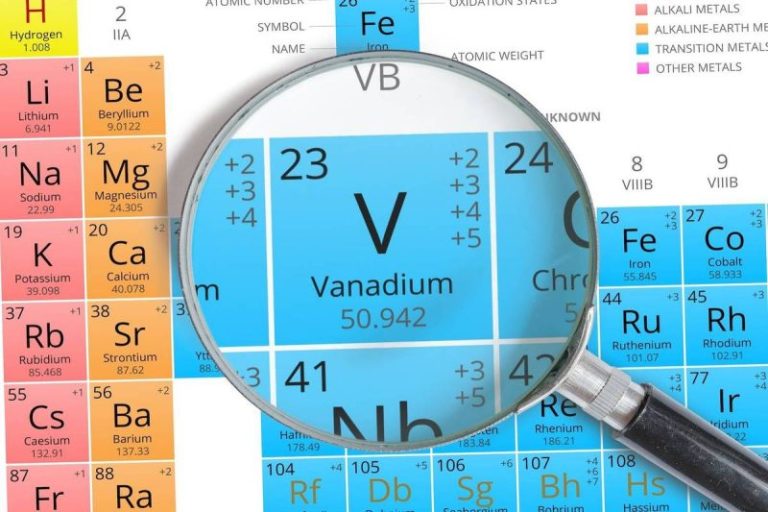
After a year marked by policy changes and trade uncertainty, experts are calling for cleantech investment to be dominated by artificial intelligence (AI) energy demand in the first quarter of 2026.

The COP30 conference, held in Belém, Brazil, this past November, was marked by cautious optimism and a bias toward action, despite global sustainability commitments seeming to slow.

The shift to net zero is recognized as a complex, regional effort — fossil-rich economies must prioritize carbon capture and lower-emitting fuels like hydrogen and geothermal, while others focus on renewables.

In the US, renewables will maintain momentum in the face of grid overcapacity, with targeted government funding for nuclear and fusion; however, policy headwinds may persist for areas like wind, solar and electric vehicles (EVs).

AI’s energy demand boost

The energy investment landscape is being fundamentally reshaped by AI energy demand, with Bain & Co. projecting that data centers will consume 9 percent of US electricity by 2030.

Analysts are eyeing this trend, with CFRA Research placing “buy” ratings on many companies held in utilities exchange-traded funds. It notes that some benefit from power agreements for AI-linked data centers.

The American Clean Power Association projects that 2025 will set a full-year record for combined clean energy deployments, despite US policy headwinds that sparked concerns about a sector contraction at the start of the year. Solar and storage capacity made up around 85 percent of new power capacity added to the US electricity grid from January to September 2025, according to a report from the Solar Energy Industries Association and Wood Mackenzie.

A separate analysis by energy think tank Ember reveals that global solar and wind power generation surpassed electricity demand in the first half of this year, generating more power than coal for the first time.

The report also show solar generation grew by a record 31 percent in H1, and wind by 7.7 percent.

The US Energy Information Administration now forecasts that renewables will climb to about 27 percent of US energy generation by 2026, up from 23 percent in 2024.

The clean AI investment surge

Meanwhile, startups are racing to make infrastructure smarter and faster to build with the help of AI.

Emerald AI, which uses smart software to manage a cleaner, more flexible grid and ease data center strain, announced its first commercial deployment alongside US$18 million in new seed funding, while Infravision, a company that uses drones to string transmission lines more efficiently, raised US$91 million in a Series B round to scale globally.

AI is also accelerating cleantech breakthroughs, as highlighted by the CleanAI Initiative’s report on AI’s growing role in climate solutions. It shows energy and power technologies garnered more than half of total clean AI investments.

The sector is seen as a critical, multi-layered investment opportunity tied to sustainability and technology leadership in multitrillion-dollar markets; however, key challenges to its growth include the high energy consumption of AI technologies themselves and a lack of combined expertise in both AI and climate science.

Billions in private investment have helped sustain the cleantech sector.

Experts Jason Bordoff and Jack Andreasen Cavanaugh argue that corporate funding will help boost energy transition, citing power purchase agreements and other financial commitments by Big Tech companies such as Alphabet (NASDAQ:GOOGL), Meta Platforms (NASDAQ:META), Microsoft (NASDAQ:MSFT) and Amazon (NASDAQ:AMZN).

NextEra Energy’s (NYSE:NEE) landmark Q4 deals with Alphabet and Meta to power their AI data centers are prime examples of this trend. The Florida-based company will supply clean energy capacity through 11 power purchase and two energy storage deals, with projects expected to become operational between 2026 and 2028. NextEra is also collaborating with Google Cloud to develop three US data center campuses.

However, this transformative period carries significant risks: if the AI boom proves to be a bubble that bursts, energy investment could swiftly vanish, leading to billions in stranded assets.

As China solidifies its dominance in clean energy manufacturing, the question remains whether the US administration’s efforts to expand nuclear and geothermal power can successfully challenge China’s current leadership, as Beijing also accelerates its own nuclear buildout and eyes global reactor exports.

Nuclear and geothermal gaining traction

Nuclear and geothermal are gaining traction as promising solutions for AI and data center reliability in 2026, attracting enterprise and policy support as other clean energy initiatives and incentives are pulled back.

The Department of Energy formally released its Fusion Science and Technology Roadmap in Q4, outlining a strategy to accelerate commercial fusion by the mid-2030s. Separately, the department announced it will award up to US$800 million in cost-shared funding to advance small modular reactor projects.

Startups are accelerating too, with Antares raising US$96 million for mid-2026 microreactor tests, while Radiant Nuclear is planning a US$280 million factory in Tennessee targeting 2028 deliveries. Under the leadership of CEO Bob Mumgaard, Commonwealth Fusion Systems is transitioning fusion energy from the realm of research to practical power generation. The company is currently building sites for its commercial fusion plants and is utilizing a partnership with Google DeepMind, focused on AI, to speed up the development of its fusion technology.

Geothermal is scaling, too, with some investors turning their attention to even more ambitious high-temperature projects. Mazama Energy, a startup backed by billionaire businessman Vinod Khosla, is developing a geothermal project at Newberry, one of the largest and most active volcanoes. If successful, this could be a top global geothermal site, supplying electricity to local homes and businesses starting next year.

Endeavors like these are viewed by enthusiasts as a potential catalyst for a new era of geothermal power.

“Geothermal has been mostly inconsequential,” Khosla told the Washington Post.

“To do consequential geothermal that matters at the scale of tens or hundreds of gigawatts for the country, and many times that globally, you really need to solve these high temperatures.”

Another notable example is Zanskar Geothermal and Minerals, which precisely located a deep geothermal reservoir using AI, effectively lowering the exploration and drilling costs of its Big Blind geothermal system. The company is seeking permits to develop Big Blind, aiming to supply power by the end of the decade.

EV localization and self-driving options

Looking ahead, robotaxis are gaining traction in the EV market, with growing fleets operating in multiple cities.

Alphabet’s Waymo is the most aggressive company in this space, currently offering driverless rides in five cities with plans to expand in 2026. Other key players are actively engaged in various testing stages.

Both Uber Technologies (NYSE:UBER) and Lyft (NASDAQ:LYFT) are incorporating Waymo and other robotaxi services into their platforms, and Uber is adding robotaxis to its platform in Dallas, Texas, through a partnership with Avride, using autonomous Hyundai (KRX:005380,OTC Pink:HYMTF) Ioniq 5s that will initially include a safety operator.

Amazon’s self-driving robotaxi subsidiary, Zoox, expects to start charging passengers for rides in Las Vegas in early 2026, with paid rides in the San Francisco Bay Area coming later next year; however, the move depends on obtaining federal regulatory and state approvals. Tesla (NASDAQ:TSLA), led by CEO Elon Musk, is operating smaller, monitored robotaxi fleets in Austin and San Francisco, with Phoenix anticipated to be the next market for a major expansion.

Meanwhile, self-driving truck startup Waabi, a Canadian company with backing from Uber and NVIDIA (NASDAQ:NVDA), launched its new autonomous truck developed with Volvo (STO:VOLV-A,OTC Pink:VLVCY).

Investor takeaway

As the cleantech market navigates this transformative period, its long-term success will hinge on strategic investments that successfully balance immense AI energy demands with the imperative of avoiding a stranded-asset bubble.

Sector participants will also need to track country-level developments. In the US, Senator Ruben Gallego’s (D-Ariz.) energy plan prioritizes affordability over climate primacy, calling for reinstated clean tax credits, small modular reactor R&D funding, transmission exemptions and zero-carbon sources alongside oil/gas with clean timelines.

Meanwhile, Canada’s 2025 budget includes a C$2 billion cleantech fund, and the EU’s Carbon Border Adjustment Mechanism pressures imports, favoring compliant North American projects that blend reliability with decarbonization.

Securities Disclosure: I, Meagen Seatter, hold no direct investment interest in any company mentioned in this article.

This post appeared first on investingnews.com

InMed Pharmaceuticals Inc. (NASDAQ: INM) (‘InMed’ or the ‘Company’), a pharmaceutical company focused on developing a pipeline of proprietary small molecule drug candidates for diseases with high unmet medical needs, today confirmed that, at its annual general and special meeting of shareholders held on December 17, 2025 (the ‘Meeting’), the matters put forward before shareholders for consideration and approval as set out in InMed’s notice of meeting and management information circular, dated November 3, 2025, were voted upon by the shareholders. A total of 993,491 common shares of the Company, representing approximately 35.43% of the Company’s 2,804,186 issued and outstanding common shares, were represented in person or by proxy at the Meeting.

Results of the vote for the election of the board of directors (the ‘Board‘) at the Meeting are set out as follows:

Director Votes For Withheld Votes
Number Percentage Number Percentage
Eric A. Adams 125,352 82.03% 27,469 17.98%
Andrew Hull 125,315 82.00% 27,506 18.00%
Nicole Lemerond 125,485 82.11% 27,336 17.89%
Neil Klompas 125,444 82.09% 27,377 17.91%
John Bathery 125,227 81.94% 27,594 18.06%


In addition, shareholders voted to approve CBIZ CPAs P.C. as the Company’s auditors for the following year.

Shareholders also voted to approve the potential issuance of 20% or more of the Company’s common shares issued and outstanding as of December 13, 2024, pursuant to the Standby Equity Purchase Agreement with YA II PN, Ltd., as amended on June 13, 2025, pursuant to Nasdaq Listing Rules 5635(d) and 5635(b) (the ‘SEPA‘).

InMed filed a report of voting results on SEDAR+ at www.sedarplus.ca on December 17, 2025.

About InMed:

InMed Pharmaceuticals is a pharmaceutical company focused on developing a pipeline of proprietary small molecule drug candidates targeting the CB1/CB2 receptors. InMed’s pipeline consists of three separate programs in the treatment of Alzheimer’s, ocular and dermatological indications. For more information, visit www.inmedpharma.com.

Investor Contact:

Colin Clancy
Vice President, Investor Relations
and Corporate Communications
T: +1 604 416 0999
E: ir@inmedpharma.com

Cautionary Note Regarding Forward-Looking Information:

This news release, and oral statements by the Company and its executive officers and directors, contain ‘forward-looking information’ and ‘forward-looking statements’ (collectively, ‘forward-looking information’) within the meaning of applicable securities laws. Forward-looking statements are frequently, but not always, identified by words such as ‘expects’, ‘anticipates’, ‘believes’, ‘intends’, ‘potential’, ‘possible’, ‘would’ and similar expressions. Such statements, based as they are on current expectations of management, inherently involve numerous risks, uncertainties and assumptions, known and unknown, many of which are beyond our control. Forward-looking information is based on management’s current expectations and beliefs and is subject to a number of risks and uncertainties that could cause actual results to differ materially from those described in the forward-looking statements. Without limiting the foregoing, forward-looking information includes, but is not limited to, statements about H.R. 5371, the ‘Continuing Appropriations, Agriculture, Legislative Branch, Military Construction and Veterans Affairs, and Extensions Act, 2026’ (the ‘Act‘), the impact of the Act on BayMedica Inc., any potential modifications to the Act and/or the timing thereof and the alternative options available to BayMedica and the Company, statements about developing a pipeline of proprietary small molecule drug candidates for diseases with high unmet medical needs, and statements about the potential issuance of common shares pursuant to the SEPA.

Additionally, there are known and unknown risk factors which could cause InMed’s actual results, performance, or achievements to be materially different from any future results, performance or achievements expressed or implied by the forward-looking information contained herein. A complete discussion of the risks and uncertainties facing InMed’s business is disclosed in InMed’s Annual Report on Form 10-K, and its Quarterly Reports on Form 10-Q, Current Reports on Form 8-K and any other documents filed or furnished with the Securities and Exchange Commission available on www.sec.gov.

All forward-looking information herein is qualified in its entirety by this cautionary statement, and InMed disclaims any obligation to revise or update any such forward-looking information or to publicly announce the result of any revisions to any of the forward-looking information contained herein to reflect future results, events or developments, except as required by law.

To view the source version of this press release, please visit https://www.newsfilecorp.com/release/278446

News Provided by Newsfile via QuoteMedia

This post appeared first on investingnews.com

Uranium prices stayed fairly steady in 2025, but experts agree its long-term outlook is compelling,

Demand picked up from reactor restarts, new nuclear construction projects and growing interest in small modular reactors. Meanwhile, supply constraints continued as miners faced issues ramping up.

1. Trump Admin Pushes for Uranium Stockpile Boost to Secure Nuclear Power Future

Publish date: September 16, 2025

In September, the Trump administration zeroed in on its plan to reduce uranium reliance on Russia.

A report by Bloomberg outlined that Russia still accounts for approximately a quarter of the fuel used in America’s 94 nuclear reactors, which generate roughly 20 percent of the nation’s electricity.

Secretary of Energy Chris Wright said that the Department of Energy was working to reduce that dependence by rebuilding domestic uranium and enrichment supply chains.

The concept of a federal uranium reserve dates back to 2020, when the first Trump administration sought US$150 million to begin direct purchases from US producers, though Congress approved only half the amount.

Supply concerns sharpened after Russia briefly restricted uranium exports to the US in late 2024, underscoring Washington’s exposure to geopolitical risks.

A law signed in May 2024 requires US utilities to phase out Russian uranium by 2028, with future stockpile levels expected to rise in line with new reactor construction, including small modular reactors.

“We’re moving to a place — and we’re not there yet — to no longer use Russian enriched uranium,” Wright said, adding that the US needs significantly more domestic uranium and enrichment capacity.

2. China Achieves World’s First Thorium-to-Uranium Conversion

Publish date: November 6, 2025

China marked a milestone in 2025 by converting thorium into uranium inside a working molten salt reactor.

The experimental thorium molten salt reactor, developed by the Chinese Academy of Sciences’ Shanghai Institute of Applied Physics in the Gobi Desert, is the first in the world to demonstrate stable thorium-based fission.

The reactor has been operating since reaching first criticality in October 2023 and has now produced data confirming the conversion of thorium-232 into uranium-233, a fissile material capable of sustaining a nuclear chain reaction.

Unlike conventional reactors that use solid uranium fuel rods, the system relies on liquid fuel dissolved in molten fluoride salt, allowing continuous refueling and stable heat generation without shutting down operations.

3. Uranium Energy’s Sweetwater Project Fast Tracked Under Trump Initiative

Publish date: August 6, 2025

In August, Uranium Energy’s (NYSEAMERICAN:UEC) Sweetwater uranium complex in Wyoming was designated for expedited permitting under the Trump administration’s FAST-41 initiative. The initiative is part of a broader strategy to revitalize the US nuclear fuel supply chain and reduce reliance on imports from geopolitical rivals.

The Sweetwater complex, located in Wyoming’s Great Divide Basin, is anchored by a fully licensed conventional uranium mill with a capacity of 3,000 metric tons per day and annual output of 4.1 million pounds.

The site previously included several permitted mines — Sweetwater (Red Desert), Big Eagle and Jackpot (Green Mountain) — and will now be evaluated for in-situ recovery mining, a lower-impact extraction technique.

The new permitting push will allow the company to modify existing approvals to incorporate in-situ recovery capabilities both within and beyond the current mine boundary, including on adjacent federal lands.

Sweetwater is the second uranium project to receive fast-track treatment under the policy, following Anfield Energy’s (TSXV:AEC,NASDAQ:AEC) Velvet-Wood project in Utah, which received the status in May.

4. Denison Mines Moves Closer to Federal Approval for Phoenix ISR Uranium Project

Publish date: February 28, 2025

In February, Denison Mines (TSX:DML,NYSEAMERICAN:DNN) announced that the Canadian Nuclear Safety Commission (CNSC) had scheduled public hearings for its Wheeler River uranium project in Saskatchewan.

The hearings were scheduled for October 8 and December 8 to 12, and according to the company would represent the final stage in the federal environmental assessment process. Denison holds an effective 95 percent interest in Wheeler River, the largest undeveloped uranium project in the Eastern Athabasca Basin. If approved, the company expects to begin site preparation and construction for its Phoenix in-situ recovery uranium project in early 2026.

In its Q3 report, released on November 6, Denison said the first part of the hearing was complete, and that it was expecting a decision from the CNSC in early 2026 after part two of the hearing.

5. Western Australia Reviews Uranium Mining Ban as Nuclear Energy Investment Grows

Publish date: October 2, 2025

Possibly the biggest uranium news in Australia in 2025 was Western Australia’s move to consider lifting its ban on new uranium licenses. In October, ahead of an energy-focused trade mission to China and Japan, Premier Roger Cook signaled the policy might be under review as part of broader strategic development considerations.

China, Western Australia’s largest trading partner, accounts for more than half of the state’s exports.

While the state’s three existing uranium mines continue to operate under previously approved permits, no new developments have been allowed since the ban was put in place in 2017. Cook emphasized that Western Australia intends to respect legal mining leases, while exploring future opportunities.

He also stressed that any change to the uranium policy would likely depend on a “significant shift” in global markets, while the state continues to monitor existing permit holders and potential future projects.

Securities Disclosure: I, Gabrielle de la Cruz, hold no direct investment interest in any company mentioned in this article.

This post appeared first on investingnews.com

IRIS Metals Limited (ASX: IR1, “IRIS” or “the Company”) is pleased to announce it has executed a binding Heads of Agreement (HOA) with Finley Mining Inc for the exclusive right to farm-in to the Finley Basin Tungsten Project (Tungsten Project) located in Granite County, Montana, USA. This strategic farm-in opportunity further expands IRIS’ exposure to critical minerals beyond lithium, positioning the Company in a key tungsten district with historical production potential and untapped high-grade tungsten potential in a jurisdiction primed for revival under U.S. critical minerals policies.

HIGHLIGHTS

  • IRIS Metals has signed a binding Heads of Agreement with Finley Mining Inc and its shareholders, granting IRIS an exclusive right to farm-in to the high-grade Finley Basin Tungsten Project, located in Granite County, Montana, USA, subject to the execution of full form farm-in agreements to be negotiated in good faith on the agreed key terms within 40 business days (unless extended).
  • Due to the transaction materialising during a proposed capital raising program, the Company decided not to raise capital at this point in time, having regard to the strategic merits of the Tungsten acquisition.
  • Limited drilling undertaken by Union Carbide in the late 1970s–early 1980s resulted in a historical, non-JORC compliant tungsten reserve, 850,000 tons at an average grade of 0.68% WO₃1, which is considered high-grade relative to many global tungsten deposits.
  • The farm-in provides IRIS with exposure to tungsten, a critical mineral with strategic importance for defense, energy, and industrial applications, complementing IRIS’ existing critical minerals portfolio.
  • The farm-in structure allows IRIS to earn up to a 100% interest in the project through staged exploration expenditure of up to USD$2,000,000 over 4 years and delivery of a JORC- compliant Inferred Resource.
  • Exploration activities to commence at the Finley Basin Project in early 2026, focusing on resource definition, expansion, and development studies.
  • The transaction aligns with IRIS’ strategy to expand its critical minerals footprint in the USA, leveraging incentives for domestically sourced materials.
IRIS Metals Executive Chairman Peter Marks commented:

‘This binding agreement marks an exciting step for IRIS as we grow and diversify our critical minerals portfolio into tungsten, a vital component for the defense and technology industries. The Finley Basin Project offers significant upside with its prospective geology and location in a mining-friendly jurisdiction. Combined with our existing South Dakota portfolio, this positions IRIS to capitalise on significantly growing demand for US-sourced critical minerals.’

Montana Portfolio Expansion and Development

IRIS is actively evaluating additional critical mineral opportunities to complement its core South Dakota holdings. This farm-in to the Finley Basin Tungsten Project diversifies IRIS’ assets into tungsten, a critical mineral essential for military energetics, alloys, electronics, and renewable energy technologies, with U.S. demand surging amid defense initiatives and clean energy goals, yet vulnerable to geopolitical supply disruptions.

The expansion of IRIS’ mineral portfolio to tungsten was measured in approach with a number of projects reviewed and compared. The Company selected the Finley Basin Project due to its high-grade characteristics when compared other tungsten occurrences in the US2, historical exploration results, favourable jurisdiction, potential for expansion of known mineralisation, local milling capabilities, and reasonable proximity to the Company’s South Dakota operations.

IRIS’ primary focus remains on advancing its South Dakota lithium and rubidium projects toward near- term development under its “Hub & Spoke” strategy, which emphasises centralized processing across multiple sites.

Recent expansions, including the September 2025 acquisition of the Ingersoll Project from Rapid Critical Metals have significantly grown IRIS’ Black Hills footprint and private land holdings. IRIS is rapidly expanding mineral resources and progressing studies to support a multi-mine production model, with economic analysis targeted for 2026.

This strategic diversification importantly aligns with broader U.S. incentives for domestically sourced critical minerals and supports resilient supply chains under frameworks such as the Australia-U.S. Climate, Critical Minerals and Clean Energy Transformation Compact.

Click here for the full ASX Release

This post appeared first on investingnews.com

Congratulations to the fantasy football managers who survived an injury-riddled first round of the fantasy playoffs in 2025. The hard work will now continue into Week 16, especially for those with Patrick Mahomes on their roster.

It won’t be easy to navigate injuries to Mahomes and other key contributors. Fantasy managers are all in do-or-die mode at this point in the season, so every start ’em, sit ’em decision is of the utmost importance.

And some bold calls – like benching some high-volume running backs in tough matchups for streamers in good ones – might be necessary to earn a coveted spot in the fantasy championship game.

Who can you start and sit in fantasy football for Week 16 of the NFL season? USA TODAY Sports outlines eight players to start and eight to sit.

Fantasy football players to start in Week 16

Quarterbacks

  • Justin Herbert, Los Angeles Chargers (at Dallas Cowboys)

Herbert has averaged just one passing touchdown per game over his last five starts, but he gets a great matchup in Week 16 against a Cowboys team that has allowed the most fantasy points per game (FPPG) to quarterbacks this season. Dallas just let J.J. McCarthy throw for 250 yards with three total touchdowns and Herbert could post similar numbers.

  • C.J. Stroud, Houston Texans (vs. Las Vegas Raiders)

Stroud has averaged 246.3 passing yards per game in three starts since returning from a concussion he suffered against the Broncos. He also just had his second, three-touchdown game of the season against the Cardinals and could be poised for similar output against a Raiders team that has allowed 28.6 points per game over its last five outings.

Running backs

  • Michael Carter, Arizona Cardinals (vs. Atlanta Falcons)

The Cardinals lost starting running back Bam Knight to an ankle injury against the Texans. Carter was able to log 14 carries for 56 yards and add four catches for 38 yards against a tough Houston defense. The veteran could be asked to handle a similar workload if Knight can’t play against the Falcons, which would immediately make the 26-year-old a volume-based fantasy flex.

  • Devin Neal, New Orleans Saints (vs. New York Jets)

Neal suffered a hamstring injury in the Saints’ Week 15 win over the Panthers, but if he can play in Week 16, he could end up being a matchup-winner. The Jets have allowed the second-most FPPG to running backs this season and have allowed a league-high eight receiving touchdowns to the position. Neal is a good receiver – he has 17 catches on 19 targets across 268 snaps this season – and has logged a touchdown in back-to-back games.

Wide receivers

  • Jayden Reed, Green Bay Packers (at Chicago Bears)

Reed just had his best game of the season, racking up five catches for 55 yards on six targets against a tough Broncos defense. Now, he faces a Bears unit that has allowed 18 receiving touchdowns to wide-outs this season, good for third-most in the NFL. Reed should be a high-floor WR3 and could have WR2 upside if Christian Watson (shoulder) isn’t able to play in Week 16.

  • Jalen Coker, Carolina Panthers (vs. Tampa Bay Buccaneers)

The Buccaneers have allowed at least 263 passing yards and two passing touchdowns in five of their last six games. Their secondary has been leaky, and that could allow Coker to have solid game. The second-year receiver has averaged four catches for 67 yards over his last two games and scored a touchdown in each. He has good chemistry with Bryce Young and should be a fine flex play for fantasy managers to grab off the waiver wire.

Tight end

  • Darren Waller, Miami Dolphins (vs. Cincinnati Bengals)

Waller has played in seven games this season but has managed to score six touchdowns. That included two against the Steelers in Week 15, a game during which he recorded a season-high seven receptions and logged 66 receiving yards. The Bengals have allowed the most catches (99), receiving yards (1,276) and receiving touchdowns (15) to tight ends this season, so Waller could have another big-time outing in Week 16.

Defense/special teams

  • New Orleans Saints (vs. New York Jets)

The Saints have only once allowed more than 21 points in their last five games. They have averaged two sacks per game over that span and have generated six turnovers. New Orleans is a getting an easy matchup against a Brady Cook-led Jets offense in Week 16 and will be playing at the Superdome. Feel free to back them in a favorable streaming spot.

Fantasy football players to sit in Week 16

Quarterbacks

  • Dak Prescott, Dallas Cowboys (vs. Los Angeles Chargers)

If you were lucky enough to survive Prescott’s zero-TD performance against the Vikings, you may want to sit him against the Chargers. Los Angeles has allowed a league-low 12 passing touchdowns to quarterbacks this season, so Prescott has a lower ceiling than usual in what could be more of a run-heavy game plan for Dallas.

  • Jaxson Dart, New York Giants (vs. Minnesota Vikings)

Dart put together a strong performance against the Commanders in Week 15 but will face a much stiffer test against the Vikings in Week 16. Minnesota ranks No. 1 in the league in pressure rate, per the NFL’s Next Gen Stats, and Dart has a passer rating of 69 when pressured this season, per Pro Football Focus. That will gives Dart a low passing floor, which could drop him out of the starter-worthy quarterbacks in fantasy for this week.

Running backs

  • RJ Harvey, Denver Broncos (vs. Jacksonville Jaguars)

Harvey has averaged 18 touches per game since J.K. Dobbins went down with what is expected to be a season-ending foot injury. However, Harvey has only averaged 3.4 yards per carry over that span and is facing a Jaguars team in Week 16 that has allowed the fewest rushing yards to running backs this season (933). Harvey is also battling a rib injury, so it’s probably best to steer clear of him.

  • Jaylen Warren, Pittsburgh Steelers (at Detroit Lions)

Warren has a solid floor thanks to his volume, but Kenneth Gainwell has been more effective than him of late. Gainwell had 80 yards on 13 carries against the Dolphins in Week 15 while Warren had just 33 yards on 12 carries. If the Steelers lean more heavily on Gainwell, that could leave Warren with a tough path to posting production against a Lions team that has allowed the fifth-fewest FPPG to running backs this season.

Wide receivers

  • Deebo Samuel, Washington Commanders (vs. Philadelphia Eagles)

Samuel is averaging just 38 receiving yards per game since Week 6 and has scored just twice over that eight-game span. The Eagles have allowed just six receiving touchdowns to receivers this season, tied for the second-fewest in the league, which could limit Samuel. So too could the absence of Jayden Daniels and the presence of Terry McLaurin, who has seen 24 targets to Samuel’s 18 in three games since returning to Washington’s lineup.

  • Alec Pierce, Indianapolis Colts (vs. San Francisco 49ers)

Philip Rivers performed better than expected for the Colts against the Seahawks, but there are still clear limitations to the 44-year-old’s game. Notably, he averaged just 4.4 yards per attempt against Seattle and had an average depth of target (ADOT) of just 5.46 yards, per Sumer Sports. Rivers’ inability to consistently go deep will limit Pierce, who leads the NFL with an average of 20.1 yards per reception, and drop him out of flex consideration for most fantasy managers.

Tight end

  • Jake Ferguson, Dallas Cowboys (vs. Los Angeles Chargers)

Ferguson hasn’t scored a touchdown in any of his last four games, which has made him more of a fringe TE1 than a clear-cut starter. As mentioned earlier, the Chargers are weaker against the run than the pass, so Dallas may not have as much passing volume as usual in this game. That could hurt Ferguson’s bottom-line.

Defense/special teams

  • Green Bay Packers (at Chicago Bears)

The Packers just lost Micah Parsons for the season to a reported torn ACL. It isn’t clear how well Green Bay will play without him, and there will at least be an adjustment period as the Packers look to replace their top defensive player. The Bears could take advantage of that, just like the Broncos did in their 34-point Week 15 outburst.

All the NFL news on and off the field. Sign up for USA TODAY’s 4th and Monday newsletter.

This post appeared first on USA TODAY
Boxer Terence ‘Bud’ Crawford, who has won world championships in five different weight classes, announced his retirement from the sport on Dec. 16.

Crawford posted the announcement on social media with a caption saying ‘Walking away as a great with nothing else left to prove.’

‘I’ve been blessed to live out a dream that started long before the lights, the fans, or the world titles. From Omaha to the biggest stages in boxing, every step of this journey was earned through sacrifice, discipline, and faith,’ Crawford wrote in the caption of a five-minute YouTube video.

‘I gave this sport everything I had. I faced the best, moved through weight classes, and made history on my own terms. 42-0. 3x Undisputed. 5 Division World Champion. No shortcuts. No excuses.

‘This isn’t goodbye to boxing … it’s a thank you. Thank you to my family, my team, my city, and the fans who rode with me through every chapter. Thank you to the sport for shaping the man I am today. The gloves may have come off, but legacy is forever.’

The 38-year-old Crawford finishes his career with a 42-0 record (31 KOs), including his last fight in September, an unanimous decision victory over Canelo Alvarez, taking the World Boxing Council super-middleweight title.

Just two weeks ago, the WBC stripped Crawford of that belt for failing to pay their sanctioning fees.

“Very unfortunately, the WBC did not receive an acknowledgment of receipt nor any response to any of those communications,” the WBC said at the time. “The WBC had no choice but to act.”

Crawford, an Omaha, Nebraska, native, had been boxing since he was 8, and turned professional in 2008 after a prolific amateur career. He started racking up world titles in 2013, winning the NABO lightweight title with a TKO victory over Alejandro Sanabria.

Crawford then won world titles at light welterweight, welterweight, light middleweight, and super middleweight, becoming the first boxer ever to be crowned undisputed champion in three weight classes.

This post appeared first on USA TODAY