Author

admin

Browsing

Thanks to exchange-traded funds (ETFs), investors don’t have to be tied to one specific stock. When it comes to biotech ETFs, they give sector participants exposure to many biotech companies via one vehicle.

ETFs are a popular choice as they allow investors to enter the market more safely compared to investing in standalone stocks. A key advantage is that even if one company in the ETF takes a hit, the impact will be less direct.

All other figures were also current as of that date. Read on to learn more about these investment vehicles.

1. ProShares Ultra NASDAQ Biotechnology ETF (NASDAQ:BIB)

AUM: US$86.84 million

The ProShares Ultra NASDAQ Biotechnology ETF, launched in April 2010, is leveraged to offer twice daily long exposure to the broad-based NASDAQ Biotechnology Index, making it an ideal choice “for investors with a bullish short-term outlook for biotechnology or pharmaceutical companies.” However, analysts also advise investors with a low risk tolerance or a buy-and-hold strategy against investing in this fund due to its unique nature.

Of the about 250 holdings in this ETF, the top biotech stocks are Amgen (NASDAQ:AMGN) at 5.33 percent weight, Vertex Pharmaceuticals (NASDAQ:VRTX) at 5.27 percent and Gilead Sciences (NASDAQ:GILD) at 4.89 percent.

2. Direxion Daily S&P Biotech Bear 3x Shares (ARCA:LABD)

AUM: US$80.92 million

The Direxion Daily S&P Biotech Bear 3X Shares is designed to provide three times the daily return of the inverse of the S&P Biotechnology Select Industry Index, meaning that the ETF rises in value when the index falls and falls in value when the index rises.

Leveraged inverse ETFs are designed for short-term trading and are not suitable for holding long-term. They also carry a high degree of risk as they can be significantly affected by market volatility.

Unlike the other ETFs on this list, LABD achieves its investment objective through holding financial contracts such as futures rather than holding individual stocks.

3. Global X Genomics & Biotechnology ETF (NASDAQ:GNOM)

AUM: US$52.9 million

The Global X Genomics & Biotechnology ETF tracks the Solactive Genomics Index, focusing on companies involved in gene editing, genomic sequencing, genetic medicine, computational genomics and biotech.

The ETF holds 48 stocks, with about 90 percent in the pharmaceuticals, biotechnology and life sciences sector. Its top three holdings are Arrowhead Pharmaceuticals (NASDAQ:ARWR) at 6.06 percent, Guardant Health (NASDAQ:GH) at 5.5 percent and Illumina (NASDAQ:ILMN) at 5.05 percent.

4. Tema Heart and Health ETF (NASDAQ:HRTS)

AUM: US$52.53 million

Launched in November 2023, the Tema Heart and Health ETF tracks biotech stocks with a focus on diabetes, obesity and cardiovascular diseases. The fund was renamed on March 25 from Tema Cardiovascular and Metabolic ETF, and again on June 27 from the GLP-1 Obesity and Cardiometabolic ETF.

There are 47 holdings in this biotechnology fund, with about 75 percent being large-cap stocks and 22 percent mid-cap. About three-quarters of its holdings are based in the US. Its top biotech holdings are Eli Lilly and Company (NYSE:LLY) at a 10.25 percent weight, Roche Holding (OTCQX:RHHBY,SWX:ROG) at a 4.54 percent weight and UnitedHealth Group (NYSE:UNH) at a 4.25 percent weight.

5. Virtus LifeSci Biotech Products ETF (ARCA:BBP)

AUM: US$31.42 million

The Virtus LifeSci Biotech Products ETF tracks the LifeSci Biotechnology Products Index, focusing on US-listed biotech companies with at least one FDA-approved drug therapy.

Launched in December 2014 by Virtus Investment Partners, it provides targeted exposure to firms in the product stage, from startups to large players, through passive, equal-weighted holdings rebalanced semi-annually.

Its top holdings include Travere Therapeutics (NASDAQ:TVTX) at a weight of 3.32 percent, Ionis Pharmaceuticals (NASDAQ:IONS) at 3.22 percent and Insmed (NASDAQ:INSM) at 2.97 percent.

Securities Disclosure: I, Meagen Seatter, hold no direct investment interest in any company mentioned in this article.

This post appeared first on investingnews.com

After 2024’s rapid rise, the U3O8 spot price remained more constrained through 2025, fluctuating between a relatively short range of US$63.17 (March 13) and US$83.33 (September 25) per pound.

Entering the year, the price was sitting at US$74.56 before economic and geopolitical uncertainty pushed values to a year-to-date low of US$63.71 in mid-March. Long-term positivity in the demand forecast began pushing the price upward in April through to the end of June, when spot U3O8 touched US$78.93, an H1 high.

Following a brief dip to an H2 low of US$70.98 in mid-July, investor appetite, supply concerns and government support converged, driving the price to US$83.33 on September 25, a year-to-date high. Starting December at US$76.36, U3O8 appears to have found a floor at the US$75 level, holding above the threshold since the end of August.

U3O8 spot price, December 5, 2024, to December 5, 2025.

Chart via Trading Economics.

Despite a subdued stretch for the price, uranium’s long-term drivers remain firmly intact, and arguably have only improved over the course of the year. Combined with renewed investor appetite, that strength has helped lift uranium equities throughout 2025, reinforcing confidence in the sector’s long-term thesis.

Uranium investment demand surges

For Joe Kelly, CEO of Uranium Markets, one of the most compelling uranium market trends in 2025 was the growth in investor demand, particularly for physical uranium.

SPUT had added 7.8 million pounds, growing its uranium holdings to 74.04 million pounds, as of December 2, a 12 percent increase from 2024’s tally. Its net asset value had increased to US$5.68 billion.

Kelly explained that SPUT’s momentum was the result of broader investor enthusiasm, allowing the trust to purchase millions of pounds from the spot market, which “drove the price considerably higher.”

That dynamic extended beyond institutional vehicles.

“You also had investors buying uranium directly because they thought it was cheap and a good investment,” he said.

The result was a layer of financial demand on top of utility needs. According to Kelly, this speculative interest created demand outside of the nuclear power plants in the world. “That drove the price up a little bit higher than it would have been otherwise, without that enthusiasm from the investing community,” he added.

SPUT’s aggressive accumulation has become a clear market signal.

The trust’s growing holdings highlight how institutional investors increasingly view uranium as scarce, tightening available supply by removing material from the open market. As inventories shrink, upward pressure on prices builds.

At the same time, SPUT’s rising net asset value reflects renewed investor confidence tied to reactor buildouts, energy security priorities and the broader clean energy shift.

If the trust keeps buying while mine output lags and utilities lock in long-term contracts, the market could be moving toward a structural deficit, drawing even more attention to uranium equities and physical vehicles.

Uranium term price underscores market momentum

Often described as a more accurate barometer of market activity and sentiment, the long-term contract price displayed less volatility in 2025, starting the 12 month period at US$80 and reaching US$86 at the end of November.

Tiggre stressed that the uranium sector’s “real market is the long-term contract price,” not the day-to-day noise of the spot price. Long-term contracting, he said, is where “actual buyers, sellers, users and suppliers” negotiate prices that determine what it really takes to bring new pounds to market.

The challenge, however, is opacity. “It’s not transparent … they don’t disclose individual contracts,” he said. That leaves analysts to piece together trends from quarterly averages.

Long-term contract price, January 1 to November 30, 2025.

Chart via Cameco.

That underlying market has continued to strengthen from 2024 to 2025.

As Tiggre noted, the long-term price has been “going up, pausing, consolidating, going up,” reaching levels that “clearly do incent production” — yet even the world’s biggest producers have struggled to deliver.

Global uranium majors Cameco (TSX:CCO,NYSE:CCJ) and Kazatomprom “both failed to hit their targets and have officially moved their goal posts,” a signal he called “significant and … bullish.”

Meanwhile, would-be junior producers have not stepped in to fill the gap.

“None of them have been able to say, ‘Yeah, we’re going to build this or rehabilitate that’ and deliver on time,” he noted. What looked like low-hanging fruit has proven “thorny,” reinforcing that supply remains constrained.

At the same time, demand momentum has only accelerated. Headlines showcasing new reactor builds are now “weekly,” Tiggre said, with BRICS nations expanding aggressively and western governments shifting decisively pro-nuclear. Even in the US, he noted, “Trump has doubled down … he’s strongly pro-nuclear.”

The result: A structurally tight market where volatile spot moves obscure a far more durable trend.

“The fundamentals are just super strong,” Tiggre said. “I’m very bullish.”

Uranium doubles as a tech play

Part of uranium’s demand story is tied to forecast growth in artificial intelligence (AI) data center deployment, a segment where electricity consumption has grown by 12 percent since 2019, as per the International Energy Agency (IEA).

Currently data centers use 415 terawatt hours (TWh), representing 1.5 percent of global electricity demand, and that number is projected to increase rapidly over the next five years.

“Our Base Case finds that global electricity consumption for data centres is projected to double to reach around 945 TWh by 2030 in the Base Case, representing just under 3 percent of total global electricity consumption in 2030,” the IEA’s Energy Demand from AI report reads. “From 2024 to 2030, data centre electricity consumption grows by around 15 percent per year, more than four times faster than the growth of total electricity consumption from all other sectors.”

For Gerardo Del Real, publisher at Digest Publishing, the uranium sector’s momentum has shifted as an unexpected coalition of “tech bros” and “mining bros” reshapes the narrative around nuclear power.

“Who would have thought?” said Del Real, noting that after an 18 month stretch where the uranium trade “seemed stuck in the mud,” sentiment turned sharply once markets began viewing nuclear as a technology story.

“The market is one part fundamentals and the other part psychology,” Del Real explained, adding that the psychological boost from the booming tech sector has been powerful.

While he’s skeptical that every AI-fueled data center proposal will materialize, Del Real argued that even limited progress could supercharge energy demand. If tech companies “fulfill 35 percent to 50 percent of their promises,” he said, the resulting power requirements would be “absolutely spectacular.”

This comes as the uranium market was already heading toward a significant deficit by 2026, a trend Del Real believes has now accelerated. Leaning into his contrarian instincts, he said he has written “more checks than ever” for early stage uranium companies with trusted management teams.

“I am thrilled with the results thus far,” said Del Real.

“I think 2026 is going to be an inflection year where the breakout is really pronounced across the board.”

Securities Disclosure: I, Georgia Williams, hold no direct investment interest in any company mentioned in this article

This post appeared first on investingnews.com

Copper prices were volatile in 2025 due to supply-side constraints, high demand and geopolitical concerns.

Experts are calling for many of these trends to carry over into 2026, sending the market into deficit.

Beyond supply and demand fundamentals, copper will also be met with global uncertainty as China continues with its recovery efforts, the US pursues new trade plans, including a renegotiation of the Canada-US-Mexico trade pact, and XXX pressures to end the ongoing conflict in Eastern Europe.

Copper supply in 2026

A significant copper story that developed in 2025 was strained supply. Throughout the year, significant events dragged on the availability of mined copper, delaying its arrival to global markets.

Early on, there was a temporary shutdown of BHP’s (ASX:BHP,NYSE:BHP,LSE:BHP) Escondida mine, the largest copper mine in the world. However, the most significant disruption came late in the year, when 800,000 metric tons (MT) of wet material poured into the primary Grasberg block cave (GBC) at Freeport-McMoRan’s (NYSE:FCX) Grasberg mine in Indonesia. The incident cost seven workers their lives and halted production across the operation.

While the company plans to restart the Big Gossan and Deep Level zones before the end of 2025, a phased restart at the GBC won’t start until the middle of 2026, with full operations not resuming until 2027.

Elsewhere, a seismic event at Ivanhoe Mines’ (TSX:IVN,OTCQX:IVPAF) Kamoa-Kakula mine in the Democratic Republic of Congo (DRC) in May caused flooding and forced the temporary suspension of mining activities. Although some underground operations have resumed, the company is focused on dewatering the lower portions of the mine.

Since the incident, Ivanhoe has been processing stockpiled materials, but in an update on December 3, it suggested that those stores will be depleted during the first quarter of 2026. Subsequently, it has set its 2026 guidance at 380,000 to 420,000 MT before ramping back up to the 500,000 to 540,000 MT range in 2027.

“Grasberg remains a significant disruption that will persist through 2026, and the situation is similar to constraints at Ivanhoe Mines’ Kamoa-kakula, which experienced output cuts this year,’ he said.

‘We believe these outages will keep the market in deficit in 2026.’

Some relief on the copper supply side may come from the restart of operations at First Quantum Minerals’ (TSX:FM,OTC Pink:FQVLF) Cobre Panama mine. It was forced to shut down in November 2023 after Panama’s supreme court cancelled new 20 year mining contract signed in October 2023. This past Septembe, the Panamanian government ordered a review of the mining lease to restart operations at the site in late 2025 or early 2026.

Similar to Grasberg, restarting mining operations may take some time to return to full production, causing a lag before material from the mine can ease undersupplied market conditions.

Copper demand in 2026

Copper demand is on the rise due to demand from the energy transition, artificial intelligence (AI) and the expansion of data centers, as well as the rapid urbanization of the Global South. However, in 2025, significant demand was also driven by US tariff concerns, as traders have worked to import refined material into the country.

“A huge amount of this tightness has to do with US tariff concerns with refined copper inflows into the US having jumped MT over the year, putting inventory in the country to 750,000 MT,” she said.

Scott-Gray pointed to a “perfect storm” brewing in 2025’s fourth quarter , including a warming outlook driven by easing China-US tensions, US interest rate cuts and China’s 15th five year plan, set to run from 2026 to 2031.

Historically, one of the biggest demand drivers for copper has been the Chinese real estate sector; however, tighter regulations, high debt and low liquidity led to its collapse in 2021, even though the Chinese government has instituted several policies over the past several years to stimulate the sector, to no avail.

According to Reuters, Chinese home prices are set to fall 3.7 percent in 2025, and are expected to decline into the new year as well. Despite these issues, the Chinese economy proved to be robust in 2025 and is expected to post growth of 4.9 percent in 2025 and 4.8 percent in 2026, fueled by high-tech exports.

Additionally, the five-year plan outlays upgrades to the metals sector and growth in new energy.

“Weakness in the property market is likely to continue in 2026, but the story for copper is constructive. Policy focus and capital are expected to prioritize expanding the electricity grid, upgrading manufacturing, renewables and AI-related data centers. These copper-intensive areas are set to more than compensate for a subdued property market, yielding net growth in China’s copper demand next year,” White said.

Copper crunch keeps building

“These things are taking years to fix — so let’s say it takes some of them a year to get fixed and back on track, some of them two years. We’re looking at 2027; by then, the copper demand side will have kicked up even more. My base case is actually for copper deficits to broaden in the next couple of years, then just continue broadening,” he said.

The supply side is also facing headwinds as new operations haven’t come online to replace existing mines that are increasingly challenged by declining grades. While there is new supply in the pipeline, like Arizona Sonoran Copper Company’s (TSX:ASCU,OTCQX:ASCUF) brownfield Cactus project and the Rio Tinto (ASX:RIO,NYSE:RIO,LSE:RIO) and BHP joint venture Resolution project, both in Arizona, they’re still years away.

“While new projects may add tonnage at the margin, demand growth is likely to outpace any supply additions, which points to further supply deficits that escalate over the coming years,” White said.

A May 1 report by the UN Conference on Trade and Development notes that demand is expected to grow by 40 percent by 2040, requiring US$250 billion in investment capital and the construction of 80 new mines.

The report stated that half of the world’s copper reserves are currently located in just five countries.

Chile, Australia, Peru, the DRC and Russia, with structural challenges setting up that go beyond declining grades, most notably geopolitical risk and long mining times.

The scale of the challenges was recently outlined in a report from Wood Mackenzie, which forecast demand increasing by 24 percent to 43 million MT per year by 2035. To balance the market, the report states that 8 million MT of new supply will be required, along with 3.5 million MT from scrap.

Investor takeaway

Overall, according to the International Copper Study Group’s (ICSG) most recent forecast, released on October 8, mine production is expected to increase 2.3 percent in 2026 to 23.86 million MT.

However, refined production is only predicted to increase by 0.9 percent to 28.58 million MT.

Regarding demand, the group stated that refined copper use is expected to grow by 2.1 percent to 28.73 million MT in 2026, outpacing production growth and leading to a 150,000 MT deficit by the end of the year.

White is bullish on copper in 2026, citing low inventories and mine and concentrate deficits. He also suggested tariff threats may not be over, and that regional price differentials and high physical premiums are likely to continue.

With copper deficits expected to accelerate in 2026, prices are set up to hit record highs. Scott-Gray said 2026 could see the average price climb to US$10,635 per MT, with higher prices likely to be off-putting to more price-sensitive buyers.

Additionally, with long-term premiums near record highs, she said market players may look to make purchases on a “just-in-time” basis from alternative sources, such as bonded warehouses or directly from smelters.

Depending on price and supply, consumers could also look to swap out copper for aluminum where practical, though Scott-Gray noted that the switch would have its own limitations.

In data provided by Scott-Gray from StoneX’s Base Metal Front Desk Call, 40 percent of respondents to an LME Metals Poll believe that copper will be the best-performing base metal in 2026.

Securities Disclosure: I, Dean Belder, hold no direct investment interest in any company mentioned in this article.

This post appeared first on investingnews.com

Major League Baseball’s 2025 winter meetings are underway with the baseball world descending on Florida to (hopefully) make some deals and lay the groundwork for moves in the weeks to come.

Outfielder Kyle Tucker is considered the winter’s top free agent, with big bats Alex Bregman, Kyle Schwarber and Pete Alonso also on the market. Need pitching? Left-handed starters Framber Valdez and Ranger Suarez are available, as well as closer Edwin Diaz.

The Detroit Tigers probably won’t trade Cy Young winner Tarik Skubal, but there’s plenty of intrigue with the ace entering his final year before hitting free agency.

Here’s a look at some of Monday’s happenings:

CJ Abrams, MacKenzie Gore rumors for Nationals

ORLANDO, FL — The Nationals have aggressively been engaged in trade talks with teams involving All-Star pitcher MacKenzie Gore and shortstop CJ Abrams, with two general managers saying Monday morning that they now fully expect the two players to be traded.

Paul Toboni, the Nationals new president of baseball operations, informed teams weeks ago that they would listen to offers and after receiving heavy interest, now appear much more willing to part with the two players.

Teams, after seeing the high price for pitching on the free-agent market, have reached out to Washington in hopes to acquire Gore. The left-hander. 26, went 5-15 with a 4.17 ERA, striking out 185 batters in 159⅔ innings. He is under team control for two more years.

– Bob Nightengale

MLB winter meetings 2025: Five teams to watch

The winters meetings aren’t a hard deadline to add or subtract personnel, and many bold-faced names will loiter on the market, perhaps into the new year.

But proximity can certainly breed activity. With that, we examine five teams who could – or should – shake things up this week:

  • Boston Red Sox
  • Baltimore Orioles, 
  • Toronto Blue Jays 
  • Arizona Diamondbacks
  • Detroit Tigers

– Gabe Lacques

Report: Diamondbacks agree to deal with SP Mike Soroka

Free agent right-hander Mike Soroka has agreed to a one-year deal with the Arizona Diamondbacks, ESPN is reporting.

Soroka began last season with the Washington Nationals before being traded to the Chicago Cubs at the deadline. He finished the season with a combined record of 3-8 with a 4.52 ERA over 89 2/3 innings (17 starts). He spend a significant portion of the season on the injured list with a shoulder issue, but returned late in the season as a reliever.

Tigers eyeing free agent Brad Keller as starter

Remember when the Detroit Tigers tried to convert right-hander Ryan Helsley from reliever to starter, only for him to stay in the bullpen by signing a two-year, $28 million contract with the Baltimore Orioles?

Here we go again.

The Tigers are interested in free-agent right-hander Brad Keller as a starter after his successful 2025 season in the Chicago Cubs bullpen, according to a person with knowledge of the situation who spoke on condition of anonymity because the situation is still developing. The 30-year-old is believed to be willing pitch as either a starter or reliever, but the Tigers are talking to him about returning to the rotation.

Evan Petzold, Detroit Free Press

Yankees hot stove rumors for baseball winter meetings

“You never know,’’ Yankees GM Brian Cashman said of finding trade or free agent matches at these meetings. “It’s that time of year, so you hope you run into some things.’’

That said, “I don’t think there’s as deep of a need of a lot of things as there were last year,’’ said Cashman, referencing the pivots after losing free agent Juan Soto to the Mets.

“But there’s things we’re obviously trying to do,’’ Cashman said of acquisitions big and small.

Any larger scale deals by the Yanks might be via trade, due to owner Hal Steinbrenner’s “ideal’’ of a payroll just south of the final luxury tax threshold.

– Pete Caldera, NorthJersey.com

Kyle Schwarber the center of attention in Orlando

Now that closer Emilio Pagan is back in the fold for the Cincinnati Reds, all eyes turn to Kyle Schwarber as the Reds and the rest of MLB head to Florida for the winter meetings.

Team sources say the Reds’ long-rumored pursuit of the star slugger from Middletown remains serious heading into the industry’s annual convention – when many in the game believe the robust market for Schwarber should start to crystallize.

The favorite to land this year’s National League MVP runner-up still is considered to be his own Philadelphia Phillies, who have expressed strong interest in bringing him back even as reports suggest they’re slow-playing the process as his market becomes more defined.

The Mets, supposedly the Orioles, Blue Jays and Red Sox, and allegedly even the Pirates have been linked to Schwarber, too.

– Gordon Wittenmyer, Cincinnati Enquirer

Yankees’ Brian Cashman pushes back on Sonny Gray

Former Yankees pitcher Sonny Gray may not have enjoyed pitching in New York, but team GM Brian Cashman said Sunday night the now division-rival never let him know that was the case until it was too late. Speaking to reporters Sunday night after arriving at the Winter Meetings, Cashman said Gray didn’t voice his displeasure until after the 2018 trade deadline.

Accroding to Cashman, Gray admitted his agent encouraged him to stay silent about his dislike for New York when the Yankees acquired him in 2017 so that it would improve his value as a free agent.

‘I never wanted to go there in the first place,’ Gray said in his introductory press conference on Dec. 2 after the Boston Red Sox acquired him from the St. Louis Cardinals.

Gray had a rocky time with the Yanks, going 15-16 with a 4.81 ERA before they traded him to the Cincinnati Reds following the 2018 season. After Gray came clean about his true feelings, Cashman said he told the pitcher, ‘Nothing I can do about it now. I wish you’d told me beforehand. I wish we knew this before we ever tried to acquire you.’

Mets rumors: Will New York make moves at winter meetings?

A season ago at the Major League Baseball’s Winter Meetings, the Mets grabbed a stranglehold on the attention when they landed Juan Soto one night into the proceedings on the richest contract in sports. It was a massive swing by the Mets front office – one that only netted soft contact during Soto’s first season in Flushing as the team fell shy of the postseason.

The Mets have already made waves early in the offseason, trading Brandon Nimmo and bringing in Marcus Semien. Last week, they signed reliever Devin Williams to a three-year, $51 million contract to plug in one hole in the bullpen.

But the futures of franchise favorites Pete Alonso and Edwin Diaz still linger at the top of mind for Mets fans. After last season’s disappointment, there is a need to bolster the top of the starting rotation — either via a signing or trade — and Nimmo’s exit opens up a second gap in the outfield that needs to be filled.

– Andrew Treddenick, NorthJersey.com

Jeff Kent voted into Hall of Fame by contemporary era committee

ORLANDO, FL — Every San Francisco Giants fan knew the day would eventually arrive that their legendary slugger would be elected into Baseball’s Hall of Fame.

Who would have ever imagined second baseman Jeff Kent would be the one to enter Cooperstown while Barry Bonds, baseball’s all-time home run king, was shut out again.

Kent, whose 377 home runs are the most by a primary second baseman in baseball history, received 14 of the 16 votes by the contemporary era committee and was the only player elected on Sunday, Dec. 7. Kent, who received 46.5% of the votes in his final year on the Baseball Writers Association of America ballot in 2023, needed 12 votes (75%) to be elected.

– Bob Nightengale, USA TODAY Sports

MLB trade rumors on top 10 targets

  1. Tarik Skubal, Detroit Tigers
  2. Freddy Peralta, Milwaukee Brewers
  3. Ketel Marte, Arizona Diamondbacks
  4. Steven Kwan, Cleveland Guardians
  5. Joe Ryan, Minnesota Twins
  6. MacKenzie Gore, Washington Nationals
  7. Brandon Lowe, Tampa Bay Rays
  8. Jarren Duran, Boston Red Sox
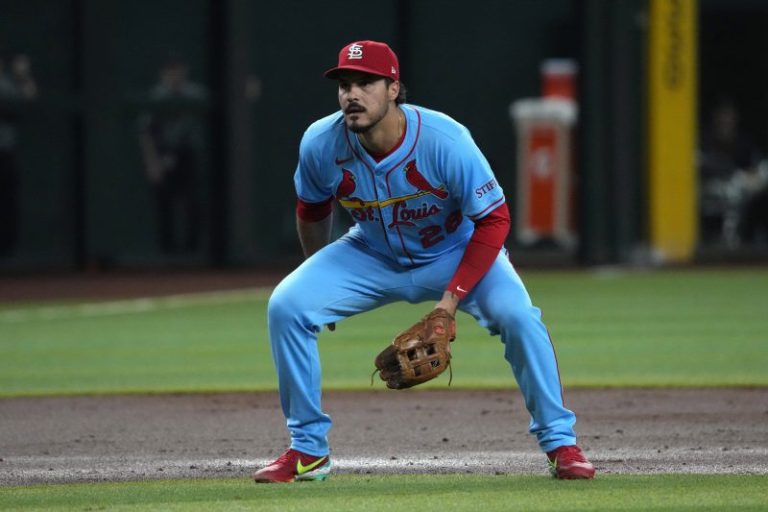
  9. Brendan Donovan, St. Louis Cardinals
  10. Luis Severino, Athletics

Yankees rumors: Pitchers for Bombers to target

There’s an acute need to improve the Yankees’ setup relief, but they’re likelier to find relievers via trade – as they did with Devin Williams and Fernando Cruz last winter. Bidding on big, free agent bullpen arms – led this time by Edwin Diaz – hasn’t been a Yankee trait in recent years, and they’re also likely to see Luke Weaver follow Williams (Mets) to another club.

Steinbrenner’s stated satisfaction with his rotation doesn’t rhyme with a pursuit of big-name starters, a group that includes Japan’s Tatsuya Imai.

Last year, Max Fried ($218 million) made it a trio of expensive, pinstriped free agent starters, joining Gerrit Cole ($324 million) and Carlos Rodon ($162 million). But Cole, Rodon and Clarke Schmidt will start the season on the injured list, and there’s incentive to add a one-year veteran option – perhaps inviting Justin Verlander and Max Scherzer into the conversation.

Right-handers Chris Bassitt, Merrill Kelly and Nick Martinez are potential short-term options, while Michael King – reluctantly traded in the Juan Soto deal – is a far more expensive but worthy target.

– Pete Caldera, NorthJersey.com

This post appeared first on USA TODAY

The Cleveland Browns are no longer determining their quarterback outlook on a week-by-week basis.

‘He has constantly and consistently gotten better in each one of these games and how he’s approached this game,’ Stefanski said of Sanders. ‘He’s been working very hard. So I feel good about where his development is heading. He knows there are always plays where he can be better and those type of things. But he’s very intentional about getting better each and every game he’s out there.’

The decision comes one day after Sanders threw for 364 yards and totaled four touchdowns in a 31-29 loss to the Tennessee Titans. In the fifth-round pick’s third start, he became the only rookie quarterback other than Joe Burrow to record at least 350 passing yards, three touchdown passes and a rushing score in a game in the Super Bowl era.

His third-quarter interception that led to the Titans’ go-ahead score loomed large in the contest, which ended on a sour note for Cleveland when a botched two-point conversion attempt – which Sanders was not on the field for – ended the team’s comeback bid.

‘He fought throughout the game, which we knew he would,’ Stefanski said on Sunday of Sanders’ performance. ‘Obviously with any young player, there’s going to be ups and downs, and I though there were some really, really, really good moments. He’ll keep learning from some of the plays he wants back, but (there were) some really good moments.’

Stefanski had previously not committed to starting Sanders for the remainder of the regular season. The Browns first turned to the quarterback when fellow rookie Dillon Gabriel landed in the concussion protocol after exiting a Week 11 loss to the Baltimore Ravens.

Stefanski at first said that Gabriel would reclaim his starting role once healthy but reversed course after the Browns won in Sanders’ first start against the Las Vegas Raiders.

This post appeared first on USA TODAY

ORLANDO, Fla. – It was a side of Jeff Kent that no one had really seen Monday afternoon, struggling to speak, breaking down several times, and overcome with emotion at his Hall of Fame press conference.

He broke down at the mention of the San Francisco Giants’ greats inducted into the Hall of Fame before him. He choked up knowing this was the final step of his baseball career. He was emotional talking about former San Francisco Giants general manager Brian Sabean taking the gamble and trading Matt Williams for him, and how former Giants manager Dusty Baker helped make him a Hall of Fame player.

Yet, the most poignant moment was when he was asked about his son, Kaeden, a minor leaguer in the New York Yankees organization, with his voice cracking several times while trying to speak.

“He always thought he could be better than me,’’ Kent said, “because he’d always say, “Dad, you’re not in the Hall of Fame.’ So, after I got the call, I hugged him and said, ‘Good luck.’’’

Kent’s press conference was attended by virtually the entire Giants’ front office, which will include three more Giants’ Hall of Famers in two years. Catcher Buster Posey, president of baseball operations, is a virtual lock to be a first-ballot Hall of Famer along with former Giants managers Bruce Bochy and Dusty Baker.

Jeff Kent, an old school player heads to the Hall of Fame

Kent’s impact of his six years in the Giants organization will reverberate forever, not simply because he hit more homers and drove in more runs than any second baseman in the modern era, but also for the way he played the game of baseball.

“I texted him this morning,’’ Posey told USA TODAY Sports, “and told him, ‘You were one of my favorite guys to watch when I was growing up.’ And then to see how emotional it was, how much this meant to him, was really special. I think that’s the coolest part about our game is the impact we can have as players on fans and their families. So then when you get to honor somebody like this, and see just how important the game was to him for so long, it’s pretty fun to see.’’

Bochy, who won three World Series championships with Posey as his catcher, never managed Kent in San Francisco, but grew to admire him from across the field for simply the way he played the game.

“He was old school, real old school,’’ Bochy said. “You didn’t see any fraternization with other players. He just played the game hard. And he played the game right.

“What we saw today, with all of those emotions coming out, you never saw that on the field. All you saw was his fierce competitiveness. He always played the game hard. He looked for any way to beat you.’’

Hall of Fame shortstop Alan Trammell, who was on the contemporary era committee that voted Kent into the Hall of Fame, says Kent reminded him of former teammate Kirk Gibson. He could be surly. He could be crude. You may hate him as an opponent, but you loved him as a teammate.

And no matter how you felt about him, you respected him.

“I remember just watching him run on the field before games,’’ Trammell said. “Guys would run across the infield, and meet and talk to other players. Not Kent. He would always go further down away from everyone. You know why? He didn’t want to fraternize. He was like Gibson or Jack Morris. You don’t mess with those guys before games.

“I don’t know what it really means, but it’s just a different breed, and that was Jeff Kent. He was a hell of a player who deserved this. He just exemplified how you play the game.’’

Said Kent: “It was a cliché, but I didn’t want people to get in my house. I didn’t want people to get in my brain because I wanted to focus on the game. I think a lot of times throughout my career people thought I took the game too serious at times. I didn’t have too much fun on the field. …

“But I played the game with passion. I played with integrity. I loved every minute that I played the game.’’

Kent still regrets never having won a World Series championship, saying the ultimate joy would have been simply to sit on the floor in a dirty uniform, soaked with champagne, and experiencing the feeling of being on the greatest team of the year.

“That has to be the ultimate fun,’’ Kent said. “I never got to experience that, and I miss that. But along the way, did I have fun? Yeah, but I still feel a little incomplete.

“But today, there’s no more. That’s it.’’

Follow Nightengale on X: @Bnightengale

This post appeared first on USA TODAY

The NFL is flexing its first prime-time game of the 2025 season.

The league announced Monday that it is rescheduling the originally slotted ‘Sunday Night Football’ game for Week 16, the Cincinnati Bengals’ visit to the Miami Dolphins on Dec. 21, into that day’s 1 p.m. ET window, where it will be televised by CBS.

Moving into the league’s marquee weekly window on NBC will be the New England Patriots and Baltimore Ravens, their game at M&T Bank Stadium sure to have much broader playoff implications. The Bengals and Dolphins are still mathematically alive, though barely so with matching 6-7 records.

The Patriots currently lead the AFC East with an 11-2 record and are virtually tied atop the conference with the Denver Broncos, though the AFC West leaders currently hold the tiebreaker. Though 6-7, the Ravens are one game back of the Pittsburgh Steelers for the AFC North lead.

The only games the NFL had shifted so far this season were within the Sunday afternoon window.

This post appeared first on USA TODAY

The Florida State women’s college soccer team is the national champion once again.

No. 3 Florida State defeated No. 1 overall seed Stanford 1-0 in the Women’s College Cup on Monday at CPKC Stadium in Kansas City, Missouri. It is the Seminoles’ third national title in five years and fifth overall.

‘I’m honestly just so grateful. My team worked so hard and I’m so glad we got the outcome (we wanted), because we really went through it this game,’ Florida State sophomore Wrianna Hudson, who socred the game-winner in the 87th minute, said.

Florida State weathered an offensive attack from Stanford, who entered Monday’s championship with a nation-best 96 goals, 25 more goals than the next closest team. But the Cardinal were shut out when it mattered most. Stanford had 18 shots and nine shots on goal, but Florida State freshman goalkeeper Kate Ockene recorded a career-high nine saves for the clean sheet.

Florida State head coach Brian Pensky called Ockene ‘the MVP of this match. She kept us in the game. That’s what great goalkeepers have to do.’

USA TODAY Sports provided live updates of the Women’s College Cup final between Florida State and Stanford. Catch up below:

Women’s College Cup final live score

The section will be updated throughout the game.

Women’s College Cup final live updates

87′ – FSU 1, Stanford 0

Florida State is on the board. Wrianna Hudson, Florida State’s leading scorer this season, put the Seminoles in the lead with less than four minutes remaining in the championship match. The goal came off a corner kick.

85′ – FSU 0, Stanford 0

Florida State’s Jordynn Dudley was issued a yellow card for charging the ref after a non-call.

70′ – FSU 0, Stanford 0

Stanford’s Jasmine Aikey drew a foul from Florida State’s Janet Okeke and earned a free kick in the 70th minute. Aikey has a direct goal off a free kick in each of the last two matches, including the game-winning goal against Duke in the semifinal. Aikey unleashed another direct shot at the goal on the free kick, but it was saved by the Seminoles’ Kate Ockene. It marked Ockene’s eighth save of the match.

63′ – FSU 0, Stanford 0

After not recording any shots on goal in the first half, Florida State opened the second half more aggressive and registered back-to-back shots on goal in the 63rd and 65th minute. Stanford goalkeeper Caroline Birkel saved both shots from Kameron Simmonds and Jordynn Dudley, respectively.

Halftime – FSU 0, Stanford 0

The teams are scoreless heading into halftime. Stanford is outshooting Florida State 11-4, with six shots on the goal, but Florida State goalkeeper Kate Ockene’s six saves have kept Florida State in the game. Ockene’s six saves through the first half are a season-high for the freshman keeper.

Stanford head coach Paul Ratcliffe called for his team to have ‘more composure on the ball.’

34′ – FSU 0, Stanford 0

Stanford’s Sophie Murdock was assessed a yellow card on a hard foul on Florida State’s Jordynn Dudley. Florida State wasn’t able to capitalize on the free kick.

15′ – FSU 0, Stanford 0

Taylor Suarez got a good look at the goal, but her shot sailed high over the crossbar.

9′ – FSU 0, Stanford 0

Florida State goalkeeper Kate Ockene has been busy. Stanford came out the gate hot against Florida State, recording five shots and four shots on goal in the first nine minutes of the College Cup championship match. The best attempt came from a header from Eleanor Klinger at the 8-minute mark, but Ockene made one of four saves to keep Stanford off the board. The Cardinal are used to scoring early. Stanford has scored in the first 15 minutes in 17 of 24 games this season, including every game of the 2025 NCAA Tournament.

Florida State has one shot against Stanford.

Florida State women’s soccer starting lineup

Stanford women’s soccer starting lineup

Stanford invites Taylor Swift to Women’s College Cup

Musician Taylor Swift is familiar with Kansas City. She’s been a staple at Arrowhead Stadium over the years to cheer on her fiancé, Kansas City Chiefs tight end Travis Kelce. The Cardinal extended an invite for Swift to come out and watch the Women’s College Cup championship match at CPKC Stadium in Kansas City on Monday. Will Swift make an appearance?

What time does Women’s College Cup final start?

  • Date: Monday, Dec. 8
  • Time: 7 p.m. ET ∣ 6 p.m. CT
  • Where: CPKC Stadium (Kansas City, Missouri)

Florida and Stanford will kick off at 7 p.m. ET on Monday, Dec. 8 from CPKC Stadium in Kansas City, Missouri in the Women’s College Cup final.

What TV channel is Women’s College Cup final on today?

  • TV channel: ESPNU
  • Livestream: Fubo (free trial)

The Women’s College Cup final between Florida State and Stanford will be broadcast on ESPNU. Streaming options for the game include Fubo, which carries ESPNU and offers a free trial to new subscribers.

Women’s College Cup final predictions

Craig Meyer, USA TODAY Sports: Florida State 2, Stanford 1

The Seminoles lost the previous matchup between the teams this season, but largely controlled the game, nearly doubling the Cardinal in shots (16 to nine). This time around, they’ll get a more favorable result for their third title in the past five years.

The USA TODAY app gets you to the heart of the news — fastDownload for award-winning coverage, crosswords, audio storytelling, the eNewspaper and more.

This post appeared first on USA TODAY

Clem Chambers, CEO of aNewFN.com, shares his outlook for silver in 2026.

In his view, the white metal could rise as high as US$150 to US$160 per ounce.

Chambers also discusses his other areas of focus right now, including gold, as well as the defense industry and tech stocks like Intel (NASDAQ:INTC).

Securities Disclosure: I, Charlotte McLeod, hold no direct investment interest in any company mentioned in this article.

This post appeared first on investingnews.com