Author

admin

Browsing

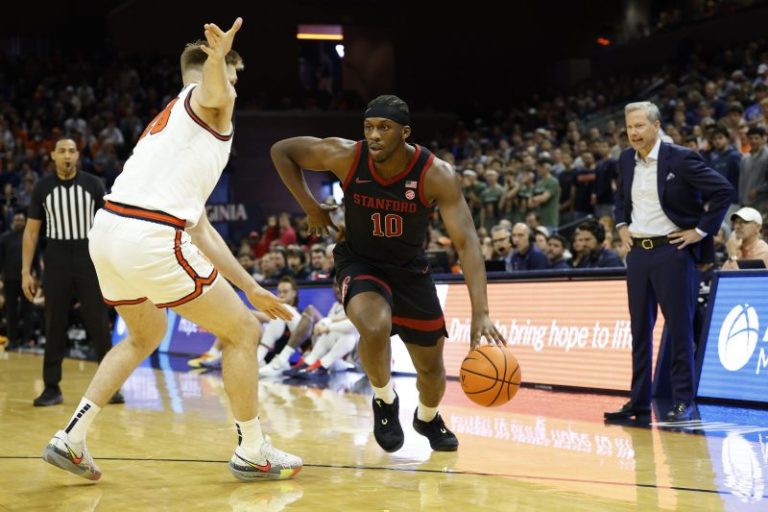
Stanford Cardinal men’s basketball will have to endure the remainder of their season without their senior second-leading scorer Chisom Okpara.

The school announced that Okpara suffered a lower extremity injury during the 70-55 loss to Virginia on Jan. 10 and will miss the remainder of the 2025-26 season.

The senior forward averaged 13.9 points, 3.9 rebounds, 2.2 assists and 1.1 steals in 17 games.

Okpara posted a statement to his Instagram account that led with a Bible verse from Proverbs.

‘Trust in the LORD with all your heart,’ Okpara’s post read.

As his post continued, he said that his surgery went ‘smoothly’ and he’s focused on a full recovery.

‘During our game against UVA on Jan. 10th, I sustained a significant patellar tendon tear. I’m happy to report that surgery yesterday went smoothly and I am focused on a full recovery,’ Okpara wrote.

He added: ‘I’m stepping away from the court for now to prioritize my health. While this isn’t how I envisioned the season playing out, I am eternally grateful to Coach Smith and the entire coaching staff for their mentorship over the last two seasons. To my teammates, I’m rooting for you all the way to the top! Huge thanks to Dr. Marc Safran, the Stanford Medicine team and my family for their unwavering support. The future is bright. Glory to God! Go Cardinal!’

Stanford has an overall record of 14-5 and are .500 in ACC games at 3-3. They’ve got two wins over ranked opponents, North Carolina and Louisville.

Their next game is 5 p.m. PT (8 p.m. ET) Saturday against Cal at Maples Pavilion in Stanford.

This post appeared first on USA TODAY

The College Football Playoff continues to dominate TV viewership ratings.

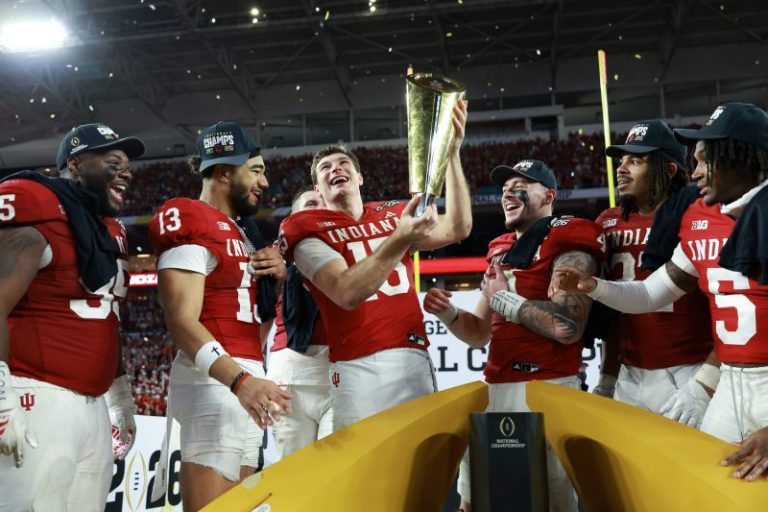
According to ESPN, Monday’s national championship game between Indiana and Miami averaged 30.1 million viewers across the network’s ‘megacast’ offerings, making it not only the most-watched game of this CFP, but also the most-watched non-NFL sporting event since the Chicago Cubs defeated Cleveland in Game 7 of the 2016 World Series.

It’s the second-most-watched national championship game since the CFP started in 2014, and peaked at 33.2 million viewers.

Buy IU championship books, newspapers, gear

The 30.1 million viewers who tuned into Indiana’s 27-21 win over Miami is a notable jump from last year’s national championship game between Ohio State and Notre Dame, which brought in an average of 22.1 million viewers.

Heisman Trophy winner and Miami native Fernando Mendoza provided a critical score for the Hoosiers on Monday with his gutsy 12-yard rushing touchdown on fourth-and-4 with 9:18 remaining in the fourth quarter. Jamari Sharpe sealed the win for the Hoosiers with an interception of Carson Beck with 44 seconds remaining.

With its win, Indiana completed one of the more remarkable turnarounds in college football history, which began two years ago with Curt Cignetti’s hiring in November 2023. The Hoosiers also joined the 1894 Yale Bulldogs as the only two teams in major college football history to go undefeated with 16-0 records in a single season.

2025-26 College Football Playoff TV ratings

ESPN also released TV viewership numbers for the entire 11-game CFP slate on Wednesday. It mentioned that the second year of the 12-team field brought in an average of 16.3 million viewers, which was a 4% increase from last season.

Surprisingly, both of the national semifinal matchups — Indiana vs. Oregon in the Peach Bowl and Miami vs. Mississippi in the Fiesta Bowl — were not included in the top four most-watched CFP games this season. The Hoosiers’ Peach Bowl win came in at No. 5 (18 million), while the Hurricanes’ Fiesta Bowl win came in at No. 7 (15.8 million), just behind Miami’s first-round win over Texas A&M.

Here’s a game-by-game breakdown of the most-watched games from the 2025-26 College Football Playoff:

  1. CFP National Championship (Miami vs. Indiana): 30.1 million
  2. CFP Rose Bowl Quarterfinal (Alabama vs. Indiana): 23.9 million
  3. CFP Cotton Bowl Quarterfinal (Miami vs. Ohio State): 19.0 million
  4. CFP Sugar Bowl Quarterfinal (Ole Miss vs. Georgia): 18.7 million
  5. CFP Peach Bowl Semifinal (Oregon vs. Indiana): 18.0 million
  6. CFP Orange Bowl Quarterfinal (Oregon vs. Texas Tech): 15.9 million
  7. CFP Fiesta Bowl Semifinal (Miami vs. Ole Miss): Ole Miss 15.8 million
  8. CFP First Round (Alabama at Oklahoma): 14.9 million
  9. CFP First Round (Miami at Texas A&M): 14.8 million
  10. CFP First Round (Tulane at Ole Miss): 6.2 million*
  11. CFP First Round (James Madison at Oregon): 4.4 million*

* Denotes games that aired on TNT

The USA TODAY app gets you to the heart of the news — fastDownload for award-winning coverage, crosswords, audio storytelling, the eNewspaper and more.

This post appeared first on USA TODAY

  • Deion Sanders has been rebuilding his roster after a 3-9 season, securing 42 commitments from transfer players.
  • Sanders confirmed his relationship with actress Karrueche Tran on the Season 2 debut of his talk show.
  • Sanders uses his streaming talk show as a unique recruiting tool to connect with potential players and their families.

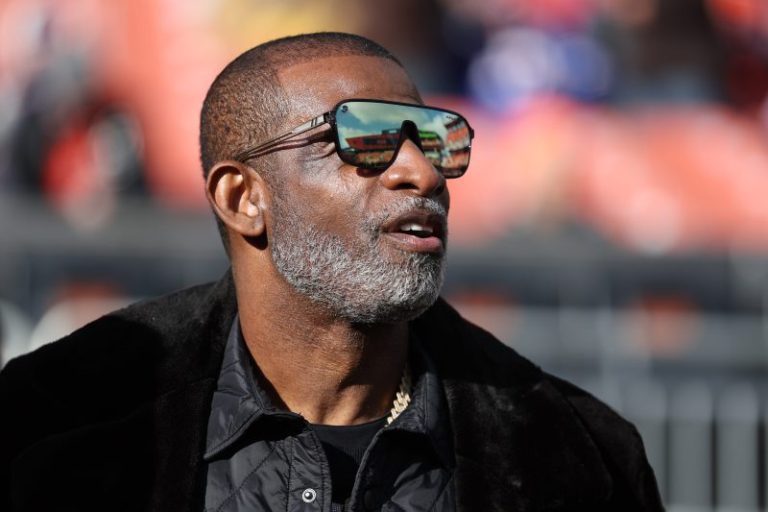
Colorado football coach Deion Sanders has kept a relatively low public profile since his third season in Boulder ended five consecutive losses and a 3-9 record. Unlike last January, after his team finished 9-4, he isn’t rumored to be in the mix to coach an NFL team and didn’t go on television talk shows to promote his reality TV series.

Sanders instead has been building his next roster behind the scenes but finally showed up on camera on Thursday Jan. 22 to share some news about his love life and give a summary of his recruiting efforts in Boulder. Sanders did this during the Season 2 debut of his streaming talk show “We Got Time Today,” co-hosted by Rocsi Diaz.

“This offseason has been treating me really well,” Sanders said. “We’re tearing it up in the (transfer) portal. We’re building something extraordinary, extra ordinary, extraordinary. And I’m feeling so darn good. Rocs, I hadn’t felt this good in quite some time. Like, really, like, like my hands, and I don’t even have a manicure like I usually do, because I got to go get it tomorrow, by the way. But I’m good. I got my hands in and on everything.”

Sanders recently received commitments from 42 incoming transfer players, offsetting more than 35 Colorado players who are transferring out, including star offensive lineman Jordan Seaton. Colorado’s transfer class ranks No. 22 nationally, according to 247Sports.  

Deion Sanders opens up about love life

Diaz later prodded Sanders, 58, about his relationship with actress and influencer Karrueche Tran, who has been at his side during his battle back from bladder cancer surgery last year. Sanders previously hasn’t commented much about it publicly after an announced breakup with longtime fiancée Tracey Edmonds in December 2023. Diaz traced Sanders’ new relationship with Tran to her appearance during Season 1 of their Tubi show in November 2024.

“Can we set the record straight?” Diaz asked Sanders. “I did not hook you two up. I had no parts in hooking y’all up. Everybody thinks that, you know, I had my hand in it. But she (Tran) did come to the show for my birthday. And you so slick. You brought her there for my birthday, but you secretly wanted to shoot your shot.”

“First of all, my shot don’t miss,” Sanders replied. “And I didn’t have to bring somebody there to shoot a shot at close range. My shot, you know, I’m pretty darn good.”

“Y’all look very cute together,” Diaz said. “I’m super happy for you guys.”

“You know what?” Sanders said. “Good woman, good person, has added so much to my life and my days and my moments. And I’m smiling.”

Deion Sanders recruiting through talk show?

Season 1 of the show debuted in November 2024, raising questions about how Sanders had time to host a weekly entertainment talk show in the middle of his team’s push to win a Big 12 Conference championship.

Diaz asked him about it then. Sanders responded it part of his recruiting strategy – to reach potential recruits and their families in ways that other coaches can’t.

“Well, this is like a form of recruiting for me, because a lot of the parents are … our viewers with Tubi,” Sanders said then.

Incidentally, the month of January is mostly a “contact” period on the college football recruiting calendar when head coaches can make in-person contact with potential recruits off-campus. Sanders doesn’t do that kind of off-campus recruiting, but his reach through shows like this connect with an audience in the larger culture. His guests on his Season 2 debut were comedian Loni Love and music producer Jermaine Dupri.

Follow reporter Brent Schrotenboer @Schrotenboer. Email: bschrotenb@usatoday.com

This post appeared first on USA TODAY

Late Basketball Hall of Famer Kobe Bryant put on one of the most unfathomable scoring performances in NBA history two decades ago tonight.

Peek-a-boo. 81 points.

Bryant torched the Toronto Raptors on Jan. 22, 2006 to achieve the second-highest scoring feat ever, behind only Wilt Chamberlain’s 100-point game.

He was on a heater. Bryant shot 28-of-46 from the field, including 7-of-13 from deep. He made 18 of his 20 free throw attempts, including the last two with 43.2 seconds left in the game to give him 81 points.

He played 42 minutes.

He scored 26 points in the first half and went off for 55 points in the second half, shattering Elgin Baylor’s team record for points in a game (71).

‘I feel pretty good,’ Bryant said with a smile during his post-game interview in 2006. ‘It hasn’t really sank in yet. We had four days off coming up here. I’d have been sick as a dog if we lost this game. I just wanted to step up and inspire us to play a great game and it turned into something really special.’

Bryant said he never scored that much in a game, not even in elementary school. He went on to say the performance was something that ‘just happened.’

On a day that featured NFL conference championship games, Bryant’s performance overtook the headlines.

Legendary SportsCenter anchor Stuart Scott had the right call that night on ESPN:

‘You have to see it to believe it,’ Scott said 20 years ago.

Lakers star LeBron James said, in a older interview, that he ‘watched the whole game.’ Spurs legend Tim Duncan remembers reading Bryant’s 81-point stat line on a ticker. He thought it was a mistake.

Basketball Hall of Famer Dwyane Wade, at the time, remembered receiving an email about the game on his T-Mobile Sidekick cellphone.

‘I was like, ‘no way,’ ‘ Wade said. ‘I was at a restaurant so I went right and tuned into the TV they had at the restaurant and he had 71 so I watched the rest of it. At that time I think everybody was a fan of Kobe’s to see this is history right here being made. No one’s scoring 80 points in today’s game. Everyone was a fan tuned in, watching his greatness.’

‘It just said ‘Kobe 81,’ ‘ Kyrie Irving reminisced. ‘I just couldn’t believe it.’

Vince Carter thought it had to be a typo at the time. ’81? or 51?’ Carter said. ‘Unbelievable.’

‘Nobody believed it,’ Dirk Nowitzki said.

‘Man, that’s unbelievable,’ Klay Thompson said. ‘That’s crazy. … 81, that’s ridiculous.’

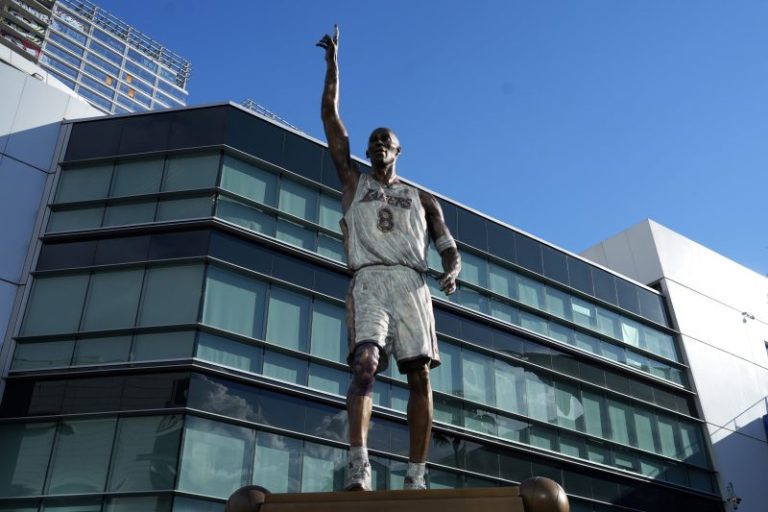
The game became so legendary that his iconic finger to the sky, signaling No. 1 or pointing to the heavens, was used for his statue that sits outside Crypto.com Arena in downtown Los Angeles.

Kobe Bryant 81-point game box score

  • Points: 81
  • FG: 28-for-46
  • 3PT: 7-for-13
  • Free Throws: 18-for-20
  • Rebounds: 6
  • Assists: 2
  • Steals: 3
  • Blocks: 1
  • Turnovers: 3
  • Fouls: 1
  • Minutes: 42

Highlights: Kobe’s 81-point game, 20 years later

Watch every point Bryant scored on his historic night.

This post appeared first on USA TODAY

Steve Barton, host of In It To Win It, shares price targets for silver and discusses when silver stocks may start to outperform the metal.

‘I fully expect a catch-up trade like this — I think that it’s coming, and I think it’s going to come this year and probably this first quarter,’ he said.

Securities Disclosure: I, Charlotte McLeod, hold no direct investment interest in any company mentioned in this article.

This post appeared first on investingnews.com

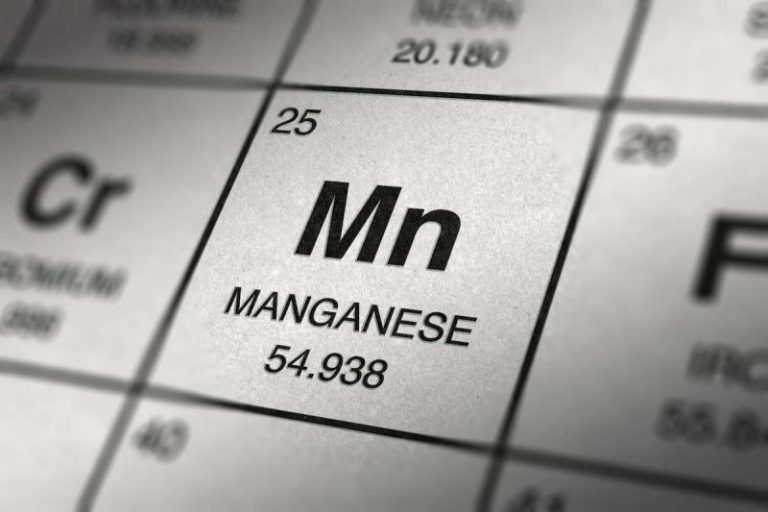
After taking a bearish turn in late 2024, manganese prices started 2025 on a flat note despite a robust demand outlook supported by growth in the electric vehicle (EV) battery segment.

In the first half of 2025, the manganese market experienced mixed signals as supply dynamics shifted and demand from the steelmaking sector remained uneven. Early in the year, logistical disruptions and tight inventories in China briefly supported manganese ore prices — China’s port stocks fell to multi-year lows in March, drawing down to roughly 3.7 million metric tons due to by logistical bottlenecks and steady consumption by alloy makers and steel producers.

A rebound in sales in early spring pushed ore prices to a 2025 high of US$4.48 per metric ton.

However, by mid-year, the broader picture was one of ample supply and downward price pressure.

Manganese ore production climbed to around 10.1 million metric tons in H1, buoyed by strong export volumes from South Africa and Gabon and the resumption of Australian shipments that had been disrupted in 2024.

At the same time, global steel output weakened, particularly in China, where production declined about 3 percent year-on-year amid slowing domestic demand, while India and North America posted modest gains.

Demand for manganese alloys also softened, with sales volumes down modestly and margins compressed by rising feedstock costs, especially for alloy producers facing less favorable mixes.

Manganese prices struggle as structural demand builds

By June 20, 2025, manganese’s H1 gains had eroded and ore prices fell to US$4.21.

Eramet (EPA:ERA,OTCPL:ERMAF), a major producer, said it expected supply of manganese ore to increase in the second half of 2025, partly as key producers such as Australia returned volumes to market after earlier disruptions.

‘Ore supply should increase in H2, driven by the full return to the market of the leading Australian producer, partly offset by a potential downward revision of South African exports,’ the company notes. Demand for manganese alloys was expected to weaken in line with seasonality and softer global steel production.

Analysts cautioned that production expansions from major manganese producers could exacerbate oversupply. “Production increases … can only lead to oversupply, leading to a reduction in price,” one industry executive said.

Protectionist measures in key markets, including new EU quotas on ferroalloys, added uncertainty by potentially disrupting traditional trade flows and affecting alloy pricing dynamics.

Beyond the steel sector, structural shifts in consumption patterns emerged.

Although steelmaking still accounts for the lion’s share of manganese demand, interest in battery-related uses, particularly high-purity manganese for lithium-ion and next-generation EV chemistries, continued to gain attention.

“Our expectations of ongoing strengthening battery-grade demand and production in China in Q4 have been tempered somewhat by ongoing challenges within the nickel cobalt manganese (NCM) market,” Rob Searle, battery raw materials analyst at Fastmarkets, wrote in a November battery metals market update.

“While we expect a level of demand ramp-up in Q4, in the wider context of geopolitical challenges and a challenging Chinese market, the manganese demand uptick in the short term could be somewhat tempered,’ he added.

Changing battery chemistries

During a June Supply Chain (SC) Insights webinar, experts noted that manganese-rich cathode chemistries are increasingly drawing attention as automakers seek to cut costs and reduce exposure to cobalt and nickel.

Andy Leyland, founder of SC Insights, pointed out “manganese-rich chemistry is really offering a good solution … in terms of costs,” highlighting the commodity’s role in emerging battery designs.

While high-nickel NCM batteries remain dominant, industry players are exploring manganese as a lower-cost, high-performance alternative in Europe and North America, where supply chains remain heavily reliant on imports, particularly from China. OEMs are under pressure to secure raw materials directly, with vertical integration and direct sourcing emerging as key strategies to manage price volatility and supply security.

John Mulcahy, supply chain specialist at SC Insights, emphasized that sourcing upstream allows companies to negotiate better terms and reduce exposure to market fluctuations, even amid low pricing environments.

Manganese-rich chemistries are expected to expand steadily, complementing existing NCM and lithium iron phosphate (LFP) batteries, rather than replacing them entirely.

As Leyland noted, these materials are “definitely very high up on the focus from the demand side,” signaling growing adoption in the global push for cost-effective, low-cobalt battery solutions.

In March, Firebird Metals (ASX:FRB,OTCPL:FRBMF) produced its first lithium manganese iron phosphate (LMFP) EV batteries, becoming the first Australian company to achieve the feat. The move could position Firebird as a low-cost manganese cathode player, and highlights growth in the LMFP battery production segment.

Rising nationalism presents trade challenges

With the demand picture for manganese showing promise, analysts warn that export restrictions in Gabon could lead to a supply crunch before the decade is over. According to the US Geological Survey, 63 percent of US manganese imports come from Gabon. In June, the African nation announced plans to implement an export ban in January 2029.

Gabon’s renewed push to ban manganese ore exports from 2029 underscores Africa’s broader shift toward value addition, but it also risks tightening an already fragile global supply picture, a Project Blue market note reads.

As the world’s second largest exporter, Gabon shipped more than 7 million metric tons of high-grade ore in 2024, material that is critical to both ferroalloy production and emerging battery supply chains.

An export ban would hit Chinese buyers and European processors reliant on Gabonese feedstock, while adding pressure to the high-grade market at a time when Australia’s GEMCO mine is expected to wind down later this decade.

Although in-country processing — through ferroalloys or batteries — offers a path to capture more value locally, it would require significant investment and could shift, rather than eliminate, environmental and logistical costs.

For global markets, Gabon’s move signals rising resource nationalism in Africa and a potential structural squeeze on manganese supply heading into the next decade.

“However, without large-scale investments from China, a key battery producer, such ambitious plans of African governments risk remaining unrealised,” the Project Blue overview states.

“China has invested in Africa’s mineral industry (e.g. Ghana), securing access to the continent’s high-quality raw materials, while keeping production of high value-added products directly in China.”

In early 2025, Euro Manganese (TSXV:EMN,OTCPL:EUMNF) scored a major boost when its Chvaletice manganese project was designated a “strategic project” under the EU’s Critical Raw Materials Act.

The move underscores the EU’s push to secure local supply of critical battery materials and could tighten the manganese market by prioritizing European production in the continent’s energy transition.

Oversupply vs. new manganese demand drivers

For 2026, analysts expect the manganese market to remain broadly balanced, but with pressures and opportunities on both the supply and demand fronts. However, longer-term fundamentals point to steady growth.

Global market forecasts indicate the manganese industry could expand modestly in value and volume by 2035, driven by ongoing demand from steel and increasing uptake in battery and clean-energy applications.

Some reports project market size rising through the decades, with Asia-Pacific demand remaining dominant and new opportunities emerging in the electrification and high-purity material segments.

Steel demand will continue to be the principal driver in 2026, with India’s expanding production offering a potential buffer against slower growth in China and Europe. Battery applications may not yet move the pricing needle dramatically, but their structural importance is increasing as automakers and cathode developers look to diversify away from nickel and cobalt reliance, a trend that could support manganese demand in the medium term.

“Looking ahead to the coming weeks and months, it is likely we won’t see too much further upward pressure on prices. Asian markets are heading towards the seasonal lull in demand and manufacturing activity in February as the Lunar New Year holidays begin,” Searle said in a January Fastmarkets report.

“At the same time, there are concerns around what China’s EV demand outlook looks like in Q1 2026, with changes to subsidy schemes potentially leading to softening consumption of battery-grade manganese.”

Securities Disclosure: I, Georgia Williams, hold no direct investment interest in any company mentioned in this article.

This post appeared first on investingnews.com
Aura Energy Limited (ASX: AEE, AIM: AURA) (“Aura” or “the Company”) is pleased to announce that MMCAP International Inc. SPC (‘MMCAP’) and certain other strategic investors (together the ‘Strategic Investors’) will provide funding of C$10 million for a 19.7% interest in the Company’s polymetallic Häggån project (‘the Häggån Project’) located in Sweden, establishing its value at C$50 million.

Aura has entered into a binding agreement to transfer 100% of the Häggån Project to SIU Metals Corp. (‘SIU Metals‘), an unlisted Canadian public company, in consideration for acquiring shares in SIU Metals. The agreement will result in SIU Metals being the 100% owner of the Häggån Project.

Aura will retain 78.7% ownership of SIU Metals and the Strategic Investors will own 19.7% after contributing C$10 million via a private placement. SIU Metals intends to seek a stock market listing on the TSX Venture Exchange (‘TSXV’) in connection with the transaction.

HIGHLIGHTS

  • Valuation for Häggån project established at C$50 million (A$55 million)
  • Agreement with MMCAP and certain other strategic investors to provide aggregate gross proceeds of C$10 million to SIU Metals, which will be renamed following the transaction
  • Proceeds to be used for the advancement of the Häggån project, including permitting and resource expansion through continued exploration including on surrounding tenements
  • Aura will retain ownership of 78.7% of SIU Metals and consequently will retain indirect exposure to the Häggån project post-transaction
  • Aura to appoint new officers and directors to SIU Metals on closing of transaction
  • Financing is expected to complete in February 2026, with the transaction expected to complete in June 2026
  • New Canadian listed company to benefit from increased visibility and direct comparison with valuation of other public companies with similar deposits
  • On 1 January 2026, the Minerals Act in Sweden was amended to allow exploration for and extraction of uranium
Phil Mitchell, Executive Chairman Aura Energy, said:

“We are delighted to welcome investors of the calibre of MMCAP, Aura’s largest shareholder, and other high-quality investors into this new vehicle for Aura’s Häggån project, and the future support they can bring. We believe their investment is a demonstration of the quality and potential of the project, and its exciting future as, following legislation changes brought into effect on 1 January 2026, mining of uranium is now allowed again in Sweden. This transaction shines a spotlight on the under-recognized value of Häggån within Aura Energy, and creates an independent and dedicated pathway for funding, growth and management of the project.

Upon successful completion of the transaction, Aura’s existing shareholders will continue to benefit from Häggån’s upside potential, and by way of a direct comparison with the valuation of other companies with similar deposits in the region.”

Click here for the full ASX Release

This post appeared first on investingnews.com
The Kansas City Chiefs are bringing an old friend back to their coaching staff.

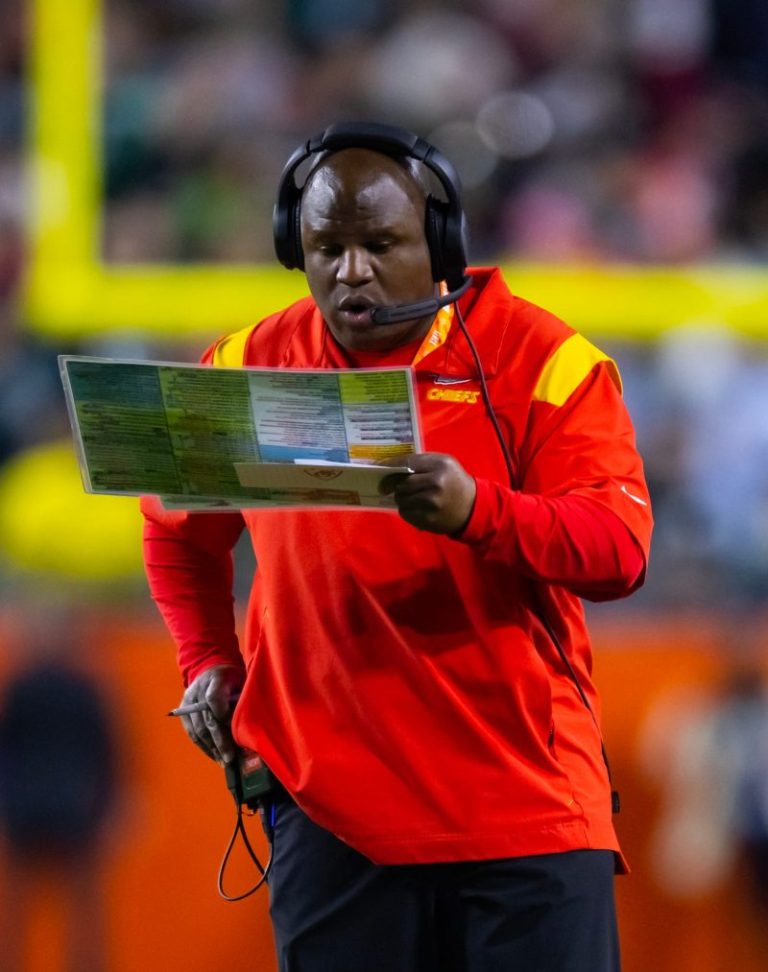
The Chiefs are hiring Eric Bieniemy as their offensive coordinator, USA TODAY Sports’ Tyler Dragon has confirmed, returning the NFL coach to the same position he held from 2018 to 2022 – quarterback Patrick Mahomes’ first five years as a starter.

Bieniemy, 56, has spent the last three seasons with other teams during his time away from the Chiefs. In 2023, he was the Washington Commanders’ assistant head coach and offensive coordinator. In 2024, Bieniemy was the assistant head coach and offensive coordinator for the UCLA Bruins. Most recently, Bieniemy was the Chicago Bears’ running backs coach in 2025.

In the three years since Bieniemy left Kansas City, the Chiefs’ offensive production has declined steadily. In 2022, Bieniemy’s last year as the Chiefs’ offensive coordinator, they led the NFL in average yards (413.6 per game) and points (29.2 per game). In 2025, Kansas City ranked 20th in average yards (320.6) and 21st in points scored (21.3).

During Bieniemy’s one-year tenure as the Bears’ running backs coach, Chicago saw veteran RB D’Andre Swift set new career highs in yards (1,087) and touchdowns (9). Seventh-round pick Kyle Monangai also played a significant role in the Bears’ offense as he broke out in his rookie season.

The Bears finished the regular season averaging 144.5 rushing yards per game, which ranked third in the NFL. Their 46.2% rushing success rate also ranked third.

Bieniemy will replace former Chiefs offensive coordinator Matt Nagy, whose contract expired after the 2025 season and is among several head coaching candidates in this year’s hiring cycle.

The Chiefs won two Super Bowls during Bieniemy’s last stint as offensive coordinator and will be seeking a return to playoff contention after missing the postseason in 2025.

This post appeared first on USA TODAY

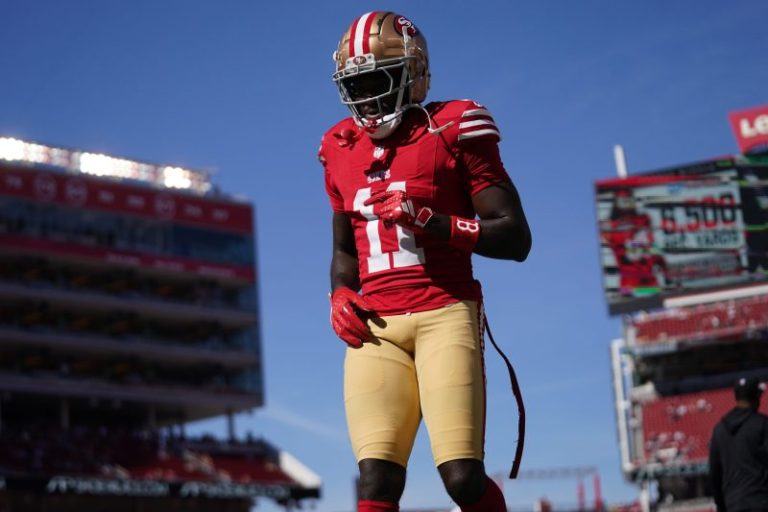
San Francisco 49ers general manager John Lynch did not mince words on the status of wide receiver Brandon Aiyuk’s future with the team.

‘I think it’s safe to say he’s played his last snap with the 49ers,’ Lynch told reporters in a Jan. 21 press conference, according to Matt Barrows of The Athletic.

Aiyuk, 27, has not played in a game since October 2024, when he sustained ACL and MCL injuries in a Week 7 game.

The 2020 first-round pick was at the center of 49ers drama throughout the 2025 season. Aiyuk began the summer on the physically unable to perform (PUP) list as he worked his way back from the knee injury he suffered in 2024. By November, the 49ers had voided Aiyuk’s guaranteed money for 2026, with The Athletic’s Dianna Russini and Michael Silver reporting that the wideout had ‘failed to attend meetings and declined to participate in other team activities.’

In December, the 49ers moved Aiyuk to the reserve/left squad list. A week later, the wide receiver posted a video to his YouTube account showing himself driving faster than 90 mph through intersections near Levi’s Stadium – the 49ers’ home field in Santa Clara, California.

The speed limit in the area where Aiyuk was driving is 25 mph, according to San Jose city data.

Niners head coach Kyle Shanahan told reporters on Jan. 21 that communication with Aiyuk broke down completely at some point during the season. The receiver ‘stopped answering anyone’s phone calls, including the head coach’s,’ Barrows reported.

‘That’s something I’d never seen in 22 years of coaching,’ Shanahan said, per Barrows.

With the 49ers’ voiding of Aiyuk’s guaranteed money for 2026 and Lynch’s comments on Jan. 21, a split between the two sides appears likely.

At the start of the 2026 season, Aiyuk will be 28 years old and a season and a half removed from NFL action.

USA TODAY Sports’ Ayrton Ostly contributed to this report.

This post appeared first on USA TODAY