Author

admin

Browsing

Perth, Australia (ABN Newswire) – Locksley Resources Ltd (ASX:LKY,OTC:LKYRF) (FRA:X5L) (OTCMKTS:LKYRF) announced the appointment of Mr Ian Stockton as Non-Executive Technical Director with effect from immediately following the AGM on 28 November 2025.

Mr Stockton is a highly credentialed geologist and mining executive with over 35 years of experience in resource development, operations, and technical advisory roles across global markets. He has held senior technical and leadership roles with major industry groups, providing crucial strategic advice to explorers and producers in both the base and critical mineral sectors.

Mr Stockton’s technical expertise is deeply integrated into the full project life cycle. He possesses strength in mine development, resource optimisation, and technical regulatory compliance, having successfully managed multi-disciplinary technical teams and overseen major study programs, including several projects that have successfully transitioned from concept to full production. His practical grounding in geological assessment will be immediately deployed to de-risk and advance Locksley’s assets.

Crucially, Mr Stockton brings direct and invaluable experience with antimony resources, the core focus of Locksley’s U.S. strategy. His background includes involvement in the exploration and development of the significant Costerfield gold-antimony deposit in Victoria, Australia, where he helped bring the Brunswick open pit deposit into production in the late 1990s. Furthermore, he has maintained exposure to major global antimony projects through reviews and confidential due diligence on key Australian antimony assets. This specialised knowledge is directly applicable to advancing our high-grade Desert Antimony Mine (DAM).

At Locksley, Mr Stockton will direct the Company’s technical execution and resource expansion strategy, supporting the advancement of the Desert Antimony Mine (DAM) in California and the broader U.S. mine-to-market critical minerals program. His appointment adds significant technical depth to the Board just as Locksley transitions from exploration to the complex phase of development, integrating upstream mining with downstream processing and advanced-materials innovation.

Pat Burke, Locksley Chairman, commented:

‘Ian brings a wealth of technical and operational experience at a pivotal time for Locksley. His practical approach to geological interpretation and project development, coupled with his strong background in industry governance, will be invaluable as we move toward production and establish a vertically integrated U.S. antimony supply chain.’

Mr Stockton holds a Bachelor of Science (Geology) from the University of Canberra and is a Fellow of the AIG (FAIG), as well as Registered Professional Geologist (RPGEO) as well as a Member of the Australasian Institute of Mining and Metallurgy (AusIMM).

The Company also advises that Mr Bevan Tarratt will resign with effect from immediately following the AGM on 28 November 2025. Mr. Tarratt will provide assistance to the Company in an executive capacity during a transition phase to ensure continuity of corporate and project functions. The Board thanks Mr Tarratt for his invaluable contribution and looks forward to his continuing involvement with the Company.

About Locksley Resources Limited:

Locksley Resources Limited (ASX:LKY,OTC:LKYRF) (FRA:X5L) (OTCMKTS:LKYRF) is an ASX listed explorer focused on critical minerals in the United States of America. The Company is actively advancing exploration across two key assets: the Mojave Project in California, targeting rare earth elements (REEs) and antimony. Locksley Resources aims to generate shareholder value through strategic exploration, discovery and development in this highly prospective mineral region.

Mojave Project

Located in the Mojave Desert, California, the Mojave Project comprises over 250 claims across two contiguous prospect areas, namely, the North Block/Northeast Block and the El Campo Prospect. The North Block directly abuts claims held by MP Materials, while El Campo lies along strike of the Mountain Pass Mine and is enveloped by MP Materials’ claims, highlighting the strong geological continuity and exploration potential of the project area.

In addition to rare earths, the Mojave Project hosts the historic ‘Desert Antimony Mine’, which last operated in 1937. Despite the United States currently having no domestic antimony production, demand for the metal remains high due to its essential role in defense systems, semiconductors, and metal alloys. With significant surface sample results, the Desert Mine prospect represents one of the highest-grade known antimony occurrences in the U.S.

Locksley’s North American position is further strengthened by rising geopolitical urgency to diversify supply chains away from China, the global leader in both REE & antimony production. With its maiden drilling program planned, the Mojave Project is uniquely positioned to align with U.S. strategic objectives around critical mineral independence and economic security.

Tottenham Project

Locksley’s Australian portfolio comprises the advanced Tottenham Copper-Gold Project in New South Wales, focused on VMS-style mineralisation

Source:
Locksley Resources Limited

Contact:
Kerrie Matthews
Chief Executive Officer
Locksley Resources Limited
T: +61 8 9481 0389
Kerrie@locksleyresources.com.au

News Provided by ABN Newswire via QuoteMedia

This post appeared first on investingnews.com

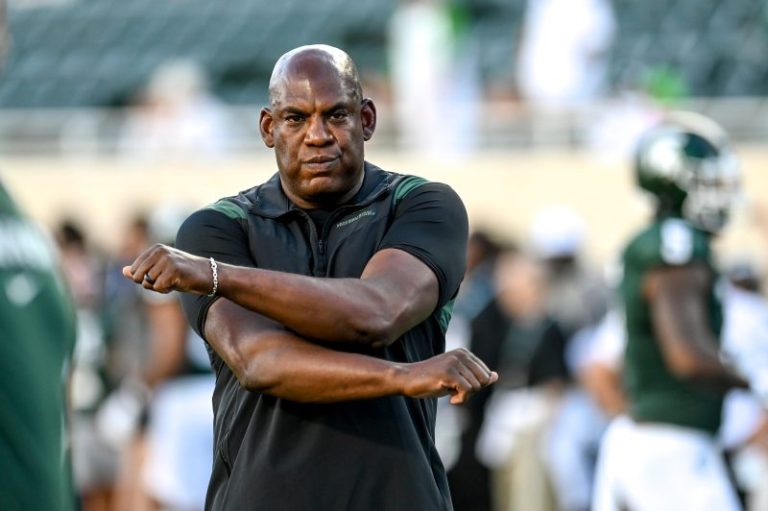
The NCAA hit Michigan State football with sanctions for violations during Mel Tucker’s time as the Spartans’ head coach on Wednesday, Nov. 12.

Michigan State has been placed on three years of probation by the NCAA and will be forced to vacate 14 wins, which include five under current head coach Jonathan Smith.

According to the NCAA release, it was determined that Tucker violated head coach responsibility rules and failed to monitor his program. He was ruled to have committed Level-1 standard violations, but was not determined to be involved in the recruiting violations. He was, however, hit with a failure to monitor the program.

As a result of the NCAA violations, Michigan State will vacate a total of 14 wins between 2022 and 2024 due to the participation of three ineligible players.

Michigan State went 5-7 under Tucker in 2022, followed by a 4-8 record under Tucker and interim coach Harlon Barnett. The Spartans then went 5-7 in Jonathan Smith’s first season in 2024. 

Tucker was fired in the middle of the 2023 season for sexual harassment allegations unrelated to the NCAA. The Spartans are 3-6 this season and have lost six games in a row.

The football program also received restrictions on official visits, unofficial visits, recruiting communication, recruiting-person days and off-campus recruiting contacts and evaluations over a three-year probationary period.

Staff members Saeed Khalif and Brandon Jordan, along with other members of the football staff, were identified by the NCAA for offering or providing approximately $10,764 in impermissible recruiting inducements to six prospects who took unofficial visits to Michigan State.

According to the report, after separating from MSU, both Khalif and Jordan failed to cooperate with the NCAA enforcement staff. Jordan received a five-year show-cause order effective Sept. 25, 2025, that runs through 2030 for Level 1 NCAA violations. Khalif received a six-year show-cause order that runs through 2031. Both will also be suspended for 100% of the football regular season (12 contests) during the first season of employment within the show-cause order.

Tucker contested his head coach’s responsibility violation, with his case being processed through a written record hearing, according to the NCAA’s report. He receives a three-year show cause, during which time any employing member school must restrict him from all athletically related activity.

In addition to that, Tucker also faces a suspension from 30% of the football season during a potential first season of employment within the show-cause order. During that suspension, Tucker cannot participate in any coaching activities.

This post appeared first on USA TODAY

  • The former NFL wide receiver pleaded not guilty to a second-degree murder charge.
  • He was released on a $25,000 bail and must wear a GPS ankle monitor.
  • The charge stems from an alleged shooting outside a celebrity boxing match on May 16.
  • His attorney claims the shots were fired in self-defense and not aimed at anyone.

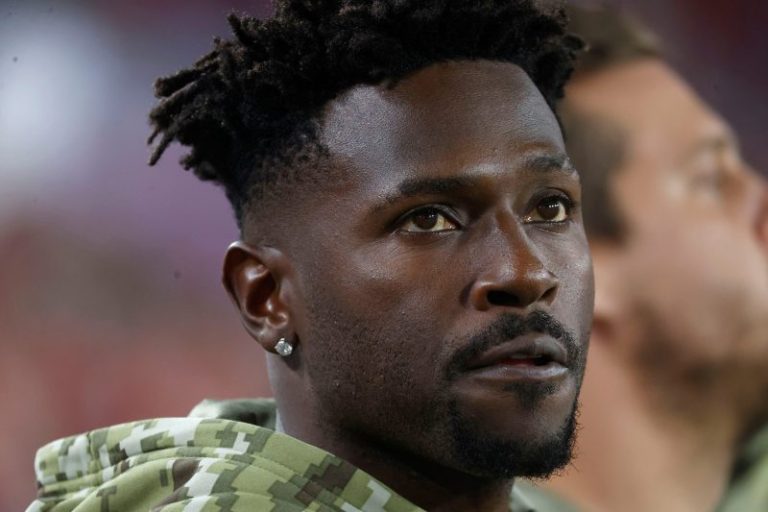
Former NFL wide receiver Antonio Brown must wear a GPS ankle monitor and await trial at home after posting a $25,000 bail, the Associated Press reported Nov. 12.

The arrest warrant – authorities finally extradited Brown back to the United States after he spent months in Dubai, United Arab Emirates – said Brown grabbed a security officer’s gun at the scene and fired shots. One person told authorities a bullet grazed his neck.

Brown’s defense attorney, Mark Eiglarsh, argued that it was Brown’s own weapon used in self-defense and that the shots were not aimed at anybody.

Brown appeared virtually at Wednesday’s hearing and could face a prison sentence of up to 15 years if convicted. Prosecutors, according to the Associated Press, argued for Brown to remain in pre-trial detention since he posed a flight risk. Eiglarsh said Brown had various business interests in Dubai.

“He no longer has a passport. He’ll be living at his home. I look forward to working with him zealously on this case,” Eiglarsh told Circuit Judge Mindy Glazer at the bond hearing, per the AP.

This post appeared first on USA TODAY

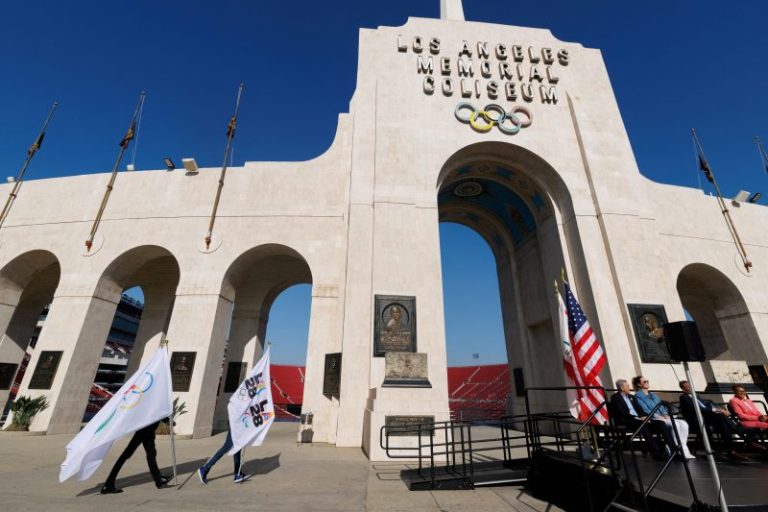
The 2028 Los Angeles Summer Olympics are still more than two and a half years away, but organizers made a significant statement in the sports world’s continual journey toward equality for women by announcing that the women’s 100-meter track final, not the men’s, will open the first night of medal competition at the Games. The men’s 100 final, which traditionally goes first, will be held the next evening.

‘It’s really important that we’re able not only to talk about equality, but to actually demonstrate it in a really powerful way, and there’s no bigger platform than the first day of an Olympic Games featuring the women’s 100-meter final,” Olympic gold medalist and World Athletics president Sebastian Coe said Tuesday during an exclusive interview with USA TODAY Sports, which is first to report the news of the 2028 Olympic competition schedule. Registration for tickets will begin in January 2026 at LA28.org.

Olympic gold medalist Janet Evans, LA28 chief athlete officer, said it was ‘incredible” for the women’s 100 meters ‘to be the preeminent event at the Olympic Games in Los Angeles 2028 on the first night of competition in the historic Los Angeles Memorial Coliseum.”

And U.S. Olympic gold and silver medalist Sha’Carri Richardson said the road to LA28 is ‘about to be something special.’

”Especially for the women’s sprints,” Richardson said in a text message sent by a World Athletics spokesperson. ‘The talent, energy, and competition … it’s all going to shine. Just look at Day One of the LA Games. I’m locked in on accomplishing some personal goals and doing my part to help the sport keep growing and inspiring the next generation at home in the USA and across the globe.”

The L.A. Olympics begin July 14, 2028 with the opening ceremony, followed the next day by the first medal event, women’s triathlon, taking place in the Games’ Venice Beach zone. Later that night, the women’s 100 final will be run inside the venerable Coliseum, also site of the 1932 and 1984 Summer Olympics. 

To stick to that schedule, all three rounds of the women’s 100 meters will need to be run the same day, July 15, which is a first at the Olympic Games. The men will run their first round on July 15 and the semifinals and final on July 16. 

Both Coe and Evans said athletes and coaches were consulted before that decision was made. 

‘It was one of the things we talked about, running three 100 meters in one day,’ Evans said. ‘How would that feel as an athlete, mentally and physically? What does that mean? And we took that question very seriously as we spoke to athletes commissions of LA28 as well as athletes commissions from World Athletics. … And so I think when we presented it to the athletes that way, there was excitement. And for the few naysayers, the majority of the athletes said to me, just let me know, right? Like, let me know if this is what’s going to happen, let me know early, and I will start training to run three 100 meters in one day, because it can be done, but I just need to schedule my training.”

Swimming is usually held the first week of the Summer Games and track and field the second, but the two Olympic behemoths are swapping in 2028 for no reason other than logistics. The opening ceremony is going to take place in SoFi Stadium, which is also where the swimming competition will be held. The makeover of the venue will require a few days, necessitating pushing swimming into the Games’ second week for the first time since the 1968 Mexico City Olympics.

The L.A. Olympics will feature a record number of female athletes, with 50.5% of the total athlete quota allocated to women in the Games’ 51 sports, according to LA28. This is a continuation of the Olympic Games’ push for equal participation and billing for women athletes, which goes all the way to the top of the International Olympic Committee with its first female president, Olympic gold medalist Kirsty Coventry. 

2028 LA Olympics full schedule

This post appeared first on USA TODAY

The Dallas Mavericks decided to part ways with general manager Nico Harrison on Tuesday, Nov. 11.

The decision came after the team produced a 3-8 start to the NBA season.

A portion of the Mavericks’ fan base has spoken out against Harrison and the front office since the team decided to send superstar Luka Doncic to the Los Angeles Lakers in a surprising trade that rattled the basketball world in February.

“Fire Nico” chants have been pretty common among fans at American Airlines Center during home games since the deal.

Did ‘Fire Nico’ chants impact Mavericks?

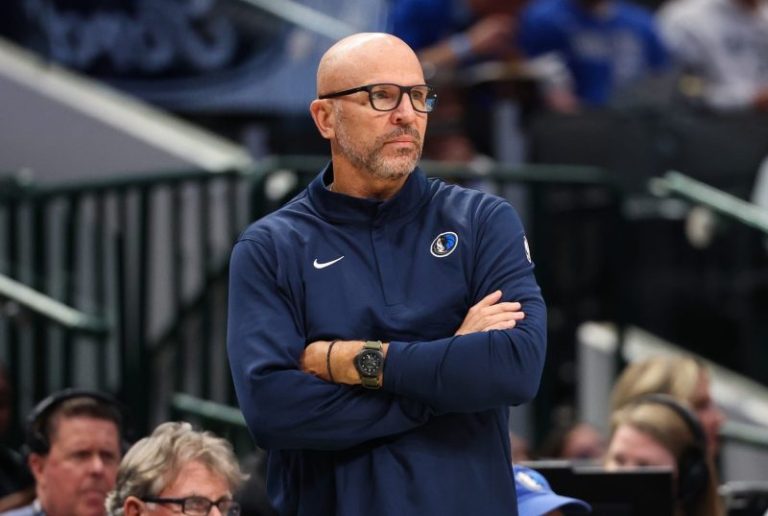
Mavericks head coach Jason Kidd was asked about the impact of the chants heard during games and whether there is any sort of pressure alleviated by (presumably) no longer having to listen to them.

“We can only hope that we don’t have to go through that again because it was a little disrespectful, because the guys are playing hard,” Kidd told reporters during a pregame press conference on Wednesday, Nov. 12. “With that chant during when we’re shooting free throws, it’s very disrespectful. But understanding they got their point across, but we have to move forward.”

Kidd also did not shy away from the team’s rough start to the season.

“We have a lot of guys that are in street clothes,” Kidd said. “We got over, I think, 100 million dollars sitting on the sideline. … I would hope that we start to get a little credit for that, because these guys, they can hear those things and they feel really disrespected. 

“It’s hard to keep guys here in this league when they start to think that the home team is not home and becomes a visiting place, and so, hopefully, that changes tonight.”

Forward Anthony Davis has been ruled out for the Mavericks game on Thursday against the Phoenix Suns due to a calf injury.

Guard Kyrie Irving has not played this season as he continues to recover from a torn ACL in his left knee that he suffered in March. He is expected to return to action at some point during the season.

This post appeared first on USA TODAY

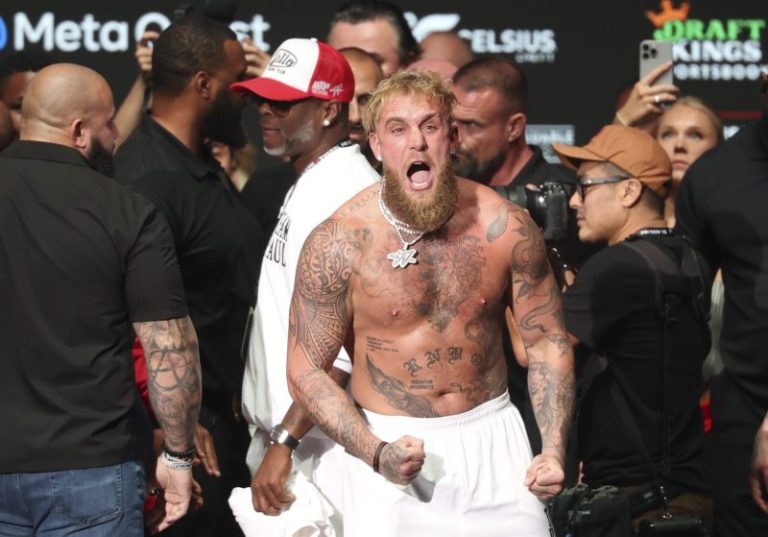
Jake Paul has found a new opponent for his next boxing match, and the scale remains a relevant object.

Paul is finalizing a fight with Anthony Joshua, the British heavyweight who has fought at 250 pounds or more during his past five bouts.

Gervonta Davis, who was scheduled to fight Paul on Nov. 14 before the exhibition was canceled, weighed 135 pounds for previous bouts.

The quick math: that’s more than a 100-pound difference from the old opponent (Davis) to the new one (Joshua) for a bout that will be livestreamed by Netflix.

Jake Paul vs Anthony Joshua size: Height, weight for boxers

Paul typically fights as a cruiserweight, which carries a maximum weight limit of 200 pounds. He has fought as a heavyweight just once, against Mike Tyson last year. He weighed in at 227  pounds and won by unanimous decision over Tyson, who weighed in 228 ½ pounds.

More size issues: Joshua is 6-6, Paul is 6-1.

Height and weight won’t be the only differentiators. Joshua is a two-time world heavyweight champion, having unified the title between 2017 and 2019 and 2019 and 2021. He also figures to be Paul’s toughest opponent yet.

But Joshua, 36, has faltered in recent years. He’s coming off a fifth-round knockout loss to Daniel Dubois during which Joshua got knocked down four times during the bout Sept. 21, 2024. Joshua is 28-4 with 25 knockouts.

Paul, 28, is coming off a victory over Julio Cesar Chavez on June 28. He has won his past six fights, dating back to his only loss – against Tommy Fury by unanimous decision in 2023. He is 12-1 with seven knockouts.

Unlike Paul, Joshua has faced some of the world’s top heavyweights. He lost to Oleksandr Usyk, the current undisputed heavyweight champion, by unanimous decision in 2021 and lost to Usyk again in 2022 by split decision.

Joshua then won four straight fights, including a brutal knockout of Francis Ngannou in 2024. But that preceded his humbling loss to Dubois.

Competing in the Super-Heavyweight division, Joshua won a gold medal at the 2012 Olympics. He turned pro in 2013 and went 22-0 before a shocking TKO loss to Andy Ruiz in 2019.

Paul turned pro in 2020 and has knocked down every opponent except Tyson. But only five of Paul’s 12 opponents were boxers.

This post appeared first on USA TODAY

With a mission to “supply the fuel for a clean energy future,” Standard Uranium (TSXV:STND,USOTC:STTDF,FRA:9SU0) is unlocking the next generation of high-grade uranium discoveries to power global nuclear growth. The company’s dual-track strategy drives value through aggressive exploration at its flagship Davidson River Project—a premier discovery opportunity in the heart of the Athabasca Basin.

With a fully funded drill program scheduled for spring 2026 at its flagship Davidson River project, and joint ventures on other highly prospective projects, the company provides investors early stage exposure to the emerging nuclear energy market.

Located in the southwest Athabasca Basin, approximately 25 kilometres west of NexGen’s Arrow deposit and Paladin Energy’s Triple R deposit, the Davidson River project spans 30,737 hectares across 10 contiguous mineral claims. The property lies along the same structural trends that hosts these globally significant discoveries.

Company Highlights

  • Flagship Davidson River Project: Large-scale, high-priority exploration asset in the southwest Athabasca Basin, along trend from NexGen’s Arrow and Paladin Energy’s Triple R uranium deposits, positioned for a significant uranium discovery.
  • Extensive Portfolio in the Athabasca Basin: Over 235,000 acres (95,000+ hectares) across 13 projects in Canada’s premier uranium district, including active joint ventures at Sun Dog, Corvo, and Rocas.
  • Project Generator Model: Leverages strategic partnerships to fund exploration and generate cash flow while retaining upside through 25 percent ownership and a 2.5 percent net smelter return (NSR) royalty on joint-venture projects.
  • Fully Funded for Davidson River Drill Campaign: Financing completed to support 8,000 to 10,000 meters of drilling at Davidson River, planned for spring 2026.
  • Rocas Drill Program: The first-ever drill program to be conducted on Rocas will commence in winter 2026, comprising approximately 1,800 metres.
  • Corvo Drill Program: A skid-assisted diamond drill program totalling approximately 3,000 metres is planned for winter 2026, which will mark the first drill program on the Project in more than 40 years.
  • Riding the Nuclear Power Renaissance: Positioned to benefit from global decarbonization trends and a long-term rise in uranium demand.
  • Proven Team: Led by experienced geologists and exploration professionals with a track record of discoveries in the Athabasca Basin.

This Standard Uranium profile is part of a paid investor education campaign.*

Click here to connect with Standard Uranium (TSXV:STND,USOTC:STTDF,FRA:9SU0) to receive an Investor Presentation

This post appeared first on investingnews.com
Regardless of how the gold price is doing, the top gold-mining companies are always making moves.

Right now, gold is in the limelight — stimulated by increasing global inflation, geopolitical turmoil and economic uncertainty, the gold price is repeatedly setting new highs in 2025, and broke through the US$4,400 per ounce mark in October.

Rising safe-haven demand for gold alongside concerns over gold mine supply have pushed the metal to record highs in recent years. and market watchers are eyeing world’s top gold-mining companies to see how they respond to market dynamics.

While the future of the economy remains uncertain, the rising gold price has been a boon to gold-mining companies as it improves their margins after several years of high inflation increasing the costs associated with mining operations.

According to US Geological Survey data, gold production came in at 3,300 metric tons in 2024. China, Australia and Russia were the top three gold-producing countries last year.

But what were the top gold-mining companies by production in 2024?

Read on to find out which companies produced the most gold this past year.

1. Newmont (TSX:NGT,NYSE:NEM)

Production: 213.03 metric tons

Newmont is the world’s top gold-mining company. In 2024, the company reported production of 192.96 metric tons of gold.

Newmont has a diverse portfolio of assets, with significant operations in North and South America, Australia and Africa.

Its portfolio includes a 38.5 percent interest in Nevada Gold Mines in Nevada, US, through a joint venture with majority owner Barrick Mining (TSX:ABX,NYSE:B).

In 2024, the Nevada Gold Mines complex produced 2.68 million ounces (83.48 metric tons) of gold. Newmont’s attributable share is 1.03 million ounces, or 32.14 metric tons.

The company’s next largest operation is its wholly owned Ahafo South Complex in Ghana. It consists of three mines, the Subika and Awonsu open pits, and the Subika underground mine. Last year, the asset produced 798,000 ounces (24.28 metric tons) of gold for Newmont. The company’s Ahafo North open pit mine achieved commercial production in late 2025 and is expected to average 275,000 and 325,000 ounces of gold per year.

In January 2025, Newmont sold its Porcupine Complex in Ontario, Canada, to Discovery Silver for total consideration of US$425 million. In 2024, the mine produced 270,000 ounces (8 metric tons) of gold. The sale is part of Newmont’s larger divestiture of US$4.3 billion in non-core assets.

2. Barrick Mining (TSX:ABX,NYSE:B)

Production: 121.65 metric tons

Barrick Mining produced 121.65 metric tons of attributable gold in 2024, landing it as the second highest gold producer in the world. Like Newmont, Barrick is a global producer and owns assets on nearly every continent.

Barrick’s largest operation is its 61.5 percent stake in Nevada Gold Mines alongside Newmont. The gold complex accounted for 1.65 million ounces, or 51.34 metric tons, of Barrick’s gold production in 2024.

The company’s second-largest producing asset is its 80 percent owned Loulo-Gounkoto gold complex in Mali, which produced 578,400 ounces of gold in 2024 for Barrick.

While much of Barrick’s production has remained steady over the past several years, disagreements with the Malian government, run by a military junta since a 2021 coup, has brought uncertainty to its operations there.

In 2024, the government accused Barrick of failing to pay its taxes amid changes to royalty rights and mining licenses. It arrested four workers there and issued an arrest warrant for then-CEO Mark Bristow.

In June 2025, the Mali government placed the mine under provisional administration, as a resolution of the dispute failed to materialize.

3. Agnico Eagle Mines (TSX:AEM,NYSE:AEM)

Production: 108.41 metric tons

In 2024, Agnico Eagle produced 108.41 metric tons of gold, taking third place among the world’s biggest gold producers. It wholly owns its portfolio of 11 mines, with seven in Canada, two in Mexico and one in each of Australia and Finland.

The company’s Detour Lake and Canadian Malartic mines in Canada are some of the world’s biggest gold mines.

In 2024, its Detour Lake operation, in Ontario near the Québec border, produced 671,950 ounces (20.9 metric tons) of gold. Just behind was the Canadian Malartic Complex in Québec, which produced 655,654 ounces (20.4 metric tons) in 2024.

Gold production at Canadian Malartic peaked at 715,000 ounces (22 metric tons) in 2021 The mine is a combination of open pit and underground mines; however, the main open pit was depleted in 2023, and the mine is expected to transition to fully underground operations by 2029.

4. Navoi Mining and Metallurgy Company

Production: 96.42 metric tons

In 2024, Navoi Mining and Metallurgy Company produced 96.42 metric tons of gold. NMMC is the largest mining company operating in Uzbekistan, with 12 mines. The company has been in operation since the 1960s, when the country was still part of the Soviet Union.

NMMC’s primary asset is the Muruntau mine, which produced an estimated 2.68 million ounces of gold in 2024. Muruntau is the world’s largest open pit mine and the second highest gold producing mine in the world. It has been in production since 1969.

The company is working on modernizing its operations and considering a potential public listing.

5. Polyus (LSE:PLZL,MCX:PLZL)

Production: 93.36 metric tons

Polyus produced 93.37 metric tons of gold in 2024. The gold company is the largest gold producer in Russia from five wholly owned operations in the country.

Polyus holds significant proven and probable gold reserves of 101 million ounces, or 3,141 metric tons.

Its largest asset is the Olimpiada mine in Eastern Siberia. In 2024, the mine produced 1.48 million ounces (46.93 metric tons) of gold, putting it among the top gold operations in the world. Its second biggest mine is Blagodatnoye, also in Siberia, which produced 500,300 ounces (15.56 metric tons) of gold in 2024.

6. AngloGold Ashanti (NYSE:AU,ASX:AGG)

Production: 82.35 metric tons

AngloGold Ashanti produced 82.74 metric tons of attributable gold in 2024, putting it among the top Africa-based gold mining companies.

The company has a portfolio of nine mining assets spread across seven countries in Africa, South America and Australia, as well as numerous exploration projects around the world.

AngloGold’s largest wholly owned operation is the Geita mine in Northwest Tanzania. The property consists of multiple open-pit and underground operations, which produced 483,000 ounces (15 metric tons) of gold in 2024.

The company also owns a 45 percent interest in the Kibali mine located in the Democratic Republic of Congo. The mine is the largest gold operation in Africa, producing 686,000 ounces (21.34 metric tons) in 2024, with 308,700 ounces (9.6 metric tons) attributable to AngloGold. The remaining ownership in the mine is held by Barrick Mining at 45 percent and the DRC government at 10 percent.

7. Kinross Gold (TSX:K,NYSE:KGC)

Production: 66.19 metric tons

Kinross Gold ranked seventh on our list of top gold producers with 66.17 metric tons of attributable gold equivalent production in 2024. Kinross maintains considerable and steady output from a portfolio of six assets across Canada, the US, Brazil, Chile and Mauritania.

Kinross has full ownership over all its operating assets, with the exception of its 70 percent owned Manh Choh mine in Alaska, US. The company began processing ore from Manh Choh at its Fort Knox operations through the Peak Gold joint venture in 2024.

The biggest contributor to Kinross’s output is its Tasiast mine in Western Mauritania, which produced 622,394 ounces (19.36 metric tons) of gold in 2024. Tasiast is currently an open-pit operation, and the company has been working to explore the underground potential of the mine at several key targets.

Among Kinross’ other assets, Paracatu stands out with its 528,574 ounces (16.44 metric tons) of gold production in 2024, making it the third largest gold mine in Brazil.

8. Gold Fields (NYSE:GFI)

Production: 64.21 metric tons

Gold Fields was the eighth biggest gold company in 2024, producing 61.75 metric tons of the yellow metal. The company is a globally diversified gold producer with nine mining operations across Australia, Chile, Peru, Ghana and South Africa. The company also owns the Windfall gold project in Canada.

Gold Fields’ most significant gold operation is the Tarkwa mine in Southern Ghana, one of the largest gold mines in West Africa. Gold Fields holds a 90 percent interest in the mine, with the remaining 10 percent owned by the Government of Ghana.

The mine consists of four open pits. In 2024, the operation produced 537,000 ounces (16.7 metric tons) for Gold Fields.

Its next largest asset is its wholly owned St Ives complex in the Eastern Goldfields region of Western Australia. The operation, which commenced production in the 1980s, currently consists of two open pits and two underground mines. It delivered 331,000 ounces (10.3 metric tons) of gold in 2024.

9. Zijin Mining Group (OTC Pink:ZIJMF)

Production: 62.21 metric tons

In 2024, Zijin Mining Group produced 62.21 metric tons of attributable gold from its mines across Asia, Africa, Australia and South America. Although the company is not exclusively a gold producer, its substantial portfolio of assets has helped it become China’s leading gold company.

Its most significant contributor to gold production came from its Norton complex near Kalgoorlie, Western Australia. The asset is a conglomeration of several different mines and delivered 263,000 ounces (8.18 metric tons) of gold in 2024.

Zijin’s next largest gold operation is Buriticá, an underground gold mine located near Medellín, Colombia, of which it holds 69.28 percent ownership. In 2022, the mine underwent an expansion that included upgrades to its mining equipment, improving the overall processing capacity. In 2024, the mine produced 322,000 ounces (10.02 metric tons) of gold, with 223,000 ounces (6.94 metric tons) attributable to Zijin.

10. Harmony Gold Mining Company (NYSE:HMY,JSE:HAR)

Production: 47.51 metric tons

In 2024, Harmony Gold Mining Company produced 47.51 metric tons of gold, making it the world’s 10th largest gold mining company.

The majority of the company’s large portfolio of wholly owned operations are located in South Africa, and it also operates the Hidden Valley mine in Papua New Guinea.

Harmony Gold’s top operation is the Mponeng mine in Northern South Africa. The underground mine is among the deepest in the world, where gold is retrieved from depths of approximately 4 kilometers. In the calendar year 2024, Mponeng produced 320,993 ounces (9.98 metric tons) of gold.

Harmony also owns the Moab Khotsong mine in Northern South Africa, an underground mine consisting of three vertical shaft systems. It started production in 2003, making it one of South Africa’s younger deep-level underground mines. In 2024, the mine contributed 202,742 ounces (6.31 metric tons) to Harmony’s total output.

Securities Disclosure: I, Dean Belder, hold no direct investment interest in any company mentioned in this article.

This post appeared first on investingnews.com