Author

admin

Browsing

Could there be two Group of Five programs in the College Football Playoff this year?

At the start of the season, it seemed a crazy thought: But it’s also one close to playing out with the CFP field now at 12 teams and No. 19 James Madison (No. 25 in College Football Playoff rankings) doing its part by winning its first Sun Belt Conference championship game.

Knight also recorded the longest rush and longest touchdown score in the Sun Belt championship game with a 73-yard rushing touchdown on the first play of James Madison’s fourth drive of the night in the second quarter.

So, what’s now standing in the Dukes’ way of playing for a national championship?

Here’s what to know about whether James Madison can make the College Football Playoff, including what its path to the CFP looks like:

Can James Madison make College Football Playoff?

There’s a path for James Madison to make the College Football Playoff, but the Dukes need help.

They entered Week 15 needing two things to go in their favor to create the possibility of making the CFP, which historically has been dominated by Power Four conference programs. James Madison did its part with a win over Troy in the Sun Belt championship.

Now, the Dukes await to see whether they can get the help they need: a Duke win over No. 17 Virginia (No. 17 in College Football Playoff rankings) in the ACC championship game.

If the Blue Devils win the ACC, James Madison’s chances of getting into the CFP increase: A Blue Devils win would knock the Cavaliers from being one of the five highest-ranked conference champions, creating the possibility the Dukes could instead take their place.

That’s how James Madison could steal one of the other reserved for the highest-ranked conference champions, as it likely will be ranked behind another Group of Five conference champion — either No. 20 Tulane or No. 24 North Texas, of the American Conference — in the final bracket.

All told, James Madison’s CFP hopes are entirely dependent on whether Duke can win the ACC championship. Of course, there also is the possibility that the selection committee would jump Duke, unranked in the penultimate top 25 rankings, ahead of James Madison.

James Madison football ranking: Where are Dukes ranked in CFP top 25?

James Madison broke into the CFP top 25 rankings at No. 25 in the CFP selection committee’s penultimate rankings release on Tuesday, Dec. 2. It was the first time this season that the committee has included the Dukes in the rankings.

James Madison football schedule

Here’s a look at James Madison’s schedule in 2025:

  • Saturday, Aug. 30: James Madison 45, Weber State 10
  • Friday, Sept. 5: Louisville 28, James Madison 14
  • Friday, Sept. 13: BYE
  • Saturday, Sept. 20: James Madison 31, Liberty 13
  • Saturday, Sept. 27: James Madison 35, Georgia Southern 10*
  • Saturday, Oct. 4: James Madison 14, Georgia State 7*
  • Saturday, Oct. 11: James Madison 24, Louisiana 14*
  • Saturday, Oct. 18: James Madison 63, Old Dominion 27*
  • Saturday, Oct. 25: BYE
  • Tuesday, Oct. 28: James Madison 52, Texas State 20*
  • Saturday, Nov. 8: James Madison 35, Marshall 23*
  • Saturday, Nov. 15: James Madison 58,Appalachian State 10*
  • Saturday, Nov. 22: James Madison 24,Washington State 20
  • Saturday, Nov. 29: James Madison 59, Coastal Carolina 10*
  • Friday, Dec. 5: James Madison 31, Troy 14 **

* Denotes Sun Belt game

** Denotes Sun Belt championship game

The USA TODAY app gets you to the heart of the news — fastDownload for award-winning coverage, crosswords, audio storytelling, the eNewspaper and more.

This post appeared first on USA TODAY

Statistics Canada released November’s job data on Friday (December 5). The numbers show the Canadian economy added 54,000 jobs over the month, with gains largely coming from part-time work. The increase surprised analysts, who had been expecting losses, and marked the third consecutive month of gains for a total of 181,000 new jobs since the start of September.

Headlining the data were increases of 46,000 health care and social service workers, 14,000 new employees in accommodation and food services, and 11,000 new jobs in the natural resources sector. However, gains were offset by 34,000 fewer workers in the wholesale and retail trade.

Overall, the increase pushed the employment rate up by 0.1 percentage points to 60.9 percent and lowered the unemployment rate by 0.4 percentage points to 6.5 percent.

The release is the last major economic news on the calendar before the Bank of Canada (BoC) Board of Governors meets December 10 to make its final interest rate decision of 2025.

Economists are predicting that the BoC will hold rates steady until 2027.

The first Friday of the month is also typically the release date for the US Bureau of Labor Statistics’ own jobs report; however, due to the lengthy government shutdown, the agency noted in the September release issued on November 20 that October’s data would be rolled in with November’s and its release would be delayed until December 16.

However, a report from payroll firm ADP on Wednesday (December 3) indicated that its records show the US private sector employment shed 32,000 jobs in November, with weak hiring in the manufacturing, professional services, information and construction sectors, which was partially offset by an 8,000 job gain in the mining sector.

The release shows that job growth in the US has stalled and without the release of official government data may be the last important indicator ahead of the Federal Open Market Committee meeting set for December 9 and 10.

Given the news of a weak labor market, US analysts are predicting the Fed will make another 25 basis point cut, which would lower the Federal Funds Rate to the 3.5 to 3.75 percent range.

The expectations of cuts provided tailwinds for precious metals prices ahead of the central bank’s meeting, with the gold price trading up 1.03 percent on the week at US$4,200.53 on Friday at 4 PM EST, and the silver price up a massive 9.43 percent at US$58.42 after setting a new all-time high of US$59.28 per ounce during morning trading on Friday.

For more on what’s moving markets this week, check out our top market news round-up.

Markets and commodities react

Canadian equity markets posted modest gains this week.

The S&P/TSX Composite Index (INDEXTSI:OSPTX) gained 0.25 percent over the week to close Friday at 31,311.41.

Meanwhile, the S&P/TSX Venture Composite Index (INDEXTSI:JX) rose 1.04 percent to 939.76, and the CSE Composite Index (CSE:CSECOMP) increased 4.1 percent to close at 155.40.

In base metals, the COMEX copper price ended the week up 2.83 percent at US$5.45 per pound.

The S&P Goldman Sachs Commodities Index (INDEXSP:SPGSCI) gained 2.74 percent to end Friday at 564.72.

Top Canadian mining stocks this week

How did mining stocks perform against this backdrop?

Take a look at this week’s five best-performing Canadian mining stocks below.

Stocks data for this article was retrieved at 4:00 p.m. EST on Friday using TradingView’s stock screener. Only companies trading on the TSX, TSXV and CSE with market caps greater than C$10 million are included. Mineral companies within the non-energy minerals, energy minerals, process industry and producer manufacturing sectors were considered.

1. Bayhorse Silver (TSXV:BHS)

Weekly gain: 73.33 percent
Market cap: C$31.13 million
Share price: C$0.13

Bayhorse Silver is a silver-focused company currently working to bring the Bayhorse silver, copper and antimony mine in Oregon, US, back online.

The mine was originally in operation until late 1984 and closed when the price of silver dropped to under US$6 per ounce. Historic sampling during the 1980s identified grades of 2,146 grams per metric ton (g/t) silver, and a bulk sampling program conducted by Bayhorse in 2014 found bonanza grades of 150,370 g/t silver.

The company has continued to explore the property and, in October 2018, produced a maiden resource estimate that showed the property hosts inferred resources of 6.33 million ounces of silver from 292,300 US tons of ore with an average grade of 21.65 ounces per US ton.

Bayhorse anticipates receiving complete operating permits for the mine in mid-2026 and achieving full production in 2027.

Although the company did not release news this week, shares surged alongside the silver price, reaching new all-time highs.

2. Omineca Mining and Metals (TSXV:OMM)

Weekly gain: 72.73 percent
Market cap: C$14.42 million
Share price: C$0.095

Omineca Mining and Metals is a gold exploration and mining company working to advance its Wingdam project in British Columbia, Canada.

The project, a 50/50 joint venture with D&L Mining, consists of 61,329 hectares of hard rock and placer claims within the Cariboo mining district. The site currently hosts mining operations focused on extracting placer gold from gravels 50 meters beneath Lightning Creek.

According to the company, the mine is extracted through gravity separation, which uses an existing reusable water supply without chemicals, mill waste or tailings.

On Thursday (December 4) the company announced it had mobilized for an eight-hole, 4,000 meter, winter drill program at Wingdam. Exploration will focus on following up on mineralization discovered during the 2024 program and at depths below the Wingdam underground placer workings.

The company stated that drilling will continue until the end of December and that results will be released early in 2026.

Shares surged after Omineca’s Friday news that it restarted underground placer gold recovery at the site, with gold recovered via the company’s water wash plant and shaker table.

3. Selkirk Copper Mines (TSXV:SCMI)

Weekly gain: 57.3 percent
Market cap: C$74.56 million
Share price: C$0.70

Selkirk Copper Mines is a gold and copper exploration and development company working to advance the Minto mine project in the Yukon, Canada.

The property covers 26,850 hectares of mineral tenure centered around the past-producing Minto copper-gold-silver mine. The mine was abandoned in 2023, but was purchased by the Selkirk First Nation earlier in 2025, becoming the first Indigenous nation in Canada to own a mine.

On July 7, Selkirk Copper Mines released an updated mineral resource estimate for the project demonstrating a total indicated resource of 333.8 million pounds of copper, 186,600 ounces of gold and 1.73 million ounces of silver from 12.59 million metric tons of ore with average grades of 1.2 percent copper, 0.46 grams per metric ton (g/t) gold and 4.3 g/t silver.

Shares in Selkirk Copper posted gains this week after a pair of news releases.

The first came on Monday (December 1), when the company released initial drill results from exploration activities at the North West Zone. Highlighted assays included one hole with 2.39 percent copper, 0.32 g/t gold and 11.61 g/t silver over 23.4 meters, which included an intersection with 5.21 percent copper, 0.47 g/t gold and 26.68 g/t silver over 8.7 meters.

The results are part of a larger 50,000 meter campaign, the first to be carried out by Selkirk Copper Mines at the property, which has been designed to test the size and continuity of the North West zone. The company said that results have met and exceeded expectations.

The second release came on Tuesday (December 2) when the company announced that it had appointed Selkirk First Nations citizens Kevin McGinty as Vice President of Lands and Environment, and Morris Morrison as Manager of Community Relations.

4. Iconic Minerals (TSXV:ICM)

Weekly gain: 52.94 percent
Market cap: C$18.66 million
Share price: C$0.13

Iconic Minerals is an exploration company focused on its New Pass Gold property in Nevada, United States.

The project is a 50/50 joint venture with McEwen Mining and comprises 107 mining claims covering 2,140 acres in northern Nevada. According to the project page, New Pass hosts a gold equivalent inferred resource of 341,750 ounces.

In addition to New Pass, the company also owns the Midas South gold project, Smith Creek Valley, Grass Valley, and the Bonnie Claire lithium projects, all in Nevada.

Shares in Iconic posted gains this week, but the company has not released news since October 17, when it announced that it had entered into negotiations for a private placement to raise gross proceeds of C$2.55 million. The company said it intends to use the proceeds to fund exploration at New Pass and general working capital.

5. Scandium Canada (TSXV:SCD)

Weekly gain: 50 percent
Market cap: C$43.52 million
Share price: C$0.135

Scandium Canada is a scandium exploration company working to advance its Crater Lake scandium project in Northern Québec, Canada. The property consists of 96 contiguous claims covering an area of 47 square kilometers. To date, the company has identified five primary zones of interest at Crater Lake.

An updated mineral resource estimate, released on May 12, shows an indicated resource of 16.3 million metric tons of ore at an average grade of 277.9 grams per metric ton (g/t) scandium oxide, plus an inferred resource of 20.9 million metric tons at 271.7 g/t. The MRE also included grades of other rare earths at the project.

Scandium was recently added to the list of eligible minerals under the Clean Technology Manufacturing Investment Tax Credit in the Canadian budget, which passed on November 17.

The most recent news from the company came on November 17, when it announced that it entered into a definitive agreement to sell its La Roncière gold project to a subsidiary of Barrick Mining (TSX:ABX,NYSE:B).

Under the terms, Scandium Canada will receive an initial payment of C$390,000, followed by an additional C$200,000 upon the condition that Barrick completes a pre-feasibility study with specific minimum gold content in the mineral resource.

Although it released no news this week, Scandium Canada’s share price jumped significantly Tuesday.

The gains may be related to the Wall Street Journal reporting on Monday that Rio Tinto (ASX:RIO,NYSE:RIO,LSE:RIO) was eyeing a sale of its scandium production facility in Sorel-Tracy, Québec, as part of a larger asset sale in the province. Rio Tinto confirmed these plans on Thursday.

The news came one month after a commitment by Canada to make a C$25 million royalty investment in the site through the Canada Growth Fund to shore up domestic supply of the critical mineral.

FAQs for Canadian mining stocks

What is the difference between the TSX and TSXV?

The TSX, or Toronto Stock Exchange, is used by senior companies with larger market caps, and the TSXV, or TSX Venture Exchange, is used by smaller-cap companies. Companies listed on the TSXV can graduate to the senior exchange.

How many mining companies are listed on the TSX and TSXV?

As of May 2025, there were 1,565 companies listed on the TSXV, 910 of which were mining companies. Comparatively, the TSX was home to 1,899 companies, with 181 of those being mining companies.

Together, the TSX and TSXV host around 40 percent of the world’s public mining companies.

How much does it cost to list on the TSXV?

There are a variety of different fees that companies must pay to list on the TSXV, and according to the exchange, they can vary based on the transaction’s nature and complexity. The listing fee alone will most likely cost between C$10,000 to C$70,000. Accounting and auditing fees could rack up between C$25,000 and C$100,000, while legal fees are expected to be over C$75,000 and an underwriters’ commission may hit up to 12 percent.

The exchange lists a handful of other fees and expenses companies can expect, including but not limited to security commission and transfer agency fees, investor relations costs and director and officer liability insurance.

These are all just for the initial listing, of course. There are ongoing expenses once companies are trading, such as sustaining fees and additional listing fees, plus the costs associated with filing regular reports.

How do you trade on the TSXV?

Investors can trade on the TSXV the way they would trade stocks on any exchange. This means they can use a stock broker or an individual investment account to buy and sell shares of TSXV-listed companies during the exchange’s trading hours.

Article by Dean Belder; FAQs by Lauren Kelly.

Securities Disclosure: I, Dean Belder, hold no direct investment interest in any company mentioned in this article.

Securities Disclosure: I, Lauren Kelly, hold no direct investment interest in any company mentioned in this article.

This post appeared first on investingnews.com

The final month of the year has begun, and it’s definitely silver’s time to shine.

The white metal has put on a record-setting performance that really began at the end of last week, when it broke through US$56 per ounce for the first time.

Silver continued on up this week, passing the US$58 level and later breaching US$59.

What’s driving this big move? There’s a lot going on, and I want to break it down in a couple of different ways. First, let’s look at the white metal’s more traditional drivers.

Silver is impacted by many of the same factors as gold, and one point that’s working in their favor is higher expectations for a December interest rate cut from the US Federal Reserve.

While market participants were previously divided on whether another cut is coming, CME Group’s (NASDAQ:CME) FedWatch tool now shows strong expectations for a reduction.

Target rate probabilities for December Fed meeting.

Chart via CME Group.

Both metals also benefit from geopolitical turmoil, which has ramped up due to US-Venezuela tensions. And silver specifically has had various other elements in its corner recently — a supply squeeze in London helped boost the price in October, as did strong Indian demand.

Chinese silver stockpiles are now also reportedly at low levels.

But when it comes to silver’s latest rise there’s been a lot of talk about other factors that may be in play. When silver started moving at the end of last week, its increase coincided with a trading halt on the Comex. At the time, CME Group said in an X post that a ‘cooling issue’ at a CyrusOne data center located in a Chicago suburb was responsible for the outage.

The problem took about 10 hours to resolve, and left market watchers questioning if there was more to the story, especially in terms of the connection to silver.

Opinions vary, but a key point that’s been mentioned by industry participants is that with Comex futures trading unavailable, the physical side of the silver market came to the forefront — the idea is that an entity or multiple entities were looking to stand for delivery, and perhaps the Comex was deliberately taken offline to remove that pressure from the market.

There’s a lot of speculation going on, and it’s worth noting that not everyone thinks this type of behind-the-scenes activity is happening. I heard from Clem Chambers of aNewFN.com, who said these types of outages do happen from time to time, especially in hot markets.

Here’s how he explained it:

‘What happened at the CME — it doesn’t take a Bond villain to do that. It takes a bit more traffic than normal, something weird, some guy didn’t show up for work, some update that wasn’t checked properly. It’s a myriad of reasons and it happens a lot. So don’t get paranoid about evil forces. And of course it will absolutely go down when the market is a fast market — that is the pinch point.’

This is a complex topic, and next week I’ll be talking to experts like Peter Krauth of Silver Stock Investor and Gary Wagner of TheGoldForecast.com to get their thoughts as well. If you have any questions you’d like me to ask, please drop a comment below.

For now, I’ll leave you with a few expert opinions on silver heading into 2026.

I’ve been asking guests to share their pick for next year’s top-performing asset, and the white metal has definitely been a popular choice.

Here’s Brien Lundin of Gold Newsletter on why he chose silver:

‘If I’m looking at what would be the best, I would probably say silver and silver stocks … I would say that because I don’t think — you know, silver leverages gold, and silver’s playing catch up right now. Mining stocks leverage gold, silver stocks leverage silver. So you’re adding leverage on top of leverage. So that would probably be my bet.’

Rich Checkan of Asset Strategies International is also most bullish on silver in 2026:

‘In terms of price, value and appreciation, I think it’s going to be silver. There’s no question. We’re not the end, but I think we’re past (the) midway point, and we’re probably going toward the late stages of a bull market — that usually favors silver, right? So I expect to see silver outpace gold at this point.’

Finally, this is why Jay Martin of VRIC Media thinks the big money is in silver:

‘The sure money is on gold, but the big money is on silver. And I think we’re going to see that materialize in 2026, so if I had to pick one to go all in with the purpose of maximal return and accepting the risk, I’m going with silver.’

Securities Disclosure: I, Charlotte McLeod, hold no direct investment interest in any company mentioned in this article.

This post appeared first on investingnews.com

// Not for distribution to the United States newswire services or for dissemination in the United States //

Copper Quest Exploration Inc. (CSE: CQX,OTC:IMIMF; FRA: 3MX) (‘ Copper Quest ‘ or the ‘ Company ‘) is pleased to announce that, further to its news release dated December 1, 2025, it has issued an aggregate of 10,142,104 flow-through shares of the Company (the ‘ FT Shares ‘, and each, a ‘ FT Share ‘) at a price of $0.19 per FT Share for aggregate gross proceeds of $1,927,000 in connection with its previously announced fully subscribed non-brokered private placement (the ‘ Private Placement ‘).

Each FT Share constitutes a ‘flow-through share’ within the meaning of the Income Tax Act (Canada) (the ‘ Tax Act ‘) and the gross proceeds of the Private Placement will be used by the Company for exploration and related programs, which qualify as ‘Canadian exploration expenses’ and ‘flow-through critical mineral mining expenditures’, as such terms are defined in the Tax Act, in connection with Copper Quest’s projects in British Columbia.

Brian Thurston, President & CEO of Copper Quest, commented: The team has spent the last 12 months building Copper Quest to be a standout junior explorer holding seven quality projects including the recent acquisitions of Stars, Stellar, Nekash, and pending Kitimat and Alpine. It is now time for the Company to grow shareholder value through advancing these properties through work on the ground and drilling. These funds will allow us advance multiple properties in 2026 while we continue vetting quality partners to help advance the rest.

In connection with the Private Placement, the Company paid cash finder’s fees totaling $130,199.98 and issued 685,261 finder’s warrants (the ‘ Finder’s Warrants ‘) entitling the holder thereof to acquire one non-flow-through common share at an exercise price of C$0.19. The Finder’s Warrants will expire on December 5, 2027.

All securities issued pursuant to the Private Placement are subject to a statutory four month hold period expiring April 6, 2026.

To accommodate increased interest in the Private Placement, the Company also announces that it may further issue up to 255,264 FT Shares under the same terms as above stated, no later than December 15, 2025. All securities to be issued thereunder will be subject to a statutory hold period under applicable Canadian securities laws of four months and one day from the date of issuance.

Related Party Participation in the Private Placement

Jason Nickel, Director of the Company, participated in Private Placement by purchasing 50,000 FT Shares for $9,500. The participation by Mr. Nickel, as an insider of the Company, constitutes a ‘related party transaction’ as defined under Multilateral Instrument 61-101 Protection of Minority Security Holders in Special Transactions (‘MI 61-101’). The Company is relying on the exemptions from the valuation and minority shareholder approval requirements of MI 61-101 contained in sections 5.5(a) and 5.7(1)(a) of MI 61-101, as neither the fair market value of the FT Shares purchased by Mr. Nickel, nor the consideration for the FT Shares paid by Mr. Nickel, exceeded 25% of the Company’s market capitalization. The Company did not file a material change report in respect of the related party transaction at least 21 days before the closing of the Private Placement, which the Company deems reasonable in the circumstances as the details of insider participation in the Private Placement were not settled until shortly prior to closing the Private Placement and the Company wished to complete the Private Placement in an expeditious manner.

The securities described herein have not been registered under the United States Securities Act of 1933, as amended (the ‘ U.S. Securities Act ‘), or any state securities laws, and may not be offered or sold absent registration or compliance with an applicable exemption from the registration requirements of the U.S. Securities Act and applicable state securities laws. This news release shall not constitute an offer to sell or the solicitation of an offer to buy nor shall there be any sale of the securities in any State in which such offer, solicitation or sale would be unlawful.

About Copper

Copper is an essential industrial metal at the heart of the global energy transition and modern infrastructure. It plays a critical role in electrification, renewable energy systems, electric vehicles, data centers, and smart technologies. With global demand rising and new supply challenged by declining grades, complex permitting, and underinvestment, the copper market faces persistent deficits and growing geopolitical scrutiny. Recent U.S. policy announcements, including import tariffs and initiatives to secure domestic and allied supply chains, underscore copper’s strategic importance and the need for resilient, localized resource exploration, development, production and processing capacity.

ABOUT Copper Quest Exploration Inc.

Copper Quest (CSE: CQX,OTC:IMIMF; OTCQB: IMIMF; FRA: 3MX) is focused on building shareholder value through project acquisition, and exploration and development of its North American Critical Mineral portfolio of assets. The Company’s land package currently comprises five projects that span over 40,000+ hectares in great mining jurisdictions as well as the Kitimat Cu-Au Project and the past-producing Alpine Gold Mine that are both pending acquisition following due diligence.

Copper Quest has a 100% interest in the Stars Property, a porphyry copper-molybdenum discovery, covering 9,693 hectares in central British Columbia’s Bulkley Porphyry Belt. Contiguous to the Stars Property, Copper Quest has a 100% interest in the 5,389 hectare Stellar Property. CQX also has an earn-in option up to 80% and joint-venture agreement on the 4,700 hectare porphyry copper-molybdenum Rip Project, also in the Bulkley Porphyry Belt.

Copper Quest has a 100% interest in the Nekash Copper-Gold Project, a porphyry exploration opportunity located in Lemhi County, Idaho, along the prolific Idaho-Montana porphyry copper belt that hosts world-class systems such as Butte and CUMO. The project is fully road-accessible via maintained U.S. highways and forest service roads and currently consists of 70 unpatented federal lode claims covering 585 hectares.

Copper Quest has a 100% interest in the Thane Project located in the Quesnel Terrane of Northern BC which spans over 20,658 ha with 10 high-priority targets identified demonstrating significant copper and precious metal mineralization potential.

Copper Quest’s leadership and advisory teams are senior mining industry executives who have a wealth of technical and capital markets experience and a strong track record of discovering, financing, developing, and operating mining projects on a global scale. Copper Quest is committed to sustainable and responsible business activities in line with industry best practices, supportive of all stakeholders, including the local communities in which it operates. The Company’s common shares are principally listed on the Canadian Stock Exchange under the symbol ‘CQX’. For more information on Copper Quest, please visit the Company’s website at www.copper.quest.

On behalf of the Board of Copper Quest Exploration Inc.

Brian Thurston, P.Geo.
Chief Executive Officer and Director
Tel: 778-949-1829
For further information contact:

Investor Relations
info@copper.quest

Forward Looking Information

This news release contains certain ‘forward-looking information’ and ‘forward-looking statements’ (collectively, ‘ forward-looking statements ‘) within the meaning of applicable securities legislation. All statements, other than statements of historical fact included herein, including without limitation, statements regarding the terms and completion of the Flow-Through Offering, the payment of finder’s fees and issuance of Finder’s Warrants, the anticipated closing date and the planned use of proceeds of the Flow-Through Offering, and future operations and activities of Copper Quest, are forward-looking statements. Forward-looking statements are frequently, but not always, identified by words such as ‘expects’, ‘anticipates’, ‘believes’, ‘intends’, ‘estimates’, ‘potential’, ‘possible’, and similar expressions, or statements that events, conditions, or results ‘will’, ‘may’, ‘could’, or ‘should’ occur or be achieved. Forward-looking statements reflect the beliefs, opinions and projections on the date the statements are made and are based upon a number of assumptions and estimates based on or related to many of these factors. Such factors include, without limitation, the ability to obtain regulatory approval of the Flow-Through Offering, risks associated with possible accidents and other risks associated with mineral exploration operations, the risk that the Company will encounter unanticipated geological factors, risks associated with the interpretation of exploration results, the possibility that the Company may not be able to secure permitting and other governmental clearances necessary to carry out the Company’s exploration plans, the risk that the Company will not be able to raise sufficient funds to carry out its business plans, and the risk of political uncertainties and regulatory or legal changes that might interfere with the Company’s business and prospects. Readers should not place undue reliance on the forward-looking statements and information contained in this news release concerning these items. The Company does not assume any obligation to update the forward-looking statements of beliefs, opinions, projections, or other factors, should they change, except as required by applicable securities laws.

The Canadian Securities Exchange has not reviewed, approved or disapproved the contents of this press release, and does not accept responsibility for the adequacy or accuracy of this release.

News Provided by GlobeNewswire via QuoteMedia

This post appeared first on investingnews.com

NioCorp Developments (NASDAQ:NB) has completed the US$8.4 million acquisition of the manufacturing assets and intellectual property of Massachusetts-based FEA Materials.

NioCorp expects the move to position it as a domestic producer of aluminum-scandium (Al-Sc) master alloy amid growing demand for the material in defense and commercial markets.

The all-cash purchase complements NioCorp’s Elk Creek critical minerals project in Nebraska, where it aims to produce scandium oxide alongside niobium, titanium and potentially rare earths once fully financed and operational.

FEA’s proprietary process converts scandium oxide directly into Al-Sc master alloy, bypassing intermediate metal production. NioCorp is also assessing the feasibility of producing finished Al-Sc alloy parts via casting, forging and machining for original equipment manufacturers in the US.

“This strategic acquisition positions NioCorp to potentially build America’s first vertically integrated scandium supply chain from mine to finished alloy parts,” NioCorp CEO Mark A. Smith said in a press release.

Eugene Prahin, CEO of FEA, praised NioCorp’s vertically integrated approach, adding that the company’s alloying technology “will be key to growing scandium-based structural alloys in the years to come.”

The FEA acquisition follows a US$10 million Pentagon Title III award to NioCorp’s subsidiary Elk Creek Resources. Announced in August, it is geared at supporting scandium oxide production.

NioCorp is also collaborating with Lockheed Martin (NYSE:LMT) on aerospace-grade Al-Sc components.

“Working jointly with the Pentagon, NioCorp is committed to insulating the US from market manipulation by China, which has historically constrained scandium-based technologies,’ said Smith.

With the latest acquisition and the government funding, NioCorp envision building a complete US mine-to-market supply chain for scandium, spanning extraction, alloy production and finished parts manufacturing.

Securities Disclosure: I, Georgia Williams, hold no direct investment interest in any company mentioned in this article.

This post appeared first on investingnews.com

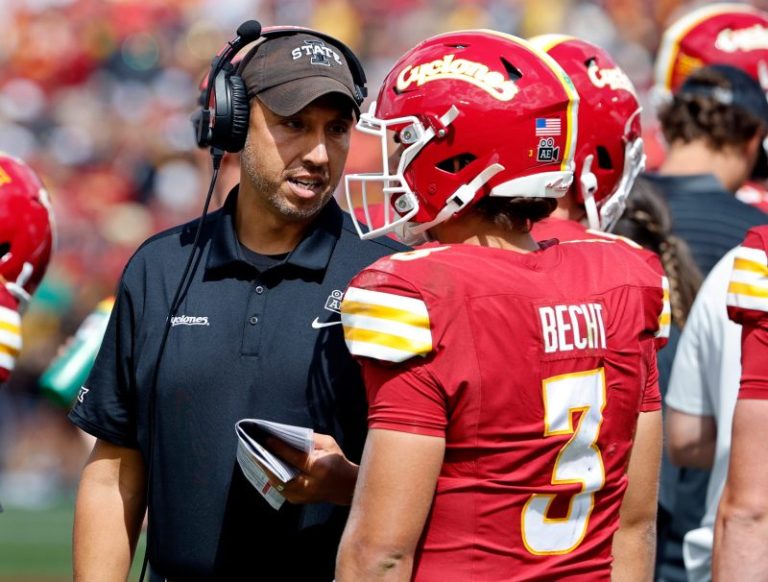
Iowa State coach Matt Campbell is the new focus of Penn State’s coaching search, according to multiple reports.

The Nittany Lions are the last program in major college football with a head coach vacancy, as they’ve struck out on numerous targets. Many rumored options for Penn State have signed extensions this season, with BYU’s Kalani Sitake the latest. Louisville’s Jeff Brohm also reportedly turned down Penn State.

Penn State fired now-Virginia Tech coach James Franklin midseason following consecutive losses to Oregon, UCLA and Northwestern, despite opening the season as a national championship favorite. PSU reached the College Football Playoff semifinals in 2024 under Franklin, although he finished 4-21 against top-10 ranked teams in his 10-year tenure.

Penn State signed just two players on the first day of the early signing period, with 11 former commits flipping to Virginia Tech, where Franklin was hired Nov. 17.

Campbell, while seemingly one of Penn State’s backup options, has an impressive resume. The 46-year-old is a three-time Big 12 Coach of the Year and the winningest coach in Iowa State history. He also led the Cyclones to an 11-win season in 2024 and a No. 9 finish in the US LBM Coaches Poll in 2020.

Iowa State won eight combined games in the three seasons before Campbell’s arrival from Toledo, where he had a 35-15 record in four seasons as head coach. Campbell is 72-55 overall at Iowa State, choreographing a solid turnaround at a program that has a 571-668-46 record all-time.

Campbell is the 47th highest-paid coach in college football making $5 million annually, according to USA TODAY Sports’ head coaches salaries database.

The USA TODAY app gets you to the heart of the news — fastDownload for award-winning coverage, crosswords, audio storytelling, the eNewspaper and more.

This post appeared first on USA TODAY

The injury issues for the Golden State Warriors just keep on coming.

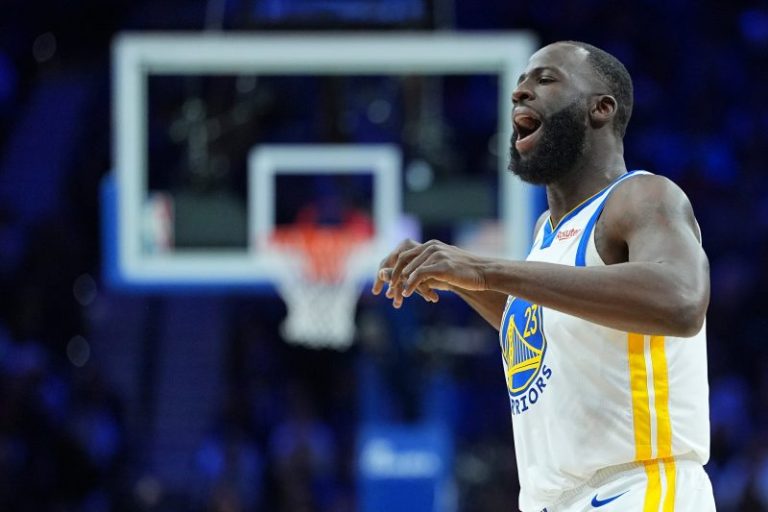
Forward Draymond Green limped off the floor Thursday, Dec. 4 after a 76ers player rolled onto his foot during Golden State’s 99-98 loss against Philadelphia.

The injury happened midway through the second quarter, with around 4:45 left to play in the half. During the play, Green was under the basket and swatted at a loose ball when Philadelphia forward Dominick Barlow fell to the court and rolled over Green’s right foot.

Green immediately grabbed at the area, near his ankle. He limped slowly into the locker room after Warriors coach Steve Kerr subbed him out.

This came as Golden State is also contending with injuries to stars Stephen Curry (quad) and Jimmy Butler (knee).

The Warriors struggled in the first half against Philadelphia, shooting just 29.8% from the field and falling into a 56-34 hole. When the Warriors came out to start the second half, Green was not on the floor. The Warriors later announced that Green would not return with a right foot injury.

Golden State would eventually battle back, taking a four-point lead inside the final minutes.

Sixers rookie guard VJ Edgecombe, however, put back a Tyrese Maxey missed shot with 0.9 seconds left in the game, giving Philadelphia a one-point lead. Golden State quickly inbounded the ball by sailing it deep across the court, allowing guard De’Anthony Melton to put up a quick layup. Maxey, though, trailed the play and swatted the ball off the backboard for a game-sealing, chase-down block.

After the game, Green left the arena in a walking boot, according to reporters on site, who also reported that Green said he hopes to play through the pain.

Kerr said during his postgame press conference that he had not spoken to Green and did not have an update, other than to say that the team would be cautious with the injury.

Why was Stephen Curry out vs. 76ers?

Curry missed his third consecutive game with a left quadriceps contusion he suffered Wednesday, Nov. 26 against the Rockets, when he tried to take a charge. Curry is not with the team during its current three-game road trip, and Kerr said Curry would miss at least five games.

Kerr did recently express optimism that Curry could be back for the Warriors’ next home game, Friday, Dec. 12 against the Minnesota Timberwolves.

Curry leads the team with 27.9 points per game.

Why was Jimmy Butler out vs. 76ers?

Butler suffered a knee injury in Golden State’s 124-112 loss Tuesday, Dec. 2 against the Thunder. He did not return to the game and underwent an MRI. The Warriors said Butler would miss at least Thursday’s game against the 76ers with knee soreness.

This post appeared first on USA TODAY

The Dallas Cowboys are clinging to their playoff dreams, but might’ve lost a key piece along the way.

Trailing 27-9 in the third quarter, the Cowboys were driving and hoping to get back into the game. Dak Prescott lofted a pass up for CeeDee Lamb in the end zone, but the receiver wasn’t able to brace his fall.

Lamb was down on the field for a few extra moments before getting up. He received some help from the trainers, bracing his left arm.

He also hit his head on the turf, which proved to be the injury that forced him out. After being checked out on the sidelines, Lamb headed off to the locker room, and was quickly ruled out after that.

Here’s the latest on Lamb.

CeeDee Lamb injury update

Lamb has been ruled out with a concussion.

It initially appeared that Lamb was dealing with an arm injury, but it was his head hitting the turf that proved to be the problem.

He appeared to be favoring his left arm after falling in the end zone. Lamb remained down for a few moments, but did walk off the field with trainers holding his arm.

Lamb was evaluated by doctors for about three minutes before quickly being ruled out and taken to the locker room, per the Prime Video broadcast. It was a quick diagnosis from the Cowboys, who will be without Lamb for the remainder of the game.

What is concussion protocol in the NFL?

The NFL’s concussion protocol is designed to ensure a player’s safety after suffering a head injury. It’s a five-step process that a player has to clear before they can return to play. Those steps are, as defined by the NFL:

  1. Symptom limited activity
  2. Aerobic exercise
  3. Football specific exercise
  4. Club-based non-contact training drills
  5. Full football activity/clearance

Before a player enters the protocol, they are evaluated on the sideline. The tests are conducted by the team’s physician and unaffiliated neurotrauma consultant. The evaluation includes observing any ‘no-go’ symptoms, which are things like loss of consciousness, confusion, amnesia and more, in addition to history of concussions, other signs/symptoms and video review.

At that point, a neurological exam is conducted and the player is escorted to the locker room if the sideline evaluation leaves any doubt.

Cowboys WR depth chart

Here’s a look at the Cowboys WR depth chart for the remainder of Week 14 without Lamb:

  1. CeeDee Lamb (injured)
  2. George Pickens
  3. Ryan Flournoy
  4. KaVontae Turpin
  5. Jonathan Mingo

Dallas has seen this movie before, losing Lamb to an ankle injury in Week 4. The star missed three contests with that injury, allowing Pickens to emerge as a big weapon in the team’s passing attack.

Flournoy and Turpin have each been effective in their roles, while Mingo is playing in just his second game of the season in Week 14.

Jalen Tolbert was a coach’s decision inactive for ‘Thursday Night Football’ in Detroit.

This story has been updated.

This post appeared first on USA TODAY

The FIFA World Cup draw on Friday, Dec. 5 will reveal the groups and bracket for the 2026 tournament in North America, with some new procedures in place as the field expands to 48 teams.

The 12 groups will be drawn from four pots based on the world rankings with the USA, Mexico and Canada placed in the first group as the tournament’s co-hosts, theoretically clearing an easier path out of the group stage.

Additionally, the top four teams – Spain, Argentina, France and England – will be separated so that they cannot meet until the semifinals.

The World Cup kicks off on June 11 with the final set for July 19 at MetLife Stadium in East Rutherford, New Jersey.

Here’s what to expect from Friday’s draw:

How does World Cup draw work? Format explained

Entering the draw, the 48 teams – 42 already clinched – are placed into four pots of 12 based on the November FIFA world rankings. The final six countries are in the fourth pot by default, no matter who ends up qualifying.

As the co-hosts, the USA, Canada and Mexico were placed into the first pot by default with the tournament’s nine highest-ranked teams.

Other than Europe (16 places), no continental federation may have more than one team in each group.

FIFA modified the draw for 2026 to create separate pathways to the semifinals for the four-highest ranked teams: Spain, Argentina, France and England. That means if Spain and Argentina win their groups, the world’s Nos. 1 and 2 teams can not meet prior to the final.

World Cup draw pots

  • Pot 1: Canada, Mexico, USA, Spain, Argentina, France, England, Brazil, Portugal, Netherlands, Belgium, Germany
  • Pot 2: Croatia, Morocco, Colombia, Uruguay, Switzerland, Japan, Senegal, Iran, South Korea, Ecuador, Austria, Australia
  • Pot 3: Norway, Panama, Egypt, Algeria, Scotland, Paraguay, Tunisia, Ivory Coast, Uzbekistan, Qatar, Saudi Arabia, South Africa
  • Pot 4: Jordan, Cape Verde, Ghana, Curaçao, Haiti, New Zealand, UEFA playoff A, B, C and D, FIFA playoff tournament 1 and 2
This post appeared first on USA TODAY

The final draw for the 2026 World Cup is set for Friday, Dec. 5 in Washington, D.C., setting the groups and matchups for next summer’s tournament being played in North America.

Teams will be drawn into 12 groups of four, with co-hosts Mexico, Canada and the United States already assigned their places in advance. The event being held at the Kennedy Center will be a star-studded affair with Tom Brady, Shaquille O’Neal, Wayne Gretzky and Aaron Judge set to assist in the draw.

President Donald Trump will be in attendance, FIFA will hand out its brand new ‘peace prize’ and the Village People are scheduled to perform ‘Y.M.C.A.’

Here’s what to know for Friday’s draw:

What time is the World Cup draw?

The FIFA World Cup draw ceremony begins at Noon ET on Friday, Dec. 5 in Washington, D.C.

How to watch 2026 World Cup draw: TV channel, stream

  • TV channel: Fox
  • Streaming: Live on FIFA.com, Fubo

Where is the World Cup draw?

The 2026 World Cup draw is being held at the John F. Kennedy Center for the Performing Arts in Washington.

2026 World Cup schedule

  • Group stage: June 11-June 27
  • Round of 32: June 28-July 3
  • Round of 16: July 4-July 7
  • Quarterfinals: July 9-July 11
  • Semifinals: July 14-15 – AT&T Stadium (Arlington, Texas) and Mecedes-Benz Stadium (Atlanta)
  • Third-place match: July 18 – Hard Rock Stadium (Miami Gardens, Florida)
  • World Cup final: July 19 – MetLife Stadium (East Rutherford, New Jersey)

The USA TODAY app gets you to the heart of the news — fastDownload for award-winning coverage, crosswords, audio storytelling, the eNewspaper and more.

This post appeared first on USA TODAY