March Madness is ramping up in the women’s college basketball conference tournaments.
The 2026 NCAA Tournament begins on March 18 and the conference tournaments will go a long way in figuring who is in and who is out. Conference tournament winners get an automatic an bid. Every other team will have to sweat it out on Selection Sunday on March 15 to see if they received at-large bid.
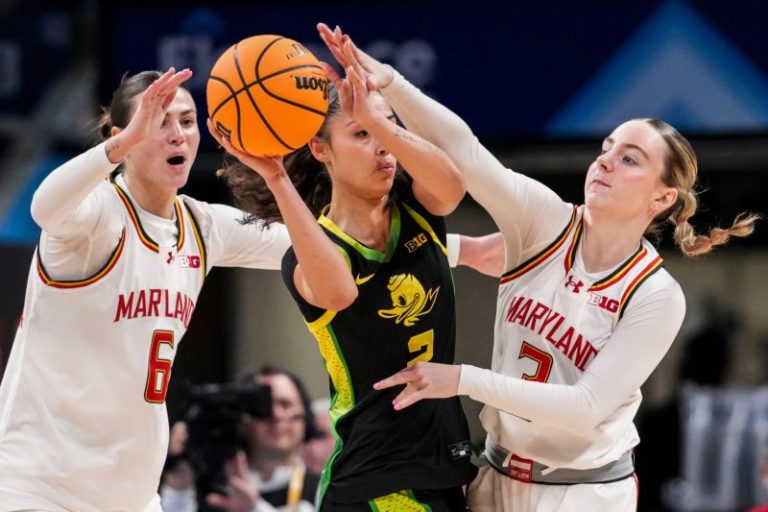
Thursday saw a boatload of upsets, but none bigger than Maryland’s loss to Oregon and Michigan State’s to Illinois. Both teams had been projected to be in the top 16 seeds and host first- and second-round games. Being upset in the second round of the Big Ten Tournament leaves to door ajar for Kentucky, WVU and UNC to host instead.
USA TODAY Sports is following along with the Power Four conference tournaments. Follow along for live updates, highlights and results here:
Final: Colorado 55, Kansas 48
Colorado was the only high seed to advance in the Big 12 Tournament on Thursday in Kansas City. The Buffs did it by defeating Kansas in a low-scoring affair.
Neither team shot the ball particularly well, with Kansas at 36% from the field and Colorado 39%. The difference came from behind the arc, where the Buffs were 6-of-14, compared to 2-of-11 for the Jayhawks.
Logyn Greer and Desiree Wooton scored 10 points each for Colorado, which advances to play Baylor in the quarterfinals at 9 p.m. ET Friday.
S’Mya Nichols had 14 points to lead the Jayhawks. −Heather Burns
Final: Oregon 73, Maryland 68
Oregon is the second double-digit seed to advance to the Big Ten Tournament quarterfinals, following in No. 10 Illinois’ lead.
Oregon and Maryland traded the lead for much of the second half before Oregon got a six-point advantage with four minutes left. Maryland had multiple opportunities to take the game, including a transition layup off a steal with to tie the game with two minutes left, but a massive block from Ehis Etute kept the Ducks in the lead.
Etute finished the game with a team-leading 20 points, along with 10 rebounds and three blocks.
Maryland was the No. 13 seed in the NCAA’s latest top-16 seed, slated to host the first rounds of the NCAA Tournament in College Park. This loss could affect the Terrapins’ standing as a host.
Oregon will now play No. 4 Michigan at 9 p.m. ET on Friday. The Ducks will be playing their third game in three days, while Michigan will be playing for the first time since Feb. 28. −Chloe Peterson
Halftime: Colorado 26, Kansas 18
Colorado held Kansas to 18 points in the first half and have an eight point lead at halftime.
The Jayhawks are shooting a dismal 25% from the field and 1-of-4 from the 3-point line. S’Mya Nichols has a team-high nine points, recording half of Kansas’ points in the first half. Libby Fandel added four points, while Sania Copeland has three.
Tabitha Betson and Anaelle Dutat each have five points for Colorado, who is shooting 41% from the field and 3-of-8 from the 3-point line. − Cydney Henderson
Final: Alabama 76, Tennessee 64
Jessica Timmons scored 23 points and Ta’Mia Scott had 20 as the Crimson Tide defeated the Lady Vols in the second round of the SEC Tournament on Thursday night in Greenville, South Carolina.
No. 11 Alabama (23-9) moves onto the quarterfinals and will face No. 2 Texas on Friday night (8:30 p.m. ET, SEC Network).
It’s the seventh consecutive loss for No. 6 Tennessee (16-11) which looked disjointed throughout the game, committing 18 turnovers and shooting 38% from the floor. Kim Caldwell’s squad isn’t in danger of missing the NCAA Tournament — it’s still 21st in NET, 30th in WAB and has five Quad 1 wins — but this loss could give the selection committee a reason to demote them in seeding.
The win for Alabama is in Quad 1, making them 5-7 in such games this season. The Crimson Tide also got 10 points from Essence Cody in the win.
Janiah Barker led Tennessee in scoring with 20 points. Tennessee’s press generated four steals and defensive mistakes put Alabama on the free throw line 19 times where it sank 16 attempts.
The Crimson Tide never trailed and led by as much as 17 points. − Mitchell Northam
Halftime: Maryland 32, Oregon 31
It’s been back and forth between Maryland and Oregon in the first half; the lead has changed hands six times. Both teams have had issues taking care of the ball, too, with 18 combined turnovers.
Avary Cain is leading the Ducks with 10 points, while Oluchi Okananwa has 10 points for the Terrapins. − Chloe Peterson
Final: Virginia Tech 62, Georgia Tech 54
The Hokies only scored 12 points in the fourth quarter, but it was enough to advance to the quarterfinals of the Big 12 Tournament in Kansas City, where they will take on North Carolina. Carleigh Wenzel’s late 3-pointer with two minutes left effectively sealed the Hokies’ 10-point lead, which became too much for Georgia Tech to overcome. Wenzel lead Virginia Tech with 15 points. Mackenzie Nelson added another 14 points, nine rebounds, six assists, two steals and a block.
The Yellow Jackets, who had a ‘super seven’ rotation, ran out of steam late. At one point, Georgia Tech didn’t score for more than five minutes. Having La’Nya Foster in foul trouble didn’t help, either. Talayah Walker’s 20 points, 12 of which came in the third quarter, also weren’t enough. Making matters worse, Georgia Tech also had 17 turnovers, which gave Virginia Tech 24 points.
Georgia Tech says they would accept any opportunities to play in the WBIT or WNIT. “They deserve an opportunity to get a postseason experience. I hope they can,” Georgia Tech coach Karen Blair said. − Meghan L. Hall
No. 11 Kansas vs. No. 6 Colorado, 9:30 p.m. | ESPN+
Kansas starting lineup
Head coach: Brandon Schneider
- 12 S’Mya Nichols | G 6-0 – Junior
- 13 Libby Fandel | G 6-1 – Freshman
- 22 Sania Copeland | G 5-7 – Senior
- 25 Jaliya Davis | F 6-2 – Freshman
- 52 Lilly Meister | F 6-3 – Senior
Colorado starting lineup
Head coach: JR Payne
- 1 Zyanna Walker | G 5-11 – Junior
- 13 Maeve McErlane | G 5-11 – Junior
- 14 Jade Masogayo | F 6-3 – Senior
- 15 Anaelle Dutat | F 6-0 – Senior
- 17 Tabitha Betson | F 6-2 – Sophomore
Halftime: Alabama 39, Tennessee 29
Jessica Timmons has 12 points as the Crimson Tide lead the Lady Vols at halftime on Thursday night in the second round of the SEC Tournament in Greenville, South Carolina.
Tennessee is staring at what would be its seventh straight loss at the break. Kim Caldwell’s squad isn’t in danger of missing the NCAA Tournament — it’s still 21st in NET, 30th in WAB and has five Quad 1 wins — but another loss would certainly give the selection committee a reason to slot the Lady Vols at a worse seed.
The Lady Vols have turned the ball over 12 times, which Alabama has flipped into 12 points. The Crimson Tide are also outscoring Tennessee in the paint, 24-10.
No. 3 Texas will face the winner of this game at 8:30 p.m. ET on Friday night. − Mitchell Northam
Georgia Tech still competing against Virginia Tech, closes gap
Georgia Tech won the third quarter 23-21, closing Virginia Tech’s once 11-point lead in the period to four points. The Yellow Jackets shot 44% from the field to close the game before the fourth quarter, led by 12 points from Talayah Walker. −Meghan L. Hall
Binghamton wins on buzzer-beater in America East Tournament
Binghamton survived an upset bid from Bryant in the America East Tournament on Thursday night thanks to Bella Pucci, who sank a floater at the buzzer to give the Bearcats a 45-44 victory.
Pucci caught an inbounds pass near the top of the key with 5.8 seconds remaining, drove left around one defender and then hard into a second, then created some space and lofted up a shot. The buzzer sounded as the ball fell through the net and the Bearcats dogpiled on the court as fans rushed the floor.
Binghamton is seeded third in the America East Tournament and Bryant was the No. 6 seed. Pucci — a 5-foot-9 junior guard from Rochester, New York — finished with nine points, five rebounds and four assists.
The Bearcats’ next opponent is to be determined, as the America East Tournament reseeds teams in the semifinal round. − Mitchell Northam
Final: Arizona State 77, Iowa State 68
Arizona State needed a win on Thursday to keep their March Madness hopes alive. The Sun Devils entered the Big 12 women’s basketball tournament on the bubble as one of the first four teams out, according to USA TODAY Sports’ latest bracketology.
A win is what they got. Arizona State staved off Iowa State’s comeback and defeated the Cyclones in a wire-to-wire victory on Thursday in Kansas City.
Arizona State led by as many as 16 points in the fourth quarter, but Iowa State cut its deficit to singe digits with 5:10 remaining in the game. A 3-pointer from Addy Brown brought Iowa State within six points with 1:41 remaining.
Gabby Elliot fouled out with 31 seconds remaining, but finished with a near triple-double for the Sun Devils. She had a game-high 22 points, shooting 7-of-17 from the field and 2-of-3 from the 3-point line, in addition to 10 rebounds and eight assists. Heloisa Carrera added 17 points, while McKinna Brackens recorded 16 points and six rebounds in the win.
Arizona State can credit its defense just as much as its offense for the win. They held Audi Crooks in check in the first half with only four points. She broke out and scored 17 of her 21 points in the second half, but couldn’t pull off the comeback. Brown added a double-double (13 points, 11 rebounds) and Kenzie Hare 12 points. − Cydney Henderson
No. 11 Oregon vs. No. 6 Maryland, 9 p.m. | Big Ten Network
Oregon starting lineup
Head coach: Kelly Graves
- 2 Katie Fiso | G 5-11 Sophomore
- 14 Ari Long | G 6-0 Junior
- 3 Sofia Bell | G 6-0 Junior
- 1 Mia Jacobs | F 6-2 Senior
- 35 Ehis Etute | F 6-0 Freshman
Maryland starting lineup
Head coach: Brenda Frese
- 3 Addi Mack | G 5-9 Freshman
- 6 Saylor Poffenbarger | G 6-2 Senior
- 7 Oluchi Okananwa | G 5-10 Junior
- 10 Mir McLean | G 5-11 Graduate student
- 12 Yarden Garzon | G 6-3 Senior
No. 11 Alabama vs. No. Tennessee, 8:30 p.m. ET | SEC Network
Alabama starting lineup
Head coach: Kristy Curry
- 21 Essence Cody | F 6-4 Junior
- 20 Diana Collins | G 5-9 Junior
- 15 Ta’Mia Scott | G 6-0 Senior
- 22 Karly Weathers | G 5-11 Senior
- 23 Jessica Timmons | G 5-8 Senior
Tennessee starting lineup
Head coach: Kim Caldwell
- 0 Janiah Barker | F 6-4 Senior
- 1 Nya Robertson G 5-7 Senior
- 11 Zee Spearman | F 6-4 Senior
- 33 Alyssa Latham | F 6-2 Junior
- 55 Talaysia Cooper | G 6-0 Junior
Final: Illinois 71, Michigan State 69
No. 10-seed Illinois has won two games in two days and is on its way to the Big Ten Tournament quarterfinals.
Illinois beat Wisconsin on the opening day of the tournament Wednesday, then took down No. 7 Michigan State, a team projected to host the NCAA Tournament, Thursday.
Illinois led by seven points at halftime and fended off multiple Michigan State runs throughout the second half. Michigan State had the ball, down two points with 9.5 seconds left and attempted to run a set play to tiee. An errant pass, however, gave Michigan State an unforced turnover at the worst time.
Illinois got the ball back with 1.6 seconds left and managed to avoid a foul for long enough to seal a two-point win. Kennedy Blair had 30 points on 11-of-18 shooting for the Illini.
Illinois will now play No. 2 Iowa in the quarterfinals at 6:30 p.m. on Friday − Chloe Peterson
Halftime: Virginia Tech 29, Georgia Tech 23
Virginia Tech scored 22 points in the second quarter to take a 29-23 lead at halftime. Over the course of nearly seven minutes, the Hokies went on a 17-2 run to erase Georgia Tech’s 10-point lead. The Yellow Jackets scored six points in the period, and let Virginia Tech score 15 points off nine turnovers.
Virginia Tech’s Carleigh Wenzel and Carys Baker lead all scorers with seven points each. −Meghan L. Hall
Addy Brown in foul trouble
Iowa State junior forward Addy Brown is headed to the bench with two seconds remaining in the third quarter after picking up her fourth foul. Brown was called for a foul as Arizona State’s Gabby Elliot drove to the basket. Elliot made the layup through contact and converted the and-one free throw to go up 60-46 over Iowa State. Brown has 10 points, while Elliott has 20 in the Big 12 Tournament matchup. − Cydney Henderson
Final: Ole Miss 73, Auburn 57
Christeen Iwuala scored 18 points to lead the Rebels over the Tigers on Thursday night in the second round of the SEC Tournament in Greenville, South Carolina.
Iwuala also grabbed nine rebounds and shot a perfect 8-of-8 from the floor for the Rebels (22-10), who snapped a four-game losing streak. Cotie McMahon added 13 points and six assists for Ole Miss.
Ole Miss won comfortably despite 22 turnovers. The Rebels won the rebounding battle by 17, shot 7-of-13 from 3-point land and outscored Auburn 36-26 in the paint.
No. 2 Vanderbilt will face Ole Miss at 6 p.m. ET Friday on the SEC Network. − Mitchell Northam
Georgia Tech has 10 point lead after first quarter vs. Virginia Tech
The Yellow Jackets are 47% from the field and held the Hokies to 17% shooting. Georgia Tech already has 10 paint points and leads 17-7 after the first quarter quarter at the ACC Tournament. −Meghan L. Hall
Syracuse coach says Orange will play through injuries
During its win over Cal, the Orange suffered two injuries. Dominique Darius collided with Cal’s Mjracle Sheppard in the third quarter, and late in the fourth, Olivia Schmitt had to be helped off the court after she got caught under a flare screen. Syracuse Felisha Legette-Jack says the team will be prepared to play Louisville on Friday.
‘I told [Dominique Darius] she’s got two hands; play with the other one. She’s going to have to play, and she will play. [Olivia Schmitt] is going to have to play, and we’ll figure it all out,’ Syracuse coach Felisha Legette-Jack said.
‘It’s just next person up. My prayer is that they’re healthy enough to go again against an incredibly good team in Louisville. If not, we’re just going to have to give Louisville our best effort with the people that can go.’ −Meghan L. Hall
Gabby Elliott scores eight straight points
Arizona State senior guard Gabby Elliott is heating up. She scored eight points against Iowa State in less than a minute, including back-to-back 3-pointers. Elliot is up to 15 points and her shooting spree gave Arizona State a 41-20 advantage over Iowa State with 7:33 remaining in the third quarter. − Cydney Henderson
Halftime: Arizona State 33, Iowa State 25
Arizona State led by as many as 15 points in the first half after an explosive start, but Iowa State settled in and cut its deficit to eight by halftime.
Sophomore forward Heloisa Carrera was the hot hand early for Arizona State and recorded 12 points in the first quarter, but she was limited to seven minutes in the first half with two fouls.
Arizona State’s defense has smothered Iowa State center Audi Crooks, holding her to four points at the free throw line. Crooks (0-of-1) is looking for her first field goal of the day. Addy Brown has a team-high eight points and seven rebounds, but it hasn’t been pretty. Brown is shooting 2-of-9 from the field and 1-of-7 from the 3-point line.
Iowa State must take care of the ball if they want to get back into this game. Ten Cyclones turnovers have led to 14 points for the Sun Devils. Arizona State is 22-4 this season when leading at halftime. − Cydney Henderson
Halftime: No. 10 Illinois 36, No. 7 Michigan State 29
Cearah Parchment is leading the charge for Illinois, putting up 15 points on 5-of-7 shooting in the first half.
Michigan State was dismal beyond the arc in the first, going 0-for-7 from 3-point range. Kennedy Blair is keeping the Spartans in the game with 14 points on 5-of-7 shooting. − Chloe Peterson
No. 11 Georgia Tech vs. No 6 Virginia Tech, 7:30 p.m. ET | ACCN
Virginia Tech Hokies starting lineup
Head coach: Megan Duffy
- 0 Kilah Freelon | F 6-1 – Senior
- 1 Carleigh Wenzel | G 6-0 – Junior
- 2 Leila Wells | G 5-9 – Sophomore
- 3 Mackie Nelson | G 5-8 – Sophomore
- 10 Carys Baker | F 6-2 – Junior
Georgia Tech Yellow Jackets starting lineup
Head coach: Karen Blair
- 3 Erica Moon | G 5-6 – Sophomore
- 21 Talayah Walker | G 5-10 – Sophomore
- 23 La’Nya Foster | G 5-10 – Junior
- 0 Brianna Turnage | G 6-1- Senior
- 20 Ariadna Termis | C 6-6 – Senior
Final: Syracuse 70, Cal 59
Syracuse dominated the first half and Cal fought back in the third quarter and parts of the fourth, but they couldn’t pull out the win. After getting Syracuse’s once 21-point lead down to four, Uche Izoje delivered with huge baskets to push the lead back up to eight. Izoje finished with 23 points. The Orange survived to advance to the ACC Tournament quarterfinals against No. 2 Louisville on Friday.
Despite 21 turnovers, Syracuse finished with a 47% shooting percentage from the field and 40% from deep.
The win did yield some injuries. At the 6:43 of the third quarter, Dominique Darius collided with Cal’s Mjracle Sheppard and would not return to the game. Then, with 18 seconds remaining in regulation, Olivia Schmitt had to be helped off the court after she got caught under a flare screen. Schmitt was visibly crying and could not put any weight on her legs. She was carried off by Syracuse staff. As Schmitt was being helped, Syracuse fans in the crowd screamed ‘Do your job!’ toward the officiating crew.
Cal finished the matchup shooting 38% from the field with 21 turnovers. Sakima Walker led the Golden Bears with 19 points and five rebounds. Lulu Twidale added 14 points. Cal says they would accept WBIT/WNIT invitation. −Meghan L. Hall
Arizona State has 17-2 lead vs. Iowa State
Iowa State opened the Big 12 tournament with a second round matchup against Arizona State and the Cyclones appeared to have some early jitters. Iowa State started the game 1-of-7 from the field and gave up six early turnovers, which led to nine points for the Sun Devils. Iowa State quickly found themselves in a 17-2 hole with 3:14 remaining in the first quarter. Heloisa Carrera has 12 of Arizona State’s 17 points. − Cydney Henderson
Halftime: Ole Miss 48, Auburn 20
Behind 11 points from Cotie McMahon, Ole Miss was running away from Auburn at halftime of their second round SEC Tournament clash on Thursday evening in Greenville, South Carolina.
Ole Miss made 6-of-9 3-pointers in the first half and was winning the rebounding margin 23-7. Christeen Iwuala also has 10 points for the Rebels, while no Tigers have reached double figures yet.
The winner of this game will face No. 2 Vanderbilt at 6 p.m. ET. on Friday. − Mitchell Northam
Raegan Beers reaches milestone in Oklahoma’s win over Florida
Oklahoma center Raegan Beers tallied 18 points and seven rebounds on Thursday afternoon in the Sooners’ 82-64 victory over Florida in the second round of the SEC Tournament in Greenville, South Carolina. The senior reached two milestones with 2,000 points and 1,000 rebounds in her career.
Beers is the third Oklahoma player to reach those marks, joining Courtney Paris and Molly McGuire, but she is the only active player in Division I women’s college basketball this season to own at least 2,000 points and 1,000 rebounds in a career. The win over the Gators also marked the 100th start of Beers’ career.
She was quick to credit her teammates for helping her eclipse the historic scoring total.
“It’s really, really cool. It’s sometimes seen as an individual achievement. But I’m a post, so I don’t necessarily create a lot of my own shots. So all of my shots come from great passes from my guards,” Beers said. “I’m so thankful for the group that I got to achieve that with, and excited for our run that we’re going to keep going on.”
While Beers was answering that question in the postgame news conference, Oklahoma coach Jennie Baranczyk just smiled.
“Yeah, that’s Raegan,” Baranczyk said. “Sometimes you don’t get to see that with Raegan, right? Because you see her as this fierce player on the floor, and she’s posting up, and she’s strong. You don’t always get to see her heart, but her heart is a pretty amazing heart.”
Beers, who started her career at Oregon State before joining the Sooners via the transfer portal, is averaging 16.1 points and 10.4 rebounds per game this season. She ranks seventh nationally in shooting with a 61.7% mark from the field.
No. 5 Oklahoma will face No. 4 LSU in the SEC Tournament quarterfinals on Friday at 2:30 p.m. ET on ESPN. − Mitchell Northam
No. 10 Arizona State vs. No. 7 Iowa State, 6:30 p.m. | ESPN+
Arizona State Sun Devils starting lineup
Head coach: Molly Miller
- 0 Gabby Elliott | G 5-10 – Senior
- 11 Marley Washenitz | G 5-7 – Senior
- 13 Last-Tear Poa | G 5-11 – Senior
- 14 Heloisa Carrera | F 6-2 – Sophomore
- 21 McKinna Brackens | F 6-1 – Junior
Iowa State Cyclones starting lineup
Head coach: Bill Fennelly
- 2 Arianna Jackson | G 5-9 – Junior
- 8 Jada Williams | G 5-8 – Junior
- 12 Kenzie Hare | G 5-9 – Junior
- 24 Addy Brown | F 6-2 – Junior
- 55 Audi Crooks | C 6-3 – Junior
Cal fights back against Syracuse
Syracuse’s lead was as high as 21 in the third quarter. But after the period finished, the Orange cut it to 10 points, thanks a barrage from Sakima Walker and Aliyahna ‘Puff’ Morris. Walker leads the Golden Bears with 13 points. −Meghan L. Hall
No. 10 Illinois vs. No. 7 Michigan State, 6:30 p.m. | Big Ten Network
Illinois starting lineup
Head coach: Shauna Green
- 1 Aaliyah Guyton | G 5-7 Sophomore
- 2 Destiny Jackson | G 5-6 Freshman
- 8 Jasmine Brown-Hagger | G 5-9 Junior
- 23 Berry Wallace | F 6-1 Junior
- 30 Cearah Parchment | F 6-3 Freshman
Michigan State starting lineup
Head coach: Robyn Fralick
- 1 Rashunda Jones | G 5-8 Junior
- 23 Jalyn Brown | G 6-1 Senior
- 35 Kennedy Blair | G 5-9 Sophomore
- 14 Grace VanSlooten | F 6-3 Senior
- 10 Ines Sotelo | C 6-3 Sophomore
Syracuse, Cal starters exit ACC matchup after on-court collision
At the 6:43 mark of the third quarter, Syracuse’s Sophie Burrows was advancing the ball up the court. Burrows tried to pass the ball to Dominique Darius, but it was intercepted by Cal’s Mjracle Sheppard. As Sheppard stole the ball, she collided with Darius in midair. The collision sent both players to the floor. Darius and Sheppard were both in clear pain as they lay on the floor, attended to by training staff.
It’s unclear what injuries may have occurred from the collision, but Darius said her finger and knee hurt. Both Darius and Sheppard exited the court moments later, after being helped to their feet by training staff.
Sheppard returned to the bench for Syracuse. Darius was ruled out for the rest of the game. −Meghan L. Hall
No. 15 Auburn vs No. 7 Texas A&M, 6 p.m. ET | SEC Network
Auburn Tigers starting lineup
Head coach: Larry Vickers
- 1 Mya Petticord | G 5-9 Senior
- 2 Ja’Mia Harris | G 5-11 Junior
- 3 Harissoum Coulibaly | G 5-10 Freshman
- 4 Kaitlyn Duhon | G 5-10 Junior
- 6 Khady Leye | F 6-2 Sophomore
Ole Miss Rebels starting lineup
Head coach: Yolett McPhee-McCuin
- 21 Debreasha Powe | G 6-1 Senior
- 35 Tianna Thompson | G 5-10 Sophomore
- 4 Jayla Murray | F 6-1 Senior
- 12 Christeen Iwuala| F 6-3 Senior
- 32 Cotie McMahon | F 6-0 Senior
Halftime: Syracuse 37, Cal 16
The California Golden Bears might not want to remember the first half of their matchup against Syracuse. After eight turnovers alone in the first period, Cal did not hit 10 points until the 7:04 mark of the second quarter. By the time halftime arrived, the Bears were shooting 25% from the field and had 10 turnovers.
Syracuse’s defensive intensity was a problem for Cal from the opening tip, and its punishing shots on the other end made for a very long first half for the Golden Bears. At halftime, the Orange are shooting 53% from the field and already have two players in double figures. Uche Izoje leads all scorers with 12 points, five rebounds, three blocks and a steal. −Meghan L. Hall
Syracuse felt good ahead of ACC matchup with Cal
Syracuse was feeling light and jovial before its Thursday matchup against Cal. The team broke out a ‘Remember The Titans’ inspired stroll before arriving at Gas South Arena in Duluth, Georgia. −Meghan L. Hall
Syracuse off to hot start vs. Cal
Syracuse started Thursday’s matchup against Cal with intensity and pace. The Orange went on a 9-0 run to open the game, and were up 13-4 before a timeout was called at the 4:39 mark in the first quarter. Syracuse’s run was powered by Sophie Burrows (five points) and ACC Rookie of the Year Uche Izoje (six points). −Meghan L. Hall
Final: BYU 70, Utah 52
It was a tale of two halves. The first half belonged to Utah, but the second half was all BYU on Thursday at the Big 12 Tournament.
Utah outscored BYU 36-27 in the first half and had a nine point lead at halftime, but the Cougars settled in and turned it on in the second half. BYU outscored Utah 43-16.
BYU’s Delaney Gibb scored 12 of her team-high 19 points in the second half. She rounded out her stat line with eight assists, five rebounds and four steals. Brinley Cannon and Lara Rohkohl each added 12 points.
Lani White was the only Utes player to reach double digits with 20 points. Maty Wilke added eight points in the loss. −Cydney Henderson
Final: No. 5 Ohio State 83, No. 13 Indiana 59
After a slow start, Ohio State methodically built up a commanding lead through the final three quarters against Indiana in the Big Ten Tournament.
Jaloni Cambridge finished with 19 points, eight rebounds, and six assists for the Buckeyes, while Chance Gray added 16 points.
The Hoosiers had to fight through foul trouble for most of the game, as Lenee Beaumont picked up four fouls in the first half. She still managed to finish with six points and seven rebounds, going the entire second half without a foul.Ohio State will move on to play No. 4 Minnesota at 2:30 p.m. on Friday. −Chloe Henderson
No. 10 Cal vs. No. 7 Syracuse – 5 p.m. ET | ACC Network
Syracuse Orange starting lineup
Head coach: Felisha Legette-Jack
- 20 Dominique Darius | G 5-10 – Senior
- 5 Laila Phelia | G 6-0 – Senior
- 14 Shy Hawkins | G 6-2 – Sophomore
- 2 Journey Thompson | F 6-3 – Senior
- 44 Uche Izoje | C 6-3 – Freshman
California Golden Bears starting lineup
Head coach: Charmin Smith
- 1 Mjracle Sheppard | G 5-10 – Junior
- 10 Lulu Twidale | G 5-10 – Junior
- 21 Gisella Maul | G 5-11 – Junior
- 22 Claudia Langarita | F 6-4 – Senior
- 35 Sakima Walker | C 6-5 – Senior
BYU goes on 15-0 run vs. Utah
Back and forth we go. BYU trailed by as many as 11 points in the third quarter, but the Cougars responded with a 15-0 run to retake the lead, 51-45. BYU’s run was capped off by a buzzer-beating 3-pointer from Olivia Hamlin. BYU outscored Utah 24-7 in the third quarter and the Utes find themselves down eight points heading into the fourth quarter. −Cydney Henderson
Final: Oklahoma 82, Florida 64
Oklahoma’s Reagan Beers and Aaliyah Chavez combined for 35 points in the Sooners’ 82-64 win over Florida on Thursday at the SEC Tournament. Zya Vann (14) and Brooklyn Stewart (12) also reached double-digits for the Sooners.
Oklahoma shot a dismal 4-of-19 from the 3-point line, but they didn’t need the long ball for the win over Florida. Instead, the Sooners dominated the paint, where they outscored the Gators 48-32. Oklahoma also took advantage 24 Florida turnovers, which the Sooners converted to 23 points.
Florida’s Liv McGill had a game-high 28 points in the losing effort. Me’Arah O’Neal added 10 points and three rebounds. − Cydney Henderson
Halftime: Utah 36 , BYU 27
Utah closed the first half on a 17-2 run to take a nine-point lead over BYU into halftime, the largest by either team so far.
Lani White has led the charge for Utah. She’s up to 16 points, shooting 5-of-10 from the field and 2-of-5 from the 3-point line. Maty Wilke added six points and Chyra Evans seven rebounds. Utah outscored BYU 19-5 in the second quarter.
Brinley Cannon has a team-high nine points for BYU, while Kambree Barber and Delaney Gibb each have seven points. − Cydney Henderson
Final: Notre Dame, 69 Miami 54
Notre Dame and Miami both shot 46% on Thursday, but Miami’s 18 turnovers were the difference. The Fighting Irish capitalized on the giveaways by the Hurricanes, scoring 23 points. Defense and a 28-point outing from Hannah Hidalgo helped Notre Dame move on to the quarterfinals on Friday against No. 4 NC State.
For Miami, early foul trouble from leading scorer Ra Shaya Kyle didn’t help the Hurricanes’ woes. Kyle scored her standard double-double, which she averages of 11 points and 15 rebounds, but it was not enough to get past Notre Dame. Teammate Gal Raviv tried her hardest to help, too, but her 15 points fell short as well. −Meghan L. Hall
Halftime: Ohio State 36, Indiana 24
Ohio State recovered from a slow start for an explosive second quarter to open a double-digit lead over Indiana at halftime.
The Buckeyes have 11 offensive rebounds that they’ve turned into 14 second-chance points, and they’re outrebounding the Hoosiers 25-18. Chance Gray has 11 points for Ohio State, and second-team All-American Jaloni Cambridge has 10.
Indiana, which is running a right six-player rotation, is trying to work through significant foul trouble. Lenee Beaumont already has four fouls, which she picked up in 15 minutes, and Nevaeh Caffey has three fouls in 16 minutes.
Shay Ciezki is leading the Hoosiers with 10 points on 5-of-12 shooting.
USC hopeful Jazzy Davidson will ‘be OK with some rest’
Big Ten Freshman of the Year Jazzy Davidson went down with an apparent arm injury early in USC’s Big Ten Tournament loss to Washington on Thursday afternoon.
Five minutes into the game, Davidson was hit in front of the USC bench while running up the backcourt in transition. She was immediately surrounded by USC coaches and medical staff as she grabbed her shoulder, looking to be in pain.
She then went to the locker room, holding her right arm, as officials reviewed the play and deemed it incidental. Davidson returned to the bench just one minute of game time later, talking quickly with coach Lindsay Gottlieb before going to check back into the game.
“She took a pretty significant hit,” Gottlieb said. “She’s a really tough kid. She wants to play through it. But I was just checking with her to make sure there wasn’t anything that was getting worse, and also at times trying to settle her down. She plays so hard and wants to win.”
Davidson played through most of the game, but she was shaking out her right arm multiple times after shots. She shot 2-of-13 from the floor for eight points.
Eventually, the medical staff made the decision in the fourth quarter to sit her for the rest of the game; Davidson subbed out for the final time with seven minutes left.
“I trust our medical staff when they said she was okay to go back in,” Gottlieb said. “But then I thought it was bothering her and nagging her, and when someone can’t be at their best, you’re not mentally as present. And I was told, collective decision, down the stretch there, let’s shut her down for the rest of the game. But the hope is that she will be okay with some rest.’
Gottlieb is hopeful that Davidson will be good to go by the start of the NCAA Tournament, which will come in just over two weeks. USC is projected to be a No. 8 seed in the NCAA Tournament, and Gottlieb doesn’t expect the Trojans’ positioning to change after their early exit from the Big Ten Tournament.
“There were eight teams that finished above us in our league. Seven of them in the last reveal are hosting, and the other one here is obviously a tournament team that now we’ve split with,” Gottlieb said. “Yeah, I don’t think it’s in question. It becomes about matchups in the tournament. Send us wherever. You usually get what you earn. We earned our way into the 8-9 game here, and we’ll do the same with the NCAA Tournament.” − Chloe Peterson
Hannah Hidalgo breaks ACC single-season steals record
Back-to-back ACC Player of the Year and Defensive Player of the Year Hannah Hidalgo now has another record on her resume: single-season steals in the conference. On Thursday, during her matchup against Miami, Hidalgo’s four steals for 166 total to help her surpass Donna Holt (164) for the most steals in a single season. Lamar University’s Chastadie Barrs has the single season national steals record with 192 steals, set in 2018-19. −Meghan L. Hall
No. 9 BYU vs. No. 8 Utah | 2:30 p.m. (ESPN+)
BYU Cougars starting lineup
Head coach: Lee Cummard
- 2 Sydney Benally | G 5-9 – Freshman
- 11 Delaney Gibb | G 5-10 – Sophomore
- 13 Lara Rohkohl | F 6-3 – Senior
- 14 Kambree Barber | G 6-0 – Sophomore
- 24 Brinley Cannon | G/F 6-1 -Sophomore
Utah Utes starting lineup
Head coach: Gavin Petersen
- 0 Lani White | G 6-0 – Senior
- 2 LA Sneed | G 5-6 – Freshman
- 12 Chyra Evans | F 6-3 – Junior
- 20 Reese Ross | F 6-1 – Junior
- 23 Maty Wilke | G 5-10 -Senior
Halftime: Oklahoma 40, Florida 38
Liv McGill has already piled up 19 points for the Gators as their NCAA Tournament hopes are on the line in this second-round matchup in the SEC Tournament in Greenville, South Carolina.
Aaliyah Chavez has 13 points for the Sooners.
Florida has stayed in the game by going 11-of-13 from the foul line in the first half.
The winner will face No. 4 LSU on Friday on ESPN.
Halftime: Notre Dame 37, Miami 23
Miami is playing with a ton of pace, but Notre Dame is matching it and causing a lot of problems defensively. Notre Dame has 12 points off 11 Miami turnovers. The Fighting Irish have switched between zone and man-to-man looks, and both have been successful. At the half, the Hurricanes are shooting 38% overall, after they shot just 18% in the second.
Notre Dame, which is shooting 50% from the field, is led by Hannah Hidalgo’s non-stop energy. The junior guard leads all scorers with 14 points, five rebounds and three steals. Cassandre Prosper is right behind Hildago with nine points and one block.
No. 13 Indiana vs. No. 5 Ohio State | 2:30 p.m. Big Ten Network
Indiana starting lineup
Head coach: Teri Moren
- Shay Ciezki | G 5-7 Senior
- Nevaeh Caffey G 5-10 Freshman
- Lenee Beaumont | G 6-1 Sophomore
- Maya Makalusky | F 6-3 Freshman
- Edessa Noyan | F 6-3 Junior
Ohio State starting lineup
Head coach: Kevin McGuff
- Jaloni Cambridge | G 5-7 Sophomore
- Ava Watson | G 5-8 Sophomore
- Chance Gray | G 5-9 Senior
- Kennedy Cambridge | G 5-8 Junior
- Elsa Lemmila | C 6-6 Sophomore
Final: Kansas State 58, Texas Tech 51
Texas Tech led by as many as 14 points in the fourth quarter, but Kansas State went on a 21-0 run to not only take their first lead of the game with 2:39 remaining, but defeat the Red Raiders 58-51 in the second round.
The Lady Raiders’ nearly eight-minute scoring drought and the Wildcats’ subsequent run was fueled by Texas Tech turnovers. Texas Tech finished with 16 turnovers, with three coming in the fourth quarter. Texas Tech was held to four points in the fourth quarter and finished the game shooting 29% from the field and 6-of-23 from the 3-point line.
Junior forward Nastja Claessens led the way for Kansas State with 14 points. Tess Heal scored eight of her 10 points in the second half, including a pair of clutch free throws to ice the game.
It marked Kansas States fifth straight victory over Texas Tech.
Texas Tech’s Snudda Collins finished with 14 points in the loss. She was the only Red Raider to reach double digits. Gemma Nuñez had nine points and Bailey Maupin had eight points.
Final: Washington 76, USC 64
Elle Ladine scored a game-high 25 points on 10-of-13 shooting to lead Washington over USC in the second round of the Big Ten Tournament.
Washington controlled the entire game, shooting 50% from the field as a team and finishing with four players in double figures.
USC shot 31% from the field (18-of-58).
Big Ten Freshman of the Year Jazzy Davidson scored eight points on 2-of-13 shooting for USC, but she was seemingly hampered by a right arm injury. She briefly went to the locker room holding her shoulder early in the first quarter and returned to the court, but she was shaking out her right arm after shots for the rest of the game.
‘I did not get a good look at the replay, and I trust our medical staff when they said she was OK to go back in. But then I thought it was bothering her and nagging her, and when someone can’t be at their best, you’re not mentally as present,’ USC coach Lindsey Gottleib said. ‘And I was told, collective decision, down the stretch there, let’s shut her down for the rest of the game. But the hope is that she will be OK with some rest.’
Washington will advance to play top-seeded UCLA on Friday at noon.
Hannah Hidalgo is cashing in early against Miami
Notre Dame guard Hannah Hidalgo is the first player in the game to score in double figures. At the 4:46 mark of the second quarter, she has 11 points on 50% shooting, four rebounds and two steals.
ACC teams make NCAA Tournament cases
Following Clemson’s 63-50 win over Virginia, both head coaches made cases for their teams to make the NCAA Tournament.
‘Super, super proud of this group. I thought that was a gritty, hard-fought, tough win. In my opinion, that’s an NCAA Tournament game with two NCAA Tournament teams,’ Clemson coach Shawn Poppie said.
‘We kind of took this as our season is on the line. We felt like a win today would get us in the NCAA Tournament no matter what happens the rest of the way out. That’s how they focused and fought and competed. But ultimately that’s just basketball. How you start and how you finish quarters.’
Before Thursday’s win, Clemson was on the bubble, but still needed help to get in the Big Dance. Now, the victory over Virginia all but guarantees the Tigers will go dancing.
For Virginia, the loss to Clemson makes their NCAA Tournament bid a bit more unclear. The Cavaliers will likely be nervous come Selection Sunday, now all but assuredly on the bubble. Virginia head coach Amaka Agugua-Hamilton also made a case for the NCAA tournament.
‘We’ve got to take ownership of our part today. We didn’t compete. We weren’t urgent for 40 minutes. We didn’t stick to the gameplan. We didn’t do the things we could do to control the outcome of that game,’ Agugua-Hamilton said.
‘But if you’re talking about the course of the season, there’s been a lot of ups and downs due to some adversity. I do think that we’ll be ready to go, come NCAA Tournament. We’ve got a little bit of a break where we can get better and get more connected and be on the same page.’
Agugua-Hamilton also added she wasn’t ready to throw in the towel on the season, given all that Virginia has accomplished, including 11 wins in the ACC regular season for the first time in 26 years.
‘There’s so many highlights of the season, but to me, it can’t be done yet,’ Agugua-Hamilton said. −Meghan L. Hall
Kansas State goes on 11-0 run vs. Texas Tech
Not so fast. After trailing by as many as 14 points in the fourth quarter, Kansas State went on a 11-0 run to cut their deficit to three points with 5:22 remaining. Texas Tech has not scored in over two minutes.
Texas Tech takes double-digit lead vs. Kansas State
Texas Tech women’s basketball took a commanding 14-point lead over Kansas State with 7:42 remaining in the game after Snudda Collins made a wide-open layup. Collins leads all scorers with 14 points off the bench. Can Kansas State muster a comeback? The Wildcats have struggled to find any offensive rhythm and are shooting 31% from the field and 5-of-24 from the 3-point line, one day removed from setting a Big 12 Tournament record with 17 made 3-pointers in their win over Cincinnati on Wednesday.
No. 12 Florida vs. No. 5 Oklahoma, 1:30 p.m. ET | SEC Network
Florida Gators starting lineup
Head coach: Kelly Rae Finley
- 13 Laila Reynolds | G 6-1 – Junior
- 23 Liv McGill | G 5-9 – Sophomore
- 8 Me’Arah O’Neal | F 6-4 – Sophomore
- 9 Alexa Dizeko | F 5-111- Senior
- 14 Caterina Piatti | F 6-4 – Freshman
Oklahoma Sooners starting lineup
Head coach: Jennie Baranczyk
- 2 Aaliyah Chavez | G 5-10 – Freshman
- 3 Zya Vann | G 5-9 – Sophomore
- 6 Sahara Williams | F 5-11 – Junior
- 12 Payton Verhulst | G 6-1 – Senior
- 15 Raegan Beers | C 6-4 – Senior
Halftime: Washington 32, USC 20
USC survived an injury scare when Big Ten Freshman Jazzy Davidson briefly went back to the locker room with an apparent shoulder injury, but returned to the court just a minute of game time later.
The Trojans still have some work to do if they want to extend their stay in Indianapolis.
USC shot just 25% (6-of-24) from the field and 20% (2-of-10) from 3-point range in the first half.
Washington is dominating the boards, pulling down 24 compared to USC’s nine. The Huskies have 10 offensive rebounds alone, with six second-chance points.
Elle Ladine is leading Washington with 13 points on 5-of-8 shooting, while Avery Howell has 10 points on 4-of-5 shooting. Davidson and Kennedy Smith are leading the Trojans with five points each.
Miami vs. No. 5 Notre Dame, 1:30 p.m. | ACC Network
Notre Dame Fighting Irish starting lineup
Head coach: Niele Ivey
- 3 Hannah Hidalgo | G 5-6 – Junior
- 2 Vanessa De Jesus | G 5-8 – Senior
- 23 Iyana Moore | G 5-8 – Senior
- 8 Cassandre Prosper | G 6-3 – Senior
- 5 Malaya Cowles | F 6-3- Senior
Miami Hurricanes starting lineup
Head coach: Tricia Cullop
- 0 Ra Shaya Kyle | C 6-5 – Senior
- 33 Amarachi Kimpson | G 5-8 – Junior
- 12 Natalie Wetzel | F 6-3 – Freshman
- 5 Ahnay Adams | G 5-6 – Sophomore
- 14 Gal Raviv | G 5-9 – Sophomore
Final: Kentucky 76, Georgia 61
Clara Strack scored a career-high-tying 33 points to power the Wildcats to a second straight victory at the SEC Tournament in Greenville, South Carolina, on Thursday afternoon.
Strack, a 6-foot-5 junior, made a career-best five 3-pointers in the victory for Kentucky (23-9) and collected eight rebounds, three blocks and two assists. The Wildcats also got 14 points and 12 boards from Teonni Key, and 14 points and seven assists from Tonie Morgan.
Morgan’s final assist came on a 3-pointer to Amelia Hassett, which highlighted a 14-2 fourth quarter run for the Wildcats.
Dani Carnegie led Georgia (22-9) with 18 points in the loss.
Kentucky will face top-seeded South Carolina on Friday at 12 p.m. ET on ESPN. The Wildcats and Gamecocks met in the regular season finale for both teams last Sunday, with South Carolina winning by four points. −Mitchell Northam
Final: Clemson 63, Virginia 50
After a grind-it-out matchup, the Clemson Tigers move on to the third round of the ACC Tournament. Clemson will play No. 1 seed Duke on Friday. Tigers guard Mia Moore had a game-high 20 points on 87.5% shooting in 22 minutes of play. Unsurprisingly, the Tigers also finished the matchup shooting 50% from deep with 10 triples.Paris Clark led the Cavaliers with 15 points, while Kymora Johnson added 12. Clemson’s defense overwhelmed Virginia down the stretch, holding the Cavaliers to 33% shooting as the game wound down. Additionally, Virginia finished with 11 bench points to Clemson’s 25. −Meghan L. Hall
Halftime: Texas Tech 34, Kansas State 29
Texas Tech scored 11 points off eight Kansas State turnovers in the first half of a defensive battle. The Red Raiders are also leading the battle of the boards, outrebounding the Wildcats, 14-11.
Snudda Collins is leading Texas Tech with 10 points off the bench. Gemma Nuñez has nine points and five rebounds.
Clemson extends lead over Virginia
In the third quarter, Virginia scored 10 straight points to bring a bit closer to the Tigers, but since the 2:15 mark of the third, it’s been all Clemson. The Tigers built their lead to as high as 12 with 3:38 to go in the fourth. With the lead at 12, the Clemson faithful cheered even louder.
Jazzy Davidson leaves game briefly with apparent shoulder injury
Big Ten Freshman of the Year Jazzy Davidson briefly went back to the locker room holding her right shoulder in the first quarter of No. 9 USC’s game against No. 8 Washington, but quickly checked back in after one minute of game time and two reviews.
Davidson was running up the court on offense when she was hit in the backcourt. The play was reviewed for a potential upgrade, but officials deemed the contact incidental.
Davidson, who looked to be in pain, was surrounded by coaches and medical staff on the USC bench. She briefly went back to the locker room with a trainer, but returned to the bench then checked back in after a quick chat with USC coach Lindsay Gottlieb.
Officials reviewed a separate play off of a USC challenge while Davidson was in the locker room. USC lost that challenge. −Chloe Peterson
No. 12 Kansas State vs. No. 5 Texas Tech, 12 p.m. | ESPN+
Kansas State starting lineup
Head coach: Krista Gerlich
- 4 Nastja Claessens | G 5-8 Sophomore
- 6 Gina Garcia | G 5-10 Freshman
- 3 Brandie Harrod | G 6-1 Freshman
- 11 Taryn Sides | G 5-7 Junior
- 34 Tess Heal | G 5-10 Senior
Texas Tech starting lineup
Head coach: Jeff Mittie
- 11 Sarengbe Sanogo | F 6-3 Senior
- 1 Jalynn Bristow | G 6-2 Junior
- 2 Gemma Nuñez | G 5-7 Senior
- 20 Bailey Maupin | G 5-10 Senior
- 5 Denae Fritz | G 5-11 Senior
Clemson hot from the 3-point line vs. Virginia
The Clemson Tigers are red hot from beyond the arc. As a team, the Tigers are shooting 44% from deep and have seven triples.
Halftime: Georgia 36, Kentucky 35
Trinity Turner has 12 points and Dani Carnegie has scored 10 as the Bulldogs lead Wildcats at the break in the second round of the SEC Tournament on Thursday in Greenville, South Carolina.
Clara Strack is powering Kentucky with 18 points, but Georgia is winning the rebounding margin by three and has made one more free throw.
The two teams are even in many statistical categories at halftime, which could make for a closely contested second half and an exciting finish. There have been six lead changes so far. The winner will face top-seeded South Carolina on Friday morning. − Mitchell Northam
Halftime: Clemson 28, Virginia 26
Thursday’s matchup between the Tigers and Cavaliers is a defensive battle at halftime. Clemson has three steals, but Virginia has three blocks in a virtual tug-of-war that left both teams shooting under 30% in the first quarter. During the second quarter, Clemson found itself in a slump, shooting as low as 16%, but its defense helped the Tigers stay in it, and scoring from seven players has them out in front.
On Virginia’s side, the Cavaliers are shooting 33% and have given up the ball eight times. Still, their shooting keeps them within an arm’s length of Clemson. The Cavaliers have 10 points in the paint and scoring from seven players.Virginia’s Paris Clark leads all scorers with seven points. Rusne Augustinaite leads Clemson with six points. −Meghan L. Hall
No. 8 Washington vs. No. 9 USC, 12 p.m. ET | BTN
Washington Huskies starting lineup
Head coach: Tina Langley
- 0 Sayvia Sellers | G 5-7 Junior
- 1 Hannah Stines | G 5-11 Senior
- 2 Avery Howell | G 6-0 Sophomore
- 24 Elle Ladine | G 5-11 Senior
- 21 Brynn McGaughy | 6-3 F Freshman
USC Trojans starting lineup
Head coach: Lindsay Gottlieb
- 6 Laura Williams | F 6-1 Freshamn
- 9 Jazzy Davidson | G 6-1 Freshman
- 11 Kennedy Smith | G 6-1 Sophomore
- 25 Kara Dunn | G 5-11 Senior
- 3 Londynn Jones | G 5-4 Senior
Wake Forest expected to retain head coach Megan Gebbia
Wake Forest’s regular season came to an end on Wednesday in Duluth, Georgia, when it lost 75-52 to Cal in the opening round of the ACC Tournament.
Despite this being the third consecutive losing season for the Demon Deacons under coach Megan Gebbia, multiple sources told USA Today Sports that Wake is expected to retain its head coach for at least one more season. Gebbia is 47-79 in four seasons in Winston-Salem, North Carolina.
Formerly the coach at American where she won five Patriot League titles and went to three NCAA Tournaments, Gebbia was hired in May 2022 after athletic director John Currie fired longtime head coach — and Wake alum — Jennifer Hoover at the ACC’s spring meetings. Wake has only been to the NCAA Tournament twice, and Hoover was a player on one of those teams and head coach for the other. Hoover is now an assistant coach at Virginia Tech.
Wake had an up-and-down season, opening it with a nine-game win streak, but also suffering eight straight losses in ACC play between January and February. Because Wake Forest is a private school, it’s unclear what Gebbia’s contract length is. She signed an extension after a 17-17 season in 2023. − Mitchell Northam
Clemon’s leading scorer in foul trouble
Clemson’s leading scorer, Mia Moore, already has two fouls at the 5:49 mark of the first quarter. Moore has played just four minutes. Head coach Shawn Poppie was not happy over the second foul and gave a nearby official an earful. −Meghan L. Hall
UConn sweeps Big East awards
UConn sophomore forward Sarah Strong was named the 2025-26 Big East Player and Defensive Player of the Year. Strong leads the top-ranked Huskies in points, rebounds, blocks and steals this season. She ranks seventh nationally in steals (97), 15th in assist-turnover ratio (2.37) and 15th in field goal percentage (59.5). Strong is averaging 18.6 points per game on a .595/.407/.881 shooting split.
Forward Blanca Quiñonez was named the conference’s Freshman and Sixth Woman of the Year. Strong and graduate student guard Azzi Fudd were unanimously selected first-team All-Big East. Junior guard KK Arnold joined thema on the first team.
Head coach Geno Auriemma was selected as the Big East Coach of the Year. −Heather Burns
No. 9 Kentucky vs No. 8 Georgia, 11 a.m. ET | SEC Network
Kentucky Wildcats starting lineup
Head coach: Kenny Brooks
- 5 Tonie Morgan | G 5-9 Senior
- 8 Asia Boone | G 5-8 Junior
- 7 Teonni Key | F 6-5 Senior
- 32 Amelia Hassett | F 6-4 Senior
- 13 Clara Strack | F 6-5 Junior
Georgia Bulldogs starting lineup
Head coach: Katie Abrahamson-Henderson
- 0 Trinity Turner | G 5-6 Sophomore
- 2 Savannah Henderson | G 6-3 Junior
- 3 Dani Carnegie | G 5-9 Sophomore
- 14 Rylie Theuerkauf | G 5-9 Junior
- 33 Mia Woolfolk | F 6-3 Sophomore
Texas A&M has NCAA Tournament hopes, but would play in WBIT
Despite losing to Auburn in the first round of the SEC Tournament on Wednesday night, Texas A&M still believes it is a team worthy of inclusion in the NCAA Tournament. Before losing to the Tigers, the Aggies had won five games in a row.
“I think we have done everything that we can do to put ourselves in this position to be a NCAA Tournament team, considering the conference that we’re playing in,” Texas A&M coach Joni Taylor said. “There should be 12 teams in the NCAA Tournament from the SEC.”
The Aggies are 33rd in WAB, a perfect 5-0 in Quad 2 games and have the fourth-best strength-of-schedule in the country, based on the average NET ranking of their opponents. But Texas A&M is also just 2-9 in Quad 1 games and has a NET ranking of 61. The reality is that getting into the field of 68 this year is a longshot for Taylor’s team.
However, should Texas A&M be excluded from the NCAA Tournament field, Taylor says they would still entertain an invitation from a lower-tier tournament, like the WBIT.
“Absolutely, we’re going to play postseason basketball,” Taylor said. “This team deserves that. They’ve earned the right to do that.” − Mitchell Northam
No. 8 Clemson vs. No. 9 Virginia, 11:00 a.m. | ACC Network
Clemson Tigers starting lineup
Head coach: Shawn Poppie
- 12 Mia Moore | G 5-6 – Senior
- 11 Rusne Augustinaite | G 6-0 – Junior
- 14 Rachel Rose | G 5-7 – Senior
- 25 Demeara Hinds | F 6-2- Senior
- 32 Raven Thompson | F 5-10 – Senior
Virginia Cavaliers starting lineup
Head coach: Amaka Agugua-Hamilton
- 21 Kymora Johnson | G 5-7 – Junior
- 1 Paris Clark | G 5-8 – Senior
- 23 Romi Levy | G 6-3 – Senior
- 12 Caitlin Weimar | F 6-4- Senior
- 7 Tabitha Amanze | F 6-4 – Senior
SEC Tournament schedule, bracket, scores
Wednesday, March 4 – First round
- #9 Kentucky 94, #16 Arkansas 64
- #12 Florida 86, #13 Mississippi State 68
- #15 Auburn 50, #10 Texas A&M 49
- #11 Alabama 65, #14 Missouri 48
Thursday, March 5 – Second round
- Game 5 | #9 Kentucky vs. #8 Georgia | 11 a.m. ET | SEC Network
- Game 6 | #12 Florida vs. #5 Oklahoma | 1:30 p.m. ET | SEC Network
- Game 7 | #15 Auburn vs. #7 Ole Miss | 6 p.m. ET | SEC Network
- Game 8 | #11 Alabama vs. #6 Tennessee | 8:30 p.m. ET | SEC Network
Friday, March 6 – Quarterfinals
- Game 9 | G5 winner vs. #1 South Carolina | 12 p.m. ET | ESPN
- Game 10 | G6 winner vs. #4 LSU | 2:30 p.m. ET | ESPN
- Game 11 | G7 winner vs. #2 Vanderbilt| 6 p.m. ET | SEC Network
- Game 12 | G8 winner vs. #3 Texas | 8:30 p.m. ET | SEC Network
Saturday, March 7 – Semifinals
- Game 13 | G9 winner vs. G10 winner | 4:30 p.m. ET | ESPN2
- Game 14 | G11 winner vs. G12 winner | 7 p.m. ET | ESPN2
Sunday, March 8 – Championship
- Game 15 | G13 winner vs. G14 winner | 3 p.m. ET | ESPN
ACC Tournament schedule, bracket, scores
March 4
First round
- Game 1: No. 12 Miami 83 vs. No. 13 Stanford 76
- Game 2: No. 10 Cal 75 vs. No. 15 Wake Forest 52
- Game 3: No. 11 Georgia Tech 72 vs. No. 14 Florida State 60
March 5
Second round
- Game 4 No. 9 Clemson vs. No. 8 Virginia (11:00 a.m.; ACCN)
- Game 5: Miami vs. No. 5 Notre Dame (1:30 p.m.; ACCN)
- Game 6: Cal vs. No. 7 Syracuse (5:00 p.m.; ACCN)
- Game 7: Georgia Tech vs. No. 6 Virginia Tech (7:30 p.m.; ACCN)
March 6
Quarterfinals
- Game 8: Winner Game 4 vs. No. 1 Duke (11:00 a.m.; ESPN2)
- Game 9: Winner Game 5 vs. No. 4 NC State (1:30 p.m.; ACCN)
- Game 10: Winner Game 6 vs. No. 2 Louisville (5:00 p.m.; ESPN2)
- Game 11: Winner Game 7 vs. No. 3 UNC (7:30 p.m.; ACCN)
March 7
Semifinals
- Game 12: Winner Game 9 vs. Winner Game 8 (Noon ET; ESPN2)
- Game 13: Winner Game 11 vs. Winner Game 10 (2:30 p.m. ET; ESPN2)
March 8
- Championship: Winner Game 12 vs. Winner Game 13 (1:00 p.m. ET; ESPN)
Big Ten Tournament schedule, bracket, scores
The 2026 Big Ten women’s basketball tournament unfolds over five days during March, with all games played in Indianapolis.
Here’s the daily schedule:
Wednesday, March 4 – First round
- #13 Indiana 72, #12 Nebraska 69
- #10 Illinois 82, #15 Wisconsin 70
- #11 Oregon 71, #14 Purdue 65
Thursday, March 5 – Second round
- Game 4 | #8 Washington vs. #9 USC | 12 p.m. ET | BTN
- Game 5 | #5 Ohio State vs. #13 Indiana | 25 minutes following Game 4 | BTN
- Game 6 | #7 Michigan State vs. #10 Illinois | 6:30 p.m. ET | BTN
- Game 7 | #6 Maryland vs. #11 Oregon | 25 minutes following Game 6 | BTN
Friday, March 6 – Quarterfinals
- Game 8 | #1 UCLA vs. G4 winner | 12 p.m. ET | BTN
- Game 9 | #4 Minnesota vs. G5 winner | 25 minutes following Game 8 | BTN
- Game 10 | #2 Iowa vs. G6 winner | 6:30 p.m. ET | BTN
- Game 11 | #3 Michigan vs. G7 winner | 25 minutes following Game 10 | BTN
Saturday, March 7 – Semifinals
- Game 12 | G8 winner vs. G9 winner | 2 p.m. ET | BTN
- Game 13 | G10 winner vs. G11 winner | 4:30 p.m. ET | BTN
Sunday, March 8 – Championship
- Game 14 | G12 winner vs. G13 winner | 2:15 p.m. ET | CBS
Big 12 Tournament schedule, bracket, scores
All times Eastern
March 4
First Round
- Game 1: No. 12 Kansas State 91, No. 13 Cincinnati 66
- Game 2:No. 9 BYU 76, No. 16 Houston 66
- Game 3: No. 10 Arizona State 54, No. 15 Arizona 51
- Game 4: No. 11 Kansas 56, No. 14 UCF 35
March 5
Second Round
- Game 5: No. 12 Kansas State vs. No. 5 Texas Tech | noon (ESPN+)
- Game 6: No. 9 BYU vs. No. 8 Utah | 2:30 p.m. (ESPN+)
- Game 7: No. 10 Arizona State vs. No. 7 Iowa State | 6:30 p.m. (ESPN+)
- Game 8: No. 11 Kansas vs. No. 6 Colorado | 9 p.m. (ESPN+)
March 6
Quarterfinals
- Game 9: Winner of Game 5 vs. No. 4 Oklahoma State | noon (ESPNU)
- Game 10: Winner of Game 6 vs. No. 1 TCU | 2:30 p.m. (ESPNU)
- Game 11: Winner of Game 7 vs. No. 2 West Virginia | 6:30 p.m. (ESPN+)
- Game 12: Winner of Game 8 vs. No. 3 Baylor | 9 p.m. (ESPN+)
March 7
Semifinals
- Game 13: Winner of Game 9 vs. Winner of Game 10 | 4:00 p.m. (ESPN+)
- Game 14: Winner of Game 11 vs. Winner of Game 12 | 6:30 p.m. (ESPN+)
March 8
- Championship: Winner of Game 13 vs. Winner of Game 14 | 5:00 p.m. (ESPN+)
This post appeared first on USA TODAY