
Author

admin

Browsing
  • The Los Angeles Dodgers’ history reflects America’s social migration, civil rights, and immigration issues.
  • Jackie Robinson broke baseball’s color line with the Dodgers, a move enabled by his family’s participation in the Great Migration.
  • The team’s move to Los Angeles involved the controversial displacement of mostly Mexican-American families from Chavez Ravine.
  • Pitcher Fernando Valenzuela’s arrival in 1981 sparked “Fernandomania,” strengthening the team’s bond with its growing Latino fanbase.

LOS ANGELES – It was Opening Day at Dodger Stadium on March 26, and a pregame ceremony paused as fans waited for the arrival of the two World Series trophies the Los Angeles Dodgers had won the past two seasons.

Finally, a blue Cadillac lowrider driven by actor Will Ferrell parted the center-field gate and pulled onto the warning track. Two of the car’s occupants were the World Series trophies, and up went cheers, especially from thousands of Latinos in the Pavilion section beyond the outfield walls.

“That’s how you got to do it in L.A.,” declared Matthew Oviedo, 32, who grew up in East Los Angeles, one of the prominently Latino communities where lowriders were popularized.

Latinos make up about 40% of the Dodgers fanbase. But like the team, the city in which they play and America at large, Dodger fans are an ethnic melting pot – White, Asian, Black and Latino. Heritage Nights have become popular for MLB teams celebrating different cultures, and this season the Dodgers have scheduled seven – one night each for Japanese, Mexican, Filipino, Black, Guatemalan, Salvadoran and Korean cultures.

As America’s 250th anniversary approaches, the Dodgers provide a powerful lens through which to view the country’s history − specifically, issues of social migration, civil rights and immigration.

In the past 10 months, Dodger Stadium has been used for celebrations and protests. Celebrations of the team’s success as the Dodgers seek a third straight World Series title. And protests calling for the team to reject the Trump administration’s immigration policy disproportionately impacting Latinos.

Buy our Dodgers championship book

The stadium also happens to be built on land where families, mostly Mexican-American, were uprooted from their homes in the name of progress. The estimated number of families who lived on the land range from 300 to more than 1,800 in the years before Dodger Stadium was built.

“We’re standing in somebody’s backyard,” Richard Moreno, 46, a self-described superfan also known as “Mariachi Loco,” told USA TODAY inside the stadium on Opening Day. “It hurts, but what can you do?’’

A star is born running from oppression

Steam billowed into the sky as trains chugged across America. The Great Migration was underway.

Between 1910 and 1970, an estimated 6 million Black residents left the South for other parts of the country, according to the U.S. Census Bureau. They were running from racial violence, segregation and economic oppression.

“They found the courage within themselves to break free,” author Isabel Wilkerson wrote for the Smithsonian magazine.

In late spring of 1920, a Black woman boarded a train in Cairo, Georgia, and embarked on a trip of more than 2,200 miles to Pasadena, California. Her husband had left the family and she was traveling with their five children, the youngest a boy about 16 months old.

His name was Jack Roosevelt Robinson. But America would know him as Jackie Robinson, the baseball player who broke the Major League color line in 1947 as a member of the Brooklyn Dodgers.

In 1919, the year Jackie Robinson was born in Georgia, the NAACP published a booklet entitled “Thirty Years of Lynching in the United States: 1889-1918.” The organization reported there had been 386 lynchings in Georgia, second most only to Mississippi among U.S. states during that 30-year period.

Robinson’s parents, Mallie and Jerry, were sharecroppers who lived in shack-like conditions on the Sasser plantation in southeastern Georgia. After Jerry Robinson left the family, Mallie Robinson took them to Pasadena, then an affluent city 20 miles from Los Angeles where some of her relatives lived.

“It was a fairly decent-looking community,” said Okeyo Jumal, 82, a Black historian from Pasadena. “And we knew that because people who came out later on (from the South) would say, ‘This is a Black community? This is a nice-looking community to be a Black community.’”

But the municipal pool in Pasadena was open to non-Whites only one day a week. Black residents watched movies from segregated balconies. Their economic opportunities were limited.

Mallie Robinson worked as a maid, saved her modest wages and bought a four-bedroom clapboard house at 121 Pepper St. Jackie Robinson had a group of interracial friends called “The Pepper Street Gang” and between 1938 and 1941 he was a four-sport star at Pasadena Junior College and then at UCLA.

“Even with his prodigious athletic talent, his opportunities would’ve been circumscribed in the South by racism,” said William Deverell, a University of Southern California (USC) professor and historian who lives in Pasadena. “So coming here and going to Pasadena City College and going to UCLA, it’s not perfect by any means, but it’s a lot better (than Georgia). I think that opened the doors for his rise to athletic fame.”

In short, the Great Migration may have carved a path for the most significant player in baseball history.

Bigger than baseball: Jackie Robinson, White allies and fan integration

Black soldiers returned home from World War II in 1945 angry about having fought oppression abroad only to encounter it again at home. They demanded equal rights.

But U.S. armed forces and public schools remained segregated. Major League Baseball clung to an unwritten rule banning Black players. Under that backdrop, Robinson broke baseball’s color line on April 15, 1947, as part of an unlikely partnership.

Branch Rickey, then the Dodgers’ president and general manager, was largely responsible for signing Robinson. He wore bow ties, smoked cigars and was determined to win. He was 65.

Robinson impressed reporters with his intelligence and remained calm in the face of racist taunts and threats. He was 28.

“Those two men took it to another level,” Della Britton, president and CEO of the Jackie Robinson Foundation, told USA TODAY Sports. “It worked because Branch Rickey had the gumption to do it and it worked because Jackie followed up.”

Of Rickey, Britton added, “It took White allies to create progress and to agitate and move the country forward.”

The Dodgers, at risk of alienating their fans and fellow teams, gave Robinson a chance. He turned it into something bigger.

Yes, he won the inaugural Rookie of the Year award in 1947, was named National League MVP in 1949 and in 1955 helped lead the Dodgers to their first World Series title. By then, however, he also had emerged as a national figure speaking out about equal rights.

“Robinson is not just a symbol of integration in America,” Johnny Smith, a professor and sports historian at Georgia Tech University, told USA TODAY. “He is a crucial actor, an agent of change, a crucial voice.”

Pete Hamill, the late journalist who grew up in Brooklyn, said the Dodgers integrated not only their team but also their fans.

“You could be an Irishman, an Italian, and a Jew, and you could all be in Ebbets Field, sitting together, rooting for the Dodgers.” Hamill told Brian Purnell, author of “Fighting Jim Crow in the County of Kings.”

 “…we became the most American place in the country,” Hamill told Time magazine.

During Robinson’s rookie year, the Dodgers drew 1.8 million, their highest season attendance at that point.

‘The boom is thrilling’: Dodgers look to baseball’s western frontier

As if fueled by another gold rush, California’s population grew by almost 50% between 1950 and 1960.

“We’re in the Cold War and the federal government begins to start to pour money into defense and aeronautics and aerospace, and Southern California is the chief site of that,” said Deverell, the USC professor. “Even with the trepidations of the Cold War, the economic boom and the technological boom is thrilling.”

Amid those dynamics, Los Angeles officials courted a potential resident: Walter O’Malley, then owner of the Brooklyn Dodgers.

O’Malley rebuffed the initial overtures. But his efforts to find a site in New York on which to build a newer and bigger stadium than Ebbets Field in Brooklyn failed. And his interest in Los Angeles and a roughly 300-acre site for a new stadium climbed.

Because there were no major league teams in California, O’Malley’s son and former Dodgers owner Peter O’Malley said he researched attendance figures of minor-league teams in the L.A.-area and was concerned.

“I remember saying, ‘Dad, I’ve looked at these Coast League attendance figures for the Hollywood Stars and the L.A. Angels,’” Peter O’Malley told USA TODAY. “‘Are you sure MLB is going to be embraced?’”

On April 18, 1958, the Dodgers made their home debut in Los Angeles Memorial Coliseum, the team’s temporary home. They drew a crowd of 78,672, then a record for a regular-season game, and beat the San Francisco Giants 6-5.

The Giants had also relocated from New York between the 1957 and 1958 seasons.

In Brooklyn, the Dodgers never drew more than 1.8 million fans in a season. In Los Angeles, they drew more than 2 million fans seven times in their first nine seasons. The Dodgers seemed to be riding one wave while creating one of their own.

By 1969, California had five MLB teams – the Giants, Oakland A’s, California Angels, San Diego Padres and the Dodgers, who have remained among the MLB leaders in attendance.

‘They’ll be mad forever’: Chavez Ravine’s displaced communities

Based on the U.S. Census, the number of Mexican immigrants in the U.S. tripled between 1910 to 1930 to 600,000. For these families, finding affordable housing in Los Angeles involved resourcefulness.

About five decades before the Dodgers relocated to Los Angeles, impoverished Mexican families began moving onto land with modest homes and dirt roads. The property became known as Chavez Ravine, and the population grew to at least hundreds of families.

There was a grocery store, churches and an elementary school. But with the promise of federal funds to build public housing, the city of Los Angeles used eminent domain to force out residents. The city of Los Angeles paid each family approximately $6,500 to $10,500 for their properties, with the fairness of the compensation left in dispute.

Frank Wilkinson, a key figure in the project, said he promised residents they would have the first right to return when new high-rise buildings were completed. But politicians who branded the project socialistic killed the deal, and Los Angeles later used the land to help lure the Dodgers.

While most of the residents accepted compensation for their homes and left, a few families refused to go.

On May 8, 1959, a local TV crew captured footage of Los Angeles County sheriff’s deputies forcibly removing people from their homes as groundbreaking for Dodger Stadium approached.

“The old lady throwing the rocks at the officers is my great-grandmother, Abrana Arechiga,” said Melissa Arechiga, president and founder of Buried Under the Blue, a nonprofit seeking reparations for the displaced communities of Palo Verde, La Loma and Bishop.

Dodger Stadium, with a seating capacity of 56,000, opened in time for the 1962 season.

Reflecting on the controversy, Peter O’Malley, 88, said it was “a tough time.”

“The grandchildren of some of those people are still mad, they’ll be mad forever,” he said. “Some of the grandchildren of those few families have learned the history and they’re fine with it. They get it and they’ve moved on.”

The Mexican Sandy Koufax: Fernando Valenzuela ‘a gift from the heavens’

The Dodgers became the first MLB team to have a Spanish-language radio broadcast in 1958. Jaime Jarrin, who joined the broadcast crew the following year, said Walter O’Malley used to say the Dodgers needed to find a Mexican Sandy Koufax.

O’Malley understood demographics.

In 1960, Hispanics represented 6.4% of the Los Angeles population. The figure quadrupled by 1980, with 816,000 Hispanics in the city.

“You have the rise of the Latino consumer market in the 1980s,” said Jose Alamillo, professor and chairperson of the Chicano/a Studies Department at California State University Channel Islands. “I think that becomes really important because now there’s a kind of a recognition by a lot of companies that this is a market that hasn’t been fully tapped.

“You have Anheuser Busch, you have Pizza Hut, you have all kinds of McDonald’s going after the Hispanic market in the early 1980s. So that’s what’s happening as well, is this recognition of a young Latino consumer market that has yet to be tapped into.”

In 1979, the Dodgers discovered their Mexican Sandy Koufax. Two years later, he electrified the baseball world.

His name was Fernando Valenzuela.

The portly 20-year-old pitcher from Etchohuaquila, a small village in Mexico, started the 1981 season 8-0. Latinos flocked to Dodger Stadium and “Fernandomania” was born.

Valenzuela finished the season as the National League Rookie of the Year and the NL Cy Young Award winner. He also helped repair the schism between the Dodgers and Latinos resentful about the families forcibly removed from Chavez Ravine.

“Fernando was a gift from the heavens,” Jarrin said.

The Latino fan base swelled.

‘A history of being the first,’ a present in first place

In 1987, the Dodgers became the first team to establish a year-round baseball academy in the Dominican Republic and later signed Adrian Beltre, a third baseman and future Hall of Famer; Pedro Martinez, a pitcher and future Hall of Famer; and Raul Mondesi, an outfielder who was the NL Rookie of the Year in 1994.

In 1994, the team signed pitcher Chan Ho Park, the first Korean major leaguer. Then pitcher Hideo Nomo in 1995, Nomo becoming the first Japanese major leaguer in 30 years.

“The Dodgers long have had a history of being the first,” said Marissa Kiss, the assistant director of George Mason University’s Institute for Immigration Research who has examined immigrant MLB players and immigration policy. “(The) Jackie Robinson signing, being accepting of non-White players and Latino players. But at the same time, what was really the motive of it, too? They were looking for players to fill their rosters, cheap source labor.”

The current Dodgers roster includes a half-dozen Latino players and, from lowrider cars to mariachi music, the Dodgers cater to their Latino fans. They have only one Black player, Mookie Betts, two fewer than in 1948.

But they also have have Dave Roberts, one of only two Black managers in baseball.

With the Dodgers, Roberts, the son of a Black father and Japanese mother, has become the second Black manager and the first of Asian descent to win a World Series, most recently doing so with the ascendant play of two Japanese superstars, pitcher/designated hitter Shohei Ohtani and pitcher Yoshinobu Yamamoto.

Latinos – or Hispanics, as designated in census figures – now represent almost 50% of the 3.9 million people who live in Los Angeles and almost 50%, of the 10 million people who live in Los Angeles County, according to the U.S. Census Bureau – and roughly 40% of the Dodgers fan base. Understanding that, Yamamoto, who was voted 2025 World Series MVP, delivered once more during the ensuing World Series celebration at Dodger Stadium.

“Buenas tardes,” he said, opening his speech with “good afternoon” in Spanish.

The crowd cheered with gusto.
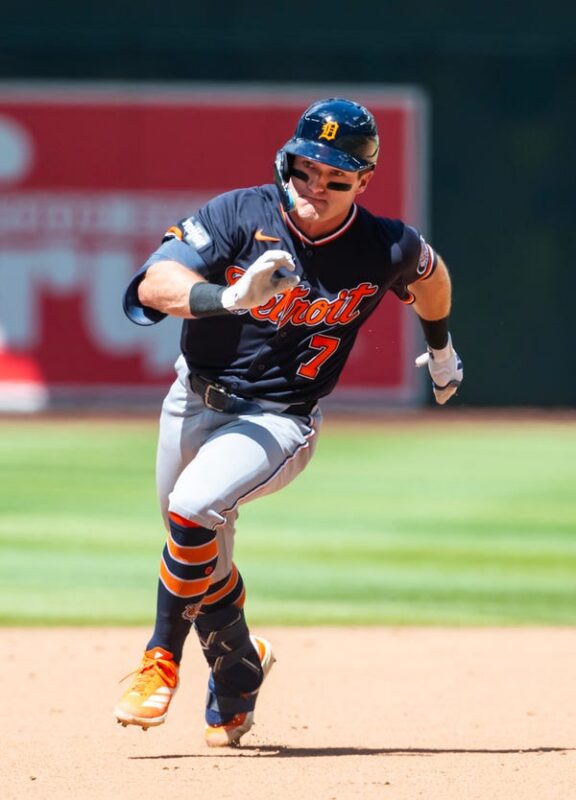
PHOENIX — He still has trouble believing he’s here, but then again, Detroit Tigers rookie Kevin McGonigle always knew this is where he belonged.

He was born and bred a baseball rat, convinced that one day he’d be a major league ballplayer.

And now that he’s arrived as the youngest Tiger to make his debut since George Burns in 1914, it already feels as if he’s been around for 20 years.

The dude may be 21, but he’s going on 41 in maturity.

“I think he’s a lot more polished and more mature as a ballplayer than when I came up,” said Tigers infielder Colt Keith, who made his major-league debut at 22. “I mean, he’s handling it really well. I don’t see any panic in his eyes. I mean, he’s out there just playing loose, having fun, just trying to help us win.

“It’s really awesome to see. He’s going to be a great player for us.”

McGonigle, who never played above Class AA Erie, has spent one week in the major leagues and already is establishing himself as one of the finest young players in the game and certainly a future face of the Tigers. The Tigers would love to keep him around as long as possible and have engaged in talks with him and his agent about a long-term deal of at least eight years.

“We don’t need him to be the savior,” Scott Harris, Tigers president of baseball operations, said after announcing McGonigle’s promotion, with McGonigle producing an .888 OPS with two homers and six RBIs, drawing as many walks as hits this spring. “We don’t need him to carry us. We just need him to help us.

“This roster is pretty darn good with or without Kevin. We just think it’s better with him on it. That’s why he’s here.”

McGonigle, the second-ranked prospect entering the year, has been nothing short of dazzling in his first week in The Show. He produced four hits in his major-league debut – the sixth to achieve the feat on opening day since 1900 – and was rewarded with the lineup card along with baseballs from his debut.

He spent the first seven games hitting .346 with a .952 OPS, and perhaps even more surprisingly, playing dazzling defense at third base. He’s a natural shortstop, and his best defensive position may be second base, but he’s been smooth at third, making the throws that need to be made while showing strong range.

“He never quits on the play, which is a great characteristic to have,” Tigers manager A.J. Hinch says. “He can get on the ground. He comes up and throws accurate. When the speed of the game is speeding up, he stays with the same rhythm and cadence to complete the play.”

He’s the reason why the Tigers didn’t bother pursuing free-agent third baseman Alex Bregman this winter.

He received a thunderous ovation from the sellout crowd at Comerica Park at the Tigers’ home opener Friday, which included about 15 members of his family.

“Are you surprised?” Hinch said after the game. “This city is going to fall in love with this kid because of how he plays and how he represents himself. We just got to let him play, got to let him learn, and we got to let him fail a little bit.”

It still seems all surreal for the kid from Aldan, Pennsylvania, just outside Philadelphia, who started swinging a bat with his dad at the age of 2, grew up a huge Chase Utley fan, and studied hitting tapes from eight-time batting champion Tony Gwynn.

“I just love the way [Utley] played,” McGonigle, the 5-foot-10 left-handed hitter, tells USA TODAY Sports. “He played the game hard. And I feel like he played it the right way, as well. That’s the way I want to play.”

And, yes, he would love to hit like Gwynn, the 15-time All-Star who not only had a career .338 batting average, but who never struck out more than 40 times in a single season, and never more than 30 times in his last 13 seasons. He was thrilled just to meet and speak to Gwynn’s son in San Diego, Tony Gwynn Jr., the Padres’ radio analyst.

“Growing up, my dad would show me film on him and Chase Utley,” McGonigle says. “They’re two guys that he would show their swings and says to kind of try to copy the way they swung, especially Tony, it’s unbelievable how few times he struck out.”

These days, at least in the infancy of his career, McGonigle reminds Hinch and starters Justin Verlander and Tarik Skubal of Bregman, now with the Chicago Cubs, who eats, sleeps and dreams baseball.

“That’s an ultimate compliment,” McGonigle says. “I’m a big fan of Bregman as well. He plays the game really, really hard. And obviously, he’s super, super good.”

Then again, as Skubal, the Tigers’ two-time Cy Young winner says, there will come a time when McGonigle is the one everyone wants to be compared to.

“They’re both obsessed with the game of baseball,” says Skubal, who got to know Bregman during the winter working out in Phoenix and were teammates in the WBC. “I don’t really like comparing though. I want Kevin to be Kevin. In five or six years, they should be comparing someone else to Kevin. That’s kind of how I want it to be.

“But they’re both obsessed about the game, and they both grind in the box. They both grind in the weight room, the training room, everything. And they take this game pretty seriously and want to win really badly.

“Those are all really positive things, but as Kev gets more comfortable here, and just more time on his side, he’s going to blossom into an even better baseball player. That’s what I’m excited about. He’s doing to experience all of the growing pains this year, success, failure, all of that stuff, but he’s going to be a really good baseball player.”

Really, McGonigle’s toughest task in his first week was simply finding the players’ parking lot at Comerica Park, circling the stadium several times before finding it.

“I did laps around the park because I didn’t know where to go,” McGonigle told reporters Friday morning. “But I ended up finding the parking lot. This place is unreal.”

If he has the career everyone in the Tigers’ organization anticipates, he’ll have a nameplate reserved for the closest spot near the ballpark entrance of his choice.

“There’s just something different about him,” Tigers outfielder Riley Greene says. “The best way to describe him is that he’s a ball of fire. He’s finding barrels all of the time. He’s making plays. His energy is up. He’s doing stuff like guys with five or six years in the big leagues.

“It’s pretty impressive to watch.”

And once McGonigle learned he made the team, well, that fiery emotion became even more intense.

“I feel like he was even more motivated,” Greene says. “He was like, ‘We’re here to work. We got a long year. Let’s win some baseball games. Let’s go.’”

That’s McGonigle. He doesn’t care where he plays in the field. Where he hits in the lineup. Just give him a uniform, and even without playing a day at Triple-A, he wants to do everything possible to lead the Tigers to where they haven’t gone since 1984: A World Series championship.

“We’re trying to win the World Series,” Hinch says, “and Kevin McGonigle helps us get there.”

Says McGonigle: “I’m just taking it all in, trying to get prepared, and doing everything possible to help this team win. I’ve always been good telling myself it’s the same game, no matter what level I’m at.

“I feel like I’ve handled that well so far, and I’m looking forward to keep doing it.”

Welcome to the big leagues, kid.

Now find the parking lot.

Around the basepaths

– MLB and the players union have yet to engage in preliminary negotiations on the next collective bargaining agreement, but their first meeting is expected to be in the next few weeks.

The owners have a $2 billion war chest while the players union has about $520 million stashed away in case of a lockout after Dec. 1.

– The Miami Marlins, off to a surprising 5-2 start, could have one of the most difficult dilemmas at the trade deadline if they are still hanging around.

They must decide whether to trade ace Sandy Alcantara, who is showing signs of his 2022 Cy Young form by starting the season with a 2-0 record and 0.00 ERA, striking out 16 in 12 ⅔ innings, including a three-hit, complete-game shutout in his last start against the Marlins.

Alcantara’s five-year, $56 million contract expires after this season, but he has a $21 million club option or a $2 million buyout in 2027. Rival executives still fully expect the Marlins to trade Alcantara, knowing they should have perhaps baseball’s most lucrative trade chip at the July 31 deadline.

– Arizona Diamondbacks All-Star second baseman Ketel Marte became a 10-and-5 player on Friday, meaning that even if the Diamondbacks change their mind and want to trade him, it’s too late. Marte can’t be traded without his permission.

– The Dodgers certainly have a competitive advantage with their massive revenue streams, the latest a five-year, $125 million deal with Uniqlo, with Dodgers president Stan Kasten saying: “I recognize that we have advantages that other teams don’t get to benefit from. I acknowledge that. I’m not going to apologize for capitalizing.’’

Yet, Kasten cautions, they don’t have a monetary advantage in everything. Taxes for California residents can be a deterrent for free agents. There’s also one revenue stream their competitors enjoy that simply doesn’t exist for the Dodgers.

“I do have a business disadvantage,” Kasten said, trying to keep a straight face. “In Washington, I got decent money for selling an ad on the tarp. Morton Salt .I can’t get a [expletive] penny for a tarp ad here, because we never roll it out all year. So no one talks about that.”

Kasten, knowing there has been only one rainout at Dodger Stadium since 2000, couldn’t help but laugh when it began raining Tuesday night at Dodger Stadium, forcing the tarp to come out.

Alas, there was no advertisement on the tarp.

– While there have been a run of teams locking up their young players with no big-league experience to long-term contracts, from Seattle’s Colt Emerson (eight-year, $95 million) to Milwaukee’s Cooper Pratt (eight-year, $50.75 million) and soon Pittsburgh’s Konnor Griffin (nine years, $140 million), Detroit Tigers infielder Colt Keith can only sit back and smile.

Keith signed a six-year, $28.64 million contract in January 2024, becoming the first Tigers player to receive a long-term deal before his first major-league game.

“It’s really cool to see guys get their money early and locking down long-term,” Keith tells USA TODAY Sports. “We’ll see what the effect is on other other end.”

Will it relax them?

“I think it depends on the personality,” he said. “For some guys, the long-term commitment knowing they’re going to be in the big leagues and having that money helps them relax. I think I was more on the other side of that, where the money wasn’t as big a factor. I just wanted to be in the big leagues and perform well.

“I had only spent two months in Triple-A, and I guess I would have been optioned out of camp if I didn’t sign it. A lot of times signing that money commitment with the team guarantees you a spot on the roster, whether you’re struggling or not, which is good for the player.

“That’s the biggest factor I did it, getting on that [26-man] roster and getting more of a leash than other players. It’s definitely an advantage, a positive for a lot of guys.”

– The ABS challenge system has been in effect for only a week, with players, managers and umpires all weighing in.

There’s not a consensus opinion on whether it’s good or bad for the game, but there’s a sense that within five years, there will be a fully automated system in which the strikezone is completely governed by “robo umpires.”

Tigers manager A.J. Hinch’s quick takeaways?

“The benches are a lot quieter during the game,’’ Tigers manager A.J. Hinch said. “You don’t hear the razzing with players and umpires.’’

Hinch on whether the game will eventually go to a full ABS system: “I hope not. I think the human element is super important. I don’t want to lose the catcher catching a close pitch and being frustrated, but not willing to challenge. That element of the game I think is important.’’

– How is it possible that Atlanta opens the season playing 13 consecutive games without a day off and the Yankees have four days off before playing their 10th game on Tuesday?

– The Yankees don’t need days off the way they’re pitching. They yielded just eight runs in their first seven games, tying an MLB record, while their starting pitching has given up just four runs, also tying an MLB record.

– So, just how much did Venezuela’s WBC championship mean for Arizona Diamondbacks starter Eduardo Rodriguez, who started that game: “It was the greatest moment of my career. No matter what I do the rest of my career, nothing will ever top that.’’

– Who is that one surprise team scouts are raving about this year?

The Texas Rangers.

“It wouldn’t surprise me one bit to see those guys in the World Series, especially with that pitching,’’ one veteran scout said. “They are that good.”

Follow Nightengale on X: @Bnightengale

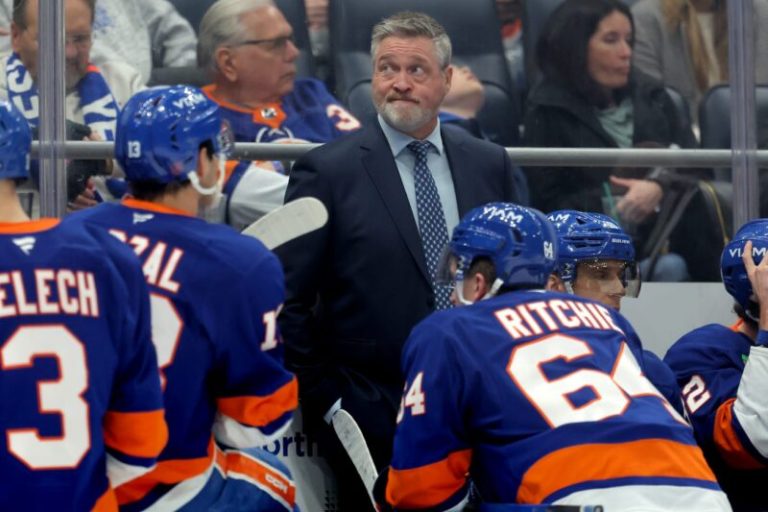
The New York Islanders have made a surprising coaching change on Easter Sunday, with four games remaining in their regular-season schedule, firing Patrick Roy and replacing him with Pete DeBoer.

Sportsnet’s Elliotte Friedman reported that the move was not a “rest-of-season” hire.

Even with the Islanders in a playoff spot and in third place in the Metropolitan Division, GM Mathieu Darche and the rest of the team’s brass didn’t feel safe. 

Though the Isles have a 42-31-5 record and 89 points in 78 games, they were in the midst of a four-game losing streak and a rough end to the month of March.

Roy was in his third season as the Islanders’ bench boss and was having his best season yet in Long Island. However, DeBoer has found a new home after being let go by the Dallas Stars last off-season.

DeBoer has been a successful head coach in the NHL. While he hasn’t been able to get his hands on a Stanley Cup yet, he’s seen several conference final appearances.

In his three years with Dallas, he helped his team advance to the Western Conference final in each of those three campaigns.

Before the Stars, he was the head coach of the Vegas Golden Knights and was successful with them in the regular season and postseason. He guided Vegas to two Pacific Division championships and a pair of conference finals (semifinal appearance in the case of the 2020-21 season).

Roy, a former Jack Adams Trophy winner, was in his sixth season as an NHL coach. He had a previous tenure with the Colorado Avalanche before his stint with the Islanders. He lasted three years with the Avs from 2013-14 and 2015-16.

Roy joins Bruce Cassidy, who was the coach of the Golden Knights, but was fired on March 30, making way for John Tortorella. Vegas had eight games remaining in its regular season when it made that coaching change.

Like the Islanders’ timing of parting ways with Roy, the Golden Knights were also third in their division when making the decision.

For action-packed issues, access to the entire magazine archive and a free issue, subscribe to The Hockey News at THN.com/free. Get the latest news and trending stories by subscribing to our newsletter here. And share your thoughts by commenting below the article on THN.com or creating your own post in our community forum.

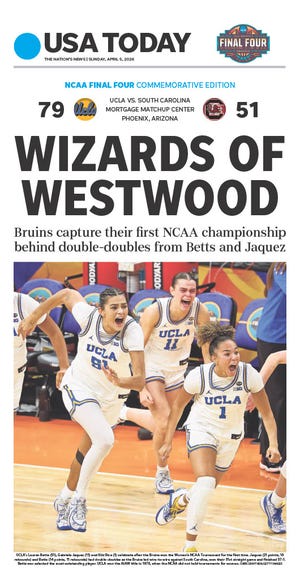
The UCLA Bruins left the rest of the country in ruins!

In a dominant victory for the ages and a 37-1 season for the scrapbooks, UCLA won the Women’s NCAA Tournament for the first time.

You can celebrate UCLA’s historic and dramatic 79-51 victory over South Carolina with a commemorative page print from USA TODAY Sports. You can show off your UCLA pride for as little as $29, plus shipping and handling.

Buy UCLA championship page print

This full-page print, produced on high-quality, acid-free art paper, features stunning photography and a memorable headline commemorating the championship won by the Bruins on Easter Sunday at Phoenix’s Mortgage Matchup Center. The Bruins led wire-to-wire against the Gamecocks.

The page print makes a great gift for the UCLA fan or college basketball fan in your life. And with Moms, Dads and Grads season rapidly approaching, why not check a gift off your to-do list right now?

Voted the most outstanding player, Lauren Betts posted a double-double with 14 points and 11 rebounds. Gabriela Jaquez also doubled up — 21 points and 10 rebounds — as the Bruins ended the season on a 31-game winning streak.

Although it was UCLA’s first NCAA title, the Bruins also ruled women’s basketball in 1978. They won the AIAW championship, in an era when the NCAA did not hold tournaments for women.

Upgrade options for the UCLA page print include framed copies. The page print is available through the USA TODAY Store. Go to usatodaystore.com and search UCLA.

Own a piece of UCLA hoops history today!

Buy UCLA championship page print

Get UCLA championship gear

Looking for national championship hats, T-shirts and more?

Fanatics is among the options for UCLA championship gear.

Contact Gene Myers at gmyers@usatodayco.com. Check out books and page prints from theUSA TODAY Network — including books on the Olympic gold medals won by the U.S. women’s and men’s hockey teams in Italy, and tributes to Dale Earnhardt, Lee Corso and Bob Uecker. Also available are Coach Steve’s youth sports survival guide and two books about Caitlin Clark.

Fourth-generation Iowa farmer Mark Mueller is no stranger to the ups and downs of the agriculture industry. But right now, he thinks America is on the cusp of a farm crisis.

“I am more concerned now than I have been in my 30 years of farming,” Mueller told NBC News.

Even before the Iran war, Mueller said, many farmers felt they were being squeezed. Consolidation in the fertilizer industry and increased competition from abroad have resulted in higher prices for fertilizer and feed — and smaller returns on Mueller’s corn and soybean crops.

Many farmers who couldn’t pay their bills in recent years went under. In 2025, the number of Chapter 12 farm bankruptcies reached 315, according to the American Farm Bureau Federation. That was up 46% from the previous year.

Now, the Iran war is putting even more pressure on farmers.

Before the war, roughly a third of the world’s fertilizer ingredients and a fifth of its oil supplies passed every day through the Strait of Hormuz, a narrow waterway off Iran’s southern coast. But since the U.S. and Israel attacked Iran on Feb. 28, the strait has been effectively closed by Tehran, leaving scores of tankers stranded.

The strait’s closure has driven up global prices for fertilizer and for the diesel fuel that powers most of America’s heavy agricultural equipment.

The double whammy is hitting farmers just as they head into the spring planting season.

“This is that perfect storm where everything comes together and hammers the farmer,” said Mueller, who also serves as the president of the Iowa Corn Growers Association.

Mueller said his fertilizer supplier was selling a nitrogen fertilizer he needs for $795 per ton on Feb. 22, a few days before the war started. At the end of March, it was $990, Mueller said, a nearly $200 jump in just a few weeks.

Meanwhile, the price he’s paying for diesel has jumped, too. Diesel is now averaging $5.51 nationwide, up from $3.76 right before the war, according to AAA.

Mueller said he got most of the fertilizer he needs for spring before the war — but had to buy some at the higher prices. He’s holding off on purchasing the additional fertilizer he needs for summer, hoping prices will come down.

Mark Mueller, a farmer and president of the Iowa Corn Growers Association, thinks America is on the cusp of a farm crisis.Courtesy of Iowa Corn

President Donald Trump’s tariffs have also added to the cost of goods that farmers import from overseas — and frustrated many of the foreign buyers of America’s agricultural products.

“Our government made our life more difficult by walking away from trade deals or instituting tariffs or just basically making our customers angry — our customers being other nations and companies in other nations,” said Mueller.

Lance Lillibridge, a corn and cattle farmer from Vinton, Iowa, told NBC News he plans to use less fertilizer this year.

“I’m probably going to see a reduction in yield,” said Lillibridge. “If there’s not the supply out there, then the price is going to go up.”

If the war continues, the higher prices could ripple through the supply chain and ultimately result in higher prices at the supermarket.

“We’re talking about all the crops and all the food products that we consume on a daily basis,” said Gregory Daco, chief economist at EY-Parthenon.

“Anything that is grown and that requires fertilizers, which is most of everything that we consume, is potentially affected by this rise in fertilizer prices,” said Daco. “And as a result, we may see these prices rise rapidly across grocery stores in the U.S.”

Take corn, for example. If corn prices spike, then feeding cattle becomes more expensive for many farmers. Plus cattle farmers are also dealing with the higher fuel prices. The cost of beef has already hit record highs — in part from shrinking cattle herds and drought — and it could surge even more.

“I worry about how much more consumers will continue to pay for beef,” said Will Harris, a fourth-generation cattle farmer in Bluffton, Georgia. “I think that I can produce it as cheap as anybody else, but I don’t know where consumers draw their lines.”

It may take a while for price increases on the farm to show up at the grocery store. Farmers are just planting their spring crops now, and it could take months for them to be harvested and sent off to distribution centers and eventually grocery stores.

But consumers may see higher prices sooner rather than later, because of higher transport costs with pricier diesel.

“If you’re feeling these costs now, it’s only going to continue to increase as the supply chain fills with higher-cost goods,” said Lillibridge.

“Corn is used in over 4,000 products,” he added. “It’s not just food — it’s industrial products, like your paper that you would put in your printer has cornstarch in it, plastics, just tons of things have industrial uses from corn.”

Economists say the longer the war stretches on, the larger the effects could be.

Newly harvested corn in Inwood, Iowa. Consumers may see higher prices sooner rather than later because of higher transport costs with pricier diesel. Jim West / UCG/Universal Images Group via Getty images file

“Right now, our farmers can get the product — it’s just really expensive,” said Faith Parum, an economist at the American Farm Bureau Federation, an advocacy group for farmers and ranchers. “We’re slowly starting to hear the longer this goes on, we’re also going to have issues with even the availability of the fertilizer.”

That could further strain farmers.

“We’re going on to year four of losses across the farm economy,” said Parum. “It’s going to become harder and harder for them to put a crop in the ground.”

Before the war, the Agriculture Department estimated that farm sector debt could reach a record $624.7 billion in 2026.

Farmers have received some financial assistance from the federal government over the years. In December, the Trump administration announced a new tranche of $12 billion in aid to farmers.

At a White House event for farmers in March, Trump said that he would push for more aid and urged Congress to pass a new farm bill.

Trump also pledged to ask Congress to permit year-round sales of E15, an unleaded fuel blended with 15% ethanol that the American Farm Bureau Federation says could save consumers money at the gas pump and create markets for American-grown crops.

Farmers listen as President Donald Trump speaks at the White House on Friday. During the event, Trump urged Congress to pass a new farm bill. Alex Wong / Getty Images

Mueller was among the farmers last month at the White House, where he listened to Trump.

“I guess I would liken it to empty calories,” he said of the president’s remarks. “It was like a pep rally with very little being said.”

Mueller fears that the mounting pressures on farmers, exacerbated by the war, could lead some to hang up their hats for good.

“I really do see fewer farmers when it’s all done,” he said. “In the end, the consumer will still have fewer choices, probably have a little higher prices, and farmers will have less margin than they did before.”

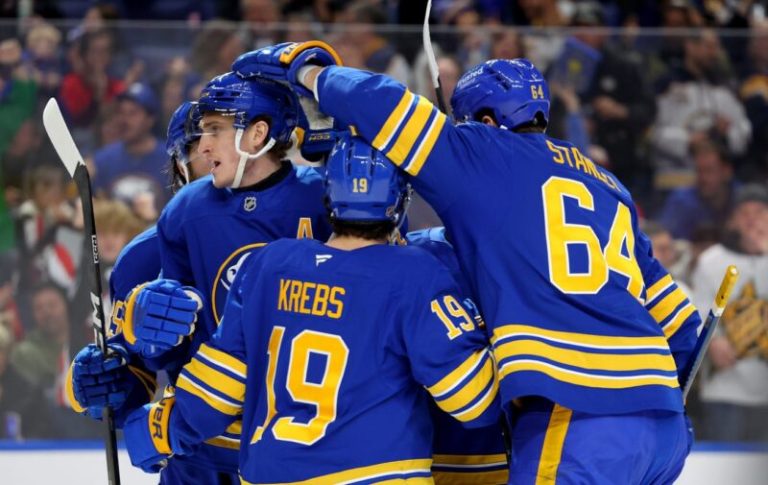
The Buffalo Sabres are back in the NHL playoffs, ending a league-record postseason drought of 14 seasons.

All they had to do was change the messenger.

The Sabres clinched their first playoff berth since 2010-11 with the Detroit Red Wings’ loss in the afternoon on Saturday, April 4.

It was looking like the streak could hit 15 when Buffalo sat in last place in the Eastern Conference on Dec. 8. The Sabres won three in a row to get back to .500, then fired general manager Kevyn Adams on Dec. 15 and promoted Jarmo Kekalainen to the position.

The team took off, extending its winning streak to 10 games. Entering Saturday, Buffalo has gone 32-8-4 under the former Columbus Blue Jackets GM. The Sabres have their first 100-point season since 2009-10 and are looking for their first division title since that season.

Kevyn Adams’ tenure

Adams, the general manager since 2020-21, brought in some of the players on this team, such as Alex Tuch, Josh Norris, Jason Zucker, Bowen Byram, Ryan McLeod and Josh Doan. He also traded away Jack Eichel (after a dispute over what type of neck surgery he should have), Sam Reinhart, Dylan Cozens and J.J. Peterka. Eichel and Reinhart won Stanley Cup titles after their trades.

Adams drew some criticism last season when he explained the difficulty of drawing free agents to Buffalo and why players often include the city on their no-trade lists.

“We don’t have palm trees,” he told reporters. “We have taxes in New York.”

Adams last season brought back coach Lindy Ruff, who had been coach of the 2010-11 playoff team. But the Sabres continued their pattern of early-season swoons — 0-10-3 this time — and finished 12 points out of a playoff spot.

Buffalo traded No. 2 scorer Peterka to Utah in the offseason and opened the season 0-3. Fans began chanting for Adams’ firing and it finally happened in December.

Jarmo Kekalainen’s tenure

Teams often get a bump from a coaching change, but a front office change can also have an impact because a general manager can decide a player’s future.

Kekalainen noted that his focus was going to be on work ethic, saying the team had lost some games by being outworked.

“You’ve got to work, you’ve got to compete and you’ve got to be relentless,” he said after being named general manager. “That’s what I want the identity of the Buffalo Sabres to be.”

He added that he “firmly” believed that Sabres could be a playoff team.

Kekalainen had been hired as a senior adviser in May. He had been aggressive in Columbus, hanging on to pending free agents Sergei Bobrovsky and Artemi Panarin and adding to a team that shockingly swept the No. 1 overall Tampa Bay Lightning in the first round in 2019.

After he was promoted in Buffalo, he revamped the front office and held on to Ruff. He gave a contract extension to Doan, who was acquired in the Peterka trade. But with the team surging, there was little need to change the players.

The general manager made moves at the deadline to beef up the team’s depth. He traded for Colton Parayko, but it fell through when the defenseman declined to waive his no-trade clause. He pivoted to add big, rugged defensemen Logan Stanley and Luke Schenn. He also added Sam Carrick, who’s strong on faceoffs, and depth forward Tanner Pearson.

A sign that the Sabres were for real was when they defeated the Lightning 8-7 in a game that featured tons of goals and penalty minutes.

What’s next for the Sabres?

They will try to win the Atlantic Division title and still have a chance to be the top seed in the Eastern Conference.

There isn’t a lot of playoff experience in this core because of the long drought. However, Schenn and Pearson are former Stanley Cup winners and McLeod has been to the Final. Tuch has played 66 postseason games and Zucker has played 52.

And Ruff has coached 101 playoff games, winning 57. He took the Sabres to the 1999 Final.

Who has the longest playoff drought?

The Detroit Red Wings are at nine seasons, the Anaheim Ducks are at seven and the San Jose Sharks are at six. But heading into Saturday’s game, the Ducks are second in the Pacific Division, the Sharks hold the second wild-card spot in the West and the Red Wings sit one spot below the playoff line in the East.

The Chicago Blackhawks have been eliminated, and their playoff drought is at six seasons.

Dawn Staley will coach South Carolina this Friday in its sixth consecutive Final Four appearance when the Gamecocks take on No. 1 overall seed UConn in the national semifinals.

It’s been nearly two decades since Staley left Temple to take the reins at South Carolina, a program that had no history of sustained success in women’s basketball prior to her arrival in 2008. Over her tenure, Staley has transformed the Gamecocks into one of the iconic brands in the sport and put herself in the conversation on a hypothetical Mount Rushmore of women’s basketball coaches.

Under the direction of Staley, South Carolina has won three national championships, appeared in eight Final Fours and has captured 10 SEC titles. WNBA stars like A’ja Wilson and Aliyah Boston have come through her program and she’s made Columbia, South Carolina, a destination for the top high school recruits, transfer portal talent and women’s basketball fans.

“I was here when Dawn got the job. One concession stand, no line for the restroom. Certainly nobody lined up outside the building to come in, right? No parking jams,” ESPN’s Debbie Antonelli told USA TODAY Sports. “Now, it’s unbelievable. I wish I could take a lot of pictures while driving, because people are outside lined up to come in. Dawn is the perfect example. She cares about the product. She built this.”

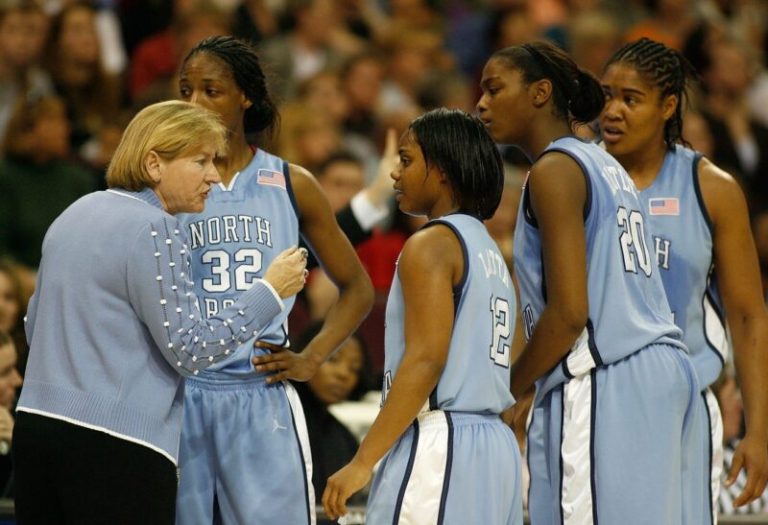
But there’s an alternate universe in which Staley never gets the South Carolina job. After Susan Walvius resigned in 2008 when her 11-year tenure fizzled out, Eric Hyman – then the director of athletics for the Gamecocks – initially had his sights set on a different candidate: North Carolina’s Sylvia Hatchell.

“I was offered the job,” Hatchell said in 2024 during an interview with this reporter for a book project. “But I just stayed (at North Carolina). Dawn has done a great job. I was offered the (South Carolina) job twice.”

Entering the 2007-08 season, UNC was considered one of the top programs in women’s basketball. Between 2004 and 2008, the Tar Heels were ranked as high as No. 1 in the AP poll, and never lower than No. 12. Ivory Latta and Erlana Larkins powered the Tar Heels to back-to-back Final Four appearances in 2006 and 2007. In 2008, UNC won its fourth consecutive ACC Tournament crown – Hatchell’s eighth.

And that success made Hatchell a hot commodity for schools aiming to push their women’s basketball program to the next level.

Surprisingly, she was attainable.

At that time, salaries for women’s college basketball coaches paled in comparison to what coaches in the men’s game were being paid, even for ones that had a long history of winning like Hatchell, who was inducted into the Women’s Basketball Hall of Fame in 2004 and led the Tar Heels to a national championship in 1994.

Hatchell began to think she was a bit undervalued. She was making a base salary of $260,000 per year, which was lower than Maryland’s Brenda Frese and Duke’s Joanne P. McCallie. And, it lagged far behind the reported $1.3 million that her close friend Pat Summitt was making annually at Tennessee. Hatchell wasn’t among the 20 highest paid coaches in the sport.

So, when South Carolina called, she listened.

As the 2007-08 season ended, the SEC was a women’s basketball league dominated by Summitt’s Lady Vols. Behind the play of Candace Parker, Tennessee won its eighth national title in Tampa, Florida. But other SEC programs had strong programs too.

Despite a revolving door of head coaches, LSU was excelling, making five straight Final Fours. Vanderbilt, coached by Jim Foster and then Melanie Balcomb, had a solid program, winning five SEC Tournament titles from 1995 to 2009 and making three trips to the Elite Eight. And Andy Landers’ Georgia Bulldogs had a losing record in SEC play just once between 1994 and 2013, and went to the Final Four three times.

And then, there were the South Carolina Gamecocks, which at that point had zero SEC championships and had made the Sweet 16 three times. The peak of Walvius’ tenure was an Elite Eight appearance in 2002, in which the Gamecocks lost to Duke by nine points. After a second-round NCAA Tournament exit the next season, things went south quickly for Walvius’ Gamecocks.

Over the next five seasons, South Carolina went a combined 20-50 in SEC play. Three weeks after a second-round WNIT loss to N.C. State, Walvius resigned. Ron Morris, a columnist at the State newspaper in Columbia, wrote that the program was “on life support,” then added, “Now, perhaps more than ever, the opportunity exists for USC to build a national power in women’s basketball.”

South Carolina aimed to get real about this growing sport. The Gamecocks were ready to invest in women’s basketball and they were going to take a big swing at finding their next head coach. A search got underway, and within about 10 days, candidates began to emerge.

Hyman ultimately narrowed his search to four candidates: Chattanooga head coach Wes Moore, longtime Tennessee assistant Holly Warlick, Staley and Hatchell. On April 25, 2008, the Durham Herald-Sun reported that Hatchell had met with South Carolina’s brass at her vacation home in Myrtle Beach. While Hatchell was the oldest among the candidates, she was also the most proven as the only one to win a national championship as a head coach. She was also beloved and respected in the South Carolina basketball community from her long and successful tenure at Division II Francis Marion, where she won national titles at the AIAW and NAIA levels in the 1980s. And she had won in Chapel Hill by recruiting players from the Carolinas, from Charlotte Smith to Latta.

In the days after the report about the meeting between Hatchell and the Gamecocks in Myrtle Beach, UNC athletic director Dick Baddour put on the full-court press to keep his national championship-winning coach. A contingency of UNC leadership visited Hatchell at her vacation home across the state border, and by May 2 she had publicly withdrawn her name from consideration to lead the Gamecocks.

Years later, Hyman said Hatchell used South Carolina to leverage a contract extension from UNC. According to the State, she later sent him $50 worth of McDonald’s gift cards as a thank you. On May 2, 2008, the State ran a story with the headline: “With UNC deal in works for Hatchell, focus shifts to Staley.”

Hatchell indeed got her raise, signing a four-year extension with a base annual salary of $330,000. Sure, it was a pay bump, but it still lagged far behind what other top-level coaches were making and was just about half of the cash South Carolina ultimately gave to Staley – signing her to a five-year deal making $650,000 annually.

“We talked to some high-caliber people,” Hyman said at Staley’s introductory news conference. “But when it was all said and done, (Staley) was the best person. There’s a price for excellence.”

Staley – who was a star at the University of Virginia, won three gold medals leading the U.S. national team, and made six WNBA All-Star appearances – had built Temple into a solid mid-major program, going to the NCAA Tournament six times, but wanted to coach at a high level where she could get better players. She wasn’t initially on Hyman’s radar until Staley’s agent called shortly after Walvius resigned.

“I really wanted to advance further in the NCAA Tournament. I just didn’t think we could do it. I thought we got Temple to a place where we topped off, and it comes down to who you’re able to recruit,” Staley told the State years later. “And I just really got tired of losing in the first and second round.”

This event, Hatchell turning down an offer from South Carolina and then Staley grabbing it with both hands, should be regarded as one of the seismic and crucial sliding-doors moments in the history of women’s college basketball. Because over the next decade, Staley built the Gamecocks into one of the sport’s Death Stars – a powerful force of inevitable – while Hatchell’s Tar Heels began a slow spiral downward, never recapturing the highs it experienced in previous eras.

As Staley and the Gamecocks rose, the best players in the Carolinas – like Tiffany Mitchell, Alaina Coates and A’ja Wilson – wanted to play for her in Columbia, not for Hatchell in Chapel Hill. Wilson even admitted on a podcast recently she considered signing with the Tar Heels, but ultimately chose the Gamecocks. Now, there’s a statue of the four-time WNBA MVP outside of Colonial Life Arena in Columbia.

As Staley built a championship caliber program, the Tar Heels relevance faded. As Staley began to make a significant impact in recruiting the mid-Atlantic and South, and as strong programs like Notre Dame and Louisville later entered the ACC, Hatchell never won another conference championship after 2008 and advanced past the Sweet 16 just one more time.

“When I had John Swofford and Dick Baddour as my athletic directors, they were really, really good,” Hatchell said. “I could go to them and say, ‘Look, I need this,’ and most of the time they would come through for me… I had a really good situation with John Swofford and Dick Baddour. It was a little bit different after that. We struggled.”

In 2019, Hatchell’s career at UNC came to a shocking halt. She had endured the academic fraud scandal at UNC that had engulfed the athletic department in the 2010s, but Hatchell was forced to resign after an investigation of the program by the Charlotte-based law firm Parker Poe Adams & Bernstein confirmed that she had made “racially insensitive” remarks and pressured her players to play through injuries.

UNC lured Courtney Banghart away from Princeton to restore the Tar Heels’ image as a women’s basketball. This season, Banghart’s seventh, UNC made the Sweet 16 for the third time under her direction and hosted NCAA Tournament games during the opening weekend of March Madness in Chapel Hill for the second consecutive season.

Staley’s Gamecocks are 5-4 against the Tar Heels since she took over in Columbia. South Carolina has won four straight meetings against UNC, and took a 47-point victory in their last matchup in the second round of the 2024 NCAA Tournament, en route to Staley’s third championship.

This weekend, she’ll try to guide South Carolina to a fourth.

INDIANAPOLIS – Rodney Tention couldn’t help but notice the similarities.

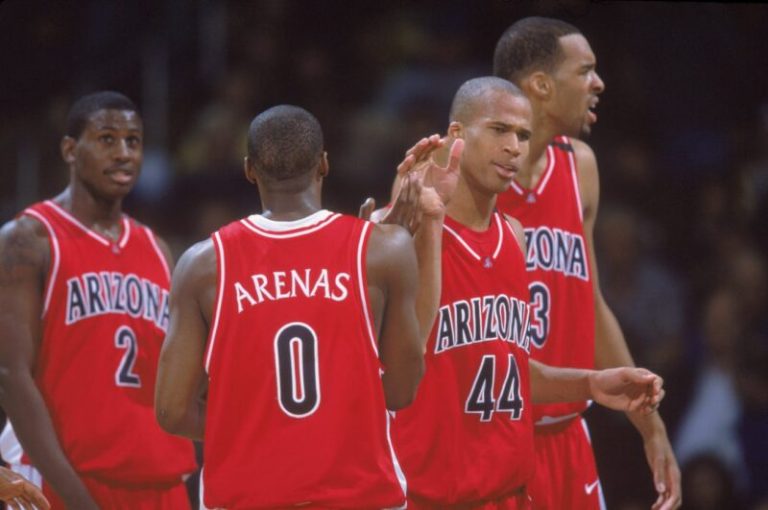
The former Arizona assistant returned to Tucson in February to celebrate the 25th anniversary of the program’s last Final Four team, and during the trip, coach Tommy Lloyd invited the group to practice.

“It reminded us of the group that we had,” Tention told USA TODAY Sports.

That sentiment continued to resonate the more they were around the 2025-26 team. The alumni watched them play, talked to them and importantly, got to see how they interact in a locker room. Everything was so similar to the 2000-01 team, they couldn’t help but let Lloyd know.

“We all said it,” Tention said. “I think this is the group that can break through.”

How right they were. This year’s group was, in fact, the one to break through. 

Arizona is back to the Final Four for the first time since that 2001 team. It ended decades of heartbreak for a program that had proven its relevancy, but couldn’t punctuate it with the most sought destination in the sport. 

It felt like there was a hex over the Wildcats. Despite having loaded teams capable of reaching the Final Four, they just didn’t. NBA All-Stars and champions like Andre Iguodala, Aaron Gordon and Channing Frye. High draft picks like Deandre Ayton and Derrick Williams to name a few. They all contributed to Arizona having the sixth-most wins since 2003.

So, what was wrong? Those that have witnessed all those teams try to get back to the Final Four said they just got unlucky.

“It’s hard,” Tention said. “At some point you’ve got to have a little bit of luck on your way. That’s all to it. Balls just got to bounce your way on that one certain day.”

The Wildcats surely had some things go wrong. A 15-point blown lead against Illinois in 2005, running into scorching Kemba Walker in 2011 and tough battles against Wisconsin in 2014 and 2015 are just some of those moments.

All of those games are some March Madness classics, just on the wrong side of history.

“You have shots and moments that happened that you’re just a part of basketball history,” said 2001 starter Richard Jefferson. “There was never any, ‘Oh, there’s some sort of issue.’ It was just like, ‘Yo, we just had a stretch where certain things haven’t gone our way.’”

When asked how the 2001 team made the Final Four, members all had the same message: It was a deep rotation that didn’t try to play hero ball, but emphasized defense. A well-rounded, oiled machine.

It’s easy to forget how stacked that 2001 team was. Jefferson, Gilbert Arenas, Jason Gardner, Michael Wright and Loren Woods were starters while Luke Walton came off the bench. A loaded team that very much resembles the current iteration. 

Both teams were in the top 15 in scoring, defensive field goal percentage and rebound margin. Being high percentage shooters helped each unit be in the top five in scoring margin.

The similarities don’t end there. That team had six players who averaged 20 minutes per game, this one has seven. Five guys who averaged double figure scoring, so does this season’s. 

“I don’t really think they really care who gets the points in the game,” Tention said. “That’s what makes them so dangerous. You don’t know who you gameplan against.”

No one may know that better than Jason Gardner, a sophomore guard on the 2001 team and now director of player relations for the Wildcats. He said the mixture of upperclassman leadership and talented freshmen create the special sauce, and they brought the intensity that was needed.

“I definitely think we’re a little bit more physical than maybe we have been in the past and I think it’s kind of really helped us kind of carry over this year,” Gardner said.

Jefferson notices comparisons in some of the guys he played with, notably with Jaden Bradley, who reminds him of standout Jason Terry from the 1997 national title team.

He also loves Koa Peat, an Arizona kid that knows what the program means to the state and decided to stay home.

It’s not lost on this year’s team the road was paved by those successful squads in the late 20th century, built on the legacy of Lute Olson. Former players and coaches said Lloyd has made an effort to involve them in the program, allowing them to watch and interact with the team so they can truly understand what it means to “Bear Down.”

“It’s really important that we include those guys in everything and they feel like owners of our program because they are owners. They’re 100% owners and they’re great dudes,” Lloyd said. “It’s been one of the coolest things for me to experience: developing relationships with them and having them tell me their stories because their stories are Arizona basketball stories.”

That’s why after Arizona defeated Purdue in the Elite Eight to punch their ticket to Indianapolis, Lloyd shouted out Olson to the large fan presence in San Jose, and why he mentioned postgame how his job was set up to succeed because of those building blocks.

“It’s really pretty gratifying, to be honest,” said Jim Rosborough, Olson’s right-hand man who spent 27 seasons with him, including 18 at Arizona. “(Lloyd’s) been one to recognize what went on before him, that he’s not the inventor of the wheel, but he’s kind of kept the wheel turning.”

All of it makes for one of the most highly anticipated weekends in recent memory. For as large of a brand as Arizona is, Tucson prides itself on a small-town vibe that rallies around its program.

“People live and die with Wildcat sports,” Tention said. Look at how the reception when the team arrived back home in the wee hours after winning the West Region, taking over the local airport. It actually goes beyond Pima County, as Rosborough mentioned, “it’s hard to be in the state of Arizona and not know about this team,” and it doesn’t get much bigger than this.

“To bring this back to the city of something that we were so close numerous times, I think is awesome,” Gardner added.

However, Jefferson sees the 2026 Final Four as more than just for the community and state. Not only did Arizona break the 25-year drought and is going for its second national championship in program history, but it’s also trying to break a drought out West. The 1997 title team is the last from the West Coast to win it all.

“We are in a position where we’re carrying an entire Mid-West-West Coast,” Jefferson said. “They really have half of the country that wants to prove that UCLA, Arizona, Oregon, all of these schools that have been dominant over years, can still win a national championship.”

You’d be a fool to think Arizona is satisfied with just making the Final Four again. This team has its eyes set on cutting down those nets inside Lucas Oil Stadium.

“It’s not like where it feels like we’re back on the mountaintop. It just feels like we have performed up to our standard in the biggest moment,” Jefferson said. “Arizona is not one of those schools that’s like, ‘Hey, we made it to the Final Four. We’re lucky. We’re happy.’ No, we’re one of those schools that say, ‘Hey, we’re proud of you, we’re proud of ourselves, we’re proud of what you guys have done. Now go finish the job.’”

If that happens, you can bet all of Tucson will be shut down, all the way from Flowing Wells to Saguaro National Park, with fans crazed like the javelinas that roam the desert. If it doesn’t happen, it will still be a celebrated squad that will live in Wildcat lore as the ones that finally got Arizona back where it belongs.

Like the teams before them laid the blueprint, the Wildcats hope this one remodels for another reign in the Sonoran Desert.

“Arizona is one of the strongest brands in all of collegiate sports,” Jefferson said. “At the same point in time, they’re awake right now.”

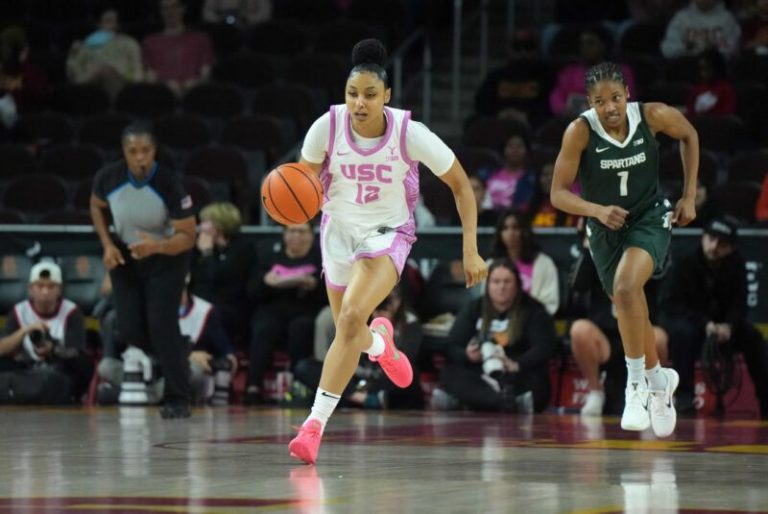
PHOENIX — USC guard JuJu Watkins said she’s “getting closer to the finish line” in her recovery.

Watkins tore the anterior cruciate ligament in her right knee during the second round of the 2025 Women’s NCAA Tournament last March, cutting short her National Player of the Year season and sidelining her for the entire 2025-26 season. Watkins didn’t provide an exact timeline for her return, but 20-year-old said she’s only “couple more months” removed from returning to full on-court activities.

“I’ll be ready for next season, so that’s all I matters,” Watkins said Friday at Team USA basketball camp in Phoenix, where she’s one of two college players on the camp roster, alongside Vanderbilt’s Mikayla Blakes.

Watkins was limited to shooting drills during Team USA’s training camp. She put up some shots with Blakes and observed from the sidelines as players practiced plays and rotations. Although she would “love to be out there participating with everyone else to the best of (her) ability,” Watkins said she’s just thankful to be included.

“I’m really fortunate because this is a big goal of mine, so to still be able to be in the conversation, be in the rooms with so many great players… it’s very rewarding,” Watkins said. “To be here and be in this space … reminded me to continue to stick with it.”

Sue Bird, who serves as the Managing Director of the USA Women’s National Team, said Watkins has looked “great” from what she’s seen during camp. Bird said the end of the recovery process is normally the hardest for a player because “you’re ready but you still have to kind of take your time with it.”

“Obviously tearing your ACL as a young player is not fun, but I can speak firsthand,” said Bird, who suffered an ACL tear eight games into her freshman season at UConn in 1998. “You do learn a lot from the (recovery) experience and just in talking to her you can see she’s in a really settled place, a really calm place. I think (she’s) ready to get back on the court. I’m sure she’s itching to do that … I know she’ll have a great summer and then hopefully we see back on the court next year.”

Watkins said the recovery process has been filled with “many ups and downs,” but she said she’s walked away with a new perspective and greater patience, which will only benefit her game eons he returns to the court.

“So many things I want to do, so many games I’m excited for, so I’m just grateful to have the opportunity to come back and play,” Watkins said. “I learned a lot of things, a lot of ways we can improve, a lot of things (USC) does well. … Just being able to see things from a different perspective has definitely helped.”

Watkins also attended Team USA’s training camp in December in Durham, North Carolina.  

“Everybody’s been really great. They’ve made me feel very welcome and I’m very grateful for that,” Watkins said. “And yeah, I’m just really having fun, enjoying my time here.”

Reach USA TODAY National Women’s Sports Reporter Cydney Henderson at chenderson@gannett.com and follow her on X at@CydHenderson.

The USA TODAY app gets you to the heart of the news — fast. Download for award-winning coverage, crosswords, audio storytelling, the eNewspaper and more.

USA TODAY Sports is providing live coverage of the Women’s Final Four match between the No. 1 UConn Huskies and No. 1 South Carolina Gamecocks at the Mortgage Matchup Center. Follow along here.

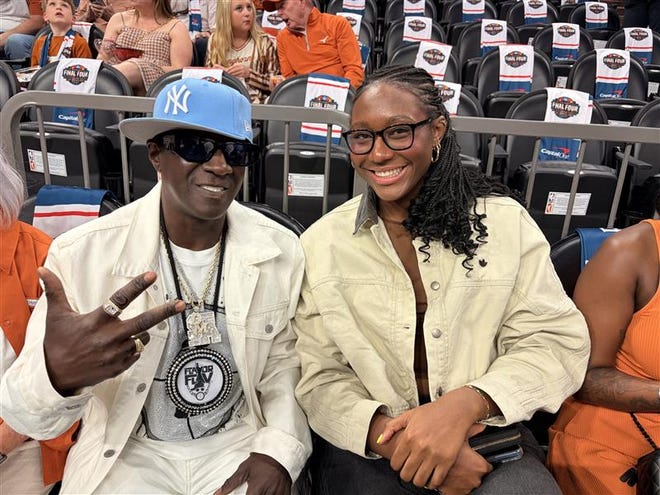
Rock and Roll Hall of Fame artist Flavor Flav is sitting courtside at the Mortgage Matchup Center for the Final Four matchup in the Women’s NCAA Tournament between South Carolina and UConn on Friday night.

The 67-year-old rapper was wearing his signature clock around his neck along with two other chains, and also rocking a New York Yankees hat and Air Jordans that featured UCLA blue. The No. 1 Bruins play against No. 1 Texas Longhorns in the second semifinal game on Friday.

It’s easy to assume who Flavor Flav was rooting for in the first game as he was seated next to former South Carolina All-American star Aliyah Boston. Before becoming a three-time WNBA All-Star with the Indiana Fever, Boston was the college National Player of the Year in 2022 and powered Dawn Staley’s Gamecocks to its second national title. Boston and Flavor Flav posed for a photo for USA TODAY Sports, but declined an interview request.

Boston isn’t the only South Carolina and UConn alumni in the building. UConn champions Diana Taurasi, Paige Bueckers and Kaitlyn Chen sat together during the matchup. Bueckers participated in the Team USA training camp in Phoenix earlier Friday.

Here are the other celebrities who were spotted in Phoenix on Friday:

Diana Taurasi, Paige Bueckers

Maya Moore

Lisa Leslie

Ilona Maher

Deebo Samuels

Studbudz

Courtney Williams and Natisha Hiedeman are hosting a Final Four alt-at on ESPN2.

The USA TODAY app gets you to the heart of the news — fast. Download for award-winning coverage, crosswords, audio storytelling, the eNewspaper and more.