Author

admin

Browsing

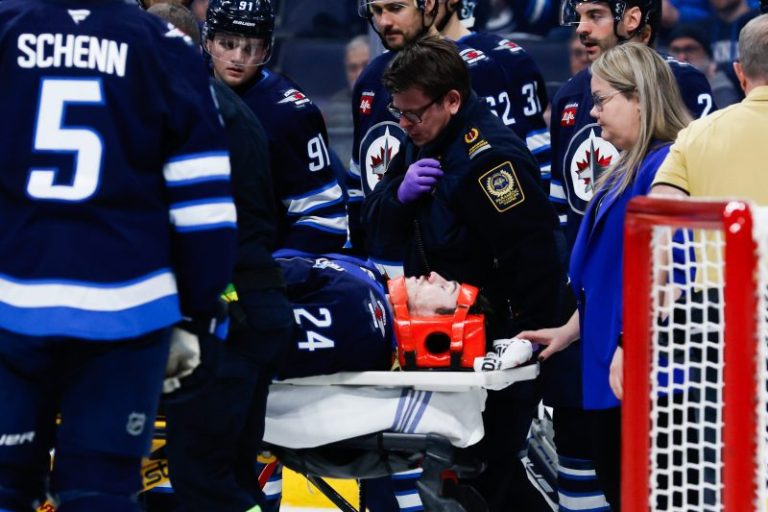
Winnipeg Jets defenseman Haydn Fleury was stretchered off the ice and taken to a hospital via ambulance following a scary crash into the boards during Tuesday night’s home game against the Vegas Golden Knights.

Fleury was injured in the latter half of the first period, when he fell awkwardly after he was shoved by Vegas’ Keegan Kolesar and slid hard into the boards, his back taking the brunt of the impact. He was seen on the broadcast moving on the ice while being attended to by a trainer, but he was removed from the playing surface on a backboard and stretcher.

Kolesar was not penalized for his check, but immediately fought Jets captain Adam Lowry when play resumed.

The Golden Knights eventually won the game in overtime, 4-3.

Haydn Fleury injury update

Jets coach Scott Arniel said after the game that Fleury was ‘at the hospital, (he’ll) be staying overnight.’

‘Obviously he’s got a lot of tests to go through,’ Arniel said. ‘(Fleury) does have a broken nose, so there’s a few different things that kind of happened off it. Little bit of everything. Obviously slammed his back, hit his neck, hit his head, and obviously his nose.’

This post appeared first on USA TODAY

The San Francisco 49ers look to add depth to their injury-riddled linebacker core ahead of their wild-card playoff game against the Philadelphia Eagles at Lincoln Financial Field on Jan. 11.

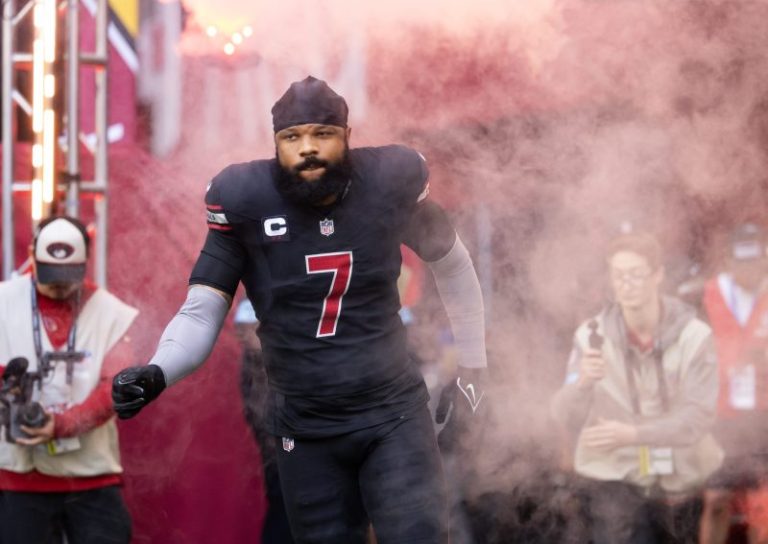
The 49ers have signed eight-year veteran linebacker Kyzir White for the NFL postseason, according to Yahoo Sports NFL insider Jordan Schultz.

White, 29, played in one game during the 2025 NFL season, suiting up for the Tennessee Titans, for whom he recorded three tackles in a 41-20 loss to the Indianapolis Colts in Week 3.

For his career, White has tallied 618 tackles, 7.5 sacks, two forced fumbles and six interceptions. White was selected by the Los Angeles Chargers with 119th overall pick in the fourth round of the 2018 NFL Draft.

He played four seasons for the Chargers before signing a one-year deal with the Eagles in 2022. White was a part of the Philadelphia team that reached Super Bowl 57 but lost to the Kansas City Chiefs. He recorded four tackles in that game, a 38-35 Chiefs win.

White signed a two-year contract with the Arizona Cardinals in 2023. He led the Cardinals with 90 tackles that season and finished second in tackles in 2024 with 137.

White signed with the Titans’ practice squad in September 2025. He was later released in December.

White took to social media, posting on X, ‘let’s boogie’ in light of his recent signing with the 49ers.

Kyzir White highlights

All the NFL news on and off the field. Sign up for USA TODAY’s 4th and Monday newsletter.

This post appeared first on USA TODAY

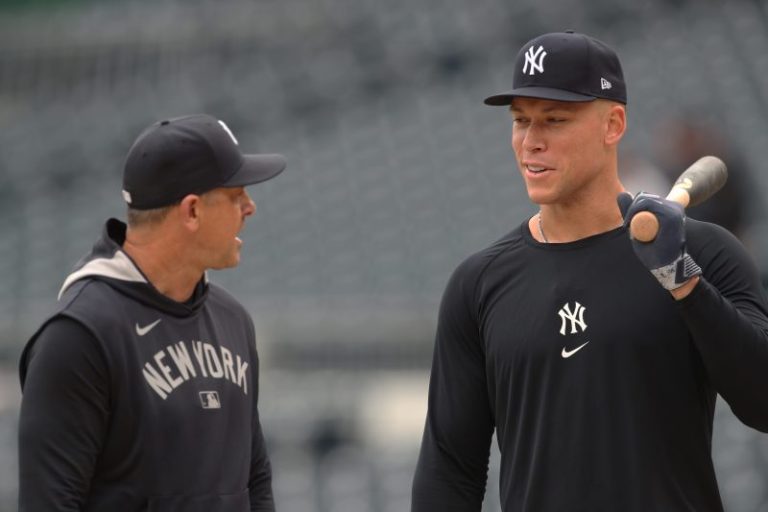
Aaron Boone believes his three-time American League MVP is perfectly suited for the World Baseball Classic.

‘The fact that Aaron Judge is captaining the U.S. team,’ the Yankees manager said of his prized right fielder, ‘I think it’s the right thing.’

In an appearance on the Yankees’ YES Network, Boone downplayed the possibility of injury for his superstar and captain of the Bronx Bombers, noting that Judge could benefit from the high level of competition the WBC provides at a time most players are simply getting reps in during spring training games.

Yet the small samples of WBC play tend to overblow both the injury risk and the potential impact for participants.

In 2023, Team USA advanced to the championship game, which concluded when Shohei Ohtani famously struck out then-Los Angeles Angels teammate Mike Trout to secure the title for Japan. In the 11-day span of games, just one member of Team USA – Los Angeles Dodgers star Mookie Betts – took at least 30 at-bats.

Similarly, the starring roles often emerge from unlikely sources. Philadelphia shortstop Trea Turner made the most of his 23 at-bats in six games – clubbing six home runs, including a dramatic grand slam against Venezuela in the quarterfinals.

Indeed, sometimes it’s the less-vaunted sluggers who get the best pitches to hit. And Judge – who drew 124 walks to lead the AL last season – is certainly accustomed to waiting his turn. Not that he won’t have any help: Team USA has received commitments from Kyle Schwarber, Cal Raleigh and Bobby Witt Jr. – the latter two MVP runner-ups to Judge the past two seasons – with others sure to join.

Judge will get a taste of that rare environment – combining global superstar power with collegiality and camaraderie – and that alone could outweigh the perceived injury risk.

“Obviously, there’s certain times that come up,’ says Boone. ‘But you also realize the value that it can provide for these guys to go really compete at this level. I think in some cases, even some of our pitchers, it forces them into having a better offseason ramp-up to get ready for this.”

This post appeared first on USA TODAY

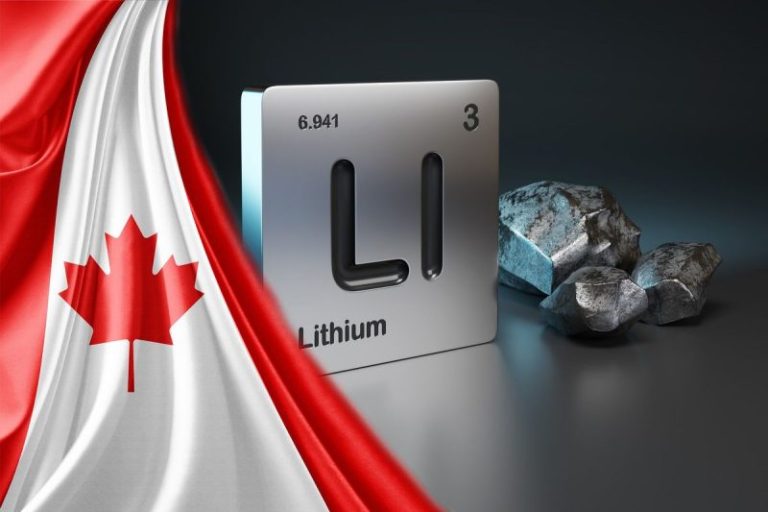
The global lithium market weathered a tough 2025, as persistent oversupply and softer-than-expected electric vehicle demand pushed prices for the battery metal to multi-year lows.

Lithium carbonate prices in North Asia fell below US$9,550 per metric ton in February — their weakest level since 2021 — prompting production cuts and project delays, particularly in Australia and China.

While brief rallies later in the year offered momentary relief, the market continued to struggle under the weight of rapid supply growth between 2021 and 2024.

Volatility defined the second half of the year. Prices spiked in July on speculation of supply cuts, briefly lifting carbonate above US$12,000, before retreating as those expectations faded. Policy uncertainty in the US and regulatory signals from China further weighed on sentiment.

Despite the downturn, analysts increasingly view 2026 as a potential turning point. Lithium equities reflected that shift, staging a sharp H2 rebound in 2025 as improving fundamentals and rising spot prices rekindled investor interest — a backdrop that continues to shape the outlook for Canadian lithium stocks.

1. Stria Lithium (TSXV:SRA)

Year-to-date gain: 708.33 percent
Market cap: C$19.11 million
Share price: C$0.48

Stria Lithium is a Canadian exploration company focused on developing domestic lithium resources to support the growing demand for electric vehicles and lithium-ion batteries. The company’s flagship Pontax Central lithium project spans 36 square kilometers in the Eeyou Istchee James Bay region of Québec, Canada.

Cygnus Metals (TSXV:CYG,ASX:CY5,OTCQB:CYGGF) has an earn-in agreement with Stria to earn up to a 70 percent interest in Pontax Central. Cygnus completed the first stage in July 2023, acquiring a 51 percent interest by investing C$4 million in exploration and issuing over 9 million shares to Stria.

In May 2025, Stria and Cygnus agreed to extend the second stage of Cygnus’s earn-in agreement on the Pontax Central lithium project by 24 months. The second stage involves a further C$2 million in exploration spending and C$3 million in a cash payment.

Through its joint venture with Cygnus, Stria has outlined a JORC-compliant maiden inferred resource for Pontax Central of 10.1 million metric tons grading 1.04 percent lithium oxide.

In March, Stria closed a non-brokered private placement for C$650,000. The funds will be used in part for the evaluation of new mineral opportunities, according to the company.

Shares of Stria registered a year-to-date high of C$0.50 on December 30, 2025, coinciding with lithium carbonate prices rising to a near 24 month high.

2. Consolidated Lithium Metals (TSXV:CLM)

Year-to-date gain: 350 percent
Market cap: C$20.51 million
Share price: C$0.045

Consolidated Lithium Metals is focused on acquiring, developing and advancing lithium projects in Québec. Its properties — Vallée, Baillargé, Preissac-LaCorne and Duval — are located within the spodumene-rich La Corne Batholith area, near the restarted North American Lithium mine, a key area in Canada’s growing lithium sector.

Consolidated Lithium started the year with a C$300 million private placement earmarked for working capital and general corporate purposes.

In July, the company commenced a summer exploration program at the Preissac project, excavating a 100 by 30 meter trench in an area with a known lithium soil anomaly, uncovering an 18 meter wide pegmatite body at surface.

At the end of August, Consolidated Lithium signed a non-binding letter of intent with SOQUEM, a subsidiary of Investissement Québec, to acquire an option to earn up to an 80 percent interest in the Kwyjibo rare earths project.

The project is located roughly 125 kilometers northeast of Sept-Îles in Québec’s Côte-Nord region.

Under the deal, which was finalized in November, Consolidated Lithium will become operator of the project and can earn an initial 60 percent stake over five years through a combined C$23.15 million in cash payments, share issuances and project expenditures.

A significant portion of those funds will be invested in advancing Kwyjibo through stages including negotiating and finalizing an agreement with the Innu of Uashat mak Mani-Utenam, a metallurgical study and environmental permitting.

Upon completion, the partners will form a joint venture, and Consolidated will have the option to increase its interest to 80 percent by investing C$22 million over a further three years.

An uptick in lithium prices in October helped Consolidated shares rally to a year-to-date high of C$0.06 several times between October 22 and November 3.

3. Lithium South Development (TSXV:LIS)

Year-to-date gain: 330 percent
Market cap: C$48.76 million
Share price: C$0.43

Canada-based Lithium South Development currently owns 100 percent of the HMN lithium project in Argentina’s Salta and Catamarca provinces, situated in the heart of the lithium-rich Hombre Muerto Salar.

The project lies adjacent to South Korean company POSCO Holdings’ (NYSE:PKX,KRX:005490) billion-dollar lithium development to the east.

Exploration has defined a resource of 1.58 million metric tons of lithium carbonate equivalent (LCE) at an average grade of 736 milligrams per liter lithium, with the majority in the measured category. A preliminary economic assessment outlines the potential for a 15,600 metric ton per year lithium carbonate operation.

In January 2024, Lithium South and POSCO signed an agreement to jointly develop the HMN lithium project. Under the deal, the companies will share production 50/50 from the Norma Edith and Viamonte blocks in Salta and Catamarca, resolving overlapping claims.

As for 2025, in June Lithium South’s shares tripled to C$0.30 after it received positive news regarding its environmental impact assessment.

Lithium South shared a huge update in July that changed its trajectory; the company received a non-binding cash offer of US$62 million from POSCO to purchase its lithium portfolio, including the HMN project.

POSCO would acquire Lithium South’s wholly owned subsidiary NRG Metals Argentina, which holds the HMN project and all of Lithium South’s other concessions, namely the Sophia I–III and Hydra X–XI claims.

The 60 day due diligence period concluded in late September, and on November 12, Lithium South announced a share purchase agreement to sell its Argentinian lithium portfolio to POSCO Argentina for US$65 million.

Company shares climbed to C$0.44 the next day, while its highest close of the year, C$0.45, came on December 24.

Lithium South officially signed the deal on December 8, with its closing subject to several approvals. Following the transaction’s completion, Lithium South plans to de-list from the TSXV and begin dissolution proceedings.

In connection with the news, the company intends to buy back all common shares at a price of C$0.505.

4. Standard Lithium (TSXV:SLI)

Year-to-date gain: 190 percent
Market cap: C$1.47 billion
Share price: C$6.15

Standard Lithium is a US-focused lithium development company advancing a portfolio of high-grade lithium brine projects with an emphasis on sustainability and commercial-scale production.

The company employs a fully integrated direct lithium extraction process and is developing its flagship Smackover Formation assets in Arkansas and Texas, including the South West Arkansas project. The projects are a partnership with Equinor ASA, under the 55/45 joint venture subsidiary Smackover Lithium.

In April, its South West Arkansas project was one of 10 US critical minerals projects designated for fast tracking under FAST-41.

On September 3, Standard Lithium reported results of its definitive feasibility study (DFS) for the South West Arkansas project. The DFS notes an initial capacity of 22,500 metric tons per year of battery-grade lithium carbonate, with first production targeted for 2028. The study outlines an operating life of over 20 years based on average lithium concentrations of 481 milligrams per liter, supported by detailed resource and reserve modeling. The company filed the DFS on October 14.

In late October, Standard Lithium reported the unanimous approval of the Arkansas Oil and Gas Commission for the company’s Integration Application for the project’s Reynolds brine unit, which is where the initial commercial phase of production is planned.

Standard is also actively exploring additional lithium brine opportunities in East Texas through the joint venture, and in November, Smackover Lithium filed the maiden inferred resource report for the Franklin project. The report highlights 2.16 million metric tons of LCE, 15.41 million metric tons of potash and 2.64 million metric tons of bromide contained in 0.61 square kilometers of brine volume.

The resource stands at an average lithium grade of 668 milligrams per liter, including a grade of 806 milligrams per liter at the Pine Forest 1 well, which the company states is North American’s highest concentration of lithium-in-brine.

The project covers roughly 80,000 acres, with 46,000 acres leased, and is poised to become the first phase in a broader East Texas expansion. Smackover Lithium ultimately aims to produce over 100,000 metric tons of lithium chemicals annually from its Texas operations.

On October 20, Standard closed a US$130 million underwritten public offering for 29,885,057 common shares, which will fund capital expenditures at the South West Arkansas project and the Franklin project.

Standard and Equinor ended the year advancing project financing for its South West Arkansas project, targeting up to US$1.1 billion in senior secured debt. The company has received over US$1 billion in combined interest from major export credit agencies, including the US EXIM Bank and Norway’s Eksfin.

The potential funds, alongside a US$225 million grant from the US Department of Energy, would support Phase 1 construction, which has an estimated US$1.45 billion in capital expenditures, FEED and feasibility study costs, and typical financing contingencies.

After climbing steeply starting in late September, the company’s shares hit a year-to-date high of C$7.64 on October 16.

5. Q2 Metals (TSXV:QTWO)

Year-to-date gain: 144.87 percent
Market cap: C$363.79 million
Share price: C$1.97

Exploration firm Q2 Metals is exploring three lithium properties — Cisco, Mia and Stellar — in the Eeyou Istchee James Bay region of Québec, Canada. Contained within the portfolio is the Mia trend, which spans over 10 kilometers, while the Stellar lithium property comprises 77 claims and located 6 kilometers north of the Mia property.

In 2024, Q2 Metals acquired Cisco lithium property and spent the rest of the year exploring the area. The work led to Q2 acquiring a 100 percent interest in 545 additional mineral claims, tripling its land position at the Cisco lithium property.

A subsequent company update reported that metallurgical testing on drill core from its 2024 exploration work confirmed that spodumene is the primary lithium-bearing mineral within pegmatite at the project.

The company performed multiple drill campaigns in 2025, including a winter diamond drilling program. Over the course of the year, Q2 defined an exploration target and reported a series of positive results from test work and drilling at the project.

The most recent announcement, released December 3, singled out results from drill hole 44 as the ‘widest continuous spodumene pegmatite interval’ identified at the property. The hole intersected 457.4 meters of continuous mineralization with an average grade of 1.65 percent lithium oxide.

‘Drill hole 44 further showcases the Cisco project as a globally significant hard rock lithium discovery. The results to date will underpin the inaugural Mineral Resource Estimate, which we expect to announce in the first quarter of 2026, as we continue to advance Cisco,’ wrote Alicia Milne, president and CEO of Q2 Metals.

The company’s share price began climbing in late October following the news that it added Keith Phillips, CEO of Piedmont Lithium from 2017 to 2025, to its board of directors.

Propelled by the board addition and the drilling results results, shares of Q2 Metals ended 2025 on a high note, registering a year-to-date high of C$1.95 on December 30.

Securities Disclosure: I, Georgia Williams, hold no direct investment interest in any company mentioned in this article.

This post appeared first on investingnews.com

2025 marked a turning point for investment in the cannabis sector, shifting the focus toward operational resilience and consolidation after a sluggish 2024.

Key market drivers included an upswing in merger and acquisition (M&A) activity as stronger multi-state operators (MSOs) acquired distressed assets, alongside pivotal regulatory developments.

The central theme for the year was the expected US federal shift to Schedule III, a policy rollercoaster that culminated in an executive order to expedite rescheduling, focusing investor flows into scaled, cashflow-positive MSOs.

Internationally, incremental legalization in Europe, particularly the momentum in Germany, broadened the global footprint and provided new export channels for North American producers.

Within market trends, profitability pivoted away from bulk flower to high-margin consumables, with infused pre-rolls and edibles driving category growth and supporting a rerating of resilient operators.

US cannabis rescheduling a core shift

After 2024’s punishing drawdowns, cannabis navigated a high-stakes policy rollercoaster in 2025.

The sector bottomed in Q1 as anticipated US Drug Enforcement Administration (DEA) rescheduling hearings were delayed, but ignited in late Q3 and Q4 as the narrative shifted toward a decisive executive-led reclassification.

This momentum culminated in US President Donald Trump’s December 18 executive order, which expedites rescheduling and CBD access. It triggered a parabolic surge followed by a violent ‘sell the news’ correction.

“Cannabis is not just a volatile sector or industry. It is the most volatile place,” said Dan Ahrens, managing director and portfolio manager of the AdvisorShares Pure US Cannabis ETF (ARCA:MSOS). “It just proves the point, once again, that we really, really need this federal reform to be officially completed.”

Indeed, 2025 brought plenty of ups and downs. The year opened with Schedule III buzz, which came after prior Department of Health and Human Services recommendations and initial DEA scheduling proposals from late 2024; however, proceedings ground to a halt after the DEA postponed a key January hearing by over 180 days due to administrative turnover, bias claims and leadership gaps post-election. These disruptiosn kept Section 280E tax penalties in place and banking access frozen, keeping margins for MSOs compressed.

Meanwhile, House spending bills included language prohibiting the Department of Justice (DoJ) from spending any funds on rescheduling efforts, while Senate Farm Bill revisions redefined hemp to exclude intoxicating derivatives like delta-8 THC, capping them at trace levels and effectively imposing a nationwide hemp ban on high-potency alternatives.

The MSOS ETF’s portfolio construction exemplified the broader trend of investor flows concentrating into scaled, cash-flow-positive MSOs amid reform volatility. The fund’s top three holdings — Curaleaf Holdings (CSE:CURA,OTCQX:CURLF), Trulieve Cannabis (CSE:TRUL,OTCQX:TCNNF) and Green Thumb Industries (CSE:GTII,OTCQX:GTBIF) — accounted for over 68 percent of its total holdings as of December 31, underscoring confidence in these operators as resilient proxies for US cannabis maturation while smaller single-state players face dilution.

MSOS managers reinforced the shift in the year’s third quarter by trimming three underperformers from the ETF: 4Front Ventures (CSE:FFNT), Lowell Farms (CSE:LOWL) and Gold Flora.

Despite stalls in momentum, Trump kept hope alive in the cannabis sector throughout the year.

In September, he called cannabis reform an “80-20 issue” with broad public backing, and posted a Truth Social video promoting CBD for seniors and suggesting Medicaid coverage.

Those moves, alongside Representative Greg Steube’s (R-FL) Marijuana 1-to-3 Act, aimed at legislatively shifting cannabis to Schedule III, drove a surge in Q3 without any underlying procedural progress.

As mentioned, the December 18 executive order injected fresh life into the sector, directing the DoJ and DEA to expedite cannabis rescheduling to Schedule III, while launching a CMS Innovation Center pilot for federal health programs to cover hemp-derived CBD as early as April 2026, with up to US$500 annual reimbursement for eligible patients.

CMS Administrator Mehmet Oz previously endorsed Medicare reimbursement for CBD therapies during his confirmation hearings, framing them as “low-risk, high-impact” options for age-related ailments.

European cannabis legalization and international growth

2025 brought incremental legalization or medical frameworks in multiple jurisdictions, including Czechia, Malta, Poland, Switzerland and Luxembourg, broadening the investable global footprint.

This continental momentum has directly boosted North American producers through export ramps and licensing deals, with Canadian licensed producers capturing 43 percent of Germany’s Q2 imports alone.

The country’s CanG framework and adult‑use reform, which came into effect in April 2024, have made it Europe’s most important legal market, with 2025 medical sales expected to see explosive year-on-year growth.

Cannabis company trends in 2025

In 2025, cannabis companies pivoted toward operational resilience and product innovation amid persistent commoditization pressures. After 2024’s wholesale flower price declines, down roughly 32 percent since 2021 by some estimates, stronger MSOs like Tilray Brands (TSX:TLRY,NASDAQ:TLRY) are demonstrating pricing power through branded products and category expansion into edibles, vapes and infused pre-rolls.

Deal flow rebounded from 2024’s US$1.17 billion trough, with US transactions reaching US$2.1 billion.

Against that backdrop, cash-rich MSOs pursued distressed roll-ups in oversupplied states like California and New York, with Vireo Growth’s (CSE:VREO,OTCQX:VREOF) acquisitions in Minnesota and New York exemplifying the trend, achieving critical mass with premium valuations amid hemp restrictions.

Private equity and creative deal structures dominated in the cannabis market, preparing operators for federal reform, while consolidating fragmented retail.

Investor takeaway

2025 marked a transformative year for cannabis, with regulatory breakthroughs and market maturation set against the backdrop of volatility. Trump’s execuctive order has brought new life into the sector in the US with the promise of not only banking and tax relief, but also bipartisan momentum for normalization; however, investors remain cautious.

“Everybody is waiting for it to be real and for it to be completed. Because even though we think the executive order was huge … nothing’s complete yet. Nothing’s official yet,” explained Ahrens.

Looking to 2026, he emphasized that the path forward for cannabis isn’t a straight line, but rather a series of volatile ‘waves’ tied to incremental regulatory milestones. Ahrens anticipates that while the finalization of Schedule III should trigger an initial move, it is merely the first domino; subsequent upside depends on the DoJ providing clear guidance for state-legal adult-use programs and the eventual passage of banking reform.

While he does foresee cannabis stocks uplisting to major exchanges, and Big Pharma companies beginning to make acquisitions in the space, Ahrens remains cautious about timing, noting that even with a signed order, large institutional banks will likely keep the ‘blockade’ in place until the legal ink is truly dry.

Ultimately, while 2025’s executive action has established a concrete foundation for federal reform in the US, the cannabis sector remains poised in a state of high-stakes volatility, with its full maturation dependent on official completion of milestones in 2026 and beyond.

Securities Disclosure: I, Meagen Seatter, hold no direct investment interest in any company mentioned in this article.

This post appeared first on investingnews.com
The growing prevalence of chronic diseases like cancer and diabetes is driving increasing innovation in medical device technology. In 2024 alone, 30 new devices were approved by the US Food and Drug Administration (FDA).

Wearable medical devices and the use of artificial intelligence in medical technology are two key trends in this sector.

Investors who want exposure to this wave of growth may want to consider NASDAQ small-cap medical device stocks. Below is a list of the top NASDAQ medical device companies based on year-on-year gains.

All data was compiled on December 31, 2025, using TradingView’s stock screener, and the medical device makers listed below had market caps between US$50 million and US$500 million at that time.

1. MDxHealth (NASDAQ:MDXH)

Year-on-year gain: 50.86 percent
Market cap: US$173.24 million
Share price: US$3.50

MDxHealth is a commercial-stage precision diagnostics company specializing in molecular tests for urologic cancers, particularly prostate cancer, using genomic, epigenetic and exosomal technologies. Its US headquarters and operations are located in Irvine, California.

The company offers non-invasive and tissue-based diagnostic assays that run on standard PCR platforms.

In September, MDxHealth acquired Exosome Diagnostics from Bio-Techne (NASDAQ:TECH) for US$15 million, adding the ExoDx Prostate urine test to its portfolio. The deal also includes a CLIA-certified clinical laboratory and related assets. The deal is expected to generate over US$20 million in revenue in 2026.

2. KORU Medical Systems (NASDAQ:KRMD)

Year-on-year gain: 50.13 percent
Market cap: US$269.6 million
Share price: US$5.82

KORU Medical Systems develops and manufactures medical devices and supplies in the US and internationally, with a focus on mechanical infusion products. Its Freedom Syringe Infusion System first received FDA clearance in 1994.

Based on this system, its primary products include the Freedom60 and FreedomEdge syringe infusion systems, Precision Flow Rate Tubing and High-Flo Subcutaneous Safety Needle Sets.

KORU Medical Systems submitted a 510(k) premarket notification to the FDA on December 30, 2025, seeking clearance for its FreedomEdge system to deliver Phesgo — a HER2+ breast cancer targeted biologic — subcutaneously, targeting infusion centers to cut chair time and boost efficiency.

The company stated this is part of its strategy to expand the indications of FreedomEdge to the wider oncology infusion center market.

3. Vivani Medical (NASDAQ:VANI)

Year-on-year gain: 1.71 percent
Market cap: US$86.81 million
Share price: US$1.19

Vivani Medical is a clinical-stage biopharmaceutical company developing miniature, long-term subdermal drug implants using its proprietary NanoPortal technology to treat chronic conditions like obesity and type 2 diabetes.

Headquartered in Alameda, California, Vivani focuses on GLP-1 implants that provide steady drug release over six months to improve adherence and tolerability compared to daily pills or weekly injections.

In August, Vivani Medical reported positive Phase 1 results from its LIBERATE-1 trial of the NPM-115 exenatide implant, confirming safety and steady drug release for obesity treatment without major side effects.

The company plans to rapidly advance its NPM-139 semaglutide implant after it achieved preclinical results of sustained 20 percent weight loss. It is planning a Phase 1 clinical study in the first half of 2026.

Securities Disclosure: I, Meagen Seatter, hold no direct investment interest in any company mentioned in this article.

This post appeared first on investingnews.com
Bryce Underwood is returning to Michigan for his sophomore season, he announced via social media on Jan. 5.

Underwood never entered the transfer portal, but his status was in question due to the Wolverines’ coaching change. Michigan hired former Utah coach Kyle Whittingham to replace Sherrone Moore, and Whittingham brought offensive coordinator Jason Beck with him.

Underwood said during Michigan’s bowl preparations for the Citrus Bowl against Texas he would decide on his future after the game. His decision comes five days after Michigan’s 41-27 loss on Dec. 31.

Whittingham said early Jan. 5 he was expecting a decision soon from Underwood, and he expected the signal caller to return to Michigan.

‘He seems to really enjoy his time here, has enjoyed his time here,’ Whittingham said on ‘Wake Up Barstool.’ ‘He’s one of the team leaders. He’s a young guy, but he’s one of the team leaders, obviously, by virtue of the position. And so, he is a guy that we think is going to be a part of what we’re doing going forward.’

Underwood struggled in his final start of the 2025 season in Michigan’s loss to Texas. He completed 23-of-42 passes for 199 yards with two touchdowns but threw three interceptions. He also rushed for 69 yards and another touchdown.

The Belleville, Michigan native made headlines when he flipped his longtime commitment from LSU to Michigan just a few days before the early signing period opened on Dec. 4, 2024. Underwood committed to LSU in January 2024 before flipping his commitment in November of that year.

Whittingham and Michigan’s new coaching staff now look to build around Underwood, as the talented young quarterbacks looks to build on his true freshman season.

This post appeared first on USA TODAY

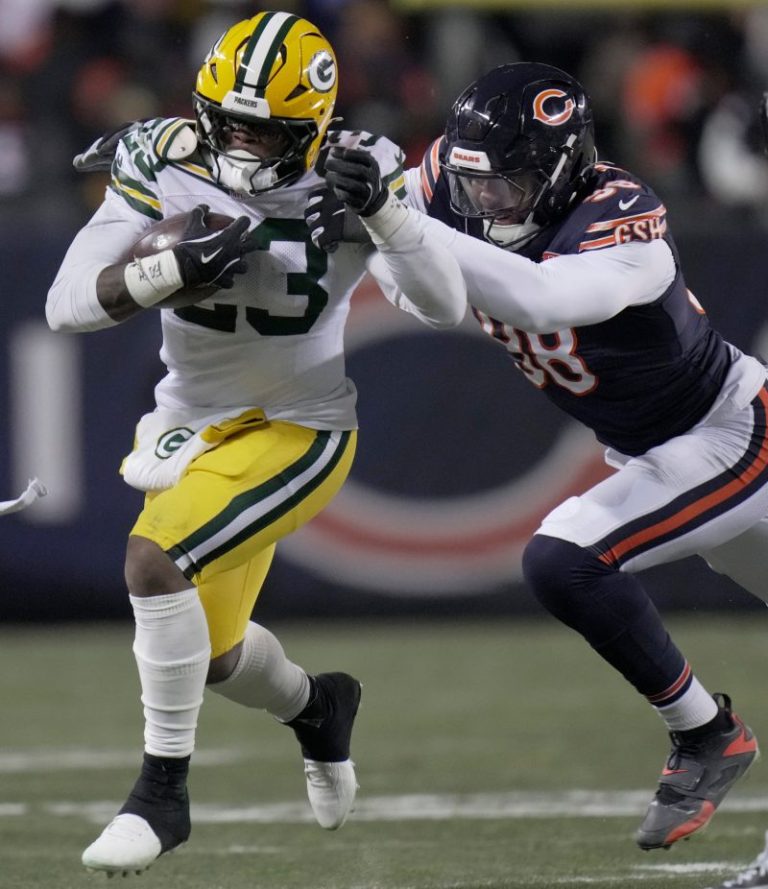
The Chicago Bears and Green Bay Packers rivalry dates back to the earliest days of the NFL, and yet they’ve only ever met in the playoffs two times.

A new chapter will be added in the storied history of these teams in the wild-card round of this year’s postseason, when the Bears host the Packers for a third matchup this year. Chicago and Green Bay each won its home game in the two divisional clashes during the regular season, so this meeting in the playoffs will serve as something of a high-stakes rubber match for the season series.

It’s also a rubber match for the all-time postseason series. The Bears won the first playoff matchup between the two teams in 1941. It took over 60 years for the next postseason meeting in 2010, when the Packers won the NFC championship en route to a Super Bowl 45 victory.

Here’s what to know ahead of Chicago’s first home playoff game in seven years:

Bears vs. Packers wild card game odds

The Bears hold a very slight edge over the Packers in the wild-card matchup, according to the BetMGM NFL odds as of Jan. 5. Not interested in this game? Check out expert picks and best bets for every NFL game this week.

  • Spread: Bears (-1)
  • Moneyline: Bears (-110); Packers (-110)
  • Over/under: 46

Our guide to NFL betting odds, picks and spreads has you covered.

New to sports betting? USA TODAY readers can claim exclusive promos and bonus codes with the best online sportsbooks and sports betting sites.

Bears vs. Packers matchups to watch

Ben Johnson vs. Matt LaFleur

Two of the game’s best offensive minds are set to meet in another head-to-head matchup. We’ve seen plenty of this before, when Johnson was the Lions’ offensive coordinator playing the Packers twice per year. But we’ve only seen the two face off as head coaches twice – earlier this year – and never with the stakes so high. Expect to see both of these young masterminds reach deep in their bag to pull out any and everything they can to put more points on the board and move on to the divisional round.

Jordan Love and Packers WRs vs. Bears passing defense

Love was knocked out of the latter matchup between these two teams earlier this year with a head injury, but he put on a show against the Bears in the earlier regular season meeting, throwing for 234 yards and three touchdowns. Chicago’s defense led the NFL in takeaways during the regular season, boosted by a league-leading 23 interceptions as a defense – including one against Love.

The Bears’ takeaway-focused defensive strategy had major boom-or-bust potential all year – Chicago still had the 10th-worst scoring defense despite the turnovers – and they’ll need to figure out how to stop Love and the Packers’ young wideouts without relying so heavily on interceptions.

Packers’ Micah Parsons-less pass-rush vs. Bears O-line and Caleb Williams

In the first 15 weeks of the season, when Green Bay had their prized offseason acquisition healthy, the Packers ranked seventh in dropback success rate allowed (43.9%) and had 34 sacks as a team with 61 tackles for a loss. Since Parsons’ injury in Week 15, Green Bay is allowing the sixth-highest success rate on dropbacks (53.2%) and had two sacks as a team – both by third-stringers against Max Brosmer in Week 18 – with 11 TFLs.

The Bears’ re-tooled offensive line has been one of its biggest strengths this year, and Williams evades sacks better than almost any other starting quarterback. His 10.8% pressure-to-sack rate is third-lowest of quarterbacks with nine or more starts this year. The Packers are going to have a hard time getting to the quarterback in this matchup and are still looking for their first win without Parsons active.

Early prediction for Bears vs. Packers

  • Bears 24, Packers 23

It’s a division game in the playoffs. If the first two games these two teams played in the regular season were any indication, this one is also coming down to the wire.

Ultimately, the Packers have looked like a different (read: weaker) team since Parsons suffered his season-ending ACL tear. Quarterback Jordan Love’s absence with a concussion did nothing to help their outlook as they lost four straight to end the season, but at least they’re getting him back for this game.

Week 18 weirdness aside, the Bears have looked resurgent in their first season under Johnson, particularly on offense. Williams has taken a step forward in his second season as a pro, and the offensive line is suddenly among the league’s best, opening up more possibilities in the run and passing games.

Green Bay has won three playoff games since LaFleur took over as head coach in 2019 and only one in the last four years. The injury to Parsons and lack of home-field advantage thanks to their four-game slide down the stretch may be enough to keep LaFleur and the Packers from a fourth playoff win since 2019 and first in two years.

This post appeared first on USA TODAY

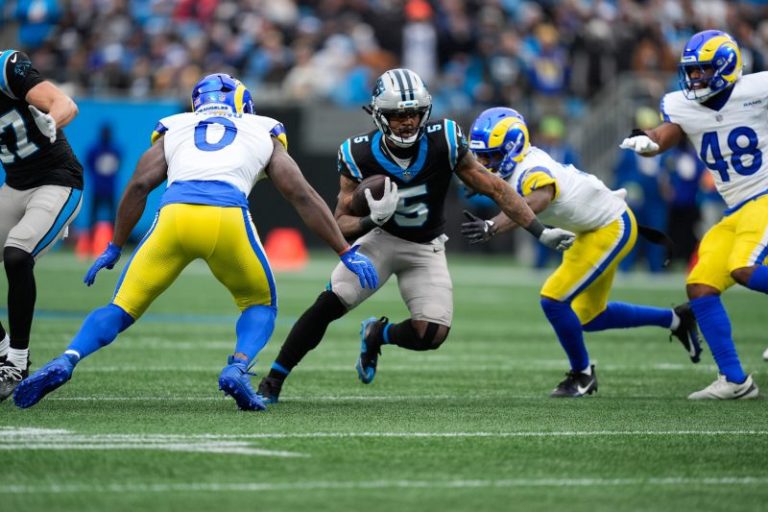
The Los Angeles Rams travel to Charlotte for the second time this season to take on the Carolina Panthers. This time around, the winner goes home.

The Rams enter the playoffs as the NFC’s No. 5 seed after finishing second in the NFC West. The Panthers are the No. 4 seed in the conference after winning a tiebreaker in the NFC South.

Rams quarterback Matthew Stafford had three turnovers during the team’s 31-28 Week 13 loss to the Panthers. The Rams have lost two of their past three games as they enter the postseason but are a dangerous team. The Panthers have lost three of the last four games and are the only sub.-500 team to qualify for the playoffs.

How will the Rams vs. Panthers wild-card matchup go? Here’s what to expect ahead of their Jan. 10 playoff battle:

Rams vs. Panthers wild-card game odds

The Rams are a big road favorite in this contest, according to the BetMGM NFL odds.

  • Spread: Rams (-10)
  • Moneyline: Rams (-625); Panthers (+450)
  • Over/under: 46.5

Our guide to NFL betting odds, picks and spreads has you covered.

New to sports betting? USA TODAY readers can claim exclusive promos and bonus codes with the best online sportsbooks and sports betting sites.

Rams vs. Panthers matchups to watch

Led by MVP candidate Matthew Stafford, the Rams have one of the best offenses in the NFL. The upstart Panthers won the NFC South and have the confidence that they defeated Los Angeles earlier this season. Here’s a look at some of the most notable matchups to watch.

Panthers pass defense vs. Rams aerial attack

Matthew Stafford tossed two interceptions in the previous meeting against the Panthers. Puka Nacua and Davante Adams combined for 10 catches for 130 yards. Adams also had two touchdown receptions.

The Panthers defense allowed 203.9 passing yards per game during the regular season.

It’ll be interesting to see if Panthers standout cornerback Jaycee Horn travels with either Nacua or Adams. Adams has typically drawn the opposing team’s top corner while defenses shade an extra defender to Nacua.

Stafford is the third player in NFL history with at least 45 touchdown passes and fewer than 10 interceptions in a season, per NFL Research.

Panthers pass rush versus Rams offensive line

The Panthers defense sacked Stafford twice and pressured him four times in their Week 13 victory. Derrick Brown had a strip sack. Brown had a team-best 35 pressures and his five sacks were tied for a team-high during the regular season. Brown and Carolina’s ability to get after Stafford will be key if the Panthers want to pull off the upset.

Jared Verse, Byron Young and Rams front seven against Panthers offense

The Rams have one of the best defensive fronts in football. Verse and Young combined for 19.5 sacks this season. The Rams defense ranked near the top of the league in both pass rush win rate and run stop win rate during the regular season.

Los Angeles had 10 pressures and sacked Bryce Young twice in Week 13. But the Panthers rushed for 164 yards and averaged a little more than four yards per carry. Carolina was the more physical team in the trenches previously. The Rams have to change that if they want to be victorious on Saturday.

Early prediction for Rams vs. Panthers

Rams 27, Panthers 20

Week 13 was probably the worst game of Matthew Stafford’s MVP-caliber season. Stafford committed three turnovers in the loss in which hardly anything went the Rams way. I predict the Rams take better care of the football and send the Panthers packing this time. Los Angeles is the more talented team. However, the Panthers have a lot of bulletin-board material because they are a big home underdog.

This post appeared first on USA TODAY

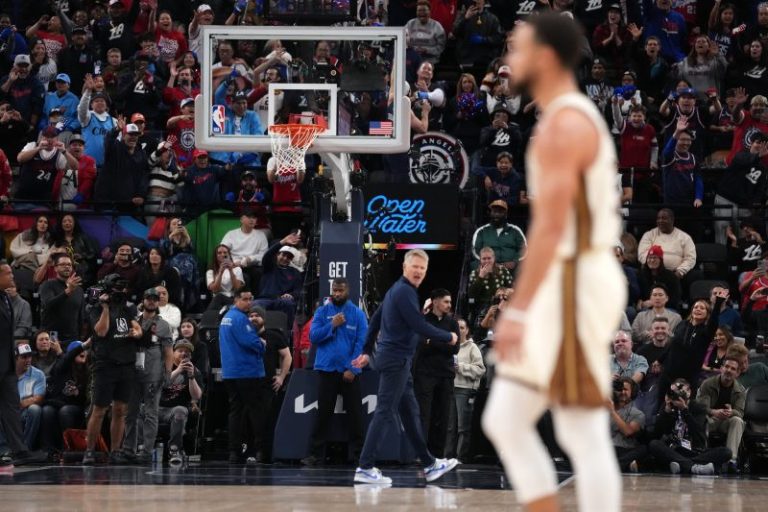
The Golden State Warriors lost a close game to the Los Angeles Clippers, 103-102, at Intuit Dome in Inglewood, California, on Jan. 5.

The contest was officially decided on a missed potential game-winning baseline fade away from Warriors forward Jimmy Butler, who ended the game with 24 points and four steals.

There was a controversial missed goaltend call with 7:57 left in the fourth quarter that led to a furious Warriors head coach Steve Kerr being ejected when the team was gaining momentum after trailing most of the game.

With just around eight minutes remaining in the fourth quarter, the Warriors were down 81-74, and looked to cut into the Clippers lead after starting the period down by 10. Draymond Green found Gary Payton II on a backdoor cut, who then went for a layup off the backboard.

Clippers forward John Collins was credited with a block on Payton but replays showed the Payton had the ball on the glass before Collins made contact and should have been called a goaltend, according the 2025-26 NBA Rulebook. The score would have been 81-76, but instead it was 81-74.

An irate Kerr who was upset with the missed goaltend call, went screaming after an official, and had to be restrained by Payton and assistant coach Terry Stotts. Kerr received back-to-back technical fouls at 7:57 in the fourth quarter and was ejected from the game. Stotts took over as coach for the remainder of the game.

Stotts spoke to reporters after the game in place of Kerr and explained he was answering questions instead of Kerr ‘because I’m saving Steve some money.’

‘What particularly? I think it was that goaltending call that was missed. There were probably some other things, but that was the last straw, probably. I don’t want to speak for Steve,’ Stotts said after the game. ‘I didn’t see a replay but it seemed at the time that it was obvious that it was a goaltend.’

After a Collins made technical free throw and Kris Dunn adding two more free ones after getting fouled, the Clippers led by 10.

Their lead grew to 13 with under five minutes in the game, but one last push from Golden State got them to within a one-possession game.

Warriors guard Stephen Curry scored 27 points and had three steals, his night ended early when he fouled out the game with 42.7 seconds left in the game and his team down, 101-100.

Kawhi Leonard led the Clippers with 24 points, while rookie guard and Southern California native Kobe Sanders scored a career-high 20 points and added seven rebounds.

Los Angeles is now 13-22 and is 11th in the Western Conference standings, while Golden State is 19-18 at the No. 8 spot.

Warriors vs. Clippers highlights 

Clippers vs. Warriors game notes

It was all Clippers in the first period as they led the Warriors, 31-19. 

In the second quarter, Warriors outscored the clippers 32-24, but still Golden State trailed Los Angeles, 55-51 at the half. Curry had 12 points in the second quarter, 14 in the half. Leonard had 14 points in the half for the Clippers. 

The Clippers’ lead grew to double-digits by the end of the third quarter but the Warriors wouldn’t go away.

Green sparked a 4th quarter run with his defensive presence which turned to easy offense for Payton and Gui Santos when it wasn’t it was all eyes on Curry.

A controversial no-call on what was believed to be a goaltend led to Kerr’s ejection. The Warriors would have been down by five but instead found themselves back at a 10-point deficit, which grew to 13.

Butler scored timely baskets, as did Curry but that stopped when he fouled out with 42 seconds in the game. Green scored to give them one more chance. Butler missed the game-winner.

‘I haven’t seen the replay but live it looked like a goaltend,’ Green said to reporters after the game. ‘Our group kept fighting. That’s what gotta do in that situation and we did. It’s just unfortunate we couldn’t come out with the win.’

Green added: ‘I thought we played well. We couldn’t hit shots. We missed a lot of shots, shots that normally make or can make. We took care of the ball. We defended without fouling. I thought we did a lot of good things. We forced turnovers. We just didn’t capitalize enough.’

Warriors’ keys to the game

Unselfish play, spread the ball around: When the Warriors are at their best, they are playing a well-rounded version of team basketball. Everyone is in motion, getting good looks whether at the rim or open shots. The key will be to knock down those looks when the opportunity arises. Warriors just missed shots, going 38% on 92 field goals including 24% on 41 three-point attempts.

Who’s the answer for Kawhi: Warriors will have to throw multiple defenders at Clippers forward Kawhi Leonard to try and stop him. Expect heightened defensive focus from everyone, especially De’Anthony Melton, Gary Payton Jr., Draymond Green and Jimmy Butler. It was a good job, defensively, on Kawhi. He scored 27 but shot 10-of-25 and had five turnovers.

Productivity from bench: Bench production is key for the Warriors. When they’re playing together and get going, they can compliment Golden State’s stars well. Last game they outscored Utah’s bench, 46-30. Warriors bench outscored the Clippers’ bench 36-15.

Warriors’ next five games

  • Jan. 7 vs. Milwaukee Bucks
  • Jan. 9 vs. Sacramento Kings
  • Jan. 11 vs. Atlanta Hawks
  • Jan. 13 vs. Portland Trail Blazers
  • Jan. 15 vs. New York Knicks
This post appeared first on USA TODAY