Author

admin

Browsing

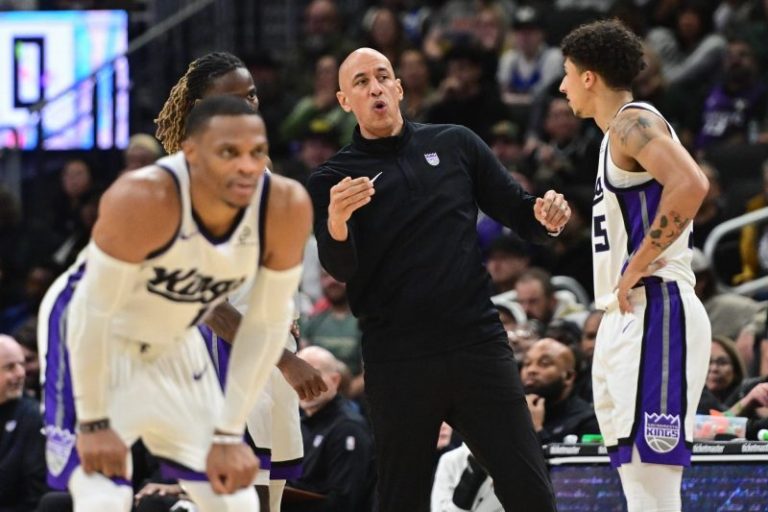
SACRAMENTO, CA – The Sacramento Kings lost their fifth consecutive game as they saw the return of guard Zach LaVine but lost key pieces, forward Keegan Murray and guard Keon Ellis, on Sunday night against the Milwaukee Bucks at Golden 1 Center.

Kings guard Keon Ellis injured his left thumb in the first half and did not return. Later forward Keegan Murray left the game with a left ankle injury with 4:01 left in the third quarter after colliding with Bucks center Myles Turner on a drive to the basket and landing awkwardly. The Bucks went on to win, 115-98.

Kings head coach Doug Christie told reporters he didn’t have an update on his injured players, but was understandably deflated that they went down, especially after getting Murray back on the court from a previous injury.

‘I don’t know yet. It’s not even for me to speculate,’ Christie told reporters after the game. ‘Obviously, we’ll get everything. You guys will know as soon as we do.’

Short in his response, Christie added: ‘It’s hard man. … it’s just difficult.’

Russell Westbrook led the Kings with 21 points. and LaVine had 20 points in 35 minutes off the bench in his first game back since Dec. 18.

‘I told Doug, I think I’ll be available for today. The last couple of games they’ve been asking me if I’m thinking about it or not,’ LaVine told USA TODAY Sports. ‘He told me he had me coming off the bench today and I said ‘OK’. I haven’t done it in a while but it was fine.’

LaVine added that his ankle is fine and he’s more worried getting conditioned and back in basketball shape.

‘Tired,’ LaVine said. ‘I haven’t played full court in an NBA game in nine games. My ankle feels fine. That’s why I wanted to make sure I was 100% before I came back.’

Giannis Antetokounmpo had a game-high 37 points and 11 rebounds. Kevin Porter Jr. recorded a double-double with 25 points and 10 assists.

‘I thought our non-Giannis minutes in the first half were phenomenal and that actually opened up the game for us because it allowed us to sit Giannis a little longer,’ Bucks head coach Doc Rivers said to reporters after the game. ‘I thought that was key. And then I thought overall we just were playing the right way.’

Kings vs. Bucks highlights

Sacramento trailed after the first quarter, 28-26, despite getting eight points a piece from Keegan Murray and DeMar DeRozan.

Zach LaVine came off the bench in his first game since Dec. 18. He scored five points in five minutes of action in the first.

Bucks opened the second quarter with a 9-0 run in 1:40. The Bucks’ lead climbed to as many as 20 in the first half. Sacramento, as a team, scored 18 points in the second quarter.

The Bucks led 62-44 after 24 minutes.

Milwaukee continued to pour gasoline on the flame. As they opened the third quarter on a 11-4 in first four minutes of the period, their lead grew to 25.

Kings forward Keegan Murray went down with an injury in the third quarter with 4:01 left after colliding with Bucks center Myles Turner on a drive to the basket. Murray received help from the medical staff as he limped off the court to the locker room.

Sacramento cut the lead down to 16 at the end of the third quarter. Bucks hung on to a lead, 85-69.

Kings looked to mount a comeback in the fourth quarter, as they turned up their defensive intensity.

They opened the quarter on a 12-0 run.

They cut the deficit down to 10 following back to back three-pointers from Dennis Schroder and Zach LaVine to open the period. They trailed 85-75 with 11 minutes left.

It was cut to a single-digit game on a Westbrook block and slow-step layup on the other side. That was followed by Schroder, who fired a midrange to bring the deficit down to six with under 10 minutes in the game.

Westbrook then stole the ball from Antetokounmpo and led the breakaway to find LaVine for a double-pump two-hand slam to bring the Kings within four points.

Westbrook forced a back court violation on Bucks guard Ryan Rollins as Kings continued to take advantage of their newfound life.

Momentum was halted briefly when Schroder fouled Kevin Porter Jr. on a three-point attempt with 8:22 left in the game.

The Bucks managed to extend their lead back to 10, as Antetokounmpo continued to get whatever he wanted in the paint and Porter from the outside.

Milwaukee ran the score back up and would win the game, 115-98.

Recap: Kings keys

  • Ryan Rollins can score: Rollins is rolling this season. He averages a little more than 17 points per game and shoots 42% from deep. Someone will have to take on the challenge of slowing him down. Rollins was slowed down, compared his previous games. He scored 12 points.
  • Greek Freak presence: Giannis Antetokounmpo is going to dominate the paint, as he usually does. He leads the league with 20.1 points in the paint per game. Make it tough, play physical and force him to earn those easy buckets at the free throw line. Antetokounmpo, indeed, did dominate this game, scoring a game-high 37 points and 11 rebounds.
  • Get defensive stops: This team likes to score, but they will also allow other teams to score as Milwaukee allows 116 points per game. Offense shouldn’t be a question, can Sacramento get stops defensively? Kings looked good defensively for a stretch in the fourth quarter, but it was short-lived. Overall, Sacramento had 10 steals and seven blocks. Westbrook, alone, had four steals and three blocks.
  • Compete for 48 minutes: Going to repeat this point of emphasis because it’s usually one quarter where the Kings have a lapse or lose focus or just simply don’t compete for 12 minutes and it costs them the game. It happened again against Phoenix. They have to fix that to have a chance to win. The game was arguably lost in the second quarter when the Kings were outscored 34-18. They even fought back from a 26-point lead to bring the game within three.

Kings next five games

  • Jan. 6 vs. Dallas Mavericks
  • Jan. 9 at Golden State Warriors
  • Jan. 11 vs. Houston Rockets
  • Jan. 12 vs. Los Angeles Lakers
  • Jan. 14 vs. New York Knicks
This post appeared first on USA TODAY

The lithium market heads into 2026 after one of its most punishing years in recent memory, shaped by deep oversupply, weaker-than-expected electric vehicle (EV) demand and sustained price pressure.

In 2025, lithium carbonate prices in North Asia sank to four year lows, forcing production cuts and project delays as the industry grappled with the consequences of years of aggressive supply growth.

The second half of the year saw a rebound as lithium carbonate began a slow ascent. By December 29, prices had risen 56 percent from their January start position of US$10,798.54 per metric ton to US$16,882.63.

While volatility and brief price rallies highlighted the market’s sensitivity to sentiment and policy signals, analysts increasingly see the sector’s first-half downturn as an inflection point. With high-cost supply under strain and inventories gradually tightening, expectations are building that 2026 could mark the start of a rebalancing phase, supported by long-term demand tied to electrification, energy storage and the broader energy transition.

Battery energy storage systems to drive lithium growth

Energy storage is emerging as the fastest-growing pillar of battery demand, with major implications for the lithium market heading into 2026. Indeed, according to Benchmark Mineral Intelligence’s Iola Hughes, growth in this segment is accelerating well ahead of the broader battery market.

“We’re expecting about 44 percent growth (in 2025),” she said. That’s compared with roughly 25 percent growth across total battery demand. As a result, energy storage is set to account for about a quarter of total global battery demand in 2025, a share that is rising rapidly. The shift is even more pronounced in the US, where Hughes expects storage to make up a significant “35 to 40 percent of battery demand in the next few years.”

That growth is being driven by falling costs and the growing role of lithium iron phosphate (LFP) chemistry, which Hughes described as the dominant technology in stationary storage.

“It very much is the story of LFP right now,” she said, pointing to recent innovation and lower costs, which have helped to make LFP “the best chemistry” for most storage applications.

Globally, deployment remains highly concentrated. China and the US account for roughly 87 percent of cumulative grid-scale storage installations, but new markets are emerging quickly.

Saudi Arabia, Hughes noted, has surged from effectively zero to the world’s third largest market in a matter of months, deploying around 11 gigawatt-hours in the first quarter alone. “That really goes to show just how early this market is in its story,” she said; it also indicates how quickly new sources of battery demand can materialize.

Cost declines sit at the core of the expansion. Fully integrated storage systems in China are now approaching, and in some cases falling below, US$100 per kilowatt-hour. Hughes said this has fundamentally changed the economics of storage, making deployments viable even as policy support tightens. “The prices are so much cheaper, the economics are a lot stronger, even in a normal, unsubsidized environment,” she said.

In the US, growth remains concentrated in a handful of states — led by California and Texas — but Hughes stressed how early stage the market still is. New Mexico, now the fifth largest storage market, is built on just a few projects.

At the same time, the scale of energy storage projects is increasing rapidly. Giga-scale installations, defined as projects larger than 1 gigawatt-hour, are moving from novelty to norm.

Hughes said nine such projects are expected to come online this year, accounting for about 20 percent of battery demand, with more than 20 in the pipeline for next year, representing close to 40 percent.

Policy remains a key variable. While investment tax credits for storage remain in place in the US, Hughes warned that tighter sourcing and eligibility rules are reshaping supply chains, particularly for LFP. The pipeline of announced LFP gigafactories has grown sharply this year — up more than 60 percent — led largely by Korean manufacturers.

“We’re in a much better position when it comes to sourcing of cells for energy storage than we were even three months ago,” she said, though challenges remain around production tax credits and heavy reliance on Chinese cathode supply.

Underlying the storage boom is a broader shift in electricity demand.

After more than a decade of stagnation, US power demand is rising again, driven by data centers, AI, electrification and reshoring of manufacturing. Hughes said estimates now point to electricity demand rising 20 to 30 percent by 2030, placing energy storage at the center of energy security planning. “Storage has become a central topic in the energy security conversation,” she said, adding that its role will only grow.

Looking ahead, Hughes said LFP is likely to dominate shorter-duration storage, while sodium-ion and other battery technologies compete in longer-duration segments.

For the lithium market, the message is clear: as storage scales up in size, geography and strategic importance, it is becoming one of the most powerful demand drivers shaping the sector’s outlook for 2026 and beyond.

Lower costs driving LFP adoption

Howard Klein, RK Equity co-founder and partner, argued that falling costs remain a central driver of LFP battery adoption, reflecting a familiar economic dynamic: as prices decline, demand accelerates.

While lithium is a key input, he suggested that ongoing manufacturing efficiencies and economies of scale are likely to continue pushing LFP battery costs lower over time, potentially offsetting upward pressure from higher lithium prices.

Klein emphasized that even if LFP costs rise modestly, battery storage will remain highly competitive as a source of grid power. Compared with conventional generation options such as gas or coal, storage already offers a compelling cost and performance proposition, he said, and does not rely solely on subsidies to remain economically viable.

Geopolitical instability on the rise

Critical minerals are increasingly at the center of US foreign policy, and that shift is set to reshape the lithium value chain through 2026, according to Klein. He noted that geopolitics now underpins many of Washington’s strategic priorities, from Eastern Europe to Africa and the Arctic.

“The entire foreign policy agenda is largely being driven by critical minerals,” Klein said, citing regions including Ukraine, Russia, the Democratic Republic of Congo, Greenland and Canada.

China’s willingness to weaponize its dominance in key supply chains has sharpened that focus.

On that note, Klein pointed to Beijing’s renewed rare earths export restrictions in October, noting that these measures were applied globally, not just against the US.

“They showed that they wield a significant negotiating stick, and they’re willing to use it,” he said.

In Klein’s view, that move has triggered a forceful response from western governments. “I think they’ve overplayed their hand to some degree, because now you’ve had this very big reaction from the US.”

That reaction is translating into a renewed push to localize and reshore critical mineral supply chains — an effort that has gained rare bipartisan backing in Washington.

“Unlike so many other things in America, which are hyper-partisan, both sides agree we need to resolve this,” Klein said, adding that the policy momentum will continue to shape the lithium industry.

While rare earths remain the immediate pressure point, Klein said the policy lens is widening. The US recently added 10 minerals to its critical minerals list, which now stands at a total of 60. Lithium, he said, sits high on that agenda, not out of enthusiasm for the metal itself, but because of its role in batteries.

“It’s an understanding by the government that batteries and battery technology are very, very important, and the entire battery supply chain needs to be supported,” Klein said. That support extends beyond lithium to graphite, manganese, nickel, cobalt and battery components such as anodes and cathodes.

The approach is increasingly coordinated across western economies. Klein described it as “a G7 effort,” with the EU and Canada aligned alongside the US through a mix of bilateral and multilateral initiatives.

That coordination is already translating into capital flows. He pointed to US-backed progress at Thacker Pass, EU funding for Vulcan Energy Resources (ASX:VUL,OTC Pink:VULNF) and a 360 million euro grant for European Metals Holdings (LSE:EMH,ASX:EMH,OTCQB:EMHLF) as early examples. Canada, he added, is also ramping up support.

“Canada announced C$6 billion over 26 investments,” Klein said, adding that more announcements are likely by the time the Prospectors & Developers Association of Canada convention rolls around in March.

Klein sees geopolitics, industrial policy and supply chain security converging into powerful lithium tailwinds. “This is a super hot topic,” he said, and one that is likely to drive increased lithium-related activity well into 2026.

Should the US build a strategic lithium reserve?

To dilute China’s grip on the sector, Klein is advocating for a strategic lithium reserve in the US as a more effective and market-neutral alternative to company-specific subsidies. He argues that the industry’s core challenge is not demand, but extreme price volatility caused by global oversupply and what he describes as non-market behavior, which has driven prices below sustainable levels and distorted investment signals across the sector.

“The problem in lithium is volatile prices — prices below the marginal cost, catastrophically low prices that put companies out of business,” he said, pointing to persistent oversupply as the primary distortion.

In Klein’s view, a reserve would act as a counterweight by creating steady, large-scale demand that stabilizes prices within a sustainable range. “The main focus is to stabilize price … not at a super high level, but at a level where companies can make an economic return,” he said. That stability, he added, is essential to incentivize investment in mines, processing and conversion facilities across the US, Canada and allied jurisdictions.

Unlike targeted government support, Klein said a reserve would allow the market to determine which projects succeed.

“I want the market to decide which projects and companies are the best, not necessarily the government,” he said, noting the diversity of competing lithium resources, from US clay and brine projects to Canadian hard-rock deposits.

A more predictable price environment with fewer large swings would lower the cost of capital and give private investors greater confidence to finance viable projects.

Klein stressed that a lithium reserve should not be confused with a stockpile.

“People use ‘stockpile’ and ‘reserve’ like they’re the same thing, and they’re not,” he said. While a stockpile focuses on availability for emergencies, a reserve is designed as a market-stabilizing mechanism that can buy and sell material to smooth volatility. Availability, he said, is a secondary benefit.

He sees the concept as most relevant for mid-sized, fast-growing markets like lithium, graphite and other battery materials that lack deep futures markets and long-term hedging tools.

“Those are the markets that could be amenable to a reserve,” he said, contrasting them with large, liquid commodities like copper or very small, niche minerals tied mainly to military use.

Looking longer term, Klein said a lithium reserve aligns closely with the growth of EVs, energy storage, data centers and grid electrification, as well as geopolitical efforts to diversify supply chains away from China.

“This is no longer just a renewables or EV thing — this is national security, clean energy and building an electro-state,” he said, arguing that reducing volatility would make it easier for automakers, utilities and manufacturers to commit capital without fear of being caught on the wrong side of wild price swings.

North American cooperation key for lithium

Gerardo Del Real, publisher at Digest Publishing, also highlighted the impact of geopolitics on the lithium value chain, emphasizing the need for North American coordination to reduce reliance on dominant producers like China.

“I think this is the path towards that. It has to happen,” he said, noting that collaboration between the US, Canada and potentially Mexico could strengthen regional supply security and reduce vulnerability to global disruptions.

Del Real framed the issue in broader energy terms, pointing to the strategic value of domestic resources: “If we are serious as a country and as a region in being somewhat independent from China and from the Russians … we have a luxury of resources in the US, in Canada … there could be a very powerful path forward.”

On market dynamics, he suggested investors are focused on timing and catalysts, with policy shifts, demand surprises or supply disruptions likely to drive sentiment in 2026.

He also warned that the market may be underestimating the importance of coordinated regional supply initiatives as a factor shaping pricing and project economics.

Securities Disclosure: I, Georgia Williams, hold no direct investment interest in any company mentioned in this article.

This post appeared first on investingnews.com

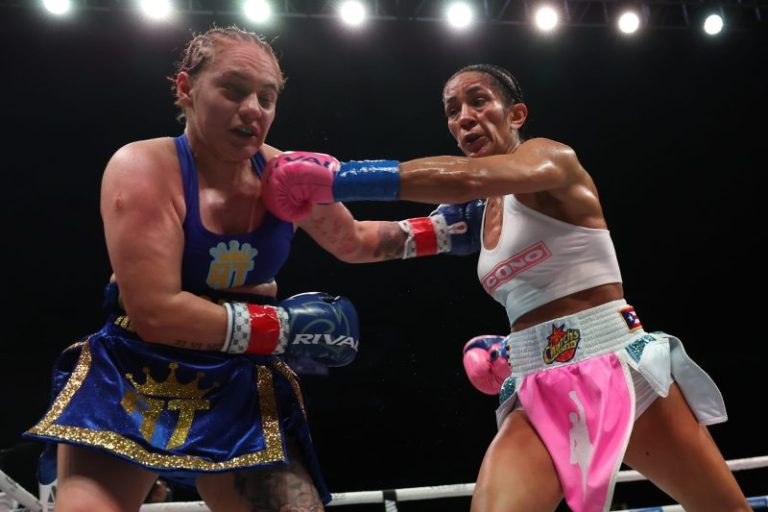
Amanda Serrano finished the night with a badly swollen right eye. Drenched in sweat. On a night she was expected to dominate.

But she also finished the night as the reigning WBO and WBA featherweight champion. She retained her titles with a victory over Reina Tellez by unanimous decision Saturday, Jan. 3 in San Juan, Puerto Rico.

Tellez, a 22-year-old who took the fight on two weeks’ notice, connected with enough punches to nearly shut Serrano’s right eye. Tellez got the call after Serrano’s originally scheduled opponent was removed from the card after an “atypical’’ drug test, stepping in despite inexperience.

“She’s a warrior,’’ Serrano said.

The two embraced before the final round and after the fight ended.

Serrano, 37, used her skill and experience during the 10-round fight. The judges scored the fight 98-92, 97-93, 97-93.

Serrano improved to 48-4-1. Tellez suffered her first loss and her record fell to 13-1-1.

What Amanda Serrano said after fight

Serrano not only was back on her home turf for her first bout of 2026, but also fighting at her preferred weight – the 126-pound featherweight division.

“It feels amazing,’’ Serrano said. “… It’s been two years since I fought this way (as a featherweight). So the next fights are going to be much, much better, but I feel good.”

She had to gain approximately 10 pounds for each of her three fights against Katie Taylor, and lost all three of those fights.

What Reina Tellez said after fight

For the first time, Tellez fought 10 rounds and, on top of that, three-minute rounds.

“I just did that with one of the best in the world,’’ she said. “Somebody I’ve idolized my whole life and I stood in there and I fought to the end.’’

Jake Paul provides update on jaw

Jake Paul, co-promoter for the boxing card, sat ringside and provided an update on his broken jaw during an interview on the DAZN broadcast. He had surgery Dec. 20, the day after Anthony Joshua broke the jaw in two places with a knockout punch.

“I got four (titanium) plates in my jaw but that’s part of the sport,’’ Paul said. “And the healing process has been a little bit tough. I’m a little bit tired. It’s hard to sleep. I go under the pillow and then my jaw torques up to the left when I wake up.’’

But Paul called his knockout loss to Joshua Dec. 19 “an amazing night and I learned a lot and gained a lot of experience and we’re on to more fights this year.’’

Paul provided no additional information about what fights might be in the works.

Amanda Serrano def. Reina Tellez by unanimous decision: Analysis

Round 1: Reina Tellez, who weighed in 0.6 pounds over the featherweight limit of 126 pounds, does not look fit. Amanda Serrano, as usual, looks to be in championship shape. Serran comes out behind the jab. Tellez looks a tad tentative. But she connects with a right. That is, as Serrao charges in and fires away. Serrano stalking, but Tellez catches her wit ha punch to the face. Tellez doesn’t look scared at all, although she just ate a hard left. Serrano 10, Tellez 9.

Round 2: Tellez might not be nearly as skilled as Serrano, but she looks game. Serrano is punching at a high rate, and Tellez is standing her ground. Serrano connects with two hard lefts. Now she’s charing forward, delighting the crowd. Serrano 20, Tellez 18.

Round 3: Tellez scores with a left, but Serrano keeps firing. Tellez lands three punches and Serrano definitely felt it. Serrano is winning the output battle, but Tellez has Serrano’s attention. Serrano 30, Tellez 27.

Round 4: Tellez connecting, but not with the volume and consistency of Serrano. But the real question wasn’t if Serrano could wn the fight. It was whether she could get the knockout. And she lands some bic shots, only for Tellez to respond. Tellez cut under the right eye. Serrano 40, Tellez 36.

Round 5: Serrano remains the aggressor, and the crowd is ready for fireworks. Serrano is attacking the body and Tellez is backing away. Serrano really digging into the body. Those body shots clearly are doing damage. But she nailed Serrano with two lefts. Serrano 50, Tellez 45.

Round 6: Serrano showing significant swelling under her right eye. Yes, Tellez has connected. But Serrano on the attack again. Tellez still landing shots, but far fewer than Serrano. Serrano scoring with both hands and the crowd cheers. Serrano 59, Tellez 55.

Round 7: Serrano’s pace appears to slow. Tellez scores with a right and a left. Serrano’s right eye looks badly swollen. Tellez doing what she can to worsen it. Serrano closes strong. Serrano 69, Tellez 64.

Round 8: Serrano lands a couple of combinations, and with authority. Then she unfurls a straight left and looks to be in control. But Tellez fights back. Serrano 79, Tellez 73.

Round 9: She’s not known for her defense, but Serrano dodges a couple of big punches. Tellez still is swinging hard and at times connecting. But she’s yet to stun Serrano, who’s sticking to her game plan — fire away with the left, to the body and head. Serrano 89, Tellez 82.

Round 10: Serrano initiates a hug as the round begins. Serrano stalking again, with three minutes left to score the knockout. The two trade big shots and Serrano is pouring it on. Tellez backing up and trying to stay on her feet. TEllez fighting back, at risk of eating a KO punch. Tellez survies, and the two boxers embrace again as the crowd roars. Serrano 99, Tellez 91.

Stephanie Han def. Holly Holm by unanimous decision

Holm is a legendary fighter, but she’s not a champion.

Her bout with Han, the reigning WBA world lightweight champion, ended in the seventh round after an accidental headbutt. But Han, who was bleeding badly after the clash of heads, clearly won the fight.

The judges scored it 69-65, 69-64, 68-65 in favor of Han, who landed almost three times as many punches as Holm.

The fight ended at 1:44 of the seventh round after the ringside doctor examined the cut and ruled the bout should be halted.

Holm, 44, saw her record fall to 34-3-3. Han, a 35-year-old police officer, improved to 12-0.

  • Round 1: Holly Holm quick to fire a jab, and the two women mix it up early. Han lands an overhand right. And Holm answers with a straight left. Holm scores with a big right and shows aggression as he unloads again. Up goes the chant: ‘Holly! Holly!” Holm 10, Han 9.
  • Round 2: Han opens with a straight right. Holm riding bursts of energy toward Han. Han looks more measured. Nice exchange of shots. Trading more shots. Han gets hit and almost tumbles before regaining her footing. Holm 19, Han 19.
  • Round 3: Holm making good use of the left. But Han connects with a big counter It’s action packed, and Han landed the big shots. Han 29, Holm 28.
  • Round 4: Holm still attacking with the left, and Han is matching her power and energy. Holm finishes strong, but too late. Han 39, Holm 37.
  • Round 5: Holm is 44, but fighting like a much younger boxer. Unfortunately for her, she’s up against a worthy world champion. Han drills Holm with a right. Han 49, Holm 46.
  • Round 6: Holm looks a little more tentative. She knows she’s vulnerable when she throws her big punches. Han also stepping forward more behind her shots. Han 59, Holm 55.
  • Round 7: Holm comes out aggressive with her left. Han cut on the forehead as a result of a head cut. The ring doctor inspects the damage and halts the fight! The referee collects the scorecards, which will include scores from seventh and final round. Han 68, Holm 65.

Krystal Rosado vs. Tania Walters, bantamweight

Rosado returned to action after suffering the first loss of her pro career. She proved she was too much for Walters and still has star potential.

Scoring with power and speed, she beat Walters by unanimous decision in six-round bantamweight bout.All three judges scored it 60-54 in favor of Rosado, the 23-year-old Puerto Rican who improved to 7-1. Her only loss came in October against Shurretta Metcalf by unanimous decision.

Walters, a 38-year-old Canadian, fell to 7-4.

  • Round 1: The fighters are letting their fists fly early. Tania Walters showing more aggression and Krystal Rosado showing composure. Rosado looks more measured and strategic. Rosado starting to find the right distance. Rosado 10, Walters 9.
  • Round 2: Walters comes out with the same energy, and Rosado responds with more quickness and power. Rosado looks sharp as she fires counter punches and then goes on the attack. Rosado 20, Walters 18.
  • Round 3: Walters remains feisty, but Rosado looks truly elite as she fires back a flurry of punches. She attacking Walters with bursts of punches and looks to have slowed down Walters. Walters, under a hailstorm of punches, snuck in a nice shot. Notable but not nearly enough to win the round. Rosado 30, Walters 27.
  • Round 4: Walters willing to mix it up despite the fury coming her way. Rosado slows down. Well, for about three seconds. No zip on Walters punches. Rosado 40, Walters 36.
  • Round 5: The action subsides. But Rosado is getting the best of it, of course. She closes the round with fury. Rosado 50, Walters 45.
  • Round 6: Walters walks toward Rosado and pays the price. Rosado’s left and right are serious weapons. Walters strikes with a left, but Walters unable to follow it up. Rosado unloads as the bell sounds. Rosado 60, Walters 54.

Alexis Araiza def. Ebanie Bridges by unanimous decision

It was the mother of all battles, an eight-round brawl between two moms.

Bridges, who put her stellar boxing career on hold for motherhood, fought for the first time in two years. She ran into another tough mom.

Araiza pummeled Bridges, who fought back – but not well enough. After the fight, she held her young son in her arms. Araiza turns out to be a mom of three children and was a big winner after the bantamweight bout.

The judges scored it 80-72, 78-74, 78-74 for Araiza, s 35-year-old American. Bridges, the 39-year-old Australian, saw her record fall to 9-3.

  • Round 1: Ebanie Bridges, who put her boxing career on hold after having a baby, returns to the ring for the first time in more than two years. Alexis Araiza looks to send her back to full-time parenthood. Bridge bulls forward behind an assortment of punches and Araiza fires back with more precision and power. Araiza 10, Bridges 9.
  • Round 2: Araiza getting through Bridges guard and connecting with Bridges head. But now Araiza is bleeding from the nose. Araiza 19, Bridges 19.
  • Round 3: The blood is flowing and so is Araiza. She lands a couple of nice uppercuts and a right hook. She lands a few more big shots as the round comes to an end. Araiza 29, Bridges 28.
  • Round 4: This is an active fight, and they two women come out swinging again. Bridges keeps marching forward — right into Araiza’s punches. Bridges getting in shots, too. The slugging continues, with Araiza landing the best shots. Araiza 39, Bridges 37.
  • Round 5: Bridges herself early, but Araiza slows her down with a right hook. The fight turns furious with a big exchange at the end. Araiza 49, Bridges 46.
  • Round 6: Almost non-stop action, and Araiza connects with a big uppercut. Another exhange and Araiza getting the best of it, including a sharp left as the round ended. Araiza 59, Bridges 55.
  • Round 7: There’s no letup here. Araiza’s face looks like a mess with that bloodied nose, but Bridges is the one taking a beating. She’s getting rocked midway through the round before Bridges finally responds. Araiza 68, Bridges 65.
  • Round 8: It’s rock ’em sock ’em and the crowd loves it. Bridges bulling foward behind big punches. Araiza looks exhausted, but both find the energy for aa big finish — especially from Araiza. Araiza 78, Bridges 74.

Jonathan Gonzalez def. Yankiel Rivera by unanimous decision

Gonzalez had a chance to end the fight early. Instead, he let it go the distance – and still walked away with the WBA interim world flyweight championship belt.

Gonzalez knocked down Rivera in the second round and Rivera looked to be in trouble. But he kept marching toward Gonzalez. His courage exceeded his ability, as Gonzalez relied on his counter punching.

The judges scored it 14-113, 116-111, 117-110 in favor of Gonzalez, the 34-year-old Puerto Rican who improved to 29-4-1. Rivera, a 28-year-old Puerto Rican, suffered his first loss and his record fell to 7-0-1.

  • Round 1: Jonathan Gonzales opens with a fury, and Yankiel Rivera is under seige but hanging in — or hanging on. Gonzalez lands a hard straight right. Gonzalez 10, Rivera 9.
  • Round 2: Gonzalez drops Rivera with a hard left. Rivera is up but looks to be in trouble. He survives the round. Gonzales 20, Rivera 17.
  • Round 3: Rivera emerges with some risking taking as he goes at Gonzalez. It seems to help neutralize Gonzalez’s power but not reverse the momentum. Gonzalez 30, Rivera 26.
  • Round 4: Rivera comes out aggressively and goes after Gonazalez’s body. It’s a worthy effort even though Gonzalez possesses the more impressive power. Gonzalez 39, Rivera 36.
  • Round 5: This is no longer a one-sided fight. But Rivera will have to turn things up even more if he’s got any chance to win it. Gonzalez lands a hard right. Gonzalez 49, Rivera 45.
  • Round 6: Rivera’s left eye is swollen, evidence that Gonzalez’s punches have landed. Yet he continues to show newfound aggressiveness. Gonzalez content to throw effective counter punches. Gonzalez 59, Rivera 54.
  • Round 7: Gonzalez again letting Rivera stalk and setting up for counterpunches. But he’s no longer got Rivera on the ropes — figuratively. But Rivera fails to capitalize. Gonzalez 69, Rivera 63.
  • Round 8: Gonzalez unleashes his power again, and Rivera feels it. Rivera fights back with a flurry of punches, but Gonzalez lands two hard left. Down goes Rivera, but the punch landed on the back of Rivera’s head and the refere waves off the knockdown. Gonzalez 79, Rivera 72.
  • Round 9: Rivera not backing down and lands a flurry of shots. But Gonzalez responds with heavier punches. He connects wit ha hard left and manages to stay on his feet. Gonzalez 89, Rivera 81.
  • Round 10: Gonzalez back to retreating and setting up the counterpunches. Am I alone and wanting Gonzalez to exert some dominance and dispatch Rivera. Intead, Rivera is loading another flurry of punches — none rock Gonzalez but many that score. Gonzalez 98, Rivera 91.
  • Round 11: Rivera lands a strong shot early as Gonzalez is back up against the ropes. But the threat fades pretty quickly. Gonzalez slips a few punches and then lands a few of his own. Gonzalez 108, Rivera 100.
  • Round 12: It’s more of the same, with Rivera stalking and Gonzalez fighting (well) off his back foot. He connects with a laser left as he tries to load up. They trade punches in a corner, and Rivera needs a miracle. No miracles, but he wins the round with energy and output. Gonzalez 117, Rivera 110.

Jan Paul Rivera def. Alfredo Cruz by majority decision

Jan Paul Rivera stayed undefeated at 14-0 with a victory over Alfredo Cruz by majority decision. And he had to earn it in the eight-round featherweight bout.

Rivera, the 24-year-old Puerto Rican, fell behind early as Cruz stayed on the move and landed more punches. But Rivera picked up the pace – and showed more power as the fight progressed.

One judge scored the fight 75-75 and the two other judges scored it 77-75 for Rivera.

Cruz, a 24-year-old from Puerto Rico, fell to 10-4-1.

  • Round 1: Alfred Cruz on the move and strikes with a jab, as Jan Paul Rivera stalks. Cruz connecting early with the jab. Rivera picks up the pace and connects with hard right hands. Cruz fights back with the jab and Rivera misses with big overhand. Cruz 10, Rivera 9.
  • Round 2: Cruz stays on the move and Rivera leans in and wraps him up. Cruz scores with the jab, but Rivera landing combinations. Rivera marches in and pushes down Cruz’s head. But the punches are flying — and landing. Cruz’s is winning the war of punching output. Cruz 20, Rivera 18.
  • Round 3: Cruz stays busy with the jab. Rivera exhibits power but has yet to stun Cruz. But he breaks through the high guard and scores. Then lands a couple of solid shots and smothers Cruz. Cruz swinging and missing before landing a big right. But Rivera landed more power shots. Cruz 29, Rivera 28.
  • Round 4: Spirited fight with both fighters landing punches, and Rivera asserts himself behind power shots. He attacks Cruz to the body as the two exhange meaningful shots. Cruz 39, Rivera 37.
  • Round 5: Cruz snaps back Rivera’s head with a left, but Rivera keeps marching forward. Fatigue may be setting in, but suddenly they’re trading punches again. Cruz finishes strong. Cruz 49, Rivera 46.
  • Round 6: Cruz still on the move and you got wonder how long those legs will hold up. Rivera lands a bevvy of combinations. Things are heating up again as the two trade shots. Crus hits the gas, but Rivera sufficently dominated the round early. Cruz 58, Rivera 56.
  • Round 7: Cruz scores to the body, and Rivera responds with a firestorm of punches. Cruz looks weary as Rivera pounds away. Cruz still running — and maybe not fast enough to evade Rivera. Cruz 67, Rivera 66.
  • Round 8: Cruz slips and hits the canvas. But he’s up and trying to elude Rivera again. Cruz hits the deck again, apparently pushed. Rivera attacking and Cruz holding on to Rivera — and for dear life. Cruz landsd a big right and unloads, only to get caught by a big right from Rivera. Cruz 76, Rivera 76.

Serrano vs Tellez fight results: prelims

  • Caleb Tirado def. Justin Hill by TKO, bantamweight
  • Yandiel Lozano def. Johniel Ramos Cotto by unanimous decision, super featherweight
  • Abner Figueroa def. Edwin Rodriguez by unanimous decision, bantamweight
  • Elise Soto def. Liliana Martinez by TKO, super featherweight
  • Alexis Chapparo def. Augusto Leal by unanimous decision, middleweight
  • Chris Echevarria def. Gabriel Bernardi by unanimous decision, super bantamweight
  • Henry Lebron def. Juan Tapia by TKO, super featherweight

What time is Amanda Serrano vs Reina Tellez fight card?

Serrano vs Tellez starts at 8 p.m. ET on Saturday, Jan. 3.

When is the Serrano vs Tellez main event ring walk?

The main event between Serrano and Tellez has an estimated start time of 11 p.m. ET.

Amanda Serrano vs Reina Tellez price: How much to watch fight

The fight available on DAZN with a monthly plan of $29.99.

Amanda Serrano stats

Amanda Serrano is 47-4-1 with 31 KOs. She has lost her last two fights, both to Katie Taylor by way of decision.

Amanda Serrano vs Reina Tellez fight card, odds

  • Amanda Serrano (-3000) vs. Reina Tellez (+900); Featherweight, for the WBA and WBO title
  • Stephanie Han (+160) vs. Holly Holm (-225); Lightweight, for the WBA title
  • Krystal Rosado vs. Tania WaltersBantamweight
  • Ebanie Bridges vs. Alexis AraziaBantamweight

Amanda Serrano age

Amanda Serrano is 37. Her opponent, Reina Tellez, is 22.

Holly Holm fight

Holly Holm, the legendary boxer and MMA fighter, will be making her second appearance in the boxing ring since signing with Jake Paul’s Most Valuable Promotions. This time, the 44-year-old Holm will be fighting for a world title against Stephanie Han, the reigning WBC lightweight champion.

In June, Holm boxed in her first pro bout since 2013 and defeated previously unbeaten Yolanda Vega by unanimous decision.

Anthony Joshua friends honored

The main card event opened with a 10-bell salute for Latif Ayodele and Sima Ghami. They were the close friends close friends of Anthony Joshua and members of the boxer’s training team who died in a car accident Dec. 29 in Nigeria while riding with the former heavyweight champion.

The names of Ayodele and Ghami also were embossed on canvas of the boxing ring at Coliseo Roberto Clemente, site of MVP’s 13-fight card.

Amanda Serrano chasing history

Before she retires, Serrano said this week, she has two goals. One: break the record for all-time knockouts for a woman. Entering the fight against Tellez, Serrano has 31 knockouts heading into her fight with Tellez. The record is 32, held by Hall of Famer Christy Martin. The second goal: 50 all-time victories. Serrano had 47 before fighting Tellez. Martin has 49 and Regina Halmich, a retired boxer from German, had 54 victories.

This post appeared first on USA TODAY

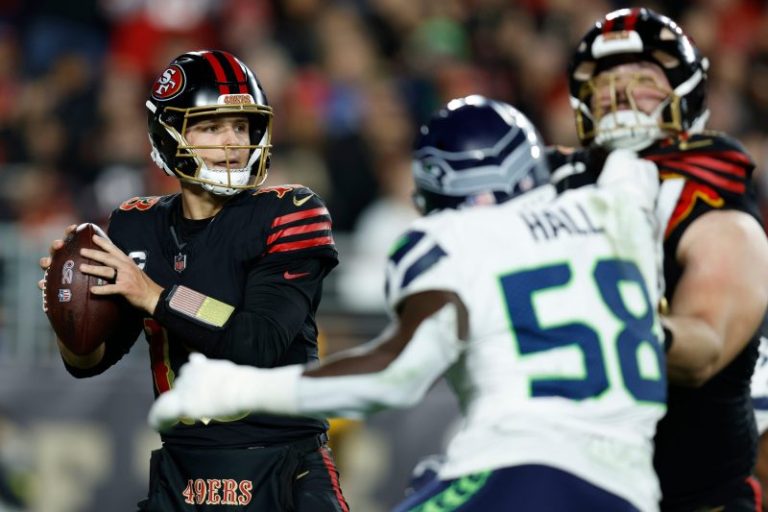
Saturday ended in rough fashion for San Francisco 49ers quarterback Brock Purdy.

Purdy walked away the 49ers’ 13-3 loss to the Seattle Seahawks battered and bruised.

The 49ers quarterback had his thumb bloodied after he was hit in the second half following a pass attempt.

The hits didn’t stop there for Purdy.

On fourth-and-6 with less than two minutes remaining in the fourth quarter, Purdy was sandwiched in the pocket by Seahawks linebacker Derick Hall and defensive lineman Leonard Williams as he threw an incomplete pass. Purdy was on the ground for a moment in visible pain before he walked off the field under his own power.

The Seahawks took over possession of the football and went into victory formation with the game decided.

Was Brock Purdy injured against the Seahawks?

Head coach Kyle Shanahan announced postgame that Purdy suffered a stinger on the desperation play.

“Purdy would’ve went back in,” Shanahan said to reporters. “He checked out all right.”

Purdy was sacked three times and hit three times in the loss. He was pressured on 11 dropbacks, per Pro Football Focus.

San Francisco’s loss prevented them from winning the NFC West and the No. 1 seed in the NFC playoffs.

Shanahan said Purdy’s stinger won’t prevent him from playing in next week’s wild-card game.

The 49ers have delt with a slew of injuries this season. Linebacker Fred Warner (ankle) and Nick Bosa (knee) suffered season-ending injuries earlier in the season. Standout left tackle Trent Williams (hamstring) and wide receiver Ricky Pearsall (knee and ankle) were both inactive on Saturday due to injuries.

San Francisco does expect Williams, Pearsall and Purdy to be available for next week’s road playoff game.

“It would’ve been nice to have both home games here and get a bye, but it is what it is,” Shanahan said. “This team’s been through a lot this year. Now we got to do it the hard way. We’ll embrace the (expletive) out of doing it the hard way. Look forward to it.”

Follow USA TODAY Sports’ Tyler Dragon on X @TheTylerDragon.

This post appeared first on USA TODAY
During the second period between the Toronto Maple Leafs and the New York Islanders, Leafs captain Auston Matthews scored two goals.

Both his tallies have a place in Maple Leafs history as his first goal equalled Mats Sundin’s 420 goals in the Blue and White. Later in the period, Matthews fired home a one-timer to take sole possession of first place on the franchise’s all-time goal list.

All of his teammates cleared the bench to congratulate him on the milestone.

His one-timer was set up by Bobby McMann, and Max Domi provided the crucial secondary helper with a puck battle at the blue line to keep the puck alive. Matthews’ two goals gave the Leafs a 2-1 lead going into the third period.

Matthews’ latest goal was his 20th of the campaign. That puts him on pace to score around 43 goals, which is 10 more than what he recorded last season. 

There’s a little more to the story of his offensive production. Matthews wasn’t at his best to start this season, but he’s been red-hot as of late. In his past four games, the 28-year-old center has six goals and 10 points.

In 317 fewer games than Sundin, Matthews now has the most goals by any Maple Leaf. With 421 goals, Matthews has 760 career points in 664 NHL games. 

Following Matthews’ record-breaking goal, Sundin left a video message, congratulating him on the historic milestone.

‘What a treat for all Maple Leafs fans, around the world, to have a player like yourself,’ Sundin said in the video.

In the points department, Matthews still has to surpass four legendary Maple Leafs to own that title. That includes Borje Salming, Dave Keon, Darryl Sittler and Sundin.

For action-packed issues, access to the entire magazine archive and a free issue, subscribe to The Hockey News at THN.com/free. Get the latest news and trending stories by subscribing to our newsletter here. And share your thoughts by commenting below the article on THN.com or creating your own post in our community forum.

This post appeared first on USA TODAY

The red-hot San Francisco 49ers offense has finally discovered its Kryptonite. It comes in the form of a Seattle Seahawks defense that stymied it in a 13-3 Week 18 victory.

Mike Macdonald’s stop unit kept San Francisco’s offense off-balance all night at Levi’s Stadium. Brock Purdy and Co. racked up just 173 total yards in addition to their three points after averaging 373.2 yards per game and 35.7 points over their six-game winning streak.

As a result, the Seahawks clinched the NFC West title, their first since 2020, and secured the No. 1 overall seed in the NFC playoff race. That will give Seattle a much-needed first-round bye and a chance to recharge as the team looks to make the Super Bowl for the first time since the 2014-15 NFL playoffs.

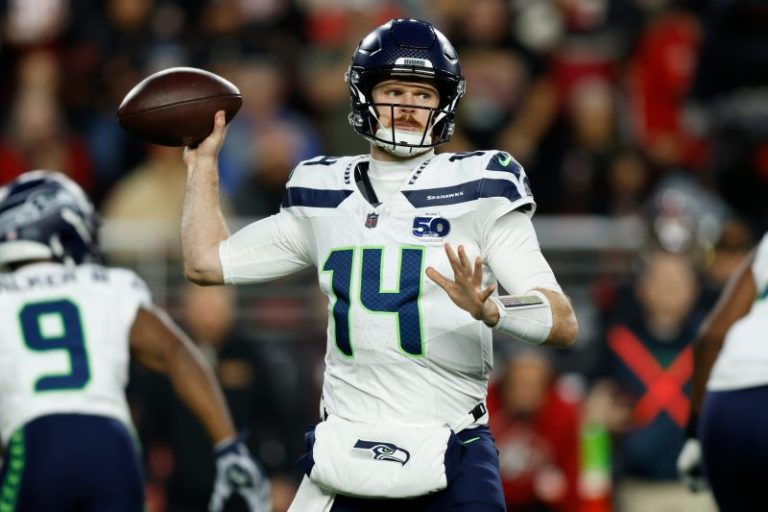
Seattle’s victory will also be a monkey off the back of Sam Darnold, who failed to deliver in a similar divisional battle for the NFC’s No. 1 seed last season with the Minnesota Vikings. Darnold completed 20 of 26 passes for 198 yards, but most importantly, did not turn the ball over in the victory.

Darnold got a lot of support from his running game, as Kenneth Walker and Zach Charbonnet combined to rack up 171 yards on 33 carries. If the talented duo can perform similarly in the postseason, Seattle’s all-around balance will make it a very tough out in a wide-open playoff bracket.

USA TODAY Sports provided live updates, highlights and more from the 49ers-Seahawks game on Saturday in Week 18.

49ers vs. Seahawks takeaways Week 18

  • Sam Darnold did exactly what was needed in win. Nobody will call Darnold’s performance against the 49ers flashy. He threw for less than 200 passing yards and didn’t log a touchdown, after all. But after coming up short in a similar spot with the Vikings last season, Darnold did well to learn from his shortcomings and avoided turnovers and negative plays while delivering a key win for the Seahawks. Darnold acknowledged in a postgame interview with ESPN his ability to ‘stay calm in the pocket’ made a difference for him in this one. So long as he can keep doing that, Seattle will have a chance to enjoy a solid playoff run.
  • Seattle’s defense is championship-caliber. San Francisco has been one of the NFL’s best offenses this season when Brock Purdy has been healthy. The Seahawks have been able to stymie them in both meetings, holding the 49ers to an average of 10 points per game while limiting Purdy to an 80.3 passer rating. Seattle has elite talent at all three levels and plays as a connected, tough-to-beat defense under Macdonald. Much like the Seahawks’ ‘Legion of Boom’ days, this unit is plenty good enough to get Seattle through an open playoff field and into the Super Bowl.
  • Kenneth Walker and Zach Charbonnet are an underrated running back duo. Seattle’s one-two punch at running back doesn’t get enough love for what it’s able to do. Walker and Charbonnet are both good runners with explosive playmaking abilities, as they showed against the 49ers. Walker showed off his shiftiness on a key, 19-yard reception that allowed the Seahawks to continue their crucial field goal drive, while Charbonnet showed off good vision and burst on a 27-yard touchdown that proved to be a game-winner for Seattle. If they can continue to support Darnold while keeping each other fresh, the Seahawks should sport one of the better-balanced offenses of the 2025 NFL playoffs.
  • The 49ers need Trent Williams back. The 49ers aren’t going to play a pass rush as great as that of the Seahawks every week, but it was clear they missed Williams on Saturday. Austen Pleasants had trouble holding up in Williams’ stead, and Brock Purdy was sacked a season-high three times as a result. Expect the 49ers to do everything they can to get Williams back before their wild-card game.

Brock Purdy stats vs. Seahawks

  • 19-of-27 (70.3% completion rate)
  • 127 passing yards
  • 0 passing touchdowns
  • 1 interception
  • 64.9 passer rating
  • 2 rushing attempts, 21 rushing yards

Sam Darnold stats vs. 49ers

  • 20-of-26 (76.9% completion rate)
  • 198 passing yards
  • 0 passing touchdowns
  • 0 interceptions
  • 97.9 passer rating
  • 6 rushing attempts, 9 rushing yards

Christian McCaffrey stats vs. Seahawks

  • 8 rushing attempts
  • 23 rushing yards
  • 0 total touchdowns
  • 6 receptions (7 targets)
  • 34 receiving yards

Seahawks clinch No. 1 seed in NFC

Seattle finished the job, collecting a victory over the 49ers at Levi’s Stadium. The Seahawks are the top seed in the NFC, earning home-field advantage and a first-round bye.

49ers vs. Seahawks final score: Seattle 13, San Francisco 3

49ers vs. Seahawks highlights

Seahawks force turnover on downs to seal win on Saturday night

The 49ers couldn’t get a first down in their last-gasp effort to get back into the game against the Seahawks. Brock Purdy’s final pass fell harmlessly to the ground, and Seattle will win the NFC West after taking a few kneel-downs to end a 13-3 victory.

Jason Myers doinks 26-yard field goal off the upright

After intercepting Purdy, the Seahawks marched 89 yards over 16 plays to set Myers up for a short-distance field goal. For the second time tonight, Myers missed to the right, as his kick curved right and doinked off the upright.

Myers’ miss will allow the 49ers to remain down just 10 points. However, just 2:20 remains in the game after Seattle’s long drive, and San Francisco has no timeouts left. That means the 49ers will likely need to attempt an onside kick to have any chance to win.

Drake Thomas intercepts pass that glances off Christian McCaffrey’s hands

The 49ers were in the midst of their best offensive drive of the game and had a goal-to-go opportunity when Brock Purdy tried to throw a pass to McCaffrey at the 5-yard line. Edge rusher Boye Mafe appeared to barely deflect the pass at the line of scrimmage, and the veteran running back wasn’t able to corral it.

The result? The ball glanced off McCaffrey’s hands and into the arms of Thomas. The red-zone takeaway ensured Seattle would remain up by 10 points with about 10 minutes remaining in regulation.

49ers vs. Seahawks score update: Jason Myers makes 31-yard chip shot to extend Seattle’s lead

The Seahawks looked like they were going to go three-and-out before Kenneth Walker turned a screen-pass dump-off on third-and-17 into a 19-yard gain and a first down. From there, Seattle moved into short field goal range before stalling out.

Myers was called on to attempt the 31-yarder. He made it with ease, giving the Seahawks a 10-point lead with 14:15 remaining in regulation.

Seahawks 13, 49ers 3

When was the Seahawks’ last Super Bowl win?

The Seahawks have just one Super Bowl win in their history. That came in Super Bowl 48, when their ‘Legion of Boom’ defense thrashed Peyton Manning and the Broncos offense in a 43-8 rout.

Seattle also played in Super Bowl 49. The Seahawks lost to the New England Patriots when Malcolm Butler famously intercepted Russell Wilson on the goal-line in the final minute of a 28-24 Patriots win.

49ers forced to punt on first drive of second half

The 49ers weren’t able to mount back-to-back scoring drives. Brock Purdy and Co. managed to get themselves out from being backed up after Brian Robinson struggled to handle a kickoff, but San Francisco couldn’t get to midfield before Seattle found a way to stop it.

Rashid Shaheed was able to return Thomas Morstead’s 44-yard punt 20 yards to give Seattle solid field position as it looks to build on its 10-3 lead.

49ers vs. Seahawks score at halftime: Seattle leading 10-3

The Seahawks have just a seven-point lead, but they have dominated the 49ers in the first half. Seattle has outgained San Francisco 196-69 and has run 34 plays compared to the 49ers’ 20, as Sam Darnold and the offense have performed well.

Seattle’s offense has been balanced. Darnold has taken a couple of sacks but has otherwise been efficient, completing 10 of 13 passes for 98 yards over the first 30 minutes. The Seahawks have also run the ball well, as Zach Charbonnet and Kenneth Walker have combined for 110 yards on 18 carries while Charbonnet scored the lone touchdown of the first half on a 27-yard run.

The 49ers will need to get Christian McCaffrey more involved in the second half, as he had just six touches for 25 yards in the first half. Brock Purdy has matched Sam Darnold, completing 10 of his 13 passes, but has turned them into just 47 yards.

San Francisco will get the ball first coming out of halftime. Expect Kyle Shanahan to try to get the ball into the hands of his playmakers as the 49ers try to come from behind to win the NFC West.

49ers vs. Seahawks score update: Eddy Pineiro makes 48-yard field goal to get San Francisco on board

The 49ers will not be shut out in the first half. Brock Purdy made a nice throw on the run to convert a third-and-11 before San Francisco stalled out shortly thereafter. Pineiro was called on to attempt a 48-yard kick, and he was able to tuck it inside the right upright.

The 49ers now trail by just one possession and will look to stop the Seahawks with a minute remaining in the first half.

Seahawks 10, 49ers 3

Where did Sam Darnold go to college?

Darnold went to USC. He spent three seasons with the Trojans and was a two-year starter for them. He completed 64.9% of his passes for 7,229 yards, 57 touchdowns and 22 interceptions across 27 games with the team.

Darnold’s performance was good enough to make him a first-round talent. The New York Jets selected him with the No. 3 overall pick in the 2018 NFL Draft.

49ers vs. Seahawks score update: Jason Myers makes 45-yard field goal to extend Seattle lead

After missing from 47 yards earlier in the quarter, Myers was able to make a 45-yard kick after Seattle’s drive stalled out. That gave the Seahawks a two-possession lead for the first time in the game.

The Seahawks have dominated the 49ers thus far, outgaining them 193-39 and running 32 plays compared to San Francisco’s 12. The 49ers will now have 5:19 remaining in the first half to try to get on the board against Mike Macdonald’s stingy defense.

Seahawks 10, 49ers 0

Who is the Seahawks coach?

Mike Macdonald is the Seahawks’ head coach. He is in his second season with Seattle and has posted a 23-10 record across his first 33 games with the franchise.

Macdonald cut his teeth with the Ravens and turned Baltimore’s stop unit into one of the NFL’s best during his two seasons as the team’s defensive coordinator. The 38-year-old has enjoyed similar success with the Seahawks and is one of the youngest head coaches in the league.

Jason Myers misses 47-yard field goal, snapping streak of 18 straight makes

The Seahawks were once again able to get into scoring range against the 49ers’ defense. However, Myers wasn’t able to make the 47-yard kick, as it drifted right of the upright.

The Seahawks remain ahead 7-0, but Seattle has to be kicking itself after coming up empty in scoring range twice in the first half of the de facto NFC West championship game.

What is Sam Darnold’s salary?

Darnold has a base salary of just $5.3 million in 2025, but that’s because he got a $32 million signing bonus for his first season with the Seahawks.

The better measure of Darnold’s worth? He signed a three-year, $100.5 million contract with the Seahawks in free agency. That gives him an average annual value (AAV) of $33.5 million, which ranks 18th among NFL quarterbacks.

49ers vs. Seahawks score update: Seattle strikes first with 27-yard Zach Charbonnet TD

The Seahawks are on the board first in the battle for the NFC West. Sam Darnold handed the ball to Charbonnet on a third-and-2, and the third-year back found space after cutting to the left side of the line. He was able to just get around the last defender and scamper into the end zone for a touchdown.

Jason Myers makes the extra point, and Seattle is leading by seven in the first quarter.

Seahawks 7, 49ers 0

Seahawks fail to convert fourth-and-goal on first drive of game

Seattle did something it doesn’t often do to open its Week 18 game against San Francisco. The Seahawks went for it on fourth-and-goal from the 4-yard line, allowing Sam Darnold to try to throw a touchdown on the opening drive of the game.

Darnold couldn’t connect with Cooper Kupp, and as a result, Seattle had nothing to show for its game-opening drive, which spanned 12 plays, 66 yards and 7:37 of game time.

What happens if 49ers win today?

A 49ers win over the Seahawks in Week 18 would allow San Francisco to win the NFC West and clinch the No. 1 overall seed in the NFC.

Conversely, a loss would guarantee the 49ers would remain a wild-card team. They would earn either the No. 5 or No. 6 seed, pending the result of the Rams vs. Cardinals game on Sunday.

How to watch the 49ers vs. Seahawks game?

  • TV channel: ABC, ESPN

The 49ers-Seahawks matchup on Saturday will be broadcast nationally on ABC and ESPN. Joe Buck (play-by-play) and Troy Aikman (analyst) will be on the call.

What time is the 49ers vs. Seahawks game?

  • Start time: 8 p.m. ET

The 49ers and Seahawks are scheduled for kickoff at 8 p.m. ET on Saturday night.

49ers vs. Seahawks stream

  • Live stream: ESPN+, fuboTV, NFL+

The 49ers-Seahawks game will stream on ESPN+ and fuboTV as well as the league’s streaming service, NFL+.

Catch NFL action with a fubo subscription

49ers vs. Seahawks prediction, picks

Here’s what the experts at USA TODAY think will happen in the 49ers vs. Seahawks matchup in Week 18:

  • Jarrett Bell: 49ers, 24-20
  • Nick Brinkerhoff: 49ers, 38-31
  • Chris Bumbaca: 49ers, 29-28
  • Nate Davis: Seahawks, 30-24
  • Tyler Dragon: Seahawks, 28-25
  • Mike Middlehurst-Schwartz: 49ers, 31-28

49ers vs. Seahawks odds, moneyline, O/U

Provided by BetMGM Sportsbook; access USA TODAY Sports Scores and Sports Betting Odds hub for a full list. Lines last updated Friday at 9:30 p.m. ET.

  • Over/Under (O/U): 48 (O: -110 | U: -110)
  • Moneyline (ML): Seahawks -135 (Bet $135 to win $100) | 49ers +115 (Bet $100 to win $115)
  • Against the spread (ATS): Seahawks -2.5 (-110) | 49ers +2.5 (-110)

NFC West standings

The Seahawks lead the NFC West standings entering the season finale. Here’s a full look at the division:

  1. Seattle Seahawks (13-3, 3-2 NFC West)
  2. San Francisco 49ers (12-4, 4-1)
  3. Los Angeles Rams (11-5, 3-2)
  4. Arizona Cardinals (3-13, 0-5)

NFC playoff picture: NFC bracket

  1. Seattle Seahawks (13-3, NFC West leaders)*
  2. Chicago Bears (11-5, NFC North winners)*
  3. Philadelphia Eagles (11-5, NFC East winners)*
  4. Tampa Bay Buccaneers (8-9, NFC South leaders)
  5. San Francisco 49ers (12-4, wild card No. 1)*
  6. Los Angeles Rams (11-5, wild card No. 2)*
  7. Green Bay Packers (9-6-1, wild card No. 3)*

In the hunt:Carolina Panthers (8-9)

49ers uniforms today vs. Seahawks

For the first time, the Niners will be in monochrome black as they also wear black helmets − which they’ve never had since joining the NFL in 1950. The dome is matte black, adorned with a pair of red stripes down the centerline, the familiar interlocking ‘SF’ logo and gold-coated facemasks intended to sparkle under Levi’s Stadium’s lights. ‘Faithful’ is scripted on the headgear’s back bumper.

The red jersey numbers are outlined in gold and presented in a saloon-like font derived by the franchise’s classic wordmark. A cursive ‘Faithful’ is etched above the numbers on the chest, enabling the franchise to express its ‘steadfast appreciation for the unwavering dedication of 49ers fans across the globe.’ “Faithful to the Bay,’ the club motto, is stitched inside the collar. Per Nike, the look is ‘inspired by the Gold Rush era that once defined San Francisco.’ – Nate Davis

49ers inactives today vs. Seahawks

  • LT Trent Williams (hamstring)
  • WR Ricky Pearsall (knee)
  • RB Isaac Guerendo
  • DE Robert Beal Jr.
  • DT Kevin Givens
  • LB Curtis Robinson
  • CB Chase Lucas

Seahawks inactives today vs. 49ers

  • QB Jalen Milroe (Emergency QB3)
  • OT Charles Cross (hamstring)
  • S Coby Bryant (knee)
  • OL Bryce Cabeldue
  • OL Mason Richman
  • LB Jared Ivey
  • TE Nick Kallerup

Is George Kittle playing today vs. the Seahawks?

Yes, the All-Pro is not listed among the 49ers’ inactives ahead of tonight’s kickoff. He is expected to return to the lineup after missing Week 17 with a hamstring injury.

NFL playoff picture: AFC Bracket

  1. Denver Broncos (13-3, AFC West winners)*
  2. New England Patriots (13-3, AFC East winners)*
  3. Jacksonville Jaguars (12-4, AFC South leaders)*
  4. Pittsburgh Steelers (9-7, AFC North leaders)
  5. Houston Texans (11-5, wild card No. 1)*
  6. Los Angeles Chargers (11-5, wild card No. 3)*
  7. Buffalo Bills (11-5, wild card No. 3)*

In the hunt: Baltimore Ravens (8-8)

An asterisk (*) denotes teams that have clinched

2026 NFL Draft order

Here’s a look at the latest draft order for the first round with strength of schedule information via Tankathon:

  1. Las Vegas Raiders: 2-14; .542 SOS
  2. New York Giants: 3-13 record; .531 strength of schedule
  3. New York Jets: 3-13, .548 SOS
  4. Tennessee Titans: 3-13, .576 SOS
  5. Arizona Cardinals: 3-13; .580 SOS
  6. Cleveland Browns: 4-12, .491 SOS
  7. Washington Commanders: 4-12; .507 SOS
  8. New Orleans Saints: 6-10; .491 SOS
  9. Kansas City Chiefs: 6-10; .509 SOS
  10. Cincinnati Bengals: 6-10; .517 SOS
  11. Atlanta Falcons (pick belongs to Los Angeles Rams): 6-9; .498 SOS
  12. Miami Dolphins: 7-9; .483 SOS
  13. Tampa Bay Buccaneers: 7-9, .532 SOS
  14. Dallas Cowboys: 7-8-1; .436 SOS
  15. Detroit Lions: 8-8; .493 SOS
  16. Baltimore Ravens: 8-8; .504 SOS
  17. Minnesota Vikings: 8-8; .515 SOS
  18. Indianapolis Colts (pick belongs to Jets): 8-8; .537 SOS
  19. Carolina Panthers: 8-8, .520 SOS
  20. Pittsburgh Steelers: 9-7; .509 SOS
  21. Green Bay Packers (pick belongs to Cowboys): 9-6-1; .480 SOS
  22. Los Angeles Chargers: 11-5; .461 SOS
  23. Philadelphia Eagles: 11-5; .467 SOS
  24. Buffalo Bills: 11-5, .472 SOS
  25. Chicago Bears: 11-5; .454 SOS
  26. Houston Texans: 11-5; .528 SOS
  27. Los Angeles Rams: 11-4, .531 SOS
  28. Jacksonville Jaguars (pick belongs to Browns): 12-4; .487 SOS
  29. San Francisco 49ers: 12-4, .494 SOS
  30. New England Patriots: 13-3; .384 SOS
  31. Denver Broncos: 13-3; .426 SOS
  32. Seattle Seahawks: 13-3; .498 SOS

Is there a ManningCast for 49ers-Seahawks game?

Yes, there will be a ManningCast tonight. The Manning brothers return on the alt-cast in Week 18.

4th & Monday: Our NFL newsletter always brings the blitz 

Do you like football? Then you’ll enjoy receiving our NFL newsletter in your inbox.   

Get the latest news, expert analysis, game insights and the must-see moments from the NFL conveniently delivered to your email inbox. Sign up now! 

This post appeared first on USA TODAY

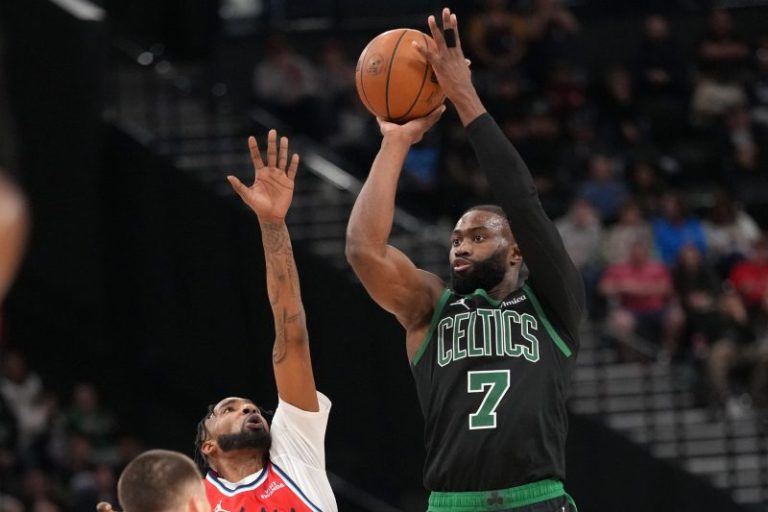
Jaylen Brown led the way for the Boston Celtics on the road, scoring 50 points in a 146-115 victory over the  Los Angeles Clippers on Saturday night.

Brown’s 50 points in the victory against a red-hot Clippers team that entered the game on a six-game win streak matched his career high.

Brown was one of six players on the roster to score double-digit points against the Clippers. He shot 18-of-26 from the field, including 6-for-10 from long range.

Here is Jaylen Brown’s complete stat line:

Jaylen Brown stats vs. Clippers

  • Points: 50
  • FG: 18-for-26 (6-for-10 from 3-point line)
  • Free Throws: 8-for-10
  • Rebounds: 3
  • Assists: 5
  • Steals: 0
  • Blocks: 0
  • Turnovers: 2
  • Fouls: 3
  • Minutes: 35

Celtics vs. Clippers highlights

Who do Celtics play next?

The Celtics will host the Chicago Bulls on Monday, Jan. 5 at 7:30 p.m. ET.

This post appeared first on USA TODAY

After a steep decline during the first half of 2025, the zinc price is ending the year close to where they started.

Because it’s used to make galvanized steel, the majority of zinc demand is closely tied to housing and manufacturing sectors, which have recently faced pressures from a combination of high inflation and interest rates.

Additional pressures have come from an evolving US trade policy, causing uncertainty among investors who turned away from real estate and consumers who reduced spending.

What happened to the zinc price in 2025?

The zinc price was relatively flat at the start of 2025, beginning the year at US$2,927 per metric ton (MT) on January 2 and closing the first quarter at US$2,855 on March 30. However, the second quarter brought a broad rout for base metals prices, and by April 9 zinc had fallen to a yearly low of US$2,562.

Since then, zinc has gained steadily, ending the second quarter at US$2,753 on June 30. The price rise continued through Q3 and Q4, with zinc reaching US$2,954 on September 30 and US$3,088 on December 29.

Zinc price, 2025.

Chart via the London Metal Exchange.

Key trends for zinc in 2025

As mentioned, zinc saw a major price decline at the start of April, falling 14 percent as the base metals sector responded to US President Donald Trump’s “Liberation Day” tariffs announcement.

At the time, analysts predicted that the proposed reciprocal tariffs could trigger a recession, impacting consumer spending on new homes and cars, both of which have significant inputs of galvanized steel.

While the threat of a significant global recession eased as the proposed tariffs were dialed back, considerable uncertainty among both investors and consumers remained. This was evident in the US housing market, where affordability challenges persist, leading to stagnation in new housing starts and a glut of unsold homes.

Likewise, a stalled Chinese housing market persisted throughout 2025. The country’s real estate market collapsed in 2020 as Evergrande and Country Garden filed for bankruptcy. Over the past five years, the government has implemented several measures to stimulate the beleaguered sector, but they have had little effect.

According to CNBC, November sales from China’s top 100 developers declined 36 percent over 2024, and were down 19 percent through the first 11 months of 2025 — a ‘real and concerning’ worsening.

Against that backdrop, the International Lead and Zinc Study Group (ILZSG) is predicting a 2025 zinc market surplus of 85,000 MT in 2025. It notes that during the first 10 months of the year, zinc mine production rose to 10.51 million MT, up from 9.87 million MT in 2024. Refined zinc production was also up, rising slightly to 11.52 million MT from 11.12 million MT in the same period last year. Zinc demand reached 11.44 million MT, up from 11.19 million MT in 2024.

Despite the oversupply situation, London Metal Exchange (LME) stockpiles fell from 230,325 MT on January 2 to just 33,825 MT on November 1. The gap has since widened again, reaching 52,025 MT on November 28.

Zinc surplus expected in 2026

Oversupply is likely to persist as newly mined metals enter the market, while demand growth remains modest.

The ILZSG is predicting that global refined zinc demand will increase by 1 percent to 13.86 million MT in 2026.

The group notes that while it anticipates sees Chinese demand posting a 1.3 percent gain in 2025, it believes usage from the country will be flat in 2026 as the slump in the Chinese real estate sector persists into 2027.

Additional challenges are arising from a slowdown in the US housing market, as new buyers face high home prices and elevated mortgage rates. However, policy proposals from the Trump administration on December 17 could give the sector a much-needed boost and potentially increase downstream demand for zinc.

Likewise, European zinc demand is likely to grow next year following predicted 0.7 percent growth in 2025.

However, the ILZSG is predicting a more significant upward trend in zinc mine supply in 2026 — the organization is anticipating that output will increase by 2.4 percent to 12.8 million MT. This will come on the back of higher output from existing operations in Europe, Australia, Brazil, the Democratic Republic of Congo and China.

Additional zinc supply will come from a recent restart at the Almina-Minas Aljustrel mine in Portugal, commissioning of Bunker Hill Mining’s (CSE:BNKR,OTCQB:BHLL) namesake mine in Idaho, and the start of commercial production at the Xinjiang Huoshaoyun mine in China, which will be the sixth largest lead-zinc mine in the world.

Refined zinc output is also expected to increase by 2.4 percent in 2026, reaching 14.13 million MT from the anticipated 13.8 million MT in 2025. The higher levels are owed to the greater availability of concentrates in Brazil, Canada, Norway and China. Overall, the ILZSG predicts a global zinc supply surplus of 271,000 MT in 2026.

Zinc price forecast for 2026

In terms of the zinc price in 2026, a December report from Fastmarkets suggests that upward momentum from the 2025 LME average of US$3,218 is expected to continue through the first half of the year.

The firm points to regional disparities as Chinese production runs at a surplus, while the rest of the world falls short.

However, the expectation is that the zinc market will achieve a better balance in the second half of the year and into 2027 as global surpluses begin to emerge. Zinc prices are then seen declining as a result.

For its part, Morgan Stanley (NYSE:MS) recently revised its zinc price outlook for 2026, calling for a yearly average of US$2,900 for the base metal, as per a mid-December Reuters article.

Additionally, according to a November Argus report, long-term zinc contracts have slowed amid low LME inventories, creating near-term uncertainty and driving prices higher.

Argus suggests that manufacturers have been slow to issue sales orders, which has caused uncertainty among producers, leaving them to take a wait-and-see approach to determine if low inventories persist.

It’s also important to note that zinc is listed as a critical mineral in the US for its use in the production of galvanized steel for infrastructure and defense projects. The US has already given South32’s (ASX:S32,OTC Pink:SHTLF) Hermosa project FAST-41 approval, giving it access to streamlined regulatory processes.

With building regional disparities and a tense relationship between the US and China, the world’s top zinc producer, a deteriorating trade status could be a boon for US and western producers of the metal.

However, as long as refined supply of zinc remains in surplus against a backdrop of weak demand growth, investors can expect more of the same from zinc markets in the near term. This may open up opportunities for patient or less risk-averse investors who are willing to take a wait-and-see approach to how the market evolves.

Securities Disclosure: I, Dean Belder, hold no direct investment interest in any company mentioned in this article.

This post appeared first on investingnews.com