Author

admin

Browsing

Believe it or not, it’s been two weeks since NFL free agency (officially) started – the league’s landscape reshaped by player movement as trades and new contracts began being processed on March 11.

And while a few notable names currently remain unclaimed – Aaron Rodgers, Jauan Jennings, Stefon Diggs, Kirk Cousins and Joey Bosa among them – the NFL is largely transitioning back toward next month’s draft as the calendar currently churns through pro day season.

But the interlude provides a logical point to grade all 32 teams’ − almost all − approach to this year’s (not especially) robust free agent market.

Without further ado, the report cards (teams listed alphabetically; salary cap figures courtesy of Over The Cap):

Arizona Cardinals: C+

Don’t confuse activity with achievement. They decided to part, probably wisely, with QB Kyler Murray and several starters from a defense that ranked 27th in 2025 – maybe not all that big a deal for a team that tied for the league’s worst record (3-14) last season. A fleet of newcomers that includes G Isaac Seumalo, RB Tyler Allgeier and WR Kendrick Bourne has nice players, but it’s not going to change the trajectory of a franchise that still needs to replace Murray and has such a massive gulf between it and the rest of the NFC West. But a hard reset was the way to go here.

Atlanta Falcons: B-

The price (the veteran minimum) was right on new QB Tua Tagovailoa, particularly for a rebooting team without much cap space – or a first-round draft pick in 2026. (And its absence might hurt more given OLB James Pearce Jr., whom the selection was spent on, is facing three felonies stemming from a scary February incident in Florida involving his ex-girlfriend, WNBA player Rickea Jackson.) RB Brian Robinson nicely backfills for Allgeier behind Bijan Robinson, S Sydney Brown arrived in a pick swap, Atlanta’s new brain trust can kick its decision on franchised TE Kyle Pitts down the road for a year, and it’s just as well not having Cousins’ specter lingering over the quarterback room. But expect another passer to be inbound in a year if neither Tagovailoa nor 2024 first-rounder Michael Penix Jr., who’s unlikely to be ready for Week 1 following knee surgery, stabilizes the position after Cousins engineered a four-game winning streak to end the 2025 campaign – as much good as it did him and the club’s former regime.

Baltimore Ravens: B

From a PR standpoint, pretty bad after they pulled out of the Maxx Crosby trade – the pass rusher’s detailing of his treatment maybe more damning than his failed physical. From a personnel loss standpoint, not great given the departures of C Tyler Linderbaum from an already challenged O-line along with TEs Isaiah Likely and Charlie Kolar, DE Dre’Mont Jones and even All-Pro P Jordan Stout. But subbing DE Trey Hendrickson in for Crosby while keeping both of their first-round picks over the next two drafts was also a pretty soft landing for the Ravens, all things considered – and the return of G John Simpson and arrival of S Jaylinn Hawkins, who blossomed in New England last season, certainly helps. The Ravens may not be a trendy Super Bowl pick in 2026, but they’re arguably back to being the best team in the AFC North.

Buffalo Bills: B+

DBs C. J. Gardner-Johnson and Dee Alford and OLB Bradley Chubb add juice to what was already the league’s No. 1 pass defense in 2025. But the trade for DJ Moore could be the pivotal move for a team that’s been in search of a field-stretching No. 1 receiver since Diggs was offloaded two years ago. Keeping C Connor McGovern should also provide stability to a squad in some level of flux following longtime coach Sean McDermott’s firing yet looking to take the next step while QB Josh Allen’s Super Bowl window remains wide open.

Carolina Panthers: A

Hats off to GM Dan Morgan. Reeling in OLB Jaelan Phillips, who got the biggest deal of the offseason (4 years, $120 million, $80 million guaranteed) and LB Devin Lloyd could vault this defense from average to great – and that could allow what seems to be an ascending team to create breathing room between itself and the Bucs and Falcons as it mounts its NFC South title defense. Rasheed Walker was a heckuva pickup by Morgan given incumbent LT Ickey Ekwonu ruptured a patellar tendon during the playoffs and faces a long road back. Kenny Pickett could be an upgrade as QB Bryce Young’s backup, though RB Chuba Hubbard could be back to being the bellcow with Rico Dowdle moving on.

Chicago Bears: C+

Given their defections in recent weeks, particularly on defense, they probably needed the second-round pick Moore fetched more than they needed him given the way this offense evolved last season. Yet his departure does leave a void, joining another at safety – the depth of the secondary in general could be an issue – while issues also cropped up along an offensive line that was so crucial to Da Bears’ rise under rookie coach Ben Johnson in 2025. S Coby Bryant and LB Devin Bush were the big signings, and the trade for C Garrett Bradbury will offset Drew Dalman’s retirement to a degree. But the bigger picture will come into view once GM Ryan Poles spends the three draft picks he owns among this year’s top 60.

Cincinnati Bengals: B+

Not that Hendrickson wanted to return for more here, but the team is almost certainly on a better defensive path by replacing the All-Pro pass rusher with quality quantity after it disintegrated last year with Hendrickson missing more than half the season. DE Boye Mafe (formerly of the Seahawks) and S Bryan Cook (Chiefs) both bring Super Bowl experience and should be the D’s new cornerstones – Mafe will have to get acclimated to a higher snap count, though – while DT Jonathan Allen should fortify the front and the locker room. If the Bengals can just get to average on that side of the ball – eminently attainable – then this should be a playoff team given its offensive firepower.

Cleveland Browns: B

First-year coach Todd Monken’s top priority was rebuilding an aged-out offensive line, and GM Andrew Berry delivered OT Tytus Howard, G Zion Johnson and C Elgton Jenkins at great cost – and it stands to reason that a left tackle will be coming via one of the team’s two first-round draft picks. Keep an eye on newly arrived DE A.J. Epenesa, who should thrive while operating with reigning Defensive Player of the Year Myles Garrett. The Browns aren’t necessarily ready to contend – much will depend on QB Shedeur Sanders’ progress with Monken and his new teammates – but much of the next foundation seems to be in place.

Dallas Cowboys: B-

The results didn’t exactly live up to owner Jerry Jones’ rhetoric – and haven’t in decades – but, to the degree the Cowboys can do anything quietly, they got some nice pieces aside from the trade for OLB Rashan Gary. DBs Jalen Thompson, Cobie Durant and P.J. Locke all joined at more than reasonable salaries, and new coordinator Christian Parker should have more than enough manpower to transform a defense that gave up the most points in the league in 2025 into at least something middling – and it will transform with a new 3-4 front – even if neither Crosby nor Micah Parsons are walking through that door. This could be a Bengals West situation – provided financial dealings with franchise-tagged WR George Pickens don’t go horribly awry. But that couldn’t possibly happen here …

Denver Broncos: B+

Last season’s AFC runners-up initially seemed content to run it back – especially after re-signing LBs Alex Singleton and Justin Strnad, RB J.K. Dobbins and TE Adam Trautman. Of course, last week’s trade for WR Jaylen Waddle upped the ante for a squad that ran away with the AFC West last year. DL John Franklin-Myers will be missed.

Detroit Lions: D+

They appear weakened at corner, off the edge and certainly on the offensive line following the departure of longtime LT Taylor Decker – though Cade Mays should provide an answer at center. DB Brian Branch and RB Jahmyr Gibbs still need extensions, and Gibbs must (further) earn his raise following the trade of backfield mate David Montgomery. Tough to believe this team is any closer to a Super Bowl breakthrough.

Green Bay Packers: C-

They’re banking on CB Benjamin St-Juste being an upgrade from Nate Hobbs (maybe), and that 2024 first-rounder Jordan Morgan can replace steady Walker at left tackle (maybe). WR Matthew Golden, last year’s Round 1 pick, should (probably) be ready to assume Romeo Doubs’ production – at least. The Pack went bigger on the D-line, DT Javon Hargrave’s arrival offsetting Gary’s departure, and got older and cheaper at linebacker, trading for Zaire Franklin with Quay Walker heading for Las Vegas.

Houston Texans: B+

Nothing especially splashy here, but they seemingly got tougher and deeper. RT Braden Smith and LG Wyatt Teller should improve what’s been a problematic O-line, which also retained RG Ed Ingram. Even though he’s about to turn 29, Montgomery should bring more to the running game than Joe Mixon or Nick Chubb would have. DL Logan Hall and S Reed Blankenship add to a defense that ranked first overall in 2025.

Indianapolis Colts: C-

If they couldn’t afford to lose QB Daniel Jones and WR Alec Pierce, they also couldn’t afford to do much else after being forced to pay hefty premiums for a pair of players with zero collective Pro Bowl nods. Armed with a four-year, $114 million deal, Pierce will also need to expand his role given the team couldn’t afford to keep WR Michael Pittman Jr., either. DE Arden Key likely won’t make up for the loss of Kwity Paye, but the team couldn’t keep the latter, nor did GM Chris Ballard have enough cap cash left over to make a run at an edge player like Hendrickson.

Jacksonville Jaguars: D

The capped-out Jags will have to defend their 2025 AFC South throne without Lloyd or RB Travis Etienne Jr., key components of last year’s turnaround. GM James Gladstone did manage to keep CB Montaric Brown but might need to pull some rabbits out of his hat at draft time in order to address his glaring shortfalls.

Kansas City Chiefs: B

Offensively, they played their right cards by re-upping TE Travis Kelce and WR Tyquan Thornton and signing Super Bowl MVP Kenneth Walker III – all moves that should help alleviate pressure on QB Patrick Mahomes as he comes back from a torn ACL. The bold trade of CB Trent McDuffie could be another that ultimately helps Mahomes, especially if it solves K.C.’s seemingly perennial right tackle issue via the draft. But while S Alohi Gilman and NT Khyiris Tonga are nice defensive additions, GM Brett Veach has work to do at corner after letting McDuffie and Jaylen Watson go.

Las Vegas Raiders: B

They paid – probably overpaid – for players like Linderbaum, Paye, Walker, LB Nakobe Dean and WR Jalen Nailor, not to mention re-signing CB Eric Stokes. The gross financial commitment to those players alone was in excess of a quarter billion dollars. But the expenditure was probably necessary in order to upgrade the roster ahead of presumed No. 1 pick Fernando Mendoza’s arrival atop the draft. Of course, the real question is whether the Silver and Black would rather have Crosby as part of its rebuild or the two first-round picks it seemed he would fetch from Baltimore … and it’s worth wondering if there might be another attempt to move him in the near future.

Los Angeles Chargers: C-

Kolar, a blocking tight end, C Tyler Biadasz and DT Dalvin Tomlinson were the primary additions – along with the retention of OLB Khalil. But they let emergent pass rusher Odafe Oweh move on to Washington. Kinda hard to decipher the strategy for a team that should clearly be in a win-now posture yet still has nearly $50 million in cap space – though the Bolts should cash in with comp picks when the apparently loaded 2027 draft rolls around.

Los Angeles Rams: A

You know what to do with them picks, GM Les Snead burning LA’s organic first-rounder to obtain (and ultimately extend, at great cost) McDuffie while also plucking Watson out of K.C. A secondary-focused approach also saw S Kam Curl re-sign for three years and $36 million. And Snead still has Atlanta’s first-rounder as the Rams try to load up for another Super Bowl run after falling just short to Seattle last season.

Miami Dolphins: A-

Are they better? Nah. Are they saddled with a record dead cap hit of nearly $180 million as they cut their losses on players like Tagovailoa, Chubb and Waddle while clearing the decks for brighter days ahead? Yup. Could Malik Willis be the new answer behind center? Maybe – but his three-year deal is more than worth the moderate risk to find out. The Band-Aid ripped off, the Fins will need a full season for the wound to heal. But this was probably the most prudent course of action.

Minnesota Vikings: A-

Their new quarterback, Murray, is essentially being funded by the Cardinals – which should be a major plus on a few levels. Otherwise, the Vikes aren’t exactly running it back after the cap forced them to shed Allen and Hargrave while letting Nailor and Harrison Smith (for now anyway) go. Still, Murray alone could be the rising tide that lifts these longships.

New England Patriots: A-

Last year’s offseason (and AFC) champs were highly active yet again – strengthening their ranks with All-Pro S Kevin Byard, OL Alijah Vera-Tucker and edge setter Dre’Mont Jones – all serious upgrades at their respective posts. Doubs probably isn’t as good a player as jettisoned Diggs but is younger and – who knows? – might not be the Pats’ final addition to the receiver room.

New Orleans Saints: A-

LB Kaden Elliss returned – helping the Saints and hurting the division rival Falcons with his departure. Second-year QB Tyler Shough should also get a boost in front of him (G David Edwards) and in the backfield (Etienne). The departure of LB Demario Davis and, possibly, DL Cam Jordan could mark a starkly new era in the Big Easy. But a team that’s finally operating out of the black cap-wise – now and in the future – and was the NFC South’s best team down the stretch last season could be an outfit to watch in 2026.

New York Giants: B

Feels like the Ravens have migrated north to the Big Apple – and several literally have, including Likely, Stout, FB Patrick Ricard and S Ar’Darius Washington. Even RT Jermaine Eluemunor, an ex-Raven who beat new coach John Harbaugh to the Meadowlands by a few years, decided to stick around as part of a haul that should very much help second-year QB Jaxson Dart. WRs Darnell Mooney and Calvin Austin might not replicate the production Wan’Dale Robinson took with him to Tennessee, but they also don’t cost nearly as much. LB Tremaine Edmunds and CB Greg Newsome will also be expected to lift a defense that disappointed in 2025.

New York Jets: B-

Going back to the Cardinals here, but – again – don’t mistake activity for achievement. The NYJ franchised RB Breece Hall, swapped out QB Justin Fields for Geno Smith in a pair of trades, obtained S Minkah Fitzpatrick and NT T’Vondre Sweat in other deals and signed Davis, DE Joseph Ossai, LB Kingsley Enagbare and DL David Onyemata … yet didn’t retain starting guards Simpson and Vera-Tucker. Pro Bowl CB Nahshon Wright might have the most upside of the free agent arrivals. Yet despite all the turnover, a team that also went 3-14 – and lost each of its final five games by at least 23 points apiece – doesn’t appear to have done a whole lot more than reaching its minimum spending threshold for players who may or may not be here two years from now, when it appears like the Jets might actually be in position to take off given the way GM Darren Mougey continues to accrue draft picks and cap space for the future. Trust the process.

Philadelphia Eagles: I (incomplete)

Losing Phillips hurt, but EVP/GM Howie Roseman couldn’t match Carolina’s largesse. But the acclaimed exec did make some typical Roseman moves – extending DT Jordan Davis while signing good players (CB Riq Woolen, WR Hollywood Brown, OLB Arnold Ebiketie) at something of a discount. Keeping TE Dallas Goedert was also a win. But hard to judge the plan here holistically until/unless the A.J. Brown situation is finally resolved, which may not be before June 1 due to cap ramifications … if at all.

Pittsburgh Steelers: I (incomplete)

So many lingering questions in the Keystone State – like whether or not Rodgers is returning to the Steel City to reunite with new coach Mike McCarthy? The four-time MVP’s decision and its ramifications will surely inform the wisdom of the AFC North champions’ decisions to trade for Pittman and while bringing in Dowdle, CB Jamel Dean, DL Sebastian Joseph-Day and S Jaquan Brisker.

San Francisco 49ers: A-

Father Time healing the Niners’ walking wounded could be the most welcome development of 2026. Wouldn’t hurt, either, if Father Time takes it easy on new WRs Mike Evans and Christian Kirk. Getting LB Dre Greenlaw and K Eddy Piñeiro back also helps, and the trade for DT Osa Odighizuwa could be a steal. WR Brandon Aiyuk’s situation technically remains on the roster – for now – but likely not for much longer.

Seattle Seahawks: B+

They certainly lost some key players: Bryant, Mafe and Walker leading that list. Yet GM John Schneider managed to get WR/KR Rashid Shaheed and CB Josh Jobe back while inking Offensive Player of the Year Jaxon Smith-Njigba to a record extension. If CB Devon Witherspoon can rake in one of his own, you’d have to say it’s been a pretty good offseason for the champs – especially if they get a worthy replacement for Walker in the draft

Tampa Bay Buccaneers: C

Quite a changing of the guard – and other positions – here as former mainstays Evans and Dean moved on and LB Lavonte David retired. But maybe an infusion from the outside will serve a franchise that’s (successfully) languished around .500 for years in the NFC South. OLB Al-Quadin Muhammad, DT A’Shawn Robinson, LB Alex Anzalone and RB Kenny Gainwell are among the notable newcomers, while TE Cade Otton remained (for 3 years and $30 million).

Tennessee Titans: B

They busily spent their nearly nine-figure salary cap bounty on the likes of Franklin-Myers, Wan’Dale Robinson, CBs Cor’Dale Flott and Alontae Taylor and TE Daniel Bellinger. A deal with the Jets also brought former Pro Bowl DE Jermaine Johnson II. It is remarkable how many ex-Jets and Giants followed their former coaches, Robert Saleh (HC) and Brian Daboll (OC) to Nashville, suggesting the cultural change should quickly take root. But it remains to be seen how many significant difference-makers this massive cash outlay actually netted.

Washington Commanders: B-

They wrote a lot of checks to get younger and – potentially – better, OLBs Oweh and K’Lavon Chaisson, LB Leo Chenal, TE Chig Okonkwo, DL Tim Settle, S Nick Cross, CB Amik Robertson and RB Rachaad White all inbound. How it all coalesces in the absence of established leaders like Bobby Wagner and Zach Ertz remains to be seen.

All NFL news on and off the field. Sign up for USA TODAY’s 4th and Monday newsletter.

After two rounds of the Men’s NCAA Basketball Tournament, the Sweet 16 has many future first-round NBA draft picks still dancing during March Madness.

As always, prospects will use the momentum from March to capitalize on their draft stock to begin their professional careers. Others, however, might benefit from increased NIL packages in the NCAA and come back to school or enter the transfer portal.

Some highly-ranked players not included who could potentially return to college include Tounde Yessoufou (Baylor), Alijah Arenas (USC), Meleek Thomas (Arkansas), Ebuka Okorie (Stanford) and Flory Bidunga (Kansas). But if these players decide to declare and stay in the draft, they could potentially warrant first-round consideration as well.

Our draft order is based on ESPN’s projected records and factors in trades, including swaps and protections.

1. Indiana Pacers: Cameron Boozer

  • TEAM: Duke
  • POSITION: Forward
  • BORN: Florida
  • HEIGHT: 6-9
  • DRAFT AGE: 18

Duke freshman Cameron Boozer was one of the best players in college basketball during his first NCAA season and now makes his USA TODAY mock draft pole position debut. According to NBA insider Jake Fischer, rival teams believe Boozer would be the “preferred selection” for the Pacers at No. 1 overall because of his “potential fit” alongside Pascal Siakam and Ivica Zubac. The ACC Player of the Year isn’t a human highlight reel but he offers consistency and a diverse, impactful skill set. More importantly, he can bring a culture of winning after multiple championships in high school and an elite Duke team that has made it to the Sweet 16.

2. Brooklyn Nets: AJ Dybantsa

  • TEAM: BYU
  • POSITION: Wing
  • BORN: Massachusetts
  • HEIGHT: 6-9
  • DRAFT AGE: 19

The Nets have the worst offense in the NBA and could instantly inject life into their offense by selecting AJ Dybantsa, who would likely go No. 1 overall depending on which team gets the pick. He emphasized that point during his one game for BYU in March Madness, putting up 35 points and 10 rebounds. The Big 12 Rookie of the Year led the nation in unassisted points scored (680) by a wide margin this season, per CBB Analytics. The emerging star also had 40 points against Kansas State in the Big 12 Tournament on March 10 and averaged 28.8 points per game over his final 17 appearances. 

3. Washington Wizards: Darryn Peterson

  • TEAM: Kansas
  • POSITION: Guard
  • BORN: Ohio
  • HEIGHT: 6-5
  • DRAFT AGE: 19

While he is no longer perceived as the near-certain No. 1 overall pick that he once was due to relative inconsistency and injury issues, many scouts and evaluators feel that Darryn Peterson is the most talented player in this class. The Wizards would put the All-Big 12 guard in a strong position to begin his career alongside Trae Young and Anthony Davis. It is incredibly rare to find a prospect who is able to score as efficiently as Peterson while holding a usage rate as high as his has been this season. 

4. Sacramento Kings: Caleb Wilson

  • TEAM: North Carolina
  • POSITION: Big
  • BORN: Georgia
  • HEIGHT: 6-10
  • DRAFT AGE: 19

The Kings need the best player available and that is North Carolina freshman Caleb Wilson, who unfortunately missed the NCAA Tournament with a broken thumb. Wilson, who also suffered a hand fracture earlier in the season, did more than enough to earn this placement, though. According to Bart Torvik, before the injury the All-ACC big man led the nation with 67 dunks recorded. He was also the only player under 20 years old to reach thresholds of 2.5 percent for both block and steal percentage while also notching a defensive rebound percentage above 20.0 percent.

5. Utah Jazz: Kingston Flemings

  • TEAM: Houston
  • POSITION: Guard
  • BORN: Texas
  • HEIGHT: 6-4
  • DRAFT AGE: 19

The Jazz currently have the worst defensive rating in the Western Conference but could potentially improve that by selecting Houston freshman Kingston Flemings. The All-Big 12 guard has several games when he has recorded at least three steals, notching eight against Arizona State earlier this season. He scored 42 points against No. 11 Texas Tech on Jan. 24. He has helped lead Houston to the Sweet 16 and with highs as high as his thus far, it will not take long for him to hear his name called on draft night.   

6. Dallas Mavericks: Darius Acuff Jr.

  • TEAM: Arkansas
  • POSITION: Guard
  • BORN: Michigan
  • HEIGHT: 6-3
  • DRAFT AGE: 19

The Mavericks need players who can help Dallas stay competitive on offense, and Arkansas freshman Darius Acuff Jr. has shown – en route to the Sweet 16 – he can do exactly that. The SEC Player of the Year leads the nation for points created (1,360) either by himself or through an assist, per CBB Analytics. He leads freshman for field goals made in transition (71) and is among the freshmen leaders in both alley-oop assists (17) this season. Despite his defensive deficiencies, there is a reason rival coach Sean Miller thinks this “generational” guard should have his name in the mix at No. 1 overall.

7. Memphis Grizzlies: Yaxel Lendeborg

  • TEAM: Michigan
  • POSITION: Forward
  • BORN: New Jersey
  • HEIGHT: 6-9
  • DRAFT AGE: 23

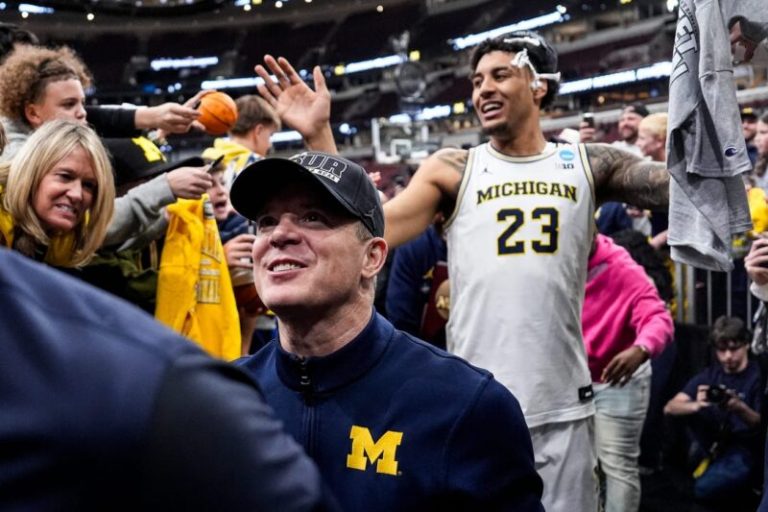
The Grizzlies could add to their rebuilding core after trading away Jaren Jackson Jr. by selecting Yaxel Lendeborg, who has shown on his way to the Sweet 16 that he is perhaps the most NBA-ready player in this draft class. The Big Ten Player of the Year offers a bit of everything on both sides of the ball and has silenced skeptics who were unsure how his game would scale after transferring from mid-major UAB to high-major Michigan. The Grizzlies have drafted players with similar trajectories like Jaylen Wells and Cedric Coward.

8. Atlanta Hawks (via Pelicans): Keaton Wagler

  • TEAM: Illinois
  • POSITION: Wing
  • BORN: Kansas
  • HEIGHT: 6-6
  • DRAFT AGE: 19

After trading away Trae Young, the Hawks could use a guard like Illinois standout Keaton Wagler using a first-round pick they received from the Pelicans. The 19-year-old guard has played a crucial role for his team to earn a spot in the Sweet 16. He projects as one of the best 3-point shooters in this class, shooting 40.8 percent from beyond the arc as a freshman while connecting on as many as nine 3-pointers in a game. The Big Ten Rookie of the Year has athletic limitations but is a cerebral basketball player who is also averaging 4.9 rebounds and 4.4 assists per game this season. 

9. Milwaukee Bucks: Brayden Burries

  • TEAM: Arizona
  • POSITION: Guard
  • BORN: California
  • HEIGHT: 6-4
  • DRAFT AGE: 20

Arizona freshman Brayden Burries had two breakout games in January, which helped solidify his draft stock. But the All-Big 12 guard has continued to display his tantalizing talent, scoring 31 points with seven rebounds and five steals against Colorado on March 7 and 20 points with 12 rebounds and five assists during a victory against No. 14 Kansas on Feb. 28. Burries has also looked like a lottery talent during March Madness, earning a spot in the Sweet 16. He has proven productivity and he is able to defend, relocate, move the ball and make 3-pointers off the dribble.   

10. Chicago Bulls: Mikel Brown Jr.

  • TEAM: Louisville
  • POSITION: Guard
  • BORN: Florida
  • HEIGHT: 6-5
  • DRAFT AGE: 20

The Chicago Bulls need to simply draft the best player available with whatever pick they have and will likely keep Louisville floor general Mikel Brown Jr. highlighted on their big board. The All-ACC guard has deep shooting range and was among the freshmen leaders in 3-pointers made from beyond 25 feet (27) this year, per CBB Analytics. Brown was averaging 29.2 points per game over his last five appearances, including 45 points against NC State on Feb. 9, while hitting 10 shots from beyond the arc, before an injury on Feb. 28 forced him to miss March Madness.

11. Golden State Warriors: Labaron Philon

  • TEAM: Alabama
  • POSITION: Guard
  • BORN: Alabama
  • HEIGHT: 6-4
  • DRAFT AGE: 20

The Warriors could still use more reliable players in the backcourt and could find a fairly compelling player in Alabama sophomore Labaron Philon. Even though the All-SEC guard is not playing at 100 percent due to injury issues, he has played well in March Madness, recording 29 points in his first game and 12 assists in his second. The guard is now averaging 21.6 points per game and has improved his 3-point shooting from 31.5 percent as a freshman to 39.7 percent as a sophomore, also managing 5.0 assists per game in the process.

12. Portland Trail Blazers: Koa Peat

  • TEAM: Arizona
  • POSITION: Forward
  • BORN: Arizona
  • HEIGHT: 6-8
  • DRAFT AGE: 19

The Portland Trail Blazers have drafted several prospects known for their athleticism, which means a player like Arizona forward Koa Peat will probably have some appeal to the organization. Peat is an ideal match for this franchise given his versatility as a playmaking forward. The All-Big 12 forward just needs a jumper to carve out regular minutes as a high-impact pro. Arizona plays at a significantly faster pace (4.1 extra possessions) when Peat is on the floor relative to when he is not, per CBB Analytics, which would fit very well with Portland’s fast-paced offense. 

13. Oklahoma City Thunder (via Clippers): Hannes Steinbach

  • TEAM: Washington
  • POSITION: Big
  • BORN: Germany
  • HEIGHT: 6-11
  • DRAFT AGE: 20

After winning the 2025 NBA Finals, the Oklahoma City Thunder are projected to add even more lottery-caliber talent in the 2026 NBA Draft. They could use it to potentially replace Isaiah Hartenstein by drafting a younger German big man: Hannes Steinbach. While his team missed the tournament, the All-Big Ten post is an instinctive rebounder with great hands, including an absurd 24 rebounds against USC on March 4. Additionally, the center is one of the more prolific pick-and-roll finishers in college basketball. He shined during the FIBA U19 World Cup, and scouts love that he is a smart basketball player who can make great reads.

14. Charlotte Hornets: Nate Ament

  • TEAM: Tennessee
  • POSITION: Wing
  • BORN: Virginia
  • HEIGHT: 6-10
  • DRAFT AGE: 19

After a relatively slow and inefficient start to the season, Tennessee freshman Nate Ament started to realize some of his lofty expectations. The freshman averaged 21.6 points per game, while shooting 38.9 percent on 3-pointers, during a 13-game stretch before an injury against Alabama on Feb. 28. The All-SEC forward then had 27 points (4-of-6 on 3-pointers) with eight rebounds, four assists, three blocks and a steal against Auburn on March 12. While he has been quiet during March Madness, it will only take one team to fall in love with Ament, and that team is probably picking in the lottery.

15. Memphis Grizzlies (via Magic): Joshua Jefferson

  • TEAM: Iowa State
  • POSITION: Forward
  • BORN: Nevada
  • HEIGHT: 6-9
  • DRAFT AGE: 22

A few years ago, research indicated that the Grizzlies tend to value a few statistical similarities in their draftees: Efficient shot selection, added value beyond scoring and defensive playmaking. For the second year in a row, Iowa State do-it-all Joshua Jefferson is an impactful dribble-pass-shoot forward who meets many of the qualifications that led Memphis to find players who spent many years on their roster. The All-Big 12 forward got injured during the first round of the tournament, but Iowa State still earned a spot in the Sweet 16.

16. Miami Heat: Cameron Carr

  • TEAM: Baylor
  • POSITION: Wing
  • BORN: Minnesota
  • HEIGHT: 6-5
  • DRAFT AGE: 21

One of the players who improved his draft stock the most this season was Baylor junior Cameron Carr. The All-Big 12 wing brings athleticism and shooting and, per Bart Torvik, he was the only player to make at least 40 field goals that were dunks and more than 60 field goals that were 3-pointers this season. Baylor outscored opponents by an additional 28.5 points per 100 possessions when he was on the floor relative to when he was not, via CBB Analytics, which ranked as the fourth-most of any high-major player in the NCAA. 

17. Oklahoma City Thunder (via 76ers): Karim López

  • TEAM: International (Australia)
  • POSITION: Forward
  • BORN: Mexico
  • HEIGHT: 6-8
  • DRAFT AGE: 19

The Thunder have drafted several players from Australia’s NBL, including Josh Giddey. They could dip into this well again by selecting Karim López with their pick from the Philadelphia 76ers. While the Mexican-born forward still needs some development, he is physically gifted and widely seen as the top prospect from this class currently playing overseas. He exploded for 32 points (11-of-13 FG) with eight rebounds, two blocks and one steal against Melbourne on Jan. 30. Even if he is a draft-and-stash player, that is ideal for a team with a rotation as crowded as the Thunder.

18. Charlotte Hornets (via Suns): Jayden Quaintance

  • TEAM: Kentucky
  • POSITION: Big
  • BORN: Ohio
  • HEIGHT: 6-9
  • DRAFT AGE: 18

Jayden Quaintance recorded just one start during his sophomore campaign as he recovered from a torn ACL, meniscus and fractured knee. The big man is still one of the youngest players in this class, but he has shown flashes during his time at Arizona State and Kentucky. When healthy, he is arguably the most talented defender in this draft class and could help a team that desperately needs frontcourt help, like the Hornets. But health may cause some concern for evaluators.

19. Toronto Raptors: Bennett Stirtz

  • TEAM: Iowa
  • POSITION: Guard
  • BORN: Missouri
  • HEIGHT: 6-4
  • DRAFT AGE: 22

The Raptors could use another guard and should have Bennett Stirtz on their priority list. After transferring from Division II to a mid-major and then to a high-major program, he is at the top of the class in creating his own shot off the dribble in isolation or the pick-and-roll. The All-Big Ten guard can also finish plays from dribble handoffs. The Raptors play at a slow pace, which would translate well for Stirtz, who is doing the same at Iowa. While he has not looked stellar during March Madness, he has still earned a spot in the Sweet 16.

20. San Antonio Spurs (via Hawks): Thomas Haugh

  • TEAM: Florida
  • POSITION: Wing
  • BORN: Pennsylvania
  • HEIGHT: 6-9
  • DRAFT AGE: 22

After winning a national championship with Florida last season, Thomas Haugh was instantly regarded as one of the most interesting players who elected to return to college. The All-SEC forward had one of the top motors in the NCAA this season before an early elimination from March Madness. While he did not score efficiently in a set offense this year, he does not need the ball in his hands very often to make a difference on the floor for his team. He can serve as a glue guy for a contending team looking to win an NBA title like the Spurs.

21. Philadelphia 76ers (via Rockets): Aday Mara

  • TEAM: Michigan
  • POSITION: Big
  • BORN: Spain
  • HEIGHT: 7-3
  • DRAFT AGE: 21

Michigan center Aday Mara is one of the prospects who has helped himself the most during March Madness so far. The 7-foot-3 big man, who transferred from UCLA, is a fantastic rim protector. Opponents only attempt 19.9 percent of their field goals at the rim when the Big Ten Defensive Player of the Year is on the court, per CBB Analytics, which ranks near lowest among all NCAA players. He can also pass well, finding some awesome outlet looks in transition and at the rim. 

22. Atlanta Hawks (via Cavaliers): Patrick Ngongba II

  • TEAM: Duke
  • POSITION: Big
  • BORN: Virginia
  • HEIGHT: 6-11
  • DRAFT AGE: 20

Many teams could use a big man like Patrick Ngongba II, who is an above-average passer for his position. His assist rate is the highest among underclassmen listed at 6-foot-11 or taller, per Bart Torvik, and he is at the top of his game when passing to a driving perimeter player. Ngongba, who has helped Duke earn a spot in the Sweet 16, is a big-bodied prospect who can carve out space as one of the more prolific cutters in college basketball. He is on an encouraging development track, displaying legitimate year-over-year improvement from his freshman to sophomore campaign.

23. Detroit Pistons (via Timberwolves): Christian Anderson

  • TEAM: Texas Tech
  • POSITION: Guard
  • BORN: Georgia
  • HEIGHT: 6-3
  • DRAFT AGE: 20

While they are one of the best teams in the league this season, the Pistons are still struggling from the perimeter and could use more talented 3-point shooters on their roster. A simple fix would be drafting Texas Tech sophomore Christian Anderson, who had the third-most unassisted 3-pointers (61) in the NCAA, per CBB Analytics. After moving to point guard, the All-Big 12 Most Improved Player recorded more than twice as many assists per 100 possessions as a sophomore now compared to when he was a freshman. 

24. Denver Nuggets: Dailyn Swain

  • TEAM: Texas
  • POSITION: Wing
  • BORN: Ohio
  • HEIGHT: 6-8
  • DRAFT AGE: 21

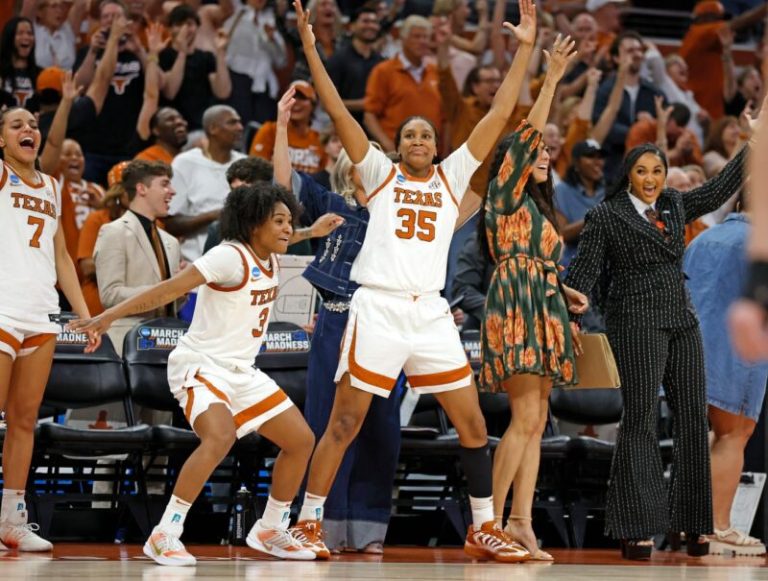
After transferring from Xavier to Texas during the offseason and then leading his team to the Sweet 16, Dailyn Swain has become one of the more intriguing breakout players in college basketball. The All-SEC forward is versatile and contributes a little bit of everything for the Longhorns on both sides of the ball, scoring well both in the paint and on fastbreaks. Another element that is notably compelling is that Swain is efficient one-on-one in isolation against his defenders. 

25. Los Angeles Lakers: Morez Johnson Jr.

  • TEAM: Michigan
  • POSITION: Big
  • BORN: Illinois
  • HEIGHT: 6-9
  • DRAFT AGE: 20

Morez Johnson Jr. is one of the best, most underrated two-way players in the NCAA. He is a crucial part of the Michigan identity this season and has thrived since transferring to the Wolverines from Illinois. Johnson’s shooting form at the free throw line looks good, and he scores well near the rim, especially when cutting to the basket. The former FIBA U-19 Team USA standout and All-Big Ten big man is a trustworthy defensive playmaker, too, and should find minutes at the next level.

26. New York Knicks: Allen Graves

  • TEAM: Santa Clara
  • POSITION: Forward
  • BORN: Louisiana
  • HEIGHT: 6-9
  • DRAFT AGE: 20

One of the most under-the-radar prospects in all of college basketball this season was Santa Clara freshman Allen Graves, who was nearly a March Madness hero. It was hard not to notice the WCC Rookie of the Year and Sixth Man of the Year after he scored 30 points with 13 rebounds, four assists and two steals Feb. 7 against Washington State. The only players under 21 years old who currently held a higher box plus-minus, via Bart Torvik, were Cameron Boozer and Caleb Wilson.

27. Boston Celtics: Chris Cenac Jr.

  • TEAM: Houston
  • POSITION: Big
  • BORN: Louisiana
  • HEIGHT: 6-11
  • DRAFT AGE: 19

It was an up-and-down season for former five-star recruit and McDonald’s All-American Chris Cenar Jr. at Houston. While he still remains a candidate to return to college and improve his draft stock for the 2027 NBA Draft, Cenac is getting hot at the perfect time. During his first game in the Big Dance, the big man recorded a season-high 18 rebounds, while also knocking down a 3-pointer and grabbing a steal. Then in the Round of 32, he showed off more scoring with some impressive cuts to the basket, dropping 17 points against Texas A&M.

28. Minnesota Timberwolves (via Pistons): Tyler Tanner

  • TEAM: Vanderbilt
  • POSITION: Guard
  • BORN: Tennessee
  • HEIGHT: 6-0
  • DRAFT AGE: 20

It is unusual to find a 6-foot sophomore projected in the first round of a mock draft, but if there were ever a player who has earned that kind of praise should he decide to turn pro after this season, it’s Tyler Tanner. Despite his size, the All-SEC guard has found meaningful ways to contribute on both sides of the floor. He can score efficiently, dunk, block shots, steal the ball, and he is more than serviceable as a floor general capable of earning rotation minutes for a team like the Timberwolves.

29. Cleveland Cavaliers (via Spurs): Braylon Mullins

  • TEAM: Connecticut
  • POSITION: Wing
  • BORN: Indiana
  • HEIGHT: 6-6
  • DRAFT AGE: 19

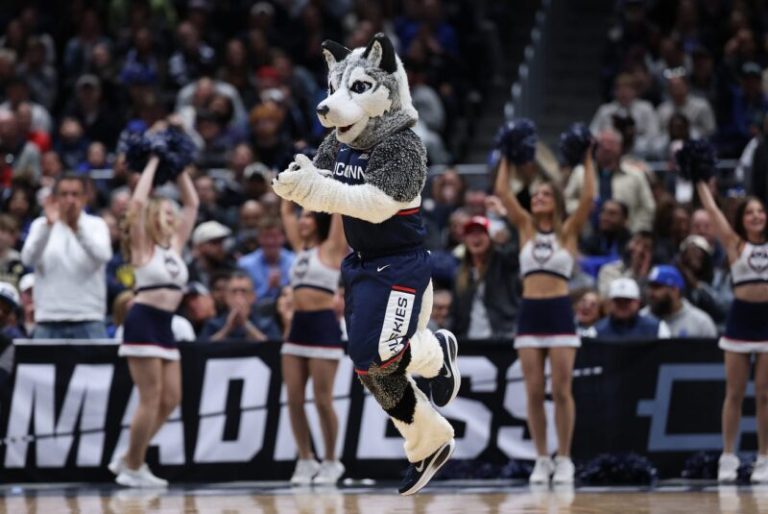
Braylon Mullins, a five-star recruit and former McDonald’s All-American, missed the start of the season due to an ankle injury. But he has returned to action for the Huskies and has shown what makes him such an appealing player. He is a useful off-ball threat, which gives him an immediately practical role at the next level. The Big East All-Freshman wing shot 40.7 percent on 3-pointers during his first 18 games in the starting lineup, but it may be tough for scouts to forget his 0-for-8 performance from beyond the arc during his first game in March Madness.

30. Dallas Mavericks (via Thunder): Amari Allen

  • TEAM: Alabama
  • POSITION: Wing
  • BORN: Wisconsin
  • HEIGHT: 6-7
  • DRAFT AGE: 20

Alabama’s Amari Allen is a 6-foot-7 freshman who averaged 12.9 points, 6.9 rebounds and 2.9 assists with 1.7 “stocks” (combined steals and blocks), while shooting 39.5 percent on 3-pointers on 4.8 shots per game for the Crimson Tide during SEC conference play. The SEC All-Freshman wing is a good connective piece who plays hard, cares about winning and knows how to make the right play. He is a player worth watching during the Sweet 16.

The USA TODAY app gets you to the heart of the news — fastDownload for award-winning coverage, crosswords, audio storytelling, the eNewspaper and more.

There will eventually be struggles for Kevin McGonigle, certainly times the Detroit Tigers might wonder if they’d gotten a little too excited by naming their top prospect to the Opening Day roster of a club with World Series aspirations.

Yet for one at-bat, anyway, McGonigle showed what all the hype is about.

Baseball’s consensus No. 2 prospect turned on the first pitch he saw in the big leagues and ripped a bases-loaded, two-run double off San Diego Padres right-hander Nick Pivetta, the big blow in a five-run first inning for Detroit at Petco Park in San Diego on March 26.

McGonigle, 21, was picked 37th overall out of a Pennsylvania high school in 2023. And with a rowful of family and friends looking on from shaded seats on a glorious, 74-degree day in San Diego, McGonigle exploited a Pivetta cutter that stayed up in the strike zone and ripped it down the right field line.

He cranked another double in his second at-bat – a Pivetta four-seam fastball in nearly the exact location – that bounced off the wall in the right field corner. He eventually scored on an Austin Meadows two-run single for a 6-0 lead.

McGonigle posted a .922 OPS in three minor league seasons across four levels, yet skipped Class AAA altogether. His poised and powerful spring performance – an .888 OPS and two home runs – won him a job on the Tigers infield, and he started at third in the opener with veteran Javy Baez at shortstop.

CHICAGO — Rick Barnes didn’t give the canned answer like Alabama’s Nate Oats and Iowa State’s T.J. Otzelberger had to because nobody really figured it was worth asking anymore.

“I’m from North Carolina,” the 71-year-old Tennessee men’s basketball coach quipped when told he was likely to be the only head coach at the 2026 NCAA Tournament’s Midwest regional to not have to address the job opening currently driving the college basketball coaching carousel conversation. 

But the Hickory, North Carolina native is also from another era, joining Michigan State’s Tom Izzo and Houston’s Kelvin Sampson from the old guard of coaches to make it to the Sweet 16 this year. His No. 6 seeded Tennessee team faces No. 2 seed Iowa State Friday, March 27 at the United Center in Chicago.

With that longevity comes a fascinating perspective about the place he’s been for the past decade, the places he might have left for previously, and the places he probably won’t go now that everything about college sports is different.

“The obvious problem today is there’s some fan bases that still think they have an entitlement and they think it’s going to be the same way,” Barnes said on Thursday in reference to North Carolina basketballl. “The game has changed totally because of NIL.”

The statement perhaps minimizes the remarkable consistency forged under Barnes over the past decade on Rocky Top. This is the fourth Sweet 16 appearance in a row for Tennessee under Barnes, and no active coach has more all-time wins (860) without winning a national championship. The Vols have advanced past the first weekend of the men’s NCAA Tournament nearly as many times with Barnes (5) as they had in the previous 106 seasons of program history.

He’s also 23 years removed from a Final Four appearance with Texas and may never be on another blueblood wish list again because of his age and the lifetime contract he signed with the Volunteers last year. But now, with his coaching career much closer to its ending than the beginning, he might not need to be.

That’s what he believes, and so do his counterparts actually being featured on all those UNC hot boards this week. The 2025-26 college football season was proof of concept for some.

“We may not have the tradition that some of these other places had,” Oats said in reference to Alabama, for instance, “but Indiana football probably didn’t have that tradition, either, and they won it. I think their athletic department supported them, they got a good coach and they won it.”

This alignment between administration and coach, Barnes emphasized Thursday, is more important than ever in a system he acknowledged as “broken” because of the rapid evolution of the NCAA rulebook. “You need money. We know that,” Barnes said. “But there’s a lot more to it than that.”

There’s a scenario, for instance, in which he would have already retired in the wake of all the change in college basketball if not for the presence of Tennessee athletic director Danny White.

“I love coaching, and if I didn’t have the leadership – I don’t know,” Barnes said.

In this way, perhaps coincidentally, he has been ahead of the curve working at a school with a powerhouse football program. 

Barnes called Tennessee football the “greatest asset we have,” rather than competition for resources, due to the revenue generated and the value of hosting recruits during games at Neyland Stadium in the fall. He joked NIL stands for “now it’s legal,” and yet the version of Barnes players get now seems a lot like the version they got before making six- and seven-figure salaries.

His recruiting pitch even includes the warning that, “this will be the hardest-working program you’ll ever be in,” Ohio State transfer Felix Okpara said.

“He’s as hands on as it gets. He’s ripping into you,” added guard Bishop Boswell. “A lot of times it can be hard to hear, but at the end of the day, he demands perfection. I think the thing we respect the most about him is he’s the same every day. There’s no fall off, even if we might not always want to hear it.”

Barnes savors this part of the job. He loves practice most of all, he said, and told a story Thursday from when he worked for Wimp Sanderson at Alabama 40 years ago.

Barnes walked in on Sanderson “literally lying on the sofa in his office” with his hands behind his head before the first game of the season, and the coach told Barnes this would be a great job “if you never had to play games.” Only Barnes lost his train of thought as the memory flooded back to him and asked to hear the question again.

What’s his driving force after so many years, so many accomplishments and so many changes? This time, Barnes gave the canned answer.

“You don’t ever take it for granted,” he said.

U.S. stocks surged Monday, after President Donald Trump announced that he was postponing all military strikes on Iranian power plants for a five-day period.

Trump said the U.S. and Iran had engaged in what he called “very good and productive conversations regarding a complete and total resolution of our hostilities in the Middle East.”

Reporting about the nature and timing of these “conversations” evolved over the course of the day, and included conflicting accounts from various stakeholders.

But for markets, the talks offered a glimmer of hope that a path toward the de-escalation of the conflict — and the oil crisis it created — were within reach.

Iranian state media responded to Trump’s post by saying the U.S. president has “backed down” after Iran’s firm response.

Trump, however, said that Iran had “called” to discuss trying to resolve the war diplomatically.

“They want to make a deal, and we are very willing to make it,” Trump told reporters before boarding Air Force One in Florida.

The Strait of Hormuz, a crucial transit point for global oil supplies, could be “open very soon,” Trump added, but he provided few details.

Experts and analysts quickly pointed out that even if the fighting were to end this week, it would still take months for the strait to reopen.

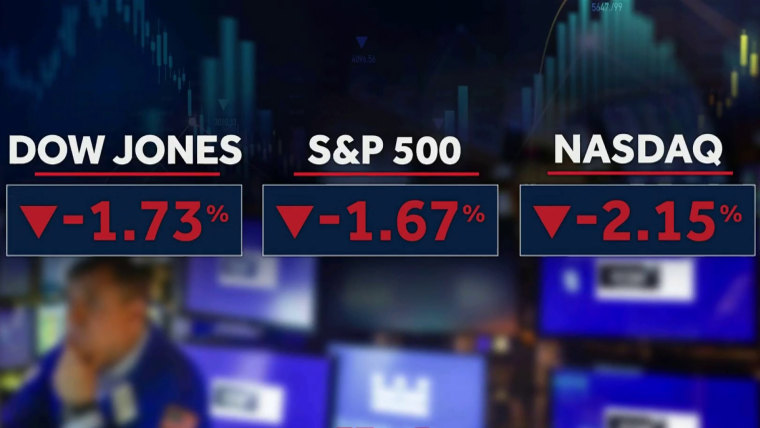
The S&P 500 and Nasdaq 100 futures initially soared about 3% on Trump’s post shortly after 7 a.m. ET. By the time the closing bell rang, both indexes still recorded significant gains, but less than futures had indicated early in the morning. The S&P 500 closed up 1.1% and the Nasdaq Composite ended the day higher by 1.4%.

The gains were also broad based, with every S&P sector ending the day higher.

The Dow Jones Industrial Average also shot higher immediately after Trump’s statement. By the end of the trading session, the Dow was higher by 631 points, and the Russell 2000 index closed up 2.7%.

It was the best day for the S&P, Nasdaq and Dow since Feb. 6.

Oil prices plunged around 11% and U.S. crude oil settled for the day at $88.13 per barrel. International Brent crude oil fell to $99.94 per barrel, settling under $100 per barrel for the first time since March 11.

Still, crude oil prices have risen more than 30% since the war began on Feb. 28, and more than 50% since the start of the year.

Trump’s Monday announcement on social media came after the president on Saturday said that he had given the Iranian regime 48 hours to “fully open, without threat, the Strait of Hormuz.” That ultimatum was set to expire Monday night.

U.S. natural gas prices dropped 6% Monday, European natural gas futures slid 9% and heating oil prices dropped 12%. Heating oil futures can also be a proxy for the price of jet fuel.

U.S. Treasury bonds also rose in the minutes after Trump’s comments, and the yields which guide borrowing rates for consumers dropped after posting big moves higher on Thursday and Friday on rising inflation fears stemming from soaring energy prices. Yields were down only slightly in mid-morning trading after the statements from Iranian media and Trump.

Investors were already grappling with how to trade headlines about the war before Monday’s volatility.

“Investors have two related problems in pricing risks around the Gulf war,” UBS economist Paul Donovan said in a note on Monday before Trump’s post. “Statements from top U.S. administration officials give different and at times contradictory assessments of the war; in the absence of measurable objectives, this is all markets have to respond to. The result is volatility.”

The Defense Department will remove media offices from the Pentagon after a federal judge sided with The New York Times in a lawsuit challenging limits on reporters’ access to the building, a department official announced Monday.

An area of the Pentagon known as “Correspondents’ Corridor” that reporters have used for decades to cover the U.S. military will close immediately, department spokesperson Sean Parnell said. Journalists will eventually be able to work from an “annex” outside the building, which he said “will be available when ready.” He offered no detail about how long that will take.

The Pentagon Press Association said the announcement “is a clear violation of the letter and spirit of last week’s ruling.”

“At such a critical time, we ask why the Pentagon is choosing to restrict vital press freedoms that help inform all Americans,” the association said.

The new policy is the latest dispute over press access to President Donald Trump’s administration, which has limited legacy media while boosting conservative and pro-Trump outlets.

The Times sued the Pentagon and Defense Secretary Pete Hegseth in December, claiming the agency’s new credentialing policy violated journalists’ constitutional rights to free speech and due process. Dozens of reporters had walked out of the building rather than agree to government-imposed restrictions on their work.

U.S. District Judge Paul Friedman in Washington, D.C., last week sided with the newspaper. He ordered the Pentagon to reinstate the press credentials of seven Times journalists and struck down some of the agency’s restrictions on news reporting.

Friedman said the “undisputed evidence” shows that the policy is designed to weed out “disfavored journalists” and replace them with those who are “on board and willing to serve” the government, a clear instance of illegal viewpoint discrimination.

Parnell said the Defense Department disagrees with the ruling and is pursuing an appeal. He said security concerns prompted restrictions on press access, a claim that journalists have rejected.

Under the latest Pentagon rules announced Monday, journalists will still have access to the Pentagon for press conferences and interviews arranged through the department’s public affairs team, but they will have to be escorted, Parnell wrote on social media.

The current Pentagon press corps is comprised mostly of conservative outlets that agreed to the policy. Reporters from outlets that refused to consent to the new rules, including from The Associated Press, have continued reporting on the military.

The AP, meanwhile, is awaiting a decision by a three-judge panel of the U.S. District Court of Appeals on its separate lawsuit against President Donald Trump’s administration. The AP contends that Trump’s White House team punished it by reducing its access to presidential events because the outlet hasn’t followed his lead in renaming the Gulf of Mexico.

WASHINGTON — On Sunday, Senate Majority Leader John Thune, R-S.D., discussed an off-ramp with President Donald Trump to reopen TSA and end the long lines and delays at airports.

It would fund all of the Department of Homeland Security except for ICE, which Democrats have refused to support without new limitations on immigration enforcement operations, two sources with knowledge of the conversation told NBC News.

White House aides initially conveyed the idea to Trump and, after that briefing, Thune spoke with the president, the two sources said. Thune discussed the idea with Republicans on Capitol Hill, one of the sources said. The second source said it’s seen by numerous Republicans as a viable path to break the logjam.

ICE would be funded separately by Republicans in a party-line “reconciliation” bill that can pass without the need for any Democratic support later in the year.

The Department of Homeland Security has been shut down for more than a month, and while key operations, such as TSA and the Federal Emergency Management Agency, are still operating, many of those employees are working without pay. As NBC News reported this weekend, more than 400 TSA officers have quit since the shutdown began. Immigration and Customs Enforcement is also shut down, but its employees are being paid through Trump’s big beautiful bill passed last year.

Republicans believe that the off-ramp Trump and Thune discussed would win support from Democrats, who have offered to fund noncontroversial parts of the Department of Homeland Security on the Senate floor while the two parties continue to negotiate on immigration.

But Trump rejected it — as he made clear in a Truth Social post Sunday night.

“I don’t think we should make any deal with the Crazy, Country Destroying, Radical Left Democrats unless, and until, they Vote with Republicans to pass ‘THE SAVE AMERICA ACT,’” Trump wrote, while instead calling on Republicans to “Kill the Filibuster, and stay in D.C. for Easter, if necessary.”

Trump’s first two ideas aren’t viable. Democrats are determined to sink the SAVE America Act, which doesn’t have enough support to pass. And Republicans have made clear they lack the votes to nuke the filibuster. They may, however, cancel recess if there’s still no deal by the end of this week.

The conversation with Thune and Trump was first reported by Punchbowl News.

Speaking Monday in Memphis, Tennessee, the president doubled down on his demands to pair Homeland Security funding with the voting bill.

“You don’t have to take a fast vote. Don’t worry about Easter, going home. In fact, make this one for Jesus. OK, make this one for Jesus,” Trump said, adding: “The most important part of homeland security is voter ID and proof of citizenship. Nobody can vote on Homeland Security without voter ID or proof of citizenship.”

Senate Minority Leader Chuck Schumer’s office said that Democrats will again seek unanimous consent to fund just the TSA on the Senate floor Monday, for the eighth time.

Republicans have so far rejected those stand-alone bills.

If Trump were to change his mind and accept the Thune-GOP idea, it carries benefits for both parties. For Republicans, they could avoid giving into Democratic demands, such as requiring immigration enforcement officers to remove their masks and requiring judicial warrants to conduct raids. For Democrats, they could keep their fingerprints off ICE funding, which has become toxic with their base since Homeland Security agents killed protesters Alex Pretti and Renee Good in Minneapolis.

“We can be out of this shutdown by the end of the week,” Sen. John Kennedy, R-La., said Sunday. “Here’s what we do. The Democrats are amenable to opening up everything at DHS but ICE. We should accept that. The very next day, we should file a budget resolution through reconciliation that funds ICE as we deem appropriate. We don’t need Democratic votes to do that.”

Democrats are also planning to seize on the Trump social media post to argue that he owns the shutdown and travel chaos.

Reconciliation bills are arduous, requiring near-unanimous support among Republicans, especially given the tiny House majority. There has been deep skepticism that the party could pull it off, even if it tried. But needing to fund an agency like ICE would raise the impetus to use that path.

Under the “big, beautiful bill” passed by Republicans last year, ICE received a cash infusion of about $75 billion for the next four years to help carry out Trump’s mass deportation program.

The path comes with another possible upside for the White House: Some Trump allies have proposed reconciliation to approve supplemental funding for Trump’s war in Iran. It’s not clear that could win enough Democratic support.

The two pilots killed in the collision between a passenger jet and a Port Authority fire truck at New York’s LaGuardia Airport late Sunday have been identified as Antoine Forest and Mackenzie Gunther.

The pair have yet to be officially named by authorities, who have said only that both pilots of the Canada Air Express plane died and that they were based in Canada. Their identities were confirmed by Canadian news reports and by a college that one pilot attended.

Antoine Forest, one of the pilots who reportedly died in the LaGuardia plane collision.via Facebook

The Federal Aviation Administration, the National Transportation Safety Board and other agencies are investigating the crash. They will seek to determine how the truck was able to cut across the jet’s path moments after it touched down on the runway.

Here’s what we know about the fatal crash.

At a news conference Tuesday afternoon, NTSB officials released preliminary information gleaned from the final three minutes of the plane’s cockpit voice recorder that showed that the fire truck was cleared to cross the runway 20 seconds before the crash.

At 2 minutes and 22 seconds, the flight crew checked in with the tower at LaGuardia, said Doug Brazy, NTSB’s senior aviation investigator.

At 2 minutes and 17 seconds, the tower cleared the airplane to land on Runway 4.

Brazy said that at 1 minute and 3 seconds, an airport vehicle made a radio transmission to the tower but that the transmission was “stepped on” by another radio transmission. NTSB Chairwoman Jennifer Homendy said that means there was some sort of interference with the transmission.

At 54 seconds, the tower advised the flight crew that the plane was at a stable approach, Brazy said.

At 40 seconds, the LaGuardia tower asked which vehicle needed to cross a runway. Brazy said the fire truck made a transmission to the tower, which the tower acknowledged. At 25 seconds, the truck requested permission to cross Runway 4. Brazy said that at 20 seconds, the tower cleared the truck to cross.

At 17 seconds, the fire truck read back the runway crossing clearance, he said. According to Brazy, the tower instructed a Frontier Airlines flight to hold position, and at 9 seconds, the tower told the fire truck to stop.

At 8 seconds, there was a sound consistent with the airplane’s landing gear touching down on the runway, he said. At 6 seconds, there was a pilot transfer of controls. Homendy told reporters that the first officer was flying the plane and transferred control to the captain.

At 4 seconds, the tower again instructed the fire truck to stop, Brazy said.

At least 40% of Russia‘s oil export capacity is at a halt following Ukrainian drone attacks, a disputed attack on a major pipeline and the seizure of tankers, according to Reuters calculations based on market data.

The shutdown is the most severe oil supply disruption in the modern history of Russia, the world’s second largest oil exporter, and has hit Moscow just as oil prices exceeded $100 a barrel due to the Iran war.

Russia’s oil output is one of the main sources of revenue for the national budget and is central to the $2.6 trillion economy.

An oil tanker moored in Novorossiysk, Russia, in 2022.AP

Ukraine intensified drone attacks on Russia‘s oil and fuel export infrastructure this month, hitting all three of Russia‘s major western oil export ports, including Novorossiysk on the Black Sea and Primorsk and Ust-Luga on the Baltic Sea.

According to Reuters calculations, about 40% of Russia‘s crude oil export capabilities — or around 2 million barrels per day, were shut as of Wednesday after the most recent attack.

That includes Primorsk and Ust-Luga as well as the Druzhba pipeline, which runs through Ukraine to Hungary and Slovakia.

Kyiv has also targeted pipeline oil pumping stations and refineries. Kyiv says it aims to diminish Moscow’s oil and gas revenue, which accounts for around a quarter of Russia‘s state budget proceeds, and weaken its military might.

Russia says the Ukrainian strikes are terrorist attacks and has tightened security across its 11 time zones.

Firefighters extinguish a blaze at a chemical transport terminal at Russia’s Ust-Luga port on Jan. 21, 2024. Local media reported that Ukrainian drones attacked the port.Telegram Channel of head of the Kingisepp district via AP

Ukraine said that part of the Druzhba pipeline was damaged by Russian strikes at the end of January, while both Slovakia and Hungary demanded Kyiv restart the supplies immediately.

The Novorossiysk oil terminal, which can handle up to 700,000 bpd, has been loading oil below plan since damage from a heavy Ukrainian drone attack early this month.

In addition, frequent seizures of Russia-related tankers in Europe have disrupted 300,000 bpd of Arctic oil exports flowing from the port of Murmansk, traders said.

With its westward export routes under fire, Moscow must rely on oil exports to Asian markets, but those routes are limited due to capacity, traders said.

Russia continues uninterrupted supplies via pipelines to China, including the Skovorodino-Mohe and Atasu-Alashankou routes, as well as ESPO Blend exports by sea via the port of Kozmino.

Together, the three routes account for some 1.9 million bpd of oil.

Russia also continues to load oil from its two far eastern Sakhalin projects, shipping about 250,000 bpd from the island.

Traders also say that Russia is supplying the refineries in neighboring Belarus with around 300,000 bpd of oil.

Caitlin Clark cooked in her first game in eight months.

Clark had 17 points and 12 assists in 19 minutes of action on Wednesday. She scored her first bucket with 1 minute, 22 seconds remaining in the first quarter. The Indiana Fever guard, of course, hit a 3.

“Different than a WNBA game, but for myself, it’s a nice way to ease back into it, and I felt like I was effective when I was out there,’ Clark said. ‘But more than anything, just makes me happy that I’m super sweaty right now and I got to play.”

Newcomers Paige Bueckers and Angel Reese also saw their first action as members of the U.S. senior team. Bueckers finished with nine points, four rebounds, three assists and a steal in 14 minutes. Reese added six points, eight rebounds and an assist in 17 minutes.

What time is Team USA women’s basketball vs Puerto Rico?

The Team USA women’s basketball game is at 8 p.m. ET on Thursday, March 12, in San Juan, Puerto Rico.

Team USA women’s basketball vs Puerto Rico | TV/streaming

  • Date: Thursday, March 12
  • Time: 8 p.m. ET (5 p.m. PT)
  • TV: TNT/truTV
  • Stream: Sling TV, HBO Max

How to watch Team USA: Schedule

All times Eastern

Team USA Women’s World Cup Qualifying 2026 – Team Roster

Below are the players selected to represent the USA at the upcoming FIBA Women’s World Cup qualifying tournament in San Juan, Puerto Rico. 

  • Monique Billings
  • Paige Bueckers
  • Rae Burrell
  • Caitlin Clark
  • Kahleah Copper
  • Chelsea Gray
  • Dearica Hamby
  • Rhyne Howard
  • Kiki Iriafen
  • Kelsey Plum
  • Angel Reese
  • Jackie Young
This post appeared first on USA TODAY